Welcome back to the enthralling chronicles of the life story of my third great-grandfather. In Part 1, we delved into the early years of his existence, tracing his humble beginnings and the undoubtable challenges he must have encountered along the way.
From those formative experiences, I am sure he developed a resilient spirit and an unwavering determination that would guide him through the twists and turns of life. Now, in Part 2, we embark on a new chapter, ready to unravel the astonishing tale that unfolded as he ventured further into the world.
As we pick up where we left off, we find our protagonist poised at the threshold of a world ripe with opportunity and rife with uncertainty. With unyielding ambition burning in his soul, he stood on the cusp of a journey that would shape not only his own destiny but also the lives of generations to come.
In this installment, we explore the trials and triumphs that defined my third great-grandfather’s path to success, tracing his steps across continents, witnessing the ebb and flow of history, and encountering extraordinary individuals who left an indelible mark on his heart. Through the passages of time, we will uncover the legacy he left behind—a legacy woven with threads of resilience, determination, and an unwavering belief in the power of Love, family and dreams.
So, join me as we embark on this captivating voyage, traversing the landscapes of past generations and unearthing the hidden treasures of a remarkable life. Together, we will peel back the layers of history, shedding light on the indomitable spirit that propelled my third great-grandfather forward.
Before we begin, let’s have a quick recap of his life so far.
William George Willats, aka Biggun, the Son of George Willats and Eliza Willats nee Cameron, was born on the 15th July 1853, at 90 Dean Street, St. Anne Westminster, Middlesex, England.
Biggun was baptised on Saturday the 17th of December, 1853, at St Pancras, Middlesex, England.
Unfortunately his parents married broke down and his father George, got swept up in the hunt for gold and traveled to Australia to seek his fortune, leaving Eliza to bring up Biggun alone. However Eliza found comfort in the arms of her brother Inlaw, Biggun’s uncle Richard Henry Willats, whom heartfeltly took over the role of Biggun’s father.
It wasn’t long until Biggun had lots of half siblings, Henry Richard, Francis Montague, Charlotte Ellen, Edith Cameron, Arthur Charles, Walter James, Eliza Mary, Lillian Jenny, Edwin Paul, May Clarette, Percy Sidney and Frederick Howard Willats, to play with. And across the pond in Australia, his father George’s new relationship/wife Sarah Elizabeth Southall Juke, gave him 4 more siblings, Frances Charlotte, Sarah Elizabeth, Ann Rebecca and George John Willats. Biggun had 16 siblings in total. 😮.
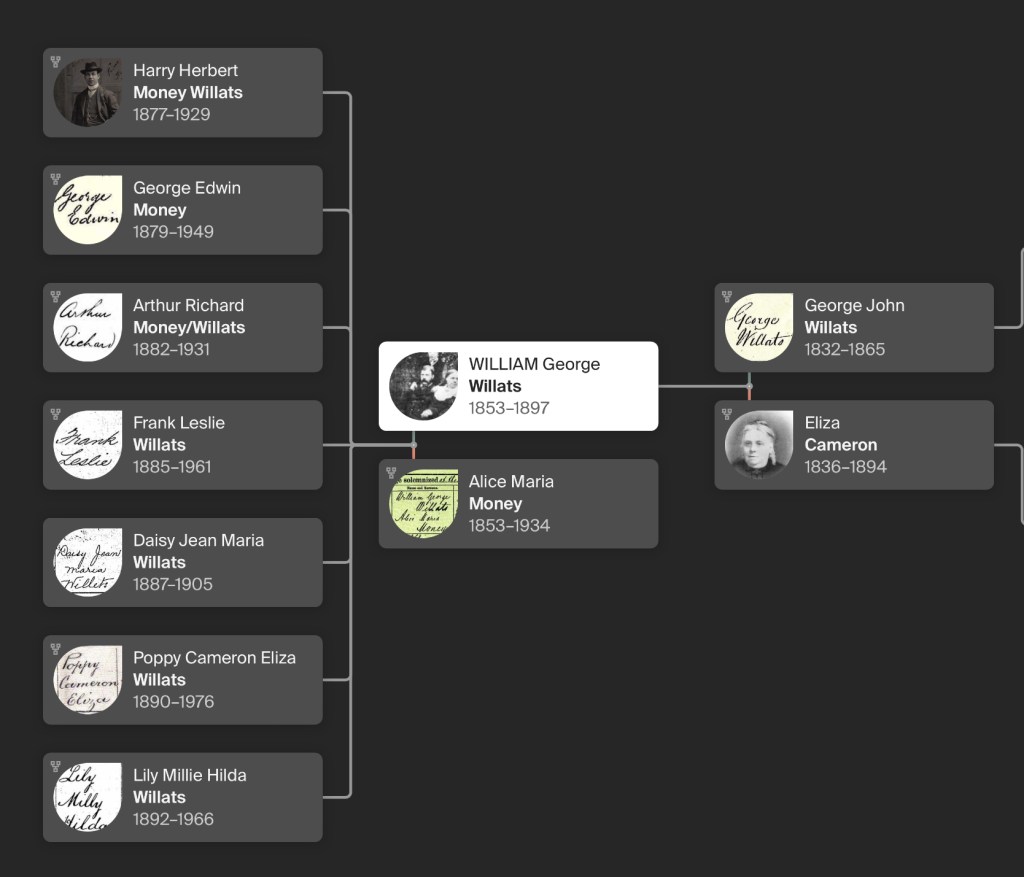
Biggun so far had worked as a Drapers Assistant and a Commercial Traveller. He had fallen in love with, Alice Maria Money, daughter of, John Money, an House Painter annd Plumber and Mary Ann Money nee Skelton. And they had three sons born out of wedlock, Harry Herbert, George Edwin and Arthur Richard Money. Even though Biggun was not named on their birth certificates, through DNA, we have proven that he was indeed their father.
Biggun and Alice Maria married at The Register Office, Islington, Middlesex, England, on Saturday the 23rd of December, 1882, shortly after the death of Alice’s Father John Money. Was he the reason they hadn’t married until then, or was it just a coincidence?
We are all caught up, so let’s delve deeper into captivating life story of my remarkable ancestor Biggun.
The Life Of William George Willats (Biggun),
Life As A Married Man.
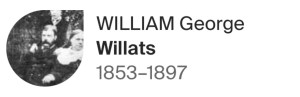
Welcome back to the year 1884, London, England. Queen Victoria still sat proudly upon the throne. The Prime Minister was William Ewart Gladstone(Liberal) and it was 22nd Parliament.
The Third Reform Act, officially known as the Representation of the People Act 1884, was passed by the British Parliament. It extended the voting rights to a larger portion of the male population in England and Wales. It redistributed parliamentary seats and increased the number of eligible voters from about one in three adult males to nearly two in three.
The Fabian Society, a socialist intellectual and political movement, was founded in London. The society aimed to advance socialist ideas through gradual and non-revolutionary means. Prominent figures associated with the Fabian Society included George Bernard Shaw and Sidney Webb.
The Gaelic Athletic Association (GAA) was established in Hayes’s Hotel in Thurles, County Tipperary, Ireland, to promote traditional Irish sports and culture. The organization aimed to preserve Irish identity and heritage during a period of British influence and cultural suppression.
The Royal College of Music was founded in London, providing a dedicated institution for the study of music. The college continues to be one of the leading conservatories in the United Kingdom.
The British government passed the Naval Defence Act, which initiated the modernization and expansion of the Royal Navy. The act authorized the construction of new battleships, cruisers, and torpedo boats to strengthen Britain’s naval defenses.
Biggun’s and Alice’s son, Frank Leslie Willats, was born at Number 59, Elwood Street, Highbury, Islington, Middlesex, England, on Saturday the 6th of September, 1884.
Biggun registered his birth on the 20th of October 1884, in Islington. He gave his occupation as a commercial traveller and their abode as, Number 54 Ambler Road, Islington.


A few years later Biggun and Alice Maria‘s, daughter Daisy Jean Maria Willatsc, was born on Tuesday the 7th of June 1887, at Number 13, Perth Street, Stroud Green Road, Hornsey, Edmonton, England.
George William Willats registered Daisy’s birth on Friday, the 15th of July 1887, in Edmonton.
He gave his occupation as an auctioneer and his abode as Number 13, Perth Street, Stroud Green Road, Hornsey.


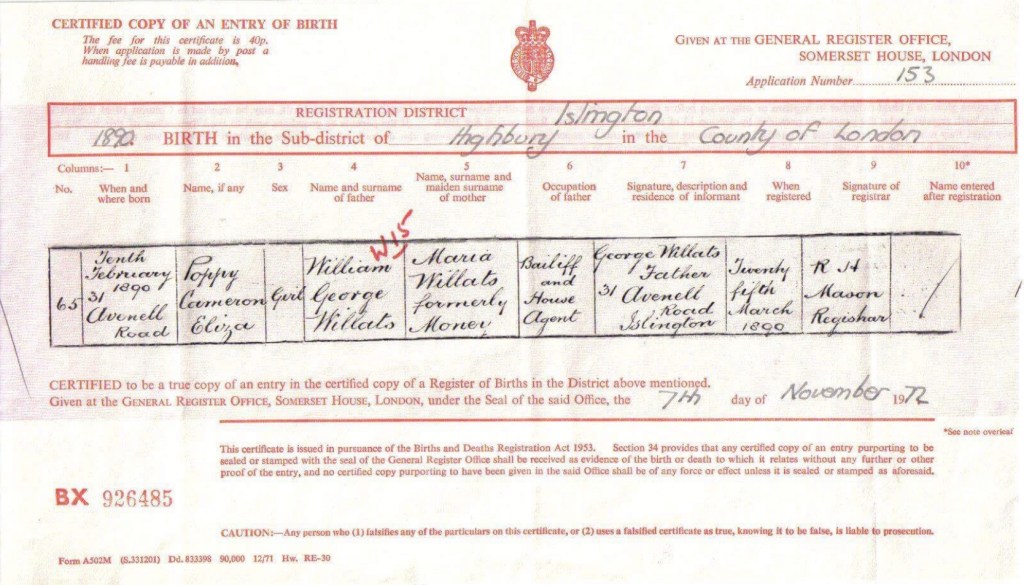
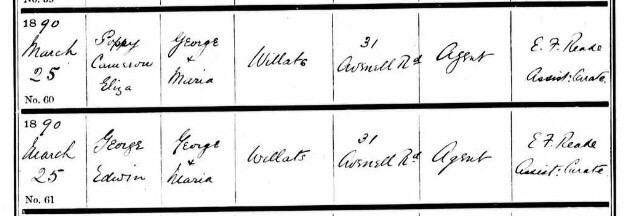
Biggun’s and Alice Maria’s, second daughter, was born on Monday the 10th of February 1890. They named her, Poppy Cameron Eliza Willats.
Poppy was born at Number 31, Avenell Road, Islington, Middlesex, England. Biggun registered Poppy’s birth on the 25th March 1890.
Biggun, gave his occupation as a Bailiff and House Agent and their abode as, Number 31, Avenell Road, Islington.
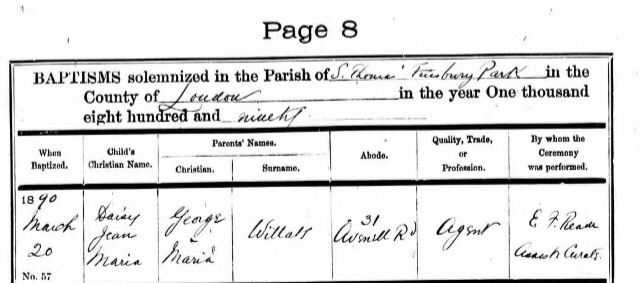
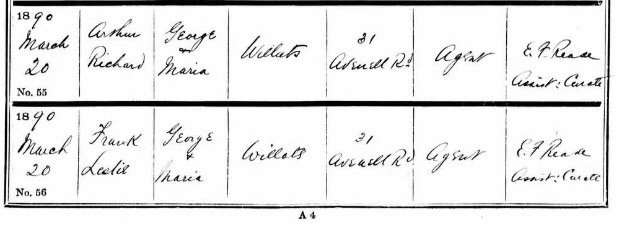
Biggun and Alice Maria, baptised their son, Arthur Richard, Frank Leslie, and their daughter Daisy, on Thursday the 20th of March 1890, at St Thomas the Apostle Church, St Thomas’s Road, Finsbury Park, Middlesex, England.
They were residing at Number 31, Avenell Road., Finsbury, Islington, Middlesex, England.
Biggun gave his occupation as an Agent.
Biggun and Alice, baptised, George and Poppy at St. Thomas, Finchley, Middlesex, England, on the March 25th 1890. Biggun gave his occupation as an Agent.
The family were still residing at Number 31, Evanell Road, Finsbury, Islington, Middlesex.
Biggun, his wife Alice Maria and their children, Henry (Harry), George, Arthur, Leslie (Frank), Daisy and Poppy were residing at, Number 35, Fonthill Road, Islington, London & Middlesex, England, on Sunday the 5th of April 1891. Biggun was working as an Agent and the children were all scholars apart from Daisy and Poppy.
They occupied two rooms.
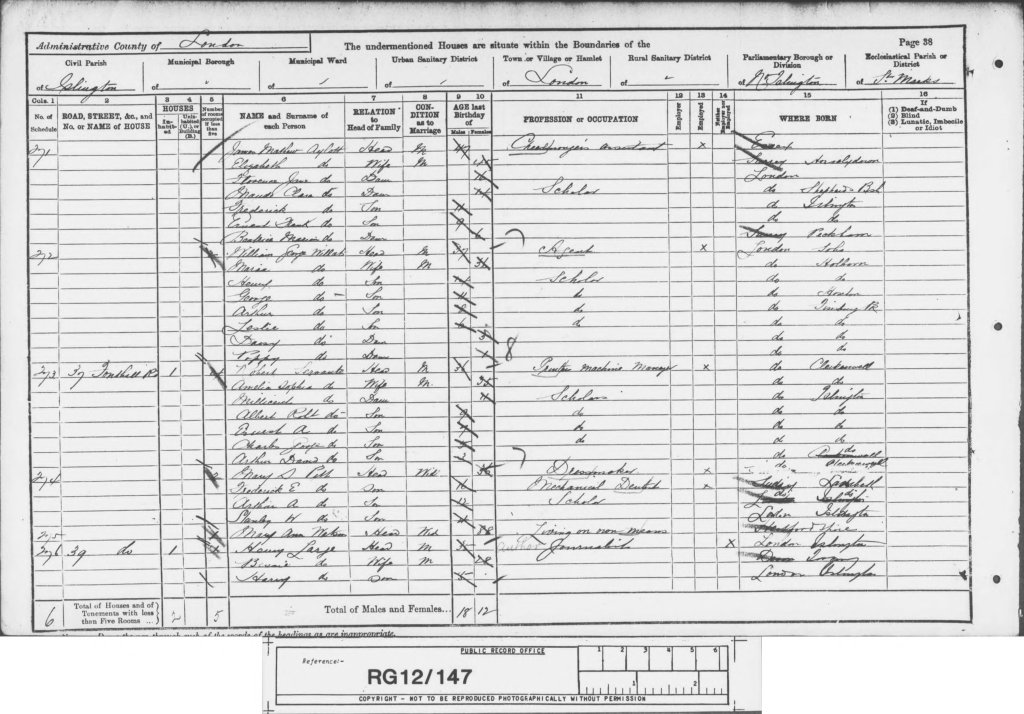
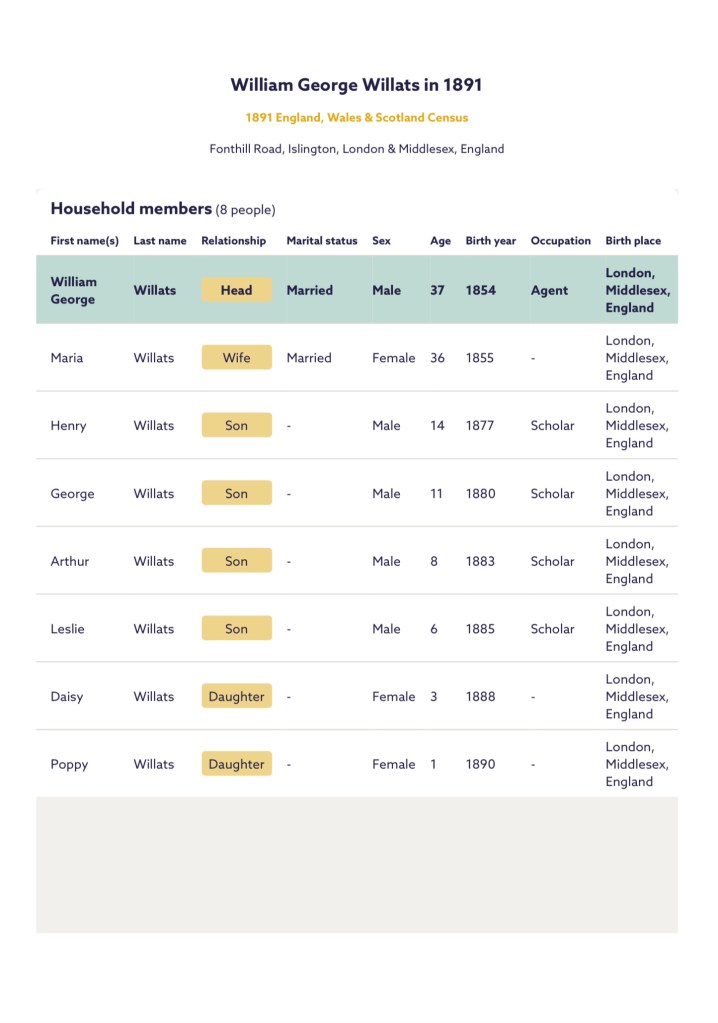
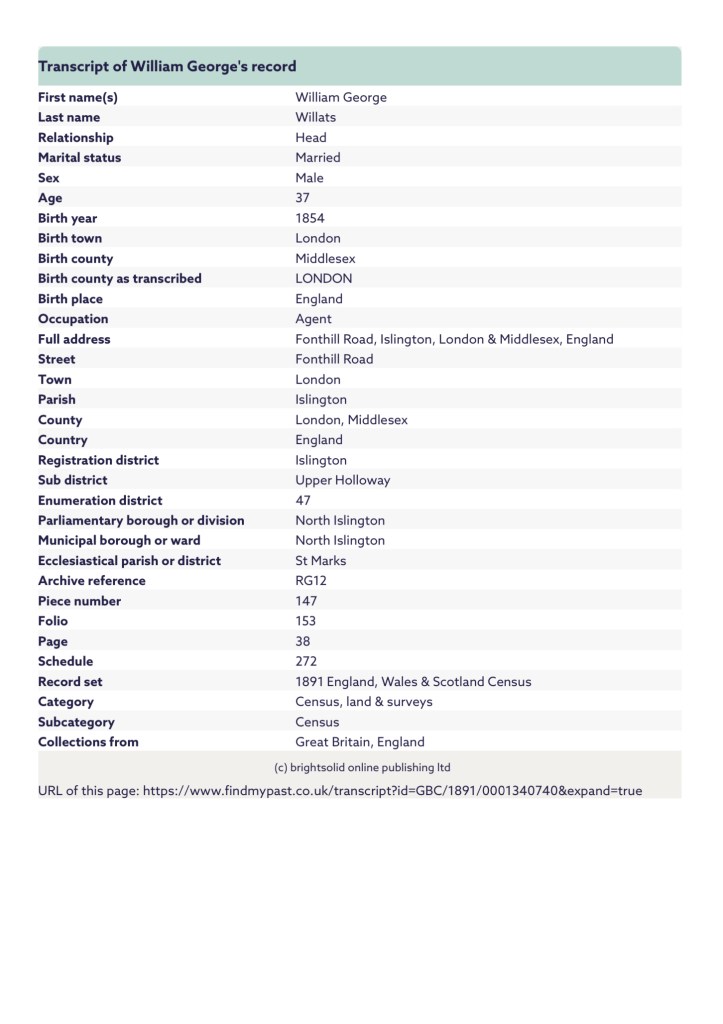
Fonthill Road, originally Nightingale Road, was Built up 1866/70, by George Atwell, a builder, of 4 Tufnell Park.
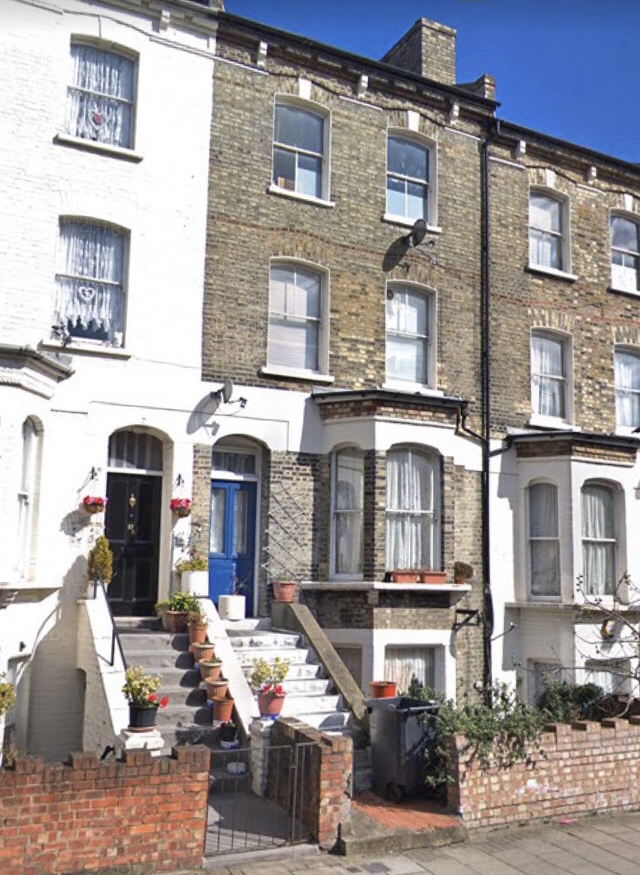
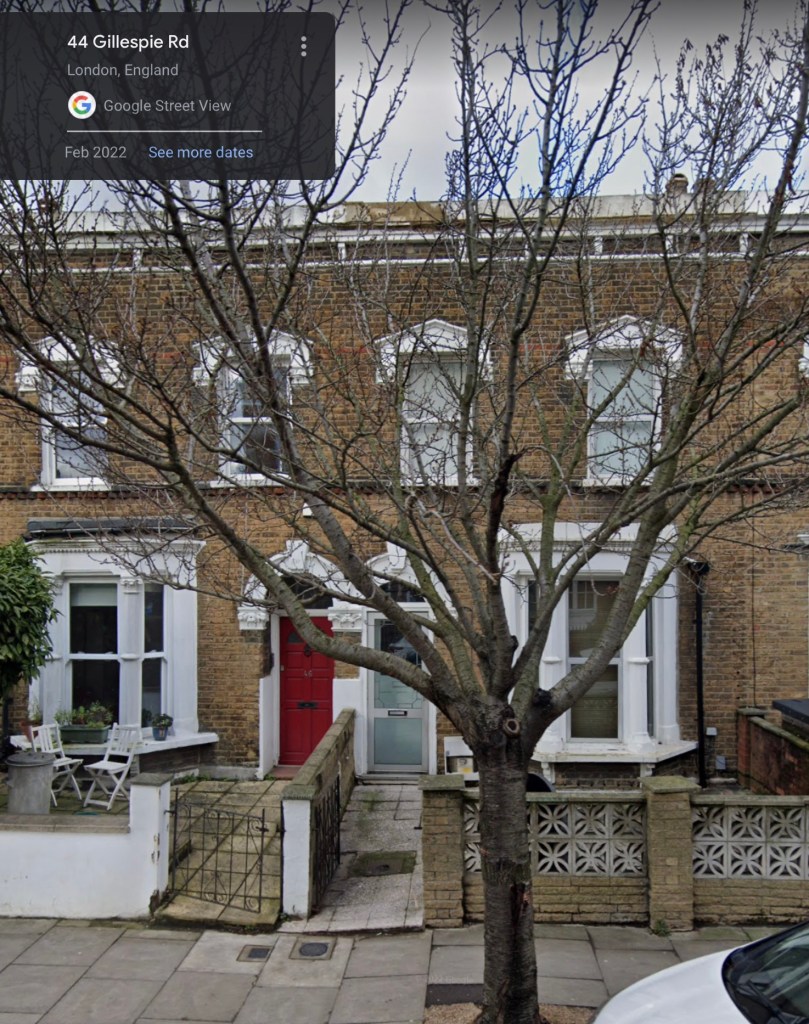
Biggun and Alice Maria, daughter Lily Milly Hilda Willats, was born on the 28th of December 1892, at Number 44 Gillespie Road, Islington, Middlesex, England.
Biggun registered Lily’s birth on the 8th of February 1893. He gave his occupation as a Bailiff and their abode as, Number 44 Gillespie Road, Islington.


Being a Bailiff in the Victorian era was a challenging and demanding job. The role of a Bailiff in that period varied depending on the specific jurisdiction, but generally, they were responsible for maintaining law and order within their assigned area. They arrested individuals accused of crimes, served warrants and summonses, and ensured that court judgments were carried out.
Bailiffs also carried out various civil duties such as serving legal documents, such as eviction notices, and overseeing the execution of court judgments. They were often involved in the recovery of debts and ensuring that individuals complied with court orders.
Bailiffs played a crucial role in the courtroom, maintaining decorum and order during proceedings. They ensured the safety of judges, jurors, witnesses, and other court personnel. Bailiffs also managed the custody of prisoners during trial.
Bailiffs had a responsibility to maintain public safety. They patrolled the streets, responded to disturbances, and protected the community from potential threats or criminal activities.
Bailiffs acted as a liaison between the local authorities and the community. They reported on suspicious or illegal activities, assisted in investigations, and provided testimony or evidence in court cases.In cases where individuals were sentenced to corporal punishments such as flogging or the pillory, it was often the Bailiff’s responsibility to carry out these punishments.
Bailiff required physical strength, assertiveness, and the ability to handle confrontations. Bailiffs often faced resistance, hostility, and even danger while carrying out their duties. However, their role was crucial in maintaining law and order in the society of that time.
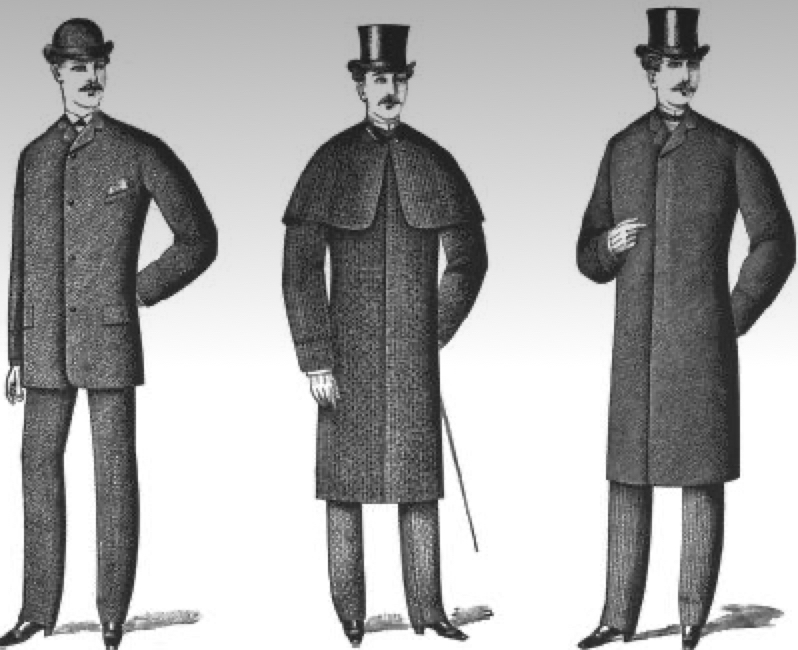
Victorian bailiffs typically wore a formal uniform when on duty. The uniform commonly consisted of a long black coat or frock coat with tails, a white shirt with collar and tie, black trousers, and a top hat. The specific style and design of the uniform could vary based on the region and organization they belonged to. Bailiffs would also often carry a staff or baton as a symbol of their authority.
Biggun and Maria, baptised their daughter Lily, on the 16th of Febuary, 1893, at St. Thomas, Finsbury, Middlesex, England.
William George was working as a balift.
Their adobe was Gillespie Road.

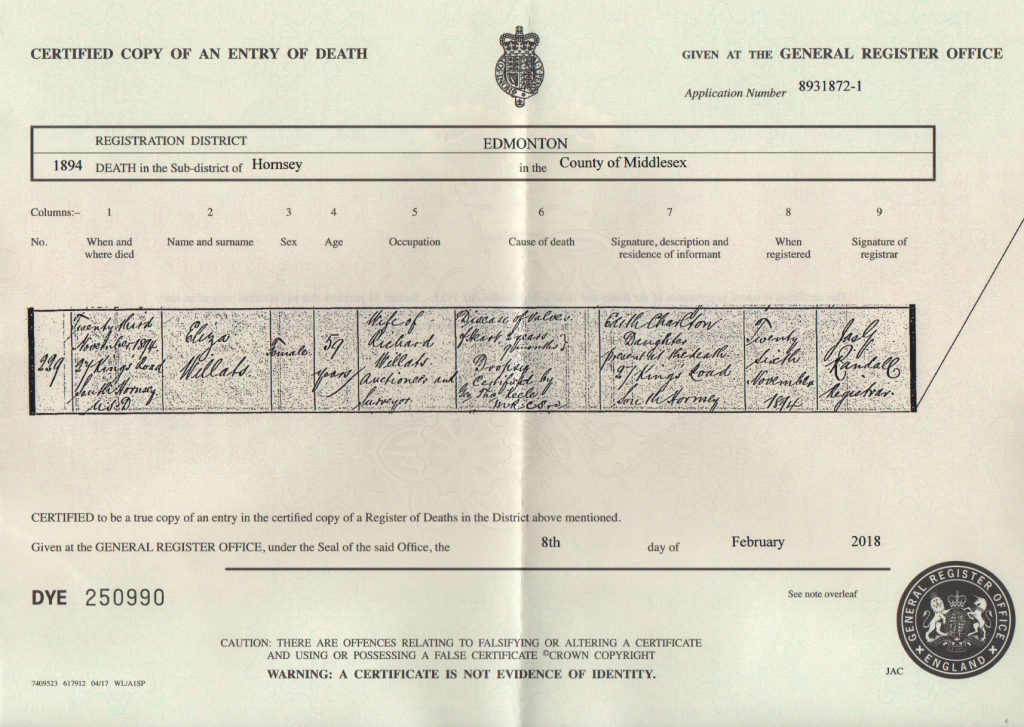
Biggun’s mum, Eliza, passed away on Friday the 23rd of November, 1894, at Number 27, Kings Road, South Hornsey, Edmonton, Middlesex, England, when she was 59 years old. Eliza died from, disease of valves of the heart, two years nine months and dropsy. Her daughter Edith Charlton nee Willats, of Number 27, Kings Road, South Hornsey, was present and registered Eliza’s death on Monday the 26th of November, 1894. Edith gave her father Richards occupation as an Auctioneer and Surveyor.
When Eliza died her husband, Richard Henry, purchased 2 graves in Abney Park Cemetery, which was then the beautiful garden of a big house turned into a private cemetery.
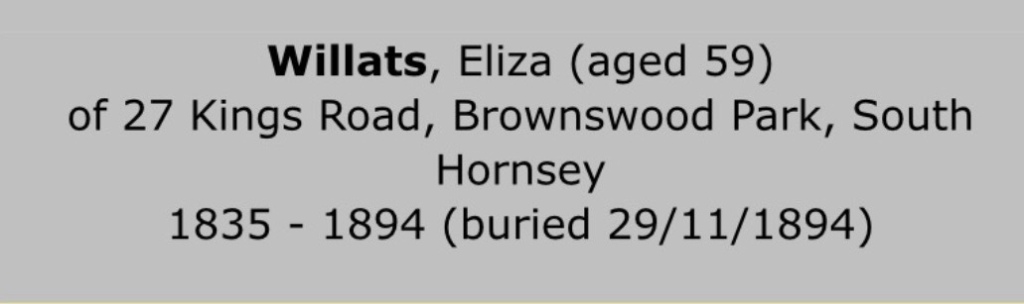
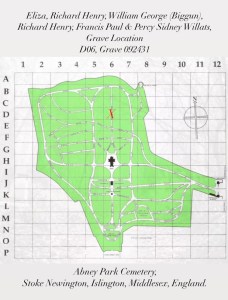
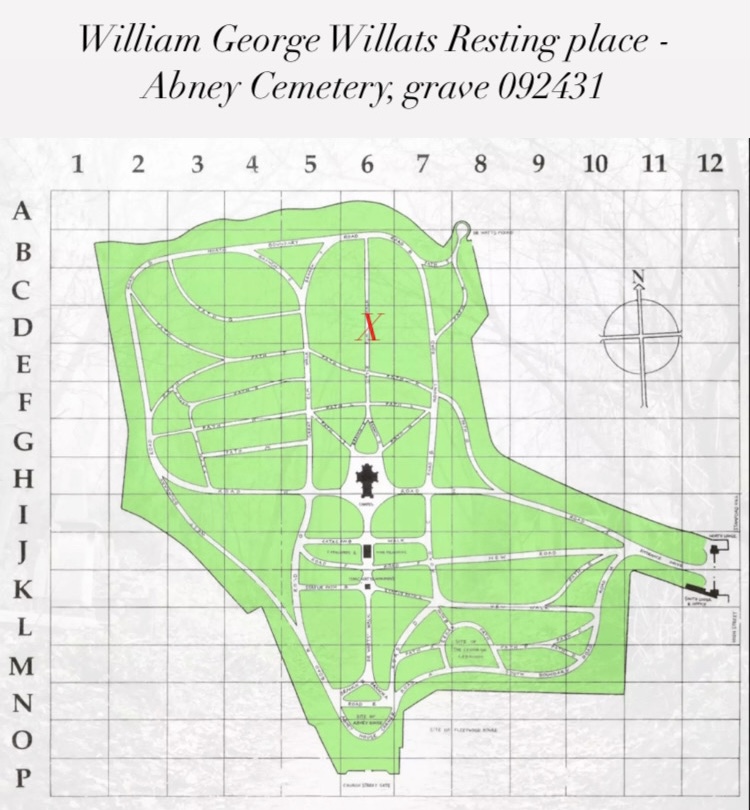
Each grave cost, 3 guineas and took six interments. The Willats family laid Eliza to rest, in one of the purchased graves at, Abney Park Cemetery, Stoke Newington, Middlesex, England, on Thursday the 29th of November, 1894, in D06, Grave 092431.
Her abode was given as, Number 27, Kings Road, Brownswood Park, South Hornsey.
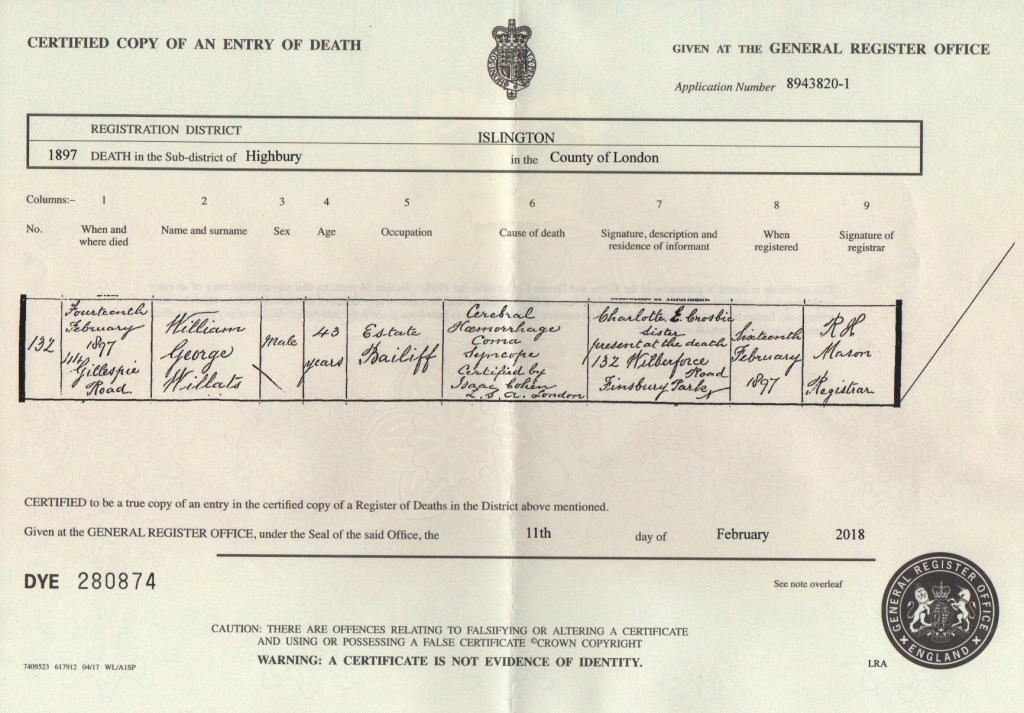
Sorrowfully, this is where Biggun’s life draws to an end. Biggun died on Sunday the 14th of February, 1897, at 44 Gillespie Road, Islington, Middlesex, England.
He died from Cardial Haemorrhage Corona Syncope.
Bigguns Sister, Charlotte Ellen Crosbie, of, Number 132 Wilberforce Road, Finsbury Park, was present and registered his death on Tuesday the 16th of February 1897.
Alice Maria buried her Husband, Biggun, at Abney Cemetery, in grave 092431, on the 18th February 1897, under his real name, William George Willats.
Their adobe was 44 Gillespie Road, Islington, Middlesex, England.
Biggun was buried with his mum, Eliza Willats who died at the age of 59 and was buried on the 29th November 1894.

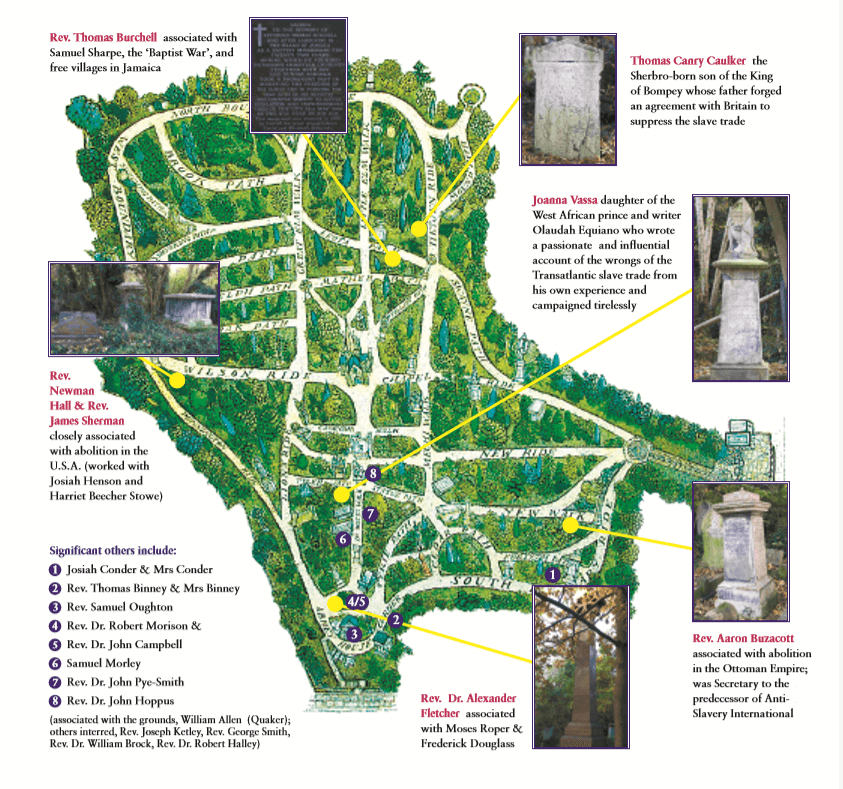
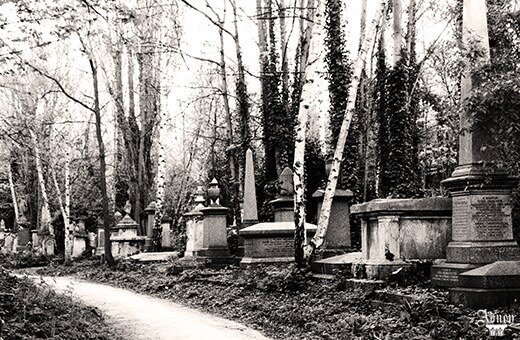
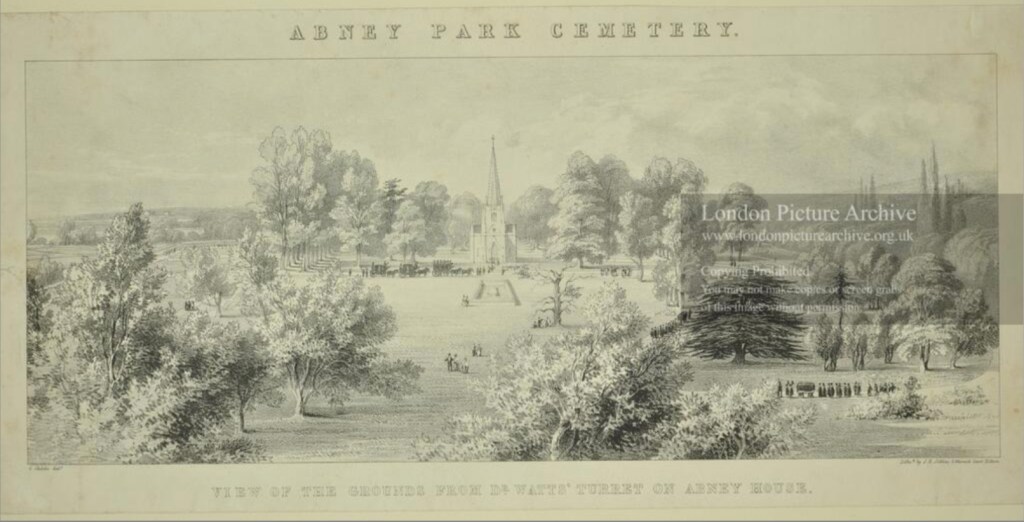
Abney Park Cemetery is a historically significant Victorian cemetery located in Stoke Newington, London, England. It was founded in 1840 and designed as one of the “Magnificent Seven” garden cemeteries that were established on the outskirts of London to alleviate overcrowding in inner-city churchyards. The cemetery’s name comes from Sir Thomas Abney, who owned the land on which it was built.
Abney Park was designed as a non-denominational garden cemetery, providing a tranquil and beautiful final resting place for people of all faiths and backgrounds. The picturesque landscape, dotted with trees, shrubs, and winding paths, was designed by architect William Hosking and horticulturalist Isaac Holden.
Over the years, Abney Park Cemetery became the burial site for several prominent individuals, including writers, artists, and social reformers. Notable burials include William and Catherine Booth, founders of The Salvation Army; Dr. Isaac Watts, the hymn writer; and Elizabeth Garrett Anderson, the first woman to qualify as a physician and surgeon in the United Kingdom.
The cemetery’s non-denominational nature attracted many non-conformists and dissenters, including religious groups outside the Church of England. Abney Park became a significant burial ground for people who held different religious beliefs or were excluded from traditional church cemeteries.
The cemetery also has connections to the abolitionist movement. Notably, Harriet Beecher Stowe, the American author known for her anti-slavery novel “Uncle Tom’s Cabin,” lived nearby and visited Abney Park Cemetery. It is said that some of the names in the novel were inspired by tombstones she saw there.
In the mid-20th century, the cemetery faced neglect and deterioration. However, in the 1970s, local groups and organizations began to restore and maintain the site. Abney Park Trust was established to oversee the restoration efforts and ensure the preservation of its historical significance.
Today, Abney Park Cemetery serves not only as a historic burial ground but also as an important nature reserve. Its overgrown and wild appearance provides a sanctuary for various plant and animal species, making it a unique blend of a cemetery and a natural habitat.
The cemetery is open to the public and has become a popular destination for visitors interested in its history, architecture, and natural beauty. Regular guided tours, events, and exhibitions are held to showcase its cultural and historical significance.
Abney Park Cemetery remains a cherished location that encapsulates both historical and environmental importance. It stands as a testament to Victorian funerary art, as well as an essential green space in the urban landscape of London.


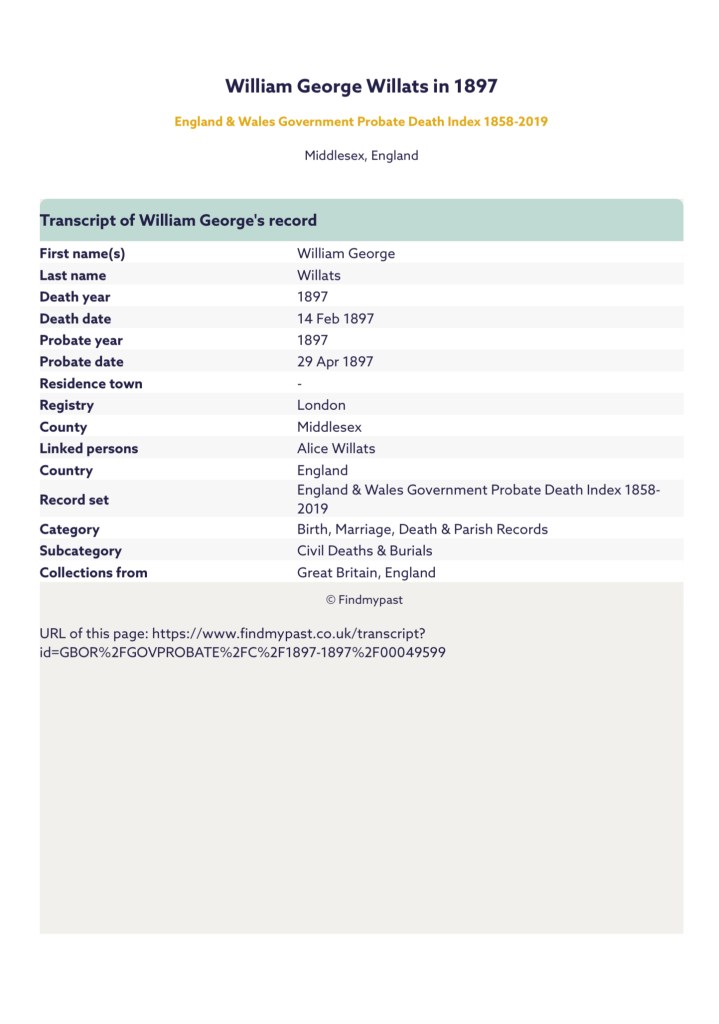
Williams probate was granted on, Thursday the 29th of April, 1897, in London.
It reads,
WILLATS William George of 14 Gillespie-road Highbury Middlesex died 14 February 1897 Administration London 29 April to Alice Willats widow Effects £230.

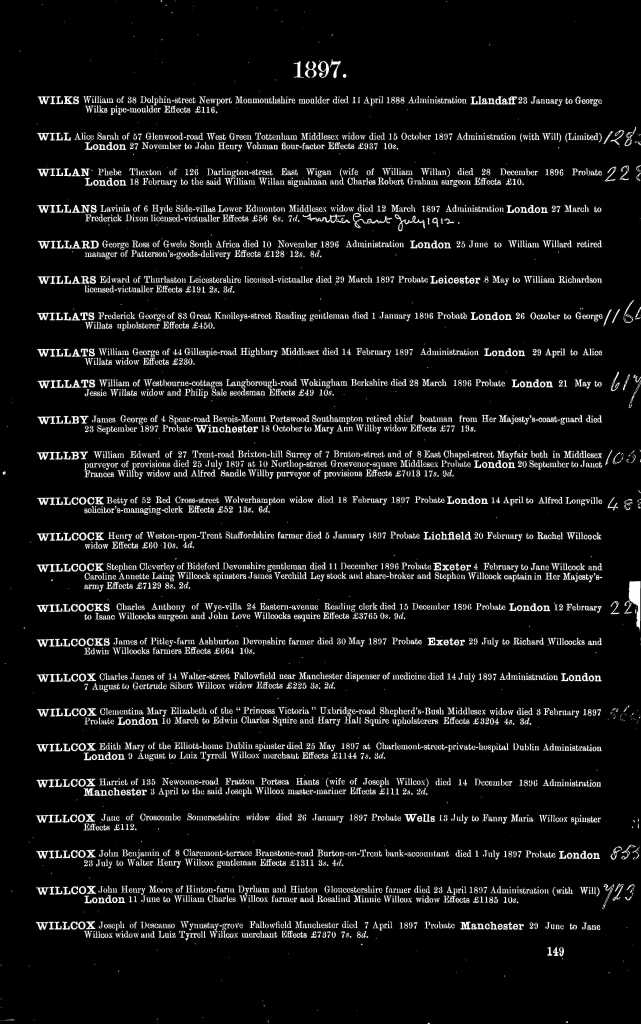
His will is on order but unfortunately is taking a little longer than expected to arrive. I will update you as soon as I can.
As I reflect on the life of my third great-great-grandfather grandfather, Biggun, I am filled with an overwhelming sense of admiration and gratitude. His story, though buried in the pages of history, has left an indelible mark on our family’s legacy. Biggun was not merely a name in a genealogy chart, he was a man of strength, courage, and resilience.
Through the fragments of dusty documents and the tales passed down from one generation to the next, Biggun’s character comes to life. His unwavering determination to overcome life’s challenges, his unwavering love for his family, and his enduring spirit have left a lasting impression on my heart. He taught me the importance of perseverance, cherishing every moment and embracing life’s uncertainties with a steadfast spirit.
As I uncovered the threads of his journey, I was reminded that we are all connected, across time and space, by the ties of blood and shared experiences.
Biggun’s life, interwoven with triumphs and trials, becomes an inseparable part of who we are today.
His legacy is our compass, guiding us through our own journeys, and reminding us to cherish our loved ones, to stand tall in the face of adversity, and to be the heroes of our own stories.
Though he may have left this earthly realm long ago, Biggun’s spirit lives on in each of us. He is the strength that courses through our veins, the voice of wisdom that whispers in our hearts, and the love that binds our family together.
In remembering him, we honor not only his memory but the very essence of what it means to be a part of this extraordinary lineage.
As time moves inexorably forward, I promise to carry forward the legacy of Biggun, sharing his story with future generations, so they, too, may draw inspiration from the life he led.
For in remembering and cherishing those who came before us, we find a profound sense of belonging and purpose, a connection that transcends the boundaries of time.
And so, to you, Biggun, my third great-grandfather, I offer my heartfelt gratitude. Thank you for the gift of your life, for the lessons you taught us, and for the love that continues to bind us as family. Your journey may have ended, but your story lives on, etched in the hearts and minds of all those who are blessed to call you our ancestors.
Rest in peace, dear Biggun, knowing that your legacy will forever shine brightly etched in these pages, illuminating the path for generations to come, with love and reverence.
Too-da-loo for now.
🦋🦋🦋
I have brought and paid for all certificates,
Please do not download or use them without my permission.
All you have to do is ask.
Thank you.
 Intwined
Pingback: The Life Of Lilly Jenny Willats, 1869-1947, The Early Years, Through Documentation. | Intwined
Pingback: The Life Of, Edwin Paul Willats, 1871-1920, The Early Years Through Documentation. | Intwined
Pingback: The Life Of, May Willats, 1874-1934, The Early Years, Through Documentation. | Intwined