In the quaint town of Romsey, Hampshire, England, amidst the cobbled streets and timeless cottages, lived a man whose life's tapestry was woven with the threads of tradition and craftsmanship. In the heart of Romsey, Hampshire, where history lingers in every street and storefront, the life of Arthur Henry Butt unfolds, a story not just of one man, but of a legacy that has stood the test of time. Born in 1856, Arthur was more than a resident of this town, he was a master butcher, a tradesman whose skill and dedication fed generations. His life, carefully pieced together through documentation, reveals not only his own journey but the unexpected ways in which the past weaves itself into the present.
I have sidestepped from my husband’s main parternal line, but with good reason. As you read on, you will see that Arthur’s story is more than a historical account, it is a thread that continues to run through my own family’s life. The very premises he once purchased and worked from have remained a cornerstone of our story. His son, Francis, known as Frank, dedicated most of his adult life to the same trade, within the same walls. And now, generations later, our son follows in their footsteps, both living and working as a butcher in the very place that Arthur once called his own.
It is often said that history repeats itself, not in exact events, but in the echoes of occupations and residences that entwine across time. It is a powerful reminder of why tracing our family history matters. We often look to the past to understand where we come from, but sometimes, the past finds its own way back to us. Occupations, residences, and family ties have a way of intertwining across time, shaping our present in ways we could never have anticipated. Arthur’s legacy is not just written in documents; it lives on through the generations who unknowingly walk the same paths, live within the same walls, and carry forward the same traditions.
Join me on this journey through time and memory, as we delve into The Life Of Arthur Henry Butt 1856–1937 Through Documentation, a story that speaks to the enduring bonds of family, occupation, and the places we call home.
Before I begin, I must start with an apology. As you will soon discover, Arthur Henry Butt came from a large family, meaning there are many births, deaths, and marriages to document. I am deeply ashamed to say that, at present, I simply cannot justify purchasing every single certificate, especially the marriage records, which cost £12.50 each. Please trust me when I say that I hate not being able to provide you with every last detail, as I would love nothing more than to give you the full picture.
However, I will do my best to provide you with the key information you need should you wish to obtain copies for yourself. I sincerely hope you can forgive me for this, and I truly appreciate your understanding as we piece together Arthur’s life and legacy through the records available.
So, without further ado, let us begin the journey into the life of Arthur Henry Butt. Through the documents available, we will uncover the story of a man whose legacy has not only shaped the past but continues to echo into the present. His life, his trade, and his family’s history are woven into the very fabric of Romsey, and as we trace his footsteps, You will see that history has a way of coming full circle.
The Life Of Arthur Henry Butt
1856–1937
Through Documentation
Welcome back to the year 1856, Romsey, Hampshire, England. A time when Queen Victoria sat on the throne, reigning over an empire that stretched across the globe. Britain was a nation of power and industry, but also of stark contrasts between the wealthy and the poor. Lord Palmerston, a charismatic and somewhat controversial figure, led the country as Prime Minister, his government navigating both domestic affairs and the aftermath of the recently ended Crimean War. The Houses of Parliament were still relatively new, having been rebuilt following the devastating fire of 1834, and Britain was in the midst of an era defined by rapid industrial progress and social change.
In Romsey, a historic market town, life moved at a different pace compared to the booming industrial cities of the north. Agriculture remained a dominant force in Hampshire, and the town’s proximity to Southampton ensured a steady flow of trade. The River Test, winding its way through Romsey, was not only a picturesque feature but an important resource for local mills and businesses. Social standing was rigidly defined, the upper classes enjoyed fine country houses, servants, and leisure, while the working class and the poor toiled to make a living, often struggling with meager wages and harsh conditions.
Fashion reflected a society steeped in propriety and structure. For the wealthy, women’s dresses featured wide crinoline skirts supported by steel cage structures, an evolution from layers of petticoats. Modesty was key, high collars, long sleeves, and intricate detailing in lace and silk. Men sported frock coats, waistcoats, and top hats, emphasizing respectability. The working class, however, dressed in simpler, more practical attire, coarse wool or linen, with women in plain gowns and aprons, and men in rough trousers, shirts, and sturdy boots.
Transportation was on the cusp of transformation. The railway had reached many parts of the country, including nearby Southampton, bringing new opportunities for trade and travel. However, in Romsey, most people still relied on horse-drawn carriages, carts, and foot travel. The wealthy might own elegant carriages, while the poor walked long distances or, if lucky, caught a ride on a carrier’s cart.
Energy, heating, and lighting varied dramatically depending on wealth and location. Coal was the primary fuel for heating, though wood fires were still common, especially in rural areas. Gas lighting had begun appearing in larger towns and cities, but in Romsey, many households still relied on oil lamps or candlelight as night fell. The air carried the scent of burning coal and wood fires, mingled with the distinct smells of livestock and industry.
Sanitation was a constant struggle. Romsey, like much of England, had open drains and primitive sewage disposal. For the poor, shared privies and contaminated water sources meant disease was never far away. The wealthy had access to more sophisticated sanitation, though even they were not immune to outbreaks of cholera and typhoid, which plagued communities where clean water was scarce. The Great Stink of London was still a few years away (1858), but the overall state of sanitation across Britain was a growing concern.
Food varied widely depending on class. The wealthy dined on a diet rich in meat, fish, fresh produce, and exotic goods imported from the empire, tea, sugar, and spices. They could afford delicacies such as oysters, game, and fine pastries. The working class lived on bread, cheese, potatoes, and whatever meat they could afford, often offal or cheap cuts. Poorer families relied heavily on gruel, porridge, and whatever scraps they could obtain. Butchers, like Arthur Henry Butt would later become, were essential members of the community, providing a vital link to one of the most sought-after commodities, fresh meat.
Entertainment was an escape from the hardships of daily life. Theatres, music halls, and taverns were popular gathering places. In Romsey, the town’s market square bustled with traders and storytellers, and fairs provided a rare chance for merriment. The wealthy enjoyed operas and private gatherings, while the working class found joy in pub songs, simple games, and local festivities. Literature was thriving, with Charles Dickens publishing *Little Dorrit*, capturing the struggles of the lower classes with sharp social critique. The arts reflected both the grandeur of the upper classes and the struggles of the working poor.
The environment was a mixture of picturesque countryside and industrial encroachment. Romsey remained largely rural, with its river, meadows, and farms providing a pastoral backdrop to everyday life. However, pollution from coal and waste was an increasing problem in more populated areas, and the effects of industrialization were creeping into even the quieter corners of England.
Gossip traveled quickly in small towns. Scandals, affairs, and financial ruin were favorite topics of discussion. A woman seen alone with a man who was not her husband could become the subject of endless whispers. Marriages were scrutinized, fortunes speculated upon, and any sign of upward mobility, or downfall, was eagerly discussed. For women, reputation was everything, and for men, maintaining financial and social standing was of utmost importance.
The divisions between the wealthy, the working class, and the poor were stark. The rich lived in comfort, with servants tending to their needs, while the working class labored long hours to sustain themselves. The poor faced relentless hardship, child labor, workhouses, and destitution were real threats. The safety net of social welfare was virtually nonexistent, and for many, survival depended on sheer resilience and the kindness of the community.
Amidst this world of contrasts, Arthur Henry Butt was born. His life, like many others, would be shaped by the era in which he lived, influenced by the town of Romsey and the society around him. As we step deeper into his story, we begin to see how history does not merely belong to the past, it echoes through generations, intertwining lives, trades, and places in ways we could never expect.
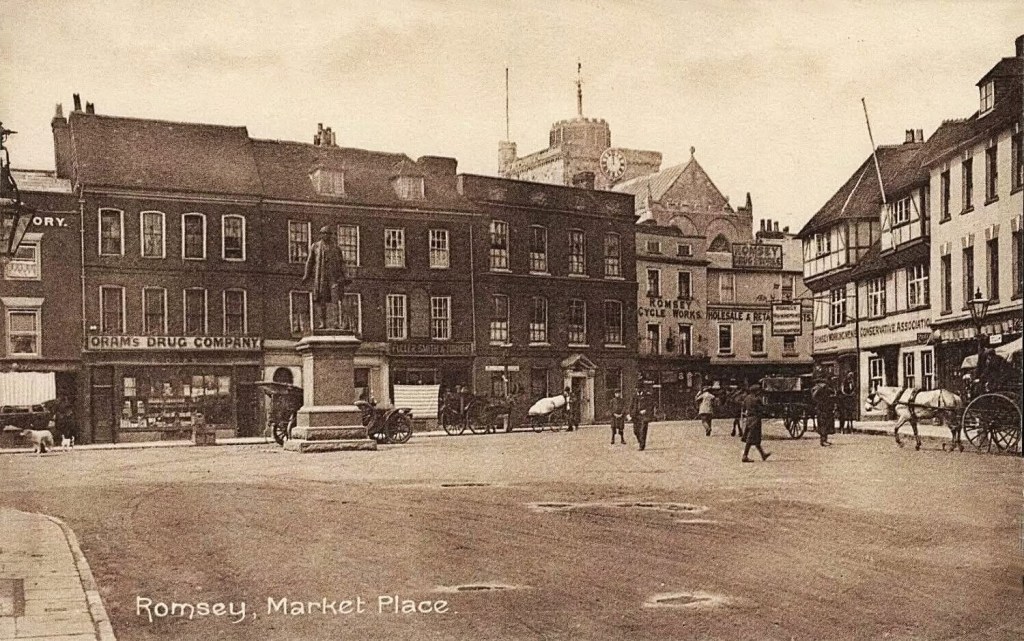
Arthur Henry Butt was born on the 14th of February 1856, in Market Place, Romsey, Hampshire, England, a town steeped in history, where the cobbled streets and bustling marketplace shaped the daily lives of its residents. He was the son of William Butt and Lucy Maria Butt, née Newman, a couple whose own lives were firmly rooted in the traditions of their time.
Arthur’s arrival was officially recorded just over a month later, on the 18th of March 1856, when his mother, Lucy, registered his birth in Romsey. The registrar, John Scorey, carefully documented the details, noting that Arthur’s father, William, was a butcher, a trade that not only provided for the Butt family but would come to define Arthur’s own path in life. Their home was listed as Market Place, Romsey Extra, a part of the town that pulsed with the energy of commerce, livestock trading, and the rhythm of everyday life.
From the very start, Arthur’s story was intertwined with the traditions of butchery and the vibrant market culture of Romsey. It was here, among the sounds of traders calling their wares and the scent of fresh produce and livestock, that he would take his first steps, steps that would eventually lead him to follow in his father’s trade, shaping a legacy that would endure through generations.

Market Place in Romsey, Hampshire, has been at the heart of the town for centuries, serving as a center for trade and daily life since medieval times. Romsey itself has a deep history, dating back to the Saxon period, with the nearby Romsey Abbey, founded in the 10th century, standing as a lasting symbol of its importance. As a market town, Romsey flourished due to its location along key trade routes, attracting merchants, farmers, and traders from surrounding villages.
By the medieval period, Market Place had become the town’s main commercial hub, where regular markets were held under charters granted by the monarchy. Farmers and craftsmen would bring their goods to sell, including livestock, grain, textiles, and household wares. The bustling atmosphere of the market shaped daily life, with traders calling out their prices, townspeople negotiating deals, and the constant movement of carts and horses transporting goods. Many of the buildings surrounding Market Place were originally timber-framed structures, some of which still stand today, later joined by Georgian and Victorian additions as the town evolved.
During the 18th and 19th centuries, Romsey continued to thrive as a market town. The advent of the coaching era saw an increase in travelers passing through, with Market Place serving as a key stop for those journeying between Southampton and Winchester. Coaching inns such as The White Horse provided food, drink, and lodging, reinforcing the area’s importance in local commerce and transportation. The arrival of the railway in 1847 marked a significant shift in travel and trade, making it easier to transport goods in and out of Romsey. However, Market Place remained the beating heart of the town, with butchers, bakers, and grocers continuing to supply the local population.
The market’s role was not only economic but also social. It was where townspeople gathered to exchange news, celebrate local events, and hear public announcements from town criers. Over the years, fairs and festivals became a regular feature, drawing visitors from across Hampshire. Despite challenges such as outbreaks of disease due to poor sanitation in the 19th century, Market Place retained its importance, adapting with the times while holding onto its historical character.
Today, Market Place continues to reflect its long history, with many of its buildings preserving the architectural styles of previous centuries. While modern businesses now operate there, the area remains a reminder of Romsey’s medieval roots and its enduring legacy as a center of trade and community life.
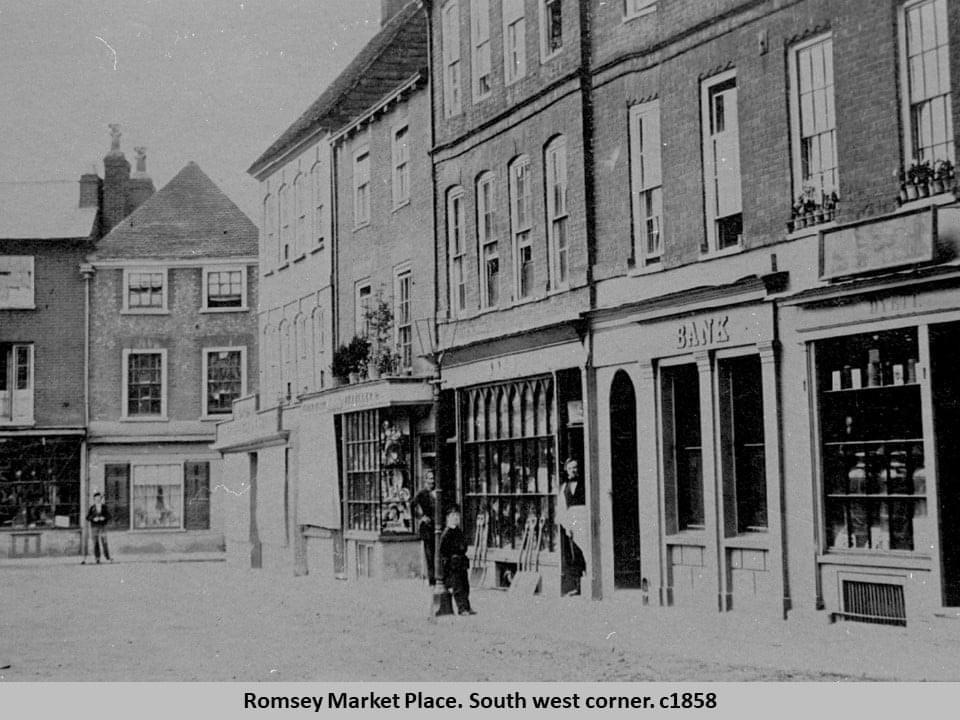
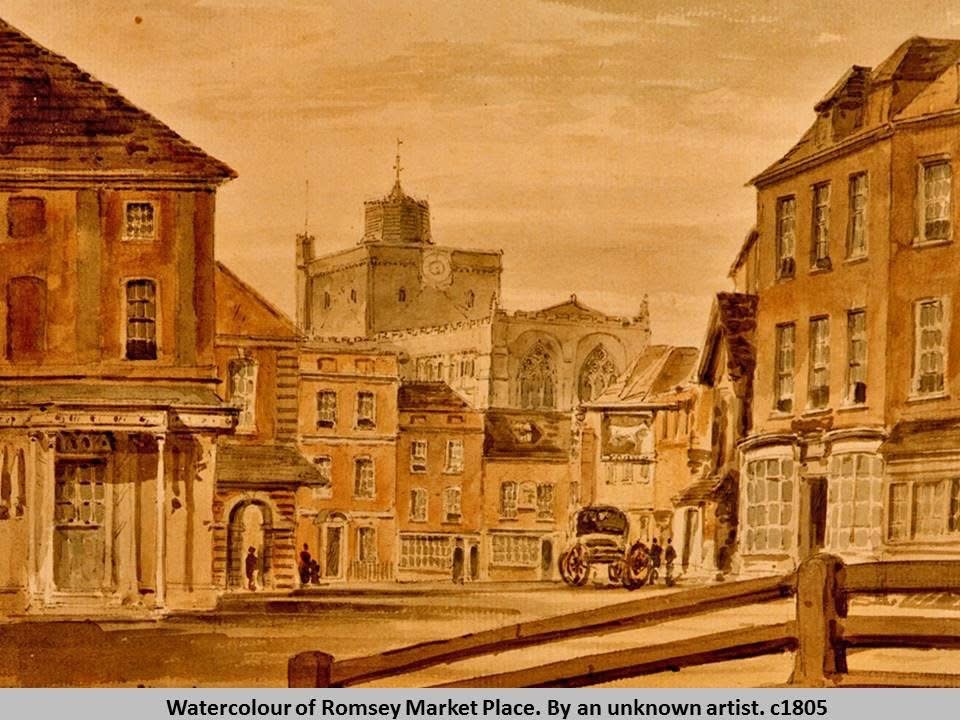
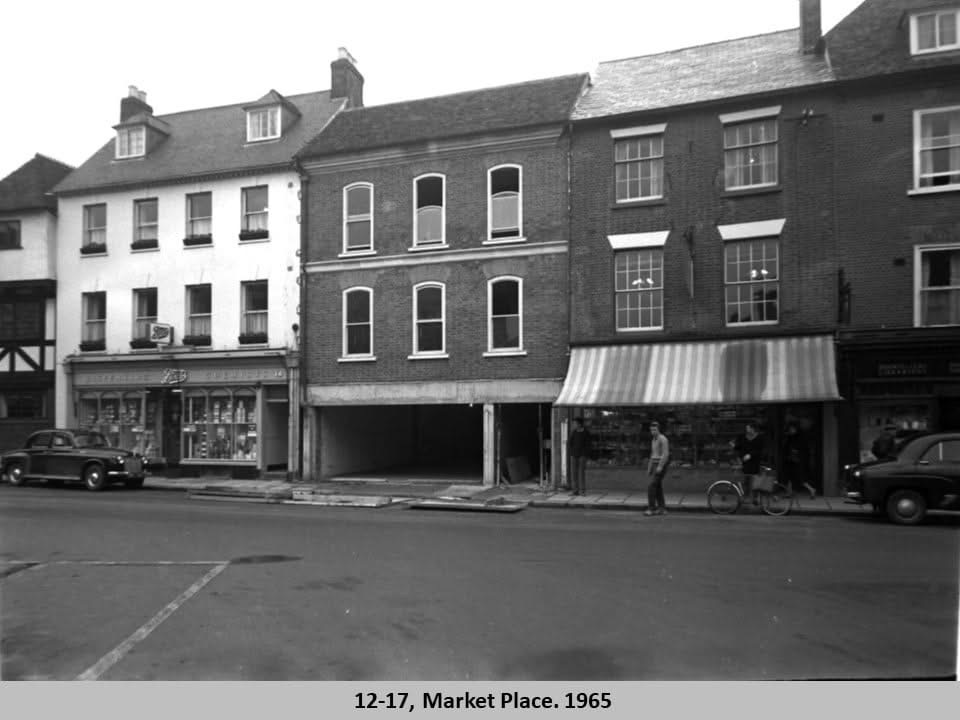
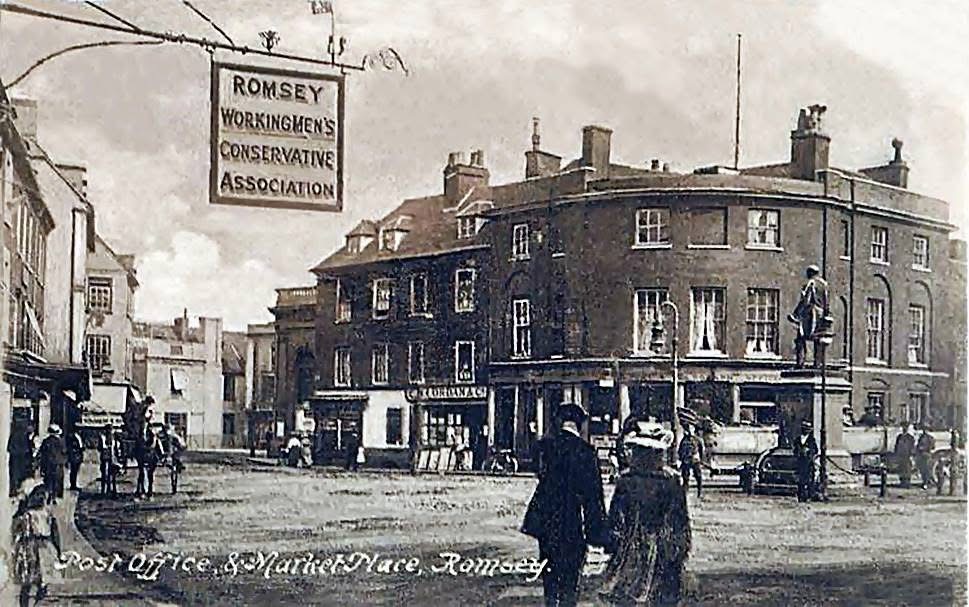
Arthur's brother, Harry James Butt, my husband's great-great-grandfather and the husband of my fourth cousin four times removed, was born on Saturday, the 29th of May 1858, at Market Place, Romsey, Hampshire, England. He was the son of William Butt, a butcher, and Lucy Maria Butt, née Newman. At the time of Harry's birth, the Butt family continued to reside at Market Place, Romsey, a location deeply entwined with their trade and livelihood.
It was their mother, Lucy Maria Butt, who registered Harry James' birth on Sunday, the 13th of June 1858, in Romsey. Her journey to the registrar’s office to officially record his arrival would have been a familiar one, having done the same just two years earlier for Arthur. The family’s presence in Market Place was firmly established by this time, with their father’s occupation as a butcher not only defining their household but also securing their place in the town’s thriving marketplace.
With two young sons growing up in the heart of Romsey’s trade district, life in the Butt household would have revolved around the daily rhythms of the market, early mornings, the sounds of livestock and traders, and the ever-present scent of fresh produce and meats. Both Arthur and Harry were born into this world of commerce and craftsmanship, a legacy that would shape their futures and continue through the generations that followed.

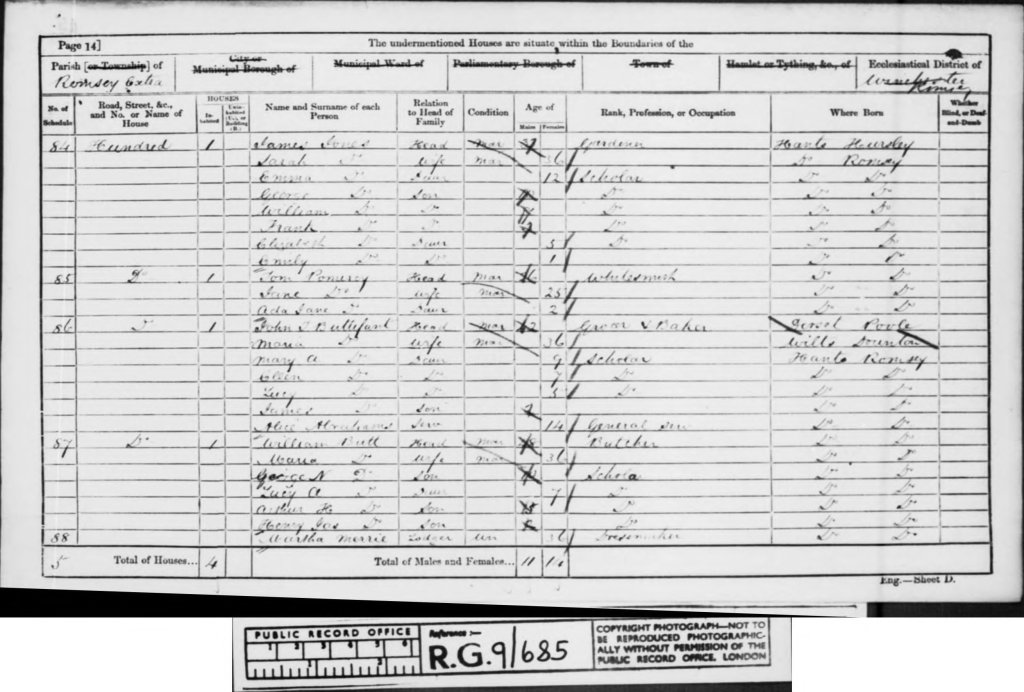
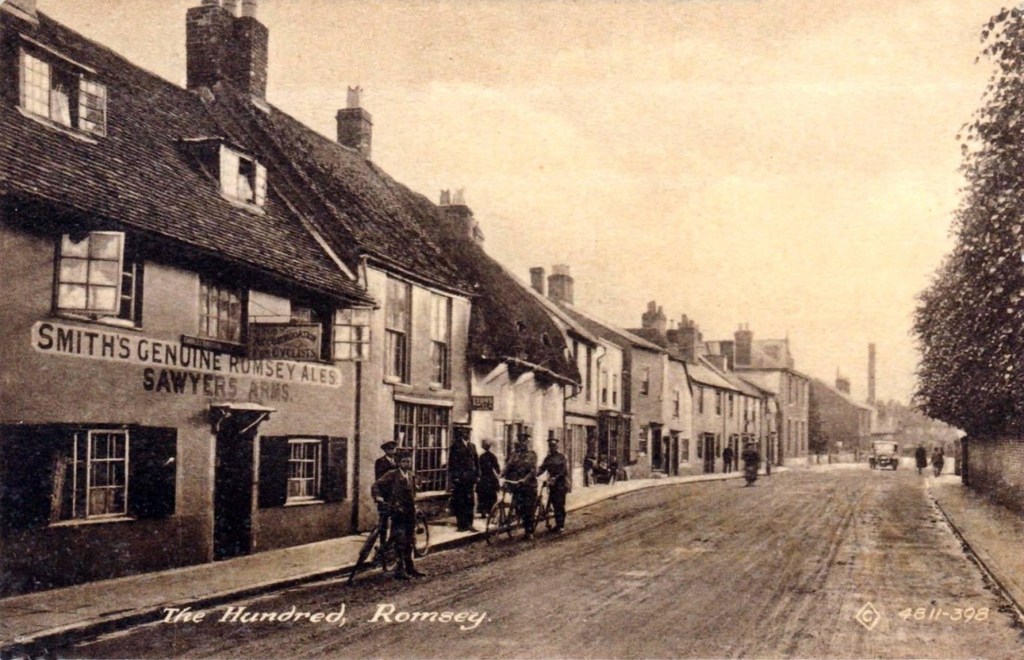
On the eve of the census, Sunday the 7th of April 1861, Arthur Henry Butt was living with his parents, William and Lucy, and his siblings, George, Lucy, and Harry, in The Hundred, Romsey, Hampshire, England. Their father, William, continued to work as a butcher, a trade that had already become central to the family’s identity. Arthur, along with his brothers and sister, was recorded as a scholar, indicating that they were receiving an education, an opportunity that was becoming more common for children of working-class families during this period.
The Hundred was a well-established part of Romsey, a place where businesses and residences were closely intertwined, creating a lively and industrious atmosphere. The proximity to Market Place meant that the Butt family remained firmly connected to the town’s trade and commerce. While their father worked long hours to sustain the business, the children would have balanced their schooling with helping around the home and, perhaps, assisting in small ways with the family trade.
By this time, Romsey was continuing to develop as a bustling market town. Butchers were vital members of the community, ensuring that families had access to fresh meat at a time when refrigeration was nonexistent and food had to be bought frequently. Life in the Butt household would have been shaped by early mornings, the sounds of market life, and the ever-present connection between work and home.
Though still young, Arthur and his siblings were growing up surrounded by the sights, sounds, and routines of their father’s trade, an experience that would later shape their own futures. The 1861 census captured a moment in time before Arthur’s journey into butchery truly began, but the foundations of his life’s work were already being laid.
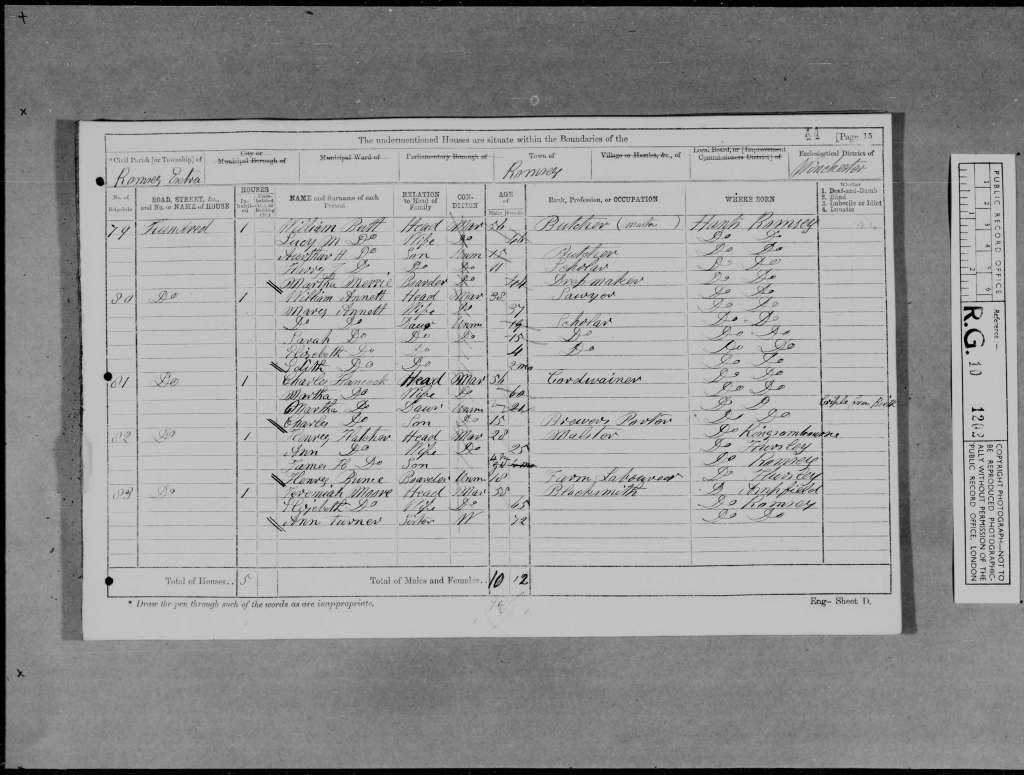
The 1871 census, taken on the evening of Sunday, the 2nd of April, recorded that Harry Butt was still living with his parents, William and Lucy, along with his brother Arthur, in The Hundred, Romsey, Hampshire. By this time, their father, William, had advanced in his trade and was now listed as a Master Butcher, signifying not only his expertise but also his position as a business owner and likely an employer within the trade. Arthur, now fifteen years old, had followed in his father’s footsteps and was working as a butcher, learning the family business that had sustained them for years. Meanwhile, Harry, at twelve, remained a scholar, continuing his education while surrounded by the daily workings of the butchery.
The household also included a boarder, Martha Merrie, a dressmaker. It was common during this period for families to take in boarders, particularly skilled workers or apprentices, as a way to supplement income. Her presence suggests that the Butt household was financially stable enough to accommodate an additional lodger, and as a dressmaker, she would have been part of the growing trade in custom clothing and textiles, which played a significant role in Victorian society.
Romsey itself was continuing to thrive as a market town, with The Hundred remaining a key area for business and residence. With Arthur now actively working in the butchery, the family trade was being passed down through the generations, securing the Butt name within Romsey’s commercial history. The 1871 census captured a household that was not only maintaining its long-established trade but also adapting to the changing times, with education, skilled work, and commerce all intertwining under one roof.
On a summer’s day, Monday, the 19th of June 1876, Arthur Butt and Fanny Kemish stood together at the Abbey Chapel in Romsey, Hampshire, ready to begin their life as husband and wife. Arthur, just 21 years old, a hardworking young butcher, and Fanny, a 24-year-old spinster, had built their lives in the heart of Romsey, residing on Bell Street. Their journey together was about to begin, surrounded by the love and presence of their family.
The ceremony was performed by Minister William Robinson, while Registrar Alfred Martin Elcock carefully recorded the details of their vows. Their fathers' names, William Butt, a butcher, and Alexander Kemish, an innkeeper, were entered into the marriage registry, a reminder of the trades and traditions that had shaped their upbringings.
Standing beside them as witnesses were Arthur’s devoted siblings, George Newman Butt and Lucy Ann Butt, a touching testament to the strength of their family bonds. The day was surely filled with love, commitment, and the promise of a future built on shared dreams.
At just twenty one years old, Arthur had already established himself as a butcher, following in the footsteps of his father, William. Fanny, born and raised in Hampshire, became his partner in both life and, likely, the family trade, as was common for wives of tradesmen during this period.
Their marriage marked the beginning of a new chapter, one that would see Arthur not only continue his work as a butcher but also build a household of his own. The wedding would have been a modest yet significant affair, likely held at one of Romsey’s churches, with family and close friends in attendance. Given the time period, Fanny would have worn a dark-colored gown, as white wedding dresses were still a luxury reserved for the wealthiest of brides. Their union would have been as much a practical partnership as a romantic one, as marriages often solidified family businesses and ensured stability for future generations.
As Arthur and Fanny settled into married life, they remained in Romsey, where the Butt family name was already well known in the trade. Their journey together would unfold in the very town where Arthur was born and raised, continuing the legacy of butchery that had shaped his family for generations.

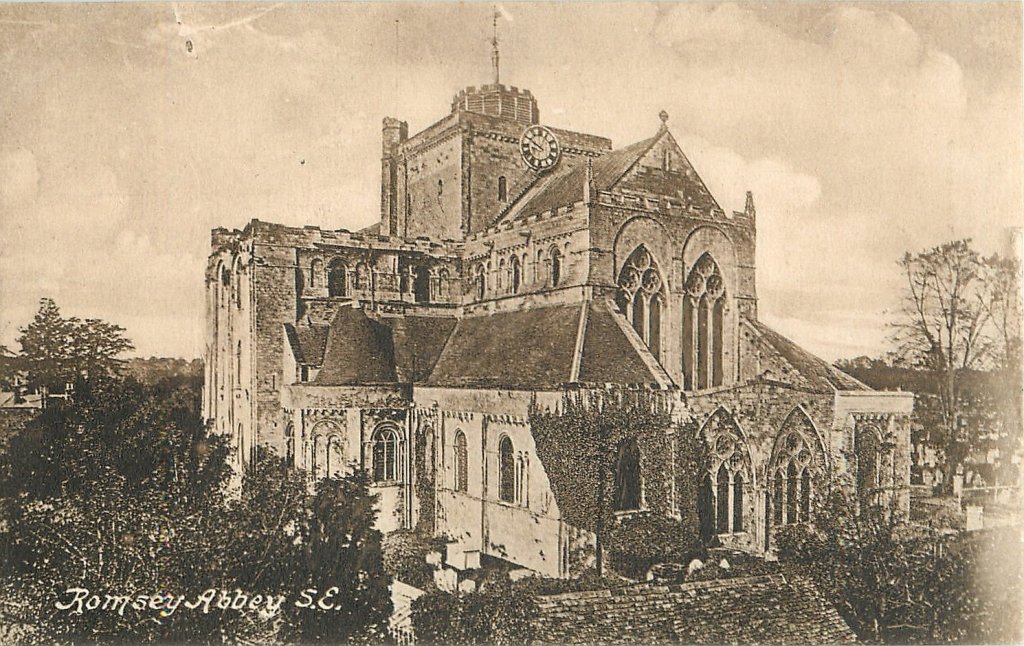
The Abbey Chapel in Romsey, Hampshire, is a historic and significant site that has long played a central role in the town's religious and social life. The chapel is part of the larger Romsey Abbey complex, which has its origins dating back to the 10th century. The Abbey was originally founded by King Ethelwulf, father of Alfred the Great, as a Benedictine nunnery in the year 907. Over the centuries, the Abbey grew in size and importance, becoming one of the wealthiest and most influential religious institutions in the region.
During the medieval period, Romsey Abbey was home to a community of nuns who were dedicated to religious life and the care of the local community. The Abbey itself was built in the Norman architectural style, with large, impressive stone walls and intricate detailing, reflecting both the grandeur of the religious establishment and its role as a center of power and influence.
The Abbey Chapel, which is part of the Abbey complex, served as a smaller place of worship within this grand setting. As the years passed, the chapel was used for various purposes, including special ceremonies, services, and events. It was also often the location for key moments in the lives of local families, such as baptisms, weddings, and funerals, as it provided a more intimate setting within the larger Abbey.
Throughout the centuries, the Abbey and its chapel witnessed significant historical events, including the dissolution of the monasteries under Henry VIII. While many religious sites were stripped of their assets and abandoned, Romsey Abbey managed to survive, largely due to its status and the support of the local community. Over the years, the Abbey and its chapel have been restored and preserved, maintaining much of their historical integrity.
Today, Romsey Abbey Chapel continues to be a place of worship and community gatherings, but it also serves as a reminder of Romsey's rich history and religious heritage. The chapel remains a focal point for local residents and visitors alike, offering a glimpse into the past and the role that religious buildings played in shaping the social fabric of the town. It is a testament to the enduring legacy of faith and tradition in Romsey, a place that has seen centuries of change, yet continues to honor its deep historical roots.
Arthur’s and Fanny’s marriage announcement was placed in the Wiltshire County Mirror on Tuesday 27th June 1876. it reads as follows,
MARRIAGES.
BUTT-KEMISH - June 19, at the Abbey Chapel, Romsey,
by the Rev. W.Robertson, Mr. Arthur Butt, to Miss Ann
Kemish, both of Romsey.

Arthur and Fanny’s son, Ernest William Butt, was born on Friday the 2nd of February 1877 at Middlebridge Street, Romsey, Hampshire, England. His arrival marked the next generation of the Butt family, who had long been established in the town. Just weeks later, on Monday the 26th of February 1877, Arthur himself registered Ernest’s birth in Romsey, officially documenting his son’s place in the family’s history.
George Withers, the registrar, recorded that Arthur’s occupation was a butcher, a trade that had been passed down through generations. The family’s residence was listed as Middlebridge Street, Romsey, an area that, like Market Place and The Hundred, was central to the town’s bustling trade and daily life. The record also confirmed that Ernest’s mother, Fanny, had been Fanny Kemish before her marriage to Arthur, preserving her maiden name in the official documents.
Life for the young family would have revolved around the demands of the butchery business, with Arthur working long hours to provide for his wife and newborn son. Middlebridge Street, situated close to the heart of Romsey, would have been filled with the daily sounds of market life, traders calling out their goods, carts rattling along the streets, and the steady hum of a town dependent on its skilled craftsmen and merchants. Ernest’s birth signified the continuation of the Butt family legacy in Romsey, a name that had already become deeply intertwined with the town’s history.

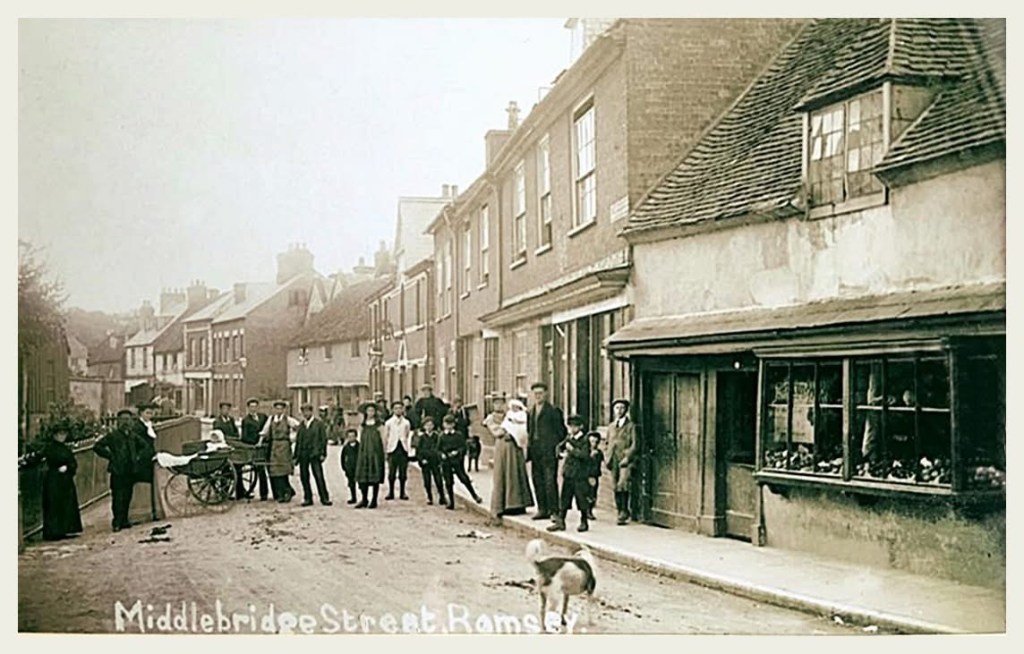
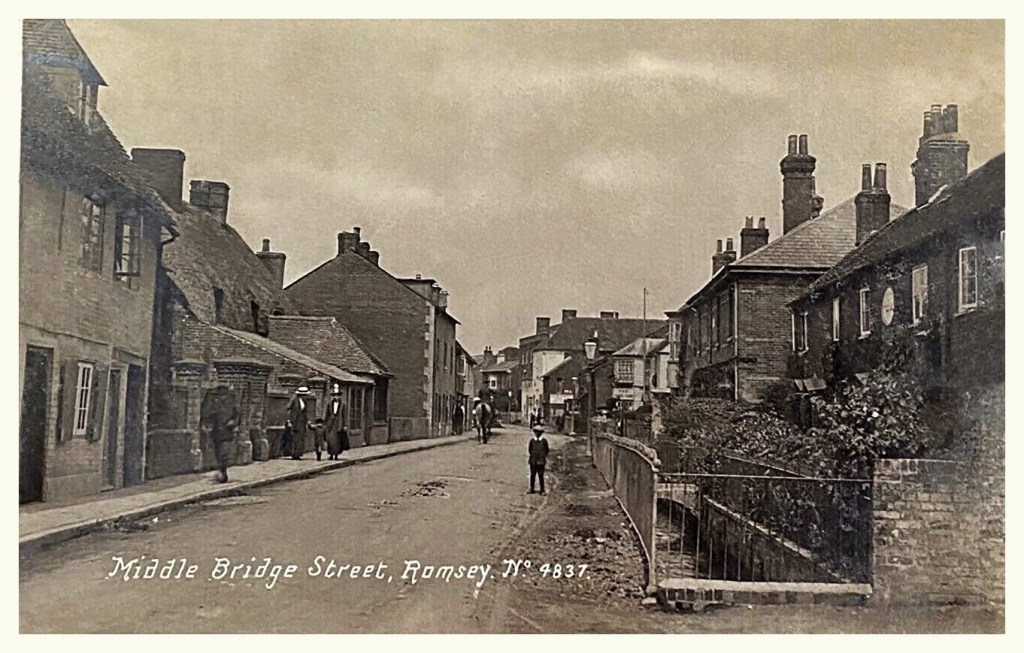
Middlebridge Street, Romsey, Hampshire, has long been a significant part of the town’s history, with its roots stretching back centuries. The street takes its name from its position near one of Romsey’s key crossings over the River Test, a vital waterway that has shaped the town’s development since medieval times. As Romsey grew into a thriving market town, Middlebridge Street became an important thoroughfare, connecting the town centre to surrounding rural areas and serving as a home for skilled tradespeople, merchants, and craftsmen.
During the medieval and early modern periods, Middlebridge Street was lined with timber-framed buildings, some of which still stand today, preserving the architectural character of bygone centuries. Many of these properties would have housed families who worked in Romsey’s flourishing wool and cloth trade, which brought prosperity to the town from the Middle Ages through to the 18th century. As commerce shifted in the 19th century, Middlebridge Street became home to various other trades, including butchers, blacksmiths, and bakers, reflecting the town’s continued reliance on skilled artisans and shopkeepers.
By the Victorian era, when Arthur Henry Butt and his family lived there, Middlebridge Street was a bustling and industrious part of Romsey. Butchers, such as the Butt family, played a vital role in the local economy, providing fresh meat to residents at a time when refrigeration did not exist, making daily access to butchers essential. The street would have been alive with the sights and sounds of trade, carts carrying supplies, the calls of merchants, and the chatter of townspeople going about their daily routines.
The River Test, which runs parallel to Middlebridge Street, added to the area’s importance, with mills and small-scale industries making use of the water’s power. The river also contributed to the lush surroundings of Romsey, providing a contrast to the busy marketplace and offering a sense of natural beauty amid the town’s industry. However, being close to the water also meant that Middlebridge Street, like other low-lying areas of Romsey, was at times vulnerable to flooding, particularly before modern drainage systems were implemented.
Throughout its history, Middlebridge Street has remained a key part of Romsey’s identity. Even as the town has modernised, it has retained much of its historic charm, with many of its older buildings still standing, offering a glimpse into the past. For families like the Butts, who lived and worked there in the late 19th century, Middlebridge Street was not just an address, it was a place where livelihoods were built, traditions were carried on, and the town’s enduring legacy was shaped.
Arthur and Fanny’s son, Horace Arthur Butt, was born on Friday, the 25th of October 1878, at the family home on Middlebridge Street, Romsey, Hampshire, England. His birth added another branch to the growing Butt family, further cementing their presence in Romsey. Nearly a month later, on Friday, the 22nd of November 1878, Arthur once again took on the duty of registering his son’s birth in Romsey, ensuring that Horace’s place in the official records was secured.
George Withers, the registrar, documented that Arthur’s occupation remained that of a butcher, a trade that defined not just his livelihood but the family’s identity in Romsey. The family’s residence was recorded as Middlebridge Street, a familiar setting where the Butts had already begun raising their young children. The record also noted Fanny’s maiden name as Kemish, maintaining the link to her own family history.
Horace’s early years would have been shaped by the rhythms of life in a butcher’s household, surrounded by the sights, sounds, and demands of the trade. Middlebridge Street, close to the heart of Romsey, was a bustling area where skilled tradesmen, merchants, and townspeople intertwined in daily life. As the second son of Arthur and Fanny, Horace was born into a legacy of craftsmanship and dedication, one that would define the Butt family for generations to come.

Arthur and Fanny’s son, Sydney Harry Butt, was born on Monday, the 26th of July 1880, at the family home on Middlebridge Street, Romsey, Hampshire, England. His birth added another chapter to the growing Butt family, deeply embedded in the heart of Romsey.
On Wednesday, the 18th of August 1880, Arthur registered his son Sydney’s birth in Romsey. The registrar, George Withers, recorded that Arthur’s occupation was a butcher, a trade that had been passed down through generations. The family’s residence was also noted to be on Middlebridge Street, where Arthur worked, further connecting their home to the local market and their livelihood. The record also confirmed that Sydney’s mother, Fanny, had been Fanny Kemish before her marriage to Arthur, preserving her maiden name in the official record.
At the time of Sydney's birth, Middlebridge Street was a bustling part of Romsey, where business and residence were closely intertwined. The family home was situated near the town's marketplace, and Arthur’s butcher shop would have been a cornerstone of the community. The steady flow of customers and tradespeople would have shaped Sydney’s early environment, much like his brothers before him. Growing up in such a vibrant setting, Sydney’s life was likely to be filled with the sounds and sights of a thriving market town, as his father continued to build upon the legacy of the Butt family in Romsey.

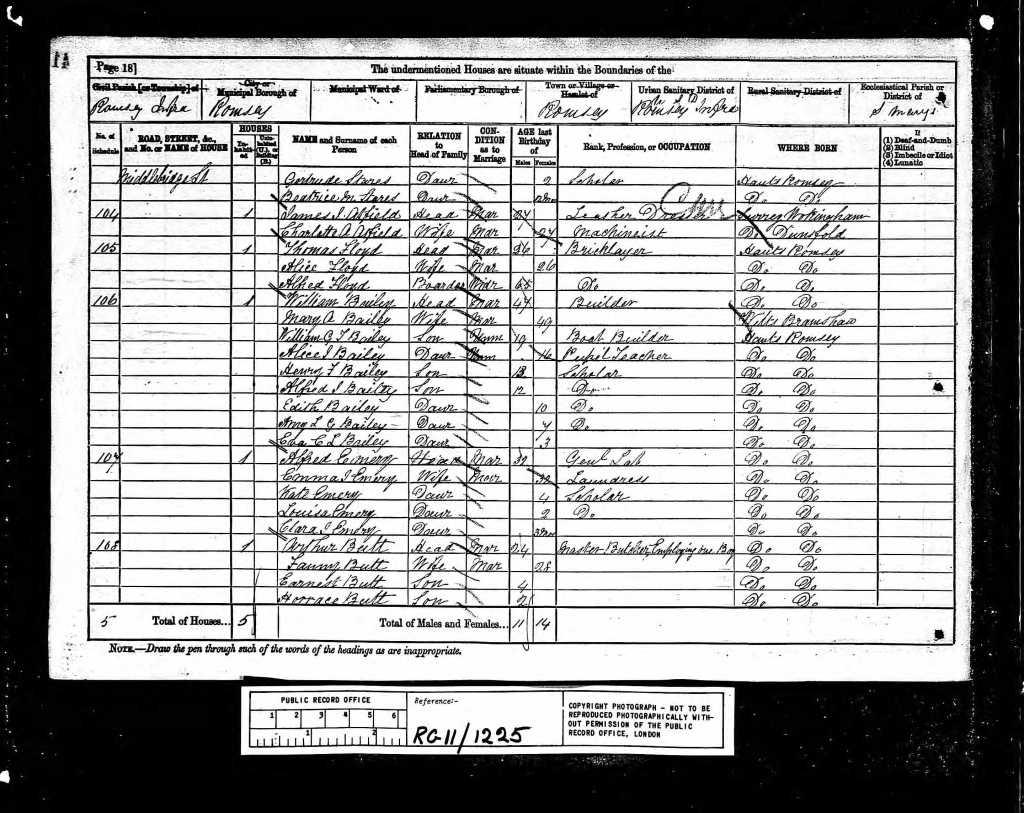
On the day of the census, Sunday, 3rd April 1881, Arthur, his wife Fanny, and their children Ernest, Horace, and Sydney were residing at Middlebridge Street, Romsey, Hampshire, England. The family’s home was also the location of Arthur’s butcher shop, and as was typical for many families in this period, their residential and working spaces were closely linked. Arthur was working from home as a master butcher, employing one boy to assist him in the daily operations of the business.
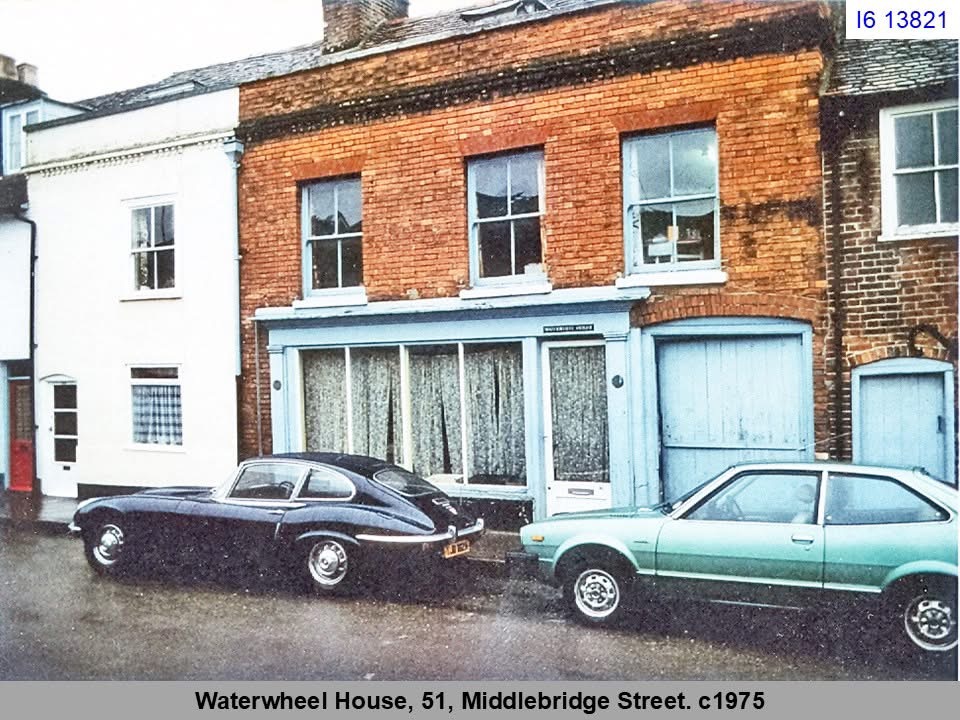
At that time, Waterwheel House, located on Middlebridge Street, was formerly known as Mr. Arthur Butt’s butcher’s shop. This property included not only the shop itself but also a yard, slaughterhouse, and a bacon drying loft, all essential components for a butcher’s business in the 19th century. These facilities would have been used for slaughtering livestock, preparing fresh meat for sale, and preserving bacon, key aspects of the butchery trade.
The presence of Arthur’s butcher shop was central to the family’s livelihood, and as the business grew, it would have shaped the lives of Arthur, Fanny, and their children. The 1881 census captured a snapshot of a hardworking family continuing to build on a legacy of craftsmanship, with Arthur at the helm of the family business, providing for his family while contributing to the town’s thriving trade.

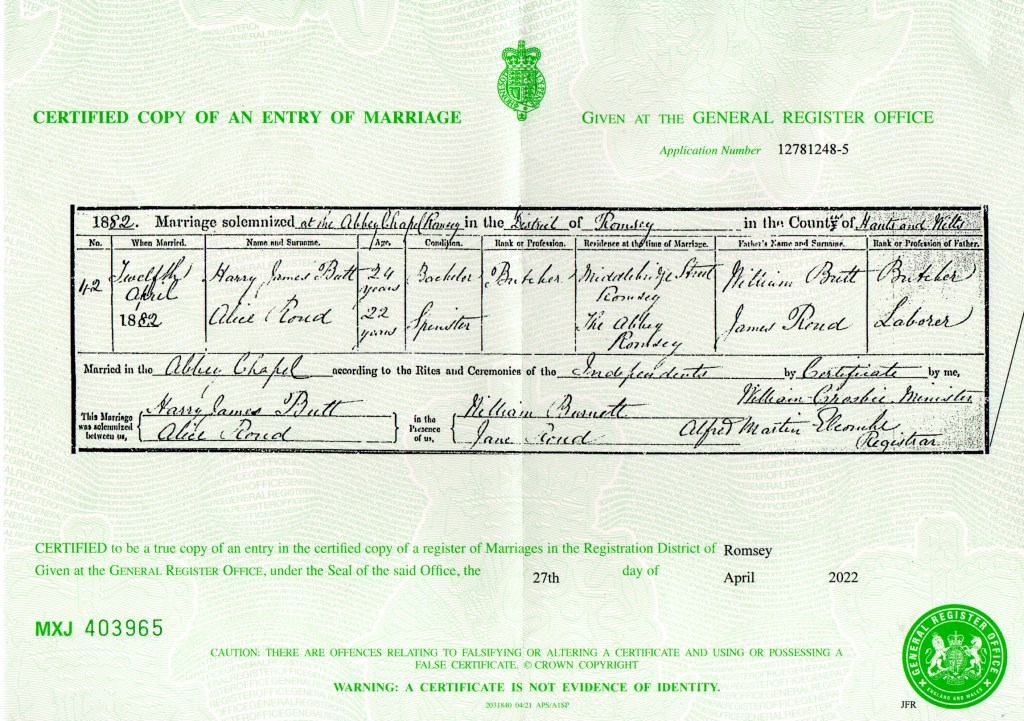
Arthur’s brother, Harry James Butt, a bachelor, married Alice Roud (My 4th cousin, 4 times removed), a spinster and daughter of James Roud and Mary Roud (née Martin), on Wednesday the 12th of April 1882. Harry was 24 years old at the time of the marriage and worked as a butcher, much like his father, while Alice was 22 years old. The marriage took place at The Abbey Chapel in Romsey, Hampshire, a significant landmark in the town, marking the beginning of a new chapter for the couple.
The witnesses to the marriage were William Burnett and Jane Roud, the latter likely being Alice’s relative. At the time of their marriage, Harry was residing at Middlebridge Street, Romsey, while Alice was living at The Abbey, Romsey. These locations were familiar to the couple, with Middlebridge Street being a central area for the Butt family, where Harry’s brother Arthur was also living and running his butcher business.
The marriage certificate recorded the names of their fathers: William Butt, a butcher, and James Roud, a labourer. These details provided a glimpse into the families’ occupations and backgrounds, with Harry continuing the family tradition of butchery, while Alice’s father worked in a more physically demanding occupation, a common role for many men during that era.
This marriage would have further intertwined the lives of the Butt and Roud families in Romsey, establishing connections not only through blood but also through their shared presence in the town's commercial life. Harry and Alice’s union was a reflection of the ongoing connections that defined life in 19th-century Romsey, where local families often worked and lived in close-knit communities.
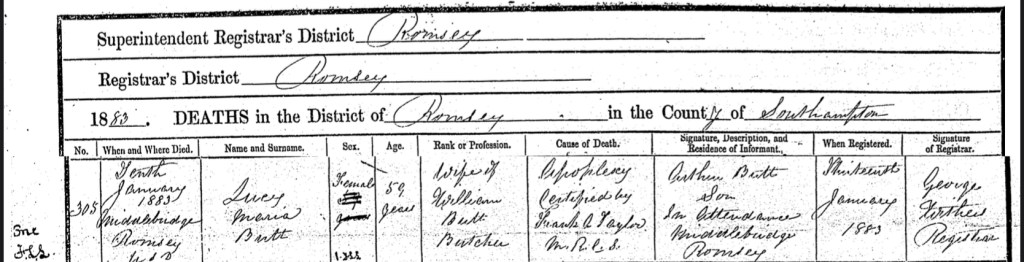
As we all know, there are only two certainties in life, we are born, and we die. In January 1883, one of those certainties became a harsh reality for Arthur Henry Butt and his family. On Wednesday, the 10th of January 1883, Arthur’s mother, Lucy, passed away in Middlebridge, Romsey, Hampshire. Lucy died at the age of 59 from apoplexy, a sudden and often fatal condition caused by a stroke or severe bleeding in the brain. Her death marked the end of a chapter in the Butt family’s history.
Arthur was present at his mother’s side during her final moments, a testament to the close family bond they shared. As was customary at the time, Arthur registered her death on Sunday, the 13th of January 1883. The loss of Lucy would have been deeply felt by Arthur and his family, as she had been an integral part of their lives and the foundation of the household.
Her death, like many others of that era, was a reminder of the fragility of life, particularly at a time when medical care was limited, and sudden illnesses like apoplexy could quickly take a loved one away. For Arthur, the responsibility of registering her death was a formal but poignant act, marking the end of his mother’s life and beginning the process of mourning and remembrance.
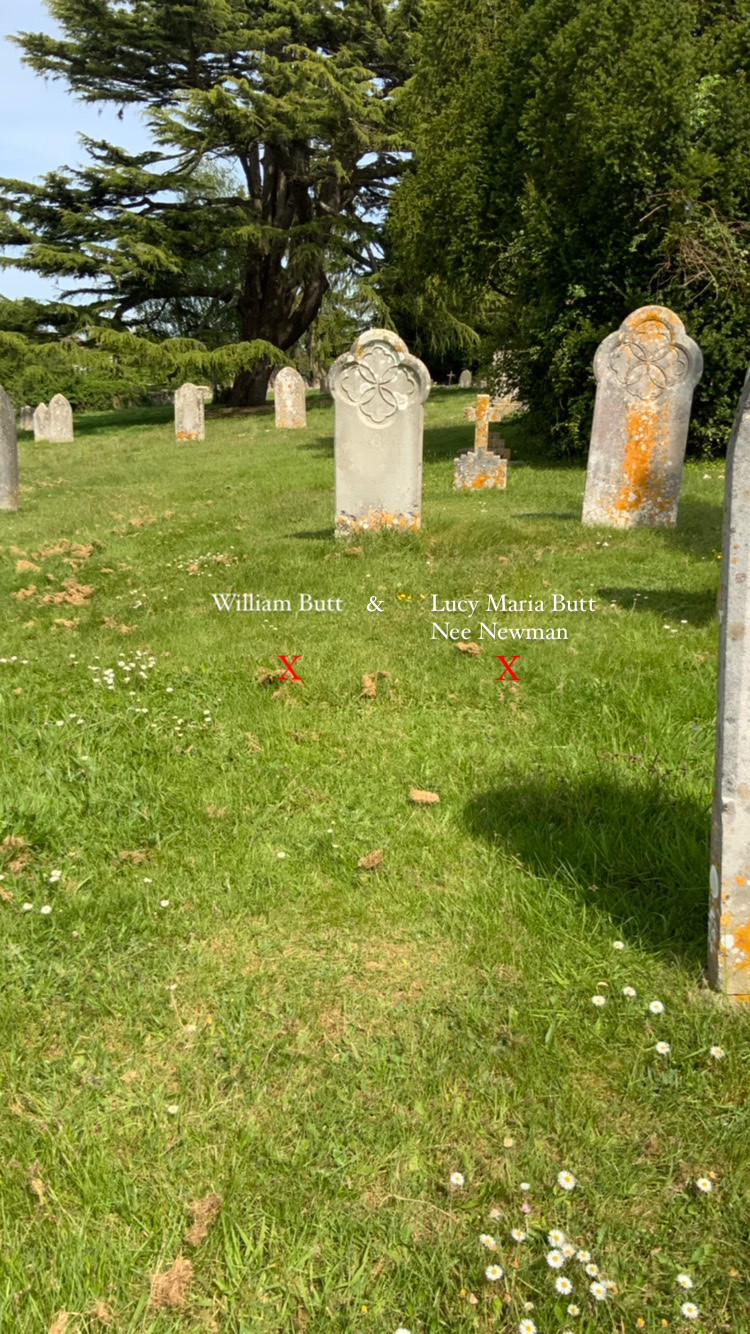
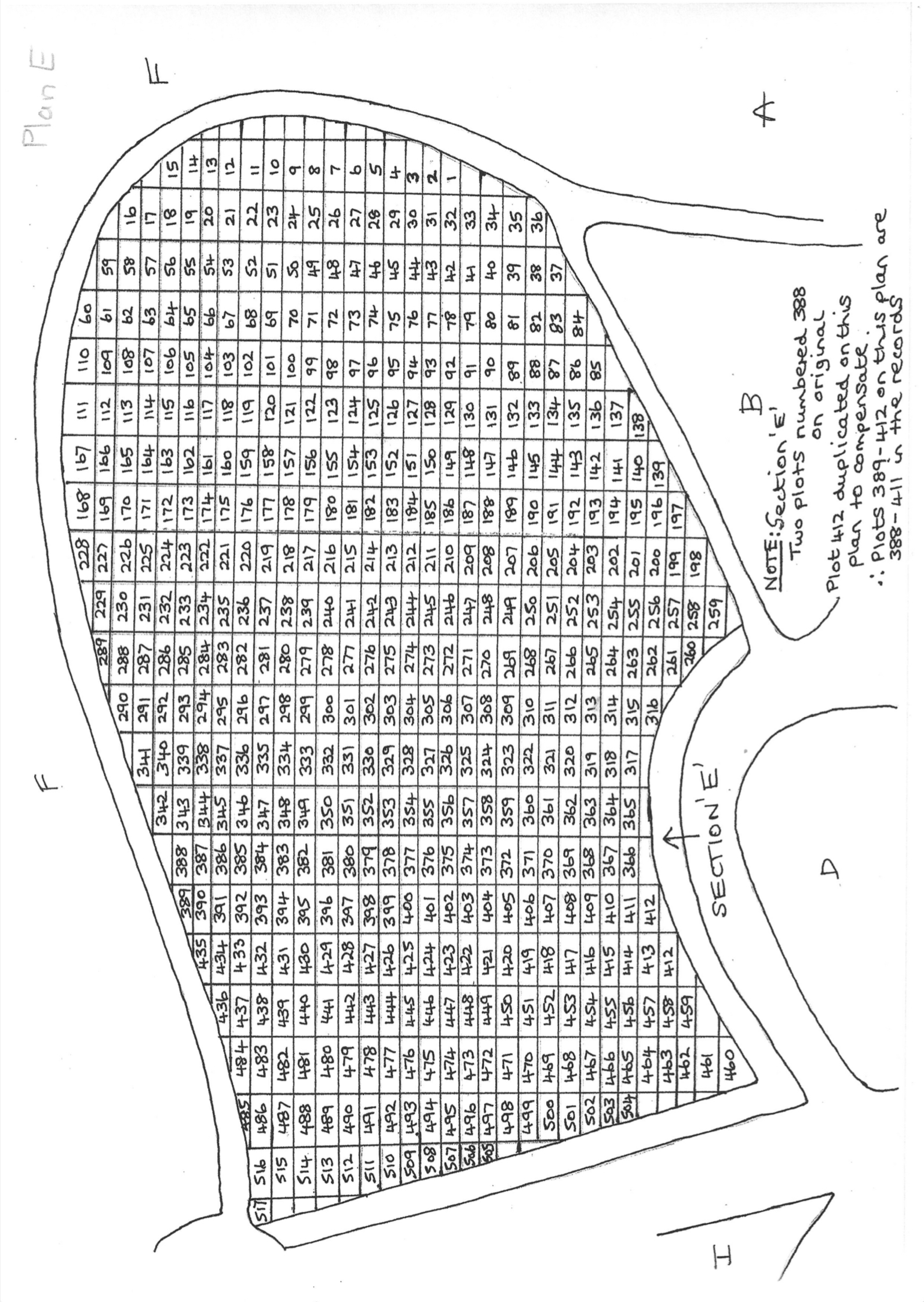
Arthur's mother, Lucy Maria Butt (née Newman), was laid to rest at Romsey Old Cemetery, Botley Road, Romsey, Hampshire, on Monday, the 15th of January 1883. She was interred in Grave E420, a final resting place where she would be remembered by her family and future generations.
The cemetery, with its quiet, peaceful surroundings, offered a place of reflection and remembrance for the Butt family. The loss of Lucy at the age of 59 would have left a lasting impact on Arthur and his family, and her burial in Romsey Old Cemetery marked a significant moment in their lives. This cemetery, an integral part of Romsey's history, continues to serve as a reminder of the past, where many local families, including the Butt family, laid their loved ones to rest. Lucy’s grave in Grave E420 stands as a testament to her life and her important role in the family she left behind.

Romsey Old Cemetery, located on Botley Road in Romsey, Hampshire, has a rich history that dates back to the 19th century. The cemetery was established in 1840 as a response to the increasing need for burial space in Romsey, particularly as the town’s population grew and the churchyards began to fill up. It was designed to serve as a public burial ground for the local community, providing a dignified resting place for people from all walks of life.
The cemetery’s layout and design reflect the Victorian era’s approach to burial grounds, which were often planned as peaceful, park-like spaces where families could come to mourn and remember their loved ones. Over the years, the cemetery has become the final resting place for many prominent figures from Romsey, as well as countless ordinary residents whose names have been passed down through the generations.
Romsey Old Cemetery is known for its historical significance in the town’s social and cultural life. It has witnessed nearly two centuries of change, from the Victorian period through to the modern day. The cemetery has also played a role in the development of Romsey itself, as it sits on Botley Road, which was once an important route for travelers and trade in the area.
Throughout its history, the cemetery has been well-maintained and cared for, with many gravestones and memorials remaining in place, some weathered by time but still legible. The site is a reflection of Romsey’s history, with its quiet pathways, mature trees, and serene atmosphere providing a sense of connection to the past.
Today, Romsey Old Cemetery remains an active and respected burial ground, with new interments still taking place alongside the older graves. It is a place where local residents come to honor their ancestors and reflect on the history of Romsey. The cemetery stands as a testament to the town’s rich history and the lives of the people who have helped shape it. It is one of my favourite places in Romsey to visit.
Arthur and Fanny’s son, Francis Herbert Butt, was born on Saturday, the 24th of March 1883, at the family home on Middlebridge Street, Romsey, Hampshire, England. The Butt family had by this point established a strong presence in Romsey, with Middlebridge Street serving as both their home and the location of Arthur’s butcher business.
Arthur, acting as the informant, registered his son’s birth on Saturday, the 5th of May 1883, in Romsey. The registrar, George Withers, recorded that Arthur’s occupation was a butcher, continuing the family trade that had been passed down through the generations. The family’s residence was once again noted to be in Middlebridge Street, Romsey, which continued to serve as both their home and the heart of their livelihood.
The birth registration once again confirmed that Francis’s mother, Fanny, maiden name was Fanny Kemish. Francis Herbert Butt’s birth added another chapter to the Butt family’s legacy in Romsey, and like his siblings before him, he would grow up in the vibrant community that his family had been a part of for many years.

Arthur and Fanny’s son, Leonard George Butt, was born on Wednesday, the 2nd of July 1884, at the family home on Middlebridge Street, Romsey, Hampshire, England. The family home continued to serve as both a residence and the location of Arthur’s butcher business, a central part of their life in Romsey..
Arthur, as the informant, registered his son’s birth on Thursday, the 14th of August 1884, in Romsey. The registrar, George Withers, recorded that Arthur’s occupation was a butcher, consistent with his role as the head of a family business. The family’s residence was once again listed as Middlebridge Street, Romsey, underlining their continued connection to the area.
The registration one again noted that Leonard George’s mother, Fanny, had the maiden name of Fanny Kemish. Leonard George Butt’s birth added to the growing family, as Arthur and Fanny raised their children in the heart of Romsey, where their butchery trade and strong familial ties were firmly rooted in the community.

Arthur and Fanny’s daughter, Edith Maria Butt, was born on Monday, the 24th of August 1885, at the family home on Middlebridge Street, Romsey, Hampshire, England. The family continued to live in the same location, where Arthur ran his butcher business, and it served as the backdrop for the growing family.
Arthur, as the informant, registered Edith’s birth on Wednesday, the 7th of October 1885, in Romsey. The registrar, George Withers, noted that Arthur’s occupation was a butcher, following the family tradition of working in the butchery trade. The family’s residence was again recorded as being on Middlebridge Street, Romsey, which remained a central part of their lives.
The birth registration once again highlighted that Edith’s mother, Fanny, had the maiden name of Fanny Kemish. This important detail would be preserved for future records and added another layer to the family’s history. Edith Maria Butt’s birth further expanded the Butt family in Romsey, where Arthur and Fanny continued to raise their children, deeply embedded in the town’s community.

Arthur Henry Butt and Fanny Butt (née Kemish) welcomed their daughter, Amy Lilian Butt, on Wednesday the 14th of September 1887, at the family home on Middlebridge Street, Romsey, Hampshire, England. Middlebridge Street continued to be the heart of their lives, where both their family and Arthur's butcher business thrived.
Arthur, as the informant, registered Amy Lilian’s birth on Friday the 28th of October 1887, in Romsey. The registrar, George Withers, recorded that Arthur’s occupation was a butcher, a continuing reflection of the family’s long-standing involvement in the trade. The family’s residence was again noted as being on Middlebridge Street, Romsey, underscoring the family’s established roots in the area.
Amy Lilian’s birth added another branch to the Butt family tree, with Arthur and Fanny continuing to raise their children in the familiar surroundings of Romsey, where their lives were intertwined with both family and community.

Arthur's father, William Butt, passed away on Tuesday, the 16th of February 1890, at his home in Palmerston Street, Romsey, Hampshire, England. He was 76 years old at the time of his death, having lived a long life deeply rooted in the Romsey community, where he had worked as a butcher and raised his family.
William succumbed to chronic bronchitis and rheumatism, both of which would have caused him considerable suffering in his later years. Chronic bronchitis, a progressive condition affecting the lungs, would have made breathing increasingly difficult, while rheumatism likely caused persistent pain and stiffness in his joints, making movement a struggle. Without the modern medical treatments available today, his final years would have been marked by discomfort and declining health, with little relief beyond traditional remedies and rest.
Arthur’s brother, Harry James Butt, was present at their father’s passing and took on the responsibility of registering William’s death on Thursday, the 20th of February 1890. This moment would have been a deeply emotional one for the Butt family, as they mourned the loss of their patriarch, a man who had dedicated his life to his trade and his family.
With William’s passing, a chapter of the Butt family history came to a close, but his legacy lived on through his children, particularly Arthur, who continued the family’s butchery tradition in Romsey, ensuring that the name and trade endured for future generations.

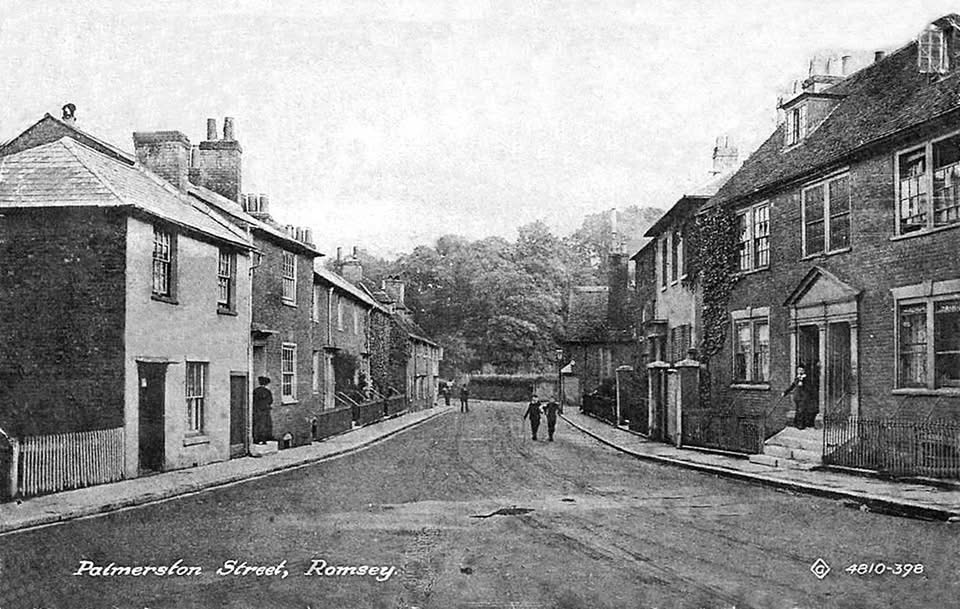
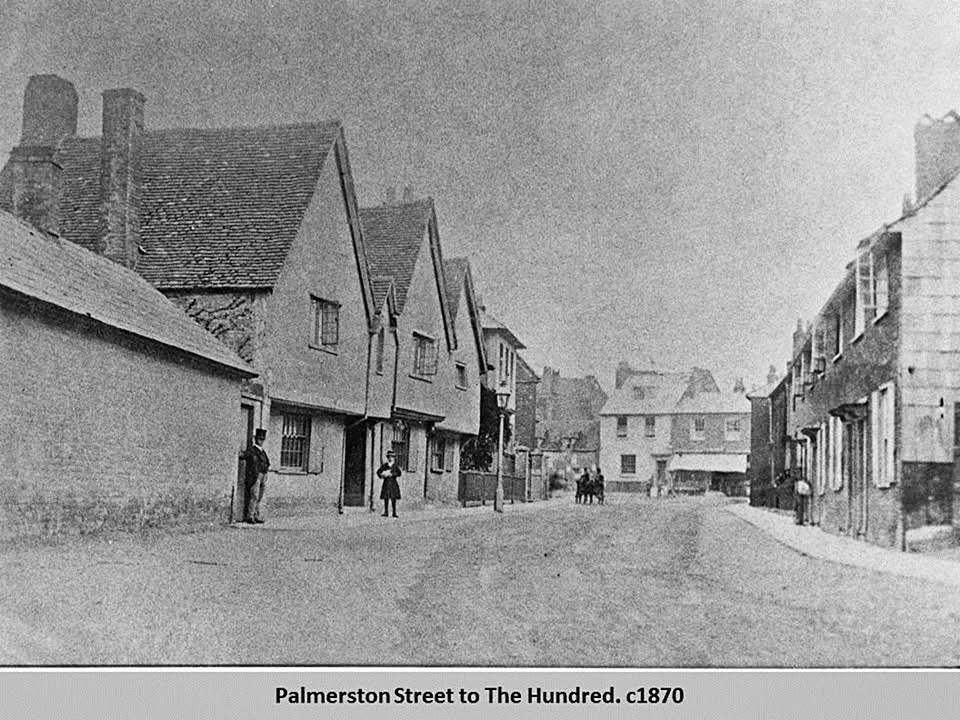
Palmerston Street in Romsey, Hampshire, is a historic thoroughfare that has played a significant role in the town's development. The street is home to several notable buildings, including Numbers 1 and 2, both of which are Grade II listed. Number 1 Palmerston Street was first listed on 28 August 1951, and Number 2 was listed on 4 December 1972.
The street's name likely honors Henry John Temple, the 3rd Viscount Palmerston, who was a prominent British statesman and served as Prime Minister in the mid-19th century. The Palmerston family had strong ties to the Romsey area, particularly through the Broadlands estate, which was the family seat.
In the 19th century, Palmerston Street was a bustling area that housed various trades and businesses, contributing to Romsey's local economy. The presence of listed buildings from this period indicates the street's architectural and historical significance. The designation of these buildings as Grade II listed highlights their importance in reflecting the architectural styles and urban development of that era.

Today, Palmerston Street remains an integral part of Romsey's heritage, with its historical buildings serving as a testament to the town's rich past. The street's architecture offers insights into the lifestyles and trades of the people who lived and worked there over the centuries, making it a valuable area for both residents and visitors interested in the history of Romsey.

On Sunday, the 23rd of February 1890, Arthur’s father, William Butt, was laid to rest at Romsey Old Cemetery, Botley Road, Romsey, Hampshire. He was buried in Grave E421, just a short distance from where he had lived, worked, and built a life for his family. This final resting place became a solemn marker of a man who had spent his years dedicated to his trade and loved ones. For Arthur and his family, saying goodbye would have been a deeply emotional moment, as they gathered to honor a father, a husband, and a hardworking man whose legacy would live on through the generations that followed.

A few years ago, my mother-in-law Janet, my sister-in-law Sarah, and I visited Romsey Old Cemetery in search of the resting places of William and Lucy Butt. After some effort, we found their graves, lying side by side as husband and wife in life and death. Yet, to our surprise and a touch of sadness, we discovered that neither grave bore a headstone.
It was a puzzling realization for all of us, given the successes of their sons, particularly Arthur, who had achieved so much in his lifetime. Their unmarked resting places seemed at odds with the legacy of a family that had left such a lasting imprint on Romsey. It’s hard to imagine why no marker was placed to honor them, leaving us with more questions than answers. Still, standing there, we couldn’t help but feel the weight of their presence, even without a stone to tell their story. It was a poignant reminder of the stories that lie hidden beneath the surface of history, waiting to be uncovered and remembered.
Arthur Henry Butt’s story is far from over. However, for now, I feel this is a good place to pause. History can be overwhelming, and I want to ensure that each chapter of Arthur’s journey is given the time and space it deserves.
As we have seen, Arthur was more than just a master butcher, he was a son, a husband, a father, and a pillar of his community. His footsteps still echo in the very places where he once lived and worked, intertwining with the lives of his descendants in ways he could never have imagined.
There is still more to uncover, more to share, and more connections to be made. But for now, I will leave you with what we have learned so far. Thank you for taking this journey with me, and I hope you continue to explore the past, because you never know just how much of it still shapes the present.
Until then,
Toodle pip,
Your Lainey.
🦋🦋🦋
 Intwined