As we continue the story of Arthur Henry Butt, we pick up in the year 1890, a time of both loss and new beginnings. The passing of his father, William Butt, marked the end of an era, yet life pressed forward. Arthur, now the head of his own growing family, carried the weight of his father’s legacy while forging his own path as a master butcher in Romsey.
This chapter of his life is one of resilience, hard work, and devotion, not only to his trade but to the family he and Fanny built together. Through the years, Arthur witnessed profound changes in both his personal life and the world around him. He saw his children grow, faced challenges that tested his strength, and remained steadfast in the business that had been at the heart of the Butt family for generations.
Documenting Arthur’s journey from 1890 until his own passing in 1937 is no small task. His story is deeply intertwined with the history of Romsey itself, the very streets he walked and worked upon still bearing echoes of his presence. As I continue to piece together his life through records, I hope to bring him closer to you, not just as a name on a page, but as a man who lived, loved, and left a lasting imprint on those who came after him.
So, let’s step back in time once more and continue uncovering the life of Arthur Henry Butt.
The Life Of Arthur Henry Butt
1856–1937
Through Documentation
Part 2
Welcome back to the year 1890, Romsey, Hampshire, England.
The Victorian era was in full swing, and Queen Victoria sat firmly on the throne, having ruled for over 50 years. Britain was at the height of its empire, and the country was undergoing rapid industrial and social change. The Prime Minister was Lord Salisbury, leading a Conservative government that oversaw a Britain growing in both power and complexity. Parliament was dominated by discussions on Irish Home Rule, workers' rights, and the ongoing impact of industrialization.
In Romsey, life carried on within the rhythm of a traditional market town, but even here, the effects of progress could be felt. The town remained a hub for agriculture and trade, with butchers, bakers, and craftsmen lining the streets, their businesses forming the backbone of daily life. The air was thick with the smell of livestock, fresh bread, and wood smoke, as horse-drawn carts trundled along the well-worn roads, carrying goods to and from the bustling market.
Fashion in 1890 reflected the rigid social structures of the time. For the wealthy, women wore elegant, tightly corseted dresses with high collars and elaborate trimmings, while men sported tailored suits with top hats and pocket watches. The working class dressed far more practically, with women in long skirts and blouses, and men in sturdy trousers and jackets, built for labor. The poor often made do with patched-up, second-hand clothing, struggling to keep warm in the colder months.
Transportation was still dominated by horses and carts, though railways had made travel between towns and cities more accessible. Steam trains carried both people and goods across the country, connecting rural areas like Romsey with larger cities such as Southampton and London. For those who could afford it, bicycles were becoming a fashionable mode of personal transport, particularly for young men eager for a sense of freedom.
Energy was in transition. Gas lighting had become common in urban areas, with flickering street lamps casting a glow over evening markets and shopfronts. In wealthier homes, gas was used for lighting, while candles and oil lamps remained the primary source of illumination for working-class families. Coal fires heated homes, their chimneys adding to the ever-present haze of smoke that lingered over towns and cities. Sanitation, however, was still a significant issue. While Romsey had access to cleaner water than some larger industrial centers, many poorer families lived in cramped, unsanitary conditions, where diseases such as typhoid and tuberculosis thrived.
Food in 1890 was simple and seasonal. Butchers like Arthur Henry Butt played a vital role in providing fresh meat to the community, with customers purchasing cuts of beef, lamb, and pork directly from the counter. Bread, cheese, and root vegetables were staples of the working-class diet, and those with a bit more money enjoyed delicacies such as smoked fish, preserves, and fruit when in season. The rise of canned goods was beginning to change how people stored and prepared food, though fresh produce remained a necessity.
Entertainment provided much-needed relief from the hardships of daily life. Music halls were at the height of their popularity, drawing crowds eager to hear comedic songs, theatrical performances, and storytelling. In Romsey, local fairs, markets, and church gatherings were central to community life, where people came together to socialize, gossip, and escape their worries for a short while. The world of literature was flourishing, with authors such as Oscar Wilde and Arthur Conan Doyle capturing the public imagination. The first Sherlock Holmes stories had been published just a few years earlier, and Victorian readers eagerly devoured tales of mystery and adventure.
The divide between the rich, the working class, and the poor remained stark. The wealthy lived in grand houses with servants, enjoying a life of leisure, fine dining, and travel. The working class, which included skilled tradesmen like butchers, tailors, and blacksmiths, worked long hours to maintain a modest but stable living. The poor, however, struggled daily, often relying on charity or the dreaded workhouse to survive. Child labor was still common, and the streets of larger towns were filled with homeless orphans, factory workers, and struggling families trying to make ends meet.
Gossip and scandal played a large role in Victorian society. The newspapers were filled with sensational stories of crime, romance, and political intrigue. The Jack the Ripper murders, which had horrified London just two years earlier, were still a topic of conversation, fueling fear and fascination in equal measure. Meanwhile, the British royal family remained a subject of intense public interest, with Queen Victoria’s mourning for her beloved Prince Albert continuing to shape the somber tone of the monarchy.
The 1891 census would soon take place, offering a detailed snapshot of life in Romsey and beyond. It would record where families lived, their occupations, and the ever-changing landscape of British society. For Arthur Henry Butt, the census would document his growing family, his work as a master butcher, and the life he was building in Middlebridge Street, Romsey.
As 1890 drew to a close, the world was on the cusp of even greater change. The Victorian era still had a decade left, but modernity was creeping in. Electricity was beginning to appear in wealthier homes, automobiles were being developed, and the 20th century loomed on the horizon. But for now, Romsey remained a town shaped by tradition, where the past and future coexisted in the everyday lives of its people.
We last left Arthur standing in the stillness of Romsey Old Cemetery, his heart heavy with the loss of his beloved father, William. At his side, his wife Fanny stood quietly, a comforting presence in the midst of his grief, though she, too, carried a burden of her own. She was once again with child, a reminder that even in the face of sorrow, life marches forward.
On Thursday, the 14th of August, 1890, Florence Fanny Butt was born at the family home on Middlebridge Street, Romsey. Arthur, in the throes of his sorrow yet holding tightly to his duties as a father, registered her birth on Friday, the 26th of September 1890. The registrar, Henry Bedford, carefully recorded that Arthur Henry Butt was a master butcher, and that the family resided on Middlebridge Street, where Arthur not only lived but also worked, continuing the trade that had been passed down through the generations.
There was, however, a small but deeply telling detail in the records. In Section 10 of the registration, Bedford noted that Florence was also known by her baptismal name, Minnie Fanny. This name, perhaps used more commonly within the family or the community, suggests a layer of intimate, personal history, a subtle choice reflecting the love and affection with which Florence was regarded. It was not unusual at the time for families to favor a different name from the one officially recorded, a practice often linked to tradition, sentiment, or perhaps a wish to honor a cherished memory.
In this moment, Arthur must have been torn, his heart heavy with grief, yet also filled with a quiet hope for the future as he welcomed his daughter into a world that seemed uncertain but still full of possibilities. The loss of his father, William, would stay with him, but the presence of Fanny, the children, and the legacy of their family’s work would continue to provide the strength to carry on. It was a bittersweet chapter in their lives, where love, loss, and the passage of time intertwined.

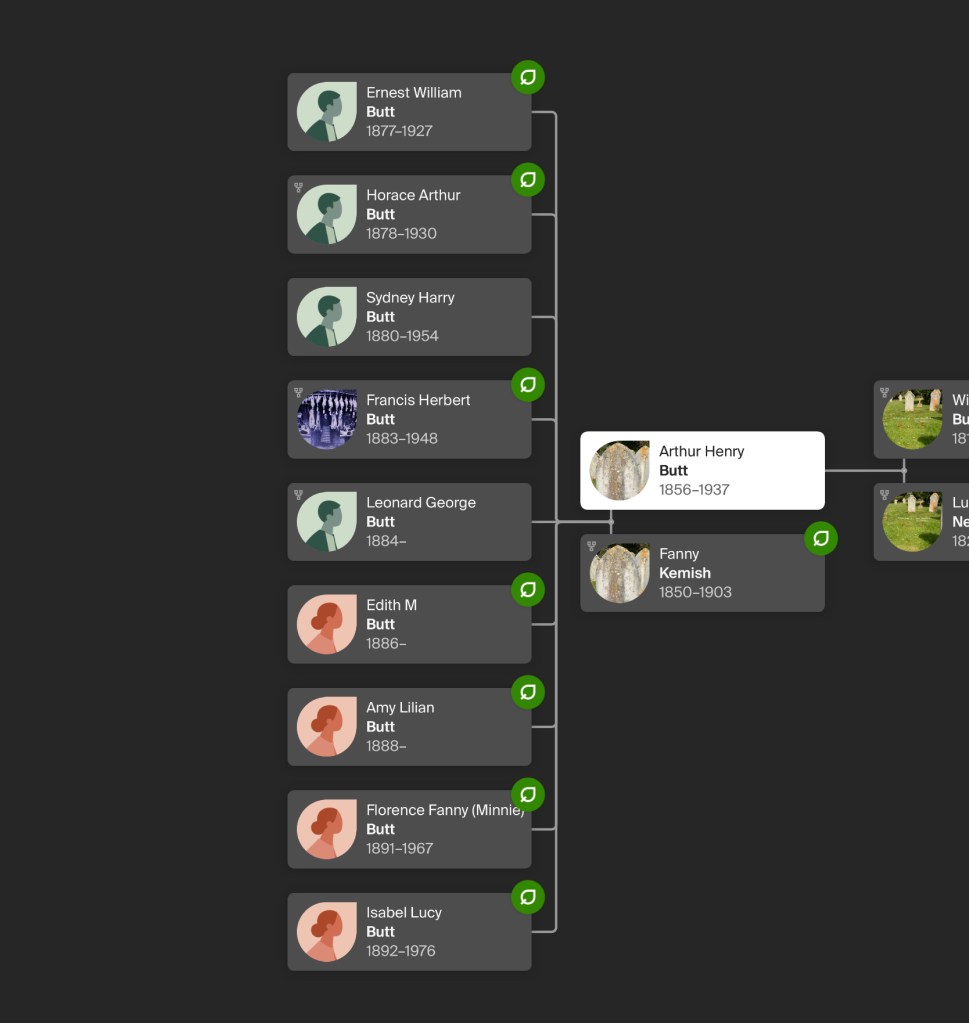
The 1891 census, taken on Sunday the 5th of April, paints a vivid picture of Arthur's growing family and their life on Middlebridge Street. Arthur, alongside his wife Fanny, was raising their children, Ernest, Horace, Sidney, Francis, Leonard, Edith, Amy, and the youngest, Millie, in the family home that also served as their business. The family’s home had a butcher’s shop, a yard, a slaughterhouse, and a bacon drying loft, where Arthur continued the trade that had been passed down to him. At the age of 14, Ernest was already following in his father’s footsteps, working as a butcher's assistant, while the rest of the children, all except for Ernest, were attending school.
This snapshot of their lives reveals a family rooted in hard work, where the demands of the butcher’s business were intertwined with their everyday existence. In the midst of it all, the household had a servant, 19-year-old Rose Mitchell, who assisted with the daily chores, likely offering some help as Fanny managed the household and cared for their young children.
The census provides a glimpse into a bustling household, with both the weight of running a business and the joys of raising a large family. As much as Arthur’s work consumed him, it was clear that family remained at the heart of his life. The years were passing, and with each child born, Arthur’s legacy was growing, as his children were now an integral part of both his home and his business.

Arthur and Fanny's daughter, Isabel Lucy Butt, was born on Saturday, the 16th of January, 1892, at their family home on Middlebridge Street in Romsey, Hampshire. As with all of their children, Arthur took on the responsibility of registering her birth, which he did on Saturday, the 27th of February, 1892, in Romsey. The registrar, Henry Bedford, noted that Arthur's occupation was that of a Master Butcher, and that the family lived on Middlebridge Street, where Arthur continued to run the family business.
In the official record, Bedford also recorded that Isabel's mother was Fanny Butt, formerly Kemish, cementing her place in the growing family. Isabel's arrival added to the bustling household, where the demands of the butcher’s business and the care of the children were balanced, as Fanny and Arthur continued to work together to provide for their family. Isabel’s birth was another moment of joy in the life of a family that was constantly expanding, rooted in their home, and firmly established in the fabric of Romsey life.

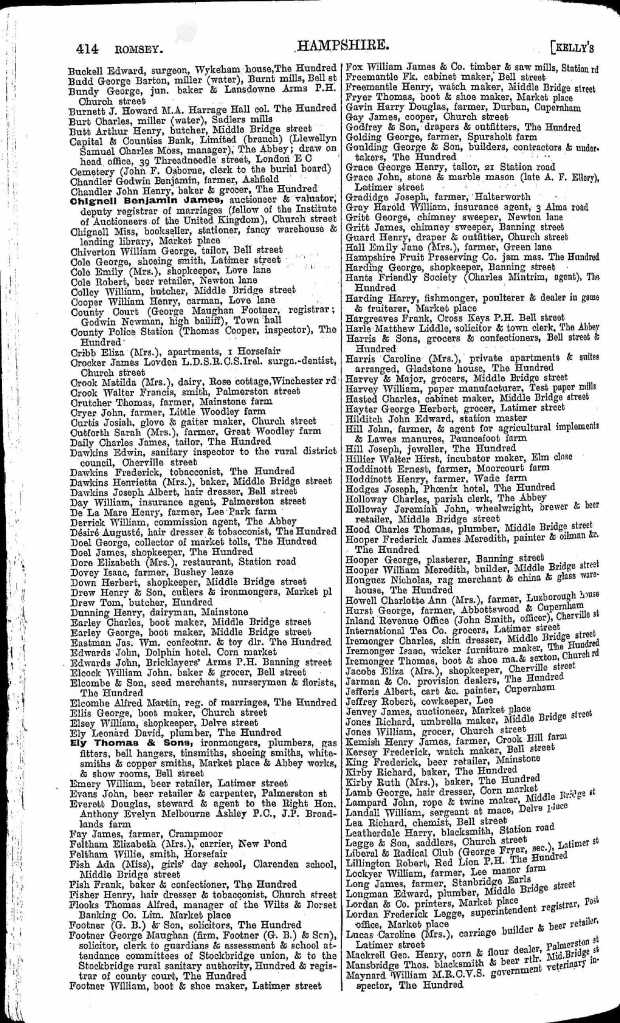
Between 1895 and 1946, Arthur's name appeared in the Kelly's City and County Directories for the UK, confirming that he was living on Middlebridge Street in Romsey, Hampshire, where he continued his work as a butcher. These directories provide a glimpse into the steady presence that Arthur had in the community, as he worked to establish and maintain the family’s butcher business in the very heart of Romsey.
His entry in the directories during this time reflects not only his occupation but also the central role he played in the town's economy and daily life. Middlebridge Street, where Arthur lived and worked, was more than just a street, it was a testament to the Butt family's long-standing presence in Romsey. It was from this home and business that Arthur would continue to provide for his family, shaping their legacy in the town for generations to come. His name in the directories serves as a lasting reminder of his dedication to his craft and his community, a quiet acknowledgment of his place in the history of Romsey.
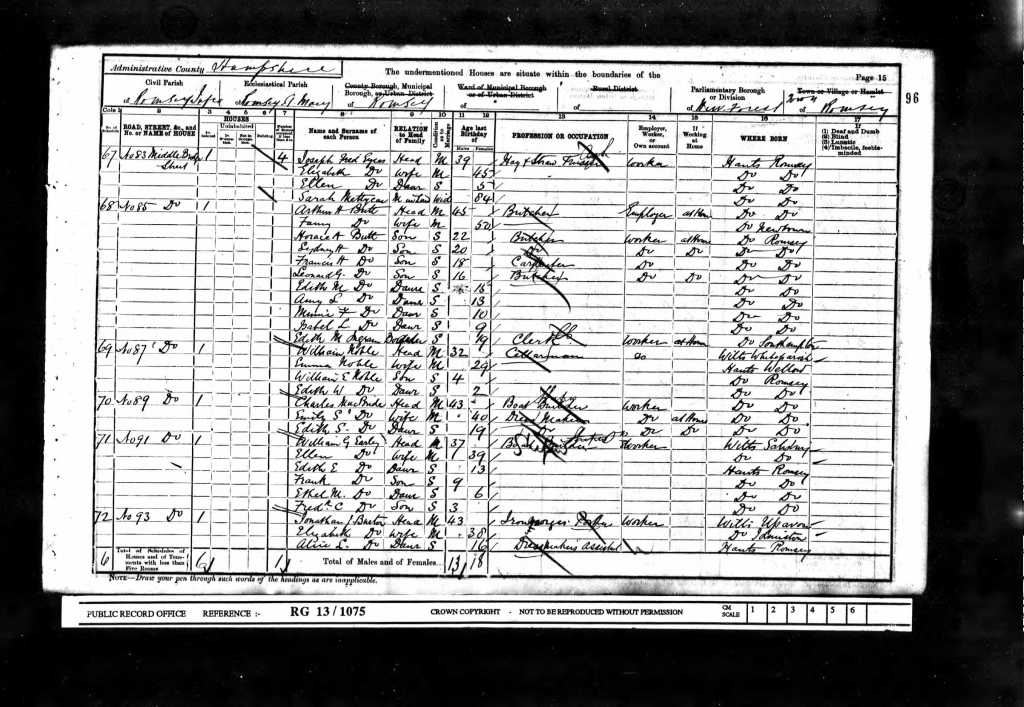
On the eve of the 1901 census, completed on Sunday, March 31st, Arthur, his wife Fanny, and their children were residing at Number 85 Middlebridge Street in Romsey, Hampshire. This large and bustling household included their children, Horace, aged 22, Sydney, aged 20, Francis, aged 18, Leonard, aged 16, Edith, aged 15, Amy, aged 13, Minnie, aged 10, and Isabel, aged 9. Arthur, a dedicated butcher, was now an employer, having built his business up alongside his family’s support. The children, who had grown into young adults, were also involved in the trade, with Horace, Leonard, and Sydney all working alongside their father as butchers.
Francis, on the other hand, had chosen a different path, working as a carpenter, further illustrating the diversity of talents and ambitions within the family. Their home, which was both a family residence and a place of business, was shared with a 19-year-old boarder, Edith M. Ingram, who worked as a clerk. The presence of Edith as a boarder, alongside the increasing number of family members working in various capacities, gives a glimpse into the day-to-day life of the household, where work and family intertwined to support their livelihood.
This census snapshot shows Arthur and Fanny’s family fully engaged in their lives in Romsey, each member contributing in their own way to the family’s continued success and growth.
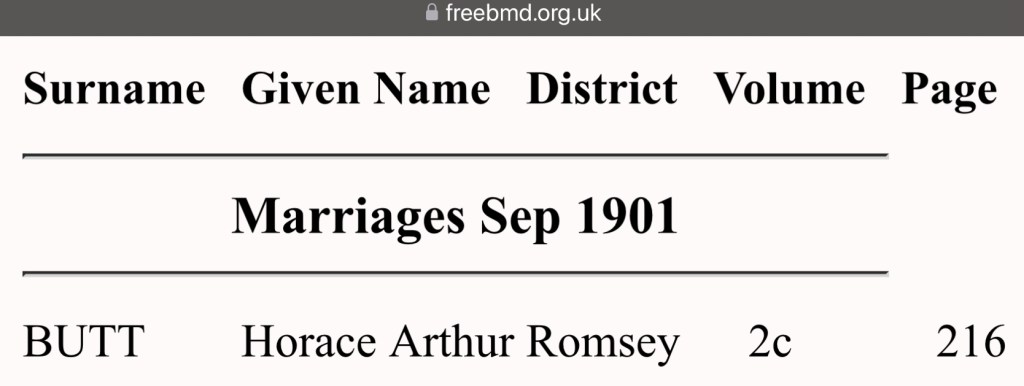
Arthur’s son, Horace Arthur Butt, found love and companionship in Violet Selina Willis, and the two were married between July and September of 1902 in Romsey, Hampshire. Their union marked the beginning of a new chapter, not only in Horace’s life but also within the ever-expanding Butt family.
For those who wish to obtain a copy of their marriage certificate, it can be ordered using the following GRO reference details: Marriages – September 1902, Butt, Horace Arthur, Romsey, Volume 2c, Page 216. This document would provide a deeper glimpse into their wedding day, recording the official moment they became husband and wife, a moment that would shape their future together.
Heartbreakingly, on Friday the 3rd day of July 1903, Fanny Butt, née Kemish, took her final breath at the family home, Number 85 Middlebridge Street, Romsey. At just 52 years old, she left behind a husband, children, and a life that had been deeply intertwined with the heart of Romsey. Fanny had been the steady presence beside Arthur, the devoted mother to their many children, and a woman whose love and care shaped the home they built together.
She passed away from Albuminuria Ascites, a cruel and unforgiving condition, with her death certified by Frank A. Taylor, M.R.C.S. In her final moments, she was not alone. By her side was Margaret E. Butt, her sister-in-law, who had traveled from Number 45, Hope Street, Landport, Portsmouth, to be with her. It was Margaret who registered Fanny’s passing with Henry Bedford, the registrar for the Romsey district, on Monday the 6th day of July 1903.
Her absence left an immeasurable void in the Butt family home, a place where she had once bustled with life, raising children, supporting Arthur in his trade, and holding together the threads of their shared existence. The weight of her loss would be felt for years to come, in every familiar corner of Middlebridge Street and in the hearts of those who loved her.

Albuminuria and ascites were devastating conditions in the 19th century, poorly understood and almost always fatal. Both were symptoms of severe underlying disease, most commonly kidney failure, liver disease, or heart failure. At a time when medical knowledge was limited, a diagnosis of albuminuria and ascites meant a slow and painful decline, with little hope of recovery.
Albuminuria is the presence of albumin, a type of protein, in the urine. In a healthy person, the kidneys filter waste while retaining essential proteins, but when the kidneys become damaged, often due to chronic conditions like Bright’s disease (an old term for nephritis or kidney inflammation), diabetes, or high blood pressure, albumin leaks into the urine. This leads to swelling, known as edema, alongside weakness and a gradual poisoning of the body as toxins build up in the bloodstream. Ascites, on the other hand, is the accumulation of fluid in the abdominal cavity, most commonly caused by liver disease, kidney failure, or severe malnutrition. The body loses its ability to regulate fluids, leading to extreme bloating, discomfort, and difficulty breathing as the swelling presses on the diaphragm.
In the 19th century, these conditions were often diagnosed too late, and there was little doctors could do to halt their progression. Bright’s disease was recognized as a deadly affliction, yet its connection to kidney failure was not fully understood. Treatments were ineffective and included bloodletting, diuretics made from dangerous substances like mercury, and strict dietary restrictions that did little to ease the suffering. Without antibiotics, dialysis, or transplants, those suffering from kidney or liver failure faced an agonizing and inevitable decline.
Dying from albuminuria and ascites was a slow, painful process. The early stages would have involved swelling in the legs, feet, and face, making movement increasingly difficult. The body would begin to retain fluid uncontrollably, leading to severe fatigue and weakness. As ascites worsened, the abdomen would swell dramatically, causing a heavy, tight sensation. Sitting up or moving would become excruciating, and lying down would provide little relief. Fluid buildup would press on the lungs, making breathing labored. The patient would often gasp for air, especially when lying down, leading to sleepless nights filled with distress.
With the kidneys failing, waste products like urea would accumulate in the body, leading to uremic poisoning. This would bring confusion, nausea, vomiting, muscle twitches, and eventually a deepening coma. Poor circulation and fluid retention would cause the skin to become fragile and discolored, prone to sores that struggled to heal. The physical suffering would have been matched by emotional despair. Without effective pain relief, patients often endured unbearable agony, fully aware of their impending death.
In the final days, as the body’s organs shut down, the patient would drift in and out of consciousness, often experiencing confusion and delirium. Breathing would become increasingly shallow, punctuated by gasping episodes. Family members would gather around, powerless to ease the suffering beyond offering small comforts, a damp cloth on the forehead, a whispered reassurance, a prayer for peace. Death would come either from respiratory failure, heart failure, or the cumulative effects of toxin buildup in the body.
For those who passed away from albuminuria and ascites in the Victorian era, it was an undignified and agonizing death, a reflection of the limitations of medicine at the time. Today, with dialysis, transplants, and advanced medications, such conditions can often be managed. But in the 19th century, they were almost always a death sentence, a cruel and lingering end with no relief in sight.
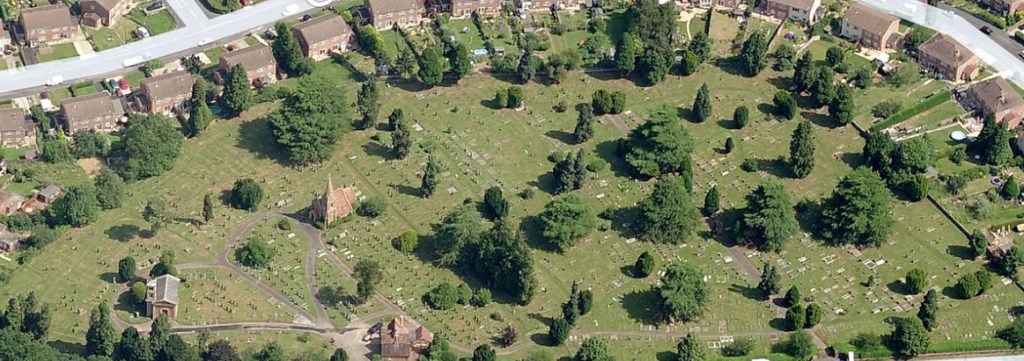
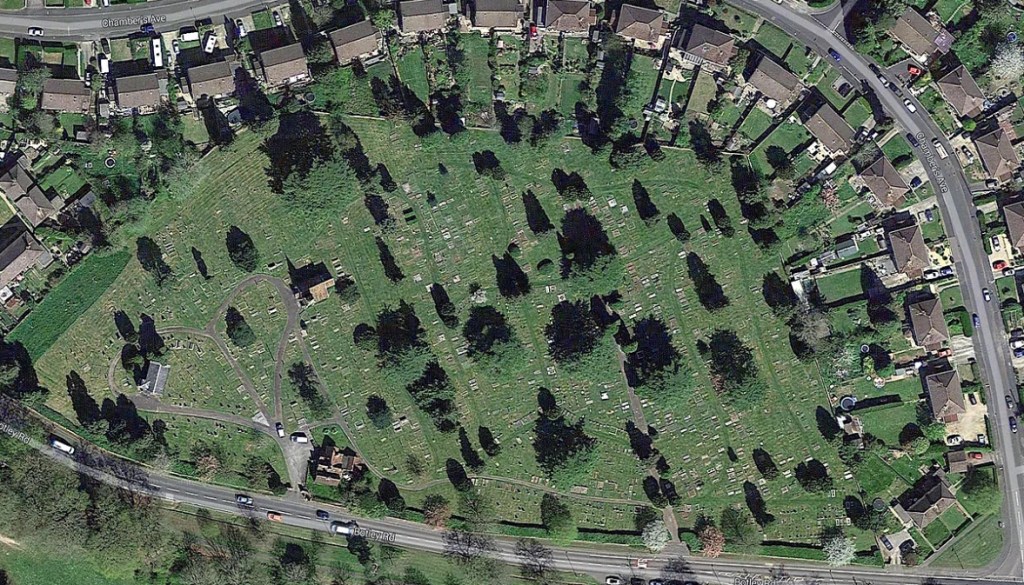
On Monday, the 6th day of July 1903, Fanny Butt was laid to rest at Romsey Old Cemetery, Botley Road, Romsey, Hampshire. Her final resting place, Grave E451, became the silent witness to the love and sorrow of those who gathered to say their goodbyes. The weight of her absence must have been unbearable for Arthur and their children, who had to face a world forever changed without her presence.
As the earth was gently placed over her, it was not just a beloved wife and mother they were mourning, but the heart of their home, the warmth of her care, the strength of her devotion, and the quiet, everyday moments that made their family whole. Though time would pass and life would continue, Fanny’s absence would be deeply felt, her memory woven into the very fabric of Middlebridge Street and the lives of those she left behind.


Romsey Old Cemetery, located on Botley Road in Romsey, Hampshire, is a place of quiet reflection, history, and remembrance. Established in the 19th century to accommodate the town’s growing population, it became the final resting place for generations of Romsey’s residents, including many prominent families, tradespeople, and those who shaped the community’s character.
During the Victorian era, as towns and cities expanded, traditional churchyards began to run out of space, leading to the creation of municipal cemeteries. Romsey Old Cemetery was part of this broader movement, providing a dedicated burial ground outside the church setting, offering consecrated and unconsecrated sections to serve people of different faiths and backgrounds. The careful planning of the cemetery reflects the period’s approach to burial grounds—tree-lined pathways, orderly rows of headstones, and peaceful surroundings designed to offer a place of solace for the grieving.
The headstones and monuments within Romsey Old Cemetery tell stories of lives once lived, from simple, modest markers to grand memorials erected in loving tribute. Some inscriptions have faded with time, while others remain crisp, offering glimpses into past lives, occupations, and tragedies. The cemetery, like so many others of its era, bears witness to infant mortality, the hardships of working life, and the impact of historical events, including wars and epidemics.
Over the years, the cemetery has seen the passage of time leave its mark, with some graves left untended and others carefully maintained by descendants and local historians. The surrounding landscape has shifted, but Romsey Old Cemetery remains a place where history and memory converge, holding within its gates the legacy of those who once walked the streets of the town.
For families tracing their ancestry, Romsey Old Cemetery serves as an invaluable historical resource, a place where names, dates, and epitaphs provide connections to the past. For those who visit, it is a reminder that every grave represents a story, and within its peaceful grounds, generations of Romsey’s past continue to rest, remembered or forgotten, but forever part of the town’s history.

Arthur Henry Butt’s world must have felt unbearably empty after Fanny’s passing. She had been his partner in every sense, his wife, the mother of his children, the heart of their bustling home, and the steady presence beside him in their family business. Now, in the quiet of their house on Middlebridge Street, the absence of her warmth must have been deafening. The early 1900s were not kind to a man suddenly left to raise a large family alone, especially in a small market town like Romsey, where community expectations and daily survival went hand in hand. He had a butcher’s shop to run, mouths to feed, and hearts to mend, all while carrying the weight of his own grief. His older children would have had to shoulder responsibilities beyond their years, stepping in where Fanny once stood, while the younger ones would have struggled to understand why their mother was no longer there to comfort them. Every familiar street, every whispered condolence from a neighbor, every routine that once included Fanny would have been a painful reminder of what he had lost. Yet, despite the sorrow, Arthur had no choice but to carry on, for the sake of the family they had built together, for the sake of the love that still lingered in the walls of their home, and in the echoes of Fanny’s laughter that he surely longed to hear just once more.
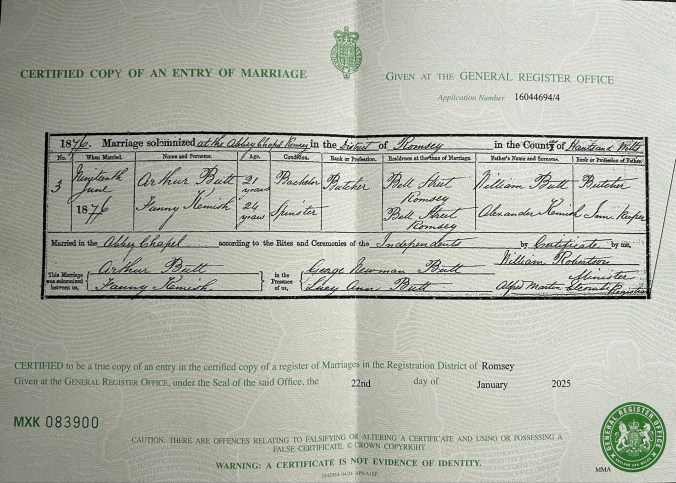
Just days after the heartbreaking loss of his mother, Arthur’s annd Fanny’s son, Ernest William Butt stood at the altar of The Parish Church of Romsey, ready to begin a new chapter of his life. On Tuesday, the 14th of July 1903, the 25-year-old bachelor of Number 85 Middlebridge Street, Romsey, took the hand of Elizabeth Rose Neatherway, a spinster of the same age, who lived at Number 1, Pretia Villa, Winchester Road, Romsey. The ceremony was performed by F.W.H. Davy, the assistant priest, and though it was undoubtedly a day of celebration, there must have been an undeniable weight of grief hanging over the occasion.
The marriage register recorded Ernest’s profession as a butcher, following in the footsteps of his father, Arthur Henry Butt, a man who had built a strong and reputable business in Romsey. Elizabeth’s father, Henry Neatherway, had been a plumber, though by the time of his daughter’s marriage, he had sadly passed away. The couple exchanged vows before their witnesses, Thomas Fremorgen and Robert White, as family and friends gathered to witness their union.
For Arthur, standing there as father of the groom, the moment must have been bittersweet. Only a week earlier, he had laid Fanny to rest, and now, he was watching their eldest son embark on the same journey of love and partnership that he himself had cherished for so many years. Perhaps it was comforting to see Ernest take this step, to know that love and family endured, even in the face of such loss. Or perhaps, in the quiet moments after the ceremony, Arthur’s thoughts drifted to Fanny, wishing she could have been there to see their son start this new chapter of his life.

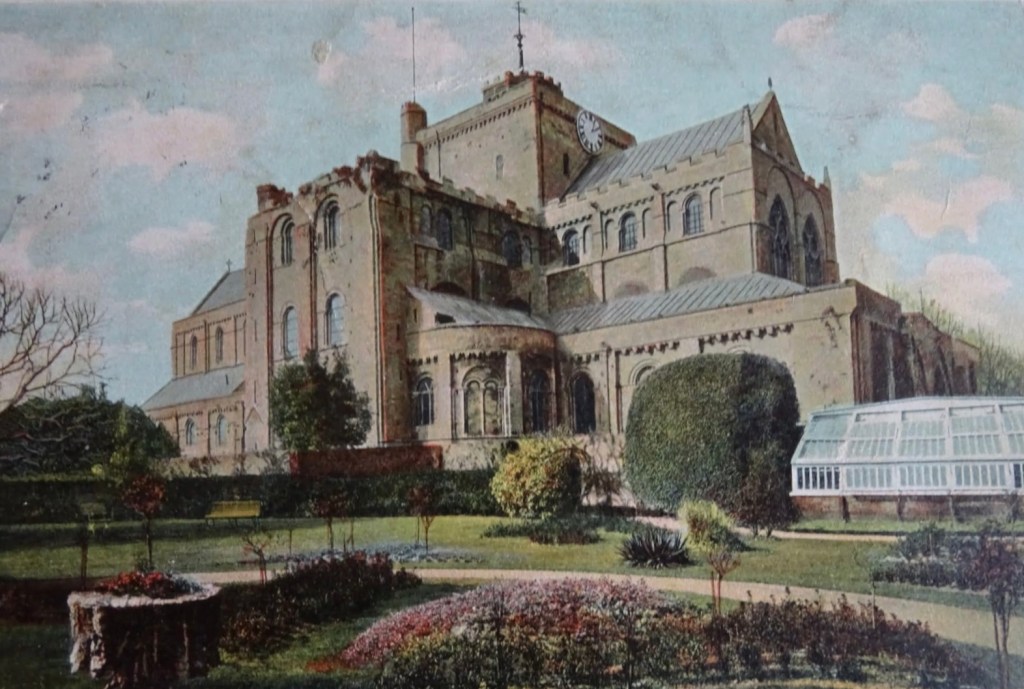
In 1903, the time of Arthur Henry Butt and family, life’s events, the Parish Church of Romsey was the former abbey church, now serving as the central place of worship for the community. Its historical significance and architectural grandeur made it a focal point for significant life events, such as weddings and funerals, in the town of Romsey.
The Parish Church of Romsey, known today as Romsey Abbey, has a rich and storied history. Founded as a Benedictine nunnery in Saxon times, it was reestablished around 907 AD by Edward the Elder for his daughter, Princess Ælflæd, who became its first abbess.  The original stone church and nunnery were constructed around 1000 AD, serving as a place of education for the daughters of kings and noblemen.
Construction of the present Norman-style building began circa 1120, with the choir, transepts, a Lady Chapel at the east end, and the first three bays of the nave. A fourth bay was added between 1150 and 1180, and the final three arches, in the Early English style, were completed between 1230 and 1240. By this time, the abbey housed over 100 nuns.
The abbey continued to flourish until the Black Death struck in 1348–49, significantly reducing its population. It never fully recovered its prosperity, and in 1539, during the Dissolution of the Monasteries under Henry VIII, the abbey was suppressed. Remarkably, the townspeople were able to purchase the abbey from the Crown in 1544 for £100, preserving it as their parish church.
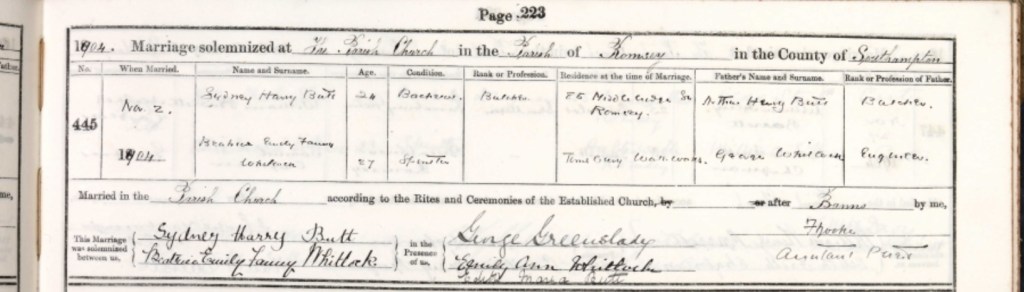
On Wednesday, the 2nd of November 1904, at The Parish Church of Romsey, Arthur and Fanny’s son, Sydney Harry Butt stood at the altar, ready to take Beatrice Emily Fanny Whitlock as his wife. At 24 years old, Sydney, a bachelor of Number 85 Middlebridge Street, Romsey, was continuing the legacy of his family as a butcher, a trade passed down by his father, Arthur Henry Butt. His bride, 27-year-old Beatrice, had been living at Tomsbury Waterworks, the daughter of George Whitlock, an engineer.
The ceremony was performed by F. Booke, the assistant priest, who carefully recorded the details of their union in the marriage register. As Sydney and Beatrice exchanged vows, they were surrounded by family and friends, with George Greenslady, Edith Maria Butt, and Emily Ann Whitlock standing as witnesses. The occasion was one of joy and new beginnings, yet for Sydney’s father, Arthur, it must have been another poignant milestone without Fanny by his side.
Just over a year had passed since the devastating loss of his beloved wife, and as he watched another of his children begin a new chapter, he may have found solace in knowing that his family was continuing to grow and find happiness. But there would have been an undeniable ache too, a quiet longing for Fanny to be there, to see their son stepping forward into marriage, just as they had done so many years before.
After two years of grief and solitude following the loss of his beloved Fanny, Arthur Henry Butt found love once again. At 49 years old, he took a courageous step toward a new chapter, choosing to open his heart and his home to Christina Keay Donald, a 38-year-old spinster. Their union was solemnized on Monday, the 16th of October 1905, at The Congregational Church on Junction Road, Upper Holloway, Islington, London, a place far from Arthur’s familiar Romsey, yet now a part of his unfolding story.
The ceremony was performed by Minister S. Archibald Parsons, with Deputy Registrar Ernest Dodson recording their vows in the marriage registry. Arthur, ever a butcher by trade, was residing at Number 85, Middlebridge Street in Romsey, Hampshire, a home that had likely once been filled with memories of Fanny. Christina, the daughter of the late Graham Donald, a former builder, had been living at 6 Fulbrook Road, Upper Holloway. Together, they bridged the gap between past sorrow and future hope.
With Mary Jago Page and P.K. Donald standing as their witnesses, Arthur and Christina stepped forward into a new life together, proving that even after loss, love has the power to bloom again. Their marriage was not just a legal bond but a testament to resilience, the resilience to love, to hope, and to continue the journey of life, hand in hand.
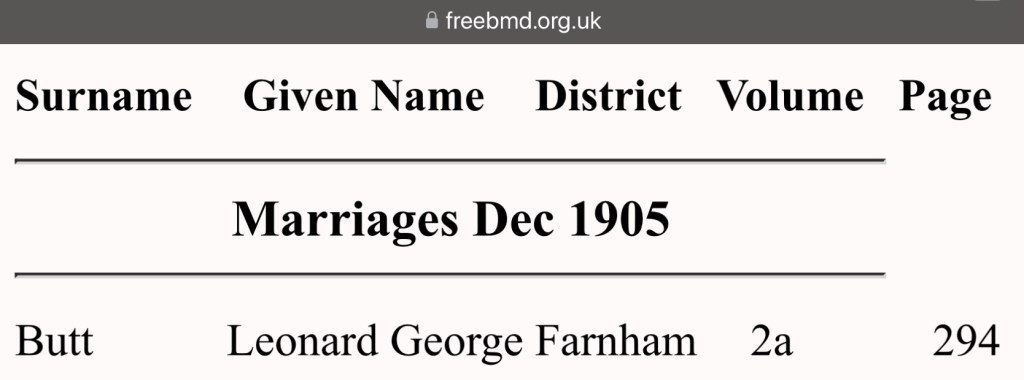
Arthur's son, Leonard George Butt, married Rose Helena Ricketts in the final quarter of 1905, in the district of Romsey, Hampshire, England. Their union was recorded in the October to December quarter, and their marriage certificate can be found with the following GRO reference: Marriages, Dec 1905, BUTT, Leonard George, RICKETTS, Rose Helena, Farnham, Volume 2a, Page 294. This marks yet another chapter in the family’s rich history, weaving new bonds and continuing the legacy that Arthur Henry Butt had begun.
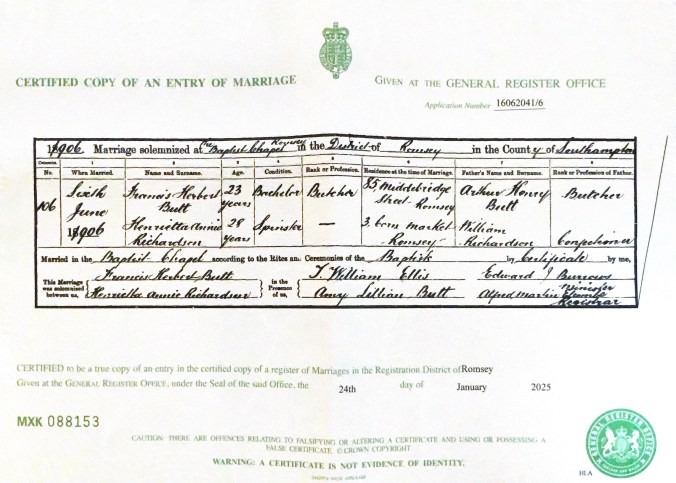
On Wednesday, the 6th day of June, 1906, Arthur’s son, Francis Herbert Butt, a 23-year-old bachelor, followed in his father’s footsteps not only in trade but also in life’s great milestones. At the Baptist Chapel on Bell Street, Romsey, he married 28-year-old Henrietta Annie Richardson, a spinster from Number 3, Corn Market, Romsey. This was more than just a wedding, it was a union of two families, a continuation of legacy, and the beginning of a new future.
Rev. Edward J. Burrows officiated the ceremony, while Registrar Alfred Martin Elcombe dutifully recorded the details. Francis, a skilled butcher like his father, Arthur, stood proudly beside his bride. Henrietta, the daughter of William Richardson, a confectioner, brought her own family’s traditions into the marriage, weaving together the histories of two hard-working trades.
Standing by their side as witnesses were William Ellis and Amy Lillian Butt, Francis’s devoted sister. One can imagine the quiet joy in Arthur’s heart as he watched his son take this step, carrying forward not only the family name but the values of diligence and devotion that had long defined the Butts.
With love, hope, and the promise of a shared life ahead, Francis and Henrietta embarked on their journey as husband and wife, building upon the foundations laid by those before them.
Francis' story holds such a special place in my heart, as it is deeply connected to the butcher’s shop where my son now works and lives above the old family home that Francis, his wife, and children once shared for many years. It’s a beautiful reminder of how the past intertwines with the present, and how family history continues to shape the lives of future generations. I am excited to share more of his journey with you, so please stay tuned, as I’ll be writing his story next. It truly feels like a piece of our family’s legacy is still living on in such a meaningful way.
Arthur and his daughters Edith and Isabel, were mentioned in Hampshire Advertiser, on Saturday 09th June 1906, in a write up describing the wedding of Arthur's son, Francis H. Butt and Henrietta Annie Richardson, which took place at the Baptist Chapel in Romsey. It was considered one of the most notable weddings in the area during Whitsun. The ceremony was officiated by the Rev. E. J. Burrows, and the bride, who was a respected member of the church and had served as its organist, was given away by her father.
The church was filled to capacity, with one longtime member remarking that it was the largest wedding gathering there in thirty years. A large crowd also gathered outside in the street. The bride was attended by bridesmaids, including Francis's sisters, Minnie and Isabel Butt, along with Miss Caddy and a young niece, Margie Jacob. William Ellis of Swansea, the bride’s brother-in-law, served as the best man.
During the service, the hymns "The Voice that Breathed o'er Eden" and "O, Love Divine" were sung. The bride wore a cream silk gown trimmed with chiffon lace, along with a long veil and a wreath of orange blossoms. She carried a bouquet of stephanotis, gladiolus, tuberose, and lilies of the valley. The bridesmaids were dressed in cream silk and adorned with wreaths of roses, gold brooches, and bouquets of Duchess of Fife carnations, which were gifts from the groom. The bouquets were arranged by Messrs. Elcombe and Sons, who also provided decorative palms for the chapel.
The wedding procession exited to a shower of confetti, and a luncheon was held at the bride’s family home for around 30 to 40 guests. During the meal, congratulatory speeches were made by Rev. Burrows, Mr. Ellis, and Mr. Pritchett. The newlyweds left for their honeymoon in Bournemouth, with the bride wearing a brown embroidered voile dress and a cream lace hat. Among her many gifts, the one she cherished most was a black marble clock, presented to her by the Baptist Church members and friends.
The article reads as follows,

ROMSEY.
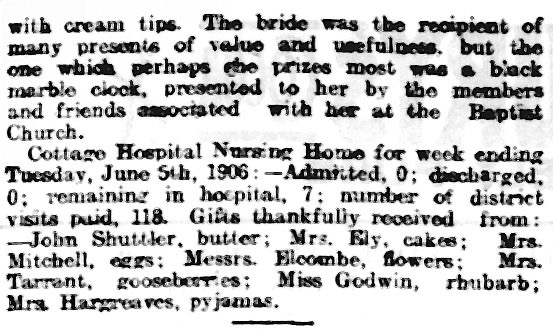
Tlere has been several weddings in Romsey this Whitsunside, but probaby the most attractive was that which was solemnised at the Baptist Chapel on Wednesday afternoon The contracting parties were Mr. F. H. Butt, fourth son of Mr. A. Butt, of Market -place, Romsey, and Miss Henrietta Annie Richardson, the eldest daughter of Mr. and Mrs. Richardson, of the Corn Market. The Rev. E.J. Burrows, pastor, officiated. The bride is a much-respected member of the church, and for some considerable time has been the willing organist. All available accommodation was crowded with an orderly gathering, chiefly ladies, and one of the oldest members of the church said it was the largest gathering at a wedding there for 30 years. There was, too, a great crowd in the street, and the wedding party was of considerable size. The bride was given away by her father, and her bridesmaids were the Misses Minnie and Isabel Butt, sisters of the bridegroom, Miss Caddy, a friend, and Margie Jacob (a little girl), a niece. The "best man" was Mr. W. Ellis, Swansea. a brother-in-law of the bride. The hymns. "The Voice that Breathed o'er Eden," and "O, Love Divine," were sung during the service. Mr. Pritcheit, a friend from Swaythling, officiating at the American organ. The bride was attired in a robe of cream merve silk. trimmed with chiffon lace, and she wore a long veil with a wreath of orange blosoms, and she carried a fine shower bouquet, composed of stephanotis, gladiolus, tuberose, and lilies of the valley. The bridesmaids wore dresses of cream Jap, silk, and wore on their heads wreaths of roses, and had gold brooches and shower bouques, the gift of the bridegroom. The bouquets were made of Duchess of Fife carnations. All the bouquets were supplied by Messrs Elcombe and Sons, who also kindly lent some palms to adorn the chapel. All the dresses were made by Miss Willis. The entrance to the chapel from the street was laid with red baize by Mr. Freemande. As the party left the chapel there was an unusually abundant shower of confetti. Lunch was laid in the old home of the bride for between 30 and 40, and at this speeches of congratulation and expressive of good wishes for the future of the bride and bridegroom were made by the Rev. F. J. Burrows, and Messrs. Ellis and Pritchett. The newly-married pair are spending the honeymoon at Bournemouth. The bride's going away dress was of brown embroidered voile, and she wore a cream lace hat, with cream tips. The bride was the recipient of many presents of value and usefulness, but the one which perhaps she prizes most was a black marble clook, presented to her by the members and friends associated with her at the Baptist Church.

Around 1907–1908, Arthur made a decision that would leave a lasting legacy for generations to come. He purchased Number 8 Bell Street, Romsey, Hampshire—a property that would serve both as a home for his son Francis, known as Frank, and as the foundation of a thriving family butchery. Under Frank’s leadership, Butt and Son Family Butchers became a well-respected name in the town, a business built on hard work, dedication, and the deep-rooted traditions of the Butt family. The shop remained in the family until World War II, a testament to their resilience and commitment. It is a powerful thought to know that today, my son Calum works and lives in the very same place, continuing the connection to the past. Whether Arthur himself worked alongside Frank in the shop or took on a more relaxed role in his later years remains uncertain, but one thing is clear—his influence and foresight shaped the future of both his family and the trade they were so deeply devoted to.
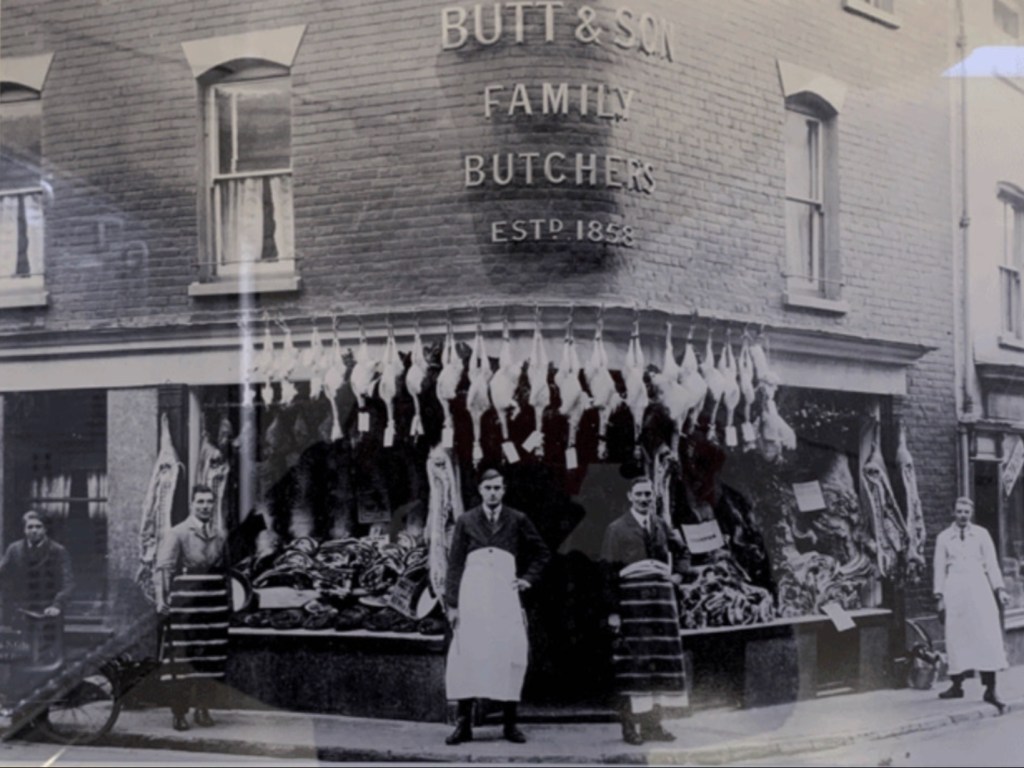
Butt & Son Family Butchers Est 1858
Arthur’s sister, Lucy Annie Butt’s life came to a sorrowful end on Thursday, the 13th of August 1908, at her home, Number 86, Church Lane, Romsey. At just 51 years old, she had endured years of suffering, battling pulmonary tuberculosis for seven long years and, in her final days, weakened further by a bout of severe diarrhoea (10 days). Her passing was certified by Dr. George L. Rankins. Her devoted brother, Harry James Butt, of Number 37, Winchester Road, Romsey, stood by her side in her last moments and took on the difficult task of registering her death the following day. Registrar Henry Bedford recorded Lucy’s details with care, noting that she was a spinster who had spent her life as a domestic housekeeper. She was the daughter of William Butt, the respected master butcher, now long gone, but whose legacy still echoed through the generations. Lucy’s passing marked yet another loss for the Butt family, a reminder of the fragility of life and the quiet strength it takes to carry on.

On Monday, the 17th of August 1908, Lucy Annie Butt was gently laid to rest in Romsey Old Cemetery, Botley Road, in Grave E420, the same resting place as her mother, Lucy Maria Butt. As the earth was placed over her, it was not just a farewell to a beloved sister, but a poignant reunion between mother and daughter, together again after years of separation. Her passing left another empty space in the Butt family, another name etched in memory rather than spoken aloud in the warmth of home. Though life in Romsey moved forward, those who loved her carried her in their hearts, her quiet strength and gentle presence never truly gone.

In 1908, Arthur Henry Butt relocated to Number 15, Market Place, Romsey, Hampshire, marking the beginning of a new chapter in both his personal life and his business. This wasn’t just his home—it was the very heart of his butcher’s trade, a place where he continued the legacy of hard work and dedication that had defined his life. The Market Place, always alive with the hustle and bustle of daily trade, would have been the perfect location for a skilled butcher like Arthur, ensuring a steady stream of customers and a thriving business. Though the years have passed and the butcher’s shop is no more, the building remains, now home to Josie’s Café. The echoes of Arthur’s life and work linger within its walls, a reminder of the man who once stood behind the counter, serving his community with pride and perseverance.
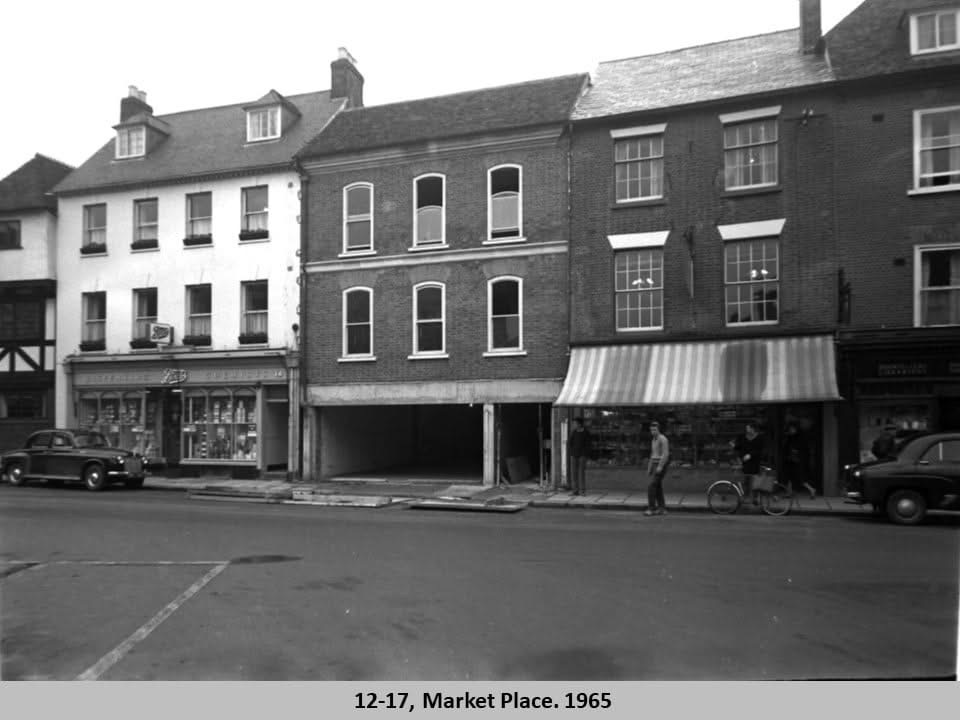
The heartbreaking story of Arthur’s brother, Harry James Butt, is one of sorrow, secrecy, and a family burden carried in silence for generations. On Friday, the 13th of January 1911, at just 52 years old, Harry tragically took his own life, a devastating and deeply unsettling event for a man so devoted to his faith and family. For years, this tragedy remained hidden, buried beneath the weight of stigma and societal expectations. A devoted Christian, a respected butcher, and a man who, by all outward appearances, had a steady life, his passing was a story that no one in the family spoke of, perhaps out of pain, shame, or simply an inability to process such a loss in a time when mental health struggles were so little understood.
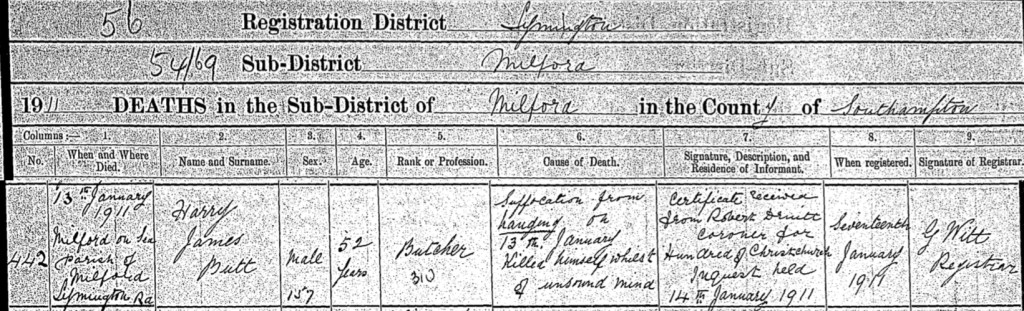
It wasn’t until my sister-in-law was researching old newspaper archives that the truth came to light. Two conflicting reports of his death surfaced, prompting me to obtain his official death certificate to confirm what had truly happened. The certificate confirmed that Harry had been residing in Milford on Sea, Milford, Lymington, Hampshire, when he died on that fateful day. His cause of death was recorded as suffocation from hanging, and the verdict given was that he had taken his own life while of unsound mind. The inquest, held on the 14th of January 1911 by Robert Druitt, the coroner for the Hundred of Christchurch, officially recorded the circumstances, and Harry’s death was registered on the 16th of January 1911.
To imagine the depth of despair Harry must have felt, alone in his suffering, is utterly heartbreaking. In a time when mental health was so little understood, and when seeking help was often met with silence or shame, he may have felt he had nowhere to turn. The pain of his passing would have rippled through the family, a wound left unspoken yet deeply felt. Today, we can acknowledge his struggle with compassion, removing the weight of shame and instead honoring his memory with understanding and love.
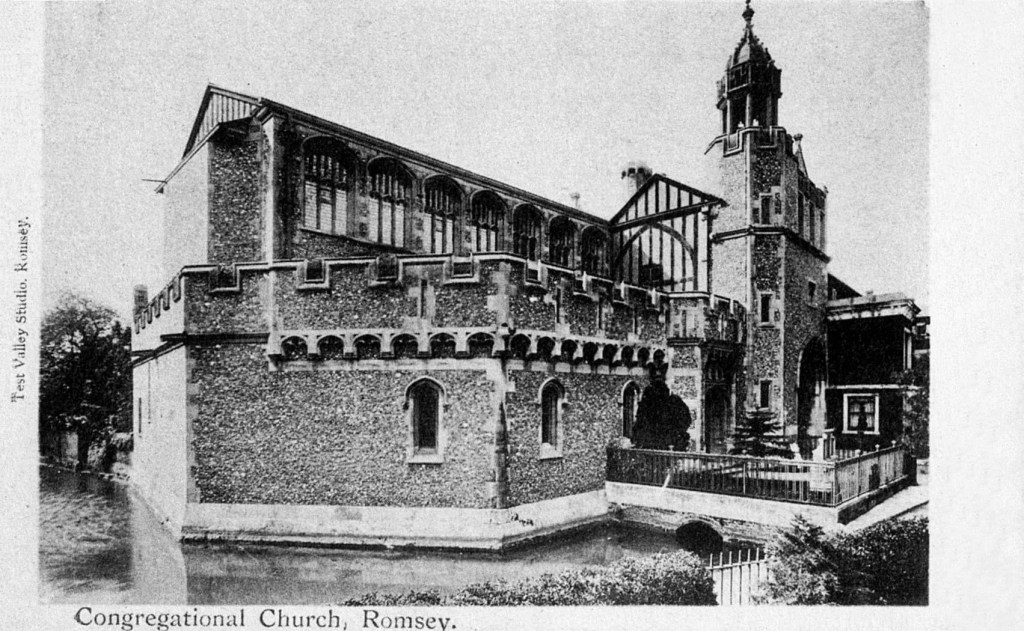
Harry’s final journey brought him back home to Romsey, where his coffin was placed in the Baptist Chapel at Abbey United Reformed Church for one last night of quiet reflection. It’s deeply moving to think of him resting there, surrounded by the love of his family, his community, and the faith that had guided him through so much of his life. The following day, a service was held in his honor, led by the Reverend W. E. Cove, his former pastor from Milford-on-Sea. It was a gathering of those who knew and loved him—his grieving family, devoted deacons, fellow church members, and friends who had walked alongside him in life.
Though his passing was marked by sorrow, the service would have been a moment to remember him not for how he died, but for the life he lived. A man of faith, a dedicated butcher, a brother, and a friend, Harry’s presence had touched so many. In the quiet reverence of that chapel, those who loved him would have found comfort in coming together, sharing their grief, and finding strength in their memories of the man he was.
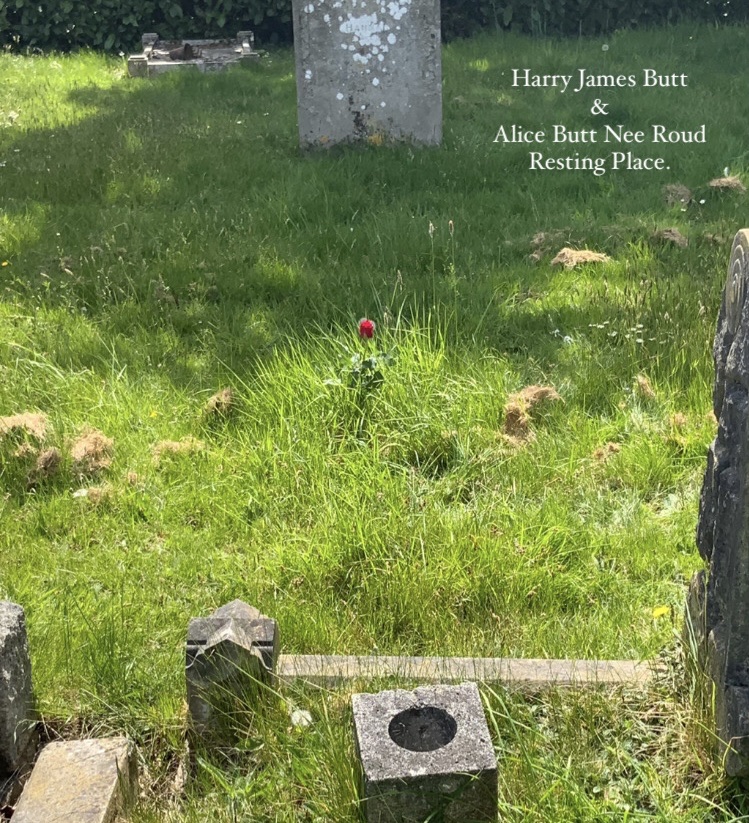
On a cold winter’s day, Tuesday the 17th of January 1911, Arthur and his family gathered at Romsey’s Old Cemetery on Botley Road to say their final goodbyes to Harry James Butt. It must have been a heartbreaking moment, filled with sorrow and unanswered questions, as they laid him to rest in Plot No. R243. Grief hung heavy in the air, not just for the tragic way Harry’s life had ended, but for the pain he must have carried in his final days.
Despite the sadness, his family would have stood together, bound by love, faith, and the memories of the man they had known, a devoted brother, a hardworking butcher, and a man of deep belief. Perhaps in those quiet moments by his graveside, they found solace in the thought that he was finally at peace, free from the burdens that had weighed so heavily upon him. Though his resting place would bear witness to his loss, his spirit would live on in the hearts of those who had loved him.
You can read about Harry’s life here.
By the evening of Sunday, April 2nd, 1911, Arthur Henry Butt’s life had changed significantly from the bustling days of his butcher’s trade in Romsey. Now residing at Metlands Farm on Dean Lane in Bishop’s Waltham, Arthur, alongside his second wife of five years, Christina, had transitioned to a quieter, rural way of life. Their home, an eight-room farmhouse, was a far cry from the busy Middlebridge Street premises where he had raised his first family and built his career.
As Arthur sat down to fill out the official census document, he must have paused to reflect on all that had brought him to this moment. He noted his marriage to Christina and acknowledged that, though they had not had children together, he himself was a father of five. His daughters, Edith and Isabel, now young women, lived and worked alongside him, Edith as a cook and Isabel immersed in dairy work. Life on the farm was a family endeavor, and Arthur took pride in listing himself as an employer, shaping a new chapter after years in the butchery trade.
It was a household shaped by change, resilience, and perhaps even a longing for the past. Arthur’s birthplace remained Romsey, as did that of his daughters, a reminder of the roots that bound them together, even as they built something new. Christina, born in Blairgowrie, Scotland, had become part of that story, her presence marking the shift in Arthur’s later years. Though his life had seen great losses and transitions, there was still purpose, still work to be done, and still family by his side.

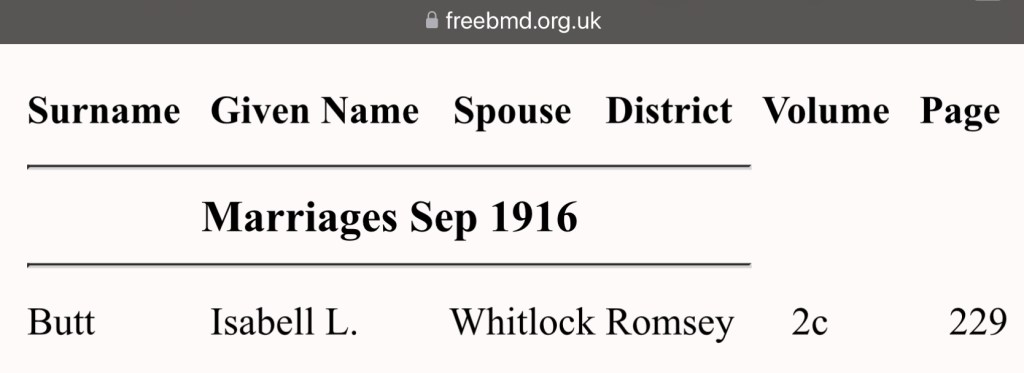
In the warmth of a summer in 1916, amidst the backdrop of a world at war, Arthur’s daughter, Isabel Lucy Butt, found a moment of joy and hope as she married George Whitlock in Romsey, Hampshire. Their union was recorded in the July quarter, a new chapter in both their lives during an era of uncertainty and change. Family would have gathered, cherishing this moment of happiness in difficult times, and one can only imagine Arthur’s emotions, pride, love, and perhaps a touch of melancholy as he watched his daughter step into her future. The Whitlock and Butt families were already intertwined through previous marriages, strengthening bonds that would endure for generations. Isabel and George’s marriage was not just the joining of two hearts, but a continuation of a long-standing family legacy within the close-knit community of Romsey.
Their marriage certificate can be obtained using the GRO reference: Marriages Sep 1916, Butt, Isabel L, Whitlock, George, Romsey, Volume 2c, Page 229.
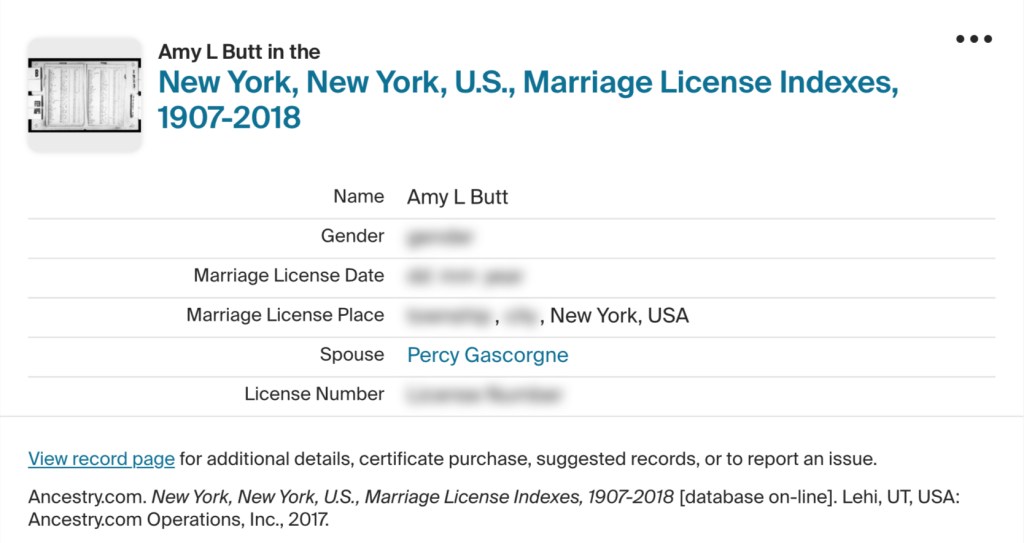
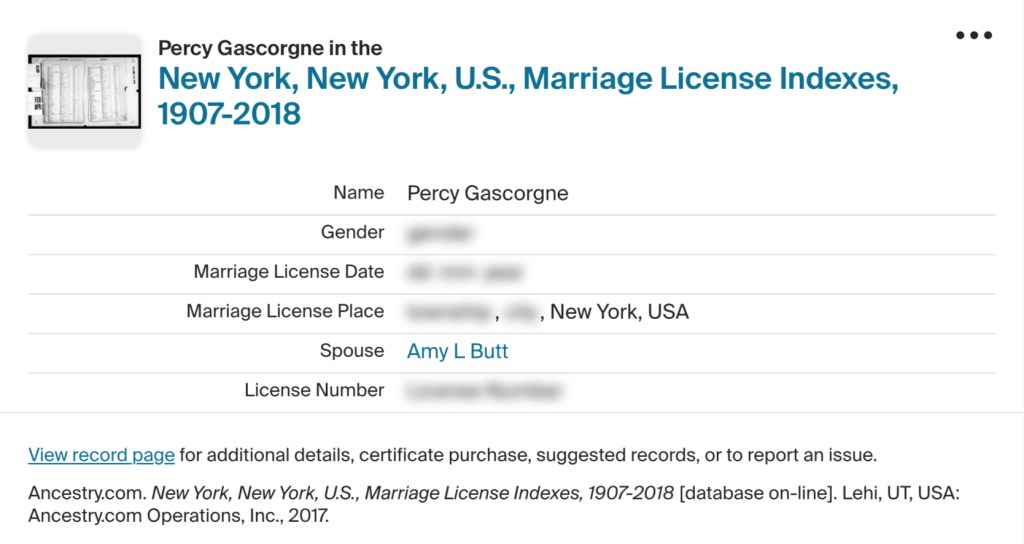
Arthur’s daughter, Amy Lilian Butt, married Percy Gascoigne in New York, United States of America, after the 6th of August 1920, the date she arrived in America. Percy, like Amy, had also grown up in Romsey, Hampshire. It's fascinating to consider what may have drawn them both to America. Was it the promise of new opportunities, the allure of adventure, or perhaps the desire to start a fresh chapter of their lives far from their roots in Romsey? There must have been a powerful pull, one that led them to embark on a journey across the Atlantic, marking a significant change in both their lives.
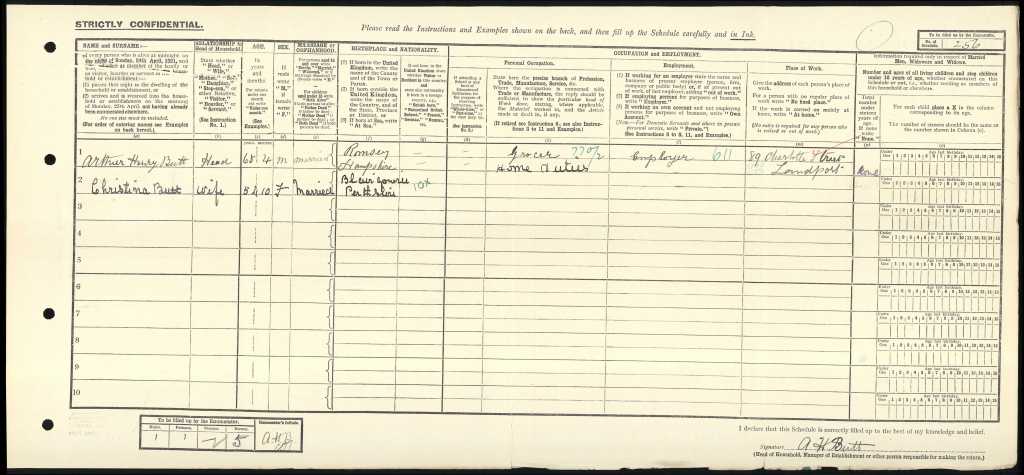
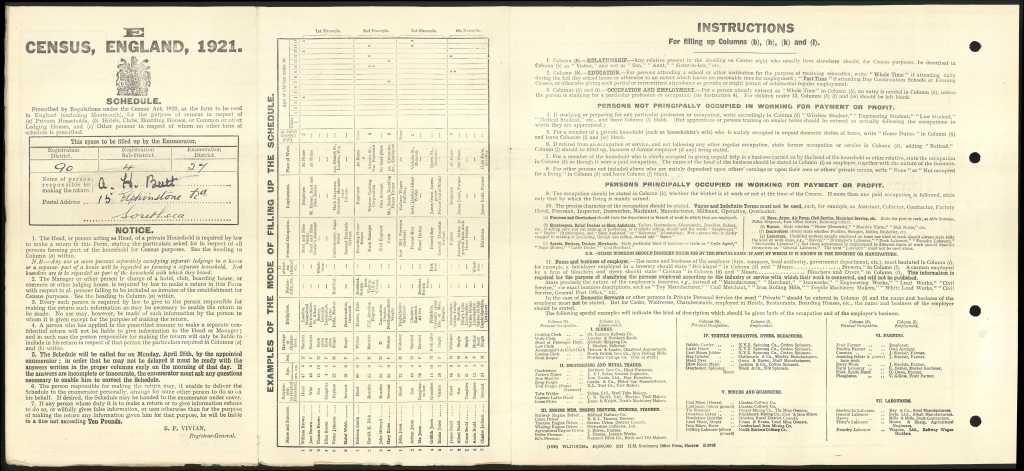
Arthur, now 65 years and 4 months old, was residing at 15 Elphinstone Road, Southsea in Portsmouth, Hampshire, England, in the St Thomas ward of the Portsmouth Parliamentary Division, on Sunday, 19th June 1921. By this time, Arthur had transitioned from his work as a butcher to becoming a grocer, and was employer at what seems to be his new business venture, which was located at 89 Charlotte Street in Landport. The household consisted of Arthur, who was the respondent for the census, and his wife, Christina, who was 54 years and 10 months old and focused on home duties. This marked a time of quiet routine and change for Arthur, as he moved into his later years, surrounded by his wife, in the peaceful rhythm of their new life together in Portsmouth.
Arthur’s son, 51-year-old Ernest William Butt, a general shopkeeper, passed away on Tuesday the 22nd day of November 1927 at Number 9, Blechyarden Street, Kensington, London. His passing must have been a heavy blow to the family, another painful loss in Arthur’s later years. G. Jones was by his side at the end and registered his death on Friday the 25th day of November 1927. F.M. Oliver, the registrar, recorded that Ernest had succumbed to pulmonary tuberculosis and cirrhosis of the liver, illnesses that had likely plagued him for some time. His death was certified by R.G. Griffiths, the medical director, and no postmortem was deemed necessary. It is heartbreaking to think of how illness may have diminished a once strong and capable man, leaving behind memories of his life, his work, and the family who mourned him.

Arthur, along with family and friends, gathered in sorrow to lay Ernest William Butt to rest at Romsey Old Cemetery, Botley Road, Romsey, Hampshire, on Saturday, the 26th day of November 1927. As they stood by his grave, A463b, memories of Ernest’s life, his work, his laughter, and his presence, must have flooded their hearts. For Arthur, burying yet another beloved son must have been a grief almost too heavy to bear. The cemetery, a place where so many of his loved ones had already been laid to rest, became yet another solemn reminder of the passage of time and the unrelenting weight of loss. Yet, amidst the sorrow, there was also love, a family bound together, honoring Ernest’s life and saying their final goodbyes with dignity and devotion.

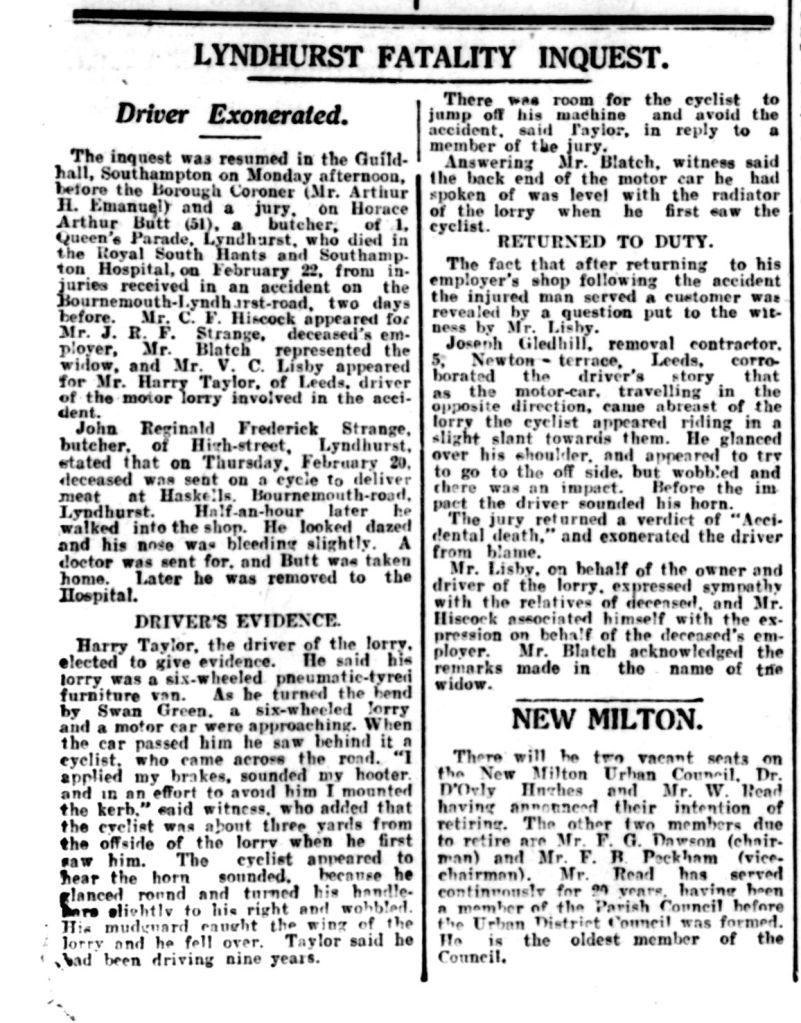
The tragic and untimely passing of Arthur’s son, Horace Arthur Butt, on Saturday, the 22nd of February 1930, must have been a devastating blow to his family. At just 51 years old, Horace’s life was cut short in a terrible accident when he was thrown from his bicycle after a collision with a motor car. The severity of his injuries, laceration of the brain and a fractured skull, proved fatal, and he passed away at the Royal South Hants and Southampton Hospital. The loss of a child, no matter their age, is an unbearable sorrow for any parent, and for Arthur, who had already endured so much loss in his lifetime, it must have been particularly painful. The official inquest, held on the 17th of March 1930, confirmed the circumstances of the accident, with the death certificate received from Arthur H. Emanuel, the coroner for Southampton. H.R. Hardy, the registrar, recorded Horace’s occupation as a butcher, a trade he had followed in his father’s footsteps, and his residence at Queens Parade, Lyndhurst, Hampshire. His death was formally registered on the 19th of March 1930, leaving behind a grieving family and a legacy of dedication to his craft.

Arthur’s son, Horace Arthur Butt, was the subject of an inquest reported in the Hampshire Advertiser on Saturday, 22nd March 1930.
The inquest was resumed at the Guildhall, Southampton, on Monday afternoon before the Borough Coroner, Mr. Arthur H. Emanuel, and a jury. The inquiry concerned Horace Arthur Butt, a 51-year-old butcher of 9 Queen’s Parade, Lyndhurst, who passed away at the Royal South Hants and Southampton Hospital on 22nd February 1930. His death resulted from injuries sustained in an accident on the Bournemouth-Lyndhurst Road two days earlier.
Mr. C. E. Hiscock appeared on behalf of Mr. J. R. F. Strange, the deceased’s employer. Mr. Blatch represented Horace’s widow, while Mr. V. C. Lisby appeared for Mr. Harry Taylor, the driver of the motor lorry involved in the accident.
John Reginald Frederick Strange, a butcher of High Street, Lyndhurst, testified that on Thursday, 20th February, he had sent Horace to deliver meat to Haskells on Bournemouth Road. Half an hour later, Horace returned to the shop, looking dazed, with a slight nosebleed. A doctor was called, and Horace was taken home before later being transferred to the hospital.
Harry Taylor, the driver of the lorry, gave evidence, stating that his vehicle was a six-wheeled, pneumatic-tyred furniture van. As he navigated the bend near Swan Green, a six-wheeled lorry and a motor car approached from the opposite direction. When the car passed him, Taylor noticed a cyclist emerging behind it, veering across the road.
"I applied my brakes, sounded my hooter, and in an attempt to avoid him, I mounted the kerb," Taylor explained. He estimated that the cyclist was about three yards from the offside of the lorry when first spotted. The cyclist appeared to react to the horn, glancing back and slightly turning his handlebars to the right before wobbling. The bicycle's mudguard struck the lorry’s wing, and Horace fell. Taylor, who had nine years of driving experience, noted that there had been enough space for Horace to dismount and avoid the accident.
Under questioning from Mr. Blatch, Taylor clarified that when he first saw the cyclist, the rear end of the motor car was level with the lorry’s radiator.
Joseph Gledhill, a removal contractor from Leeds, corroborated Taylor’s account. He confirmed that as the oncoming motor car passed the lorry, the cyclist attempted to move to the offside but wobbled, leading to the collision. He also stated that Taylor had sounded his horn before the impact.
During the proceedings, it was revealed that after the accident, Horace had returned to his employer’s shop and even served a customer before his condition worsened.
After reviewing the evidence, the jury returned a verdict of “Accidental Death” and exonerated the driver from any blame.
Expressions of sympathy were extended to Horace’s family. Mr. Lisby spoke on behalf of the owner and driver of the lorry, while Mr. Hiscock conveyed condolences from Horace’s employer. Mr. Blatch, in turn, expressed gratitude on behalf of the widow.
The Hampshire Advertiser, report reads as followers.

LYNDHURST FATALITY INQUEST.
The inquest was resumed in the Guild-hall, Southampton on Monday afternoon, before the Borough Coroner (Mr. Arthur H Emanuel) and a jury on Horace Arthur Butt (51), a butcher, of 9 Queens Parade, Lyndhurst,  who died in the Royal South Hants and Southampton Hospital, on February 22, from injuries received in an accident on theBournemouth-Lyndhurst-road, two days before.
Mr. C. E. Hiscock appeared for Mr. J. R. F. Strange, deceased's employer, Mr.Blatch represented the widow, and Mr. V. C. Lisby appeared for Mr. Harry Taylor, of Leeds, driver of the motor lorry involved in the accident.
John Reginald Frederick Strange, butcher of High-street, Lyndhurst stared that on Thursday, February 20
deceased was sent on a cycle to deliver
meat at Haskells. Bournemouth-road, Lyndhurst.
Half-an-hour later he walked into the shop. He looked dazed and his nose was bleeding slightly.
A doctor was sent for, and Butt was taken home. Later he was moved to hospital.
DRIVER'S EVIDENCE.
Harry Taylor, the driver of the lorry elected to give evidence he said his lorry was a six wheel pneumatic-tyred furniture van.
As he turned the bend by Swan Green. a six-wheeled lorry and a motor car were approaching. When the car passed him, he saw behind it a cyclist, who came across the road. “I applied my brakes, sounded my hooter, and in an effort to avoid him I mounted the kerb." said witness, who added that the cyclists was about three yards from the offside of the lorry when he first saw him. The cyclists appeared to hear the horn sounded, because he glanced round and turned his handle slightly to his right and wobbled.
His mudguard caught the wing of the lorry and he fell over. Taylor said he had been driving for nine years.
There was room for the cyclists to jump off his machine and avoid the accident, said Faylor, in reply to a member of the jury.
Answering, Mr. Blatch, witness said the back end of the motor car he had spoken of was level with the radiator of the lorry when he first eaw the cyclist.
RETURNED TO DUTY.
The fact that after returning to his employer's shop following the accident the injured man served a customer was revealed by a question put to the witness by Mr. Lisby.
Joseph Gledhill, removal contractor. 5, Newton - terrace, Leeds, corroborated the driver’s story that as the motorcar traveling in the opposite direction, came abreast of the lorry  the cyclist appeared to try to go  to the off side, but wobbled and there was an impact. Before the impact the driver sounded his horn. The jury returned a verdict of Accidental death," and exonerated the driver from blame.
Mr. Lisby, on behalf of the owner and driver of the lorry, espressed sympathy with the relatives of deceased, and Mr. Hiscock associated himself with the expression on behalf of the deceased's employer. Mr. Blatch acknowledged the remarks made in the name of the widow.
Arthur Henry Butt must have been utterly heartbroken at the devastating loss of his son, Horace. No parent should have to bury their child, and for Arthur, this grief would have been immeasurable. To lose Horace so suddenly and tragically, knowing that one moment he was simply going about his daily work, and the next he was gone, must have been unbearable. The shock, the helplessness, the overwhelming sorrow of realizing that his son’s life was cut short in such a cruel twist of fate would have weighed heavily on his heart. Arthur had already endured so much loss in his lifetime, but this was different, this was his child, his flesh and blood, someone he had watched grow from a boy into a man. The emptiness left behind by Horace’s absence would have been profound, a wound that time could never fully heal. In the quiet moments, Arthur may have found himself replaying memories of his son, the laughter, the shared conversations, the small but meaningful moments of fatherhood. And perhaps the most painful thought of all was knowing that no matter how much he longed to, he could never hold his son again, never hear his voice, never share another word. It was a grief no father should have to bear, a sorrow beyond words.
Arthur’s heart must have been unbearably heavy as he faced an unthinkable loss, grieving not just for his beloved son but also for his dear brother, both taken from him within mere days of each other.
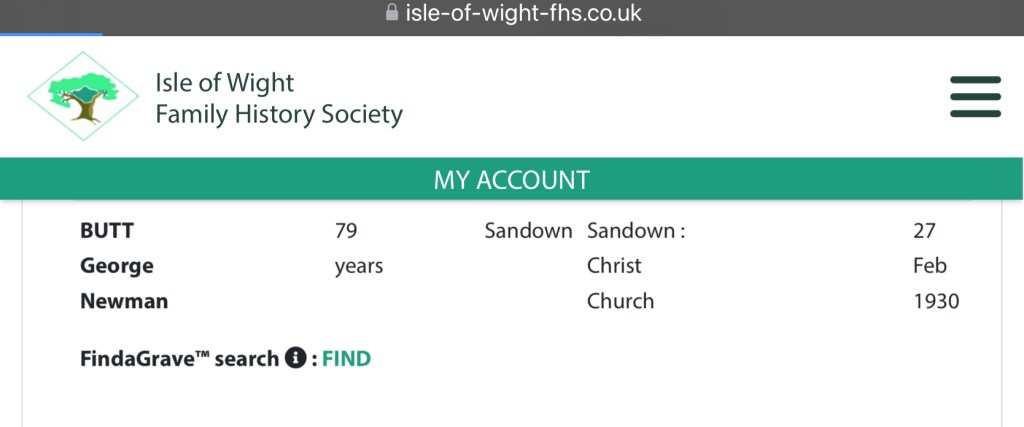
His brother, George Newman Butt, a 79-year-old retired pork butcher, passed away peacefully on Monday, the 24th of February 1930, at his home, Number 15, Cross Street, Sandown, Isle of Wight, Hampshire, England. His death, attributed to senectus, the natural decline of old age, was certified by H.B. Billups, medical director. No post-mortem was performed, a quiet acknowledgment that George had simply reached the end of his journey.
It was George’s son-in-law, E.W. Holbrook, who carried the difficult burden of registering his passing on Wednesday, the 26th of February 1930. The registrar, W.E. Young, recorded the loss, but for Arthur, it was not just an entry in a ledger, it was the painful reality of saying goodbye to a brother who had been by his side through life’s trials and triumphs.
To lose a son is a sorrow beyond words, but to lose a brother at the same time must have been almost unbearable. In the space of a few short days, Arthur’s world must have felt as if it were crumbling around him. The weight of grief, the echoes of shared memories, and the deep, aching void left behind would surely have tested the very fabric of his heart.

Arthur's brother, George Newman Butt, was laid to rest in the peaceful grounds of Christ Churchyard, Christ Church, Sandown, Isle of Wight, Hampshire, England, on Thursday, the 27th of February 1930. As family and friends gathered to say their final goodbyes, Arthur must have stood in quiet sorrow, mourning not only the loss of his beloved brother but also still reeling from the devastating death of his son just days before.
The grief of burying a sibling, a lifelong companion, a shared history, a bond forged through childhood and beyond, is profound. Yet, to endure such a loss while already carrying the unbearable weight of a son's passing must have left Arthur feeling as if his world had shattered around him. As the earth closed over George’s final resting place, Arthur may have found solace in knowing that his brother had lived a long life, but the pain of two losses so close together must have been overwhelming.
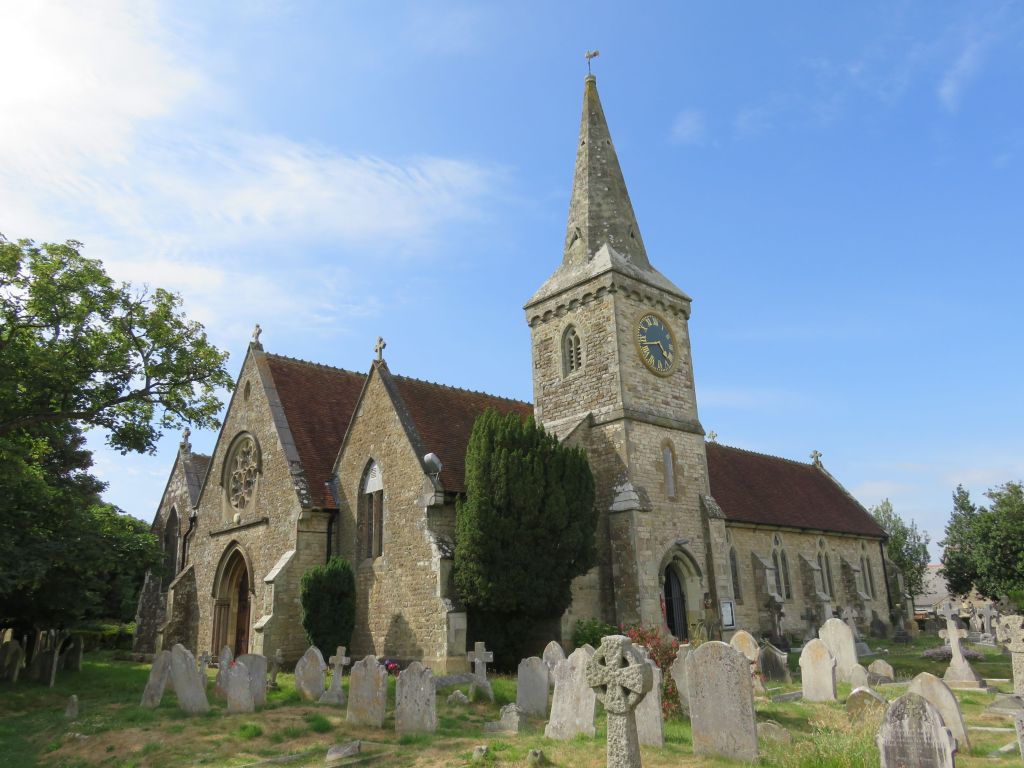
Christ Church, located in Sandown on the Isle of Wight, is a historic Anglican church with a rich heritage dating back to the mid-19th century. Constructed in 1845 by Woodman of Reading in the Early English style, the church was initially built as a Chapel of Ease to its mother church, St Mary's Church in Brading. Further additions were made in 1861 by Woodman and in 1874 by S.E. Tomkins, who added the north aisle.
The church is built of coursed Isle of Wight stone with a tiled roof, featuring a nave and chancel in one, north and south aisles, and a north-west tower with an integral porch. The south-west tower comprises two stages surmounted by a stone steeple, with a pointed arched doorcase adorned with carved human mask corbels and a trefoliated lancet.
In April 2022, Christ Church celebrated its 175th anniversary, marking over a century and a half of service to the Sandown community. A film was produced to commemorate this milestone, highlighting the church's history, its vicars, and its significance to the local area.
The churchyard, now a closed churchyard maintained by the Isle of Wight Council, contains a memorial to the wreck of HMS Eurydice, which featured in Gerard Manley Hopkins' poem of the same name. The church maintains registers detailing burial locations, and for a fee set by the Church of England, can assist those seeking specific graves.
Christ Church continues to serve the Sandown community, offering services every Sunday at 11 am, with activities for young people during most services. The church endeavors to be contemporary and culturally aware in its programs, stemming from a belief that encountering Jesus brings purpose to lives.
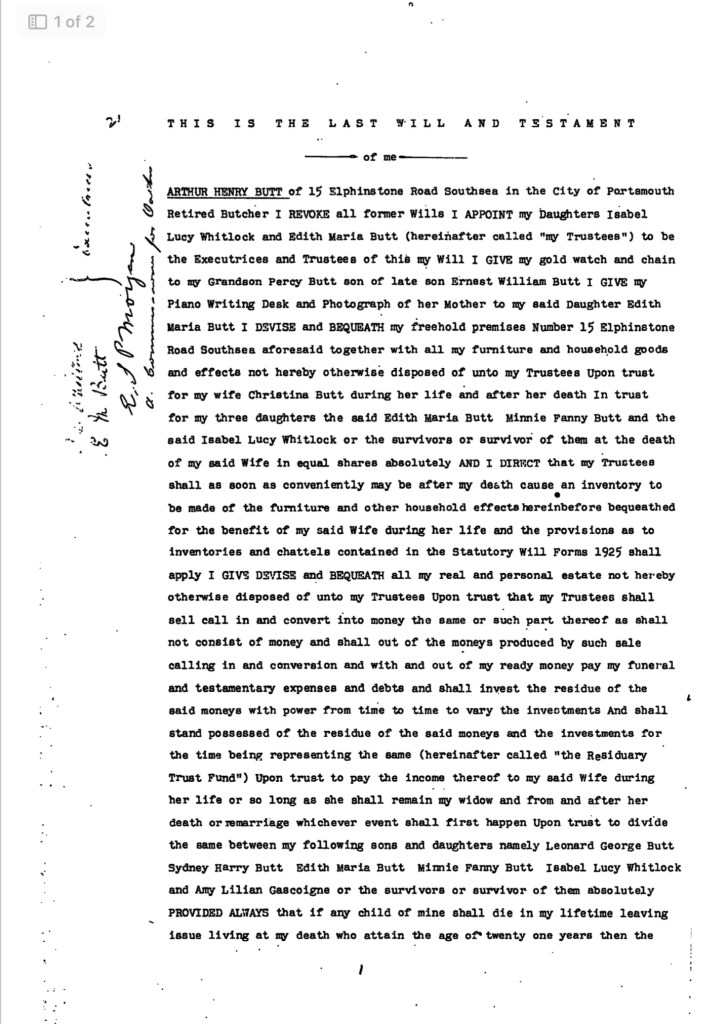
Arthur Henry Butt’s Last Will and Testament was written on Thursday, 5th April 1934, by Messrs. J.E. Pink & Marston, Solicitors, at 7 Hampshire Terrace, Portsmouth, Hampshire. In his will, Arthur, a retired butcher residing at 15 Elphinstone Road, Southsea, revoked all previous wills and appointed his daughters, Isabel Lucy Whitlock and Edith Maria Butt, as the executrices and trustees of his estate.
Arthur bequeathed his gold watch and chain to his grandson, Percy Butt, the son of his late son Ernest William Butt. He left his piano, writing desk, and a photograph of her mother to his daughter, Edith Maria Butt. His freehold property at 15 Elphinstone Road, along with all furniture and household goods not otherwise disposed of, was entrusted to his wife, Christina Butt, for the duration of her life. Upon her passing, the property and its contents were to be divided equally among his three daughters: Edith Maria Butt, Minnie Fanny Butt, and Isabel Lucy Whitlock, or the surviving daughters at the time of Christina’s death. He directed that an inventory of household effects be made for Christina’s benefit, with the provisions of the Statutory Will Forms of 1925 applying to this process.
Arthur’s remaining real and personal estate, not specifically bequeathed, was to be sold, and the proceeds, after the payment of funeral expenses and debts, were to be invested. The income from these investments was to be paid to his wife for as long as she remained his widow. Upon her death or remarriage, the residuary trust fund was to be divided equally among his surviving children: Leonard George Butt, Sydney Harry Butt, Edith Maria Butt, Minnie Fanny Butt, Isabel Lucy Whitlock, and Amy Lilian Gascoigne. If any of his children predeceased him, their share would be held in trust for their children, provided they reached the age of twenty-one. However, there were exceptions for his son Leonard George Butt, whose share would be held in trust for his children from his first marriage, and for his daughter Amy Lilian Gascoigne, whose share would be divided among Arthur’s surviving children.
Arthur granted his trustees the authority to postpone the sale and conversion of his estate as they deemed appropriate. Any rents, profits, and income generated from unsold property were to be distributed as per the trust’s provisions. He instructed his trustees to employ Messrs. J.E. Pink & Marston for all legal matters concerning the administration of his estate.
The will was signed by Arthur Henry Butt on 5th April 1934 in the presence of witnesses, A. Rogers and P.D. Jeremy, both clerks at J.E. Pink & Marston Solicitors in Portsmouth.

Arthur’s Last Will And Testament, reads as Follows,

THIS IS THE LAST WILL AND TESTAMENT of me -
ARTHUR HENRY BUTT of 15 Elphinstone Road Southsea in the City of Portsmouth Retired Butcher. I REVOKE all former Wills I APPOINT my Daughters Isabel Luey Whitlock and Edith Maria Butt (hereinafter called "my Trustees") to be the Executrices and Trustees of this my Will. I GIVE my gold watch and chain to my Grandson Percy Butt son of late son Ernest William Butt. I GIVE my Piano Writing Desk and Photograph of her Mother to my said Daughter Edith Maria Butt I DEVISE and BEQUEATH my freehold premises Number 15 Elphinstone Road Southsea aforesaid together with all my furniture and household goods and effects not hereby otherwise disposed of unto my Trustees Upon trust for my wife Christina Butt during her life and after her death In trust for my three daughters the said Edith Maria Butt, Minnie Fanny Butt and the said Isabel Lucy Whitlock or the survivors or survivor of them at the death of my said Wife in equal shares absolutely AND I DIRECT that my trustees shall as soon as convenlently may be after my death cause an inventory to be made of the furniture and other household effects hereinbefore bequeathed for the benefit of my said Wife during her life and the provisions as to inventories and chattels contained in the Statutory Will Forms 1925 shall apply I GIVE DEVISE and BEQUEATH all my real and personal estate not hereby otherwise disposed of unto my Trustees Upon trust that my Trustees shall sell call in and convert into money the same or such part thereof as shall not consist of money and shall out of the moneys produced by such sale calling in and conversion and with and out of my ready money pay my funeral and testamentary expenses and debts and shall invest the residue of the said moneys with power from time to time to vary the investments And shall stand possessed of the residue of the said moneys and the investments for the time being representing the same (hereinafter called "the Residuary Trust Fund") Upon trust to pay the income thereof to my said wife during her life or so long as she shall remain my widow and from and after her death or remarriage whichever event shall first happen Upon trust to divide the same between my following sons and daughters namely Leonard George Butt Sydney Harry Butt Edith Maria Butt Mimie Fanny Butt Isabel Lucy Whitlock and Amy Lilian Gascoigne or the survivors or survivor of them absolutely PROVIDED ALWAYS that if any child of mine shall die in my lifetime leaving issue living at my death who attain the age of twenty one years then the share of the child so dying shall be held In trust for such child as aforesaid and if more than one in equal shares except in the case of my son the said Leonard George Butt and in his case if he shall predecease me his share shall be held In trust for his son and daughter by his first marriage equally or for the survivor absolutely And except also in the case of my daughter Amy Lilian Gascoigne and in her case. if she shall predecease me her share shall be held In trust for the survivors of my said sons and daughters in equal shares AND I DECLARE that my Trustees may postpone the sale and conversion of any part of my property for so long as they shall think fit AND I DIRECT that the rents profits and income to accrue after my death from such part of my estate as shall for the time being remain unsold and unconverted shall after payment thereout of all incidental expenses and outgoings and howsoever invested be paid and applied to the person or persons and in the manner to whom and in which the income of the proceeds of such sale and conversion would for the time being be payable or applicable under my will if such sale and conversion had been actually made I DIRECT my Trustees to employ Mesars:
J.E.Pink and Marston Solicitors of 7 Hampshire Terrace Portsmouth in all matters appertaining to the Administration of my Estate and the Trusts of this my will.
IN WITNESS whereof I have hereunto set my hand to this my Will this Fifth day of April One thousand nine hundred and thirty four.
Signed by the said ARTHUR HENRY BUTT as and for his last Will and Testament in the presence of us both present at the time who at his request in his presence and in the presence of each other have hereunto subscribed our names as Witnesses :- A Rogers P.D. Jeremy.
Clerks to Messre. J.E. Pink & Marston,
Solicitors,
7 Hampshire Terrace,
PORTSMOUTH.

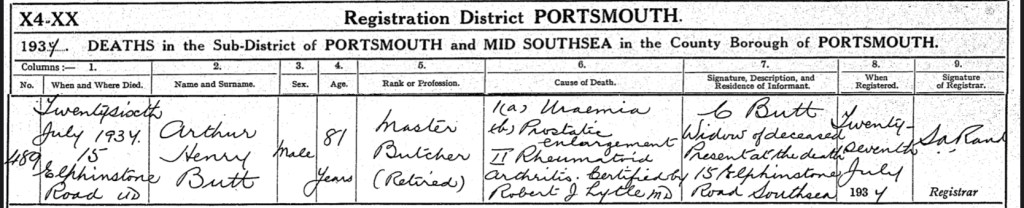
Arthur Henry Butt, a retired Master Butcher, passed away peacefully at the age of 87 on Monday, 26th July 1937, in the comfort of his home at 15 Elphinstone Road, Southsea, Portsmouth, Hampshire, England. After a lifetime of hard work and dedication to his family and trade, Arthur succumbed to uraemia, prostate enlargement, and rheumatoid arthritis, as certified by Robert J. Lythe, medical director. His devoted wife, Christina Butt, was by his side in his final moments, offering him love and comfort. In her grief, she took on the solemn duty of registering his death the following day, Tuesday, 27th July 1937. The registrar in attendance was Ja Ranl. Arthur’s passing marked the end of an era, leaving behind a legacy of resilience, love, and dedication to his family and community.
Arthur Henry Butt was brought back to his beloved hometown and laid to rest at Romsey Old Cemetery, Botley Road, Romsey, Hampshire, England, on Friday, 30th July 1937. In a fitting tribute to his life, he was buried in grave E451, where he was reunited in eternal rest with his first wife, Fanny Butt (née Kemish). Their shared resting place stands as a testament to the life they built together, the family they raised, and the love that endured even beyond death. For those who knew Arthur, his passing marked the end of a long and full life, one that had been shaped by dedication to his family, his craft, and the many joys and hardships he experienced along the way. Now, at peace in Romsey, Arthur rests among those who came before him, forever a part of the town he called home.

Arthur Henry Butt’s probate was officially granted on Friday, 19th November 1937, in London, England. The record reflects the careful arrangements he had made for his estate, ensuring that his loved ones were provided for after his passing. It states:

**"BUTT Arthur Henry of 15 Elphinstone-road, Southsea, Portsmouth, died 26 July 1937. Probate London 19 November to Isabel Lucy Whitlock, widow, and Edith Maria Butt, spinster. Effects £4,295 14s. 3d."**

This legal confirmation of his final wishes entrusted his estate to his daughters, Isabel and Edith, marking the final chapter in the life of a devoted father and hardworking man. His legacy, built over decades of dedication to his family and trade, lived on through them.

Arthur Henry Butt’s probate grant was issued on 19th November 1937 by His Majesty's High Court of Justice, Principal Probate Registry. Arthur, who had resided at 15 Elphinstone Road, Southsea, in the city of Portsmouth, passed away there on 26th July 1937.
At the time of the grant, Arthur’s last will and testament had been proved and registered in the Principal Probate Registry. Administration of his estate was granted to his daughters, Isabel Lucy Whitlock, a widow, and Edith Marie Butt, a spinster, both of 2 Richmond Terrace, Nelly Road, Southsea. They were the executrices named in his will.
An affidavit for Inland Revenue was submitted, showing that the gross value of Arthur’s estate in Great Britain, excluding any assets held in trust, amounted to £4,295 14s. 3d. The net value of his personal estate was recorded as £1,550 11s. 0d. A receipt signed by an Inland Revenue Officer confirmed that £127 0s. 4d. had been paid in Estate Duty and interest.
The probate grant was officially recorded on 19th November 1937, and the legal process was handled by the firm Pink, Marston & Birch of Portsmouth.
Arthur’s Grant reads as follows,

In His Majesty's High Court of Justice.
The Principal Probate Registry.
BE IT KNOWN that Arthur Hebry Butt of 15 Elphinstone Road Southsea in the city of Portsmouth died there on the 26th day of July 1937.
AND BE IT FURTHER KNOWN that at the date hereunder written the last WIll and Testament (a copy whereof is hereunto annexed) of the sald deceased was proved and registered In the Principal Probate Registry of His Majesty's High Court of Justice and that Administration of all the Estate which by law devolves to and vests In the personal representative of the sald deceased was granted by the aforesald Court to Isabel Lucy Whitlock - Widow and Edith marie But - spinster both of 2 Richmond Tenace Nelly Road Southsea aforesaid daughters of deceased - the Executrices named in the said will.
And it is hereby certified that an Affidavit for Inland Revenue has been delivered wherein it is shewn that the gross value of the said Estate in Great Britain (exclusive of what the said deceased may have been possessed of or entitled to as a Trustee and not benefically), amounts to £ 4295-14-3 and that the net value of the personal estate amounts to £1550-11-0. And it is further certified that it appears by a Receipt signed by an Inland Revenue Officer on the said Affidavit that £127-0-4 on account of Estate Duty and Interest on such duty has been paid.
Dated the 19th day of November 1937.
Extracted by Pink Marston + Birch Portsmouth.

As Arthur Henry Butt’s story draws to a close, it leaves behind a legacy woven with love, resilience, and dedication. His journey, from a young butcher in Romsey to a respected businessman and family man, was one of hard work, sacrifice, and devotion to those he cherished most. Through the joys and heartaches of life,building a family, suffering the unbearable loss of children and siblings, embracing new beginnings, and weathering the inevitable passage of time,Arthur remained steadfast, embodying the quiet strength of a life well lived.
Laid to rest in Romsey Old Cemetery, beside his first love, Fanny, Arthur returned to the town that shaped him, among the people and places that held his fondest memories. Though his voice has long since faded, his story endures in the echoes of history, in the lives of those who came after him, and in the streets and buildings that once bore witness to his presence.
To remember Arthur is to honor not just a man, but a life full of purpose, love, and perseverance. His story reminds us that while time moves ever forward, the past is never truly lost, it lives on in the hearts of those who remember.
May he rest in peace,
Arthur Henry Butt
1856–1937
A life well lived, a legacy never forgotten.
Family history is more than just names and dates, it is the story of who we are. Our ancestors, no matter how distant, are woven into the fabric of our existence. Their blood runs through our veins, their struggles and triumphs have shaped our journey, and their values and character live on in us. The resilience they showed, the skills they honed, and the kindness they shared are part of our very being. By honoring their stories, we not only keep their memory alive but also gain a deeper understanding of ourselves. In learning about them, we find reflections of our own strengths, dreams, and purpose. Family history is a bridge between the past, present, and future, a testament to the unbreakable bond that connects us all.
This is especially true for my son, who is following in the footsteps of more than four generations of butchers. He now walks the very floors his ancestors once walked, tends to meat where they once toiled, and begins his own life in a home that held such deep significance for those who came before him. It fills me with immense pride, love, and understanding to see him so closely connected to his paternal ancestors, the Butt family, and to his maternal great-grandfather, Donald Newell, who was also a butcher. To witness this legacy live on through him is profoundly moving. It is a reminder that the past is never truly gone, it lives on in us, in the paths we choose, and in the traditions we uphold. Seeing my son so naturally aligned with his heritage warms my soul in ways words can scarcely capture.
Until next time,
Toodle pip,
Yours Lainey.
🦋🦋🦋
 Intwined