As I embark on the second chapter of Stephen Withers' life story, I find myself reflecting on the journey that has brought us to this point, a journey marked by love, labor, and an unwavering commitment to family. In the first part of his tale, we traced the early years of this man born into humble beginnings in Romsey, Hampshire, in 1831. From his baptism in Romsey Abbey to the quiet rhythms of daily life along the waterways, Stephen's world was shaped by the legacy of his parents, John and Mary Withers, and the close-knit family he grew up in. Through the years, we saw the Withers family navigate the challenges of life in 19th-century England, with Stephen following in his father’s footsteps as a bargeman, and later a barge driver, a profession that tied him to the river and to the land in ways that were both practical and deeply symbolic.
We also witnessed the delicate, yet profound, moments of early loss, most notably the death of his young sister Fanny, whose brief life was marked by an innocence lost too soon. These early years were framed by the close bonds of family, with the Withers’ story unfolding in the quiet streets of Newton Lane and the sacred space of Romsey Abbey. Yet, as we step forward into the next chapter, Stephen’s story grows deeper, richer, and more complex, as he steps into the role of husband and father, finding his own path amid the tides of life’s inevitable changes.
The next part of his life unfolds during a period of transformation, both personal and historical. We move from the tender years of youth and family to the later challenges of adulthood, love, and the kind of resilience that only time can forge. Stephen’s life, as we will see, was not one of great fame or fortune, but one of enduring strength, quiet devotion, and an ever-present connection to the land and people he loved. His story, spanning from 1831 to 1916, is one of enduring relationships, the promise of new beginnings, and the heartache of inevitable goodbyes.
So, as we continue this journey through the pages of Stephen's life, we do so with a deep sense of reverence for the path he walked, a path that, though simple in many ways, was extraordinary in the love and tenacity that carried him through nearly nine decades of life. This is where we pick up the story, as Stephen steps forward into the life that will carry him from his youth to the man he was destined to become. From marriage to fatherhood, from work to loss, from dreams to realities, we will follow him through the moments that defined him. And so, with love and respect, we turn the page to Part 2 of,
"The Life of Stephen Withers, 1831–1916,
Until Death Do Us Part."
Welcome back to the year 1856, Romsey, Hampshire, England. The year was a pivotal moment in the Victorian era, marked by both social and technological progress, as well as ongoing struggles within society. Queen Victoria reigned over the British Empire, and under her rule, the country continued to see significant expansion, particularly in terms of industry and imperial influence. At the same time, the political landscape was defined by the leadership of the Conservative Prime Minister, Lord Palmerston, who had held office since 1855, after Sir Robert Peel’s passing. Palmerston was a dominant figure in British politics, known for his assertive foreign policy and his role in navigating Britain through various crises, including the Crimean War, which had started in 1853 and was drawing to a close in 1856.
Social standing in 1856 was deeply stratified. The rigid class system dictated the lives of most people. At the top were the aristocracy and the emerging middle class, wealthy from land, industry, or trade. The rich enjoyed luxurious lifestyles, residing in large, stately homes, and engaging in cultural pursuits such as theater, concerts, and art exhibitions. They had access to the best of what was available in terms of education, medical care, and leisure activities. The middle class, including professionals such as doctors, lawyers, and businessmen, were becoming more influential in society, though they still lacked the status and grandeur of the aristocracy. Their homes were generally comfortable, but not grand, and their lives were defined by a strong work ethic and a growing desire to emulate the wealthy in terms of appearance and mannerisms.
At the bottom of the social ladder were the working class and the poor. In 1856, many working-class individuals worked in factories, as domestic servants, or in agriculture, often for long hours and low wages. The poor lived in overcrowded, unsanitary conditions, particularly in urban areas. The industrial revolution was in full swing, and while it provided jobs, it also brought harsh working conditions, especially in the factories. Poor workers and their families often lived in slums with inadequate heating, lighting, and sanitation. For them, life was a daily struggle to survive, and any illness or accident could spell disaster. The growing divide between the wealthy and the poor was evident in every aspect of life, from the type of work people did to the food they ate, and even in the opportunities for education and social advancement.
Fashion in 1856 reflected the social divide. The upper classes donned elaborate gowns made of rich fabrics such as silk and velvet, adorned with lace, ribbons, and jewelry. Men wore waistcoats, frock coats, and top hats, projecting an air of formality and wealth. For the middle class, fashion was still important, but more restrained than that of the upper classes. Women wore dresses made of less expensive materials, while men typically dressed in suits that were simpler than the aristocratic style but still indicative of their status. The working class, however, wore practical, often worn clothing made from cheaper, more durable fabrics. For women, this typically meant long skirts and plain dresses, and for men, it was trousers, waistcoats, and shirts that were functional but not stylish.
Transportation in 1856 was undergoing significant changes. The railway network was rapidly expanding, making travel across the country more accessible to the middle class. Trains were becoming faster, more efficient, and increasingly important in moving goods and people. However, for many people in rural areas like Romsey, travel by horse-drawn carriage or on foot was still common. Horse-drawn carts were used to transport goods, and most people relied on local services for transportation, such as the stagecoach or the omnibus in cities. The advent of steam-powered ships was revolutionizing maritime travel, connecting Britain to the rest of the empire and beyond.
Energy in 1856 was still largely based on coal, which powered both industry and homes. In the cities, coal fires were used to heat homes and provide energy for factories, although many households still relied on wood or peat for heating. Gas lighting was becoming more widespread in urban areas, including in some homes and public spaces, but in rural areas like Romsey, oil lamps or candles were still more common.
Heating and lighting were central concerns for people in 1856. The wealthy had access to more efficient heating methods, such as central heating, which was becoming more common in large homes, while the poor had to make do with the open coal fires in their small homes. The smoke from these fires often caused significant air pollution, contributing to the foggy and sometimes oppressive atmosphere that could descend over towns and cities.
Sanitation in 1856 was primitive, especially in urban areas. Sewer systems were not yet widespread, and many people had to rely on cesspits or communal toilets. This lack of proper sanitation contributed to the spread of disease, particularly cholera and typhoid, which were common during this period. In rural areas like Romsey, conditions were better, but they were still far from ideal. Clean drinking water was often difficult to come by, and many people had to rely on wells or rivers, which were sometimes contaminated.
Food in 1856 varied widely depending on one’s social standing. The rich enjoyed a diet that included meat, bread, fruits, and imported goods such as wine, tea, and coffee. They also had access to fresh vegetables and delicacies like French pastries or exotic fruits. The middle class could afford a slightly more modest diet but still enjoyed meat and bread, along with some vegetables and dairy products. The poor, on the other hand, often relied on simple foods such as bread, potatoes, and cheap cuts of meat, and they were less likely to have access to fresh fruit and vegetables.
Entertainment in 1856 was dominated by theater, music, and social gatherings. The wealthy enjoyed access to opera, ballet, and concerts, and the theater was a popular pastime for the middle class. For the working class, entertainment often took the form of fairs, public houses, and local dances. Newspapers and pamphlets were also a source of entertainment and information, with a growing interest in serialized fiction. The rise of photography also made it possible for people to capture images of themselves and their loved ones, creating a new form of personal entertainment.
Diseases were rampant in 1856, particularly in the poorer areas. Without effective antibiotics or vaccines, diseases like cholera, tuberculosis, and smallpox were common and could spread quickly, particularly in overcrowded living conditions. The lack of proper sanitation and medical knowledge meant that the working class suffered disproportionately from these illnesses, while the wealthy had better access to medical care.
The environment in 1856 was heavily shaped by the industrial revolution. In urban areas, pollution was a growing problem, with smog from factories and coal fires often blanketing cities. In rural areas like Romsey, the environment was less polluted, but the changes brought about by industrialization were still felt, particularly in the form of changes to agriculture and transportation.
In the year 1856, gossip and rumors were a common form of social interaction, especially in small towns like Romsey. People exchanged news about local events, scandals, and the lives of the wealthy, who were often the subject of fascination. News of global events, such as the Crimean War or the expansion of the British Empire, would also be topics of conversation in local pubs, homes, and gathering places.
Historical events of 1856 included the end of the Crimean War, which had raged for several years between the Russian Empire and an alliance of the British Empire, France, the Ottoman Empire, and Sardinia. The Treaty of Paris, which brought the war to a close, was signed in March 1856, marking a significant moment in European diplomacy. Additionally, the year saw the formation of the British Columbia colony in Canada and the establishment of the National Association for the Promotion of Social Science, which would later play a role in social reform movements.
On Monday, the 22nd day of September, 1856, Stephen and Jane Withers welcomed their firstborn child, a daughter they named Ann Elizabeth Withers, at The Hundred, Romsey, Hampshire, England. The joy of their growing family marked a new chapter in their lives. Just a few weeks later, on Friday, the 10th day of October 1856, Jane registered Ann's birth in Romsey, where Registrar John Scorey meticulously recorded the details of the event. Ann Elizabeth, a beautiful girl, was documented as the daughter of Stephen Withers, a general labourer, and Jane Withers, formerly Chapman, of The Hundred, Romsey Extra. While she was born as Ann Elizabeth, she would come to be known simply as Elizabeth throughout her life, a name that would carry her through the years with the love and warmth her family had for her.
The Hundred, the street where Elizabeth was born, holds a rich historical legacy. Once an area used for administrative purposes in medieval England, its name derived from the “hundred,” a division that helped organize taxation and law. Over time, The Hundred transformed into a vital street at the heart of Romsey, its buildings showcasing the architectural evolution of the town. Some of its most notable features include the Grade II listed buildings that stand proudly along its path, structures dating back to the late 18th century that capture the timeless charm of the area. These red-brick buildings, with their sash windows and grand doors, speak to Romsey's enduring history.
In earlier centuries, The Hundred also played an important role in the social welfare of the community. During the mid-1700s, one of its buildings served as a workhouse for women, offering shelter and employment to those in need. It was an area that reflected the struggles and resilience of Romsey’s people, and now, more than a century and a half later, it remains a vital part of the town, blending its past with the present. The street continues to thrive, a testament to the enduring spirit of Romsey’s history, where modern businesses coexist with the echoes of the past, and the memories of families like the Withers continue to live on.
For Stephen and Jane, this was the beginning of a new and exciting chapter in their lives, a daughter to love, a home to nurture, and a future to build. Their story, already one of love and commitment, would now take on a new depth with the arrival of Elizabeth.
On Sunday, the 12th day of October, 1856, Stephen and Jane had their daughter, Ann Elizabeth Withers, baptised at Romsey Abbey, Romsey, Hampshire, England. In keeping with the tradition of her family, she was baptised as Elizabeth Ann Withers, the name she would carry proudly throughout her life and on all official documents. The baptism was performed by Curate J. N. Townsend (Joseph), who recorded the event in the church’s baptism register. He noted that Elizabeth Ann was the daughter of Stephen Withers, a labourer, and Jane Withers of The Hundred, Romsey. Along with Elizabeth, several other children, including Albert Mack, Samuel Freeborw Moody Arter, and James Alexander Mason, were also baptised during the same Sunday service.
Romsey Abbey, where Elizabeth’s baptism took place, stood as a symbol of faith and tradition for the Withers family. The abbey’s centuries-old history, blending Saxon and Norman architecture, offered a sacred space for baptisms, weddings, and other rites of passage that tied the community together. It was here that Elizabeth, like so many others before her, was welcomed into the spiritual fold of Romsey, her name now etched into the church’s rich history.
For Stephen and Jane, the baptism of their firstborn marked a significant moment, a milestone in their journey as parents, and a further deepening of their ties to the town of Romsey and the faith they held dear. Elizabeth, whose name would carry forward with grace and dignity, was now an official part of their family’s story, and this cherished day in October 1856 was a turning point, one that would forever remain in the hearts of her parents and all those who loved her.
On Thursday, the 21st day of June, 1860, Stephen and Jane welcomed their second child, a son they named Thomas Edward Withers. He was born at their home in The Hundred, Romsey, Hampshire, England, surrounded by the familiar streets and steady rhythms of the town they called home. It was here, amid the old brick buildings and bustling lanes, that the next chapter of their growing family began.
Jane, fulfilling the duty of a devoted mother, registered Thomas’s birth almost a month later, on Friday, the 20th day of July, 1860, in Romsey. Registrar George Withers recorded the details in the birth register, noting that Thomas Edward Withers, a boy, was the son of Stephen Withers, a general labourer, and Jane Withers, formerly Chapman, of The Hundred, Romsey.
The arrival of Thomas must have brought both joy and a renewed sense of purpose to Stephen and Jane’s lives. Their young family, rooted deeply in the traditions and community of Romsey, was growing, their love expanding with each tiny hand they held and each new promise the future carried.
On Sunday, the 12th day of August, 1860, Stephen and Jane Withers brought their infant son, Thomas Edward Withers, to be baptised, a tender act of faith and hope for his life ahead. The ceremony took place in Romsey, Hampshire, England, the same familiar town where generations of their family had lived, loved, and built their lives.
The Reverend E. L. Berthon performed the baptism and carefully recorded Thomas’s details in the baptism register. He documented that Thomas Edward Withers, the son of Stephen Withers, a labourer, and Jane Withers, of The Hundred, was baptised on August 12th.
In those quiet moments within the sacred walls, Stephen and Jane entrusted their son to God's keeping, weaving Thomas more tightly into the fabric of their family’s story, a story anchored by faith, perseverance, and the enduring spirit of their Romsey home.
As the sun set on Sunday the 7th day of April 1861, casting a gentle glow over the quiet streets of Romsey, the Withers and Chapman families were tucked away in their modest homes along Winchester Road. It was the night of the national census, a moment when every household in the land was called upon to record their place in the world.
Yet, despite a careful search through the fading ink of those census returns, there is, for now, no sign of Stephen Withers himself. His absence leaves a small but aching gap in the unfolding story, a reminder that history often keeps a few of its secrets tucked just out of reach.
In his stead, we find his wife, Jane Withers, strong and steady, caring for their young daughter Elizabeth and infant son Thomas. They were living at Winchester Road, surrounded by the familiar comfort of family. Under the same roof resided Jane’s parents, John and Martha Chapman, along with her brother Tom Chapman, weaving together three generations beneath one humble dwelling.
Next door, the familiar names of the Withers family continued the story. Stephen’s parents, John and Mary Withers, along with their sons Silas and Frederick and daughter Virtue, were their close and constant neighbours.
Jane, despite the weight of young motherhood, was earning her living as a dressmaker, plying her skill with needle and thread to help support her growing family. Life was not easy, but it was rich in the ways that truly mattered, in family ties, shared burdens, and the quiet strength found in carrying on, day by day.
On Saturday, the 14th day of September 1861, within the ancient, timeworn walls of Romsey Abbey, Stephen’s younger sister, Virtue Anna Withers, pledged her vows and began a new chapter of her life. At just twenty-three years of age, Virtue, a spinster from Romsey, married Edwin Street, a twenty-five-year-old bachelor and labourer, also from Romsey.
Curate S. B. Pobat officiated the ceremony, solemnly recording their details in the marriage register. He noted that Virtue was the daughter of John Withers, a labourer, and Edwin was the son of William Street, likewise a labourer, both young people from working families who knew the meaning of hard toil and simple dreams.
Standing by their side as witnesses were George Copper and Virtue’s sister, Emma Withers, who marked the occasion in the register with her simple, heartfelt ‘x’, a quiet testament to a life of sincerity and steadfastness.
In the sanctuary of Romsey Abbey, amid echoes of centuries past, another Withers name was joined to a new story, carrying forward the enduring spirit of love, resilience, and hope that defined them.
On Monday the 21st day of September 1863, within the familiar walls of their home in The Hundred, Romsey, Stephen and Jane welcomed their third child into the world, a daughter they named Edith Mary Withers. It was another moment of quiet joy in a life marked by simple blessings and the steady rhythm of family.
Almost a month later, on Saturday the 17th day of October 1863, Jane made her way to the local registry office in Romsey to officially record her daughter’s birth. Registrar George Withers, perhaps a distant relation or simply a familiar face in the community, logged the details into the birth register. He documented that Edith Mary Withers, a girl, was born to Stephen Withers, a general labourer, and Jane Withers, formerly Chapman, of The Hundred, Romsey.
Though unremarkable to the wider world, this small act of registration was a deeply meaningful step in affirming Edith’s place in both her family and the broader story of her time. Her name, like those of her siblings before her, was etched into the fabric of Romsey’s history and into the hearts of the Withers family, where it would remain.
On Sunday the 11th day of October 1863, Stephen and Jane took their infant daughter Edith Mary Withers to be baptised in Romsey, Hampshire, England. It was a moment steeped in tradition, marking Edith’s formal welcome into the faith and the community that had long been home to generations of Withers and Chapmans before her.
The ceremony was performed by E.L. Berthon, who carefully recorded Edith’s details in the baptism register. He documented that Edith Mary Withers, the daughter of Stephen Withers, a labourer, and Jane Withers, of The Hundred, Romsey, was baptised on October 11th.
In the quiet solemnity of Romsey’s parish church, beneath the ancient stone arches and the muted light from the stained glass, Stephen and Jane entrusted their daughter to the blessings and hopes of the future. It was a simple, heartfelt act that wove another stitch into the fabric of their growing family story.
Stephen’s father, 66-year-old general labourer, John Withers, passed away on Friday, the 10th day of March, 1865, in his home on Newton Lane, Romsey, Hampshire, England. Elizabeth Bungay, a neighbour and likely a friend, was by his side in his final moments, and it was she who took on the solemn duty of registering his death on Monday, the 13th day of March, 1865. Registrar George Withers recorded John’s passing in the death register, noting that he had succumbed to fever and exhaustion, his death duly certified. Elizabeth Bungay signed the official document with her mark, an "X," a quiet testament to a simple, earnest life now at its close.
John’s death marked the end of a long and steadfast life. He had weathered the storms of hardship, worked tirelessly to provide for his family, and witnessed his children grow into adulthood. In the soil of Romsey and along the flowing waters he once laboured beside, the traces of his life remained, silent but enduring. His spirit lived on in those he left behind, woven into the strength, determination, and quiet dignity of the family he helped to raise.
Just days after his passing, Stephen and his family gathered to say their final farewell to the man who had quietly shaped the foundation of their lives. On Thursday, the 16th day of March, 1865, John Withers was laid to rest in Romsey, Hampshire, perhaps within the hallowed grounds of Romsey Abbey, or among the weathered stones of the Old Cemetery at Botley Hill. Curate Winian H. Barr officiated the solemn ceremony and entered John’s details into the Burial Register. He recorded that 66-year-old John Withers, of Newton Lane, was buried that day, marking him as the 753rd soul laid to rest in that sacred ground.
There, beneath the sky he had lived and laboured under, John was returned to the earth, surrounded by the town he had called home and the family he had loved. Though his voice fell silent, his presence lingered, in the lines of his son’s hands, in the memory of every shared meal, every hard-earned coin, and every quiet act of care. His was a life that mattered, and in their mourning, Stephen and Jane carried not only their grief but also the enduring strength of his legacy.
Stephen’s beloved mother, 63-year-old Mary Withers, formerly Cole, passed away on the quiet evening of Tuesday, the 14th day of November, 1865, in the familiar home on Newton Lane, Romsey, Hampshire. Her passing came after a long and painful battle with cancer of the uterus, a struggle that had sapped her strength, yet she faced it with the same quiet resilience that had defined so much of her life. Surrounded by the love of those closest to her, it was Elizabeth Bungay, a steady presence at her side, who took on the solemn duty of registering Mary’s death the very next day, Wednesday, the 15th day of November, 1865.
In the official records, George Withers, the registrar, logged the details of her passing. He noted with gentle finality that Mary had departed from this world, the widow of John Withers, a general labourer. It was a loss that rippled through the family, leaving behind the echo of years spent in the small rhythms of daily life, the laughter of children, the labor of her hands, the love of a devoted wife.
Elizabeth Bungay, with a quiet mark of "X," signed the document, an unspoken reflection of her deep connection to the Withers family and to the woman she had known so well. Though the ink of the register may have been dry, it could never capture the true weight of Mary’s passing, a mother, a wife, a woman who had lived through so much and whose strength would be felt in the hearts of her children for years to come. As Stephen carried on, he would hold the memory of his mother in the gentlest part of his heart, a memory that would live on in the stories he told and in the legacy she left behind.
On a solemn Sunday, the 19th day of November 1865, Stephen’s mother, Mary Withers, was gently laid to rest beneath the soft, damp earth of Romsey Old Cemetery, along Botley Road, in the town she had known all her life. Grave E183 became her final resting place, a quiet, shaded spot where the autumn leaves whispered prayers only the trees could understand. The service was conducted with care by Curate Minian H. Barr, who recorded her burial in the register, noting that Mary Withers, aged 63, of Newton Lane, was buried that day. She was the 811th soul to be interred in that sacred ground.
It was a day of reflection and sorrow, yet also one of peace. After a life spent in steadfast devotion to her family and in the quiet service of daily toil, Mary was finally at rest. The earth received her gently, as if it too understood the grace with which she had carried the weight of motherhood, marriage, and hardship.
Though her body now lay in the stillness of Romsey’s soil, Mary’s spirit remained deeply rooted in the hearts of those she had loved and nurtured. For Stephen, her memory became a constant companion, woven into the fabric of every choice, every heartbeat, every story yet to be lived.
Romsey Old Cemetery, situated on Botley Road in Romsey, Hampshire, was established in 1856 in response to public health concerns arising from overcrowded churchyards, notably that of Romsey Abbey. Legislation such as the Public Health Act of 1848 and the Burials Act of 1853 prompted the creation of new cemeteries to address these issues. The cemetery served as the principal burial ground for Romsey until its closure in 1983, although some reserved burial rights remain.
Architecturally, the cemetery features two chapels: a Gothic-style Church of England chapel and an Italianate non-conformist chapel. The Italianate chapel, characterized by its red brick construction with yellow brick and stone dressings, was restored in the 1990s by the Test Valley Archaeological Society. The cemetery also contains 18 official war graves recognized by the Commonwealth War Graves Commission.
Today, Romsey Old Cemetery stands as a testament to Victorian-era public health reforms and architectural design, reflecting the town's historical evolution and commitment to preserving its heritage.
Stephen and Jane’s son, Harry James Withers, was born on Monday the 15th day of January 1866 at their family home in The Hundred, Romsey, Hampshire, England. In the weeks following his arrival, Jane made her way to the registrar’s office to officially record his birth, a task she completed on Monday the 5th day of February 1866 in Romsey.
Registrar George Withers attended to the paperwork, carefully logging Harry’s details in the birth register. He documented that Harry James Withers, a boy, was the son of Stephen Withers, a general labourer, and Jane Withers, formerly Chapman, of The Hundred, Romsey. In keeping with the custom of the times and reflecting the simple, honest life they led, Jane signed the official document with her mark, an x, adding her quiet yet powerful affirmation to the newest chapter of their family’s growing story.
On a crisp spring Sunday, the 11th day of March 1866, the bells of Romsey rang out across the town, calling the faithful to worship and celebration. Within the hallowed walls of the church, Stephen and Jane Withers brought forth their infant son, Harry James, to be welcomed into the fold through baptism, a sacred act of devotion, love, and hope.
The ceremony was led by Reverend E.L. Berthon, who gently poured the waters of new life upon Harry’s brow and recorded the moment in the parish register. He noted that Harry James Withers, the son of Stephen Withers, a labourer, and Jane Withers, of The Hundred, was baptised that day. In the same service, Alice Ann Cole, Fanny Cooper, and Mary Saint also received their blessings, their names woven into the shared fabric of that day’s grace.
As the light filtered through the stained glass of Romsey’s sanctuary, Harry’s baptism marked not just a beginning for one child, but a quiet renewal of faith for the family. For Stephen and Jane, it was another chapter written in love, an expression of their continuing hope in a world where family, faith, and tradition shaped the rhythm of everyday life.
On a soft spring morning, Wednesday the 13th day of May, 1868, in the heart of The Hundred, Romsey, Stephen and Jane Withers welcomed their daughter into the world, Kate Withers, who would one day become my great-great-grandmother. Born into a household already shaped by years of love, hardship, and quiet resilience, Kate's arrival added a new breath of life to the Withers family, already rooted deep in the soil of Hampshire.
Jane, steadfast as ever, cradled her newborn daughter and, just over a month later, made her way to the Romsey registrar's office. On Tuesday the 23rd day of June, she stood before George Withers, perhaps by now a familiar name and face, or even a relative, and gave the details of her daughter’s birth. Kate Withers, a girl, born of Stephen Withers, a general labourer, and Jane Withers, formerly Chapman, of The Hundred, Romsey, was officially entered into the register of life.
Though just one line on a page, that entry marked the beginning of a legacy. Kate would grow in the embrace of a hardworking family, beneath the same skies her ancestors had tilled, walked, and prayed under. She was born not just into a time and place, but into a lineage of endurance, tenderness, and quiet strength, the kind passed down not in riches, but in stories, in hands worn by work, and in hearts shaped by love.
On Sunday, the 14th day of June, 1868, the bells of Romsey rang out in quiet celebration as Stephen and Jane Withers carried their newborn daughter, Kate, to be welcomed into the spiritual fold of their community. The air was likely soft with summer warmth as they stepped through the familiar stone threshold of Romsey Abbey, where so many chapters of their family’s story had already begun.
There, under the steady hand of Reverend E.L. Berthon, Kate Withers was baptised. Her name was carefully entered into the baptismal register, noting her as the daughter of Stephen, a labourer, and Jane, of The Hundred. The same voice that had once proclaimed life over her elder siblings now did so for her, this time for a daughter who would one day carry the Withers name forward in ways none present could have imagined.
The service that day was filled with the presence of other families offering their children to the faith, ten in all. Among them was Albert Mills Withers, the child of Georgina Withers, a single woman of The Hundred and Stephen’s own niece. In that quiet space, cousin was baptised beside cousin, two branches of the same deep-rooted tree reaching toward their own futures. The family line, like the waters of the font, flowed on, unbroken, enduring, and held in sacred memory.
On the eve of the 1871 census, as dusk settled softly over Romsey on Sunday, the 2nd day of April, the Withers family gathered once again under one roof, this time on Winchester Road. Within the quiet hum of domestic life, 38-year-old Stephen and 33-year-old Jane carried the familiar rhythms of parenthood, their home filled with the spirited presence of their five children.
Elizabeth, now 14, stood on the cusp of womanhood, while 9-year-old Thomas, 7-year-old Edith, and 5-year-old Harry, each with their own budding curiosity, filled the days with lessons and laughter, attending school as best they could. Little Kate, just 2 years old, still clung to her mother’s skirts, too young for schooling but already woven deeply into the fabric of their family life.
Stephen continued in his enduring role as a general labourer, his hands surely calloused, his spirit worn but unbroken, providing for his growing brood as he had always done. They inhabited the full dwelling, a modest space made warm by the pulse of family and the daily acts of love that often go unrecorded in history books, but live on through memory and kin.
Together, they weathered life’s trials and triumphs, under one roof, sharing laughter, loss, and the sacred simplicity of belonging.
Winchester Road in Romsey, Hampshire, is a historic thoroughfare that has played a significant role in the town's development. In 1851, it was already an established route, connecting Romsey to Winchester and facilitating trade and travel. The road was part of a network of turnpike roads constructed in the mid-eighteenth century, which included Winchester Road to the east and Greatbridge Road to the north. These roads were crucial for transportation, especially before the advent of the railway system.
One notable establishment along Winchester Road was the Romsey Union Workhouse, located on the north side of the road to the northeast of the town. Built in 1774, it served as a place of last resort for the poor and destitute. A parliamentary report from 1777 recorded parish workhouses in operation at Romsey Extra for up to 150 inmates, and at Romsey Infra for up to 60.  The workhouse on Winchester Road was enlarged in 1836 to accommodate more inmates. It was a relatively small U-shaped building, with males accommodated on the west side and females on the east. The site included a large garden and a detached ward for infectious cases.
In the late 19th and early 20th centuries, the area around Winchester Road began to develop more rapidly. The construction of the railway line between Salisbury and Bishopstoke (Eastleigh) in 1846 had already begun to influence the town's expansion. By the 1860s, a second railway line to Southampton was built, and the canal was closed, leading to further changes in the town's infrastructure.
Today, Winchester Road remains an important part of Romsey's landscape. It is home to a mix of residential properties, including terraced houses and flats, with average house prices in the area reflecting its desirability.  The road's rich history is evident in the architecture and layout, serving as a testament to Romsey's development over the centuries.
On the final day of 1871, as the year drew its last breath, so too did a bright and beloved young soul, Elizabeth Ann Withers, daughter of Stephen and Jane. Just 15 years old, Elizabeth passed away on Sunday, December 31st, at the family’s home in The Hundred, Romsey, Hampshire.
In the quiet hours that followed her passing, Lucy Glasspool, a neighbour and friend, stood beside the grieving family and shouldered the tender, sorrowful duty of registering Elizabeth’s death the very next day, New Year’s Day, 1872. With a solemn mark, an “X”, Lucy etched her presence into the records, ensuring that Elizabeth’s final chapter would not be forgotten. Registrar George Withers documented the cause as *Peritonitis*, a word that carried devastating weight in an era when medicine still battled in darkness against infection.
Elizabeth’s death was not only a medical loss but a deeply human one, one felt in the silenced voice of a daughter, sister, and friend. She had known laughter and learning, had sat beside her siblings in school, and had grown under the humble roof of a working family. Her passing would have left a stillness in that home, an absence that no census could record and no register could explain.
Peritonitis in the 19th century was swift and merciless. A sudden inflammation of the peritoneum, it could strike without warning and give little chance for recovery. For a girl on the edge of adulthood, full of life and promise, it was an especially cruel thief. Without the miracle of antibiotics or the precision of modern surgery, families like the Withers could only watch and weep as a loved one slipped away.
Elizabeth Ann Withers’ story is one of countless young lives lost to illness in a time before science caught up with suffering. But her memory lives on, in records, in names passed down, in the quiet pride of descendants who remember her. Her brief life, though marked by tragedy, is still part of the Withers family’s enduring legacy.
Peritonitis is a serious and potentially fatal inflammation of the peritoneum, the thin membrane lining the abdominal wall and covering the organs within the abdomen. In the 19th and early 20th centuries, before the advent of antibiotics and advanced surgical techniques, peritonitis was often a death sentence. It could be caused by a variety of underlying issues, including perforation of the intestines from diseases such as appendicitis, typhoid fever, tuberculosis, diverticulitis, or even trauma to the abdomen. In women, it could also be the result of pelvic inflammatory disease, complications during childbirth, or a ruptured ectopic pregnancy.
The condition develops rapidly when bacteria enter the normally sterile peritoneal cavity, causing severe infection. Symptoms often began with sudden, severe abdominal pain, fever, nausea, vomiting, bloating, and a rigid or tender abdomen. As the infection spread, the patient might show signs of sepsis, including rapid heartbeat, confusion, pallor, and a drop in blood pressure. Without intervention, peritonitis frequently led to systemic infection, organ failure, and death.
In the early 1800s and even into the late 19th century, diagnosis was rudimentary and treatments were limited. A doctor might recognize the tell-tale signs of abdominal rigidity and fever, but without surgical intervention, there was little that could be done. Some attempted to treat it with purgatives or enemas to relieve what was believed to be internal blockages, but such measures often worsened the patient's condition. Leeches, poultices, and bloodletting were also employed, though ineffectively.
The mortality rate from peritonitis before the widespread use of antiseptic surgical techniques and antibiotics was extremely high. Even in the early 20th century, mortality from perforated appendicitis resulting in peritonitis could be as high as 70 to 90 percent. With the development of aseptic surgery in the late 1800s, thanks in part to the work of Joseph Lister, and the introduction of antibiotics in the 20th century, survival rates improved significantly.
For much of history, especially in rural or poorer urban areas where access to doctors was limited, peritonitis progressed without treatment. It was often listed as a cause of death on certificates, sometimes paired with a term like "syncope" (loss of consciousness due to low blood pressure) or "exhaustion," which described the inevitable collapse of the body under the strain of infection.
In post-mortem examinations or reports, peritonitis would sometimes be noted as the result of an underlying disease. For example, a person might die from a ruptured appendix or ulcer, but the recorded cause of death would be peritonitis, as that was the immediate fatal consequence. Its historical presence in death records is a stark reminder of how vulnerable people once were to infections that, today, are frequently treatable with routine medical care.
On a cold winter’s Wednesday, the 3rd day of January 1872, Stephen and Jane laid their beloved daughter, Elizabeth Ann, to rest in Romsey Old Cemetery, Botley Road, Hampshire. She was just 15 years old.
The grief was surely heavy as her family gathered at grave E170, a space now sacred in memory. The ceremony was performed by Curate H. Barr, whose steady hand recorded Elizabeth’s final rite in the burial register. He noted simply: Elizabeth Ann Withers, 15, of Winchester Road, buried January 3rd.
Though the entry was brief, its meaning was vast. It marked the resting of a daughter whose life had only just begun, and whose absence would echo through the Withers household for years to come. Beneath the grey winter sky, in the quiet earth of Romsey, Elizabeth was tenderly committed to peace, loved, mourned, and never forgotten.
Stephen and Jane welcomed their son, George Henry Withers, into the world on Thursday, the 6th day of June 1872, at their home in The Hundred, Romsey, Hampshire. It was a new beginning for the family, just months after the heartbreak of losing their eldest daughter, Elizabeth.
On Thursday the 13th day of June 1873, Jane took on the duty of registering her son’s birth in Romsey. The registrar, George Withers, officially recorded the details: George Henry Withers, a boy, born to Stephen Withers, a general labourer, and Jane Withers, formerly Chapman, residing in The Hundred. Jane signed the document with her mark, an “x” a humble but powerful symbol of her presence and care.
George’s arrival would have brought warmth and renewal to the Withers household, a precious reminder that even in the shadow of sorrow, life continues, bringing with it hope and the promise of new memories.
On Sunday, the 14th day of July 1872, Stephen and Jane Withers brought their infant son, George Henry Withers, to be baptised in Romsey, Hampshire, a month after his birth in their home on The Hundred. It was a moment of quiet celebration and spiritual welcome, offering their son into the care and grace of the church community.
The Reverend E.L. Berthon, a familiar presence to the family, led the service and recorded the baptism in the parish register. He noted that George Henry Withers, son of Stephen Withers, a labourer, and Jane Withers of The Hundred, was baptised that day, one of at least eight children christened during the Sunday service. George was the 2,393rd entry in the register, another name among generations marked by love, faith, and continuity.
In that sacred moment, surrounded by the soft murmurs of prayer and candlelight, George was welcomed not just into the church, but more deeply into the fabric of a family whose story continues to echo through time.
Bertha Louise Withers entered the world on a summers Monday, the 12th day of June 1876, beneath the familiar roof of the family home in The Hundred, Romsey. Her birth, like those of her siblings before her, wove another golden thread into the rich and humble tapestry of the Withers family.
For Stephen and Jane, Bertha's arrival was both a blessing and a renewal, a fresh breath of joy after years marked by both life’s gentle gifts and aching sorrows. Surrounded by her siblings and the steady rhythm of Romsey life, Bertha's first cries echoed softly within the same walls that had borne witness to so many family milestones.
Jane, ever the steadfast mother, made her way to Romsey on Wednesday the 5th day of July to register her daughter’s birth. The registrar, George Withers, familiar in both name and community, recorded the event: Bertha Louise Withers, daughter of Stephen Withers, a labourer, and Jane Withers, formerly Chapman, of The Hundred, Romsey. With careful script and quiet formality, her name was inscribed in the official ledger of life, marking her rightful place in the enduring story of this family.
On Sunday, the 9th day of July 1876, under the arches of Romsey’s sacred parish church, Stephen and Jane Withers presented their infant daughter, Bertha Louise, to be baptised into the Christian faith. The summer sun likely filtered through the stained glass as the congregation gathered in reverent stillness. In that quiet, holy space, the timeless words of the baptismal rite echoed once more, linking Bertha to generations past and generations yet to come.
E.L. Berthon, a familiar and steady presence in the Withers family’s spiritual journey, performed the ceremony and carefully recorded the moment in the baptism register. He documented that Bertha Louise Withers, the daughter of Stephen Withers, a labourer, and Jane Withers, of The Hundred, was baptised on the 9th of July 1876.
Cradled in faith and community, Bertha’s name was spoken with grace at the font, consecrating her place not just in the family’s history, but within the broader embrace of Romsey’s spiritual life.
On a late summer Tuesday, the 27th day of August 1878, in the heart of The Hundred, Romsey, Hampshire, Stephen and Jane Withers welcomed their youngest son into the world, Frederick Percival Withers. The air may have been thick with harvest warmth, the quiet bustle of Romsey carrying on just beyond the family’s doorstep, as a new life took its first breath within the humble walls of their home.
Nearly a month later, on Saturday the 28th day of September, Jane steady and resilient as always made her way to register her son’s birth. At the Romsey registry office, Registrar George Withers officially logged Frederick’s entry into the world. He recorded that Frederick Percival Withers, a boy, born to Stephen Withers, a labourer, and Jane Withers, formerly Chapman, of The Hundred, Romsey, arrived on the 27th of August 1878.
Another branch had blossomed on the Withers family tree, a child named with dignity and hope, destined to carry forward the strength of his lineage.
On an autumn morning, Sunday the 13th day of October 1878, Stephen and Jane Withers carried their youngest son, Frederick Percival, to the church in Romsey, Hampshire. Just weeks old, he was wrapped in the warmth of family devotion and the soft rustle of faith. The golden leaves of October may have drifted gently across The Hundred as the family made their way to the sacred space where generations had sought blessing.
The Reverend E. L. Berthon, ever a steady hand in the lives of Romsey’s parishioners, conducted the Sunday service that day, one marked by new beginnings. Among the eight baptisms recorded, Frederick’s was the eighth entered into the sacred register. Reverend Berthon wrote that Frederick Percival Withers, the infant son of Stephen Withers, a labourer, and Jane Withers of The Hundred, was baptised on October 13th.
With water and whispered prayer, the young boy was welcomed into the church and community. His name, carried on from that moment, would become part of a legacy woven deep into the fabric of Romsey’s past.
On a quiet March day in 1881, Stephen’s sister, Emma Withers slipped gently from this world. She passed away on Tuesday the 8th, in her modest home along Newton Lane, Romsey, Hampshire, England, a place where the walls had likely known her laughter, her solitude, and her daily rhythms.
At 62 years of age, Emma’s life came to its natural end, not by sudden illness but by the slow, silent fading described then as “general decay.” In truth, it was simply time. She had given all she had to give.
By her bedside stood Emily Stocker, a quiet companion in Emma’s final hours. It was Emily who carried the heavy task of reporting her passing the very next day. On the 9th day of March, Registrar George Withers recorded Emma’s death with the care of one who knew the family name well. Her final moments were certified by Dr. Frank Buckell, a physician who, no doubt, understood the gentle decline of a life worn by years of service and solitude.
Emma had spent her years as a domestic servant, work that left little written record but shaped the lives of those around her in ways too quiet for history books. Though unmarried and childless, Emma was never without place or purpose. She belonged to the fabric of Romsey, to the lineage of the Withers family, and to a time when quiet endurance was often a woman’s greatest legacy.
Her life was humble, but not unnoticed. She is remembered not for titles or possessions, but for presence, for the simple, steady grace with which she moved through the world.
On Sunday, the 13th day of March, 1881, beneath a sky perhaps as soft and grey as memory itself, Emma Withers was gently laid to rest in Romsey, Hampshire. Whether it was within the ancient stones of Romsey Abbey or among the quiet graves of Romsey Old Cemetery on Botley Lane, Emma’s final resting place became part of the land she had known all her life.
She was 62 when she departed, a woman whose life had been stitched into the quiet rhythms of Newton Lane. The Rev. M. C. Barton, with solemn reverence, committed her to the earth and recorded her name among the departed. It was a simple entry: “Emma Withers, of Newton Lane, aged 62, buried March 13th.” But behind those words stood a lifetime.
Emma had lived without fanfare, her story perhaps told more in deeds than in words, steadfast in service, rooted in Romsey’s soil, and quietly present in the lives of those around her. Her passing did not echo through great halls, but rather lingered in the hearts of the few who stood beside her, who remembered her hands, her voice, her unwavering place in the tapestry of a close-knit family.
Now, she rests, no longer in the shadows of daily toil, but in peace. And though time may blur the lines of her days, the kindness, simplicity, and endurance she carried remain a gentle echo in the story of the Withers name.
On the eve of the 1881 Census, Sunday, the 3rd day of April, 47-year-old Stephen and his beloved wife, 44-year-old Jane, were residing with their children in Romsey, Hampshire. Their modest home was full of life and activity, with each family member contributing to the rhythm of daily existence.
Stephen, now well into middle age, continued his long years of toil as a farm labourer, shaping his strength into the land around Romsey. Jane, resilient and resourceful, was running a small launderette from home, her days no doubt filled with steam, soap, and the steady wash of work.
Their children reflected the changing tides of Victorian family life, 15-year-old Harry, already stepping into the world beyond school, worked as an errand boy, helping support the household. Kate, aged 13, and 8-year-old George were both attending school, embracing the opportunity for education that their parents had fought hard to provide. Little Bertha, just 4, was also listed as a scholar, suggesting she may have begun her earliest lessons or simply followed her siblings with curious eyes and eager ears. Two-year-old Frederick, the youngest, remained at home in the protective warmth of family life.
Together, the Withers family inhabited the entire dwelling, a home not grand in size, perhaps, but full in heart. The census captured a single moment, a snapshot of a working family doing their best to endure, to thrive, and to build a future in the quiet streets of Romsey.
A farm labourer in 1881 would have worked long hours performing physically demanding tasks across the agricultural calendar. Their day typically began at dawn and extended until dusk, especially during peak seasons like planting or harvest. The role was hands-on and included ploughing fields, sowing seeds, weeding, reaping crops, stacking hay, feeding animals, cleaning out barns, repairing fences and maintaining equipment. Most of the labour was done with simple hand tools or horse-drawn machinery, as mechanised farming was still in its early stages and not widely affordable in all regions.
The work was often repetitive and backbreaking. Farm labourers were at constant risk of injury from handling heavy loads, using sharp tools, or working with unpredictable livestock. Machinery, where it was used, presented hazards from exposed moving parts. Cuts, crush injuries, and broken bones were not uncommon, and any serious injury could mean losing the ability to work altogether. There was little to no compensation or healthcare support for injuries, and many workers continued with their tasks despite chronic pain or sickness.
Pay for a farm labourer was meagre. In 1881, a weekly wage could be anywhere from 10 to 15 shillings, varying by region, season, and whether lodging or food was provided as part of the employment. Farm labourers often lived in tied cottages on the land they worked, and losing their job meant losing their home. Employment was often insecure, particularly during poor harvest years or when landowners reduced staff to save money.
Despite the hardships, many labourers stayed in the job out of necessity. Opportunities in towns were scarce and often just as difficult, if not more dangerous. Entire families might work in agriculture, with women and children contributing to seasonal tasks like potato picking or gleaning leftover grain from the fields. Their lives were closely tied to the rhythm of the seasons and the fortunes of the landowners they served. It was a life of endurance, modesty, and community, but also one marked by vulnerability, exploitation, and a dependence on weather, crops, and the stability of rural employers.
Stephen’s younger brother, Frederick Withers, passed away on Monday, the 31st day of January, 1887, in his home on Newton Lane, Romsey, Hampshire. He was just 50 years old. In his final moments, he was not alone, his devoted niece, Georgina Fitzgerald, stood by his side, offering comfort and presence as his life quietly slipped away.
The following day, Tuesday the 1st day of February, Georgina took on the solemn and tender duty of registering her uncle’s passing. Registrar George Withers documented the loss in the official death register, recording that Frederick Withers, a labourer by trade, had died of quinsy, an acute and painful complication of tonsillitis, and serious apoplexy, a sudden stroke that likely ended his life swiftly.
His death was certified by Frans Buckell, M.R.C.S., and marked the end of a life shaped by work, family, and quiet endurance. Though the record is stark in its details, those who knew Frederick would have remembered him not just for the nature of his passing, but for the life he lived, the hands that worked the earth, and the heart that beat within the close-knit Withers family.
Quinsy, known medically as peritonsillar abscess, is a complication of tonsillitis where an abscess forms in the tissues around the tonsils, usually as a result of a bacterial infection. Before the widespread availability of antibiotics, it was a painful and potentially deadly condition. It caused severe throat pain, swelling, difficulty swallowing, fever, muffled speech, and sometimes difficulty breathing if the swelling obstructed the airway. In the 19th century and earlier, the main treatments for quinsy included lancing the abscess to drain the pus, using poultices, administering herbal remedies, and in later years, antiseptics. Without proper intervention, quinsy could lead to systemic infection or choking, and death was not uncommon. Mortality was especially higher in those who were already frail or had limited access to medical care.
Apoplexy, historically, was a term broadly used to describe sudden unconsciousness or paralysis due to cerebral events, particularly strokes. Serious apoplexy referred to what we now call a major stroke, often resulting from bleeding into the brain or a severe blockage of blood flow. It typically struck without warning and could cause sudden collapse, loss of speech, hemiplegia (paralysis on one side of the body), and often death, either immediately or within a few days. At the time, medical understanding of strokes was limited. Doctors might have attempted bleeding, blistering, or purging as treatments, based on the belief that apoplexy was caused by an imbalance of bodily humours or congestion of blood in the brain.
Both conditions were especially feared due to their sudden and dramatic nature. Quinsy could often be visibly painful and distressing, while apoplexy might appear as a sudden collapse of a previously healthy individual. Without modern diagnostics or treatments, care was supportive and focused on managing symptoms rather than curing the root cause. For serious apoplexy in particular, the prognosis was often grim, with a high percentage of sufferers either dying quickly or being left permanently disabled. In both cases, the risk of death was significantly higher among the elderly, the poor, and those without access to experienced medical help.
On a quiet winter Sunday, the 6th day of February 1887, Stephen’s brother, Frederick, was laid to rest in Romsey Old Cemetery, Botley Road, Romsey, Hampshire. He was buried in plot A159, not far from the paths and places he had known all his life.
The Reverend C. S. Shepard officiated the service, committing Frederick’s body to the earth with solemn grace. The burial register recorded his passing in careful script: “Frederick Withers, aged 50, of Newton Lane, buried February 6th.”
Though the ceremony was modest, the weight of grief was deep. Frederick’s life, grounded in honest labour and the enduring ties of kinship, was remembered in quiet reflections and shared sorrow. Now, beneath the Hampshire sky, he rests, his memory carried forward by those who loved him and the town that shaped his days.
On a crisp autumn morning, Thursday the 17th day of October 1889, in the Parish Church of Romsey, love and hope filled the air as Stephen’s and Jane’s daughter, Edith Mary Withers, a 25-year-old spinster of Romsey, pledged her vows to 24-year-old bachelor Albert William Haysom, a mariner from Bittern.
The ceremony, steeped in quiet joy, was conducted by E.J. Berthon, who carefully entered the details in the parish marriage register. Edith stood with poise, the daughter of Stephen Withers, a labourer known throughout Romsey for his steadiness and strength. Albert, the son of George Haysom, a clerk, carried the promise of the sea in his step and the solemn pride of a man beginning a new chapter.
By their side stood Edith’s devoted siblings, Thomas and Kate Withers, witnesses not only to a legal union, but to the beginning of a lifelong bond. In the hushed beauty of the church, with light filtering through stained glass and hearts full of promise, two families were joined, and a new journey began.
On a wintry December morning, the day after Christmas in 1890, the ancient stones of Romsey Abbey witnessed a quiet but deeply cherished union. There, in the heart of Romsey, Hampshire, 22-year-old Kate Withers, my second great-grandmother, stood at the altar as a bride. A spinster by civil record but a young woman full of spirit and promise, Kate was a daughter of the town, known and loved by many.
She married Harry Carr, also 22, a bachelor and gardener by trade, whose hands knew the rhythm of the seasons. Harry, too, was a son of Romsey, the child of Henry Carr, a hardworking sawyer. The ceremony took place on Friday the 26th day of December 1890, Boxing Day, perhaps a reflection of the couple’s modesty and of family gathered during the holidays.
The marriage was solemnised by J.W.S. Danbury and faithfully recorded in the parish register. Kate, daughter of Stephen Withers, a labourer, was accompanied by her loyal brother, Tom Withers, who stood proudly as a witness. On Harry’s side, his sister Matilda Carr gave her blessing by her presence and signature.
Surrounded by familiar faces and sheltered beneath the soaring arches of the abbey, Kate and Harry began their life together with the grace and dignity of those rooted in honest work and family bonds.
As the sun set on Sunday, the 5th day of April, 1891, the Withers family found themselves gathered once more beneath a shared roof, this time at Mysa Cottages along Winchester Road in Romsey, Hampshire. Their home, simple but steady, echoed with the rhythms of daily life, laughter, labour, and the unspoken strength that had carried them through decades of change.
At 57, Stephen Withers was earning his keep as a plumber’s labourer, his hands likely worn and seasoned, but still capable, still proud. Beside him, Jane, now 53, remained the calm and constant heart of the household, as she had always been.
Their grown children filled the home with youthful industry. Edith Mary, 26, was still at home, perhaps between life’s chapters. Harry James, 24, worked as a brewery kellerman, contributing the fruits of his labour to the household, while 18-year-old George Henry was pursuing the trade of carpentry, shaping wood and a future all at once. Fourteen-year-old Bertha Louise was already learning her place in the working world as a dressmaker, her hands beginning to tell stories through fabric and thread. And Frederick, the youngest at 12, was still a scholar, soaking in knowledge under the care and guidance of this hardworking family.
Just up the road in Alexandra Cottage lived Stephen and Jane’s son Thomas Withers with his wife Sarah and their young children, Edith, Ernest, and Albert. Thomas, then a railway porter, surely passed Mysa Cottage daily on his way to work, his boots tapping out familiar rhythms along the lane. Edith and Ernest, school-age, were learning their own lessons, both in books and by example, within a family rooted in perseverance and love.
In these quiet cottages along Winchester Road, legacy and livelihood intertwined, building a story of resilience and kinship that would echo through generations.
In 1891, a plumber’s labourer played a physically demanding and essential supporting role in the plumbing trade during a time of growing urbanization and infrastructural development in Britain. The job primarily involved assisting qualified plumbers in installing and maintaining water supply, sanitation, and gas systems in homes, public buildings, and growing industrial facilities. Labourers were often tasked with transporting heavy materials such as lead pipes, cast iron fittings, boilers, and tools to and from job sites. They would dig trenches for pipes, break through walls or floors, mix mortar, hold pipes in place, and sometimes help with basic fitting under supervision, though they were not permitted to perform skilled tasks on their own.
The introduction of better sanitation and public health regulations in the Victorian era meant that plumbing work was increasingly important, especially in expanding towns and cities where sewers, running water, and gas lighting were being installed or updated. Working conditions were often harsh. Labourers could spend long hours outdoors or in dark, cramped, damp spaces. Exposure to lead from pipes, solder, and paint was common and hazardous, although the long-term health dangers of lead poisoning were not yet fully understood. Physical injuries such as cuts, back strain, crushed fingers, and slips were part of the daily risk.
A plumber’s labourer was usually paid by the day or week, earning far less than a skilled plumber. Wages could vary depending on location and demand but generally fell in the range of 15 to 20 shillings per week. This was just enough to support a modest lifestyle, often requiring the family to have multiple wage earners or take in boarders to make ends meet. Job security depended on health and weather conditions, and periods of unemployment were not uncommon during economic downturns or poor weather, when outdoor work became impossible.
Despite the risks and low pay, being a plumber’s labourer offered a potential path to a better future. Those who were ambitious, reliable, and able to learn the trade could sometimes apprentice or gain enough experience to become qualified plumbers themselves, stepping into a respected skilled trade with significantly higher earnings and social status.
On a cold winter’s Sunday, the 7th day of January 1894, Stephen’s brother, George Withers drew his final breath at Number 8, Tredegar Road, in the bustling district of Poplar, London. He was 73 years old, a general labourer whose years had been shaped by honest work and quiet resilience. In his last moments, he was not alone, his son, St. John Withers, stood beside him, bearing witness to the solemn fading of a life deeply loved.
It was St. John who carried the weight of sorrow to the registrar’s office the very next day, Monday the 8th day of January, and completed the heavy task of registering his father's death. There, Registrar H. Wilkins inscribed the details into the official record: George Withers, aged 73, had succumbed to acute bronchitis, an affliction all too common in the smoke-laden air of Victorian London.
A doctor, A. Blakiston, L.R.C.P., certified his death, but it was George’s son who etched his name in the history of his family that day, not with pen or signature, but with the strength it took to carry grief with grace, to remember a father who had laboured humbly, and who, in the end, was loved.
After his passing in the distant sprawl of London, George Withers was brought home, back to the quiet town of Romsey where his story had begun. On Thursday, the 11th day of January 1894, his body was gently laid to rest in the sacred ground of Romsey Old Cemetery, Botley Road, Hampshire, England. There, in grave A137a, he was reunited with his beloved wife, Jane, two lives entwined in rest as they had been in life.
The funeral was solemn, dignified, and filled with the weight of memory. A clergyman, H.G.D. [surname unclear], led the service and documented George’s final journey in the burial register. He recorded that George Withers, aged 73, of 8 Tredegar Road, London, was buried on January 11th.
Though his final days were spent far from Romsey, it was beneath the Hampshire sky, familiar and forgiving, that George returned to the earth, embraced once more by the place he called home.
On a summer’s day, Saturday the 4th day of August 1894, in the ancient and echoing heart of Romsey Parish Church, Stephen and Jane’s son, Harry James Withers and Rose Bessant stood side by side, ready to begin their life together. He, 28 years old, a labourer shaped by the honest work of his hands and the quiet strength of his Romsey roots. She, 23, a spinster in name only, filled with hope and the grace of youth, also of Romsey.
The vows were spoken beneath vaulted ceilings, words of love and promise exchanged in the soft hush of the sacred space. Assistant Curate Alan Glenn officiated the union, recording in the marriage register that Harry was the son of Stephen Withers, a labourer, and Rose the daughter of Benjamin Bessant, also a labourer.
Their journey began witnessed by loved ones: Moses Bessant and Eliza Lillian Bessant stood beside them, a reminder that marriage is not only the union of two hearts, but the joining of two families.
And so, hand in hand, they stepped out from the cool stone of the church into the warmth of an August afternoon, the first day of a shared forever.
In the quiet pews of Romsey Parish Church, Stephen and Jane’s sons name of George Henry Withers, a bachelor from the town, was spoken aloud, his intent to marry declared before the gathered faithful. Alongside his was the name of Emma Maria Candy, a spinster from the distant parish of St. Clement in Bournemouth. Three times their promise echoed through the church, on Sundays graced by early summer light: the 19th day of June, called by F.C. Yarbrough, and again on the 26th day of June and 3rd day of July, by J.P. Hampson.
Each reading was a gentle proclamation of love and intention, ancient ritual meeting youthful hope, letting the parish know that a new bond was soon to be tied, linking Romsey and Bournemouth, two souls and two families.
On a summer Saturday, the 23rd day of July, 1898, beneath the watchful arches of the parish church in Romsey, two hearts joined hands and futures, George Henry Withers, a 26-year-old bachelor of Number 2, Elms Cottage, Winchester Road, and Emma Maria Candy, a 27-year-old spinster of Nether Court, Old Christchurch Road, Bournemouth.
Their vows were spoken with quiet strength, witnessed by family and sealed beneath the steady voice of Assistant Curate Radcliffe A. Sidibottom, who solemnised the moment and inked their names into the marriage register, a permanent testament to their union. George, the son of Stephen Withers, a labourer of humble roots and honest hands, stood beside Emma, the daughter of the late Edward Candy, who had also laboured for his life and family.
By their sides stood loved ones: Edward William Candy, kin to the bride, and Bertha Louise Withers, George’s own sister, a circle of family bearing silent witness to the promises made. That day, Romsey rang with the soft murmur of celebration, as two souls stepped forward into shared life, heart aligned with heart.
On a cold January day/night, Thursday the 4th day of January 1900, Virtue Anna Street, born Withers, took her final breath in the quiet comfort of her home at Number 35, Andover Road, Winchester. She was 58 years old, a woman who had walked through life with quiet strength and a name that spoke of grace and dignity.
At her side was her beloved husband, Edwin Street, who had shared her days, her burdens, and her joys. It was Edwin who, despite the deep ache of fresh grief, found the strength to carry out the final duty of love: to register her passing the very next day, Friday the 5th day of January.
Registrar William Etheridge received him, and with solemn care, logged the details into the death register. He wrote that Virtue Anna Street, wife of Edwin Street, a retired republican, had died from congestion of the lungs, a dilated heart, and exhaustion. Her final days were overseen and her passing certified by Dr. G. M. England.
Her name now rested on the page, but her spirit lingered in the rooms of her home, in the heart of her husband, and in the long memory of a family that had known her kindness, her quiet humour, and the steadfastness that so often went unspoken but was never unnoticed.
In her death, the century turned, and with it, an era of Withers life began to close. But Virtue’s name, like the meaning it bore, remained a light gently woven into the family’s enduring story.
On the eve of the 1901 census, Sunday the 31st day of March, the Withers family once again gathered under a familiar roof, this time at Number 33, Winchester Road, Romsey, Hampshire. Stephen, now 70, and Jane, 65, had weathered the years with quiet determination. Life had grown slower, perhaps, but still hummed with the rhythm of work and the presence of family.
Their daughter Bertha, aged 24, remained at home, her hands and skill devoted to dressmaking, a trade both creative and practical. Frederick, their youngest son at 22, was working as a jobbing gardener, tending to the earth much as his father had in years past. Jane continued to run her wash laundrette, the scent of soap and steam likely ever-present, while Stephen, even at 70, was still earning a living as a labourer, proof of the family’s enduring work ethic.
The house at Number 33 was a little fuller than before, shared now with two boarders, 24-year-old Frank Bennett and 25-year-old Elizabeth Ayloff, whose presence added both income and companionship to the Withers home. This kind of arrangement was not uncommon, especially in working households where space was shared and stories quietly intertwined.
Just a few doors down, at Number 37 Winchester Road, the family’s circle continued. Edith, Stephen and Jane’s widowed daughter, now lived with her children under the same roof as her brother George Henry Withers. Though the census gives us only names and occupations, one can imagine the closeness between the two households, the coming and going, the shared meals, the borrowed hands in times of need. A lodger, James Hole, also lived at Number 37, making that home, too, a blend of kinship and practicality.
Though the decades had brought change, marriage, widowhood, work, and loss, the Withers family remained rooted. Winchester Road had become more than an address; it was a thread of continuity, a place where the past lingered gently in every doorway and the future grew quietly under their care.
On a quiet Sunday, the 14th day of May 1905, Clement Withers, brother to Stephen and one of the last remaining sons of John and Mary Withers, took his final breath in Feltham, Middlesex. He was 76 years old. A railway labourer to the end, Clement had lived a life of work and quiet resilience, his hands marked by the tools of his trade, his days defined by the steady rhythm of honest labour.
At his side in those final hours was his devoted daughter, Sarah Watson, whose presence offered comfort and love as her father slipped away after a long battle with pneumonia, which had gripped him for 21 days, and asthenia, an exhaustion of the body that no strength could overcome. On Monday, the 15th day of May, Sarah carried her grief to the registrar’s office and fulfilled the solemn duty of recording his passing.
Registrar Oswald Jacob documented Clement’s death with careful formality. He wrote that Clement Withers, aged 76, a railway labourer, had died from pneumonia and asthenia, his death certified by E. Maltby, M.R.C.S.
Feltham, the town where Clement spent his final days, lay thirteen miles west of Charing Cross, a place that, though far from the Hampshire fields of his birth, had become his home. Once part of the county of Middlesex, Feltham would in time become part of London’s ever-growing reach, but in Clement’s day, it still carried the air of quiet edges and working lives.
His was a life lived without grandeur but filled with meaning, a son of Romsey who carried the values of his upbringing into every step he took. And now, with his passing, another branch of the Withers family came gently to rest.
On a crisp autumn day, Wednesday the 20th day of November 1907, the doors of Romsey Parish Church opened once more to witness a union of hearts and hope. Bertha Louise Withers, 30 years old and living at Number 33, Winchester Road, walked down the aisle not just as a bride, but as a daughter, a sister, and a woman whose life was about to begin anew.
She married Frank Guyatt, a 29-year-old bachelor and Petty Officer in the Royal Navy, stationed aboard HMS Grayton. Strong and steady, with the bearing of the sea in his bones, Frank stood waiting at the altar, a son of Charles Guyatt, a fellow labourer by trade. Their paths had come together in the rhythm of duty, family, and affection, meeting in the quiet sanctuary of their shared faith.
An assistant priest, whose name is now blurred by time, conducted the ceremony and recorded their vows in the parish marriage register. He noted that Bertha was the daughter of Stephen Withers, a labourer, whose hands had shaped her upbringing with the same steady care he gave to the soil.
Their witnesses were Thomas Withers, Bertha’s brother, standing tall in support of his sister’s joy, and Nellie Guyatt, likely Frank’s kin, perhaps his sister, marking the moment with quiet grace.
And so, under the vaulted ceilings of Romsey’s ancient church, another chapter of the Withers family was written, not in stone or silence, but in vows exchanged, in hands joined, and in the long, enduring journey of love.
On Christmas day, Wednesday the 25th day of December 1907, while bells rang out across Romsey in celebration of joy and new beginnings, Frederick Percival Withers stood beneath the stone arches of Romsey Parish Church to marry the woman who would walk beside him into the next chapter of life.
At 29 years old, Frederick, a gardener by trade, had long worked with quiet dedication, his hands familiar with soil, seasons, and the rhythm of growth. He resided at Number 33, Winchester Road, the long-standing family home, now a place of not only memories, but new beginnings.
His bride, 32-year-old Agnes Ellen Guyatt, a spinster of the same address, stood proudly by his side. Daughter of Charles Guyatt, a labourer like Frederick’s own father, she was no stranger to hard work or the enduring ties of family and faith.
Assistant Priest Arthur Saunders performed the ceremony with grace, documenting in the parish register that Frederick was the son of Stephen Withers, and Agnes the daughter of Charles Guyatt. Their vows were witnessed by Frederick’s loyal brother, Thomas Withers, and Edith Guyatt, likely a sister to the bride, two familiar hands blessing the union.
In the soft glow of a winter morning filled with the warmth of candlelight and carols, Frederick and Agnes joined their lives together, their marriage not only a promise of love, but a quiet echo of the Withers and Guyatt families intertwining once more, two lives rooted in the same soil, bound by shared heritage and hope.
On the eve of the 1911 Census, as the spring twilight settled over Romsey on Sunday the 2nd day of April, Stephen, now 80 years old, sat down at his table in the home he had known for decades. With careful hands and steady purpose, he took up the pen and completed the census return himself, his handwriting a quiet testament to the life he had built.
Living with him at Number 33, Winchester Road, was his beloved wife, Jane, now 75, her name still resting beside his after 57 years of marriage, a bond forged through decades of love, labour, and quiet perseverance. Their home, a modest four-room cottage, held not just walls and windows, but a living history.
Also under their roof was their daughter, Bertha Guyatt, aged 34, whose life had taken her on a path that returned her to her parents’ side, bringing with her her young daughter, Sylvia, just 2 years old. Completing the household was their 17-year-old granddaughter, Maud Haysom, employed as a restaurant waitress, already contributing to the rhythm of working life, as so many in the Withers family had before her.
Stephen, with quiet honesty, recorded the truth of his and Jane’s journey together: they had borne eight children, seven still living, and one, dear Elizabeth Ann, lost too soon. That single note, a gentle ache on the page, carried the weight of decades, a grief never forgotten.
Within the four rooms of that cottage, there lived a story of endurance, love, and continuity. The census captured names and numbers, but between each line lived the heart of a family, one rooted deeply in Romsey soil, with branches that had stretched through hardship, joy, and the passing of time.
On Friday, the 29th day of September 1911, Silas Withers, brother to Stephen and son of John and Mary, passed away within the quiet, institutional walls of the Romsey Union Workhouse, situated along Winchester Road. He was 76 years old. Once a general labourer of Newton Lane, a street steeped in family history, Silas had spent his final days in a place built to shelter the town’s most vulnerable, a stark contrast to the working life he had once known.
Bronchitis pneumonia claimed him in the end, a cruel illness that dulled the breath and wore the body thin. His death was certified by Dr. F. P. Watkins, M.R.C.S., and officially registered that same day by Alf A. W. Simmonds, the workhouse master. Registrar Henry H. Saxby carefully recorded the loss in the death register, another name in the long ledger of those who came to the workhouse not for disgrace, but for need, for care, and for dignity in their final hours.
The Romsey Workhouse, where Silas took his last breath, had stood since 1774, its walls holding generations of Romsey’s poor, elderly, and infirm. Originally created to serve the parishes of Romsey Infra and Extra, and later expanded after the 1835 Poor Law reforms, it was a place of austere routine and unspoken compassion. By the time Silas arrived, the workhouse had evolved, its infirmaries expanded, its chapel built, its structure softened slightly by the decades. But still, it remained a place where society’s forgotten often spent their last days.
Silas was not forgotten. He was a brother, a son, and a man who had known work and kinship in a close-knit town. His life, like so many in the Withers family, was shaped by modesty and endurance, and though he died in the stillness of a workhouse infirmary, he belonged to a family whose roots reached deep into Romsey’s soil and spirit.
On Wednesday, the 4th day of October 1911, Silas Withers was laid to rest beneath the soft, turning leaves of early autumn at Romsey Old Cemetery, Botley Road. He was 76 years old. Though his final days had been spent within the walls of the Romsey Union Workhouse, he was returned at last to the earth of his hometown, to the same ground where generations of Withers before him had been laid to rest.
The burial was conducted by C. Barber, who recorded Silas’s name in the cemetery register with simple dignity. “Silas Withers, aged 76, of the Workhouse, Romsey, buried October 4th.” His was the 1,299th interment in that sacred ground, another thread in the quiet tapestry of lives marked more by perseverance than prestige.
There may have been no grand procession, no engraved stone, no stirring eulogy, but Silas was not buried without honour. The town that had known his youth, his labour, and his kin received him back with quiet grace. He was a brother, a son, a man whose life mattered. And in the hush of Romsey’s old cemetery, his name rests among his people, remembered in the pages of family, in the soil he once walked, and in the hearts of those who still carry the story forward.
On Saturday, the 22nd day of April 1916, Stephen Withers, the steadfast heart of his family, passed away at his longtime home, Number 33, Winchester Road, Romsey. He was 83 years old. Within those four walls, worn smooth by decades of memory, Stephen drew his final breath, surrounded by the familiar air of a life well lived.
His daughter, Edith M. Hole (née Withers), of Number 79, The Hundred, took on the quiet weight of duty in the wake of grief. On Monday, the 24th of April, she stepped into the registrar’s office and gave voice to the loss that words so often fail to hold. Interim registrar Joshua Munday recorded the death, noting that Stephen, a general labourer, had died of arteriosclerosis and bronchitis, his strong heart and lungs, so long reliable, finally giving way.
His passing was certified by Dr. J. P. Watkins, M.R.C.S., who had no doubt seen the quiet toll of years and labour etched into Stephen’s frame. After a lifetime spent in fields, on roads, and in the rhythms of working hands, Stephen’s body gave in to the gentle unraveling of age.
Yet what remained was more than loss. Stephen’s life had been rooted in the soil of Romsey, through joy and sorrow, through war and peace, through the changing face of England. He had loved and been loved, had raised eight children, and stood as a quiet witness to nearly a century of transformation. His was a life of devotion, dignity, and deep, unspoken strength.
And though he is now gone, the echo of his name lives on, in the homes he built, the children he raised, the soil he turned, and in the hearts of those who still remember.
Arteriosclerosis and bronchitis are two distinct medical conditions that affect different systems in the body, though both were common causes of illness and death in past centuries and remain important health concerns today. Understanding their nature, causes, and how they were historically treated provides insight into both medical progress and the human experience of disease.
Arteriosclerosis is a general term used to describe the thickening, hardening, and loss of elasticity of the arteries. This condition develops gradually over time and primarily affects older adults. In a healthy individual, arteries are flexible and elastic, allowing them to efficiently carry oxygen-rich blood from the heart to the rest of the body. With arteriosclerosis, the arterial walls become stiff and thick, which can restrict blood flow and lead to further cardiovascular complications. There are different forms of arteriosclerosis, with atherosclerosis being the most common. In atherosclerosis, fatty deposits called plaques build up inside the arteries, narrowing the space through which blood can flow. This can lead to high blood pressure, coronary artery disease, heart attacks, strokes, and other circulatory problems. Risk factors include aging, high cholesterol, smoking, diabetes, obesity, lack of exercise, and a family history of heart disease.
Historically, arteriosclerosis was poorly understood and often considered a natural part of aging. Before the 20th century, the term “senile arteriosclerosis” was frequently used on death certificates to describe age-related arterial stiffening, often linked with sudden collapse, stroke, or heart failure in elderly individuals. There was no effective treatment, and recommendations were usually limited to dietary moderation, rest, and occasionally medications like digitalis to support heart function. It was only with the development of modern cardiology in the 20th century that the underlying causes of arteriosclerosis were identified, and treatment became more preventive, involving lifestyle changes, cholesterol-lowering drugs, and better control of blood pressure and diabetes.
Bronchitis, in contrast, is an inflammation of the bronchial tubes, which are the air passages that carry air to and from the lungs. When these tubes become inflamed, the lining swells and produces mucus, leading to coughing, wheezing, chest discomfort, and difficulty breathing. Bronchitis can be acute or chronic. Acute bronchitis is usually caused by viral infections and is short-term, lasting a few days to a couple of weeks. Chronic bronchitis, a form of chronic obstructive pulmonary disease (COPD), is a long-term condition most often caused by smoking and prolonged exposure to air pollutants or industrial dust.
In the 19th and early 20th centuries, bronchitis was a common diagnosis, particularly among the working class and elderly. Cold, damp living conditions, exposure to coal smoke, and industrial pollution contributed to high rates of respiratory illness. Bronchitis was often listed as a cause of death, especially in winter months when chest infections were more prevalent. Treatment was largely supportive and included warm drinks, poultices, mustard plasters, inhalation of steam or camphor, and rest. In some cases, opiates were used to suppress coughing, and quinine or cod liver oil was administered to support general health. There were no antibiotics to address secondary bacterial infections until the mid-20th century, so complications like pneumonia could be fatal.
Today, acute bronchitis is typically managed with rest, fluids, and sometimes inhalers if breathing is impaired. Chronic bronchitis, often associated with smoking, is treated with bronchodilators, corticosteroids, oxygen therapy, and lifestyle changes including smoking cessation. Public health improvements and cleaner air have reduced its prevalence in many countries, though it remains a major issue in areas with high pollution or smoking rates.
Arteriosclerosis and bronchitis, though affecting different systems, were both emblematic of the challenges faced in pre-modern medicine, conditions influenced by aging, environment, and lifestyle, with limited understanding or means of effective treatment. Modern medicine has greatly improved outcomes for both, but their historical impact remains deeply woven into the story of health and mortality in the past.
On Wednesday, the 26th day of April 1916, beneath the soft hush of spring, Stephen Withers was laid to rest in the quiet earth of Romsey Old Cemetery, Botley Road. He was buried in plot L31–83, just steps from the paths he had walked all his life, in the town that had cradled his birth, his labours, his joys, and now, his final peace.
The service was led by W. E. B. Stewart, who recorded Stephen’s passing with care in the parish register: Stephen Withers, aged 83, of Number 33, Winchester Road, Romsey, buried April 26th 1916. Though his body had grown frail with time, his legacy stood strong, woven into the soil, into the generations he had helped shape, into the very breath of Romsey itself.
Later, in the quiet turning of time, his beloved wife Jane would be buried beside him. Theirs was a love that had weathered storms, raised a family, and endured for nearly six decades. And now, even in death, they rest side by side, two souls forever bound by devotion, their names etched together in stone and memory.
There, in the gentle stillness of L31–83, the story of Stephen and Jane Withers finds its resting place. Not an ending, but a continuation, in the lives of those they left behind, in the echoes of their kindness, and in the enduring strength of a family rooted in love.
Rest in peace,
Stephen Withers.
1831–1916
A life humbly lived, deeply loved, and never forgotten.
May your memory forever echo in the hearts of those who carry your name,
And may the soil of Romsey, which held your footsteps so long,
Now hold you in peace.
And so we come to the end of Stephen Withers’ long journey, a journey that began in the summer of 1831, in the market town of Romsey, and came quietly to rest in the spring of 1916, just a short walk from where it all began. His was not a life marked by wealth or grand acclaim, but by something far more enduring: love, labour, and quiet devotion.
Stephen lived through a century of extraordinary change. He saw the coming of the railway, the rise of industry, and the shadows of war begin to fall. But his life was rooted in simpler, deeper things, the steady work of his hands, the unfailing loyalty to his wife Jane, and the raising of eight children who carried forward the strength and humility he lived by every day.
He endured loss, including the heartbreaking death of his daughter Elizabeth in her youth. He laboured long past the years most men might rest. He saw his children grow, marry, and forge lives of their own. And in his later years, he lived not in solitude, but surrounded by the voices of grandchildren and the warmth of familiar rooms.
At Number 33 Winchester Road, in a modest cottage filled with memory, Stephen Withers put down his pen for the last time in 1911 when he completed the census himself, his name steady on the page, a quiet claim to a life deeply and honestly lived. When the time came, he was laid to rest not in a distant place, but in Romsey Old Cemetery, beside the wife who had walked every step of life beside him. There they lie, Stephen and Jane, side by side, their love rooted in earth and eternity.
Stephen’s story is not one of monuments or medals, but of something purer, a life of purpose, presence, and profound endurance. His was a legacy built not in stone, but in the hands he held, the work he did, and the family he built.
And as we close this chapter, his name does not fade. It lives on, in memory, in blood, in story. In us.
Until next time,
Toodle pip,
Yours Lainey
🦋🦋🦋
I have brought and paid for all certificates,

Please do not download or use them without my permission.

All you have to do is ask.

Thank you.



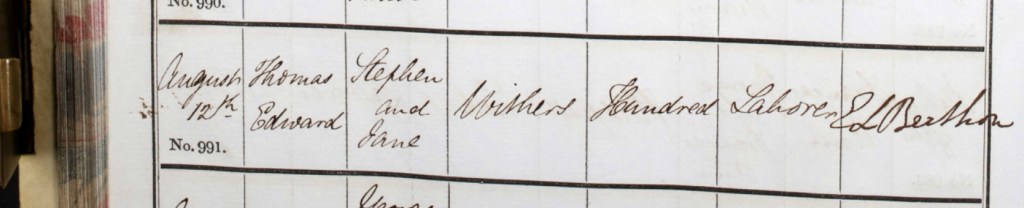
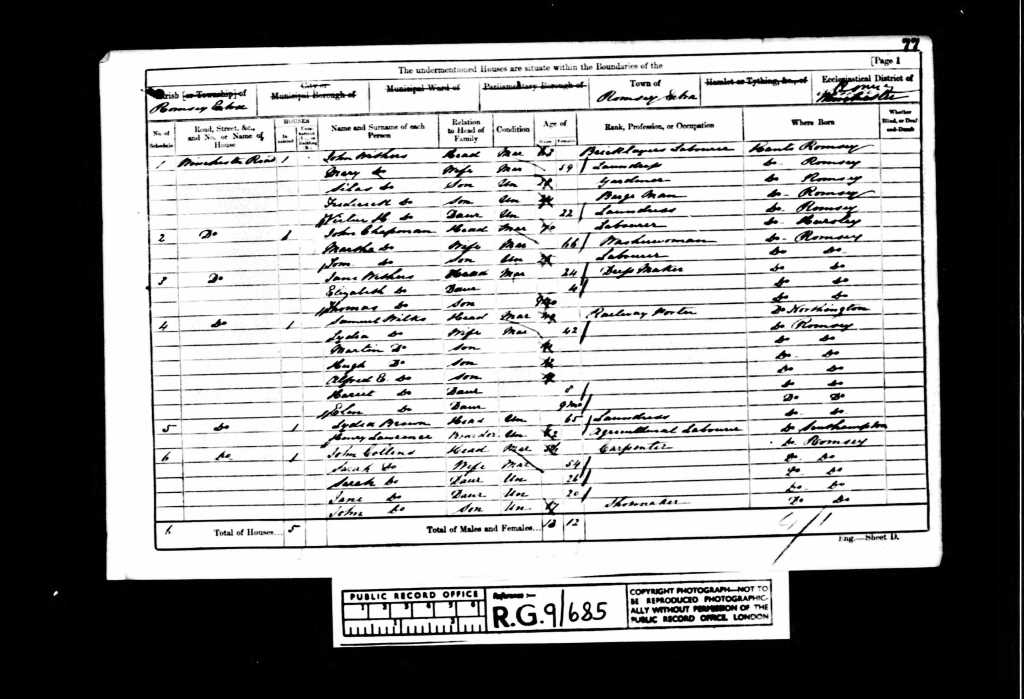
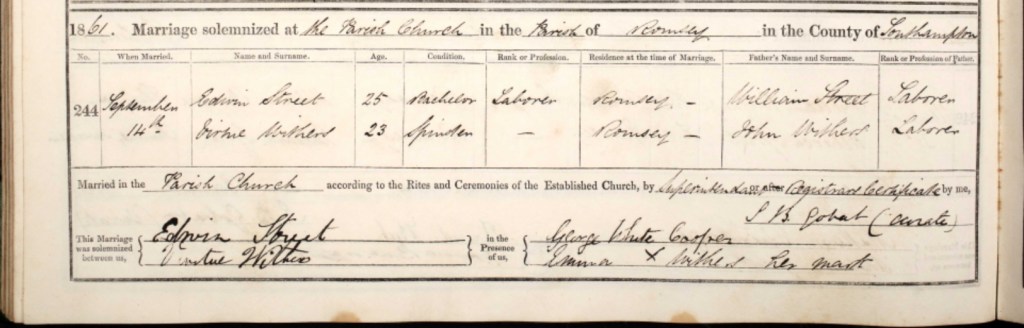


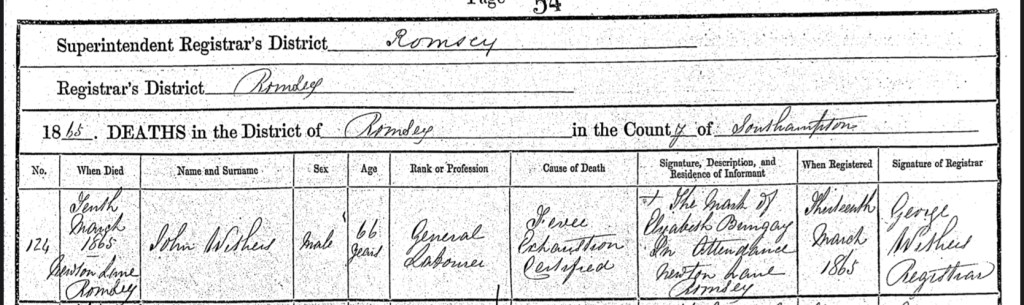
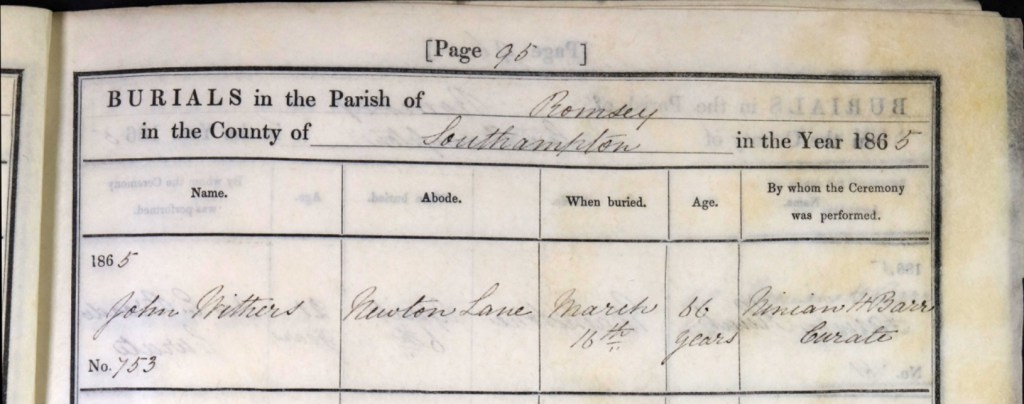

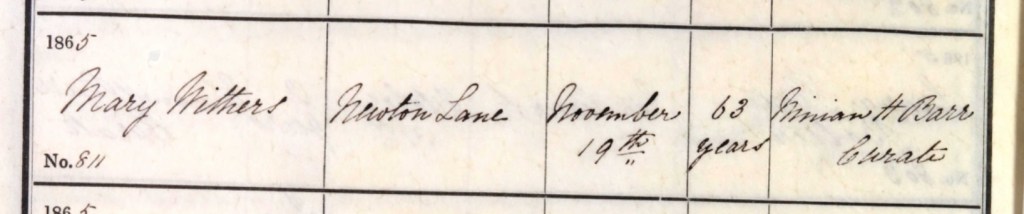
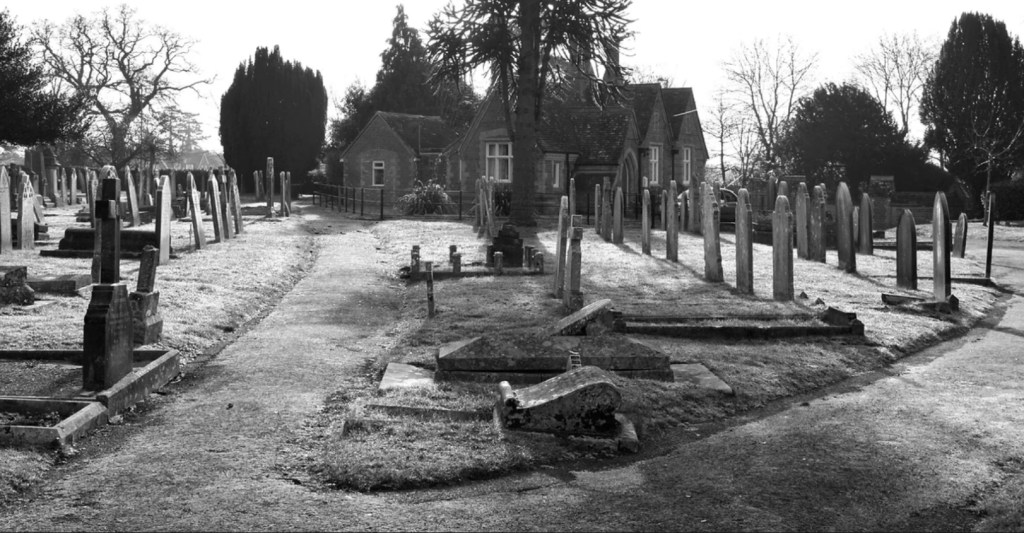

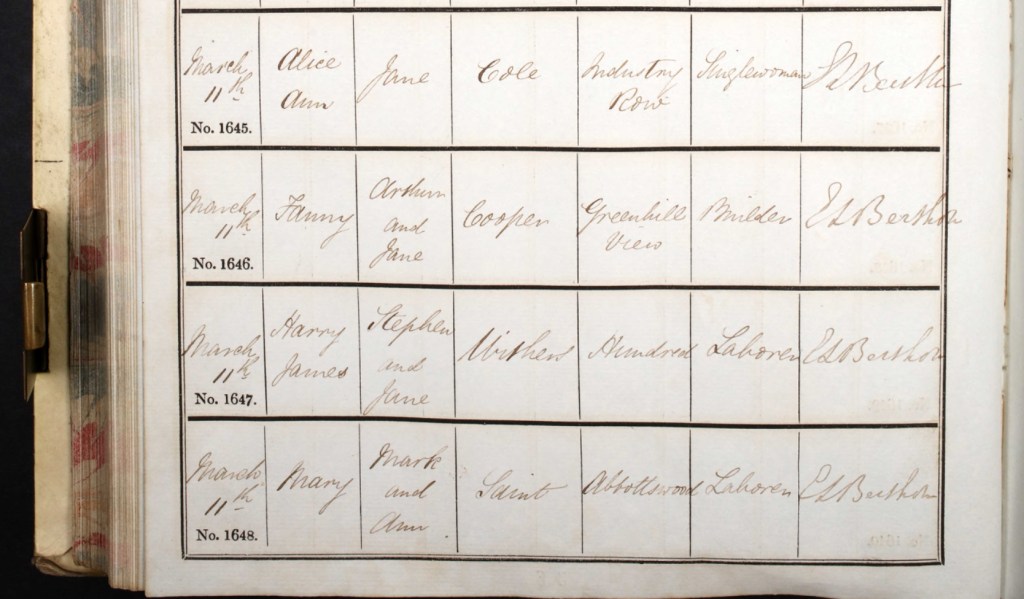
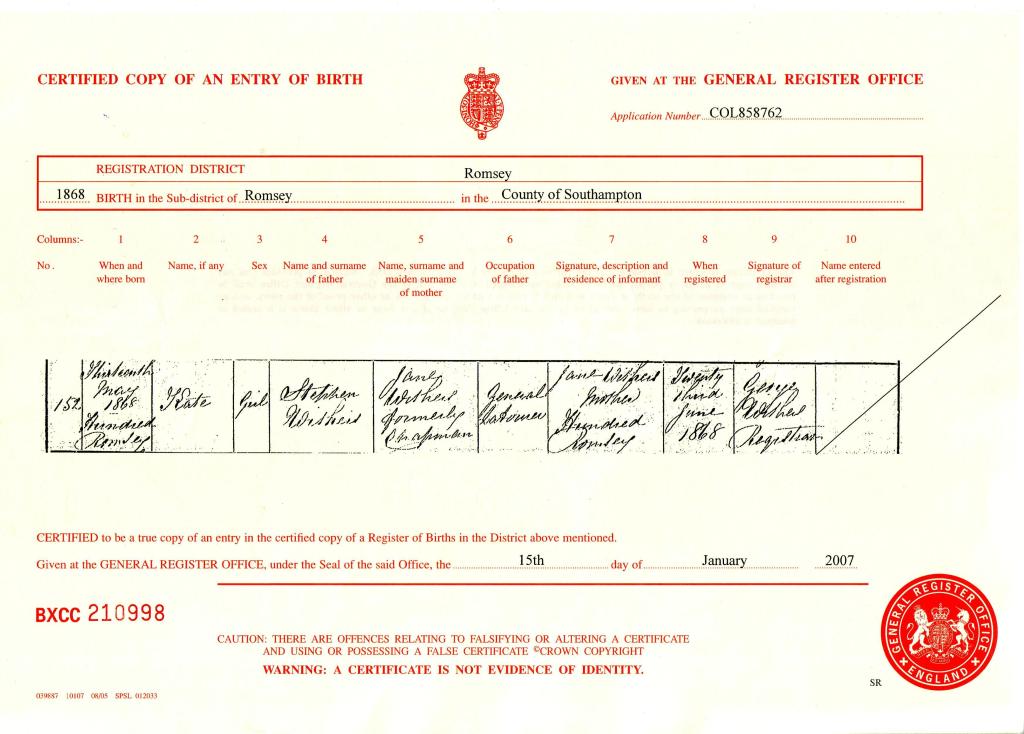
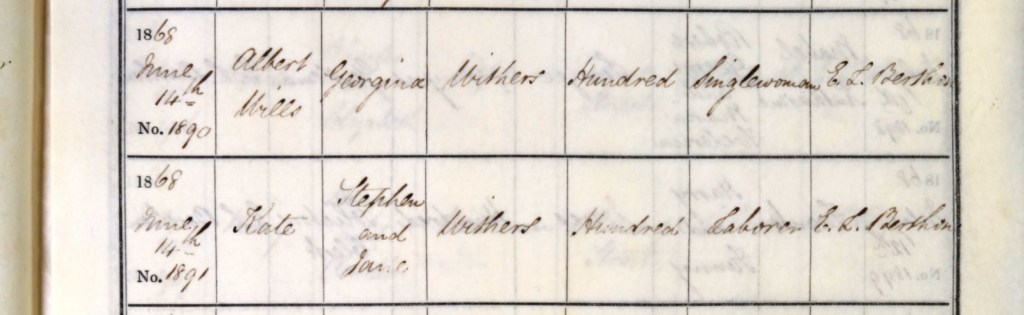
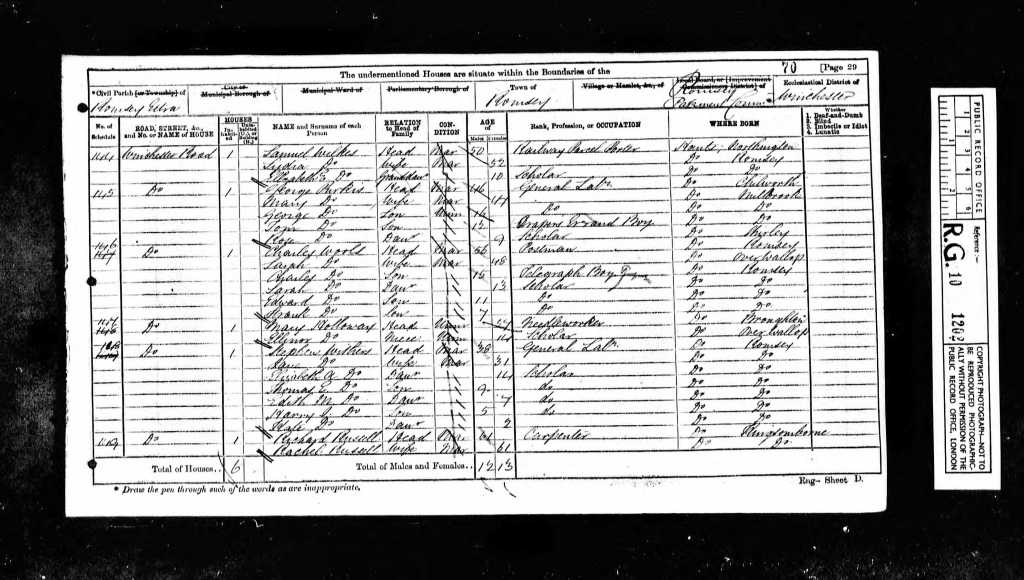
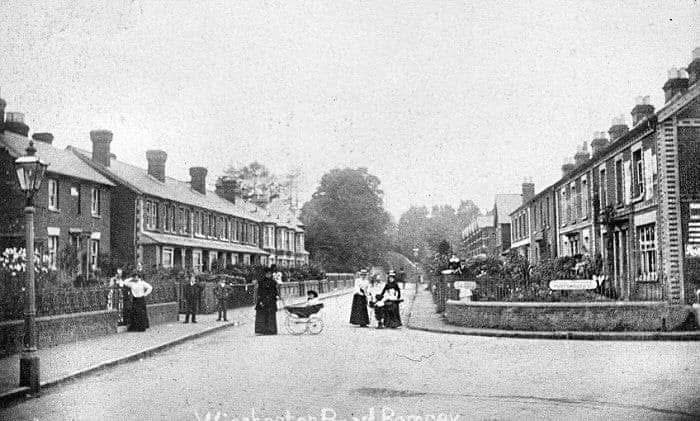
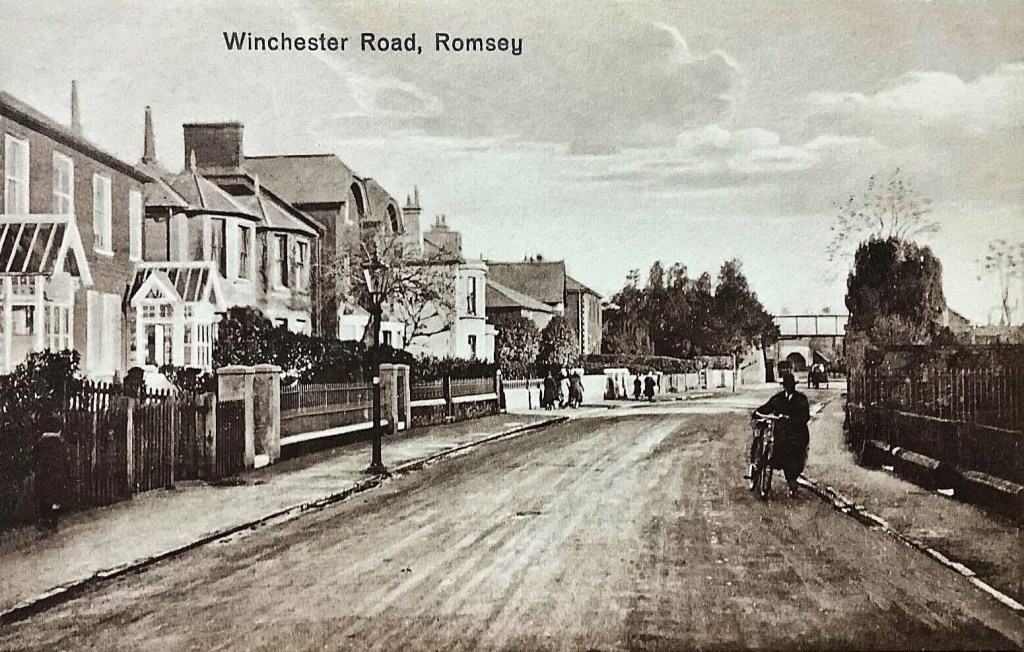
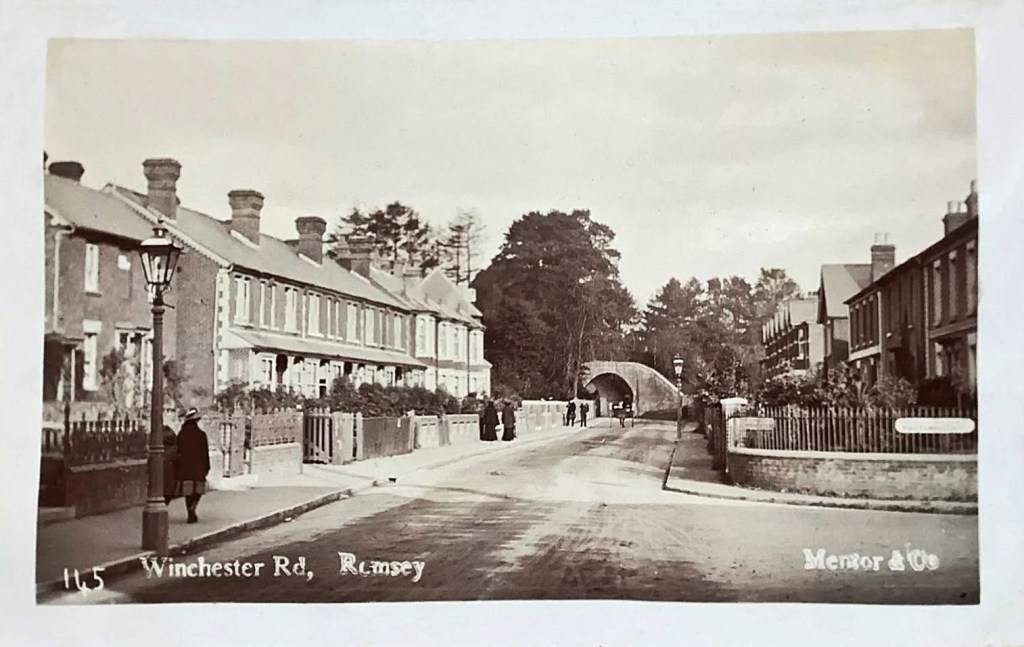
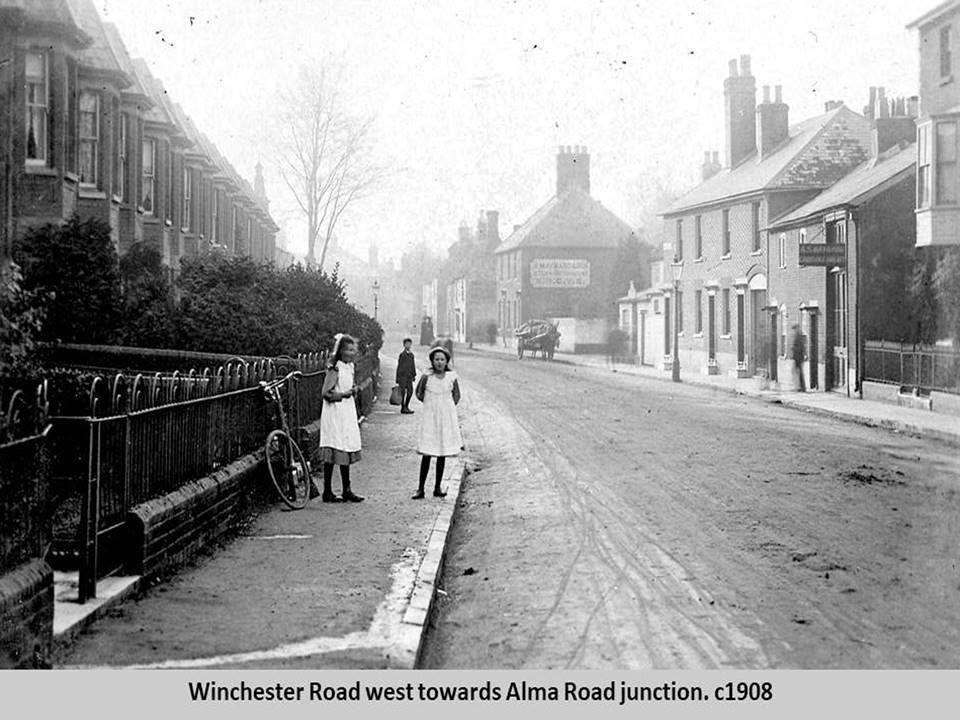



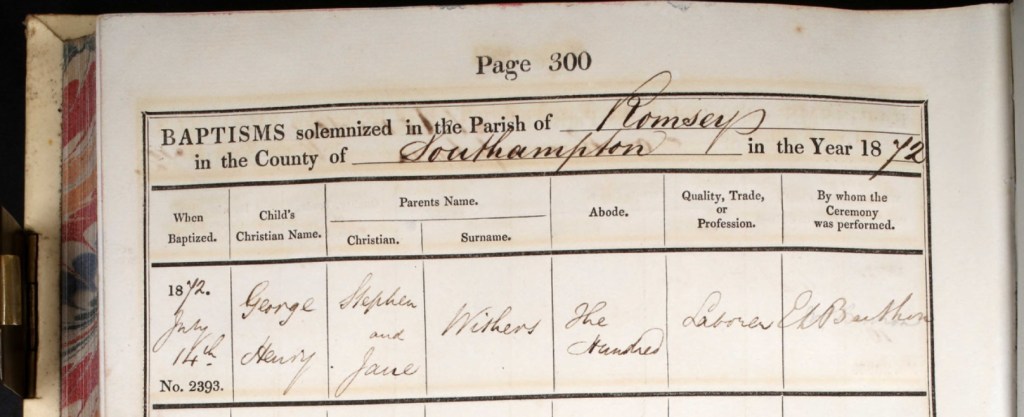



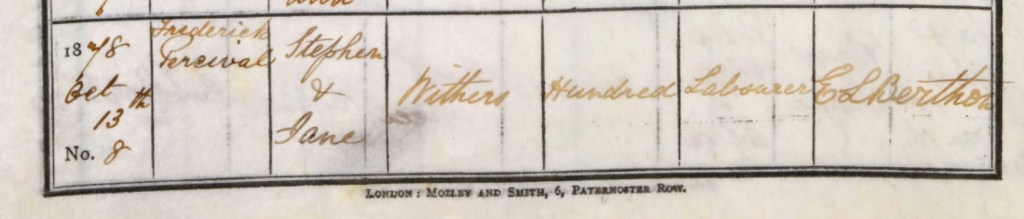

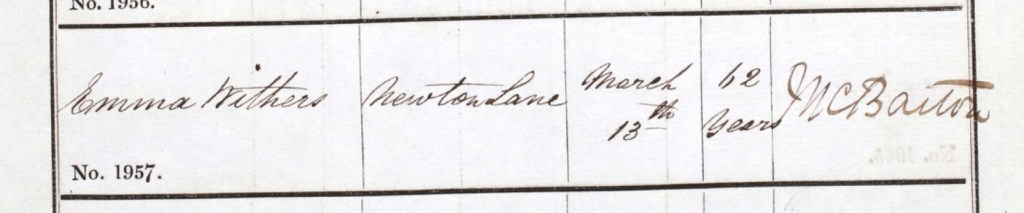
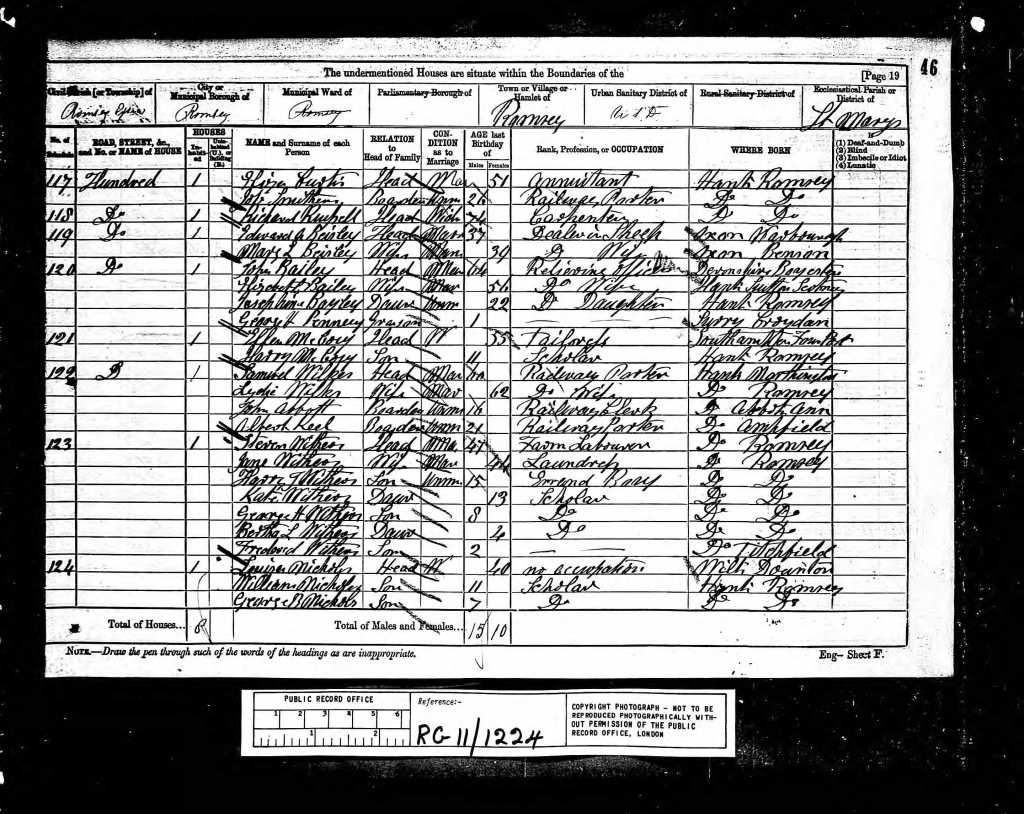
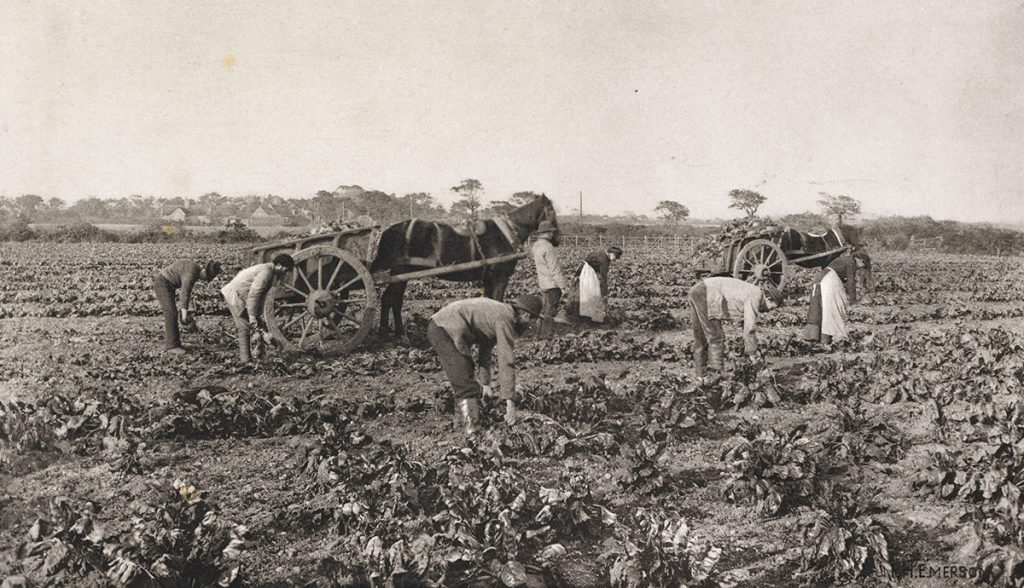

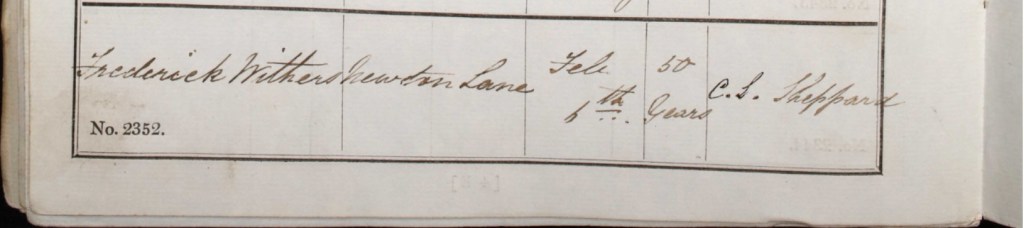
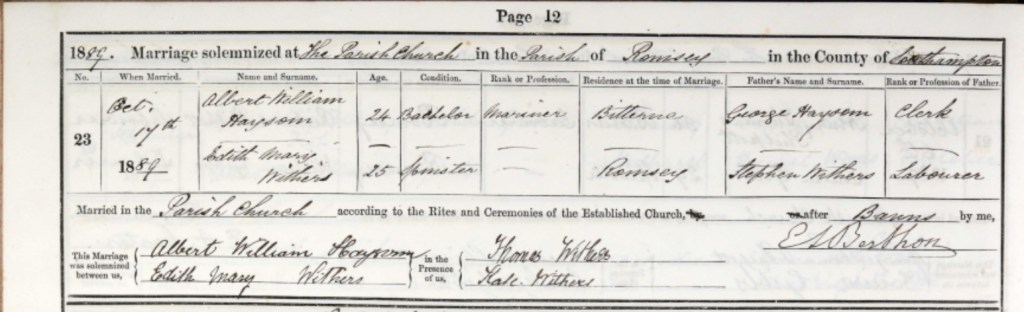
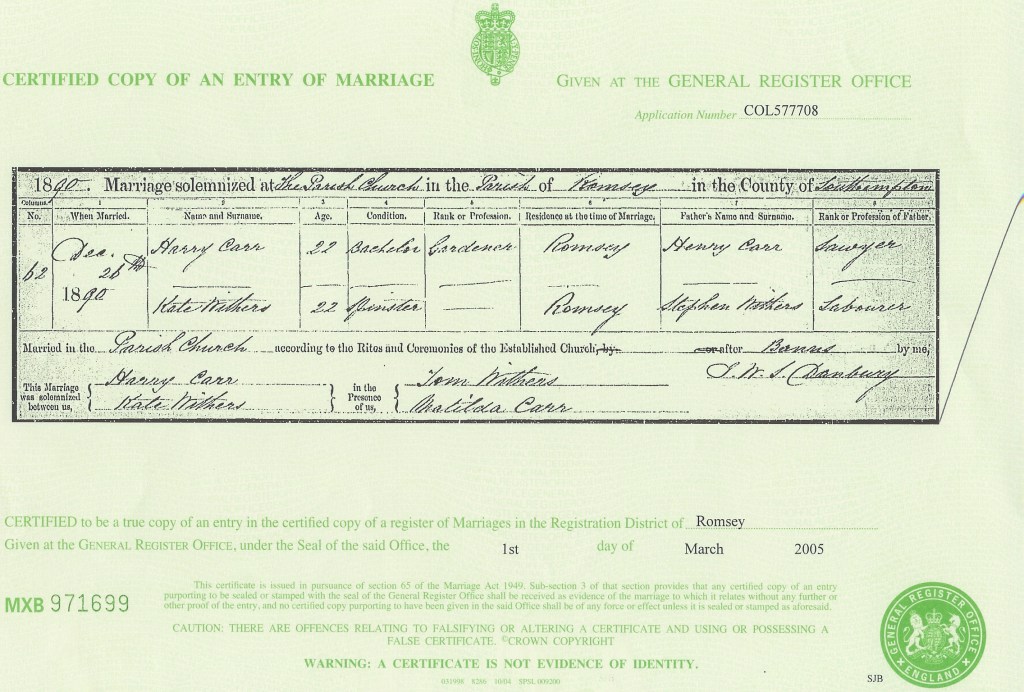
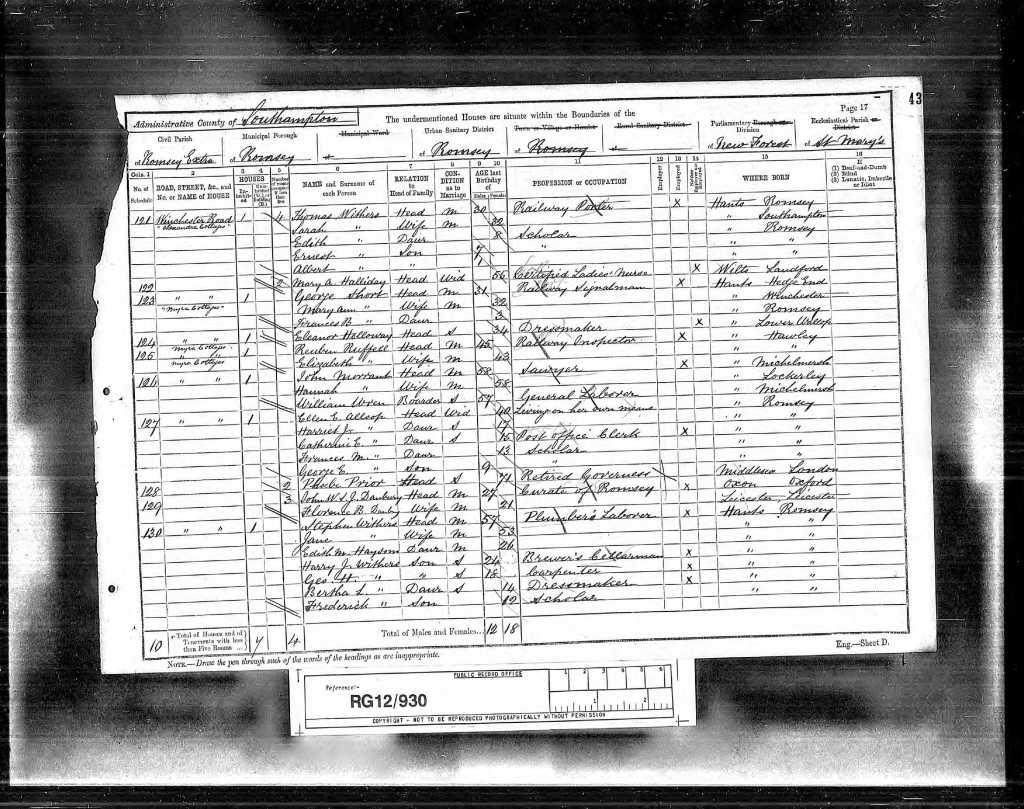



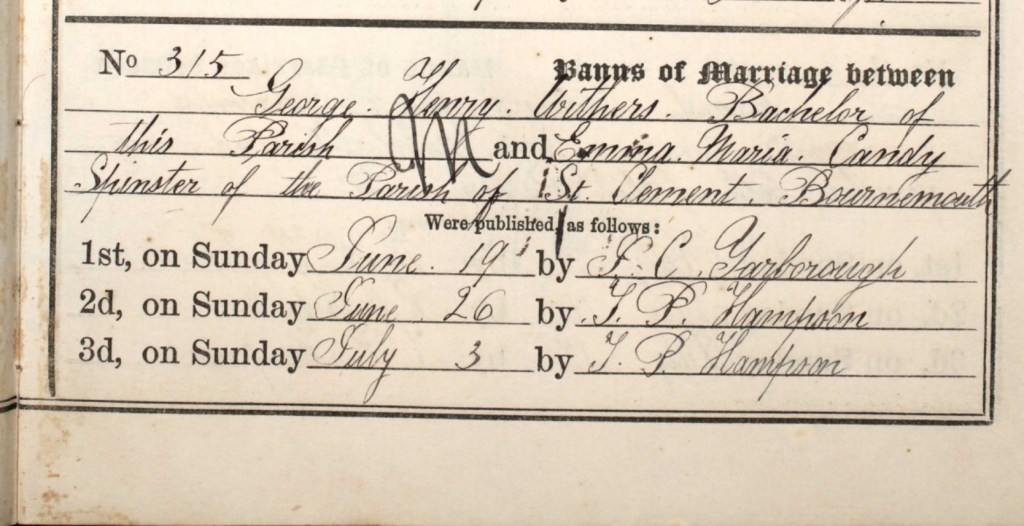


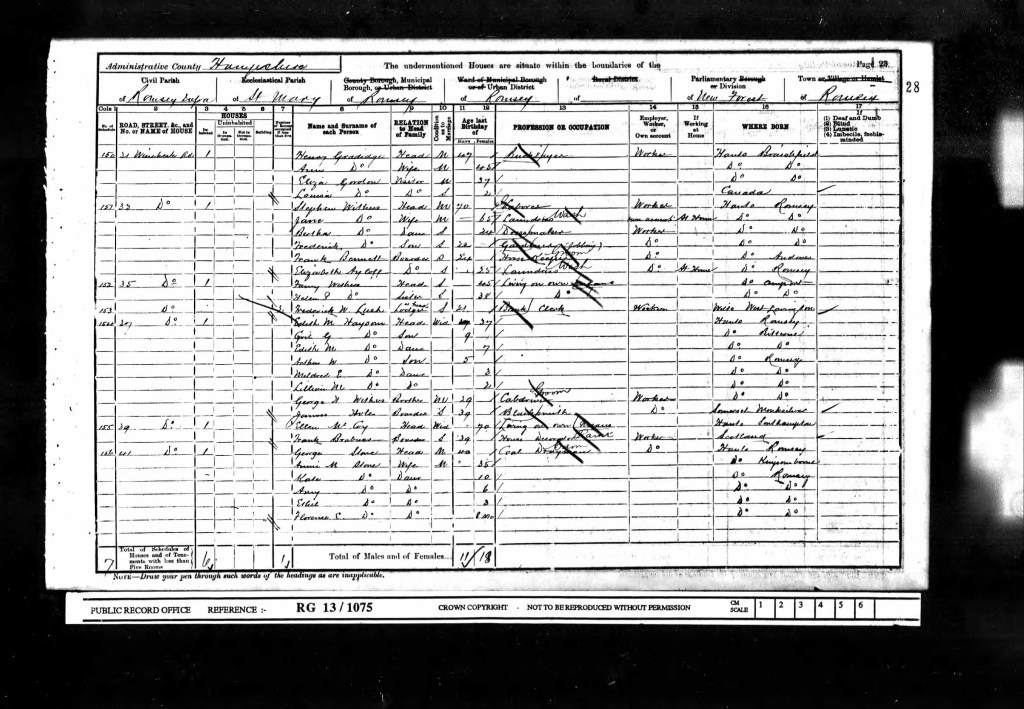

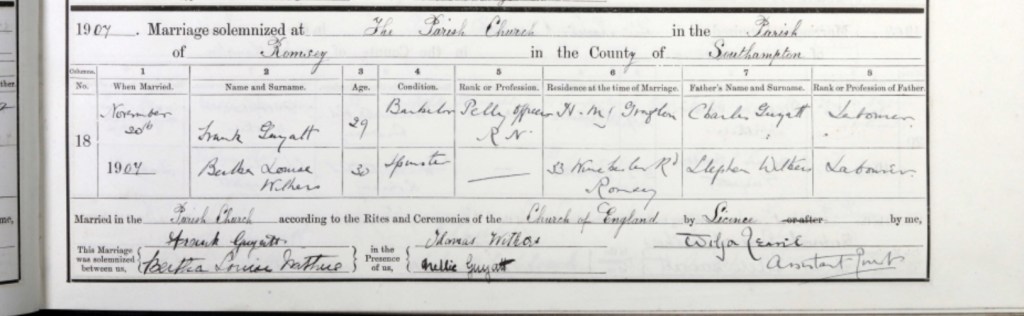
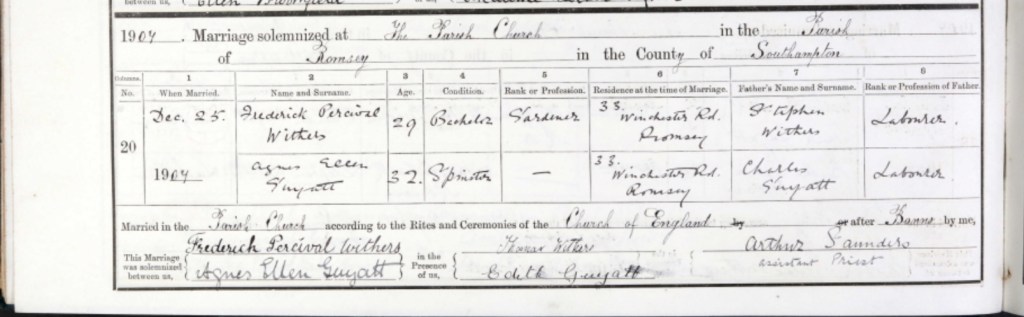
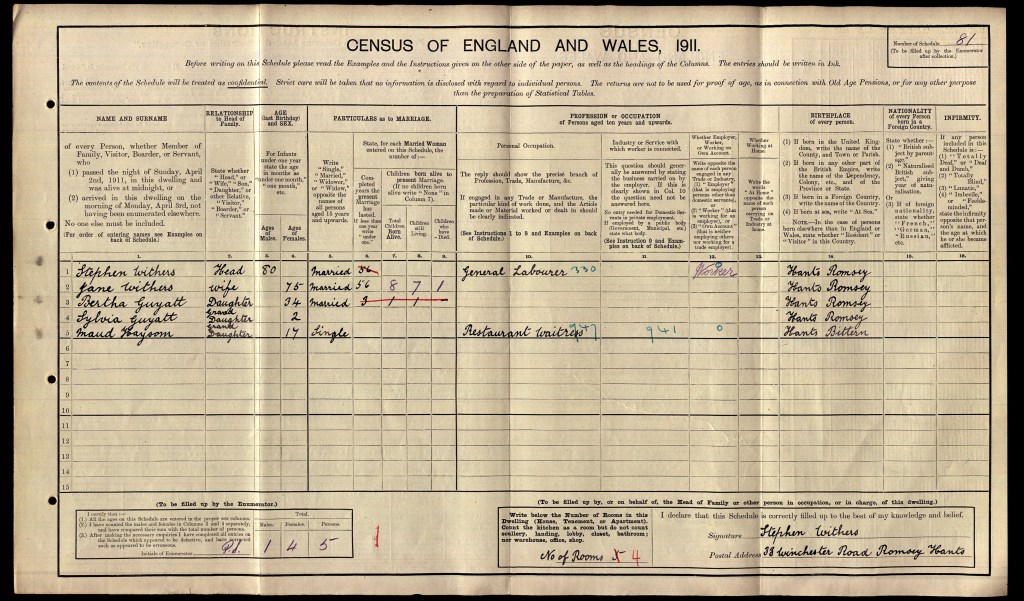


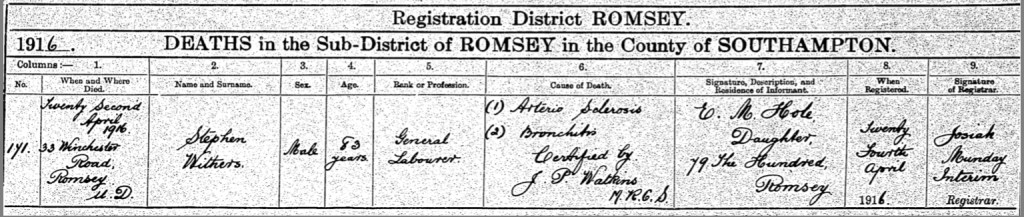

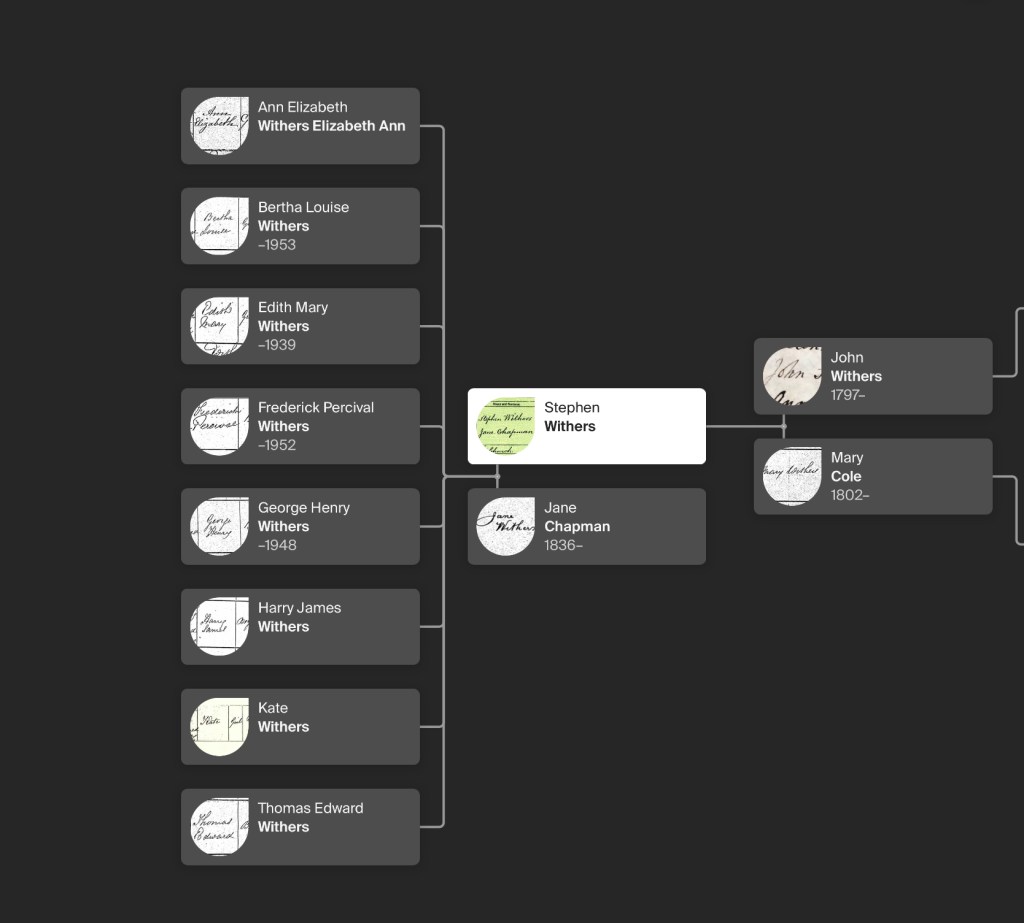
 Intwined