Welcome to “The Life of Harry Carr 1869–1947: Until Death Do Us Part,” where we continue the journey of a man whose life spanned nearly eight decades, full of love, struggle, and growth. It was on the 26th of December, 1890, beneath the towering arches of Romsey Abbey, that Harry’s life took a new turn. There, in the presence of family, friends, and faith, he pledged his heart and future to Kate Withers, the love of his life. The vows exchanged that cold winter's day set the stage for the years to come, a life shaped by both shared joy and the inevitable hardships that come with time.
As Harry and Kate stepped into the world as husband and wife, they faced a life full of promise. From the quiet corners of Romsey, their story unfolded in ways both personal and profound, intertwining their hopes, struggles, and aspirations. This part of Harry’s life story is a reflection of resilience, the love that flourished in their union, the family they built, the challenges they faced, and the lessons learned along the way.
We will walk through the decades that followed, exploring Harry’s journey from the early days of marriage through the ups and downs of fatherhood, work, and the challenges that life in the 20th century would bring. From the small joys of everyday moments to the bittersweet farewells, Harry’s life with Kate and their family is a testament to the enduring power of love, commitment, and the passage of time.
In this chapter, we honor not only the years Harry spent as a husband, father, and grandfather, but also the legacy he left behind, a legacy that, even after his passing in 1947, still resonates through the lives of those who carry his memory forward.
Welcome back to the year 1891, Hampshire, England. The late Victorian era is in full stride, and the county hums with the mixture of age-old traditions and modern industrial advancements. Queen Victoria sits on the throne, now in the fifty-fourth year of her reign, embodying stability and empire. The Prime Minister is Robert Gascoyne-Cecil, the 3rd Marquess of Salisbury, a Conservative who serves his second term in office. His government oversees a Britain vast in imperial reach and increasingly complex in domestic structure, with Parliament seated at Westminster continuing to wrestle with the challenges of industrialisation, social reform, Irish Home Rule, and the changing role of the working classes.
Society in 1891 is strictly hierarchical, with sharp distinctions between the classes. The rich live in great comfort, often in large country estates or townhouses. In Hampshire, this might mean a grand house on the edge of a market town or in the rolling downs near Winchester or Petersfield. Their homes are run by servants and lit by gas or, in some cases, early electricity. Meals are elaborate, formal, and served by staff. Gentlemen occupy themselves with politics, finance, or leisure, while women of the upper classes manage households, attend social functions, and uphold the expectations of propriety and charity.
The working classes, by contrast, live harder lives. They labour in agriculture, on the railways, in trades such as carpentry or blacksmithing, or in the naval and dock industries around Portsmouth and Southampton. Their housing is modest, rows of brick terraced cottages or shared lodgings in towns, and often crowded and poorly ventilated. Sanitation varies: some towns have sewer systems and mains water, while others still rely on communal pumps, privies, and cesspits.
The poor, including many agricultural labourers and the urban unemployed, face even greater challenges. They often rely on casual work, seasonal labour, or the assistance of the parish or charitable institutions. The 1891 census, conducted this year, reveals a growing population with significant urbanisation. While industrial centres attract workers, the countryside sees stagnation or decline. Poor families frequently experience overcrowding, malnutrition, and vulnerability to illness.
Fashion is dictated by social standing and increasingly shaped by mass production. For the wealthy, men wear three-piece suits with high collars, and women dress in tightly corseted gowns with high necklines, long sleeves, and voluminous skirts or bustles, though the bustle is slowly falling from fashion by the early 1890s. Middle and working-class people wear simpler versions of these styles, often sewn at home or bought from catalogues. Ready-to-wear clothing is becoming more accessible, though still not affordable for the poorest.
Transportation in Hampshire includes a mix of the old and the new. Horse-drawn carriages remain common, especially in rural areas, while towns and cities are increasingly linked by a growing railway network. Steam trains connect Winchester, Southampton, Basingstoke, and other towns to London and beyond. Bicycles are gaining popularity among the middle classes, offering an affordable and independent means of transport. The motor car is still in its infancy, rarely seen and more curiosity than reality.
Energy for most households comes from coal, which is burned in fireplaces and stoves for heating and cooking. Gas lighting is widespread in towns and some larger homes, while electricity is beginning to appear in urban areas, though it is far from common. Rural cottages rely on candles or oil lamps for lighting. The atmosphere in towns can be thick with smoke from coal fires, though Hampshire’s countryside retains its fresh air and wide skies.
Heating in homes is limited to fireplaces in main rooms. Bedrooms and kitchens are often unheated, and heavy clothing and bed coverings provide comfort during colder months. Lighting is dim by modern standards and requires frequent tending.
Sanitation has improved since the mid-century but remains inconsistent. Urban areas have begun to introduce sewage systems, and clean water is more widely available, but outbreaks of waterborne disease still occur. Rural areas often lag behind, with some still relying on open drains and contaminated wells.
Food reflects both prosperity and poverty. The wealthy enjoy a wide variety of meats, fish, vegetables, puddings, and imported goods such as tea, coffee, and tropical fruits. Cookery books by writers like Mrs Beeton influence middle-class kitchens. For the working class, food is simpler: bread, potatoes, bacon, cheese, and seasonal vegetables form the staple diet. Markets and local shops provide fresh produce, but the poorest often subsist on scraps, soup, or what can be gleaned or grown.
Entertainment ranges from music halls, theatre, and concerts to fairs, church socials, and sports. Cricket, football, and hunting are popular pastimes. Reading is a growing pastime for many, with newspapers and serialized fiction widely consumed. The public library movement has spread, encouraging literacy and self-education. In wealthier households, piano music and parlour games remain a staple.
Diseases continue to affect all levels of society. Tuberculosis, often called consumption, remains a leading cause of death. Influenza, measles, typhoid, and scarlet fever circulate regularly. Advances in public health, vaccination, and medicine are making progress, but antibiotics have not yet been discovered, and treatments are limited. Doctors and hospitals serve primarily those who can afford them, though charitable hospitals and dispensaries offer some care to the poor.
The environment is a mixture of managed countryside, expanding towns, and industrial activity. Hampshire remains largely rural, with its heathlands, forests, rivers, and coastal marshes providing a setting of natural beauty. However, towns such as Southampton are rapidly growing, bringing pollution, housing expansion, and increased demand for services. The countryside is shaped by agricultural practice, and the rural poor live close to the land and its changing moods.
Gossip is a powerful currency in towns and villages alike. News travels by word of mouth, the parish church, the local pub, and the growing number of newspapers, both national and local. Topics range from royal affairs and political debate to local scandal, family fortunes, and who may be courting whom. With no radio or television, people rely on conversation, sermons, printed broadsheets, and illustrated weeklies to stay informed.
Historically, 1891 is a year of significance. In Britain, the census held on April 5 reveals a population of over 29 million and includes questions about employment and household composition. Internationally, this is the year of the death of King Kalākaua of Hawaii and the invention of the escalator. The London-Paris telephone link is established, and the world watches the expansion of British imperialism, particularly in Africa. At home, the Labour movement is gaining momentum, and the seeds of social reform are beginning to take firmer root.
In Hampshire, the pace of life balances between ancient rhythms and the pull of the modern world. Towns are growing, villages are changing, and across the county, people feel the influence of empire, industry, and invention pressing in upon tradition. The world is both familiar and on the edge of transformation, and the year 1891 captures this sense of quiet, steady evolution in the lives of those who call Hampshire home.
On the eve of the 1891 census, Sunday, the 5th day of April, 23-year-old Harry Carr and his wife, Kate, also 23, found themselves living a new chapter of their lives far from the familiar streets of Romsey. Now residing at Number 30, Princes Road, Millbrook, Hampshire, England, the couple had settled into a modest home, inhabiting three rooms that would mark the beginning of their married life together. In the quiet of these rooms, filled with the promise of their future, Harry and Kate began to carve out a life of their own.
The household was shared with George Gosney and his wife, Agnes, as well as Emma Tibble and her 2-year-old son, Ernest. Like Harry and Kate, they, too, occupied three rooms of the same abode, their lives intertwined in the daily rhythm of shared space and simple living. The scene, though humble, was filled with the warmth of new beginnings and the soft echoes of lives in transition.
At this time, Harry was working as a gardener and domestic servant, his hands tending to the needs of the household, while Kate, though not detailed in the census, surely played her part in shaping their home and community. This moment in their life marked a significant shift, as the newlyweds settled into their new surroundings, leaving behind the familiar comforts of Romsey to forge a future of their own in the bustling heart of Millbrook.
Princes Road in Millbrook, Hampshire, England, is a quaint residential street lined with Victorian and Edwardian-era houses, reflecting the architectural styles of the late 19th and early 20th centuries. Originally developed as part of the expansion of Millbrook in the late 1800s, the road was named after Prince Albert, consort to Queen Victoria. It was designed to accommodate the growing population drawn to the area by its proximity to Southampton and the industrial opportunities emerging in nearby docks and railways.
The road's history intertwines with the broader development of Millbrook, transitioning from a rural area to a residential suburb as Southampton's urban sprawl extended outward. Many of the original homes were built for middle-class families seeking a suburban lifestyle while maintaining easy access to Southampton's amenities. Over the decades, the character of Princes Road has evolved, with some properties being converted into apartments or undergoing modern renovations while others retain their historic charm.
Today, Princes Road remains a desirable address, valued for its period architecture and convenient location. It continues to be home to a mix of families, retirees, and young professionals, contributing to Millbrook's diverse community fabric. The street's historical significance and architectural integrity are preserved by local planning regulations, ensuring that its Victorian and Edwardian heritage continues to be cherished by residents and visitors alike.
On Saturday the 10th day of October 1891, Harry and Kate’s lives were forever changed with the arrival of their son, Frederick Ernest Carr. Born in the comfort of their home at Number 91, Milton Road, Fitzhugh, Millbrook, Southampton, Hampshire, England, Frederick’s birth marked a new chapter in their journey together as a family. The air, no doubt, was filled with joy and anticipation as their little one entered the world, bringing with him the promise of new beginnings and the continuation of the Carr family legacy.
Frederick, my paternal great-grandfather, holds a special place in my history. His birth, on that significant day, is not just a moment of personal meaning for Harry and Kate but also for me, as it connects me to a lineage that stretches back through generations. Frederick's arrival on Saturday the 10th day of October 1891 represents a turning point in my family’s story, shaping the very foundation of the maternal line that runs through my father’s side of the family. His story, though long past, continues to resonate deeply within me, a link to the past and a bridge to the future.
In the weeks following his birth, Kate made the journey into Southampton to officially register Frederick’s birth. On Tuesday the 17th day of November 1891, she walked into the local register office, where Registrar Charles Stewart recorded the details of their son’s birth in the official register. With careful penmanship, he documented: “On the 10th October 1891, Frederick Ernest Carr, a boy, was born to Harry Carr, a Gardener Domestic, and Kate Carr, formerly Withers, of 91 Milton Road, Fitzhugh, Millbrook.”
This simple entry, now etched in history, marks the beginning of Frederick’s life, one that would intertwine with the lives of his parents and the community that surrounded him. It was the first of many steps in his journey, a journey that would shape the generations that followed, including the one who now remembers his story.
Milton Road in Millbrook, Southampton, is a residential street with a rich historical background. The area known as Fitzhugh, where Milton Road is situated, derives its name from the Fitzhugh family, who owned the estate throughout much of the 19th century.
Milton Road is notable for its proximity to The Dell, the former stadium of Southampton Football Club. The road's closeness to the stadium made it a significant location for fans and players alike.
The area also has connections to the Titanic disaster. Several crew members who lived on Milton Road were aboard the ill-fated ship. For instance, Charles Donald Mackay, a steward, resided at number 18 and survived the sinking, while Edmund J. Stone, a bedroom steward from number 44, was among those who perished. George Frederick Crowe, a saloon steward living at number 89, survived, whereas Thomas Topp, a second butcher at the same address, did not.
In the mid-20th century, Fitzhugh House was constructed on Milton Road, comprising six flats built between 1936 and 1979. These mid-century flats are part of the area's architectural evolution.
On Friday the 1st day of January 1892, Harry and Kate Carr brought their son, Frederick Ernest Carr, to the hallowed walls of Romsey Abbey for his baptism. The crisp winter air and the serene surroundings of the Abbey set the stage for this sacred occasion, marking the beginning of Frederick's spiritual journey. Curate H. E. Kitihley performed the baptism, his voice filling the ancient space with the words that would forever bind Frederick to the church and its long history.
The baptismal register, carefully maintained by the Abbey, records the details of this significant event: “Frederick Ernest Carr, son of Harry Carr, a Gardener, and Kate Carr, of Milton Road, was baptised on January 1st, 1892.” This entry, simple yet profound, is a quiet testament to a moment that carries great meaning in the life of a child, a family, and a community.
Romsey Abbey, where Frederick was baptized, is a place of deep historical and spiritual significance. Founded in 907 AD by King Edward the Elder as a Benedictine nunnery, the Abbey’s origins are intertwined with the royal family and the religious history of England. Its early years were marked by royal patronage and donations, which helped to shape the Abbey as a center of faith and community. Over the centuries, it has stood as a symbol of devotion, serving as a place of worship and reflection for countless individuals.
In the 19th century, Romsey Abbey saw the presence of notable clergy, including the Reverend John Keble, who served as a curate before becoming a leader of the Oxford Movement, a reform movement within the Church of England. The Abbey’s clergy were deeply involved in pastoral care, sermons, and community outreach, contributing to the spiritual life of the town.
The Abbey’s past is also marked by the legacy of its Benedictine nuns, who lived and worked there until the Dissolution of the Monasteries under King Henry VIII in the 16th century. Though the abbey’s connection to the nuns faded with time, their influence remains an integral part of its history.
Over the years, stories of hauntings have emerged from within the Abbey’s walls, with ghostly apparitions and mysterious sounds reported by those who have ventured through its ancient halls. These tales, steeped in the Abbey’s long and complex history, only add to the intrigue and mystique of the site.
One of the more peculiar aspects of Romsey Abbey is the display of human hair, a strange yet poignant collection that has been preserved alongside historical artifacts. This collection, entwined with the Abbey’s legacy, serves as a reminder of the past, reflecting practices of remembrance that were once common in times long gone.
For Frederick, his baptism on that winter’s day in 1892 marks the beginning of his connection to this remarkable place, a connection that links him to the generations of souls who have walked its floors before him.
On Saturday, the 3rd day of November, 1894, Fanny Carr, a 22-year-old spinster from Romsey, stood before George Earley, a 25-year-old bachelor and blacksmith, also of Romsey, as they pledged their vows in the sacred space of Romsey Abbey. The crisp autumn air seemed to carry with it the promise of a new beginning, as Fanny and George’s lives became forever intertwined.
The ceremony was performed by Allan Gunn, who carefully documented the details of the marriage in the parish register. It was recorded that Fanny, the daughter of Henry Carr, a sawyer, married George, the son of Charles Earley, a shoemaker. Their union was witnessed by Fanny’s siblings, Harry Carr and Matilda Carr, whose presence added the loving support of family to the momentous occasion.
The quiet yet profound significance of Fanny and George’s wedding in Romsey Abbey echoes through the years. As the vows were spoken, not only were two hearts joined in love, but also two families, with their histories and legacies woven together. For Harry, as a witness, it was a moment of pride and connection, a time when family ties were reaffirmed, and the journey of his sister’s new life was marked by his presence and support.
Harry and Kate’s son, Cecil George Carr, was born on Thursday the 12th day of December of 1895, at their home, Number 5, Lower Bannister Street, Southampton, Hampshire, England. The arrival of their second son brought new joy to the family, marking another significant moment in their journey together.
Kate made the journey into Southampton to register Cecil’s birth on the 21st day of January 1896. At the local register office, Registrar Harry Whitchurch carefully recorded the details of Cecil's birth in the official register. The record notes that on [insert date] December 1895, Cecil George Carr, a boy, was born to Harry Carr, a Gardener Domestic, and Kate Carr, formerly Withers, of 5, Lower Bannister Street, Southampton.
This moment, marked by the simple yet profound act of registering his birth, set in motion the early years of Cecil's life, which would unfold within the loving embrace of the Carr family. It is a quiet reminder of how each small detail in the family’s history, though sometimes seemingly insignificant, forms an essential part of the larger story.
Lower Bannister Street in Southampton, Hampshire, England, is a historic thoroughfare with a rich heritage that reflects the city's development over the centuries. The name "Bannister" is derived from Sir Edward Banister, a 17th-century landowner whose estate encompassed the area . The street's evolution from a medieval estate to a bustling urban location is a testament to Southampton's growth.
In the 19th century, Lower Bannister Street was home to various working-class families. For instance, in 1871, Henry Bath, a gardener, resided at number 10 with his parents and siblings. This period saw the street populated by individuals engaged in trades and labor, contributing to the city's industrial expansion.
The early 20th century brought significant changes to Lower Bannister Street. In 1928, the Southampton Greyhound Racing Company opened Banister Court Stadium on Court Road, adjacent to Lower Bannister Street. This venue hosted greyhound racing and speedway events, attracting large crowds and becoming a notable entertainment hub in the city .
By the mid-20th century, urban development led to the demolition of many of the original buildings on Lower Bannister Street. The area underwent significant redevelopment, with new structures replacing the older ones, altering the street's historical landscape.
On Saturday, the 1st day of February, 1896, within the timeless walls of Romsey Abbey, Harry’s sister, 29-year-old Matilda Carr, a spinster from Romsey, stood before Henry William Shrimpton, a 26-year-old bachelor and ironmonger, also of Romsey. The air was thick with anticipation and joy, as the couple pledged their lives to each other, embarking on a shared journey filled with promise.
The ceremony, performed by Vicar J. Looks Harebourgh, was carefully documented in the marriage register. The record reads that Matilda, the daughter of Henry Carr, a sawyer, married Henry William Shrimpton, the son of George Stopps Shrimpton, a groom. As the vows were exchanged, the union was witnessed by Matilda’s father, Henry Carr, and Mary Ann Mansbridge, both of whom were present to mark the significance of this union in the heart of Romsey Abbey.
Their wedding, like so many others before them, was more than just the joining of two people, it was the joining of families, the intertwining of histories, and the continuation of legacies. In the quiet reverence of the Abbey, Matilda and Henry William began their new life together, their hearts bound by love and faith in a space that had seen countless vows spoken over the centuries.
Harry and Kate’s son, 8-month-old Cecil George Carr, tragically passed away on Wednesday the 12th day of August 1896, at their home, Number 5, Lower Bannister Street, Southampton, Hampshire, England. The loss of their infant son marked an unbearable moment in their lives, one filled with heartbreak and sorrow. Harry, who was with Cecil when he passed, took on the devastating responsibility of registering his son's death on the very same day.
Deputy Registrar H. H. William Whitchurch recorded Cecil's details in the death register, documenting this painful event in history. The entry notes that on the 12th day of August 1896, 8-month-old Cecil George Carr, son of Harry Carr, a domestic gardener, of 5, Lower Bannister Street, Southampton, passed away due to Definition Colic Convulsions. The death had been certified by R. D. H. G. William L.R.C.P., a doctor who had overseen the medical care of the child during his short life.
The loss of Cecil was a heavy blow to the Carr family, one that reverberated through their hearts and the life they had built. His brief life, though tragically cut short, remains a part of their story, a reminder of the fragility of life and the depth of grief that parents feel when faced with such an immense loss.
Cecil George Carr was laid to rest at Southampton Old Cemetery, Southampton, Hampshire, England, on Saturday the 15th day of August 1896. His small grave, marked with the weight of grief, was placed in Row 0, Block 142, Number 31. In the records of the cemetery, Cecil is listed as the 59,476th burial, a stark reminder of the many lives that had passed before him, and the quiet sorrow of a family who had to say goodbye far too soon.
Though his time in this world was brief, his resting place serves as a memorial to a child lost too young, yet forever remembered in the hearts of his parents, Harry and Kate. The site, nestled within the peaceful surroundings of Southampton Old Cemetery, remains a lasting tribute to Cecil’s memory, marking the place where his spirit found its final rest.
Southampton Old Cemetery, located on Hill Lane adjacent to Southampton Common, is a significant historical site that reflects the city's rich heritage. Established in 1846 following the Southampton Cemetery Act of 1843, the cemetery was developed to address the growing need for burial space as the city's population expanded. The initial layout was designed with sections for different religious denominations, including consecrated ground for the Church of England, areas for Nonconformists, and a designated section for the Jewish community. In 1856, land was also allocated for Roman Catholic burials. Over time, the cemetery expanded to cover 27 acres, accommodating over 116,000 burials.
The cemetery is notable for its architectural features, including the Church of England mortuary chapel designed by Frederick John Francis in the Norman style, and the Jewish mortuary chapel, also by Francis, reflecting Gothic Revival architecture. The perimeter wall fronting Hill Lane, constructed of coursed rubble with red brick coping, is a Grade II listed structure, highlighting its historical significance.
Among the many individuals interred here are several with connections to maritime history. The cemetery contains 60 headstones associated with the RMS Titanic, commemorating crew members and others who perished in the 1912 disaster.
Today, Southampton Old Cemetery remains an active burial ground, with a limited number of interments in existing family plots each year. The site is maintained by the Friends of Southampton Old Cemetery, a volunteer group dedicated to preserving its historical and ecological value.  The cemetery also serves as a tranquil green space within the city, offering visitors a place for reflection and a glimpse into Southampton's past.
On Saturday the 5th day of November 1898, Harry and Kate’s lives were once again blessed with the arrival of a child, their daughter, Beatrice Eugenie Carr. Born in the comfort of their home at Number 5, Lower Bannister Street, Southampton, Hampshire, England, Beatrice’s arrival brought new joy to the Carr family. The warmth of the home and the promise of a bright future surely surrounded her as she made her first breath, marking a new chapter for her parents.
Kate, in due course, made the journey to Southampton to register Beatrice’s birth on the 15th day of December 1898. At the register office, Registrar Harry George Whitchurch carefully recorded the details of Beatrice’s birth in the official register. The record reads: “Beatrice Eugenie Carr, a girl, was born on the 5th November 1898, to Harry Carr, a domestic gardener, and Kate Carr, formerly Withers, of 5, Lower Bannister Street, Southampton.”
This simple yet profound entry in the register marks the beginning of Beatrice’s life, a life full of potential and dreams. It stands as a quiet reminder of how each new life, no matter how small, plays an integral part in the ever-evolving story of a family.
On Wednesday the 6th day of June 1900, Harry and Kate were blessed with the arrival of their daughter, Ethel Berta Carr. Born at Marchwood Park, Southampton, Hampshire, England, most likely at a home farm, Ethel’s birth added another layer of joy and hope to the Carr family. The tranquil surroundings of Marchwood Park, a place filled with nature’s bounty, no doubt offered a peaceful backdrop as Ethel began her journey in the world.
Kate, as was customary, made the journey to register Ethel’s birth on Friday the 17th day of August 1900. At the local register office, Registrar James King carefully logged the details of her birth. The entry reads: “Ethel Berta Carr, a girl, was born on the 7th August 1900, to Harry Carr, a domestic gardener, and Kate Carr, formerly Withers, of Marchwood Park, Marchwood.”
Though there is a slight discrepancy in the birth date between the day of birth and registration, it stands as a reminder of the momentous occasion when a new life entered the world, bringing joy and the promise of a bright future. Ethel’s birth was yet another chapter in the story of Harry and Kate’s family, a chapter full of potential, love, and the beginning of her own path in life.
Marchwood Park, located in Marchwood near Southampton, Hampshire, is a historic estate with a rich and varied past. Originally part of the broader Marchwood area, which has seen human activity since Roman times, the estate has evolved through various phases of ownership and use.
In the 19th century, Marchwood Park was developed into a landscaped estate featuring gardens, parkland, and a lake, strategically sited in woodland with long views out. The property, formerly owned by the Holloway family, later came under the ownership of Mrs. Ross Porter. The estate's design and setting reflect the landscape aesthetics of the period.
During the Second World War, Marchwood Park played a role in the war effort. In 1939, Hubert Scott-Paine, owner of the British Power Boat Company, purchased Marchwood Park House and converted it into a training centre for female workers. The company, based in nearby Hythe, produced high-speed boats, including tenders for Imperial Airways and fast motor-torpedo boats. One of their designs formed the basis for the American PT Boat Squadron, notably PT109, commanded by future President John F. Kennedy.
In the post-war period, Marchwood Park House served as a preparatory school. Marchwood Park School opened in 1952, initially accommodating boarders from Embley Park School. The school operated through the 1950s and 1960s, with students from the local area and beyond. The school had four houses: Dibden, Beaulieu, Hythe, and Lyndhurst.
Today, Marchwood Park encompasses various properties and businesses. Home Farm, situated within the estate, is home to several enterprises, including J & V Alford Holdings Limited, J Alford Agricultural Contractors Limited, and Jackson Arenas Limited.  Additionally, the New Forest Pet Crematorium operates from Home Farm, providing services to the local community.
Marchwood Park's evolution from a private estate to a multifaceted property reflects the broader historical and social changes in the region. Its varied uses over time, from landscaped estate to wartime training centre, educational institution, and current commercial hub, highlight its adaptability and enduring significance in the Marchwood area.
On the eve of the 1901 census, Sunday the 31st day of March 1901, Harry and Kate Carr, both 35 years old, along with their three young children, 9-year-old Frederick, 2-year-old Beatrice, and 9-month-old Ethel, were living at Home Farm, Marchwood Park, Southampton, Hampshire. It was in this quiet corner of Hampshire that the Carr family had made their home, continuing their journey together in the warmth and simplicity of rural life.
Harry, still working as a Gardener Domestic, continued to provide for his family, tending to the land around them, while Kate cared for their young children. Their home, nestled within the peaceful surroundings of Marchwood Park, was a place of stability and growth for the family.
In this close-knit community, their neighbors included Catherine Robson, as well as Joseph West, his wife Sophia, and their two sons, Reginald and Leonard. The shared experience of rural life in the early 20th century created bonds between these families, who lived in close proximity and supported each other as part of the same small village life.
Harry, Kate, and their children inhabited the entire premises of Home Farm, where the rhythm of daily life unfolded with the seasons. Their home was a place where childhoods were nurtured and memories were made, a home filled with love, hard work, and the quiet joy of family life.
On Wednesday the 27th day of March 1903, Harry’s brother, Frank Carr, a 25-year-old bachelor from Emsworth, stood before Louisa Mary Miller, a 23-year-old spinster from Warblington, at St. Thomas à Becket Church, Warblington, Hampshire, England. The church, with its quiet dignity, was the perfect setting for the union of two lives, each about to embark on a shared journey.
The ceremony was performed by Rector W. B. Norris, who recorded their union in the church’s marriage register. The register notes that Frank, the son of Henry Carr, a sawyer, married Louisa, the daughter of Henry Miller, a pilot. Their vows, spoken beneath the centuries-old arches of St. Thomas à Becket Church, marked not only the beginning of their life together but also the intertwining of their families’ histories.
The marriage was witnessed by Louisa’s father, Henry Miller, and Nellie Mayue, both of whom stood as silent witnesses to this important moment, supporting Frank and Louisa as they pledged their futures to each other. As the ceremony came to an end, Frank and Louisa stepped into a new chapter, their hearts bound by love and the promise of the future, their names now forever etched in the annals of the church’s history.
St Thomas à Becket Church, located in Warblington, Hampshire, is a historic Church of England parish church with origins dating back to the Saxon era. Originally dedicated to Our Lady, the church was rededicated to St Thomas à Becket in 1796. The current structure predominantly reflects 12th- and 13th-century architecture, with minimal restoration undertaken in the 19th century.
The church's central tower retains elements of Anglo-Saxon architecture, notably the middle stage formed from the upper part of an original west-end porch. In the late 13th century, the church underwent significant enlargement, including the construction of a three-bay nave with north and south aisles and arcades. The chancel was rebuilt on the foundations of the original church, and a chapel was added to the north, now serving as the vestry. The north porch, featuring high-quality timberwork and fretwork tracery, was constructed around 1340.
The church is renowned for its collection of medieval and later monuments. Inside, there are two 14th-century tomb effigies, one depicting a praying figure in a long gown and another of a lady with finely detailed hands and facial features.The churchyard contains approximately 630 monuments, primarily from the early 18th to the late 19th centuries, including headstones with nautical scenes and allegorical carvings.
In the early 19th century, body snatching was a concern due to the church's secluded location. To deter this, two grave-watchers' huts were constructed in 1829–30 at the northwest and southeast corners of the churchyard. These single-storey structures, built of flint and brick, are now Grade II listed.
The church remains active within the parish of Warblington with Emsworth, holding regular services including Holy Communion and Matins. It also hosts community events such as exhibitions and churchyard teas, fostering a sense of community and continuity.
St Thomas à Becket Church stands as a testament to centuries of religious and architectural history, offering insight into the ecclesiastical heritage of Hampshire.
On Tuesday the 26th day of April 1904, Harry and Kate’s daughter, May Carr, was born in Cupernham, Romsey, Hampshire, England. Her arrival brought new joy to the Carr family, a welcome addition to their growing household. The gentle sounds of the countryside, with its blend of suburban life and proximity to the historic town of Romsey, provided the backdrop for May’s early years.
Kate, in due course, made the journey to register May’s birth on the 17th day of June 1904. At the local register office, Registrar Harry Bedford carefully recorded the details of her birth. The register reads: “May Carr, a girl, was born on the 26th April 1904, to Harry Carr, a domestic gardener, and Kate Carr, formerly Withers, of Cupernham, Romsey.” This simple, yet profound entry in the birth register marks the beginning of May’s life, a life that would unfold in the beautiful surroundings of Cupernham.
Cupernham, where May was born, is a residential suburb situated to the north of Romsey, Hampshire, within the Test Valley Borough. Historically, it was a tithing of Romsey parish, as noted in the late 19th-century Comprehensive Gazetteer of England & Wales. Over time, Cupernham has evolved into a well-established community, where suburban living blends seamlessly with the proximity to the historic market town of Romsey.
The name “Cupernham” has been tied to the area for centuries. While specific historical events tied to the suburb are few, its development reflects the broader growth of Romsey itself. The town, with its origins dating back to the 10th century, has always been a place of great significance, especially with the Romsey Abbey at its heart, which played a central role in the town’s growth and prosperity.
Today, Cupernham is characterized by a mix of housing styles, from detached to semi-detached homes, reflecting its growth throughout the 20th and 21st centuries. The area is also home to educational institutions like Cupernham Infant School and Cupernham Junior School, both of which contribute to the family-friendly atmosphere of the suburb. Cupernham Lane, a notable thoroughfare in the area, is lined with residential properties, adding to the charm and character of the suburb.
For May, Cupernham was not just a place of birth but a home, a place that would shape her early years and the family’s life for years to come.
On Tuesday the 4th day of September 1906, Harry and Kate’s son, Bernard George Carr, was born in Cupernham, Romsey, Hampshire, England. The birth of Bernard added yet another layer of joy and hope to the Carr family’s story, a bright new beginning in their lives. Cupernham, with its quiet charm and proximity to the town of Romsey, was the place where Bernard began his journey, surrounded by the love and warmth of his family.
Kate made the journey into Romsey to register Bernard’s birth on the 11th day of October 1906. At the local register office, Registrar Harry Whitchurch carefully logged the details of Bernard’s birth in the official record. The entry reads: “Bernard George Carr, a boy, was born on the 4th September 1906, to Harry Carr, a Gardener Domestic, and Kate Carr, formerly Withers, of Cupernham, Romsey.”
This simple yet significant record marks the beginning of Bernard’s life, a life that would unfold within the loving embrace of his parents in the peaceful surroundings of Cupernham, a place that would shape his early years and form the foundation of his story.
On Sunday the 4th day of November 1906, Harry’s father, Henry Carr, passed away at Gunville House, Southampton Road, Romsey, Hampshire, England. At the time of his passing, Henry was 77 years old, his life marked by the steady rhythms of work and family. His son, Frank Carr, who was stationed at the Police Station in Amport, Andover, was by his father’s side in those final moments, a comforting presence in the quiet of Henry’s last breath.
Frank, with the solemn responsibility of registering his father’s death, made his way to the local register office on Monday the 5th day of November 1906. There, Registrar Henry Bedford carefully recorded the details of Henry’s passing in the death register. The entry reads: “77-year-old Henry Carr, a Sawyer Journeyman, died of general decay.” The death was certified by Edward Buckell, L.R.C.P., who had overseen Henry’s care in his final days.
Henry’s passing marked the end of a life that had witnessed much, the changes of time, the joys and hardships of family, and the quiet labor that defined his days. His death was not just a personal loss for his children, but a poignant moment in the Carr family’s history, where the passing of the father cast a shadow over the lives of those who remained. His memory, like the steady rhythm of the saw he once wielded, continues to echo in the hearts of his descendants.
On Wednesday the 7th day of November 1906, Henry Carr was laid to rest at Romsey Cemetery, Botley Road, Romsey, Hampshire, England. At the age of 77, after a life filled with the quiet dignity of a journeyman sawyer and the love of his family, Henry's journey in this world came to an end. The burial took place in grave L78, a peaceful resting place where he would be remembered by those who knew him and loved him.
J. C. Yarborough performed the burial, and the solemnity of the moment was captured in the burial register. The entry reads: “77-year-old Henry Carr, of Southampton Road, Romsey, was buried on November 7th.” His resting place, however, was not solitary. Henry was laid to rest alongside his beloved wife, Caroline Carr, formerly Lye, with whom he had shared a lifetime of memories, joys, and challenges. Together, in death as in life, they would remain side by side, their bond undisturbed by time.
Their graves, now marked with the weight of history, stand as quiet witnesses to the enduring love and dedication they gave to their family, a legacy that continues to ripple through the generations that followed.
RIP Henry Carr.
On Wednesday the 23rd day of January 1907, Harry and Kate Carr brought their two daughters, Ethel Berta and May, along with their son, Bernard George Carr, to be baptized in a church in Romsey, Hampshire, England. It was a quiet but significant day, filled with the sacred words and the promise of faith, as their children were introduced into the spiritual fold of their community.
Vicar Horace Yarborough performed the baptisms with the reverence and care befitting the occasion. In the baptism register, he recorded the details of this important moment in their lives: “Ethel Berta, born on June 6th 1900, May, born on April 25th 1904, and Bernard George Carr, born on September 5th 1906, were the children of Harry Carr, a Groom Gardener, and Kate Carr, of Cupernham, Romsey. They were baptized on January 23rd 1907.”
The baptisms marked not only the spiritual milestone of the children but also the continuation of Harry and Kate’s legacy of love and devotion. Their children, Ethel, May, and Bernard, were now bound not only by the love of their parents but also by the promises of faith and community that would guide them through life.
On Tuesday the 5th day of May 1908, Harry and Kate’s son, Stanley Henry Carr, was born at the family home, Weston Cottage, in Nursling, Southampton, Hampshire, England. The arrival of Stanley marked another joyful chapter in the lives of Harry and Kate, their growing family blossoming in the quiet beauty of Nursling. The peaceful surroundings of the countryside, with its rural charm, set the stage for the early years of Stanley's life.
Kate, as was customary, registered Stanley’s birth on Saturday the 27th day of June 1908, in Romsey. At the local register office, Registrar Henry Bedford recorded the details of Stanley’s birth with careful precision. The entry reads: “Stanley Henry Carr, a boy, was born on the 5th May 1908, to Harry Carr, a domestic gardener, and Kate Carr, formerly Withers, of Weston Cottage, Nursling.”
This simple yet important record marks the beginning of Stanley’s journey, a life that would unfold with the love and care of his parents in the quiet embrace of Nursling. Weston Cottage, where Stanley was born, became a place not just of residence but of memory, where the Carr family continued to grow, and the story of their lives was shaped by both the land and the close-knit community surrounding them.
Nursling is a village situated approximately 6 kilometers northwest of Southampton, within the Test Valley district of Hampshire, England. Historically known as Nhutscelle, it has a rich heritage dating back to Roman times.
In the Roman era, a bridge was constructed over the River Test at Nursling, and remnants of a Roman road leading to Stoney Cross have been identified. The village gained prominence in 686 AD with the establishment of a Benedictine monastery, considered the earliest in Wessex. This monastery became a significant center of learning, attracting scholars such as Winfrith, later known as Saint Boniface. Under the tutelage of Abbot Winberht, Winfrith composed the first Latin grammar written in England. The monastery was destroyed by Danish invaders in 878 and was never rebuilt; its exact location remains uncertain, though the current parish church is dedicated to St. Boniface.
The Domesday Book of 1086 records Nursling, then referred to as Hnutscilling, as comprising thirty households under the ownership of the Bishop of Winchester. The parish church of St. Boniface, dating primarily from the 14th century, contains elements from the 13th century and possibly earlier. The church underwent restorations in the late 19th century.Opposite the church stands Nursling House, formerly the rectory, which dates back to at least 1778.
In the 20th century, Nursling experienced significant development. Notably, in 1936, housing developments such as Upton Crescent and the initial phase of Triangle Gardens were established. Further expansion occurred in the late 1950s, transforming Nursling into a more suburban area.
On Wednesday the 9th day of September 1908, Harry and Kate brought their son, Stanley Henry Carr, to be baptized at St. Boniface Church in Nursling, Hampshire, England. The day was filled with the promise of faith and the warmth of family as Stanley was introduced to the spiritual fold of his community.
The baptism was performed by G. Cecil White, who, with reverence, recorded the details of the occasion in the church’s baptism register. The entry reads: “Stanley Henry Carr, the son of Harry Carr, a groom, and Kate Carr of Weston Cottages, was baptized on the 9th of September 1908.”
This sacred moment marked not just the beginning of Stanley’s spiritual journey, but also deepened the bonds of family and faith that would guide him throughout his life. In the presence of their close-knit community, Harry and Kate witnessed their son’s first steps in his connection to the Church and the wider world around him.
St Boniface Church in Nursling, Hampshire, is a small rural Church of England parish church with a rich history and a peaceful atmosphere. The current building, dating from the 13th and 14th centuries, stands near the site of an earlier monastery where St Boniface, born Winfrid in Crediton around 679 AD, studied under Abbot Winberht. This monastery, established in 686 AD, was the earliest Benedictine establishment in Wessex and became a major seat of learning. St Boniface produced the first Latin grammar written in England during his time there. The monastery was destroyed by Danish invaders in 878 and was never rebuilt.
The church itself features architectural elements from the 13th and 14th centuries, including a nave, chancel, and a south transept. The tower above the eaves level is hung with shingles and has a shingled broach spire. Inside, the church houses an Elizabethan pulpit, a mid-19th-century Perpendicular octagonal font, and various monuments, including a Jacobean/classical tomb of Richard (1613) and Maria (1622) Mille. The church was restored by architect G.E. Street in 1881.
St Boniface Church is a Grade II* listed building, recognized for its special architectural and historic interest. It remains an active place of worship, with services held every Sunday at 10:45 am. The church is usually open on Friday and Sunday mornings, with appointments available at other times via the Parish Office.
Adjacent to the church is a hall built in 1897 to commemorate Queen Victoria's Diamond Jubilee. Opposite the church stands Nursling House, formerly the rectory, dating back to 1778 and now privately owned.
St Boniface Church continues to be a site of historical and spiritual significance, reflecting the enduring legacy of its namesake and the rich heritage of Nursling.
On the eve of the 1911 census, Sunday the 2nd day of April, Harry and Kate, along with their children, were living at Weston Cottage in Nursling, Southampton, Hampshire, a modest five-room dwelling that served as the heart of their home. The family, having shared twenty years of marriage, was now a blend of youth and experience, joy and hardship, as they had been blessed with seven children, six of whom were living, and one who had sadly passed.
Harry, at the age of 45, continued his work as a Groom Gardener Domestic, providing for his family with the steady hand of a man who knew the value of hard work and the dignity of his craft. Kate, ever the devoted mother, had seen her children grow through the years, from the eldest, Frederick, now 19, down to young Stanley, who was just 3 years old. Each child marked a different stage of their shared journey, and together they formed the core of the Carr family.
Frederick, the eldest of the children, had already begun his own work as a Third Dairyman on a farm, stepping into the world with the determination and responsibility that was passed down to him from his father. Beatrice, Ethel, May, Bernard, and Stanley, still children in the eyes of the world, filled Weston Cottage with their youthful energy, a testament to the life and love that Harry and Kate had built together.
Their lives, though shaped by both joy and sorrow, reflected a family bound by love, work, and the enduring hope for the future.
On Friday the 22nd day of November 1912, Harry Carr’s name appeared in an article printed on page 5 of the Romsey Advertiser newspaper. The article, detailing proceedings from the Romsey County Petty Sessions, reads as follows:

ROMSEY COUNTY PETTY SESSIONS
Yesterday (Thursday - Before Mr. W. H. Deverell (chairman), Messrs. A. Humber, F.C. Baring, G. Banks, and the Mayor, Mr. W. G. Prince)
SCHOOL ATTENDANCE CASES – Harry Carr of Nursling was summoned on the information of John Teare, one of the county medical officers, for failing to send his daughter to school on the 16th of October.
Defendant said he did not admit the case as the child had been sent back from school. Dr. Teare stated that the child, who was 8 years old, had been found with a verminous head when he visited the school on October 16. He had sent her home, as she was not fit to mix with the other children.
Previously, complaints had been made, and even after this, the child had been sent home. Defendant explained that his wife made every effort to clean the child’s head, even cutting off the hair, and insisted the girl had only been absent from school when she was sent home.
The Bench decided to adjourn the case until the next court session to assess if the child’s condition had improved and for the defendant to follow the education authority’s directions regarding the matter.

This article sheds light on a moment in Harry’s life, where a concern for his daughter’s health brought him before the local court. The case was ultimately adjourned, reflecting the complexities of family life and the obligations of parents during this time.
On Thursday the 5th day of December 1912, Harry’s mother, Caroline Carr, née Lye, sadly passed away at the age of 84 at Number 3, Portersbridge Street, Romsey, Hampshire, England. Caroline had lived a long life, marked by both the joys and struggles of family and time. Her passing was a deeply sorrowful moment for those who loved her, especially her daughter, Fanny Early (née Carr), who was by her side when she passed.
Fanny, in the quiet duty of love and grief, took on the heartbreaking responsibility of registering her mother’s death on Friday the 6th day of December 1912. At the local register office, Registrar Henry H. Saxby recorded the details of Caroline’s passing. The entry reads: “84-year-old Caroline Carr, widow of Henry Carr, a sawyer, died on the 5th day of December 1912, at Number 3, Portersbridge Street, Romsey, of senile decay.”
Her death was certified by F. W. Maus, M.R.C.S., a doctor who had overseen her care in her final days. Caroline’s passing marked the end of an era for the Carr family, the loss of a matriarch whose life had spanned so much history. Her memory, though now etched in the death register, lives on in the hearts of her children and the legacy she left behind.
On Monday the 9th day of December 1912, Harry’s mother, Caroline Carr, née Lye, was laid to rest in grave L78 at Romsey Cemetery, Botley Road, Romsey, Hampshire, England. Her passing, though marked by sorrow, was also a moment of quiet dignity as she was reunited with her husband, Henry Carr, in eternal rest.
The burial was performed by L. M. Luehem, who recorded Caroline’s details in the cemetery’s burial register. The entry reads: “84-year-old Caroline Carr, of 3 Portersbridge Street, Romsey, was laid to rest on December 9th.” In this peaceful resting place, Caroline found her final home, beside the man she had shared her life with, Henry, her husband, who had passed earlier. Together, they now rest side by side, their legacy preserved in the history of Romsey Cemetery.
Caroline’s burial marked the closing of a chapter in the Carr family’s history, but her memory lives on in the lives of those she left behind, continuing to shape the generations that followed.
RIP Caroline Carr formerly Lye.
On Friday the 20th day of December 1912, Harry Carr's name appeared in the Romsey Advertiser newspaper. The article, covering the proceedings of the First Court, reads as follows:

FIRST COURT
SCHOOL ATTENDANCE - Harry Carr, of Nursling, appeared on an adjourned summons for not sending his child to school. The case had been adjourned from the November Court to allow for a report.
Dr. Toure, one of the county medical officers responsible for inspecting schoolchildren, reported that the child had now been cleaned of its verminous condition. In light of this, the Bench dismissed the case on the payment of 9s. costs.

This article reflects a moment in Harry's life where the welfare of his child was at the forefront, and the matter was resolved following improvements in the child's health. It marks a small but significant point in his personal history, one of many that made up his life as a father and a member of his community.
Harry and Kate’s son, Frederick Ernest Carr, my great-grandfather, had embarked on a life of service as a stoker in the Royal Navy. By 1921, Frederick had settled at Number 195, St. Augustine Road, where his life would soon take a new and significant turn. On Monday the 28th day of March 1921, Frederick married 37-year-old widow Ellen Brewer, née Whitlock, who also lived at Number 195, St. Augustine Road.
The marriage took place at St. James Church, Milton, Portsea, Portsmouth, Hampshire, England. The ceremony was performed by W. H. N. T. Brewray, who recorded the details of the union in the marriage register. The entry reads: “Frederick Ernest Carr, a stoker in the Royal Navy, the son of Harry Carr, a gardener, married Ellen Brewer, widow, formerly Whitlock, the daughter of Frank Whitlock, a maltster.”
Their witnesses, Doris Elliott (Ellen’s cousin) and Frederick’s father, Harry Carr, stood by the couple as they pledged their lives to one another. This union, marked by love and hope for the future, was not only a new beginning for Frederick and Ellen but also a continuation of the Carr family’s legacy.
Frederick and Ellen’s marriage was a turning point in both of their lives. For Frederick, it marked the start of a new chapter after years of naval service, while for Ellen, it was a second chance at love and family following the loss of her first husband. Together, they built a life that would eventually give rise to new generations, continuing the enduring legacy of love and strength that Harry and Kate had passed on to their children.
St James' Church in Milton, Portsmouth, has a rich history reflecting the area's development from a rural village to an urban community.
The original church was consecrated on 3rd day of October 1841, serving as a chapelry of St Mary's, Portsea. Designed by A. F. Livesay, it was constructed in the Norman Revival style and could accommodate approximately 150 congregants. In 1844, Milton became an independent parish, with boundaries extending from Southsea Castle to Wymering. As Portsmouth expanded, the parish's area reduced, eventually focusing on Milton and Eastney.
By the early 20th century, the original church was insufficient for the growing population. An appeal in 1911 led to the construction of a new church, designed by John Oldrid Scott & Son. Completed in 1913 at a cost of £13,769, the new building was consecrated on the 25th day of July 1913 by the Bishop of Winchester. The original church was subsequently demolished, with only a portion of the south wall remaining.
The current church is a Grade II listed building, recognized for its architectural and historical significance. It continues to serve the community, offering regular services and events.
On the eve of the 1921 census, Sunday the 19th day of June, Harry Carr, 52 years and 3 months old, along with his wife, Kate, who was 53 years and 1 month old, and their children, 17-year-old May, and 13-year-old Stanley, were residing at Station Road, Nursling, Hampshire, England, in a modest four-room dwelling. Harry, head of the household, was employed as a gardener for W. H. Taylor, a market gardener, working at Weston House, Nursling. Kate was listed as the wife of the household, while their daughter, May, worked as a poultry maid for W. H. Taylor, the poultry farmer, also at Weston House. Stanley, still a young boy, was attending school full-time, as was typical for children of his age.
Weston House, located in Nursling, Hampshire, is a historically notable residence situated along Mill Lane, a road known for its collection of distinguished properties. While specific historical details about Weston House are limited, the area’s architectural character and its location within the broader landscape suggest that it forms part of the rich heritage of the region, shaped by agriculture and local industry.
Station Road, where the Carr family resided, is a residential street that echoes the village’s historical connection to the railway. The road takes its name from the former Nursling railway station, which was an important part of the Andover and Redbridge Railway line. The station, which opened on the 19th of November 1882 under the London and South Western Railway, served the community for many years before its closure on the 16th of September 1957. Though the platforms have long been removed, the station house remains, now converted into a private residence, preserving a piece of Nursling’s railway history.
On Saturday the 23rd day of June 1928, Harry’s sister, Elizabeth Roberts, née Carr, passed away at the age of 78 at Number 5, Effra Parade, Brixton, Surrey, England. Elizabeth’s son, A. J. Roberts, was by her side when she passed, providing comfort during her final moments. In the midst of her sorrow, A. J. Roberts took on the solemn responsibility of registering his mother's death on Monday the 25th day of June 1928.
At the local register office, Registrar R. Gracewood carefully logged the details of Elizabeth’s passing in the death register. The entry reads: “78-year-old Elizabeth Roberts, widow of William Roberts, a jobbing gardener, died on the 23rd June 1928, at 5 Effra Parade, Brixton, from heart failure, Moebius Cordis, and hypostatic pneumonia.” The cause of death was certified by J. J. O’Brien, M.B., and it was noted that no post-mortem was taken.
Elizabeth's death marked the end of a long life, one that had seen both joy and hardship. As the widow of William Roberts, a jobbing gardener, she had lived a life dedicated to family and work. Now, reunited with her loved ones in memory, Elizabeth's passing left a quiet but lasting mark on her family, particularly on her son, who had stood by her side in her final moments.
In the late summer of 1929, Harry and Kate’s daughter, Beatrice Eugenie Carr, then 29 years old, stepped into a new chapter of her life as she became the wife of George Robert William Viney. Their marriage, registered in the district of Romsey, Hampshire, a place deeply intertwined with both the Carr and Withers families, became the setting for yet another union, one that would intertwine their futures and carry forward the legacy of love and connection.
While the full details of their wedding day, the setting, the vows exchanged, and the presence of family, remain just out of reach for now, their names are forever joined in the official record of the General Register Office. Unfortunately, due to the rising cost of research subscriptions and certificates, I’ve made the difficult decision not to include a purchased copy of their marriage certificate within this life story. I sincerely apologise for the absence of those finer details, as it deeply matters to me to present as complete and heartfelt a record as possible.
However, for those who wish to explore further or hold a copy of this special moment in family history, the marriage certificate can be ordered using the following GRO reference:
GRO Reference – Marriages Sep 1929, Carr, Beatrice E, Viney, George R W, Romsey, Volume 2c, Page 329
Even without the certificate in hand, we honour this moment as part of the continuing legacy of Kate and Harry Carr, a family bound by love, resilience, and the quiet beauty of lives well-lived. Their story, though marked by both joy and sorrow, continues to inspire and shape the generations that follow.
On Saturday the 6th day of June 1931, joy echoed through the walls of St. Boniface Church in Nursling, Hampshire, as two sisters, Ethel Berta Carr and May Carr, daughters of Harry and Kate, stood side by side at the altar in a beautiful double wedding. It was a day filled with laughter, tradition, and the coming together of hearts and families, made all the more special by the deep, unbreakable bonds between the brides.
Ethel, the second daughter of Kate and Harry, became the wife of Clifford John Waterman, the second surviving son of Mr. and Mrs. John Waterman of Weston, Nursling. At the same time, her sister May, the third daughter of the Carr family, was wed to Charles Philpott of Mortimers Road, Fair Oak. Both brides were proudly given away by their father, Harry Carr, who walked each of his daughters down the aisle with the steady pride of a man whose life had been built on quiet love, strength, and the devotion of family.
The ceremony, performed by the Rev. C. Collis, was filled with warmth and grace. Ethel and May looked radiant, dressed in matching ankle-length white satin gowns, delicately adorned with pearls and brilliants. Their veils were crowned with wreaths of orange blossom, and in their hands, they held bouquets of pure white irises, symbolising faith, hope, and cherished new beginnings.
May’s bridesmaids, Miss D. M. Philpott and Miss T. B. Philpott, and Ethel’s attendants, Miss C. D. Waterman, Miss G. M. Bonney, and Miss L. Wilkins, were dressed in soft blue satin, each carrying a bouquet of white irises that mirrored the elegance of the brides themselves.
After the ceremony, the celebration continued in the Church Room, lovingly decorated for the occasion. Around 100 guests gathered to share in the joy of the day, a day that marked the joining of two families, a reflection of the love Kate and Harry had nurtured within their home. It was a day of unity, family, and the continuation of the legacy of love that had been passed down through the Carr family.
Though the finer details of the legal records remain outside this story, due to the cost of family history research and certificates, you can obtain copies of their marriage certificates using the following GRO references, should you wish to hold a tangible piece of this special day:
GRO Reference – Marriages June 1931
Carr, Ethel B. Waterman, Clifford J. Romsey, Volume 2c, Page 314.
Carr, May Philpott, Percy C. Romsey, Volume 2c, Page 314.
In that summer ceremony of satin, blossoms, and shared vows, two sisters stepped into their futures together, a rare and beautiful moment in the Carr family’s unfolding story. It was a day woven with love, unity, and the enduring grace of heritage, a chapter in their lives that would forever be cherished and remembered.
On Saturday the 13th day of June 1931, the Hampshire Advertiser printed an article celebrating the double wedding of Harry and Kate Carr’s daughters, an event that filled the air with joy and unity. The article reads as follows:

DOUBLE WEDDING AT NURSLING
The Misses Carr Married
Excellent weather favoured a double wedding that took place at Nursling Church on Saturday afternoon. The two brides were sisters, a beautiful reflection of the close bond they shared.
The brides were Miss Ethel Berta Carr, the second daughter of Mr. and Mrs. Harry Carr of Weston, Nursling, who married Mr. Clifford John Waterman, the second surviving son of Mr. and Mrs. John Waterman of Weston, Nursling; and Miss May Carr, the third daughter of Mr. and Mrs. H. Carr, whose bridegroom was Mr. Charles Philpott of Mortimers Road, Fair Oak.
Both brides were proudly given away by their father, Harry Carr, a touching moment that spoke to the love and strength of the family. The ceremony was officiated by the Rev. C. Collis, and the hymns “Now Thank We All Our God” and “The Voice That Breathed o’er Eden” were sung, with Mr. Leslie Brown playing at the organ.
Both brides, radiantly beautiful, were dressed alike in ankle-length white satin dresses, delicately trimmed with pearls and brilliants. Their veils were crowned with wreaths of orange blossom, and in their hands, they held bouquets of white irises, symbols of purity, hope, and new beginnings.
The bridesmaids for May Carr were Miss D. M. Philpott and Miss T. B. Philpott, and for Ethel Carr, Miss C. D. Waterman, Miss G. M. Bonney, and Miss L. Wilkins. They wore soft blue satin dresses and carried bouquets of white irises, echoing the elegance of the brides.
The reception followed in the Church Room, beautifully decorated for the occasion. Around 100 guests gathered to celebrate the joyous day, marking the coming together of two families in love and unity. Both couples were showered with numerous gifts, a testament to the affection and well-wishes surrounding them.
A special note of interest was mentioned in the article: On December 26th, 1881, two aunts of the brides, Miss Jane and Miss Helen Carr, were married at Romsey Abbey. One of them was present at the reception, while the other was in Canada. It was a poignant reminder of the Carr family’s enduring legacy of love and connection across the years and generations.

This article captures the joy and significance of the double wedding, highlighting the love and unity that marked the day. It was not just a union of two couples, but a continuation of the deep family bonds that had been built over the years. It was a day that would be remembered in the Carr family’s history, a celebration of love, family, and shared futures.
On Friday the 22nd day of April 1932, Harry’s brother, George Henry Carr, passed away at the age of 78 at Number 1, Birds View, Brork Street, South Weald, Billericay, Essex, England. George’s son-in-law, G. E. Bennett, who lived at the same address, was with him during his final moments and took on the responsibility of registering George’s death on Monday the 25th day of April 1932.
At the local register office, Registrar S. Keene recorded the details of George’s passing in the death register. The entry reads: “78-year-old George Carr, a Yeoman of the Guard, of Number 45 Bulstrode Road, Hounslow, died from hemorrhagic cancer of the larynx on the 22nd April 1932.” It was noted that no post-mortem had been taken.
George’s death marked the end of a distinguished life. As a Yeoman of the Guard, he had served his country with honor. His passing, though inevitable, left a deep impact on those who knew him, particularly his family. The quiet sorrow of his loss was felt by his children and grandchildren, who continued to carry his memory forward, just as his service to the Crown had been a proud part of his legacy.
Even more sorrow followed with the passing of Harry’s sister, Ellen Warner, née Carr, who died on Monday the 25th day of July 1932, at the age of 74. Ellen passed away at Number 34, Ampthill Road, Southampton, Hampshire, England, a quiet end to a life that had spanned many years of love, family, and memories.
Ellen’s daughter, B. Jurd, of Number 137, Foundry Lane, Southampton, was by her side when her mother passed and took on the heartbreaking responsibility of registering Ellen’s death on Tuesday the 26th day of July 1932. At the local register office, Registrar Sydney William Rolfe carefully recorded the details of Ellen’s passing in the death register. The entry reads: “74-year-old Ellen Warner, wife of George Watkins Warner, a retired house joiner, died from carcinoma of the stomach on the 25th July 1932.” Her death was certified by B. C. Parnell, M.B., and it was noted that no post-mortem was taken.
Ellen’s passing, like the others before her, left a space in the lives of those who knew her, particularly her family. Her death was a quiet moment in the larger story of the Carr family, but one marked by the deep sorrow of losing a sister, a mother, and a grandmother. Her legacy, though now bound to memory, continues to live on in the hearts of those she left behind.
The grief within the Carr family continued with the passing of Harry’s sister, Matilda Shrimpton, née Carr, who died on Thursday the 13th day of June 1935 at the age of 69. Matilda passed away at Number 82, Halliwick Road, Friern Barnet, Middlesex, England, surrounded by the quiet sorrow of her final moments. Her husband, Henry William Shrimpton, a retired civil servant and former foreman of works, was by her side as she passed, providing the comfort and care that only a devoted partner can offer.
Henry, in his grief, registered Matilda’s death on Friday the 14th day of June 1935. At the local register office, Registrar D. Flack recorded the details of Matilda’s passing in the death register. The entry reads: “69-year-old Matilda Shrimpton, wife of retired civil servant H. M. Foreman of Works, Henry William Shrimpton, of Number 82, Halliwick Road, N.10, died on the 13th day of June 1935, at her home, of cerebral haemorrhage and chronic interstitial nephritis.” Her death was certified by A. A. Simpson, M.B.
Matilda’s passing marked the end of a life filled with family, love, and the quiet strength that characterized her years. Like her siblings, she was deeply loved, and her death, though expected in the natural course of time, was still felt deeply by those who knew her. Her memory lives on in the hearts of her family and those she touched in her life.
On Monday the 29th day of February 1936, Harry Carr's name appeared in the Hampshire Advertiser newspaper, in an article detailing the annual meeting and whist drive for the Nursling Cricket Club. The article reads as follows:

NURSLING CRICKET CLUB Whist Drive and Annual Meeting At a whist drive held at Nursling Church room for the cricket club, 10 tables were occupied. The prize winners were: Ladies -1, Mrs. Windsor; 2, Mrs. Dunn; 3, Mrs.W. Holloway. Gentlemen. - 1 Mr G Viney. 2, Mr. C. Waterman. 3, Mr. Corral, constellation prizes awarded to Mrs J S Adams and Mr a Brewer. The price were kindly given by Mrs Magnica, Mrs Welch and members of cricket club were distributed by Miss A. Worth. Mr. R. L. Welch was M.C. The club Meeting was held at the four horse shoe Inn. Mr H Carr presided, in the absence of the president the re M. S Douglas through illness. The hon.secretary (Mr.R. L. Welch) reported that the past season had been a satisfactory one. five matches were played, 10 of which were won, 13 lost and 3 drawn. Mr. H. Carr (hon, treasurer) submitted the accounts which showed a slightly in creased balance in hand, viz., £8 17s. 10d. The election of oficers and committee for the coming President, the Rev. M. S. Douglas, hon, secretary, Mr. R. L Welch; hon treasurer, Mr. H Carr; captain, Mr E. Welch; vice-captain Mr. I. Holloway; umpire, Mr. H Carr, committee Messrs, S. Carr, K. Corlass, C. Hooper, E. G. Loader, P. Rye, E. E. Salway, W. Silence and A. Jerram.

This article captures Harry’s involvement with the Nursling Cricket Club, where he played a key role as Honorary Treasurer and Umpire, and highlights his leadership during the club's annual meeting. It also sheds light on the success and camaraderie of the club's members and their dedication to local sporting life.
On Friday the 6th day of August 1937, the world grew darker as Harry’s beloved wife, Kate, passed away at Weston Corner Cottage, Nursling, Southampton, Hampshire, England, at the age of 69. The love of Harry’s life, his steadfast companion through the years, was gone, leaving an aching silence in the home they had shared. For decades, Kate had been the heart of their family, her love and warmth weaving through their lives like a constant, unbreakable thread. To lose her was to lose a piece of his soul, a deep and irreparable sorrow that would echo through the rest of his days.
Kate's son, Stanley Henry Carr, was with her in those final moments. In the quiet sorrow of her passing, he took on the heartbreaking responsibility of registering his mother’s death, forever marked by the sorrow of watching the woman who had given him life slip away. On Saturday the 7th day of August 1937, he walked into the register office, carrying not just the weight of the task before him, but the grief of a son who had just lost the mother who had shaped his world.
Deputy Registrar George F. Hampton recorded the details of Kate’s death in the official register, his pen capturing the final chapter of a life so full of love. The entry reads: “69-year-old Kate Carr, wife of Harry Carr, jobbing gardener, died from central haemorrhage and senile arteriosclerosis.” The words are clinical, but they cannot capture the depth of loss, the gaping hole left in the lives of those who loved her. Her death was certified by H. V. Knight, M.R.C.S.
For Harry, Kate's passing was not just the end of a life, it was the end of an era. She was his heart, his strength, the light of his days. In the quiet of Weston Corner Cottage, where they had shared so many memories, the air would forever be heavy with the absence of her presence. Harry had loved her deeply, as a husband loves a wife, and her loss would be a shadow he would carry with him until the end of his days. Together, they had walked through life, side by side, and now, he was left to navigate the world alone.
The love that Kate and Harry had shared would live on in the hearts of their children and the memories of all who knew her. But for Harry, the world would never be the same without Kate by his side. The emptiness left by her passing was not just the loss of a wife, but the loss of the other half of his heart, his beloved, his Kate.
Central haemorrhage and senile arteriosclerosis are medical terms that were commonly used in the late 19th and early 20th centuries to describe conditions often associated with aging and the deterioration of the vascular system. Though now largely replaced by more specific clinical terminology, these diagnoses offer insight into how medical practitioners once understood and recorded age-related illnesses, particularly those affecting the brain and cardiovascular system.
Central haemorrhage refers to bleeding that occurs deep within the brain, typically in the central structures such as the basal ganglia, thalamus, or brainstem. This kind of intracerebral haemorrhage is most often the result of long-standing high blood pressure, which weakens the small arteries within the brain until they rupture. The event is usually sudden and severe, often causing loss of consciousness, paralysis, or death. In the medical records of the time, central haemorrhage was frequently listed as a cause of sudden death in elderly individuals who had experienced a stroke, even though the detailed understanding of the mechanisms of stroke was still developing. Without modern diagnostic tools such as CT or MRI scans, physicians relied on outward signs like coma, asymmetrical movement, and speech loss to infer that a haemorrhage had occurred within the brain.
Senile arteriosclerosis was a term used to describe the stiffening and narrowing of arteries in old age. It is derived from two words: “senile,” indicating old age, and “arteriosclerosis,” meaning the hardening of the arterial walls. This condition was seen as a natural part of aging and was thought to reflect the gradual breakdown of the body’s circulatory system. In reality, it was often the result of atherosclerosis, a process in which fatty deposits build up in the walls of arteries, reducing their elasticity and narrowing the space through which blood can flow. When this process affected the arteries supplying the brain, it could lead to reduced cerebral blood flow, small infarcts, and increased risk of haemorrhagic events. Senile arteriosclerosis might not always present with dramatic symptoms; it could manifest as gradual confusion, memory loss, or general physical decline, what we now understand as vascular dementia or chronic cerebrovascular disease.
The two conditions were often linked. Senile arteriosclerosis contributed to poor vascular integrity, which in turn increased the risk of central haemorrhage. Death certificates from the early 20th century sometimes listed both conditions together to describe a chain of vascular decline resulting in a fatal stroke or related event.
In practical terms, central haemorrhage was the immediate cause of death, while senile arteriosclerosis was viewed as the underlying condition that made the event possible. Treatments were extremely limited. High blood pressure, now recognized as a major risk factor for both conditions, was not well managed at the time. There were no reliable blood pressure medications until the mid-20th century, and lifestyle factors such as diet and smoking were not yet understood in the context of cardiovascular health. Bed rest, quiet, and symptom management were the main approaches once a patient showed signs of a brain event. Recovery, if it occurred at all, was slow and uncertain.
Today, both terms have been replaced by more specific language. Central haemorrhage is now referred to as intracerebral haemorrhage, classified under types of stroke, and senile arteriosclerosis is now better understood as age-related atherosclerosis or small vessel disease. Modern medicine has made it possible to prevent, diagnose, and treat many aspects of these conditions with blood pressure control, cholesterol management, imaging technology, and stroke units.
Nonetheless, these older terms remain important in historical and genealogical research. They reflect the medical knowledge of their time and offer valuable clues about the lives and deaths of people in an era before the advent of modern diagnostic tools and preventative medicine.
On Tuesday the 10th day of August 1937, Harry and their children, with heavy hearts and tear-streaked faces, laid Kate to rest at St. Boniface Church, Nursling, Hampshire, England. In the quiet serenity of the churchyard, where generations of lives had been honored, Kate was laid to rest, her life, her love, and her spirit now woven into the very fabric of the place she had called home. The loss of a mother, a wife, a beloved companion was too much for words, but here, in the stillness of the grave, she found her final peace.
The memorial inscription on her gravestone reads:
“In Loving Memory of Kate Carr, passed away August 6th 1937, aged 65 years. Also her beloved husband, Harry Carr, passed away April 26th 1947, aged 78 years. ‘Peace, Perfect Peace.’”
These words, simple yet profound, captured not only the dates of their lives but the depth of their love for one another, a love that transcended time and space. Harry, though left to walk the world without her, would carry her memory with him until the day they would be reunited. Their love, steadfast and true, was eternal, a bond that even death could not sever. As he stood beside her resting place, he could find comfort in the thought that they would one day meet again.
"Peace, Perfect Peace." These words, inscribed for both Kate and Harry, were a fitting tribute to a love that had known both joy and sorrow. Kate’s passing may have left a void in Harry’s heart, but it was a love that would echo through the years, in the children they raised together and in the memory of all who knew them. Harry would join her, in time, as promised, and together, they would find peace.
Harry and the late Kate Carr’s son, Stanley Henry Carr, at 29 years old, entered into a new chapter of his life when he married Rose M. Drake in the October to December quarter of 1937 in the district of Romsey, Hampshire, England. The marriage marked a significant moment in the Carr family story, continuing the legacy of love and family that had been passed down through generations.
For those who wish to obtain a copy of their marriage certificate, it can be purchased using the following GRO reference:

GRO Reference – Marriages, December 1937
Carr, Stanley H, Drake, Rose M, Romsey, Volume 2c, Page 291.

This union between Stanley and Rose carried forward the strength and resilience of the Carr family, and as with all such moments in family history, it is a reminder of the continuing thread of love that connects generations.
More sorrow followed when Harry’s sister, Jane Cook, née Carr, passed away on Monday the 1st day of August 1938, at Vancouver, British Columbia, Canada. The loss of Jane, so far from home, was another heart-wrenching moment for Harry and his family, as they faced the painful reality of losing a beloved sister and aunt. Though miles away, the love and bond they shared remained unbroken, a quiet connection across the distance that would never fade.
After her passing, Jane was laid to rest at Mountain View Cemetery in Vancouver, British Columbia, Canada, where she found her final resting place. Her grave is marked in plot JONES-*-44-016-0002, a serene spot that now holds her memory. Though separated by miles, the thought of her resting in peace, under the vast skies of Canada, provided some comfort to those she left behind.
The memory of Jane, her laughter, and the warmth she brought into the lives of her family, would forever echo in their hearts. Her passing marked another chapter in the Carr family’s story, but like all who are dearly loved, her spirit would remain, cherished and never forgotten. In the quiet of Mountain View Cemetery, she now rests, her memory etched not just in stone, but in the hearts of those who will always remember her.
War once again cast its shadow over the United Kingdom and Europe, as tensions escalated and a world teetered on the brink of devastation. On the day of the WW2 National Registration, Friday the 29th of September 1939, Harry, now in his later years, found himself living in a world marked by uncertainty and fear. Alongside him were his daughter Ethel Waterman, her husband Clifford, and two others, whose identities remain censored due to the 100-year law, most likely Ethel and Clifford's children, their presence a quiet reminder of the generational ties that bound the family together, even amidst the chaos of war.
The family was residing at Number 1, Church Cottage, Romsey, Hampshire, England, a home that stood as a testament to the enduring spirit of resilience that marked the Carr family. Harry, though older, still worked as a gardener, his hands accustomed to the steady rhythm of the earth and the quiet life he had always known. Ethel, his daughter, was an unpaid housewife, managing the household amidst the growing uncertainty that war brought to every corner of life. Clifford, her husband, worked as a farm carter, contributing to the vital food production that would sustain the country through the difficult years ahead.
In the quiet moments at Church Cottage, amid the duties of daily life, the weight of the world outside must have seemed heavy, yet life, as it always does, continued. Harry’s presence, a steady and reassuring force, remained a source of strength for his family, just as it had been through the years of hardship before. Yet, even as they carried on with their lives, the shadow of the looming war hung over them, a reminder that peace was fragile, and the world was forever changed.
Church Cottages, located in Romsey, Hampshire, comprise a row of four estate cottages designed in the Tudor Revival style. Constructed around 1879 by the architect W. E. Nesfield, these cottages are notable examples of 19th-century domestic architecture. They are recognized for their historical and architectural significance and have been designated as Grade II listed buildings since November 17, 1986.
The cottages feature red brick walls laid in English bond, with the upper sections of the front elevations jettied on brackets and adorned with timber framing and plaster panels that display incised patterns. The gables are tile-hung, and small stepped buttresses accentuate the ends of the front wall. The roofs are tiled with patterned bargeboards, and prominent chimneys exhibit vertical ribbing. The symmetrical north-facing façade consists of one storey and an attic, with four windows, large side gables, and two gabled dormers. The casement windows on the front have small leaded panes, and the plain boarded doors contribute to the cottages' traditional appearance. At the rear, single-storey outshots and a separate sanitary block, now used as storage, complete the layout.
Situated in the parish of Romsey Extra, these cottages reflect the architectural trends of their time and contribute to the historical fabric of the area. Their preservation allows for continued appreciation of the region's architectural heritage.
On Saturday the 26th day of April 1947, Harry Carr, after 78 years of life marked by hard work, love, and dedication, passed away at Church Cottage, Nursling, Hampshire, England. The world had become a little quieter without him, as his steady presence, a father, a gardener, a loving husband, was no longer there to offer his calm and strength.
Harry’s son, Bernard George Carr, who lived with him at Church Cottage, was at his side during those final moments. In the midst of his profound grief, Bernard took on the solemn responsibility of registering his father’s death on Tuesday the 29th day of April, 1947. The weight of this task, though necessary, must have been unbearable for a son who had known only the guidance and love of his father.
At the local register office, Registrar G. W. (the surname unclear) recorded the details of Harry’s passing in the death register. The entry reads: “78-year-old Harry Carr, a domestic gardener, died from heart failure, paroxysmal tachycardia, and cardiac dilation on the 26th April 1947, at Church Cottage, Nursling.” His death was certified by Thos. Fisher, Medical Director.
Though the medical terms used to describe his death, heart failure and cardiac dilation, sound clinical, they cannot capture the essence of who Harry was, nor the impact of his passing on those who loved him. For Bernard and his family, the loss was more than just a matter of health; it was the loss of a father, a guiding figure, and a piece of their hearts.
Harry Carr’s death marked the end of a chapter, but his memory, the love he shared, and the lessons he imparted would continue to echo through the lives of his family. His final resting place in the heart of Nursling was not just the end of his journey, but a place where the love he had given was immortalized in the hearts of those who knew him.
Heart failure and cardiac dilation are closely related medical conditions that both involve the heart’s inability to function properly. Though they are distinct in definition, they often occur together and describe different aspects of a failing cardiovascular system. Historically, these terms were commonly used on death certificates and in medical records, especially in the late 19th and early 20th centuries, when diagnostic precision was limited and many causes of death were identified based on clinical signs observed before death.
Heart failure is a general term that refers to the heart's reduced ability to pump blood effectively to meet the body’s needs. It does not mean that the heart has stopped altogether, but rather that it is failing to function efficiently. This can happen when the heart muscle is weakened by disease, damage, or long-term strain. The failure may affect the left side, the right side, or both sides of the heart. Symptoms typically include breathlessness, fatigue, fluid retention, and swelling in the legs and ankles. In earlier times, heart failure was often described in vague or broad terms because doctors lacked the tools to see what was happening inside the chest. Autopsies, if conducted, might confirm the diagnosis, but often it was based on symptoms alone.
Cardiac dilation refers specifically to the enlargement or stretching of the heart chambers, particularly the ventricles, which are the main pumping chambers of the heart. When the heart muscle becomes weakened, as in certain types of heart disease, it cannot contract with enough force to push blood out effectively. In response, the chambers enlarge in an attempt to compensate, but this adaptation often worsens the problem. The walls of the heart may become thin and overstretched, further reducing the heart’s efficiency. Cardiac dilation is often a structural finding, something discovered during examination or autopsy and is typically a sign of chronic heart disease or cardiomyopathy.
Together, these conditions represent both the functional and structural deterioration of the heart. A person might suffer from heart failure due to high blood pressure, coronary artery disease, or valvular disease, and over time the strain on the heart causes it to enlarge, leading to cardiac dilation. In historical records, the term “cardiac dilation” would sometimes be listed alongside “heart failure” to indicate both the process and consequence of chronic heart strain.
Before the development of modern cardiology, heart failure was poorly understood. Treatments were largely supportive. Physicians might prescribe bed rest, a restricted diet, or tonics such as digitalis, a plant-derived drug that strengthens heart contractions. Diuretics like mercury compounds were occasionally used to reduce swelling caused by fluid retention. However, without medications to control blood pressure, prevent blood clots, or correct rhythm disturbances, long-term outcomes were poor. Patients would often experience progressive breathlessness and fatigue, followed by death from what was often called “dropsy” or “heart weakness.”
Today, heart failure is managed with a combination of medications, lifestyle changes, and, in advanced cases, surgical interventions such as valve repair, pacemakers, or even heart transplantation. Cardiac dilation can be monitored using imaging tools like echocardiograms and treated through medication that reduces the workload on the heart. The modern understanding of these conditions is far more sophisticated, but they remain serious and potentially life-threatening without appropriate care.
In summary, heart failure describes the weakening of the heart’s function, while cardiac dilation refers to the physical enlargement of the heart that often results from prolonged strain. Historically, they were common causes of death, particularly among the elderly or those with untreated high blood pressure or rheumatic heart disease. They remain important today, though medical advances have significantly improved the ability to treat and manage them.
On Wednesday the 30th day of April 1947, Harry Carr was laid to rest at St. Boniface Church, Nursling, Hampshire, England. His burial, recorded in the old register with entry number 35, marked the end of his earthly journey. In this peaceful churchyard, Harry found his final resting place beside his beloved wife, Kate, who had been laid to rest nearly a decade earlier, on Tuesday the 10th day of August 1937.
Together, in eternal peace, they were reunited, two lives once lived side by side, now resting side by side, forever linked by love. As mentioned earlier, their memorial inscription reads:
“In Loving Memory of Kate Carr, passed away August 6th 1937, aged 65 years. Also her beloved husband Harry Carr, passed away April 26th 1947, aged 78 years. ‘Peace, Perfect Peace.’”
Their grave, though quietly tucked away in the back of the churchyard, is a poignant reminder of their love, their lives, and the family they created. If you wish to visit their resting place, head towards the back of the churchyard. Their grave is about halfway down on the right-hand side, in the second row, level with the corrugated shed in the neighboring garden. The headstone, though somewhat hidden by overgrowth, stands strong and resolute, pointing away from the path, making it not easily spotted unless one knows where to look. Despite the surrounding greenery, the headstone remains in good condition, a silent tribute to the love and memory of Harry and Kate Carr.
Rest in Peace, Harry Carr.
May his memory live on in the hearts of those who knew and loved him, and may his legacy continue to inspire the generations that follow.
In the quiet town where rivers flow,
A boy was born, a life to grow.
Harry Carr, with hands of grace,
Tended earth, embraced his place.

Through fields of green, he made his way,
A gardener’s life, both night and day.
With steady hands and heart so kind,
He shaped the world, left none behind.

He found his love, sweet Kate by name,
Together strong, they stoked the flame.
Through every trial, every storm,
Their love would shine, their hearts would warm.

Seven children grew beneath their care,
Each one a promise, each one a prayer.
In laughter shared and moments still,
He gave them strength, he gave them will.

Through war and peace, through joy and pain,
Harry stood steady, like the rain.
A father, husband, friend so true,
His love a light that ever grew.

The years went on, but time was kind,
He watched his children, one by one, find
The world anew, as Harry’s hands
Still shaped the earth, still tended lands.

And when the day came, soft and still,
His journey ended, yet hearts would fill
With memories bright of days gone past—
A love that time could never cast.

Now side by side with Kate he sleeps,
In quiet peace, his legacy keeps.
A life of love, a life well known,
Harry Carr, forever home.
As we close the chapter on the life of Harry Carr, we reflect on a man whose existence was shaped by love, devotion, and quiet strength. Born into a world that was ever-changing, Harry's life was defined not by grand gestures or public accolades, but by the quiet and unwavering commitment he gave to his family, his work, and the land he loved.
Harry’s journey was not one of fanfare, but of deep, enduring love, first for his beloved wife, Kate, with whom he shared a life of partnership and devotion, and then for the children they raised together. Through all the trials and joys of life, Harry remained a steady presence, a man who worked with his hands and his heart, grounding his family in values of love, resilience, and hope.
In the end, Harry’s life, though filled with the inevitable sadness of loss, was a life well-lived. His passing, though deeply mourned, marked only the closing of one chapter, as he was reunited with his beloved Kate, in the peace of eternity. Their love, eternal and unbroken, remains a testament to the power of devotion and the quiet, steadfast bond that can carry two souls through the trials of life.
As we say goodbye to Harry Carr, we remember him not for the years he lived, but for the love he gave and the legacy he left behind. In the hearts of his children, his grandchildren, and all who knew him, his memory lives on, always a guiding light, a symbol of the strength and love that defined him.
Rest in peace, Harry Carr. Your story may have come to an end, but your love will continue to echo through the generations.
Until next time,
Toodle pip,
Yours Lainey.
🦋🦋🦋
I have brought and paid for all certificates,

Please do not download or use them without my permission.

All you have to do is ask.

Thank you.
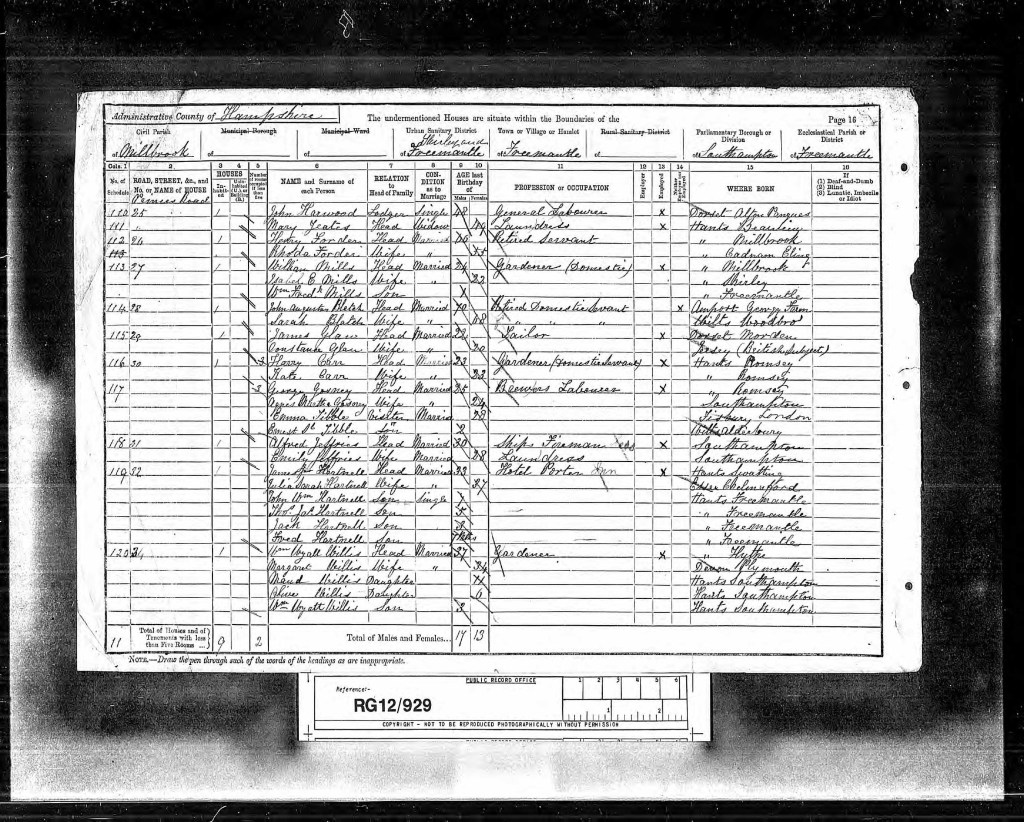
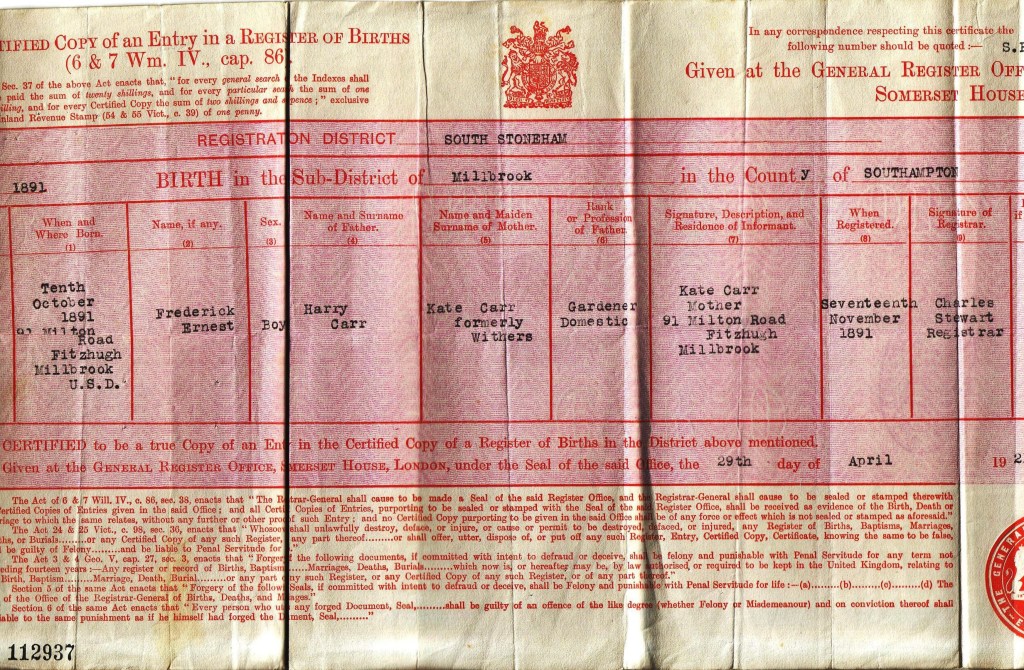
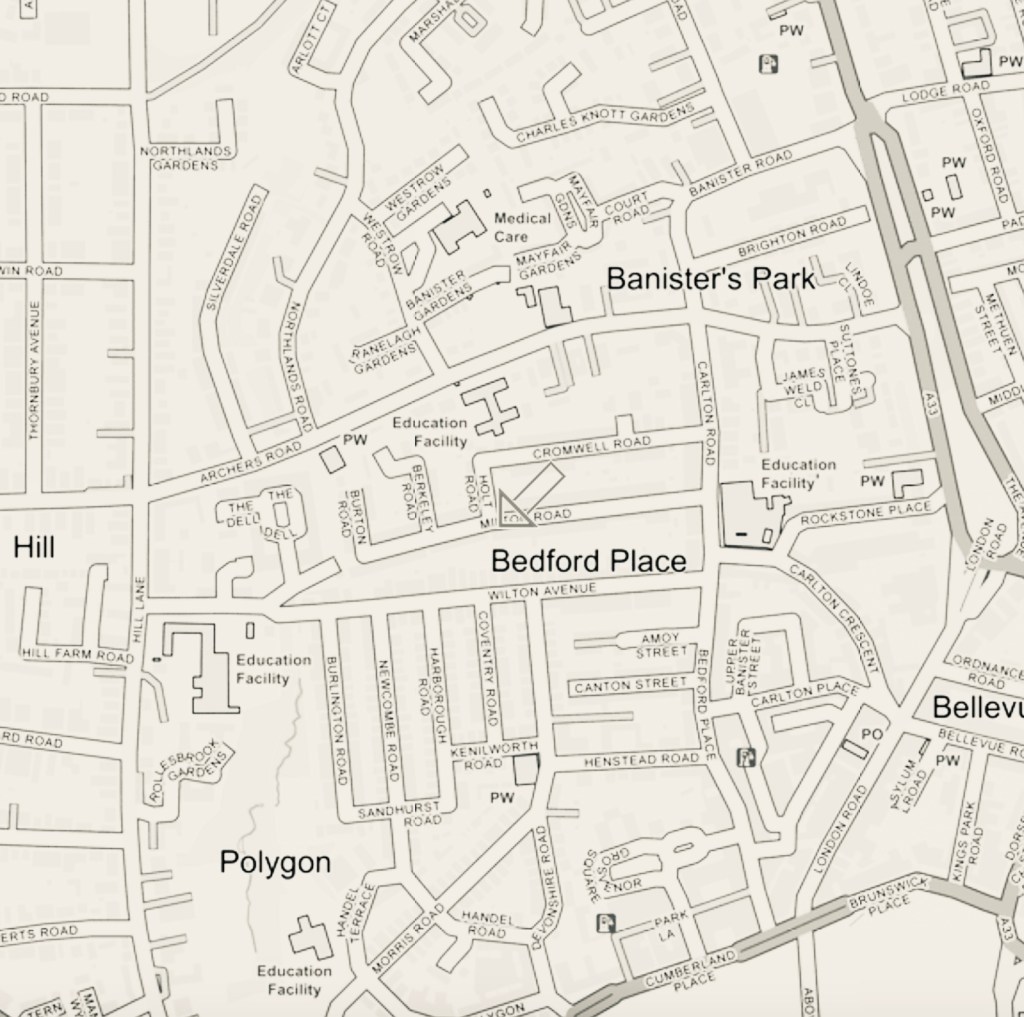

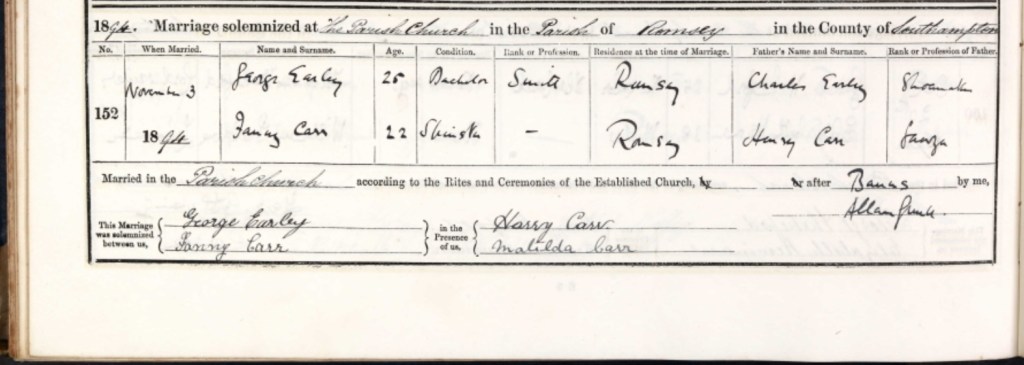
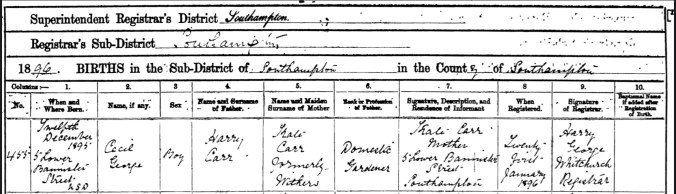
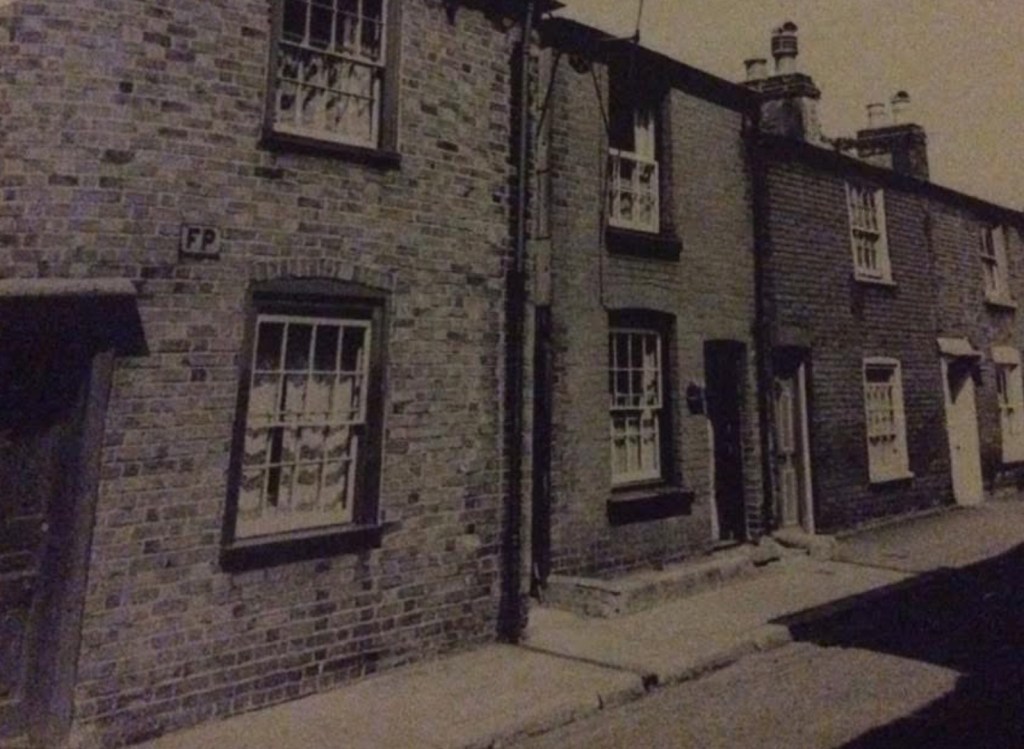
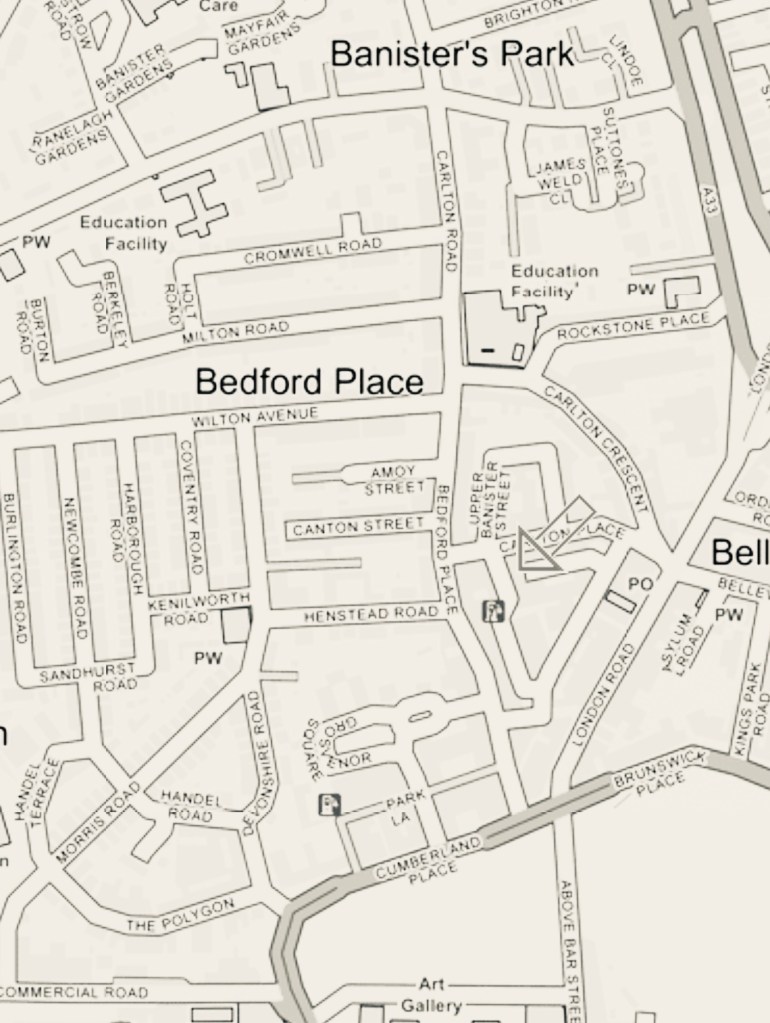
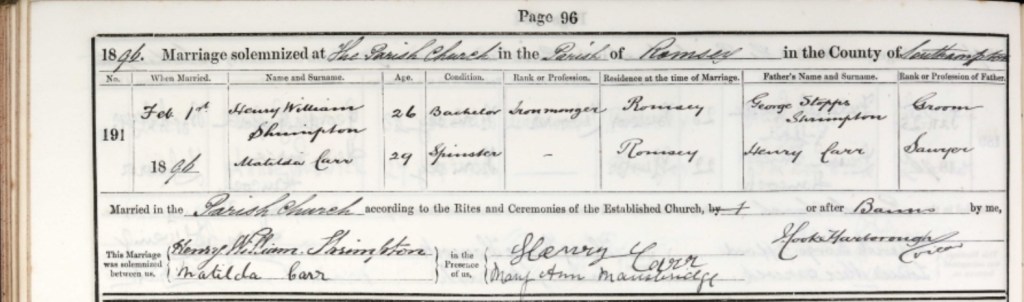
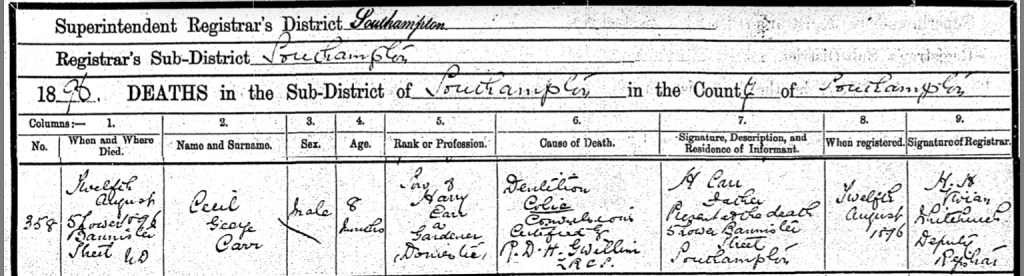



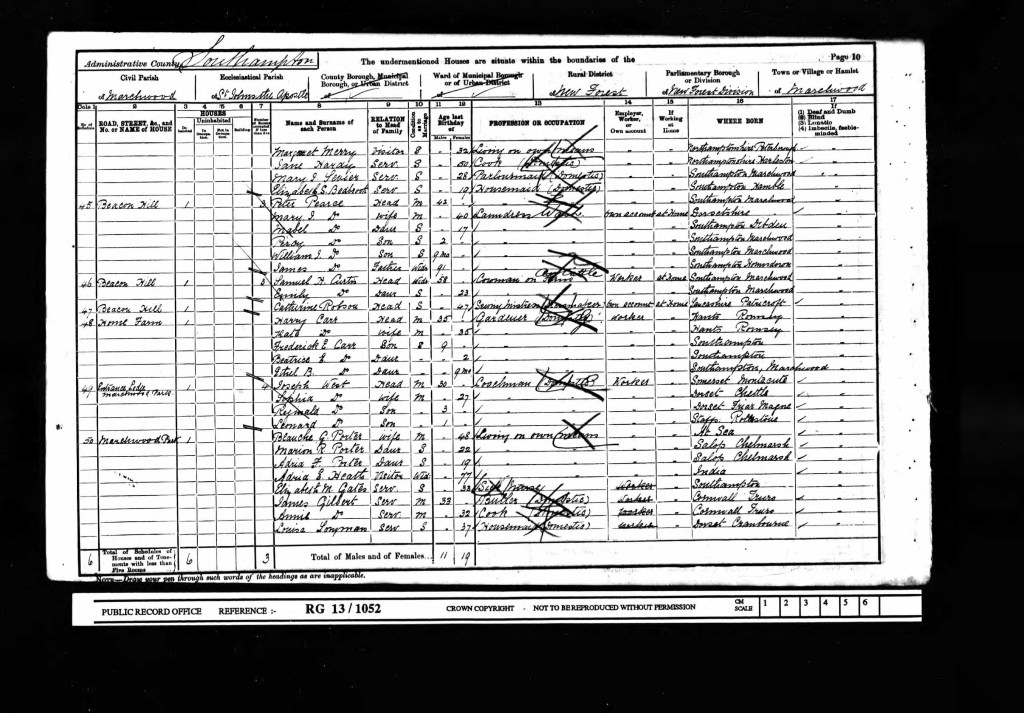
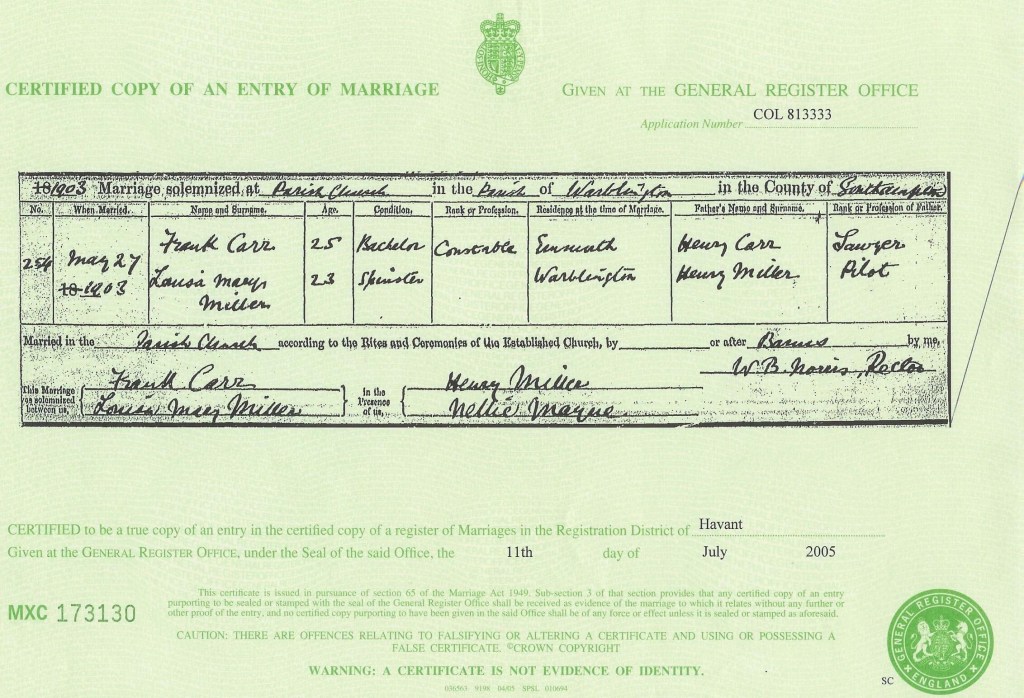
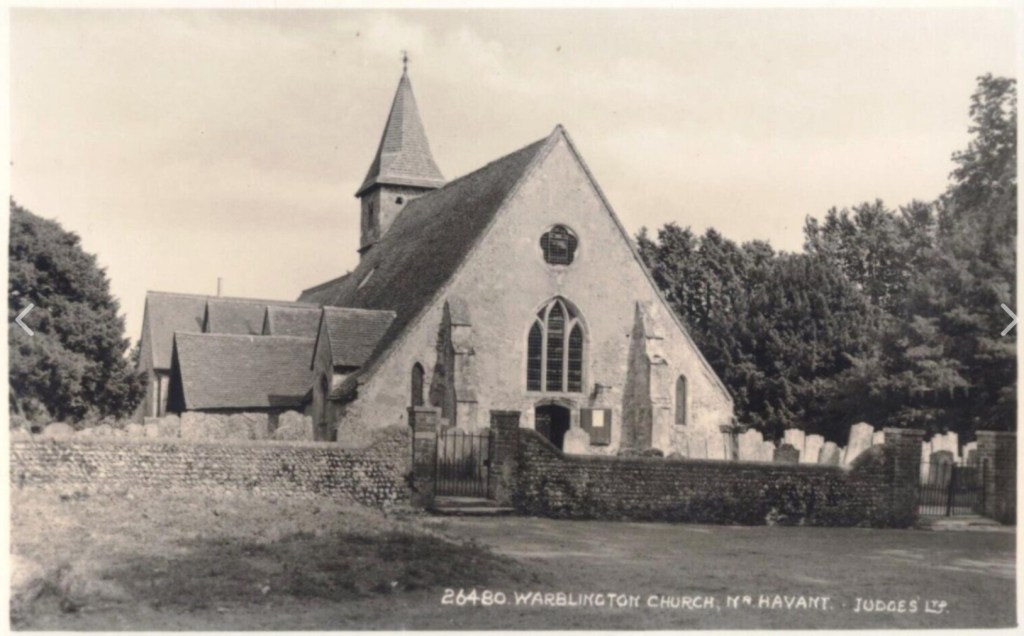




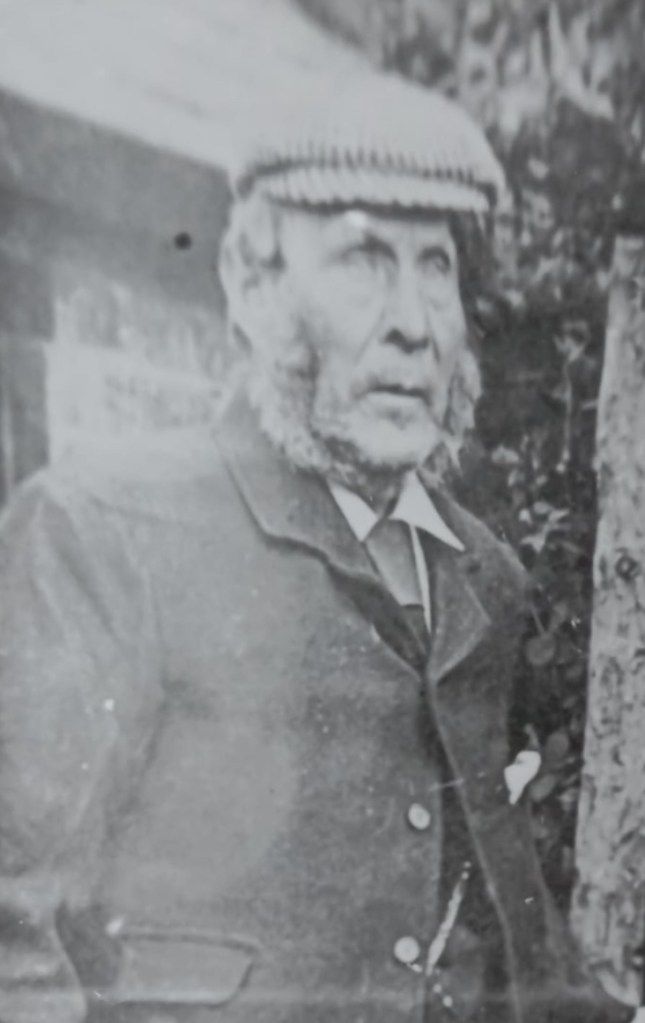



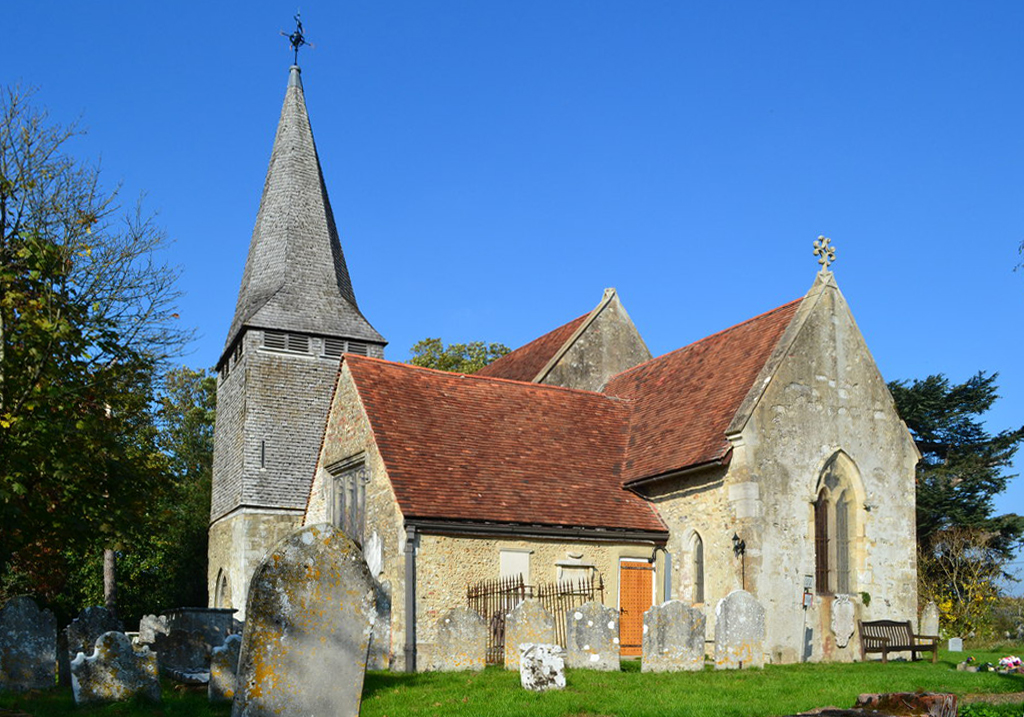
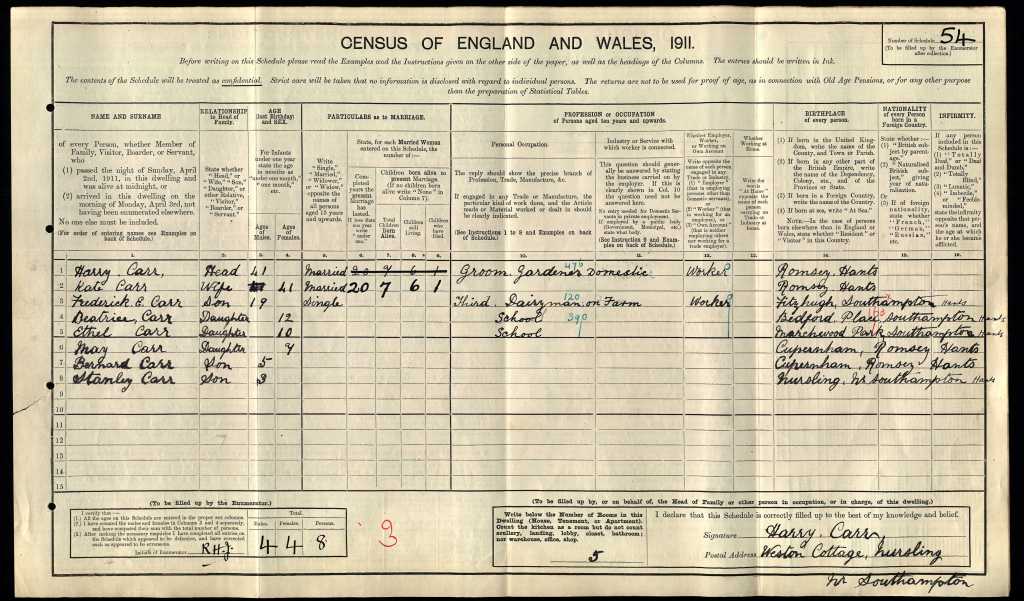
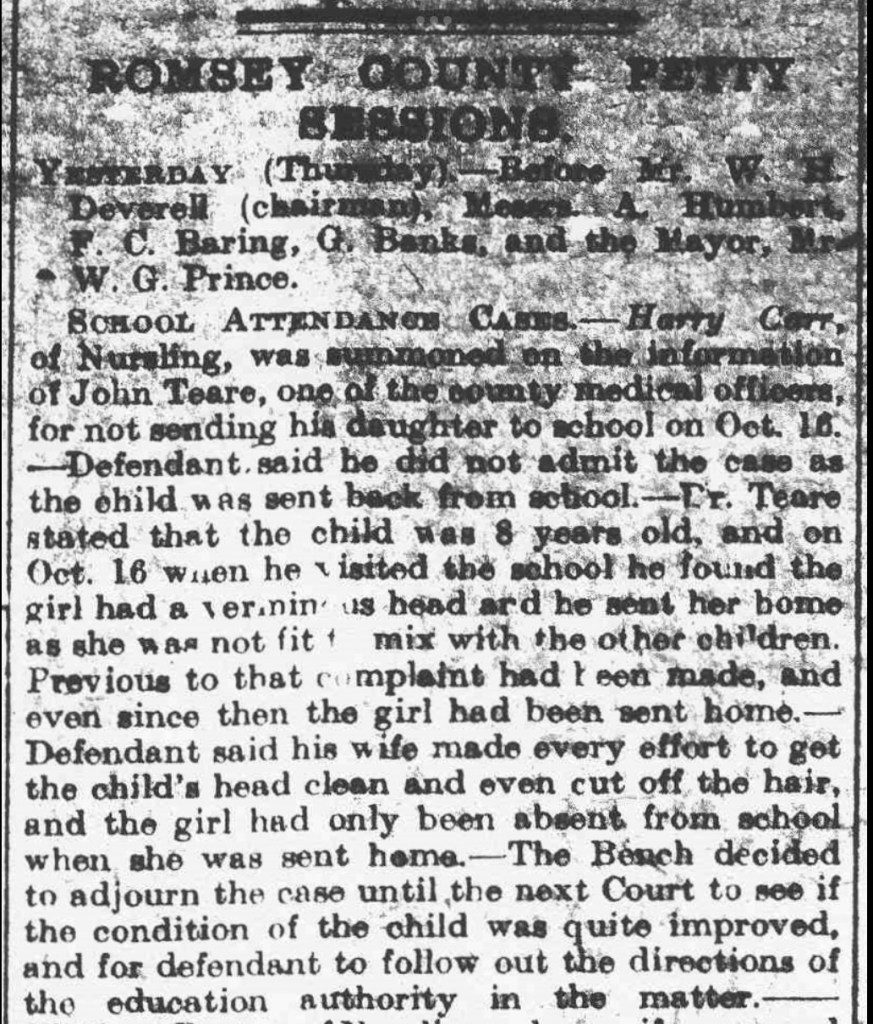

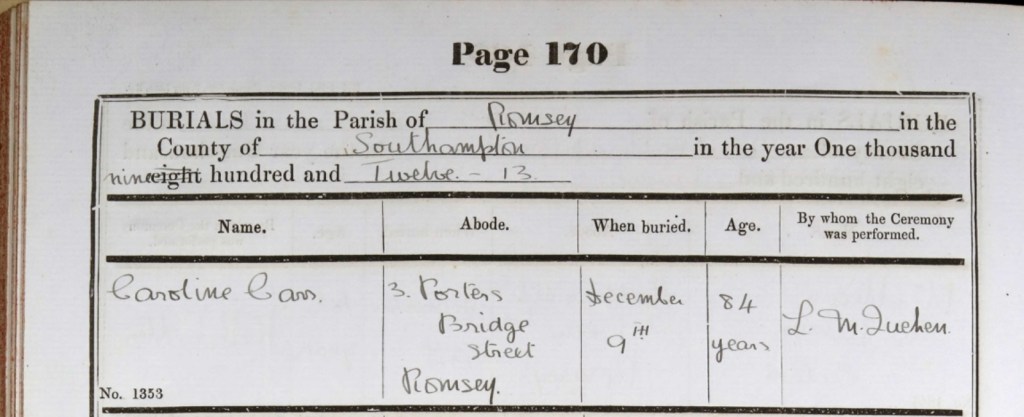
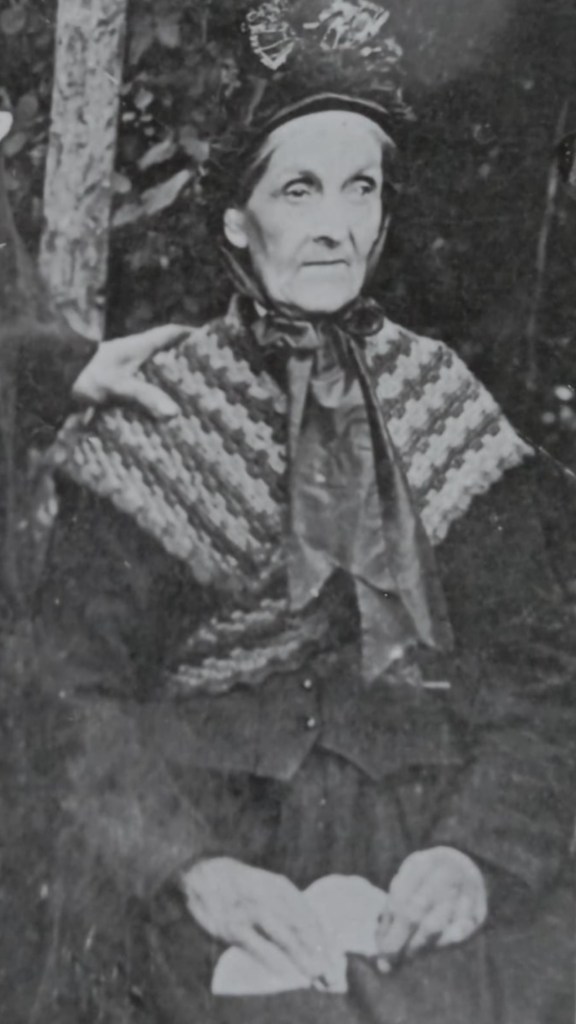
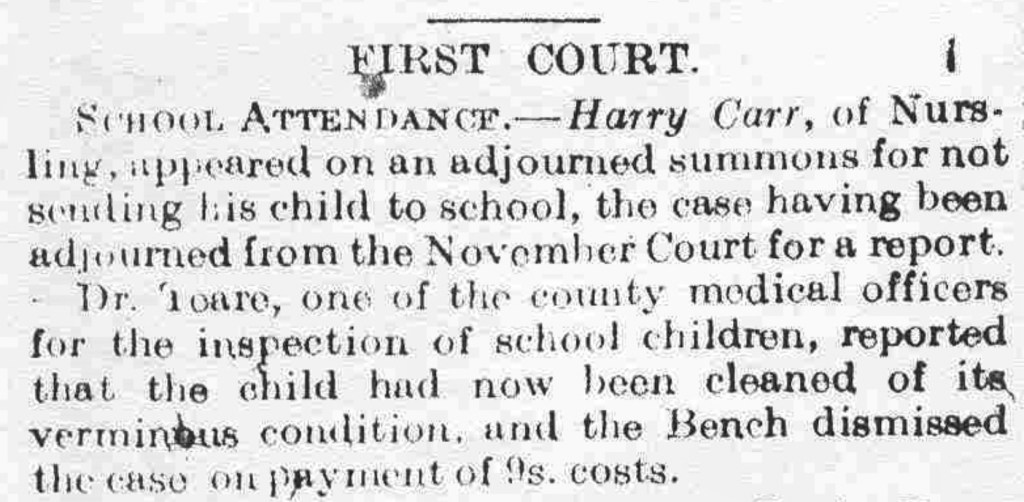
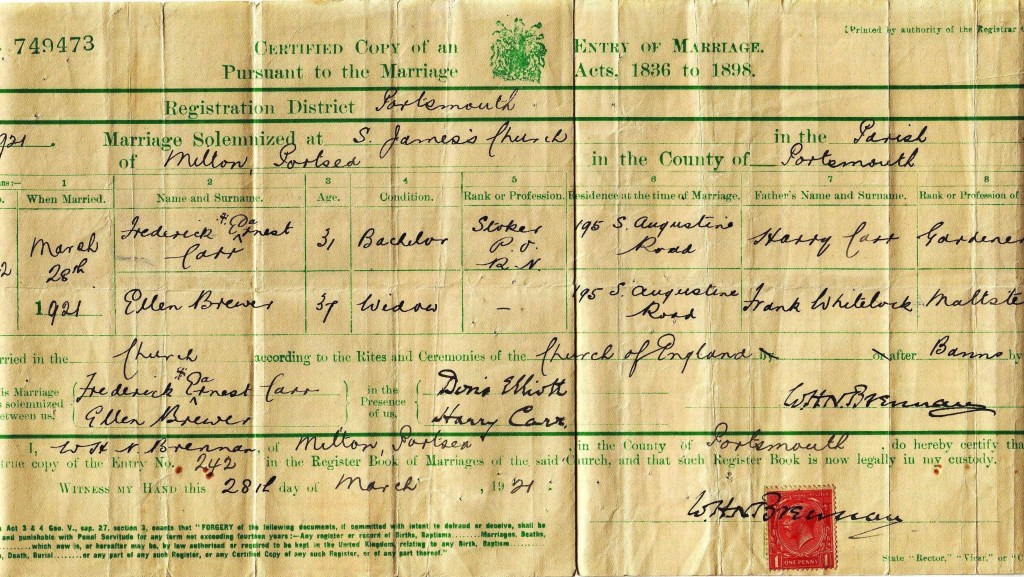
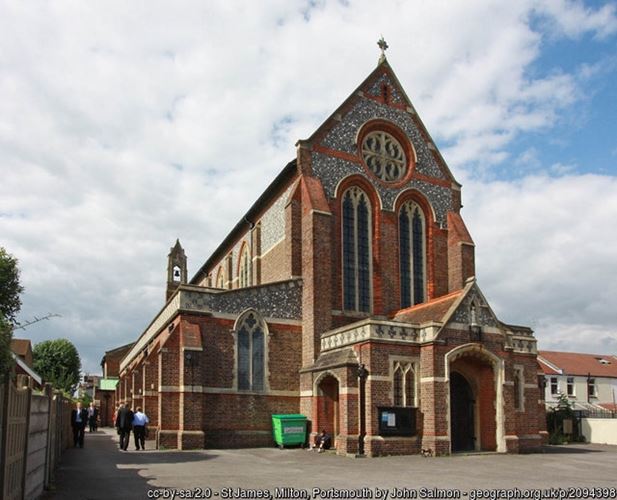

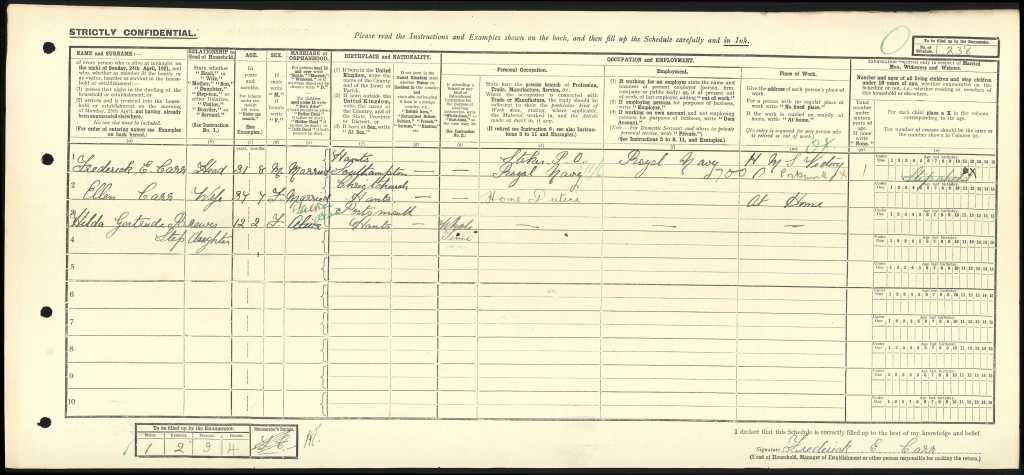

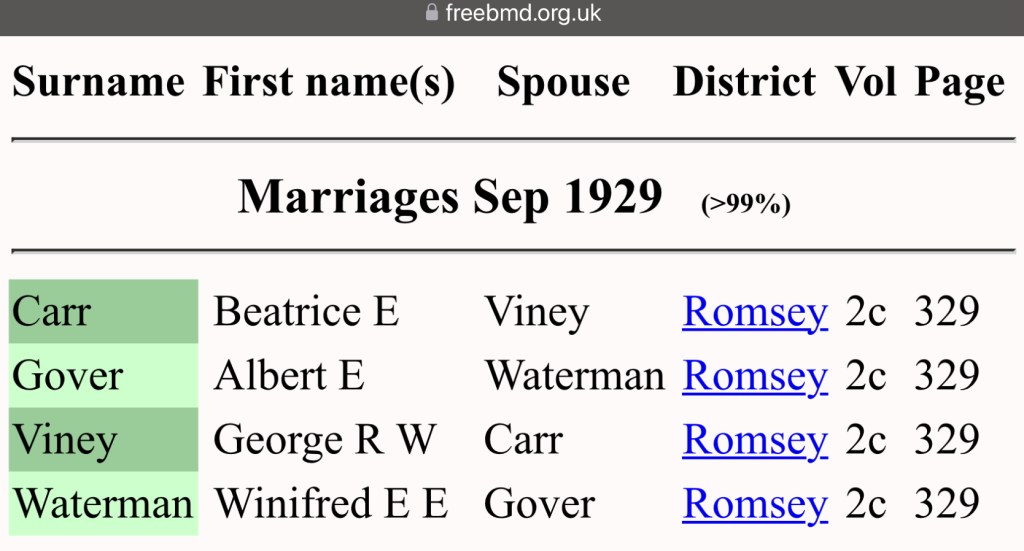
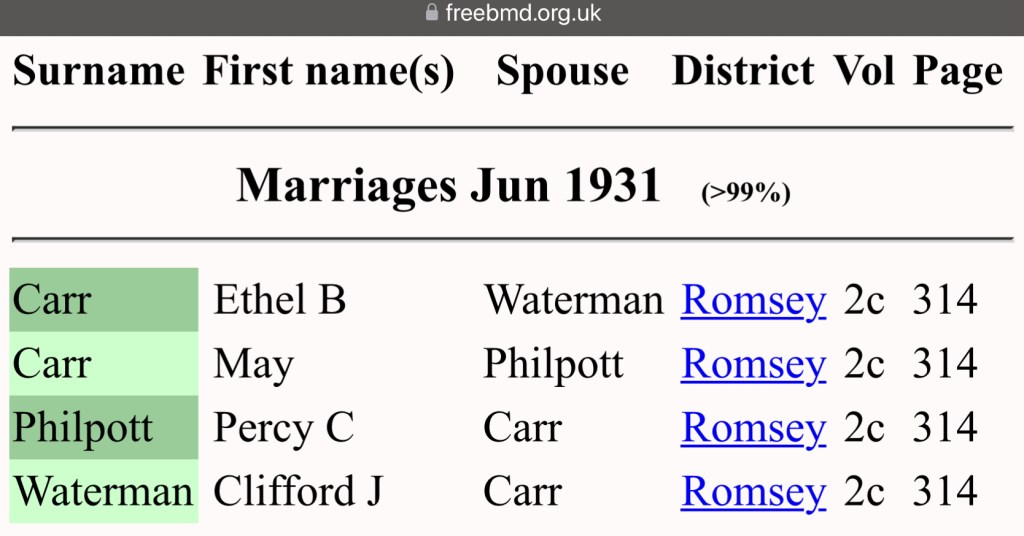
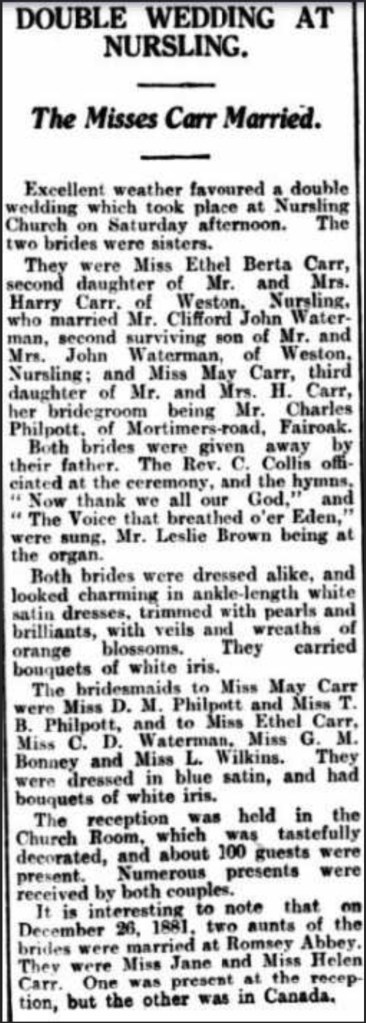



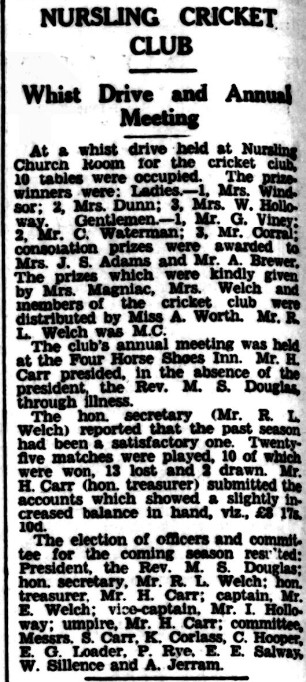
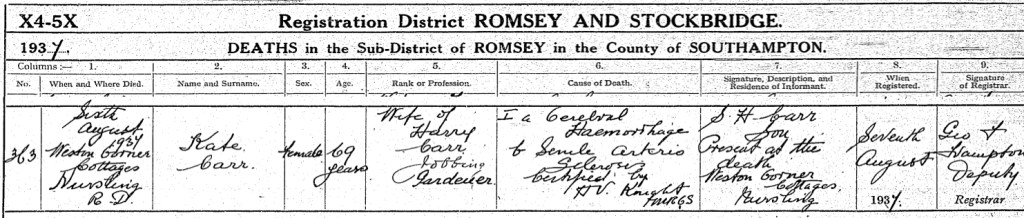



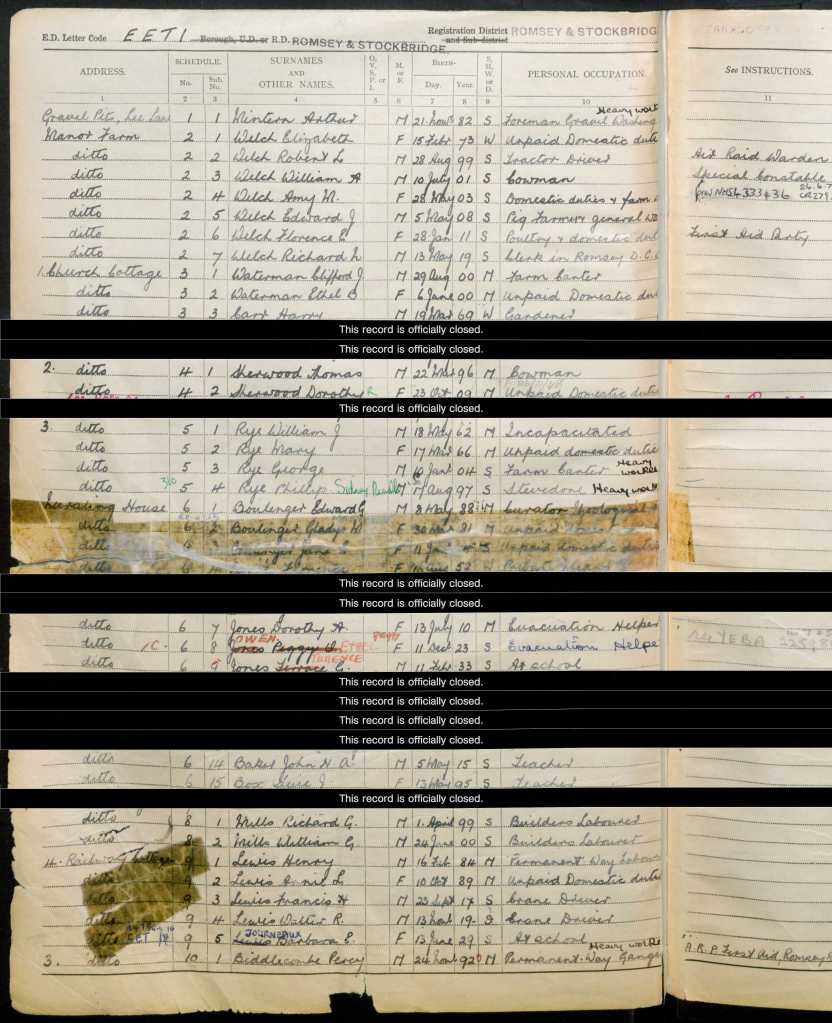

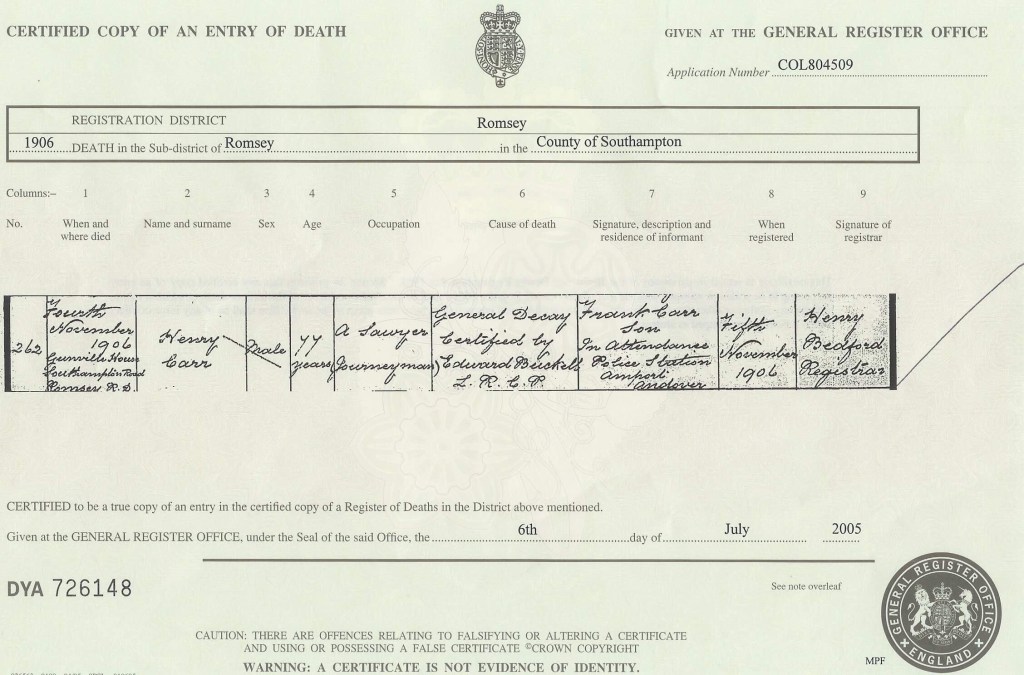

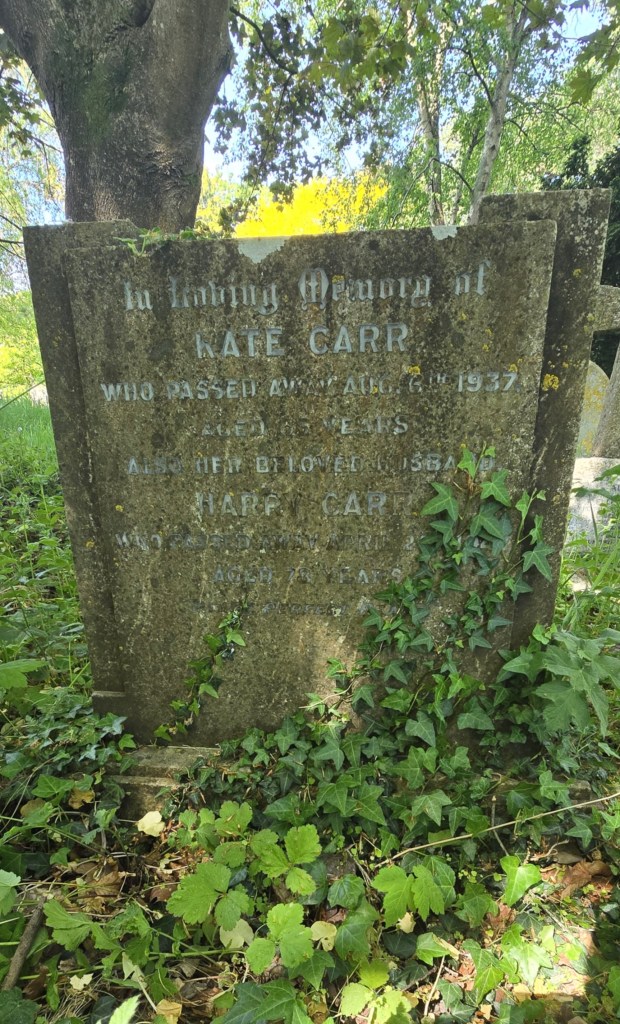
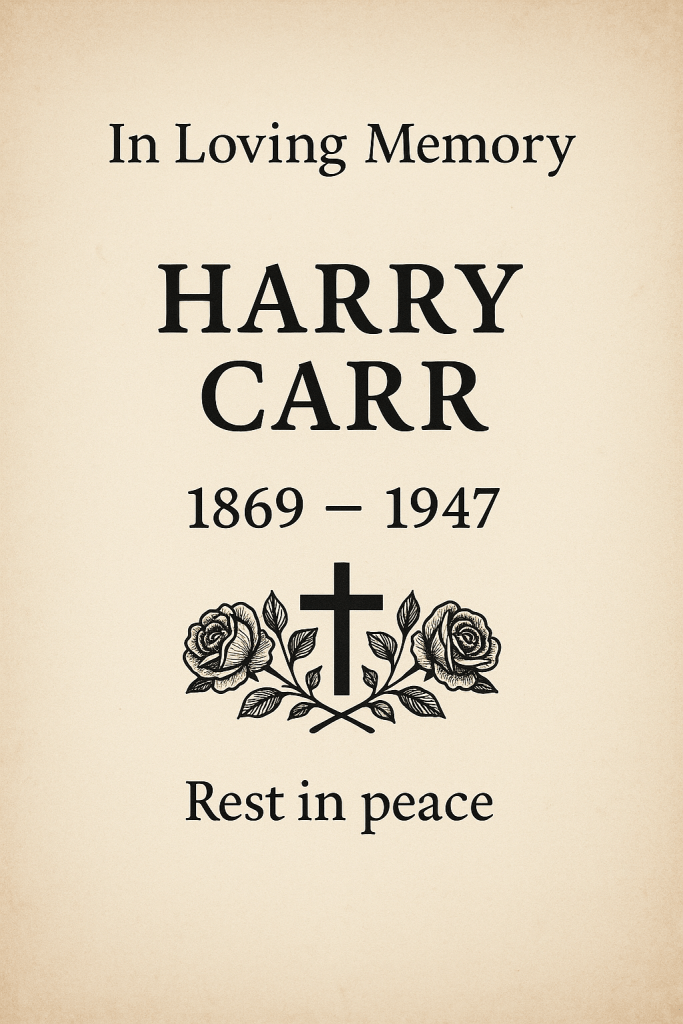
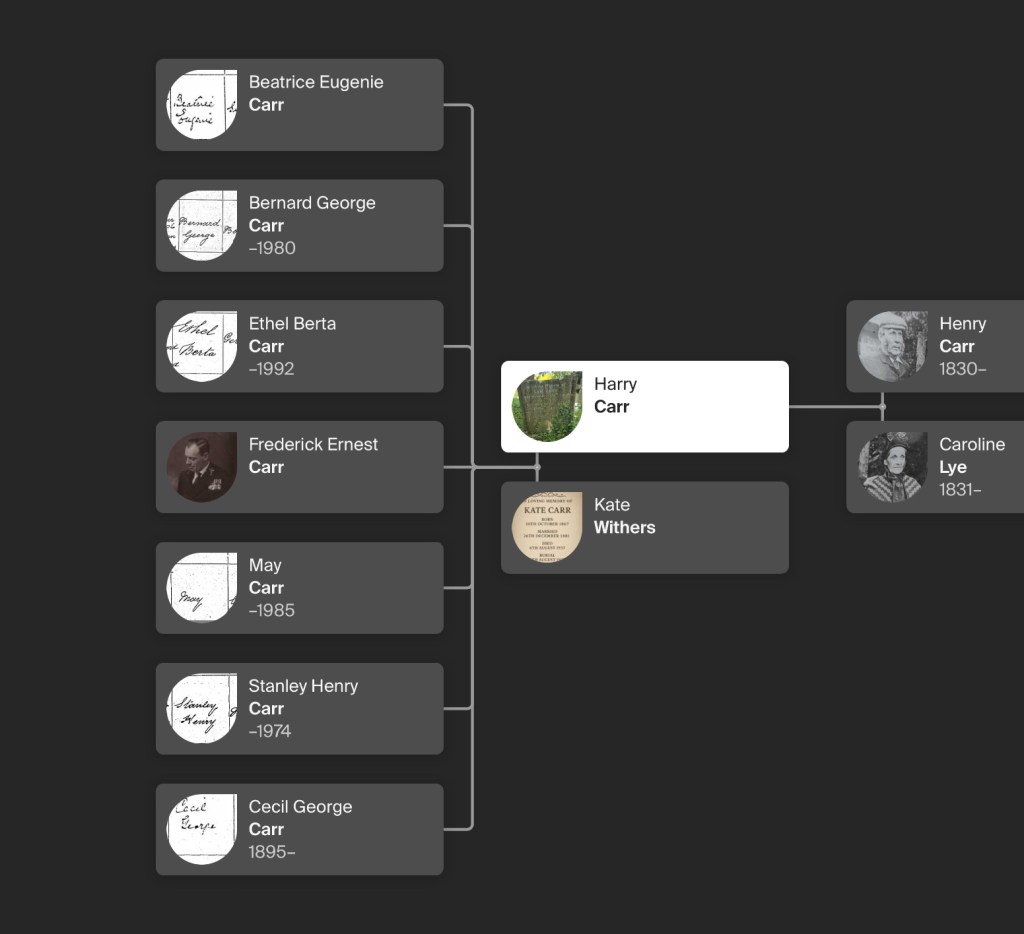
 Intwined