In the quiet corners of family history lie stories waiting to be uncovered, tales that shape who we are, even when we don’t yet know them. This is the beginning of such a journey, one that has brought both deep personal meaning and emotional complexity. "The Life of Kate Withers, 1868–1937, The Early Years, Through Documentation" is more than a biographical account of my 2nd great-grandmother, it is the story of how discovering her life helped me understand a part of myself that had long been missing.
Tracing one’s ancestry is more than a hobby. It’s a way of piecing together the lives that led to our own, to better understand where we come from. It brings a sense of connection to the past that can be both grounding and transformative. For me, this journey has brought moments of elation and discovery, balanced with frustration and the silence of unanswered questions. Every fragile census entry, faded parish record, or old photo is a thread in a wider, richer tapestry of identity. At times, the search has felt like trying to gather mist in my hands, fleeting names, missing dates, lost voices. And yet, with each new discovery, a fuller picture of Kate Withers has emerged, as if she were patiently waiting to be seen once more.
Kate was born in 1868 in Romsey, Hampshire, my own hometown, and was the fifth child of Stephen Withers and Jane Chapman, formerly Withers. Her story begins in a time and place I know well, yet her life remained a mystery to me for many years. What makes this search especially meaningful is the unexpected way it helped me connect with my father’s side of the family, a connection I lost far too early. My father died due to a tragic car accident when I was just 19 years old. He left this world without the chance for us to talk about his family, to pass on stories, or even simply to share in the curiosity of where we came from.
Uncovering Kate’s life has offered a form of healing I hadn’t anticipated. It has brought to light not only the story of a woman I never met but also the story of a family I was never able to ask about. In many ways, learning about Kate has helped me learn about my father, and in turn, about myself. This blog series is the beginning of her story, told through the documents she left behind and the echoes of her life that still linger in the places she once called home.
Before we step fully into the life and times of Kate Withers, it’s worth pausing to consider the name she carried, a name that connects not only generations of her descendants but also hints at the landscapes, livelihoods, and lives of those who came before her.
The surname Withers is rooted in Anglo-Saxon origins and is generally thought to be topographical in nature. Derived from the Old English word *wīðer*, meaning “against” or “opposite,” it may have been used to describe someone who lived on the far side of a river, stream, or other boundary. Alternatively, it could have originated from a personal name, possibly “Wither,” perhaps tied to a specific occupation or characteristic. There is also a Norse influence to consider *vidr*, meaning “wood” or “forest,” which opens the possibility that some early Withers families were known for living near or working in the woods. These roots suggest a name deeply tied to place and environment, shaped by how people once related to the land around them.
Withers has been documented in England since at least the medieval period. Records from the 13th and 14th centuries show early bearers of the name, William Wither and Richard Wyther, appearing in counties such as Hampshire, Surrey, and Wiltshire. It’s not surprising, then, that Kate Withers herself would be born centuries later in Romsey, Hampshire, a town firmly within that historic range.
By the 16th and 17th centuries, the name was found among yeoman farmers, clergy, and skilled tradespeople. Perhaps the most famous historical bearer of the name was George Wither (1588–1667), a poet and satirist whose political writings spanned both Royalist and Parliamentarian sympathies during the English Civil War. His work, though controversial at times, placed the Withers name within the broader narrative of England’s literary and political history.
In heraldic tradition, various coats of arms have been attributed to branches of the Withers name, evidence not of a singular noble line, but of multiple distinct families who rose to some prominence in their regions. One commonly referenced coat of arms includes a shield divided horizontally in silver and black, adorned with three lions’ heads, symbols of strength and resolve. Some crests feature birds like falcons or eagles, which suggest nobility of spirit and keen vision. However, it’s important to note that coats of arms were granted to individuals, not surnames as a whole, so many Withers families may never have had heraldic symbols associated with them at all.
As Britain expanded into colonial territories, the Withers name spread to places like the United States, Canada, Australia, and New Zealand. It traveled with settlers, farmers, soldiers, and emigrants seeking new lives far from the English counties where their ancestors once lived and worked. Today, it is a name that persists, recognisable, if not especially common, and often still tied to its English roots in southern and central counties.
For me, researching Kate Withers and the lineage from which she came has added a new weight and richness to this name. It is more than a surname; it is a thread stretching through time, landscape, and memory. And in tracing it, I’ve begun to find not only where Kate stood in history, but where I stand too.
Welcome back to the year 1868, Romsey, Hampshire, England. The air carries the scent of coal smoke and damp earth. The town sits amidst quiet farmland and winding lanes, with the hum of the Test River nearby. Life in this market town is anchored in rhythm and routine, yet the winds of political change and industrial progress are beginning to stir the stillness.
Queen Victoria reigns as monarch, her influence immense and her mourning for Prince Albert still casting a shadow over court and country. She is emblematic of an age that prizes restraint, duty, and empire. The political landscape in 1868 undergoes a significant shift. Benjamin Disraeli briefly holds the office of Prime Minister but is soon succeeded by William Ewart Gladstone in December following a general election. The political atmosphere is alive with debate and reform, with Gladstone's Liberal government promising efficiency, religious equality, and moral seriousness.
Parliament, seated in Westminster, continues to be dominated by aristocrats and landed gentry, but the electorate is growing. The 1867 Reform Act, which extended the vote to many urban working-class men, begins to reshape the democratic profile of the country, though women and many rural laborers remain excluded. Politics begins to edge away from privilege and toward broader public participation, though Romsey's local life still reflects the older social order, where deference is expected and hierarchy prevails.
Romsey itself is a mix of pastoral tradition and slow industrial change. The rich live in large homes on the outskirts or in the finer rows near the Abbey, attended by domestic servants. Their days are filled with leisure, social visits, and managing estates. Their clothing is elaborate and stiff: men wear frock coats and top hats, women wear crinolines or bustles, and no lady would be seen in public without gloves and a bonnet. The working class and the poor wear simpler, coarser garments, wool, cotton, and often hand-me-downs, suitable for long days of physical labor.
Transport in 1868 is increasingly defined by the expansion of the railway, which brings greater mobility to both goods and people. Horse-drawn carts and carriages still fill the streets of Romsey, clattering over cobblestones, but steam locomotives are transforming access to Southampton and beyond. The railway station in Romsey, opened in 1847, allows for commerce, commuting, and travel to grow steadily. Inland navigation, once dominated by bargemen along rivers and canals, is giving way to the train.
Energy in most homes still comes from coal and wood. Lighting is mainly provided by candles and oil lamps, though wealthier homes and businesses might have gas lighting, especially in larger towns. The air inside homes is often smoky, with soot clinging to windows and walls. Sanitation is improving slowly; the Public Health Act of 1848 and subsequent measures have increased awareness of hygiene, but outside of major cities, most dwellings still rely on privies, shared water pumps, and open drains. Disease is a constant threat. Typhus, tuberculosis, diphtheria, and cholera still claim many lives, particularly among children.
Food varies widely between classes. The rich dine on roasts, game, pastries, and imported delicacies. The working class eats bread, potatoes, bacon, cheese, and seasonal vegetables, often eked out with tea. The poor may rely on soup kitchens or parish aid when times are hard. Markets in Romsey provide fresh produce, fish, and meats, with stalls bustling beneath the Abbey’s shadow.
Entertainment is modest but meaningful. Church remains central to community life, with services at Romsey Abbey attended by all social classes. Music halls are gaining popularity in cities, but in Romsey, amusements are more likely to include fairs, cricket matches, public readings, and perhaps a travelling show. Gossip revolves around the affairs of local landowners, courtship rumors, and the slow trickle of imperial news from India or Africa.
The environment around Romsey is still largely rural, with farms, orchards, and woodlands surrounding the town. The soundscape is punctuated by the calls of livestock, the toll of church bells, and the occasional whistle of a distant train. The landscape is beginning to change as railways, brickworks, and other signs of industrialization spread outward.
In 1868, the difference between rich, working class, and poor is stark and visible. The rich live longer, dress better, and command respect. The working class toil long hours, with some security but little comfort. The poor are vulnerable to hunger, cold, and illness, relying on the workhouse or parish charity in times of desperation. For all, life is guided by tradition, but the century’s slow revolution, of technology, reform, and social mobility, is undeniably underway.
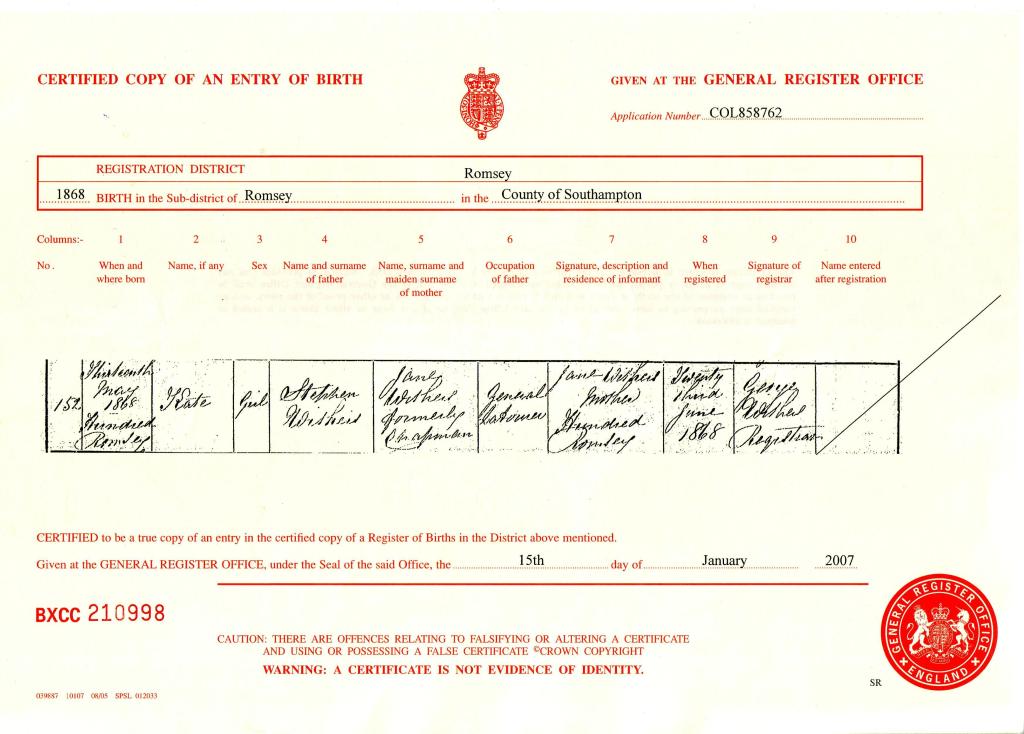
On a spring Wednesday the 13th day of May, 1868, Kate Withers entered the world in The Hundred, Romsey, Hampshire, England. Her arrival, like so many in Victorian England, was quietly noted by those around her but has since become a vital piece in the mosaic of a family's history. She was the daughter of Stephen Withers, a general labourer, and Jane Withers, formerly Chapman. Just over a month later, on Tuesday, the 23rd day of June, 1868, her mother formally registered the birth in Romsey. The registrar, George Withers, who may or may not have been a relation, recorded the details in neat, official handwriting: a baby girl named Kate, born to working-class parents living at The Hundred.
The name Kate, though seemingly simple, carries centuries of meaning and tradition. It is a diminutive of Katherine, which is often linked to the Greek word *katharos*, meaning “pure.” While the precise linguistic roots of Katherine remain somewhat ambiguous, its cultural resonance is deep. The name’s rise in popularity across Europe is due in large part to Saint Catherine of Alexandria, a revered 4th-century martyr. In time, Kate developed as both an affectionate short form and a given name in its own right, and by the 19th century, the very era of Kate Withers’ birth, it was becoming increasingly common for girls to be christened simply as Kate.
Culturally, the name has long carried a spirited presence. Shakespeare’s sharp-tongued heroine in *The Taming of the Shrew* is perhaps its most iconic literary figure “Kate the curst,” as she was famously called. This portrayal added a spirited, independent air to the name, qualities that many Kates since have come to embody. In more recent times, public figures such as Kate Middleton have helped maintain the name’s steady popularity. Whether borne by royalty or working-class daughters like Kate Withers, the name endures as one of quiet strength and enduring charm.
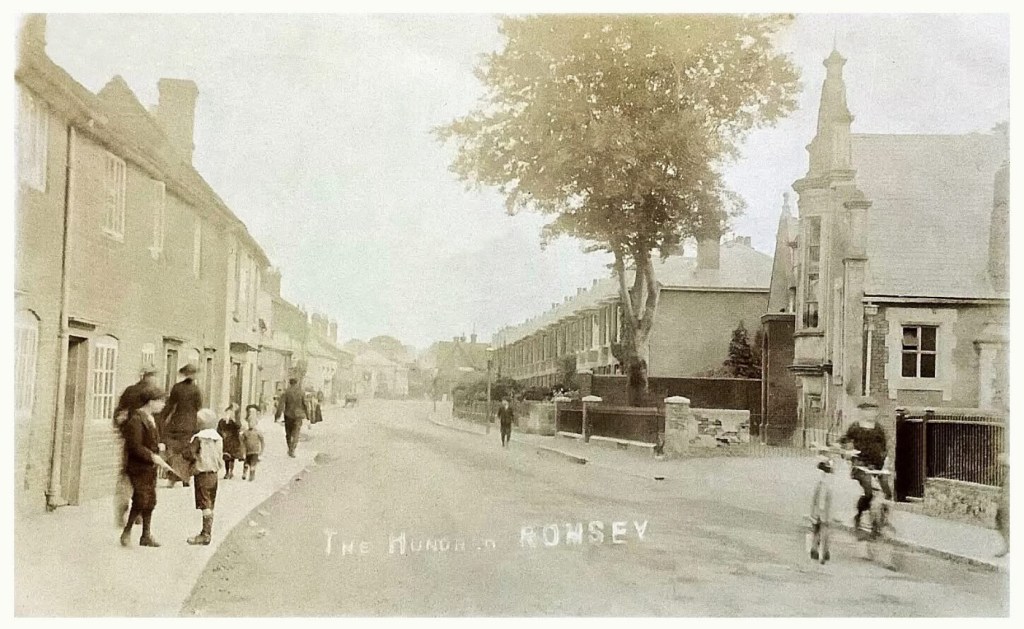
The Hundred, where Kate was born, is more than just a name on a birth certificate. It is a part of Romsey steeped in history. In Anglo-Saxon England, a “hundred” referred to a local division used for administration, justice, and taxation, believed to denote either an area capable of supplying one hundred fighting men or containing one hundred households. Over time, these divisions faded from governance, but the names lingered on, tied to place and memory. In Romsey, The Hundred refers to a central street or area that still reflects the old heart of the town.
Romsey itself is an ancient market town, shaped by its position along the River Test and its prominence during the medieval wool trade. The Hundred would have once been alive with traders, townsfolk, and the bustle of market life. Today, it remains a focal point of local history, with a mix of Georgian, Victorian, and modern architecture standing on streets that trace the patterns of a far older world. To think that Kate Withers began her life in such a historically layered place adds another dimension to her story, a story that, though rooted in everyday life, now feels all the more rich for being rediscovered.
In uncovering Kate’s beginnings, we start not just with a name and a date, but with the place, the language, and the context that shaped the earliest days of her life. Her story begins quietly, but already it echoes with the depth of history and meaning.
The Hundred, Romsey.
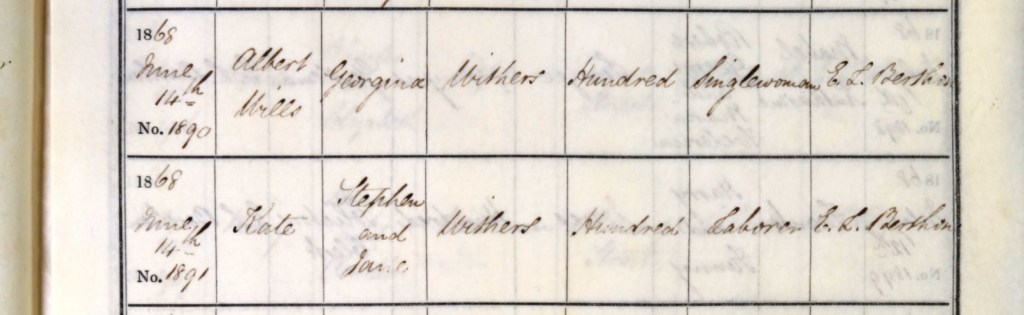
On Sunday, the 14th day of June 1868, just over a month after her birth, Kate Withers was brought to be baptised in the parish church at Romsey, Hampshire, England, which I am led to believe was the Romsey Abbey. It was a significant moment in her early life and in the life of her family, one of the earliest recorded acknowledgments of her presence in the world, and a rite that tied her to both her community and her faith. The baptism was performed by E. L. Berthon, a notable clergyman of the time, who dutifully recorded the event in the church register. His entry notes that Kate was the daughter of Stephen Withers, a labourer, and his wife Jane, of The Hundred.
The ceremony was not a solitary occasion. On that same Sunday, ten other children were baptised in the same Sunday church service. Among those baptised that day was Albert Mills Withers, son of Georgina Withers, a single woman also living in The Hundred. Georgina was Stephen Withers’ niece, making Albert Kate’s cousin. The shared baptismal day not only marks an important personal milestone for both infants but also hints at the close-knit nature of the extended Withers family within Romsey at the time.
This joyful gathering inside the stone walls of Romsey's parish church reflects the rhythms of Victorian life in a town where lineage, faith, and community intersected. The act of baptism was more than a spiritual moment, it was a public declaration of belonging, to a family, a church, and a place. And in this case, it gives us yet another glimpse into the world Kate Withers was born into, one rooted in tradition, community ties, and a family whose presence was deeply woven into the life of The Hundred.
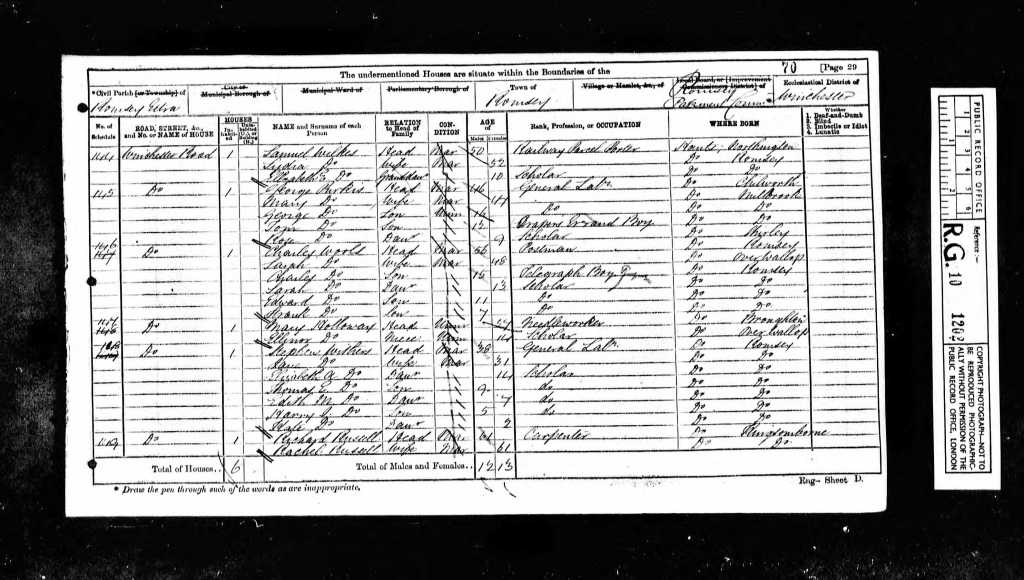
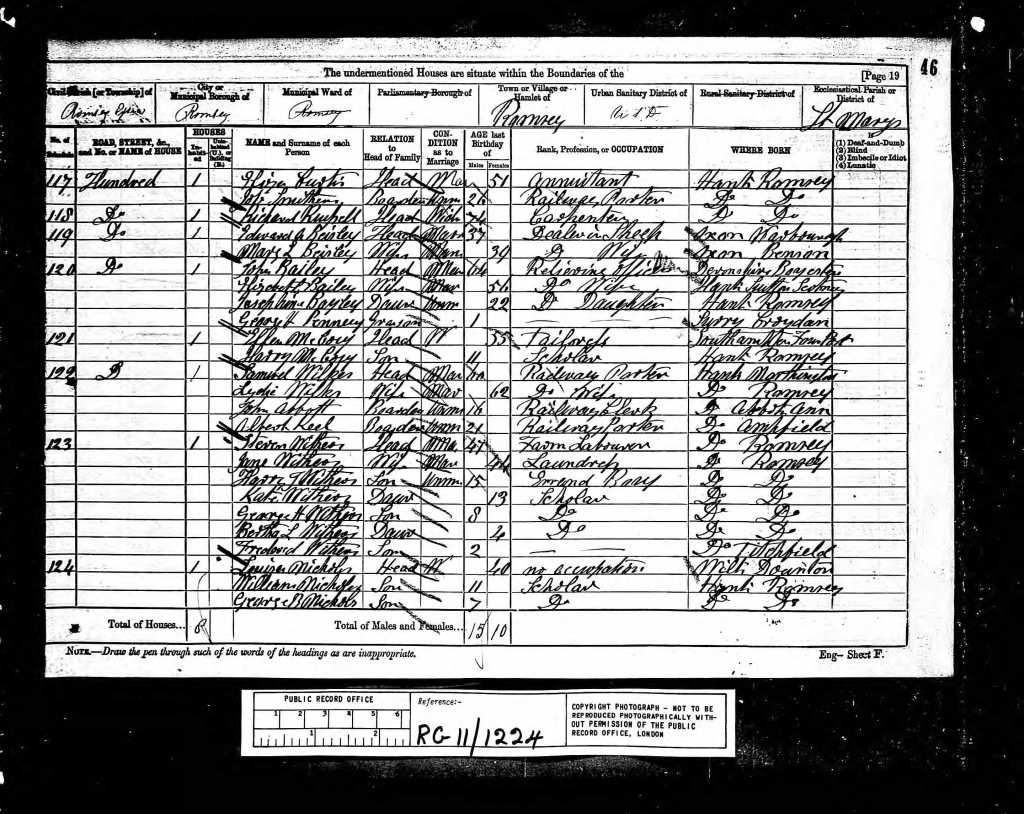
On the eve of the 1871 Census, Sunday the 2nd day of April, two-year-old Kate was living with her family on Winchester Road in Romsey, Hampshire. The household was led by her father, Stephen Withers, then 38 years old, who was working as a general labourer, typical of many working men in Romsey during this period, where physical labour, especially in agriculture and local industries, sustained much of the town’s economy. Her mother, Jane, aged 33, managed the home and the upbringing of their five children, all of whom, except Kate, were of school age.
The Withers family consisted of eldest daughter Elizabeth Ann Withers, 14 years old, followed by Thomas Edward Withers, aged 9, Edith Mary Withers, aged 7, and Harry Charles Withers, aged 5. Kate, still too young for school, was likely at home under Jane’s care. Each of her older siblings was listed as a “scholar” in the census, suggesting they were attending school, a sign of the growing influence of compulsory education laws in England during the late 19th century, even before they were fully enforced.
The census also recorded that the family inhabited the entire dwelling on Winchester Road. In a time when many working-class families shared housing or lived in cramped conditions, this detail suggests a modest stability in the Withers household. Though not wealthy, the family had a home of their own, likely a small cottage or terraced house typical of Romsey’s expanding urban areas at the time.
This snapshot from 1871 paints a vivid picture of Kate’s early environment, surrounded by siblings, living in a town steeped in history, and rooted in a working-class lifestyle marked by routine, resilience, and the rhythms of a growing family. It was a formative chapter in a life that would span nearly seventy years, beginning in a close-knit home on Winchester Road.
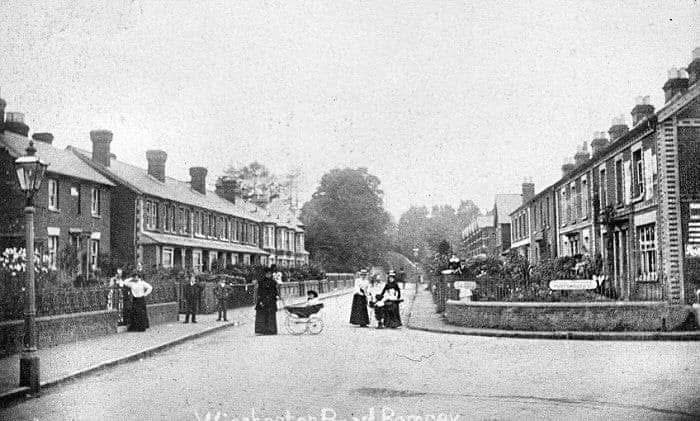
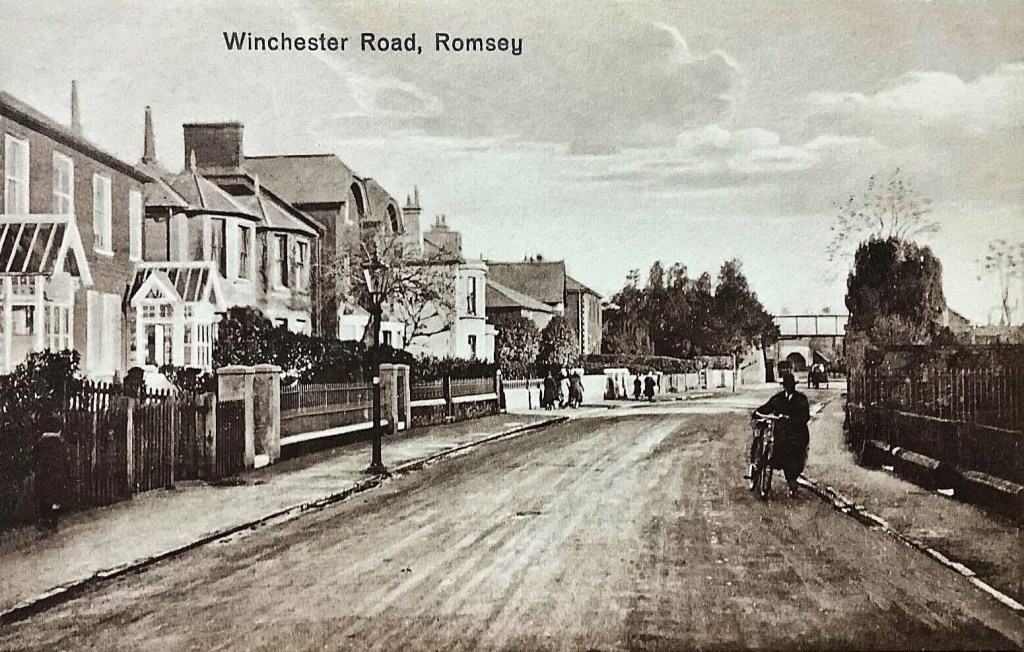
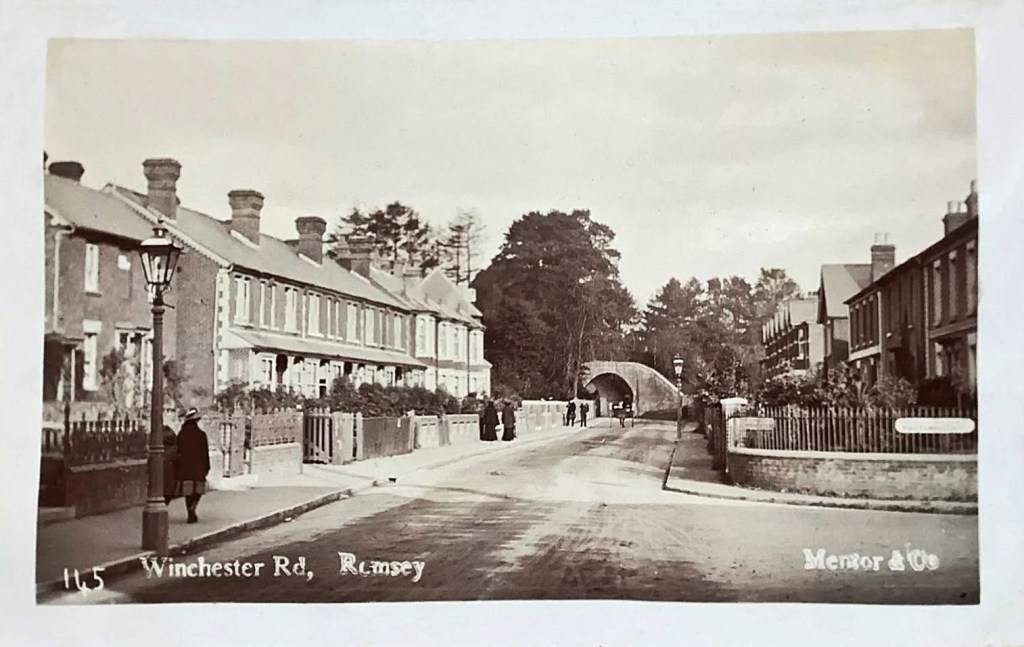
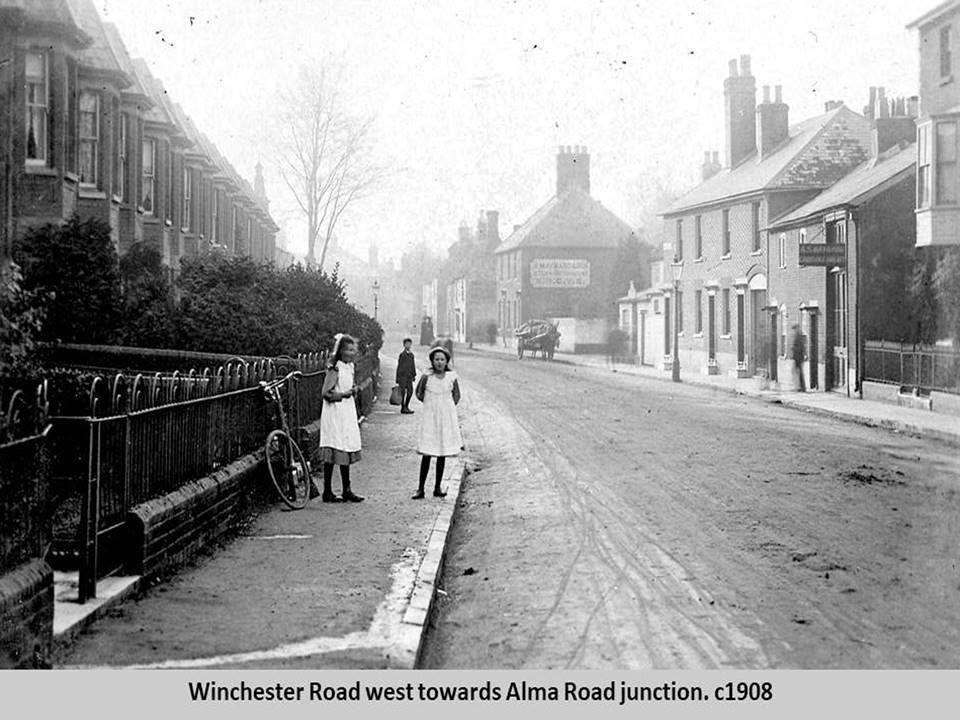
Winchester Road in Romsey, Hampshire, is a historic thoroughfare that has played a significant role in the town's development. In 1851, it was already an established route, connecting Romsey to Winchester and facilitating trade and travel. The road was part of a network of turnpike roads constructed in the mid-eighteenth century, which included Winchester Road to the east and Greatbridge Road to the north. These roads were crucial for transportation, especially before the advent of the railway system.
One notable establishment along Winchester Road was the Romsey Union Workhouse, located on the north side of the road to the northeast of the town. Built in 1774, it served as a place of last resort for the poor and destitute. A parliamentary report from 1777 recorded parish workhouses in operation at Romsey Extra for up to 150 inmates, and at Romsey Infra for up to 60.  The workhouse on Winchester Road was enlarged in 1836 to accommodate more inmates. It was a relatively small U-shaped building, with males accommodated on the west side and females on the east. The site included a large garden and a detached ward for infectious cases.
In the late 19th and early 20th centuries, the area around Winchester Road began to develop more rapidly. The construction of the railway line between Salisbury and Bishopstoke (Eastleigh) in 1846 had already begun to influence the town's expansion. By the 1860s, a second railway line to Southampton was built, and the canal was closed, leading to further changes in the town's infrastructure.
Today, Winchester Road remains an important part of Romsey's landscape. It is home to a mix of residential properties, including terraced houses and flats, with average house prices in the area reflecting its desirability.  The road's rich history is evident in the architecture and layout, serving as a testament to Romsey's development over the centuries.
The final day of 1871 brought an immeasurable loss to the Withers family. On Sunday, the 31st of December, fifteen-year-old Elizabeth Ann Withers, Kate’s eldest sister, passed away at The Hundred in Romsey. Her death marked a tragic turning point in the household that had only months earlier been recorded in the census as full of young life and routine. Now, it was shadowed by grief.
Present at Elizabeth’s side was Lucy Glasspool, a woman of The Hundred, who witnessed her final moments and took on the deeply painful duty of registering her death the very next day, Monday the 1st of January 1872. George Withers, the local registrar, formally logged the details in the official register. He recorded that Elizabeth, the daughter of Stephen Withers, a general labourer, had died of peritonitis, a diagnosis that in those days carried a near-certain fatal outcome. Lucy, perhaps a family friend or neighbour, signed the document with her mark, an ‘X’, a quiet testament to the everyday strength and support found within working-class communities.
Peritonitis in the 19th century was a formidable and often untreatable condition. The inflammation of the peritoneum, caused by infection entering the abdominal cavity, progressed quickly and painfully. Its symptoms were unmistakable: piercing abdominal pain, fever, nausea, and signs of sepsis as the infection spread rapidly. Without access to surgery or antibiotics, options for treatment were few and often ineffective. Purgatives, poultices, and bloodletting did more harm than good. Even if the cause, such as a ruptured appendix or infection from an internal injury, could be guessed at, there was little a doctor could offer beyond comfort.
Elizabeth’s death, like that of so many young people in the era, underscores the fragility of life before modern medicine. In an age when a teenager’s death from an abdominal infection could be both swift and untreatable, families often had to endure such heartbreak in silence. For Kate, only three years old at the time, the loss of her older sister would become part of the family’s quiet legacy, a story carried in memory and in records, but likely spoken of only in hushed tones, if at all.
It’s hard not to wonder what Elizabeth might have become. At fifteen, she would likely have been helping her mother at home, perhaps caring for her younger siblings, possibly beginning to look ahead to work or service. Her death would have left not just an emotional void, but a practical one in the rhythms of daily life. That her passing occurred in the very heart of Romsey, in The Hundred, where she had been born and raised, only deepens the poignancy.
In tracing the lives of ancestors, these moments, the silent heartbreaks written in ink and buried in time, begin to emerge as part of a fuller picture. Elizabeth Ann Withers lived only fifteen years, but she is remembered here, not only as a name in a register, but as a sister, a daughter, and a cherished part of Kate’s early world.
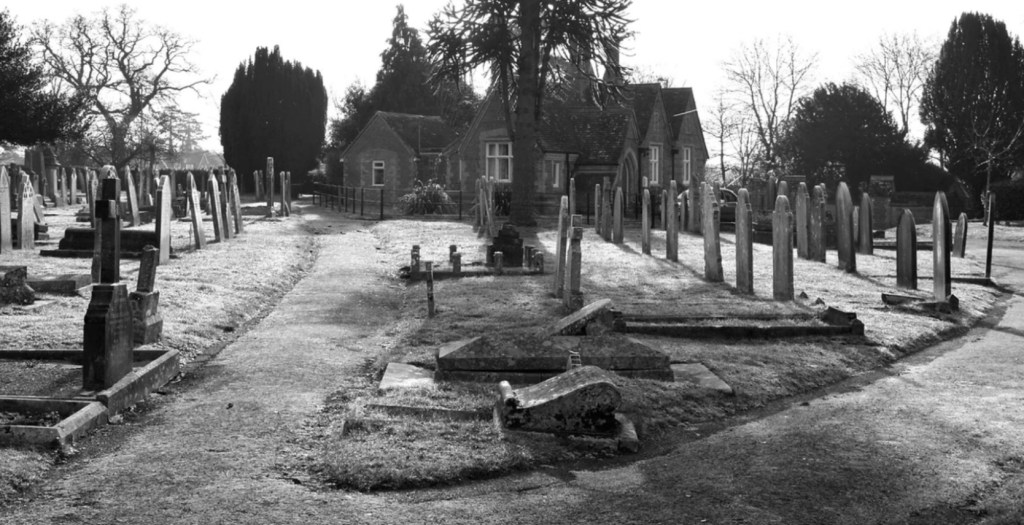
On Wednesday, the 3rd day of January 1872, Elizabeth Ann Withers was laid to rest in Romsey Old Cemetery, Botley Road, Romsey, Hampshire. Just three days after her passing, the Withers family gathered to say their final goodbyes to their eldest daughter. She was buried in grave E170, a space that would come to hold not just her body, but the sorrow and memory of a life cut far too short. The burial was officiated by the curate H. Barr, his first name now lost or unclear in the faded handwriting of the register, who recorded that fifteen-year-old Elizabeth Ann Withers, of Winchester Road, was interred that day.
Romsey Old Cemetery, where Elizabeth was buried, had been opened in 1856, a response to the pressing need for more sanitary and spacious burial grounds following the severe overcrowding of older churchyards, particularly that of Romsey Abbey. National legislation had driven the change, most notably the Public Health Act of 1848 and the Burials Act of 1853, which aimed to prevent the spread of disease through inadequate burial practices. As such, Elizabeth’s final resting place was not merely a grave among others, it was part of a broader movement to bring dignity, order, and respect to the way communities cared for their dead.
The cemetery itself, set quietly along Botley Road, reflected Victorian values of solemnity and permanence. Its two chapels, one in Gothic style for Anglican rites and another in Italianate style for non-conformists, marked the inclusivity of belief and the importance placed on architecture as a tribute to life and death alike. The very chapel under which Elizabeth’s service may have passed would have stood tall and sombre, a sanctuary of grief and farewell.
Elizabeth was one of many buried there in the latter half of the 19th century, a time when childhood and adolescent mortality was heartbreakingly common. Her grave, marked by the number E170, may or may not bear a stone today, but it holds a story, of a young girl’s final moments, of a family in mourning, and of a community that recorded, buried, and remembered its people.
For Kate, who was still just a toddler at the time, it is likely she would not have understood the depth of what was happening, but the loss of her sister would linger, shaping the home she grew up in. The silence left behind by Elizabeth’s absence would speak through generations, until her name was once again brought to light through the gentle, determined work of family history.
Romsey Old Cemetery.
Just months after the heartache of losing their eldest daughter, Kate’s sister,  Elizabeth, the Withers family welcomed new life. On Thursday, the 6th day of June 1872, George Henry Withers was born at The Hundred, Romsey, Hampshire. His arrival came as both a continuation and a quiet comfort to a family still in mourning, offering hope amid recent sorrow.
One week later, on Thursday the 13th day of June, George’s mother Jane made her way to the local registrar’s office in Romsey to formally register his birth. As she had done for her earlier children, she gave the necessary details to Registrar George Withers, who once again entered the information into the official record. He noted that George Henry Withers, a boy, was born to Stephen Withers, a general labourer, and Jane Withers, formerly Chapman, of The Hundred, Romsey. In keeping with the times and her likely limited literacy, Jane signed the registration not with her name, but with her mark, an ‘X’, a silent, humble signature echoed by many working women of her generation.
The Hundred, already a well-worn stage for the Withers family's joys and losses, again served as the backdrop for this moment of new beginning. For young Kate, just four years old at the time, the birth of her baby brother would have brought change to her everyday world, new routines, perhaps a sense of responsibility, and the familiar bustle of life continuing, even in the wake of loss.
George Henry Withers would grow up as part of the next chapter in this family's history, his name entered alongside those of his siblings in the ledgers and records that now help us trace their story, one child born, another remembered, in the ever-turning rhythm of life in Victorian Romsey.
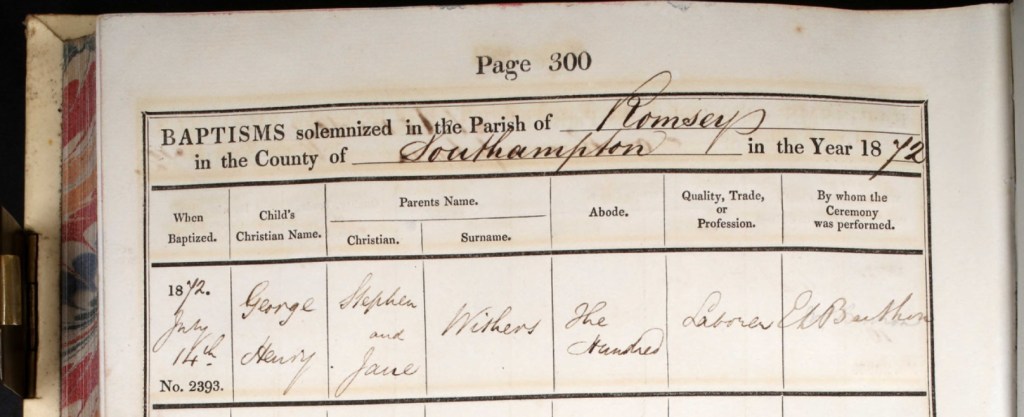
On Sunday, the 14th day of July 1872, just over a month after his birth, George Henry Withers was baptised in Romsey, Hampshire. The ceremony was conducted by E. L. Berthon, the same clergyman who had earlier baptised George’s sister Kate, continuing a thread of spiritual continuity within the family. As was customary, Berthon carefully entered the details into the baptism register, noting that George Henry Withers, son of Stephen Withers, a labourer, and Jane Withers of The Hundred, was baptised that day. George’s entry was marked as the 2,393rd baptism in the register, a small but telling detail that reveals the scale of community life and tradition woven through the parish over time.
The service that Sunday was shared with at least eight other children, all brought to the church by families who, like the Withers, were participating in one of the most significant rites of passage in 19th-century England. These group baptisms were common, reflecting both the practicalities of parish life and the deeply communal nature of Victorian religious observance.
George’s baptism not only welcomed him formally into the Church of England but also affirmed his place within the community and the continuing life of the Withers family, still healing from the loss of Elizabeth earlier that year. For Jane and Stephen, standing once more in the parish church, this moment likely carried the weight of both memory and hope, their faith a  source of resilience as they watched over their growing family in the heart of Romsey.
On Monday, the 12th day of June 1876, another child was born into the Withers family at their home in The Hundred, Romsey, Bertha Louise Withers, the youngest daughter of Stephen and Jane. Her arrival marked yet another chapter in the family’s ever-growing story, bringing the number of children in the household to seven. By this time, the Withers family had long been established in Romsey, and The Hundred remained a constant setting for their joys and sorrows.
Three weeks after her birth, on Wednesday the 5th day of July, Jane Withers once again visited the registrar’s office in Romsey to register her daughter’s birth. As with previous registrations, George Withers, the town’s registrar, recorded the official details in the birth register. He noted that Bertha Louise Withers, a girl, was the daughter of Stephen Withers, a labourer, and Jane Withers, formerly Chapman, of The Hundred, Romsey. Jane, as she had done before, gave her mark rather than a written signature, a reminder of the limited literacy that was still common among working-class women in Victorian England.
Bertha’s birth added a new dynamic to the Withers household. For Kate, who was now eight years old, the arrival of a baby sister would have brought with it a mixture of curiosity, excitement, and perhaps new responsibilities. In a time and place where families were large, and older children often helped to care for their younger siblings, Kate’s role within the family may have subtly shifted as she grew into her place as one of the elder sisters.
The birth of Bertha Louise Withers, like those of her siblings before her, is more than just a date and a name in a register, it is a glimpse into the rhythm of everyday life in a working family in 19th-century Hampshire, where each child’s arrival was quietly but formally recorded, and each name became part of the growing lineage that would, generations later, be lovingly traced and remembered.
On Sunday the 9th day of July 1876, less than a month after her birth, Bertha Louise Withers was brought to the parish church in Romsey by her parents, Stephen and Jane, to be baptised. As he had done for several of her siblings, the Reverend E. L. Berthon officiated the ceremony and carefully entered her details into the baptism register. He recorded that Bertha Louise Withers, daughter of Stephen Withers, a labourer, and Jane Withers of The Hundred, was baptised that day.
The setting would have been familiar to the Withers family, a place where moments of both celebration and mourning had already been marked. For Stephen and Jane, this baptism was another expression of their enduring faith and the customs that framed the lives of working families in Victorian England. The ceremony also served to formally welcome Bertha into both the church and the wider Romsey community, a rite of passage that carried both spiritual and social meaning.
With each child baptised under the same roof and by the same reverend, a quiet continuity wove itself through the Withers family story, a thread of stability in a world that was, at times, deeply unpredictable. Bertha’s baptism not only marked the beginning of her life within the church but also secured her place in the unfolding legacy of a family rooted firmly in Romsey’s soil.
On Tuesday, the 27th day of August 1878, Kate’s mother, Jane Withers gave birth to her ninth child, Frederick Percival Withers, at the family’s home in The Hundred, Romsey. By now, the familiar walls of their modest dwelling had witnessed many such beginnings. Each child born into the household added to the complexity and closeness of this large Victorian family, their lives unfolding within the rhythms of the same town that had shaped generations before them.
Just over a month later, on Saturday the 28th day of September, Jane once again walked the path to the registrar’s office in Romsey. There, she gave the details of her newborn son to Registrar George Withers, who had recorded nearly every family milestone thus far. He entered into the official register that Frederick Percival Withers, a boy, was the son of Stephen Withers, a labourer, and Jane Withers, formerly Chapman, both of The Hundred, Romsey. Jane signed the document with her customary mark, an "x," consistent with her previous registrations.
The choice of the name Frederick Percival may reflect the Victorian era’s fondness for formal, distinguished names, Percival, in particular, having romantic associations with Arthurian legend and chivalry. Whatever the inspiration, the name carried with it the hopes of parents raising children in modest means, yet within a community bound by tradition and familiarity.
Frederick’s arrival extended the family into yet another chapter, further entrenching the Withers name into the history of Romsey. Like his siblings before him, his birth added another layer to the story of a family whose roots ran deep in the heart of Romsey, Hampshire.
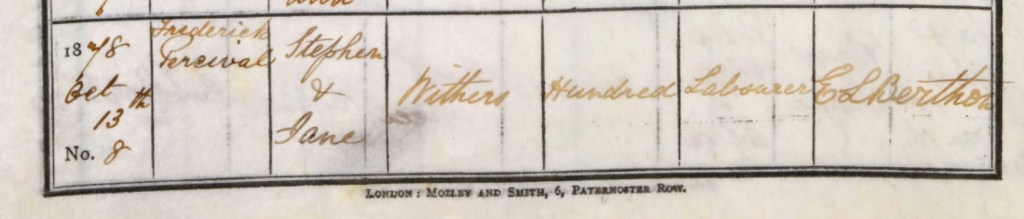
On Sunday the 13th day of October 1878, Kate’s parents Stephen and Jane brought their infant son, Frederick Percival, to be baptised in the parish church at Romsey. The ceremony was conducted by Reverend E. L. Berthon, whose name had become almost a constant presence in the spiritual life of the Withers family. That day’s service was a busy one, with at least eight baptisms recorded, including Frederick’s, which was the eighth entered into the register.
Reverend Berthon documented the baptism formally, noting that Frederick Percival Withers was the son of Stephen Withers, a labourer, and Jane Withers, of The Hundred. The act of baptism, so familiar and yet so deeply personal, marked Frederick’s entrance into the religious and communal life of Romsey. These ceremonies, recurring at steady intervals for each of Stephen and Jane’s children, reflected not only their commitment to faith but also their quiet endurance in the face of the demands of raising a large family under humble circumstances.
The church, which had witnessed so many family milestones, once again became the setting for a new beginning. As the font’s waters touched Frederick’s forehead, the Withers family added yet another name to the long lineage tied to Romsey’s soil, another voice to the generations growing up in the embrace of the town’s history and its enduring rituals.
On the eve of the 1881 census, Sunday the 3rd day of April, thirteen-year-old Kate Withers was living with her family in Winchester Road, Romsey, Hampshire. Her father, Stephen, now 47, was working as a farm labourer, hard, physical work that reflected the rural, working-class roots of the family. Her mother, Jane, aged 44, had taken on work as a laundress, likely running a modest laundry service from home, washing and pressing clothes for local families to supplement the household income.
Kate was one of five children still at home. Her older brother Harry, aged 15, was working as an errand boy, contributing in any way he could. Kate herself, along with her younger siblings George (aged 8) and Bertha (aged 4), were all attending school, a promising sign of the growing importance placed on education for working-class children during this period. Frederick, the youngest at just 2 years old, would have been at home under Jane’s watchful care.
The family inhabited the entire property they lived in, a likely modest dwelling by today’s standards, but a valuable space entirely their own. Life would not have been easy, but the household appears stable, with each member contributing in their own way. It’s a snapshot of resilience and adaptation, of a family managing the demands of Victorian life with steady resolve, and of a girl named Kate growing up within the fabric of a hardworking, close-knit home in Romsey.
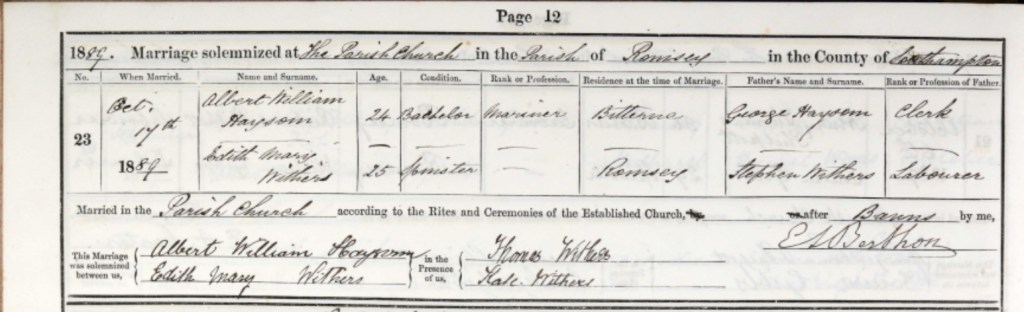
On Thursday the 17th day of October 1889, Kate’s sister, twenty-five-year-old Edith Mary Withers stood in the Parish Church of Romsey to marry Albert William Haysom, a twenty-four-year-old mariner from the nearby village of Bittern. Still listed as a spinster and living in Romsey, Edith entered marriage having spent her life thus far rooted in the rhythms and responsibilities of her hometown. Her new husband, Albert, brought with him the sea-bound life of a mariner, likely a career of both promise and peril, marked by long absences and an ever-present relationship with the waters that shaped so many working lives in the south of England.
The ceremony was performed by E. J. Berthon, a familiar name in the local records and a longstanding figure in the Romsey parish. In the marriage register, Berthon recorded Edith as the daughter of Stephen Withers, a labourer, and Albert as the son of George Haysom, a clerk. These designations not only documented their parentage but also underscored the modest, working-class backgrounds from which both the bride and groom emerged.
In a touching detail, Edith’s own siblings, Thomas and Kate, stood as witnesses to the union. Their presence offers a glimpse into the familial bond shared among the Withers children, and in particular, it places Kate directly at a moment of celebration and transition in her sister’s life. This quiet scene in a parish church tells of more than a marriage; it speaks to loyalty, shared history, and the small but significant rituals that carried families like the Witherses through the changing tides of late 19th-century life.
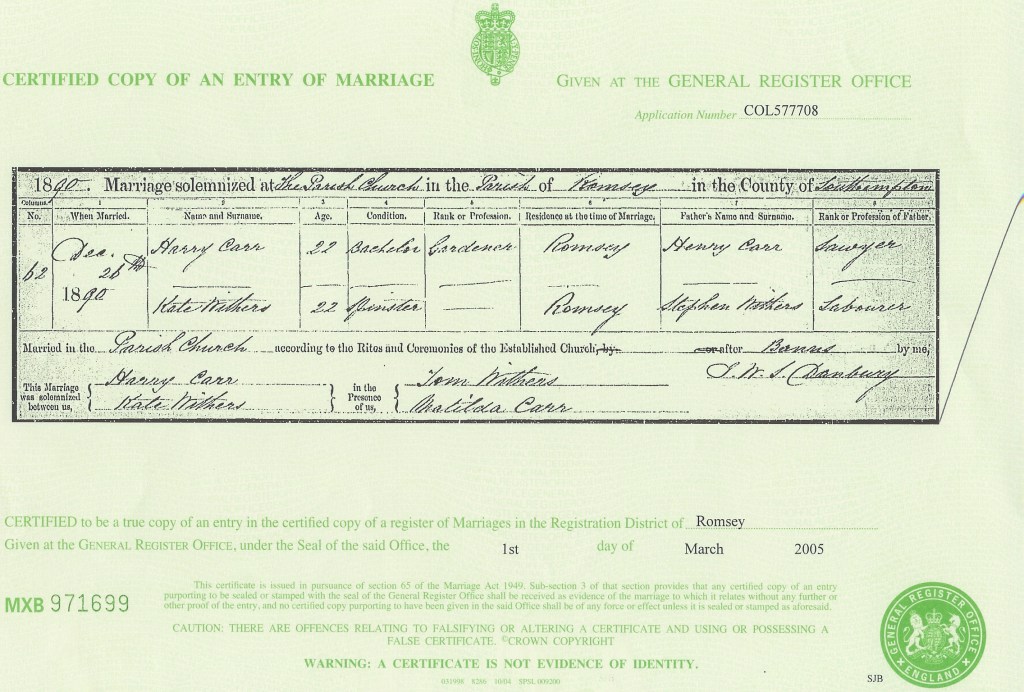
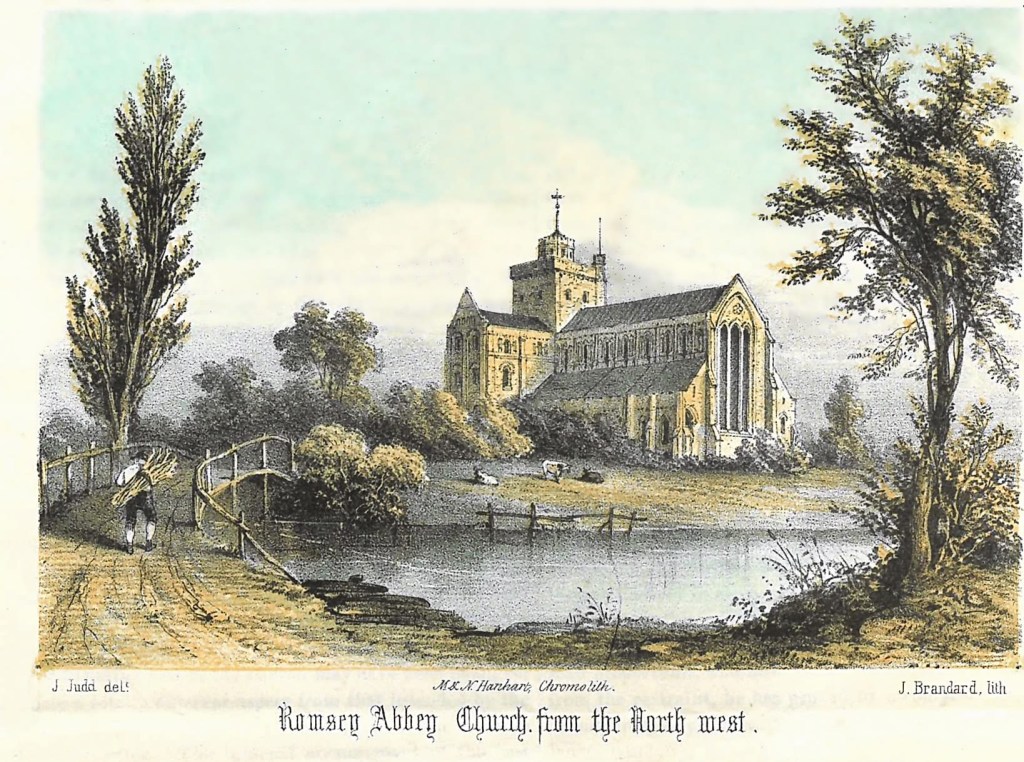
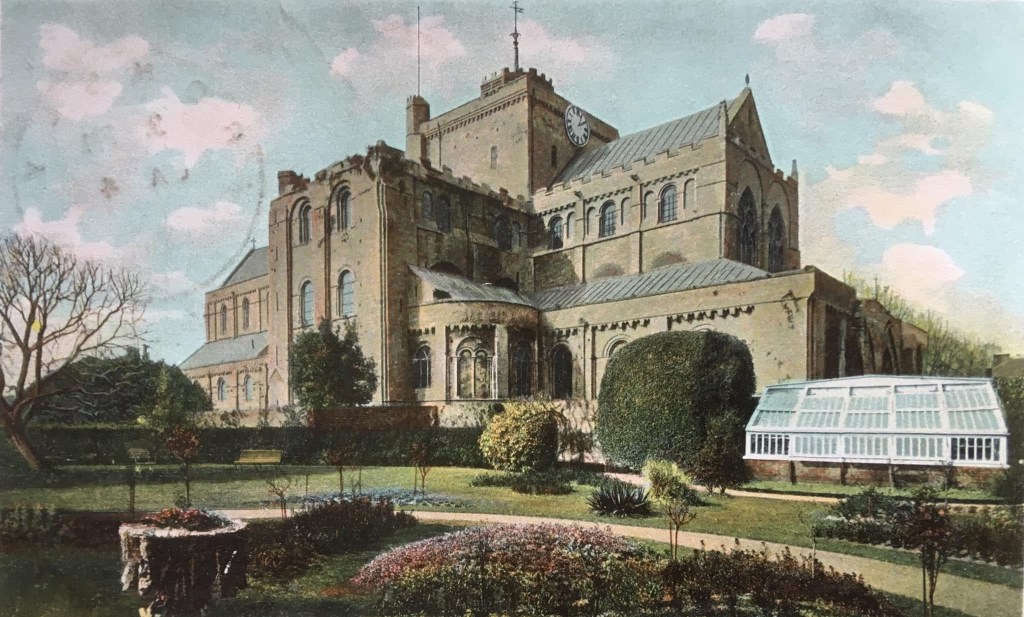
On Friday the 26th day of December 1890, twenty-two-year-old Kate Withers stood before the altar of Romsey Abbey, the ancient parish church that had witnessed generations of local lives pass through its stone arches. It was the day after Christmas, Boxing Day, and while the town likely lay quiet in the lull of the festive season, inside the Abbey a new chapter was beginning for Kate.
She married Harry Carr, also twenty-two, a gardener from Romsey. Like Kate, he was of working-class roots, the son of Henry Carr, a sawyer. Their professions, labourer and gardener, reflected the practical, grounded world they both came from, shaped by physical work and life close to the land. The ceremony was conducted by J. W. S. Danbury, who carefully entered their details into the parish register. Kate was listed as a spinster of Romsey, and her father, Stephen Withers, as a labourer. Harry was recorded as a bachelor, and his father, Henry Carr, as a sawyer.
Standing with them on this important day were their siblings, Kate’s brother, Tom Withers, and Harry’s sister, Matilda Carr, who served as witnesses to their vows. Their signatures, or marks, alongside the couple’s sealed the moment in the official record, a quiet but meaningful testament to family presence and support.
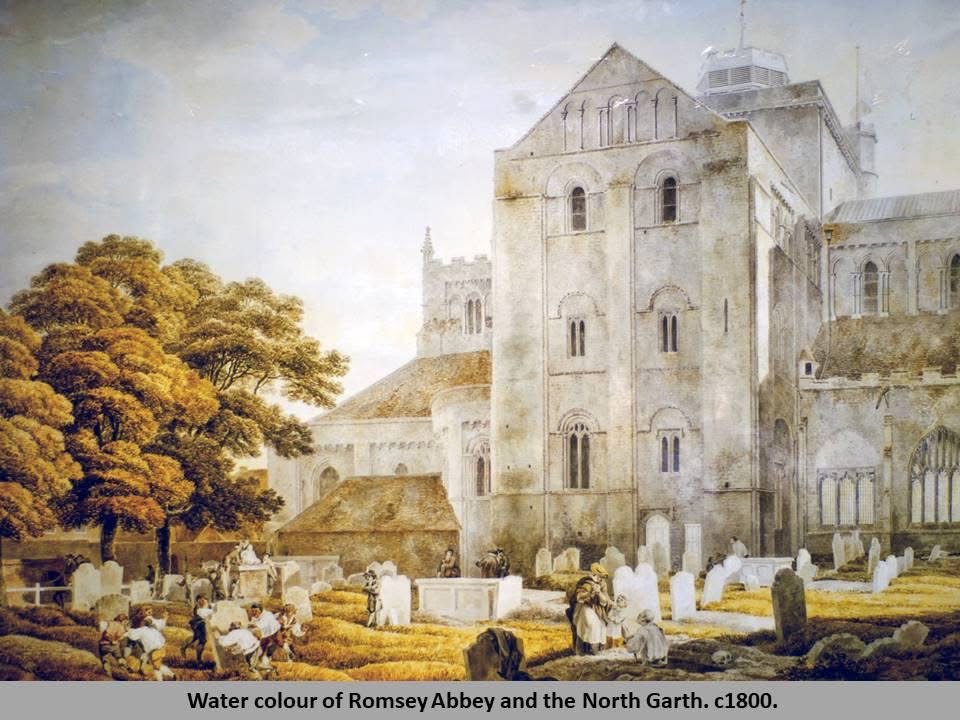
Their union at Romsey Abbey, a place rich in spiritual and historical weight, suggests the importance the community, and perhaps the couple themselves, placed on tradition and continuity. In a church that had stood for centuries, Kate and Harry began their life together, rooted in the same town that had shaped their families for generations.
Romsey Abbey, located in Romsey, Hampshire, England, is a historically rich religious site with origins dating back to the 10th century. The abbey was founded in 907 AD by King Edward the Elder as a Benedictine nunnery. Its early history is intertwined with the royal family, including significant donations and royal patronage.
During the 19th century, Romsey Abbey saw a series of notable clergy members. One prominent figure was the Reverend John Keble, who served as a curate there in the early 1800s before gaining fame as a leader of the Oxford Movement, which aimed to reform the Church of England.
The abbey's clergy during this period also included several vicars and curates who contributed to its religious life and community service. Records from the era detail their roles in pastoral care, sermons, and community outreach efforts.
Regarding the nuns, Romsey Abbey was historically a Benedictine nunnery until the Dissolution of the Monasteries under King Henry VIII in the 16th century. The abbey's association with nuns is central to its early history but less pronounced in the 19th century due to the dissolution.
Rumors of hauntings at Romsey Abbey have persisted over the years, with reports of ghostly apparitions and eerie sounds echoing through its ancient halls. These stories often center around the abbey's long history and the various individuals who lived and died within its walls.
One peculiar feature of Romsey Abbey is the display of human hair within its premises. This collection of hair, often intertwined with historical artifacts, is a unique and somewhat macabre aspect of the abbey's heritage, reflecting practices of remembrance and commemoration from past centuries.
Overall, Romsey Abbey stands as a testament to centuries of religious devotion, community service, and historical intrigue. Its legacy continues to attract visitors interested in exploring its architectural beauty, rich history, and enduring mysteries.
And so we close the first chapter in the quiet but stirring tale of Kate Withers, daughter of labourers, sister to many, born into the cobbled lanes and river-misted mornings of Romsey, Hampshire. From her first breath in The Hundred, cradled by the rhythms of working-class life and the bells of the parish church, Kate’s story unfolds not with grandeur, but with grace, a life traced in careful ink across the pages of birth, baptism, census, and marriage, and now reawakened through the gentle hands of time.
Though Kate never knew the world of her descendants, her footsteps echo into the present, each document a thread connecting past to present, blood to memory, name to soul. She was a child of Victorian England, yet also, unknowingly, a grandmother to generations yet unborn. Her story, long folded within the pages of dusty registers, has found breath again through my love, my questions, and my searching heart.
As her great-great-grandchild, I walk a path she once did, though centuries apart, bending over records by lamplight, not candlelight, and yet with the same devotion that might have stirred her own spirit. In learning Kate’s early years, I’ve stitched a part of myself into her story and, in doing so, I’ve stitched myself more closely to my dad, Christopher John Newell, whose absence echoes with both sorrow and strength.
He never spoke these names aloud, never knew them as I do now. But perhaps, somewhere beyond what we can see, he knows. And perhaps, in some way words cannot explain, he is near, proud not just of my discoveries, but of the quiet love that fuels them. For this is not just history, it is healing. This is not just research, it is remembrance. It is legacy.
I have given voice to a woman who lived a humble life, who may have believed her story would fade. But now, it lives again, through me, through my children, through all who will read these words and know that Kate Withers mattered.
Part I ends here, but her journey, and yours, is only just beginning.
Until next time,
Toodle pip,
Yours Launey.
🦋
I have brought and paid for all certificates throughout Intwined.blog,

Please do not download or use them without my permission.

All you have to do is ask.

Thank you.






 Intwined