As winter cloaked Romsey in quiet stillness on that December day in 1890, Kate Withers stood at the threshold of a new chapter. No longer the bright-eyed girl of The Hundred, Romsey, she was now a woman, with a heart full of hope and a steady hand held in that of her beloved, Harry Carr. In the hallowed walls of Romsey Abbey, beneath ancient stone and sacred vows, their lives were bound together, two souls joined in faith and in promise.
This part of Kate’s story unfolds not only in dates and names, but in the rhythm of a shared life, shaped by love and tested by time. Here, in the quiet moments of domestic toil, in the laughter of children, in the sorrows carried silently and the joys held close, Kate’s life with Harry began to bloom. Their union, forged in simplicity and sincerity, becomes the beating heart of this next journey.
And as I trace her footsteps through the changing years, piecing together fragments of the past, I feel her spirit draw ever nearer, gentle, enduring, and familiar. In learning more of Kate, my second great-grandmother, I sense the echo of her strength in the lives she helped shape, all the way down to my own. Through her, I feel a tender thread connecting me back to my late father, Christopher John Newell, a man whose absence has shaped my life, yet whose legacy I now understand more deeply. Somehow, through Kate, I have found a part of him.
So, with reverence and gratitude, I turn the page, ready to follow Kate beyond the vows, into the heart of family, the trials of motherhood, and the quiet resilience of a life well lived, until death did them part.
Welcome back to the year 1891, Hampshire, England. The county is a patchwork of farmland, forest, and growing towns, and the pace of life, though still grounded in tradition, is increasingly shaped by the energy of the Victorian age. Queen Victoria sits firmly on the throne. By now in the fifty-fourth year of her reign, she is a national symbol of continuity, empire, and respectability. She is both revered and deeply mournful, still wearing black for her late husband Prince Albert. The Prime Minister is Robert Gascoyne-Cecil, the 3rd Marquess of Salisbury, a Conservative statesman who has held the office since 1886. His government leans toward stability and cautious progress, holding power in an increasingly complex political system that is slowly being influenced by a growing electorate.
Parliament remains an institution dominated by the upper classes, but change is underway. The extension of the vote to more working men in earlier decades has introduced new voices, particularly those of the rising middle class and skilled urban workers. The Liberal and Conservative parties vie for control, each trying to respond to the needs of a changing Britain, where questions of poverty, housing, labour, and Irish Home Rule dominate political debate. There is an increasing sense that society is shifting, though the strict social hierarchy of the Victorian world is still deeply embedded.
Social standing in 1891 is rigid, yet more porous than in earlier times. At the top are the aristocracy and landed gentry, still powerful and wealthy, though many face growing financial pressures from declining agricultural rents and the increasing wealth of the commercial classes. The upper middle class is expanding and made up of successful businessmen, professionals, and civil servants. They are the backbone of Victorian respectability, often evangelical in faith and focused on propriety, order, and moral conduct. The lower middle class includes clerks, schoolteachers, shopkeepers, and other white-collar workers aspiring to gentility. Below them, the working class forms the majority, ranging from skilled craftsmen to factory labourers, agricultural workers, domestic servants, and those in increasingly common urban trades. At the bottom are the poor and destitute, including the elderly, widows, the sick, and the unemployed, many of whom rely on charity or the feared institution of the workhouse.
Fashion is a visible marker of class and decorum. In 1891, women’s clothing is highly structured, with tightly corseted waists, high collars, and long skirts supported by bustles or petticoats. Fabrics are heavy and modest, especially for respectable women, though brighter colours and more elaborate trimming are popular for special occasions. Men wear three-piece suits, bowler hats or top hats, and carry pocket watches. Working-class clothing is far more practical and worn, made of wool, cotton, and flannel. Labourers wear flat caps and rough boots, and working women wear long aprons and shawls or simple blouses and skirts. Cleanliness and modesty are seen as reflections of moral worth.
Transportation in 1891 is rapidly transforming the landscape. The railway network is extensive, connecting even small towns in Hampshire to London, Southampton, and beyond. Trains are affordable for many, enabling travel, commerce, and even the possibility of a seaside holiday. Horse-drawn carts and carriages are still common in towns, while bicycles are becoming increasingly popular, especially among the middle classes who see cycling as both practical and recreational. Steamships connect Southampton to the wider world, as global trade and imperial travel bring goods, ideas, and people from far-flung colonies.
Energy comes mainly from coal, which fuels homes, factories, and transport. Coal fires warm rooms and cook meals. The smell of coal smoke is ever-present in urban areas, mingling with fog and industrial soot. Gas lighting is widely used in towns, both in homes and on streets, though oil lamps and candles remain common in rural areas. Electricity is emerging, but its spread is slow and mostly limited to larger cities and wealthier homes.
The atmosphere of 1891 is a mixture of pride, confidence, anxiety, and strain. Britain is the most powerful empire on earth, and its people are aware of their global reach, but social divisions are sharp. Industrial towns bustle with energy and hardship. In the countryside, agriculture is struggling, wages are low, and many families live in poverty. The weathered faces of labourers and the lean children of the poor contrast sharply with the polished boots and polished manners of their social superiors.
Heating and lighting are simple and often inadequate. Open coal grates and stoves provide warmth, but only in rooms that can be afforded to be heated. Bedrooms are often cold and damp. Gas lamps provide warm yellow light in the evenings, though many still rely on candles. There is a growing movement to improve housing, sanitation, and health, but progress is slow and uneven.
Sanitation in rural areas remains basic. Outdoor privies, shared water pumps, and poor drainage are common. In towns, efforts to install sewage systems and clean water supplies are underway, but outbreaks of disease like typhoid, influenza, and diphtheria remain threats. Soap, boiled water, and fresh air are the main defenses. The medical profession is advancing, with hospitals improving and germ theory becoming accepted, but antibiotics are still decades away.
Food is seasonal, simple, and class-based. The wealthy dine on roasts, game, fish, cheeses, fresh bread, and imported delicacies such as oranges, bananas, and chocolate. The middle class eats well, with a focus on hearty and economical meals. The poor rely on bread, potatoes, dripping, tea, and stewed scraps of meat or fish when they can afford it. Malnutrition and rickets are common among working-class children, especially in cities.
Entertainment in 1891 ranges from the grand to the modest. The upper classes enjoy the theatre, music, and private soirées. The middle class reads voraciously, with novels by authors such as Dickens, Hardy, and Eliot widely available in lending libraries. Music halls, pubs, and football matches provide joy and escape for the working class. Street performers, fairs, and church outings also bring colour to everyday life. Queen Victoria's image appears on everything from mugs to biscuit tins, reinforcing loyalty to crown and country.
Diseases continue to take a heavy toll. Tuberculosis is widespread and deadly. Scarlet fever, diphtheria, smallpox, and typhoid claim many lives, especially among the poor. Mental illness is often misunderstood and treated with confinement or neglect. Public health reforms are trying to address these problems, but widespread change remains slow and fragmented.
The environment reflects both beauty and degradation. Hampshire’s countryside still boasts woods, rivers, and farmlands, but industrial expansion, railway construction, and population growth leave their mark. Litter, poor air quality, and contaminated rivers remind people of the costs of progress.
Gossip in 1891 spreads through parlour talk, market banter, letters, and newspapers. The latest royal news, tales of local scandal, and stories from the empire fuel conversation. Courtship and reputations are carefully observed. Respectability is everything, especially in small communities where everyone knows your name and your business.
Among the major historical events of 1891 is the continuing push for social reform and workers’ rights. Trade unions are growing stronger, and debates about the rights of labourers, women, and tenants fill the newspapers. Internationally, Britain remains at the peak of its imperial power, involved in colonial affairs across Africa, India, and Asia. Domestically, the census of 1891 is conducted in April, giving us a detailed picture of households across the nation, including occupations, family structures, and living conditions.
1891 in Hampshire is a year of contrasts, confidence and inequality, progress and hardship, tradition and change. It is a world on the threshold of the modern age, yet still tethered to the rhythms, values, and divisions of the Victorian past.
In the spring of 1891, newlyweds Kate and Harry Carr, both just 23, had left the familiar lanes of Romsey behind and made their first home together at Number 30, Princes Road in Millbrook, Hampshire. It was a modest dwelling, shared with others and divided into rooms, but it was theirs, a quiet beginning to a life they would build side by side. Within the walls of their three rooms, the couple settled into the rhythm of early married life.
Harry, devoted and diligent, found work as a gardener and domestic servant, tending to the grounds of others while sowing the seeds of his own future. Kate, ever steady, embraced her new role with grace, shaping their home with care and quiet pride. The hum of nearby voices, of George and Agnes Gosney, of Emma Tibble and her young son Ernest, wove through the shared air of the house, filling it with the noise of lives unfolding.
Though far from the Hundred of her childhood, Kate carried with her the roots of her upbringing, the warmth of her family’s love, and the resilience passed down through the generations. In this rented space in Freemantle, she and Harry planted the first stones of their legacy, one destined to stretch far beyond the walls of Princes Road.
Princes Road in Millbrook, Hampshire, England, is a quaint residential street lined with Victorian and Edwardian-era houses, reflecting the architectural styles of the late 19th and early 20th centuries. Originally developed as part of the expansion of Millbrook in the late 1800s, the road was named after Prince Albert, consort to Queen Victoria. It was designed to accommodate the growing population drawn to the area by its proximity to Southampton and the industrial opportunities emerging in nearby docks and railways.
The road's history intertwines with the broader development of Millbrook, transitioning from a rural area to a residential suburb as Southampton's urban sprawl extended outward. Many of the original homes were built for middle-class families seeking a suburban lifestyle while maintaining easy access to Southampton's amenities. Over the decades, the character of Princes Road has evolved, with some properties being converted into apartments or undergoing modern renovations while others retain their historic charm.
Today, Princes Road remains a desirable address, valued for its period architecture and convenient location. It continues to be home to a mix of families, retirees, and young professionals, contributing to Millbrook's diverse community fabric. The street's historical significance and architectural integrity are preserved by local planning regulations, ensuring that its Victorian and Edwardian heritage continues to be cherished by residents and visitors alike.
On a crisp autumn Saturday, the 10th day of October 1891, the young Carr household welcomed its firstborn into the world. In the quiet rooms of 91 Milton Road, Fitzhugh, Millbrook, Southampton, Kate gave birth to a son, Frederick Ernest Carr, who would go on to become your great-grandfather. It was a moment wrapped in new beginnings, not only for Kate and Harry but for the generations that would follow.
A little over a month later, Kate, still adjusting to the rhythms of motherhood, made her way into Southampton to fulfil the solemn, proud duty of registering her child’s birth. On Tuesday, the 17th day of November, Registrar Charles Stewart recorded the details that marked the start of Frederick’s life on paper, a son, born to Harry Carr, a Gardener Domestic, and Kate Carr, née Withers, of 91 Milton Road.
That single entry in the birth register quietly affirmed a life just begun, a child born not only of love but of legacy. And though he could not yet know it, Frederick’s arrival stitched a new thread into the family’s unfolding tapestry, connecting past and future in the most intimate and enduring way.
Milton Road in Millbrook, Southampton, is a residential street with a rich historical background. The area known as Fitzhugh, where Milton Road is situated, derives its name from the Fitzhugh family, who owned the estate throughout much of the 19th century.
Milton Road is notable for its proximity to The Dell, the former stadium of Southampton Football Club. The road's closeness to the stadium made it a significant location for fans and players alike.
The area also has connections to the Titanic disaster. Several crew members who lived on Milton Road were aboard the ill-fated ship. For instance, Charles Donald Mackay, a steward, resided at number 18 and survived the sinking, while Edmund J. Stone, a bedroom steward from number 44, was among those who perished. George Frederick Crowe, a saloon steward living at number 89, survived, whereas Thomas Topp, a second butcher at the same address, did not.
In the mid-20th century, Fitzhugh House was constructed on Milton Road, comprising six flats built between 1936 and 1979. These mid-century flats are part of the area's architectural evolution.
On Friday the 1st day of January 1892, a new chapter in the spiritual journey of Kate and Harry Carr's son, Frederick Ernest Carr, began. In the sacred, timeworn walls of Romsey Abbey, Frederick was christened, marking his entry into the Christian faith with a baptism that would tie his story to centuries of history and devotion. Curate H. E. Kitchley officiated the ceremony, recording Frederick’s details in the parish register with simple yet profound words: "Frederick Ernest Carr, son of Harry Carr, a Gardener, and Kate Carr, of Milton Road, was baptised on January 1st, 1892."
Romsey Abbey, with its roots tracing back to the 10th century, stood as a silent witness to this tender moment. Originally founded by King Edward the Elder, the Abbey had witnessed centuries of faith, royal patronage, and community life. Its grandeur and spiritual presence had been part of the fabric of the Carr family’s history, even as Kate and Harry found their own place within its hallowed walls.
The Abbey, once a Benedictine nunnery, had known both the whispers of the divine and the echoes of history's ghosts, forever tied to tales of devotion and mystery. On that crisp January day, as Frederick was held in the embrace of faith, it was as though the past and present were woven together,a moment so ordinary, yet extraordinary in its significance.
For Frederick, the baptism at Romsey Abbey was more than a rite of passage; it was a thread in a vast, interconnected tapestry of family, faith, and legacy, stretching from ancient times to the future generations that would follow. And for Kate and Harry, it was a promise, an affirmation of their hopes, their love, and the beginning of a journey they would walk together as a family, bound by the past and filled with dreams for the future.
On a summers day of Saturday, the 4th day of August 1894, Kate’s brother, Harry James Withers, took a significant step into the future. At 28 years old, Harry, a labourer from Romsey, stood before the altar of the Parish Church of Romsey, where, in a ceremony conducted by Assistant Curate Alan Glenn, he vowed to marry Rose Bessant. Rose, a 23-year-old spinster from Romsey, became his bride, and together they began a new chapter in their lives.
The marriage register recorded that Harry was the son of Stephen Withers, a labourer, and Rose was the daughter of Benjamin Bessant, also a labourer. Their union was witnessed by Moses Bessant and Eliza Lillian Bessant, members of Rose's family, who shared in the joy and significance of the day.
As Harry and Rose exchanged vows, the church, filled with history and the weight of past generations, became a backdrop to the unfolding story of their love. Their marriage was not only a personal commitment but a continuation of the legacy of the Withers family, whose roots in Romsey stretched back through the years, each step forward echoing the lives of those who came before them.
In the years that followed, Harry and Rose would build a life together, shaped by their shared experiences, their work, and their dedication to one another. Though their story was just beginning, it was already woven into the fabric of Romsey's long history, a testament to the enduring strength of family and love.
Kate and Harry's second son, Cecil George Carr, was born on Thursday the 12th day of December of 1895. His birth took place at their home, Number 5, Lower Bannister Street, Southampton, Hampshire, England. As was customary, Kate made the journey to Southampton to register Cecil’s birth on the 21st day of January, 1896. Registrar Harry Whitchurch meticulously recorded Cecil’s details, documenting that on a day in December 1895, Cecil George Carr, a boy, was born to Harry Carr, a gardener domestic, and Kate Carr, formerly Withers, of 5, Lower Bannister Street, Southampton.
Lower Bannister Street, nestled in the heart of Southampton, was a thoroughfare steeped in history, reflective of the city’s transformation over the centuries. Named after Sir Edward Banister, a 17th-century landowner, the street had evolved from a rural estate into a vibrant, working-class community by the 19th century. It was a place where laborers, gardeners, and tradespeople such as Harry Carr made their homes and livelihoods, contributing to the industrial growth of the city. The area was alive with the daily rhythms of families striving to make their way in a bustling, growing city.
Though the street would eventually change through the years, with new developments replacing the old buildings, Lower Bannister Street remained a significant part of the Carr family's life during Cecil's early years. The place itself became a quiet marker in the journey of Cecil, as he, too, grew alongside Southampton's rich, ever-evolving history. From the moment of his birth, Cecil’s life would be intertwined with the lives of those who had come before him, and the community he called home.
Lower Bannister Street in Southampton, Hampshire, England, is a historic thoroughfare with a rich heritage that reflects the city's development over the centuries. The name "Bannister" is derived from Sir Edward Banister, a 17th-century landowner whose estate encompassed the area . The street's evolution from a medieval estate to a bustling urban location is a testament to Southampton's growth.
In the 19th century, Lower Bannister Street was home to various working-class families. For instance, in 1871, Henry Bath, a gardener, resided at number 10 with his parents and siblings. This period saw the street populated by individuals engaged in trades and labor, contributing to the city's industrial expansion.
The early 20th century brought significant changes to Lower Bannister Street. In 1928, the Southampton Greyhound Racing Company opened Banister Court Stadium on Court Road, adjacent to Lower Bannister Street. This venue hosted greyhound racing and speedway events, attracting large crowds and becoming a notable entertainment hub in the city .
By the mid-20th century, urban development led to the demolition of many of the original buildings on Lower Bannister Street. The area underwent significant redevelopment, with new structures replacing the older ones, altering the street's historical landscape.
Today, Lower Bannister Street stands as a reminder of Southampton's dynamic history, showcasing the city's transition from medieval origins to modern urban development. While much of its original architecture has been replaced, the street's legacy continues to be an integral part of Southampton's historical narrative.
At just eight tender months old, little Cecil George Carr drew his final breath on Wednesday, the 12th day of August, 1896, cradled within the walls of his family home at Number 5, Lower Bannister Street, Southampton. The flickering light of a young life, full of promise, was gently extinguished by the cruel hand of illness, Definition Colic Convulsions, as noted by the attending physician, R. D. H. G. William, L.R.C.P.
His father, Harry Carr, who had lovingly watched over him during those final moments, bore the unimaginable burden of walking through his grief to register his son’s passing on the very same day. With courage stitched into every step, Harry stood before Deputy Registrar H. H. William Whitchurch, and spoke the words no parent should ever have to say. The registrar, with a solemn pen, recorded Cecil’s passing into the official death register, his tiny presence now forever etched into history, too soon stilled.
Though Cecil’s time on earth was brief, his story is not forgotten. It lives on in the quiet grief of his parents, in the echoes of footsteps through Lower Bannister Street, and in the tender threads of a family tapestry that stretches through generations. His name, spoken again now in remembrance, brings with it not just sorrow, but love, a gentle reminder that even the shortest lives leave the deepest impressions on the hearts that hold them.
On a quiet Saturday, the 15th day of August 1896, Kate and Harry walked a sorrowful path no parent should ever tread, as they laid their baby boy, Cecil George, to rest beneath the soft earth of Southampton Old Cemetery, in Row O, Block 142, Grave Number 31. Surrounded by the hush of mourning and the tender presence of loved ones, they entrusted their son to the stillness of eternity.
Cecil was the 59,476th soul to be buried in that hallowed ground, yet to his grieving parents, he was singular, irreplaceable. The cemetery, a place of so many stories and sorrows, became sacred in a new way that day, holding within its care the fragile remains of a child so deeply cherished and forever missed.
There, beneath the canopy of sky and the gentle whispers of the trees, Cecil George Carr was returned to the earth, his brief light now part of the eternal. And though his cradle stood empty, his presence lingered in memories, in love, and in the quiet strength that carried Kate and Harry forward through the tides of time.
Southampton Old Cemetery, located on Hill Lane adjacent to Southampton Common, is a significant historical site that reflects the city's rich heritage. Established in 1846 following the Southampton Cemetery Act of 1843, the cemetery was developed to address the growing need for burial space as the city's population expanded. The initial layout was designed with sections for different religious denominations, including consecrated ground for the Church of England, areas for Nonconformists, and a designated section for the Jewish community. In 1856, land was also allocated for Roman Catholic burials. Over time, the cemetery expanded to cover 27 acres, accommodating over 116,000 burials.
The cemetery is notable for its architectural features, including the Church of England mortuary chapel designed by Frederick John Francis in the Norman style, and the Jewish mortuary chapel, also by Francis, reflecting Gothic Revival architecture. The perimeter wall fronting Hill Lane, constructed of coursed rubble with red brick coping, is a Grade II listed structure, highlighting its historical significance.
Among the many individuals interred here are several with connections to maritime history. The cemetery contains 60 headstones associated with the RMS Titanic, commemorating crew members and others who perished in the 1912 disaster.
Today, Southampton Old Cemetery remains an active burial ground, with a limited number of interments in existing family plots each year. The site is maintained by the Friends of Southampton Old Cemetery, a volunteer group dedicated to preserving its historical and ecological value.  The cemetery also serves as a tranquil green space within the city, offering visitors a place for reflection and a glimpse into Southampton's past.
In the summer of 1898, the promise of union was spoken aloud for all to hear, as the banns of marriage were called between Kates brother Bachelor George Henry Withers, of the parish of Romsey, and Spinster Emma Maria Candy, of the parish of St. Clement, Bournemouth. These sacred announcements echoed through the stone walls of the Romsey church on three successive Sundays, first by the voice of F. C. Yarbrough on the 19th day of June, and then twice more, on the 26th day of June and the 3rd day of July, by J. P. Hampson.
Each reading marked not only a tradition of public declaration but a gentle unfolding of a new chapter, an affirmation of love, trust, and shared future. As their names were spoken in solemn cadence, the community bore witness, and heaven, perhaps, leaned in to bless what would soon be joined in solemn vow.
On a warm midsummer's day, Saturday the 23rd day of July 1898, love found its sacred affirmation as Kate’s brother, 26-year-old George Henry Withers, a bachelor of Elms Cottage, Winchester Road, Romsey, took the hand of 27-year-old spinster Emma Maria Candy of Nether Court, Old Christchurch Road, Bournemouth. Their vows were exchanged within the walls of Romsey’s parish church, a place long familiar with the whispers of devotion and the prayers of hopeful hearts.
Assistant Curate Radcliffe A. Sidibottom, with care and solemnity, united them in matrimony and etched their names into the marriage register, preserving their union in ink, as life had already written it in spirit. George, the son of Stephen Withers, a humble labourer, stood beside Emma, the daughter of the late Edward Candy, himself once a man of the same honest trade. Bearing witness to this moment of joy were Edward William Candy and George’s and Kate’s sister, Bertha Louise Withers, who surely looked on with pride and tender affection.
In that quiet, hallowed space, beneath the vaulted roof and the gaze of heaven, another branch was added to the Withers family tree, a branch that would sway gently with time, memory, and love.
On the crisp autumn morning of Saturday the 5th day day of November, 1898, as bonfires flickered and fireworks whispered in the skies above England, a quieter, more tender light was kindled within the Carr household at Number 5, Lower Bannister Street, Southampton. There, Kate gave birth to a daughter, Beatrice Eugenie Carr, an ember of new life glowing against the backdrop of the season’s chill.
Just over a month later, on the 15th day of December, Kate herself walked once more into Southampton, cradling not only her child but the deep knowledge of a mother’s bond, to formally register her daughter’s birth. Registrar Harry George Whitchurch, who had known this family’s joys and sorrows, recorded the entry with practiced hand and gentle solemnity. He wrote that Beatrice Eugenie Carr, a girl, was born to Harry Carr, a domestic gardener, and Kate Carr, formerly Withers, of 5, Lower Bannister Street.
In that moment, on paper and in heart, Beatrice became part of the ever-growing legacy of love and endurance that Kate and Harry were quietly building, one child, one story, one precious name at a time.
In the warmth of early summer, on Wednesday the 6th day of June, 1900, among the tranquil hedgerows and cultivated fields of Marchwood Park in Hampshire, likely within the humble walls of a Home Farm, Kate once again welcomed new life into the world. Her daughter, Ethel Berta Carr, was born beneath the wide rural skies, into a world softened by birdsong and scented by hay.
More than two months later, on the 17th day of August, Kate made the journey to officially inscribe her daughter’s place in history. Registrar James King took down the details with quiet care, recording that Ethel Berta Carr, a girl, was born on the 7th of August 1900, to Harry Carr, a domestic gardener, and Kate Carr, formerly Withers, of Marchwood Park, Marchwood.
Though the records misremembered the date, the moment remained timeless in Kate’s heart. Another daughter, another echo of love and lineage, rooted now not just in soil, but in story, a story still unfolding with every breath, every name, every step toward the future.
Marchwood Park, located in Marchwood near Southampton, Hampshire, is a historic estate with a rich and varied past. Originally part of the broader Marchwood area, which has seen human activity since Roman times, the estate has evolved through various phases of ownership and use.
In the 19th century, Marchwood Park was developed into a landscaped estate featuring gardens, parkland, and a lake, strategically sited in woodland with long views out. The property, formerly owned by the Holloway family, later came under the ownership of Mrs. Ross Porter. The estate's design and setting reflect the landscape aesthetics of the period.
During the Second World War, Marchwood Park played a role in the war effort. In 1939, Hubert Scott-Paine, owner of the British Power Boat Company, purchased Marchwood Park House and converted it into a training centre for female workers. The company, based in nearby Hythe, produced high-speed boats, including tenders for Imperial Airways and fast motor-torpedo boats. One of their designs formed the basis for the American PT Boat Squadron, notably PT109, commanded by future President John F. Kennedy.
In the post-war period, Marchwood Park House served as a preparatory school. Marchwood Park School opened in 1952, initially accommodating boarders from Embley Park School. The school operated through the 1950s and 1960s, with students from the local area and beyond. The school had four houses: Dibden, Beaulieu, Hythe, and Lyndhurst.
Today, Marchwood Park encompasses various properties and businesses. Home Farm, situated within the estate, is home to several enterprises, including J & V Alford Holdings Limited, J Alford Agricultural Contractors Limited, and Jackson Arenas Limited.  Additionally, the New Forest Pet Crematorium operates from Home Farm, providing services to the local community.
Marchwood Park's evolution from a private estate to a multifaceted property reflects the broader historical and social changes in the region. Its varied uses over time, from landscaped estate to wartime training centre, educational institution, and current commercial hub, highlight its adaptability and enduring significance in the Marchwood area.
On the eve of the 1901 census, Sunday the 31st day of March, a stillness would have settled over Home Farm at Marchwood Park as dusk fell upon Hampshire. Within its modest walls, 35-year-old Kate and her husband Harry, also 35, watched their young family grow. Their son Frederick, now a spirited 9-year-old, likely full of questions and wonder, was joined by little Beatrice, just 2, and baby Ethel, only 9 months old, her laughter and cries still new to the world.
Harry, steadfast in his role as a domestic gardener, continued to till the earth and tend the grounds of the estate, his hands shaping the land as tenderly as he shaped the life he and Kate were building. The Carrs inhabited the whole premises, a quiet sanctuary tucked amongst the trees and hedgerows of Marchwood.
Close by, neighbours Catherine Robson, and the West family, Joseph, Sophia, and their sons Reginald and Leonard, dwelt in nearby quarters, each family a thread in the delicate tapestry of rural Edwardian life. But it was Kate’s home, filled with the breath and rhythm of her children, that pulsed with the enduring strength of generations, rooted in love, quiet labour, and the timeless hope of tomorrow.
Kate and Harry's daughter, May Carr, entered the world on a gentle spring day, Tuesday the 26th day of April 1904, at Cupernham in Romsey, Hampshire. The village, with its lush green fields and winding roads, bore witness to the arrival of a new soul destined to become part of its enduring history.
Kate, as ever the loving and attentive mother, journeyed to register May’s birth on the 17th day of June that same year. In the quiet of the registrar's office, Harry Bedford meticulously recorded the details: May Carr, a girl, born to Harry Carr, a domestic gardener, and Kate Carr, formerly Withers, of Cupernham, Romsey.
Little May’s birth, so delicately recorded in the annals of time, was a cherished addition to Kate and Harry's growing family, a bright new star in the constellation of their lives.
Cupernham is a residential suburb situated to the north of Romsey, Hampshire, within the Test Valley Borough. Historically, it was a tithing of Romsey parish, as noted in the late 19th-century Comprehensive Gazetteer of England & Wales.  The area has since evolved into a well-established community, blending suburban living with proximity to the historic market town of Romsey.
The name "Cupernham" has been associated with the area for centuries, and while specific historical events tied to the suburb are limited, its development mirrors the broader growth of Romsey. Romsey itself boasts a rich history, with origins dating back to the 10th century and a significant abbey that played a central role in the town's development.
In contemporary times, Cupernham is characterized by a mix of housing styles, including detached and semi-detached homes, reflecting its growth over the 20th and 21st centuries. The area is served by educational institutions such as Cupernham Infant School and Cupernham Junior School, both located on Bransley Close.  These schools contribute to the family-friendly atmosphere of the suburb.
Cupernham Lane is a notable thoroughfare within the suburb, featuring a range of residential properties. According to recent data, the average property price on Cupernham Lane is approximately £515,000, with detached homes averaging £530,000 and semi-detached homes around £500,000.
The suburb falls within the Romsey Cupernham ward, which, as of the latest profile, has a population of 9,511 residents. The ward covers an area of 576.63 hectares, accounting for 0.9% of the total area of Test Valley.
Cupernham's location offers residents the tranquility of suburban life while maintaining easy access to the amenities and historical charm of Romsey town center. Its development over time reflects the broader patterns of growth and change within the region.
On Tuesday the 4th of September 1906, in the quiet hamlet of Cupernham on the edge of Romsey, Hampshire, Kate Carr gave birth to her sixth child, Bernard George Carr. Nestled in the rolling Hampshire countryside, Cupernham was a place of fields, gardens, and close-knit families, and it was here that Bernard’s life gently began, cradled in the warmth and simplicity of his family home.
Just over a month later, on Thursday the 11th day of October, Kate made her way into Romsey to register her son’s birth, fulfilling once again the humble but significant duty of mother and record-keeper of her growing family. Registrar Harry Whitchurch documented the moment with care, noting that Bernard George Carr, a boy, was born on the 4th of September 1906 to Harry Carr, a domestic gardener, and Kate Carr, formerly Withers, of Cupernham, Romsey.
With that entry, another name was added to the Carr family’s unfolding story, a new chapter beginning, rooted in the same soil and love that had nurtured each child before. Though he would one day grow and find his own path, Bernard’s life began as all their lives had, with Kate’s steady hands and the quiet devotion that defined her motherhood.
On a wintry Wednesday, the 23rd day of January 1907, Kate and Harry Carr gathered their young children and made their way to Romsey Abbey, Romsey, Hampshire, a place sacred to so many milestones in their shared life. Within the stone walls and under the watchful eyes of family and faith, three more blossoms from their family tree were brought into the spiritual fold.
Vicar Horace Yarborough presided over the gentle ceremony, where he solemnly baptised Ethel Berta Carr, born on the 6th of June 1900, May Carr, born on the 25th of April 1904, and Bernard George Carr, born on the 5th of September 1906. He recorded in the baptism register that all three were the beloved children of Harry Carr, a groom and gardener by trade, and Kate Carr, their devoted mother, residing in Cupernham, Romsey.
It was a moment of deep devotion, one that stitched another thread through the heart of their family’s tapestry, woven with love, tradition, and the faith that had guided Kate and Harry through life’s seasons.
On a crisp autumn day, Wednesday the 20th day of November 1907, the familiar bells of the Parish Church of Romsey rang out once again for a cherished daughter of the Withers family. Inside the stone sanctuary, Kate’s sister, 30-year-old Bertha Louise Withers, spinster of Number 33, Winchester Road, Romsey, stood beside her beloved, 29-year-old Frank Guyatt, a Petty Officer of the Royal Navy, stationed aboard HMS Grayton.
With solemn grace, Assistant Priest Wilja Jearie led them through their vows, sealing their union in both love and duty. In the marriage register, he carefully inscribed the names and lineage of the couple, Bertha, the daughter of Stephen Withers, a labourer; and Frank, the son of Charles Guyatt, also a labourer. Standing by as witnesses to this union were Thomas Withers, faithful brother of the bride, and Nellie Guyatt, loyal sister of the groom.
It was a union forged in quiet dignity, two hearts joining amidst the cadence of duty and tradition, beneath the same Romsey sky that had long watched over the Withers family.
On Christmas Day, beneath the quiet hush of winter and the gentle chime of yuletide bells, the Withers family once again gathered within the hallowed walls of Romsey Parish Church. It was Wednesday, the 25th day of December 1907, a day of celebration not only for the birth of Christ, but for a new chapter in the life of 29-year-old Frederick Percival Withers, bachelor and gardener of Number 33, Winchester Road, Romsey.
At his side stood Agnes Ellen Guyatt, 32 years of age, a spinster from the same address, her heart steady and hopeful. The pair were united in holy matrimony by Assistant Priest Arthur Saunders, who faithfully recorded their bond in the church’s marriage register. Frederick, the son of Stephen Withers, a labourer, and Agnes, the daughter of Charles Guyatt, also a labourer, were surrounded by the warmth of their kin.
Standing as witnesses were Thomas Withers, Frederick’s steadfast brother, and Edith Guyatt, a beloved member of Agnes’s family. In a world ever-changing, this moment stood still in the candlelit stillness of the parish, two families bound closer through love, tradition, and the enduring spirit of the season.
On Tuesday the 5th day of May 1908, the Carr family home, Weston Cottage in the quiet village of Nursling near Southampton, was once again blessed with new life. There, amidst the familiar comforts of hearth and garden, Kate gave birth to a son, Stanley Henry Carr. The cottage, likely surrounded by the scent of spring blossoms and the hum of Harry’s work as a gardener, became the setting for yet another tender beginning in the Carr family's growing story.
In the early summer weeks that followed, Kate carried out her maternal duty with care and devotion. On Saturday the 27th day of June 1908, she made the journey to Romsey to register her son's birth. Registrar Henry Bedford entered the details with formality and precision: Stanley Henry Carr, a boy, born on the 5th of May 1908 to Harry Carr, a domestic gardener, and Kate Carr, formerly Withers, of Weston Cottage, Nursling.
Stanley’s arrival, like those of his siblings before him, marked not only a continuation of life but a deepening of legacy, a new voice, a new heartbeat in the home built by love, faith, and the steadfast labour of two souls who had chosen to walk life’s path together.
Nursling is a village situated approximately 6 kilometers northwest of Southampton, within the Test Valley district of Hampshire, England. Historically known as Nhutscelle, it has a rich heritage dating back to Roman times.
In the Roman era, a bridge was constructed over the River Test at Nursling, and remnants of a Roman road leading to Stoney Cross have been identified. The village gained prominence in 686 AD with the establishment of a Benedictine monastery, considered the earliest in Wessex. This monastery became a significant center of learning, attracting scholars such as Winfrith, later known as Saint Boniface. Under the tutelage of Abbot Winberht, Winfrith composed the first Latin grammar written in England. The monastery was destroyed by Danish invaders in 878 and was never rebuilt; its exact location remains uncertain, though the current parish church is dedicated to St. Boniface.
The Domesday Book of 1086 records Nursling, then referred to as Hnutscilling, as comprising thirty households under the ownership of the Bishop of Winchester. The parish church of St. Boniface, dating primarily from the 14th century, contains elements from the 13th century and possibly earlier. The church underwent restorations in the late 19th century.Opposite the church stands Nursling House, formerly the rectory, which dates back to at least 1778.
In the 20th century, Nursling experienced significant development. Notably, in 1936, housing developments such as Upton Crescent and the initial phase of Triangle Gardens were established. Further expansion occurred in the late 1950s, transforming Nursling into a more suburban area.
On Wednesday the 9th day of September 1908, beneath the sacred roof of St Boniface Church in the peaceful village of Nursling, Kate and Harry Carr brought their infant son, Stanley Henry, to be baptised. It was a moment both solemn and serene, filled with quiet reverence as they stood before the font to dedicate their child to the care of faith and tradition.
The ceremony was performed by G. Cecil White, who gently poured the baptismal waters and inscribed the event in the parish register. He recorded that Stanley Henry Carr, the son of Harry Carr, a groom, and Kate Carr, of Weston Cottages, was baptised that day, his name now written not only in church records but in the spiritual memory of the community.
In that act of blessing, Stanley was welcomed not just into the Church, but into a lineage of love, resilience, and devotion that stretched back through the generations of Carrs and Withers before him. On that late summer day, in a village church steeped in centuries of history, another chapter was gently added to the enduring story of Kate and Harry’s family.
St Boniface Church in Nursling, Hampshire, is a small rural Church of England parish church with a rich history and a peaceful atmosphere. The current building, dating from the 13th and 14th centuries, stands near the site of an earlier monastery where St Boniface, born Winfrid in Crediton around 679 AD, studied under Abbot Winberht. This monastery, established in 686 AD, was the earliest Benedictine establishment in Wessex and became a major seat of learning. St Boniface produced the first Latin grammar written in England during his time there. The monastery was destroyed by Danish invaders in 878 and was never rebuilt.
The church itself features architectural elements from the 13th and 14th centuries, including a nave, chancel, and a south transept. The tower above the eaves level is hung with shingles and has a shingled broach spire. Inside, the church houses an Elizabethan pulpit, a mid-19th-century Perpendicular octagonal font, and various monuments, including a Jacobean/classical tomb of Richard (1613) and Maria (1622) Mille. The church was restored by architect G.E. Street in 1881.
St Boniface Church is a Grade II* listed building, recognized for its special architectural and historic interest. It remains an active place of worship, with services held every Sunday at 10:45 am. The church is usually open on Friday and Sunday mornings, with appointments available at other times via the Parish Office.
Adjacent to the church is a hall built in 1897 to commemorate Queen Victoria's Diamond Jubilee. Opposite the church stands Nursling House, formerly the rectory, dating back to 1778 and now privately owned.
St Boniface Church continues to be a site of historical and spiritual significance, reflecting the enduring legacy of its namesake and the rich heritage of Nursling.
On the eve of the 1911 census, Sunday the 2nd day of April, the Carr family could be found at home in Weston Cottage, Nursling, Southampton, a modest five-room dwelling that held within its walls two decades of marriage, love, labour, and the quiet strength of family life. Kate, now 42, and Harry, also 42, had been married for 20 years. In that time, they had brought seven children into the world, six still living, one heartbreakingly lost. It was through this solemn detail, quietly noted on a census form, that Cecil's brief life came softly back into light.
Their home was filled with the laughter and footsteps of their children. Frederick, aged 19, was no longer the small boy once carried in Kate’s arms; he was now working as a third dairyman on a local farm, learning the trade that would shape his future. Beatrice, aged 12, likely helped her mother with chores and tended to her younger siblings. Ethel, 10, May, 7, Bernard, 5, and little Stanley, just 3, brought vitality and mischief to the household, a home full of energy, of lessons learned and stories unfolding.
Harry continued to work as a groom and gardener, his days spent in the care of animals and the tending of soil, while Kate kept the family together, the quiet heart of the home. Each room of Weston Cottage would have borne the marks of family life, shoes by the door, laughter in the hallway, perhaps even a lullaby whispered in the dark.
The 1911 census offers more than a record of names and numbers. It gives us a glimpse into the living, breathing world of Kate and Harry Carr, their enduring love, the legacy of their children, and the quiet remembrance of the one they lost. It is, in its own way, a love letter to resilience, a family growing not in wealth or fame, but in the strength of togetherness, rooted in the earth of Hampshire, and carried forward by time.
On Saturday the 22nd day of April 1916, after a long life shaped by quiet strength and honest labour, Kate’s beloved father, Stephen Withers passed away at the age of 83, at Number 33, Winchester Road, Romsey, the home where so many memories of the Withers family had taken root. His journey ended where much of it had been lived, in the town that had witnessed his work, his losses, and the legacy of the children he raised with quiet dignity.
It was his daughter, Edith Mary Hole, née Withers, of Number 79, The Hundred, who bore the tender responsibility of registering her father’s death. On Monday the 24th day of April, she walked the familiar streets of Romsey to fulfil that solemn duty. Interim registrar Joshua Munday took down the details and recorded them into the death register: Stephen Withers, a general labourer, aged 83, had died from arteriosclerosis and bronchitis, illnesses that likely came on slowly, and which marked the closing chapter of a life lived humbly and well. His death was certified by J. P. Watkins, M.R.C.S.
Stephen’s name, now quietly entered among the departed, carried the weight of a generation who had worked the soil, raised children through hardship, and lived through times of both change and constancy. Though his hands may have been roughened by labour, they helped shape a family whose roots would stretch well beyond Romsey.
And in the hearts of those who remembered him, Kate, Edith, Bertha, George, Frederick, and those gone before, Stephen Withers lived on, not just in records, but in the enduring spirit of the lives he gave shape to, and the love he quietly planted in the world.
Arteriosclerosis and bronchitis are two distinct medical conditions that affect different systems in the body, though both were common causes of illness and death in past centuries and remain important health concerns today. Understanding their nature, causes, and how they were historically treated provides insight into both medical progress and the human experience of disease.
Arteriosclerosis is a general term used to describe the thickening, hardening, and loss of elasticity of the arteries. This condition develops gradually over time and primarily affects older adults. In a healthy individual, arteries are flexible and elastic, allowing them to efficiently carry oxygen-rich blood from the heart to the rest of the body. With arteriosclerosis, the arterial walls become stiff and thick, which can restrict blood flow and lead to further cardiovascular complications. There are different forms of arteriosclerosis, with atherosclerosis being the most common. In atherosclerosis, fatty deposits called plaques build up inside the arteries, narrowing the space through which blood can flow. This can lead to high blood pressure, coronary artery disease, heart attacks, strokes, and other circulatory problems. Risk factors include aging, high cholesterol, smoking, diabetes, obesity, lack of exercise, and a family history of heart disease.
Historically, arteriosclerosis was poorly understood and often considered a natural part of aging. Before the 20th century, the term “senile arteriosclerosis” was frequently used on death certificates to describe age-related arterial stiffening, often linked with sudden collapse, stroke, or heart failure in elderly individuals. There was no effective treatment, and recommendations were usually limited to dietary moderation, rest, and occasionally medications like digitalis to support heart function. It was only with the development of modern cardiology in the 20th century that the underlying causes of arteriosclerosis were identified, and treatment became more preventive, involving lifestyle changes, cholesterol-lowering drugs, and better control of blood pressure and diabetes.
Bronchitis, in contrast, is an inflammation of the bronchial tubes, which are the air passages that carry air to and from the lungs. When these tubes become inflamed, the lining swells and produces mucus, leading to coughing, wheezing, chest discomfort, and difficulty breathing. Bronchitis can be acute or chronic. Acute bronchitis is usually caused by viral infections and is short-term, lasting a few days to a couple of weeks. Chronic bronchitis, a form of chronic obstructive pulmonary disease (COPD), is a long-term condition most often caused by smoking and prolonged exposure to air pollutants or industrial dust.
In the 19th and early 20th centuries, bronchitis was a common diagnosis, particularly among the working class and elderly. Cold, damp living conditions, exposure to coal smoke, and industrial pollution contributed to high rates of respiratory illness. Bronchitis was often listed as a cause of death, especially in winter months when chest infections were more prevalent. Treatment was largely supportive and included warm drinks, poultices, mustard plasters, inhalation of steam or camphor, and rest. In some cases, opiates were used to suppress coughing, and quinine or cod liver oil was administered to support general health. There were no antibiotics to address secondary bacterial infections until the mid-20th century, so complications like pneumonia could be fatal.
Today, acute bronchitis is typically managed with rest, fluids, and sometimes inhalers if breathing is impaired. Chronic bronchitis, often associated with smoking, is treated with bronchodilators, corticosteroids, oxygen therapy, and lifestyle changes including smoking cessation. Public health improvements and cleaner air have reduced its prevalence in many countries, though it remains a major issue in areas with high pollution or smoking rates.
Arteriosclerosis and bronchitis, though affecting different systems, were both emblematic of the challenges faced in pre-modern medicine, conditions influenced by aging, environment, and lifestyle, with limited understanding or means of effective treatment. Modern medicine has greatly improved outcomes for both, but their historical impact remains deeply woven into the story of health and mortality in the past.
On Wednesday the 26th day of April 1916, Kate and her family gathered in sorrow and reverence to lay her beloved father, Stephen Withers, to rest. The familiar earth of Romsey, which had cradled his footsteps for over eight decades, became his final resting place in the quiet grounds of Romsey Old Cemetery on Botley Road. Beneath the open sky and surrounded by the enduring hush of stone and soil, Stephen was buried in plot L31–83.
The service was led by W. E. B. Stewart, who spoke the final words of farewell and recorded the burial in the parish register with solemn care. He noted that Stephen Withers, of Number 33, Winchester Road, Romsey, aged 83, was laid to rest on the 26th of April 1916.
It was the end of a long and humble life, a life rooted in labour, in love, and in the quiet duty of fatherhood. For Kate, saying goodbye to her father was not only the closing of a chapter, but the parting from one of her earliest sources of strength and guidance. Yet even in grief, there was the comfort of knowing he was returned to the same town that had shaped him, among fields and family, in the heart of Romsey where his story had begun.
Stephen Withers’s journey may have ended, but his legacy lived on, in the children he raised, in the values he passed down, and in the generations that continue to remember his name.
On Monday the 28th day of March 1921, beneath the vaulted ceiling of St James Church in Milton, Portsea, Portsmouth, Kate and Harry Carr’s eldest son, Frederick Ernest Carr, stood tall in his Royal Navy uniform, ready to begin a new chapter in life. At the age of 29, serving as a stoker in the Navy and residing at Number 195, St. Augustine Road, Frederick pledged his vows to 37-year-old widow Ellen Brewer, née Whitlock, who lived at the same address.
Their union was solemnised by W. H. N. T. Brewray, who carefully recorded their details in the marriage register. Frederick was noted as the son of Harry Carr, a gardener by trade, and Ellen as the daughter of Frank Whitlock, a maltster. Witnesses to their vows were Ellen’s cousin, Doris Elliott, and Frederick’s father, Harry, present not just as a witness, but as a quiet pillar of support in a moment that surely stirred echoes of his own wedding day three decades before.
This marriage marked a new beginning not only for Frederick, but for Ellen as well, a second chance at love, companionship, and shared strength. And for Harry, watching his son take this step, it must have been a moment filled with pride, reflection, and perhaps the distant presence of Kate, whose love and legacy lived on in every promise made that day.
St James' Church, Milton, Portsmouth, has a rich history reflecting the area's development from a rural village to an urban community.
The original church was consecrated on 3rd day of October 1841, serving as a chapelry of St Mary's, Portsea. Designed by A. F. Livesay, it was constructed in the Norman Revival style and could accommodate approximately 150 congregants. In 1844, Milton became an independent parish, with boundaries extending from Southsea Castle to Wymering. As Portsmouth expanded, the parish's area reduced, eventually focusing on Milton and Eastney.
By the early 20th century, the original church was insufficient for the growing population. An appeal in 1911 led to the construction of a new church, designed by John Oldrid Scott & Son. Completed in 1913 at a cost of £13,769, the new building was consecrated on the 25th day of July 1913 by the Bishop of Winchester. The original church was subsequently demolished, with only a portion of the south wall remaining.
The current church is a Grade II listed building, recognized for its architectural and historical significance. It continues to serve the community, offering regular services and events.
On the eve of the 1921 census, Sunday the 19th day of June, the Carr family found themselves in a new season of life, quieter perhaps, but no less rooted in purpose and the steady rhythms of work and home. At 53 years and 1 month old, Kate Carr, once the young bride of Romsey Abbey, was now the matriarch of a maturing household. By her side was Harry, her husband of over 30 years, aged 52 years and 3 months, still rising early, still tending gardens, now employed as a gardener for W. H. Taylor, a market gardener based at the nearby Weston House in Nursling.
They lived in a four-room cottage on Station Road, Nursling, a street bearing the legacy of the railway age, once pulsing with the steam and rhythm of passing trains. Though the Nursling station had long since quieted, its memory lingered, and the home Kate and Harry kept there was filled with echoes of life’s earlier chapters.
Their daughter May, now 17 years and 2 months, worked alongside her father’s employer, not in the gardens but tending to fowl as a poultry maid at Weston House. She was a working young woman, contributing to the home, learning the same ethic of quiet perseverance that had shaped her parents’ lives. Stanley, their youngest, just 13 years and 1 month, was still in school, his days filled with lessons, the world slowly opening before him.
Though only four rooms held the Carr family now, each one was full of years, of children grown and gone, of laughter that had softened with time, and of Kate's quiet endurance, still steady as ever. Weston House, with its dignified presence along Mill Lane, loomed nearby, not just as a place of work, but as part of the landscape of their everyday world.
This moment, recorded in census ink, reveals not only where they were, but who they had become: a family shaped by duty, resilience, and love. Kate and Harry, still side by side, had weathered the storms and embraced the blessings, building a life not grand in riches, but rich in devotion, a legacy grounded in soil, memory, and steadfast heart.
On Thursday the 15th day of November 1923, the soft, steady light of Kate’s mother, Jane Withers, née Chapman, quietly faded at the age of 84. She passed away in the familiar comfort of Number 33, Winchester Road, Romsey, the same home where she had spent so many of her later years, surrounded by memories of a life built through simplicity, strength, and devotion. It was the home she had shared with her beloved husband Stephen, and where, in the calm hush of that November day, her journey came gently to its close.
At her side was her devoted daughter, Edith Hole, née Withers, of Number 79, The Hundred, ever faithful, ever present, just as she had been at their father’s passing seven years earlier. In the wake of loss, Edith once again found herself carrying the weight of duty. With deep love and quiet resolve, she undertook the heart-wrenching task of registering her mother’s death that very same day.
Deputy Registrar M. K. Munday entered the details into the register with care and solemnity, noting that Jane Withers, widow of Stephen Withers, general labourer, had died of Senectus, an old term, simple and profound, meaning simply that age had drawn her gently from this world. Her passing was certified by G. H. Johnson, M.R.C.S.
Though Jane’s body was laid to rest, her spirit lingered in every life she had touched, in the hands of her children and grandchildren, in the quiet legacy she had built with Stephen, and in the stories remembered and retold by those who still walked the lanes of Romsey. For Kate, who had now lost both parents, this farewell must have been marked by reflection, grief, and perhaps also a comforting sense of closeness, that the roots which had nurtured her life remained, still and deep, beneath the soil of Hampshire.
On Monday the 19th day of November 1923, under a pale autumn sky, Jane Withers, née Chapman, was laid to rest in Romsey Cemetery on Botley Road, the very same ground where her beloved husband Stephen had been buried seven years before. It was her 87th birthday, a date that in her passing became both an ending and a quiet return. She was reunited at last with the man she had loved and lived beside for a lifetime, their graves now side by side in plot L31–84, the final resting place for two souls whose lives were inseparably bound.
Her remains were carried with dignity through the town she had called home, conveyed in a glass hearse that shimmered faintly in the November light, followed by a single mourning coach, sparse, simple, and full of love. Within it rode those dearest to her: her sons Tom, Howard, and Fred Withers; her daughters Kate and Edith; and her daughter-in-law Emma. Each carried not just the weight of grief, but the honour of bearing witness to a life that had given them theirs.
The funeral service was led by the Reverend A. J. Robertson, M.A., who spoke with reverence as Jane’s plain elm coffin, adorned with brass fittings, was lowered into the earth. Upon its breastplate was inscribed:
**Jane Withers, Died November 18, 1923, Aged 86 years.**
Though the dates inscribed may differ slightly from the record, the truth of her story lies not in numbers, but in love, in the hands that held hers, the voices that whispered goodbye, and the generations she left behind. For Kate, standing at her mother’s graveside, it was a farewell marked by memory and legacy, by sorrow softened only by the certainty that her parents were once again together. The quiet ground of Romsey now held them both, but their lives continued in the children they raised, in the values they passed on, and in the hearts that remember.
On Friday the 23rd day of November 1923, the Romsey Advertiser, honoured the life and passing of Kate’s beloved mother with a tender article capturing the dignity and quiet beauty of her farewell. Under the headline *FUNERAL OF MRS. WITHERS*, the newspaper gave its readers a glimpse into the final tribute paid to a woman so deeply woven into the fabric of her community.

“The mortal remains of Mrs. Withers,” it read, “who passed away on Thursday in last week, were laid to rest in Romsey Cemetery on Monday afternoon on her 87th birthday.”

It was a poetic, almost sacred coincidence, that the day she was born also became the day she was returned to the earth. Those who knew and loved her gathered in solemn respect, their presence a testament to the mark she had left on so many lives.
The service, held at the graveside in Romsey Cemetery, was conducted by the Reverend A. J. Robertson, M.A. The coffin, described simply “of plain elm with brass fittings” reflected the quiet humility of Jane’s life. Upon the breastplate was engraved:

**JANE WITHERS,
Died November 18, 1923,
Aged 86 years.**

Her final journey was made with gentle reverence. A glass hearse bore her to the cemetery, followed by a single mourning coach, dignified in its simplicity. Inside rode her sons, Tom, Harold, and Fred, with her daughters Kate and Edith, and her daughter-in-law Emma. Each bore not only grief, but the shared strength passed down from the woman they had come to honour.
Jane Withers, formerly Chapman, left behind a remarkable legacy: seven children, 36 grandchildren, and 14 great-grandchildren, each one a living continuation of her story. The Advertiser noted the many floral tributes sent in love, from children, grandchildren, great-grandchildren, family friends, and neighbours. Each bouquet, lovingly chosen, was a silent farewell and a fragrant symbol of remembrance.
The arrangements were carried out by Mr. Goulding, undertaker of Romsey, bringing to a close a life not lived loudly, but deeply, marked by quiet resilience, deep family roots, and the kind of love that ripples through generations.

The whole article reads as follows -

FUNERAL OF MRS. WITHERS.- The mortal remains of Mrs. Withers, who passed away on Thursday in last week, were Inid to rest in Rom- sey Cemetery on Monday afternoon on her 87th birthday. There were a number present to show their last respect to one who was so well known, and the service was taken by the Rev. A. J. Robertson, M.A. The coffin was of plain elm with brass fittings and the breastplate
was inseribed :
JANE WITHERS,
Died November 18, 1923.
Aged 86 years.
The remains were conveyed to the cemetery in a glass hearse, followed by one coach containing the mourners who were:-Messrs. Tom. Harold and Fred Withers (sons), Kate and Edith (daughters), Emma (daughter-in-law). The deceased lady leaves seven children. 36 grandchildren, and 14 great grand-children, who greatly mourn her loss. The flowers were very choice and were from the following:- From Frank, Bee and Sylvia: from her daughter Edith and grandchildren; from Tom, Sarah and family: from Harry, Rose, and family: from Fred and Nell: from Kate, Harry and grandchildren: from her great grand-children : from her great grand-children; from Mr. and Mrs. Elliot: from Emma (niece) ; Mr. and Mrs. F. Dawkins: from Mrs. Alder: from Rose and Harold. The funeral arrangements were carried out by Mr. Goulding, undertaker, Romsey.

For Kate, her mother’s funeral was not only a day of mourning, but of reflection. It was the closing of a chapter that had shaped her own life so profoundly and a reminder, even amid sorrow, of the strength she carried forward.
In the late summer of 1929, Kate and Harry Carr’s daughter, Beatrice Eugenie Carr, then 29 years old, entered into a new chapter of her life as she became the wife of George Robert William Viney. Their marriage was registered in the district of Romsey, Hampshire, a place so deeply woven into the Carr and Withers family story, and now the backdrop for another union of hearts and futures.
While the full details of their wedding day, its setting, their vows, the presence of family, remain just out of reach for now, their names are forever joined in the official record of the General Register Office. Due to the rising cost of research subscriptions and certificates, I have had to make the difficult decision not to include a purchased copy of their marriage certificate within this life story. I sincerely apologise for the absence of those finer details, as it truly matters to me to give you as complete and heartfelt a record as possible.
However, for those who wish to explore further or hold their own copy of this special moment in family history, the marriage certificate can be ordered using the GRO reference below:

**GRO Reference – Marriages Sep 1929,  Carr, Beatrice E, Viney, George R W, Romsey, Volume 2c, Page 329**

Even without the certificate in hand, we honour the moment as part of the continuing legacy of Kate and Harry Carr, a family rooted in love, resilience, and the quiet beauty of lives well lived.
On Monday the 1st day of September 1930, Kate’s brother, Thomas Edward Withers, passed away at the age of 70 in the home he had long called his own, Number 57, Winchester Road, Romsey, Hampshire. A man shaped by years of honest work and quiet devotion, Thomas spent his life in service to the railway, retiring as a porter and relief signalman, roles that spoke to his dependability and the vital trust placed in him each day.
That same day, in the shadow of fresh grief, his son, Ernest Cecil Withers of Number 42, Gashouse Road, Basingstoke, bravely stepped forward to register his father’s death. It was a task no child ever wishes to bear, but one carried out with dignity and love. At the Romsey registry office, Registrar Josiah Munday recorded the solemn details: Thomas Edward Withers, aged 70, had died from myocardial degeneration, arteriosclerosis, and chronic gastritis. His death was certified by Edward S. Rose, M.B.C.S., and no post-mortem was deemed necessary.
The clinical language of the register cannot speak to the man Thomas truly was his character, his laughter, the countless quiet contributions he made to the lives of those around him. But for Kate, the loss would have been deeply personal. Another sibling gone, another chapter closed. Their childhood memories of muddy Romsey lanes, of shared meals, of whispered secrets in the hush of night, now belonged more to the past than ever before.
Yet Thomas’s life was not lost to time. It lived on in his son, in those who loved him, and in the silent legacy of work, family, and endurance that so deeply defines the Withers name.
On Thursday the 4th day of September 1930, Thomas Edward Withers was laid to rest beneath the familiar soil of Romsey Cemetery, Botley Road, his final journey ending in the town where his life had quietly unfolded. In the soft hush of late summer, family and friends gathered to honour a man whose years had been shaped by steady hands, humble service, and enduring ties to those he loved.
He was buried in plot R7, a place now marked not only by stone, but by memory. Though the ceremony was simple, it was filled with reverence. Each mourner brought with them a piece of Thomas’s life: a story, a shared smile, a memory of his presence on the railway platform or in the family home on Winchester Road.
For Kate, watching another sibling be laid to rest in the same earth that held her parents, the moment must have carried a bittersweet stillness. With Thomas's passing, another part of her past was gently folded away, but never lost. He remained with her, in the roots of Romsey, in the blood that bound them, and in the quiet, enduring love of family.
On Friday the 5th day of September 1930, the Romsey Advertiser, paid tribute to the life and quiet legacy of Kate’s brother, Thomas Edward Withers, with a heartfelt article titled *Death of Long-Service Railway Employee.* It captured not only the circumstances of his passing but the deep respect and affection felt for him by those who had known and worked alongside him for decades.
The article described how the news of Thomas's death, though he had been confined to bed for a fortnight, came as a sudden and unexpected sorrow to many, especially to his friends and colleagues in the Southern Railway. At the time of his passing, Thomas was 70 years old and had spent a remarkable fifty years in faithful service to the railway.
He began his career at just 15 years old with the London and South Western Railway, serving first as a porter at both Romsey and Eastleigh stations. In time, he was promoted to shunter, and later, to signalman at Halterworth near Romsey. In 1926, when he reached the retirement age of 65, he officially stepped down, but his work did not end there. When the post of outside porter at Romsey Station became vacant shortly after his retirement, Thomas, ever devoted and active despite advancing years, stepped forward once again. He held that post until just two weeks before his death.
The paper noted his long and unbroken service, an extraordinary career marked by dedication, modesty, and quiet pride. He had been predeceased by his wife four years earlier and left behind two sons and two daughters, to whom the deepest sympathies were extended.
His funeral, held the day before, Thursday, the 4th day of September, at Romsey Cemetery, was attended by family, friends, and railway colleagues alike, including Messrs. R. Dray and T. Howard of the Romsey Station staff. The service was conducted by Reverend B. Owen Evans, Minister of the Congregational Church.
Among the mourners were his daughters, Mrs. F. Grace and Mrs. C. Sillence; his sons, Mr. E. Withers and Mr. A. Withers; his brothers, Messrs. H. F. and G. Withers; and his sons-in-law and daughters-in-law, who stood united in grief. A sea of floral tributes lay gently upon his grave, sent from those who held him in deep esteem. Among them were offerings from his sorrowing children, loving grandchildren, his sister Edie, and extended family, Harry, Rose, Fred, Nell, Bess, Frank, and Sylvia, as well as tributes from railway colleagues, friends, and neighbours.
The article was more than an obituary. It was a tribute to a life lived in service and humility, and a testament to the quiet power of constancy.
The article reads as follows -

DEATH OF LONG-SERVICE RAILWAY EMPLOYE.
-A great number of friends, acquaintances and colleagues in the employ of the Southern Railway were shocked to learn of the death, on Monday, of Mr. Thomas Edward Withers, aged 70, of 57, Winchester Road, Romsey, for though deceased had been confined to bed for about a fortnight, his passing, which was very sudden, was unexpected. Mr. Withers was in the employ of the London and South Western Railway at the age of 15, and was a porter at the Romsey and Eastleigh stations for a number of years. before promoted shunter, and from this post he rose to signalman at Halterworth, near Romsey, In 1926, when he attained the age limit of 65, he retired on pension, but, though advanced in years, was still an active man, and when, shortly after retiring, the post of outside porter at Romsey Station fell vacant, he accepted it and continued that work until a fortnight ago. Thus, he had the distinction of being in the service of the Company for an unbroken period of 50 years. He was predeceased by his wife about 4 years ago, and he leaves two sons, and two daughters, with whom sympathy is expressed. The funeral took place at Romsey Cemetery yesterday afternoon, and was attended by Messrs. R. Dray and T. Howard, of the Romsey Railway Station staff. The officiating clergyman was Rev. B. Owen Evans (Minister of the Congregational Church). The family mourners were Mrs. F. Grace and Mrs. C. Sillence (daughters): Mr. E. Withers and Mr. A. Withers (sons) : Messrs. H. F. and G Withers (brothers) Meesrs. F. Grace and C. Sillence (sons-in-law); Mrs. E. Withers and Mrs. A. Withers (daughtere-in-law).
Many cholce and expressive floral tributes placed upon the grave were testimony to the esteem in which the decensed was held, and these Included: From his sorrowing Children: from all his loving Grand-children;
Sister Edie; Harry, Rose, and family; Bess. Frank, and Sylvia; Fred and Nell; Stationmaster and Staff at Romsey Station; Mrs.Blake and Ada; Mr. and Mrs. Thompsett; Kathleen and Reggie: Mrs. Cooper; Mr. and Mr. Howard and famlly; Mr." and Mrs. Whitmarsh: Mrs. J. Grace; Mrs. Francis; Mr. and Mrs. Andrews and family.

For Kate, reading those printed words about her brother, a man who had spent his life faithfully serving, raising a family, and honouring his responsibilities, must have stirred both sorrow and pride. Though his hands once worked the signals and platforms of Romsey Station, they had also held the reins of a life marked by duty, kindness, and the unwavering ties of family.
On Saturday the 6th day of June 1931, joy rang out from the walls of St Boniface Church in Nursling, Hampshire, as two sisters, Ethel Berta Carr and May Carr, daughters of Kate and Harry, stood side by side at the altar in a beautiful double wedding. It was a day filled with laughter, tradition, and the joining of hearts and families, made all the more special by the deep bonds between the brides.
Ethel, the second daughter of Kate and Harry, became the wife of Clifford John Waterman, the second surviving son of Mr. and Mrs. John Waterman of Weston, Nursling. At the same time, her sister May, the third daughter of the Carr family, was wed to Charles Philpott of Mortimers Road, Fair Oak. Both brides were proudly given away by their father, Harry Carr, who walked each of his daughters down the aisle with the steady pride of a man whose life had been built on quiet love and family strength.
The ceremony was conducted by the Rev. C. Collis, who officiated with warmth and dignity. Ethel and May looked radiant, dressed alike in ankle-length white satin gowns, delicately trimmed with pearls and brilliants. Their veils were crowned with wreaths of orange blossom, and in their hands, they held bouquets of pure white irises, symbolising faith, hope, and cherished beginnings.
May’s bridesmaids, Miss D. M. Philpott and Miss T. B. Philpott, and Ethel’s attendants, Miss C. D. Waterman, Miss G. M. Bonney, and Miss L. Wilkins, were dressed in soft blue satin, their own white iris bouquets a gentle echo of the brides' elegance.
After the ceremony, the celebration continued in the Church Room, lovingly decorated for the occasion. Around 100 guests gathered to share in the happiness of the day, a coming together of two families and a reflection of the love Kate and Harry had nurtured within their home and children.
Though the finer details of the legal record remain outside this story, due to the cost of family history research and certificates, you can obtain copies of their marriage certificates using the following GRO references, should you wish to hold a tangible piece of this special day:

GRO Reference – Marriages June 1931
Carr, Ethel B. Waterman, Clifford J. Romsey, Volume 2c, Page 314.
Carr, May Philpott, Percy C. Romsey, Volume 2c, Page 314.

In that summer ceremony of satin, blossoms, and shared vows, two sisters stepped into their futures together, a rare and beautiful moment in the Carr family’s unfolding story, woven with love, unity, and the enduring grace of heritage.
On Saturday the 13th day of June 1931, the Hampshire Advertiser, captured in print what had already become a treasured memory in the Carr household, a double wedding full of joy, beauty, and family pride. Under the headline *DOUBLE WEDDING AT NURSLING. The Misses Carr Married*, the article offered readers a glimpse into a truly special day.
Excellent weather graced the scene as two sisters, Ethel Berta Carr and May Carr, daughters of Mr. and Mrs. Harry Carr of Weston, Nursling, were wed in a shared ceremony at Nursling Church on Saturday afternoon, June 6th. The air was filled with quiet reverence and joyful anticipation as the two brides entered the church on their father’s arm, ready to begin new chapters in their lives.
Ethel married Clifford John Waterman, the second surviving son of Mr. and Mrs. John Waterman, also of Weston, Nursling. May, meanwhile, became the bride of Charles Philpott of Mortimers Road, Fairoak. The Reverend C. Collis officiated the ceremony, which was accompanied by the hymns “Now Thank We All Our God” and *“The Voice that Breathed o’er Eden”, with Mr. Leslie Brown at the organ, providing a soundtrack as timeless as the vows spoken.
Both brides were dressed identically, in ankle-length white satin gowns adorned with pearls and brilliants. Their veils were topped with delicate wreaths of orange blossom, and they carried elegant bouquets of white iris, a flower symbolising purity and faith. Their radiance was matched only by the smiles of those who gathered to witness the occasion.
May’s bridesmaids, Miss D. M. Philpott and Miss T. B. Philpott, and Ethel’s attendants, Miss C. D. Waterman, Miss G. M. Bonney, and Miss L. Wilkins, wore graceful blue satin dresses and also carried bouquets of white iris, completing the scene with grace and unity.
Following the ceremony, a beautifully decorated reception was held in the Church Room, where around 100 guests celebrated the newlyweds with warmth and joy. Numerous wedding presents were received, reflecting the esteem in which both couples were held.
The Advertiser also noted a poignant detail of family history, on the 26th of December 1881, two of the brides’ aunts, Miss Jane and Miss Helen Carr, were married in a double ceremony at Romsey Abbey. One of those aunts was present at Ethel and May’s reception, while the other, now in Canada, was surely there in spirit.
The article reads as follows  -

DOUBLE WEDDING AT NURSLING.
The Misses Carr Married.
Excellent weather favoured a double wedding which took place at Nursling Church on Saturday afternoon.
The two brides were sisters.
They were Miss Ethel Berta Carr, second daughter of Mr. and Mrs. Harry Carr. of Weston.
Nursling, who married Mr. Clifford John Water-man, second surviving son of Mr. and Mrs. John Waterman, of Weston, Nursling; and Miss May Carr, third daughter of Mr. and Mrs. H. Carr, her bridegroom being Mr. Charles Philpott, of Mortimers-road, Fairoak.
Both brides were given away by their father. The Rev. C. Collis ofticinted at the ceremony, and the hymns, "Now thank we all our God," and "The Voice that breathed o'er Eden," were sung. Mr. Leslie Brown being at the organ.
Both brides were dressed alike, and looked charming in ankle-length white satin dresses, trimmed with pearls and brilliants, with veils and wreaths of orange blossom.They carried bouquets of white iris.
The bridesmaids to Miss May Carr were Miss D. M. Philpott and Miss T. B. Philpott, and to Miss Ethel Carr, Miss C. D. Waterman. Miss G. M. Bonney and Miss L. Wilkins. They were dressed in blue satin, and had bouquets of white iris.
The reception was held in the Church Room, which was tastefully decorated, and about 100 guests were present.
Numerous presents were received by both couples.
It is interesting to note that on December 26th 1881, two aunts of the brides were married at Romsey Abbey.
They were Miss Jane and Miss Helen Carr. One was present at the recep-tion, but the other was in Canada.

It was a day woven of family legacy, tender promises, and joyful celebration. For Kate and Harry Carr, it must have been a moment of pride and deep reflection, watching not one but two of their daughters begin new lives, just as they themselves had once done, hand in hand, nearly forty years earlier.
On Friday the 6th day of August 1937, the gentle and enduring heart of Kate Carr came to rest at Weston Corner Cottage, Nursling, her final breath drawn within the very home she had filled for so many years with love, resilience, and quiet grace. She was 69 years old. A daughter of Romsey, a wife, a mother, a sister, and a keeper of generations, Kate’s life had been one of strength in simplicity and steadfast devotion to family.
At her side in those final moments was her youngest son, Stanley Henry Carr, the child she had once cradled and now the grown man who cradled her memory. On the following day, Saturday the 7th day of August, Stanley stepped into the role of family guardian, taking on the deeply emotional duty of registering his mother’s death.
Deputy Registrar George F. Hampton recorded the details with solemn care: Kate Carr, aged 69, wife of Harry Carr, a jobbing gardener, had died from central haemorrhage and senile arteriosclerosis. Her passing was certified by Dr. H. V. Knight, M.R.C.S.
Though the register held only medical facts and dates, the story of Kate’s life could never be contained in a few lines of ink. Her legacy lived in the home she had made, the children she had raised, and the lives she had helped shape. From her humble beginnings in The Hundred, Romsey, to her final days at Weston Corner Cottage, Kate’s journey was one of quiet endurance, deep faith, and boundless love.
For Harry, now facing life without the woman who had stood beside him for nearly five decades, the loss would have been immeasurable. And for her children and grandchildren, the light of her presence would linger, in the stories she passed down, the traditions she preserved, and the strength they carried forward.
Kate Carr was not only a name in a register; she was a matriarch, a memory, a thread that still weaves through the lives of her descendants. Her story, lovingly pieced together here, ensures she will never be forgotten.
Central haemorrhage and senile arteriosclerosis are terms historically used in medical contexts to describe serious conditions commonly associated with aging and vascular disease. Central haemorrhage refers to bleeding that occurs deep within the central regions of the brain, particularly in areas such as the basal ganglia, thalamus, or brainstem. These types of haemorrhages are most often the result of chronic high blood pressure and are classified as intracerebral haemorrhages. Their onset is typically sudden, and they can cause symptoms including loss of consciousness, paralysis, or death, depending on the location and severity of the bleeding. In older medical records, central haemorrhage frequently appeared as a cause of death in elderly patients who suffered sudden strokes.
Senile arteriosclerosis, an outdated term, referred to the progressive thickening and hardening of arterial walls due to the aging process. The word “senile” signified its link to old age, while “arteriosclerosis” described the general condition of stiffened arteries. As people aged, their arteries would gradually lose elasticity and, in many cases, become narrowed by fatty deposits. This condition restricted blood flow and often led to complications such as high blood pressure, heart disease, kidney dysfunction, and an increased risk of stroke. In many cases, the two conditions were linked, as arterial stiffening from senile arteriosclerosis could lead directly to a central haemorrhage.
Together, these terms were frequently used on historical death certificates and in medical reports to describe the sequence of age-related vascular deterioration that often ended in a fatal cerebral event. In modern practice, these general terms have been replaced by more specific diagnoses such as intracerebral haemorrhage secondary to hypertensive small vessel disease, or cerebrovascular accident due to atherosclerosis.
Historically, both central haemorrhage and senile arteriosclerosis were not well understood and offered few treatment options. Before the development of modern diagnostic tools, especially imaging technologies like CT scans or MRIs, diagnoses relied solely on observed symptoms. Sudden paralysis, unconsciousness, or speech difficulties led physicians to suspect a brain haemorrhage, although confirmation often came only after death through autopsy.
Treatment for central haemorrhage during earlier times focused entirely on comfort rather than intervention. Patients were typically confined to bed, kept warm, and given sedatives such as morphine to ease distress. In earlier centuries, physicians sometimes employed bloodletting or purgatives in keeping with outdated humoral theories. Without any means to halt the bleeding or relieve pressure on the brain, outcomes were almost always poor, particularly when the haemorrhage affected critical parts of the brain.
Similarly, senile arteriosclerosis was viewed as a natural and irreversible part of aging. Physicians might suggest a light diet, reduced intake of alcohol, and rest to ease symptoms. Occasionally, drugs like digitalis were prescribed to improve heart function and support circulation, but they did not address the underlying vascular damage. Postmortem examinations often revealed arteries that were severely calcified and narrowed, particularly in elderly individuals who had died of strokes or heart failure.
In contrast, modern medicine treats central haemorrhage as a critical emergency that is now clearly understood and more effectively managed. Diagnosis is quickly established through imaging, allowing physicians to take immediate steps to stabilize the patient. Blood pressure is carefully managed to prevent further bleeding, and in some cases, surgery may be performed to remove the accumulated blood or relieve intracranial pressure. Specialized stroke units offer focused care and rehabilitation, which has led to improved outcomes compared to the past.
Senile arteriosclerosis is now described more precisely as age-related atherosclerosis or vascular stiffening, and it is managed through comprehensive risk reduction strategies. These include controlling blood pressure and cholesterol, managing diabetes, promoting physical activity, and encouraging a healthy diet. Medications such as statins, antihypertensives, and antiplatelet drugs are widely used to prevent vascular complications. In addition, regular monitoring of vascular health and growing awareness of the role vascular disease plays in cognitive decline have made this a central focus of geriatric and neurological medicine.
Where these conditions were once seen as unavoidable consequences of aging and met with resignation, they are now approached with preventive care, targeted treatment, and advanced diagnostic tools. This shift in understanding has allowed for better health outcomes, longer life expectancy, and improved quality of life in older adults.
Kate Carr nee Withers, was laid to rest on Tuesday the 10th day of August 1937, in the peaceful churchyard of St Boniface Church, Nursling, the same parish where she had worshipped, where two of her daughters had wed, and where she and Harry had made their home and raised their family. Surrounded by the Hampshire countryside she had known all her life, Kate was lovingly carried to her final resting place by her husband and children, each step through the church grounds echoing with love, loss, and the weight of memory.
She was laid to rest with dignity, among those who cherished her most, in a place that had been part of her life’s landscape. Years later, after Harry’s death on Saturday the  26th day of April 1947, her devoted husband joined her, on Wednesday the 30th day of April 1947, closing a chapter of nearly 56 years of marriage. Side by side once more, as they had always been.
Their memorial stone, simple and tender, bears words that speak gently to their love and their legacy:

In Loving Memory of Kate Carr
Passed away Aug 6th 1937 aged 65 years
Also her beloved husband Harry Carr
Passed away April 26th 1947 aged 78 years
"Peace, perfect peace"

Those words “peace, perfect peace” are a fitting tribute to lives lived in quiet strength and unity. Beneath the soil of Nursling, in the sacred grounds of St Boniface, Kate and Harry now rest together, their names carved not only in stone but in the hearts of those who follow in their footsteps. Their love endures in memory, in story, and in every branch of the family tree they helped to grow.
Rest in peace, Kate Carr, née Withers.
You are honoured. You are loved. You are remembered.
Peace, perfect peace.
In the hush of spring, in Romsey’s heart,
A girl was born, her life to start.
Among the fields, beneath soft skies,
A child with wonder in her eyes.
The fifth of many, love was shared,
In a home where simple joys were paired
With labour’s call and quiet grace,
She grew with warmth in that old place.
Through childhood’s loss and sister’s tears,
Through candlelight and tender years,
She learned to care, to bend, to give,
To shoulder grief and still to live.
Then came a vow, a wedding day,
In Romsey Abbey’s sacred way.
With Harry’s hand in hers so tight,
She stepped into a world of light.
They built a home with open hands,
Sowed love like seeds across the land.
Each child she bore, she loved with care,
Through every cry, through every prayer.
But life, as ever, holds both flame
And ash, and loss without a name.
She held her Cecil close, then gone,
A silence where a song had shone.
Still, Kate endured, through joy and pain,
Through war-time winds and winter rain.
With folded washing, garden dirt,
She wove a world through love and hurt.
A double wedding, laughter's swell,
The bells of Nursling rang and fell.
And in her eyes, a mother’s pride,
Her daughter’s glowing by her side.
The years wore gently on her face,
Each line a trace of love’s embrace.
Until one August, calm and deep,
She closed her eyes and fell to sleep.
Now laid to rest where flowers grow,
Beneath the church she came to know,
Her name engraved in weathered stone,
But in our hearts, she’s not alone.
For every child who bears her name,
For every photo, softly framed,
She lives again in whispered lore,
In quiet strength, forever more.
As we close the final chapter of Kate Carr’s life, wife, mother, daughter, sister, we do so with reverence for a woman whose story was never written in fame or fortune, but in love, sacrifice, and quiet resilience. From the moment she stood beside Harry Carr in Romsey Abbey in 1890, to her final breath at Weston Corner Cottage in 1937, Kate’s life was shaped not by grand events, but by the everyday beauty of being present for those she loved.
She gave her life to her family, heart and hands devoted to raising children through hardship and change, through wars and loss, through joy and all the little moments in between. Her home was her world, and within it, she created something lasting, warmth, stability, a sense of belonging that would be passed down through generations.
She buried a child and kept going. She celebrated her daughters’ double wedding with pride. She stood in the pews of St Boniface Church and watched her grandchildren grow. And through it all, her love never wavered, steadfast and enduring like the Hampshire soil beneath her feet.
Kate Carr may not appear in history books, but she lives on in every story we remember, every name we speak, and every piece of this family history uncovered and cherished. Her hands built the foundation of a family that still stands. Her legacy is not just in the records and photographs, but in us.
She was, and remains, the heart of it all.
And now, reunited with Harry beneath the quiet stones of Nursling, she rests in peace, surrounded, always, by the love she sowed.
Until next time,
Toodle pip,
Yours Lainey.
🦋🦋🦋
I have brought and paid for all certificates,

Please do not download or use them without my permission.

All you have to do is ask.

Thank you.
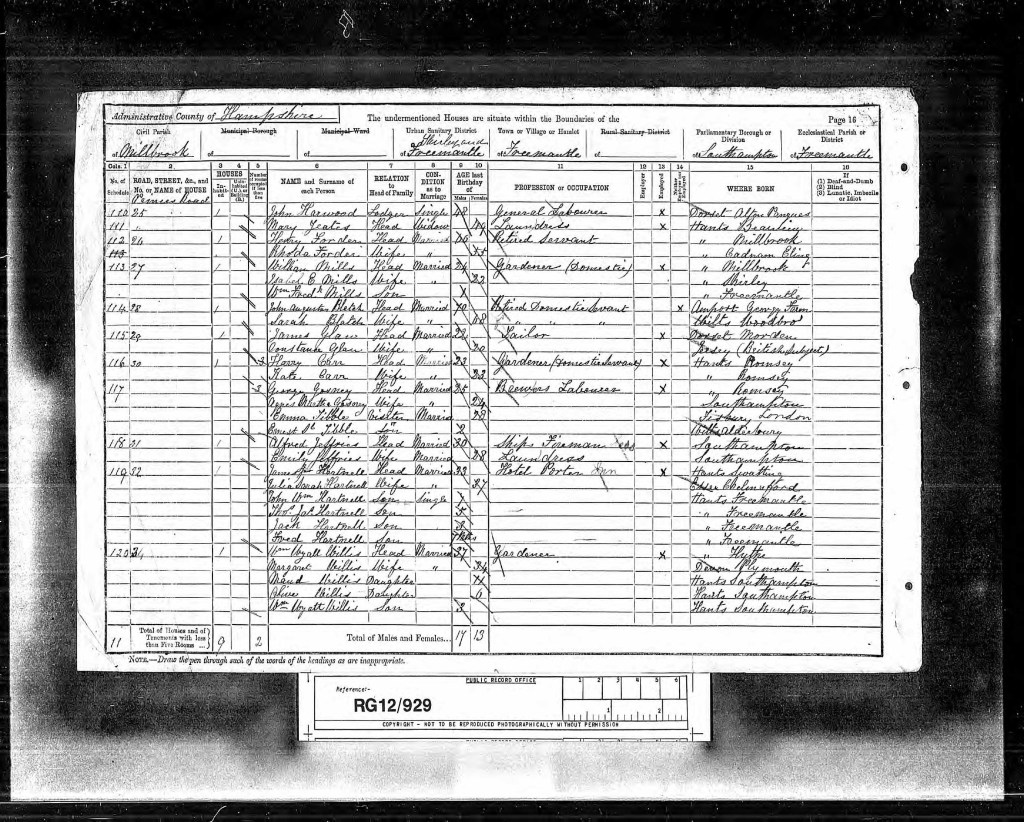
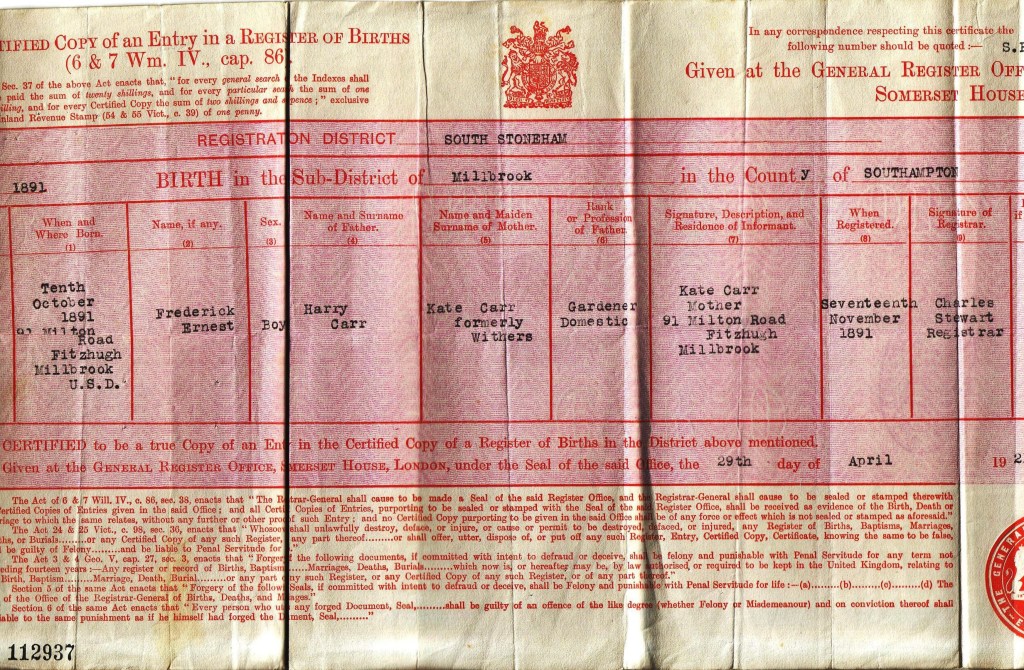
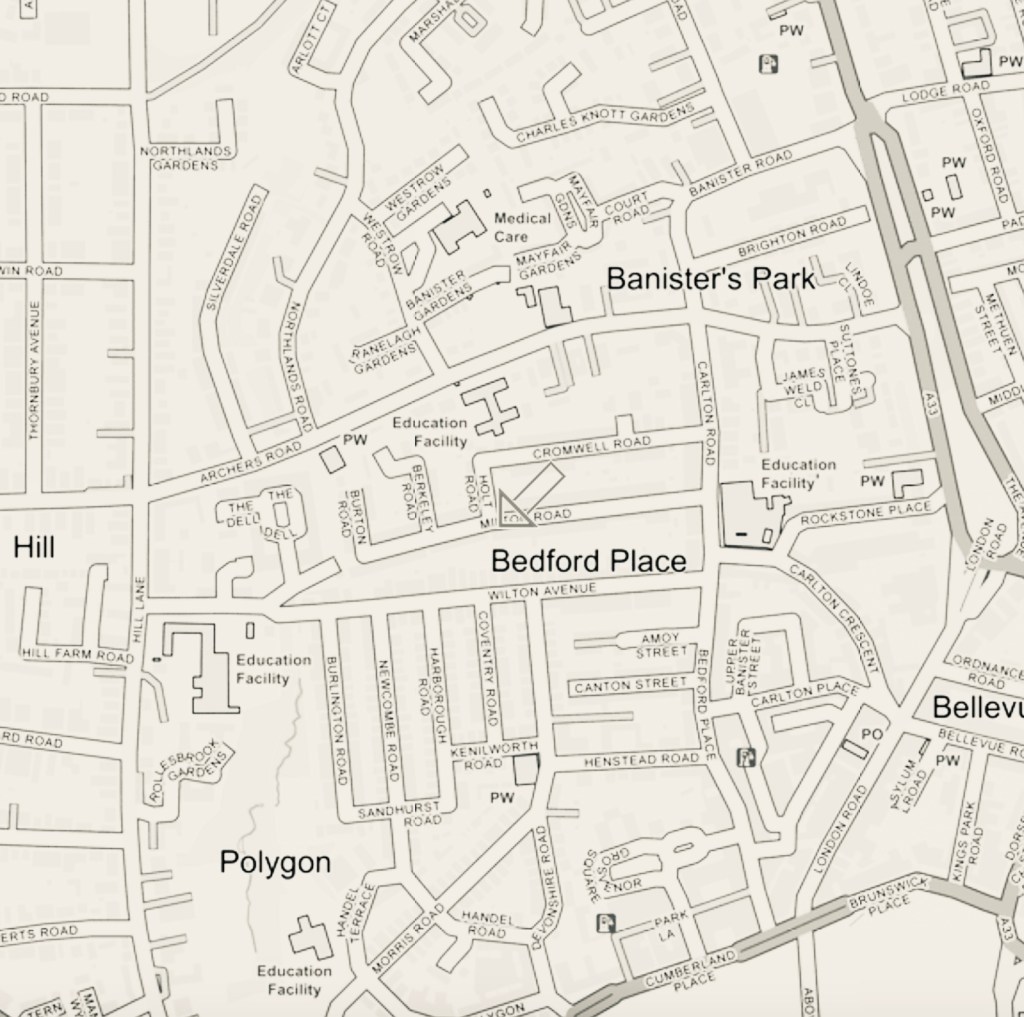


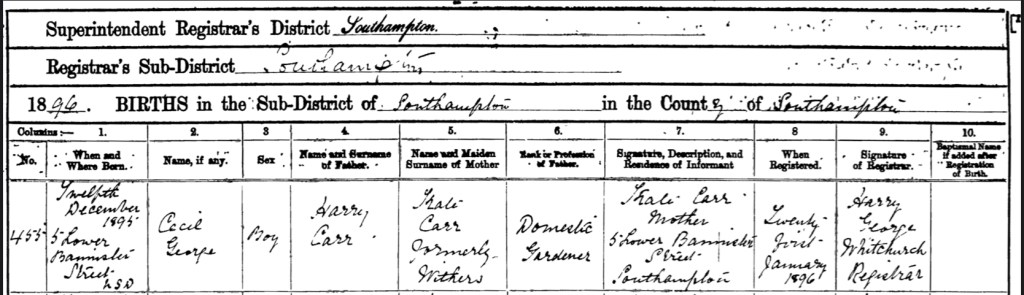
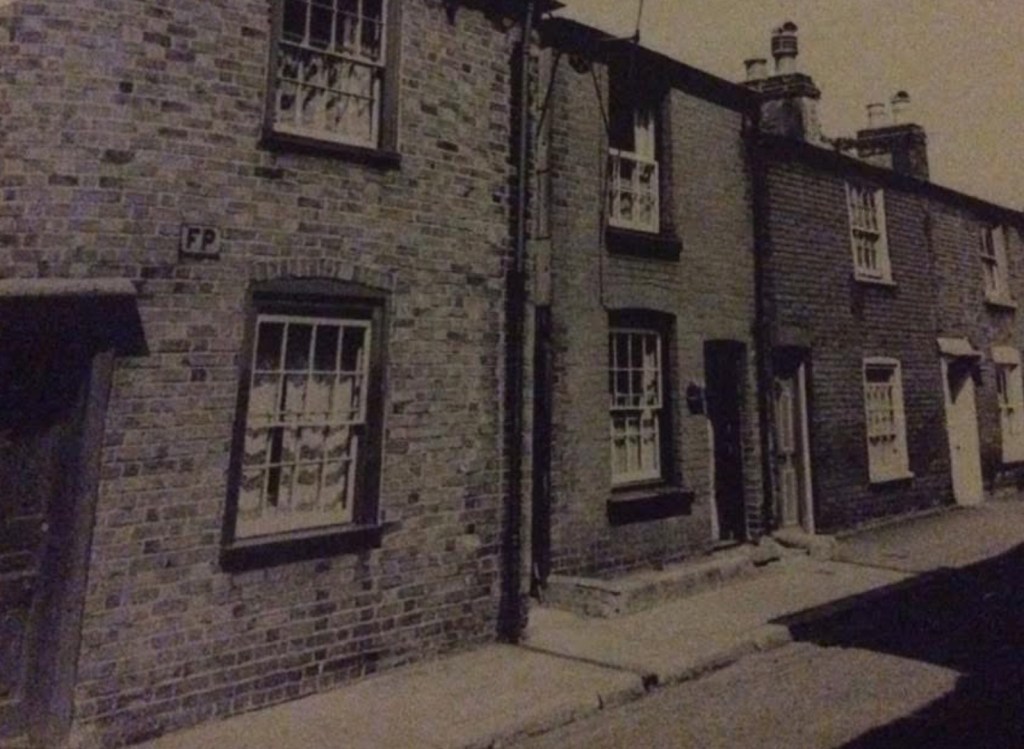
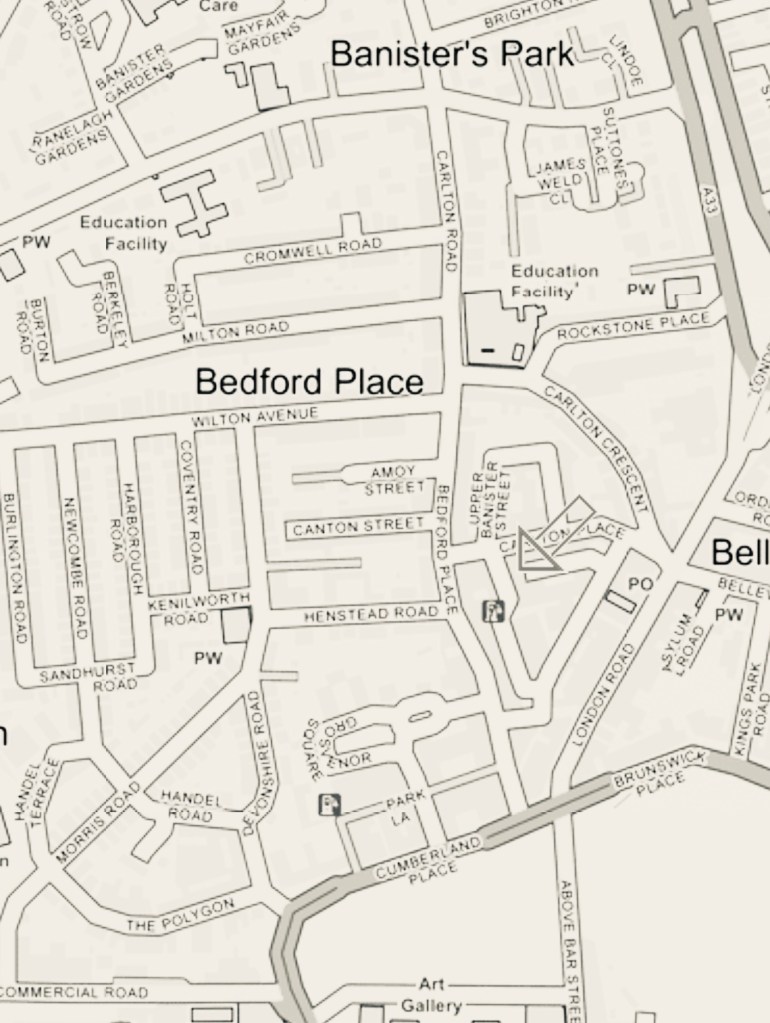
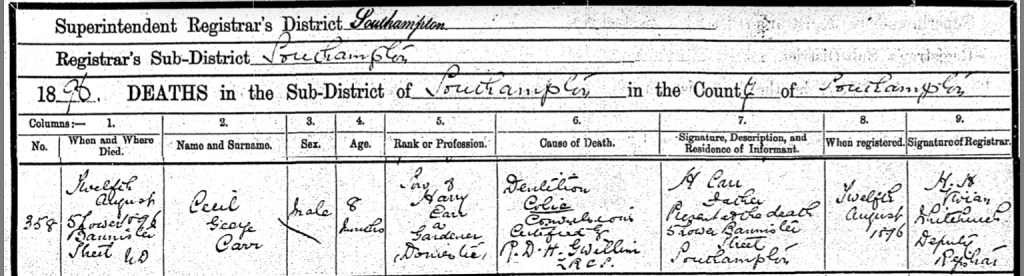


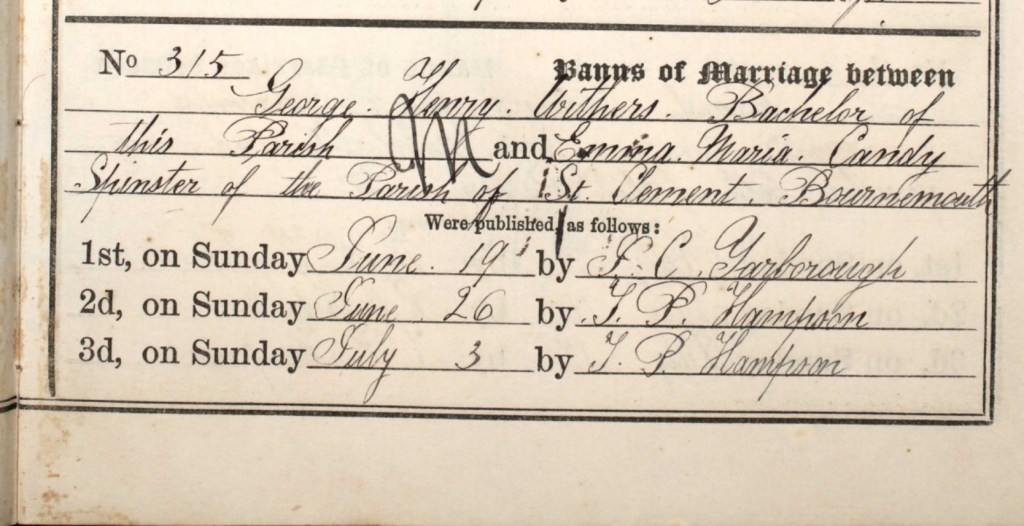



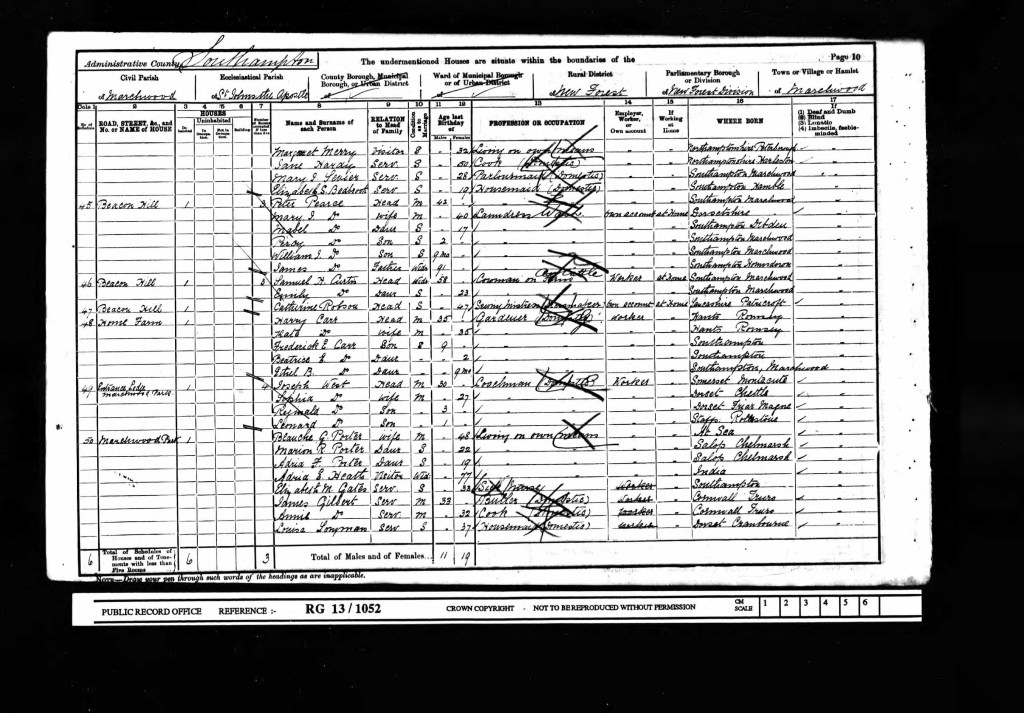



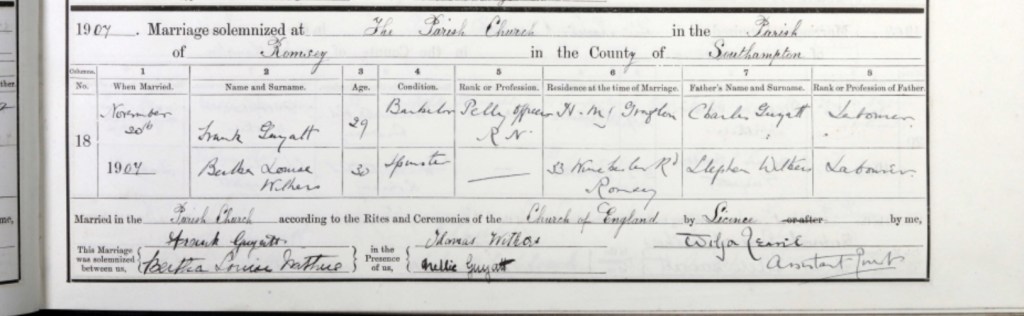
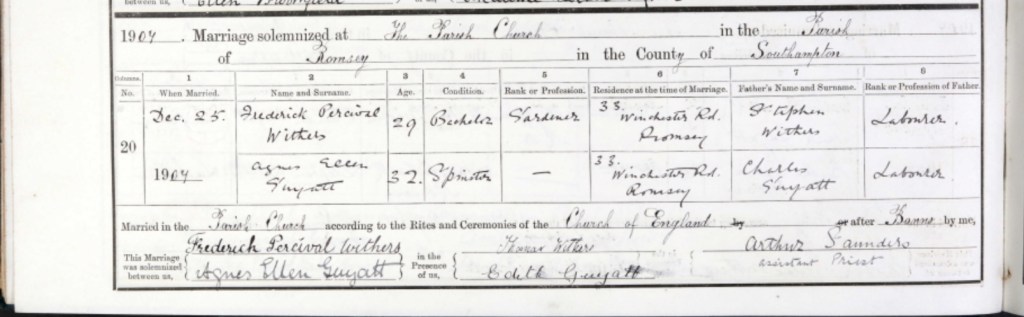


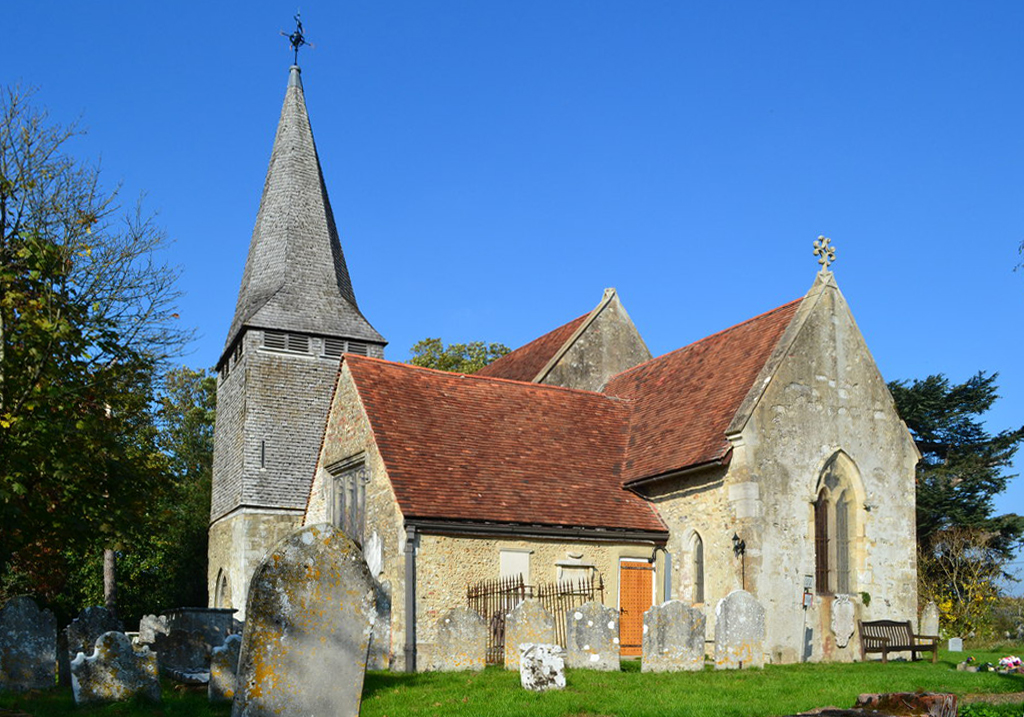
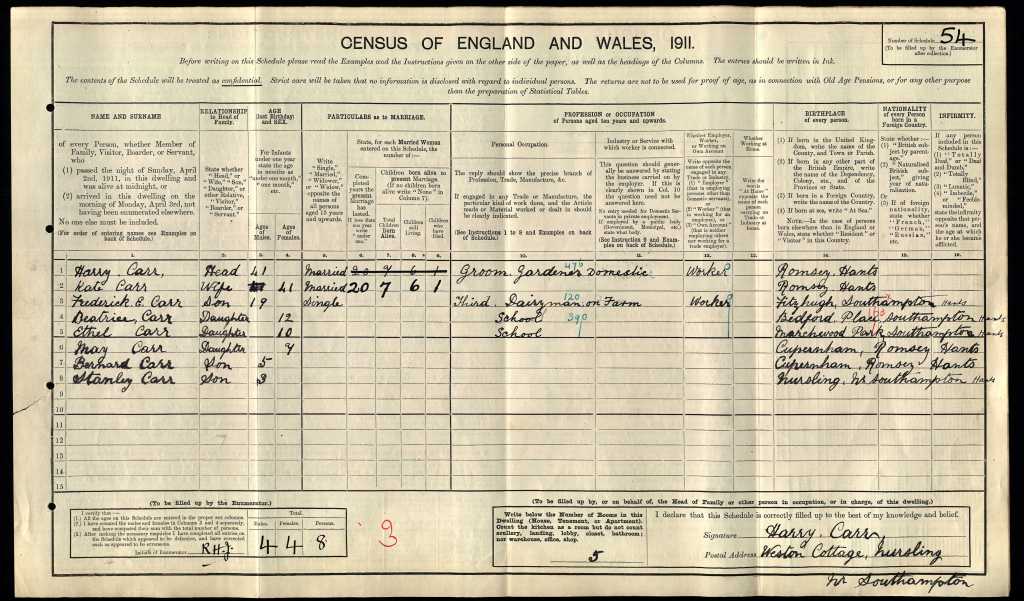
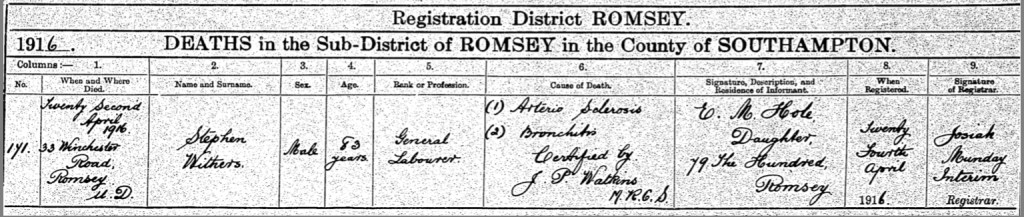

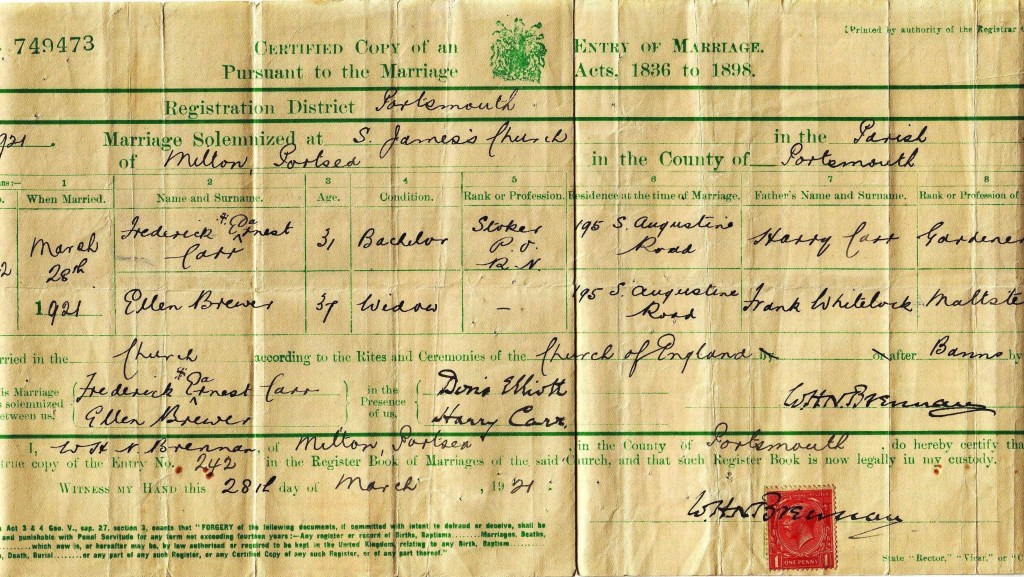
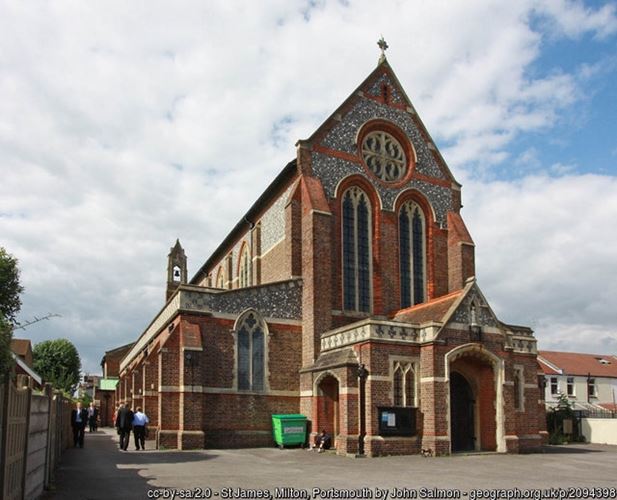

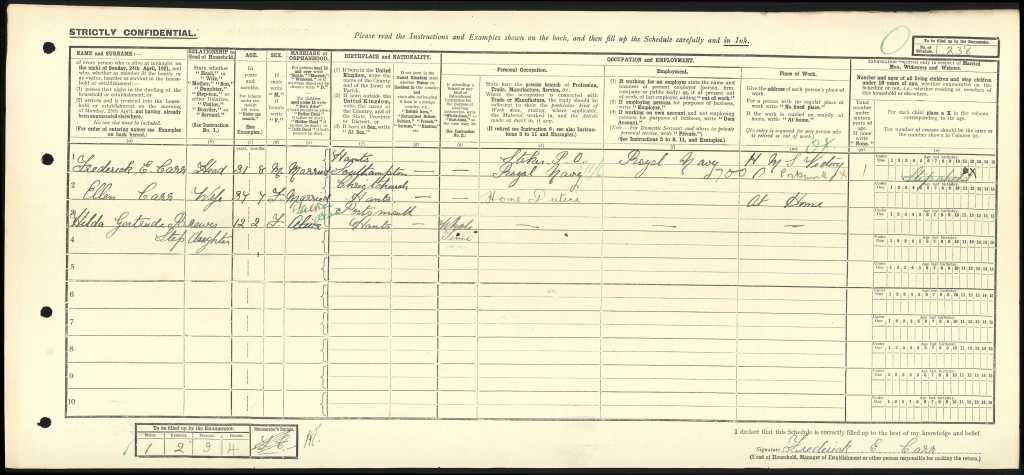


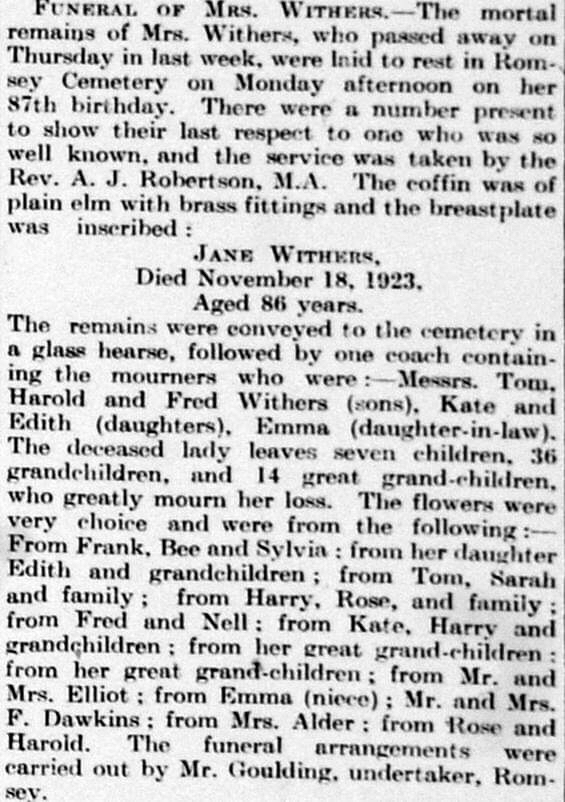
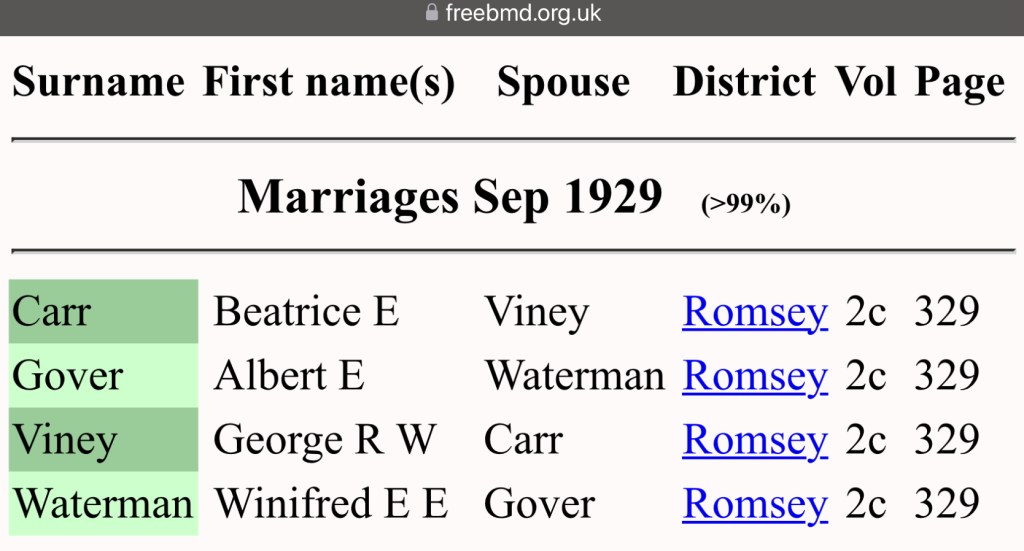


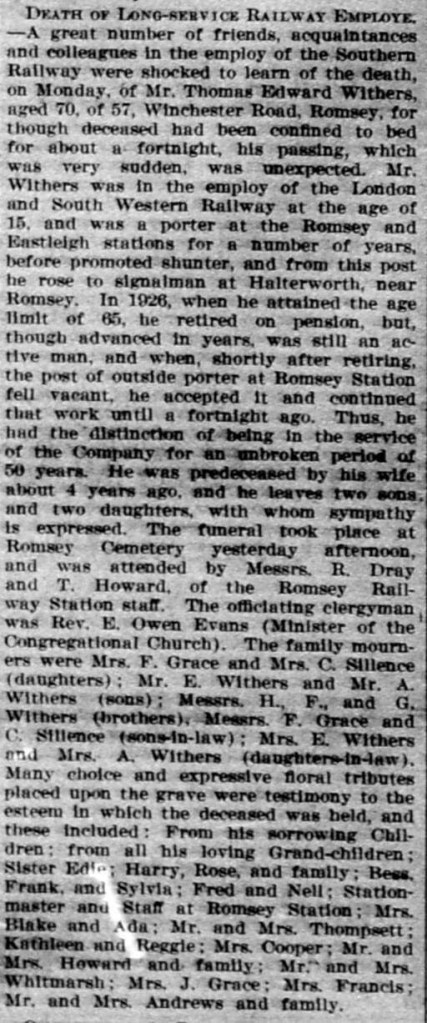
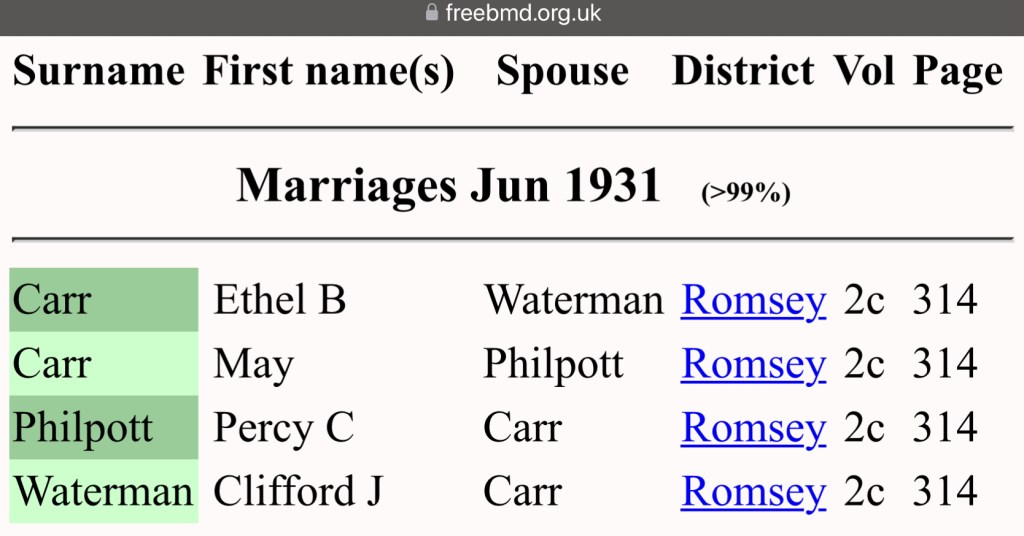
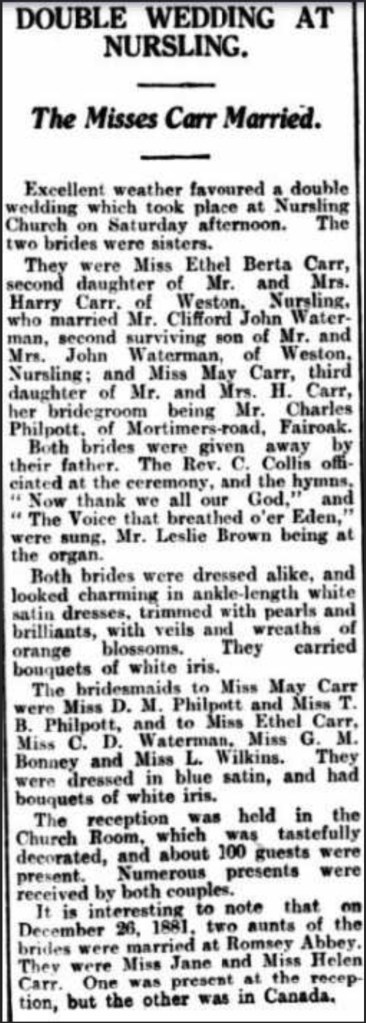
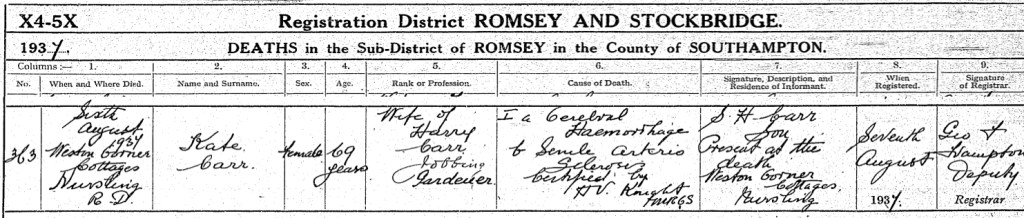
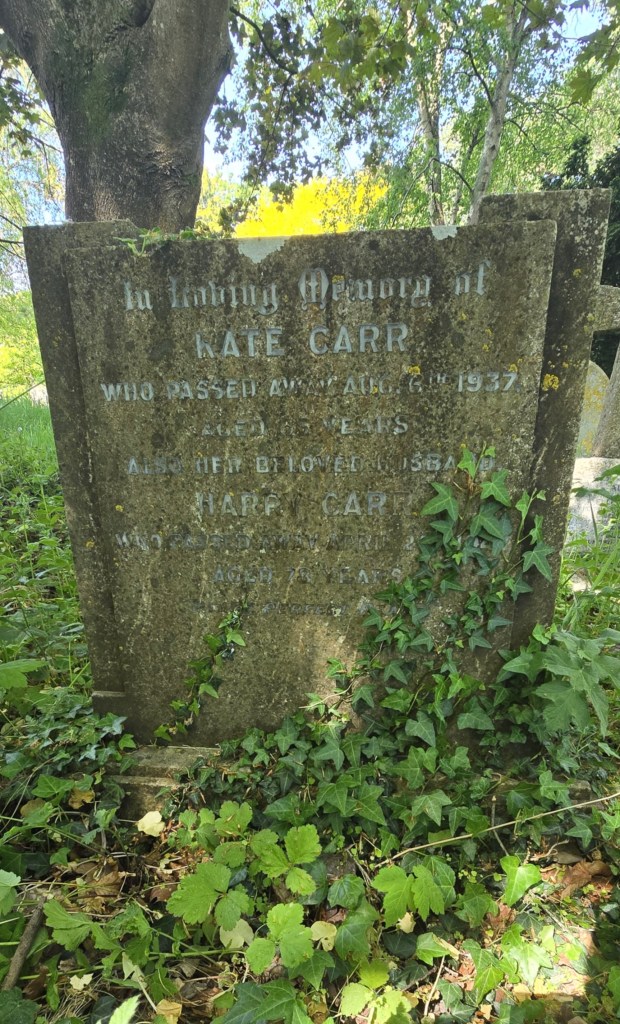
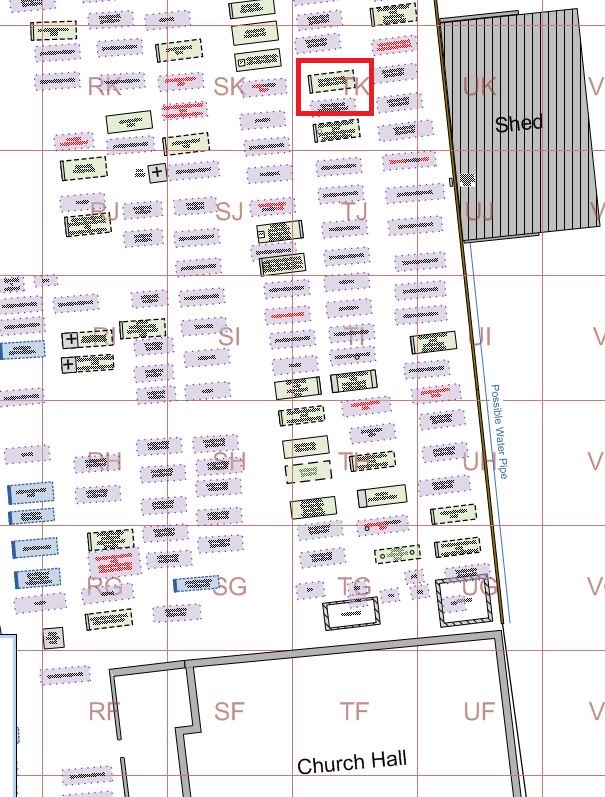
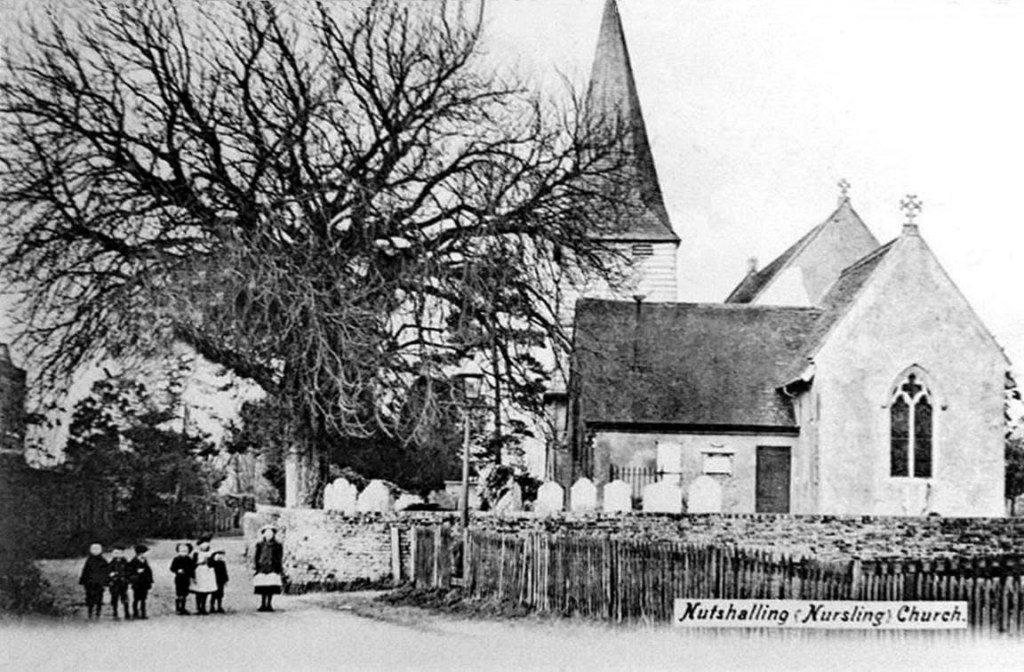
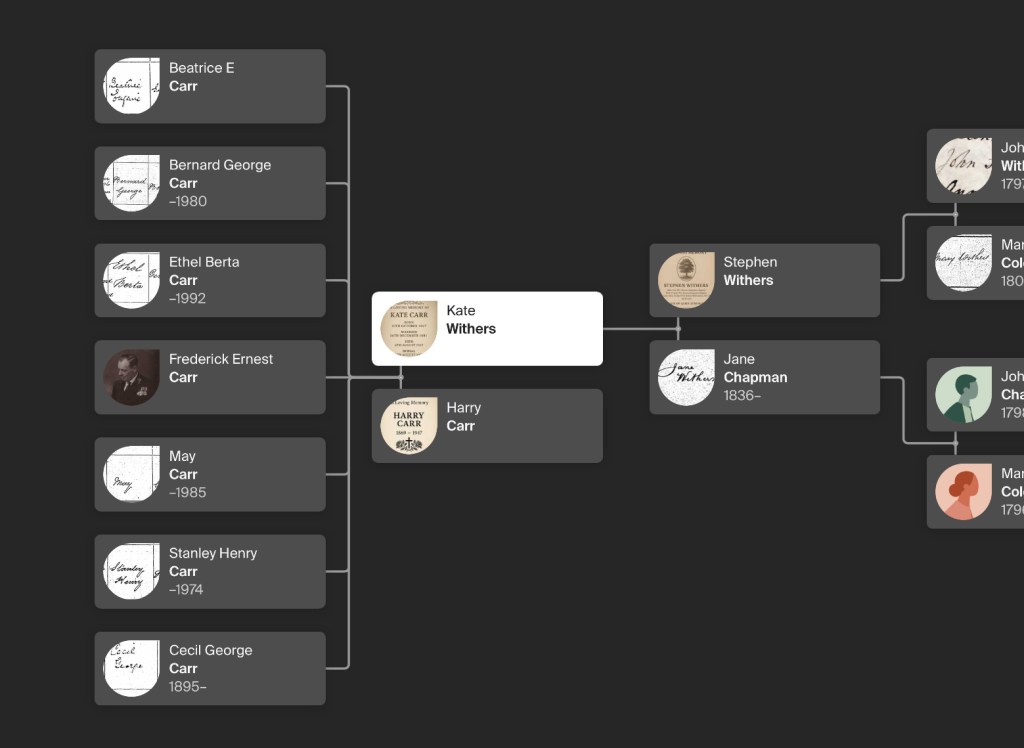
 Intwined