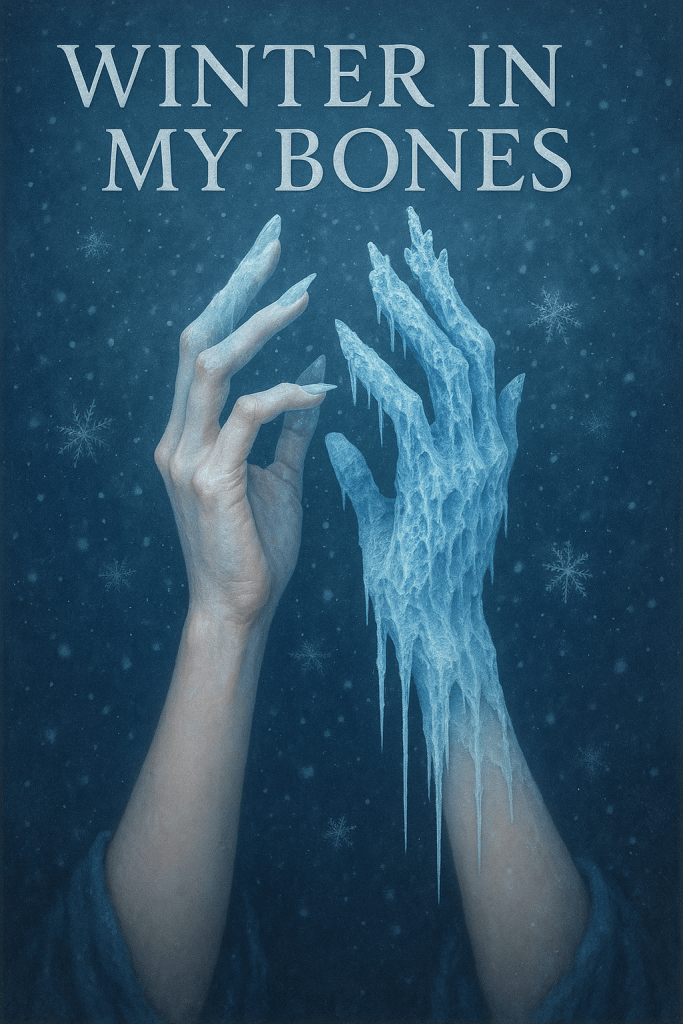
Winter doesn’t just happen outside my window. It happens inside me.
It creeps in quietly, curling itself around my fingers, sinking deep into my bones, and reminding me with every breath that my body doesn’t work the way it used to.
When the first chill arrives, most people pull on a jumper and carry on. For me, it’s a warning. My hands turn white, then purple, then red as Raynaud’s takes hold. They go numb, then burn like they’re on fire when the blood finally decides to return. It’s a cruel kind of pain, sharp, deep, and unpredictable, and it always catches me off guard, no matter how many winters I’ve lived through.
For anyone who doesn’t know, Raynaud’s is a condition that affects blood circulation. When exposed to cold or stress, the small blood vessels in the fingers and toes tighten so much that blood can’t get through. It’s like your body is trying to protect itself from the cold, but it ends up cutting off its own warmth. The affected areas turn ghostly white or blue, then bright red as the blood rushes back. The pain can be excruciating, like pins and needles mixed with fire.
Raynaud’s doesn’t just happen in winter, though the cold makes it worse. Even a small temperature change, walking from a warm room into a cooler one, taking something from the fridge, or standing in a summer breeze, and even stress, can trigger an attack. It can happen in spring, summer, autumn, any time the air changes suddenly. There’s no real escape from it. My body reacts as if the world is permanently frozen.
I take medication to help, including Viagra, not for the reason most people think of, but because it helps open up the blood vessels and encourages blood flow. It’s one of the few things that can make a difference, even if it doesn’t fix everything. There’s also medication for pain and inflammation, but every pill is a balance between relief and side effects. It’s a daily calculation that most people never have to think about.
And then, layered on top of Raynaud’s, there’s the arthritis, both osteoarthritis and rheumatoid. My joints swell and stiffen until they feel carved from wood. My fingers stop bending properly, my knees ache with every movement, and the simplest things, getting dressed, brushing my hair, cleaning our home, start to feel like climbing mountains. The cold makes everything worse. It finds the broken places in me and settles there.
There’s this heaviness that comes with winter, not just in my body but in my heart. It’s hard to explain to someone who hasn’t lived it, the constant ache, the fatigue that sits like a weight on your chest, the frustration of knowing you can’t do what you used to. I get tired of my own pain. Tired of explaining it. Tired of pretending to be okay when I’m not.
Some days, I just sit there, staring at my hands, trying to convince them to move. They’re stiff, swollen, and pale, like they belong to someone else. I breathe slowly and remind myself that I’ve done this before, I’ve lived through worse days, worse winters. Still, it doesn’t make it easier. The effort it takes to start the day sometimes feels like more than I have to give.
What people don’t see is how much planning goes into every small thing. Before I go out, I check the weather. I plan layers, gloves, heat packs. I make sure I’ll be somewhere warm enough, somewhere I can sit down if the pain flares. And if I can’t control the environment, I simply don’t go. Even simple plans can feel like logistics for a small expedition. And sometimes, despite all that preparation, I still have to cancel. I’ve lost count of the times I’ve had to send that message, “I’m so sorry, I can’t make it today.” It’s embarrassing and heartbreaking all at once, because I want to be there. My body just won’t let me.
There’s loneliness in that, the kind that’s hard to talk about. People mean well, but it’s difficult for them to understand. They see me smiling, maybe moving a little slower, and they assume I’m fine. They don’t see the hours I spend hidden away, nursing my joints, waiting for the pain to ease enough to breathe properly again. I often feel like I live behind glass, close enough to watch the world carry on, but too far to take part in it.
And it’s not just the pain. There’s the brain fog, that heavy, confusing cloud that rolls in without warning. Most days I can’t think straight. Words disappear mid-sentence. I walk into rooms and forget why I’m there. My body feels heavy, my mind slower, like I’m moving through thick mud or sinking sand. It’s exhausting. I want to scream at my own brain to wake up, to just be normal for a while. But it never really listens.
Then there’s the shower, something most people find relaxing. For me, it’s something else entirely. The pressure of the water against my skin can feel like needles. The heat or cold of it can trigger Raynaud’s. I have to brace myself before stepping under it. The pain is sharp, searing, and deep, running through every joint. There are moments I have to hold onto the wall, breathing through it, waiting for it to pass so I can finish. It’s such an ordinary thing, washing, but it can leave me trembling and drained.
Even when the seasons shift, the battle doesn’t end. Spring, summer, autumn, they might look different outside, but inside, the struggle carries on. The air might be warmer, the days brighter, but my body doesn’t follow nature’s rhythm. It still reacts to the slightest chill, the smallest change. Relief never really comes. Just quieter days between the storms.
Still, there are moments that help. The warmth of a mug between my hands when the feeling starts to return. Sitting by the fire and feeling the ache melt just enough to breathe. A kind message, a shared laugh, little things that remind me I’m still here, still human, still capable of joy. Those moments keep me going.
I’ve learned to move slower. To listen to what my body needs instead of fighting it all the time. I’ve learned that rest isn’t giving up, sometimes, rest is the work. And I’ve learned that warmth doesn’t just come from heat, it can come from kindness, from understanding, from being seen.
There are nights I still lie awake, joints throbbing, hands pulsing with pain, wondering how many more winters like this I can take. It feels endless sometimes, the darkness, the ache, the isolation. But somehow, I keep making it through. The days grow lighter, the air softens, and even the smallest easing of pain feels like grace.
Living with Raynaud’s, osteoarthritis, and rheumatoid arthritis isn’t something I would ever have chosen. It’s relentless, exhausting, and it steals parts of me every year. But it’s also shown me something powerful, a quiet strength I didn’t know I had. The kind of strength that isn’t loud or fierce, but steady. The kind that gets up, day after day, even when everything hurts.
Winter lives in my bones, yes, but so does resilience. And somehow, that’s enough to keep me going until the light comes back again.
Until next time,
Toodle loo for now,
Yours Lainey.
🥶🥶🥶
2 thoughts on “Winter in my bones.”
Oh Lainey how awful you poor girl , I i’m so very sorry you are going through all this every single day of your life, you are so brave my lovely and my heart goes out to you and wishes. I could take this pain away from you.
You are such a lovely person, such a beautiful soul, you make the world a better place for being here especially in the hearts of the ones who love you so much.
You amaze me with all that you do your garden your crocheting your cooking, and the way that you dress looking so beautiful, you are one in 1 million.
I am so glad and so proud that you are my niece, what a brave girl you are, I love you so much and I am so sorry you are suffering so badly. All I can say is that you put people to shame you do not understand what you were going through.
I love you Laney so so much. Take care. I hope today you will feel a little better and be able to handle things. I know you will never be better But I just hope that you realise how much we love you and that will help.
Loads of love, auntie Jan x x
Tough life! You highlight environmental triggers like cold air and showers, but what about indoor factors like humidity, diet, or repetitive strain? Could these play a role in symptom management?
 Intwined
Oh Lainey how awful you poor girl , I i’m so very sorry you are going through all this every single day of your life, you are so brave my lovely and my heart goes out to you and wishes. I could take this pain away from you.
You are such a lovely person, such a beautiful soul, you make the world a better place for being here especially in the hearts of the ones who love you so much.
You amaze me with all that you do your garden your crocheting your cooking, and the way that you dress looking so beautiful, you are one in 1 million.
I am so glad and so proud that you are my niece, what a brave girl you are, I love you so much and I am so sorry you are suffering so badly. All I can say is that you put people to shame you do not understand what you were going through.
I love you Laney so so much. Take care. I hope today you will feel a little better and be able to handle things. I know you will never be better But I just hope that you realise how much we love you and that will help.
Loads of love, auntie Jan x x
LikeLike
Tough life! You highlight environmental triggers like cold air and showers, but what about indoor factors like humidity, diet, or repetitive strain? Could these play a role in symptom management?
LikeLike