There is a depth to family that transcends time, a bond woven through generations like the roots of an ancient tree, reaching deep into the earth, grounding us in a history we may never fully know, yet which shapes us in ways we often fail to see. As I sit here, reflecting on the life of my paternal fifth great-grandfather, Joseph Newell, born in the quiet village of Lockerley, Hampshire in 1783, I am struck by the profound sense of connection I feel. His life, so distant from my own, is yet intertwined with mine in a way that is both humbling and awe-inspiring. Through him, I trace the heartbeat of my own existence, the very pulse of the name I carry, Newell, a name that flows through me like an unbroken river of blood and memory.
Joseph’s story, one of simple beginnings and quiet endurance, is the story of all those who came before me, all those who, in their own quiet ways, shaped the world that I now inhabit. His mother, Emma Drake, and his father, Joseph Newell, set in motion the legacy of a name that, for better or for worse, would become my inheritance. Theirs is a line of ancestors whose sacrifices, triumphs, and trials reverberate across the years, linking me not only to the history of my family but to the very essence of who I am. It is through these ancestors that I carry my family name forward, their lives, in all their simplicity and complexity, etched into the very fabric of my being.
The documentation that traces Joseph's life is sparse, a reminder of how fragile history can be. Birth, marriage, and death certificates did not come into practice until 1837, and so for the early years of his life, we are left to sift through the parish records of the time. These documents, written in careful, sometimes fading ink, hold the only tangible links to Joseph's existence, providing a glimpse into the world he inhabited. In the absence of official records, it is through these fragile pages that I seek to uncover the story of his life. And though they may be few, these records speak with a quiet reverence of a life lived in a time long gone, a time that I can only imagine through the words preserved by those who were there.
This blog is a journey back in time, to uncover the story of a man whose life spanned nearly a century, whose footsteps I trace through these fragile fragments of history. In these records, I find not only the man Joseph Newell but the bloodline that led to me, his descendant. Through these remnants of the past, I hope to breathe life into his story, not just as a historical figure, but as a man whose blood runs through my veins, whose name I bear with pride, and whose legacy I carry with me, even now, as I step into a future he could never have imagined. This is the life of Joseph Newell, and in it, I find my own.
Welcome back to the year 1783, Lockerley, Hampshire, England. The world is a vastly different place, yet the echoes of history stir within the quiet corners of everyday life. In this year, George III is the monarch of Britain, reigning with a firm yet often misunderstood hand. His reign, which began in 1760, has seen the nation through tumultuous events, including the loss of the American colonies, and now, as the year 1783 unfolds, the effects of that loss still reverberate across the British Isles. Despite his struggles with mental health, George III remains a symbol of continuity in a changing world, overseeing the affairs of the state and its subjects from the royal palaces.
The Prime Minister at this time is Lord North, though his leadership will soon come to an end as political turbulence shakes the foundations of the government. North's handling of the American Revolution and the aftermath has brought him into disfavor, and as the year draws to a close, the country begins to see the first stirrings of change within its leadership. Parliament is a place of intense debate, but it remains a domain largely controlled by the elite, with only a small portion of the population able to participate in the political process.
In the social structure of Britain, the gap between the rich, working class, and poor is stark. The wealthy elite, made up of aristocrats, landowners, and merchants, live lives of luxury. They dine in grand houses, adorned with the finest fabrics and décor, and move through the world on well-maintained roads in carriages, a far cry from the reality of the lower classes. For the working class, life is much more difficult. They toil on the land, in factories, or in small trades, earning meager wages that barely cover the essentials. The poor, living on the fringes of society, face a life of constant struggle. Many are confined to cramped, unsanitary dwellings in the slums of cities, with little access to education or the opportunities that the rich take for granted.
Fashion, for the rich, is an expression of status and wealth. The men wear elaborate coats with high collars, waistcoats, and breeches, while the women are clothed in intricate gowns with wide skirts, corsets, and layers of fabric that create an almost regal appearance. The working class, in contrast, wear simple, practical clothing, coarse woolen garments for the men and plain dresses for the women. For all, however, there is a commonality in the sense that clothing is a way of communicating one’s place in society, a visible marker of one’s station.
Transportation in 1783 is a far cry from what we know today. The majority of people rely on walking, horses, or carts for travel, with roads often in poor condition. The wealthy can afford to travel by carriage, but even these are limited to well-trodden paths, as the infrastructure of the country is still under development. The advent of steam power is beginning to stir imaginations, and the year 1783 will see early experiments with steam engines, laying the groundwork for the coming industrial revolution.
Housing is a reflection of class and circumstance. The rich reside in grand estates or large homes, often with vast estates surrounding them. These homes are built with the best materials, and the interiors are luxurious, with multiple rooms for different functions, heated by large open fireplaces. For the working class, housing is much more cramped and less comfortable. Many live in small cottages or rooms that are poorly built, with inadequate insulation, and the poor often find themselves in tenements or makeshift dwellings in the slums. In both cases, heating comes from open fires or stoves, but the air is smoky, and warmth is often difficult to maintain during the bitter winter months.
Lighting in the year 1783 is also rudimentary by modern standards. Oil lamps, candles, and the glow of the hearth provide illumination, but they are far from the bright, consistent light we take for granted today. In homes, light is used sparingly, as it is expensive and often associated with the wealthier classes who can afford the candles and oil necessary to sustain it. In the streets, the few lamps that line the roads are dim and inadequate for the task of lighting the way after dark.
Sanitation and hygiene are basic, and for many, nonexistent. There is no concept of modern plumbing, and waste is often disposed of in public latrines or thrown into the streets. The wealthy might have privies in their homes, but even these are poorly maintained. Bathing is infrequent, and cleanliness is not yet considered a vital part of daily life. The streets of towns and cities are filthy, with waste, refuse, and even dead animals often left to rot in plain sight. Public health is a growing concern, but there are few resources or knowledge to tackle the pervasive filth and its consequences.
Food in 1783 is simple, particularly for the lower classes. The rich dine on an abundance of meat, game, and fine bread, complemented by vegetables and fruit grown on their estates or imported from colonies. Sugar and spices, once expensive, are becoming more common, though still a luxury for the poor. For the working class, meals are much simpler, stews, bread, and vegetables form the bulk of their diet, with meat being an occasional treat. The poor often struggle to get enough to eat, and malnutrition is common.
Entertainment is a luxury for the rich, who enjoy theatre, music, and the occasional grand ball. Public spectacles, such as horse races and boxing matches, are enjoyed by all classes, though with varying degrees of comfort. The working class might enjoy more communal forms of entertainment, such as fairs, dances, or local festivals, which offer brief respites from the hardships of daily life. Gossip, ever-present in human society, flourishes in every social circle, with news, however unreliable, spread through letters, local gatherings, and town criers.
Diseases are rampant, and without the medical knowledge of today, they spread quickly through both the rich and poor alike. Smallpox, tuberculosis, and various fevers are common, and death is a frequent visitor in many households. Vaccination, a new idea at the time, has yet to become widespread, and the concept of sterilization or sanitation in medical practice is in its infancy. Life expectancy is lower, particularly for those born into poverty, and the poor suffer disproportionately from the diseases that sweep through the land.
The environment is a place of both beauty and harshness. The countryside around Lockerley, Hampshire, is peaceful, with rolling hills, fields, and forests, but it is also a world that has begun to feel the effects of human activity. Deforestation is occurring as land is cleared for farming, and industrialization, though still in its early stages, will soon begin to change the landscape. The air is cleaner than it will be in the coming decades, but smoke from chimneys and open fires already darkens the skies of cities.
Schooling is limited, especially for the poor. The rich can afford tutors or private schools, where their children are taught reading, writing, and the classics. For the working class, however, education is often not a priority, and many children are expected to contribute to the family income from a young age. However, the idea of formal education is slowly beginning to spread, and there is a growing recognition of its importance for future generations.
Religion remains a significant part of life in 1783. The Church of England is the dominant faith, with its services and teachings shaping much of society. For the rich, church attendance is an important social occasion, while for the poor, it is often seen as a source of comfort and hope. Religious observance is deeply woven into the fabric of life, guiding morality, social structure, and community ties.
The year 1783, then, is a year of transition, a year where the past lingers while the future begins to take shape. In Lockerley and across England, the rhythms of life are slow, but the winds of change are stirring, ready to push the world into a new age.
It was within the rolling hills and the architectural fields of Lockerley, Hampshire, England that my paternal 5th Great-Grandfather, Joseph Newell, was born in the year 1783, to Joseph Newell, age about 30 years old, and Emma Newell, formerly Drake, age about 31 years old. Joseph’s birth, however, occurred before the legalization of birth certificates in 1837, which unfortunately means that his exact date of birth remains unknown. Nevertheless, clues from the records provide a sense of the time and place that shaped his early life.
The 1841 census, a valuable document from the era, indicates that Joseph was born around 1784 in Hampshire. Meanwhile, the 1851 census refines this, listing his birth year as approximately 1783 and pinpointing Lockerley as his birthplace. Additionally, his baptism record offers yet another perspective, suggesting the year of his birth to be either 1782 or 1783, showing the uncertainty that often surrounds dates from this period.
Joseph was not alone in his early years; he was the youngest of two children. His older brother, John, had been born about 1778 in East Wellow, Hampshire, England, and the family of four would have lived a life typical for their time. Joseph’s father, Joseph, was likely a hardworking man in the community, and his mother, Emma, would have played the key role of homemaker, raising their children in a world of simple yet sturdy family values.
Though the historical records offer only limited details about Joseph’s early life, the very fact that he was born into such a community in rural Hampshire speaks to a lineage that would endure for generations. His life, though only faintly captured by the sparse documentation of the time, would go on to shape the future of those who carry his name today.
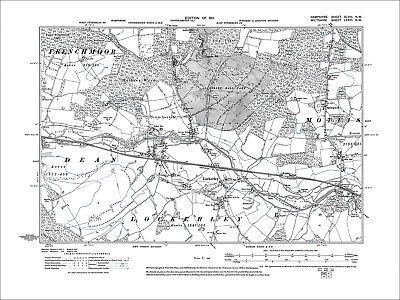
Living in Lockerley, Hampshire, in 1783 would have been a very different experience from life today. Lockerley, a small rural village nestled in the scenic hills of Hampshire, was a peaceful place with rolling fields and picturesque woodlands, offering a tranquil, agrarian lifestyle. The landscape was dominated by farms and country estates, and the village itself would have been quiet and small, with only a few dozen homes scattered around the area. The sounds of nature, the occasional bleat of sheep, and the rhythms of farming life would have filled the air.
Homes in Lockerley at the time were simple and practical, often built from local materials such as wood, stone, and thatch. The homes of villagers, including those of Joseph Newell’s family, would have been modest by today’s standards, likely comprising a few rooms for living and sleeping. A typical cottage might have a small hearth in the center for warmth and cooking, with the chimney funneling the smoke out. The interior would have been basic, with rough wooden floors, and furniture was often handmade, wooden tables and chairs, simple straw mattresses for sleeping, and maybe a few other essentials. These homes, though humble, offered the shelter needed for rural life, with only the wealthier families able to afford more expansive homes with multiple rooms and finer details. For Joseph’s family, with his father working and his mother managing the home, their residence would have been functional and sufficient for their needs.
Joseph’s mother, Emma, would have spent her days tending to the needs of the household. In a time before modern conveniences, much of her time would have been dedicated to managing the home’s daily tasks. This meant preparing meals, often over a fire, taking care of any livestock they may have had, and ensuring the family’s clothing was mended or made. She would likely have done much of the baking, such as preparing bread and other staple foods. If she had a garden, Emma would have grown vegetables and herbs for cooking and medicinal purposes. There was little time for leisure, and the duties of motherhood, combined with the demands of daily chores, kept women like Emma constantly occupied.
The village church would have played a central role in life in Lockerley during 1783. The Church of England was not just a place for religious worship, but a focal point for the entire community. It was where people gathered for weekly services, marking the passage of time with the rhythm of church bells and the cadence of hymns. Sundays were sacred and strictly observed, with little to no work allowed on the Sabbath. It would have been a place of solace, guidance, and reflection, where villagers went to seek spiritual comfort and a sense of community. The church also had a significant influence on local governance and social matters, with the rector often holding a position of authority in the village, overseeing both the religious and moral well-being of the people. The church would have been a place where births, marriages, and deaths were recorded, and where the villagers came together to celebrate festivals and holidays like Christmas and Easter.
The church would have also played a large role in the lives of Joseph’s parents, as it was a moral compass for many. For Emma, a mother raising two children, the church could offer a sense of community and support. It was a place where the elderly might find solace, where the young learned about morality, and where families could find strength in the face of adversity. Beyond religious services, the church might have been a place for social gatherings, such as charity events, baptisms, weddings, and funerals, making it a hub of village life.
In addition to the church, the community would have been small and tight-knit. Villagers likely knew each other by name and interacted regularly. For Joseph’s father, Joseph Newell, work in the community would have likely revolved around agriculture or local trade. Many families in such a rural area relied on farming for their livelihoods, with their crops and livestock providing both food and income. There would have been few opportunities for travel, as most of life was centered on the village itself. Joseph’s father might have worked on his own small farm or as a laborer for wealthier landowners in the area, helping with the harvests or other agricultural tasks.
During Joseph’s childhood, the rhythms of village life were dictated by the seasons. Summer would have meant long days of fieldwork, tending to crops or livestock, while winter brought more time indoors, where the family might have focused on mending clothes, preserving food, and tending to the fire. Life was cyclical, and there was comfort in knowing what the seasons would bring, even though the work itself could be grueling.
The absence of modern technology meant that much of daily life was slow-paced and often centered on hard labor. The social fabric of the village was held together by community interaction, whether through shared work, church services, or simple visits to neighbors. For Joseph, this environment would have been a place where bonds were formed with other local children, as play would often be simple and centered around nature, perhaps playing with other children in the fields or along the banks of nearby streams.
Life in Lockerley in 1783 would have been quiet, isolated, and unchanging for much of the population. There were no luxuries or modern comforts, and for the majority, life was about survival and maintaining the rhythms of daily existence. Yet, in the simplicity of this world, there was a deep sense of community and connection to the land, with faith and family at its core. While Joseph and his family would have faced the challenges of a harsh and often uncertain existence, they would have also found meaning in the rituals of life that connected them to the past and gave structure to their daily lives.
On Monday, the 2nd day of June, 1783, as the early summer sun glistened through the trees, a sense of peace and renewal filled the air in Lockerley, Hampshire. The village, nestled among the rolling hills of the countryside, seemed to pause in reverence to the moment. Joseph, Emma, and their two sons, Joseph and John, made their way through the village towards the local parish church, St. John’s Church, a cornerstone of village life and a symbol of faith and tradition. The path to the church, lined with trees and quiet homes, would have been familiar to them, as it had been for generations of villagers before them.
The warm glow of the summer sun cast long shadows as they approached the church, the stone edifice standing proud against the backdrop of the green countryside. Inside, the flickering candlelight illuminated the pews, and the sound of quiet murmurs filled the air as the congregation gathered for the day’s service. The Newell family would have taken their place among the villagers, ready for the significant moment that lay ahead.
Joseph, their youngest son, was about to be baptised, marking the beginning of his spiritual journey and his formal entry into the Christian community. The baptism would have been an important occasion for the Newell family, a time to seek blessings for their child and to reaffirm their place within the village and the faith that bound them together. As the priest prepared for the ceremony, the family would have felt the weight of tradition, knowing that this moment would be recorded in the church’s baptismal register and would be remembered for generations to come.
The gentle rustle of the trees outside and the faint scent of earth and flowers carried on the breeze, as the Newell family gathered together in the sacred space, knowing that this was a day of quiet significance. It was a day that would be etched in their family’s history, marking a milestone in the life of young Joseph Newell, and forever linking their story to the small, rural community of Lockerley.
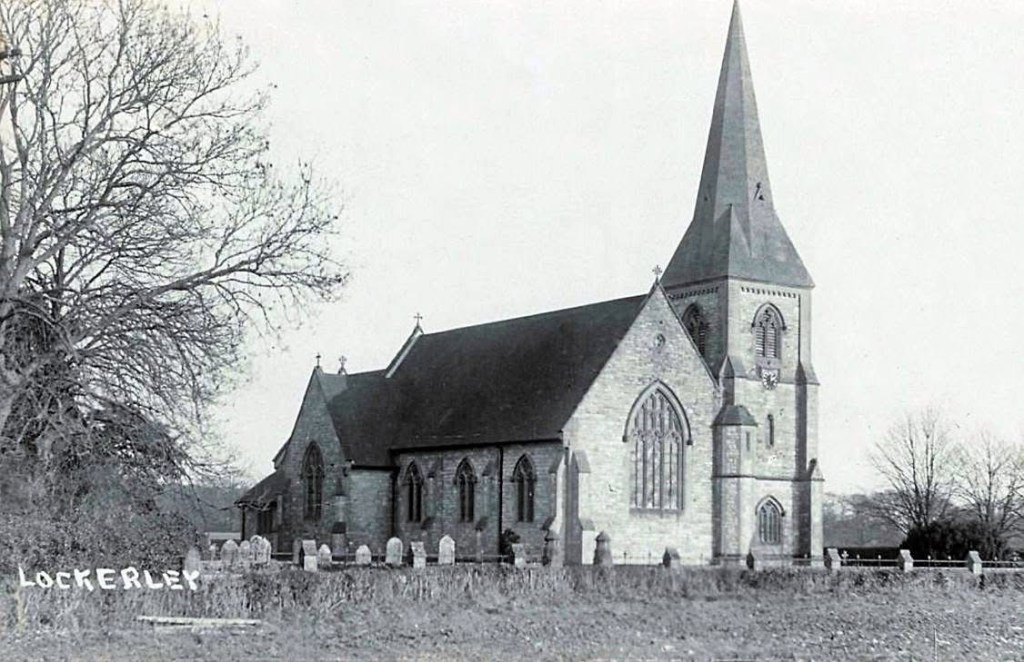
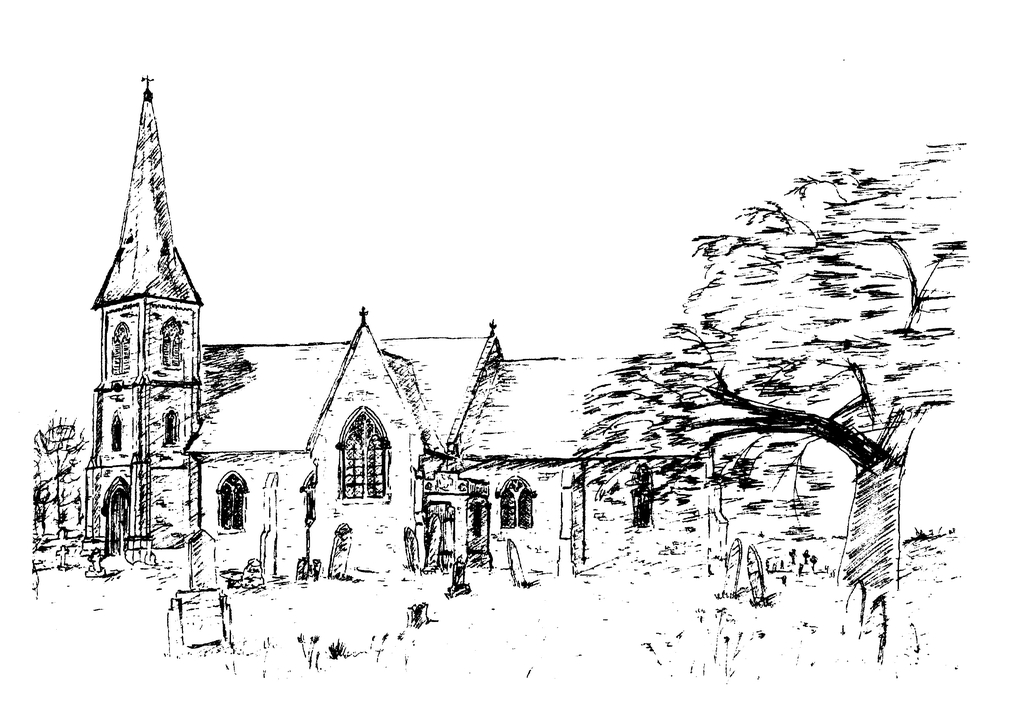
St. John’s Church in Lockerley, Hampshire, is a charming and historic church that has served the local community for centuries. Located in the heart of the picturesque village of Lockerley, which lies in the Test Valley, the church is an important part of the area’s history, culture, and spiritual life.
The history of St. John’s Church dates back to the medieval period, though the current structure reflects several stages of development over the centuries. The original church was likely built around the 12th century, though records from that time are sparse. The church’s dedication to St. John the Evangelist indicates its religious association with the Christian tradition, particularly with the apostle John, one of the most prominent figures in the New Testament. The church’s early history is tied to the broader religious and agricultural practices of the village, which has been a rural community for much of its existence.
Over the centuries, St. John’s Church was subject to several expansions and renovations. The original Norman structure would have been relatively simple, reflecting the needs of a small rural community. However, as Lockerley grew and developed, particularly during the medieval and post-medieval periods, the church was modified to accommodate a larger congregation and to reflect the changing architectural styles of the time. One of the most notable periods of change came in the 19th century, when the church was rebuilt in the Victorian era.
The current building of St. John’s Church was constructed in 1889–90 under the direction of the architect J. Colson, in a style that blends both Gothic and Perpendicular Gothic elements. This period saw significant growth in the Test Valley, and Lockerley, with its proximity to the town of Romsey, benefitted from an expanding population and increased prosperity. The design of the church reflects the period's architectural tastes, with soaring arches, intricate stained-glass windows, and the use of local materials that give the church a distinctive character.
St. John’s Church is a relatively large and impressive building for a rural village church. The structure features a chancel with an outshot, a nave with transepts, and a southwest tower that adds a sense of grandeur to the village’s skyline. The church’s stained-glass windows, depicting various scenes from the Bible, are particularly beautiful, and they provide a striking contrast to the stonework of the building. The wooden roof of the nave, designed with king-post trusses on arch-braces, is another notable feature of the interior, displaying the craftsmanship of the period.
Over the years, St. John’s Church has been at the center of life in Lockerley, hosting regular religious services, weddings, baptisms, and funerals. The churchyard is the final resting place for many of the village’s residents, with gravestones marking the passage of time and offering a sense of continuity to the village’s history. The church continues to play an important role in the spiritual life of the community, offering a space for worship, reflection, and prayer.
In addition to its role as a place of worship, St. John’s Church has also served as a venue for significant community events. The church is a place where people come together to mark important milestones, both religious and personal. Many of the village’s residents, both past and present, have been married, baptized, or buried in the church, giving it a special place in the collective memory of Lockerley.
The churchyard itself is a peaceful and tranquil space, with the graves of local families dotting the landscape. These graves serve as a reminder of the long history of Lockerley, and they provide a connection to the past. The churchyard is not only a site of historical importance but also a beautiful setting for reflection, surrounded by the natural beauty of the Hampshire countryside.
As for rumors of hauntings, like many historic churches, St. John’s has been the subject of local legends and ghost stories. However, there are no widely documented or substantiated paranormal occurrences associated with the church. Given the long history of the building and the village, it is not unusual for local folklore to suggest the presence of spirits or supernatural events. In many cases, such stories are passed down through generations, often becoming part of the cultural fabric of a place. While there may be occasional whispers or tales shared by the community about unexplained occurrences, there is no firm evidence to suggest that the church is haunted.
The surname Newell is of Anglo-Saxon origin, with its roots deeply embedded in early English history. It is derived from the Old English personal name “Niwehelm,” a combination of the words "niwe" (meaning “new”) and "helm" (meaning “helmet” or “protection”). The name likely referred to a person who was either a newcomer or someone who provided protection or a strong defense, possibly a person who was seen as a protector in a new settlement or a leader in a newly established area. Over time, the name evolved into various forms, including Newell, Noel, and Newall, depending on regional dialects and the influence of other languages.
The surname Newell first appears in historical records in the 12th and 13th centuries, particularly in the northern and midlands regions of England. The family name was likely given to people based on their occupation or characteristics, in this case, perhaps a role related to defense, protection, or being part of a new settlement. The Newell family name was passed down through generations, and over time, it spread across England and later to other countries, especially with the migration of English settlers during the colonization of the Americas.
As the surname became more widespread, it was adopted by individuals in different parts of England and later by families in places like Ireland, the United States, Canada, and Australia, reflecting the global movement of the Newell family members. In some cases, the surname Newell was used as a locational surname, referring to individuals from places named Newell or similar variations. These locations may have been named after a prominent individual with the surname or because they were newly established settlements.
Throughout history, various notable people have carried the Newell surname. In particular, the name Newell became associated with early colonial history in America. Many early settlers with the surname Newell arrived in North America, and their descendants contributed to the development of the country in the 18th and 19th centuries. Some of these individuals were involved in trade, agriculture, or military service, and their legacy can still be found in the American cultural and historical landscape today.
The Newell family crest and coat of arms, like many English family crests, represents the historical significance of the name and the noble lineage associated with it. The coat of arms for the Newell family typically features elements related to strength and protection, as implied by the original meaning of the name. While the specific design may vary, heraldic symbols often include shields, crests, and other elements that reflect the family’s heritage. The Newell family coat of arms may feature a helmet, which ties back to the meaning of "helm" (protection), along with a shield decorated with various colors and symbols that were associated with the virtues of strength, loyalty, and defense. Family crests often reflect the characteristics valued by the family and might include animals or symbols representing courage, power, or honor.
In addition to the coat of arms, the Newell family crest may have featured a motto, which is common in English heraldry. Mottos were used to convey the ideals or values of the family, such as loyalty, bravery, or service to others. The motto associated with the Newell family crest could vary, but it would typically reflect the family’s pride in their heritage and their commitment to ideals of protection and strength.
Today, the surname Newell continues to be found in many parts of the world, particularly in English-speaking countries. The name still carries with it a sense of history and pride, rooted in the values of protection and strength that the name’s original meaning conveyed. While the family crest may not be widely used outside of genealogical or heraldic circles, it remains an important part of the heritage for those who trace their lineage to the Newell family.
The forename Joseph is of Hebrew origin and is derived from the name Yosef, which means “He will add” or “God will increase.” It carries with it a strong biblical association, as Joseph is a prominent figure in the Old Testament, known for his story in the Book of Genesis. The name Joseph was historically used to denote a person who was hoped to bring blessings, additions, or prosperity to a family. Over time, it became widely adopted in many cultures and regions, both in Christian and Jewish communities, due to its biblical significance.
The name Joseph first gained prominence in the Christian world due to its association with Saint Joseph, the husband of the Virgin Mary and the earthly father of Jesus Christ. Saint Joseph is revered for his humility, piety, and role as the protector of the Holy Family. His influence made the name extremely popular in Christian-majority regions and cultures. The use of Joseph as a given name spread throughout Europe during the Middle Ages, particularly in Catholic and Orthodox communities, as it symbolized faith, virtue, and the idea of divine protection.
In addition to its religious significance, the name Joseph was adopted widely across different social classes, partly due to its biblical roots, but also because of its widespread use in royal and noble families throughout Europe. Joseph was frequently given to sons in these families, becoming a traditional name for heirs and often being used to mark the continuity of a family’s legacy. The name was also widely used in Jewish communities, as it has strong historical and religious significance in Jewish tradition, particularly because of Joseph, the son of Jacob, who played a key role in the story of the Israelites in Egypt.
The name Joseph also experienced a surge in popularity during the 18th and 19th centuries in English-speaking countries, partly due to the influence of religious figures, literature, and even monarchs. In the United States, Joseph was a common name, particularly in the 19th century, and was frequently used for boys of all social classes. In many cultures, it became a favored name passed down through generations, often paired with various middle names or as part of a familial tradition.
Throughout history, many notable figures have carried the name Joseph, contributing to its lasting popularity. For example, Joseph Haydn, the renowned Austrian composer, was one of the most influential figures in classical music. Another famous Joseph was Joseph Stalin, the leader of the Soviet Union, whose name became infamous in the 20th century for his political role. There were also numerous saints, leaders, scholars, and artists named Joseph, each of whom contributed to shaping the name's association with influence and respect.
Joseph has been used in various forms in many different languages, such as José in Spanish, Giuseppe in Italian, and Josef in German. This wide variation of the name reflects the global spread and cultural integration of Joseph as a timeless and cross-cultural name. The popularity of the name in different regions also led to many adaptations and diminutives of Joseph, such as Joe, Joey, and Josie, which are still commonly used as informal versions of the name today.
Joseph's brother, Richard, was born around the year 1785 in Lockerley, Hampshire, England, as the third son of Joseph and Emma Newell. At the time of Richard’s birth, Joseph would have been around 33 years old, and Emma about 34. As the Newell family continued to grow, the addition of Richard brought even more joy and responsibility to their household.
Life in the Newell family during this period would have remained much like that of other rural families in Lockerley, with the daily rhythms centered around farming, the care of the home, and the nurturing of children.
The arrival of Richard further solidified the family’s place in the small village of Lockerley, as they continued to contribute to both the local agricultural economy and the spiritual life of the community. In these formative years, the Newell family’s bond would have been strengthened by the shared experiences of growing up in the rolling hills of Hampshire, with the church and village life providing the foundation for the brothers’ early memories.
On Sunday, the 28th day of August, 1785, as the summer sun shone brightly over the fields, casting golden light upon the land, the Newell family set out for a significant moment in their lives. The fields were full of growing crops, a symbol of the hard work and hope for a fruitful harvest. Joseph, along with his parents, Joseph and Emma, and his baby brother, Richard, in her arms, made their way down the familiar path toward the parish church of Lockerley.
The quiet village seemed to hold its breath in the warmth of the summer day, as the family approached St. John’s Church. The soft hum of village life mingled with the chirping of birds and the rustling of leaves, creating a serene atmosphere. Inside the church, the familiar scent of wood, stone, and candles filled the air, and the sunlight streamed through the stained glass windows, casting a kaleidoscope of color upon the stone floor.
As they stole around the font, where the water would soon be poured to welcome young Richard into the Christian faith, the scene felt almost sacred, a peaceful moment for reflection. The soft light that filtered through the stained glass windows seemed to bless the occasion, bathing the church in warmth and reverence. It was a place where time slowed, and tradition anchored the Newell family to something greater than themselves.
Joseph's parents, Joseph and Emma, would have felt a quiet pride and joy in this moment, knowing that their youngest son, Richard, was being baptized into the faith, a milestone in both his life and the family’s journey. For Joseph, the elder brother, this would have been a day to witness the growth of his family and their deep ties to the village church, a place where their lives were marked by faith, community, and the passage of time.
In the quaint village of Lockerley, Hampshire, around the year 1790, Joseph’s mother, Emma, gave birth to a baby girl in their humble home. The house, modest and unassuming, would have been filled with the soft sounds of a new life entering the world,a moment of joy and anticipation for the Newell family. This little girl, with her gentle cries and tiny hands, was named Sarah Newell, the first daughter in the family after three sons.
Her arrival added a new layer of happiness to the Newell household. As with her older brothers, the rhythm of Sarah’s early years would have been shaped by the simplicity of village life. The land, the local parish church, and the close-knit community would play significant roles in her upbringing. Joseph, her older brother, would have experienced a new sense of responsibility, helping care for his younger sister in the way that older siblings often do in large families.
Emma, Joseph’s mother, would have dedicated herself to raising Sarah with the same love and care she had shown her other children. In the days before modern conveniences, Sarah’s infancy would have been marked by the quiet rhythm of daily chores, tending to the garden, preparing meals over a hearth, and making sure her family was well cared for. With Sarah’s birth, the Newell family grew not only in size but in their shared connection to the land, the faith, and the enduring traditions of rural life in Lockerley.
Sarah’s arrival in the Newell family added a sense of balance to their household, as the only daughter, she was cherished and celebrated by her parents and brothers alike. Her presence marked yet another chapter in the Newell family story, weaving her into the fabric of life in Lockerley, where family and community were the core of their existence.
Under the sun-kissed early summer sky, the Newell and Drake families, along with their friends, gathered at St. John’s Church in the quaint village of Lockerley, Hampshire, to celebrate a momentous occasion, the baptism of Joseph’s sister, Sarah. The warm glow of the sun illuminated the churchyard, casting long shadows across the stone walls of the church, as the villagers made their way inside, their footsteps light on the cobblestones.
The air was filled with a sense of joy and reverence, as the church, with its old stone walls and towering steeple, stood as a silent witness to the passage of time. Inside, the familiar hymns echoed through the sacred space, filling the air with melody and prayer. The Newell family stood proudly around the baptismal font, their hearts full of love for their newest member. Joseph’s parents, Joseph and Emma, were at the center of this moment, their faces illuminated with pride and affection.
Emma, holding Sarah close, looked down at her baby girl, her heart swelling with maternal pride. With a gentle hand, she carefully handed her precious daughter to the clergyman, who stood waiting by the font. In that quiet moment, the world seemed to still. The clergyman, with practiced care and reverence, took baby Sarah into his arms and, with a soft and steady voice, began to pour holy water over her head. As the water fell, it symbolised Sarah’s entrance into the Christian faith, and with it, her formal welcome into the community of believers.
The hymns continued to rise and fall around them, as the congregation watched in reverent silence. For Joseph, standing by with his family, this was a significant moment in their lives. The baptism was not just a religious ritual, it was a bond between generations, a reaffirmation of faith, and a mark of Sarah’s place in the Newell family’s history. Emma’s eyes, filled with pride and love, never left her daughter, as she watched her child be embraced by the faith that had long been a guiding force in their lives.
As the ceremony drew to a close, there was a sense of peace that filled the church, a sense of continuity and connection that tied the Newell family to the village, to the past, and to the generations yet to come. Sarah’s baptism was not just a personal milestone, but a moment that bound the family more closely to their community, to their faith, and to each other. It was a day of celebration and solemnity, where joy and tradition intertwined in the heart of Lockerley.
After the joyous celebration of baby Sarah's baptism, who could have known the devastation that was to follow so soon after? The summer, which had begun with such hope and happiness, would soon be overshadowed by sorrow. Just over a month later, in July 1790, tragedy struck the Newell family. Joseph's younger brother, Richard, passed away at their home in Lockerley.
The warmth of the summer sun, which had filled the village with light and vitality, now seemed distant as grief descended upon the Newell household. Richard, the third son of Joseph and Emma, had been a young child when he was baptized, full of promise and love. His death, at such a tender age, would have been felt deeply by the family. For Joseph and Emma, the loss of their son would have been an immense blow, as parents often feel the loss of their children most acutely.
The quiet hum of village life must have felt cruelly distant for the Newell family as they faced the harsh realities of mortality. The community, while offering their condolences and support, could not ease the pain of such a loss. The church, once a place of celebration and joy, would now serve as a place of mourning as Richard's life was marked by sorrow rather than celebration.
In the days following Richard’s death, Joseph and Emma would have found comfort, as best they could, in the familiar rituals of the village, the comfort of family, the solace of prayer, and the shared grief of their neighbors. Life in the village would continue, but for the Newell family, the summer of 1790 was forever marked by the heart-wrenching loss of a young life, and the pain of living with the absence of their beloved son, Richard. The joy they had once known now seemed distant, replaced by a quiet ache that would linger for years to come.
On a sorrowful summer’s day, Tuesday, the 13th day of July, 1790, the Newell family gathered once again at St. John’s Church in Lockerley, Hampshire. But this time, their hearts heavy with grief, they did not enter the church for a joyous occasion, but instead stood in solemn silence around a freshly dug grave in the churchyard. The quiet village, which had once echoed with the laughter of children and the hymns of faith, now seemed muted by the weight of sorrow.
The air was thick with the sadness of the moment, and the sun, though still shining, seemed to cast a gentler, more mournful light over the proceedings. At the center of the gathering was the tiny coffin of Joseph’s younger brother, Richard, who had passed away too young, his life tragically cut short. The grief of Joseph and Emma, and the rest of the family, was palpable as they stood around the grave, their faces etched with loss.
With the deepest sorrow, Richard’s coffin was gently lowered into the earth, and the sound of the earth falling upon the wood was a stark reminder of the finality of death. The soft rustle of leaves in the breeze and the distant chirping of birds seemed like faint echoes of a world that had once been filled with joy, now shrouded in quiet mourning.
In that moment, Joseph and his family would have felt the profound weight of their grief, knowing that their beloved Richard would now rest in eternal peace, far from the warmth of his family’s embrace. The churchyard, a place of many memories, now held one more, a memory of loss, of love, and of a life that, though short, had been cherished deeply.
As they stood in silence, perhaps holding back tears or quietly comforting one another, the Newell family would have found themselves bound together by their sorrow, as the community gathered around them in shared mourning. It was a day marked by the stark contrast between the beauty of the summer day and the depth of their grief, a day that would forever remain in their hearts as the moment they said goodbye to Richard, the boy who was gone too soon.
Just two days after the sorrowful burial of Joseph’s brother Richard, a glimmer of new hope and life entered the Newell family. On Thursday, the 15th day of July, 1790, Joseph’s mother, Emma, gave birth to a baby boy in their humble home in Lockerley, Hampshire. This baby, a gift of new life in the midst of deep grief, was named Richard Newell, in memory of the brother they had lost just days before.
The birth of Richard, so soon after the tragic loss of his namesake, must have been a bittersweet moment for the Newell family. While the sorrow of the recent loss would have weighed heavily on their hearts, the arrival of a new child brought a sense of renewal, a reminder of the circle of life. The newborn Richard, with his soft cries and tiny hands, was a symbol of resilience, a continuation of the Newell family legacy, even in the face of sorrow.
Joseph and Emma, though still grieving the loss of their son, would have cared for their new child with the same love and devotion they had shown to their other children. The name “Richard” would have carried a deep significance, honoring the memory of the boy who had been taken too soon, while giving new life and hope to the family. This new child, though born into a world of mourning, would be embraced with the warmth and love of his family, carrying with him the memory of his older brother, as well as the hopes and dreams of those who had endured through the hardest of times.
In the days that followed, while the grief of losing Richard still lingered, the Newell family would have rallied around the new baby with the love and support that only family can provide. The birth of Richard Newell was a moment of light amidst the darkness, a reminder that life, despite its hardships, continues on, carrying with it both joy and sorrow in equal measure.
On the same day as Joseph’s brother Richard’s birth, Thursday, the 15th day of July, 1790, a deeply poignant event unfolded in the Newell family’s life. Just hours after welcoming their new son, Joseph and Emma, still heavy with the grief of losing their first Richard, brought their baby Richard to St. John’s Church in Lockerley for his baptism. The church, which had only days before witnessed the burial of their beloved Richard, now became the setting for the baptism of a new child, a symbol of life continuing amidst sorrow.
The family, though filled with the sadness of their recent loss, must have gathered with a sense of quiet reverence and reflection. The juxtaposition of emotions, grief for the son they had lost and hope for the son they had just received, must have been profound. As the family stood together around the baptismal font, there was likely a deep sense of both mourning and hope, the ceremony marking not just the beginning of Richard’s journey into the Christian faith, but also the Newell family’s way of honoring their departed son through the life of this new one.
The clergyman, as he gently poured holy water over the newborn Richard’s head, would have been aware of the significance of the moment, a moment that seemed to bind the past and future together in a single, sacred act. Emma, still recovering from the emotional weight of losing a child only days before, would have felt the tender weight of her baby in her arms, seeking solace in the act of baptizing him, knowing that life, in its bittersweet cycles, was continuing.
In those few moments in the church, the light filtering through the windows and the echoes of hymns may have mingled with the rawness of grief, creating an atmosphere of both mourning and celebration. The Newell family, with a deep sense of loss but also a recognition of the gift of life, marked the day with the sacred ceremony of baptism, forever linking their son Richard to both his lost brother and the promise of a future yet to unfold.
About three years later, under a cold winter’s sky in the small village of Lockerley, Hampshire, Joseph’s mother, Emma, gave birth to a daughter, whom they named Mary Newell. Mary was born around the year 1793, adding another layer of joy and complexity to the Newell family. However, unlike her brothers, little is known about her life. Apart from her baptism, which would have been recorded in the parish registers, there are few traces of her in the historical records, leaving her story shrouded in mystery.
The winter that marked Mary’s birth would have been harsh, with the chill in the air cutting through the small village. Emma, still adjusting to the challenges of raising children, would have cared for Mary in the quiet, comforting environment of their home, though the hardships of rural life in the 1790s meant that there would be little in the way of luxury or ease. The family, though tight-knit, would have been busy with the rhythms of survival, farming, tending to the home, and fulfilling the duties that came with raising a growing family.
For Joseph and Emma, Mary’s arrival was another blessing, yet her presence in the family history is oddly faint. While her baptism would have been a moment of joy and a significant milestone in her young life, little else is known about her early years. It’s possible that, as the youngest child at the time, she may have been overshadowed by the events surrounding her older siblings, particularly the death of her older brother Richard just a few years before.
Given the lack of records surrounding her, it is a mystery as to what happened to Mary as she grew up. She may have remained in the village, perhaps contributing to the household or later marrying into a local family, but without more documentation, we can only imagine her life and wonder about the details that time has obscured.
Though her presence is faint in the historical record, Mary Newell was undeniably a part of the Newell family, and her story, though mostly lost to time, remains a piece of the puzzle that makes up the complex and often fragmented history of families like hers.
On Sunday, the 17th day of February, 1793, the world outside was still and frozen, as a thick frost lay heavy upon the earth, sparkling beautifully in the light of the winter sun. The rays of sunlight pierced through the crisp, cold air, casting a gentle glow over the rolling fields of Lockerley, while the landscape around the village was blanketed in white. It was on this serene and chilly morning that the Newell family gathered once more at St. John’s Church for Sunday service.
But this was no ordinary service. On this day, the church was filled not just with the usual hymns and prayers, but with the warm anticipation of a special occasion, the baptism of Joseph’s younger sister, Mary. The cold of the outside world seemed far removed as the warmth of the church, filled with the light of flickering candles and the soft murmur of the congregation, enveloped those present in a sense of community and reverence.
Emma, Joseph’s mother, stood with her husband, Joseph, around the baptismal font. There, in the quiet peace of the church, the family prepared for the ceremony that would welcome Mary into the Christian faith. The flickering candlelight reflected off the stone walls, casting long shadows that danced across the floor, creating an atmosphere of sacred reverence. Emma, her heart full of pride and love, gently cradled baby Mary in her arms, feeling the weight of her daughter’s new life and the importance of the moment.
With a quiet and loving gesture, Emma handed Mary over to the clergyman, who stood ready by the font. The congregation watched in silence as the clergyman, his voice soft and steady, baptized Mary, welcoming her into the fold of the Christian faith and the community. As the holy water touched Mary’s forehead, it symbolized not just her entrance into the faith, but also her place within the Newell family and the larger village community of Lockerley.
For Joseph and his family, this day was a moment of both celebration and solemnity, a day that marked the continuation of their faith and the continuation of their family’s legacy. As Emma and Joseph stood by, watching their daughter take this first step into the spiritual life, their hearts would have been filled with a mix of love, hope, and the quiet gratitude that comes with such a profound occasion.
In the stillness of the church, as the hymns filled the air and the congregation stood together in prayer, the baptism of Mary Newell was not just a personal milestone, but a reminder of the enduring bonds of faith and family, one that would echo through the generations.
In the village of Lockerley, Hampshire, spring was bursting to life. The earth, once dormant under winter’s frost, was now awakening with vibrant green shoots and blossoms, filling the fields with the promise of a fruitful season. Agricultural laborers worked diligently, plowing the fields and sowing seeds in the hope of a bountiful harvest come autumn. The air was crisp, and the countryside was alive with the sounds of nature and the steady rhythm of rural life.
It was Monday, the 23rd day of April, 1804, a day that seemed to promise both change and continuity. Joseph and his brother John, along with their family, were preparing for an important occasion. John, the oldest of the Newell brothers at 25 years old, was about to marry. The woman he was to wed was 26-year-old Mary Bell, formerly Stubb, a widow. The union of these two families would not only mark the joining of two individuals but also create a bond between the Newells and the Bells, forever intertwining their fates.
As the day began, Joseph and John, perhaps dressed in their finest attire, made their way to St. John’s Church, the heart of their community. The church, with its ancient stone walls and centuries of history, stood as a testament to the enduring faith and traditions of the village. The familiar path to the church would have felt comfortable and well-worn, but today, the air was filled with anticipation. This was a day of celebration and new beginnings, a day when Joseph’s brother would take a significant step into a new chapter of his life.
The villagers gathered in the churchyard, some coming from neighboring farms and cottages, their faces eager to witness the union of John and Mary. The simple beauty of the church and its surroundings, with the rolling hills and green fields in the distance, provided the perfect backdrop for such a solemn yet joyful occasion.
Inside the church, the atmosphere was quiet but electric with excitement. The vows would soon be exchanged, marking the beginning of John and Mary’s life together. For the Newell family, it was a moment of celebration, one that would be remembered for years to come, a moment that united not only John and Mary but their families and the larger community of Lockerley.
As the ceremony unfolded, the soft glow of candlelight and the gentle sounds of hymns filled the church, echoing through the stone walls. It was a day that bridged the past and the future, a day when two families came together, and the promise of new life and new beginnings filled the hearts of those gathered in St. John’s Church.
On Saturday, the 22nd day of June, 1805, Hampshire was under the strain of the ongoing Napoleonic Wars, with the echoes of distant conflict affecting the local militia. The North and South Hampshire Militia regiments were both active that summer as part of Britain’s defensive preparations. The North Hants had recently returned to Winchester from postings in Sussex and were preparing to join the Portsmouth Garrison in early July. The South Hants, stationed nearby, had only recently recovered from internal challenges, such as dwindling volunteer numbers. Despite the shadows of war stretching across the land, life in the rural villages and market towns continued, with agriculture and local trade largely unaffected by the global turmoil, though the hum of impending conflict was always present in the background.
Though Saturday, the 22nd day of June, 1805, did not mark a significant turning point in European history beyond the far-off rumblings of war, the world was still alive with its own quiet moments of change. In that same month, the Cornish composer Luigi Boccherini had been buried in Madrid, and Beethoven’s *Eroica* had premiered in Vienna, a stirring work that would come to symbolize defiance against tyranny. Meanwhile, in Italy, Giuseppe Mazzini, who would later play a key role in European revolution and unification, was born. Yet in the quiet village of Michelmersh, Hampshire, Saturday, the 22nd day of June, held its own meaning, as it marked the day Joseph Newell’s life would change forever.
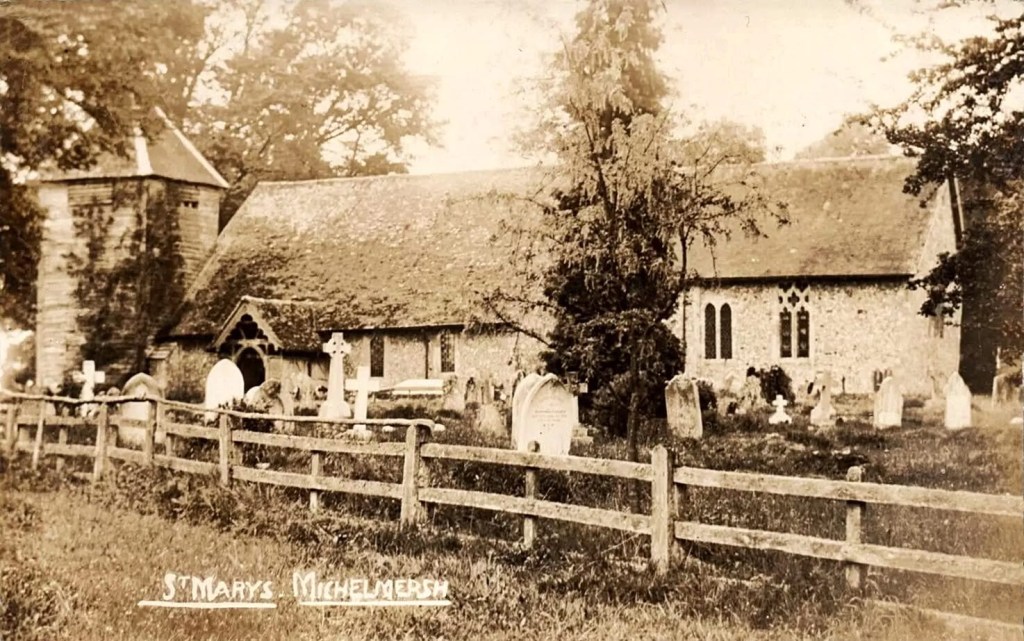
The early summer sun filtered through the yew trees as Joseph, his family, and friends made their way up the hill toward St. Mary’s Church, Michelmersh. The day, though touched by the simmering tension of the larger world, was filled with personal joy and anticipation. Joseph was about to marry the woman he had chosen to share his life with, a day that his mother, Emma, had dreamed of since his birth 22 years ago. The sense of excitement was palpable in the air, though Joseph, standing just outside the church, took a moment to reflect. This was the day that marked the end of his life as a single man and the beginning of something new, his life as a husband, stepping into adulthood, and looking toward a future with Mary Kemish as his partner and the mother of their future children.
As family and friends gathered, Joseph could feel the weight of the moment settle in. The warmth of the summer sun and the serenity of the surroundings in Michelmersh made the church seem like a peaceful sanctuary, a place where he and Mary would begin the most important chapter of their lives. The village, with its rolling hills and quiet lanes, was the perfect backdrop for the solemnity and joy of the occasion.
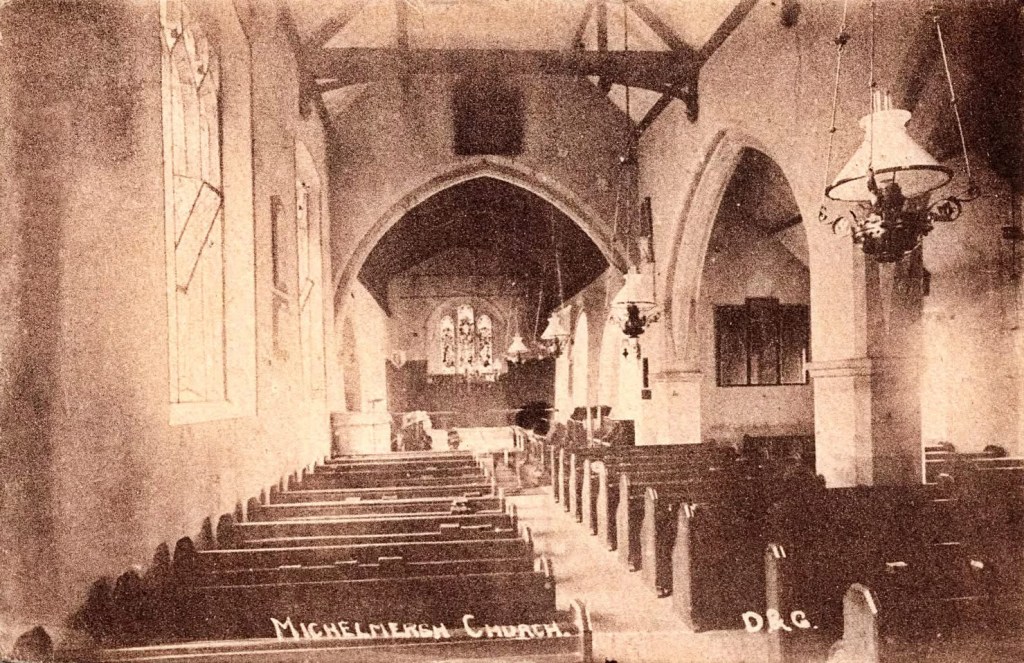
Once inside the church, the grand moment arrived. Joseph stood at the altar, his heart racing with anticipation. As the soft murmur of the congregation filled the air, he saw Mary, his bride, walking down the aisle toward him. Her presence seemed to light up the room, and in that moment, Joseph’s heart swelled with love and gratitude. The future that had once seemed so distant was now tangible, and as she approached him, he could feel the deep connection between them growing stronger with each step.
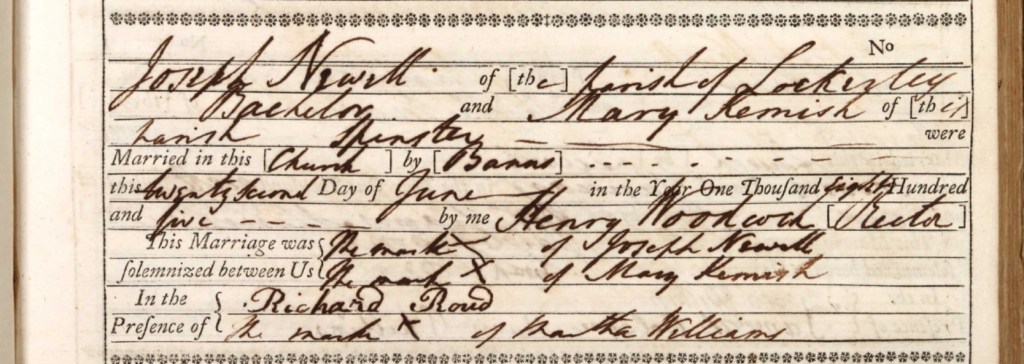
The ceremony was conducted by Henry Woodward, the Rector of St. Mary’s, who led them through the vows of matrimony. As Joseph and Mary exchanged their promises, the weight of the words “until death do us part” settled between them, a lifelong commitment to each other. They shared their first kiss as a married couple, a kiss that sealed the beginning of their life together in front of the congregation, with their witnesses, Richard Roud and Martha Williams, standing by their side.
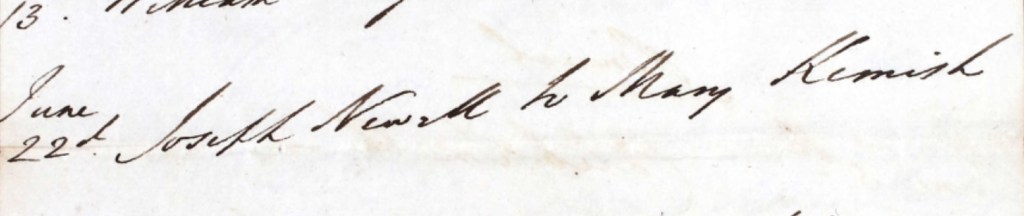
Following the ceremony, the marriage register was signed. Joseph, now a married man, signed alongside his new wife, Mary Newell, formerly Kemish, both of them marking the register with their marks, as was customary in a time when many could not sign their names. The simple, heartfelt notation in the registry captured the essence of the moment:

Joseph Newell of the Parish of Lockerley, Bachelor, and Mary Kemish of the Parish, Spinster, were married in this Church by Banns this twenty-second Day of June in the Year One Thousand eight Hundred and five by me, Henry Woodward, Rector.
This Marriage was solemnised between Us:
The mark X of Joseph Newell
The mark X of Mary Kemish
In the Presence of Richard Roud
The mark X of Martha Williams.

For Joseph and Mary, Saturday, the 22nd day of June, 1805, marked a day of profound change. As they stepped out of St. Mary’s Church as husband and wife, they embarked on a journey together, one that would be filled with love, challenges, and the joys of family life. Though the world outside was in turmoil, in that moment, they had each other, and the future was full of promise. Their union, simple yet profound, was the beginning of a new chapter, not just for them, but for their families, and for the Newell name.
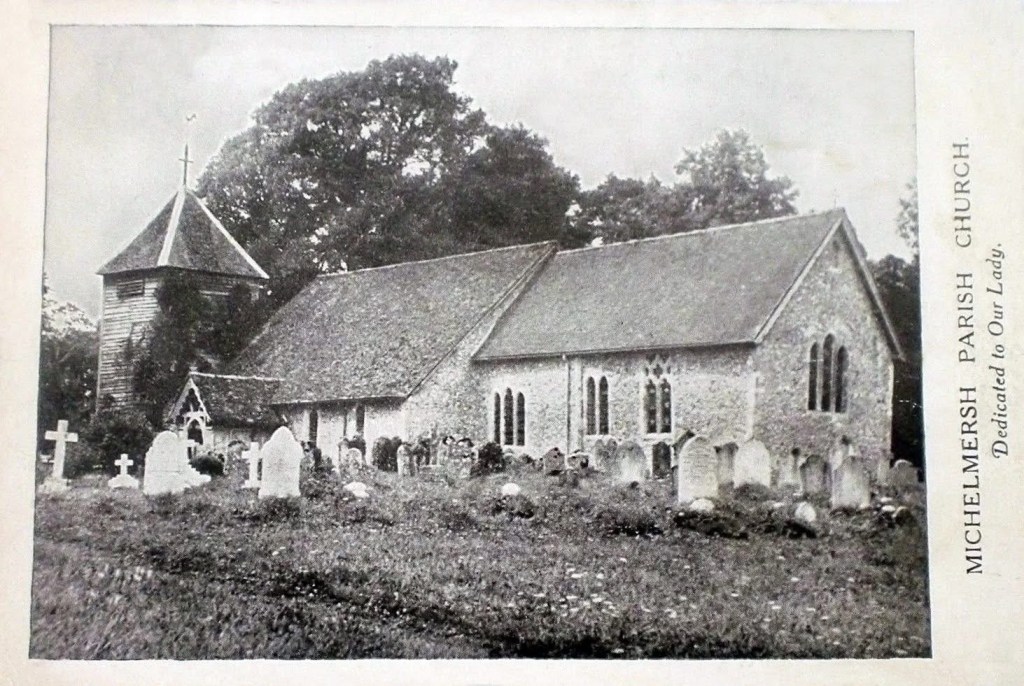
St. Mary’s Church in Michelmersh, Hampshire, is a beautiful and historic parish church that has played a central role in the spiritual and community life of the village for many centuries. Located in the peaceful countryside of Hampshire, St. Mary’s Church serves as an important landmark and is deeply connected to the village’s history and its people.
The history of St. Mary’s Church dates back to medieval times, with the first references to the church appearing in documents from the 12th century. The church was likely built during the Norman period, though there have been many modifications and restorations over the centuries, reflecting the changing architectural styles and the needs of the community. Like many churches in rural England, St. Mary’s would have served not only as a place of worship but also as a central gathering point for the village, hosting baptisms, marriages, and funerals.
The architecture of St. Mary’s Church is an example of the typical styles seen in rural churches of this era. The building is constructed from local stone, and its design has been influenced by both Romanesque and Gothic architectural styles. The church features a simple yet elegant structure, with a nave, chancel, and tower. The tower, which would have served as a symbol of the church’s prominence in the village, is an important feature of the church’s exterior. Over the centuries, the church has undergone various renovations and extensions to meet the needs of the growing population, but its fundamental design has remained faithful to its original structure.
One of the key periods in the history of St. Mary’s Church came in the 19th century when many churches were restored or rebuilt under the guidance of architects and scholars of the time. During this period, St. Mary’s underwent significant restoration work, likely driven by the Victorian-era passion for restoring medieval churches. This restoration would have focused on preserving the architectural integrity of the church while adding new elements to accommodate the expanding congregation. The addition of stained-glass windows, the improvement of the interior furnishings, and the enhancement of the church’s acoustics were likely part of this restoration process, reflecting the era's fascination with Gothic Revival architecture.
The churchyard surrounding St. Mary’s Church is also an integral part of its history. Like many rural churches in England, the churchyard is the final resting place for many generations of the village’s residents. The graves and memorials found in the churchyard are a testament to the people who lived in Michelmersh throughout the centuries, offering a glimpse into the village’s past. Some of the gravestones are centuries old, and their inscriptions and symbolism provide valuable insights into the local history and the families who lived in the area. The churchyard also serves as a peaceful place for reflection and a reminder of the deep connection between the village and its church.
St. Mary’s Church has continued to play a central role in the life of Michelmersh. The church still holds regular services, including Sunday worship, weddings, baptisms, and funerals, serving as a focal point for the spiritual life of the community. The church is not only a place of worship but also an important cultural and social center for the village. It is a place where the community gathers for events, celebrations, and activities that bind the people together. The church has also hosted special events, such as concerts and festivals, which have helped bring the community together and allow people to celebrate their shared heritage.
In terms of local folklore and rumors of hauntings, St. Mary’s Church, like many historic churches, has been the subject of occasional ghost stories. While there are no widely documented or well-known accounts of hauntings, it is common for older buildings, particularly churches, to inspire tales of supernatural occurrences. The church’s long history and its connection to the lives of the people of Michelmersh provide a natural backdrop for such stories. The churchyard, with its centuries-old graves, might contribute to an eerie atmosphere, especially in the stillness of the early morning or evening. However, these tales are generally passed down through generations and are part of the local folklore rather than established facts.
As we close the first chapter of Joseph Newell's life, we are left with a sense of quiet reverence for the journey he embarked upon in his early years. Born into the rolling hills of Lockerley, Hampshire, in 1783, Joseph’s path was shaped by the rhythms of rural life, by the love of family, and by the unspoken legacy of the generations that came before him. His story, as we've seen, is woven through with moments of joy, baptisms, marriages, the birth of siblings, and marked by the enduring presence of love and faith that held his family together. But it is also tempered by the inevitable sorrow of loss, as the Newell family faced the heartache of parting with loved ones too soon.
Joseph’s early life, though touched by the turbulence of the world around him, speaks of the resilience and strength found in community and in the quiet determination to carry forward. As we reflect on these formative years, we are reminded that the story of one life is always part of a larger tapestry, a connection to those who have come before and those who will follow.
This is only the beginning of Joseph’s journey. What lies ahead for him, as he steps further into adulthood and the responsibilities that come with it, remains to be explored. Yet, as we turn the page, we carry with us the echoes of his early years, a foundation built on love, faith, and family. His story, still unfolding, is a testament to the enduring bonds that shape us, even through the passages of time.
Thus, we close this chapter with gratitude for the past and anticipation for the future, knowing that Joseph Newell’s life is far from complete, and that each step he takes will continue to ripple through the generations. The early years have laid the groundwork, and the next chapter awaits.
Until next time,
Toodle pip,
Yours Lainey.
🦋🦋🦋
I have brought and paid for all certificates,

Please do not download or use them without my permission.

All you have to do is ask.

Thank you.








 Intwined