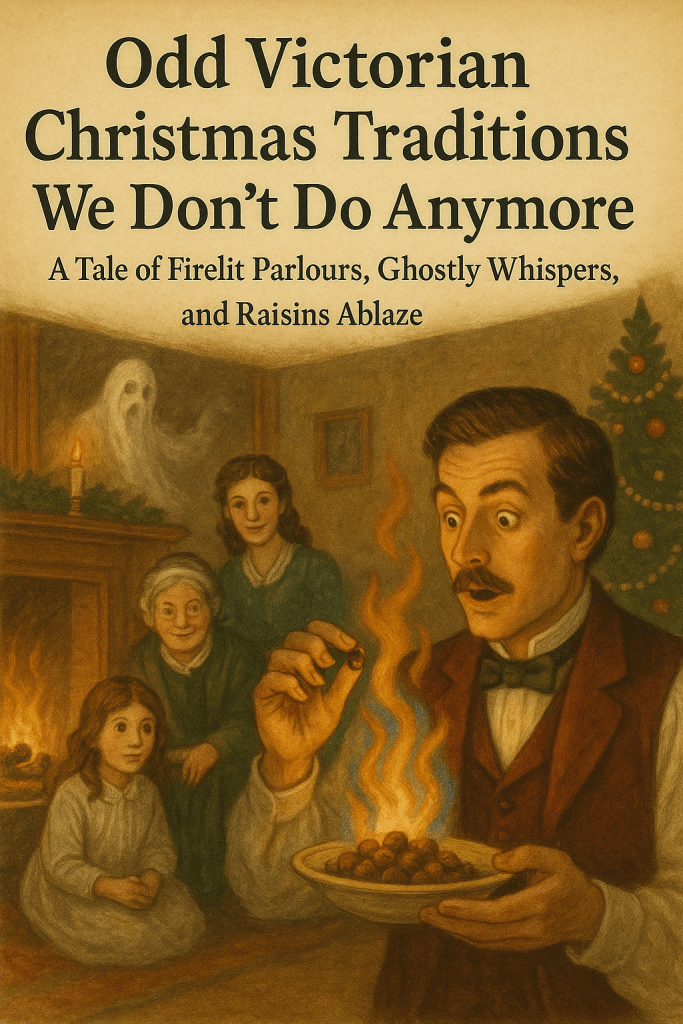
There is something delightfully peculiar about the Victorian Christmas, an enchantment woven from equal parts propriety and pandemonium. We often picture the era as a snow globe of gentility, wrapped in lace and candlelight, all polite smiles, sentimental cards, and holly-decked parlours smelling faintly of nutmeg. Yet beneath those velvet trimmings, and under the well-behaved gaze of portraits in gilt frames, lay a festive season far stranger, far wilder, and far more dramatically unhinged than most modern merrymakers ever suspect.
For the Victorians lived in a world where romance twirled arm-in-arm with danger, where mischief nestled comfortably beside manners, and where the spirit of Christmas flared with the same theatrical bravado as a brandy-soaked pudding set alight at the centre of a crowded table. Their celebrations sparkled not only with tinsel and good intentions, but with a kind of gleeful eccentricity, an appetite for the marvellous, that made their winter rituals shimmer between reality and dream.
This was an age that invented the Christmas cracker (a tiny gunpowder surprise wrapped in paper), revived medieval customs with feverish enthusiasm, and insisted that nothing said “holiday cheer” quite like a goose fattened to improbable dimensions. It was a time when parlour games grew rowdy enough to topple furniture, when the post office groaned under the weight of nearly 11 million Christmas cards a day, and when children pressed their noses to frosted windows, convinced that magic itself was on the move.
So settle yourself now by the warm glow of a fire, let it crackle like an old story rediscovering its voice. Breathe in the scent of pine, mince pies, orange peel, and winter apples. Feel the hush of snow against the windowpane.
And together, let us wander, hand in mittened hand, through a world of hearthside ghost tales, flaming raisins snatched from blue-tongued fire, and the deliciously unhinged wonders that only the nineteenth century could have produced. A world where imagination ruled the parlour, nonsense danced on Christmas cards, and even the shadows seemed to hum with possibility.
For in Victorian Christmases, the extraordinary was not an exception.
It was the tradition.
Ghost Stories by the Hearth
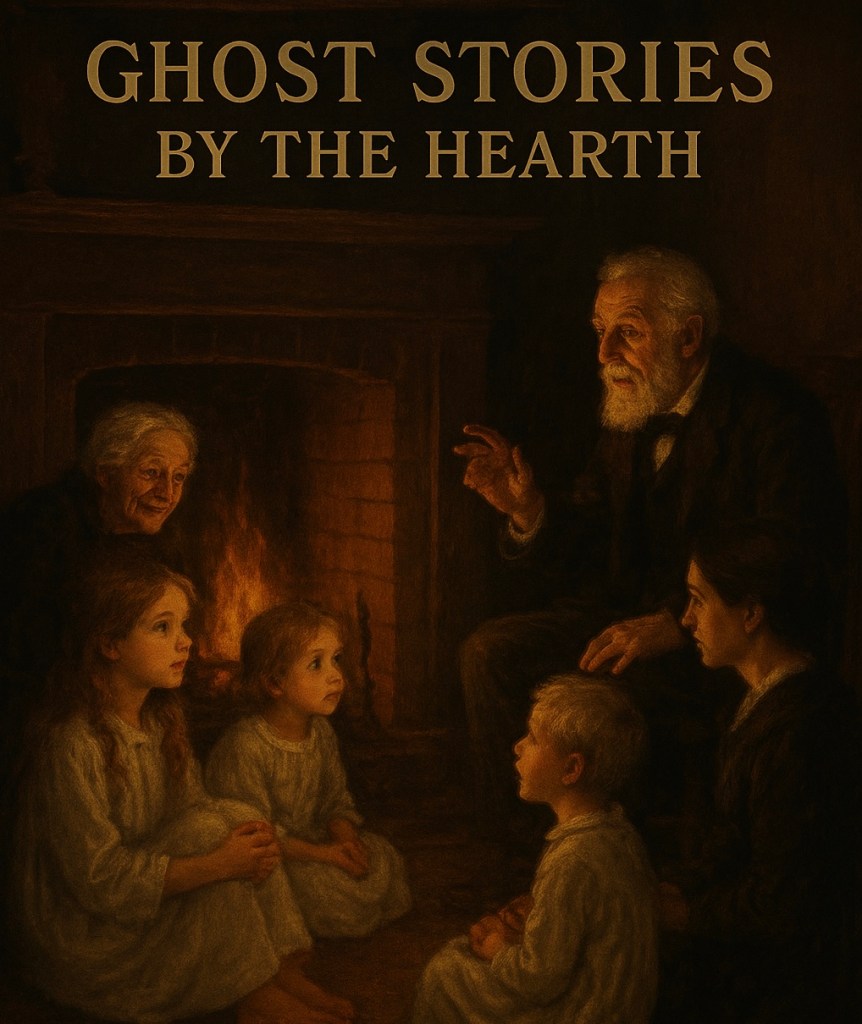
Long before October seized its modern monopoly on the macabre, long before pumpkins learned to grimace and skeletons rattled retail windows, Christmas Eve was the true night of spirits. In the Victorian imagination, midwinter was a threshold season, when the world lay hushed under a quilt of frost and the veil between the living and the departed thinned to a silvery breath. They believed the deep stillness of the solstice, the hush of snow, the brittle starlight, the frozen ponds mirroring the moon, allowed the otherworld to drift closer, like a shy visitor testing the latch of the back door.
The Victorians said the cold sharpened mysteries the way a whetstone sharpens a blade: every shadow a tad longer, every creak a whisper, every candle-flame a trembling custodian of secrets. And so, as night gathered its velvet folds, families settled by the fire, the entire household drawn toward the hearth as though by an invisible thread. Children in long, white nightgowns huddled together on the rug, knees tucked, eyes wide. Mothers lifted a finger to their lips. Grandparents leaned forward with conspiratorial delight, faces carved by years, yet glowing with mischief, as they spun tales of wandering souls, sorrowful phantoms, and luckless apparitions who rattled their chains not out of malice, but because they had not been invited to supper.
It was not morbid, it was tradition. A cherished ritual. A joyful shiver shared between generations.
And despite modern assumptions, Dickens did not invent the Christmas ghost story, he merely took an already glittering custom and polished it until it gleamed like the brass on a well-tended mantel. A Christmas Carol belongs to an ancient lineage of winter tales, stories meant to warm the imagination as much as the fire warmed the hands. The Victorians relished them. Magazines of the era published special holiday editions filled with “fireside phantoms,” written by the likes of M.R. James and Elizabeth Gaskell. Ghosts at Christmas were as essential as figgy pudding, as inevitable as plum cake, as welcome as a sprig of holly hung above the parlour mirror.
For winter invites reflection, of life, of loss, of mystery. And even today, when electric lights have banished the deep dark and central heating has replaced the crackling hearth, one cannot help feeling that long December nights still carry a faint enchantment.
Perhaps it is only imagination. Perhaps it is memory.
Or perhaps, if the snow falls softly enough and the world holds its breath, you might yet hear the faintest footstep of something unseen passing gently across the whitened world outside your window.
After all, the Victorians believed that Christmas was a time when miracles and ghosts walked side by side.
And who are we to say they were wrong?
Snapdragon: The Glorious Foolishness of Flaming Raisins
When a modern household descends into chaos over a misplaced pawn or a disputed rule in a board game, there is oddly enough, some comfort in remembering that at least no one is setting fire to the refreshments. The Victorians, however, possessed a brand of festive fortitude entirely their own. Their hearts were braver, their amusements bolder, and their sense of self-preservation significantly more negotiable. For them, Christmas entertainment was not complete without the crackling thrill of Snapdragon, a game so wonderfully absurd that only the nineteenth century could have embraced it with such affection.
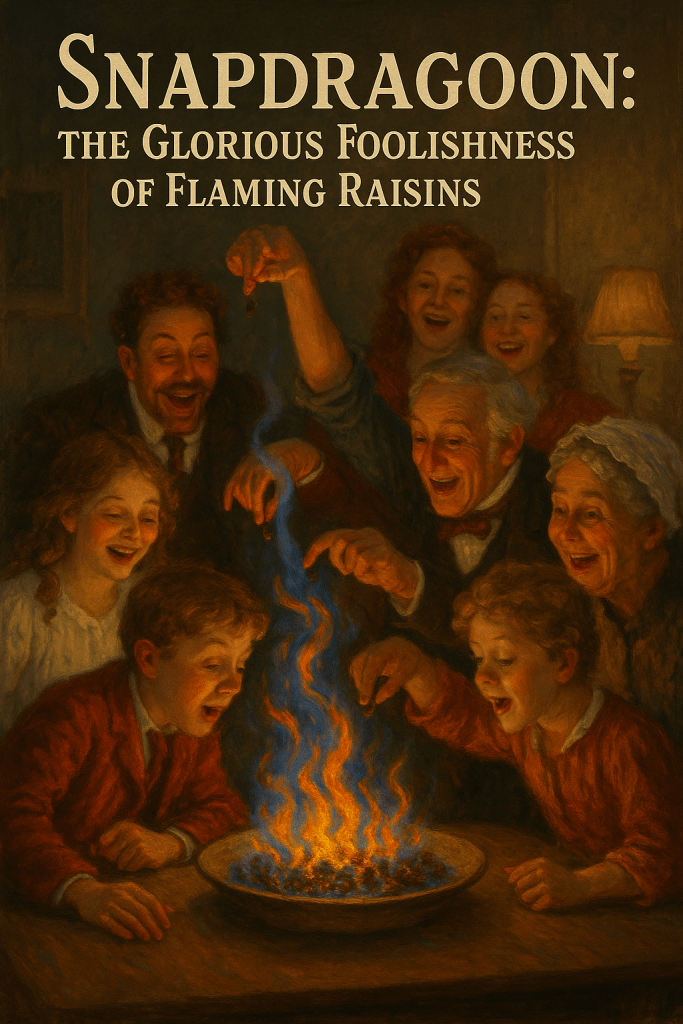
Picture it: a wide, shallow dish placed ceremoniously at the center of the parlour table, heaped generously with raisins and then drowned quite unashamedly, in brandy. The lamps dim. The room hushes. The curtains shiver as if even the draught were holding its breath. And then, with the calm assurance of a people whose clothing was made almost entirely of flammable fibres, someone strikes a match. A brief pause. A flicker. A whisper of sulfur. And then the brandy ignites in a ribbon of shimmering blue, curling upwards like a spell cast by a mischievous winter sprite.
The flames dance and twist, casting enchanted shadows on the wallpaper roses. Laughter erupts. Guests lean forward eagerly, warmed by firelight and mulled wine, the air rich with the sweet, smoky perfume of burning spirits. And into this reckless glow they thrust their hands, bare hands! to snatch a sizzling raisin from the swirling flames before tossing it triumphantly into their mouths. Children joined with the same delight as their elders, their cheeks rosy with excitement, their eyes reflecting both the blaze and their own daring.
It was festive. It was foolish. It was utterly adored.
And it had its own soundtrack, playful rhymes murmured or chanted to the rhythm of the flames, verses that cautioned players to be nimble or risk losing more than their raisin. Some families recited them with solemn mock-gravity, others with raucous amusement. The game appeared in parlours across Britain, from grand country estates to modest townhouses, and was even mentioned in guidebooks of the time as a recommended Christmas amusement, as though it were entirely reasonable to set one’s dessert aflame and then dive into it.
But as the decades unfurled and safety grew more fashionable than spectacle, Snapdragon’s firelit bravado quietly slipped into history. Modern sensibilities, less tolerant of scorched tablecloths and blistered fingertips, coaxed it gently out the door. What remains is its memory: a faint whiff of singed sugar, a shimmer of blue flame in the mind’s eye, a whisper of laughter rising from a Victorian parlour where danger and delight danced hand in hand.
And oh, what a magnificent, ridiculous dance it was.
The Curious Case of the Dead Birds.
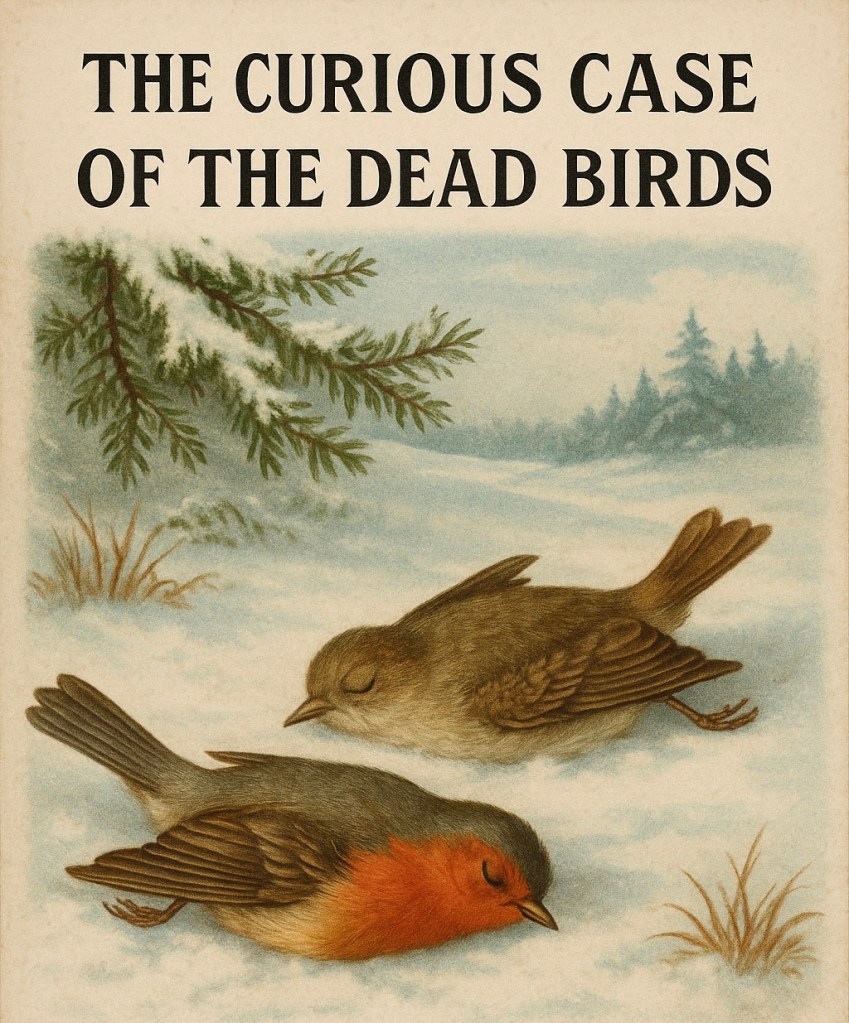
The Victorian Christmas card is so often remembered as a delicate treasure of sentimentality, a paper snowflake of goodwill passed from hand to hand. We imagine rosy-cheeked cherubs, sprigs of holly, and tidings of comfort drifting across the postal service like tiny wishes tied with ribbon. Yet tucked among these charming scenes lay an imagery that would stop the modern shopper mid-aisle, blinking in polite horror: tiny birds, perfectly still, unmistakably lifeless, lying soft as fallen petals upon the snow.
Robins reclined with surprising grace, their crimson breasts a last warm flare against the pale frost. Wrens stretched gently upon drifts of white, frozen in melodramatic repose, as though caught halfway through a sigh. Their little feet curled, their feathers dusted with winter, they wished the recipient, quite sincerely, a cheerful and prosperous holiday.
Strange as it seems to us, the Victorians did not find such images morbid. To their eyes, these small feathered martyrs shimmered with symbolism. A dead bird spoke of the hardships of winter and the turning of the year, a poetic acknowledgment of nature’s harsh, cyclical wisdom. It offered quiet reminders of renewal, rebirth, and the sacrifices woven into the threads of life. Some saw in these images the Christian echoes of innocence lost and regained; others simply found them touching, like a snow-crusted poem.
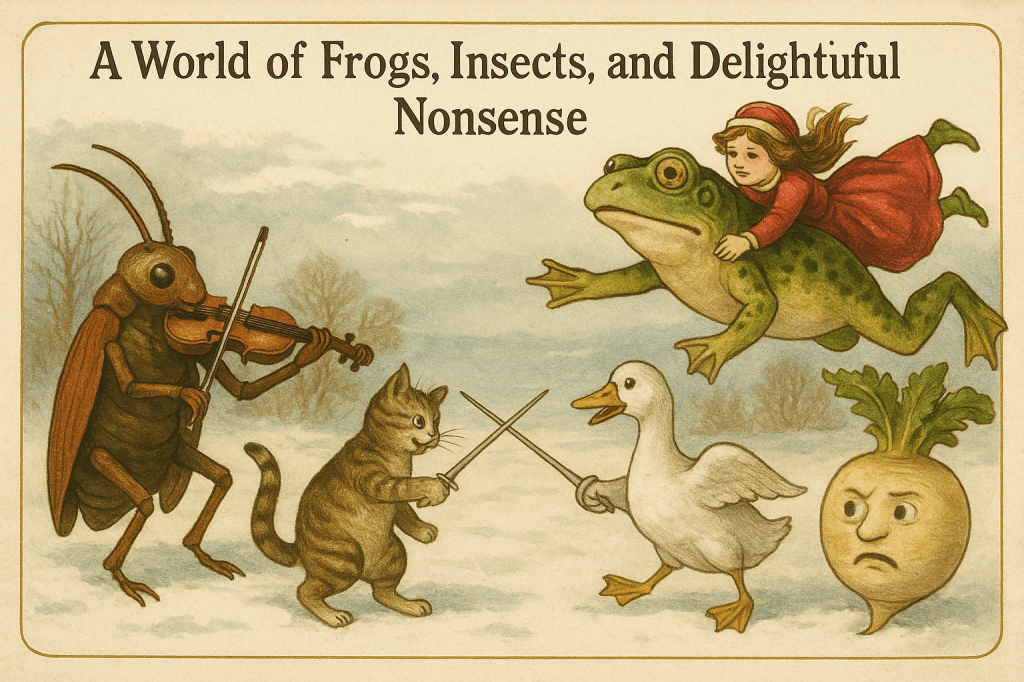
But Victorian cards were not confined to melancholy beauty. They were also the playground of pure, unrestrained nonsense. Parallel to the fallen robins marched an entire parade of glorious absurdity. Children rode enormous lobsters as though charging heroically into some seawater battlefield. Beetles, dressed in impeccable miniature livery, delivered parcels with enviable punctuality. Frogs in waistcoats bowed, fenced, or waltzed under moonlit skies as though auditioning for an amphibian opera. Even humble vegetables joined the festivities, their rooty features sculpted into expressions of grave disapproval or mild surprise.
The Victorians adored whimsy with a kind of reverent mischief. Their Christmas cards were nothing less than portals into dreamscapes, eccentric, surreal, and occasionally unhinged. They lived in a world ruled outwardly by etiquette and industry, yet their imaginations roamed wild as winter winds, creating postcards in which logic took the night off and delight reigned supreme.
These curious cards, tucked into envelopes and sealed with wax, allowed everyday people to send a flicker of wonder through the post. A reminder that ordinary life could be gently nudged aside to make room for the whimsical, the eccentric, the delightfully strange. And in those fleeting moments, the Victorian Christmas became not just a season, but a carnival of imagination, where even a dead bird or a dancing frog felt right at home.
The Romance and Peril of the Mistletoe Ball.
Today’s mistletoe is a timid thing. It hangs demurely above a doorway, a shy little sprig tied with ribbon, delicate enough to be overlooked and convenient enough for everyone to pretend they haven’t seen it. If it inspires a kiss at all, it is usually the sort given out of humor or politeness, a gesture softened by modern sensibilities. But the Victorians were not content with such modesty. Their flirtations demanded spectacle, ceremony, and a touch of theatrical peril. They adored romance in its most extravagant form, and so they brought forth the kissing ball.
These were not mere decorations but great orbs of enchantment, shimmering globes woven from holly, ivy, apples, fir branches, ribbons, and most crucially, boughs of mistletoe. They hung heavily from rafters and ceiling hooks, poised over the center of the room like festive suns radiating both hope and anxiety. Candlelight glimmered upon their glossy surfaces. The scent of evergreen mingled with oranges and beeswax. And beneath their shadow, hearts beat just a little faster.
For the rules were simple, merciless, and by our standards spectacularly alarming. If a woman happened to step beneath the mistletoe ball, even by accident or by the gentle nudge of a mischievous cousin, she was expected, duty-bound, tradition-sealed to accept a kiss from whichever gentleman presented himself. Each kiss entitled him to pluck a single white berry from the ball, a kind of tallying system that transformed the entire ritual into a social dance of anticipation, scandal, and occasionally strategic avoidance.
Some families believed that a kiss beneath the ball foretold marriage within the year, a prophecy whispered with equal parts excitement and dread. Others insisted it bestowed good fortune, ensuring a year of health, harmony, and hearthside contentment. And many simply enjoyed the delicious awkwardness of it all: the sudden hush when someone paused beneath the greenery, the nervous laugh, the reddening cheeks that glowed brighter than the fire in the grate.
Contemporary visitors to Victorian homes often remarked on the spectacle. The kissing ball became almost a character in the room, an omnipresent chaperone of romance, swaying gently in the warm air, its berries disappearing one by one as the night grew merrier. It oversaw engagements, harmless flirtations, and the occasional accidental kiss that would be whispered about for weeks afterward.
But time, as it always does, softened the sharper outlines of this ritual. The idea of compulsory affection wilted like holly leaves in a forgotten wreath. Etiquette shifted, customs reshaped themselves, and the great mistletoe ball faded into memory, drifting away like a dream that once seemed entirely normal but now shimmers with a slightly incredulous charm.
Yet there is something undeniably magical in imagining it still: a glowing orb of winter greenery presiding over a room full of hopeful glances and stolen moments, a relic of an age when romance dangled overhead like a promise waiting to be claimed.
A World of Frogs, Insects, and Delightful Nonsense.
Of all the eccentric marvels the Victorians offered the world, none is quite as endearing or delightfully baffling, as their unshakable devotion to nonsense. They embraced absurdity with the same enthusiasm they applied to lace trimmings, intricate etiquette, and elaborate puddings. And nowhere did this whimsical spirit unfurl more extravagantly than in their Christmas cards.
To the modern eye, these cards look as though they’ve tumbled out of a dream dreamt by someone who had eaten far too much plum pudding and perhaps inhaled a little too much lamp oil. Yet to the Victorians, they were simply charming expressions of holiday cheer. Their festive illustrations seemed to exist in a parallel universe where logic wore a paper crown, poured itself a glass of punch, and promptly wandered off.
Here, giant insects played the violin with enviable confidence, their delicate wings shimmering as they performed serenades upon snowy stages. Cats, their whiskers bristling with bravado, challenged geese to duels, both combatants wielding tiny swords with grave determination. Turnips gazed out from the artwork with faces carved into expressions of mild concern or gentle surprise, as though contemplating the mysteries of vegetable existence. And children, those small apprentices of imagination, flew across the sky on the backs of improbable creatures, moths, fish, owls large enough to carry them toward stars shaped suspiciously like sugar.
Such imagery might seem bizarre to us, but in the Victorian era it made perfect, poetic sense. These were people living in the iron grip of industry, monotony, and meticulously structured social codes. Whimsy was not merely entertainment; it was a rebellion, a pocket-sized revolt wrapped neatly in an envelope. It allowed the imagination to stretch its limbs, to leap elegantly over the constraints of propriety and decorum.
Victorian Christmas cards were miniature windows into enchanted worlds, wide open for anyone willing to peer in. They were invitations to wander through snowy forests where beetles wore boots, where frogs in waistcoats danced beneath lantern-lit branches, where time slipped sideways and delight was the only compass.
This devotion to nonsense did not undermine their Christmas spirit, it adorned it. For the Victorians believed with unshakable conviction that the world was far more interesting when you allowed it to be absurd. Their yuletide fantasies overflowed with magic and symbolism, unafraid to blur the line between reality and wonder. In their cards, as in their hearts, imagination was not something to be restrained.
It was something to be celebrated, cherished, and sent through the post with a cheerful message and a flourish of ink.
Time has a gentle way of softening the sharp edges of history. Traditions that once burned bright mellow into embers, glowing faintly beneath the ash of years. As the decades unfurled their ribbons of change, safety regulations politely extinguished the brilliant, foolish blaze of Snapdragon, turning flaming raisins into a tale rather than a pastime. Modern tastes, ever fond of friendliness and predictability, replaced the dignified little corpses on Victorian cards with round-bellied snowmen, jaunty robins that remained conveniently alive, and scenes so wholesome they could never raise an eyebrow, let alone a ghost.
Romance, too, reorganised itself. The great mistletoe balls that once hovered like enchanted orbs over crowded parlours, terrifying and thrilling in equal measure, withered into modest sprigs, tucked discreetly above doorways. The expectation dissolved, the ritual softened, and the perilous theatre of public kisses gave way to polite chuckles and selective participation.
Ghost stories, once crackling in the firelight like spirits gathering at the edges of the hearth, slowly stepped aside as films and fairy lights claimed the winter night. Raucous parlour games subdued themselves into box sets and board games with printed instructions, and the fantastical Victorian oddities, those flying frogs, dueling cats, and solemn-faced turnips, melted like frost at sunrise, retreating into the shadows of memory’s attic.
Yet for all their strangeness, these customs remind us of something precious. Christmas has never belonged solely to tidiness or decorum. Beneath its ribbons and rituals lies a season woven from wonder and mystery, from laughter that echoes down hallways and the sweet ache of nostalgia. It is a time when warm hearts glow more boldly against cold weather, when imagination stretches its limbs, and when even the most sensible adults feel the faint, familiar tug of childhood magic.
The Victorians, in all their eccentric splendour, understood that joy and oddity often walk together. They knew that magic is rarely neat. It does not arrive pressed and starched. It arrives flickering like candlelight, crackling like burning brandy, whispering like a ghost leaning in to share a secret. Sometimes it even sets raisins on fire.
Their Christmas was a landscape where the extraordinary felt entirely possible, where danger flirted with delight, where nonsense danced arm in arm with meaning, where the winter night throbbed with possibility.
And perhaps, if we let their peculiar customs wander back into our thoughts, like curious visitors tapping at the frosted window, we might find our own celebrations enriched with a little of that wild enchantment. A reminder that the season is not merely to be observed, but to be lived with imagination, warmth, and a willingness to let the unbelievable breathe.

 Intwined