There is a moment every December when the sun appears to sigh, sinking so early and so quietly that one might suspect it has simply grown weary of illuminating humanity’s antics. The winter solstice has always been this pause, this deep breath taken by the heavens. Darkness stretches itself luxuriously across the land, and the faintest spark of returning daylight begins its slow climb back into the world. Long before twinkling lights, spiced lattes, or sales on festive sweaters, civilizations gathered around this celestial turning point with rituals that shimmer through our holidays even now.
In ancient Rome, the solstice season blossomed into Saturnalia, a festival so joyful and chaotic that modern office holiday parties seem tame in comparison. Saturn, the old god of agriculture and time, was honored with feasting, dancing, and a delightful social inversion in which servants were treated as kings for a day. One can imagine the awkwardness of a wealthy Roman politician handing his cook a goblet of wine while trying to appear humble. Banquets overflowed, evergreen wreaths adorned doorways, and gifts, often small and symbolic, were exchanged with the same warmth and occasional confusion that still accompanies modern gift-giving. If you have ever received a present and thought, “Ah… thank you… what is it?” then congratulations: you have participated in the ancient spirit of Saturnalia.
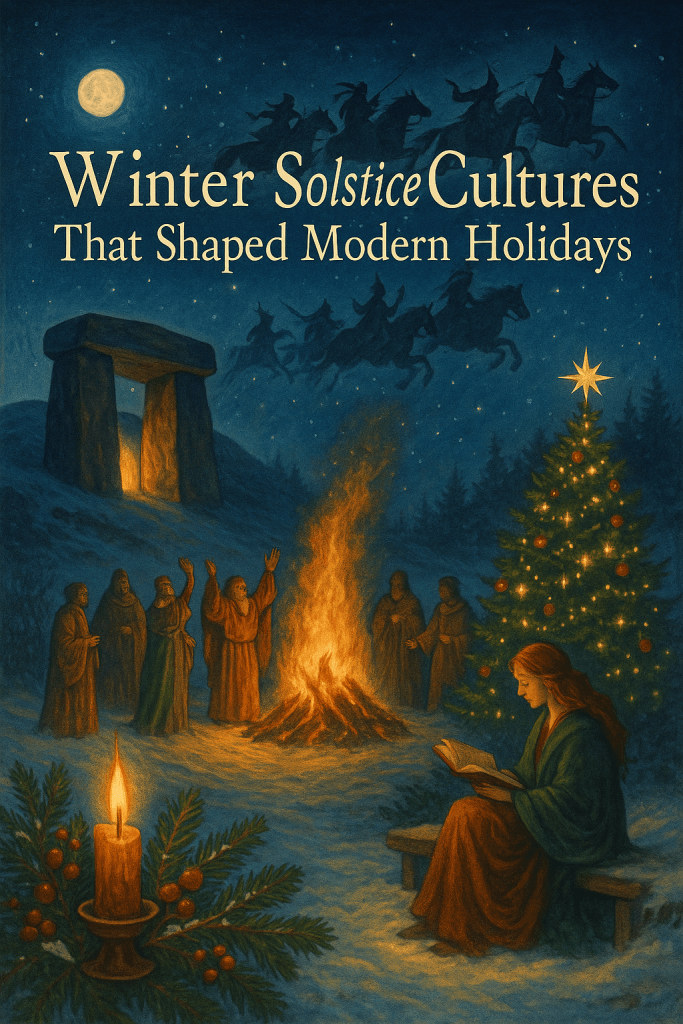
Far to the north, among the Norse, winter belonged to Yule, a season woven of mystery, storytelling, and a healthy respect for whatever wandered in the dark. Families dragged enormous logs into their homes, truly enormous, the sort that would make modern fire-safety inspectors faint, and set them ablaze. These Yule logs were meant to burn for days, spreading warmth and coaxing the fragile sun to grow strong again. Outside, the Wild Hunt was said to roar across the sky, a ghostly entourage of gods and spirits galloping through the winter night. Doors and windows were sealed tight, not because the Norse feared ghosts (they were quite used to supernatural neighbors), but because one does not simply invite Odin into the house without tidying up first. When we light candles today or surround ourselves with evergreens, we are echoing those northern traditions that insisted light and life should never concede entirely to the cold.
Travel eastward and the Persian festival of Yalda gleams like a ruby in the long night. Yalda is not a spectacle of rowdy revelry; it is a vigil of beauty. Families gather and stay awake until the sun returns, eating pomegranates that burst like captured sunsets and reciting poetry that softens the darkness. Hafez’s verses are read aloud, and for a moment the night feels gentler, not something to fear but something meant to be shared. Today, when people gather around tables piled with treats or stay up late telling stories, they are keeping company with those who once guarded the solstice night through laughter, fruit, and poetry. It turns out the best defense against darkness has always been good conversation and snacks.
Across the ocean and far into the Andes, the Inca honored their winter solstice with Inti Raymi, the festival of the sun. Though this celebration takes place in June, winter in the Southern Hemisphere, it follows the same ancient instinct: to greet the sun not as a distant ball of fire, but as a beloved ancestor. People danced in circles that mirrored the sun’s path, wearing vibrant colors that would shame even the brightest holiday sweaters of today. Offerings were made with reverence and gratitude, for the sun was the heartbeat of the world. Our modern fascination with string lights, glowing ornaments, and decorations that turn entire neighborhoods into luminous landscapes carries a faint echo of this ancient devotion. We no longer dance publicly in honor of the sun, but give us a catchy tune and a few glasses of holiday cheer and many of us come close enough.
And then there are worlds even older, prehistoric cultures that carved their reverence into stone. In Ireland, at Newgrange, a passage grave built over five thousand years ago aligns with the solstice sunrise. Once a year, the sun slips through a narrow opening and illuminates the chamber within, a golden reminder that the architects of the ancient world knew the rhythms of the sky with breathtaking precision. Imagine their awe as the first light of the newborn sun spilled into that sacred darkness. Imagine the hope, the relief, the communal whisper: “The light is returning.” When we gather around fires, string lights on trees, or warm ourselves by the glow of hearths and lamps, we are participating in a lineage of light-seeking older than recorded history.
Modern holidays, with all their shimmering gestures and tangled traditions, are mosaics of these ancient celebrations. Gift giving, feasting, evergreen decorations, late-night gatherings, candles, lights, shared stories, and the eternal desire to outshine the gloom, all these drift upward from cultures that would not let winter claim their spirits.
Though our calendars have marched onward and our rituals have changed their costumes, the heart of the solstice remains with us. It whispers through every glowing window and every quiet December night: that even in the darkest season, light prepares its return; that humans have always gathered together to defy despair; that laughter, food, poetry, and fire are as old as our fear of the dark, and as old as our hope for dawn.
Stand still on a long winter’s night. Feel the cold nip your cheek, listen to the hush, and look toward the small glow of your home. Somewhere deep in the folds of time, Romans feast, Norse families whisper charms, Persian poets speak of love, Inca dancers circle like suns, and ancient stones await their single beam of morning.
The solstice binds them all, and us, to the same timeless promise: the dark is long, yes, but the returning light is longer still.
As the longest night gently folds itself around us and the first faint promise of returning light stirs on the horizon, I want to take a moment to speak directly from my heart to yours. The winter solstice has always felt like a whispered blessing to me, a reminder that even in the deepest quiet, something new is beginning to awaken.
Wherever this season finds you, whether wrapped in blankets, surrounded by loved ones, or savoring a moment of stillness just for yourself, I hope tonight brings you a sense of peace. May the soft glow of the solstice remind you that light is never truly gone, only resting, gathering itself for its next bright chapter.
Thank you for being here, for reading, for sharing these little journeys through history, wonder, and imagination with me. Your presence means more than you know.
Wishing you a Happy Winter Solstice, may it fill your heart with warmth, your home with comfort, and your days ahead with a growing, gentle light.
Until next time,
Toodle pip,
Yours Lainey.
 Intwined