There is a peculiar enchantment that settles over the world in the final days of December. It is not quite Christmas anymore, but neither is it the new year. Time seems to walk in slow, muffled footsteps, as if it too is wearing woolen socks and does not wish to disturb the hush outside. This halting, in-between week once held far more meaning than we tend to give it. Our ancestors treated it as a sacred stretch of twilight, an intermission in the grand theater of the seasons, where the curtain had fallen on the old year, but the orchestra had not yet begun its tune for the next.
In old Europe, people believed these days were drenched in magic. Not glamorous, shimmering, fireworks-at-midnight magic, no, theirs was a quieter, frostbitten kind. The snow-covered fields seemed to hum faintly with secrets. The forests held their breath. And the sky pressed close, heavy with stars that looked far too curious for their own good.
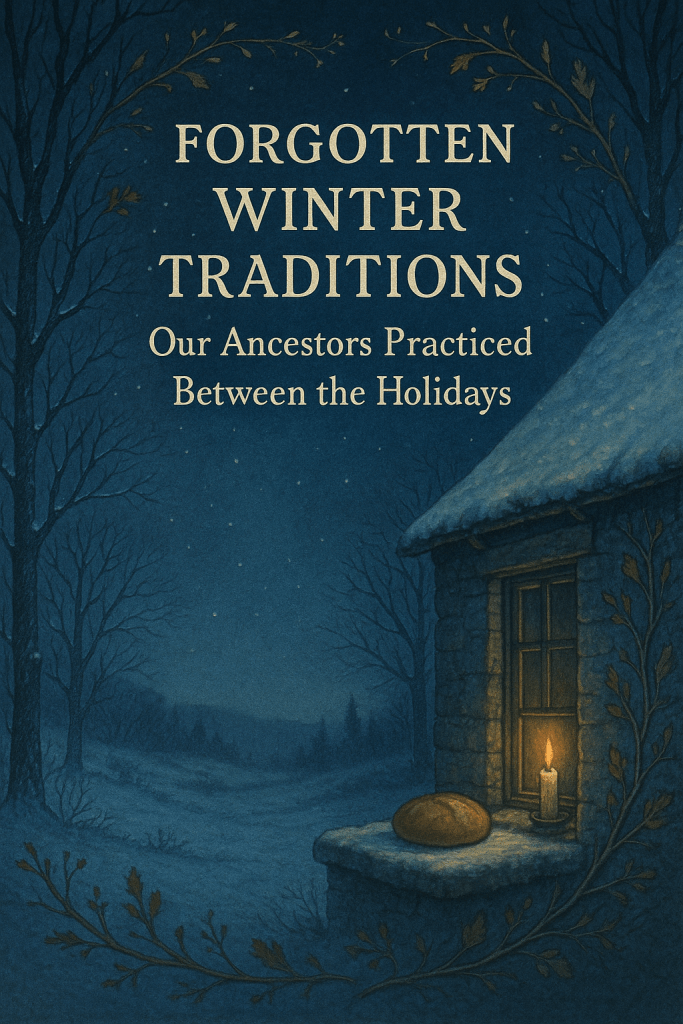
In many homes, families left bits of food by the window: a heel of bread, a piece of cheese, perhaps a sip of ale if the master of the house was feeling generous and hadn’t “accidentally” consumed it beforehand. These were offerings for wandering ancestors, not because the spirits needed carbs, but because hospitality was considered the polite thing to extend, even to the departed. Ghost or not, visiting relatives were visiting relatives. And really, what host wants to be remembered as the one who let their great-great-grandfather shiver outside without so much as a crust of sourdough?
Folks moved carefully, aware that the dead might drift along with the winter winds. But there was nothing frightening about it. The relationship between the living and the dead back then was less horror movie and more holiday drop-in. It was believed that this week drew families together, some with warm bodies, some without, but all belonging to the same thread of memory.
Within homes, rituals unfolded with the same tenderness as a cat kneading a blanket. Floors were swept with slow, deliberate strokes, not to chase away dust but to coax new fortune into the home. Imagine householders sweeping as though they were diplomats negotiating with destiny: “Yes, misfortune, you may take your leave now. Kindly do not let the door hit you on the way out.”
And then there was the hearth, the ancient soul of every household. People watched the embers closely. A glowing coal that clung to life was a sign of prosperity. A restless plume of smoke foretold changes or travels ahead. It was essentially winter’s version of reading the comments section of the universe, cryptic, occasionally dramatic, yet oddly reassuring.
Outside, the world belonged to the strange winter spirits that folklore has, over the centuries, lovingly brushed under the rug. In northern traditions, the Yule beings roamed, some benevolent, some mischievous, all wonderfully dramatic. These figures were not the kind you invited inside unless you were in the mood for mild chaos, misplaced shoes, or advice no one asked for. So people shut their shutters at night, not in fear, but in a respectful “You do you, but not in my living room, thank you kindly.”
Young people, especially those with an enthusiasm for romance, practiced “dream rites” during this mystical week. Sprigs of evergreen were tucked under pillows. Apples were sliced and seeds counted. Small whispered charms were spoken before sleep, all in hopes of glimpsing a future sweetheart. These rituals worked approximately as well as modern dating apps, but at least the pillow never ghosted you.
Water fetched at dawn was said to carry purity. Candles lit at dusk were believed to keep mischief away. And animals received special treats, because it was widely believed that on these sacred nights, creatures could speak or at least understood the deeper mysteries of the world. If a cow happened to moo at midnight, people paid attention. If the family dog stared at the corner of the room as though sensing a ghost, people simply nodded and said, “Well, naturally.”
All these customs, crumbs on windowsills, ember reading, dream whispering, may appear quaint or curious to us now, but they reveal something timeless about the human heart. At the coldest, darkest moment of the year, people reached for connection. To ancestors. To nature. To the spaces between the known and the mysterious.
They recognised that this week was not empty or dull. It was an invitation to soften, to listen, to reflect. The old year exhaled. The new year inhaled. And in between, the world held its breath in a shimmering pause, like a snowflake suspended before choosing where to fall.
Even now, if you stand at your window on a late December night, the candle’s glow touching the glass, you may feel it, that ancient stillness. The gentle presence of something older than memory. The whimsical wisdom of traditions nearly forgotten but not lost.
For winter remembers everything.
And sometimes, when the world grows quiet, it allows us to remember too.
Until next time,
Toodle pip,
Yours Lainey.
 Intwined