The weight of grief never truly lifts; it settles quietly into the corners of a life, reshaping the way one walks through the world. For Joseph Newell and his beloved wife Jane, the burial of their infant son Harry in the spring of 1864 marked more than the closing of a chapter, it was the shattering of innocence, the fading echo of laughter that would never be heard again. The years that followed were not unmarked by moments of joy, but they were always shadowed by a sorrow too deep to name.
This second part of Joseph’s journey begins not with hope, but with quiet resilience. It follows a man who, though torn by loss, rises each day to meet his duties, to his family, his work, his faith. A husband who clings to the hand of the woman he loves, though her spirit bears the heavy bruises of too much mourning. A father who, despite knowing the fragility of life, dares to keep loving his children.
The fields of Hampshire still beckoned each morning, the seasons turned with unrelenting regularity, and the church bells rang for weddings and for burials alike. And through it all, Joseph walked steadily forward, not because he was unbroken, but because he must. Because to stop would mean letting grief win. And so, with calloused hands and a heart stitched together by duty, love, and memory, Joseph continued the only way he knew how, one step at a time.
This is his story. The story of a man who, despite the hardships and heartaches, never let go of the thread of family that bound him to this earth. It is a story rooted in the soil of real lives, documented by ink and parchment, carried in the bones of those who came after.
Welcome back to the year 1866, Awbridge, Hampshire, England. Life here moves at a slower, steadier pace, deeply rooted in the rhythms of agriculture, tradition, and the lingering shadow of the Victorian age. The country is ruled by Queen Victoria, who has already been on the throne for nearly thirty years, a figure of stability and restraint to her subjects. The Prime Minister at the start of the year is Lord John Russell, representing the Liberal Party, though by July he is succeeded by the Conservative Earl of Derby, following political instability over reform proposals. The Parliament remains divided over the contentious issue of extending the vote, especially to working-class men.
Social class defines life in rigid and visible ways. The wealthy, typically landowners or those enriched by industry, live in large houses or country estates, employing domestic staff and enjoying relative comfort. They wear tailored clothing, dine richly, and travel with ease. Their days are shaped by leisure, society, and influence. The working class, composed of tradesmen, farmhands, and skilled labourers, often live in modest cottages, relying on seasonal work or regular toil. Their clothes are practical and durable, worn from repeated use. The poorest in society, including agricultural labourers, widows, and itinerants, struggle to survive on low wages or parish relief. They may live in overcrowded or substandard housing, sometimes sharing with extended families or taking in lodgers to afford the rent.
Fashion in 1866 reflects one’s station. Women of means wear crinolines and full skirts, corsets tight beneath elaborately layered gowns. Men favour frock coats, high collars, and stovepipe hats. The working class wear simpler, coarser versions, often second-hand or self-made. Children, when not barefoot, wear hand-me-downs or garments stitched from old clothes.
Transport in rural areas like Awbridge is still horse-drawn. Carts and carriages navigate unpaved, muddy roads. The railway boom has reached nearby towns, but for most, the train remains a rare indulgence or a connection to the nearest market. The housing stock in the village is a mix of timber-framed cottages, some centuries old, and newer red-brick dwellings for farm labourers. Thatch is still common. Interiors are sparsely furnished and heated by open hearths or iron stoves. Candles or oil lamps light the home after dusk, although wealthier houses might use gas lamps if connected to a supply.
The atmosphere is one of hard-earned calm, punctuated by the church bell or the blacksmith's hammer. Nature is ever-present, but so too is the grime of human habitation. Chimneys cough smoke into the sky, and night-time stillness is broken by the occasional creak of wheels, the hoot of an owl, or the bark of a dog.
Heating and lighting are rudimentary. Fires burn coal or wood, if available, and are central to both warmth and cooking. Lighting comes from tallow candles, oil lamps, or rushlights. Wealthier homes enjoy gaslight, but this is still uncommon outside towns.
Hygiene is improving, but only slowly. Most villagers draw water from wells or pumps. Baths are infrequent and usually involve a tin tub in the kitchen, filled with heated water from the fire. Soap is used sparingly. Sanitation is poor by modern standards; chamber pots and outdoor privies are the norm. Disease is still a constant threat. Typhoid, cholera, diphtheria, and tuberculosis are common, made worse by poor water and overcrowding. In fact, 1866 sees a cholera outbreak in London, though its full horror is distant from Hampshire.
Food is plain but nourishing. Bread, cheese, stews, and seasonal vegetables dominate the diet. Meat is a luxury for many and more common on Sundays. The village bakehouse, the butcher, and travelling peddlers bring variety, and allotments provide some independence. Tea is a beloved staple, even among the poor, while beer is often safer to drink than water.
Entertainment is local and communal. Music, storytelling, village fairs, and church gatherings offer respite from toil. Cricket matches, cockfighting, and harvest festivals are popular events. Literacy is spreading, thanks to Sunday schools and the growing number of elementary schools. Still, many adults, especially among the poor, cannot read or write.
Schooling is uneven. The 1860s are a time of educational reform, but compulsory education is not yet law. Where schools exist, they are often church-run, teaching moral lessons alongside reading, writing, and arithmetic. Attendance is erratic, as children are needed at home or on the farm.
Religion permeates daily life. The Church of England dominates, and the local vicar is a central figure in the village. Attendance at church is expected and acts as both spiritual guidance and social control. Nonconformist chapels are present too, often drawing the working class and dissenters.
The environment around Awbridge is bucolic. Fields, hedgerows, and woodlands define the landscape. Seasonal rhythms dictate labour, from planting to harvest. The railway hums on the horizon, promising change, but for now, village life remains enclosed, predictable, and shaped by ancestry and land.
Gossip flows freely, in the churchyard, the shop, or at the pump. Who’s marrying whom, who’s fallen ill, what the squire’s daughter wore last Sunday, all become topics of intrigue. There’s talk of change from London, of votes for the common man, of machines taking jobs, of colonies and wars, but such things still feel distant.
In 1866, Awbridge is a place in between: rooted in the past, yet nudged toward the modern. Life is hard for many, but it is also marked by close ties, traditions, and the comforting cadence of the known.
On a frosty winter’s day, Friday the 9th day of February 1866, in the quiet village of Awbridge, Hampshire, Joseph and Jane Newell once again had reason to rejoice. That morning, their daughter, Rose Newell, was born into a world still shadowed by the grief of losing young Harry. The ache of that loss lingered, a silent echo in their home, but as Joseph gazed down at his newborn daughter nestled peacefully in Jane’s arms, he felt something shift, something hopeful.
Though his heart overflowed with love, Joseph could not silence the flicker of fear deep inside. He knew too well the cruel uncertainty of infancy, and he saw it reflected in Jane’s tired but glowing eyes. They both carried the same fear, unspoken yet understood. But Rose was more than a new life; she was a chance to begin again. A symbol of healing, of courage, and of faith in a future still being written.
Joseph stood close, his calloused hands brushing gently against his daughter’s swaddled cheek, silently vowing to cherish every moment, however fleeting. He would carry the weight of his worries quietly, allowing Jane to bask in the light of their daughter’s presence, to find comfort in the miracle of new life.
On Saturday the 17th day of March, once Jane had recovered from the birth, she once again made the familiar journey into the nearby market town of Romsey, cradling Rose close to her. It was Registrar John Bayley who greeted her at the office, his kind eyes and warm smile offering quiet congratulations. He guided her through the formalities with care, as he had done so many times for their family.
John Bayley then filled out the official register for the 1866 births in the District of Michelmersh, Counties of Hants and Wilts. In the appropriate boxes, he recorded Rose’s details with due reverence:
Number: 190
When Born: Ninth February 1866
Name, if any: Rose
Sex: Girl
Name and Surname of Father: Joseph Newell
Name and Maiden Surname of Mother: Jane Newell, formerly Wilton
Rank or Profession of Father: Farm Labourer
Signature, Description, and Residence of Informant: X, the mark of Jane Newell, Mother, Awbridge, Michelmersh
When Registered: Seventeenth March 1866
Signature of Registrar: John Bayley, Registrar
Baptismal Name if added after Registration of Birth: [left blank]
Jane, unable to write, made her mark with a simple X, a mother’s signature rooted in love and resilience.
Rose’s birth was more than an entry in a ledger. She was a whisper of healing in a household still bruised by sorrow, a precious soul whose first breath stirred the quiet hope that perhaps joy, too, could return.
On a gentle spring Sunday, the 15th day of April 1866, the parish of Michelmersh stirred beneath the golden hush of a warming sun. Soft birdsong mingled with the scent of freshly turned earth and budding wildflowers as families made their way, unhurried and reverent, to St Mary’s Church. The ancient stone walls stood watch as they had for centuries, embracing each soul who stepped within.
Among the congregation that day were Joseph and Jane Newell, modest and proud, with their infant daughter cradled tenderly in their arms. Just weeks old, Rose had already become a quiet light within the family, a balm to wounds still tender from loss. That morning, she was to be welcomed not only by the village but into the family of God.
The Reverend J. Piers Maurice, familiar and faithful, stood once more at the baptismal font, where generations of Michelmersh children had been brought in solemn hope and quiet joy. As Joseph and Jane stepped forward, Rose stirred gently in her mother’s arms. The congregation bowed their heads, a silence falling like a prayer.
With calm hands and a voice rich with reverence, the rector poured the blessed water over her tiny brow, speaking the sacred words with care. “Rosa,” he said, naming her before God and the parish, a name softly blooming like the season into which she had been born. In that moment, beneath the arches and ancient timbers, the Newells offered their daughter to a life rooted in faith, community, and the enduring strength of love.
After the service, as others filtered out into the sun-dappled yard, Reverend Maurice turned to the baptismal register and, with steady script, recorded Rose’s entry among the many who had come before:
When Baptised: April 15th
 No.: 7
,
Child’s Christian Name: Rosa,

Parents’ Names: Joseph and Jane Newell
,
Abode: Michelmersh
,
Quality, Trade, or Profession: Labourer
,
By whom the Ceremony was performed: J. Piers Maurice, Rector.
Before returning home, Joseph and Jane made their way through the churchyard with their children, the crisp April breeze tugging gently at their clothes. There, under the blooming hawthorn and beside worn stone markers, they knelt before the resting places of their heavenly daughter Eliza and dear son Harry. The joy of the day, though genuine, was softened by memory, yet it was in that quiet moment, between earth and sky, that hope and grief coexisted, bound together by love.
Rosa’s baptism was not only a welcome, it was a bridge. Between the living and the departed, between the past and the promise of the future. A sacred breath in the long story of a humble Hampshire family.
On a bitterly cold Thursday, the 4th of January 1866, Joseph Newell stood once again in the hallowed grounds of St Mary’s Church, Michelmersh. The soil was hard from frost, and the winter sky hung low as his sister-in-law, Sarah Newell (née Dunn), was lowered into the earth. Just days into the new year, Joseph watched his brother David, grief-stricken and silent, bid farewell to the woman he had only just begun to build a life with. Sarah’s time as a wife had been short, her departure abrupt, cruel in its timing. The weight of the moment pressed heavily on all who stood by, the sound of the clods of earth thudding on the coffin haunting in their finality.
Barely two months later, on Tuesday the 20th of March 1866, Joseph was there again, heartbreak compounding upon itself as he joined his family to bury little Kate Elizabeth Newell, David’s daughter, his niece. She was laid gently beside her mother in the same churchyard. Her small coffin, a sight no parent or uncle should ever have to witness, was a stark symbol of innocence lost too soon. The burial, also recorded in the register of St Mary’s Church, was conducted with the same solemn care. The Reverend, perhaps even with a tremble in his voice, recited the final prayers over yet another Newell child taken before her time.
Joseph’s heart ached. He had buried two of his own children by then, Emily and Harry. The pain of losing them had never truly faded, and now he watched his younger brother endure a similar agony. Their shared grief was unspoken but deeply understood. They didn’t need words, they had walked the same harrowing path.
So when later that summer Joseph’s brother David remarried, to Frances Elkins, he likely felt a strange and complicated mix of emotions. There may have been a flicker of relief, even hope, that his brother would not remain alone in his sorrow. But perhaps, too, there was an ache, a silent understanding that grief never truly ends; it simply changes shape.
Joseph knew that David’s heart would always carry Sarah and Kate’s memory, just as his own heart carried Emily and Harry’s. He may have quietly prayed that Frances would be a healing presence, someone who would not replace but instead help carry what had been lost. And knowing how fleeting and fragile life could be, Joseph would have deeply respected David’s choice to seek comfort, companionship, and the courage to begin again, even as the past lingered, softly and forever.
In the end, Joseph must have seen his brother’s remarriage not as forgetting, but as survival, an act of quiet bravery in the face of devastating loss.
Though the marriage record exists, I have chosen not to purchase the certificate due to the financial strain that often comes with genealogical research. Marriage certificates are, unfortunately, the most costly of all civil documents to obtain. As such, David and Frances’s union is acknowledged here through public index reference alone, rather than with the fuller details of a certificate.
For those who may one day wish to acquire it, the GRO (General Register Office) reference for the marriage is:
Marriages Sep 1866, NEWELL, David & ELKINS, Frances, Romsey, Volume 2c, Page 143.
Though the record remains unseen, the story does not go untold. David’s life, marked by loss, perseverance, and the fragile hope of new beginnings, is another thread woven through the larger tapestry of the Newell family, one shaped as much by grief as by grace.
On Friday the 26th day of April, 1867, in the quiet Hampshire village of Awbridge, nestled within the parish of Michelmersh, a new chapter in the Newell family’s story gently unfolded. Ephraim Newell was born into the loving arms of his parents, Joseph, around 38 years old, and Jane, about 35, two souls bound by love, hardship, and unshakable resilience.
Their home was simple, warmed not by wealth but by the steady pulse of devotion and the rhythms of the land. Joseph, a farm labourer, bore the marks of honest work on his hands, weathered, strong, and shaped by years spent tilling Hampshire soil. Jane, tender yet enduring, brought her son into the world surrounded by the faint rustle of budding leaves and the scent of spring’s fresh earth, birdsong flitting through the open windows like a blessing.
As Ephraim slept in linen swaddling and the family adjusted to the hush that falls after childbirth, Jane knew her duty was not yet complete. A few weeks later, on Saturday the 25th day of May 1867 she gathered her strength and made the journey into Romsey. Though unable to write her own name, she gave her mark with quiet dignity, an "X" that spoke of boundless maternal love, of duty, and of pride. It was a signature that carried no inked flourish, but instead the deep imprint of life and sacrifice.
Registrar John Bayley solemnly entered Ephraim’s details into the official birth register, marking not only the beginning of a life, but the enduring spirit of a family bound to one another and to the land that raised them.
In the register for 1867 Births in the District of Michelmersh, within the Counties of Hants and Wilts, Bayley recorded:
Number: 315

When Born: Twenty-sixth April 1867

Name, if any: Ephraim
Sex: Boy

Name and Surname of Father: Joseph Newell

Name and Maiden Surname of Mother: Jane Newell, formerly Wilton

Rank or Profession of Father: Farm Labourer

Signature, Description, and Residence of Informant: X the mark of Jane Newell, Mother, Awbridge, Michelmersh

When Registered: Twenty-fifth May 1867

Signature of Registrar: John Bayley, Registrar

Baptismal Name if added after Registration of Birth: [left blank]
Though his arrival was a humble event in the eyes of the world, to Joseph and Jane, Ephraim was everything, a son born into a legacy of quiet courage, grounded in the earth beneath their feet and the love that shaped their every day.
On a warm Sunday morning, the 16th day of June 1867, the timeworn stone walls of St Mary’s Church in Michelmersh once again echoed with sacred words and gentle song, as the village gathered for a ceremony as old as the faith itself. That day, the church stood as both witness and sanctuary for a moment of profound hope, the baptism of little Ephraim Newell.
Cradled tenderly in the arms of his mother Jane, Ephraim was brought to the font by his devoted parents, Jane and Joseph. Together they had weathered the seasons of life, the joys of birth, the sorrows of loss, and on this day, their hearts brimmed with a quiet pride. Joseph, his hands rough from long hours working Hampshire’s fields, stood with reverent stillness as Reverend J. P. Maurice poured holy water upon his infant son's brow. The murmured prayers, the flicker of candlelight, and the soft rustle of linen gowns filled the sacred space with intimacy and grace.
This baptism was more than a ritual, it was a gesture of trust, of faith, and of profound parental love. Jane, wearied yet radiant, clung to the hope that had sustained her through past grief. Ephraim’s name, spoken aloud within the church’s hallowed walls, joined the long line of Newells recorded in the parish's living memory.
Moments later, another child was carried forward, swaddled in a christening gown lovingly prepared. Kate Emily Newell, daughter of David and Frances, Joseph’s younger brother and sister-in-law, was also baptised that very morning. Two cousins, born into the same soil and season, received the same blessing in the presence of the same congregation. The air, though still and warm, seemed charged with quiet joy and a sense of unity that threaded through both kin and community.
Reverend J. P. Maurice, with the practiced hand of someone who had shepherded many into the fold, opened the baptismal register for the parish of Michelmersh, Hampshire. With care and solemnity, he inscribed the entries that would forever mark that sacred summer morning:
When Baptised: June 16th — No. 35

Child's Christian Name: Ephraim

Parents’ Names: Joseph and Jane Newell

Abode: Michelmersh
Quality, Trade, or Profession: Labourer

By whom the Ceremony was performed: J. P. Maurice, Officiating Minister
Outside the church, the summer hedgerows hummed with bees and life, and villagers mingled quietly, offering nods and warm smiles. Though modest in form, the day had been steeped in meaning. It was a day when two children were folded into the arms of their faith and family, a reminder that in the simple and sacred moments of life, legacy is born not from riches, but from love.
On Friday the 24th of July 1868, within the weathered stone walls of Saint Leonard’s Church in Sherfield English, Hampshire, a quiet but deeply meaningful moment unfolded in the life of Joseph Newell’s youngest sister, Jane. At just 20 years old, Jane, a spinster of modest means, the daughter of Joseph Newell, a hardworking labourer, stood before her family, friends, and parish community to enter into the sacred bond of marriage.
Her groom, George Marshall, a 21-year-old bachelor and labourer, was the son of William Marshall, another man who had spent his life earning a living by the strength of his hands and the steadiness of his spirit. Both George and Jane were children of the soil, shaped by the rhythms of rural life and the unspoken strength of working-class roots.
The marriage was solemnised by Banns and conducted according to the rites and ceremonies of the Church of England by Curate Robert Lewes Dashwood. It was a ceremony marked not by grandeur but by sincerity, a sacred pause in the steady unfolding of life, where two young hearts dared to believe in the promise of a future built together.
As the vows were exchanged and the congregation looked on with quiet smiles, the parish register was brought forth. In it, every detail was carefully recorded:
No: 69.
When Married: July 24th 1868.
Name and Surname: George Marshall, Jane Newell.
Age: 21, 20.
Condition: Bachelor, Spinster.
Rank or Profession: Labouter, —
Residence at the Time of Marriage: Sherfield English, Sherfield English.
Father's Name and Surname: William Marshall, Joseph Newell.
Rank or Profession of Father: Labourer, Labourer.
When the time came to sign the register, Jane, likely unable to write, made her mark with a simple X, a gesture that spoke volumes. That humble mark, etched in ink, held the depth of a promise made not with flourish, but with heart. George signed his name beside hers, steady and sure. Witnessing their union were Jane’s siblings, Enos Newell and Mary Newell, who stood in quiet support. Enos too made his mark, joining his sister in an unspoken tribute to their shared upbringing and bond.
This day, preserved in the neat handwriting of a parish curate and the modest strokes of ink left by those present, was not just the legal joining of two lives. It was the beginning of a shared journey built on faith, family, and the enduring hope that love, even in its simplest form, could anchor a life.
On Tuesday the 20th day of October 1868, in the quiet hamlet of Awbridge nestled within the parish of Michelmersh, Emmeline Newell came softly into the world. She was born into the warmth of a modest, loving home, the youngest joy in a growing family shaped by resilience, faith, and the steady rhythm of the land. Her father, farm labourer, Joseph had long worked the nearby fields under sun and storm, and her mother, Jane, worn but unwavering, now held this tiny daughter to her breast, her heart heavy with both exhaustion and wonder.
In that small cottage, the creak of floorboards and the scent of woodsmoke bore witness to the moment, a life beginning where so many had come before.
And when the time came to give official voice to her arrival, Jane made her familiar journey into Romsey, carrying with her more than just the duty to register a birth. She carried the weight of love, the hope of survival, and the courage it takes to bring new life into a world that had once broken her heart.
On Tuesday the 1st of December 1868, Emmeline’s birth was formally recorded in the 1868 register of Births for the District of Michelmersh in the Counties of Hants and Wilts. Registrar John Bayley, by now a familiar figure to the Newell family, sat once more behind his desk as he filled in the precious details with the same solemn care as always:
No: 58

When and Where Born: Twentieth October 1868, Awbridge, Michelmersh
Name, if any: Emmeline

Sex: Girl

Name and Surname of Father: Joseph Newell

Name and Maiden Surname of Mother: Jane Newell, formerly Wilton

Rank or Profession of Father: Farm Labourer

Signature, Description, and Residence of Informant: X – the mark of Jane Newell, Mother, Awbridge, Michelmersh

When Registered: First December 1868

Signature of Registrar: John Bayley, Registrar

Baptismal Name if added after Registration of Birth: [left blank]
Jane, unable to sign her own name, pressed her mark with quiet dignity. It was more than an "X" it was a mother’s vow, a symbol of devotion, presence, and unspoken love.
Though Emmeline’s name would be recorded in careful script and black ink, her arrival was inscribed more deeply still in the memories of those who held her, soothed her cries, and saw her as not just a child but a promise. A quiet continuation of the Newell story, cradled in hope and warmed by love, within the gentle curve of Hampshire’s hills.
On Sunday the 22nd of November, 1868, baby Emmeline was carried into the soft stillness of St Mary’s Church in Michelmersh, wrapped in warmth and quiet hope. Just over a month old, her breath rose like mist in the cool air of the stone nave, and perhaps her tiny eyes fluttered in the glow of candlelight as she was held close by those who loved her most. She was the youngest branch of a family rooted deep in Hampshire soil.
Joseph stood near the stone font, the weight of his newborn daughter nestled in his arms. The ancient church, cool and hushed beneath its timbered roof, held the scent of damp stone, beeswax, and generations of prayer. He wore his best coat, its seams stretched and edges softened by years of hard labour in the fields. His rough hands, more used to spades and harvests, now cradled something infinitely more precious, Emmeline, swaddled in linen and love.
Jane stood beside him, calm and enduring as ever, her eyes fixed on the small face she had brought into the world. Together, they watched as the Reverend J. Piers Maurice poured water from the worn font onto their daughter’s brow. The name “Emmeline” was spoken aloud, echoing gently through the nave and into the memory of the church itself, another soul welcomed, another story begun.
It was more than a baptism. It was a solemn joy, a moment of stillness in a life of toil. Emmeline was received not only into faith, but into the very heartbeat of a village that had embraced so many Newells before her. Her name was inscribed with care into the parish register, a quiet affirmation that she belonged, to God, to her family, and to this corner of the world.
For Joseph, it was a sacred moment. Not a man of many words, his love was spoken through action and presence. In that simple act of standing at the font, hands calloused from labour yet steady with pride, he made an unspoken promise, to guide, to protect, and to be the unwavering rock beneath his daughter’s feet. His pride was not one of show, but of deep, enduring gratitude for the life he had helped bring forth.
After the service, the family gathered in the churchyard. The congregation passed Emmeline between them with gentle curiosity, and voices mingled with the cold breath of late autumn, shared blessings, snippets of gossip, and the kind of closeness only a small village knows. Joseph and Jane slipped away for a quiet moment beside two small graves, Eliza and Harry, their lost children, never forgotten. There, in the stillness of the churchyard, grief and joy rested side by side.
Inside the vestry, Reverend Maurice carefully opened the register for Baptisms solemnized in the Parish of Michelmersh, in the County of Southampton, in the Year 1868. With the same reverence he brought to every baptism, he recorded Emmeline’s name and the details that marked her entry into this world and this community:
When Baptized: 1868, November 22nd

No.: 73

Child's Christian Name: Emmeline
Parents’ Names: Joseph and Jane Newell
Abode: Michelmersh

Quality, Trade, or Profession: Labourer

By whom the Ceremony was performed: J. Piers Maurice, Rector
And with that inscription, Emmeline’s first chapter was written, not in stories told, but in love lived, remembered, and passed down through the hands that held her.
On the evening of Sunday the 2nd day of April, 1871, as the sun dipped below the hedgerows of Awbridge and the last light faded over the fields, Joseph and his family gathered inside their home at Ratley, Awbridge. The modest cottage, worn but sturdy, stood among the gently rolling Hampshire countryside, its hearth glowing with a soft, steady warmth. That night, the Newells were counted, not just in number, but in the great woven fabric of the nation’s story, through the taking of the 1871 census.
Joseph, now 43, and his wife Jane, aged 39, had built their lives on toil, faith, and family. The census was more than just a government obligation, it was a quiet recognition that their existence, their love, their losses, their labour, mattered. A local enumerator, likely a schoolteacher or clerk familiar with the community, would have walked lane after lane in the days leading up to and following that Sunday, knocking on doors, carrying a bundle of forms, perhaps pausing to warm himself with a cup of tea before moving on to the next cottage. In households where no one could write, as was true for Joseph and Jane, he would gently ask each question, then carefully write the answers himself.
In the Newell home that evening, Joseph may have stood by the fire as the man read aloud: name, age, occupation. He would have responded plainly, “Joseph Newell, agricultural labourer.” His sons Edward, 18, and Frederick, 16, stood nearby, already working as shepherds, tending flocks over fields that had known their footprints since boyhood. His daughters and younger children, Ellen, Alfred, and Rosa, were listed as scholars, likely attending the village school when weather and work permitted. And Jane, ever the quiet strength of the household, held their youngest in her arms, Ephraim, age 3, and Emmeline, just 2, too young to be listed as anything more than “child of the house.”
Though the form itself was simple, names in one column, occupations in another, behind every line lay a deeper story: hands roughened by plough and spade, children lost and remembered, lullabies sung in candlelight, and hopes carried forward generation to generation. The census did not speak of heartbreaks or baptisms, of laughter echoing across kitchen floors, or prayers whispered under blankets. But for Joseph and Jane, it captured a living moment, their family whole, their roots dug deep in Hampshire soil.
Long after their voices faded, the record of that night endures, a frozen fragment of a humble life, lived with dignity, counted not just by a government, but by time itself.
On Saturday the 2nd day of March, 1872, as Joseph stood in the doorway of their small cottage in Awbridge, the soft cries of their newborn son drifted into the stillness of the morning, rising and falling with the wind that stirred through the hedgerows. Inside, Jane was resting. Her face was pale with exhaustion, but her eyes still held that quiet fire Joseph had come to know so well, the strength of a mother, the soul of their home.
Joseph had spent a lifetime working the land, bent over furrows from dawn until dusk, his hands hardened by seasons of labour. But nothing he had ever lifted, no burden he had carried, compared to the weight and wonder of cradling his son for the first time. So small, wrapped in humble linen, yet filled with something sacred. They named him Robert, a name plain and proud, a name Joseph hoped would carry him safely through a world that could be both cruel and kind.
When Jane was strong enough, she made her way once again into Romsey to register Robert’s birth. She still could not write her name, only give her mark, a simple X, but that mark held everything, her love, her resilience, her role as mother and protector. It was the signature of a woman who had weathered heartbreak and still found the courage to hope.
On the 4th day of April, the registrar, John Bayley, wrote Robert’s name into the official record for 1872 births in the district of Michelmersh, in the counties of Hants and Wilts. But long before ink met paper, Joseph had already etched that name into his heart.
Registrar John Bayley filled in the boxes with care:

Number: 26

When and Where Born: Second March 1872, Awbridge, Michelmersh, Hants
Name, if any: Robert

Sex: Boy

Name and Surname of Father: Joseph Newell

Name and Maiden Surname of Mother: Jane Newell, formerly Wilton

Rank or Profession of Father: Farm Labourer

Signature, Description, and Residence of Informant: X the mark of Jane Newell, Mother, Awbridge

When Registered: Fourth April 1872

Signature of Registrar: John Bayley, Registrar

Baptismal Name if added after Registration of Birth: [blank]
Joseph knew he had little to pass down, no inheritance, no letters of learning but he gave what mattered. His name. His hands. And a quiet promise whispered to that tiny boy in the stillness of early spring, that he would labour every day of his life to see him grow strong, good, and deeply loved.
On Sunday the 27th day of October, 1872, the air in Michelmersh was cool and still, the trees just beginning to loosen their hold on the last of their golden leaves. Light filtered through the old, wavy glass of St Mary’s Church like something sacred, falling in soft patches across worn pews and weathered stone. Joseph held Jane’s hand as they stepped into the church, their baby boy, Robert, wrapped tightly to her chest. He was so small, yet already seemed to carry the quiet weight of all their hopes.
That year, Joseph had worked every day from before sunrise, ploughing, lifting, digging doing whatever was needed to keep bread on the table and boots on the feet of his children. His hands were cracked and rough, his back often aching, but none of that mattered now. At the stone font, in the presence of his family and neighbours, with the scent of damp wood and beeswax in the air, he stood tall, not as a labourer, but as a father offering his son to the world.
Reverend J. Scott stepped forward, his voice calm and sure, and with steady hands poured water over Robert’s brow. The soft blessing, the splash of holy water, the faint, instinctive cries of the baby it all echoed around the old nave like a promise. A promise of belonging, of guidance, of a place within something older and greater than themselves.
Joseph said little, as he often did, but inside, his heart was full. This was his son, flesh of his flesh, born of the woman he loved and honoured. He thought of the days ahead, of showing Robert how to read the sky and turn the soil, of teaching him not just to work, but to endure, to love, and to stand firm. The world he was born into would not be easy, but it was honest and beautiful in its own way.
As Jane rocked Robert beneath the high wooden arches, Joseph felt a quiet certainty settle over him. They had done right by their boy, bringing him here, naming him before God. Whatever the years ahead would bring, Robert would never walk alone.
After the service, Reverend Scott opened the parish register for BAPTISMS solemnized in the Parish of Michelmersh in the County of Southampton in the Year 1872. With a careful hand, he filled in the following:
When Baptised: October 27th

No. 164

Child’s Christian Name: Robert

Parents’ Names: Joseph and Jane Newell

Abode: Michelmersh

Quality, Trade, or Profession: Labourer

By whom the Ceremony was performed: J. Scott, Officiating Minister
And with those few inked lines, Robert’s name became part of the church’s long memory, woven into the story of a family, a village, and a life rooted deeply in faith and love.
On the crisp winter morning of Saturday the 23rd day of December, 1877, in the heart of Turnham Green, Edward Newell, the firstborn son of Joseph and Jane, stood within the warm, sacred walls of Christ Church, nestled along Town Hall Avenue in Chiswick, Middlesex. Outside, the light was pale and soft, filtered through the hush of the season, while inside, the old stone sanctuary held a deep stillness, ready to witness a moment that would shape two lives forever.
At 24 years old, Edward stood steady at the altar, perhaps wearing his railwayman’s uniform, the symbol of a future he had carved out with his own hands. His heart likely beat with quiet resolve, not with nerves, but with the gravity of what this day meant. He was the son of a farm labourer, a man who had raised him with calloused hands and steady love, and today, he would begin a new chapter, not as a boy of Awbridge, but as a man in his own right. As Eliza Ann Cable approached him, just 20 years old and radiant with quiet determination, all the noise of the world outside seemed to fade. The air in the church shimmered with stillness as vows were spoken and hands were joined beneath the tall arches of Christ Church.
Somewhere among the pews sat Joseph. He had made the journey from Hampshire to see his son step into adulthood in this new and far-off parish. There was no need for words. The way Joseph looked upon Edward, no longer the child who once ran through muddy fields, but a man with a trade, a uniform, and a bride, said everything. His eyes, worn from years of toil, were filled with pride and memory, the weight of the long days he’d worked, the sacrifices made in silence, the hopes planted deep with each seed sown and wage earned. Watching Edward make promises of his own, Joseph must have felt something shift: a circle closed, a legacy continued.
The ceremony reached its quiet conclusion, and Minister Sam Arnot led Edward, Eliza Ann, and their witnesses, Edward Joseph Lapworth and Mary Annie Lapworth, to the register. There, beneath the heavy pen and beside the scent of old parchment, their marriage was etched into the official record for 1877, a moment forever sealed in ink and memory.
Marriage Number: 464

Date of Marriage: December 23rd, 1877

Groom:
Name and Surname: Edward Newell

Age: 24

Condition: Bachelor

Rank or Profession: Signal Railwayman

Residence at the Time of Marriage: Turnham Green

Father’s Name and Surname: Joseph Newell
Rank or Profession of Father: Labourer
Bride:
Name and Surname: Eliza Ann Cable

Age: 20

Condition: Spinster

Residence at the Time of Marriage: Turnham Green

Father’s Name and Surname: Walter John Cable

Rank or Profession of Father: Hair-dresser
Married in the above church according to the Rites and Ceremonies of the Church of England after Banns by me,
Sam Arnot, Minister
This Marriage was solemnized between us:
Edward Newell
Eliza Ann Cable
In the Presence of:
Edward Joseph Lapworth
Mary Annie Lapworth
Though Edward and Eliza now walked forward as husband and wife, for Joseph, watching from his seat with hands folded and eyes misted, it was a moment that stretched far beyond the ceremony. It was a quiet triumph, born not from wealth or ease, but from love, grit, and generations of steadfast heart.
Christ Church, Turnham Green, is a significant landmark located in the area of Chiswick, in the west of London. Chiswick is part of the London Borough of Hounslow, historically a village that has grown into a suburban area with a rich mix of residential, commercial, and green spaces. Christ Church itself has played an important role in the local community for well over a century, serving as a hub for religious life and community events.
The church was built in the mid-19th century, during a period of rapid urban expansion and religious renewal across London. Christ Church was designed by the architect John Tarring and constructed between 1840 and 1843. Its creation was part of a wider movement to build new churches in response to the rapid population growth in urban areas like Chiswick, which was then transitioning from a village to a growing suburb. The church was part of an effort to provide for the spiritual needs of the increasing population in the area as well as the surrounding neighborhoods.
The church was built in the Gothic Revival style, which was popular in the 19th century, especially for church architecture. The style was characterized by pointed arches, ribbed vaults, and large windows filled with stained glass. This design aimed to evoke a sense of awe and reverence, drawing on medieval architectural traditions while incorporating modern techniques. Christ Church’s design features all of these elements, with its striking spire, intricate details, and spacious interior. The church’s impressive architecture made it one of the focal points of Turnham Green and a key landmark in the area.
The construction of Christ Church was closely tied to the growth of the surrounding area. Turnham Green, as the name suggests, was a large open space in Chiswick, and it was used for agricultural and communal purposes before it became more urbanized in the 19th century. With the arrival of the railway, which improved transportation links to central London, Chiswick, and the area around Turnham Green, began to see more development. As the population increased, the need for more churches and community buildings became apparent, and Christ Church was built to meet that demand.
From the outset, Christ Church became a central part of life in Turnham Green. It offered regular Sunday services, as well as midweek services, and served as a meeting point for local residents. The church's role went beyond just religious functions; it also hosted social events and gatherings, which helped to build a sense of community in the rapidly changing suburb. As Chiswick evolved into a more residential area, Christ Church adapted to the needs of its congregation, offering a space for worship, social interaction, and community support.
During the late 19th and early 20th centuries, Christ Church underwent a number of alterations and improvements, as was common with churches of the period. Some of these changes were aimed at accommodating a larger congregation, while others were meant to improve the aesthetics and functionality of the church building. The church’s stained glass windows, for example, were added during this period, with several of them depicting scenes from the Bible and enhancing the visual appeal of the church interior.
In the post-World War II years, as Chiswick and the surrounding areas continued to evolve, Christ Church continued to serve as a key center of worship and community. During this time, the church experienced changes in both its physical structure and its role in the community. In addition to its regular services, the church became more involved in local charitable activities, offering support to those in need and playing a role in local outreach programs.
The church is located on Turnham Green, a large open space that remains a central feature of the area to this day. Turnham Green itself was once an area for grazing and recreation, but over time it became more developed, with the construction of residential buildings and the growth of Chiswick as a more suburban area. Today, Turnham Green is a public park, and Christ Church is still a prominent building overlooking it. The church continues to play an important role in the local community, offering services, events, and programs that are integral to the lives of many residents in Chiswick.
Over the years, Christ Church has remained an important historical and cultural landmark in the area. It is not only valued for its architectural beauty but also for its historical significance, being part of the 19th-century urban development of Chiswick. The church’s role in the community continues to this day, as it remains an active place of worship and a community hub.
Christ Church, Turnham Green from the Illustrated London News, 5 August 1843
On Monday the 25th day of November 1878, Joseph’s world changed forever.
That morning, in the quiet village of Newtown, Lockerley, Hampshire, Joseph’s beloved mother, Louisa Newell, née Louisa Roude, took her final breath at the age of 74. Though the sun still rose and the birds still sang, for Joseph, everything had stilled. The woman who had brought him into the world, who had wiped his tears, tended his wounds, and shaped the very fabric of his being, was gone.
Louisa had been many things to many people, wife, mother, grandmother, neighbour, friend but to Joseph, she had always been his anchor. In a life filled with hardship, field labour, and the sting of burying his own children, it was often the quiet steadiness of his mother’s presence that kept him grounded. Her voice had followed him through the rhythms of his days, from the distant call across the fields to the hushed wisdom of her stories by the firelight.
And now, the cottage at Newtown was quieter than ever before.
She had fallen ill some time before, the cruel hand of paralysis slowly taking from her the ability to move, to speak, and finally, to stay. Joseph had known the end was near, but nothing could prepare a son, no matter how weathered by time and toil, for the moment he watched the breath leave his mother’s body.
She died with her husband, Joseph’s father, at her side, just as she had stood beside him through decades of marriage. In those final moments, it was not grand speeches or ceremonies, but simple love that surrounded her, the comfort of the man she’d shared her life with, and the weight of the son who would now carry her memory.
On Wednesday the 27th of November, Joseph’s father Joseph took the lonely walk to the registrar’s office in the market town of Romsey. His grief was raw, his footsteps heavy, and his heart splintered with a kind of sorrow only those who’ve lost their wife truly know. There, in a room that smelled of paper and ink, he watched as Registrar John Bayley filled in the official details—not of just any woman, but of his soulmate.
The boxes were filled as follows:
No. 174

When and Where Died: Twenty-fifth November 1878, Newtown, Lockerley, Hants

Name and Surname: Louisa Newell

Sex: Female

Age: 74 years

Occupation: Wife of Joseph Newell, Broom maker

Cause of Death: Paralysis, certified by Cornelius Peach, M.R.C.S.

Informant: The mark of Joseph Newell, widower of deceased, present at the death, Newtown, Lockerley

When Registered: Twenty-seventh November 1878

Registrar: John Bayley
But behind that small “X” given by Joseph’s father, trembling with age and heartbreak, was a love story. And for Joseph, behind the rigid ink of the record was a life lived with gentle wisdom, quiet endurance, and unconditional love, a mother’s love that had sustained him through everything.
Losing his mother Louisa was not just the end of a chapter. It was the loss of the person who had known him since his very first breath. Her absence would be felt in the stillness of the early morning, in the empty chair by the hearth, in the quiet ache that came from knowing she would never again call his name.
She had not lived for recognition or applause. But in her children and grandchildren, in Joseph, her legacy would live on. And though the world might not pause to mourn her passing, Joseph did. He would carry her memory in the soil he tilled, the children he raised, and the quiet moments when grief made him look skyward and whisper, “Thank you, Mum.”
On a cold, dark November day, Friday the 29th day of November 1878, the Newell family gathered in solemn silence at All Saints Churchyard in Awbridge, Romsey, Hampshire. The ground was damp beneath their feet, the sky heavy with grey clouds, and the air hung still, as if the earth itself mourned with them. Wrapped in scarves and sorrow, Joseph Newell stood with Jane at his side, their children clustered nearby, all of them bound together by the weight of loss.
That day, they buried Joseph’s beloved mother, Louisa Newell, the heart of their family, the matriarch whose quiet resilience had shaped their lives more deeply than words could express. Joseph’s father, also named Joseph, stood beside him, a man now widowed, aged and broken, his trembling hand having recently marked her death into the register.
The small, intimate burial ground of All Saints Church was still young, Louisa was only the fourth soul to be laid to rest there. But her passing seemed to sanctify the place, her presence now bound to the village she had served in life through love, sacrifice, and unwavering duty.
The ceremony was led by Clement Smith, the church’s minister, who guided the grieving family through prayers and scripture, his voice carrying gently through the bare branches overhead. Joseph held back tears as Louisa’s coffin was lowered into the earth. He looked down, remembering her soft voice, the way she held his hand as a child, the warmth of her presence in the kitchen, the way she had always believed in him, even when he had little to give.
As clods of soil thudded gently onto the wooden casket, Joseph felt the ache of something sacred being returned to the land, a final goodbye that no words could truly ease. He was losing not only his mother, but the person who had rooted him in the world with a kind of love that had never asked for anything in return.
After the service, Reverend Clement Smith entered her details into the official burial register for the Parish of All Saints, Awbridge, in the County of Southampton. With careful hand, he filled in the boxes:
Name: Louisa Newell

No.: 4

Abode: Newtown, Lockerley

When Buried: November 29th, 1878

Age: 74

By Whom the Ceremony Was Performed: Clement Smith
Her name now rested in ink and soil alike, preserved in the pages of a parish book and forever in the hearts of those who had loved her.
For Joseph, the cold earth of that grave marked the end of a chapter he never wished to close. And though the world around him would move on, he would carry the echo of her presence always, quiet, constant, and everlasting.
All Saints Church in Awbridge, Hampshire, is a historic and beautiful church situated in the peaceful surroundings of the Test Valley. It has become a central part of the community, offering a place for worship and reflection. While the village of Awbridge itself dates back to the medieval period, All Saints Church was not constructed until later, it was completed in 1876.
The church was built in the mid-19th century to accommodate the growing population of Awbridge. Prior to the establishment of All Saints Church, the community likely relied on nearby churches for worship, but as the village expanded, it became necessary to have a dedicated church for the people of Awbridge. The church was built in a traditional style, using local materials, and it was designed to blend seamlessly with the surrounding countryside. All Saints Church became a focal point for the community, offering a space for people to gather for worship, weddings, baptisms, and funerals.
The first recorded burial in the churchyard, according to the burial register I have access to, was on the 10th of May, 1878. This burial was that of Edith Ester Olding, a five-month-old child who was laid to rest by Clement Smith. This marks the beginning of the many burials that have taken place in the churchyard since then. Over the years, the churchyard has become the final resting place for many of the village's residents, with gravestones and memorials that tell the stories of those who lived in Awbridge and the surrounding area.
In the early years following its construction, All Saints Church underwent some modifications and enhancements to meet the needs of the growing congregation. The church was expanded in the 20th century, and additional features, such as stained-glass windows, were added, enhancing its beauty and spiritual atmosphere. The church remains a cherished building within the village, providing a serene space for worship and a sense of connection to the past.
Like many historic sites, All Saints Church and its churchyard have been the subject of local folklore and ghost stories. Over the years, there have been rumors of hauntings and strange occurrences in the churchyard. Some visitors and locals have reported seeing shadowy figures moving between the gravestones, especially during the evening or early morning hours. There have also been accounts of mysterious noises, such as footsteps or whispers, heard when no one else is present. These stories have contributed to the church’s mysterious reputation, although there is no solid evidence to confirm the supernatural tales.
Despite these stories, All Saints Church remains a peaceful place of reflection, offering a space where the people of Awbridge continue to come together for worship and to honor their loved ones. The churchyard, with its collection of gravestones, serves as a quiet reminder of the lives that have been lived in the village, marking the passing of generations.
In conclusion, All Saints Church in Awbridge, built in 1876, is a significant part of the village’s history and continues to play an important role in the community. The first recorded burial in the churchyard, that of Edith Ester Olding in 1878, marks a poignant moment in the church's history. While the church has become the subject of local legends and ghost stories, it remains a place of peace, reflection, and spiritual connection for the residents of Awbridge.
Church of All Saints, Awbridge 1879 (Built 1876)
Just over a year after the burial of his mother, grief once again found its way to Joseph Newell’s door. On Thursday, the 11th day of December 1879, heartbreak struck the Newell family when Joseph’s younger brother and lifelong companion, David Newell, passed away at just 41 years of age in the quiet hamlet of Newtown, nestled within the parish of Awbridge, Michelmersh, Hampshire.
David was more than a brother to Joseph. He was a neighbour, a confidant, and a friend, a man who, like Joseph, had spent his life working the land, his days shaped by dawns and dusks in the fields, the honest toil of agricultural labour. Their lives had run parallel, their paths woven together by birth, by hardship, and by the quiet triumphs of ordinary life. Together they had watched their children grow, stood side by side at the baptismal font, and held each other up through the devastating losses of their young daughters. Their bond was one of shared silences and unspoken understanding.
But now, David was gone.
His death came suddenly. A disease of the heart, silent and unseen, had taken him, robbing his family and his brother of a man whose strength had always seemed dependable. The shock of it reverberated through Joseph’s already-burdened heart. He had barely begun to heal from his mother’s passing, and now he stood once again beneath the shadow of loss.
Because of the unexpected nature of his death, an inquest was called. On Saturday the 13th of December, Deputy Coroner Barnard Harfield formally examined the circumstances, confirming that David had succumbed to heart disease. It was a conclusion that brought no comfort, just a clinical end to a deeply human sorrow.
David’s death was officially registered on Tuesday the 16th day of December 1879 by Registrar John Bayley, who, with steady hand, ensured that David’s life and passing would not be forgotten. In the 1879 death register for the sub-district of Michelmersh in the Counties of Hants and Wilts, he wrote:
No.: 236

When and Where Died: 11th December 1879, Newtown, Michelmersh

Name and Surname: David Newell

Sex: Male

Age: 41 years

Rank or Profession: Agricultural Labourer

Cause of Death: Disease of the heart

Signature, Description and Residence of Informant: Certificate received from Barnard Trapper, Deputy Coroner for Hampshire. Inquest held 13th December 1879

When Registered: 16th December 1879

Signature of Registrar: John Bayley
For Joseph, the loss was profound. David had been one of the links to his own childhood, a reflection of himself, a reminder of their father’s lessons and their mother’s love. The gap he left behind was more than just absence, it was a hollowing out of shared history, of long conversations over fences and quiet support through unspoken pain.
In losing David, Joseph lost a part of himself. And as winter settled over the Hampshire fields, the earth felt colder, the silence heavier, and the world a little more empty without his brother beside him.
In the quiet sorrow of the churchyard at All Saints Church, Awbridge, the earth lay freshly turned as Joseph stood in silence beside his family. The air was still, the sky leaden with grief, and all around, the bare branches of winter trees swayed gently in the wind, as if mourning too. It was Monday, the 15th day of December, 1879, and Joseph, with a heart heavy beyond words, prepared to lay his younger brother, David Newell, to rest.
At just 41 years old, David’s life had been cut short, an end that had come without warning, leaving behind not only a family but also a profound void in Joseph’s world. David was not merely a sibling. He had been Joseph’s companion in labour, in grief, and in joy. They had walked beside each other from childhood through manhood, baptised their children in the same font, buried little ones too soon, shared quiet laughs, and weathered long days in the fields. Now, Joseph stood with none of those words to speak, only a depth of ache that rooted itself in the marrow of his bones.
The burial was conducted with tender solemnity by Clement Smith, who had also presided over the burial of Joseph’s mother the previous year. His voice rose gently above the rustle of winter grass as he read the final rites. As the coffin was lowered into the ground, a soft cry broke the stillness. The family stood close together, leaning into one another, bound by loss, by memory, and by love.
David’s name was inscribed in ink and in legacy, recorded in the parish burial register for All Saints Church, Awbridge, on the second page. His burial was listed as entry number nine, a small notation in a book of many, but to Joseph, it was the closing of a chapter far too soon.
Clement Smith filled in the boxes of the register with the same care and reverence he offered the family.
Name: David Newell

Abode: Awbridge

When Buried: December 15th, 1879

Age: 41

By whom the Ceremony was Performed: Clement Smith
As the final spade of soil fell with a dull thud upon the coffin, Joseph remained a moment longer. The cold seeped through his boots, but he barely noticed. His brother was gone. And with him, a part of the man Joseph had been, was buried too.
On a gentle spring day, Saturday, the 1st day of May, 1880, in the peaceful parish of Awbridge, Hampshire. All Saints Church stood quietly among the blossoms and birdsong, its ancient stone walls ready to witness a sacred union. That morning, Joseph  watched his daughter Ellen, just 20 years old, step forward into a new chapter of life. Dressed in modest finery, her heart surely beat with both nerves and hope as she stood hand in hand with Charles Kemish, a 25-year-old porter from the parish of Ropley.
The pews were filled with family and neighbours, faces that had watched Ellen grow, now gathered to bless the life she was about to begin. For Joseph, a labourer who had worked the land and weathered every season to raise his children, the moment was both joyous and bittersweet. His little girl, once tucked against his chest as he returned home from the fields, was now becoming a wife.
Charles, the son of the late Robert Kemish, a blacksmith whose skill and strength lived on in his son’s hands, stood tall beside Ellen. His eyes met hers with quiet certainty, two working-class hearts ready to build a life not of grandeur, but of devotion, labour, and shared purpose.
The ceremony was conducted with care and reverence by Reverend M. C. Barton, who solemnized the marriage after the reading of banns. His hand recorded the details in the parish register for 1880, on page 3, writing neatly in the boxes provided:
No: 5

When Married: May 1st, 1880

Name and Surname: Charles Kemish and Ellen Newell

Age: 25; 20

Condition: Bachelor; Spinster

Rank or Profession: Porter; —

Residence at the time of Marriage: Ropley; Awbridge

Father’s Name and Surname: Robert Kemish (deceased); Joseph Newell

Rank or Profession of Father: Blacksmith; Labourer
Married in the Church of All Saints according to the Rites and Ceremonies of the Established Church, after Banns, by me, M. C. Barton.
This Marriage was solemnized between us:
Charles Kemish
Ellen Newell
In the Presence of us:
Edward Wilton
Phoebe Wilton her X mark
Ellen’s uncle Edward Wilton and her aunt Phoebe Wilton (née Newell, Joseph’s sister), stood as witnesses to the vows, anchoring the occasion in family love. Phoebe, unable to write her name, pressed her mark beside the line, a small “X” that carried a lifetime of kinship and support.
As Joseph watched his daughter pledge herself to Charles, a wave of emotion likely surged within him, pride, joy, and the ache of letting go. He knew well the weight of commitment, the hardship of providing, the sanctity of shared struggle. And in that quiet church, beneath timbers that had echoed with generations of prayers, Joseph silently entrusted Ellen to her new life.
This was not just a wedding, it was a rite of passage woven through with faith, love, and the enduring strength of family. Ellen, daughter of the soil, raised on simple means and deep affection, stepped forward that day with the courage of countless women before her. And though her path would take her onward, part of her would always remain, in the pews of All Saints, in the eyes of her father, in the earth of Awbridge.
As dusk settled on Sunday the 3rd day of April, 1881, across the rolling fields and winding lanes of Ratley in Awbridge, Hampshire, the village quieted under a soft spring sky. It was census night in England, a decennial ritual that reached into even the most modest homes, gathering names, occupations, and ages, preserving them like pressed flowers between the pages of history. Inside the Newell household, 52-year-old Joseph Newell sat by the hearth, his face weathered by years in the fields, his hands rough but steady. Beside him, Jane, his beloved wife of more than two decades, now about 49, tended quietly to the evening’s rhythm.
Their home, simple and full of life, was bustling with the presence of their five youngest children. Alfred, now 17, had begun to follow in his father’s footsteps as a general farm labourer, his back already learning the same ache Joseph had known for decades. Rosa, 15, had taken up work as a general domestic servant, her hands skilled in the art of care and duty beyond her years. Ephraim, just 13, worked as a post boy, rising with the sun to carry letters across village and field, his steps bridging stories between households. Emmeline, aged 12, and Robert, just 9, were scholars, still clinging to the promise of learning before the weight of adult work would inevitably press down.
That evening, an enumerator made his quiet rounds, walking from cottage to cottage, notebook in hand. When he came to the Newell home, he carefully recorded each member of the household, their occupations, and ages, forever capturing a moment in the life of a family held together by love and labour.
Just next door lived Joseph’s uncle, George Newell, a master woodman, known across the parish for his skill with timber, and George’s wife, Sarah (née White), with their seven children bustling under the same roof. The families were closely tied not only by blood, but by years of shared experience, planting, grieving, laughing, enduring.
That night, when the candle was finally snuffed and the fire burned low, Joseph sat for a quiet moment, listening to the sleeping breath of his children and the stillness that wrapped the house. He could not know how future generations would one day trace these very names, nor that this single evening’s record would become part of a much longer story. But he did know this: the home was full, the fields would call again tomorrow, and for now, they were all together, names inked in history, hearts tied in love.
In 1881, Joseph Newell and his son Alfred, both listed as general farm labourers in the small rural village of Awbridge, Hampshire, would have lived lives marked by physical endurance, modest earnings, and a deep connection to the land. Their days were shaped by the seasons, the whims of weather, and the expectations of the local landowners who employed them.
A typical working day for Joseph, now 52, and Alfred, just 17, would have begun well before dawn. By five o’clock in the morning, they were likely already out in the fields, walking through dew-covered grass or frost-bitten soil depending on the time of year. In spring and summer, they might have been preparing land, sowing crops like wheat, barley, or oats, or mending fences and hedgerows. In harvest season, their backs would have ached from hours spent cutting and binding sheaves by hand, loading hay carts, or threshing. Come winter, there was always work with livestock, feeding sheep and cattle, mucking out stalls, hauling water when troughs froze solid.
As general labourers, their duties were not specialised like that of a shepherd or ploughman, but broad and adaptable. One day they might be digging drainage ditches, the next they might be spreading manure, hauling heavy sacks, or lifting stones from fields. It was hard, repetitive work, requiring strength and stamina, and little room for complaint.
Their hours were long, typically from sunrise to sunset, especially in the growing season. In summer, this could mean twelve to fourteen hours a day, six days a week, with only Sunday as a day of rest, spent attending church or catching up on small repairs around the home.
The wages were meagre. In 1881, a farm labourer like Joseph might earn around 12 to 15 shillings per week. Alfred, as a younger man not yet with a family of his own, may have earned slightly less, perhaps 8 to 10 shillings per week. Pay was usually given in cash on Saturdays, but sometimes partially in goods like flour or milk, especially on smaller farms. There were no contracts, no insurance, no pension. If illness or injury struck, the family would simply go without.
Dangers were ever-present, though rarely spoken of. A slip near a thresher, a kick from a horse, the slow damage done by lifting heavy loads or years of exposure to the elements, these were everyday risks. And yet, such dangers were endured without protest, often taken as part of a man’s lot in life.
Employers, often landowners or tenant farmers, varied in temperament. Some were fair, recognising loyal service and offering extra coins at harvest or Christmas. Others were harsh or indifferent, viewing labourers as expendable tools. Men like Joseph and Alfred were rarely thanked, rarely spoken to outside of instructions barked in the early hours, and had no security of tenure or employment. If they failed to please or work fast enough, they could be dismissed with no notice.
Still, there was pride in the work. Joseph had spent decades earning his bread by the sweat of his brow. He had raised a large family with hands that had turned the soil of Hampshire year after year. And Alfred, following beside him, was learning not only to labour, but to shoulder responsibility, to honour his father's footsteps, and to carry forward the dignity that came from providing with one's own two hands.
For all its hardship, theirs was a life grounded in quiet resilience, a humble endurance passed from father to son across the furrowed fields of southern England.
In the summer of 1882, amidst the ripening fields of Hampshire and the hum of harvest work, Joseph and Jane Newell’s second eldest son, Frederick Newell, stepped into a new chapter of life. At 27 years old, a man shaped by the rhythms of rural labour and the values of his hardworking parents, Frederick was ready to forge his own family path.
In the third quarter of that year, between July and September, he was married to Fanny Young in the district of Romsey, Hampshire. The record of their union was formally entered in the civil register, a simple line of text that could so easily be overlooked by strangers, but for Joseph and Jane, it marked a proud and emotional moment. Their son, once a barefoot boy running through the fields of Awbridge, was now a husband, ready to build a life with a woman of his choosing.
Though the marriage certificate itself remains out of reach for now, it can still be obtained by anyone who wishes to see it, using the official GRO (General Register Office) reference:
Marriages Sep 1882 – Newell, Frederick / Young, Fanny – Romsey – Volume 2c, Page 138a
Whether the ceremony was modest or marked with a family gathering, it’s easy to imagine Joseph standing quietly at the edge of the aisle, his weathered hands clasped before him, heart swelling with pride and memory. Jane, seated close by, might have dabbed tears from her eyes, watching another of her children take a vow that she herself had taken decades earlier.
For Joseph and Jane, whose own marriage had withstood the weight of grief, toil, and time, seeing their children grow and marry was not just a joy, it was a sign that all they had endured had not been in vain. Their family’s legacy, sown in the soil of Michelmersh and Awbridge, was flowering still.
On a somber Thursday, the 22nd day of September 1887, sorrow once again touched the life of Joseph when news reached him that his beloved sister, Emma Turton (née Newell), had passed away at the age of 56. Though the years and the distance between Awbridge and Southampton had grown, the bond of blood and shared memory remained strong. Emma, the wife of William Turton, had built a quiet life at Number 3 Houndwell Place in the heart of Southampton, far from the rolling fields of their childhood. Yet to Joseph, she was still the girl who had walked barefoot across the meadows of Michelmersh, the sister whose laughter had once filled their modest cottage.
Emma's final days were shadowed by pneumonia, a relentless illness that had come on swiftly and drained her already fragile strength. There was no time for farewells, no opportunity for Joseph to reach her bedside. It was William, her devoted husband, who stood with her at the end, a man of humble means who, like Joseph, had lived a life of toil and quiet devotion. When it came time to inform the registrar, William, unable to sign his name, placed his mark on the document, a simple X that spoke volumes of grief, loyalty, and love.
Registrar Harry George Whitchurch recorded Emma’s death the very next day, Friday, the 23rd day of September, entering the details into the official ledger for 1887 deaths in the Sub-District of Southampton. Each line was filled out with solemn care:
No.: 2

When and Where Died: 22nd September 1887, 3 Houndwell Place

Name and Surname: Emma Turton

Sex: Female

Age: 56 years

Rank or Profession: Wife of William Turton, General Labourer

Cause of Death: Pneumonia, certified by S. Cheesman, LRCPS

Signature, Description, and Residence of Informant: The mark of William Turton, widower of the deceased, present at the death, 3 Houndwell Place, Southampton

When Registered: 23rd September 1887

Signature of Registrar: Harry George Whitchurch, Registrar
For Joseph, Emma’s passing would have reopened old wounds. So many loved ones had already been laid to rest, his daughter Eliza, his baby boy Harry, his mother Louisa, and his brother David. And now, his sister too was gone. As he sat with Jane that evening, perhaps with the lamp lit low and the room hushed in thought, he may have found himself lost in memory of Emma’s voice, of childhood games beneath the hedgerows, of times before grief had settled so heavily upon them.
Emma was gone, but not forgotten. Her name now joined the others Joseph had etched into his heart, each loss woven into the fabric of his long and weathered life.
On three quiet Sundays, April 14th, 21st, and 28th, 1889, Joseph and Jane’s daughter’s name Rose Newell echoed through the hallowed walls of the parish church in Romsey. Each reading of the banns was gentle, deliberate, and deeply meaningful, voiced by Vicar C. L. Burthon and received by the gathered congregation in reverent silence. For Rose, the moment must have felt surreal. A young woman of twenty-three, raised in the modest peace of Awbridge, she had lived her life so far beneath the watchful eye of her parents, Joseph and Jane, who had guided her through both the joys and hardships that rural life inevitably brought.
Now, as she sat quietly among the congregation, her father Joseph and mother Jane and her husband to be Albert Smetham at her side, her name was spoken alone for the first time, not as someone’s daughter or sister, but as a woman preparing to become a wife. The readings were more than a formal church requirement. For Rose, they marked a transformation, the shedding of one name for another, the merging of one life with someone else's. They were a public acknowledgment of love and intent, and a silent prayer that what lay ahead would be built on the same strength, loyalty, and quiet faith that had shaped the home she was soon to leave.
Each Sunday, as the vicar spoke her name beside that of Albert Smetham, a bachelor of the Romsey parish, Rose’s heart likely beat with a mixture of nerves and anticipation. Joseph and Jane sat close, pride and melancholy in their eyes, remembering her first steps, her first words, and now, the steps she would take down the aisle. Her future had arrived, and the Church bore witness.
Vicar Burthon recorded the banns formally in the parish register, the entries written with steady hand, preserving the moment for posterity:
No. 284

Banns of Marriage between Albert Smetham, Bachelor of this Parish, and Rose Newell, Spinster of the Parish of Awbridge

1st Time: Sunday, April 14th, by C. L. Burthon, Vicar

2nd Time: Sunday, April 21st, by C. L. Burthon, Vicar

3rd Time: Sunday, April 28th, by C. L. Burthon, Vicar
With each reading, the Hampshire church, most likely the grand Abbey, became more than stone and stained glass, it became a place where life shifted gently forward, and Rose Newell stepped quietly, faithfully, into a future of her own making.
On those very same three Sundays, April 14th, April 21st, and April 28th, 1889, Joseph, Jane, their daughter Rose, and her intended Albert Smetham also sat together in the familiar sanctuary of All Saints Church in Awbridge. This was the church of Rose’s, the one that she had had said her farewells to her grandmother and uncle, and now, with solemn beauty, was witnessing the first steps toward her marriage.
Vicar G. Stainer-Jones stood before the congregation, and in his clear voice, he spoke Rose’s name. Not once, but three times, it carried through the modest nave, rising into the wooden beams that had heard so many names before hers, some long gone, some still sitting quietly among the pews. Each Sunday, the ritual deepened, and the community, her community, turned its quiet gaze toward her. There she sat, perhaps with her hands clasped tightly in her lap, her gaze lowered but her heart lifted by the soft murmur of the readings and the comforting presence of her parents beside her.
This was not simply a legal requirement. This was Awbridge embracing her transition. A daughter of the parish preparing to leave as a wife. Her name, once said in concern or affection by family and neighbours, was now spoken with reverence and joy, confirming before God and all gathered that a new chapter was unfolding.
As Joseph sat in the pews, perhaps his thoughts wandered back to the days when Rose would run barefoot through the fields, her laughter ringing out as he returned from the fields. Now, she was a woman. Still his daughter, always his child, but soon to carry a new name, a new role, a new home.
Vicar G. Stainer-Jones carefully filled in the record in the parish banns register, writing each line with clarity and tradition:
No. 30

Banns of Marriage between Albert Smetham of the parish of Romsey, Bachelor, and Rose Newell, Spinster of this parish,
Were published, as follows:
1st, on Sunday, April 14th 1889 by G. Stainer-Jones, Vicar

2nd, on Sunday, April 21st 1889 by G. Stainer-Jones, Vicar

3rd, on Sunday, April 28th 1889 by G. Stainer-Jones, Vicar
Written in the margin:
Married at Awbridge 4/5/89
That final note, scribbled almost as an afterthought, held the weight of a promise fulfilled. And on the 4th of May, in that same stone church that had watched her grow, Rose would return not as a daughter alone, but as a bride, with her hand in Albert’s and her future unfolding before her.
On a beautiful spring day, Saturday, the 4th day of May, 1889, the village of Awbridge stirred beneath soft morning light, the scent of blossom and blooming meadowsweet drifting on the breeze as birds sang from the hedgerows and fresh green leaves rustled in the trees. In the ivy-clad sanctuary of All Saints Church, Joseph, now grey at the temples and worn by decades of hard work, walked beside his daughter Rose, arm linked through hers. With each quiet step down the worn stone aisle, he gave away more than his child, he gave a part of his heart.
The church was familiar to them all. It had held farewells, whispered prayers, and the echoes of laughter. Today, it would witness the joining of two lives. Rose Newell, 23, stood in place at the altar, her face, flushed with anticipation, turned toward Albert Smetham, a 24-year-old carpenter from Romsey, the son of James Smetham, a brewery manager. Albert’s hands, shaped by chisels and timber, reached for hers, steady and sure, as they stood together beneath the wooden beams and watchful eyes of family and friends.
Joseph and Jane watched quietly from their pew, pride and tenderness mingling in their expressions. They had known grief, hardship, and toil, but in this moment, they knew joy. Their daughter, raised with love and care among Hampshire’s fields and footpaths, now stood radiant in the hope of a future made not of guarantees, but of commitment and trust.
The ceremony was led with grace by Vicar G. Stainer-Jones, whose voice carried over the congregation like the hush of prayer itself. As Rose and Albert spoke their vows, Joseph’s eyes may have brimmed, not with regret, but with awe. Not every man is lucky enough to walk his daughter down the aisle, to feel her hand in his, to see her choose a good man and begin her own chapter.
After the service, the couple stepped aside with their witnesses to sign the marriage register. Joseph could not write his name, but that did not matter. With a quiet resolve, he pressed his ‘X’ beside his daughter’s name, a mark filled with generations of love, sacrifice, and unspoken pride. It was witnessed too by Emmeline, Rose’s younger sister, who stood with gentle strength as her sister stepped into womanhood.
The register recorded the sacred moment in formal ink, forever preserving what had unfolded in warmth and reverence that day:
Marriage No.: 27

When Married: May 4th, 1889

Names and Surnames: Albert Smetham, Rose Newell

Ages: 24 and 23

Condition: Bachelor, Spinster

Rank or Profession: Carpenter —

Residence at the Time of Marriage: Romsey, Awbridge

Father’s Names and Surnames: James Smetham, Joseph Newell

Rank or Profession of Fathers: Brewer’s Manager, Labourer
Married in the Church of All Saints according to the Rites and Ceremonies of the Established Church, after Banns, by me, G. Stainer-Jones, Vicar
This Marriage was solemnized between us:
Albert Smetham
Rose Newell
In the Presence of us:
Emmeline Newell
X (mark of) Joseph Newell
And with that mark, Joseph gave not only his blessing but a piece of his legacy, etched not just in the pages of a register, but in the hearts of those who would carry the story forward.
On the eve of the 1891 census, Sunday the 5th day of April, the soft hush of evening settled over the hamlet of Ratley in Awbridge, Hampshire. Within a modest four-room dwelling nestled beside the vicarage, 62-year-old Joseph sat by the hearth with his wife Jane, aged 59, and their two sons, Alfred, now 27, and Robert, just 19. The walls of their home held the echoes of years lived simply but earnestly, and tonight, as the world around them grew still, another official record of their quiet lives was being etched into history.
Joseph, Alfred, and Robert were all recorded as general labourers, men of the land whose days began before the sun crested the hills and ended long after the fields had emptied. Their hands were rough, their backs strong, and though their wages were modest, their pride in honest work ran deep. Life hadn’t been easy, but Joseph had always carried himself with the silent dignity of a man who knew the weight of duty.
Next door, in the vicarage, the Reverend George H. Jones resided with his three servants, reminders of a very different kind of life. But Joseph bore no resentment. He had raised a family on love and labour, not privilege, and it was that steady foundation that mattered most to him.
A sense of closeness and continuity wove through the lane that evening. Just a stone’s throw away lived Jane’s sister Eliza Terry, née Ventham, with her husband James and their three children, Walter, Edith, and Arthur. Sharing their roof, too, was James Ventham, Jane’s aging stepfather, whose presence in the home brought with it a sense of shared memory and rootedness.
Two doors down, Joseph’s uncle George Newell still lived with his wife Sarah and their children Margaret and Truman. Their paths crossed daily, at the well, in the fields, at the chapel, and their bonds, formed long ago, had only deepened with time.
As the census enumerator passed from door to door, carefully recording names, ages, and occupations, he captured more than just data. He captured a moment in the long and intricate story of a family, one shaped by toil and tenderness, by kinship and continuity, and by the enduring presence of people who had weathered the seasons side by side. For Joseph, it wasn’t just another count on another form. It was a quiet reminder that he and Jane, through years of hardship, sorrow, and joy, had built a life that endured, rooted in Hampshire soil, surrounded by those they loved.
In 1891, in the Hampshire hamlet of Awbridge, life as a general labourer for Joseph Newell and his sons Alfred and Robert was defined by long hours, physical endurance, and the quiet acceptance of a hard but honest living. By then, Joseph was 62 years old, his body likely worn from decades of working the land, while Alfred, aged 27, and Robert, aged 19, were in the thick of their working years. They all would have risen before dawn, perhaps by the light of a flickering candle or the soft grey glow of an awakening sky, preparing for a day that would stretch from early morning into the fading light of evening.
Their work would begin shortly after sunrise, often starting around 6:00 a.m., especially in the spring and summer months. Joseph, though older, likely still took part in lighter but no less vital tasks, mending fences, turning compost, tending tools, feeding livestock, or perhaps working in the yard stacking hay or sweeping barns. His sons, strong and capable, would have taken on the more grueling aspects: digging ditches, carting manure, ploughing fields, weeding crops, or hauling water and heavy sacks of feed or grain.
The pace was relentless, and breaks were minimal. Breakfast may have consisted of bread and cheese or porridge before setting off, and lunch would be eaten in the fields, perhaps more bread, cold meat if they were lucky, and tea from a tin mug. They would likely have returned home as the sun dipped low, muscles aching, boots caked in mud, hands blistered and blackened with soil. In winter, when the days were shorter and the ground sometimes too hard to work, they might have been called to clear drains, chop wood, or maintain farm buildings.
The wages for a general labourer in rural Hampshire at the time were modest at best, perhaps 12 to 15 shillings a week, depending on the season and the generosity of the employer. It was barely enough to keep a family fed and clothed, let alone allow for any savings or comforts. Alfred and Robert’s wages may have helped ease the burden on the household, but every penny mattered. Payment could be in cash or sometimes in kind, with food, fuel, or accommodation included as part of their work agreement.
Work as a general labourer came with its share of danger. Robert and Alfred might have suffered sprains from lifting or accidents from poorly maintained equipment. There were no health and safety laws as we know them today, if a horse spooked, a wagon tipped, or a scythe slipped, the consequences could be devastating. Weather exposure was another risk; a man might toil through cold rain or blistering heat with little protection. Illnesses caused by damp clothing, exhaustion, or untreated infections could sideline a man for days, something few families could afford.
The treatment from their employer often depended on the personality of the landowner or tenant farmer. Some were stern but fair, understanding that healthy workers were productive workers. Others saw men like Joseph, Alfred, and Robert as disposable labour, easily replaced if they became injured or complained. Job security was fragile. A poor harvest, rising costs, or changes in estate ownership could lead to reduced hours or dismissal with little warning.
Still, despite the hardship, there was often a sense of pride. For Joseph, working alongside his sons was more than a necessity, it was a legacy. He had passed on skills learned in his youth, taught them to read the land, to work with quiet discipline, to endure. And for Alfred and Robert, though the work was hard and the rewards meagre, there was dignity in contributing to their household, in standing shoulder to shoulder with their father, in keeping the family afloat by the strength of their own hands.
This life, with all its trials, was not romantic, but it was rooted in real, enduring values. In that patch of rural Hampshire, the Newell men laboured not for fame or fortune, but for each other, for the roof over their heads and the meals on their table, and for the simple hope that tomorrow might come a little easier than today.
One thing in life is certain, death comes to all, regardless of age, place, or circumstance. On an autumn Thursday, the 19th day of November 1891, as the countryside of Awbridge glowed in hues of copper and gold and horse-drawn carts heavy with harvest moved along the crisp rural roads, a quiet urgency stirred in the Newell family. Joseph was summoned swiftly to his sister Eliza’s home at Butts Green in Lockerley. Their beloved father, also named Joseph Newell, was fading. The time had come.
At the age of 86, Joseph Newell Sr. a master broom maker by trade and a man known for his unshakable work ethic and gentle character passed away peacefully. His was a life of simple dignity, carved not from fame or fortune but from years of honest labour and steadfast devotion to his family. The attending physician would later record the cause of death as "decay of nature" a quiet acknowledgement that his body had simply reached its end after many long, full years.
In his final hours, he was not alone. His daughter, Eliza Emm, remained faithfully by his side, offering comfort and bearing witness to the last breaths of the man who had shaped her world. It was Eliza who, just two days later, gave her mark to the registrar, an act of sorrowful duty and quiet strength. On Saturday the 21st day of November 1891, Registrar Henry H. Saxby officially recorded Joseph’s death, entering into the register a record of a life that had spanned generations.
The 1891 Death Register in the Sub-district of Michelmersh, in the counties of Hants and Wilts, preserves the details:
No.: 296

When and where died: Nineteenth November 1891, Butts Green, Lockerley.
Name and Surname: Joseph Newell

Sex: Male
Age: 86 years

Occupation: Broom Maker (Master)

Cause of Death: Decay of nature, certified by Frank H. Taylor, M.R.C.S.
 Signature, Description and Residence of Informant: The mark of Eliza Emm, daughter, present at the death, Butts Green, Lockerley, Hants
.
When Registered: Twenty First November 1891
.
Signature of Registrar: Henry H. Saxby, Registrar
To lose a father, no matter your age, is to lose the grounding force of your past, the person whose hands once guided yours. It is a grief that echoes through every room, every memory, every familiar road. For Joseph, the death of his father was more than the passing of a parent, it was the quiet closing of a generation, and the end of a chapter written in calloused hands, quiet love, and unwavering resilience.
Butt’s Green is a small, rural locality in the village of Lockerley, Hampshire, located in the heart of the beautiful Test Valley. The area is nestled within the picturesque landscape of southern England, surrounded by farmland, woodlands, and rolling hills. Like many parts of Hampshire, Butt’s Green is a place of tranquility and natural beauty, offering a peaceful and traditional rural setting.
The name "Butt’s Green" is believed to be of Old English origin, with "Butt" likely referring to a meadow or piece of pastureland. The term “Green” typically refers to an open, grassy area, often in the center of a village or settlement. In historical terms, a "Green" would be a common area where animals were grazed, or where people gathered for communal activities. Therefore, Butt’s Green could have once been a shared pasture or meadow area used by the local community of Lockerley for grazing livestock and other agricultural activities.
Historically, Lockerley, including areas like Butt’s Green, would have been an agricultural community, with farming being the central occupation of its residents. The landscape of Lockerley is marked by its fertile land, with agriculture playing a dominant role in the lives of the people who lived there. In the past, communities such as Butt’s Green would have relied heavily on the land for sustenance, with crops being grown and animals such as cattle and sheep raised for food, wool, and milk. The connection to the land and nature was deeply ingrained in the local culture, and it was not unusual for rural settlements like Butt’s Green to be defined by their agricultural heritage.
The village of Lockerley, where Butt’s Green is located, has a long history, with evidence of settlement in the area dating back to at least the medieval period. During the Middle Ages, the area would have been part of a larger agricultural estate, with the surrounding land used for farming and livestock grazing. The presence of a church, such as St. John the Baptist Church in Lockerley, would have been central to the community, and it is likely that services and social gatherings took place there. Butt’s Green, as part of Lockerley, would have been connected to these community life events and religious practices, contributing to the village’s sense of unity and belonging.
By the 18th and 19th centuries, the region began to see gradual changes, particularly as the agricultural revolution transformed farming methods. The introduction of new technologies, better crop rotation methods, and the enclosure of common lands affected villages like Lockerley and areas such as Butt’s Green. While the land remained central to life in Lockerley, the increased efficiency in farming meant that fewer people were needed to work the land, and some residents began to move to nearby towns and cities in search of new opportunities. Despite these changes, rural areas like Butt’s Green retained much of their traditional character, with farming continuing to be a staple of life.
The 19th and early 20th centuries saw the expansion of the railway and improvements in transport, which affected even the most rural areas. While Lockerley and Butt’s Green remained quiet and agricultural, they were no longer as isolated as they once were. The nearby market town of Romsey became a more accessible hub for trade, and the wider area began to see the growth of residential housing as people from urban areas moved to the countryside in search of a quieter, more peaceful lifestyle.
Today, Butt’s Green remains a tranquil, rural area with a strong connection to its agricultural past. The land around Butt’s Green is still used for farming, and much of the area retains its natural beauty, with fields and woodlands surrounding the small community. The houses in the area are typically traditional cottages or farmhouses, many of which have been updated to meet modern living standards while maintaining their historic charm. The landscape around Butt’s Green is dotted with scenic walking paths, cycling routes, and outdoor spaces that attract visitors seeking a rural retreat.
Butt’s Green, along with Lockerley, remains a close-knit community, with a strong sense of local identity and pride. The area is still shaped by its agricultural roots, and the natural environment continues to play a central role in the lives of its residents. The village is relatively small, but it offers a peaceful, rural lifestyle that contrasts with the hustle and bustle of nearby towns and cities.
On Saturday, the 21st day of November, 1891, the small village of Awbridge, Hampshire, was cloaked in the quiet sorrow of Joseph’s father Joseph’s funeral. The day was cold and overcast, the stillness settling over the countryside as though the earth itself was holding its breath. A crisp wind whispered through the bare trees, and the rustling of fallen leaves added a soft, mournful note to the air. The sky, blanketed in grey, seemed to echo the heaviness in the hearts of those gathered.
The funeral procession began from the home of Joseph’s father, Joseph and his sister Eliza Emm, in Butts Green, Lockerley. His sons, daughters, grandchildren, and siblings walked in solemn step behind the simple wooden coffin. The pallbearers, likely his sons and local men who had shared his years and toil, bore the weight of the casket with quiet reverence. Together, they made the slow journey through the countryside paths to the churchyard of All Saints Church, a familiar place of worship and memory.
As the procession reached the church, the building stood steady and solemn, its weathered walls having witnessed generations come and go. Inside, Reverend George Haines Jones waited to conduct the service. The bells tolled, their slow peal echoing through the village in tones of grief and farewell, marking the passing of a man who had lived a life of quiet endurance and strength.
The funeral service unfolded within the sanctuary, filled with the comfort of hymns likely dear to the family, perhaps “Abide with Me” or “The Day Thou Gavest, Lord, Is Ended.” Reverend Haines Jones read the timeless words of Scripture, Psalm 23, the promise of comfort in the valley of the shadow of death, and other verses that reminded all present of peace and eternal rest.
When the service concluded, the mourners gathered once more beneath the open sky. The grave stood ready, and with care, Joseph Newell’s father was lowered into the earth. The soft creak of ropes, the thud of soil as it gently covered the casket, and the steady voice of the vicar offering the final blessing, “Earth to earth, ashes to ashes, dust to dust” brought home the finality of the moment.
Joseph’s heart ached with the loss of the man who had shaped him. His father had taught him to labour with integrity, to love with quiet faith, and to endure without complaint. To bury him was to say goodbye not only to a beloved parent, but to a piece of his own past, a chapter now closed, though never forgotten.
After the crowd slowly dispersed, Vicar George Haines Jones turned to the parish register and carefully entered the details, preserving the moment in ink for all time.
Burial Register Entry – All Saints Church, Awbridge, County of Southampton, 1891:

Name: Joseph Newell

Abode: Lockerley

When Buried: November 21st, 1891

Age: 78

By whom the ceremony was performed: George Haines Jones, Vicar
In Cupernham, Romsey, Hampshire, on Saturday the 26th day of March, 1892, in the quiet home of Joseph’s sister, Mary Anne Finch, formerly Newell, she heartbreakingly took her final breath. Mary Anne was just 53 years old. For years she had battled with chronic bronchitis and a weakening heart, her body slowly yielding to the relentless wear of illness. As the spring sunlight filtered weakly through the small windows of her home, Mary Anne’s life gently slipped away, surrounded by the quiet sorrow of her husband, Jesse Finch, who remained faithfully by her side.
To Joseph Newell, her elder brother, the news struck deep. Mary Anne had been more than a sister, she had been a constant thread through his life, a girl he had played alongside in the meadows of Michelmersh, a woman he had watched marry and build her home with Jesse, and a quiet source of strength in a family rooted in hard work and devotion. He could hardly believe she was gone.
Her home, humble and neat, would have fallen into stillness that day, broken only by the ticking of the clock and the sound of Jesse’s quiet grief. Joseph could picture it clearly. Jesse, the railway labourer, rugged and steady, now sat helpless beside the woman who had been his companion through years of hardship and love. Mary Anne had been the heart of that little house in Cupernham. To see her decline, her breath catching, her strength waning, was something that had been happening slowly, and yet her absence now felt unbearably sudden.
When the time came to register her death, Jesse walked the difficult path to the registrar’s office. Overcome with grief, he could not sign his name. Instead, he placed a simple “X” on the certificate, the mark of a man too consumed by sorrow to form words. It was a gesture Joseph understood deeply, he too had signed with a mark in moments when emotion outweighed formality. That cross, stark and silent, said everything.
Registrar Henry Bedford recorded the death with care in the 1892 register for Deaths in the Sub-District of Romsey. The boxes were filled out as follows:
Number: 344

When and Where Died: Twenty-sixth March 1892, Cupernham, Romsey R.S.D.

Name and Surname: Mary Anne Finch

Sex: Female

Age: 53 years

Occupation: Wife of Jesse Finch, Railway Labourer.

Cause of Death: Mitral Disease of Heart, Bronchitis (chronic), Certified by F. A. Simpson, M.D.

Signature, Description, and Residence of Informant: X The mark of Jesse Finch, Widower of deceased, present at the death, Cupernham, Romsey.
 When Registered: Twenty-eighth March 1892

Signature of Registrar: Henry Bedford, Registrar
As Joseph sat with the news of her death, his mind wandered to memories of younger years, of laughter in sunlit fields, of family meals, of days when life was simpler, even if no less hard. Mary Anne’s passing left a hole not just in the family, but in Joseph’s heart. It was a quiet loss, but a deep one, a reminder of the unrelenting march of time, and of how fragile the links between those we love truly are.
On Wednesday, the 30th day of March, 1892, beneath a solemn grey spring sky, the Finch and Newell families gathered in quiet grief to lay Mary Anne Finch, born Newell, to rest. The path to Romsey Old Cemetery, nestled along Botley Road, was lined with soft silence, broken only by the steady tread of mourners and the gentle rustle of wind through awakening branches. At just 53 years old, Mary Anne's life had come to its close, too soon for those who loved her, but full of quiet grace and enduring strength.
Her brother Joseph, now in his sixties, stood among the mourners, his heart heavy with the familiar ache of loss. He had watched Mary Anne grow from the spirited daughter of Michelmersh into a devoted wife and mother, her days shaped by love, routine, and resilience. Romsey, where she had spent her final years and drawn her final breath, now received her gently, wrapping her in the earth she had known all her life.
The funeral was modest, but heartfelt. At the graveside, Reverend J. B. Allen led the service, his voice rising into the cool morning air with quiet reverence. The words of committal, well known and gently spoken, settled like a blessing upon the bowed heads of family and neighbours who had come to pay their respects. Joseph stood beside his kin, his thoughts likely drifting through a lifetime of shared moments: childhood laughter, weddings, births, the soft comfort of a sister’s steady presence across the years. Mary Anne had not lived a life of grandeur, but of substance. She had loved deeply, worked quietly, and endured bravely.
Following the burial, Reverend Allen carefully recorded her passing in the official register for Burials in the Parish of Romsey in the County of Southampton, preserving her memory not just in hearts, but in history.
He entered the details as follows:
Name: Mary Anne Finch

No.: 243

Abode: Romsey
.
When Buried: March 30th
.
Age: 53 years
.
By whom the Ceremony was Performed: J. B. Allen.
Though her name now rested in ink on the page and on a stone marker in the quiet soil of Romsey, Mary Anne’s true legacy lived on, in the hands she held, the family she nurtured, and the memories carried by her brother Joseph, who would remember her not for the way she left the world, but for the gentle and steady way she moved through it.
In the gentle warmth of summer 1892, in the quiet reverence of St James Parish Church, Dorset, the name Ephraim Newell was spoken aloud three Sundays in a row, June 12th, June 19th, and June 26th, carried through the stillness beneath the arched stone ceiling and into the hearts of the gathered congregation. It was no ordinary announcement. It was the reading of marriage banns, a centuries-old tradition that declared, before God and the village, a couple’s intention to wed.
Ephraim, the second youngest son of Joseph and Jane Newell, stood somewhere in the pews, likely beside a friend or alone, modest and watchful. He had known a life of quiet labour and family loyalty, and now, at 25 years old, he was preparing to take a step all his own. The name that followed his in the banns, Ada Florence Stone, a spinster from St Mary’s Parish, Sholing, in the County of Southampton, brought colour to the ceremony. She was not from his immediate village, but perhaps that made it more special. Their paths had crossed and held, and this reading was proof that something true had taken root.
The banns, handwritten into the church register on Page 275, read with quiet formality:
The Year 1892

No. 1386

Banns of Marriage between
 Ephraim Newell of this Parish, Bachelor, and Ada Florence Stone of the Parish of St. Mary’s Sholing, County of Southampton, Spinster,

Were published, as follows:

1st, on Sunday June 12th by [Signature unclear]

2nd, on Sunday June 19th by [Signature unclear]

3rd, on Sunday June 26th by [Signature unclear]
Though the officiants’ names are lost in fading ink, the intention was clear and deeply felt.
To Joseph and Jane, perhaps miles away in Awbridge, it would have been bittersweet news, another child growing up, stepping out, and beginning a life of his own. Joseph might have recalled holding Ephraim as a baby in his strong, soil-worn hands, never imagining how far that little boy’s heart might travel.
But for Ephraim, hearing his name rise through the church in those three sacred readings was not just the fulfilment of duty, it was a quiet transformation. Each Sunday drew him closer to marriage, to manhood, and to Ada. Not yet husband and wife, but nearly. Not yet bound by rings, but already joined by promise, spoken not only in private, but before a church, a congregation, and God Himself.
Let me know if you’d like this followed by a scene from their wedding day or life afterward.
In the quiet warmth of late summer 1892, Joseph Newell watched yet another of his children step out into the world, forging a path of his own. His second-youngest son, Ephraim, now 26, stood tall and ready, quiet like his father, dependable, and shaped by the soil and the steady rhythm of village life. Ephraim was marrying Ada Florence Stone, a bright young woman from Sholing, the daughter of George and Esther Jane Stone, and though Joseph had seen many seasons pass in Awbridge, few moments stirred his heart like this one.
Although their union may not have been lavish just a quiet ceremony possibly at St. Mary’s Church in South Stoneham and recorded in the South Stoneham registration district, where the vows were made and names written into history. Still, for Joseph, the day carried the full weight of a father’s pride. He may not have spoken much, but he felt everything, remembering Ephraim’s first steps, the days spent side by side in the fields, and now, this new chapter.
Joseph likely held Ada’s hand that day too, welcoming her not just as his son’s bride but as a daughter. And though the ceremony passed, it was full of grace and meaning. He knew that Ephraim, with his good hands and his quiet soul, had chosen well.
The official record tells it plainly:
Marriages Sep 1892,  Newell, Ephraim.  Stone, Ada Florence,  South Stoneham,  Volume 2c, Page 135.
A certificate can still be obtained, holding the names and marks of those who witnessed it all. But for Joseph, no piece of paper was needed to remember. His son was married, beginning his own story now, and Joseph’s heart, though lined with the years, carried the quiet joy of seeing another seed planted in the good earth of family and faith.
Miles away from the rolling fields of Awbridge, Hampshire, on a quiet late-autumn day, Monday, the 21st of November, 1892, two hearts quietly came together inside the modest walls of the South Stoneham Register Office in Southampton. There were no cathedral arches or wedding bells, just still air, a handful of witnesses, and a vow that would change everything.
Alfred Newell, age 29, a quiet, hard-working gardener and son of Joseph and Jane Newell, stood beside Estella Rudgley, a woman of grace and quiet strength, aged 30. She had walked a longer, more winding path to this moment, already a mother to three children: Alice, Florence, and Frank. Life had not always been kind to her, but it had made her steadfast. She was the daughter of Andrew Rudgley, a carter, and Matilda Rudgley, and came from the same humble, working-class soil as Alfred.
Their home address was the same, Number 10, Pound Street, Shirley, Millbrook, a shared place, already filled with the laughter of children and the soft fatigue of daily work. It was not a beginning, but a blessing on a bond already formed through life’s trials.
As they stood together and exchanged vows, Registrar A. Ingram and Superintendent Registrar M. R. Douglasofficiated with quiet efficiency. Daniel Boys and Mary Barfoot, perhaps friends or neighbours, stood as formal witnesses. But beyond them, in the stillness of the room, sat something far more meaningful: the small, solemn faces of Alice, Florence, and Frank, watching their mother begin anew. And beside them, their new grandparents, Joseph and Jane Newell, worn by time but proud beyond words, and Andrew and Matilda Rudgley, who had raised Estella to endure with dignity and grace.
The ceremony was brief, but its weight lingered long after ink dried on the page. It was recorded in the Register Office of South Stoneham, County of Southampton, as follows:
No.: 26

When Married: Twenty-First November 1892

Name and Surname: Alfred Newell, Estella Rudgley

Age: 29 years, 30 years

Condition: Bachelor, Spinster

Rank or Profession: Gardener

Residence at the Time of Marriage: 10 Pound Street, Shirley, Millbrook (both)

Father’s Name and Surname: Joseph Newell, Andrew Rudgley

Rank or Profession of Father: Labourer, Carter

Married in the Register Office according to the Rites and Ceremonies of the Registrar by certificate by me, A. Ingram, Registrar
, Superintendent Registrar: M. R. Douglas

This Marriage was solemnized between us:
A. Newell
E. Rudgley
In the Presence of us:
Daniel Boys
 and Mary Barfoot
Theirs was not a wedding of grandeur, but of depth, a union rooted in lived-in love and the quiet fortitude of everyday life. And as Alfred took Estella’s hand, he did not just promise himself to her, he promised himself to her children, too. A new family was quietly sealed that day, surrounded not by pomp, but by presence, by mothers, fathers, and children, sitting together in silent witness to the start of something real and enduring.
On Saturday the 11th day of December, 1897, in the small, windswept village of Awbridge, Joseph’s world collapsed around him like a house of straw in a storm. After more than forty years of marriage, his beloved wife Jane, his constant, his quiet strength, the mother of his children, his partner through every hardship and harvest, slipped away from him. She was 65 years old, her body finally succumbing to the long, slow decline of phthisis and heart disease. But her spirit, the heart of Joseph’s home, had burned brightly until the very end.
The cottage they shared was filled with a silence so loud it hurt. Joseph, a man of the soil who had known pain in his bones from labour, now knew it in his heart in a way no spade or harvest ever taught him. He had sat beside her in those final moments, holding her hand, brushing her greying hair from her brow, whispering things he could never say aloud in life, how much she meant to him, how empty the days would be without her voice, how grateful he was for every shared loaf, every child they had held, every night she had waited for him to return from the fields.
On Monday the 13th day of December, with a broken heart, Joseph made the journey to Romsey, perhaps by horse and cart, perhaps on foot along the familiar, now lonelier lanes, to register her death. At the registrar’s office, Henry J. Saxby recorded her passing in the Register of Deaths for the Sub-district of Michelmersh in the County of Southampton. He wrote with careful penmanship:
When and Where Died: Eleventh December 1897, Awbridge

Name and Surname: Jane Newell

Sex: Female
Age: 65 years

Rank or Profession: Wife of Joseph Newell, General Labourer

Cause of Death: Phthisis and Morbus Cordis, certified by Ralph C. Bartlett, M.R.C.S.

Signature, Description, and Residence of Informant: The mark of Joseph Newell, Widower of deceased, present at the death, Awbridge

When Registered: Thirteenth December 1897

Signature of Registrar: Henry J. Saxby, Registrar.
Joseph couldn’t write his name, he never had been taught. But on that page, beneath the stark facts of her death, he gave his mark, that humble “X” he had signed so many times before. Only now, it trembled with a grief he couldn’t speak. It was the last official act he would ever take on her behalf, and it said more than ink ever could: I was there. I loved her. She was mine.
Jane’s name wouldn’t echo in history books. But for Joseph, she was everything. His home, his firelight, the one who stitched his shirts and bore his children and made his tea just so. Her memory would not fade. It would live in the soil they had worked together, in the faces of their children and grandchildren, in every sunrise over Awbridge’s fields.
Her life was not marked by grand gestures but by quiet constancy, and her loss would echo in Joseph’s heart with every silent supper, every cold pillow, every spring morning that broke without her by his side.
On a cold December morning in 1897, Joseph stood over the grave of his beloved Jane, and the world, as he had known it for more than forty years, felt irreparably broken. It was Thursday the 16th, just five days since her last breath, and already the days felt hollow, like time had forgotten how to move forward. The fields of Awbridge stretched out around him as they always had, the hedgerows unchanged, the birds still calling from the trees, but nothing would ever feel the same again. Not without her.
They had buried her in the earth she had walked all her life, soft Hampshire soil, just yards from All Saints Church where they had knelt side by side on Sundays, where Jane had sung hymns in that low, comforting voice Joseph knew better than his own. The service was simple, as she would have wanted it. Reverend George Stainer Jones read the prayers with quiet reverence, his voice steady despite the storm of sorrow pressing into every soul gathered there.
Joseph barely heard the words. He stood like stone, his cap in his hands, his eyes fixed on the coffin that held the only woman he had ever loved. The one who had mended his shirts, made his bread, bore his children, and waited for him each evening with a light in the window and a kind word on her lips. The silence inside him now was deafening.
They had built a life from nothing, just a labourer and his wife. But it was a life full of meaning. They had buried babies together, held one another through poverty, through loss, through every harsh winter and every hopeful spring. She had been his anchor, his comfort, the keeper of every joy he had known. Now, she was gone, and Joseph didn’t know how to take another step forward. The house was quiet without her, too quiet. Her chair sat empty. Her boots still by the door. The kettle sang, but she wasn’t there to pour the tea.
After the mourners had dispersed, after the final clumps of earth had been gently laid over her grave, Joseph stayed behind. He couldn’t tear himself away. He reached out a hand to the cold stone marker, whispering her name under his breath like a prayer, or maybe a plea. If love could have saved her, she’d still be standing beside him.
Later that same day, Reverend George Stainer Jones carefully recorded her burial in the parish register for All Saints, Awbridge:
No. 80

Name: Jane Newell

Abode: Upper Ratley, Awbridge

Burial Date: December 16th, 1897

Age: 65

By whom the ceremony was performed: Geo. Stainer Jones, Vicar.
She lies now just to the left of the wooden gate, at All Saints Churchyard, All Saints Church, Awbridge. And though her grave is modest, Joseph knew it didn’t matter. Because everything he was, everything he had become, had been shaped by her love.
He didn’t know how life could go on. But he knew he must go on, because she would have wanted him to. For the sake of their children, and for the sake of the love that never truly leaves, not even in death.
And so he walked away from the grave that day, slower than he had ever walked before, carrying not just sorrow, but her memory, stitched deep into the fabric of every breath he had left to take.
On a radiant spring day, Wednesday the 4th day of May, 1898, the bells of St. Andrew’s Church in Timsbury, Hampshire, rang out in gentle celebration as Joseph Newell stood quietly at the front of the stone-walled nave, watching his youngest son, Robert, take his place at the altar. The church was alive with the soft murmur of family and friends, the scent of lilacs wafting in through the open door, and the promise of a new beginning. Robert, just 26 years old, was steady, kind, and ready, traits he had learned from a life spent close to the land, and from the parents who had raised him with patience, discipline, and love.
Clad in his best clothes, Robert stood with a quiet pride beside his bride, Caroline Nutbeem, the daughter of a local farmer, John. She was 27, graceful and calm, with a soft gaze that had won Robert’s heart. They were equals in strength and temperament, rooted in the soil of neighbouring parishes, with hearts shaped by family and faith. As the Reverend A. A. Corfe read the vows and the couple clasped hands before God, Joseph’s heart swelled with emotion.
But beneath the pride was something deeper, something aching.
Joseph’s eyes, though fixed on the joy of the moment, could not help but search the space beside him, where Jane should have stood. His dear Jane, his wife of over forty years, the mother of all their children, had died less than a year before. This wedding, like so many moments since her passing, was bittersweet. She had longed for this day. How she would have smiled, her hands fussing over Robert’s collar, her voice full of pride, her heart full of love. Her absence was a weight Joseph carried quietly, tucked behind his ribs, sharp in the still moments.
And yet, he knew she was there, in spirit, in memory, in the lines of Robert’s face, and in the vows spoken that day. As Herbert John Nutbeem and Annie Edith Nutbeem stepped forward to sign the register as witnesses, Joseph stood back, unseen but not unfelt, his presence that of a father who had given all he could and now watched as his son stepped into a new chapter.
Reverend A. A. Corfe recorded their union in the parish register, his script neat and formal:
Page 49

No.: 97

When Married: 4th May 1898.

Name and Surname: Robert Newell, Caroline Nutbeem.

Age: 26, 27.

Condition: Bachelor, Spinster.

Rank or Profession: Farmer —

Residence at Time of Marriage: Awbridge, Timsbury.

Father’s Name and Surname: Joseph Newell, John Nutbeem.

Rank or Profession of Father: Labourer, Farmer.

Married in the Parish Church according to the Rites and Ceremonies of the Established Church after Banns by me, A. A. Corfe
This marriage was solemnized between us: Robert Newell, Caroline Nutbeem.
In the presence of: Herbert John Nutbeem, Annie Edith Nutbeem.
As the ceremony ended and the couple stepped out beneath a canopy of spring sunlight and fresh May blossoms, Joseph followed slowly behind, his eyes moist but his steps firm. He had given Robert everything he could, his name, his work ethic, his love, and now it was time to let go.
Though Jane was gone, she was everywhere in that day. In the way Robert smiled. In the way Joseph’s heart clenched with pride and longing. In the warm, golden light that bathed them as they walked forward into the future she had once dreamed for them all.
St. Andrew's Church in Timsbury, Hampshire, is a historic and beautiful church that has served the local community for centuries. Situated in the picturesque village of Timsbury, which lies on the edge of the South Downs National Park, the church is an important landmark in the area, known for its striking architecture and deep connections to the local community and its heritage.
The church’s origins date back to the 12th century, with the first mention of a church in Timsbury appearing in the Domesday Book of 1086. The church, dedicated to St. Andrew, has seen numerous alterations and restorations over the centuries, but its original Norman roots remain evident in some of its features. The village of Timsbury, like many rural communities in Hampshire, was centered around agriculture and farming, and the church was the spiritual focal point of this community, offering a place of worship and a gathering spot for important events such as baptisms, weddings, and funerals.
St. Andrew’s Church is primarily built in the Norman architectural style, with a simple yet striking design. The church is made of local stone, and its design reflects the characteristics of medieval churches built during this period. The church's chancel and nave were likely constructed during the 12th century, while later additions in the 14th and 15th centuries saw the addition of features such as the tower and the stained-glass windows that are present today. The tower, with its clock face and bell, stands as one of the most prominent features of the church and has been an important landmark in the village for centuries.
During the 14th and 15th centuries, as the population of Timsbury and the surrounding area grew, the church underwent several changes to accommodate the growing congregation. The addition of the tower and the enlargement of the church interior ensured that it could serve the needs of the community. The church's role in village life expanded beyond just religious services; it was also a center for social gatherings, charitable activities, and education. In many rural communities, the church played a significant role in providing a space for the community to come together, and St. Andrew’s Church was no exception.
In the 19th century, the church was restored as part of the broader Victorian interest in restoring medieval buildings. The restoration work included the installation of stained-glass windows, a feature that became more common in churches during this period. The church’s interior was also enhanced, with new furnishings and decoration added to bring the church up to modern standards of the time. Victorian restoration work was aimed at preserving the church’s historical character while making it more accessible and comfortable for a growing congregation.
Today, St. Andrew’s Church remains an active place of worship, offering regular services and continuing to serve the spiritual needs of the Timsbury community. The church is also a popular venue for weddings, christenings, and funerals, continuing its long tradition as a place for significant life events. The churchyard surrounding St. Andrew's is an important part of its heritage, with numerous gravestones marking the lives of past residents of Timsbury. The churchyard is a peaceful and reflective space, offering visitors a chance to pay their respects to those who have passed and appreciate the history of the village.
The church’s architectural features, including its medieval nave and chancel, its later additions such as the tower and stained-glass windows, and its beautifully maintained interior, make St. Andrew’s Church a notable example of rural church architecture in Hampshire. The church is not only a place of worship but also a symbol of the community’s enduring connection to its history and traditions. Visitors to Timsbury can appreciate the church’s beauty and historical significance, and it remains a beloved part of the village’s identity.
On the quiet spring morning of Sunday the 8th of May, 1898, as the people of Awbridge made their way to church for Sunday service, a profound silence fell over the Newell family. That day, Joseph suffered yet another devastating blow. His brother, his lifelong friend, and one of the last links to his own childhood, Enos Newell, took his final breath. He was 63 years old.
Enos, a man of modest means and quiet strength, had spent his life working as a gardener, coaxing life from the soil even as cancer slowly claimed his own. For months, his voice, once strong and clear, had grown hoarse and faint. Yet he endured his illness with a quiet courage, a bravery not born of pride but of resilience, of simply showing up for life each day, even as it grew harder to bear.
At his side in those sacred final moments was his wife, Mary Newell, née Marshall, the woman who had walked every mile of his life’s journey with him. She had nursed him, comforted him, and held his hand as the light faded. It was she who gave the news to the registrar the next day, her grief written not in ink, but in the unsteady way she spoke her husband’s name, the man she had just lost. Still, she stood bravely, offering her presence as witness and wife one last time.
Registrar Henry H. Saxby carefully recorded Enos’s death in the register for deaths in the Sub-district of Michelmersh in the County of Southampton. He filled in the details, box by box:
When and Where Died: Eighth May 1898, Awbridge R.D.

Name and Surname: Enos Newell.

Sex: Male.

Age: 63 years.

Rank or Profession: Market Gardener.

Cause of Death: Cancer of the throat.

Signature, Description and Residence of Informant: Mary Newell, widow of deceased, present at the death, Awbridge.

When Registered: Ninth May 1898.

Signature of Registrar: Henry H. Saxby.
The cold facts in black ink did little to reflect the ache in Joseph’s heart.
To Joseph, Enos had never just been a brother. He had been a mirror to his own soul, the boy he had run with through Hampshire lanes, the man who had stood beside him through every baptism, every burial, every harvest. They had shared tools, laughter, grief and silence when words could not do. Enos had been a constant when the world shifted.
Now, with Enos gone and Jane already resting beneath the soil of All Saints churchyard, Joseph felt hollowed out. One by one, the people who had made his world feel solid and safe were vanishing. It was not just that Enos had died. It was that another door to Joseph’s past had closed forever. The shared memories, the old stories no one else remembered, all of it had slipped away with that final breath.
Joseph stood by the hearth that night, the fire low, the room unbearably quiet. He stared at the chair where Enos once sat on visits, and he whispered his brother’s name into the dark.
He was tired. Grief was a weight he carried now every hour. But still, he endured. Because he had to. Because that’s what Enos would’ve done too.
As butterflies danced in the warm May air, dragonflies hovered above dew-kissed grass, and cuckoos called mournfully from the hedgerows, Joseph Newell stood with bowed head in the hallowed grounds of All Saints Churchyard at All Saints Church in Awbridge on Thursday, the 11th day of May, 1898. It was a spring day dressed in beauty, but for Joseph, it felt unbearably heavy. This was the day he buried his brother Enos, his friend, his shadow, the one who had always been there.
The old churchyard was no stranger to Joseph. Its earth already cradled the ones he had loved most, his wife Jane, his mother Louisa, his father Joseph, and his brother David. Now Enos would join them. The graveyard grew ever more full, while Joseph’s world grew ever more empty.
Dressed in ceremonial robes, the familiar figure of Vicar George Haines Jones led the funeral with solemn dignity. His voice, though warm and steady, could do little to still the storm of grief crashing inside Joseph’s chest. As Enos’s coffin was lowered gently into the ground, Joseph felt something inside him collapse. He didn’t know how he was still standing. He wasn’t sure he wanted to.
After the final words had been spoken and the mourners had begun to drift away, Joseph slipped quietly through the rows of gravestones to his wife’s resting place. There, beside Jane’s headstone, he wept, not the loud, showy weeping of a man looking for comfort, but the silent, shuddering kind that comes from somewhere deeper than the soul. The tears came fast and without shame, soaking into the cuffs of his work-worn sleeves. Jane was gone. Enos was gone. The people who made the world feel steady, safe, his world, were vanishing one by one.
While Joseph grieved alone among the stones, Vicar George Haines Jones stepped inside the church, opened the heavy leather-bound burial register, and carefully recorded the details on page 11 of Burials in the Parish of All Saints, Awbridge in the County of Southampton, in the Year 1898. His handwriting, neat and deliberate, marked the final entry for Enos:
Name: Enos Newell
.
Abode: Kent’s Oak, Awbridge
.
When Buried: May 11th, 1898
.
Age: 63
.
By whom the ceremony was performed: Geo. Haines Jones.
And with that, Enos’s name joined the others, ink on a page, soil in the earth, but in Joseph’s heart, his brother remained, in memories shared, fields once worked together, and in every silent evening that followed.
On Friday the 21st of April, 1899, behind the stark, institutional walls of the Romsey Workhouse on Winchester Road, Joseph Newell’s younger sister, Sarah, passed away. She was 60 years old. Born into the gentle countryside of Lockerley, the daughter of Joseph Newell, a humble broom maker, Sarah’s early years were shared with siblings, with laughter in the fields and quiet evenings by the hearth. But the life that unfolded for her would be unlike that of her brothers and sisters.
By the 1881 and 1891 censuses, Sarah had been recorded within the workhouse system, her name found in the margins of institutional listings, under the starkest of classifications: “imbecile.” A term now mercifully lost to time, it was then a cold and clinical label for someone like Sarah, who had lived with cognitive disability. To those who knew her best, she wasn’t a label, she was a soul, gentle and good, who saw the world through a different, more vulnerable lens. But society in the 19th century had little space for those who could not work or marry or function as the world expected.
And yet, she endured.
She had no listed occupation. Her days were likely spent in silence or simplicity, sewing perhaps, or gardening under supervision, watched over by attendants, confined to routine. Her family, unable to provide full-time care, may have faced the agonising decision to leave her in the care of the parish. Joseph, already working long hours as a general labourer, with children of his own to support, would have carried the guilt of this choice for years.
Her death came from a relentless illness: carcinoma of the uterus, a pain she bore in silence, certified by Dr. Harold E. Hoy. She died alone, without family at her bedside, her passing formally reported not by a loved one, but by J. Norrington, the Workhouse Master, a man paid to see names in and names out. Registrar Henry Bedford recorded it in solemn ink:
Date and Place of Death: Twenty-First April 1899, The Workhouse, Romsey R.D.

Name and Surname: Sarah Newell

Sex: Female
Age: 60 years

Occupation: No occupation, the daughter of Joseph Newell, a broom maker, and formerly of the Parish of Lockerley

Cause of Death: Carcinoma of Uterus, certified by Harold E. Hoy, M.D.
Informant: J. Norrington, Master, The Workhouse, Romsey

When Registered: Twenty-First April 1899

Registrar: Henry Bedford
Why Joseph wasn’t there at her side, why none of the Newell family were, remains an aching mystery. Perhaps they couldn’t get there in time. Perhaps no one told them how close the end was. Or perhaps it was the kind of helplessness working families then often faced: grief wrapped in poverty and powerlessness. But it is almost certain that when word reached Joseph, his heart broke a little more.
Sarah had been more than his sister. She was one of the last links to his childhood, a fragile reminder of days long gone, of parents now buried, of siblings he had already laid to rest. And now, she too had slipped from this world, her life marked not by accolades but by endurance.
Though her death may have seemed quiet, institutional, even forgotten by some, Joseph would have remembered. He would have remembered her as the child who once played in the dirt with bare feet. The sister who smiled without guile. The girl who needed protection, and whom the world had failed far too many times.
Her name may sit coldly in a register, but in Joseph’s heart, she remained his sister, loved despite all, remembered in prayer, and honoured in grief.
The Workhouse in Romsey, Hampshire, holds a significant place in the town’s history, reflecting both the social challenges of the 19th century and the role of institutions like the workhouse in managing poverty during that period. Romsey, a historic market town in the Test Valley, was home to many such institutions that were common in rural England during the Industrial Revolution and Victorian era. The workhouse system, created by the Poor Law Amendment Act of 1834, was intended to provide shelter and support for the poor, but it became notorious for its harsh conditions.
The Workhouse in Romsey was built in 1835, following the introduction of the Poor Law Amendment Act, which sought to standardize poor relief across England and Wales. The workhouse system was designed to make it difficult for people to receive aid, with the idea that only those who were truly destitute would apply. The system was intended to discourage people from relying on public assistance and to force those in need to work in exchange for food and shelter. Workhouses were built in towns across the country, and they became synonymous with poor living conditions, strict discipline, and a loss of individual dignity.
Romsey’s workhouse, like others built under the Poor Law, was a large, functional building designed to house multiple families and individuals, including the elderly, the sick, children, and unmarried mothers. The workhouse was typically segregated by gender and age, and individuals who entered the workhouse were often assigned to grueling and monotonous tasks, such as breaking stones, picking oakum (unraveling old ropes), or other menial labor. These tasks were intended to be unpleasant, ensuring that the poor had little incentive to seek relief unless absolutely necessary.
The Workhouse in Romsey was located near the town center, and its construction was part of a broader national effort to address the growing problem of poverty during the early 19th century. At the time, Romsey was a rural community, and like many other parts of England, it was home to a population that struggled with the economic challenges of industrialization, agricultural changes, and the social upheaval that accompanied these shifts. Many people sought work in towns like Romsey, but the industrial revolution had led to a rising number of displaced workers, creating significant demand for social support.
Life within the Romsey Workhouse was difficult. The building itself was often austere, with plain walls, minimal furnishings, and sparse accommodations. The rooms were usually overcrowded, and the conditions were designed to make life within the workhouse as uncomfortable as possible in order to deter people from seeking aid. The poor were often subjected to strict discipline, and the workhouse was a place of considerable stigma, as it was seen as a last resort for those unable to support themselves.
In the 19th and early 20th centuries, the workhouse was seen as a symbol of poverty and hardship. The stigma of entering the workhouse led many people to avoid it until absolutely necessary. The system also faced significant criticism for its harshness, and by the early 20th century, attitudes toward the poor began to shift. Social reformers and the public began to call for a more compassionate approach to poverty, and the workhouse system started to be dismantled.
By the mid-20th century, the Workhouse in Romsey, like many others across the country, was repurposed. The institution was eventually closed, and its buildings were put to other uses. In Romsey, the workhouse building was transformed into a local government building, serving the town in a new capacity. Today, the site of the former workhouse no longer retains its original function, but the history of the building remains an important part of Romsey’s heritage, serving as a reminder of the difficult social conditions of the past.
While the specific building has undergone various changes, the legacy of the workhouse system in Romsey and across England has had a lasting impact on how we view poverty, social services, and welfare. The workhouse system itself was replaced in the early 20th century, and social welfare systems began to emerge that were designed to offer more humane and supportive assistance to those in need.
On Monday the 24th day of April, 1899, Sarah Newell was laid to rest beneath the soft spring skies of Romsey Old Cemetery, in grave E153, not far from the places where her life had quietly unfolded. At 60 years old, her journey, marked by hardship, silence, and resilience, came gently to a close. Her brother Joseph, though worn down by grief, stood among the mourners, his heart caught between sorrow and fragile peace. Sarah had lived much of her later life within the cold confines of the Romsey Workhouse, and now, at last, she was free.
The burial service was conducted with reverence by Reverend R. A. Sidebottom. As the wind stirred the wildflowers and grasses of the old cemetery, he offered words of comfort and scripture over Sarah’s resting place, his voice rising softly above the hush of mourning. Though her life had passed largely unspoken by the wider world, in this moment she was honoured with dignity.
After the final prayers were said and the mourners withdrew in silence, Reverend Sidebottom returned to the church to document her passing. With care and precision, he opened the register for BURIALS in the Parish of Romsey in the County of Southampton for the year 1899. In each column, he recorded her details as follows:
No: 624

Name: Sarah Newell

Place of Burial: Romsey

Date of Burial: April 24th

Age: 60 years

Officiating Minister: R. A. Sidebottom
.
Though her life had been shaped by struggle, her final years spent under the label of “imbecile” in institutional care, Sarah’s worth could never be reduced to the words on a census or a register. She had once been a beloved daughter, a cherished sister, and in Joseph’s heart, the one he had always felt a duty to protect. Losing her felt like losing a piece of his own childhood, the last quiet echo of their parents, of days now long buried under time and toil.
His grief was complicated. The thought of Sarah dying within the bleak walls of the workhouse tormented him. But with her burial came a strange kind of solace. She was no longer confined, no longer forgotten, no longer alone. In his heart, Joseph imagined her now reunited with their mother Louisa and their father Joseph, safe, seen, and finally at peace. He could almost picture her there, cradled in familiar love, restored to a world where her gentle soul was understood.
As he turned from the graveside, Joseph knew life must continue. But something soft and sacred had passed from the world that day. Sarah’s story would not end in silence. It would live on, in memory, in the hearts of those who had known her, and in the sacred stillness of that earth now holding her gently, like family should.
Romsey Old Cemetery, located on Botley Road in Romsey, Hampshire, is a historically significant site that holds an important place in the town’s past. Established in the 19th century, it reflects the community’s evolving history, serving as the final resting place for many residents over the years. The cemetery, which sits on the outskirts of the town, offers a glimpse into the lives of Romsey’s past inhabitants, many of whom were part of the town’s agricultural and industrial development. While it remains a peaceful and serene place today, the cemetery has also been the subject of local legends and ghost stories, adding a layer of mystery to its historical importance.
The cemetery was created in the early 1800s to accommodate the growing population of Romsey. As the town expanded, the older burial grounds at the local churches became insufficient, prompting the establishment of the Old Cemetery on Botley Road. This burial ground became a key part of Romsey’s religious and social life, as it provided a place for the deceased to be laid to rest while also serving as a symbol of the community’s traditions and beliefs about death and remembrance. The cemetery was designed to be spacious and accommodate a large number of graves, and many of Romsey’s prominent families from the 19th and early 20th centuries are buried there. Over the years, it became a serene and reflective space, offering solace to families mourning their loved ones.
The architecture of the cemetery, with its rows of gravestones and memorials, reflects the styles and trends of the time, with many gravestones bearing intricate carvings and epitaphs that tell the stories of the people interred there. As with many cemeteries of the period, the space became more than just a burial ground, it was a place for the community to gather, reflect, and remember. The cemetery was used not only for burials but also as a space for memorials and commemorative plaques, contributing to its historical significance.
Though peaceful today, the cemetery has been associated with various rumors of hauntings and ghostly occurrences. Over the years, locals have told stories of strange sightings and unexplained sounds, particularly during the evening hours. Visitors and residents have occasionally reported seeing shadowy figures moving between the graves or hearing faint footsteps when no one is around. These eerie stories have helped build the cemetery’s reputation as a site with a haunted past, adding to its intrigue.
The most common ghostly tales connected to Romsey Old Cemetery describe figures that seem to materialize among the gravestones before vanishing as quickly as they appeared. Other reports suggest the sounds of whispering voices or soft footsteps echoing through the cemetery, even when it is quiet and still. Some claim that the air around the cemetery feels unnaturally cold, particularly in certain areas. While there is no documented evidence to support these claims, the cemetery’s age and historical significance, coupled with the emotional weight of the graves, make it a natural setting for such stories to emerge. Many of the legends surrounding the cemetery are based on local folklore, passed down through generations.
The cemetery has also been the subject of speculation due to some of the stories attached to specific graves. Certain gravestones, particularly those marking untimely or tragic deaths, are said to be the focus of these supposed hauntings. Whether these tales are the result of the imagination or rooted in the real-life sorrow and loss experienced by the community remains unclear. What is certain, however, is that the cemetery’s long history and its connection to the people of Romsey have contributed to the sense of mystery that surrounds it.
Today, Romsey Old Cemetery remains a quiet and respected site for reflection. While the supernatural stories continue to intrigue some visitors, the cemetery is primarily a place for remembrance and contemplation. It continues to serve as a final resting place for the people of Romsey, offering a tranquil space where families can visit and reflect on the lives of those who came before them. The cemetery’s significance is not only in the stories it holds but in the role it plays in connecting the past with the present, allowing those who visit to pay their respects and honor the town’s history.
On the eve of the 1891 Census, Sunday the 31st day of March, Joseph, now 72 years old, was residing alone in a modest four-room dwelling in Ratley, Awbridge, Hampshire. A widower for just over three years, Joseph remained rooted in the village he had long called home, surrounded by the familiar fields and quiet lanes he had walked for most of his life. Despite his age and the grief he still carried for his beloved Jane, he continued to work as a general labourer, his hands weathered by decades of toil, his body driven by duty and routine.
His cottage stood beside that of his uncle George Newell and George’s wife Sarah. The two families had lived as neighbours for many years, more than neighbours, really, sharing harvests, stories, and sorrows. Joseph found comfort in that steady presence, in the knowledge that some ties, like the earth itself, endure. A few doors up lived 78-year-old widow Caroline Newell, perhaps a family member, another familiar face in a village that still held echoes of the past.
Though his days were quieter now and his table emptier, Joseph remained where love had once lived in every corner, where memories of laughter and family still lingered in the walls. On that census night, his name was quietly recorded, not just as another entry, but as a testament to a life steeped in resilience, rooted in community, and shaped by both profound loss and enduring presence.
In the quiet, echoing stillness of the Romsey Workhouse on Saturday, the 13th of February 1909, Joseph Newell drew his final breath at the age of 80. A man shaped by the soil and seasons of rural Hampshire, Joseph had lived a life defined not by wealth or recognition, but by endurance, loyalty, and unyielding labour. He had walked the paths of Romsey Extra, Awbridge, and Michelmersh not as a man of stature, but as a man of substance, digging, planting, harvesting, and carrying the weight of a family, a marriage, and a century of change on his weathered shoulders.
Though his last days were spent within the stark and unforgiving walls of the Romsey Workhouse, it was not there that the essence of his life was written. It had been written in fields beneath changing skies, in the arms of his beloved Jane, in the laughter of his children, and in the silent strength he carried through loss after loss. He died of congestion of the lungs and heart failure, his body finally surrendering after eight decades of quiet service and sacrifice.
The matron, E. Simmonds, who had cared for him in his final hours, recorded his death with solemn duty. It was certified by Dr. Edward Rendell and formally registered on Monday, the 14th of February. Joseph’s passing was entered into the register of deaths in the Sub-district of Romsey, County of Southampton, by Registrar Henry H. Saxby:
No.: 464
.
When and Where Died: Thirteenth February 1909, The Workhouse, Romsey R.D.

Name and Surname: Joseph Newell
.
Sex: Male
.
Age: 80 years
.
Occupation: General Labourer, formerly of Romsey Extra R.D.

Cause of Death: Congestion of Lungs, Heart Failure
 Certified by Edward Rendell, L.R.C.P.

Informant: E. Simmonds, Matron, The Workhouse, Romsey
l
When Registered: Fourteenth February 1909
.
Registrar: Henry H. Saxby.
Joseph's death may have passed with little fanfare. But in truth, his was a life of quiet nobility.
To many, he may have appeared as just another labourer, another old man at the end of his days. But to those who knew him, to those whose lives had been cradled by his care, and to the land that bore his footprints, Joseph Newell was something more. A symbol of grit, of duty, of a love that endured long after the sun had set on simpler times.
His passing may have been quiet, but the life he lived left a long echo, a testament to the beauty of an ordinary man who lived extraordinarily in love, in labour, and in legacy.
Dying in the Romsey Workhouse at the turn of the 20th century, like Joseph Newell did in 1909, was a deeply sobering experience, marked by hardship, isolation, and institutional routine.
The Romsey Union Workhouse, like many others across England, was designed not as a place of comfort but as a last resort for those who were destitute, elderly, infirm, or alone. To enter the workhouse often meant that a person had exhausted all other options, family could no longer support them, their savings had run dry, and their health had declined to the point of dependency. While food, shelter, and basic medical care were provided, it came at the cost of personal dignity and freedom.
Inside, patients lived under strict rules. Men and women were separated, even if they were husband and wife. The old and infirm were often placed in "sick wards," which were sparse and clinical, with basic beds, minimal privacy, and few comforts. For many elderly residents like Joseph, the days blurred into each other, filled with the sounds of coughing, whispered prayers, and the distant footsteps of staff. The air was thick with a mixture of disinfectant and quiet resignation.
Medical care was rudimentary. Although some workhouses had visiting doctors or nurses, treatments were limited and often inadequate for chronic conditions. Joseph’s death from congested lungs and heart failure, conditions common among the elderly poor, would likely have been a drawn-out decline. Pain relief was basic, and care was more about containment than cure. His death would have been witnessed not by loving family members but by staff or other patients, like Edmund Walton, the workhouse master who registered his passing.
To die in the workhouse often meant anonymity. There was no grand funeral procession, no family home draped in mourning. Instead, the body might be taken to a pauper’s grave, marked only by a number or a simple headstone, if any at all. But even in such quiet endings, lives like Joseph’s were full of grit, labor, family, and the will to endure despite all odds. His burial, thankfully, was recorded with care by the vicar, offering a final dignity that the workhouse may not have been able to provide.
In remembering people like Joseph Newell, we not only honor their individual lives but also shed light on a time in history when poverty and aging were met with institutional responses that were often cold and impersonal, but which, beneath it all, still held stories of resilience, community, and quiet strength.
On a bitterly cold February morning, as frost glittered across hedgerows and snowdrops pushed bravely through the thawing ground, Joseph Newell was laid to rest. It was Wednesday, the 17th day of February, 1909. The skies above Awbridge hung low and grey as the village gathered to say farewell to a man who had lived and laboured humbly for eighty years, his life stitched into the very soil he now returned to.
Joseph’s body was carried to the grounds of All Saints Church, where winter winds whispered through bare branches, and the cold air felt heavier with grief. The churchyard, sacred and familiar, already held those dearest to him, his beloved wife Jane, his parents Louisa and Joseph, his brothers. Now, he would join them. After a life spent building, planting, enduring and loving, he came home for the final time.
Though Joseph had died within the hard walls of the Romsey Workhouse, his final resting place spoke not of poverty, but of belonging. He was buried where his heart had always remained, in Awbridge, among the quiet hills, the family who had shaped him, and the memories that never left him.
The Reverend G. B. Hargrave led the burial service, his voice steady with compassion as he spoke the words of committal. The mourners gathered close, eyes lowered, hearts cracked by loss. For Joseph’s children, it was the final goodbye to their father. For neighbours, it was the end of a presence that had always been there, steady as the turning seasons. For the land, it was the farewell of a son who had walked its furrows all his life.
Later that day, after the mourners had left the churchyard in hushed steps, Reverend Hargrave returned to the vestry. With reverence, he opened the parish burial register and recorded Joseph’s passing on the page, an official note of a life that had meant so much to so many.
No.: 125.

Name: Joseph Newell.

Abode: Romsey.

When Buried: 17 February 1909

Age: 80.

By Whom the Ceremony Was Performed: G. B. Hargrave, Vicar.
And yet, the sorrow had not fully passed.
Just ten days later, on Saturday the 27th of February 1909, Joseph’s dear uncle George Newell, his long-time neighbour, kin, and friend, was also laid to rest in that same churchyard. Their homes had stood beside each other for decades, their lives closely woven in daily rhythms, shared memories, and mutual support. George had been a familiar figure at Joseph’s side throughout his life, a quiet anchor and constant companion.
Now, in death, they lay near each other once more. Their graves, mere steps apart, spoke of a bond that even mortality could not break.
Though the winds howled that February and winter held the land in its grip, something warmer lingered beneath the sorrow: love, loyalty, and the deep comfort of kinship that would echo long after the cold had lifted.
Joseph’s story did not end with that burial. It lived on, in every furrowed field he once walked, in the hands of his children, in the churchyard soil where he and his uncle now quietly rested. Together, side by side once again, as they had been in life.
All Saints Church in Awbridge, Hampshire, is a historic and beautiful church situated in the peaceful surroundings of the Test Valley. It has become a central part of the community, offering a place for worship and reflection. While the village of Awbridge itself dates back to the medieval period, All Saints Church was not constructed until later, it was completed in 1876.
The church was built in the mid-19th century to accommodate the growing population of Awbridge. Prior to the establishment of All Saints Church, the community likely relied on nearby churches for worship, but as the village expanded, it became necessary to have a dedicated church for the people of Awbridge. The church was built in a traditional style, using local materials, and it was designed to blend seamlessly with the surrounding countryside. All Saints Church became a focal point for the community, offering a space for people to gather for worship, weddings, baptisms, and funerals.
The first recorded burial in the churchyard, according to the burial register I have access to, was on the 10th of May, 1878. This burial was that of Edith Ester Olding, a five-month-old child who was laid to rest by Clement Smith. This marks the beginning of the many burials that have taken place in the churchyard since then. Over the years, the churchyard has become the final resting place for many of the village's residents, with gravestones and memorials that tell the stories of those who lived in Awbridge and the surrounding area.
In the early years following its construction, All Saints Church underwent some modifications and enhancements to meet the needs of the growing congregation. The church was expanded in the 20th century, and additional features, such as stained-glass windows, were added, enhancing its beauty and spiritual atmosphere. The church remains a cherished building within the village, providing a serene space for worship and a sense of connection to the past.
Like many historic sites, All Saints Church and its churchyard have been the subject of local folklore and ghost stories. Over the years, there have been rumors of hauntings and strange occurrences in the churchyard. Some visitors and locals have reported seeing shadowy figures moving between the gravestones, especially during the evening or early morning hours. There have also been accounts of mysterious noises, such as footsteps or whispers, heard when no one else is present. These stories have contributed to the church’s mysterious reputation, although there is no solid evidence to confirm the supernatural tales.
Despite these stories, All Saints Church remains a peaceful place of reflection, offering a space where the people of Awbridge continue to come together for worship and to honor their loved ones. The churchyard, with its collection of gravestones, serves as a quiet reminder of the lives that have been lived in the village, marking the passing of generations.
In conclusion, All Saints Church in Awbridge, built in 1876, is a significant part of the village’s history and continues to play an important role in the community. The first recorded burial in the churchyard, that of Edith Ester Olding in 1878, marks a poignant moment in the church's history. While the church has become the subject of local legends and ghost stories, it remains a place of peace, reflection, and spiritual connection for the residents of Awbridge.
The Hands of Joseph
In memory of Joseph Newell (1828–1909)

He was born with morning mist upon the moor,
Where larks would rise and hedgerows bloom once more.
A labourer’s son, with soil beneath his nails,
He walked through life on Hampshire’s winding trails.

His hands were rough, but gentle with a child,
They sowed the fields and held his bride and smiled.
With Jane beside him, firelight in her gaze,
He built a life through steady, honest days.

The seasons turned, the harvests came and passed,
He buried kin, yet held his spirit fast.
A dozen hearts he fathered into light,
Their laughter echoing through dusk and night.

He bore the storms that time and toil bestowed,
Bent not by burden, but the love he showed.
And when his Jane was called to heaven's gate,
He bowed his head beneath the weight of fate.

Alone he stood as winter took his kin,
Yet still he rose, though weariness crept in.
A humble man with stories left unsaid,
Who carved his truth in furrows where he tread.

And when the workhouse took him in the end,
He went not nameless,
Father, brother, friend.
They wrote his name, they marked it with an “X”,
But deeper still, he’s etched in blood and text.

Beneath the yew trees where the snowdrops grow,
Where wind sings softly and the robins go,
He lies now by the ones he loved the most,
A whisper in the dawn, a faithful ghost.

So raise a prayer for Joseph’s quiet grace,
For every furrow ploughed, each warm embrace.
He lived not loud, but oh he lived so true,
And left a world made gentler passing through.
Rest in peace, Joseph Newell - 1828 to 1909.
A life rooted in the earth, shaped by love, loss, and unbreakable endurance. Though the world may not have sung your name in grand halls, your legacy echoes softly in the soil you toiled, in the family you raised, and in the quiet dignity with which you faced every season of life.
May the fields of Awbridge remember your footsteps, and may you rest beside your beloved Jane, where no hardship can touch you now. Your story lives on, not just in records and headstones, but in hearts that honour the beauty of a simple, steadfast life.
You were never forgotten. You never will be.
As we bring the story of Joseph Newell to a close, we do so with full hearts and tearful eyes. His life was not one of fanfare or fortune, but of quiet devotion, fierce endurance, and the kind of love that roots itself deeply in the soil of family and faith. Joseph walked this world with calloused hands and a tender spirit, a man who gave everything for those he loved and asked for so little in return.
He laboured not for glory, but for bread. He carried the weight of grief with silent dignity and gave joy freely in the laughter of his children and grandchildren. He stood beside his beloved Jane for more than four decades, buried her with trembling hands, and still found the strength to carry on, because that is what love does.
Though he died within the plain, grey walls of the Romsey Workhouse, let it be known, Joseph’s story is not one of poverty, but of quiet nobility. His legacy is etched not only in official records or weathered headstones, but in the living memory of all who now know his name.
We honour him now not with marble or medals, but with words, with remembrance. Because in telling his story, we say what history too often forgets, that every life matters. That every ploughman, every labourer, every father and husband who loved truly and gave deeply, deserves to be remembered.
Rest gently, Joseph.
You were loved.
You are remembered.
And now, your story lives on.
In loving tribute.
Until next time,
Toodle pip,
Yours Lainey.
I have brought and paid for all certificates,

Please do not download
or use them without my permission.

All you have to do is ask.

Thank you.
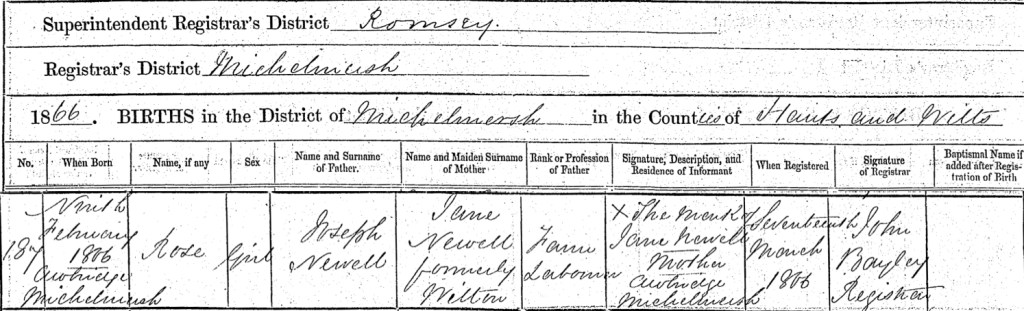

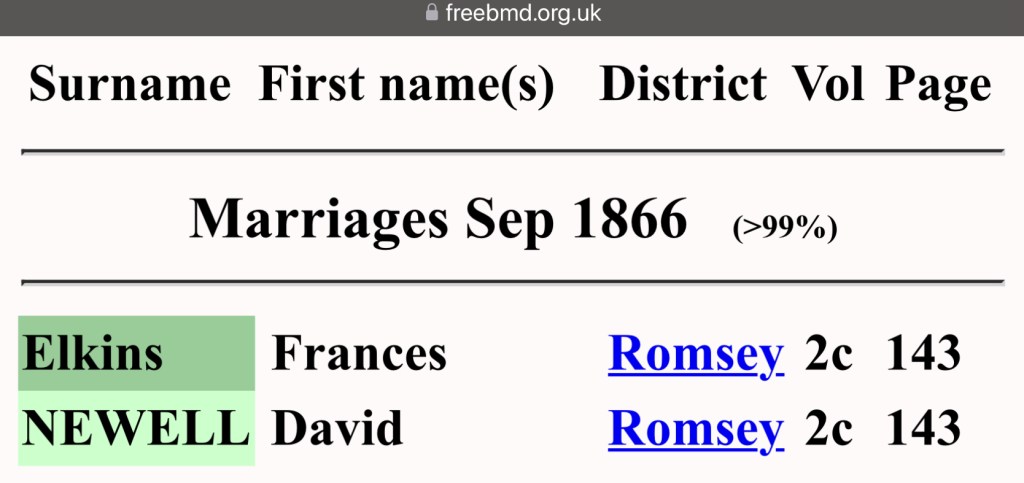
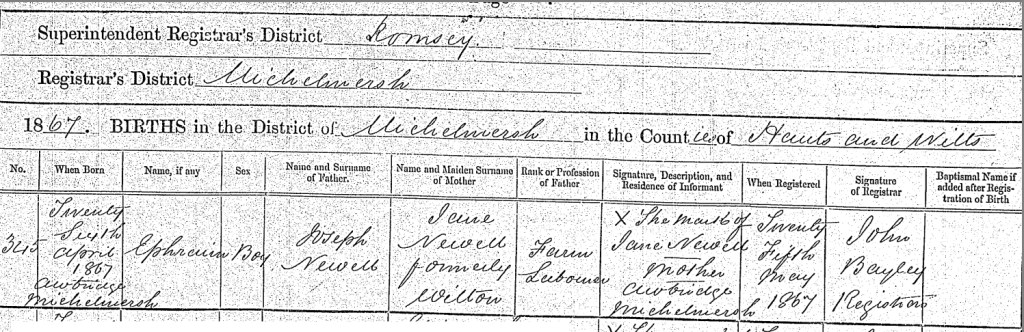
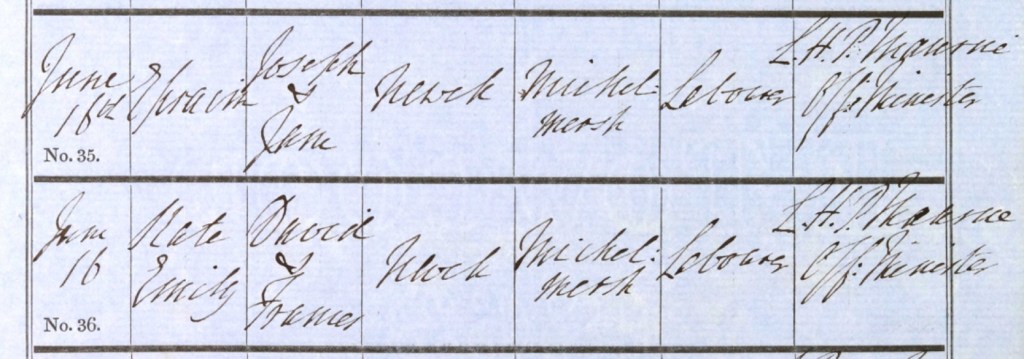

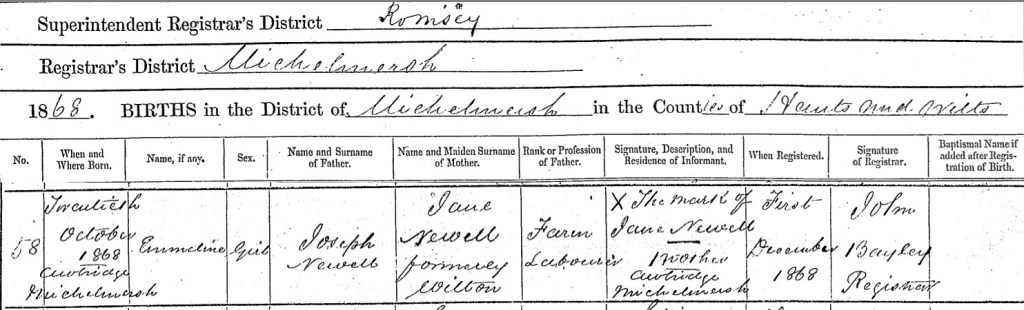
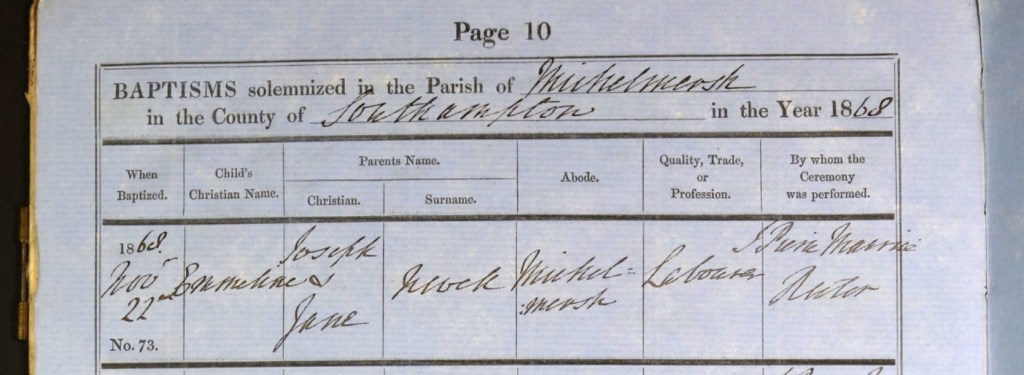
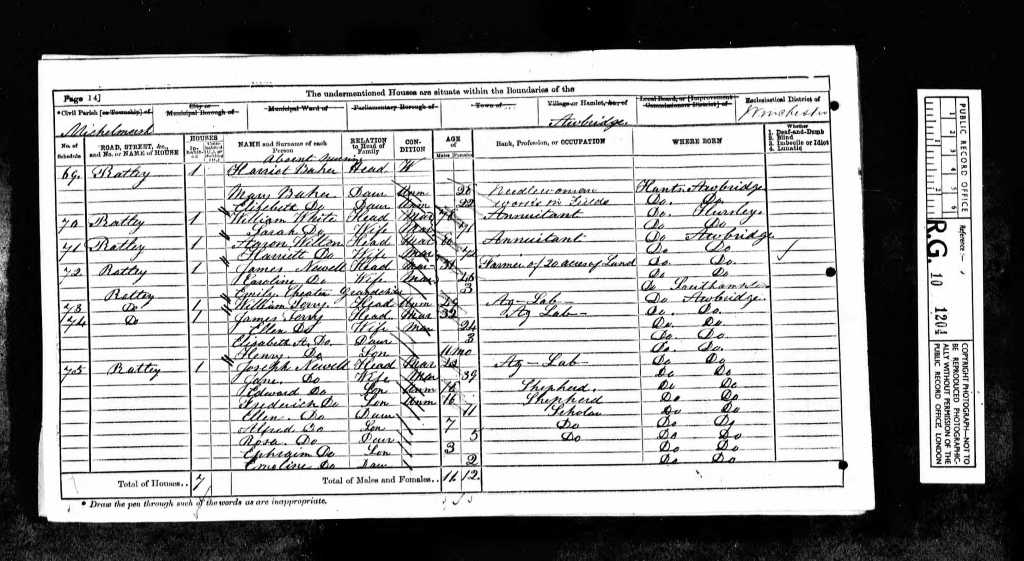
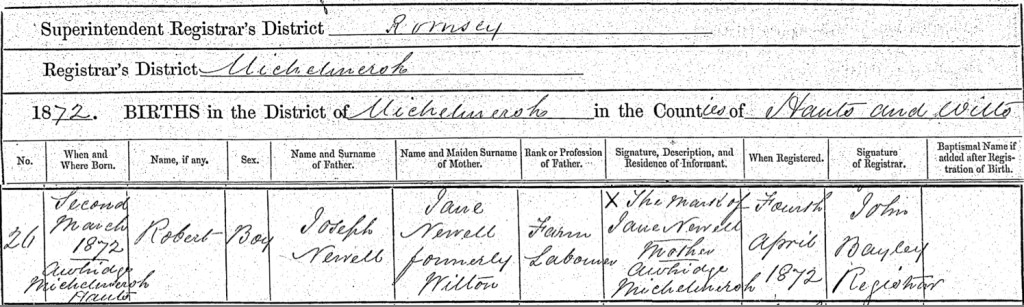

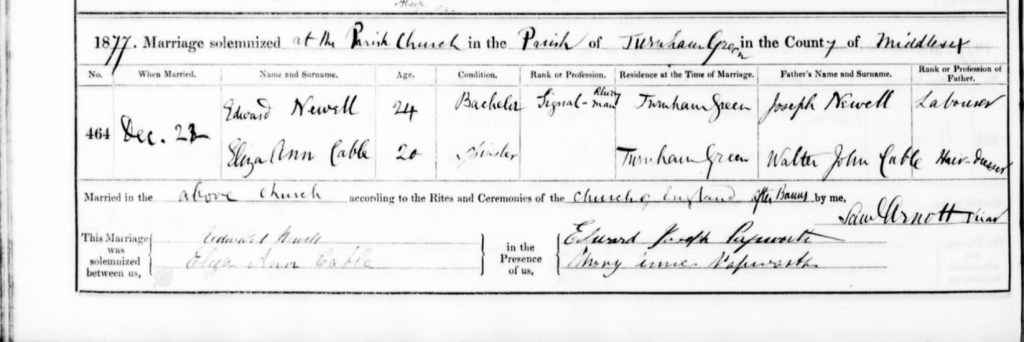
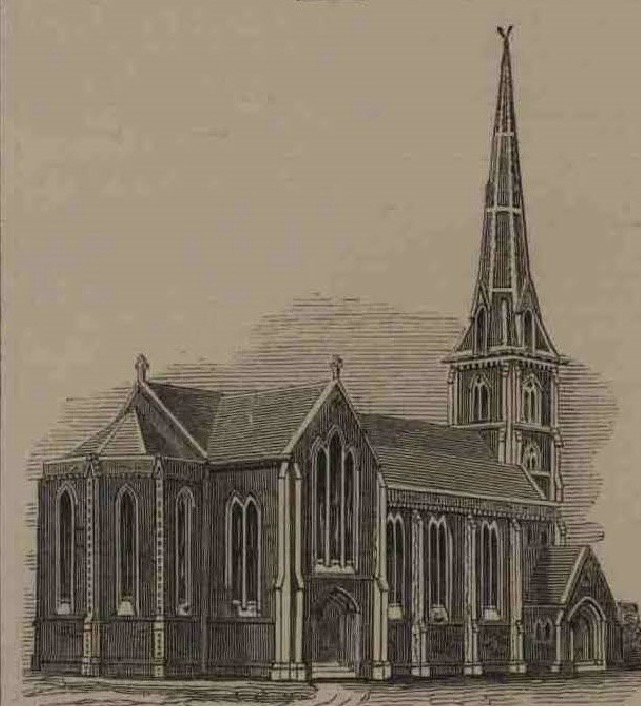
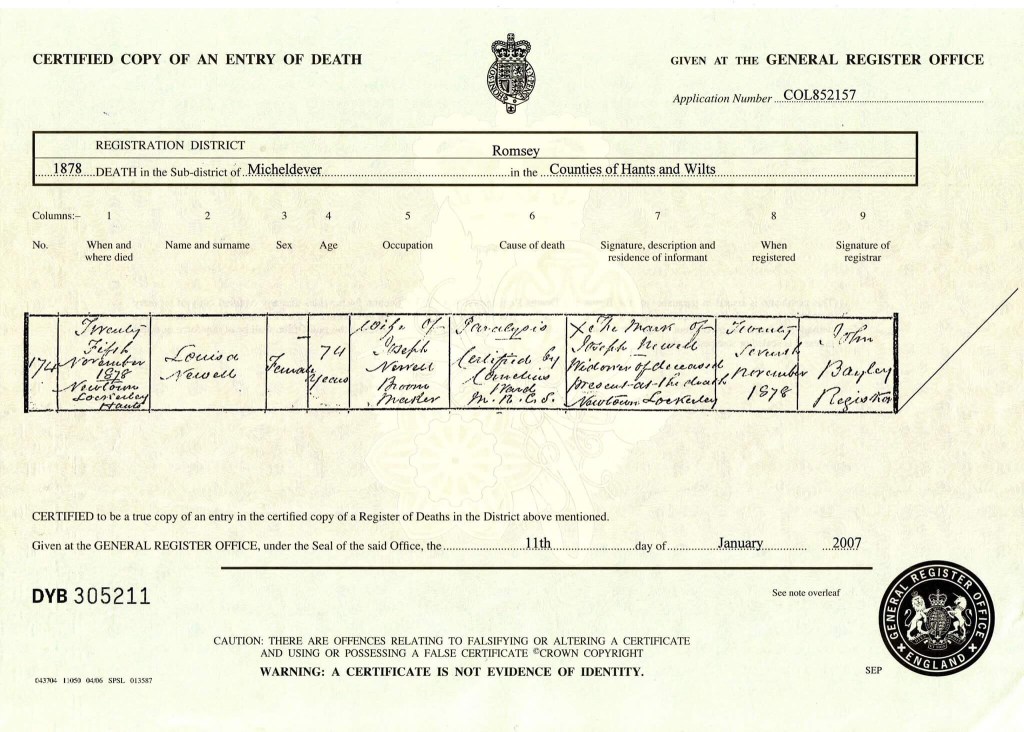
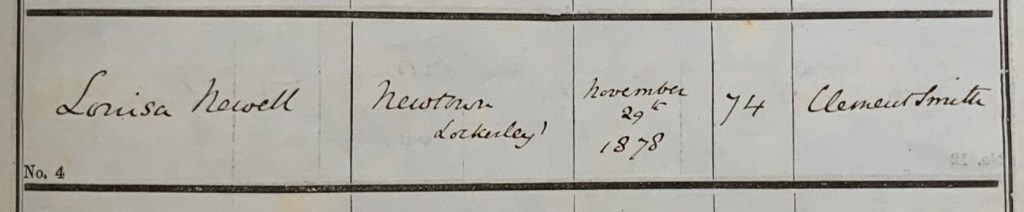
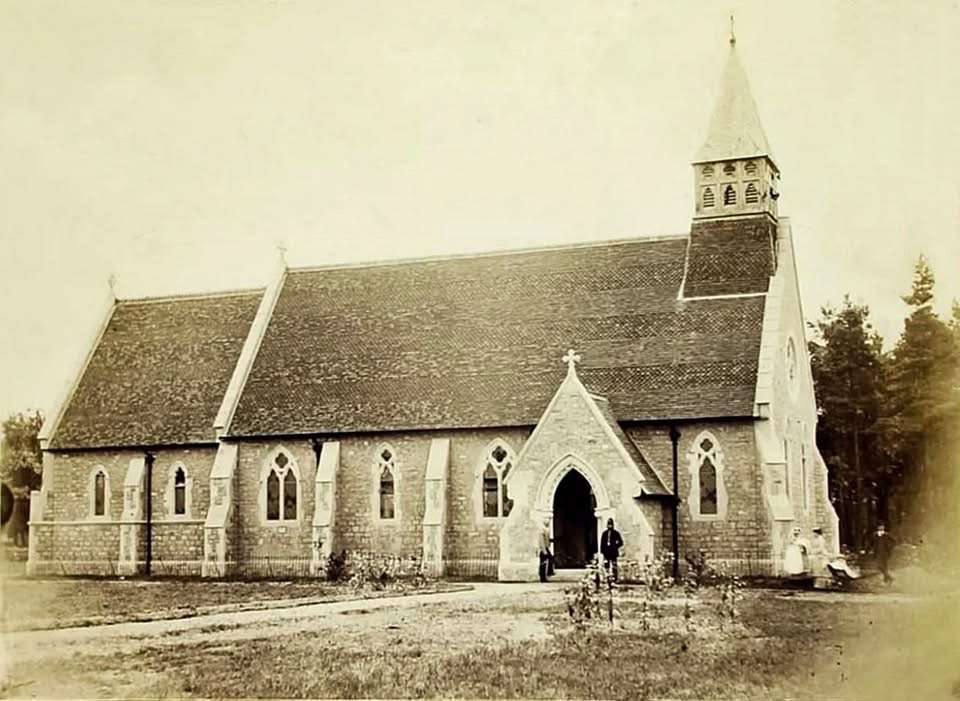
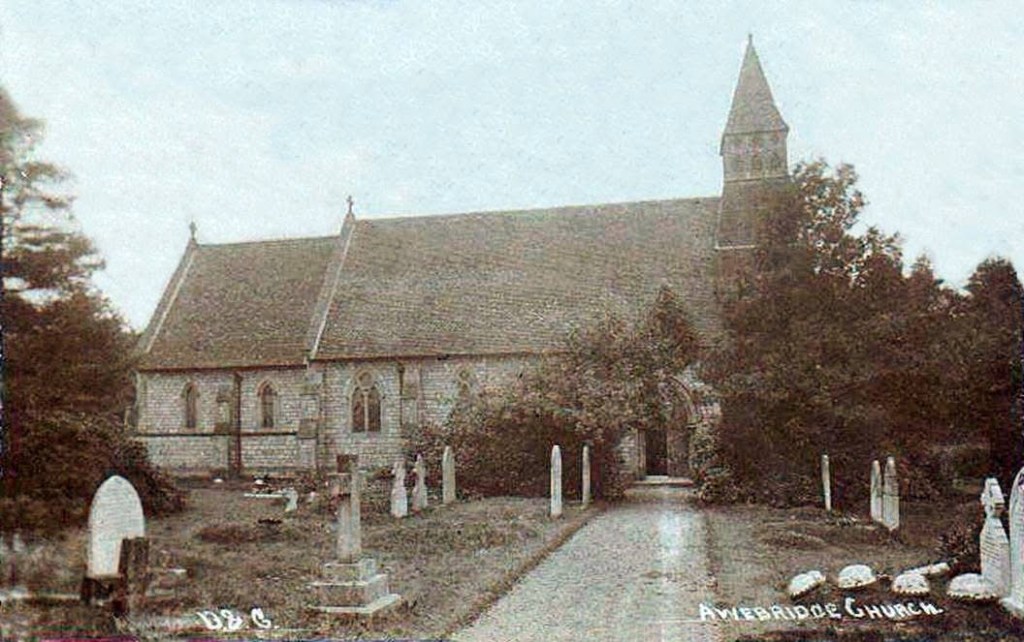
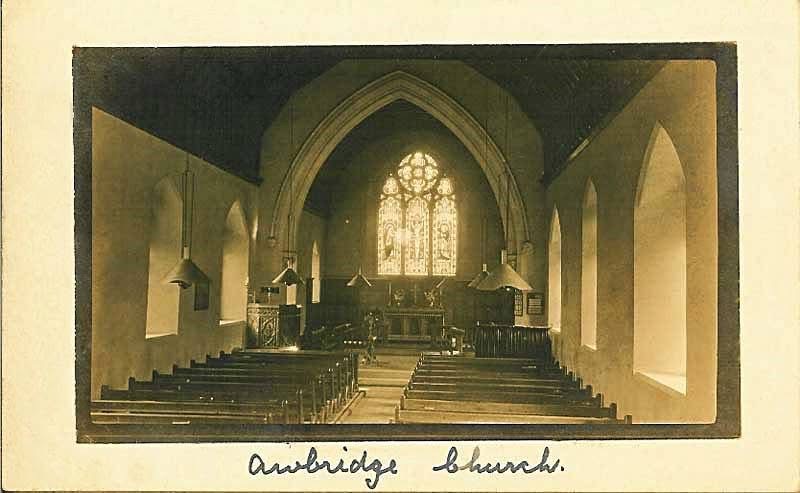
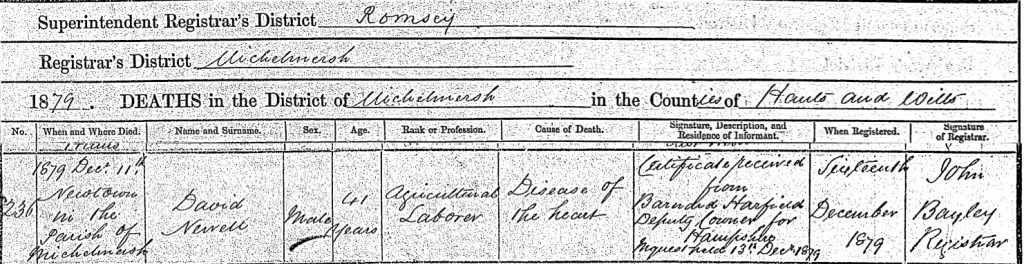
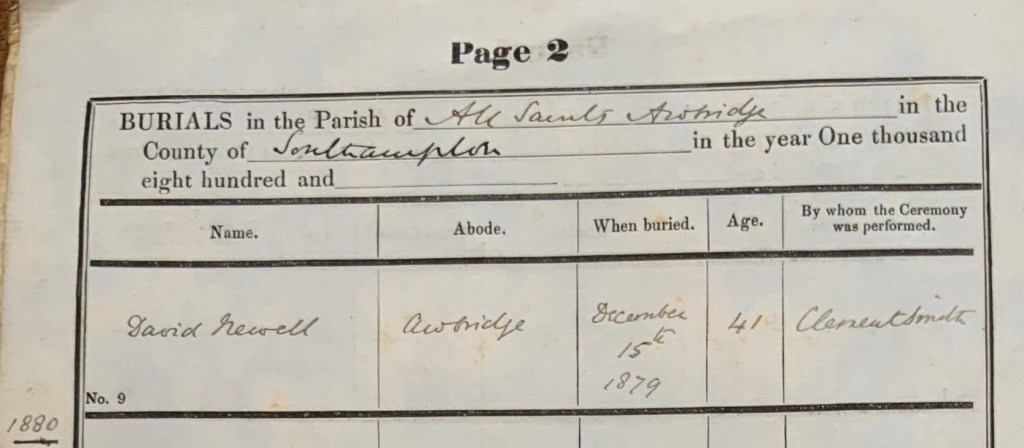
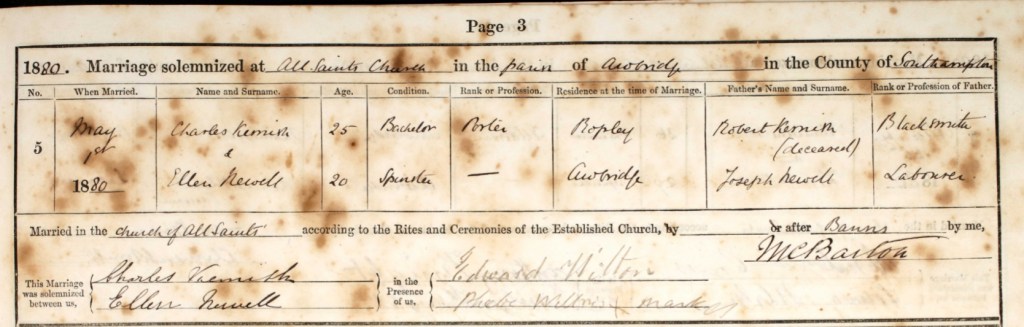
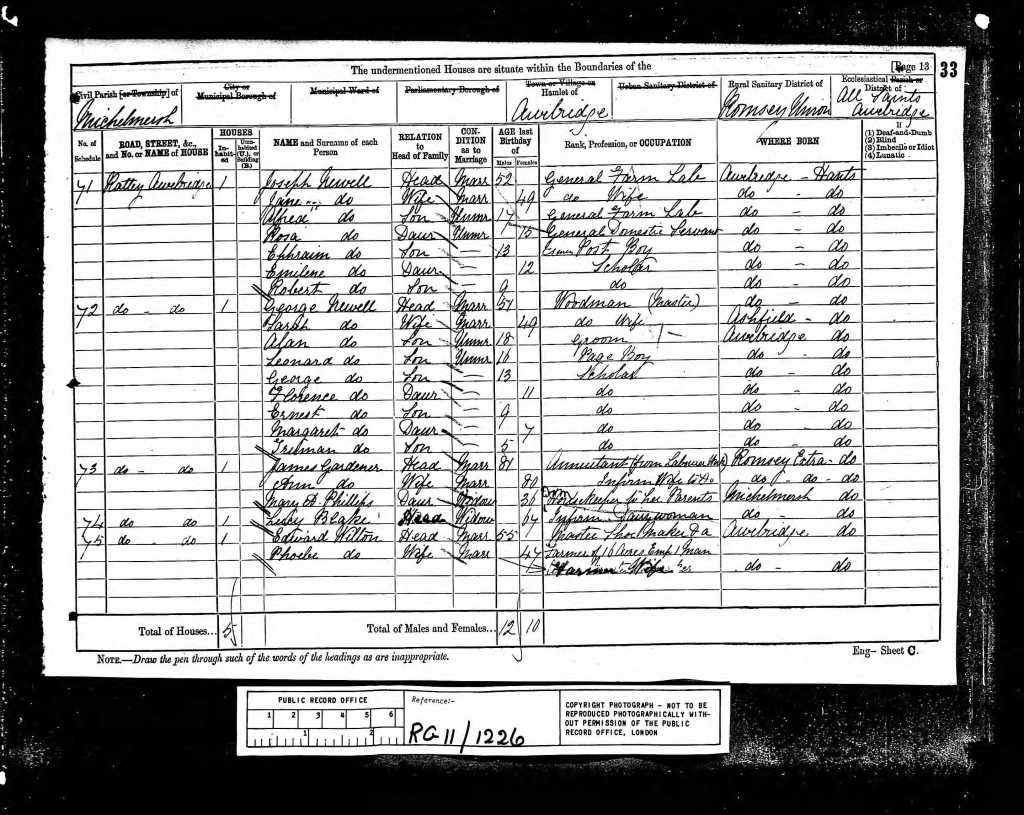
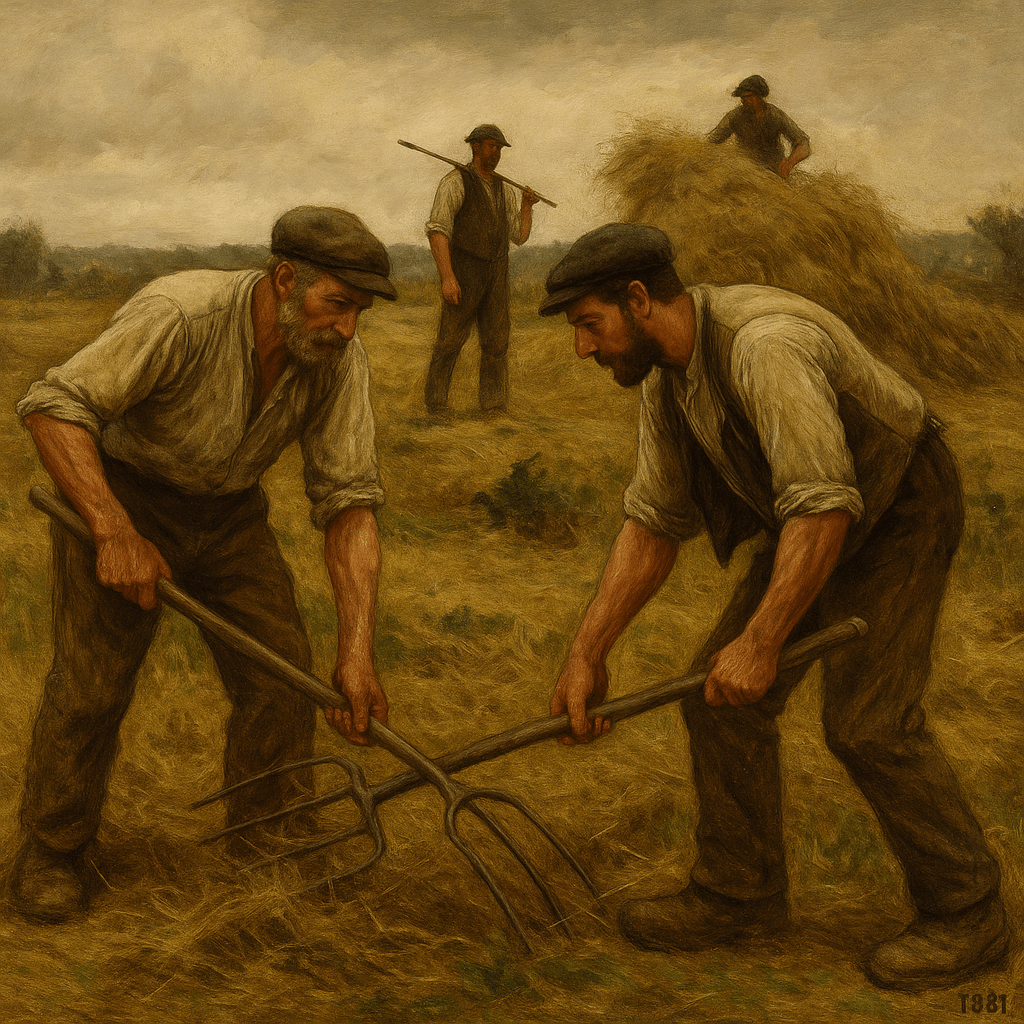

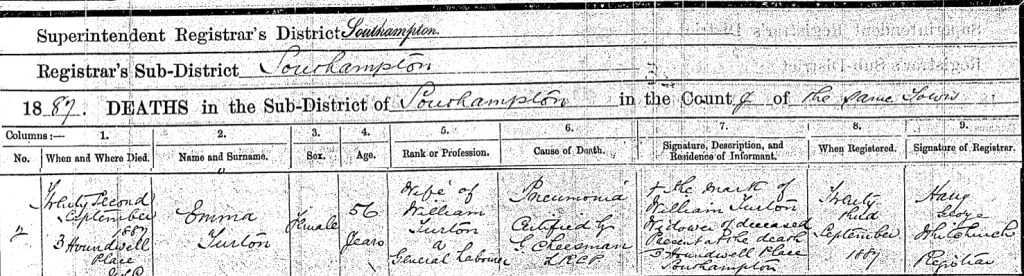
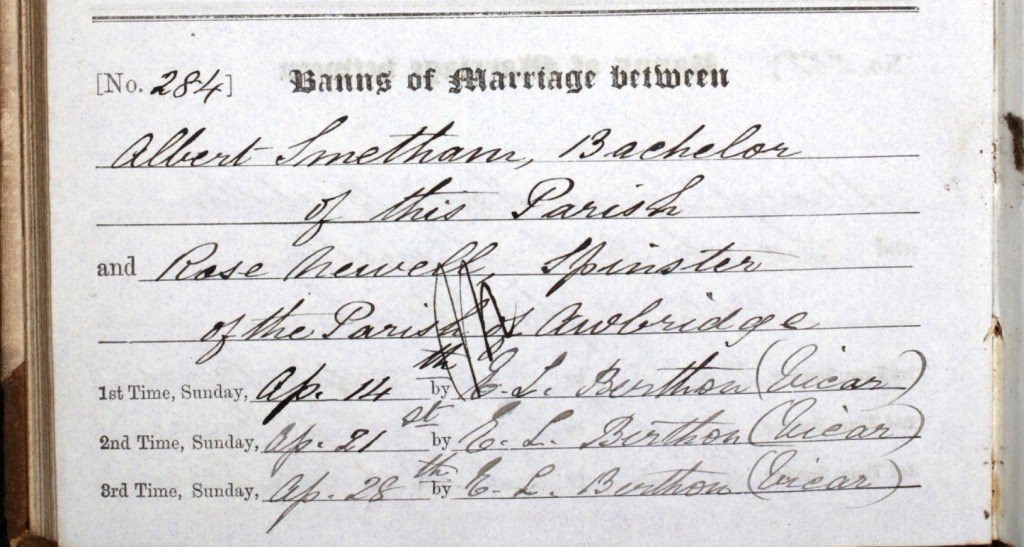
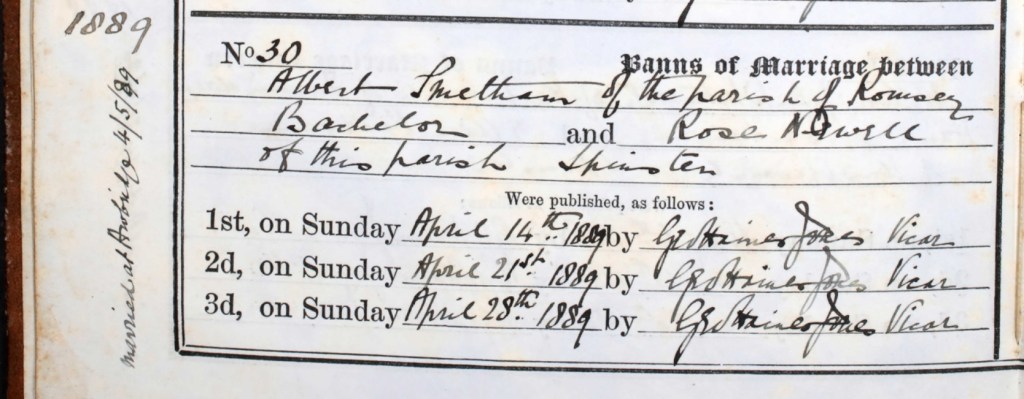
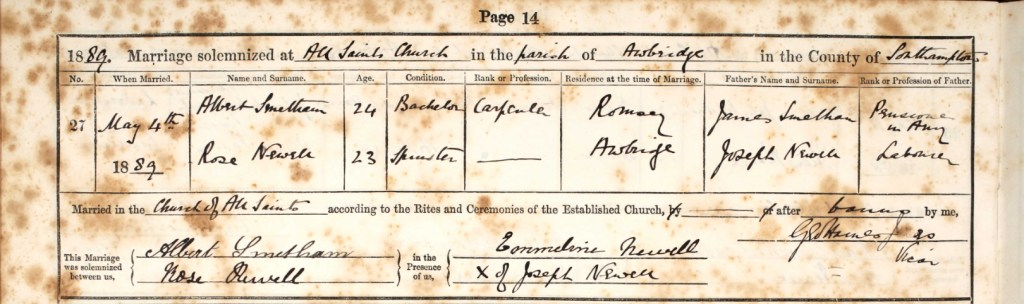
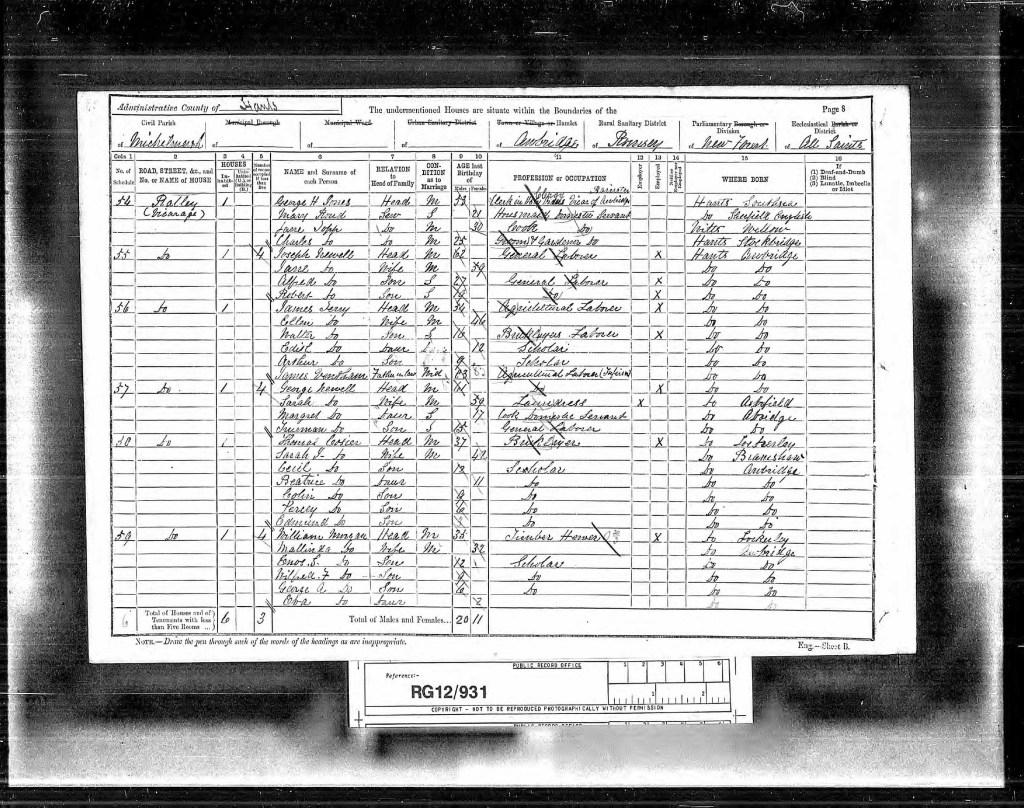
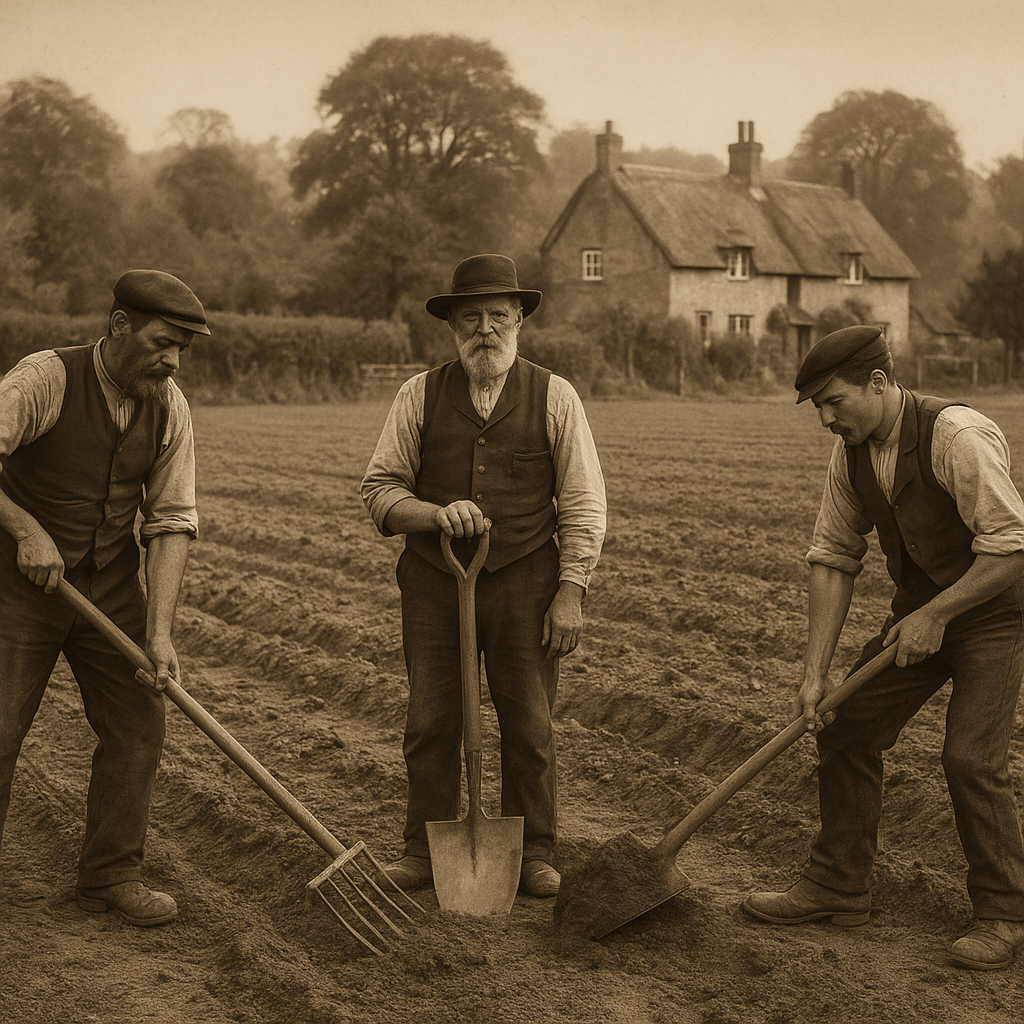

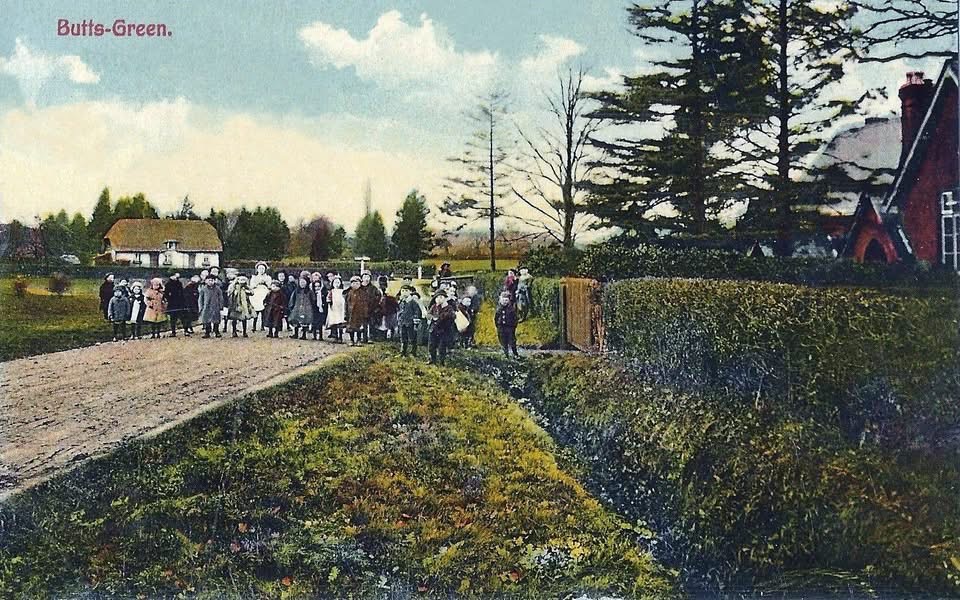
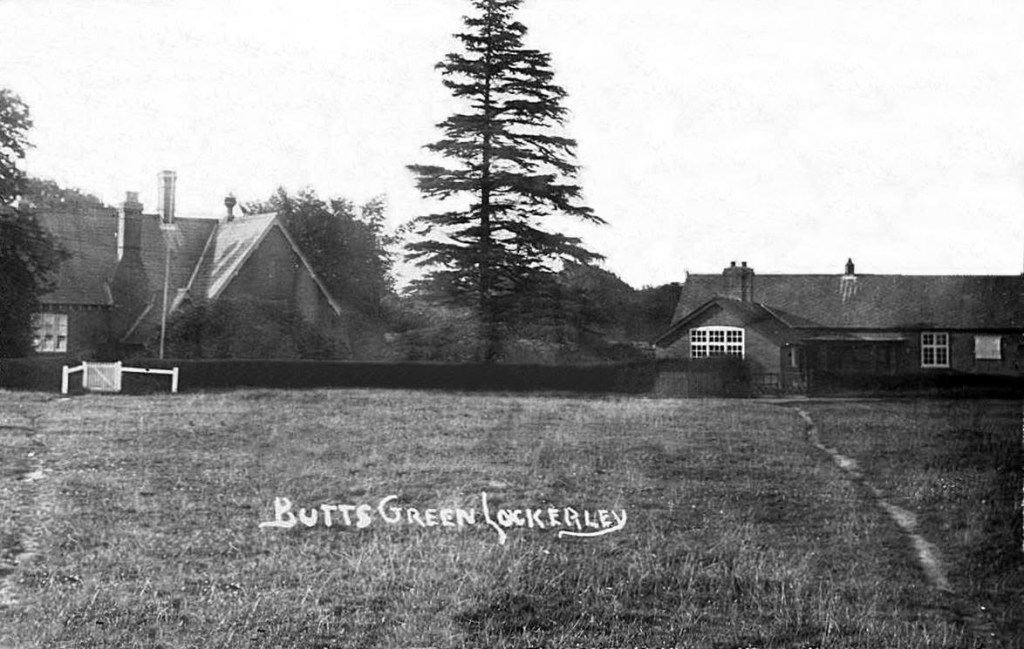



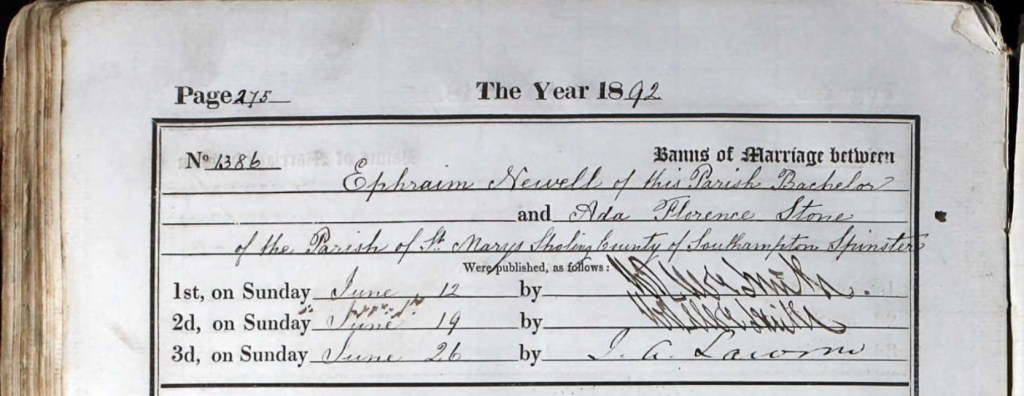
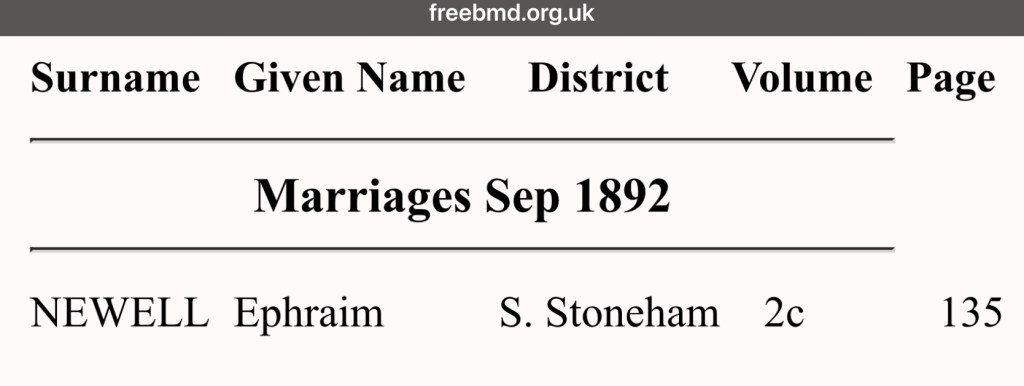
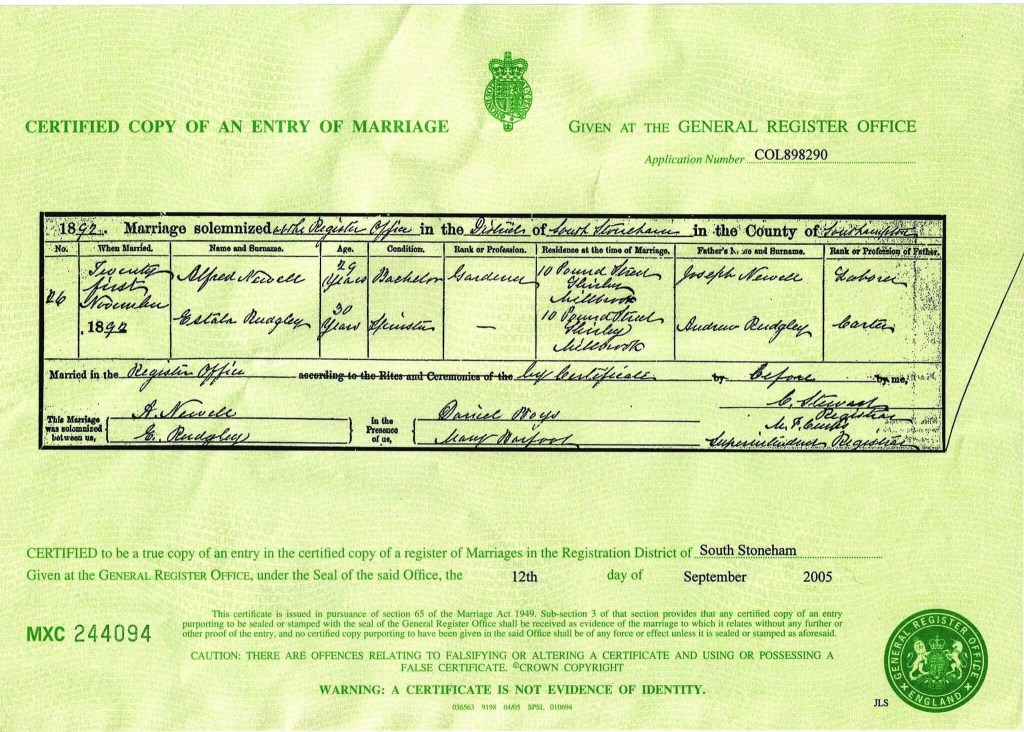
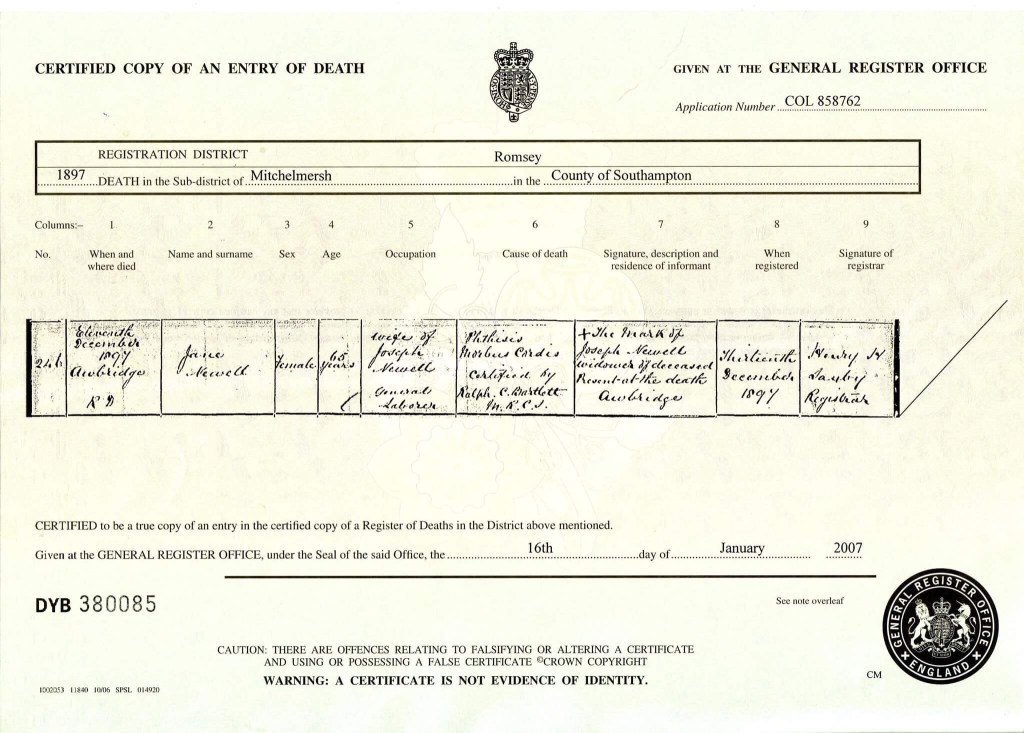
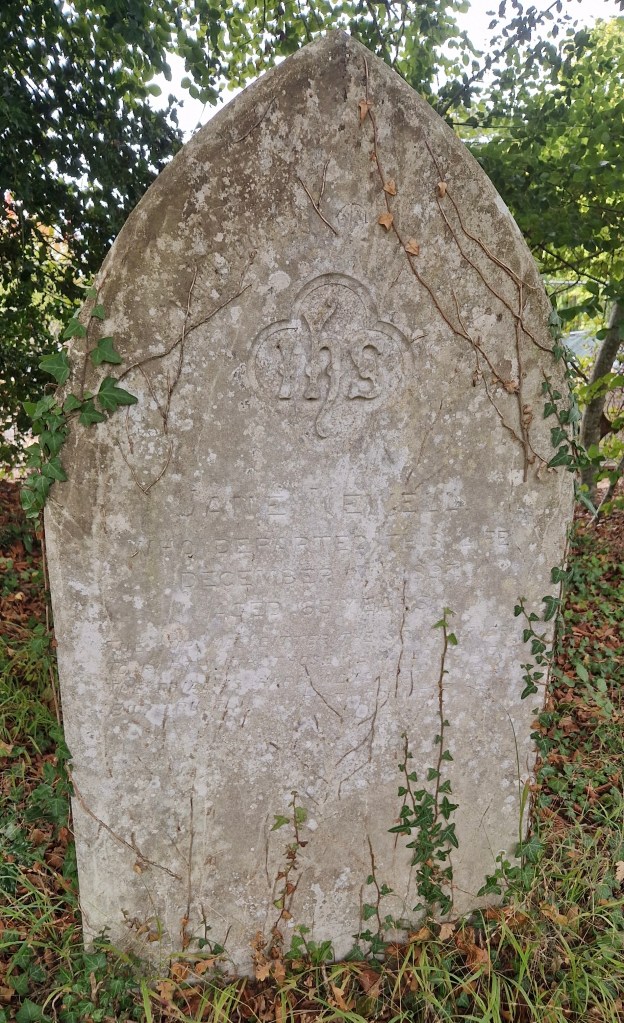
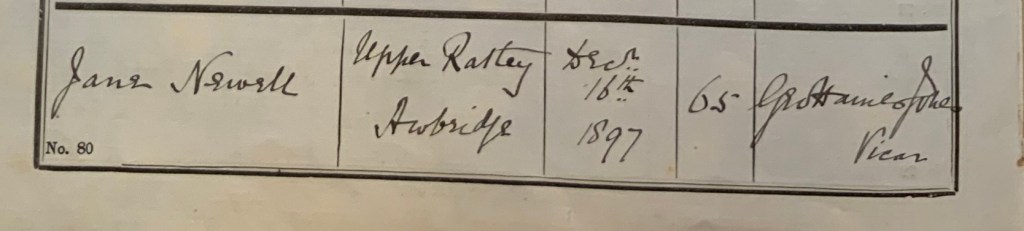
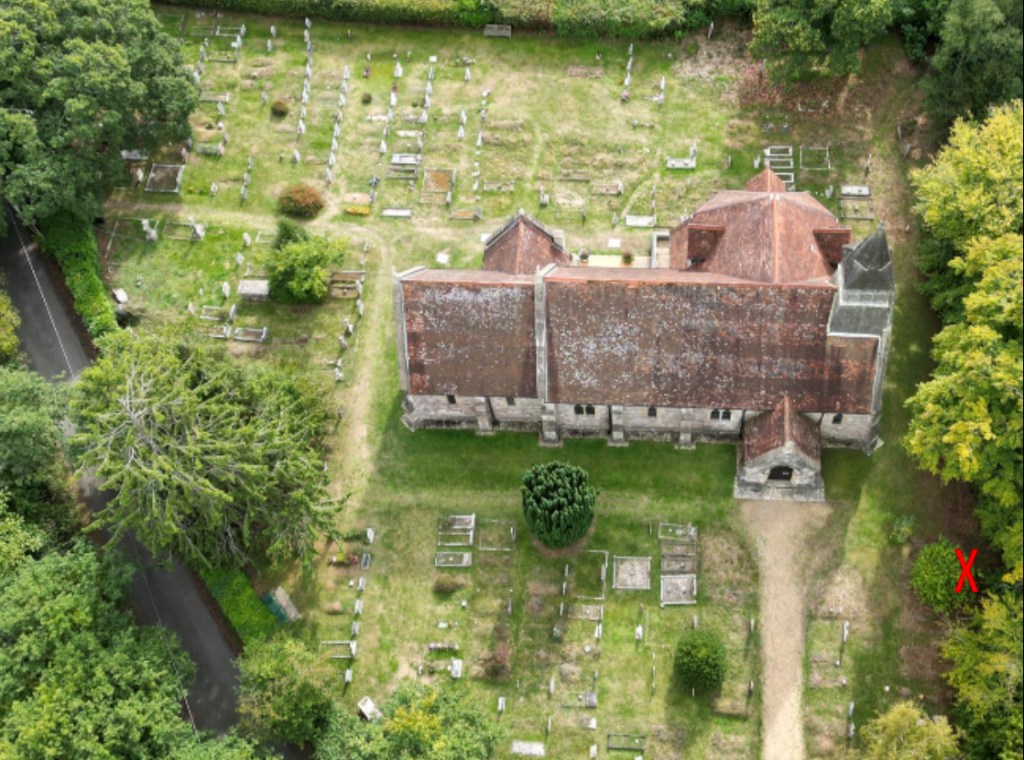
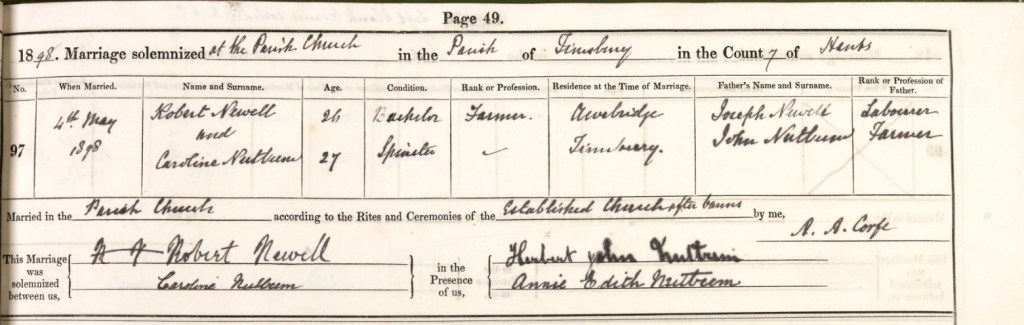
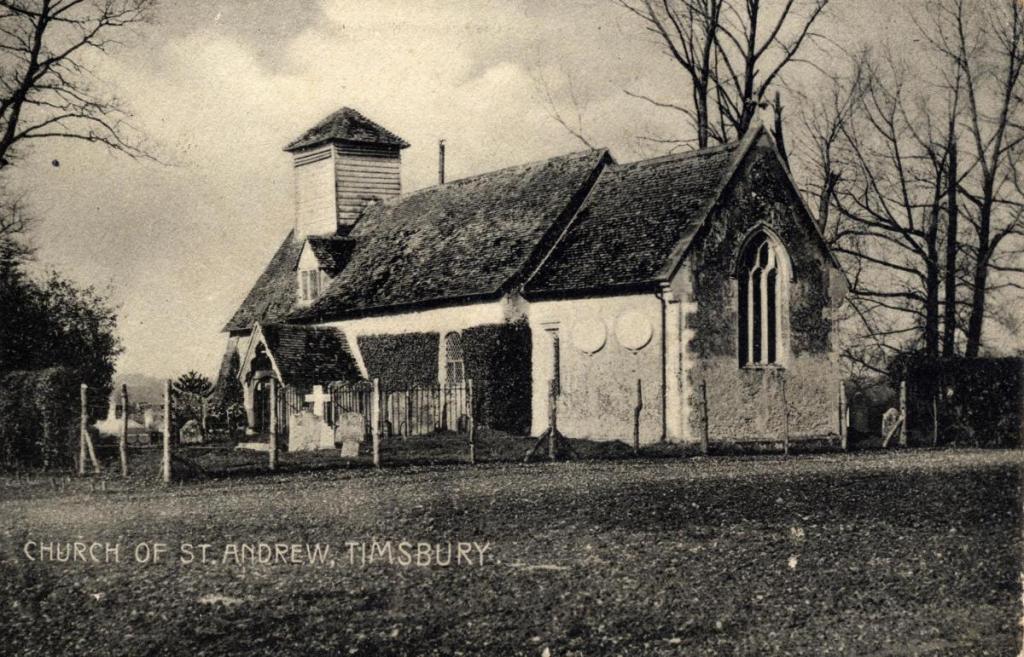



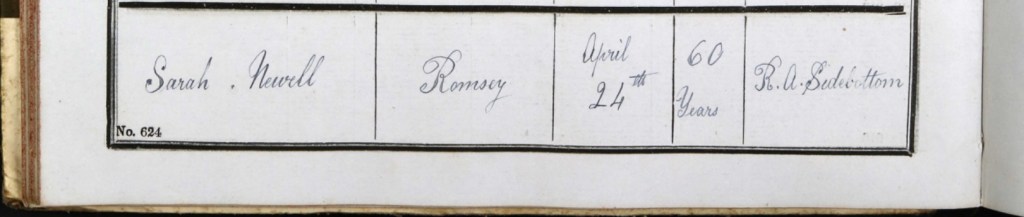

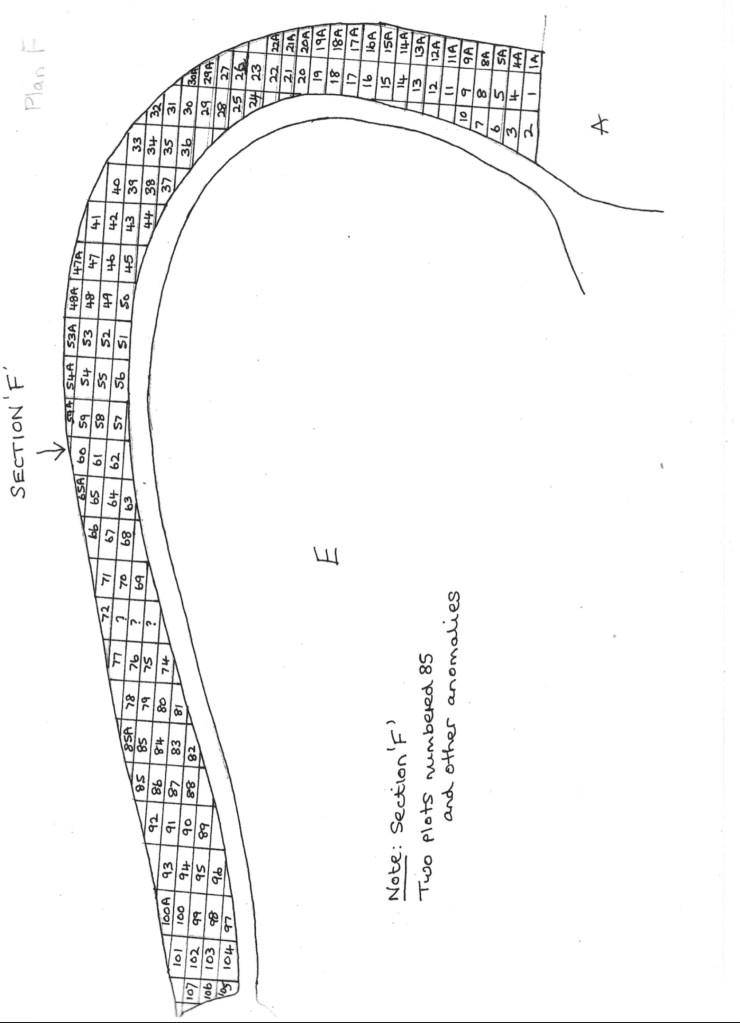
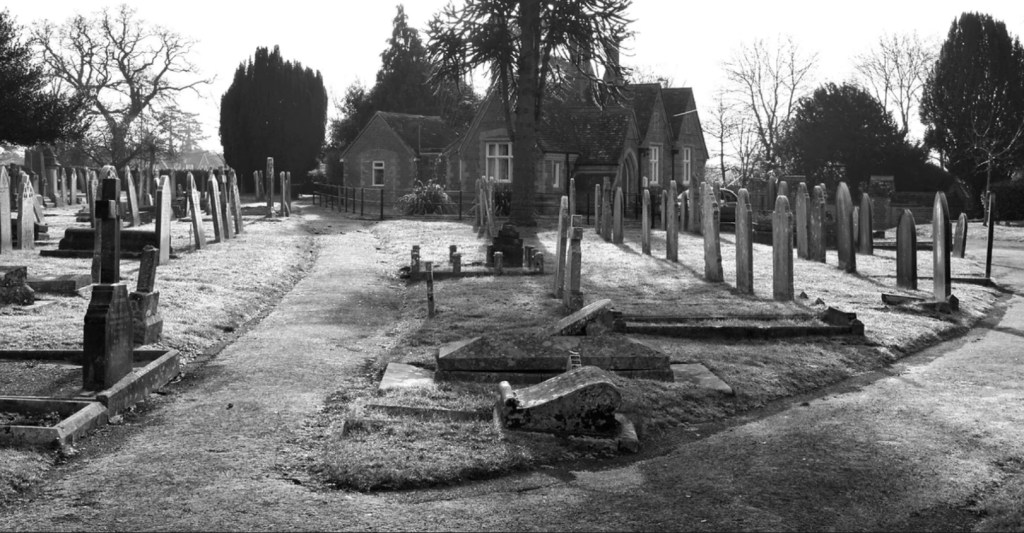
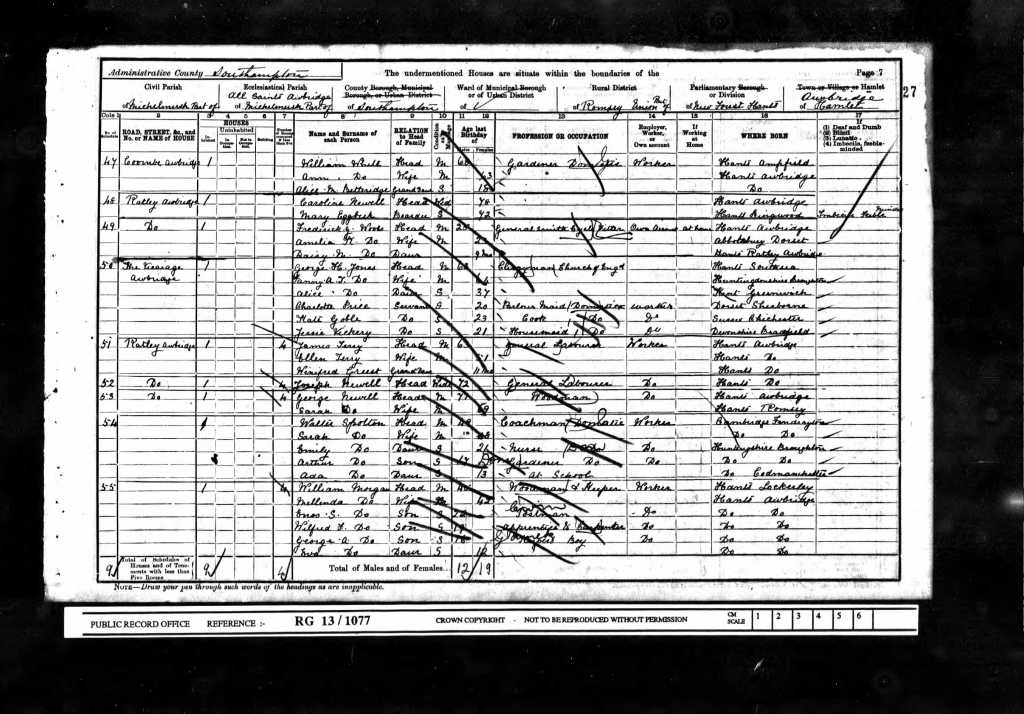
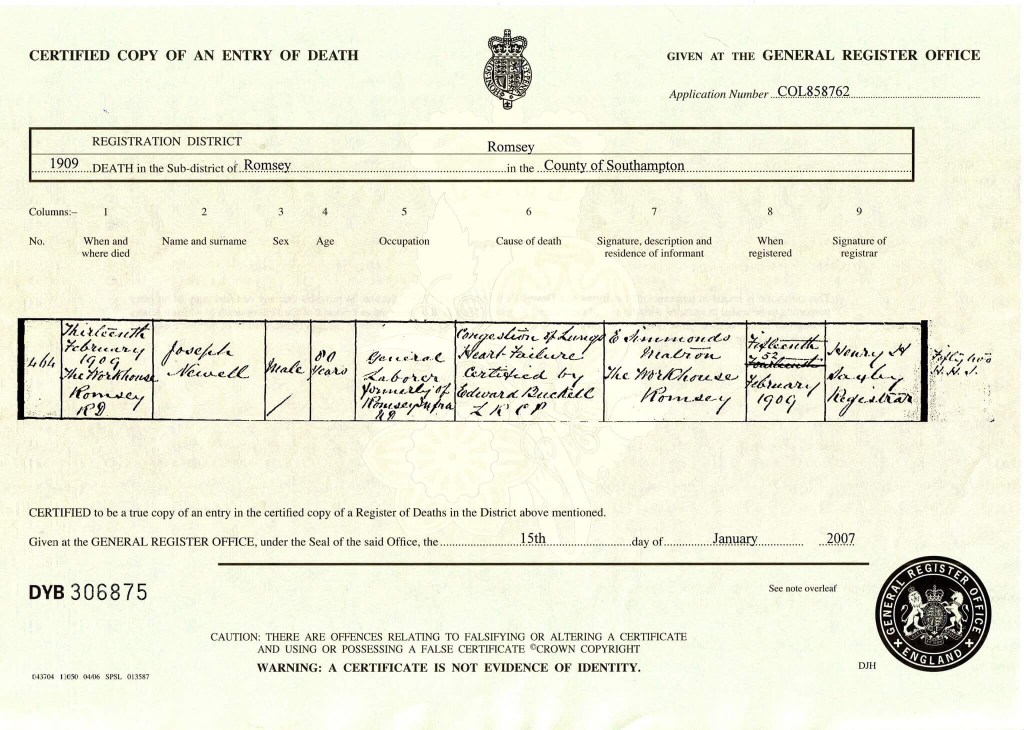
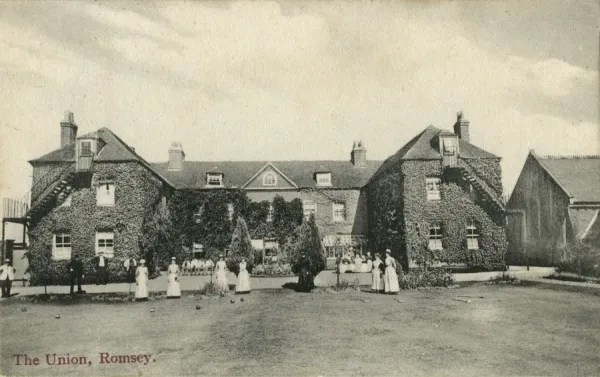
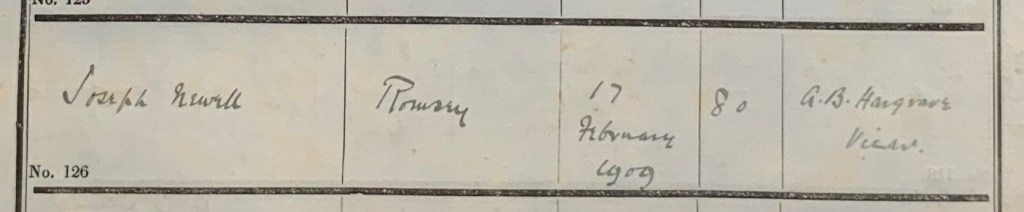
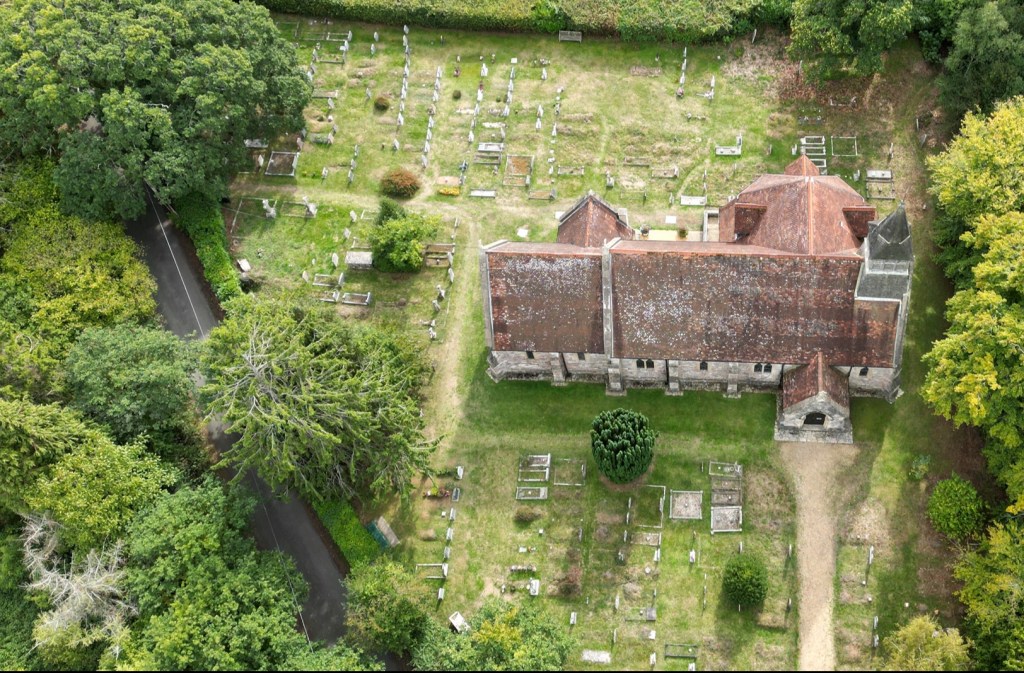
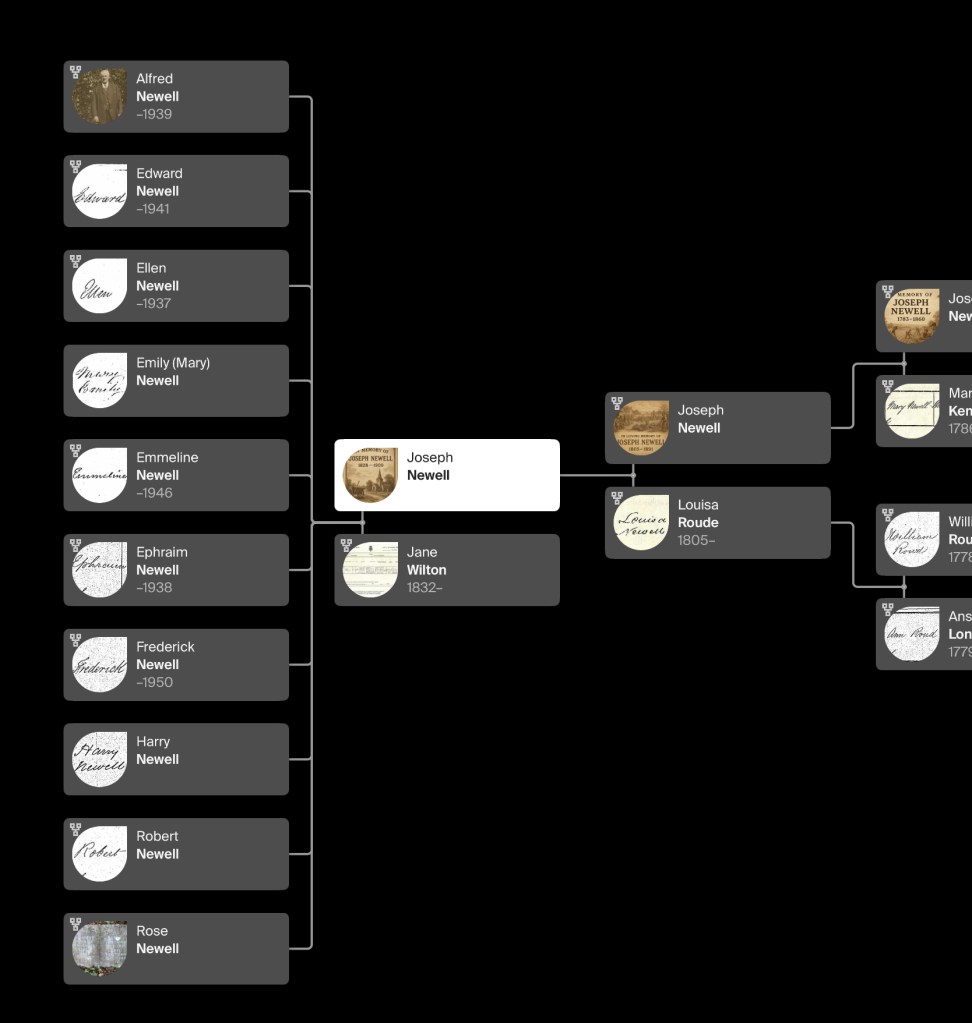
 Intwined