Winter, in the medieval world, unfolded slowly, like a long, contented exhale from the earth itself. Once it arrived, it settled deeply into the bones of daily life, asking families not only to endure it, but to move with it, listen to it, and learn from its stillness. There was no rushing this season. It shaped the days as surely as a potter shapes clay, pressing its imprint upon everything it touched, unhurried and sure of its own quiet power.
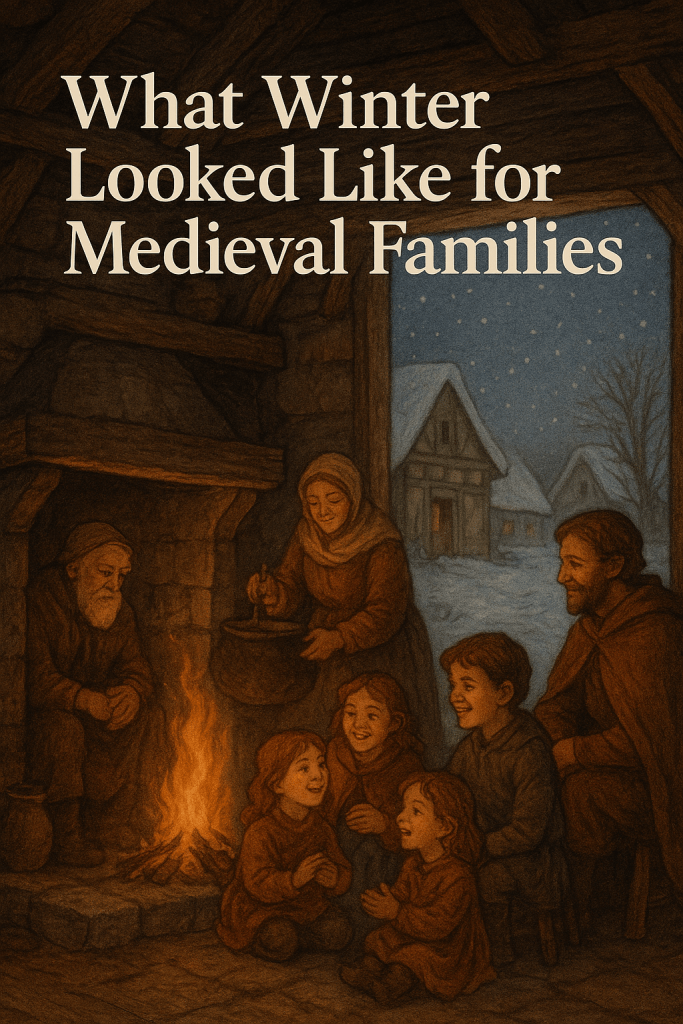
In those small cottages where the walls rattled in the wind, winter encouraged a gentler pace, as though placing a soft hand on every shoulder and whispering, “Slow now, breathe.” People rose later when they could, for dawn lingered beneath the horizon like a shy guest undecided about joining the household. When morning finally bloomed into a pale wash of light, it found families gathered around the hearth, warming their hands, their cheeks flushed from the first kiss of cold. Here, by the gentle crackling of fire, the day took shape not out of urgency, but out of intention. Even chores seemed softened by winter’s hush, as though the world itself had quieted enough for each task to become something more reflective than hurried. Mending a garment felt like kindness sewn into cloth. Stirring a simmering pot felt like an act of gratitude rising with the steam. Bringing in firewood felt like a promise kept, to oneself, to one’s family, to the long season ahead.
Children embraced winter with lighter hearts. Though life was hard, they found enchantment where adults saw challenge. Snow became a playground wrapped in silence, where they chased each other through plumes of frost, their laughter puffing into the air like tiny bright spirits. They invented kingdoms out of snowbanks and adventures out of icy paths, spinning stories with every footprint, as though winter itself invited them to dream a little bigger. When they returned home, rosy, breathless, eyes shining with cold-born mischief, they were welcomed by the familiar glow of the hearth and the comforting aroma of stew that greeted them like a warm embrace waiting patiently for their return.
As the season deepened, the nights grew longer, stretching endlessly across the countryside like a velvet cloak stitched with stars. Yet within these long nights lived a certain magic, a tenderness that belonged only to winter. Candle flames trembled softly, casting halos around faces, softening the hard lines left by work and age. Families told tales passed down from grandparents and their grandparents before them, stories embroidered with courage, mystery, and wonder, stitched tightly into the hearts of all who listened. Even the youngest children sensed that these moments were precious. Winter made the world small, but in doing so, it made home feel immeasurably large, a whole universe contained within familiar walls.
Outside, the medieval fields slept soundly. There was a peace to them, a feeling that the land itself was dreaming beneath its frost-stitched blanket. Farmers walked the edges of their plots not to work them, but to remember them, to let their eyes rest on the quiet mounds and frozen furrows, reassured that all would awaken again when the time was right. Trees stood bare and dignified, their branches etched against the sky like delicate ink strokes in a winter manuscript. Birds grew quiet, and the wind became the chief storyteller outdoors, sweeping through the village with its ancient voice, brushing doorframes, whistling through eaves, tugging just lightly enough at cloaks to remind people that it was very much alive.
Inside manor walls, winter breathed its own atmosphere. Though the hearths were grand and the food more plentiful, the season’s spirit remained the same, a gentle drawing together of hearts. People gathered in the warmest corners of great halls, sharing wine spiced with cloves and cinnamon that perfumed the air like a traveling memory of far-off summers. Laughter echoed more freely in these stone shelters, partly because winter invited it and partly because cheer deserved to be louder than the cold that pressed at the doors. Music threaded through the air in soft, drifting ribbons, weaving a tapestry of notes that curled around rafters and drifted into chambers where candles flickered like patient fireflies keeping watch.
Yet even with hardship, winter carried a tenderness unique to itself. It was a season that asked people to care, to tend not only to the land and their animals, but to one another, and even to their own weary spirits. Every bowl of soup was an offering of comfort. Every shared blanket was a gesture of love. Every story told was a reminder that warmth could be kindled in more ways than one. Winter made generosity feel as necessary as firewood, and affection as vital as grain.
As the weeks passed and the first faint hints of returning light stretched across the sky, medieval families felt the subtle shift. Winter, though still strong, began loosening its grip. Snow melted in brief silver trickles along rooftops. Birds tested their voices with a tentative note or two. People stepped outside more often, breathing in the cold air as if tasting a shy new hope. The world, still quiet, seemed to be listening along with them.
Winter was never easy for them, but it was never empty either. It was a canvas of quiet wonders, of resilience strengthened by affection, of simple joys cherished more for their rarity. It was a time when the world paused long enough for people to truly see one another. And in that stillness, medieval families found not just survival, but connection, meaning, and a gentle romance that lived in every flicker of firelight and every whisper of the winter wind, reminding them that even the coldest season had a warm heart.
Until next time,
Toodle pip,
Yours Lainey.
 Intwined