There’s something profoundly moving about uncovering the faint footsteps of an ancestor whose story has nearly faded with time. My fifth great grandfather, William Roud or Roude, as the name was often spelled, lived in an era when records were scarce, and lives like his were often left undocumented. Born in 1777 and passing in 1857, William’s existence straddled a time before the modern census, before the orderly registering of births, marriages, and deaths began in 1837. Because of this, much of what we know about him must be pieced together gently, like fragments of a once-whole photograph.
Yet despite the limited official records, William’s presence in my family history is anything but faint. The Roud(e) name threads itself persistently through multiple lines of my family tree, often weaving itself into other branches in ways that have made my research both beautifully rich and wonderfully complex. In fact, the Roud(e) family doesn’t just belong to my ancestry they unexpectedly tie into my husband’s family history too, connecting our pasts in a way we could never have foreseen.
As I begin to share what I’ve discovered about William, I do so not just as a historian of my lineage, but as a descendant longing to bring voice to a man whose life deserves to be remembered. His story, though elusive, echoes across generations a quiet yet enduring part of who I am, and who we are.
Welcome back to the year 1777, Sherfield English, Hampshire, England. The late 18th century was a time of significant social, political, and economic changes in Britain. While the Industrial Revolution had not yet reached its peak, the nation was experiencing the early stirrings of transformation that would radically alter the way of life for many. It was a time when the divide between the rich, working class, and poor was stark, and society was rigidly divided by class, with wealth and privilege concentrated in the hands of a few.
In 1777, the reigning monarch of Britain was King George III. His reign lasted from 1760 until 1820, making him one of the longest-serving monarchs in British history. King George III’s reign was marked by significant events, including the American Revolution, the expansion of the British Empire, and political instability at home. In 1777, the American Revolution was well underway, with the colonies in North America fighting for independence from Britain. This event had profound effects on British politics, both in terms of public opinion and the government’s approach to imperialism.
The Prime Minister at the time was Frederick North, the 2nd Earl of Guilford. He had been appointed in 1770 and served until 1782. Lord North’s tenure was heavily influenced by the growing tensions between Britain and the American colonies, and his policies were a key factor in the eventual loss of Britain’s American colonies. In 1777, North's government was facing significant challenges, particularly regarding the conduct of the war in America, and his unpopularity grew as the war dragged on without a decisive victory.
In Parliament, the political landscape was largely dominated by the landed gentry, who controlled much of the wealth and power in Britain. This period was characterized by a system that was far from democratic by modern standards. The right to vote was restricted to landowners and those with significant property, so the majority of the population had no voice in Parliament. Political decisions were largely made by the elite, and while there were calls for reform, the pace of change was slow.
In terms of social classes, the divide between the rich, working class, and poor was sharp. The rich, composed of the landed aristocracy, the nobility, and wealthy merchants, lived in grand houses or estates, enjoying a life of luxury, power, and leisure. They were able to afford the best clothing, fine food, and the services of servants. In contrast, the working class, which made up the majority of the population, lived in much more modest conditions. Many were employed as laborers, craftsmen, or farm workers, often living in small, overcrowded cottages with poor amenities. The poor, often in rural areas like Sherfield English, were subsistence farmers or reliant on charity. Their lives were difficult, and they had little access to education, healthcare, or any form of social mobility.
Fashion in 1777 reflected the rigid class system. The wealthy wore elaborate, expensive clothing made of fine fabrics like silk, velvet, and satin. Men wore coats with wide lapels, waistcoats, and breeches, while women wore dresses with large skirts, often supported by a crinoline, and adorned with lace, ribbons, and embroidery. The working class and poor, on the other hand, wore simple, practical clothing made from wool or linen. Their attire was far more functional, designed to withstand hard work rather than to make a fashion statement.
Transportation in 1777 was limited compared to modern times. Most people traveled by foot, horse, or horse-drawn carriage. The wealthy could afford private carriages, while the poor relied on walking or public carts. The road system in Britain was still quite rudimentary in many areas, and travel was often slow and uncomfortable. In rural areas like Sherfield English, where roads were less developed, transportation was especially difficult. The construction of turnpike roads had begun, but much of the country still lacked efficient transportation infrastructure.
Housing in 1777 was also determined by social class. The rich lived in large, grand houses or estates, often built in a classical or Georgian style, with spacious rooms, fine furniture, and ample heating. The middle class, which was slowly growing during this period, lived in more modest homes, often in towns or cities. The working class and poor lived in cramped cottages or small homes, often with multiple families sharing a single dwelling. These homes were typically poorly insulated, and heating was provided by open fires, which were not very efficient.
The atmosphere of the time was one of growing tension, particularly due to the ongoing American Revolution, which dominated the public discourse. People were aware of the changing political landscape, though their lives were still largely shaped by local concerns, such as farming, trade, and family. The countryside, where villages like Sherfield English were located, was still relatively isolated, and many people lived their lives with little direct connection to the outside world.
Heating and lighting in 1777 were rudimentary. The primary source of heat in homes was an open fire or a stove, and candles or oil lamps were used for lighting. These methods were inefficient, and homes were often cold and dimly lit. Only the wealthiest homes had better heating systems, such as stoves or fireplaces with intricate designs.
Hygiene and sanitation were also poor by modern standards. Most people bathed infrequently, and there were no modern plumbing systems. Water was often fetched from a well or a nearby river, and waste disposal was typically done in an outdoor privy or pit. In larger cities, such as London, waste management was beginning to be recognized as an issue, but in rural areas like Sherfield English, sanitation was far more basic.
Food in 1777 was also a reflection of social class. The rich ate a varied diet, with access to imported goods such as spices, sugar, tea, and coffee. They also had access to fresh meat, fish, and vegetables, along with luxury foods like chocolates and pastries. The working class, however, had a much simpler diet, relying on bread, potatoes, and vegetables. Meat was a rarity for the poor, and many of them survived on a diet of basic staples. Food preservation techniques such as salting, pickling, and drying were commonly used to ensure food lasted through the winter months.
Entertainment in 1777 was mainly based on social gatherings. The wealthy enjoyed going to theatres, opera houses, and private balls, while the poor found entertainment in local fairs, taverns, and simple games. Reading was a popular pastime among the educated, though books were expensive and often limited to the upper classes. Music and dancing were also popular forms of entertainment, with the wealthy able to afford private tutors or music lessons.
Diseases were a constant threat in 1777, and medical knowledge was rudimentary. Smallpox, tuberculosis, and cholera were among the common diseases that ravaged the population. Medical treatments were often ineffective, and many people died from illnesses that today would be easily treatable. Vaccination, for instance, was not yet common, and public health measures were in their infancy.
The environment of 1777 in rural England, like in Sherfield English, was one of natural beauty but also of hard work and difficult living conditions for many. The countryside was largely unchanged by industrialization, and agriculture remained the backbone of the economy. The air was cleaner than in the industrial cities, but rural life was still filled with the harsh realities of manual labor and a lack of modern conveniences.
Gossip in 1777 was often the primary form of communication, especially in rural areas where many people were isolated. Word of mouth spread news about local events, marriages, deaths, and political opinions. The lack of modern media meant that gossip was one of the most effective ways to stay connected to the community.
Schooling in 1777 was limited, particularly for the poor. Education was primarily a privilege of the wealthy, with children from aristocratic families attending private tutors or grammar schools. The working class had limited access to formal education, though charity schools and Sunday schools began to offer some basic literacy and arithmetic to the children of the poor.
Religion in 1777 was an integral part of daily life. The Church of England was the dominant faith, and church attendance was an important part of social life. Religion shaped many aspects of the community, from education to moral behavior. Nonconformist movements, such as Methodism, also gained influence during this time, though they were often viewed with suspicion by the established church.
In the gentle folds of Hampshire’s countryside, nestled among the whispering hedgerows and chalky lanes, lies the sleepy village of Sherfield English. It was here, in the golden hush of summer in the year 1777, that a quiet yet significant chapter of family history unfolded, the birth of a child destined to carry forward a name, a love, and a legacy.
Just months earlier, on a soft October Monday, the 7th day of 1776, William Roud, a young man of about one-and-twenty, stood at the ancient stone altar of St John’s Church in nearby Lockerley. Beside him was Hannah, formerly Finch, five years his elder, yet glowing with the quiet strength and grace of a new bride. Their hands had met in promise; their vows bound in that sacred space where echoes of devotion still seemed to cling to the timbered walls.
Not long after, in their modest home in Sherfield English, the fruit of that union came into the world,  a son. They named him William, like his father before him. A name not just spoken but carried, like an heirloom passed through time, weathered by history, shaped by blood, anchored in love.
This second William,  my 5th great-grandfather, born under a sky likely no different than ours but under circumstances far simpler and more fragile, entered a world with little record-keeping and few documents to mark the turning of ordinary lives. We do not know the exact day he drew his first breath, the parish registers remain silent, and the official keeping of birth certificates would not begin until long after he had already weathered the storms of youth.
Yet traces of him endure, faint, but not forgotten. In the census of 1841, he is found, his age suggesting a birth around 1781, somewhere within Hampshire’s quiet borders. A decade later, in 1851, the record places his origin more precisely, Sherfield English, the very soil where his life began and likely unfolded in the rhythm of fields, family, and faith. That entry suggests 1776, a tender alignment with the year of his parents’ union, and a poetic symmetry in time.
Though the years obscure the details, and the documents offer only dry clues, the story that lives within them is anything but dull. William Roud, son of William and Hannah, bore more than a name, he carried with him the beginning of a lineage that winds, folds, and sometimes doubles back through the fabric of my own family history. His blood flows not just once, but many times through my ancestral branches, intertwining also with those of my husband, an echo of fate neither of us could have foreseen.
In these faded fragments,  a marriage solemnised, a birth unrecorded, a life glimpsed through census lines, William’s story endures. It is stitched quietly into the quilt of generations, wrapped gently around the present. Though history may whisper his name softly, in my heart and within these words, it resounds.
Sherfield English is a small village located in the Test Valley district of Hampshire, England. It lies just a few miles northwest of Romsey and is set within the picturesque Hampshire countryside, surrounded by farmland and natural beauty. The village has a rich history that spans several centuries and is deeply connected to the rural landscape of southern England.
The name "Sherfield" likely comes from Old English, where "scear" refers to a slope or hill and "feld" means open land or field, suggesting the village was established in an area with a prominent geographical feature. The addition of "English" to the name occurred later, distinguishing it from other similarly named places following the Norman Conquest of 1066.
Sherfield English's development can be traced back to the medieval period, when it was primarily a farming community. The village's history reflects the broader agricultural heritage of Hampshire. It grew slowly but steadily, with most residents engaged in farming and agricultural work, a typical occupation for rural England at the time. The village’s centerpiece was the parish church, St. Leonard’s Church, which has served as a spiritual and social center for the community for many centuries. The church, with its origins dating back to the 12th century, is a key focal point of the village and reflects its long religious history.
In the 19th century, Sherfield English, like many rural areas, began to see changes brought on by population growth and the rise of industrialization. While the village remained largely agricultural, the expansion of transportation networks, particularly railways, brought new opportunities for trade and communication. This period also saw the construction of several cottages and houses in the village, leading to an increase in population.
The architecture of Sherfield English retains much of its historic character, with a mix of old cottages and larger homes. Despite the growth of nearby towns, the village has managed to maintain its rural charm and peaceful atmosphere, remaining a quiet, residential area. Its location, just a short distance from Romsey, offers a blend of tranquility and accessibility.
St. Leonard’s Church, at the heart of Sherfield English, has been integral to the community since its establishment. It was built in the 12th century, with subsequent renovations and expansions reflecting changing architectural styles and the evolving needs of the congregation. The church is dedicated to St. Leonard, the patron saint of prisoners and the mentally ill, and its role in the community has been central to the village's spiritual life. The churchyard around St. Leonard’s Church contains numerous gravestones, many of which date back several centuries, and the church remains an active site for worship, weddings, and other community events.
Sherfield English is also steeped in local folklore, and like many historic English villages, it has its share of ghost stories and rumored hauntings. St. Leonard’s Church, with its long history, is often the focal point of these tales. Some locals have reported strange occurrences in and around the churchyard, such as the sensation of being watched or hearing unexplained sounds like distant footsteps or murmurs. There are also stories about church bells ringing at night without anyone in the building to ring them, adding to the eerie reputation of the church. While these accounts remain largely anecdotal, they contribute to the village’s sense of mystery and intrigue.
In addition to the church, other old buildings in the village, such as historic houses and inns, are also said to be associated with ghostly activity. Some residents have claimed to see shadowy figures in certain rooms or have experienced cold drafts in areas of these older properties. These stories, while not officially documented, persist as part of the village's folklore and add to the character of Sherfield English.
Today, Sherfield English remains a picturesque and peaceful village, with a small but active community. The surrounding countryside offers opportunities for outdoor activities such as hiking, cycling, and birdwatching, making it an attractive location for those seeking a rural lifestyle while still being close to Romsey and other nearby towns. The village's historical charm, combined with its natural beauty and connection to local traditions, continues to make it a unique place to live and visit.
Sherfield English, 1895 – 1908
In the tender glow of a fading summer, on Sunday the 7th day of September, 1777, the bells of Saint Leonard’s Church rang softly over the fields of Sherfield English. Their chimes drifted through the village like a hymn carried by the wind,  a sacred announcement of new life being welcomed into faith, and into community. Within the timeworn stone walls of that ancient church, beneath timber beams darkened by centuries of incense and prayer, young William, the firstborn son of William and Hannah Roud, was cradled in his mother’s arms and carried forth to the baptismal font.
The ceremony would have been quiet, modest, yet deeply significant. Perhaps the sunlight streamed gently through the leaded windows, falling like blessings upon the gathered few. The minister, in his simple robes, lifted his voice to declare the child’s name before God and the village, performing a rite that echoed back generations. In the great book of the parish, among the lines marking births, marriages, and deaths, he wrote just one unadorned sentence:
September 7 Baptised William son of William Roud.
So spare in ink, yet so full in meaning. That brief entry is all that remains of the moment this child was first named and known to history. A handful of words preserving the breath of a family’s joy, the hush of reverence, the hope in a young couple’s eyes as they looked upon their infant son. William, not merely a child of William Roud, but a future bearer of his name, his spirit, and, unknowingly, the enduring threads of a legacy that would ripple down through centuries, to me, and to us.
Saint Leonard’s, with its leaning gravestones and weathered walls, became the sacred ground of his beginning. And though no voice recorded his cries, no portraits captured his face, and no letters remain to tell us of his boyhood dreams or his father's gaze upon him, that quiet line in the parish register speaks volumes. It is enough to mark that he was here, that he was loved, and that, on that Sunday long ago, the story of William Roud truly began.
Saint Leonard’s Church in Sherfield English, Hampshire, has a rich history that stretches back over many centuries. The church has been a central part of the village’s religious and community life, and its history reflects the broader development of the area from medieval times to the present. The original Saint Leonard’s Church is believed to have been built in the early medieval period, likely during the Norman era, around the 12th century. The church would have been a simple structure, typical of rural churches of the time. As was common with churches in small villages, it was likely constructed with local materials such as stone and timber, with a simple design reflecting the needs of the local community. The church was dedicated to Saint Leonard, a popular saint during the medieval period who was often invoked for protection and for his association with prisoners and captives. Saint Leonard’s cult was widespread across England, and many churches were named in his honor. The original church at Sherfield English served as a focal point for the small agricultural community, providing a place for worship, social gatherings, and important life events such as baptisms, marriages, and funerals. The church would have also been a place where the villagers came together for communal activities, and it played an essential role in maintaining the spiritual and social fabric of the community. Over time, the church likely underwent several modifications and additions, particularly in the 14th and 15th centuries, as the village expanded and the needs of the local population grew. These changes were likely driven by the growing wealth of the parish as the agricultural economy strengthened. In the 19th century, however, the old church began to show signs of wear and was no longer able to adequately serve the growing population of Sherfield English. By the early 1800s, the church building had become dilapidated and was deemed inadequate for the needs of the parish. At this point, the decision was made to construct a new church to better serve the community. The new Saint Leonard’s Church was built in 1840, a year that saw the completion of many church restoration projects across rural England, driven in part by the Victorian era’s focus on reviving medieval architectural styles. The new church was built on a site adjacent to the old church, though some sources suggest that it may have been on the same footprint or nearby. The architect responsible for the design of the new church was likely influenced by the popular Gothic Revival style of the time, which was characterized by pointed arches, stained-glass windows, and spires. The new church was intended to accommodate the needs of the growing population of Sherfield English, and it was designed to be larger and more architecturally impressive than its predecessor. The construction of the new church was part of a broader trend of church building and restoration during the Victorian period, a time when many rural churches were being rebuilt or restored to reflect the prosperity of the period. The old Saint Leonard’s Church, after the new one was completed, was demolished, as was often the case with churches that were deemed structurally unsound or inadequate for modern use. It is common for older church buildings to be torn down when a new structure is built, particularly if the old building no longer meets the needs of the local population or has fallen into disrepair. It is likely that the materials from the old church were repurposed for the new construction, as was the custom at the time, though no records have definitively confirmed this. Today, Saint Leonard’s Church stands as a beautiful example of Victorian church architecture, with its stained-glass windows, pointed arches, and graceful tower. The church continues to serve the community, offering regular worship services, community events, and providing a space for reflection and connection. The church is also known for its picturesque setting within the village, surrounded by well-kept churchyards and the rolling countryside of Hampshire. The new church, while a product of the 19th century, retains the essence of the old church’s purpose to serve as a spiritual hub for the village of Sherfield English.
The surname Roud, often spelled as Roude, has its origins in England, and like many surnames, its history is rooted in the cultural and social dynamics of the medieval period. The surname is relatively rare and likely evolved from a combination of geographical, occupational, or descriptive factors.
The surname Roud is believed to be of Anglo-Saxon or Old French origin, with several theories regarding its development. One possibility is that it may have derived from a geographical location, such as a town or settlement named "Roud" or "Roude," which would have been based on a place name in early medieval England. This is a common source of many surnames, as people often adopted the name of the place where they lived or were originally from.
Another theory is that the surname Roud could be derived from a Middle English word "roud" or "rood," meaning a cross or a structure resembling a cross. This word would have been used to describe a place near a religious monument, such as a cross at a crossroads or a small church, often found in rural areas. If this is the case, the surname may have originated as a name for someone who lived near such a landmark or worked as a caretaker of it.
The variation in spelling, such as "Roude," could reflect changes in regional dialects and spelling conventions over time, as English orthography was not standardized until much later. The shift in vowel sounds and spelling was common as surnames were passed down orally and written differently depending on the scribe or the region.
As with many surnames, the name Roud would have been passed down through generations, and early bearers of the surname would have likely lived in rural communities or towns where such names were adopted based on occupation, location, or personal characteristics. The surname would have been relatively uncommon and might have been concentrated in specific areas, particularly in the southern or southwestern parts of England, though this can vary depending on migration patterns and historical records.
In terms of historical records, variations of the surname can be found in some early parish registers and tax records, but the surname Roud, or Roude, has not been widely documented in historical nobility or aristocracy. This suggests that the name was likely borne by common folk, particularly in rural communities, rather than by people of noble birth. It is possible that individuals with the surname Roud may have been farmers, laborers, or tradespeople, though there is no specific evidence linking the name to any particular occupation.
The name's presence in the historical record, however, is a reminder of the social structure of medieval and early modern England, where surnames often denoted a person’s origins, occupation, or relationship to a specific place. Over time, people with the surname Roud may have migrated, and the name may have spread across different regions of England and beyond, particularly during the periods of population movement and the expansion of the British Empire.
In modern times, the surname Roud or Roude is quite rare. However, it continues to be found among descendants who carry on the legacy of their ancestors, even if the surname has undergone slight variations in spelling or pronunciation. As with many older surnames, the historical context of Roud is shaped by its connection to the land and the people who lived on it.
The name William is of Old Germanic origin and has a long and rich history. It is derived from the elements "wil" meaning "will" or "desire," and "helm," which means "helmet" or "protection." As a result, the name William can be interpreted as "resolute protector" or "the protector of the will," signifying someone who is determined and strong in defending others.
William became widely popular in England following the Norman Conquest of 1066. The most notable early bearer of the name was William the Conqueror, born William I of England, who was the first Norman king of England after his victory at the Battle of Hastings. His reign marked the beginning of significant changes in English society, law, and language, and the popularity of the name William spread across England and Europe as a result of his influence.
Throughout history, the name William has been borne by many kings, nobles, and other notable figures. In the English monarchy alone, there have been several kings named William, including William II, William III, and William IV, reinforcing the name's association with royalty and power. The name has also been popular across Europe, particularly in Germany, France, and Scandinavia, where it has taken variations such as Wilhelm, Guillaume, and Willhelm.
The name William continued to be common in English-speaking countries throughout the centuries, particularly during the 18th and 19th centuries. It was a traditional and strong name for many generations, often passed down within families. The name also carried a sense of nobility and respect, partly due to its association with historical figures, such as William Shakespeare, the famous playwright, and William Wordsworth, the renowned poet.
In terms of its popularity, William has consistently remained a common name over time, ranking highly in many English-speaking countries. It is considered a timeless name, embodying qualities of strength, leadership, and protection. Over the years, the name William has seen various diminutives and forms, such as Bill, Billy, and Will, making it adaptable to different preferences.
In modern times, the name William continues to be widely used across the world, especially in English-speaking countries. It is a name that carries both historical significance and a sense of enduring classicism. Its continued popularity can be attributed to its regal connotations, its strong, solid sound, and its rich historical associations. William remains one of the most recognizable and respected names in many cultures, symbolizing leadership, strength, and a connection to a long legacy of influential figures throughout history.
In the quiet spring of 1779, as the meadows of Sherfield English stirred once more with green shoots and the blackthorn bloomed in hedgerows, the Roud family welcomed another soul into their humble home. Nearly two years had passed since the baptism of William, and now his parents William and Hannah held in their arms a second son,  a child who would share not only their love, but their name, their soil, and their quiet resilience.
James Roud was born before the 11th day of April, in the same modest Hampshire village where his elder brother William had taken his first breath. Though no record survives to tell us the exact day of James’s birth, we know with certainty that on Sunday, the 11th day of April 1779, the family once again made their way to Saint Leonard’s Church,  the heart of their parish, and the keeper of their sacred milestones.
The old church, its stone weathered by time and softened by moss and ivy, must have stood as a familiar comfort to the young couple now becoming seasoned parents. With infant James swaddled against the lingering chill of early spring, William and Hannah stepped through the heavy wooden doors and into the echoing hush of stone and candlelight, with toddler William at their ankles. There, beneath the gaze of saints in stained glass, they offered their second son to the baptismal waters.
The register, always reserved in tone, captured the moment with customary brevity,

April 11, James Roud was baptised.
Such a simple line. And yet within it is the continuation of a family's unfolding story,  a second thread woven into the tapestry of generations to come. James would grow in the shadow and companionship of his brother William, their lives running parallel like twin oaks rooted in the same ground. What dreams did their parents hold as they looked at their two sons? What prayers did they whisper as the water touched James’s brow?
Though we are left without their voices, their letters, or their memories, the stone and ink have not entirely forgotten them. Saint Leonard’s keeps their sacred moments still, and through these few precious records, their lives breathe once more.
Two sons, two baptisms, each entered into the world with love, and received into the arms of their faith and village. And from those quiet beginnings in Sherfield English, a legacy was born,  not in monuments, but in blood, memory, and the enduring pulse of family.
It was early spring in the year 1781,  that tender, fleeting season when nature begins to stir from her winter slumber. Daffodils lifted their golden heads beneath hedgerows, crocuses painted the meadows in purples and whites, and bluebells carpeted the woods with a delicate hush of colour. The breeze carried the soft chorus of the English countryside,  the call of the cuckoo from distant trees, the crowing of a rooster greeting the pale morning sun.
But within the walls of the Roud family’s humble cottage in Sherfield English, a silence had fallen,  heavy, aching, unnatural. For while the earth blossomed anew, all was not well in the Roud household. Little James, the youngest son of William and Hannah, had fallen ill. The brightness in his eyes had dimmed, his breath grown shallow. As the world outside moved forward into bloom and song, time inside their home seemed to stand still, each hour marked only by the soft footsteps of his mother and the strained hush of prayer.
And then, as the spring light spilled across the worn floorboards, James slipped from this world, cradled in the arms that had first lifted him to life. His mother, Hannah, held him close,  not as she had in baptism, swaddled in white linen at the font of Saint Leonard’s, but now with the trembling ache of farewell. He was not yet two years old.
There were no doctors at the ready, no medicines to mend what fate had decided. Only a mother’s love, a father’s helpless sorrow, and the soft creak of the floor as his brother William, still just a boy, watched and listened without understanding the finality of what was being lost.
Though no grave marker may survive, and no eulogy was likely ever spoken aloud beyond the family circle, James’s short life was not forgotten. His name remains inked in memory, woven into the same tapestry as his brother’s,  a gentle thread now stilled, but never severed.
And so, as the cuckoo called and the bluebells bowed in the breeze, the Roud family mourned. While spring carried on, bursting forth in colour and promise, they carried something quieter,  the weight of grief, the ache of absence, and the memory of a little boy who had so briefly, yet so deeply, touched their world.
Friday the 13th, a date long shrouded in superstition, whispered of in caution and unease. But for William and his parents, it would forever be a day marked not by ill omen or idle fear, but by a sorrow far more real,  a sorrow that broke the heart and hollowed the breath. For it was on Friday, the 13th day of April, 1781, that they walked,  slow and heavy-footed,  to the gates of Saint Leonard’s Church in Sherfield English, to lay their youngest child, James, to rest.
The spring had come in beauty, but to William and Hannah Roud, the colours of the season must have felt muted, even cruel. Their baby son, once so full of warmth and promise, now lay silent. His brief time on this earth had slipped away like mist in morning light. He had passed in the quiet shelter of their modest home, held against the chest of the mother who bore him, mourned already by the small boy who would now grow up as the only child in their home.
Consumed with the kind of grief that has no name, William and Hannah made their way to the churchyard where wildflowers might have begun to bloom between the stones, and the lark’s song rose with the breeze above the ancient yews. But no music could lighten the weight they carried. The same church that had welcomed James in baptism now opened its arms once more,  this time to cradle his tiny body in the earth.
Minister W. Watson, with quiet solemnity and the grace that such moments demand, performed the burial rites. His voice, steady yet tender, gave shape to their farewell. There were no grand words, no eulogies etched in stone, only the ritual of goodbye, the ache of finality, and the slow turning of time in a place where the sacred and the sorrowful so often meet.
With his careful hand, Minister Watson recorded the burial in the parish book titled "Copy of the Register of the Parish of Sherfield English from Jan 1, 1781 to Jan 1, 1782." There, among births and marriages and other markers of life’s passing flow, he ensured that James’s name,  and his brief, beautiful presence,  would not be forgotten.
James son of Wm & Hannah Roud was buried 13 April 1781.
One line. One name. But behind it, a world of love, loss, and remembrance.
And so, in the quiet churchyard of Saint Leonard’s, beneath the same Hampshire sky that had once smiled on his arrival, little James was laid to rest. The world moved on, as it always must,  but for William, and for his grieving parents, that Friday would never be just another date. It would forever echo with the memory of a child lost too soon, and a love that endures long beyond the silence.
In the soft hush of late summer, as the golden fields of Sherfield English ripened beneath a waning sun, a new life stirred in the Roud household, a quiet joy following the deep sorrow of the year before. The year was 1782, and into their modest cottage came the cry of a newborn girl. She was named Hannah, after her mother, a daughter born not only of flesh and blood, but of resilience, of hope rekindled after loss.
Her arrival would have filled the home with a gentler kind of music, the rustle of linen, the lull of a mother’s song, the tiny heartbeat of someone who had never yet known the world’s weight. She was born to William Roud, a man of about twenty-six years, and his wife, Hannah née Finch, then thirty-one, a couple who had already known both the quiet blessings and the heavy grief that life in rural England could bring.
No parish record tells us the exact day she was born. The years before civil registration hold their secrets close. But fragments remain, scattered like petals in the wind. The 1841 census whispers that she was born around 1783, somewhere in the Hampshire countryside. A decade later, the 1851 census speaks a little clearer, placing her birth in 1782, in Sherfield English, the very heart of her family’s life and lineage.
Perhaps her brother William, just five years old, tiptoed softly around the cradle. Perhaps her mother’s eyes, still wet with the memory of little James, lit once more with the cautious joy of a new beginning. In that small, weather-worn home, the arrival of baby Hannah marked the turning of a chapter, the slow healing of a wound time alone could not mend.
Though time would carry her far from the quiet hearth of her birth, and her own life would unfold in ways still waiting to be fully told, this much is certain, she was born into a family that loved deeply and endured quietly. The Rouds were not people of wealth or fame, but of strength, rooted in the land and in one another.
And so, beneath the gentle skies of Sherfield English, as the last of the summer breeze stirred the hedgerows and the rooks flew low across the fields, little Hannah Roude came into the world, not loudly, not famously, but in a way that mattered, and still does.
As a long and glorious summer began its gentle descent into autumn, the Roud family made their way along the familiar path toward Saint Leonard’s Church. The hedgerows, still thick with the last sweetness of summer, rustled in the breeze as golden leaves began to loosen their grip on the trees. The scent of harvest hung in the air, warm earth, ripened fruit, the faint smoke of far-off hearths. It was Sunday, the 8th day of September, 1782, a day radiant not only with sunshine, but with quiet reverence.
William, now a boy of five, walked between his parents, his father William, steady and proud, and his mother Hannah, cradling in her arms their infant daughter, just weeks old. They walked not with haste, but with purpose, for this was no ordinary Sabbath. This was the day their baby girl would be brought into the house of God, into the faith of her ancestors, and into the care of a community bound together by soil, season, and spirit.
As the church bells rang out across the Hampshire countryside, their chimes stirred the village from its slumber, echoing through the still morning like a summons to something sacred. The family crossed the threshold of Saint Leonard’s, that ancient sanctuary of flint and timber, where generations had whispered vows and farewells, where joy and grief lived side by side beneath its quiet roof.
Within those timeworn walls, Hannah was carried to the font where her name would be spoken aloud for the first time in that holy place. The minister, with solemn kindness, poured the baptismal water and blessed her in the name of the Father, the Son, and the Holy Ghost. The congregation, many of them neighbours and kin, looked on as another child was received into their fold.
In the parish register, in the careful hand of the minister, her moment was recorded with simple grace:

September 8: Hannah daughter of Wm and Hannah Roud was baptised.
That single line, inked on ageing parchment, has endured far beyond the voices that once filled the church that day. Though the world she entered would change in ways unimaginable, that morning stood still in time, a mother’s hope, a father’s pride, a brother’s quiet curiosity, and the solemn ringing of the bells that welcomed her soul.
And so, baby Hannah, born into the soft waning light of an English summer, was claimed by faith, by family, and by history. Her name, cradled in scripture and stone, would not be forgotten. She was not merely baptised that day, but woven into the very fabric of Sherfield English, a thread in a story that would reach far beyond the quiet fields of her birth.
In the soft, rain-washed days of spring in 1785, as the hedges of Sherfield English burst once again into bloom and the orchards stirred with blossom, another life quietly began in the humble cottage of William and Hannah Roud. To the joy of a growing family, a son was born, their fourth child, and second surviving son, whom they named Richard.
The exact day of his arrival has, like so many humble beginnings of the time, slipped beyond the reach of parchment and pen. The world kept no formal record of his birth, no certificate marked his first breath, and no detailed entry survives to tell us of the hour or weather or mood of that spring morning. But through the distant voices of later census records, we can still glimpse the outline of his beginning. The 1841 census places his birth around 1786, somewhere within Hampshire’s familiar bounds. A decade later, in 1851, it is recorded as 1782, though perhaps misremembered or miswritten in the passage of time. By 1861, the record again echoes 1786, anchoring him once more to his native Sherfield English.
What remains certain is this, Richard was born in that same weathered village where his siblings before him had been cradled, baptised, and nurtured. He entered a world shaped by simple rhythms, of seasons and soil, of faith and family. His father, William, then about twenty-nine, was likely weathered by honest work, his mother, Hannah, now thirty-four, carried the strength of a woman who had known both the joy of new life and the ache of irreplaceable loss.
Richard would grow under the same thatched roof that once echoed with the cries of baby James, the laughter of little William, and the lullabies sung over his sister Hannah. In him, the Roud family line would find new roots, another branch reaching forward from the steady trunk of their history.
Though his beginning was modest, and the details now lie scattered like petals long fallen, Richard’s story did not vanish. He endured, through time, through generations, through ink and memory. And in the echo of his name, gently tucked into the census pages of decades long past, we hear the faint heartbeat of a life quietly lived, yet still remembered.
Born in the hopeful bloom of spring, Richard Roude joined the Roud family not with fanfare, but with love, a son of Sherfield English, a child of Hampshire’s soil, and a thread in the ever-growing tapestry of our shared past.
On a calm and sun-dappled Sunday, the 22nd day of May, 1785, the Roud family once again passed through the worn wooden doors of Saint Leonard’s Church, the quiet heart of Sherfield English, where stone walls bore silent witness to the milestones of village life. It was a day like many others in the rural parish, the smell of earth still damp from morning rain, the soft bleating of lambs in distant fields, the low murmur of neighbours gathering for worship  yet for William and Hannah Roud, it was a day set apart.
In the crook of Hannah’s arm rested their newborn son, Richard, small, warm, and swaddled in linen, the latest blessing to fill the rooms of their modest home. Just days or weeks old, he was carried gently into the house of God to be presented before the font, as his siblings had been before him. The family’s footsteps must have echoed softly through the nave, their hearts full of reverence, hope, and the quiet joy of tradition carried forward.
Minister W. Watson, already familiar with the Roud name, received them with a steady and knowing presence. His hands, practised and patient, performed the baptismal rite with solemn grace. In that sacred moment, as holy water was poured and prayers offered, Richard was welcomed into the church, into the parish, and into the long, unbroken chain of ancestors whose names echo softly through the centuries.
The moment, so intimate and holy, was sealed not in speech but in ink, a single, simple entry in the parish register:
May 22 Bapt Richard son of Wm and Hannah Roud.
Six words. One line. But behind it lies the tender weight of a mother’s arms, the proud watchfulness of a father, and the presence of a family once again touched by grace.
And so it was, on that spring morning in 1785, that Richard Roud was not only baptised, but gently rooted in a legacy  of faith, of kinship, and of place. Saint Leonard’s, with its moss-clad stones and timeworn pews, stood as witness to another beginning. And the bells, ringing out across the Hampshire fields, carried the joyful sound of another life just beginning to unfold.
In the tranquil heart of Sherfield English, where quiet lanes wind through hedgerows and the rhythm of life has always moved gently with the seasons, a child was born in the year 1791, the youngest daughter of William and Hannah Roud. Her name was Mary.
By then, the Roud household had known both the joy of new life and the ache of goodbye. Theirs was a life of modesty and endurance, of hard work softened by love, of tradition anchored in the soil beneath their feet. Into this world, steady, humble, and deeply rooted, Mary Roude arrived, the final child of her parents’ long and faithful union. Her father, William, was about thirty-four, her mother, Hannah, nearing forty, a woman seasoned by motherhood, her arms long accustomed to holding both laughter and loss.
Though no surviving record tells us the exact day Mary came into the world, her presence is quietly affirmed in the scattered pages of census returns. The 1841 census, known for its lack of precision, suggests a birth around 1801, an error perhaps born of guesswork or misheard words. But the 1851 and 1861 records gently correct the tale, placing her birth more firmly in 1791, right there in the village where generations of Rouds had lived, worked, married, mourned, and been buried.
These documents, sparse as they are, give only the faintest sketch of her early years. But one does not need dates and details to feel the significance of her place in the story. For Mary was not just the youngest sister of William Roud, she is my fourth great-grandmother. A bridge between generations, she binds together the distant threads of ancestry and draws the past close enough to touch.
Imagine her as a child walking the same dusty lanes as her older siblings, perhaps trailing behind her brother William, my fifth great-grandfather, who would have been a young man by the time she was old enough to form memory. Perhaps he lifted her up when she stumbled, or held her hand as they crossed the threshold of Saint Leonard’s for Sunday service. In a world of simple comforts and quiet faith, these small acts would have carried great weight.
Mary’s story, like so many of her time, is formed not of grand moments, but of enduring presence. She lived through changing times and likely bore her own children in the very village of her birth, carrying forward the name and the strength of the Roud family line. Through her, the blood of William and Hannah continued, not in legend or history books, but in you, and in all those whose lives she made possible.
Her name may lie buried in records that offer only hints, but her spirit, woven into your ancestry, is a living thread a reminder that history is not something distant, but something that beats gently in the heart, passed down not in monuments, but in memory, blood, and love.
On a crisp winter morning, with frost clinging to the hedgerows and breath rising in gentle clouds above the fields of Sherfield English, the Roud family once again made their way to the familiar doors of Saint Leonard’s Church. It was Sunday, the 18th day of December, 1791 a day marked by stillness, by sacred tradition, and by the quiet joy that accompanied the presentation of a child to God.
In the arms of her mother, little Mary,  not yet a year old, swaddled tightly against the chill, was cradled close as they stepped into the hushed interior of the church. Her father, William, perhaps brushed the frost from his coat as he nodded to neighbours gathered in the pews, while her brother William and her older siblings stood nearby, wide-eyed with reverence and curiosity.
The curate, William Watson, stood waiting near the altar his presence calm and composed, his vestments perhaps simple yet dignified, a white alb, or the stark black of a winter cassock. A man familiar with grief and joy in equal measure, his role was not just ceremonial but profoundly human, to witness, to bless, to record.
The baptism, as it would have been in 1791, was a deeply communal act, not only a spiritual rite, but a welcome into the fold of both church and village. Mary’s tiny forehead was likely touched with water drawn from the stone font, sprinkled or gently poured in the ancient tradition that stretched back through centuries. As the prayers were spoken, the same words uttered for her siblings before her, the holy bond between child, family, and faith was sealed.
There was no music save the faint rustle of linen and the hush of breath, no ornaments but the cold grace of stone and stained glass, yet it was enough. For in that quiet moment, beneath the weight of the roof beams and the timeless watch of God, Mary was claimed, by love, by heritage, by the steady hand of faith.
Curate Watson, ever precise and attentive in his duties, turned to the parish register and, with pen dipped and steady, recorded the event. His script, sharp and even, captured it simply, without embellishment, but with care:
“Dec 18th Mary daughter of Wm. and Hannah Roud.”
A single line, yet heavy with meaning. It speaks of a family growing, of faith enduring, of traditions kept. It binds Mary to the same sacred space where her siblings were baptised, where her parents had stood in joy and sorrow, and where generations of your family would continue to walk long after that December morning passed into memory.
And so, on that winter’s day in 1791, in the heart of Sherfield English, a little girl was welcomed not just into the church, but into history, my history. A daughter. A sister. A 4th great-grandmother. A thread in a story that spans centuries and still lives on in the quiet pulse of your own name.
In the hush of early December 1792, as winter's breath began to curl around the eaves of the cottages in Sherfield English, a profound stillness settled upon the Roud household. Within those familiar walls, where laughter had once echoed beside the hearth, where children had taken their first steps, where prayers had been whispered at bedtime, grief now took root. William Roud, the father, the provider, the quiet pillar of the family, had passed from this world. He was just thirty-five years old.
His death, though unrecorded in vivid detail, likely came quietly, in the very home where he had raised his family, worked the land, and knelt beside his wife in prayer. It is here, within those humble rooms, that his life came to its close, surrounded, perhaps, by the worried eyes of his children and the trembling hands of his beloved wife, Hannah.
For his eldest son, young William, barely a boy, the loss would have been bewildering. Too young to grasp the full depth of what death meant, yet old enough to feel the sudden emptiness that fell over the family like a heavy shroud. A father is so often the first great figure in a child’s world, not only the hand that guides but the voice that reassures, the strength that stands between a child and the unknown. That steady presence was gone now, and the shape of life would never be quite the same.
Hannah, left widowed at approximately forty, was thrust into a role that no woman of her time ever sought alone, sole parent, unyielding protector, quiet provider. With five children still in her care, from teenage William to infant Mary, barely a year old, her grief could not linger in stillness. She had mouths to feed, tears to wipe, lives to steady. In an age when widows were given little in the way of legal rights or financial support, she must have leaned on her own resilience, and perhaps the kindness of kin and community. But the burden was hers. The bed she once shared now lay cold, and the road ahead stretched long and uncertain.
Yet William’s death did not silence his presence. Though his voice no longer filled the cottage, his memory remained, in the rows he had ploughed, in the pew he once sat in at Saint Leonard’s, in the way his eldest son held his shoulders, perhaps without knowing. He became not a ghost, but a quiet foundation, unseen, yet enduring. His legacy lived on not in grand gestures or written accolades, but in the quiet persistence of his children, and in the strength of a wife who refused to falter.
For young William, the absence of his father would become part of the scaffolding of his soul. The pain of that early loss, unspoken, perhaps even misunderstood at the time, would echo through his growing years. It would shape how he loved, how he led, how he remembered. And though he would learn to live without the man who helped bring him into the world, he would carry forward what his father left behind, the name, the honour, the roots deep in Hampshire’s soil.
And so, in those cold days of December 1792, a chapter closed. But the story did not end. William Roud, husband, father, son, was gone in body, but not in spirit. The family he left behind would carry him forward, through hardship, through time, and through every name and breath that followed.
Just days before Christmas, as the villagers of Sherfield English prepared their hearths and hearts for the season of joy and togetherness, a quieter procession moved along the well-worn lane that led to Saint Leonard’s Church. The sky was grey and low, the air cold and damp with the breath of winter, and the sound of footsteps was muffled by the frozen earth. But within that silence was a sorrow deeper than words.
William, still only a boy, walked beside his mother, Hannah, her face veiled in grief, her arm likely clutching his for strength or perhaps the other way around. Before them, carried slowly and solemnly by the hands of neighbours and kin, was the wooden coffin of his father, also named William. The man who had once carried him upon his shoulders, who had laboured for their family, prayed at their table, and stood tall in their small world, was now being taken to his final rest.
It was Friday, the 21st day of December, 1792 the solstice, when the days are shortest and the darkness lingers longest. While the village made ready for the celebration of the birth of Christ, the Roud family faced another kind of birth, the beginning of life without the man who had once been its centre.
They walked past hedgerows dusted with frost, beneath bare trees that whispered in the wind, until they reached the sacred grounds of Saint Leonard’s, the same ground where, eleven years earlier, they had buried William’s baby brother James. Now, father would rest near son, two lives gone too soon, and two names now etched in the quiet stone of memory.
At the church, the familiar figure of Minister W. Watson awaited them. Clad in the somber vestments of mourning, he spoke the words of the burial rite with measured reverence. Perhaps there were tears. Perhaps there were none, only the numb silence of grief too great to speak.
The record of the day survives in the parish register for baptisms, marriages, and burials of 1792. In Watson’s clear and steady hand, the moment was preserved in a single, stark line:
21 Dec Buried William Roud.
No flourish, no eulogy, just truth.
Stephen Nobb, the churchwarden, stood witness to it all, ensuring the rite was done rightly, as it had been done for countless others in that timeless place. Beneath the cold December sky, a man was laid to rest, a husband, a father, a soul whose story had not ended, but instead passed into the keeping of those who loved him.
And though the bells of Christmas would still ring that year, their music would carry with it a different tone for the Rouds, not only of celebration, but of remembrance. For even in the darkest part of the year, where grief hangs heavy like the night, the light of love does not go out. It remains, in memory, in legacy, and in every step taken forward by those left behind.
On a cold Wednesday in the heart of December, as frost silvered the hedgerows and a pale winter sun hung low over the Hampshire fields, 22-year-old William Roude took the most solemn and joyful step of his young life. It was the 11th day of December, 1799, the final winter of the century, when he stood before the altar of Saint Leonard’s Church in Sherfield English, the same church that had witnessed his baptism, his brother’s burial, and the quiet grief of his father’s funeral. But on this day, the air carried a different weight, not sorrow, but sacred promise.
At his side stood Anstice Long, a young woman from the nearby village of Wellow, whose name was as rare and beautiful as the quiet resolve in her heart. She was the daughter of Joseph Long and Sarah Long, formerly Light, herself descended from roots deep in Hampshire soil. Raised among the wooded lanes and green commons of Wellow, Anstice brought with her a spirit of gentle strength, a woman prepared to meet life with both hands open.
Their hands were likely cold as they joined them, fingers trembling more from anticipation than from the chill. The parish church, with its ancient beams and worn stone floor, offered shelter not only from the winter wind but from the uncertainties of the world outside. There, before the Reverend Thomas William, and beneath the eyes of neighbours and kin, William and Anstice spoke their vows, not with grandeur, but with the steady truth of two lives intertwining.
Reverend William, faithful to his duty and the gravity of the moment, recorded the marriage in the parish register for the year:
Dec 11 Wm. Roude to Anstice Long.
Just seven words. But in those few strokes of ink, an entire future was set in motion, one that would span generations, and lead, in time, to you.
Jason Ball and William Nobble, serving as churchwardens, would have been presentm perhaps watching from the sides of the nave, witnessing the union not only as officials of the parish, but as members of the same small, close-knit world. They knew, as did everyone gathered there, that this was more than a ceremony. This was the forging of a new hearth, a new family, a new chapter in the enduring story of Sherfield English.
For William, who had once walked the same path as a child behind his father’s coffin, the day must have held echoes of memory. But in Anstice’s eyes and in the promise of their shared life, there was hope, the kind that grows even in winter, like the holly that clings bright against the frost.
This marriage did not just mark the union of two people. It was the meeting of two family lines, the Roud/es and the Longs, whose histories would forever intertwine, eventually leading to your own story. In the quiet pews of Saint Leonard’s, beneath its ancient rafters and candlelit windows, a legacy was born. And it lives still, not only in old registers and fading ink, but in blood, in memory, and in the soul-deep knowledge that love, once rooted, can stretch far beyond its time.
In the hushed stillness of early January 1801, as the new century unfolded its first, uncertain days, the home of William and Anstice in Sherfield English was filled with a warmth deeper than hearth or candlelight. For within those modest walls, the couple,  still newlyweds in many ways,  welcomed their firstborn child into the world, a beautiful baby girl.
William, then about twenty-three, and Anstice, aged twenty-two, must have held her in quiet awe, their hearts swelling with a love both tender and fierce. In an age without photographs or written keepsakes, it is easy to forget the intimacy of these moments, the soft breath of a newborn in the still hours of night, the wonder in a mother’s tired eyes, the trembling pride in a young father’s hands.
She was born not in grandeur, but in simplicity,  at home, beneath a thatched roof, with the scent of the fire and the cold of winter just beyond the walls. Outside, the village of Sherfield English remained unchanged, wrapped in frost and early morning mist, unaware that a new life had just begun,  one who carried the names, dreams, and stories of generations past.
For William, who had known both the joy of family and the sorrow of loss from a young age, the birth of his daughter must have felt like a circle closing,  and another beginning. And for Anstice, so young yet already carrying the quiet strength of her mother and grandmother before her, this child was the living proof of love made enduring, a new soul to nurture, protect, and guide.
Though her name, her story, and the shape of her life may not be recorded in long pages of history, the memory of her arrival,  in a world lit only by firelight and hope,  lives on in the very bloodlines that follow. She was the first fruit of a marriage blessed in the village church, the first root planted in the family they would grow together, the first heartbeat of a new generation.
And so, in that quiet beginning of a new year, as frost rimed the hedges and the bells of Saint Leonard’s lay silent until Sunday, William and Anstice held their daughter close,  a moment of pure light in the heart of winter, and a love that would echo on, far beyond the cradle.
On the cold morning of Sunday the 25th day of January, 1801, the village of Sherfield English lay still beneath a pale winter sky. Frost clung to the hedgerows, smoke curled softly from cottage chimneys, and the bells of Saint Leonard’s Church rang out with a familiar, comforting chime. But for William Roude, now a young man of twenty-three, this day held a deeper meaning, one rooted in memory, in legacy, and in quiet, enduring love.
It had been nearly a decade since William had followed his father’s coffin down this very same lane, hand in hand with his mother, too young then to understand the full weight of loss. That cold December morning in 1792 had marked the end of one chapter in William’s life  the loss of his first great protector, the one who had once held him high on strong shoulders and knelt with him in prayer. But today, in the same sacred space, William returned not in grief, but in gratitude. He came not to bury the past, but to bless the future.
Beside him stood Anstice, his beloved wife, the woman he had married here at Saint Leonard’s just over a year before. Now they carried in their arms a new light, their firstborn child, a daughter named Mary. Born in the earliest days of January, at the dawn of a new century, she was the fruit of all they had endured and all they dared hope for. Her arrival marked a turning in William’s life: from son to father, from boy to man.
Inside the stone walls of the church that had witnessed so many moments of his life, his own baptism, his father’s burial, his wedding vows, William now stood at the font, no longer the child but the guide. His hands, once led, now held; his heart, once broken by loss, now swelled with a quiet joy.
Minister Thomas William, with his familiar presence and measured voice, approached the family with reverence. The rite, unchanged across generations, was performed with solemn grace. Holy water, cold and pure, was poured gently upon Mary’s brow, and with that act, she was welcomed into the arms of the Church, and into the long, unbroken story of her family.
The register, always plain in language yet rich in meaning, captured the moment simply:
Baptized
 Jan 25 Mary Daughter of William & Anstice Roude
Seven words, written in a neat, practiced hand. But for William, they marked the beginning of something far greater, the next chapter of a legacy shaped by love, by loss, and by resilience. He had stepped into the role once held by his own father, and in doing so, he honoured the man whose memory still lingered in the quiet corners of his life.
This baptism was more than ritual. It was a moment of profound continuity, a bridge between what had been and what was yet to come. William, once the child in need of guidance, had become the father guiding the next. And so, in the cold heart of winter, beneath the sheltering roof of Saint Leonard’s, Mary Roude was not only named and blessed, she became part of a story far older than herself. A story her father had carried forward, through grief, through growth, and now, through love.
On a golden autumn morning, as the leaves turned to copper and gold and the harvest lay gathered in the fields, Saint Leonard’s Church once again opened its ancient doors to mark a turning point in the life of the Roude family. It was Saturday the 16th day  of October, 1802, when twenty-year-old Hannah Roude, William’s younger sister, stood beneath the weathered beams of the old church and vowed herself in marriage to Francis Winsor.
The church, so deeply woven into the fabric of their family’s story, bore witness once again, as it had to births, to baptisms, to burials,  and now to a union rooted in youth, hope, and shared promise. The same flagstones William had crossed as a child, and again as a groom just three years earlier, now felt the soft tread of his sister’s steps as she walked the aisle. She would have worn a simple gown, perhaps handmade with the careful stitches of her mother or friends, and her heart, though steady, surely fluttered with the solemnity of the moment.
Francis Winsor, a young man of the parish, met her at the altar, their hands joined not only in affection, but in trust, in faith, and in the belief that the life ahead would be theirs to shape. Minister D. Williams, clad in his clerical robes and with quiet command, led them through the sacred rite. The banns had been called on three successive Sundays, as was custom, inviting the whole village to witness, to bless, and to hold the couple to account.
The marriage was entered into the church register, now part of the Hampshire, 1536–1812 Church of England records, not as a grand announcement, but as a deeply meaningful declaration. Minister Williams wrote with care:
Banns of Marriage between Francis Windsor & Hannah Roude
of this Parish were published in this Church three Sundays
 Francis Windsor of this Parish and Hannah Roude of this Parish
 were Married in this Church by Banns this Sixteenth Day of October in the Year One Thousand Seven Hundred and two by me D. Williams Minister
This Marriage was solemnized between Us

Francis Windsor

Hannah Roud
In the Presence of

John Finch

Dinah Major
For William, watching his sister wed must have stirred many emotions. The same sister he had grown up beside, who had known the same griefs, the same laughter, the same gentle lessons at their mother’s knee, now stepped forward into her own chapter of life. Their father, gone a decade now, was not there to give her hand, but his absence was surely felt, quietly honoured.
And so, with ink and vows, with trembling hands and steady hearts, Hannah Roude became Hannah Winsor. Her name was changed, but her place in the story, my story, remained firmly planted. A branch extended from the Roude tree, blooming into a future shaped by love, family, and faith beneath the watchful stones of Saint Leonard’s.
In the waning days of winter, as the frost began to loosen its grip on the thatched roofs and the first hints of spring stirred softly in the hedgerows of Sherfield English, William and Anstice once again welcomed new life into their home. It was the early part of 1803, a time of pale skies and quiet awakenings, when their daughter was born, another light to warm the walls of their modest cottage. They named her Sarah.
William, now about twenty-five, and Anstice, a year younger, had already known the tender joys and heavy responsibilities of parenthood. Their firstborn, Mary, was just two years old, toddling through the rhythms of village life with wide eyes and steadying steps. And now, into their arms came a new daughter, swaddled in linens, tiny fingers curled around the promise of another future.
The days of her arrival would have passed in gentle domestic rhythm, the soft creak of floorboards underfoot, the scent of firewood and earth, the hushed tones of a mother soothing her child, and the quiet pride of a father whose legacy was unfolding one heartbeat at a time. No midwives' ledger recorded her first cries. Like so many children of the time, Sarah entered the world in silence, but in the hearts of her parents, she rang like a bell.
Her birth marked more than just a growing family, it was another step in William’s long journey from boyhood to manhood. Having lost his own father at just eleven years old, William was building the kind of home he had once known only briefly, a home of steady hands, soft laughter, and unwavering presence. In Anstice, he had found a partner equal to the task, a woman shaped by the same countryside, by strength, and by a quiet, enduring grace.
Sarah, born in the season where winter’s harshness begins to soften into renewal, came into a world defined not by wealth or comfort, but by resilience, by love, and by faith. She would be rocked beside the same hearth that had soothed her sister, watched over by the same hands that tilled the earth and lit the evening candle. Her name would be spoken in the same church that had baptised her father, and where soon, in turn, she too would be carried to the font.
Though the exact date of her birth may be lost to time, the significance of her arrival is not. Sarah was not simply another child born to the English countryside, she was a daughter, a sister, a new thread in the Roude family’s unfolding story. And like every child before and after her, she came into the world with the same quiet truth, she was deeply wanted, and deeply loved.
On Sunday, the 13th day of March, 1803, as the early signs of spring stirred in the fields of Sherfield English, the Roude family gathered once again at the heart of their parish, Saint Leonard’s Church. The day would have dawned quietly, the bells calling across the village lanes as families made their way to the service, but for William and Anstice, this Sunday carried a deeper, personal joy. It was the day their second daughter, Sarah, would be baptised, her name and spirit welcomed into the life of the church and into the long, unbroken thread of family faith.
Sarah, just a tiny infant in her mother’s arms, was carried through the familiar doors of the church, the same doors that had witnessed William’s own baptism more than twenty years earlier, and the many rites of his family before him. The stone walls, cool and timeless, seemed to hold the echoes of countless lives marked by moments like this, baptisms, vows, farewells. For William, who had once stood in that same aisle as a boy beside his widowed mother, this moment must have felt like a quiet victory, a sign of how far life had carried him, and how steadfastly he was building the family he had once longed for.
The minister, perhaps a figure both familiar and respected,  stood by the old stone font, where generations of Sherfield English children had been blessed. With a solemn yet gentle hand, he poured the holy water over Sarah’s brow, his voice steady as her name was spoken into the air:

“March 13th Baptized Sarah, Daughter of William and Anstice Roude.”
The entry, later recorded in the parish register, is simple and unadorned, yet it speaks volumes. Those few words preserve not just the fact of her baptism, but the unspoken hopes her parents held for her, that she might grow in grace, that she might be safe and loved, that her life would carry forward the strength of those who had come before.
For William and Anstice, this day was more than tradition. It was the weaving of Sarah’s life into the fabric of their faith, their family, and their community. It was a moment of gratitude, for the gift of this new life, and of promise, that she would be guided by love, and by the light of the God under whose roof they now stood.
Sarah’s baptism, like every entry in the Roude family story, is a quiet testament to endurance. It reminds us that even the smallest lives, marked by the simplest of records, are part of something greater, a story that stretches across centuries, linking the past to the present, one name at a time.
On Sunday, the 12th day of May, 1805, the village of Sherfield English awoke to a morning bathed in the tender light of spring. The air was cool and clean, still damp with the memory of recent rain, and sweet with the perfume of blossoms stirred by a gentle breeze. Birds sang from hedgerows and treetops, skylarks, robins, finches, their songs rising joyfully through the rustling leaves like praise made winged. Meadows were alive with wildflowers, primroses, buttercups, bluebells, delicate dancers swaying beneath a soft blue sky.
Children laughed barefoot through the grass, their feet damp with dew, weaving garlands of daisies or clutching ribbons for the village maypole. There was joy in the sunlight, not yet the bold heat of summer, but a golden warmth that invited soft strolls along quiet lanes or idle hours in garden plots just beginning to bloom.
In the heart of this timeless morning, in a modest cottage nestled among fields and hedges, another kind of beauty unfolded, quieter, deeper, and eternal. William, now about twenty-seven, stood near the hearth, his gaze fixed not on the world outside, but on the miracle within. His wife, Anstice, aged twenty-six, sat near the fire, her body still heavy with the weariness of birth, yet glowing with that quiet power known only to mothers. In her arms, she cradled their third daughter, a newborn girl, still pink with life, warm against her chest. They named her Louisa.
Louisa Roude, my fourth great-grandmother, was born into this world with the whispered prayers of love and the hush of springtime wonder. She arrived not into wealth or ease, but into the open arms of a family whose strength was measured not by gold, but by devotion.
Anstice, now no stranger to childbirth, knew how to steady herself in pain and how to wrap joy in silence. She held her daughter close, her fingers tracing the soft curve of her head, her heartbeat guiding the rhythm of the moment. William, ever in awe, watched them both  the woman he had married at Saint Leonard’s, and the child who now bore his name, his hopes, his legacy.
In that single morning, as bluebells nodded in the meadows and ribbons fluttered on the breeze, life once again took root. Louisa's birth was a quiet act of renewal, a thread woven gently into the Roude tapestry, one that would stretch across centuries, carrying her blood, her spirit, and her name into the hearts of generations yet to come.
And though her first cries were heard only by her parents and perhaps the flicker of the fire, the world outside seemed to respond, with birdsong, with blossoms, with sun-warmed winds, as if nature itself had paused to honour the birth of a child who, in time, would carry forward the soul of her family.
On Sunday, the 2nd day of June, 1805, the village of Sherfield English stirred awake beneath a veil of silver light, the kind that turns every dewdrop to crystal and every field to gold. Morning moved gently across the land. The tall grasses bowed under the weight of dawn, hedgerows shimmered with moisture, and swallows danced just above the lane, their wings skimming the quiet air. From the east, the toll of the church bell rang slow and steady, its sound folding into the birdsong and beesong and the low rustle of breeze in the hawthorn.
Smoke curled from chimneys as early fires were stoked, warming porridge pots and baking bread. Mothers dressed their children in their best, small hands wriggling into sleeves, buttons fastened with care. Fathers in their sabbath coats gathered prayer books from wooden shelves and stepped with measured pace into the village lanes, guiding their families toward the churchyard path.
But for William and Anstice Roude, this Sunday was not just one of reverence and rhythm, it was a moment of sacred joy. Their infant daughter, Louisa, born just three weeks before on the 12th of May, was to be baptised beneath the same stone arches where they themselves had once exchanged vows, where William had watched his sister marry, and where so many of his family's joys and sorrows had been marked in quiet dignity.
Inside Saint Leonard’s Church, the cool air held the scent of old wood and wild roses carried in on the breeze. Light spilled through the windows in thin gold ribbons, casting soft halos upon the gathered faithful. At the font, Reverend J. Wane stood with calm purpose, preparing not only to baptise a child but to anchor a life within the parish’s memory, a life shaped by earth, by faith, and by love.
Louisa was cradled in her mother’s arms, perhaps wrapped in a shawl that had warmed her older sisters. William stood near, his eyes steady, filled with pride and awe, the same awe he had known when first seeing her, still wet from birth, lying against Anstice’s breast by the fire. In that moment, as the holy water touched Louisa’s brow, a new chapter was written, not in grandeur, but in grace.
The words of prayer rose in hushed voices. The congregation, neighbours, friends, perhaps godparents chosen with care, looked on with gentle smiles and quiet blessings. Louisa, unaware of the sacredness of the act, was welcomed not just into the Christian faith, but into the deep-rooted story of her family and her land.
After the final hymn had faded and the last footsteps echoed down the aisle, Reverend J. Wane returned to his desk, lifted his pen, and with the same care given to all sacred records, wrote a line that would carry Louisa’s name through time,
"Louisa, Daughter of William & Anstice Roude, born May 12th, baptized June 2."
It was a simple entry, modest in tone, but infinite in meaning. It marked the beginning of Louisa's spiritual journey, the continuation of her family’s legacy, and the quiet promise that her life, like the roses blooming at the church gate and the river that winds through Sherfield English, would be shaped by love, by memory, and by the sacredness of belonging.
On Monday, the 18th day of May, 1807, the village of Sherfield English stirred beneath the soft green of late spring, the scent of lilac and wild hawthorn drifting on the breeze. As the morning sun warmed the thatched roofs and dew-dampened earth, a quiet moment of solemn significance unfolded within the familiar walls of Saint Leonard’s Church, a place where so many chapters of the Roude family had already been written.
It was there, beneath the ancient arches of the parish church, that sixteen-year-old Mary Roud, William’s youngest sister and still scarcely more than a girl, stood with steady hands and a beating heart beside William Hatcher, a bachelor of the parish. The path that had led her here was shaped by duty, expectation, and perhaps the quiet stirrings of affection, though love in those days was often folded more into loyalty and faith than into romance.
The banns of their marriage had been solemnly published on three successive Sundays, April 19th, 26th, and May 3rd,  their names read aloud before the gathered congregation, giving the village time to witness and weigh the union. And now, with the sunlight filtering through leaded glass and the breath of May lingering sweet in the air, Mary took her place at the altar, a young bride stepping into womanhood in a moment both weighty and tender.
Rector John Wane, clad in the humble vestments of his office, stood as he had for many such ceremonies, yet perhaps looked a little longer at the bride before him. For Mary, just sixteen, came not with a lifetime of experience but with the kind of youthful courage that still dares to dream. She did not sign her name, instead placing a simple "X" in the marriage register, not out of ignorance, but in keeping with the reality of her world. Her mark was modest, but it was hers, a bold gesture of consent in a life that was only just beginning.
Her brother, Richard Roud, stood at her side, bearing silent witness to his sister’s crossing into a new life. Mary Hatcher, her future sister-in-law, also signed with a mark, while Charles Rose added his name in firm script, completing the small circle of witnesses present for this quietly historic moment.
Rector Wane recorded the occasion with formality and care in the parish book:
Banns of Marriage between William Hatcher & Mary Roud were published April 19th, 26th & May 3rd, 1807.

William Hatcher of this Parish Bachelor
 and Mary Roud of this Parish Spinster
 were Married in this Church by Banns
 this eighteenth Day of May in the Year One Thousand eight Hundred and Seven
by me John Wane, Rector
This Marriage was solemnized between Us

William Hatcher X his mark

Mary Roud X her mark
In the Presence of:

Richard Roud

Mary Hatcher X her mark

Charles Rose
Though Mary’s footsteps that morning were quiet, their echoes have not faded. At just sixteen, she stepped with grace into the unknown, guided by faith, family, and the traditions that shaped her world. Her story like so many women of her time, is marked not by headlines or acclaim, but by quiet resilience and a life lived in rhythm with the land, the Church, and the generations who came before and followed after.
In marrying William Hatcher, young Mary Roud added her voice to the long song of her family’s history, a voice soft, yet unforgotten, and ever present in the roots from which I came.
On Sunday, the 27th day of December, 1807, as a pale winter light crept across the thatched rooftops of Sherfield English and painted the frosted fields in hues of silver and grey, William stood in the doorway of his modest cottage, listening, heart poised between anticipation and prayer. The stillness of morning wrapped around him like a cloak, broken only by the distant crackle of hearth smoke and the soft stirring of wind through bare branches.
Inside, the warmth of the fire glowed softly against the cold, and there, wrapped in quiet exhaustion and grace, lay Anstice, his beloved wife. In her arms rested their newborn son, James, their fourth child, yet no less a miracle than the first. Born in the deepest part of winter, on the threshold of a year’s end, James came into the world like a fragile beam of light, small and precious, a symbol of life’s quiet insistence on continuing.
Though William had stood here before, three times cradling his children for the first time, each birth had left its own mark on him, shaping him in ways that work alone never could. But this morning felt different. Perhaps it was the season, the solemn quiet that wrapped the world outside. Perhaps it was the passage of years, or the growing weight of providing for a family in uncertain times. Whatever the cause, something stirred deeper within him now.
He moved softly to Anstice’s side, his calloused hands trembling as they brushed the baby’s downy head. The sight of his son, so small against the curve of his mother’s arm, undid something in him. The familiar burden of fatherhood pressed gently upon his shoulders again, not as a weight, but as a promise. For William, the role was no longer new. He had known the laughter of children, the cries in the night, the worry and the wonder. He had lived it all, and yet here, again, he was made new.
Looking down at James, his heart expanded quietly, making space once more for love and hope. In that sacred moment, within the hush of firelight and the breath of December, William made a vow, unspoken but resolute, that he would give all he had, and all he was, to the child before him, and to the home they shared.
For in James's birth, William saw not just a new life, but a continuation, of family, of faith, and of the quiet strength that binds one generation to the next.
On Sunday, the 31st day of January, 1808, as a pale winter sun cast its soft light through the leaded windows of Saint Leonard’s Church in Sherfield English, a tender and sacred moment unfolded, a moment both timeless and deeply personal. Within the familiar hush of stone and timber, the Roude family once again stepped into the presence of faith, this time to present their infant son, James, to be baptised.
Born just five weeks earlier, on Sunday, the 27th of December, 1807, James had entered the world in the stillness of midwinter, bringing warmth and new life into the arms of his mother, Anstice, and father, William, both still in the full bloom of young parenthood. Cradled gently in Anstice’s arms, James was carried through the very doorway where his siblings had come before him, into a church that had long been the heart of their family’s story.
The chill of January was held at bay by the breath of the gathered congregation, by the low murmur of reverent voices, and by the steady presence of Rector John Wane, who had stood at that font countless times before. Yet each child he received was unique, each name spoken a new beginning in the shared life of the parish.
With quiet dignity, the baptismal rite was performed. Water, clear and cold, touched James’s brow as ancient words filled the air. His name, James Rowde,  was spoken aloud into the stone silence, into history, and into the arms of God. Around him stood his family, their hearts full, their spirits rooted in the tradition of countless generations before.
Following the service, Reverend Wane returned to the parish register and, with deliberate care, recorded the moment in his tidy, formal hand:
"James, Son of William & Anstice Rowde, born Dec 27th 1807, baptized January 31st 1808."
One line. One act of faith. And yet, within it lived so much, love, legacy, and belonging.
Though the spelling of the family name had shifted slightly, as names so often did in this era, from Roud to Roude to Rowde, the soul of it remained unchanged. It was still the name that tied James to his ancestors, to the land, and to the church whose walls had held the whole of his family’s joys and sorrows.
That winter morning became more than just a baptism, it became the beginning of James’s spiritual life, gently sealed in water and ink, and forever remembered in the quiet memory of Sherfield English.
On the Cold Sunday of the 26th day of December, 1808, a day tucked quietly between the joys of Christmas and the hush of winter’s deepening stillness, the neighbouring village of Lockerley lay beneath a soft veil of snow. Its trees, stripped bare by the season, stood as silent sentinels around the ancient parish church of Saint John’s. Inside, however, warmth radiated not only from the breath of gathered family, but from the enduring light of love, about to be spoken aloud.
Within the stone walls of the humble chapel, dressed in the reverent stillness that only winter and sacred ritual can bring, Richard Roud, William’s younger brother, stood at the altar with the calm strength of a man ready to step into a lifelong promise. Beside him stood Sarah Newell, a young woman of grace and quiet resolve, daughter of Joseph and Emma Newell (née Drake) my sixth great-grandparents. She brought with her not only the virtues of her family but the quiet dignity that had been passed down like a hidden thread through generations of women strong in spirit and steadfast in heart.
Though the village was small and the ceremony modest, what unfolded in that sacred space was timeless, a joining not just of hands, but of stories, of lineage, of purpose. Richard and Sarah, both of Lockerley parish, had their banns called aloud over three successive Sundays, their intention made public, their promise sealed not just before God but before the very community that had shaped them.
As their vows were spoken, their voices perhaps low and trembling in the cold air, the clergyman W. H. John presided with solemn grace. This was no grand affair, yet it was rich with meaning, the kind of union that builds the bedrock of family, the quiet moments that echo longest down through time.
Two familiar figures stood as witnesses, Hannah Winsor, née Roud, Richard’s and William’s sister, and her husband Thomas Winsor. Their presence was more than ceremonial, it was a symbol of kinship, of shared blood, of roots that twined ever deeper into the Hampshire soil. Hannah, unable to sign her name, left her mark, a simple “X” that spoke volumes about the life she led and the legacy she helped shape.
At the close of the ceremony, W. H. John took pen to paper and inscribed their marriage in the parish register with reverent care:
“Richard Roud & Sarah Newell, both of this Parish, were married in this Chapel by Banns this twenty-sixth day of December in the Year one thousand eight hundred & eight by me, W. H. John.
This marriage was solemnized between us:

Richard Roud,

the mark X of Sarah Newell,

In the presence of:

Thomas Winsor,

the mark X of Hannah Winsor.”
And so, in the deep heart of winter, in a chapel softened by candlelight and breath-warmed stone, another chapter of the Roud family’s story was written. A marriage, simple and sincere, forged in love and witnessed by kin, became part of the living history from which you descend, a legacy not of wealth or grandeur, but of devotion, resilience, and the quiet, powerful strength of family.
St. John’s Church in Lockerley, Hampshire, is a charming and historic church that has served the local community for centuries. Located in the heart of the picturesque village of Lockerley, which lies in the Test Valley, the church is an important part of the area’s history, culture, and spiritual life.
The history of St. John’s Church dates back to the medieval period, though the current structure reflects several stages of development over the centuries. The original church was likely built around the 12th century, though records from that time are sparse. The church’s dedication to St. John the Evangelist indicates its religious association with the Christian tradition, particularly with the apostle John, one of the most prominent figures in the New Testament. The church’s early history is tied to the broader religious and agricultural practices of the village, which has been a rural community for much of its existence.
Over the centuries, St. John’s Church was subject to several expansions and renovations. The original Norman structure would have been relatively simple, reflecting the needs of a small rural community. However, as Lockerley grew and developed, particularly during the medieval and post-medieval periods, the church was modified to accommodate a larger congregation and to reflect the changing architectural styles of the time. One of the most notable periods of change came in the 19th century, when the church was rebuilt in the Victorian era.
The current building of St. John’s Church was constructed in 1889–90 under the direction of the architect J. Colson, in a style that blends both Gothic and Perpendicular Gothic elements. This period saw significant growth in the Test Valley, and Lockerley, with its proximity to the town of Romsey, benefitted from an expanding population and increased prosperity. The design of the church reflects the period's architectural tastes, with soaring arches, intricate stained-glass windows, and the use of local materials that give the church a distinctive character.
St. John’s Church is a relatively large and impressive building for a rural village church. The structure features a chancel with an outshot, a nave with transepts, and a southwest tower that adds a sense of grandeur to the village’s skyline. The church’s stained-glass windows, depicting various scenes from the Bible, are particularly beautiful, and they provide a striking contrast to the stonework of the building. The wooden roof of the nave, designed with king-post trusses on arch-braces, is another notable feature of the interior, displaying the craftsmanship of the period.
Over the years, St. John’s Church has been at the center of life in Lockerley, hosting regular religious services, weddings, baptisms, and funerals. The churchyard is the final resting place for many of the village’s residents, with gravestones marking the passage of time and offering a sense of continuity to the village’s history. The church continues to play an important role in the spiritual life of the community, offering a space for worship, reflection, and prayer.
In addition to its role as a place of worship, St. John’s Church has also served as a venue for significant community events. The church is a place where people come together to mark important milestones, both religious and personal. Many of the village’s residents, both past and present, have been married, baptized, or buried in the church, giving it a special place in the collective memory of Lockerley.
The churchyard itself is a peaceful and tranquil space, with the graves of local families dotting the landscape. These graves serve as a reminder of the long history of Lockerley, and they provide a connection to the past. The churchyard is not only a site of historical importance but also a beautiful setting for reflection, surrounded by the natural beauty of the Hampshire countryside.
As for rumors of hauntings, like many historic churches, St. John’s has been the subject of local legends and ghost stories. However, there are no widely documented or substantiated paranormal occurrences associated with the church. Given the long history of the building and the village, it is not unusual for local folklore to suggest the presence of spirits or supernatural events. In many cases, such stories are passed down through generations, often becoming part of the cultural fabric of a place. While there may be occasional whispers or tales shared by the community about unexplained occurrences, there is no firm evidence to suggest that the church is haunted.
On Tuesday, the 29th day of October, 1811, as golden leaves fell like whispers across the quiet country lanes of Sherfield English, a sacred storm was gathering within the walls of a modest, timeworn cottage. The world outside turned with the rhythm of autumn, wind tugging gently at the hedgerows, branches bowing under the weight of the season’s farewell but inside, time had narrowed to one unrelenting moment, one woman’s breath, one child’s imminent arrival.
Anstice, just thirty-two, lay trembling in her bed, her body gripped by the hours-long rhythm of labour. The warmth of the hearth filled the small home, but so did the weight of waiting, the thick silence between contractions, and the soft, desperate prayers murmured between clenched teeth. Her fingers curled tightly around the edge of the wooden bedframe, knuckles pale with effort. Pain swept through her like tides, breaking against bone and spirit. Yet she held on not with fear, but with fierce resolve.
At her side, William, aged thirty-four, could do nothing but stay close. His calloused hands, accustomed to plough and timber, were now damp with helplessness. Still, he never looked away. He whispered her name through each wave of agony, eyes locked with hers, anchoring her in the midst of the storm. This was not their first child, they had walked this road together before  yet every birth was its own mountain, every child its own uncharted world.
Then, as the last light of October slipped behind the fields and dusk painted the sky in deepening hues of ash and violet, a sound broke the stillness, a cry, thin but unmistakably alive. Their son, William Roude, named for his father, had entered the world.
In that moment, all the noise of labour, all the pain and fear and trembling, fell away into silence and awe. Anstice, pale with effort and damp with tears, cradled her newborn against her chest. Her body weak, her spirit glowing, she held him as though the world itself had folded into her arms. The fire cracked gently, as if bowing in reverence. William knelt beside them, one hand upon his wife’s back, the other trembling as it brushed the downy head of his namesake. His heart, worn by labour and love, swelled once more with purpose.
This humble cottage, simple, weather-beaten, lined with the ordinary things of rural life, had become a sanctuary. In the flicker of firelight and the hush of evening, the space seemed to hold its breath, wrapped in something holy. Their home, already filled with laughter and memory, now pulsed with the fragile, powerful rhythm of new life.
Little William’s first cries were not just the sound of arrival, they were the echo of love, of legacy, of all that had come before and all that was yet to be. In his tiny heartbeat, the Roude family’s story beat on.
On Sunday, the 26th day of January, 1812, in the hushed stillness of Saint Leonard’s Church in Sherfield English, the Roude family gathered for a moment both sacred and deeply personal. Outside, winter still held the village in its quiet grip, frost silvering the meadows, bare branches creaking softly in the wind, but inside the church, beneath its timeworn arches and flickering candlelight, there was warmth, reverence, and the quiet stirrings of grace.
William and Anstice, seasoned now by parenthood and bound by love, brought their youngest son, born on the 29th of October the previous year, to be baptised. For nearly three months, little William had known only the tender rhythms of home, the warmth of his mother’s arms, the murmur of his siblings’ laughter, the steady presence of his father’s voice. Now, they came to offer him into the life of the Church, as they had done with their children before, trusting in the same enduring faith that had seen them through joy and sorrow alike.
In the cool air of the church, the infant was cradled gently, perhaps in a shawl passed down through the family, as prayers were whispered and heads were bowed. The baptismal waters, drawn from the same stone font that had welcomed generations of Sherfield English’s children, touched his brow, sealing a promise that stretched beyond understanding, a promise of belonging, of protection, of eternal love.
At the front of the church stood the rector, solemn in his role, who pronounced the name with measured clarity: “William, son of William and Anstice Rowde.” Though the surname appeared in this instance as Rowde, a variation so often found in old parish records, with spellings shaped by the ear rather than by rule, the name was still unmistakably theirs, woven with memory and meaning. It was the same family, the same faith, the same blood carried forward.
In that sacred hour, among worn pews and quiet devotion, little William’s name was offered up, not only into the registry, but into history, into community, into the heartbeat of the family’s ever-growing story. The register inked the moment, simple but eternal:
“William, son of William and Anstice Rowde born Octbr 29th 1811 – baptized Janry 26th 1812..”
And so, in the soft light of a January morning, the life of a child, was blessed. Within the echoing stone and candlelit air of Saint Leonard’s, the Roude family’s love grew by one more soul, one more name, one more thread in a tapestry that stretches on, through time, through faith, and through you.
In the soft unfolding of spring in the year 1814, as the hedgerows of Sherfield English burst into bloom and the fields began to stir with new life, the Roude household was once again blessed with the sweetest of arrivals. Within the weathered walls of their modest Hampshire home, Anstice, aged thirty-six, gave birth to her sixth child, a daughter they named Hannah.
Her husband, William, now thirty-eight, stood nearby, older, more weathered than he had been at the birth of their first child, but just as deeply moved by the miracle of life. Outside, the countryside was wrapped in the familiar rhythms of the season, lambs calling from distant meadows, bees buzzing over wild violets, the scent of turned earth rising from newly tilled fields. But inside their home, the world had narrowed to a single sacred moment, the first breath of a newborn, the quiet sob of a mother’s relief, the deep exhale of a father’s joy.
Anstice, seasoned by experience, laboured with the strength of a woman who knew both the pain and the promise of childbirth. The room, perhaps lit only by a flickering fire and the soft light of late afternoon, held the stillness of reverence. And when at last baby Hannah was placed into her arms, Anstice’s eyes must have filled with tears, of exhaustion, of gratitude, of love too vast for words.
For William, every birth carved something deeper into his heart. He had buried a father too young, built a life from simple means, and now stood once again in awe of the quiet, unstoppable force that was family. As he looked down at little Hannah, his heart swelled with a love that neither time nor hardship could weaken.
They named her Hannah, perhaps in honour of William’s mother, also named Hannah, or his sister. The name was a thread woven into the Roude family for generations, and now, it would live on again, cradled in this tiny child with downy hair and a cry that filled the whole cottage with new purpose.
In that springtime moment, the Roude home blossomed alongside the world beyond its walls, not just with flowers and birdsong, but with the heartbeat of a new daughter, a new hope, and a legacy gently continuing in the arms of love.
On Sunday, the 29th day of May, 1814, in the soft, golden warmth of late spring, the ancient stone walls of Saint Leonard’s Church in Sherfield English embraced yet another sacred chapter in the life of the Roude family. Light spilled gently through the leaded windows, dappling the pews and the timeworn floor with flickers of sun and shadow, as the air within the church hung thick with the scent of old wood, wildflowers, and reverence.
Hannah Roud, the newborn daughter of William and Anstice, was carried gently to the baptismal font, her tiny limbs swaddled in cloth, her dark eyes wide, or perhaps still closed to the world. Her journey had begun weeks earlier in the quiet safety of her family’s modest home, a cottage rooted in Hampshire’s soil, humble yet full of warmth and love. Now, she was to be welcomed not only into her family but into a tradition that stretched back generations, into a faith that had cradled her parents, her siblings, and all those who came before.
Her father, William, a labourer by trade, stood nearby with steady pride. His hands, calloused from the fields, were folded with care. This moment, brief as it was, held all the weight of fatherhood, of lineage, of hope. He had known toil and loss, had buried his own father far too soon, and yet now stood with his wife beside him, watching as another generation was offered into the arms of grace.
Rector John Wane, a figure woven into the fabric of village life, stepped to the font with solemn kindness. The words he spoke were familiar,  ancient, grounding, and the water, cool and sacred, was gently poured upon Hannah’s brow. Her name was spoken aloud, not just to the congregation, but to time itself.
Then, in the quiet after the blessing, Rector Wane returned to the vestry and lifted his pen to the parish register. With measured strokes, he recorded what would become a cherished and permanent part of Hannah’s story, and of Sherfield English’s long memory:
BAPTISMS solemnized in the Parish of Sherfield-English in the County of Hants, in the Year One thousand eight hundred and fourteen

No.: 22

When Baptized: 29th of May

Child’s Christian Name: Hannah
 daughter of
Parents’ Names: William and Anstice Roud

Abode: Sherfield English

Quality, Trade, or Profession: Labourer

By whom the Ceremony was Performed: John Wane, Rector
Simple in its phrasing, yet rich with meaning, Entry No. 22 became far more than ink on a page. It marked belonging, not just to a family, but to a community, to a faith, to the enduring spirit of those quiet English villages where life was measured not by wealth or acclaim, but by love, and by legacy.
And so, in the heart of spring, beneath the same roof that had seen so many Rouds come and go, Hannah Roud was gently welcomed into the story. A story of earth and hands, of prayers and promises and of a family whose roots ran deep through the very soul of Sherfield English.
In 1814, William, a labourer in the rural parish of Sherfield English, lived a life marked not by comfort or ease, but by a deep, often unseen resilience. His world was one shaped by the land, by soil and seed, by scythe and sweatm and by the unyielding rhythm of the seasons that governed both his work and his survival.
The village of Sherfield English, nestled in the quiet heart of Hampshire’s countryside, was surrounded by rolling fields, thick hedgerows, and tangled woodlands. It was in this patchwork of earth that William earned his living. The land was his livelihood, and though it did not belong to him, it shaped every aspect of his life.
Each day, William would rise before the first light crept through the cottage windows, likely a simple, smoky room shared with Anstice and their growing children. His body, worn from years of labour, would greet the day with aching joints and weary limbs, yet there would be no time for rest. Work called before the sun had fully risen, and often, he would walk several miles to the fields or farmsteads where he was hiredm land held by wealthier tenant farmers or local gentry, whose fortunes William helped sustain with his toil.
The nature of his work changed with the calendar. In winter, he would break apart the frozen earth with an iron hoe, his breath steaming in the cold air. In spring, he might scatter seed by hand, raking it gently into the soil, hopeful for the promise of harvest. Summer brought relentless sun and endless hours with the scythe, cutting hay under the hum of insects and the weight of heat. Then autumn, the season of sweat and reward, brought the gathering of wheat and barleym binding sheaves, stacking hayricks, gleaning what was left behind, all under the watchful eye of a farm steward.
Twelve-hour days were common in summer, and even the shorter days of winter left little room for rest. Sundays were often the only pause in this endless cycle, a day for church and quiet, though only if the work allowed it. His weekly wage, perhaps six to ten shillings, was barely enough to keep hunger from the door. Bread, cheese, and broth may have filled the table when they could afford it; parish relief might have made up the shortfall in leaner times.
There was danger, too. The slip of a scythe. A fall from a cart. Illness brought on by exhaustion or cold, with no doctor near, only the wisdom of a midwife or herbalist, and the hope that it would pass. He laboured through rain and wind, through frost and blazing sun, dressed in coarse wool and boots that barely held the wet at bay. Breaks were brief, often taken beneath hedgerows or the low shelter of a barn, a hunk of bread in one hand, perhaps a cup of cider offered by a kindly farmer if fortune was on his side.
His place in society was set, and it was low. William would have spoken with deference to landowners and overseers, his tone quiet, his eyes lowered. Fair treatment was not guaranteed. Some employers were generous, offering a coin at harvest or a jug of cider at the end of the day, but others were harsh, seeing men like William as little more than tools of the trade, useful so long as they were strong, replaceable when they were not.
There was no promise of work tomorrow. No security. A bad season, a change in land ownership, or a surplus of labourers could leave a family destitute within days. And yet, despite the hardship, William endured. More than that, he endured with dignity.
There is a quiet heroism in such a life. In rising before dawn to work land that was not his, in placing bread on the table with hands cracked from cold and toil, in holding his newborn children and knowing the weight of the world rested on his shoulders alone. William did not leave behind letters or great wealth, but he left behind something far more enduring: a legacy of strength, of perseverance, of love lived in action.
His life was not grand. It was not easy. But it was meaningful. He was the heartbeat of Sherfield English, part of the great unseen force that kept England’s fields tended, its barns filled, and its people fed. In the quiet turning of days, William, husband, father, labourer, gave all he had, one sunrise at a time.
In the tender days of early spring, 1817, as the chill of winter gave way to the first buds of blossom and the hedgerows stirred once more with birdsong, William and Anstice welcomed another new life into their already bustling, love-worn cottage in Sherfield English. The air outside was still brisk, but softened now by the scent of damp earth and the promise of green, a time of quiet renewal, perfectly echoing the moment unfolding within their home.
William, now forty, and Anstice, thirty-eight, had already known the rhythms of parenthood many times over. Their cottage, though modest, pulsed with the noise and warmth of children, and the steady hum of life held together by hard work, faith, and love. But this spring, a new cry joined the familiar chorus. A daughter, their seventh child, had arrived safely into their arms, small and perfect, a quiet miracle cradled in linen and kissed by candlelight.
They named her Eleanor, a name gentle on the tongue, graceful in its cadence, and full of timeless strength. For Anstice, who had borne each child with the endurance of a woman deeply rooted in the land and its cycles, Eleanor’s birth was another chapter of grace and resilience. For William, whose days were filled with toil upon the Hampshire fields, it was yet another reason to rise early and work late, to provide, to protect, to carry forward the name and the hope of their family.
Their cottage, though worn by years and weather, glowed with life that spring. The walls that had held laughter, weeping, lullabies, and prayer now bore witness once more to new beginnings. Little Eleanor Roude, born in the still-cold air of March or April, was not the first to be laid in that cradle by the fire, but she was, in that moment, the centre of their world.
And as the world outside blossomed, so too did the Roude family grow, not in wealth or renown, but in the quiet, enduring love that passes from parent to child, from hand to hand, through the turning of seasons and the lengthening of years.
On Sunday the 18th day of May, 1817, as spring ripened across the rolling fields of Hampshire, William and Anstice stepped quietly into the heart of their village,  Saint Leonard’s Church, its flint walls softened by ivy and time. The air was fragrant with hawthorn bloom, bees droned in the hedgerows, and skylarks sang above the pastures, as if the land itself was blessing the day.
In William’s arms or perhaps swaddled gently in Anstice’s, their infant daughter, Eleanor, was carried into the cool stillness of the sanctuary, that sacred space where every stone had witnessed birth, loss, hope, and promise across the passing centuries. For the Roude family, this was not a formality. It was a rite of belonging. A holy marking of love, commitment, and faith.
Inside, Rector John Wane, the ever-faithful shepherd of his parish, stood ready at the font. He had known this family well, had baptised Eleanor’s siblings, had stood over other sacred moments in their lives. His voice, steady with reverence, rose into the quiet as holy water was poured and prayers murmured. Little Eleanor blinked in the candlelight, unaware of the generations she now joined, the roots that had been laid long before her, and the legacy her name would carry.
Her father, William  a labourer, hardened by the land but softened by this moment, stood silently by, his weatherworn hands folded with humble pride. Anstice, ever the quiet strength at the heart of their family, watched on with the worn, glowing grace of a mother who had walked this path before.
Rector Wane later turned to the parish register and, with the same care he gave to every soul in his keeping, recorded the moment:
BAPTISMS solemnized in the Parish of Sherfield English in the County of Hants in the Year One thousand Eight hundred and Seventeen.

No.: 60

When Baptized: 18th of May

Child’s Christian Name: Eleanor

Parents' Names: William and Anstice Rowde

Abode: Sherfield English

Quality, Trade, or Profession: Labourer

By whom the Ceremony was Performed: John Wane, Rector.
But then, Eleanor disappears.
No marriage. No burial. No trace in census returns or other surviving parish records. Her name appears just once, in that single, sacred line of ink, and then the pages of history fall silent around her.
What became of Eleanor remains a question suspended in time, a gap in the family narrative that calls out with aching mystery. Did she die young, her burial unrecorded or lost in the margins? Was she taken in by another family, her name altered or forgotten in later records? Or did she live quietly, her story simply never written down, never passed along?
For now, she lingers in the delicate space between fact and silence. Yet what we do know is this, she was loved. She was blessed. She was held in the arms of her mother, gazed upon by her father, and welcomed into her faith beneath the same roof where generations of her kin had stood before her.
And as long as her name is spoken, and her story, however incomplete, is sought with care, Eleanor Rowde has not been lost. She is remembered. She is part of the legacy I now carry, a thread that may yet reveal its place in the tapestry of my family’s enduring history.
Within the quiet village of Sherfield English, where fields rolled softly beneath the pale green veil of late spring, the humble cottage of William and Anstice was once again lit from within, not by candles alone, but by the quiet miracle of new life. It was the year 1820, and Anstice, now forty-one, had brought forth another child into the world, a baby boy, born into the warmth of family and the rhythm of a life rooted deeply in earth, faith, and love.
The labour had been long, and the air inside their cottage hung heavy with the scent of smoke, sweat, and silent prayers. Yet all tension had melted now into the hush of new beginnings. Anstice, worn by the travail yet glowing with maternal pride, lay resting near the hearth, her newborn son nestled against her breast. He suckled gently, his tiny hand curled against her skin, the rising and falling of his breath matched only by the quiet thrum of her own weary heart.
Beside her stood William, now forty-two, the lines of age etched more deeply into his brow, but softened in this moment by joy. He had seen his share of toil and trouble, had buried kin and welcomed life again and again, and yet the sight of this tiny child stirred in him something eternal. He looked down, awe-struck still by the strength of his wife, and the mystery of life renewed.
With a voice hushed but sure, he asked gently, as he had before, “What shall we name him?”
Anstice, her eyes still misted with exhaustion and love, gazed upon their son’s delicate features, the sweep of his brow, the curve of his lips, the warmth of his tiny body pressed to hers. Her heart swelled until it could scarcely hold its joy. She smiled softly and spoke the name aloud, a name that felt as old as the soil and full of quiet promise:
“Henry.”
And so it was that Henry Roude was named, not in ceremony, but in the sacred stillness of a mother’s arms and a father’s quiet pride. Outside, the hedgerows bloomed, the larks sang high above the fields, and the world went on turning. But within that cottage, time seemed to pause. For a name had been given, and a new life had begun.
Henry, a name carried forth on the breath of love, into the waiting story of a family whose roots ran deep into the heart of Sherfield English.
On Sunday, the 18th day of June, 1820, under the timeless arches of Saint Leonard’s Church in Sherfield English, the Roud family gathered once more to offer what they always had, love, faith, and the hope of new beginnings. This time, they came bearing their youngest son, Henry, only weeks old, the newest light in a long line of lives lived simply, but fully, in the heart of Hampshire’s countryside.
The summer morning would have been soft and golden, the hedgerows heavy with bloom, and the lanes warm with dust stirred by Sunday footsteps. Birds sang from the trees that shaded the path to the church, and in the fields beyond, the early wheat swayed gently in the breeze, a landscape in full breath, alive with the rhythm of the season.
Inside the stone sanctuary of Saint Leonard’s, cooled by age and reverence, the quiet murmurs of the gathered faithful hushed as William and Anstice stepped forward with their child. Henry, swaddled in linen and perhaps cradled in Anstice’s tired arms, blinked up at the flicker of candlelight, unaware that he was about to be woven into a story much greater than himself, the spiritual legacy of his family, his village, and his name.
William, a labourer whose hands bore the memory of every field he’d worked, stood close, solid as the earth he knew so well. His life had been carved by hardship, yet moments like these, holding his child in the house of God, brought him to quiet awe. Beside him, Anstice bore the lines of motherhood in her eyes, and the soft, enduring strength of a woman who had given so much, again and again.
Curate John Irwin, familiar with the steps of this family and their quiet devotion, performed the baptism with solemn grace. Holy water met Henry’s brow, cool, sacred, sealing him not just to heaven, but to memory. And then, turning to the great parish register, Irwin wrote the moment into history with care:
BAPTISMS solemnized in the Parish of Sherfield English in the County of Hants in the Year One Thousand Eight Hundred and Twenty.

No.: 120

When Baptized: 18th of June

Child’s Christian Name: Henry

Parents’ Names: William and Anstice Roud

Abode: Sherfield English

Quality, Trade, or Profession: Labourer

By whom the Ceremony was Performed: John Irwin, Curate.
It was a brief entry, a handful of lines in fading ink, yet within it lives an entire world. A father's labour. A mother’s love. A child’s breath. And the continuation of a name carried through soil, through struggle, through still, sacred mornings like this one.
And so, Henry Roud took his first step into the fabric of history, wrapped not just in linen, but in legacy. His story had only just begun, but it was already bound to the lives of those who came before.
In the waning days of July, 1822, as the fields of Sherfield English basked under the heavy stillness of midsummer, a profound sorrow fell upon the home of William and Anstice Roud. Beneath the golden hush of ripening wheat and the low hum of bees in hedgerows, their world quietly, devastatingly, changed.
Their beloved daughter Sarah, just nineteen years old, slipped from life, her final breath taken within the familiar walls of the family’s modest cottage. The exact cause of her death has long been lost to history, buried beneath layers of silence and time, but its weight the suddenness, the finality, would have been felt in every heartbeat of that grief-stricken household.
Perhaps it was illness, sudden or lingering. A fever that grew too fierce, or a quiet, wasting ailment that stole her strength day by day. Or perhaps it was an accident, a misstep, a moment, the cruel randomness that claimed so many young lives in those years. But no matter how it came, death came, and with it a void no prayer could swiftly fill.
For William and Anstice, who had watched her grow from swaddled infant to spirited girl, her passing tore a wound that no season could heal. The cottage that had once echoed with her laughter would now fall into a hush. The seat she had occupied, at the hearth, by the loom, in the pew beside them, would remain painfully empty. William, Anstice and her siblings would look for her face in the shadows, would reach for her voice in the quiet, and find only memory.
On Tuesday, the 30th day of July, 1822, a deep and mournful stillness settled over Saint Leonard’s Churchyard in Sherfield English, a stillness not just of sound, but of spirit. Beneath the same steeple where she had once been blessed as a child, William and Anstice faced the most heart-wrenching duty any parents could ever be called to bear, the burial of their beloved daughter, Sarah.
Only weeks before, their cottage had echoed with her laughter, the kind that warmed even the dampest of days, and the gentle rhythm of her footsteps, busy with the chores and joys of village life. Now, those familiar sounds were gone, replaced by a silence so complete, so unnatural, that even the summer birds seemed to sing more softly. The very walls of their home, weathered as they were, now ached with absence.
Sarah, at just nineteen years old, had been born into a life of simplicity, into the steady hands of a labourer's family, where love was measured in effort and devotion, not riches. She had grown with the seasons, gathering wildflowers in the spring, helping bring in the harvest, sharing in the quiet rhythm of a life rooted in land, family, and faith. She belonged to Sherfield English as surely as the winding lanes and weathered stone.
Her death, sudden or slow, is lost to time, a detail the records do not tell. But her loss was not anonymous. It carved itself deeply into her family's world  into her mother’s trembling hands, into her father’s furrowed brow, into the tearful glances of siblings who could not yet comprehend a world without her in it.
That morning, they walked, perhaps in hushed procession, friends and neighbours following behind  along the familiar path to Saint Leonard’s, carrying not just their grief, but all the love they had ever poured into Sarah’s short life. Under the gently swaying boughs of churchyard trees, Rector John Wane, who had known Sarah from her earliest days, now stood solemnly above her grave. His words, steeped in scripture and sorrow, were spoken into a summer air heavy with loss.
When the prayers were done, and the earth began to close over what once had been light and laughter, Rector Wane returned to the parish register. With quiet care, he wrote:
BURIALS in the Parish of Sherfield English in the County of Hants in the Year One Thousand Eight Hundred and Twenty Two

No.: 42

Name: Sarah Rowde

Abode: Sherfield English

When Buried: July 30th

Age: 19 years

By whom the Ceremony was performed: John Wane, Rector
A simple line. Ink upon paper. But behind it, a life remembered.
Though time has worn away the echoes of her voice and softened the lines of her face in memory, Sarah’s place in the Roud family endures. Her story lives on, not just in records, but in the tenderness with which she is recalled. In every retelling, her name is lifted from silence, her spirit honoured, and her presence felt once more.
She was a daughter, a sister, a soul shaped by soil and season. And now, though laid to rest, she remains forever a part of the landscape.  not only of Sherfield English, but of a family whose love for her has never faded.
In the quiet autumn of 1823, as the last light of summer slipped gently from the Hampshire skies and the fields around Sherfield English rested after harvest, the Roud family welcomed their youngest blessing into the world. The leaves had turned to gold and rust, swirling along the lanes in the breeze, and a coolness settled over the earth, but within the Rouds’ modest cottage, a new warmth was kindling.
Baby George had arrived.
Born into a household weathered by both sorrow and joy, his first cries rose into a world already steeped in rhythm, of seed and scythe, of Sunday bells, of lullabies whispered beneath a thatched roof. For Anstice, the birth was one more testament to her enduring strength. At forty-four, her body bore the echoes of every child she had carried before, yet she still glowed, weary, yes, but radiant with the holy weight of motherhood.
She held George close, letting his soft breath warm the hollow beneath her collarbone, her hand cupping his tiny back, rocking gently as though to still the winds outside. The fire cracked low, casting amber light upon the walls, and somewhere in the next room, the quiet shuffle of his siblings’ footsteps reminded her that life, chaotic, beautiful, fleeting marched on.
William, now in his mid-forties, stood nearby. The man who had carved a life from soil and sweat, who had buried a daughter and baptised many children, now looked down at his newborn son with the same awe he had known with his first. His hands, calloused from plough and hoe, trembled as they brushed the soft crown of George’s head. In this child, he saw not only a continuation of his bloodline, but a quiet promise, that the labour had not been in vain, that love, once again, had taken root.
Outside, the countryside was settling into its long slumber. Smoke curled from chimneys, the scent of wood and wet leaves mingling in the air. Birds flew low across the sky, and the hedgerows whispered with the rustle of fading leaves. But within the Roud home, life had begun again.
George’s birth was more than the arrival of another child. It was a gentle defiance of loss, a thread of new hope woven into a tapestry already rich with memory and meaning. Born to love, tradition, and the quiet dignity of rural life, George entered the world as his family had always lived humbly, deeply, faithfully.
And so, in that season of letting go, of leaves, of light, of days grown long, William and Anstice embraced something entirely new. Their last child. Their final beginning.
George Roud.
Born in autumn’s hush.
Cradled in warmth.
Carried forward in love.
On Sunday, the 19th day of October, 1823, under a sky brushed with soft autumn light, the village of Sherfield Englishstirred gently in its Sabbath rhythm. The lanes were laced with fallen leaves, the air carried the scent of damp earth and hearth smoke, and the world seemed to hold its breath in the hush of the season. For William and Anstice, this day would be etched into memory, a day of blessing, of family, and of quiet joy.
Within the cool, ancient walls of Saint Leonard’s Church, two infants were carried down the aisle that morning, both swaddled in linen and hope, both born of the same village blood. One was George Roud, the youngest child of William and Anstice, born just weeks earlier in the warmth of their humble cottage. The other was Ann Hatcher, daughter of William Hatcher and Mary Hatcher née Roud, Mary being William’s own sister. This was not just a baptism, it was a gathering of generations, a family moment set to sacred ritual, where cousins were blessed side by side beneath the same roof of faith.
The old church stood as it always had, solemn and strong, its stones steeped in centuries of prayers and promises. The congregation sat in reverent silence as Curate G. F. Everett performed the ceremony, his voice steady and kind as he called forth first Ann, and then George, to the baptismal font. The stillness was pierced only by the soft murmur of words, the gentle splash of holy water, and the quiet sighs of mothers cradling their newborns.
In that shared moment, two branches of the same rooted tree reached toward the future. Ann, born to Mary, once a girl who had run barefoot through these very fields, was now a mother herself. Her daughter, baptized on the very same day as her cousin, was a symbol of the family’s enduring bond. For William, to see his sister’s child and his own newborn son blessed in the same sacred space must have stirred something profound: the circle of life folding gently inward, and outward again.
Curate Everett, with care and devotion, inscribed both names into the parish register, binding the morning to history:
BAPTISMS solemnized in the Parish of Sherfield English in the County of Hants in the Year One Thousand Eight Hundred and Twenty Three
No.: 156

When Baptized: 19th October

Child’s Christian Name: Ann

Parents’ Names: William & Mary Hatcher

Abode: Sherfield English

Quality, Trade, or Profession: Labourer

By whom the Ceremony was Performed: G. F. Everett, Curate
And,
No.: 157

When Baptized: 19th October

Child’s Christian Name: George
Parents’ Names: William & Anstice Roud
 Abode: Sherfield English

Quality, Trade, or Profession: Labourer

By whom the Ceremony was Performed: G. F. Everett, Curate
Two names, two children, two families forever entwined, not only by blood, but by the sacred rites of that Sunday morning. In a church that had seen centuries of christenings, weddings, and farewells, George and Ann were welcomed not just into faith, but into a story still unfolding, a legacy carried in the hearts and hands of those who had come before them.
And as the bells of Saint Leonard’s tolled across the fields and the villagers returned to their cottages, the Roud and Hatcher families walked homeward under the soft glow of autumn, carrying their children and the quiet knowledge that love, even in its simplest acts, was the truest inheritance of all.
In the final, frost-laced days of November 1823, as the last of the leaves surrendered to the wind and the days grew short with early dusk, a quiet sorrow descended upon the Roud cottage in Sherfield English. It was the kind of grief that came without warning, without reason, without the consolation of understanding, the kind that steals breath in the night and leaves only silence behind.
George Rowde, the youngest son of William and Anstice, had died.
Only four months old, he had known no world beyond the tender cradle of his mother’s arms, the deep, grounding sound of his father’s voice, the flicker of firelight across stone walls, and the soft rhythm of life in a modest Hampshire home. His time had been short, heartbreakingly so, but filled with love. In those quiet months, he had become part of the very soul of the household, a spark of hope, a living thread in the ever-growing tapestry of the Roud family.
His passing came, as so many infant deaths did in that era, swiftly and without explanation. There may have been a fever, or a weakness born silently within him. Perhaps he had simply grown quiet one evening and never woken again. No doctor, no remedy, just the helpless prayers of two parents watching the light in their child fade, unable to do anything but hold him close and wait for mercy that did not come.
For William, a father hardened by years of labour yet softened by love, the loss would have struck deep, a quiet undoing. For Anstice, who had borne him, fed him, rocked him to sleep, whose very heartbeat had been his first lullaby, the grief would have been unspeakable. The small sounds of their home, the creak of the cradle, the mewling cries, the murmured comfort, were gone, replaced by a stillness that echoed with absence.
There are no lasting trace beyond a single line, inked neatly by the curate into the church parish register. And yet, within that one simple record, an entire world of sorrow lay.
No date of death survives, and no cause was recorded. But love was, and so was grief, the kind that threads itself into every glance, every memory, every corner of a room where a child once lay sleeping.
George’s life was fleeting. Yet he was held, named, baptised, mourned. He was loved, fully and deeply, in the way only a family like William and Anstice’s could, with a devotion carved from the earth, quiet and enduring. Though history has nearly forgotten him, his story lives on, in these words, in this remembrance, in the tears his parents shed beneath the grey skies of late November.
He did not live long.

But he was never unloved.

And he was never forgotten.
On Sunday, the 30th day of November, 1823, under a slate-grey sky heavy with silence, the village of Sherfield English stood still. The trees, once full of flame-coloured leaves, now stretched bare against the cold, and the last of the season’s gold lay windblown along the narrow path to Saint Leonard’s Church. It was here, within the quiet hush of stone walls and ancient beams, that the smallest member of the Rowde family was laid to rest.
George Rowde, the infant son of William and Anstice, had died just four months after his birth.
Only weeks earlier, George had been carried into this very church to be baptised, swaddled in linen, his skin still kissed with the warmth of new life, the light of love reflected in his mother’s eyes. He had known only the gentle rhythms of his family’s love, the cradle by the fire, the murmur of voices, the weightless joy of being wanted.
But now, on this bleak November day, his tiny form, so recently blessed, was carried again into the church, this time not to be welcomed, but to be farewelled.
Reverend John Wane, who had christened George barely six weeks before, stood again before the grieving family, this time to speak the solemn words of burial. The bells tolled low and mournful, their sound folding into the brittle air like a lament. There were no great processions, no drawn-out ceremonies. Only the steady voice of the rector, the soft rustle of coats, the sniffles of siblings too young to understand, and the crushing quiet of parental grief.
For Anstice, it was the sound she would carry, the lullabies she would no longer sing, the hush where George’s breathing once was, the stillness of arms that had held life and now held only memory. For William, it was the invisible weight in his chest as he returned to the fields, trying to keep his back straight beneath the sky that had seen too much of his tears.
The parish register would remember George with only a few lines:
BURIALS in the Parish of Sherfield English in the County of Hants in the Year One Thousand Eight Hundred and Twenty Three–Four.
No.: 49

Name: George Rowde

Abode: Sherfield English

When Buried: November 30th

Age: 4 months

By whom the Ceremony was performed: John Wane, Rector.
To the world, he might seem a footnote, a life too short to leave a mark. But to his family, he was a light that burned fiercely, however briefly. His memory lived on in the tender ache of empty arms, in the quiet moments between one chore and the next, in the whispered prayers said with a little more tremble in the voice.
He had no time to walk the fields his father ploughed, nor to chase the birds beneath hedgerows, nor to join his siblings in song or quarrel. Yet he belonged, fully and truly, to the Roud family. A son, a brother, a soul dearly loved.
Though time may erase the pain from memory, the space George once filled would remain. Not a wound, but a gentle scar,  a reminder of how fragile, and how sacred, love can be.
In the soft light of early autumn 1825, as the hedgerows of Sherfield English blushed with the turning of the leaves and the earth exhaled the quiet breath of summer’s end, Mary Roud, daughter of William and Anstice, stood on the threshold of a new beginning. She was no longer a child chasing sunbeams through the fields, nor just a sister or daughter tending the hearth, she was now a young woman, poised before the altar of change.
At twenty-four, Mary had lived her life amid the gentle rhythms of the Hampshire countryside, a life shaped by family, labour, and faith. Her fingers were worn not by luxury but by care, the washing, the baking, the binding of wounds and the braiding of hair. Her joys had been simple, her griefs profound. She had buried a sister, cradled nieces and nephews, and lived each day with a quiet constancy learned from her mother’s strength and her father’s resilience. And now, love or perhaps hope, or companionship, had knocked gently on her door.
The name Alexander Prangnell, a bachelor of the parish, began to be spoken aloud from the pulpit of Saint Leonard’s Church, not once, but three times, in the ancient tradition of banns. It was a practice as old as the stones beneath their feet, a ritual that asked the village to listen, to bear witness, to offer either blessing or objection.
On Sunday the 25th day of September, Rector John Wane, with his familiar and reverent tone, read the first notice:
“Banns of marriage between Alexander Prangnell, a bachelor, and Mary Roud, a spinster of this parish...”
One week later, on Sunday the 2nd of October, Curate G. F. Everett stood in the same place and read the second.
And finally, on Sunday the 9th of October, as sunlight filtered through the old stained glass and settled in dappled warmth upon the pews, the third banns were proclaimed.
It was official.
The village had heard.
Mary was to be wed.
Their marriage banns read as follows,
[No. 6]

Banns of Marriage between
 Alexander Prangnell, a Bachelor
and Mary Roud, a Spinster, both of this parish were published

1st Time, Sunday, Septᵣ 25 by John Wane, Rector

2d Time, Sunday, Octᵣ 2 by G. F. Everett, Curate

3d Time, Sunday, Octᵣ 9 by G. F. Everett, Curate.
For Mary, it was a moment of both departure and continuity. The same church that had held her infant cries at baptism, her whispered prayers as a girl, and her grief when loved ones were lost, now echoed with the promise of her future. She would soon leave her father’s home, yet not her history, for every stone of Sherfield English, every fold of the fields, held a piece of her.
With each reading, she stepped closer to the altar, not simply to take a husband, but to step fully into her own womanhood. The past would remain with her, woven into the very fabric of her being. But now, she looked forward, guided by the strength of her Roud roots, and the steady pulse of her hopeful heart.
On Thursday, the 20th day of October, 1825, as the soft gold of autumn filtered through the leaded windows of Saint Leonard’s Church in Sherfield English, a father walked beside his daughter for the last time as her sole protector. William Rowde, a man shaped by toil and time, guided Mary, his firstborn, down the narrow aisle of the same church where he had once carried her to be baptised. His roughened hand rested gently against her arm, steadying her as much as himself. Though his step was sure, his heart likely trembled, not with regret, but with the deep, aching pride of a father giving his daughter to the world.
Mary, a spinster of the parish, had been born into William and Anstice's modest home, a life rooted in field and hearth, in the rhythms of harvests, church bells, and kinship. She had known loss and love, sorrow and song, all within the same village lanes. And now, dressed simply but radiantly, she stood at the altar, her eyes fixed on the man who would now share in her path, Alexander Prangnell, a bachelor of Sherfield English, whose own footsteps had long echoed beside hers in this quiet Hampshire village.
William had likely watched the slow, sure blooming of affection between them, had nodded his approval without many words, and now, as he placed Mary’s hand into Alexander’s, the moment hung thick with the unspoken weight of love, the kind built not from grand gestures, but from a lifetime of presence.
Mary could not sign her name, and she did not try. Instead, she left her “X”, a mark not of illiteracy but of endurance, humility, and trust, a symbol of a woman who had never needed a pen to speak her truth. Her life had been written in actions, in hands that worked, in a heart that endured, and in a soul that believed in love even without letters.
Rector John Wane, who had baptised her, buried her kin, and watched her grow, performed the ceremony with reverence. It was a joining witnessed not by noble titles or fine gowns, but by those who mattered most. Joseph Finch, a family relation, stood alongside her sister Louisa, both leaving their own “X” marks in quiet solidarity.
Marriage Register, Entry No. 39:

Alexander Prangnell, a Bachelor, of this Parish and Mary Rowde, a Spinster, of this Parish
were married in this Church by Banns with Consent of (parties of age) this Twentieth Day of October in the Year One thousand eight hundred and twenty five By me John Wane, Rector.
This Marriage was solemnized between us:

Alexander Prangnell

Mary Rowde X her mark
In the Presence of:

Joseph Finch X his mark

Louisa Rowde X her mark.
For William, the walk back down the aisle would have felt longer than the one before. His arm now empty, his daughter no longer fully his. But perhaps there was peace, too, for in Mary’s eyes, he would have seen not just the girl he had raised, but the woman she had become. Her hand now joined to another’s, her path widened beyond the bounds of her childhood home, yet always, always tethered by love to the place she came from, and the man who first taught her what love looked like.
On Sunday the 29th day of July, 1827, the soft golden hush of a midsummer morning settled over the village of Sherfield English, bathing fields, hedgerows, and rooftops in a gentle, reverent light. It was the kind of day when time seems to pause, and on that sacred morning, Louisa, daughter of William and Anstice, prepared to take one of the most profound and irreversible steps of her young life.
Within the ancient stone walls of Saint Leonard’s Church, where her voice had once echoed as a child and her head had once bowed in prayer, Louisa now stood dressed in her finest, a gown likely stitched by familiar hands, bonnet tied with quiet care. She took the arm of her father, William, the man whose hands had worked the soil of Hampshire with devotion, and who now, with a heart full of pride and a whisper of sorrow, walked his daughter down the aisle toward her future.
These were not ordinary steps.
They were miles measured not in distance, but in years of fatherhood,  of scraped knees mended, of laughter shared, of work done side by side in the rhythm of rural life. No path he had walked behind horse or plough carried more meaning than this slow and final walk to the altar with his daughter.
Waiting at the front of the church stood Joseph Newell, a bachelor of the parish, whose heart Louisa had come to trust. He was the first born son of Joseph Newell and Mary Newell formerly Kemish. In him, she saw not only a partner, but a future rooted in the same earth that had nourished her past. The familiar voice of Rector John Wane filled the air, guiding them through vows that echoed not just off stone, but through generations.
Louisa, unable to sign her name in letters, pressed her mark, an X, not of lacking, but of presence, of courage, of promise. Her mark joined Joseph’s, both etched forever in ink and in memory, declaring not their literacy, but their devotion. The marriage was solemnised in the presence of Joe Moore and Elisabeth Kemish, who also bore witness with signatures of faith and friendship.
The official record tells us little, but it tells us enough:
MARRIAGES solemnized in the Parish of Sherfield English in the County of Hants in the Year One thousand eight hundred and twenty-seven.
Joseph Newell, a Bachelor, of this Parish
and Louisa Rowde, a Spinster, of this Parish
were married in this Church by Banns with Consent of (parties of age) this twenty-ninth Day of July in the Year One thousand eight hundred and twenty-seven, By me, John Wane, Rector.
This Marriage was solemnized between us:

Joseph Newell his mark

Louisa Rowde her mark
In the Presence of:

Joe Moore

Elisabeth Kemish her mark

Entry No. 43
As William stepped back from the altar, his hand letting go of Louisa’s for the last time, it was not a parting, but a passing, of strength, of blessing, of the unspoken promise that love, once planted, grows and continues. The Roud line, anchored in Sherfield soil, now branched into the name Newell, and through them, a legacy was born, one that would, in time, become my own.
Louisa and Joseph Newell were not merely names in a register. They are my fourth great-grandparents, the beginning of a line that would travel centuries and still carry the echoes of that sacred Sunday morning, when gold light poured through the windows of Saint Leonard’s, and love stood, quietly unshakable, at the altar.
In the quiet turning of the year 1835, as early autumn breathed its first golden sigh across the hedgerows of Sherfield English, the world was preparing to change its colours  and so too was William Roud, son of William and Anstice, preparing to take one of life’s most sacred steps. No longer the small boy trotting through fields behind his father or listening intently in the family pew, William had grown into a man, shaped not by ambition, but by endurance, by soil beneath fingernails, and by the quiet heritage passed to him through sweat, prayer, and love.
Within the stone nave of Saint Leonard’s Church, where he had once been carried for baptism in his mother’s arms, he now stood tall, solemn, and sure, his heart tethered not only to the past, but to the promise of a shared future. That future had a name, Martha Collins, spinster of the same parish, a woman whose own roots ran deep in the same Hampshire earth.
On three successive Sundays, the 6th, 13th, and 20th days of September, 1835, their names were spoken aloud from the pulpit, not merely as ritual, but as a public declaration of intention. The ancient words of the banns echoed softly beneath the timeworn rafters:
William Roud, Bachelor of this Parish, and Martha Collins, Spinster of this Parish, intend to marry.
First and third, it was Officiating Minister James Morgan who gave voice to their union; on the second, Curate Alexander Morgan took the reading. And in each recitation, a seed of anticipation bloomed, not only for William and Martha, but for the generations watching from the pews, and the generations yet to come.
For William, this was not just the preparation for a wedding. It was the echo of his parents’ own vows, spoken decades earlier beneath this very roof. He had watched his father, a man of few words and relentless work, carry the burdens of a labourer with dignity. He had watched his mother, who bore children and grief with equal grace, hold the family together like roots beneath the frost. William had known loss, the death of siblings, the silence left in rooms once filled with laughter, and he had known endurance. The kind of strength that does not boast, but holds fast.
Now, he stood on the cusp of his own chapter. Each Sunday that his name was read, it drew a line not away from his past, but deeper into it, as though his father’s calloused hands and mother’s gentle spirit were guiding him forward, step by step, toward Martha, and toward the life they would build together.
The banns, faithfully recorded, tell us only the barest facts, but beneath them lie the quiet heartbeat of a family’s legacy, and the stirring of a new beginning:
[No. 33] Year: 1835

Banns of Marriage between
 William Roud, a Bachelor
 and Martha Collins, a Spinster
 both of this parish were published:

1st Time, Sunday, Septᵣ 6ᵗʰ by Jas Morgan, Off. Min.

2nd Time, Sunday, Septᵣ 13ᵗʰ by Alex. Morgan, Curate

3rd Time, Sunday, Septᵣ 20ᵗʰ by Jas Morgan, Off. Min.
And so it was, in that soft-turning September, beneath the weathered roof of Saint Leonard’s, William Roud stepped forward, not away from the past, but carrying it with him, into love, into promise, and into the quiet, enduring light of family.
On Thursday, the 29th day of October, 1835, under the soft gaze of the autumn sky and within the timeworn stone walls of Saint Leonard’s Church in Sherfield English, twenty-four-year-old William Roud, son of William and Anstice, stepped forward to bind his life in marriage. The same village that had watched him grow,  through seasons of childhood play and labour beside his father, now gathered to witness him take on a new role: that of a husband.
Born into the soil of Hampshire and shaped by its rhythm, William stood steady at the altar, a man of quiet strength and inherited grace. He bore the mark of a life raised in toil and simplicity, of values passed down from parents who, though unable to sign their names, had written legacies of love and endurance in the lives of their children.
Beside him stood Martha Collins, a spinster of the same parish, equally rooted in the humble traditions of village life. She too could not sign her name, but with William, she stepped into a future shaped not by wealth or grandeur, but by loyalty, shared labour, and love.
The ceremony was solemnised by Curate Allen Morgan, whose voice echoed gently within the familiar arches of the old church. Witnesses Thomas Long and Charles Rose, neighbours and kin by community, stood by to affirm the bond. The air within was cool with the breath of the season, yet warm with the hush of hope and quiet joy.
Though William made only an "X" beside his name in the parish register, it was no less powerful than inked letters, a mark of truth, of commitment, and of a man ready to carry the legacy of his parents into a new generation.
The register reads:
William Roud, a Bachelor, of this Parish
and Martha Collins, a Spinster, of this Parish
 were married in this Church by Banns with Consent of Parties of Age
this Twenty-Ninth Day of October in the Year One Thousand Eight Hundred and Thirty-Five
 By me Allen Morgan, Curate
This Marriage was solemnized between us:

William Roud his mark

Martha Collins her mark
In the Presence of:

Thomas Long his mark

Charles Rose
No. 68
That October day was not merely a page turned, it was a chapter begun. And in the echoes of vows spoken within the walls of Saint Leonard’s, the lives of William and Martha were forever joined, rooted in faith, family, and the enduring strength of the land that had shaped them both.
In the quiet of December 1836, as the year drew to a close and winter’s breath crept gently across the Hampshire countryside, the banns of marriage were read aloud in Saint Leonard’s Church, Sherfield English. For Hannah Roude, daughter of William and Anstice, this was no ordinary announcement, it was the beginning of a new chapter.
A spinster of the parish, Hannah had been raised in the very shadow of the church’s stone walls. She had once been carried through its doors in swaddling cloth for baptism, sat on its hard pews through countless sermons, and stood with bowed head as siblings were laid to rest in the churchyard. Now, with her name spoken clearly before the congregation, she stepped forward into the light of marriage, preparing to unite her life with Thomas Long, a bachelor of the same village.
The Reverend T. H. Tragett, curate, read the banns on three successive Sundays, the 11th, 18th, and 25th days of December, his voice rising in the chilled air, declaring the couple’s intent to wed. For Hannah, each reading must have stirred a quiet reverence, a gentle ripple of joy, perhaps touched with solemn memory. These banns were more than legal formality, they were a public declaration of love, of belonging, and of the new role she was about to take as a wife.
The banns were recorded as follows:
[No. 37]

Banns of Marriage between
Thomas Long, Bachelor,
of Sherfield English,
 and Hannah Roude, Spinster,
of Sherfield English,
 In the Year 1836

1st Time, Sunday, Decᵣ 11 by T. H. Tragett, Curate

2nd Time, Sunday, Decᵣ 18 by T. H. Tragett

3rd Time, Sunday, Decᵣ 25 by T. H. Tragett
Among those seated quietly in the congregation was William Roud, Hannah’s father, his hands, calloused from years behind the plough, now folded in quiet reflection. He had once held Hannah in these very pews as an infant. Now, he listened as her name was called aloud with joy and purpose.
William had spent a lifetime in service to his family, rising with the dawn, labouring through the changing seasons, returning home each night weary but determined. He had endured the harsh losses of children, the ache of hunger in hard years, and the unending toil of a labourer’s life. But in this moment, a new kind of weight rested on him: the bittersweet pride of a father letting go.
He watched as his daughter stepped toward her own future, carrying with her the strength he had taught by example, and the quiet love that had shaped her life from the very beginning. His heart, though heavy, was also full, full of memory, of quiet devotion, and the enduring hope that Hannah would know both love and peace in her marriage.
On a crisp winter morning, Tuesday the 7th day of February 1837, twenty-two-year-old Hannah Roude, daughter of William and Anstice, stood within the ancient stone walls of Saint Leonard’s Church in Sherfield English, ready to begin a new chapter in her life. The cold air outside held a soft stillness, but inside, the church was alive with quiet anticipation, the same place where Hannah had once been baptised as an infant now bore witness to her marriage vows.
Born into the modest home of an agricultural labourer, Hannah had grown up among Hampshire’s open fields and winding hedgerows, her life shaped by the rhythms of planting and harvest, of faith and family. Her hands, like her mother’s, were surely calloused from work, but her spirit was strong, nurtured by the steadfast love of her parents and the traditions of village life.
As the church bells tolled, it was William, her father, a man weathered by decades of toil, who offered her his arm. Together they walked the familiar aisle, his steps steady but his heart full. Each pace must have echoed with memory, of the day she was born, her first steps across their cottage floor, her laughter among the hedgerows. To give her away was no small thing. It was an act of both release and deep love, a quiet, wordless prayer that her new life would be filled with joy, and that she would be as fiercely loved in marriage as she had been as a daughter.
Hannah, her heart no doubt fluttering, stood beside Thomas Long, a bachelor of the parish, with whom she would now share her life. Though she could not write her name, instead leaving a humble “X” in the register, that mark carried all the strength, hope, and dignity of a life built on family and faith. The vows were spoken with solemn care, the ceremony led by Curate T. H. Faggett, and witnessed by Charles Rose and Eliza Long, faces likely known to her since childhood.
Their marriage registry reads as follows:
Marriages solemnized in the Parish of Sherfield English in the County of Hants in the Year 1837
 Thomas Long, a Bachelor of this Parish and Hannah Roude, a Spinster of this Parish were married in this Church by Banns with consent of parties of age this Seventh Day of February in the Year One thousand eight hundred and thirty-seven By me T. H. Faggett, Curate.
This Marriage was solemnized between us:

Thomas Long his mark

Hannah Roude her mark
In the Presence of:

Charles Rose

Eliza Long her mark.
As Hannah and Thomas stepped out into the chill of a new morning, husband and wife, the sky above Sherfield English held the pale promise of spring. And behind them, in the quiet of the church, William stood a little longer, watching, remembering, and silently blessing the road now opening before his daughter.
On the eve of the 1841 census, Sunday the 6th day of June, as dusk settled over the quiet hedgerows of Sherfield English, the day’s labours gave way to evening stillness. The scent of cooling earth rose from the fields, mingling with the faint smoke of hearth fires, and within one humble cottage near the heart of the village, the Roude family gathered as they always had, quietly, together.
William Roude, now 60 years old, sat by the hearth where the fire crackled low, the lines of time etched across his weather-worn face. His hands, once calloused by the plough and later shaped by the broom-maker’s knife, rested gently on his knees. Beside him, Anstice  recorded this night as Ann, matched his age in years and in strength, her life long woven into his through decades of labour, love, and loss.
Their youngest son, Henry, aged 20, had taken up his father’s trade. The rhythmic work of broom-making, cutting birch twigs, binding them tight, and carving smooth handles, had become both craft and survival. Together, father and son shaped the simplest tools for daily life, their work rooted in the land that raised them.
Also living beneath their modest roof was their daughter, Hannah Long, now around 25, and her small son Henry, a boy of three whose presence had breathed new laughter and mischief into the quiet corners of their home. Whether Hannah’s husband was away, or lost to time, the records do not say, only that she had returned to the family hearth, and had been welcomed without question.
That night, the name of every person in the household would be recorded by the hand of an enumerator, sent out as part of a new and remarkable undertaking. For the first time in British history, the government sought to gather not just the count of people, but their names, ages, occupations, and places of residence, a census of souls, a portrait of a nation in the making.
A local enumerator, perhaps a schoolteacher or clerk, passed door to door, knocking gently by candlelight, ink and ledger in hand. He would have met William, possibly standing in the doorway with Henry behind him and asked a series of simple but lasting questions. Who lives here? What do they do? How old are they? The answers, brief as they were, formed a fragile thread in the vast tapestry of England’s unfolding story.
To William, it might have seemed an odd formality to give one’s name to a stranger, to see it fixed on paper. And yet, in doing so, he unknowingly left a gift to the future, a moment of his family's life, frozen in time, surviving long after breath and memory have faded.
In that 1841 census return, their lives are recorded thus:
Sherfield English, Hampshire, England

William Roud, 60, Broom Maker

Ann Roud, 60

Henry Roud, 20, Broom Maker

Hannah Long, 25

Henry Long, 3
No street names, no house numbers only the names, the ages rounded to the nearest five, the occupations marked plainly. And yet, for family historians and descendants alike, these few lines are gold. They speak of continuity, of a home still intact, of generations under one roof. They allow us, across the centuries, to glimpse the flicker of firelight on William’s face, to hear the murmur of a mother soothing a child, to feel the heartbeat of a family surviving through the quiet dignity of honest work.
The census was for planning, for counting, for governing. But in this one small household, on this one summer night, it became something more, a record of love, of resilience, and of a family the Roudes, still standing in the twilight of England’s changing world.
By the year 1841, William Roud was no longer the young man who had once strode behind a plough across Hampshire’s green fields. At around sixty years of age, he had turned his calloused hands to a quieter but no less meaningful craft, broom making. It was work suited to a man who had known labour all his life, whose bones bore the aches of seasons past, and who still needed to provide for those who remained under his roof. With his son Henry beside him, William now shaped not furrows but birch twigs and hazel poles, crafting by hand the simple tools that kept village hearths swept and homes in order.
Each morning, William would likely rise early, long before the sun had cast its first light over the hedgerows. Whether in the stillness of summer dawn or beneath the pale chill of a winter sky, he may have walked out into the woods or field margins to gather bundles of birch twigs or broom shrub, the raw materials of his trade. Some days, he would bring home hazel poles or ash branches to be carved into handles, dragging them over his shoulder or in a handcart, his boots heavy with dew and earth. The gathering itself was work, stooping, cutting, sorting, and would have taken much of his morning.
In the corner of their modest cottage or perhaps just beneath the eaves of a lean-to, William would sit at a bench or a low stool, the scent of fresh wood and green twigs filling the air. Using a drawknife pulled across a shaving horse, he would shape handles, working each one smooth and true, guided by the knowledge gained from years of repetition. The broom heads, too, required care. Twigs were sorted by length, trimmed with a small billhook, then bound tightly in bunches, secured with twine, wire, or cloth strips. To fasten them to the handles, he would bore holes with an awl or hand drill, fixing them firmly with nails or wooden pegs.
The hours were long and unchanging. From dawn until dusk, six days a week, William’s work followed the rhythm of his hands, the turning of seasons, and the quiet companionship of his son. The money he earned was modest, a broom might fetch sixpence to a shilling depending on its size and quality. Some he may have sold door to door, walking through neighbouring villages with a bundle strapped to his back, or else he might have made the journey to local markets in Romsey or Stockbridge, hoping to trade them for bread, meat, or a few coins. Perhaps he bartered with neighbours, exchanging brooms for firewood, flour, or second-hand clothing.
If William was working under an employer, though by his age, it is likely he was self-employed, he would have been expected to be obedient, deferential, and efficient, with little tolerance shown for slowness or complaints. Such positions were rarely stable. Dismissals could come swiftly, especially in winter when demand dropped and work was scarce. But self-employment held its own risks: days lost to rain, illness, or lack of sales could mean going without, and there was no safety net beyond the parish.
There were dangers too, often quiet ones. A slip with the drawknife or billhook could cause a deep wound, infection not uncommon. Working in damp, cold conditions could lead to coughs that lingered, to aches that never fully left. His fingers, now twisted with age, might have burned and stiffened in the cold as he struggled with twine or bark. And always, the pressure to earn, to feed the family, to hold the household together pressed down with every broom completed.
Yet for all its hardship, broom making was a trade of usefulness, of pride. William’s brooms swept clean the thresholds of neighbours, the stone floors of farms, the hearths of newlyweds and the corners of the church where he had watched his children baptised and married. Each broom he crafted carried with it not just the twigs of the hedgerow, but the spirit of a man who had spent a lifetime quietly working, giving, and shaping the world around him one stroke at a time.
It was a humble craft, uncelebrated and unseen in the greater history books. But in the life of Sherfield English, in the hearts of his family and the hands that held his brooms, William’s work endured. Honest, weathered, and enduring, like the man himself.
On a quiet Sunday, the 23rd day of October 1842, as the leaves of Sherfield English turned and fell with the season, the long and remarkable life of William’s beloved mother, Hannah Roud, née Finch, came gently to its close. She was 93 years old, an extraordinary age for her time, and in the peaceful hush of the village she had known all her life, surrounded by fields she had walked for nearly a century, she slipped away.
She died in the very home where memories lived in the walls: laughter, tears, births, prayers. A widow for fifty years, Hannah had outlived her husband William Roud, a humble broom maker, who had passed in the cold of December 1792. Together, they had carved a life from the soil and silence of Hampshire, raising children on little more than love, labour, and faith. William, their eldest surviving son, was now an old man himself, 60 years of age, but even still, the death of his mother would have stirred in him a sorrow as deep and familiar as the land he worked. It was Hannah who had once soothed his fevered brow, who had held his hand at his father’s funeral, who had quietly kept his world from falling apart when he was still just a boy of 12.
Her passing was not marked with quiet reverence. She died of “old age,” a simple phrase that could never encapsulate the vastness of her journey. Hers was a life threaded through the fabric of generations: she had been a girl before the American Revolution, a bride before the French Revolution, a mother through war and peace, and a great-grandmother in a world already changing beyond her years. She had lived to see five monarchs reign, and a family tree grow tall and tangled beneath her watchful eye.
At her side in those final hours was a young woman named Elizabeth Roud, likely her granddaughter, who bore witness to the last breath of a matriarch. It was Elizabeth who, with trembling hands, gave her mark to the deputy registrar that very day, an echo of all the generations of Roud women who had come before her, strong and unlettered, but never voiceless.
The death was recorded in the official register of the Romsey District, in the sub-district of Mitchelmersh, within the County of Southampton:
No.: 343
.
When and Where Died: Twenty-third of October 1842, at Sherfield English.
Name and Surname: Hannah Roud.

Sex: Female.

Age: 93 Years
.
Occupation: Widow of William Roud (Broom Maker)
.
Cause of Death: Old Age
.
Signature, Description, and Residence of Informant: The mark of Elizabeth Roud, in attendance, Sherfield English
.
When Registered: Twenty-third October 1842
.
Signature of Registrar: William Green, Deputy Registrar.
Yet no line in a register, no matter how neatly penned, could ever fully measure the quiet immensity of what Hannah meant to those who knew her. She was not just a name, not merely an entry in the books, but a heartbeat in the history of her family. For William, her passing was not only the loss of a mother, it was the loss of the last voice from his childhood, the last embrace from the world he came from. It was the soft closing of a chapter written in calloused hands, worn aprons, bedtime songs, and the scent of hearthfire.
Her life, and her love, lingered in the eyes of her descendants and in the soil of the village where she had lived, loved, and endured. And though the world moved on, and the bells of Saint Leonard’s tolled once more, Hannah Roud’s story remained rooted like the great oaks beyond the churchyard wall, deep, quiet, and enduring.
On the crisp, wind-brushed morning of Wednesday the 26th day of October, 1842, the parish of Sherfield English gathered in solemn unity to say farewell to one of its oldest souls. William Roud, now aged sixty, stood with his siblings and their families beneath a canopy of amber and gold leaves, the sharp scent of autumn mingling with grief. Together, they laid their beloved mother, Hannah Roud née Finch, to eternal rest.
She was 93 years old, a staggering age for a woman of her time, and her long life had been stitched into the very fabric of the village. The churchyard of Saint Leonard’s, where generations of the Roud family had already been laid to rest, received her with quiet reverence. If the trees that bordered the grounds could speak, they would have remembered her walking those paths as a bride, a mother, a widow, and now, gently, as the earth received her one final time.
In the official records, her name was entered as “Anna Roude.” A simple error perhaps, or simply the fluidity of spelling in that era, yet it made no difference to the love with which she was mourned. The funeral was performed by Edmund May, the Curate of nearby Whiteparish, who handled the service and the entry into the parish register with care and solemnity.
The burial was recorded in the official Register for BURIALS in the Parish of Sherfield English in the County of Southampton in the Year 1841/1842 as follows:
No.: 140

Name: Anna Roude

Abode: Sherfield

When Buried: October 26th

Age: 93 years

By whom the ceremony was performed: Edmund May, Curate of Whiteparish

Note in margin: Returned to Registrar.
Though the original church has long since vanished from the landscape, and no headstone survives to mark Hannah’s grave, her presence has never truly faded. Time may have softened the outlines of the stones, but her spirit lingers, etched in memory, in record, and in the soil of Sherfield English itself.
For William, standing beside the open grave, the sorrow must have come like a tide, slow and deep. His mother had been his last link to childhood, to the world before his own children were born, before the hardships of labour, loss, and age had shaped his body and soul. She had known him as a boy, had whispered lullabies over his crib, had walked the lanes with him hand-in-hand when the world still felt wide and new. Now, he stood grey-haired and bowed by years, saying goodbye to the woman who had first given him breath.
And for me, her fifth great-grandchild, there is an aching beauty in knowing she lies not far from where I now make my life. The same fields where she gathered herbs and firewood, where she called her children in from the dusk, still roll gently beyond my window. The very air she breathed is the same that brushes my face on an early morning walk. Her life was lived in these lanes, in the hush of hedgerows and the soft labour of hearth and field, and in a way, it still is.
Her story lives in me, not just as ink on parchment or a line in a parish register, but as something quieter and more enduring. I feel her in the warmth of the soil, in the stillness of the old church path, in the strength I sometimes forget I carry. Hannah’s life, humble and unseen by the world at large, is a flame still burning, flickering through time, steady in the hearts of those who carry her name and blood.
And as I walk where she once walked, hand in hand with the same land that shaped her, I know she is not lost to time. She is still here. In me. In us. In the quiet heartbeat of Sherfield English.
In the warmth of high summer, during the July to September quarter of 1845, William and Anstice’s son Henry Roud, aged 25, took a defining step into manhood and married life. His bride was Amelia Bailey, just 23 years old, the daughter of Francis Bailey, a labourer, and Sarah Bailey, formerly Cosier. Their union was registered in the Romsey district of Hampshire, a place familiar to both families, steeped in the rhythms of rural work and village tradition.
The details of their wedding day, where they stood, what was said, the faces gathered to witness it, remain locked away in the official record. The rising cost of research, subscriptions, and marriage certificates has made it impossible for me, for now, to bring those moments fully to life. It is a gap in William’s family story that I feel deeply, for I take no joy in leaving a page unwritten.
And yet, even without the parchment in hand, we can imagine it. Perhaps the bells of a parish church rang out that day, carrying across fields where both Henry and Amelia had worked as children. Perhaps William stood among the guests, pride in his eyes as he watched his son, a young man shaped by the same soil and seasons, pledge himself to a wife and a future.
For those who wish to uncover the official record of that day, it waits quietly in the archives, ready to be brought to light. The marriage certificate can be obtained with the following General Register Office reference:
Marriages Sep 1845, Round, Henry, Bailey, Amelia,
Romsey, Volume VII, Page 273.
Until then, Henry and Amelia’s story rests in part in the realm of imagination, woven together from fact, family, and the enduring hope of uncovering more.
On the eve of the 1851 census, Sunday the 30th day of March, the household in Sherfield English held three generations beneath its modest roof. Seventy-five-year-old William sat by the hearth, his wife Anstice, recorded now as Ann, aged about seventy-three, moving quietly about the room with the practised ease of a woman who had kept a home for more than half a century. Their son Henry, thirty years old, worked as an agricultural labourer, his hands and back still strong from years in the fields. His wife, Amelia, twenty-nine, tended to their two young children, five-year-old Harry and one-year-old Sarah, whose laughter and patter of small feet softened the edges of the family’s struggles.
Yet for William, the census brought with it a truth that could not be softened. Where once he had proudly written “broom maker” as his trade, now his occupation was recorded as “pauper, formerly broom maker.” It was a stark reminder of the years that had passed, the strength that had ebbed from his limbs, and the shift from self-reliance to reliance on parish relief. The word “pauper” in that register was more than ink, it was the weight of a lifetime’s work now behind him, the quiet humility of accepting help in a time when such assistance was given sparingly, often with the sting of social judgement.
In his younger days, William had worked with steady hands, shaping brooms from bundles of birch and ash, binding each with care, selling them at market or to local households. He had been a man of skill, earning his living through honest craft. But now the tools of his trade may have rested unused in a corner, his workbench cold, the market days behind him. Parish relief, just enough for bread, a bit of tea, perhaps some fuel for the fire, kept the household from want, though never far from it.
Still, William’s true wealth was around him that evening, his wife at his side, his son strong and working, his daughter-in-law tending the next generation, and the sound of his grandchildren’s voices filling the cottage. The census may have marked him as a pauper, but to those who knew him, he was a man who had laboured all his life, whose worth could not be measured by a column in a government ledger. And as the candlelight flickered across the small table where the enumerator’s form lay filled in, William’s story, one of work, endurance, and quiet devotion, was quietly folded into the history of Sherfield English.
In the early summer of 1852, on Wednesday the 16th day of June, the quiet village of Sherfield English held a grief deeper than words for seventy-six-year-old William Roud. In their modest home, the air heavy with the scent of fading flowers and the stillness of waiting, his beloved wife Anstice, known in later years simply as Ann, drew her final breath. She was not just his wife, but his lifelong companion, his confidante, the mother of his children, and the steady light that had guided him through decades of toil and hardship.
William was at her side when her breathing slowed, his weathered hand holding hers as though his grip alone could keep her with him. And then, in that final, fragile moment, she was gone. The silence that followed was absolute. William opened the small cottage window, as tradition held, to let her soul pass gently into the summer air. As the warm breeze stirred the curtains, he knew his life had changed forever. Without her, the world felt hollow, each heartbeat echoing with the truth that he would never be the same.
The next day, still wrapped in the haze of grief, William made the journey to the nearby market town of Romsey. Each step along the familiar road seemed heavier than the last, the quiet hum of the countryside doing nothing to ease the ache in his chest. At the registrar’s office, Charles Goddard received him with due solemnity and opened the great leather-bound register of deaths for 1852. William, his voice low but steady, gave the details of his wife’s passing, each answer a wound reopened. The entry was made with care:
No: 471.

When died: Sixteenth June 1852, Sherfield English.

Name: Ann Roud.

Sex: Female.

Age: 72.

Rank or Profession: Wife of William Roud, Broom Maker.

Cause of Death: Anasarca, 12 months, certified.

Signature, Description, and Residence of Informant: The mark of William Roud, present at the death, Sherfield English.

When registered: Seventeenth June 1852.

Signature of registrar: Charles Goddard, Registrar.
When William made his mark in place of a written signature, it was more than just the formal close to an official record. It was the sign of a man sealing the truth of his deepest loss in ink, committing to history the moment his world grew quieter. He left Romsey with heavy steps, returning to a home now dim without her presence, the fire still burning but the heart of it gone. The life they had built together over more than half a century had been full of work, love, and shared burdens, and though she was gone, William carried her memory like a shadow stitched into his very soul.
Anasarca is a severe, generalised form of oedema, a swelling of the body caused by an abnormal accumulation of fluid beneath the skin and within the tissues. In the mid-19th century, when Anstice died, it was not understood in the way we recognise it today. Doctors and laypeople alike would have used the term to describe the outward symptom, profound swelling of the whole body, without knowing the full complexity of its underlying causes. It was not a disease in itself, but a visible sign of deeper illness, often linked to chronic heart failure, kidney disease, severe liver problems, or long-standing malnutrition.
In Anstice’s time, medical science was still in its early stages of understanding how the heart, kidneys, and circulatory system worked together. Physicians could observe and describe the swelling, and sometimes link it to conditions like “dropsy of the heart” or “Bright’s disease” of the kidneys, but they had little to offer by way of treatment beyond purging, bleeding, or herbal diuretics. These interventions were often ineffective or even harmful. Anasarca was widely feared, for it often signalled that a person’s body was failing in its most essential functions, and once the swelling was severe enough to be called “anasarca,” the chances of recovery were slim. Mortality rates were high, especially in the elderly, and a case lasting as long as Anstice’s, twelve months, would have been a long, drawn-out decline, watched helplessly by her family.
For Anstice, living with anasarca would have been exhausting and at times painful. The swelling would have affected her face, hands, legs, and even her abdomen, making movement slow and uncomfortable. Lying down might have become difficult if the swelling reached her chest, pressing on her lungs and making breathing laboured. Clothes and shoes would no longer have fitted properly, and the simple acts of daily life, walking across the room, tending to a fire, or preparing food, would have required help. Over the course of the year, she may have grown weaker, confined more often to a chair or bed, her world shrinking to the view from her cottage window.
For William, the impact would have been equally profound, though of a different kind. A labourer and broom maker by trade, he would have been used to the rhythms of physical work, but now his time and energy were increasingly drawn into caring for his wife. He may have risen before dawn to see to his work, then returned quickly to ensure she was comfortable, checking her swelling, trying to ease her breathing, and preparing meals that she might manage to eat. Each day would have been filled with the quiet anxiety of watching her body change and her strength fade, knowing that no village healer, no doctor from Romsey, could truly cure her. In a rural place like Sherfield English, news of such illness would have passed quietly through the community, and neighbours might have stepped in to help, but the burden of love and loss rested most heavily on William’s shoulders.
In the final months, the swelling would likely have become extreme, leaving Anstice unable to walk unaided, perhaps even unable to leave her bed. The strain on her heart or kidneys, whichever had first failed, would have grown worse, until her body could no longer sustain her. For William, this drawn-out decline meant living in a constant state of anticipatory grief, the knowledge that the woman he had shared decades of his life with was slipping away, inch by inch, day by day.
Anasarca was, in those years, a slow and visible death sentence, and for Anstice and William, it would have transformed the last year of their shared life into one long farewell, marked by endurance, devotion, and the deep ache of helplessness.
On Friday the 18th day of June, 1852, the summer sun fell gently over the quiet churchyard of Saint Leonard’s in Sherfield English, the air warm and still save for the soft rustle of leaves and the flutter of butterflies drifting lazily between the wildflowers. It was here, in the ground of the old original church, that William Roud brought his beloved wife, Anstice, to her final rest. Only two days earlier he had held her hand as she breathed her last, now, with a heart heavy beyond words, he followed her coffin along the familiar path to the place where so many of their kin already lay.
The small gathering of family and neighbours would have walked slowly behind, the tolling of the bell marking each step toward parting. Curate George Henry Stoddart, standing beneath the weathered stone and timber of the church, spoke the words of committal with quiet reverence, his voice carrying gently on the warm air. The earth, rich and dark beneath the summer light, received her with the dignity she deserved after a life of love, labour, and endurance.
In the parish register for burials, Stoddart recorded the details with the formality of his office:

Name: Ann Roud.

No. 186.
Abode: Sherfield English.

When buried: June 18th.

Age: 72.

By whom the ceremony was performed: Curate George Henry Stoddart.
Though the entry was simple, each word carried the weight of a shared life now ended. For William, it was more than ink on a page, it was the closing of a chapter written over decades, from the day they wed to the moment he opened the window to let her spirit free. Now she lay in the same earth they had both walked upon for so many years, beneath the same Hampshire sky, her resting place surrounded by the lanes, hedgerows, and meadows they had known together. And as the sun dipped lower that day, casting long shadows across the graves, William’s world felt quieter, emptier, yet still bound to hers in the soil and the memory of a love that time itself could not erase.
On a cold winter’s day, Thursday the 24th day of February 1853, William’s beloved sister, Hannah Winsor née Roude, slipped away from the world she had known for seventy-one years. The air outside at Mainstone, Romsey, would have been sharp with frost, bare trees standing still against a pale sky, as inside, the fire burned low and her breathing grew faint. The official cause was recorded as “decay of nature”, a gentle phrase that masked the slow ebbing of strength after a lifetime of work, resilience, and quiet dignity.
Hannah had long shared her life with Francis Winsor, a labourer whose days, like hers, were measured in the steady rhythm of rural toil. Together, they had built a life not of abundance, but of endurance, a marriage bound by shared burdens and the humble joys of a working household. Her final hours were not met alone, at her side was Mary Wheeler of Middlebridge, a neighbour and friend whose hands and presence brought comfort in those last moments. It was Mary who next day, Friday the 25th day of February,  made the solemn walk to the register office, carrying the heavy task of telling the world,  in the form of ink on a page, that Hannah’s life had ended.
Registrar James Scorey listened carefully as Mary gave her account, then carefully filled the neat columns of the death register:
Date of Death: Twenty-fourth of February 1853

Place of Death: Mainstone, Romsey

Name: Hannah Winsor

Sex: Female

Age: 71 years

Occupation: Wife of Francis Winsor, Labourer

Cause of Death: Decay of Nature

Informant: Mary Wheeler, in attendance, Middlebridge, Romsey Extra

Date Registered: Twenty-fifth February 1853
Registrar: James Scorey, Registrar.
For William, the news would have carried a deep ache. In the span of less than a year, he had buried his beloved Anstice, then his son William, and now he had lost the sister who had shared his earliest days, the one who had walked with him through childhood’s fields, who had known their parents’ voices, and who carried the same family stories in her heart. The cord of memory binding them was now stretched thin, frayed by loss.
To those who knew Hannah, she was far more than a set of entries in a ledger. She was a wife whose hands had both soothed infants and hauled the fruits of harvest; a sister and friend whose quiet constancy had been a steady thread in the weave of village life. With her passing, a chapter of Romsey’s working-class story closed, leaving behind the echo of a life lived simply but with quiet strength, and the grief of a brother who, in the winter of his own years, had been left to walk with more memories than companions.
On Tuesday the 1st day of March 1853, with the first shy warmth of spring beginning to soften the chill of winter, William stood among his kin at Romsey Cemetery on Botley Road, Hampshire, to say a final farewell to his sister, Hannah Winsor. The cemetery lay still, the bare branches above hinting at the promise of new leaves, while the earth beneath was opened to receive her. The Winsor family gathered alongside the Rouds, united in grief, the weight of shared history pressing heavily on their hearts.
H. C. Pigon, the parish curate, conducted the service with a measured gentleness, his words carrying across the quiet rows of graves, mingling with the soft rustle of an early spring breeze. At the close, he recorded her details in the parish register for burials in the Parish of Romsey in the County of Southampton for the year 1853, committing her name to the pages that would outlast them all:
Name: Hannah Winsor

Abode: Middlebridge Street

When buried: March 1

Age: 71

By whom the Ceremony was performed: H. C. Pigon, Curate

Burial No.: 2017
For William, the moment was not merely the burial of a sister, but the laying to rest of a piece of his own past. Hannah had been part of his earliest days, a constant presence through the turns of the years, and now she lay beneath the same sky they had once played under as children. Her passing, so soon after that of his beloved Anstice, deepened the hollow within him.
Hannah’s life, though modest by the measures of the world, had been rich in the quiet virtues of family devotion, steadfast work, and faith. Now, her name rests in the burial records of Romsey, a small but enduring testament to a woman who had walked its cobbled streets, tended its hearths, and given her strength to the community she called home. For William, that record was more than ink, it was a reminder of a sister loved, and a life intertwined with his own from the very beginning.
Romsey Old Cemetery, located on Botley Road in Romsey, Hampshire, is a historically significant site that holds an important place in the town’s past. Established in the 19th century, it reflects the community’s evolving history, serving as the final resting place for many residents over the years. The cemetery, which sits on the outskirts of the town, offers a glimpse into the lives of Romsey’s past inhabitants, many of whom were part of the town’s agricultural and industrial development. While it remains a peaceful and serene place today, the cemetery has also been the subject of local legends and ghost stories, adding a layer of mystery to its historical importance.
The cemetery was created in the early 1800s to accommodate the growing population of Romsey. As the town expanded, the older burial grounds at the local churches became insufficient, prompting the establishment of the Old Cemetery on Botley Road. This burial ground became a key part of Romsey’s religious and social life, as it provided a place for the deceased to be laid to rest while also serving as a symbol of the community’s traditions and beliefs about death and remembrance. The cemetery was designed to be spacious and accommodate a large number of graves, and many of Romsey’s prominent families from the 19th and early 20th centuries are buried there. Over the years, it became a serene and reflective space, offering solace to families mourning their loved ones.
The architecture of the cemetery, with its rows of gravestones and memorials, reflects the styles and trends of the time, with many gravestones bearing intricate carvings and epitaphs that tell the stories of the people interred there. As with many cemeteries of the period, the space became more than just a burial ground, it was a place for the community to gather, reflect, and remember. The cemetery was used not only for burials but also as a space for memorials and commemorative plaques, contributing to its historical significance.
Though peaceful today, the cemetery has been associated with various rumors of hauntings and ghostly occurrences. Over the years, locals have told stories of strange sightings and unexplained sounds, particularly during the evening hours. Visitors and residents have occasionally reported seeing shadowy figures moving between the graves or hearing faint footsteps when no one is around. These eerie stories have helped build the cemetery’s reputation as a site with a haunted past, adding to its intrigue.
The most common ghostly tales connected to Romsey Old Cemetery describe figures that seem to materialize among the gravestones before vanishing as quickly as they appeared. Other reports suggest the sounds of whispering voices or soft footsteps echoing through the cemetery, even when it is quiet and still. Some claim that the air around the cemetery feels unnaturally cold, particularly in certain areas. While there is no documented evidence to support these claims, the cemetery’s age and historical significance, coupled with the emotional weight of the graves, make it a natural setting for such stories to emerge. Many of the legends surrounding the cemetery are based on local folklore, passed down through generations.
The cemetery has also been the subject of speculation due to some of the stories attached to specific graves. Certain gravestones, particularly those marking untimely or tragic deaths, are said to be the focus of these supposed hauntings. Whether these tales are the result of the imagination or rooted in the real-life sorrow and loss experienced by the community remains unclear. What is certain, however, is that the cemetery’s long history and its connection to the people of Romsey have contributed to the sense of mystery that surrounds it.
Today, Romsey Old Cemetery remains a quiet and respected site for reflection. While the supernatural stories continue to intrigue some visitors, the cemetery is primarily a place for remembrance and contemplation. It continues to serve as a final resting place for the people of Romsey, offering a tranquil space where families can visit and reflect on the lives of those who came before them. The cemetery’s significance is not only in the stories it holds but in the role it plays in connecting the past with the present, allowing those who visit to pay their respects and honor the town’s history.
In the spring of 1853, grief returned once more to the Roud family, striking a fresh and bitter blow. William and Anstice’s son, also named William, passed from this life far from the hedgerows and fields of his childhood in Sherfield English. At forty years of age, he had lived the life of a broom-maker, his hands thick with callus, his back bowed from decades of steady, punishing labour. The boy who had once been carried to Saint Leonard’s font in his mother’s arms had grown into a man who knew the rhythm of work from dawn until dusk, the bite of winter winds, and the weary satisfaction of a day’s toil well done.
He had settled in Awbridge, within the parish of Michelmersh, perhaps drawn there by the promise of steadier work or proximity to kin. But his health had long been failing. Disease of the liver and lungs crept upon him slowly, sapping his strength until even the simplest of tasks left him short of breath and aching. Years of exposure to damp workshops, cold morning air, and the strain of bending over his trade may have played their part, alongside the meagre diet and relentless demands that were the lot of working men. In those final days, his world would have narrowed to the struggle for air, the weight of fatigue pressing heavily upon him.
Death came on Thursday, the 7th day of April, 1853. It was not a quiet passing unnoticed by the authorities, the circumstances of his decline drew the attention of the local coroner, John H. Todd of Winchester, who oversaw the matter. Months later, on Wednesday, the 28th of September, Registrar Charles Goddard entered his name into the official register, giving the facts in bare, unembellished words:
Entry No.: 61

When and where died: Eleventh April 1853, Awbridge, Michelmersh
.
Name: William Roud.
Sex: Male.

Age: 40 years
.
Rank or profession: Broom maker.
Cause of death: Disease of the Liver and Lungs.

Signature, description, and residence of informant: John H. Todd, Coroner, Winchester.

When registered: Twenty-eighth September 1853.

Signature of registrar: Charles Goddard, Registrar.
But beyond the neat columns of the register lay a harsher truth, a widow named Martha, left to face the world alone with six children. His was not a life marked by wealth or renown, but it was one steeped in honest work, in the creation of the humble brooms that had swept countless hearths clean. And though his years were few, William’s story was bound into the soil and smoke of the villages he called home, carried forward in the memory of his kin and in the unbroken chain of the Roud name.
On Monday, the 11th day of April 1853, as the bells of St Mary’s Church in Michelmersh tolled their slow, mournful notes, the village gathered to commit William Roude to the earth. The beloved son of William and the late Anstice, William had lived a life defined not by grand gestures or worldly acclaim, but by quiet devotion, to his wife Martha, to the six children who now clung to her, and to the humble broom-making trade that had kept their hearth warm and their table supplied.
Spring had begun to stir the hedgerows, the air carrying the scent of blossom and damp earth, yet the season’s promise of renewal felt painfully at odds with the grief that weighed upon those assembled. Martha stood among her children, each face marked by sorrow and incomprehension. Friends, neighbours, and kin gathered close, their silence speaking the things words could not hold.
For William, now an old man, the day was almost too much to bear. Not even a year had passed since he had stood in another churchyard, watching the earth close over the grave of his beloved Anstice, his partner of more than half a century, the woman who had walked beside him through every joy and hardship. Now, he was here again, this time to say goodbye to their son, a boy he had once carried in his arms, taught to work the fields, and watched grow into a man of his own household. The grief pressed heavily upon him, a weight almost too great for his weathered frame, yet he bore it with the quiet dignity of a father who knew there was no choice but to keep breathing, even when the heart feels broken beyond repair.
Rector J. Piers Maurice, his voice steady but solemn, read the words that commended William’s soul to God, a familiar liturgy now heavy with personal loss. When the final spade of earth fell softly against the wooden lid of the coffin, it was a sound that seemed to close more than a grave, it closed a chapter of love, work, and the simple, steadfast presence of a husband and father.
In the heavy leather-bound register for burials in the Parish of Michelmersh in the County of Southampton for the year 1853, the Rector’s hand recorded the bare facts:
Name: William Roude

Abode: Michelmersh

When buried: April 11th

Age: 40 years

By whom the Ceremony was performed: J. Piers Maurice, Rector

No.: 593.
Yet behind those lines lay the weight of a life, forty years shaped by toil and tenderness, a man whose calloused hands had built the life his family knew, and whose absence would be felt in every corner of the home he had provided. And behind those lines, too, lay the quiet heartbreak of an old father, walking away from yet another grave, the space beside him empty where his beloved Anstice should have been, and the road ahead lonelier than ever. Though his body now rests in the quiet churchyard, the memory of his steadfast love, his honest labour, and the gentle strength of his spirit would live on in the children who bore his name and in the hearts of all who had walked life’s path alongside him.
St. Mary’s Church in Michelmersh, Hampshire, is a beautiful and historic parish church that has played a central role in the spiritual and community life of the village for many centuries. Located in the peaceful countryside of Hampshire, St. Mary’s Church serves as an important landmark and is deeply connected to the village’s history and its people.
The history of St. Mary’s Church dates back to medieval times, with the first references to the church appearing in documents from the 12th century. The church was likely built during the Norman period, though there have been many modifications and restorations over the centuries, reflecting the changing architectural styles and the needs of the community. Like many churches in rural England, St. Mary’s would have served not only as a place of worship but also as a central gathering point for the village, hosting baptisms, marriages, and funerals.
The architecture of St. Mary’s Church is an example of the typical styles seen in rural churches of this era. The building is constructed from local stone, and its design has been influenced by both Romanesque and Gothic architectural styles. The church features a simple yet elegant structure, with a nave, chancel, and tower. The tower, which would have served as a symbol of the church’s prominence in the village, is an important feature of the church’s exterior. Over the centuries, the church has undergone various renovations and extensions to meet the needs of the growing population, but its fundamental design has remained faithful to its original structure.
One of the key periods in the history of St. Mary’s Church came in the 19th century when many churches were restored or rebuilt under the guidance of architects and scholars of the time. During this period, St. Mary’s underwent significant restoration work, likely driven by the Victorian-era passion for restoring medieval churches. This restoration would have focused on preserving the architectural integrity of the church while adding new elements to accommodate the expanding congregation. The addition of stained-glass windows, the improvement of the interior furnishings, and the enhancement of the church’s acoustics were likely part of this restoration process, reflecting the era's fascination with Gothic Revival architecture.
The churchyard surrounding St. Mary’s Church is also an integral part of its history. Like many rural churches in England, the churchyard is the final resting place for many generations of the village’s residents. The graves and memorials found in the churchyard are a testament to the people who lived in Michelmersh throughout the centuries, offering a glimpse into the village’s past. Some of the gravestones are centuries old, and their inscriptions and symbolism provide valuable insights into the local history and the families who lived in the area. The churchyard also serves as a peaceful place for reflection and a reminder of the deep connection between the village and its church.
St. Mary’s Church has continued to play a central role in the life of Michelmersh. The church still holds regular services, including Sunday worship, weddings, baptisms, and funerals, serving as a focal point for the spiritual life of the community. The church is not only a place of worship but also an important cultural and social center for the village. It is a place where the community gathers for events, celebrations, and activities that bind the people together. The church has also hosted special events, such as concerts and festivals, which have helped bring the community together and allow people to celebrate their shared heritage.
In terms of local folklore and rumors of hauntings, St. Mary’s Church, like many historic churches, has been the subject of occasional ghost stories. While there are no widely documented or well-known accounts of hauntings, it is common for older buildings, particularly churches, to inspire tales of supernatural occurrences. The church’s long history and its connection to the lives of the people of Michelmersh provide a natural backdrop for such stories. The churchyard, with its centuries-old graves, might contribute to an eerie atmosphere, especially in the stillness of the early morning or evening. However, these tales are generally passed down through generations and are part of the local folklore rather than established facts.
On Tuesday, the 3rd day of March 1857, in the gentle stillness of Sherfield English, William Roud, aged 79, breathed his last. The man who had spent a lifetime shaping brooms with steady hands and quiet pride, crafting the humble tools that kept hearths clean and farmyards swept, now laid down his work for good. His was not a life marked by wealth or renown, but by the constancy of labour, the devotion to family, and the deep roots of a soul bound to the Hampshire soil.
In his final days, the wear of years had slowed him, his once-strong hands grown thin, the vigour that had carried him through decades of toil now replaced by the gentle ebb of life. Yet he was not alone. By his side stood his daughter-in-law, Amelia Roud, née Bailey, whose care and quiet watchfulness gave him comfort in those closing hours. She had likely tended him through the slow decline, fetching water, preparing food, perhaps sitting at his bedside during the still watches of the night. When the moment came and William slipped away, she bore the heavy duty of both witness and messenger, carrying the news of his death with the quiet dignity such a moment demanded.
On Saturday, the 7th day of March, Amelia walked the roads to Romsey to meet George Withers, Registrar for the Michelmersh district. In his careful hand, Withers recorded the details that would forever seal William’s passing in the civil register:
No.: 269.
When Died: 3rd March 1857, Sherfield English.
Name and Surname: William Roud.
Sex: Male.
Age: 79 years.
Rank or Profession: Broom Maker.
Cause of Death: Natural Decay, Certified.
Signature, Description, and Residence of Informant: The mark of Amelia Roud, Present at the Death, Sherfield English.
When Registered: 7th March 1857.
Signature of Registrar: George Withers, Registrar.
For William’s surviving children and grandchildren, his passing was more than the loss of an elder, it was the fading of a living link to the old ways, to the years when the Roud family was growing in the small thatched cottages of Sherfield English, and to the love he had shared with his late wife, Anstice. For William himself, his death marked the quiet closing of a chapter that had begun long before the railway reached the countryside, back when the rhythm of life was measured by the turn of the seasons and the ringing of the church bell.
Though his grave may now be unmarked and the church where he once prayed may no longer stand, his life endures in the stories told, the children born of his line, and the unseen mark left on every path, lane, and field he once walked. In the sweep of his broom and the strength of his hands, he had helped keep his small corner of Hampshire in order, and in the hearts of his family, his memory still holds fast.
On Sunday, the 8th day of March 1857, the people of Sherfield English gathered in solemn quiet to lay William to rest. The winter had not yet fully loosened its grip, and a chill lingered in the air, though the faint promise of spring could be felt in the pale sunlight that filtered through the bare branches. For those who came to bid farewell, his surviving children, what remained of his siblings, grandchildren, neighbours, and friends, this was more than a burial. It was the closing of a chapter that had begun nearly eight decades earlier, in the very same village that now carried him to his final rest.
The funeral began within the walls of Saint Leonard’s Church, the place where William’s life had been marked at every turn. He had been baptised here as an infant, his name first written in the parish register beneath the ancient arches. Years later, he had stood at the altar to take Anstice Long as his wife, his hand trembling as he made his mark in ink. He had brought each of his children to the font, had walked his daughters down the aisle to begin their own married lives, and had prayed in the wooden pews on countless Sundays, the words of the liturgy woven into the fabric of his days.
Now, in the same sacred space, his coffin rested before the chancel. Perhaps it was a simple wooden casket, unadorned but lovingly made, its surface brushed by the hands of those who had carried it from his home. The air inside was scented faintly of damp wool and beeswax polish, the hushed congregation listening as Curate J. S. Echalaz began the familiar words of the burial service: “I am the resurrection and the life…” His voice echoed gently against the old stone, carrying both the weight of Scripture and the tenderness of farewell.
From the church, the small procession moved into the churchyard, the ground soft beneath their feet from recent rains. The graves of his loved ones lay nearby, Anstice, his beloved wife of so many years, and several of their children who had gone before. It was here, beside them, that William would be placed, reunited in eternal rest with the family he had cherished and mourned in turn.
As the coffin was lowered into the earth, the curate’s voice blended with the rustle of the early March wind through the yew trees. Soil fell softly onto the lid with a dull thud, each handful a final gesture of love and release. Around the grave, grief was quiet but deep, the bowed heads of his sons, the gloved hands of daughters clutching handkerchiefs, the small, bewildered faces of grandchildren who could not yet understand the permanence of the moment.
When it was done, J. S. Echalaz returned to the vestry and recorded the facts with care in the parish register for burials in the year 1857:
Name: William Roud

No.: 210

Abode: Sherfield English

Date of Burial: March 8th, 1857

Age: 79

By whom the ceremony was performed: J. S. Echalaz, Curate.
It was a simple entry, but behind those lines lived a life of steadfast work, quiet resilience, and love that endured through hardship. William was now part of the sacred ground of Sherfield English, his story folded into the earth alongside those he had loved most. And though the seasons would turn and the memory of his face would fade from all but his family’s hearts, the soil that had sustained his life now cradled him in peace, a fitting rest for a man whose roots had always run deep in the village he called home.
And although no headstone remains and the church no longer stands, it was an absolute honour to stand upon the very earth where William and Anstice once walked, the same earth that now cradles them deep within its soil, a silent, sacred ground where their love and lives still linger in the whispers of the wind.
Beneath the Hampshire sky so wide,
A boy was born, the fields his guide.
Through furrowed earth and meadow’s sweep,
He learned the truths the soil will keep.

Barefoot through the summer lanes,
Through winter frost and autumn rains,
He grew with calloused hands that knew
The worth of work, the honest due.

At Saint Leonard’s font, his name was told,
In stone-cool walls both young and old.
Years later there, with heart aflame,
He took his bride and gave his name.

A broom-maker’s trade, both plain and proud,
The sweep of bristles soft, unbowed.
From cottage hearth to farmhouse door,
His craft had touched the village floor.

But life was not all gain and gold,
It tested hearts, it made them old.
He buried babes, he kissed their hair,
And left them sleeping gently there.

Through grief, through joy, through harvest years,
Through laughter shared and salted tears,
He held to love, his anchor true —
The years with Anstice, steady, few.

Till one soft June, her breath grew still,
And love was left with aching will.
The days grew dim, the nights grew long,
The world was quiet, stripped of song.

Yet still he worked, yet still he prayed,
Among the fields where they had played.
Till age, like evening, closed the light,
And called him home one March-tide night.

Now side by side, in earth they lie,
Beneath the same wide Hampshire sky.
The lanes still wind where they once trod,
Their story whispered back to God.
Rest in Peace

William Roude

1777 – 1857
A life of quiet strength, of calloused hands and steadfast heart, now at peace in the soil of Sherfield English.
Though no stone marks his name and no church now shelters his rest, his story endures, in the lanes he walked, the fields he laboured, and in the love he shared with Anstice.
The earth that holds them both is sacred still, and in its embrace, they remain together, eternal.
And so, the life of William Roude comes to its gentle close, a man born in the last decades of the 18th century, who lived long enough to see the world shift and change around him, yet whose own heart remained rooted in the timeless soil of Sherfield English. His was not a life of grandeur or fame, but of honest work, quiet devotion, and love that endured through every trial. He was a son, a brother, a husband, a father, and in each role, he gave the best of himself.
He knew joy and he knew loss, the laughter of his children in the springtime of life, and the aching emptiness when death came too soon for those he loved. He walked his daughters down the aisle, stood as his sons became men, and buried far too many before their time. Yet through it all, he kept going, each day rising to work, to provide, to hold his family together.
Now, he lies in the churchyard of Saint Leonard’s, alongside his beloved Anstice, the love of his life. The same aisle where he was baptised, married, and watched his children take their vows now leads to the ground where he rests. Though no headstone remains, the earth itself holds his memory, in the whisper of wind through the hedgerows, in the turning of the seasons, in the footsteps of descendants who still walk the lanes he once knew.
William’s story is not lost. It is etched into the land, into the blood of his family, into the quiet history of a village that was his world. And though the church that once rang with his life’s milestones has long since fallen, the love and resilience he left behind stand unshaken.
Rest well, William.
Your work is done.
You are home.
I have brought all certificates throughout Intwined,

Please do not download
or use them without my permission.

All you have to do is ask.

Thank you.
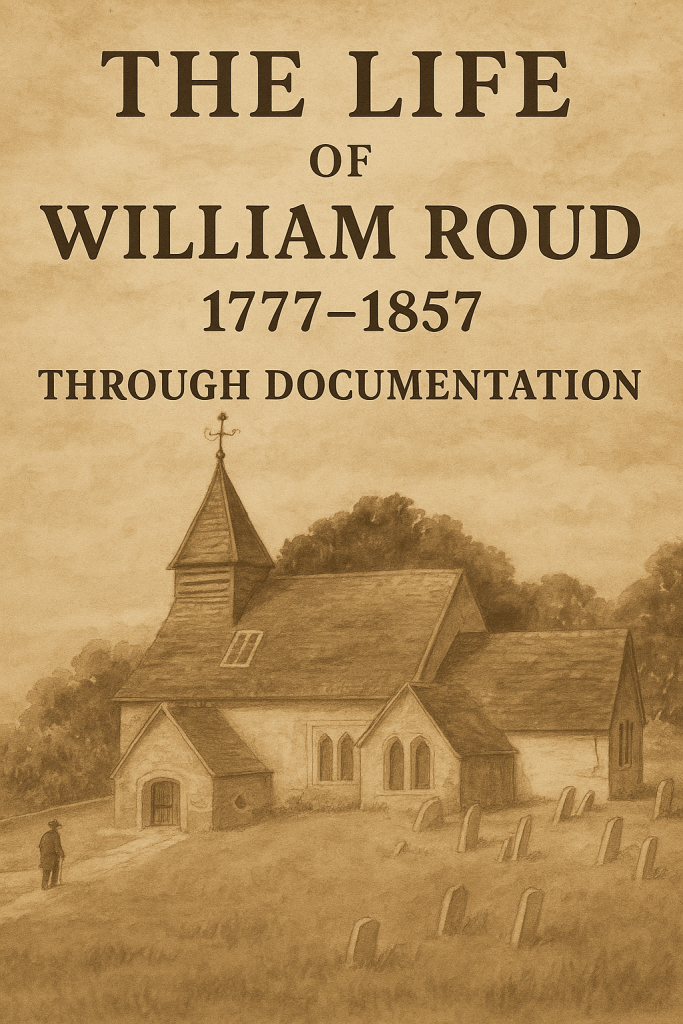
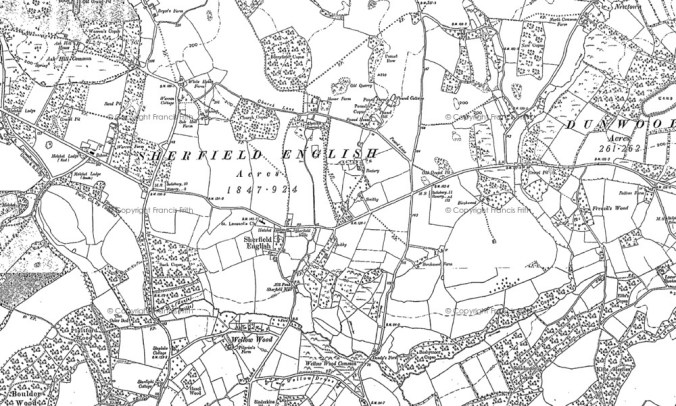

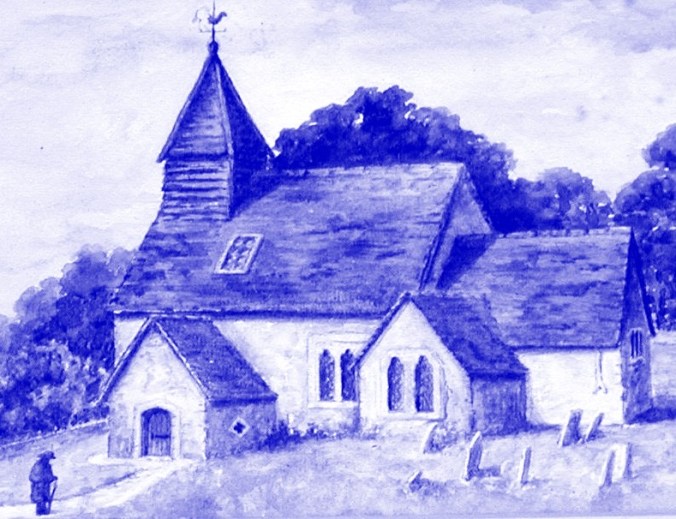

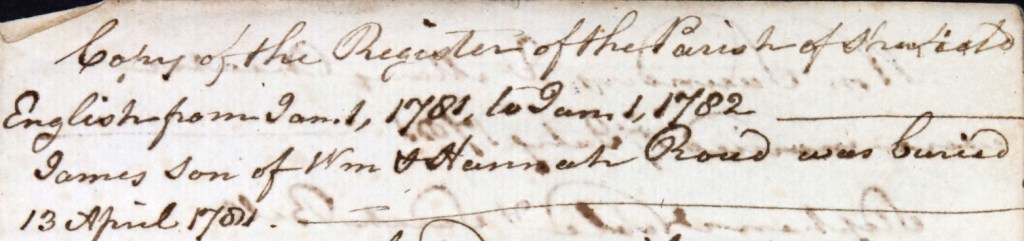





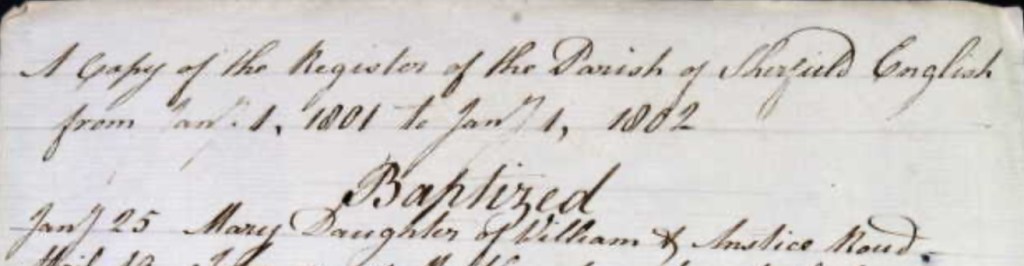
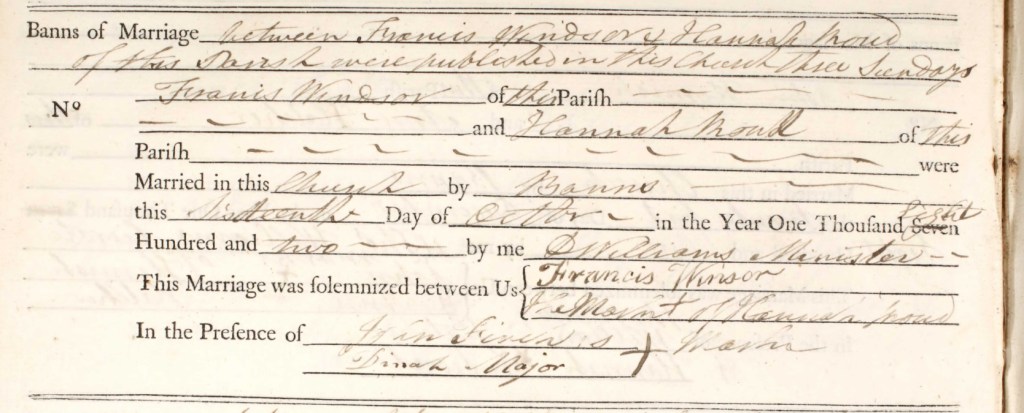


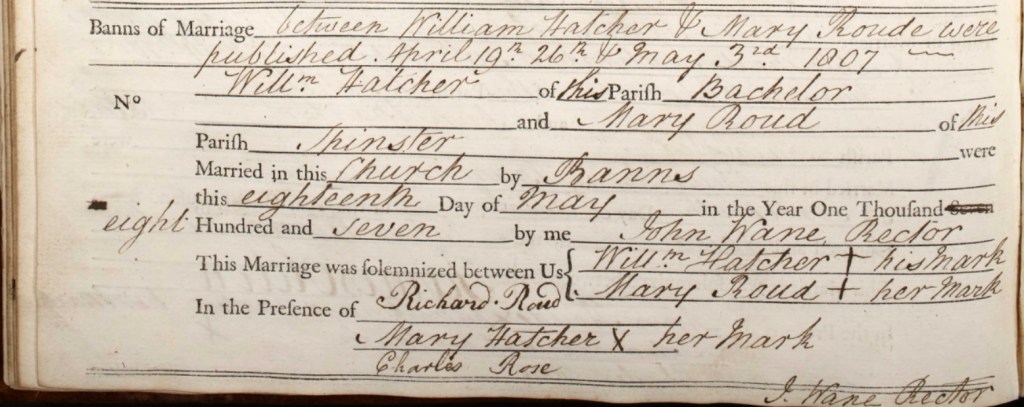
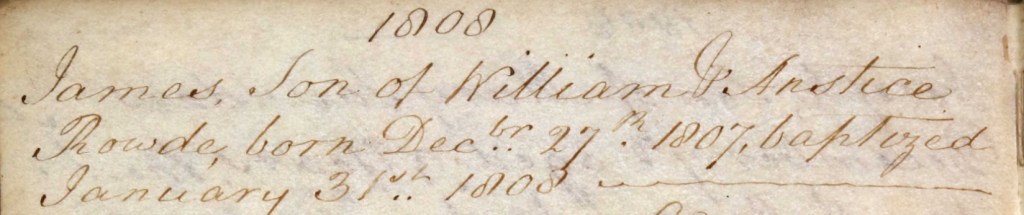
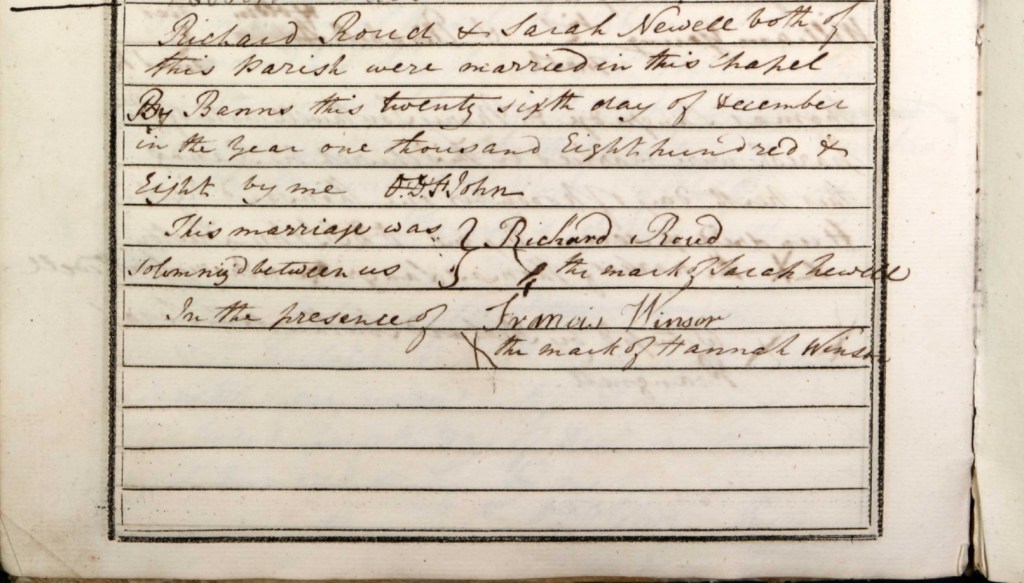
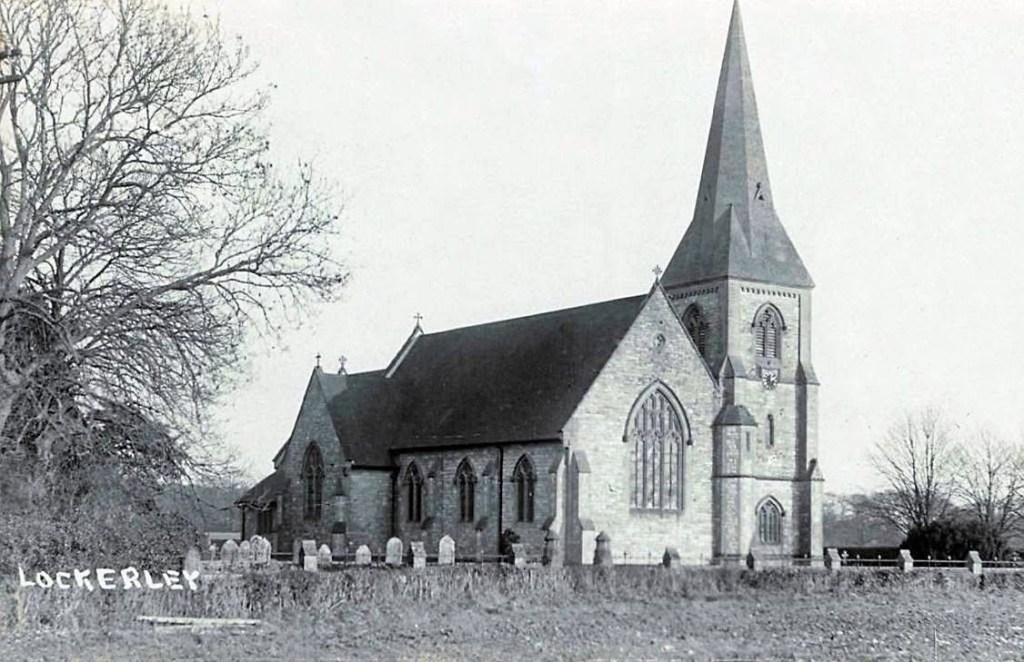


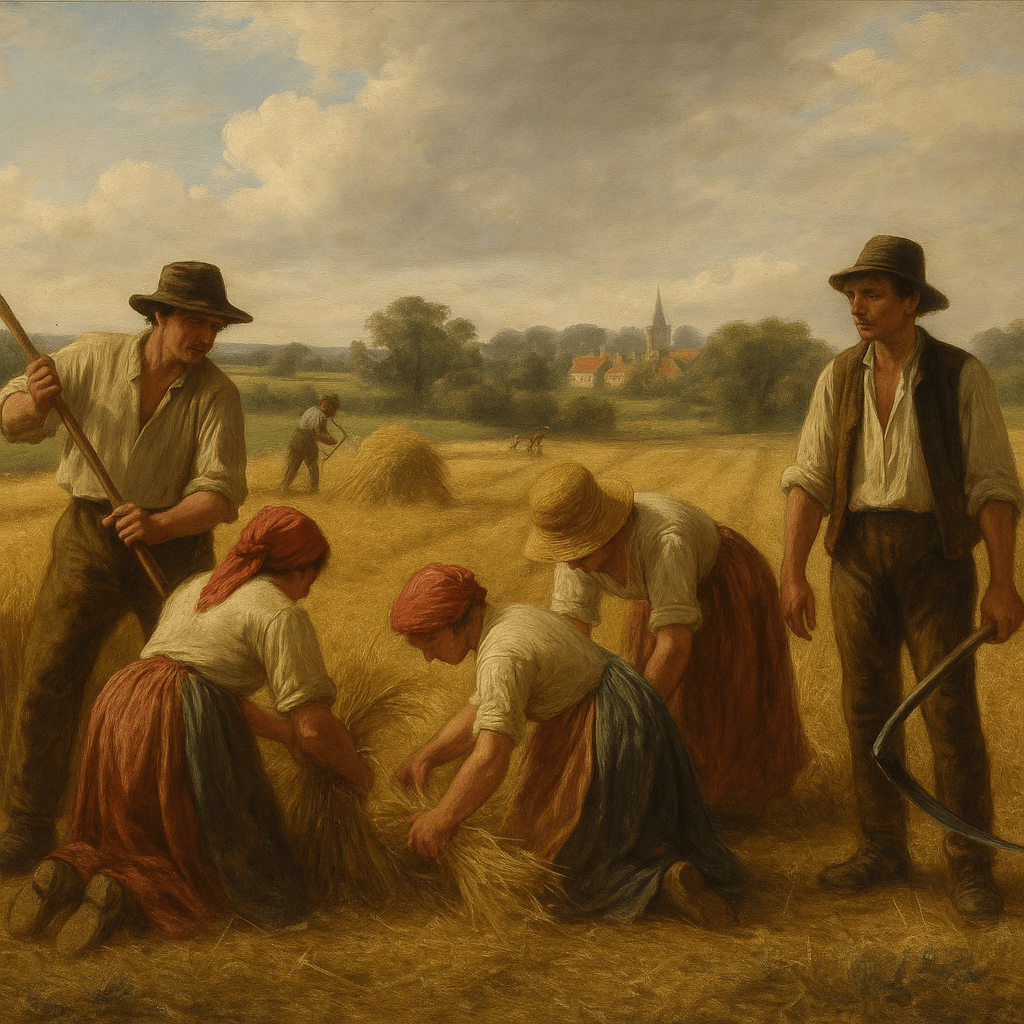



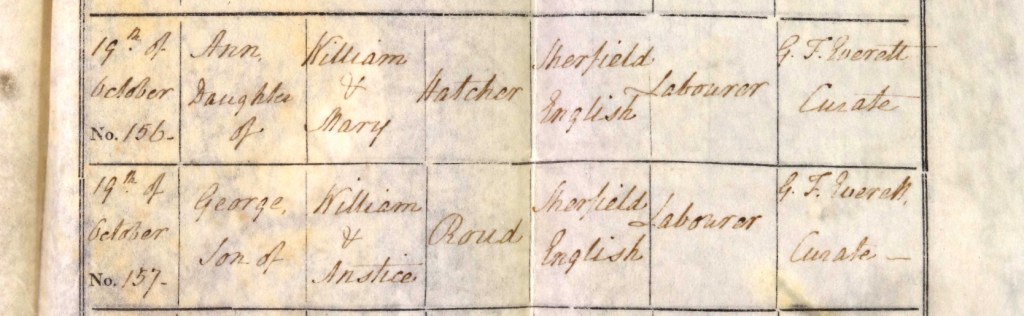
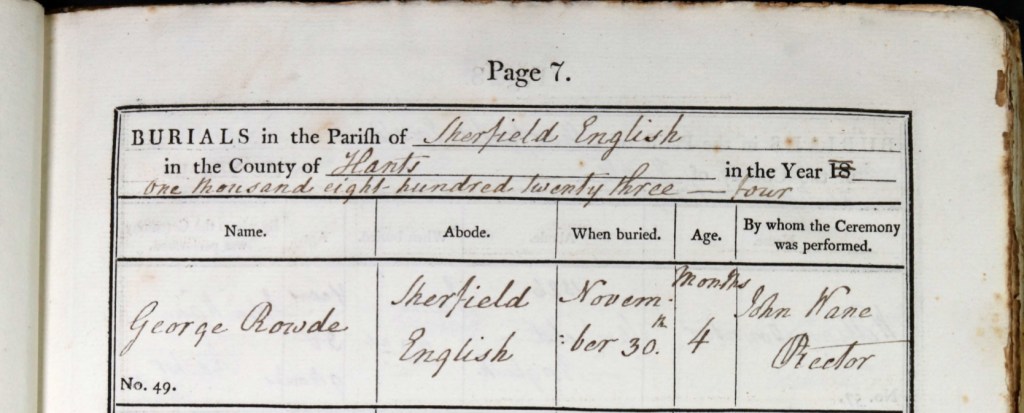
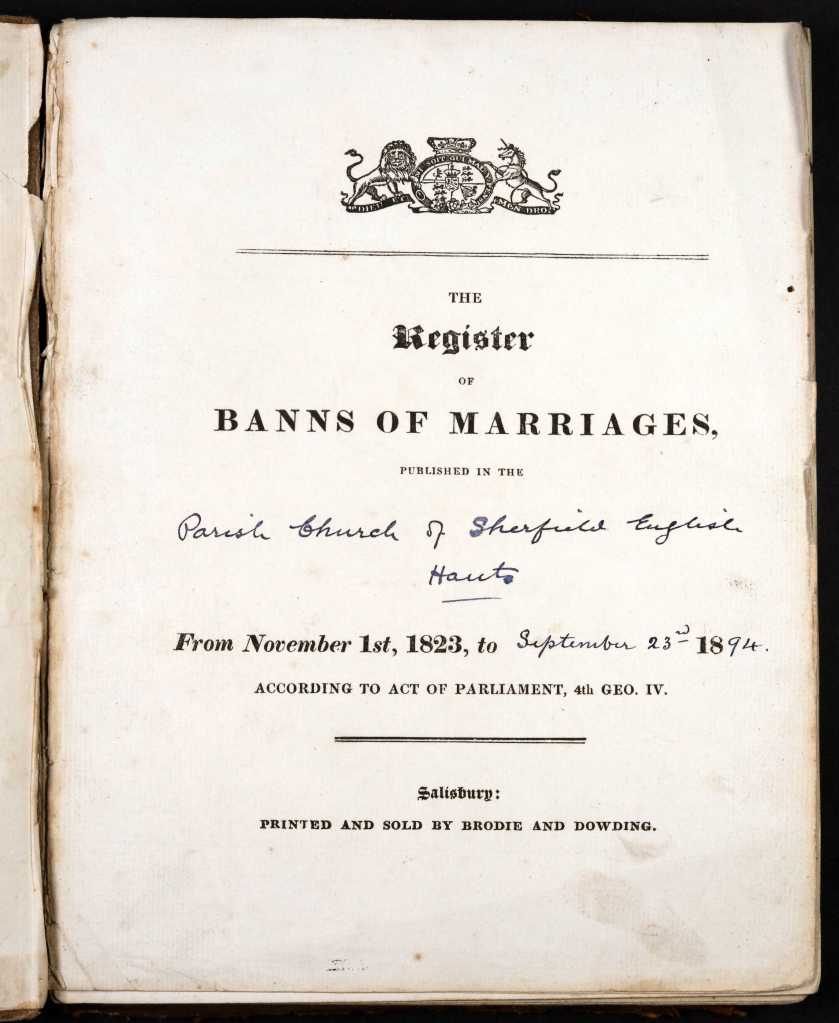
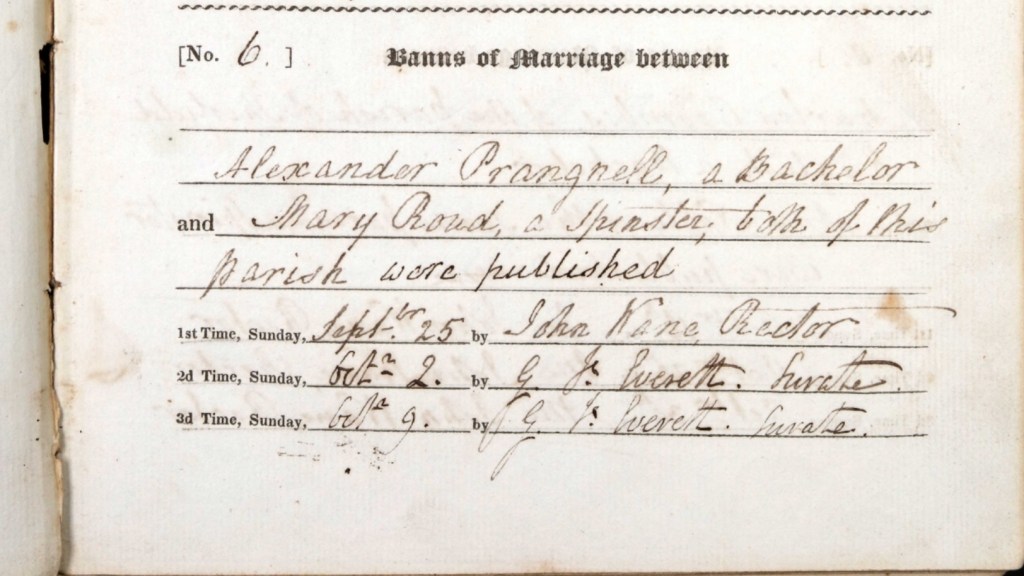
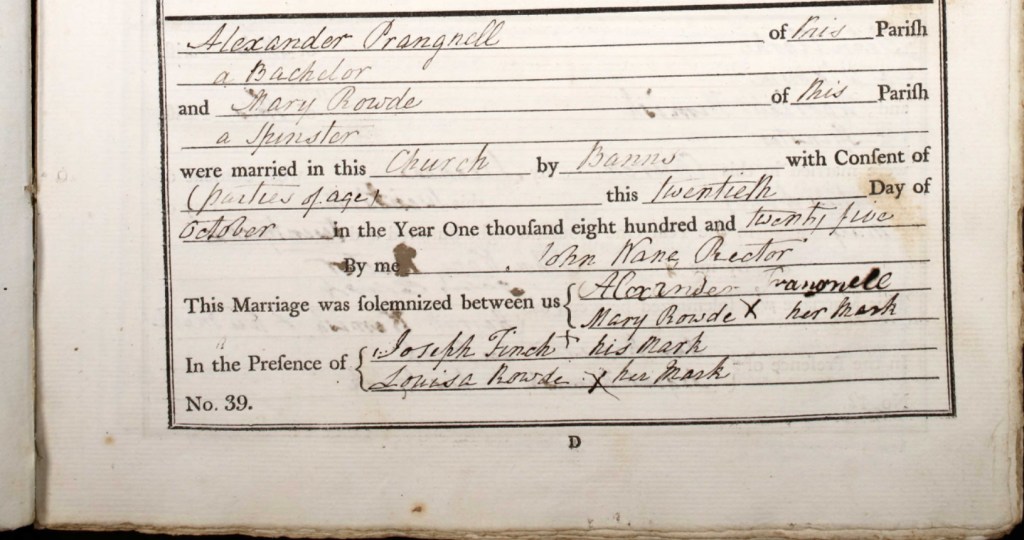
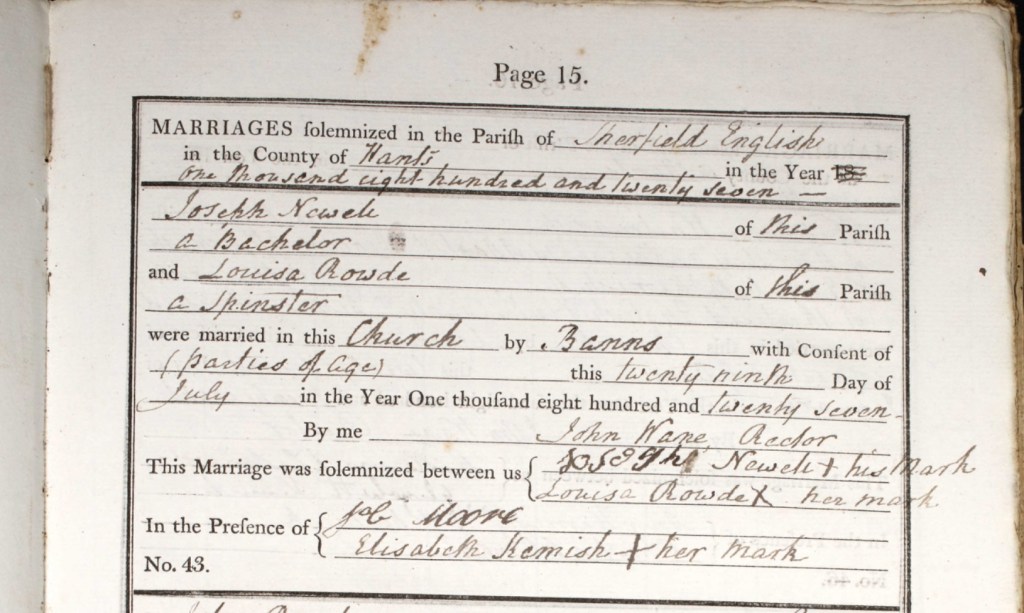
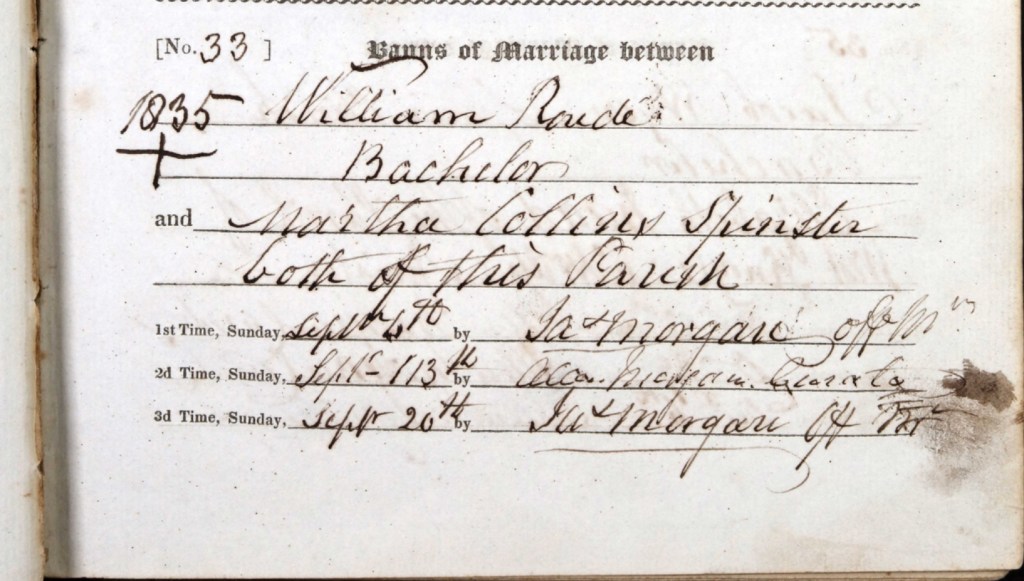
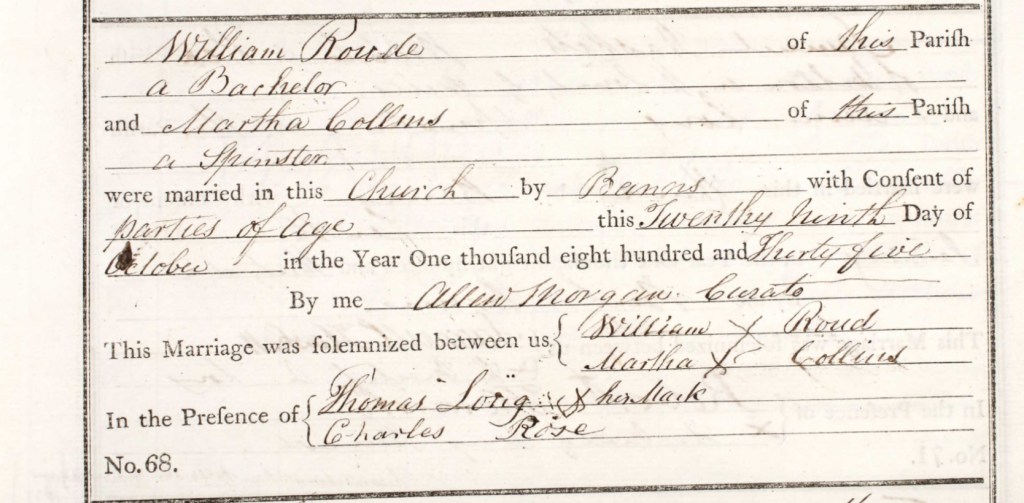
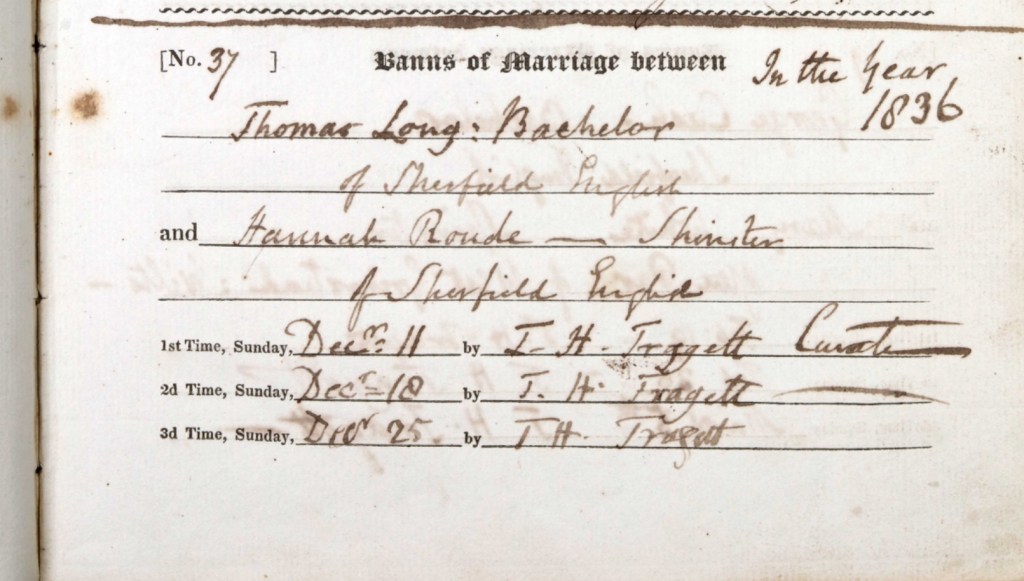
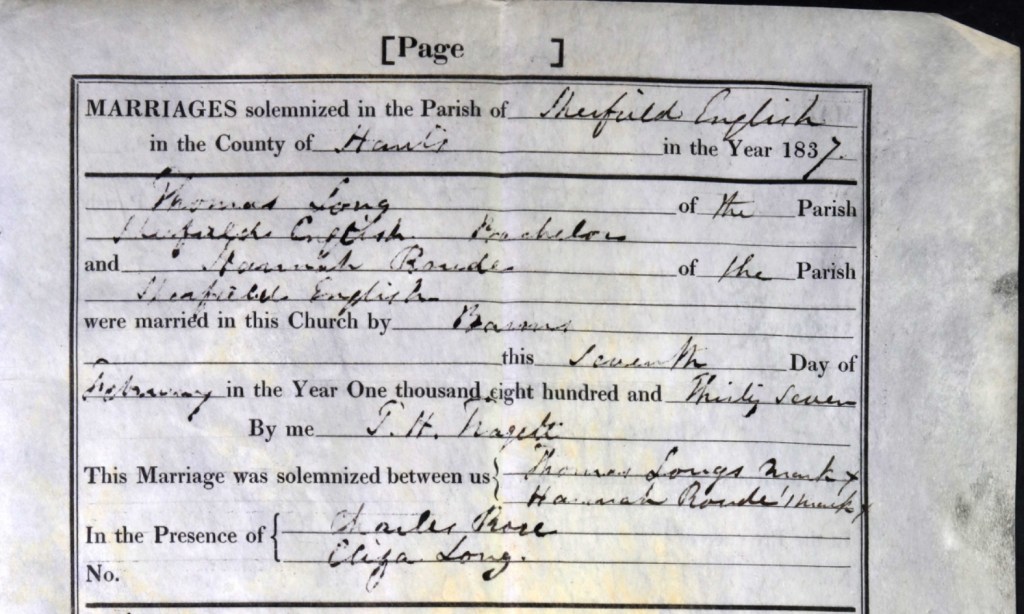
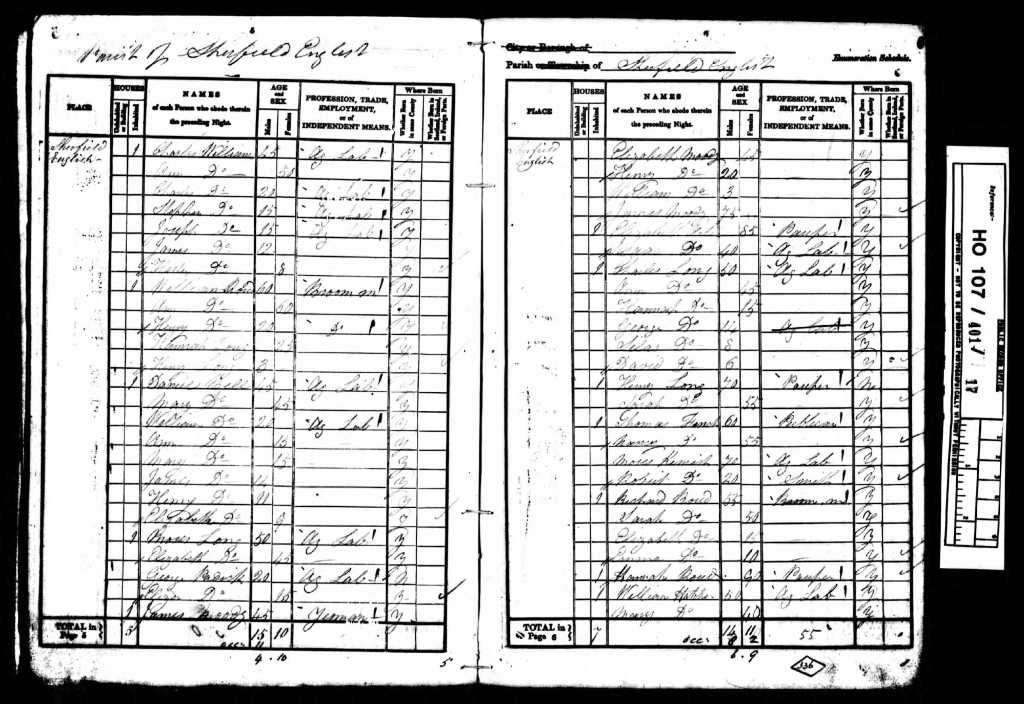


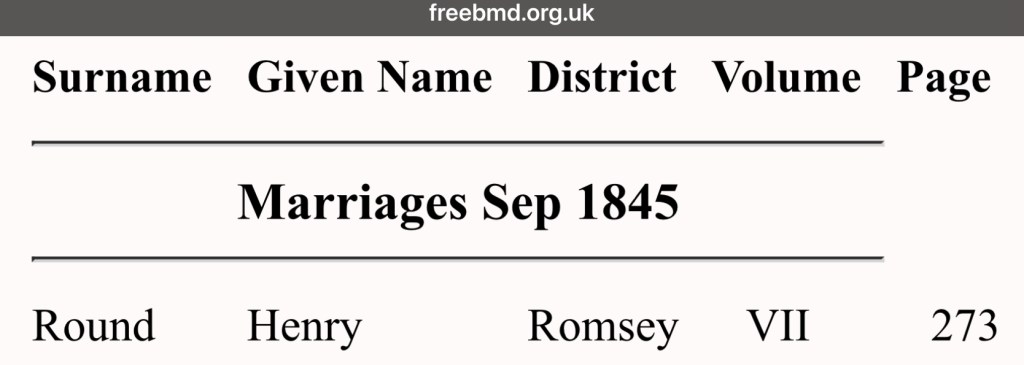
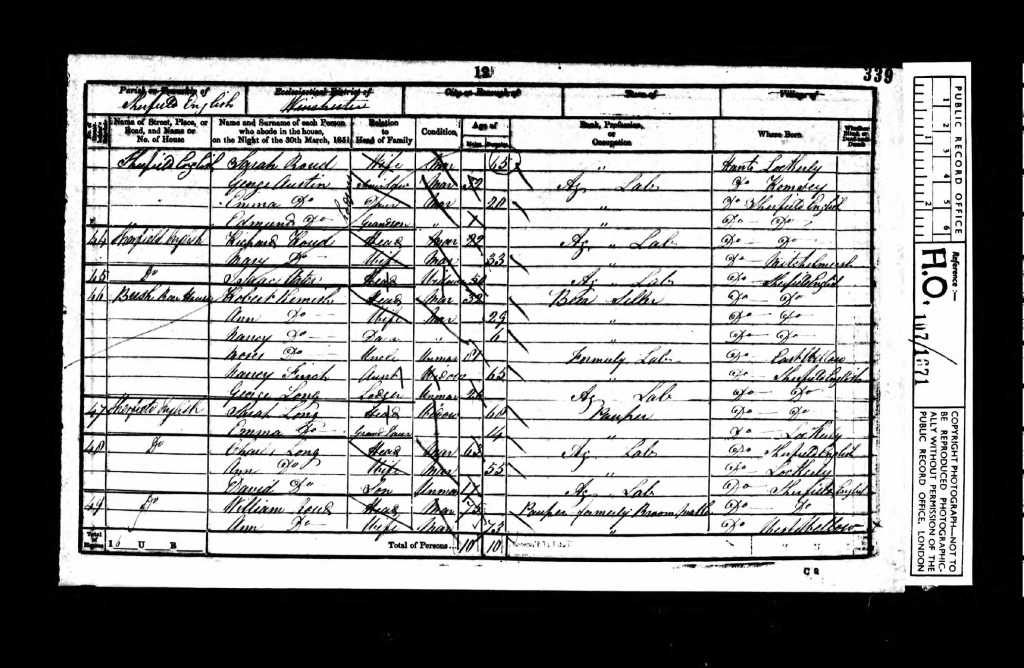
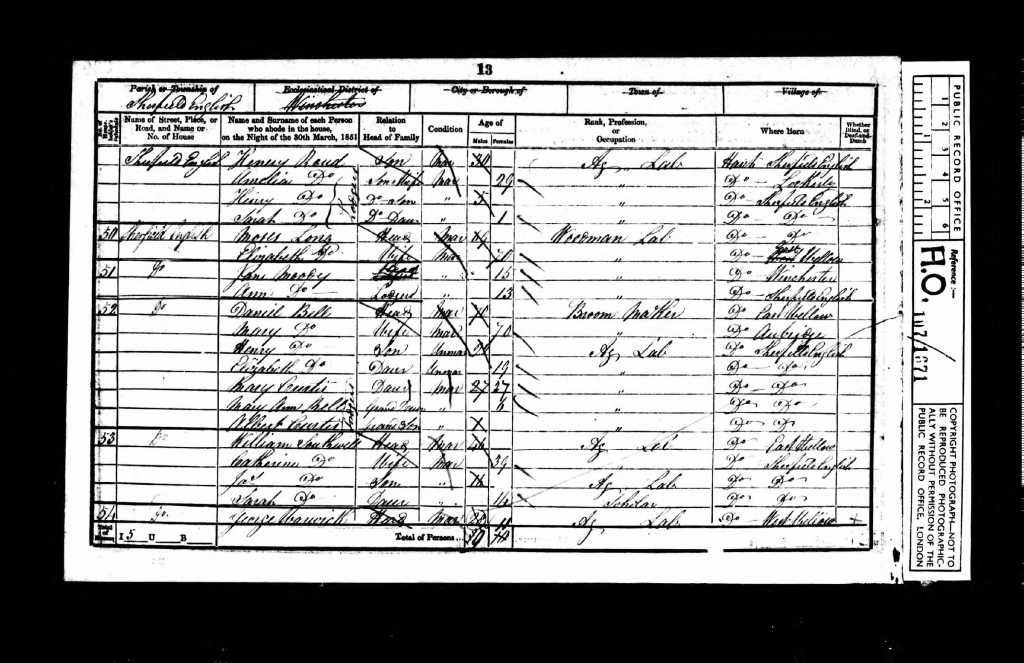
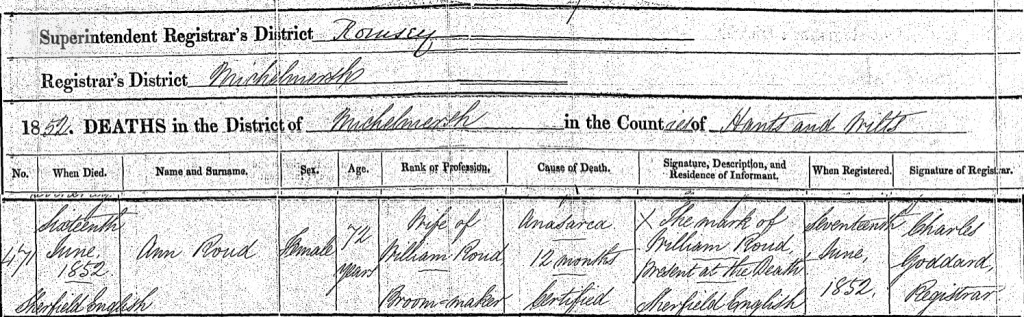


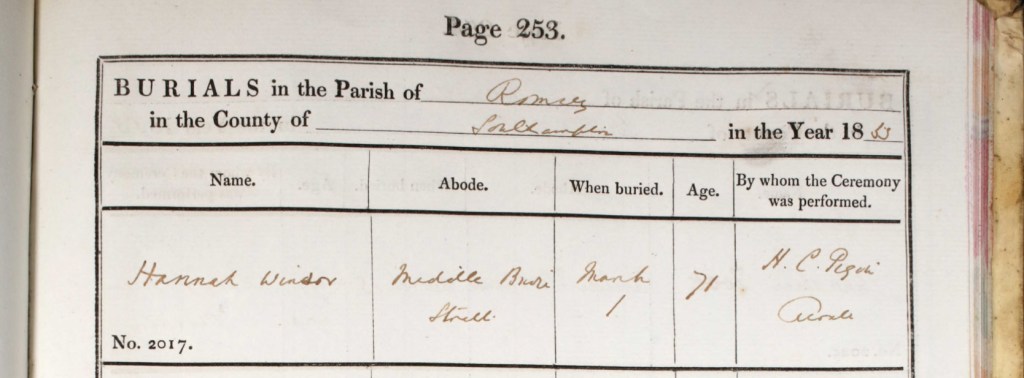
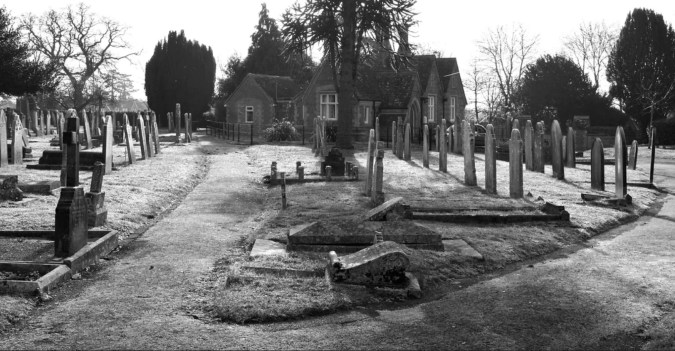


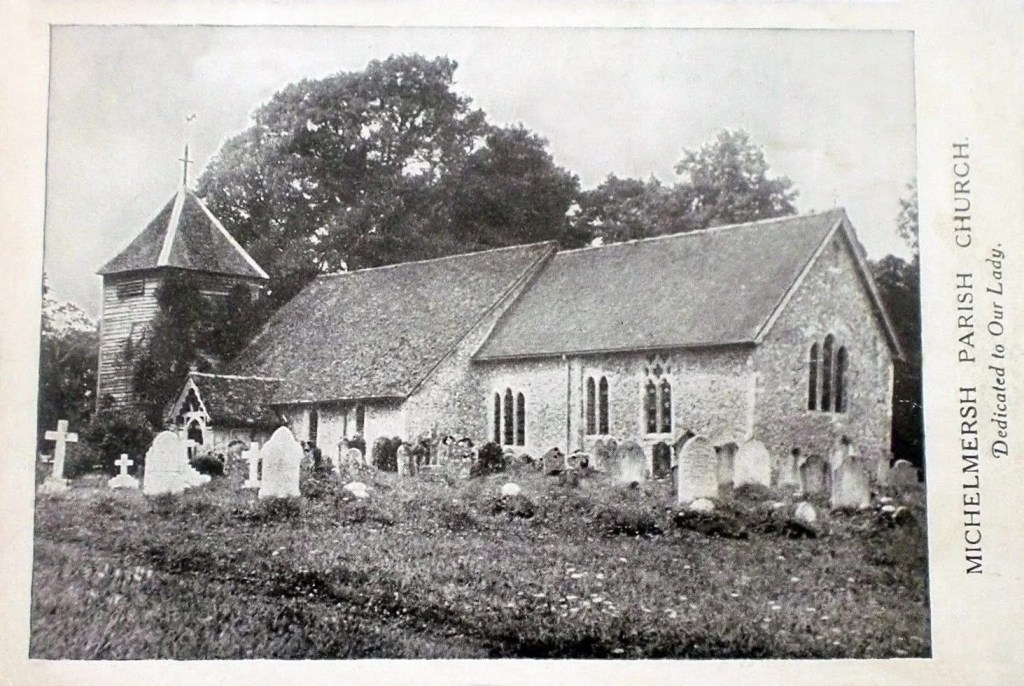
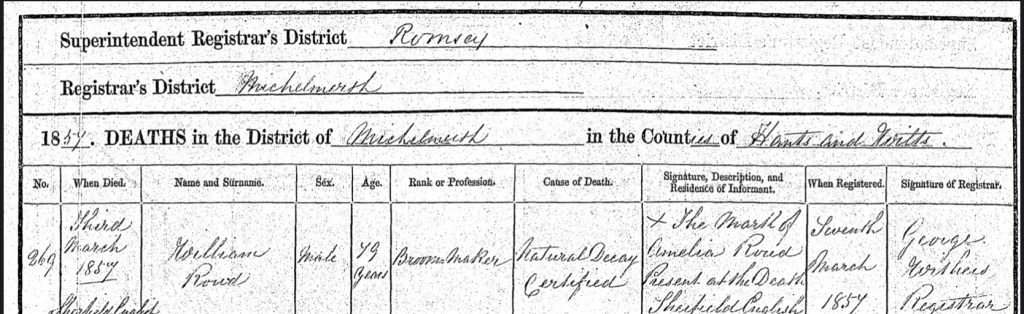

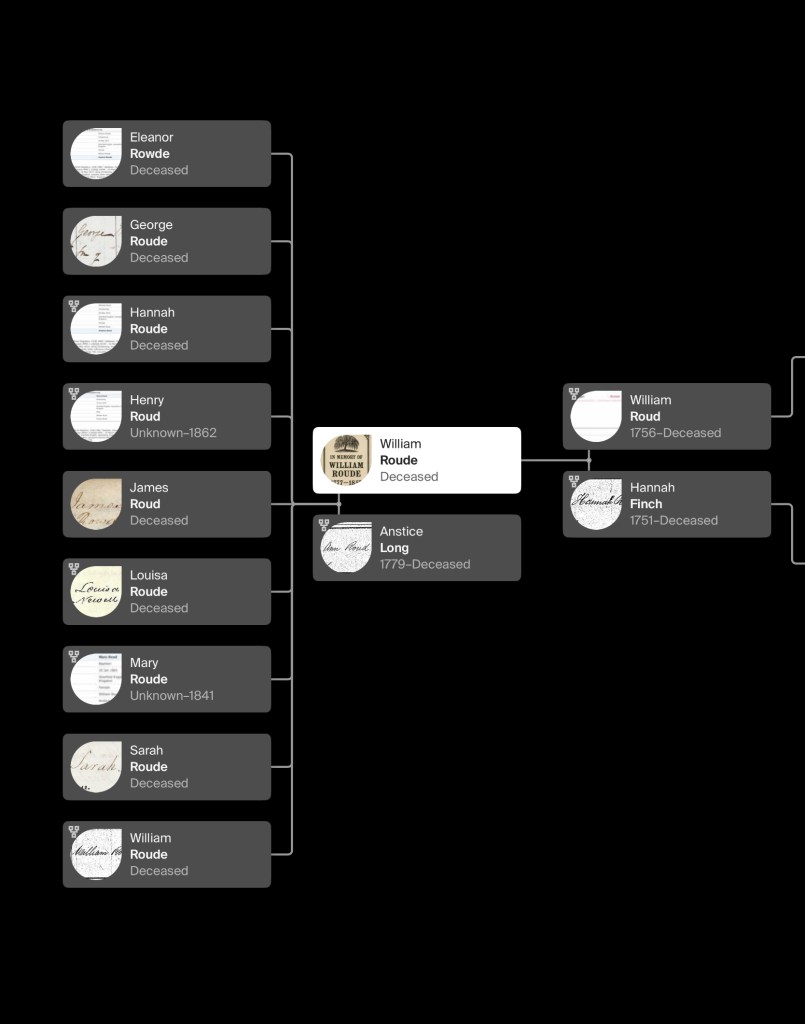
 Intwined