Tracing the threads of our ancestors’ lives is an emotional journey that intertwines history, memories, and the realisation of how little we truly know about those who came before us. My journey to understand my fourth-great-grandmother, Mary Roude (sometimes spelled Roud), has been one such pursuit, one that has both challenged me and deepened my appreciation for the resilience and lives of those who shaped my family tree.
Born around 1791 in the quaint village of Sherfield English, Hampshire, England, Mary’s life spans a time of great change and upheaval. It’s astonishing to imagine how she navigated a world that was far different from ours, one that lacked the conveniences and records we often take for granted today. Mary’s story, much like that of many from her time, was built on oral histories, and the sparse parish records that have survived. In an era before the census and civil registration of births, marriages, and deaths, piecing together the details of Mary’s life is a painstaking process, one that reminds us of how precious and fragile these connections can be.
Her parents, William Roud and Hannah Finch, are names that echo faintly through time, preserved only by those few surviving records, and yet, the mystery of her story draws me in deeper with each passing year. How can one person’s life be so difficult to reconstruct from such limited resources? This is where the art and struggle of family history research comes alive, the thrill of discovery mixed with the heartache of pieces that don’t quite fit or have been lost to the ravages of time.
I hope to share Mary’s life, as best as I have been able to piece it together, drawing on the scant evidence and rich imagination that family historians use to bring the past to life. It is a labor of love and respect for the incredible woman who helped lay the foundation for the family I know today. As we navigate the challenges of genealogy, we also remember the importance of understanding and preserving the stories of those who came before us, even when their voices have long since been silenced. Their lives, no matter how incomplete our knowledge of them may be, continue to influence and inspire us, and the search for their stories is a journey that will never truly end.
Welcome back to the year 1791, Sherfield English, Hampshire, England. It is a year that stands at the crossroads of change, caught between the lingering influence of the 18th century and the dawning of new political, social, and industrial revolutions that would shape the future. In this year, Sherfield English, a small, rural village nestled in the county of Hampshire, was a quiet place, far removed from the bustling cities that had begun to modernize. Yet, in the broader context, it was a time of great transformation, both in England and across the world.
At the helm of the British monarchy in 1791 was King George III, whose reign had been marked by political turbulence and personal struggles with mental illness. His condition was beginning to worsen, and although he would remain king until his death in 1820, much of the power of the monarchy had already been ceded to his prime minister, William Pitt the Younger. Pitt, a brilliant and reform-minded politician, had been in office since 1783, and his leadership would have a significant impact on Britain’s direction during the final years of the 18th century.
In Parliament, the political scene was highly charged. The French Revolution had begun in 1789, and the radical shifts happening across the Channel were causing alarm in Britain. The establishment was deeply conservative, and the idea of revolutionary change, particularly in the form of democracy and equality, was viewed with suspicion. There was a marked divide between the Whigs, who leaned toward reform, and the Tories, who were more conservative in their approach to governance. This tension was mirrored in debates over Britain’s own social inequalities, as well as its imperial ambitions abroad.
For the common people, life in 1791 was starkly divided between the wealthy elite and the working poor. The rich, often living in the larger cities or grand estates in the countryside, enjoyed luxurious homes, fine clothing, and abundant food. They had access to the best education and enjoyed leisure activities such as hunting, theater, and art. Their lives were defined by privilege, but also by a sense of duty and responsibility toward the empire and society.
In contrast, the working class and the poor faced lives of hardship. The Industrial Revolution was starting to take root, but it hadn’t yet reached its full force, and the rural population still relied heavily on agriculture. For those living in the countryside, like those in Sherfield English, life was often centered around farming, manual labor, and tight-knit communities. However, conditions were difficult. Work was physically demanding, with long hours, little pay, and few rights. For the poorest, survival depended on the harvest and the support of family or parish. Many of the working class had little in terms of material wealth or opportunity, and the poor lived in squalid conditions.
Fashion in 1791 was characterized by elaborate and highly structured styles. The upper classes wore fine fabrics such as silks, velvets, and fine wool, with men often sporting coats with wide collars, waistcoats, and breeches. Women wore dresses with long flowing skirts, often featuring high waistlines (empire line), and intricate detailing such as lace and ribbons. However, for the poor and working classes, clothing was far more utilitarian. Garments were made from coarser fabrics and were often hand-me-downs or repaired and repurposed many times over.
Transportation in 1791 was slow and cumbersome. The roads were often in poor condition, and travel was usually by horseback, carriage, or foot. The wealthy could afford to travel long distances, but for the majority of people, travel beyond the local area was a rare and sometimes expensive event. The invention of the steam engine was still in its early stages, with the first railways not becoming commonplace until decades later.
Housing for the majority was modest. In villages like Sherfield English, people lived in small cottages, often with thatched roofs, made of timber or brick. These homes were simple, consisting of a few rooms, often with a large hearth for cooking and heating. The wealthier landowners or gentry could afford larger, more comfortable homes, with multiple rooms and finer furnishings, but even they would not have the modern comforts we take for granted today. Heating was typically done by coal or wood fires, with the cold, damp winters making it difficult to stay warm, especially in rural areas. Lighting was limited to oil lamps, candles, or tallow lights, which provided little illumination and were often smoky and dim.
Hygiene and sanitation in 1791 were rudimentary at best. For most people, washing was a rare occurrence, and the concept of personal hygiene was very different from today’s standards. Bathing was infrequent, and many people relied on communal water sources or streams for their daily needs. The lack of proper sanitation meant that waste disposal was often a problem, with open cesspits or waste being dumped in the streets, leading to the spread of disease. Diseases such as cholera, typhus, and dysentery were common in urban areas, but even in rural villages, the close quarters of family life and the lack of effective sanitation meant that health could deteriorate quickly.
Food in 1791 was largely based on what could be grown or raised locally. For the wealthy, meals were elaborate affairs, featuring meats, pies, puddings, and an array of vegetables. Spices and imported goods were a luxury. For the poor, meals were much simpler, often consisting of bread, cheese, and a small amount of meat or vegetables, depending on what could be afforded. Food preservation was an issue, and many people relied on salted or dried food to see them through the winter months.
Entertainment in 1791 was largely centered around social gatherings, music, and outdoor activities. The rich attended theaters, concerts, and balls, while the working class enjoyed simpler pleasures, such as festivals, fairs, or gatherings in taverns. For most people, however, leisure time was limited, and many spent their days working hard just to survive.
Religion was an important part of life in 1791, with the Church of England being the dominant faith. For many, religion was a source of comfort and community, with church services providing a sense of belonging and spiritual guidance. However, there were also tensions within the religious landscape, with dissenting groups, such as the Methodists, gaining followers. These tensions would later come to a head as calls for reform spread across the country.
The atmosphere in 1791 was one of uncertainty and change. The echoes of the American Revolution were still felt, and the French Revolution had just begun, shaking the foundations of European monarchies. In England, political debates over reform were intensifying, and there was a growing awareness of the need for change, especially in the face of the changing economic and social landscape brought about by industrialization. The air was thick with whispers of revolution, as many began to question the status quo, while others feared the chaos of upheaval.
In Sherfield English, life might have felt more removed from the events unfolding on the world stage, but the ripples of change were still being felt. The world around Mary Roude was one of simplicity and hardship, but it was also one of community, faith, and resilience. The challenges of survival in a world without modern comforts were great, but the bonds of family and tradition helped to anchor people, even as the winds of history began to shift around them.
Mary Roude was born in 1791 in the peaceful village of Sherfield English, Hampshire, to William and Hannah Roud. Her father, William, was approximately 34 years old at the time of her birth, while her mother, Hannah, was around 39. Though the exact date of Mary’s birth remains a mystery, it is suggested by census records that she was born around 1791 in Sherfield English. These records, though offering a glimpse into Mary’s life, only provide us with rough approximations. The 1841 census, for instance, places her birth year as approximately 1801, while the 1851 and 1861 censuses confirm the year as 1791, but always with a slight degree of uncertainty.
Mary was the youngest of five siblings. Her three brothers, William, born before the 7th day of September, 1777, James, born before the 13th day of April, 1780, and Richard, born before the 22nd day of May, 1785, were older than she, growing up in a world shaped by the same traditions and challenges that would define Mary’s own life. Her only sister, Hannah, was born before the 8th day of September, 1782, completing a family of siblings who shared the same quiet rural upbringing in Hampshire. Together, they would have formed a close-knit family, bound by the ties of siblinghood and the steady rhythm of life in the countryside, even as each one embarked on their own path in the world.
Yet, tragedy and struck the Roud family when Mary’s brother James passed away in early April 1781. He was laid to rest at Saint Leonard’s Churchyard in Sherfield English, on Friday, the 13th day of April 1781. It must have been a heart-wrenching loss for the family. The grief of such a young life lost would have left a lasting imprint on Mary’s childhood, as she grew up in the shadow of that sorrow. The church where James was laid to rest, the original church at the heart of Sherfield English, would have been a place that marked the passage of time for Mary and her family, a place of both solemnity and faith, as they honored their loved ones and prayed for their futures.
Though the history of Mary’s family is rooted in these bare dates and names, the essence of her life exists in the connections between them, the love and responsibility between parents and children, the shared duties of family, and the unspoken strength of rural life in a time when records were few and far between. It is in these small, personal details that we begin to understand the richness of Mary Roude’s story.
Sherfield English is a small village located in the Test Valley district of Hampshire, England. It lies just a few miles northwest of Romsey and is set within the picturesque Hampshire countryside, surrounded by farmland and natural beauty. The village has a rich history that spans several centuries and is deeply connected to the rural landscape of southern England.
The name "Sherfield" likely comes from Old English, where "scear" refers to a slope or hill and "feld" means open land or field, suggesting the village was established in an area with a prominent geographical feature. The addition of "English" to the name occurred later, distinguishing it from other similarly named places following the Norman Conquest of 1066.
Sherfield English's development can be traced back to the medieval period, when it was primarily a farming community. The village's history reflects the broader agricultural heritage of Hampshire. It grew slowly but steadily, with most residents engaged in farming and agricultural work, a typical occupation for rural England at the time. The village’s centerpiece was the parish church, St. Leonard’s Church, which has served as a spiritual and social center for the community for many centuries. The church, with its origins dating back to the 12th century, is a key focal point of the village and reflects its long religious history.
In the 19th century, Sherfield English, like many rural areas, began to see changes brought on by population growth and the rise of industrialization. While the village remained largely agricultural, the expansion of transportation networks, particularly railways, brought new opportunities for trade and communication. This period also saw the construction of several cottages and houses in the village, leading to an increase in population.
The architecture of Sherfield English retains much of its historic character, with a mix of old cottages and larger homes. Despite the growth of nearby towns, the village has managed to maintain its rural charm and peaceful atmosphere, remaining a quiet, residential area. Its location, just a short distance from Romsey, offers a blend of tranquility and accessibility.
St. Leonard’s Church, at the heart of Sherfield English, has been integral to the community since its establishment. It was built in the 12th century, with subsequent renovations and expansions reflecting changing architectural styles and the evolving needs of the congregation. The church is dedicated to St. Leonard, the patron saint of prisoners and the mentally ill, and its role in the community has been central to the village's spiritual life. The churchyard around St. Leonard’s Church contains numerous gravestones, many of which date back several centuries, and the church remains an active site for worship, weddings, and other community events.
Sherfield English is also steeped in local folklore, and like many historic English villages, it has its share of ghost stories and rumored hauntings. St. Leonard’s Church, with its long history, is often the focal point of these tales. Some locals have reported strange occurrences in and around the churchyard, such as the sensation of being watched or hearing unexplained sounds like distant footsteps or murmurs. There are also stories about church bells ringing at night without anyone in the building to ring them, adding to the eerie reputation of the church. While these accounts remain largely anecdotal, they contribute to the village’s sense of mystery and intrigue.
In addition to the church, other old buildings in the village, such as historic houses and inns, are also said to be associated with ghostly activity. Some residents have claimed to see shadowy figures in certain rooms or have experienced cold drafts in areas of these older properties. These stories, while not officially documented, persist as part of the village's folklore and add to the character of Sherfield English.
Today, Sherfield English remains a picturesque and peaceful village, with a small but active community. The surrounding countryside offers opportunities for outdoor activities such as hiking, cycling, and birdwatching, making it an attractive location for those seeking a rural lifestyle while still being close to Romsey and other nearby towns. The village's historical charm, combined with its natural beauty and connection to local traditions, continues to make it a unique place to live and visit.
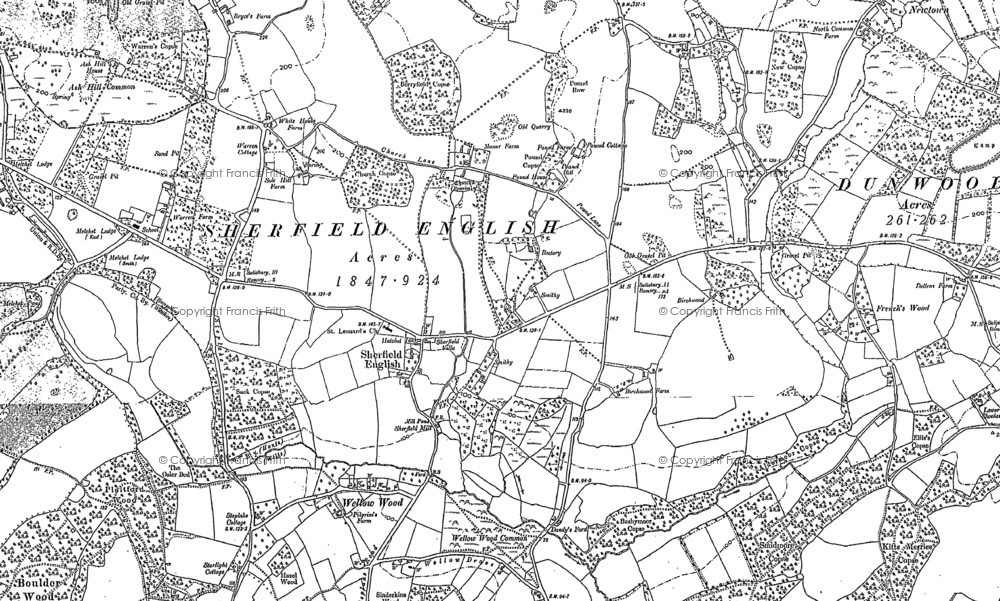
On the crisp, winter morning of Sunday, the 18th day of December 18th, 1791, a small but significant moment in Mary's life took place in the humble yet sacred space of Saint Leonard’s Church, Sherfield English, Hampshire. The chill of the season would have hung in the air as Mary’s parents, William and Hannah Roud, walked the short distance to the church, a place that would become woven into the fabric of her life. Their daughter, only a few months old, was about to undergo the Christian sacrament of baptism, a rite that held deep spiritual significance in an age where religion anchored the lives of even the smallest village communities.
As Mary was cradled in her mother’s arms, William and Hannah would have entered the simple stone church, its pews likely filled with a few local villagers who, like the Roud family, found solace in the rituals that connected them to something far greater than the fleeting struggles of their daily lives. The flickering light of candles would have cast a soft glow upon the stone walls, and the low murmur of quiet prayers might have drifted through the room, filling the air with a sense of reverence. The church, with its centuries-old foundations, was a place of continuity, where generations before Mary had come to seek the blessing of the divine, and where, in this moment, she, too, would begin her own sacred journey.
The baptism itself, as it would have been in 1791, was a solemn and communal act. The curate, William Watson, would have been standing near the altar, dressed in the traditional vestments of his office, perhaps a white alb or a black cassock, his face calm and focused on the ritual at hand. Baptism in this period was performed by sprinkling or pouring water over the child’s head, a practice that connected Mary to the ancient traditions of the Church. This simple yet profound act symbolized her entrance into the Christian faith and the community of believers.
With her parents standing by, Mary would have been held by her mother, as her father stood close, each of them offering prayers of thanksgiving and hope for their child’s future. The curate would have dipped his fingers into the font of holy water, drawing the water in his hand and gently sprinkling it over Mary’s head as he recited the sacred words: "I baptize thee in the name of the Father, and of the Son, and of the Holy Spirit." The church, though small, would have resonated with the weight of these words, as the community shared in this important moment. The water, cool and pure, would have marked Mary as a member of the church and the village, a child of God, and a part of the long lineage of her ancestors who had come before her.
Curate William Watson, with careful attention to detail, recorded the event in the parish register, his handwriting precise and neat in the way only those with a devotion to their work would manage. Under the heading of "Baptisms, Marriages, and Burials," Watson wrote, "Dec 18th Mary daughter of Wm. and Hannah Roud." This simple entry, composed in 1791, would remain a vital piece of history, passed down through the ages to eventually connect Mary to the generations that followed her. For her parents, this record would stand as proof of their daughter's place in the eyes of both God and the community, a mark of continuity in a world where records were few, and each written word had an enduring weight.
After the baptism, Mary’s parents would have stood together in quiet reflection, holding their daughter close, perhaps offering their own silent prayers for her health and happiness. The congregation, if present, would have gently offered their blessings, knowing that this was not just a ritual, but a profound affirmation of life and faith. The bonds of the Roud family, already strong through the shared experience of parenthood and the loss of Mary’s older brother James just months before, were now further solidified by this sacrament, a symbol of faith, family, and the enduring presence of divine grace in their lives.
The church, its stone walls a silent witness to so many such moments, stood as a backdrop to Mary’s story. Saint Leonard’s Church, where her brother James had been laid to rest in the spring of 1781, would continue to be a place of solace for Mary and her family in the years to come, a reminder of the spiritual and familial connections that tied them to one another and to the village they called home.
In the years that followed, as Mary grew, she would carry with her the significance of that baptismal day, the water that had touched her forehead, the prayers that had been said over her, and the unspoken promises made by her parents, to protect and guide her in a world that would one day be hers to navigate. It was a day like no other, yet like countless other baptisms that had been performed in the same church over the centuries, marking the beginning of Mary’s journey in the world, grounded in faith, surrounded by family, and rooted in a community that would be her home.

The name Mary has a long and significant history, deeply rooted in various cultures and religious traditions. It has remained one of the most widely used names across different countries and time periods, often associated with purity, grace, and reverence.
The name Mary is derived from the Hebrew name Miryam (מִרְיָם), though the exact meaning of the name is uncertain. Some scholars suggest it means "sea of bitterness," "rebelliousness," or "wished-for child," while others believe it may be related to the Egyptian name Mery, meaning "beloved" or "love."
The name Mary is most famously associated with the Virgin Mary, the mother of Jesus in Christian tradition. The Virgin Mary's role in Christianity has made the name Mary one of the most revered names, especially in Catholicism, where the Virgin Mary is considered the ultimate symbol of purity, motherhood, and compassion. The name has been used in various forms in different languages, including Maria in Spanish and Italian, Marie in French, and Miriam in Hebrew.
In the Christian Bible, Mary is often depicted as a humble and obedient figure, and her role in the New Testament has greatly influenced the name’s popularity in Christian communities. Over the centuries, the name Mary has become synonymous with virtuous womanhood, devotion, and maternal love.
In addition to its religious significance, the name Mary has been widely used in both royal and common circles. It was a popular name among European royalty, with numerous queens and princesses bearing the name. Queen Mary I of England, also known as "Bloody Mary," and her granddaughter, Queen Mary II of England, are two notable examples. Mary Stuart, better known as Mary, Queen of Scots, also contributed to the name's historical prominence.
The name Mary remained extremely popular throughout the 19th and early 20th centuries, particularly in English-speaking countries. In the United States, it was the most popular name for girls for many decades, especially in the early 1900s. During this period, it was seen as a classic, timeless name, and it was commonly chosen for its association with religious and cultural ideals of womanhood.
Over time, the popularity of the name Mary has waned, though it still retains a strong presence and continues to be used across many cultures. In the 20th century, variations of the name such as Maria and Marie became more common, but Mary remains a timeless and beloved name in both Christian and secular contexts.
The surname Roud, often spelled as Roude, has its origins in England, and like many surnames, its history is rooted in the cultural and social dynamics of the medieval period. The surname is relatively rare and likely evolved from a combination of geographical, occupational, or descriptive factors.
The surname Roud is believed to be of Anglo-Saxon or Old French origin, with several theories regarding its development. One possibility is that it may have derived from a geographical location, such as a town or settlement named "Roud" or "Roude," which would have been based on a place name in early medieval England. This is a common source of many surnames, as people often adopted the name of the place where they lived or were originally from.
Another theory is that the surname Roud could be derived from a Middle English word "roud" or "rood," meaning a cross or a structure resembling a cross. This word would have been used to describe a place near a religious monument, such as a cross at a crossroads or a small church, often found in rural areas. If this is the case, the surname may have originated as a name for someone who lived near such a landmark or worked as a caretaker of it.
The variation in spelling, such as "Roude," could reflect changes in regional dialects and spelling conventions over time, as English orthography was not standardized until much later. The shift in vowel sounds and spelling was common as surnames were passed down orally and written differently depending on the scribe or the region.
As with many surnames, the name Roud would have been passed down through generations, and early bearers of the surname would have likely lived in rural communities or towns where such names were adopted based on occupation, location, or personal characteristics. The surname would have been relatively uncommon and might have been concentrated in specific areas, particularly in the southern or southwestern parts of England, though this can vary depending on migration patterns and historical records.
In terms of historical records, variations of the surname can be found in some early parish registers and tax records, but the surname Roud, or Roude, has not been widely documented in historical nobility or aristocracy. This suggests that the name was likely borne by common folk, particularly in rural communities, rather than by people of noble birth. It is possible that individuals with the surname Roud may have been farmers, laborers, or tradespeople, though there is no specific evidence linking the name to any particular occupation.
The name's presence in the historical record, however, is a reminder of the social structure of medieval and early modern England, where surnames often denoted a person’s origins, occupation, or relationship to a specific place. Over time, people with the surname Roud may have migrated, and the name may have spread across different regions of England and beyond, particularly during the periods of population movement and the expansion of the British Empire.
In modern times, the surname Roud or Roude is quite rare. However, it continues to be found among descendants who carry on the legacy of their ancestors, even if the surname has undergone slight variations in spelling or pronunciation. As with many older surnames, the historical context of Roud is shaped by its connection to the land and the people who lived on it.
Saint Leonard’s Church in Sherfield English, Hampshire, has a rich history that stretches back over many centuries. The church has been a central part of the village’s religious and community life, and its history reflects the broader development of the area from medieval times to the present. The original Saint Leonard’s Church is believed to have been built in the early medieval period, likely during the Norman era, around the 12th century. The church would have been a simple structure, typical of rural churches of the time. As was common with churches in small villages, it was likely constructed with local materials such as stone and timber, with a simple design reflecting the needs of the local community. The church was dedicated to Saint Leonard, a popular saint during the medieval period who was often invoked for protection and for his association with prisoners and captives. Saint Leonard’s cult was widespread across England, and many churches were named in his honor. The original church at Sherfield English served as a focal point for the small agricultural community, providing a place for worship, social gatherings, and important life events such as baptisms, marriages, and funerals. The church would have also been a place where the villagers came together for communal activities, and it played an essential role in maintaining the spiritual and social fabric of the community. Over time, the church likely underwent several modifications and additions, particularly in the 14th and 15th centuries, as the village expanded and the needs of the local population grew. These changes were likely driven by the growing wealth of the parish as the agricultural economy strengthened. In the 19th century, however, the old church began to show signs of wear and was no longer able to adequately serve the growing population of Sherfield English. By the early 1800s, the church building had become dilapidated and was deemed inadequate for the needs of the parish. At this point, the decision was made to construct a new church to better serve the community. The new Saint Leonard’s Church was built in 1840, a year that saw the completion of many church restoration projects across rural England, driven in part by the Victorian era’s focus on reviving medieval architectural styles. The new church was built on a site adjacent to the old church, though some sources suggest that it may have been on the same footprint or nearby. The architect responsible for the design of the new church was likely influenced by the popular Gothic Revival style of the time, which was characterized by pointed arches, stained-glass windows, and spires. The new church was intended to accommodate the needs of the growing population of Sherfield English, and it was designed to be larger and more architecturally impressive than its predecessor. The construction of the new church was part of a broader trend of church building and restoration during the Victorian period, a time when many rural churches were being rebuilt or restored to reflect the prosperity of the period. The old Saint Leonard’s Church, after the new one was completed, was demolished, as was often the case with churches that were deemed structurally unsound or inadequate for modern use. It is common for older church buildings to be torn down when a new structure is built, particularly if the old building no longer meets the needs of the local population or has fallen into disrepair. It is likely that the materials from the old church were repurposed for the new construction, as was the custom at the time, though no records have definitively confirmed this. Today, Saint Leonard’s Church stands as a beautiful example of Victorian church architecture, with its stained-glass windows, pointed arches, and graceful tower. The church continues to serve the community, offering regular worship services, community events, and providing a space for reflection and connection. The church is also known for its picturesque setting within the village, surrounded by well-kept churchyards and the rolling countryside of Hampshire. The new church, while a product of the 19th century, retains the essence of the old church’s purpose to serve as a spiritual hub for the village of Sherfield English.
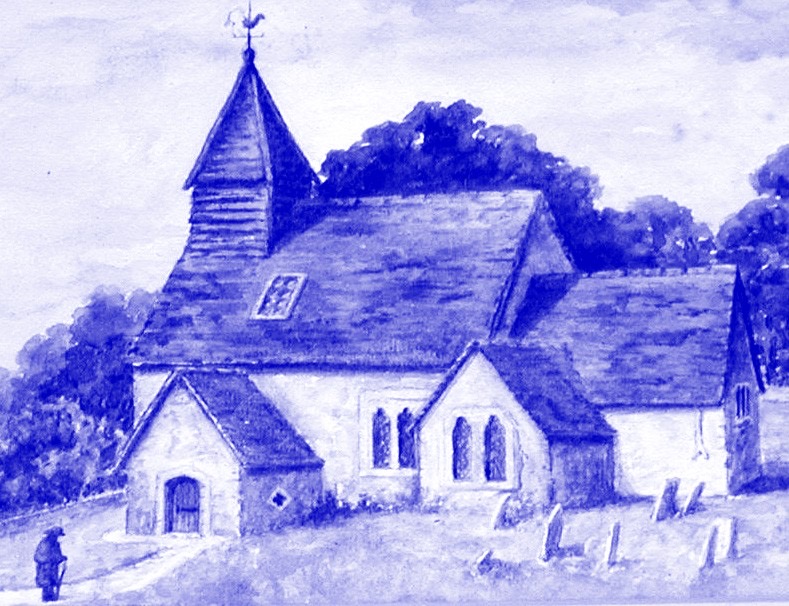
Saint Leonard Church
When Mary was barely even a year old, tragedy struck her family. In the early days of December 1792, her father, William Roud, passed away. The pain of losing a father at such a young age is something that Mary could never have fully understood, yet the loss would have shaped her life in ways that would echo through the years. William, at just 35 years old, left behind his wife, Hannah, and their five children, each one now forced to navigate the world without the steady presence of their father.
It is likely that William’s death took place in the family home in Sherfield English, a simple cottage where life had once been filled with the warmth of family and the comforting sounds of daily routines. The Roud household would have been a place of work and togetherness, where William’s presence was a guiding force. His untimely death, however, would have left a painful void, a loss that Mary, as the youngest, would never have had the chance to fully comprehend, but which would reverberate through the lives of her mother and siblings.
For Hannah, the grief of losing her husband would have been overwhelming. In an era where women had limited resources and the challenges of raising children often fell squarely on their shoulders, the death of William likely left her with a heavy burden. She would have been left to care for Mary and her older children alone, with the weight of her responsibilities compounded by the loss of the man who had been her partner in life and work. The community around them in Sherfield English, though tightly-knit and supportive, could not fill the hole left by such a personal tragedy.
In the weeks and months that followed, Mary’s life, though still so young and fragile, would have been irrevocably changed. The loss of her father would not only have shaped her early years, but it would also have set the tone for her understanding of family, of love, and of the resilience needed to carry on in the face of hardship. Her mother, despite the grief, would have had to find strength in order to provide for her children, and the deep well of love she had for them would have become the anchor that held them all together through the storm of loss.
For Mary, this early loss became part of the foundation of her life. It was a tragedy she would never have understood in her infancy, but one that would follow her in the subtle, unspoken ways that grief and memory shape a person over the years. Though she would grow up without the steady presence of her father, his memory, and the life he had built with her mother, would continue to guide the family even after he was gone. And as Mary’s own life unfolded, this loss would remain a shadow that added depth to the woman she would become, strong, resilient, and, above all, deeply rooted in the enduring ties of family.
On Friday, the 21st day of December, 1792, the village of Sherfield English gathered once again at Saint Leonard’s Churchyard to lay to rest one of their own. William Roud, Mary’s father, passed away earlier that year, leaving behind a grieving family who would forever carry his memory. At the age of 35, William’s life was cut short, and as winter’s chill settled over the landscape, the Roud family found themselves facing yet another sorrowful goodbye.
William was laid to rest at Saint Leonard’s Churchyard, the same sacred ground where his son, James, had been buried over a decade earlier in 1781. The churchyard, steeped in quiet reverence, became a place where the Roud family’s grief would be bound together, each grave marking not just a loss, but the passage of time, the unfolding of their family’s history, and the enduring presence of those they loved.
The burial was performed by the minister, W. Watson, whose hand would have once again recorded this moment in the parish register, an entry that would remain for future generations to uncover. The simple notation in the register reads: “21 Dec Buried William Roud.” Though brief, this entry is a testament to a life that once filled the Roud household with strength and presence, a life now reduced to a name on a page. It is in these moments, these records of finality, that the lives of our ancestors are both immortalized and marked by the inevitability of loss.
At William’s burial, Stephen Nobb, the churchwarden, was present, as was customary in such occasions. The churchwarden’s role in overseeing the church and its grounds made him a constant presence during these solemn rites, ensuring that the traditions of the community were upheld. As the churchwarden, Stephen would have stood as a symbol of the steady continuity of life in Sherfield English, a keeper of both physical and spiritual boundaries.
For Mary, her father’s burial marked the end of an era, a final farewell to the father she had never truly known. Yet, as she grew, the memory of William, her father’s presence in the community, and his place in the churchyard would shape the woman she would become. The churchyard, now home to both her brother James and her father, would serve as a quiet reminder of the love and loss that defined the foundation of Mary’s early life. Each visit to Saint Leonard’s Church would have brought with it the weight of these memories, woven into the fabric of her own story, even as she carried on, moving through life in the way that all those before her had done, holding her family, her faith, and her resilience close to her heart.

On Wednesday, the 11th day of December, 1799, a significant moment in the history of the Roud family took place within the hallowed walls of Saint Leonard’s Church in Sherfield English. William Roude, Mary’s older brother (my 4th Great-Granduncle and my 5th Great-Grandfather), was married to Anstice Long (my 5th Great-Grandmother), a woman who would become an integral part of the Roud family legacy. At 22 years old, William stood alongside Anstice, ready to begin a new chapter of his life, one that would eventually bring children, change, and new memories to the family that had already weathered much.
The wedding ceremony was conducted by Minister Thomas William, who, with steady hands and careful words, united the couple in the sacred bond of marriage. As was customary at the time, the marriage would have taken place before a small but meaningful gathering of family and friends, a community bound together by shared faith and tradition. The vows exchanged in that moment would have been filled with the weight of promises, expectations, and hopes for a future built together.
In the parish register, under the section for baptisms, marriages, and burials for the year 1799, Minister Thomas William carefully recorded the event with a single, simple line: “Dec 11 Wm. Roude to Anstice Long.” The brevity of this entry does not diminish its significance. It is a quiet acknowledgment of a pivotal moment in Mary’s life and in the history of her family. The few words written on the page capture a life-altering commitment, a union that would create new branches on the family tree.
At the time of William and Anstice’s marriage, Jason Ball and William Nobble were the church wardens, entrusted with the care of the church and its sacred ceremonies. Their role in the church, overseeing the practical details of worship and ceremony, would have been integral to ensuring that everything ran smoothly on that important day.
For Mary, her brother William’s marriage marked the beginning of a new chapter, not just for him, but for the entire family. As the Roud family grew, each marriage, each new birth, and each celebration would be a reminder of the unbroken threads of love, faith, and history that continued to weave through the generations. The union between William and Anstice, formed in the quiet reverence of Saint Leonard’s Church, would become another cherished part of the tapestry of Mary’s own life, a reminder that in the ebb and flow of time, family, love, and commitment endure.

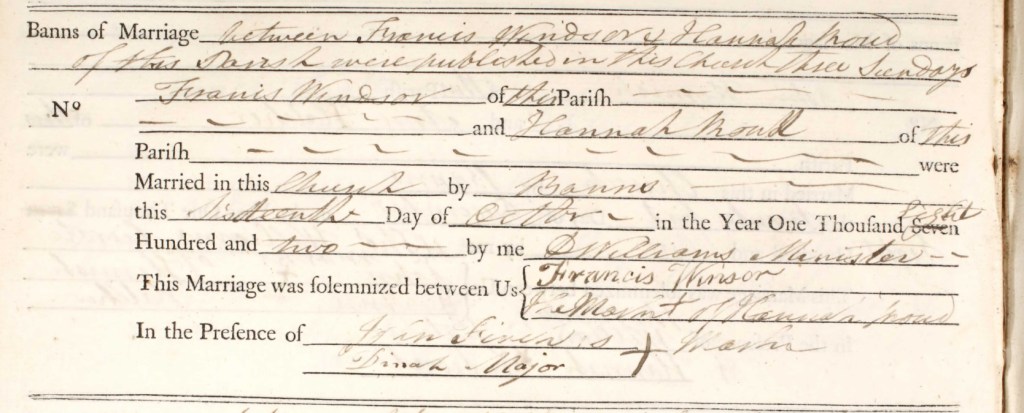
On Saturday the 16th day of October 1802, Mary’s sister, Hannah Roude, was married to Francis Winsor in a ceremony that took place at the beloved Saint Leonard’s Church in Sherfield English. At the tender age of 20, Hannah began a new chapter in her life, joining hands with Francis in the bond of matrimony. The atmosphere at the church would have been filled with a quiet reverence, as this union was not just a personal commitment, but a moment woven into the fabric of the community's shared faith and tradition.
The marriage ceremony was performed by Minister D. Williams, who, as the official witness, ensured that the sacred rite was conducted according to the established customs of the time. The banns of marriage, a public declaration made three Sundays prior to the wedding, had been read aloud in the church, notifying the congregation of the couple's intention to marry. This was a necessary part of the process, ensuring that no one could come forward to object, and that all were aware of the union being formed.
In the parish register, under the section for marriages, the details of Hannah and Francis’s wedding were recorded with care. The entry reads as follows:
“Banns of Marriage between Francis Windsor & Hannah Roude of this Parish were published in this Church three Sundays.
Francis Windsor of this Parish and Hannah Roude of this Parish were Married in this Church by Banns this Eighteenth Day of October in the Year One Thousand Seven Hundred and Two by me D. Williams Minister.
This Marriage was solemnized between Us,
Francis Windsor,
Hannah Roude,
In the Presence of
John Finch,
Dinah Major.”
This record, though simple, captures the significance of the moment:
the union of two individuals in the eyes of God, witnessed by family and community, and solemnized within the sacred space of Saint Leonard’s Church. The presence of John Finch and Dinah Major, who signed as witnesses, marked the occasion, grounding the event in the collective memory of the village. Their signatures, added to the register, are a reminder of the role that each person played in supporting the couple as they began their married life together.
For Hannah, this marriage to Francis Winsor would have been a turning point, a new path forward in the company of her husband. As the years went on, their lives would have intertwined with the fabric of family and community, filled with the quiet joys and struggles of rural life in Hampshire. And for Mary, her sister’s wedding was yet another reminder of the changing seasons of her own life, of the ongoing march of time and the unbroken ties of family that would continue to shape her future.
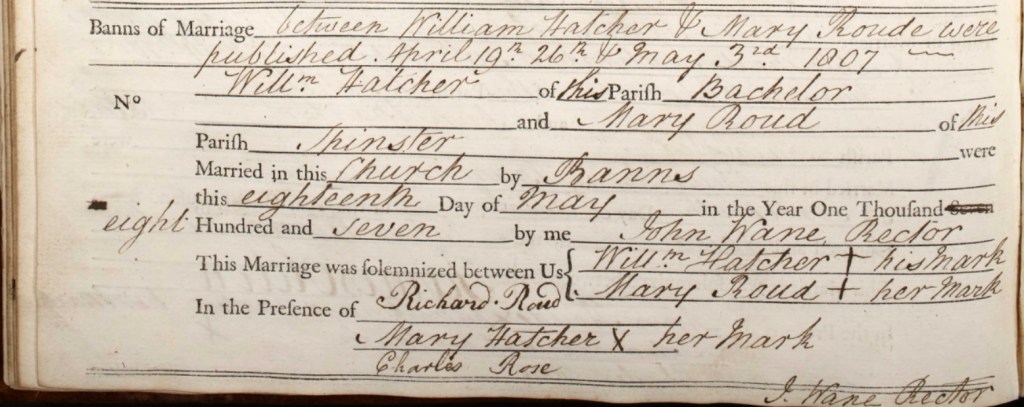
On Monday, the 18th day of May, in the year 1807, within the humble and familiar walls of Saint Leonard’s Church in Sherfield English, Hampshire, Mary Roud, a spinster of the parish, stood quietly beside William Hatcher, a bachelor, as they pledged their lives to one another in marriage. It was a simple, yet profoundly meaningful moment, a union of two local souls, coming together in faith and love before their community. The church, filled with the faint scent of candles and the timeless presence of those who had come before, bore witness to this new beginning.
The banns of marriage had been read aloud over three successive Sundays, April 19th, April 26th, and May 3rd, giving the community the opportunity to witness and prepare for the joining of William and Mary. The tradition of publishing banns was not just a formality, but a public declaration of intent, ensuring that all were aware and had the chance to object if there was reason. It was an important step in the path of commitment, both for the couple and for the parish they called home.
In a ceremony led by Rector John Wane, the couple stood before their witnesses, each marking the moment in their own way. Mary, though she did not sign her name, marked the marriage register with a simple "X" her mark not a symbol of illiteracy, but a powerful testament to her life. In a time when women were often defined by their roles as daughters, wives, and mothers, Mary’s humble gesture carried with it a quiet strength. It spoke not only of her commitment to William, but of the simplicity and depth of love during those years. Her courage and devotion, deeply rooted in faith and family, were evident in that simple mark, a symbol of a life bound by love, faith, and hope for a future shared with another.
With her family by her side, Mary made her vows, a quiet promise to walk together through life with William, in the presence of God and their community. Her brother, Richard Roud, stood as a witness, his presence both a familial anchor and a quiet support for his sister on this significant day. And though Mary did not sign her name, the marks of others, those who stood by her, were recorded with care. Among the witnesses were Mary Hatcher, perhaps a relation to William, and Charles Rose, whose names are forever etched in the register as part of the circle of family and friends that supported this union.
The entry in the parish register reads:
“Banns of Marriage between William Hatcher & Mary Roud were published April 19th, 26th & May 3rd, 1807. William Hatcher of this Parish Bachelor and Mary Roud of this Parish Spinster were Married in this Church by Banns this eighteenth Day of May in the Year One Thousand Eight Hundred and Seven by me John Wane, Rector. This Marriage was solemnized between Us: William Hatcher X his mark,
Mary Roud X her mark.
In the Presence of: Richard Roud,
Mary Hatcher X her mark,
Charles Rose.”
Mary’s simple mark in the registry was not a sign of a lack of education or strength, but rather a poignant and powerful symbol of her commitment, her faith, and her trust in the future. In a time when women’s choices were often limited, her choice to marry William Hatcher was an act of courage, a pledge not only of love, but of her place in the world. It was a moment that carried with it not just a promise of companionship, but the shared hope of a future built together, rooted in family, faith, and the enduring strength of love.
The year 1808 brought a new chapter to Mary Roud’s life, one that would forever change the course of her story. At the tender age of about 16, Mary, now Mary Hatcher, stood at the threshold of motherhood, her life already transformed by the marriage to William Hatcher, the man she had pledged her heart to in May of 1807. William, only a few years older than Mary at about 21, had become her companion in life, and together they were about to embark on the journey of parenthood.
In the quiet rural village of Sherfield English, Hampshire, Mary gave birth to her first child, a baby girl they named Sarah Hatcher. The details surrounding Sarah’s birth, though shrouded in the passage of time, paint a poignant picture of what life must have been like for Mary in the early 19th century. Though Sarah’s exact birth date remains uncertain, census records offer a faint outline of her arrival, likely in 1808, as suggested by the entries in 1841, 1851, 1861, and 1871, which note her birth in Sherfield English and estimate her year of birth as 1811, 1808, or 1807 depending on the record.
The birth of Sarah would have been a moment of both joy and fear, the emotions that often accompany the arrival of a firstborn. Childbirth in the early 1800s was a perilous journey for any woman, especially for a young girl like Mary, still finding her way in the world. The pain of labor would have been raw and unrelenting, and Mary would have relied on the experience and support of other women, her mother, perhaps, or her neighbour’s, who would have guided her through the process in the way that women have done for centuries. The absence of modern medicine and the fear of complications made each birth a dangerous gamble, one that Mary and William would have faced together, praying for the health of their newborn child.
In the small, close-knit community of Sherfield English, the birth of a child was an event that brought families together. While the harsh realities of rural life made things difficult, there would also have been joy in the air, the excitement of a new life, a new beginning, and the continuity of family. Mary, in the solitude of her home, would have held Sarah in her arms for the first time, gazing at her tiny daughter, knowing that this moment would change everything. The overwhelming emotions of motherhood, love, fear, protectiveness, must have rushed through Mary’s heart, her life now irrevocably bound to this tiny being she had brought into the world.
As Mary adjusted to the demands of motherhood, her world would have become focused on the needs of her growing family. The days would have been filled with the quiet rhythm of feeding, rocking, and caring for Sarah, while also continuing the responsibilities that came with running a household. William, her husband, would have worked alongside her, tending to the land, providing for the family, but the burden of daily life would have largely fallen on Mary’s shoulders. Still, as difficult as these years were, there was no shortage of love between the young couple, and their bond would have only deepened as they shared the joys and struggles of raising a child.
In the years that followed, the world around Mary would slowly begin to change. But in the early days of Sarah’s life, as Mary held her daughter in her arms, it was not the future that occupied her thoughts but the small moments of daily life. The soft cries of a newborn, the warmth of her baby nestled against her chest, the quiet moments of comfort and connection, these were the things that made up her world.
Though time has obscured much of Mary’s life, and the specific details of Sarah’s birth and early years remain elusive, the essence of Mary’s motherhood is still palpable. She was a young woman, surrounded by the love and support of her family and community, stepping into the unknown with a sense of purpose and devotion. Her story, marked by the birth of her first child, is one that reflects the quiet strength of women in a time when life was often uncertain, but where love and family provided an unshakable foundation.
Mary’s experience giving birth in 1808 was far from easy, but it was an experience marked by the deep resilience of a mother’s love. Through her, Sarah’s story began, and with each new day, Mary’s life and the lives of those around her were shaped by the bonds of family, the promise of a brighter future, and the quiet beauty of the lives they built together in the heart of Sherfield English.
On a crisp autumn day, when the rich-colored leaves gently floated to the earth and the trees stood bare, Mary and William Hatcher stood before God and their community at Saint Leonard’s Church in Sherfield English, Hampshire, to have their daughter, Sarah, baptised. It was Sunday, the 16th day of October, 1808, and the small church, with its stone walls and centuries of history, was filled with the soft light of a late autumn sun, casting a golden hue over the proceedings.
Rector John Wane, a steady figure in the life of the village, led the Sunday service with quiet reverence. As the congregation gathered in the familiar pews, the air would have been thick with the weight of the sacred ritual. Mary, still a young mother, cradled her precious daughter Sarah, her heart full of both love and hope for her child’s future. William, by her side, would have stood with the quiet pride of a father, witnessing the moment his daughter was formally welcomed into the fold of their faith.
The baptism of Sarah was shared with another child, Elizabeth Jugg, daughter of Robert and Ann Jugg. It was a communal act of faith, a joining of families under the watchful eyes of the church and its rector. As the ceremony unfolded, the sacred words of baptism echoed through the church, binding the children to their family, to their community, and to the long line of ancestors who had come before them.
After the service had ended, Rector John Wane carefully recorded the baptism in the parish register for the year, documenting this sacred moment for history. In his elegant script, he wrote with simplicity yet profound meaning:
“Oct 16th Sarah daughter of William and Mary Hatcher.”
These few words, simple and brief, captured the essence of the day, Sarah’s entrance into the faith, her place in the world, and her connection to a family that would nurture and protect her for the years to come. Mary and William’s hearts swelled with pride and hope as they stood in that small, sacred space, their daughter now marked by this ritual, forever linked to her heritage, her faith, and her parents’ love.
For Mary, the baptism of Sarah was not just a moment in time but a reflection of her deep devotion to her family, to her faith, and to the life she was building alongside William. The church, with its centuries-old walls and the generations of people who had walked through its doors, bore witness to this quiet moment in their lives, marking Sarah’s place in the long line of history that began with her parents. It was an act of both love and hope, a promise that no matter what the future held, Sarah would always be surrounded by the embrace of her family and faith.

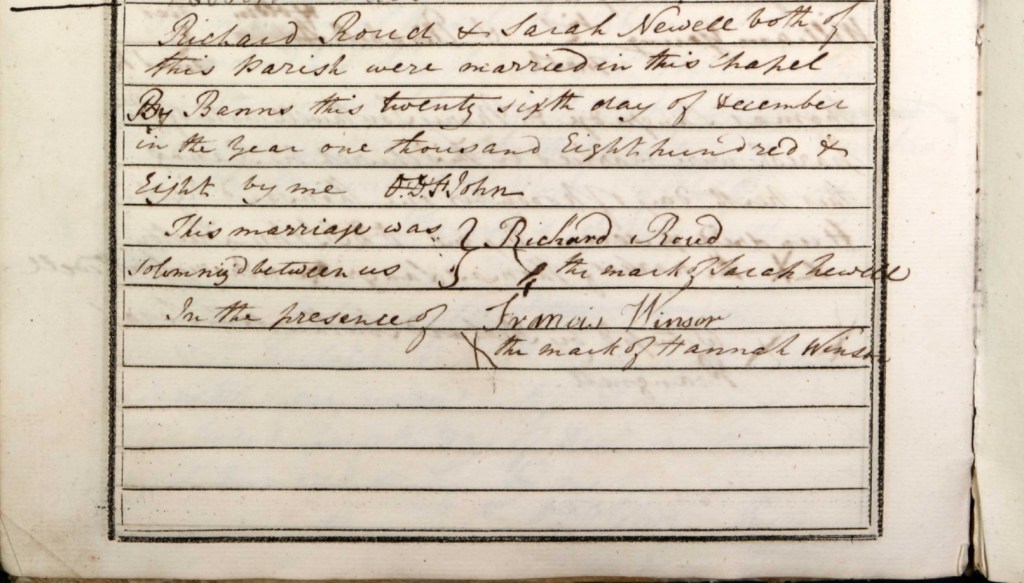
On the frosty Sunday, the 26th day of December, 1808, the village of Lockerley lay wrapped in the stillness of winter, its bare trees dusted with the first breath of snow. Within the humble yet sacred walls of Saint John’s Church, the quiet of the season was broken only by the soft murmur of voices, the rustle of coats, and the warmth of family gathered together for a momentous occasion. It was here, in this familiar chapel, that Mary’s brother, Richard Roud, stood beside his bride-to-be, Sarah Newell, ready to pledge his life to hers.
The day was cold, the winter air likely thick with the visible breath of those gathered, yet within the church, the warmth of love and devotion filled the space. Richard, a man of quiet strength and humility, stood firm in his resolve, ready to make his vows. Beside him was Sarah Newell, the daughter of Joseph and Emma Newell née Drake (my sixth great-grandparents), whose grace and inner strength had been passed down through generations. Sarah was not just a bride, she was a continuation of a legacy, her own family, like Richard’s, steeped in the values of faith, love, and the steadfast ties of community.
As the ceremony unfolded, the significance of this union went beyond mere formality. This was the joining of two souls, bound not only by their love for each other but by the shared history and kinship that defined their lives. Richard and Sarah’s hands joined in solemn promise, their lives now intertwined in a bond that would carry them through the years to come. The vows were exchanged, sealed with the quiet power of commitment, and witnessed by two important figures, Mary’s and Richard’s sister, Hannah Winsor, and her husband, Thomas Winsor. Their presence was more than a formality, it wove a deeper fabric of family and connection into the sacred space of the church.
The ceremony was conducted by clergyman W. H. John, who, with careful reverence, entered the details of their union into the parish register. His hand recorded the moment for posterity, knowing that these names, Richard Roud and Sarah Newell, would become part of the long, winding thread of their family's history.
The entry in the register reads:
“Richard Roud & Sarah Newell, both of this Parish, were married in this Chapel by Banns this twenty-sixth day of December in the Year one thousand eight hundred & eight by me, W. H. John. This marriage was solemnized between us:
Richard Roud,
the mark X of Sarah Newell,
In the presence of:
Thomas Winsor,
the mark X of Hannah Winsor.”
This moment, though now faded into the yellowed pages of time, was far more than a simple entry in a dusty register. It was the beginning of a new chapter in a long lineage, a legacy built on love, strength, and kinship. In the years that followed, Richard and Sarah would forge a life together, one marked by both challenges and joys. But even as time has moved forward, their union continues to echo through the generations, a testament to the enduring power of family, love, and the shared history that connects us all.
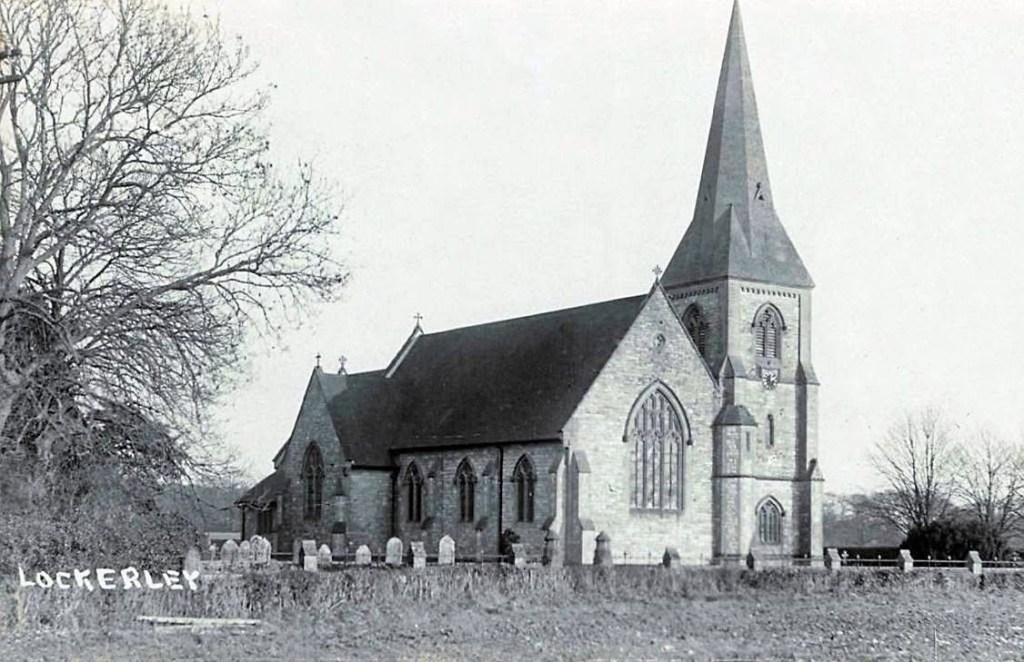
St. John’s Church in Lockerley, Hampshire, is a charming and historic church that has served the local community for centuries. Located in the heart of the picturesque village of Lockerley, which lies in the Test Valley, the church is an important part of the area’s history, culture, and spiritual life.
The history of St. John’s Church dates back to the medieval period, though the current structure reflects several stages of development over the centuries. The original church was likely built around the 12th century, though records from that time are sparse. The church’s dedication to St. John the Evangelist indicates its religious association with the Christian tradition, particularly with the apostle John, one of the most prominent figures in the New Testament. The church’s early history is tied to the broader religious and agricultural practices of the village, which has been a rural community for much of its existence.
Over the centuries, St. John’s Church was subject to several expansions and renovations. The original Norman structure would have been relatively simple, reflecting the needs of a small rural community. However, as Lockerley grew and developed, particularly during the medieval and post-medieval periods, the church was modified to accommodate a larger congregation and to reflect the changing architectural styles of the time. One of the most notable periods of change came in the 19th century, when the church was rebuilt in the Victorian era.
The current building of St. John’s Church was constructed in 1889–90 under the direction of the architect J. Colson, in a style that blends both Gothic and Perpendicular Gothic elements. This period saw significant growth in the Test Valley, and Lockerley, with its proximity to the town of Romsey, benefitted from an expanding population and increased prosperity. The design of the church reflects the period's architectural tastes, with soaring arches, intricate stained-glass windows, and the use of local materials that give the church a distinctive character.
St. John’s Church is a relatively large and impressive building for a rural village church. The structure features a chancel with an outshot, a nave with transepts, and a southwest tower that adds a sense of grandeur to the village’s skyline. The church’s stained-glass windows, depicting various scenes from the Bible, are particularly beautiful, and they provide a striking contrast to the stonework of the building. The wooden roof of the nave, designed with king-post trusses on arch-braces, is another notable feature of the interior, displaying the craftsmanship of the period.
Over the years, St. John’s Church has been at the center of life in Lockerley, hosting regular religious services, weddings, baptisms, and funerals. The churchyard is the final resting place for many of the village’s residents, with gravestones marking the passage of time and offering a sense of continuity to the village’s history. The church continues to play an important role in the spiritual life of the community, offering a space for worship, reflection, and prayer.
In addition to its role as a place of worship, St. John’s Church has also served as a venue for significant community events. The church is a place where people come together to mark important milestones, both religious and personal. Many of the village’s residents, both past and present, have been married, baptized, or buried in the church, giving it a special place in the collective memory of Lockerley.
The churchyard itself is a peaceful and tranquil space, with the graves of local families dotting the landscape. These graves serve as a reminder of the long history of Lockerley, and they provide a connection to the past. The churchyard is not only a site of historical importance but also a beautiful setting for reflection, surrounded by the natural beauty of the Hampshire countryside.
As for rumors of hauntings, like many historic churches, St. John’s has been the subject of local legends and ghost stories. However, there are no widely documented or substantiated paranormal occurrences associated with the church. Given the long history of the building and the village, it is not unusual for local folklore to suggest the presence of spirits or supernatural events. In many cases, such stories are passed down through generations, often becoming part of the cultural fabric of a place. While there may be occasional whispers or tales shared by the community about unexplained occurrences, there is no firm evidence to suggest that the church is haunted.
As the summer sun bathed the fields of Sherfield English, the landscape was alive with the vibrant colors of blooming flowers swaying gently in the breeze. The air was filled with the sweet melodies of birdsong, and the rich fields of corn, wheat, and barley swayed in abundance under the warmth of the summer sky. It was amidst this peaceful and fertile setting, on Sunday, the 7th day of July, 1811, that 19-year-old Mary, with her heart full of love and hope, gave birth to a bonnie baby boy. Her life, already deeply entwined with the rhythms of the land and the village, was about to change forever as she welcomed her second child, a son, whom she and William named James Hatcher.
Mary, still so young at 19, had already walked the path of motherhood once before, and now, with the birth of little James, she stepped once again into the world of sleepless nights and endless care, but also into a world of boundless joy. William, now about 24, stood by her side as the proud father of their growing family. Together, they marveled at their son, knowing that with him, their love and their legacy had expanded. James was more than just a child; he was a promise of the future, a living connection to the generations that had come before him and the ones that would follow.
The birth took place at their home in Sherfield English, where Mary and William had built their life together, surrounded by the familiar sights and sounds of the countryside. The house, humble but filled with the warmth of family, became the place where their little James would take his first breaths, his first cries, and where Mary would hold him close, just as she had done with her firstborn, Sarah. The bond between mother and child, deep and unwavering, was formed in that simple, sacred space, a place that would become rich with the memories of James's first years.
As Mary gazed down at her newborn son, she could not have known the life he would lead, but she knew, with certainty, that he would grow up surrounded by the love and support of his family. In a time when life was hard, when survival was often a struggle, there was no greater blessing than the gift of a child. And for Mary, James was not just a baby, he was a symbol of the enduring strength of family, of love, and of the quiet resilience that had been passed down through the generations.
In the fields around them, the harvest would come, as it always did, bringing with it the promise of abundance, just as James’s arrival promised a future of hope and joy for Mary and William. As summer flowers bloomed and the crops flourished, so too did their family, with James becoming a bright new thread in the tapestry of their lives.
On a warm summer's day in 1811, in the quiet village of Sherfield English, on the 4th day of August, Mary and William, carried their son James gently through the familiar doors of Saint Leonard’s Church, the same place where they had spoken their vows only a few years before. The stone walls of the ancient parish church, weathered by time and faith, bore witness as little James was baptized, welcomed not only into the Hatcher family but also into the enduring embrace of the Church and community. For Mary and William, it was a sacred offering of their child to God, a prayer for guidance, protection, and a life shaped by love and resilience. That quiet August day, etched into the parish register in delicate script, marked the beginning of James’s story, deeply rooted in faith, family, and the rural heart of Hampshire.
The clergyman whose name unfortunately isn’t mentioned in the baptism register, carefully wrote James‘s information for baptisms in Sherfield English in the year 1811.
James, Son of William & Mary Hatcher, born July 7th, baptized August 4th.

In the late spring, when the air was thick with the scent of fresh blooms and the promise of summer, Mary found herself once again on the threshold of motherhood. It was in the quiet, familiar surroundings of their humble home in Sherfield English, Hampshire, that she gave birth to a handsome baby boy, Charles Hatcher (my 3rd Great-Grandfather), in the early summer of 1814. At 22 years old, Mary had already experienced the trials and joys of motherhood twice before, with Sarah and James, but each birth, despite the familiarity of it, still held its own challenges.
Her husband, William, about 27 at the time, stood by as Mary gave birth, caring for their other two children, Sarah and James, while Mary was surrounded by the comforting presence of the women of her family, possibly even some close friends and neighbors. These women, bound by the shared experience of motherhood and community, would have provided Mary with the support she needed during the arduous process of childbirth. Despite this network of love and care, the physical pain and emotional strain of labor never became easier for Mary. Each birth was a raw and transformative experience, one that shaped her in ways words can hardly express.
Charles, though his exact date of birth remains elusive, was likely born in the late spring or early summer of 1814. Census records, though imprecise, give us some insight into his arrival, 1841 places his birth around 1816 in Hampshire, while the 1851 census narrows it down further, suggesting 1815 in Sherfield English. These entries, though rough estimates, offer us a glimpse into the year and location of Charles's birth, but it is the deeper, more intimate details of his arrival that Mary would have carried with her, her exhaustion, her joy, and her overwhelming love for the new life she had brought into the world.
As Mary cradled her newborn son, her heart filled with a quiet joy, knowing that her family had grown once again. William, no doubt, shared her pride, his heart swelling with the love he felt for Mary and their children. Their home, modest though it was, was full of life, laughter, and the unspoken bond that tied them together. Sarah and James, no longer the only children, would have been eager to meet their new brother, and in the months and years to come, the siblings would share in the joys and challenges of growing up in the rural landscape of Sherfield English.
For Mary, the arrival of Charles was not just another addition to her family, but a reminder of the strength, love, and resilience that had carried her through each chapter of her life. As she looked down at her son, she saw not only the future of her family but also the continuation of her own journey as a mother, a woman, and a person forever intertwined with the land, the community, and the love she shared with her husband and children.
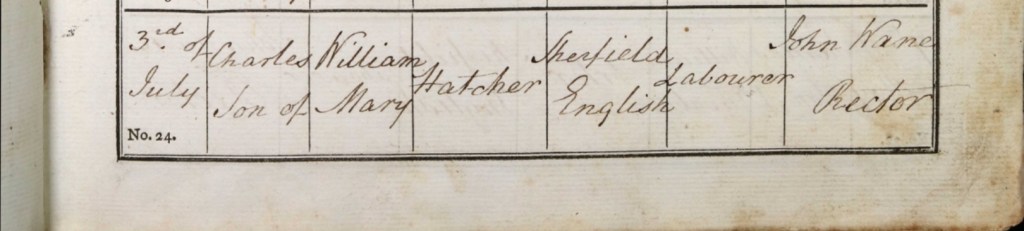
Life in the quiet village of Sherfield English moved with the slow, deliberate rhythm of the land. The scent of cut hay lingered in the warm summer air, and the bells of Saint Leonard’s Church, worn smooth by generations of faithful hands, rang gently through the Hampshire countryside, marking the passing of time in the same familiar way they had for centuries. It was here, in this timeless space, that on Sunday, the 3rd day of July, 1814, a new name was spoken before God, and that name was forever etched into the pages of history: Charles Hatcher, son of William and Mary Hatcher.
The day was no grand celebration, but a simple Sunday service, as ordinary and humble as any other. Yet, within the cool, timeworn walls of Saint Leonard’s Church, it carried the weight of generations. This was the moment when Mary and William brought their son, Charles, before the congregation, not in the expectation of fanfare but in the quiet, solemn grace of a baptism, one that bound the child to faith, to family, and to the traditions of their community.
Mary, a mother shaped by years of hard work and quiet devotion, held her infant son gently in her arms, stepping forward to the font. The love she felt for him was immeasurable, but so was her understanding of the importance of this sacred ritual. She was offering him not only as her child but as a child of faith, a member of a larger community, and a part of the hope that the future would bring. Beside her stood William, his hands weathered and rough from the labor of the land. He was simply recorded as a “Labourer” of Sherfield English, and in those two words, his whole life was encapsulated. A labourer, yes, but in his simplicity, there was dignity, pride, and an unspoken strength that came from hard work and the quiet love of his family.
The baptism was solemnised by John Wane, the Rector of the parish, a man who had, over the years, presided over countless milestones in the lives of families like the Hatcher and Roud/e families, marriages, baptisms, and farewells. His steady hand had written their stories in the parish register, and now he stood once more, marking the moment when a new soul was welcomed into the community of faith.
The entry in the register, inscribed in the rector’s steady script, reads:
“BAPTISMS solemnized in the Parish of Sherfield-English in the County of Hants in the Year One Thousand Eight Hundred and Fourteen.

When Baptised: 3rd July No. 24

Child’s Christian Name: Charles, Son of

Parents Name: William and Mary Hatcher,

Abode: Sherfield English,

Quality Trade or Profession: Labourer

By Whom the Ceremony was Performed: John Wane, Rector”
Entry No. 24, though seemingly just another line in a ledger, was so much more. It was a moment of grace, a quiet ritual that welcomed Charles into the life of the parish, into the ancient rhythm of a faith that had long sustained the people of Sherfield English.
Though Charles was born into modest means, he was rich in what mattered most. He was surrounded by the love of his parents, the strength of his community, and the enduring legacy of family that would carry him through life. He was blessed not with riches of gold or land but with something far more enduring, the love of those who came before him, the faith that had been passed down through generations, and the quiet understanding that family is the foundation of all things.
For Mary and William, the baptism of Charles was a simple but profound moment, one that solidified their role as parents, not just to a child of their own but to a child of the community, one who would grow up alongside his siblings, Sarah and James, and become a part of the legacy that had been built by those who came before him. The quiet grace of that day, written forever in the parish register, is a testimony to the love, faith, and family that would continue to shape Charles’s life and the lives of those who came after him, including me.
The year was 1816, and the cold January winds howled relentlessly around the village of Mitchelmersh, Hampshire, biting into the heart of the land with the sharpness only winter can bring. The village, typically so quiet and peaceful, now seemed to reflect the sorrow that had entered the homely walls of Mary’s in-laws' house, the warmth of hearth and family was now dimmed by a heavy grief. Mary’s beloved mother-in-law, Tabitha Hatcher (née Gardener), had passed away, leaving a silence that no words could fill.
Mary, her heart consumed by the deepest grief, found herself struggling to console not only her husband, William, but also her father-in-law, Joseph Hatcher, whose loss was perhaps the heaviest of all. Tabitha had not only been a mother-in-law to Mary, she had been a friend, a mentor, and a steadfast presence in her life. Their relationship had grown over the years, as Mary had come to know and cherish the woman who had shaped William into the man he had become.
Tabitha had been there through so many pivotal moments in Mary’s life. She had most likely been by Mary’s side during the births of her children, offering advice and comfort, guiding her through the joys and hardships of motherhood. As Mary had navigated the challenges of raising children in the rural rhythms of their community, Tabitha had been there to offer wisdom on what it meant to be a woman, to nurture her children, and to keep a home filled with warmth and love. She had taught Mary the delicate balance between running a household, preparing meals, caring for her children, and maintaining the spotless, welcoming home that was such an integral part of their life.
In the quiet moments, when Mary sat beside her mother-in-law’s bedside, it was clear that their bond ran deeper than just the obligations of family. It was a bond of love and mutual respect, forged through the shared work of caring for their family, supporting one another, and sustaining the values that had been passed down through generations. Tabitha’s passing was not just the loss of a mother-in-law, but the loss of a beloved teacher, a steady hand that had guided Mary through the most formative years of her life as a wife and mother.
Mary, though filled with sorrow, must have carried within her a profound sense of gratitude for the lessons Tabitha had imparted, the quiet wisdom that had shaped her into the woman she had become. And as she tried to console William and Joseph, she likely felt the weight of not only her grief but the responsibility of continuing the traditions that Tabitha had passed down, a legacy of love, family, and resilience that would now be carried forward through Mary and her children. Tabitha’s memory, like the winds of January that swept through the village, would leave a lasting mark on their lives, shaping them long after she had gone.
Michelmersh, a small village located in Hampshire, England, lies in the picturesque Test Valley, an area known for its rural charm and natural beauty. The village is steeped in history, and its development has been closely tied to the agricultural heritage of the region. Though it is now a quiet village, Michelmersh’s roots go back to medieval times, and its story is one of gradual transformation from a rural settlement to a part of the modern Hampshire landscape.
The origins of Michelmersh can be traced to the Saxon period, when it was likely a small agricultural settlement. The name "Michelmersh" is believed to derive from Old English, with "Michel" meaning "great" and "mersc" referring to a marsh or wetland area. This suggests that the village may have been originally located near marshy ground or a significant water source, an aspect that likely influenced its early settlement and development.
During the medieval period, Michelmersh was part of a larger manor system that was prevalent in England. The village was connected to the wider network of agricultural estates that characterized much of England at the time, with its economy largely based on farming, particularly the cultivation of crops and the raising of livestock. The presence of a local church, St. Mary’s Church, would have been central to village life during this period, serving as both a spiritual center and a communal gathering place.
In the Domesday Book of 1086, which recorded a detailed survey of England commissioned by William the Conqueror, Michelmersh is mentioned as part of the land held by the Norman lords. The records from this time show that the village, like many others, was a small yet thriving agricultural community, though it would have been under the control of a local lord. Over the centuries, the land would pass through the hands of various noble families, contributing to the shaping of the village's future.
During the 16th and 17th centuries, Michelmersh, like much of rural England, experienced significant changes as the English economy shifted. The rise of enclosed farming and the increasing importance of trade and commerce during the early modern period altered the social and economic fabric of many rural communities. Michelmersh saw the construction of larger homes and farmsteads, and as agriculture remained a cornerstone of village life, there was a growing emphasis on improving farming methods and land management.
The 18th and 19th centuries brought further transformations to Michelmersh, particularly with the onset of the Industrial Revolution. While the village itself remained largely agricultural, nearby towns like Romsey began to experience industrial growth. The arrival of the railway in Romsey, for example, contributed to changes in trade and transportation, which in turn affected rural areas like Michelmersh. During this period, the village remained a peaceful and rural community, though it likely saw an increase in population as people sought work in nearby towns or on larger farms.
The 20th century brought more changes to Michelmersh, especially as rural communities like it began to adapt to the demands of modern life. Agriculture continued to be an important part of the local economy, but the development of modern roads, schools, and social services allowed for better integration into the growing town networks. The construction of new homes and the expansion of residential areas saw Michelmersh become a part of the broader Romsey area, although it retained its character as a small village.
Today, Michelmersh is a quiet residential area that still holds much of its historical charm. Many of the original buildings, including the church, have been preserved, and the village is surrounded by farmland and open countryside, contributing to its appeal as a rural retreat. The local population is small, but the community remains active and engaged, with many residents valuing the village's historical connections and its peaceful surroundings.
Michelmersh’s location in the Test Valley ensures that it continues to benefit from the natural beauty of the area, with the River Test flowing through the region and providing opportunities for outdoor activities such as walking, cycling, and fishing. The village’s historical roots in agriculture continue to be a significant part of its identity, even as it has become more residential in character.
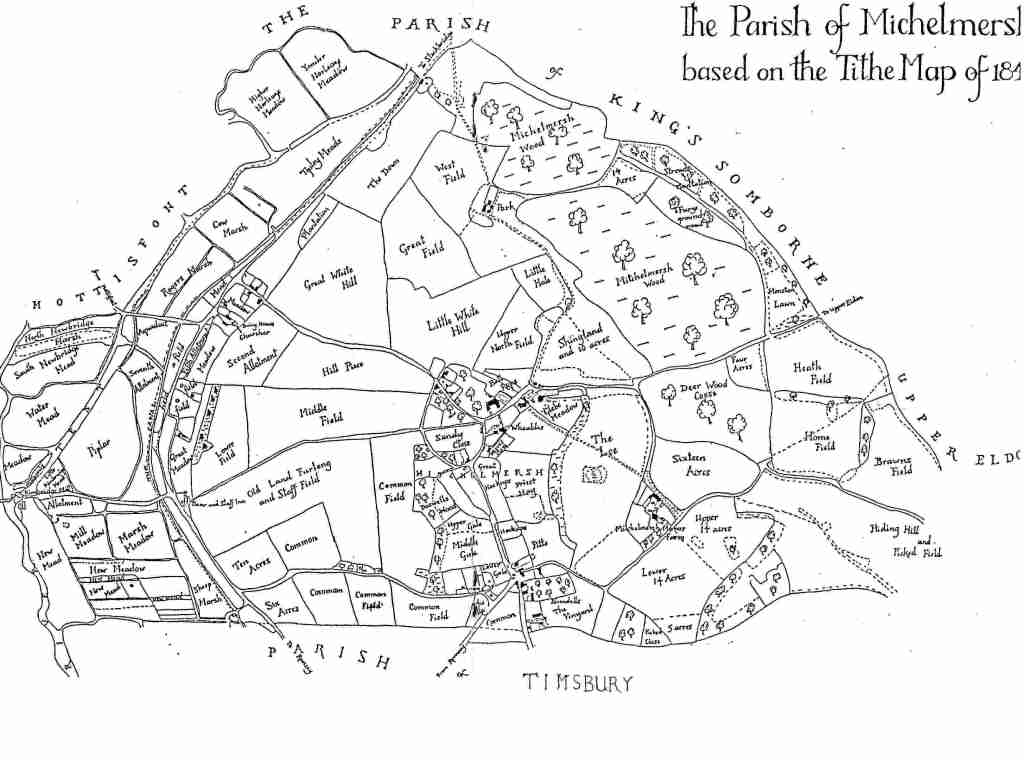
The chill of early January hung heavily over the quiet lanes of Sherfield English, the village wrapped in the grey embrace of winter. The air was still, the only sounds coming from the soft crunch of boots against the frost-laden earth. On the 7th day of that month, friends and family gathered beneath the somber sky, drawn together by the loss of a woman whose life had been quietly woven into the fabric of this rural community. Tabitha Hatcher, Mary’s much-loved mother-in-law, had passed away at the age of 65. Though she had made her home in the nearby village of Michelmersh, her final journey brought her back to Sherfield English, to the churchyard of Saint Leonard’s Church, a place that had likely cradled so many of the chapters of her life.
The cold winter morning was a time for reflection and farewell. As the churchyard’s ancient stones stood witness, Tabitha’s earthly journey came to an end, and her body was laid to rest beneath the quiet watch of the church’s old tower. The earth, cold and hard in January’s grip, was soon softened by the sorrow of those who had gathered, their hearts heavy with the loss of a woman who had touched their lives with quiet strength and enduring love.
Though the parish records tell us little more than the basics of her life, her name, her age, and her abode in Michelmersh, the very presence of Tabitha’s name in the parish burial register speaks volumes about the life she led. Sixty-five years, in an era when many did not live to see half that span, tells us she was a woman who had weathered the storms of life with resilience. She had likely seen the hardships of war, the joys and struggles of raising children, and the rhythms of rural life shaped by seasons, harvests, and the unyielding demands of the land. Tabitha’s life was lived in quiet dignity, a life that may not have made the pages of history books, but one that was felt deeply by those who knew her and whose lives were touched by her.
John Wane, the parish rector, conducted the ceremony with his usual reverence, having witnessed so many similar moments in the lives of the people of Sherfield English. As the burial was completed, he carefully recorded Tabitha’s name in the register, marking the final chapter of her life. The ink in the parish register, though simple, holds within it the weight of a life well-lived, one that had woven itself into the very fabric of the parish.
The entry reads:
BURIALS in the Parish of Sherfield English in the County of Hants in the Year One Thousand Eight Hundred and Sixteen.

Entry No. 11

Name: Tabitha Hatcher

Abode: Michelmarsh, Hants

When Buried: January 7th, 1816

Age: 65

By whom the Ceremony was performed: John Wane, Rector.
Tabitha’s final resting place, beneath the watchful old stones of the church, is more than just a plot of land, it is a testament to the life she led. The simplicity of her grave speaks of her humble nature, while the quiet beauty of Saint Leonard’s Churchyard speaks of the deep roots she left behind in the community. Her legacy, though not written in grand terms, is found in the hearts of those who knew her, in the stories shared, in the memories of a woman whose strength and resilience became part of the landscape itself. Now, with her body returned to the soil, Tabitha Hatcher’s memory is rooted in the earth, in the rhythm of the land, in the faith of the parish, and in the enduring legacy of the Hatcher name that will live on through the generations.

In the year 1816, amidst the quiet rhythms of rural life in Sherfield English, Mary and William Hatcher welcomed their 4th child, a daughter they named Hannah. At around 27 years old, Mary’s heart swelled with love as she held her newborn daughter, just as it had with their previous children, Sarah, James and Charles. William, now about 31, stood by his wife, proud of the family they had built together. Their home, humble yet filled with warmth, became the place where Hannah's life began, surrounded by the love of her parents and the steady pace of rural life in Hampshire.
Though the exact date of Hannah's birth remains unknown, the census records over the years provide us with an estimate of when and where she was born. In the 1841 census, her birth year is listed as around 1821, placing her in Hampshire. The 1851 census suggests she was born in 1815 in Sherfield English, and later records from 1861, 1881, and 1891 consistently note her birthplace as Sherfield English and place her birth around 1817. These discrepancies across the census records might be the result of the variations in how ages were recorded or the imprecision of memory and data in those times, but they do give us a general sense of her being born between 1815 and 1821 in Sherfield English, although her baptism gives a different date of being in the year 1816.
For Mary and William, the birth of Hannah was a moment of joy, adding another beautiful thread to their growing family. In the years that followed, Hannah would grow up alongside her siblings, Sarah, James and Charles, in the rural Hampshire village, surrounded by the love and values of a family rooted in the land. As Mary continued to nurture and care for her children, Hannah’s life would be shaped by the same enduring qualities of hard work, faith, and devotion that defined the Hatchers. Though the exact details of her birth may be lost to time, the memory of her as a beloved daughter, sister, and member of the Hatcher family would endure, woven into the fabric of the family’s legacy in Sherfield English.
As the village of Sherfield English stirred gently into summer, the warmth of the season embraced the Hampshire countryside with a soft, peaceful sky. On Sunday, the 2nd of June, 1816, Mary and William Hatcher made their way once more to the familiar stone steps of Saint Leonard’s Church, a place that had witnessed their own vows, their journey as a family, and the growing blessings of their children. With their newborn daughter, Hannah, nestled close in Mary’s arms, they entered the sacred space where the echoes of their past were entwined with the future, a place where family roots deepened with each passing year.
Hannah, only weeks, or perhaps days old, was brought to the baptismal font, her small form a tender symbol of new beginnings. Though she came from humble origins, born into the quiet rhythm of rural life, she was surrounded by the enduring love and faith of generations before her. In the peace of that moment, William, recorded as a “Labourer” of Sherfield English, stood by his wife, bearing the quiet strength of a man shaped by the land, by hard work, and by the seasons that dictated so much of their lives. Mary, steadfast and devoted, stood with him, offering their daughter not just to the parish but to God, seeking grace, protection, and a sense of belonging that would anchor Hannah’s identity in the faith and love that had guided their own lives.
The baptism took place in the serene atmosphere of the church, performed by John Wane, the Rector, whose steady hand had marked many milestones for the Hatcher family over the years. It was a simple yet profound ceremony, where Mary and William’s hopes and prayers for their daughter were joined with those of the parish. Hannah’s baptism was not the only one that day, another child, Jane Cooper, daughter of local farmer William and Sarah Cooper, was also baptised, a reminder that, in the eyes of God, all children, regardless of standing or station, were received equally and with love.
The baptism was carefully recorded by Rector John Wane in the parish register under the section for BAPTISMS solemnized in the Parish of Sherfield English in the County of Hants in the Year One Thousand Eight Hundred and Sixteen. The entries, though brief, hold within them the weight of a life yet to unfold and the deep roots that would sustain Hannah throughout her years.
The register reads:
Entry No. 51

When Baptized: 2nd of June, 1816

Child’s Christian Name: Hannah

Parents' Names: William & Mary Hatcher

Abode: Sherfield English

Quality, Trade, or Profession: Labourer

By whom the Ceremony was performed: John Wane, Rector
And alongside, the entry for Jane Cooper:
Entry No. 50

When Baptized: 2nd of June, 1816

Child’s Christian Name: Jane

Parents' Names: William & Sarah Cooper

Abode: Sherfield English

Quality, Trade, or Profession: Farmer

By whom the Ceremony was performed: John Wane, Rector
Hannah’s name, inked neatly into the register, is more than just a record, it is the beginning of a life shaped by the rural endurance of her parents, the deep roots of her family, and the enduring traditions of a parish that held its people close. Each stroke of the pen in that ancient ledger marks the start of a journey, one that would see Hannah grow within the embrace of a community, guided by faith, bound by family, and woven into the fabric of a history that would carry her, and the generations to follow, forward.
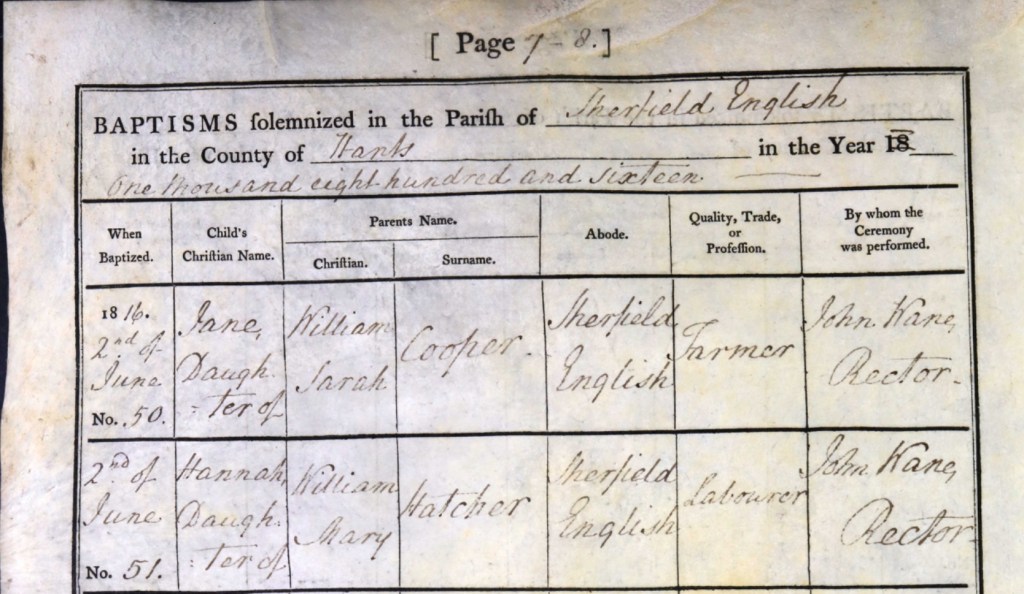
In the early days of July in 1819, a shadow of sorrow fell over the Hatcher family as Mary’s father-in-law, Joseph Hatcher, passed away at the age of 78. His death marked the end of a long life that had been deeply intertwined with the rhythms of Sherfield English and the pulse of rural life. Joseph had lived through a time of great change in England, from wars that reshaped the nation to the quieter shifts of a rapidly changing agricultural society. Now, as the summer days unfolded, his presence was no longer felt in the family home.
Mary, though still in the midst of raising her own young family, would have felt the weight of this loss deeply. Joseph had been a constant in her life since her marriage to William, a figure of strength and experience, his years marked by the steady endurance that comes from a life lived close to the land. As a father-in-law, Joseph would have been a steady presence, perhaps offering advice, guidance, and the wisdom gained from years of hard work.
Though the exact details of his passing are unknown, the loss would have affected not only Mary and William but the entire family. In a time when extended families were so closely knit, the loss of an elder in the household was more than just the death of a parent, it was the closing of a chapter in the family's history. His absence would have been keenly felt, especially by Mary, who had likely leaned on Joseph’s experience in matters of the home and family life, just as she had with her own mother-in-law, Tabitha, whose passing a few years earlier had already left an emotional void.
Joseph’s death, though deeply sorrowful, would have been a moment for the family to reflect on the legacy he left behind. His memory, like that of other forebears, would continue to live on in the stories shared, the values imparted to his children, and the quiet strength that had shaped his family. His passing marked the end of one chapter, but the continuation of the family story, carried forward by his son William, Mary, and their children, would ensure that Joseph Hatcher’s influence remained a part of the Hatcher legacy in Sherfield English.
On Tuesday, the 13th day of July, 1819, the village of Sherfield English gathered in quiet reverence to lay to rest one of its elders, Joseph Hatcher, aged 78. The air, heavy with the warmth of midsummer, drifted gently through the familiar lanes and over the fields that had shaped the course of Joseph’s long life. Mary, William, their families, and the villagers stood together, united in grief, as they said their final farewells to a man who had lived nearly eight decades, a lifetime marked by harvests, hardships, quiet joys, and the steady pulse of community and faith.
Joseph’s final journey led him to Saint Leonard’s Church, the heart of the parish, where he had once been baptised, where he had stood as a young man taking his vows with Tabitha, and where he had witnessed the baptisms, marriages, and farewells of those who had gone before him. Now, it was his turn. His name, though it may seem simple in the parish records, carries with it the weight of a life fully lived, shaped by the rhythms of the land and the prayers of the Church. His resting place was at Saint Leonard’s Churchyard, where generations of families had come before him and where, now, his story would be woven into the soil of the village that had been his home.
The village gathered in quiet reverence, as the man who had lived through the quietest and most tumultuous moments of their shared history was laid to rest.
The Rector, John Wane, whose steady hand had long served the parish, recorded Joseph’s death in the burial register with care.
The entry, simple and straightforward, reads:
BURIALS in the Parish of Sherfield English in the County of Hants in the Year One Thousand Eight Hundred and Nineteen.

Entry No. 26

Name: Joseph Hatcher

Abode: Sherfield English

When Buried: July 13th, 1819

Age: 78 years

By whom the Ceremony was performed: John Wane, Rector.
Though the record itself is brief, within those few lines lies the quiet dignity of a man who had labored humbly, raised a family, and endured the passage of time with quiet resilience. Joseph’s life, shaped by the earth he worked and the faith he kept, had followed the rhythm of the seasons and the Church bells that rang each Sunday, marking the passing of time. Now, in the hushed solemnity of that summer’s day, he was laid to rest under the same bells that had accompanied him through life, in the familiar soil of Sherfield English.
Joseph’s story, though briefly captured in the burial register, does not end with his name. His legacy lives on in the land he worked, in the memory of his family, and in the hearts of those who knew him. His name may have been recorded on parchment, but it is engraved in the lives of his descendants, in the whispers of stories shared about him, and in the steady beat of life that continued to move forward after his passing.
Though the original church no longer stands and the headstones that once marked his resting place have eroded with time, Joseph Hatcher’s story is far from forgotten. His memory lives in the hearts of his descendants, who carry his name and his legacy forward, keeping his spirit alive in the traditions and the lives they lead. The old churchyard, though quiet now, still holds the peace and the history of those who have come before, and Joseph’s name is forever part of the story of Sherfield English, a story passed down from one generation to the next, still remembered, still cherished.
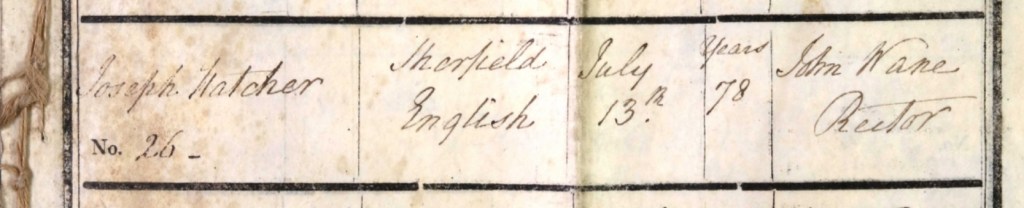
The year was 1820, and the rolling fields of Sherfield English were still golden from the late summer harvest, the landscape bathed in the warm light of a sun that had watched over yet another season of hard work. The village, nestled among the fertile land, seemed to hum with life, its lanes filled with the sounds of laborers bringing in the rich harvest. It was amidst this bustling time that Mary, once again heavily pregnant, prepared to welcome a new life into the world.
In the humble cottage Mary and William called home, the air was thick with anticipation. The cottage, nestled in the heart of Sherfield English, was warm and inviting, filled not just with the scent of freshly baked bread and hearty stew but with the presence of family and perhaps a few neighbors. These familiar faces, gathered around Mary’s bedside, were there to help her in her moment of need. As the long hours of labor drew on, Mary was surrounded by those who had shared in the simple yet profound rhythms of her life. Her family, William, her children, and the women who had supported her over the years, were there, offering their love and strength as she labored to bring her baby into the world.
The pain of childbirth, no less intense despite Mary’s experience as a mother, was softened by the presence of those who cared for her. In the dim light of the cottage, the steady hands of those around her would have guided her through the familiar yet still overwhelming process. The sounds of the outside world, of workers in the fields, the wind rustling through the trees, faded as Mary focused on the birth of her child, the promise of a new life, of a new chapter, waiting on the other side of her labor.
After what must have seemed like an eternity, Mary’s hard work bore fruit. She gave birth to a baby girl, a precious new life, her second daughter. Mary, aged about 28, and William, about 33, looked down at their newborn daughter with love and pride. They named her Mary Hatcher, a name that carried the weight of family, tradition, and the enduring love of parents who had weathered many seasons together.
Though the exact date of Mary’s birth is lost to time, we know from her baptism records that she was born before September of 1820. Her arrival, though not marked by a specific date in the records, was no less significant. She was a new thread in the ever-growing tapestry of the Hatcher family, one that would continue to stretch forward through the years, woven together with the love and care of her parents and the village that had watched her family grow.
In that humble home in Sherfield English, surrounded by the sights, smells, and sounds of a harvest season, a new life was born, bringing with it hope, continuity, and the quiet joys of family. Mary’s birth, though it may not have been marked by grand events, was a moment of profound significance, a moment that would be remembered in the hearts of her parents and in the generations to come.
On Sunday, the 3rd day of September, in the cool and hushed sanctuary of Saint Leonard’s Church, the Hatcher family once again gathered, this time for a moment of profound significance. Mary and William, known in the parish as a humble labouring family, brought their newborn daughter, Mary, before the altar. They came with open hearts, filled with love, and deep faith, knowing that this sacred act of baptism would connect their daughter to something much larger than themselves, a tradition of family, faith, and community that had sustained them all.
Little Mary, likely wrapped in a simple but cherished cloth, was carried into the stone church, where her siblings may have also been christened and where generations of Hatchers had knelt in prayer before her. The sound of the church bells, the cool air in the dim stone space, the familiar faces of neighbours and loved ones, these were the things that surrounded Mary as she began her journey, marked by a rite that had been practiced for generations. For William, whose trade as a labourer spoke to a life shaped by honest toil and perseverance, and for Mary, his steadfast wife, this baptism was a moment of great significance, a sacred and public dedication of their daughter to God and to the life of their parish.
Curate John Jenvey, a steady and trusted figure in the parish, led the ceremony with reverence and care. His hands, familiar with the recording of life’s milestones, carefully documented the baptism in the parish register. The entry, plain yet profound, reads:
BAPTISMS solemnized in the Parish of Sherfield English in the County of Hants in the Year One Thousand Eight Hundred and Twenty.

Entry No. 106

When Baptized: 3rd September.

Child’s Christian Name: Mary.

Parents’ Names: William & Mary Hatcher.

Abode: Sherfield English.

Quality, Trade, or Profession: Labourer.

By whom the Ceremony was performed: John Jenvey, Curate
Though the words are simple, there is something deeply enduring in that entry, a mark in time that speaks of love, heritage, and quiet hope. The pages of the register, like the pages of Mary’s own story, would go on to record the lives of many, but this one entry holds the beginning of her journey, a moment that links her to a history of faith, of family, and of a community that would care for her throughout her life.
Mary Hatcher’s baptism was more than a ceremonial act, it was a tender declaration of her place in the world. It marked the start of her own path, folded into the care of her family, her faith, and the close-knit community of Sherfield English. In the years that followed, this moment would live on in the hearts of her parents, her siblings, and all those who shared in that quiet, sacred day. Cradled in the warmth of family and faith, Mary’s journey began, woven into the rhythms of Hampshire life that would continue to shape her story.

As autumn draped its finest cloak of reds, ambers, and oranges over the rolling fields of Sherfield English, and the earth began its quiet journey of rest, life took a heart-wrenching and devastating turn for the Hatcher family. Just over two short years after the birth of their beloved daughter, Mary, the Hatcher family was struck by an unimaginable loss. In early September of 1822, within the familiar, comforting walls of their family home in the quaint village of Sherfield English, two-year-old Mary Hatcher tragically passed away.
The details surrounding her death are sparse, lost to the years, but there is no doubt that her passing left an indelible mark on the hearts of her parents, Mary and William. No parent should ever have to watch their child slip away, and the grief that must have consumed them in that moment can only be imagined. Mary, who had once cradled her daughter in love and joy, would now hold her in her arms for the last time, her heart shattered by the weight of such sorrow. William, her devoted father, would have been equally devastated, struggling to make sense of a loss that no words could ease.
In a time when infant mortality was heartbreakingly common, the loss of a child, especially one so young, felt like a cruel and unfair part of life. But that knowledge offered little comfort to a mother and father who had watched their daughter grow, if only for a short time, and who had dreamed of all that lay ahead for her. The loss of Mary was not just the loss of a child, it was the loss of hope, of dreams, and of the future they had imagined for their daughter.
For Mary and William, the days that followed must have been filled with quiet grief, the sound of their daughter’s laughter and the warmth of her presence now a painful echo in their home. As the seasons turned and the world continued its cycle of life and death, the Hatcher family was left to carry on, forever marked by the loss of their little girl, Mary. Though time would eventually heal the rawness of their grief, the memory of her would live on in the hearts of her parents and in the legacy of love that had been woven into their family’s story.
On Wednesday the 18th day of September, 1822, grief hung heavily over the quiet village of Sherfield English. Beneath the soft gray skies and among the early whispers of autumn, Mary and William stood in silent agony as they laid their youngest daughter, Mary, to rest. Just two years old, her life had only just begun, full of promise, wonder, and the innocent joy known only to small children. And now, in the same church where she had been lovingly baptised only two Septembers ago, they came to say goodbye.
There are no words in the register to capture their heartbreak, only Entry No. 43, carefully written by John Wane, Rector, recording her name, her age, and her final day:
BURIALS in the Parish of Sherfield English in the County of Hants in the Year One Thousand Eight Hundred and Twenty-Two.
Entry No. 43
Name: Mary Hatcher
Abode: Sherfield English
When Buried: September 18th
Age: 2 years
By whom the Ceremony was performed: John Wane, Rector
For William, a labourer who gave everything he had with calloused hands and quiet devotion, and for Mary, her mother, who likely held her through fevered nights hoping for a miracle, the pain must have been unbearable. A grave for one’s child is a sorrow deeper than words can hold, a rupture in the natural order, a wound that time never fully heals.
Her small body was gently laid to rest in the sacred earth of Saint Leonard’s Churchyard, the same ground that held generations of Hatchers before her. But for her parents, that ground must have felt impossibly cold. She was their child, born of love, baptised in hope, and now returned to the earth far too soon.
Though her life was brief, Mary’s memory would live on in their hearts, in every quiet moment, in the rustle of leaves, in the silence after dusk. And though her name is now just a line in an old church register, she was once the very center of a mother’s lullaby and a father’s pride. A fleeting light, yes, but one that burned with all the love two parents could give.
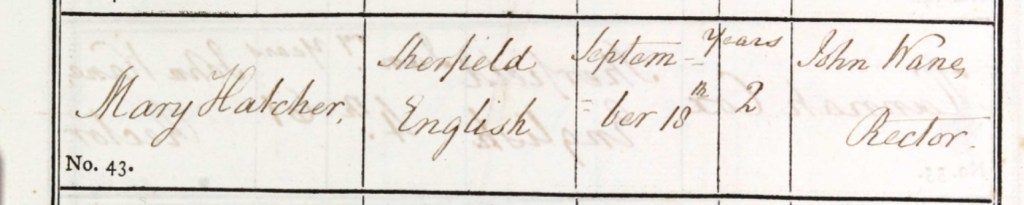
Just over a year after the heartbreaking loss of their daughter, Mary, Mary and William Hatcher faced another turning point in their lives. In the early autumn of 1823, the Hatcher family’s sorrow began to give way to the soft stirrings of new life. Mary, now aged about 32, and William, about 36, welcomed a new daughter into their hearts and home. They named her Ann Hatcher, a name that carried with it the hope of renewal, the promise of joy, and the quiet strength of a family that had endured deep sorrow and yet was willing to open their hearts once more.
Ann’s birth, which took place in their home in Sherfield English, must have been a bittersweet moment for her parents. While the memory of their beloved Mary, who had passed just over a year earlier, would still be fresh in their minds, the arrival of Ann marked a new chapter in their lives. Her tiny form, likely cradled in the loving arms of her mother, brought a measure of light back into their home, which had been shadowed by the grief of their earlier loss.
Although Ann’s exact date of birth is not known, the census records offer us a rough estimate of both her year and location. The 1841 census places her birth around 1826 in Hampshire, while the 1851 census narrows it to 1824 in Sherfield English, Hampshire. Subsequent records from 1861, 1871, 1881, and 1891 consistently place her birth in Sherfield English between 1824 and 1830, though they vary slightly in the precise year. These discrepancies reflect the typical variations in recording ages during this period, but they still give us an approximate idea of when and where Ann was born.
The air of autumn, cool and crisp, would have filled the Hatcher home as Ann made her entrance into the world. Though their hearts would forever carry the memory of little Mary, Ann’s arrival symbolised hope, a new beginning in a time that had, for too long, been filled with heartbreak. Mary and William’s love for their children, though tested by loss, would only grow deeper with Ann’s birth. Their home, though modest, was filled with warmth, love, and the promise of better days ahead as they embraced the precious gift of their new daughter.
Ann’s arrival in the early autumn of 1823 was not just the birth of a child, but a quiet moment of healing, a turning of the page, and a chance for the Hatcher family to begin again. Their story, woven with both joy and sorrow, continued to unfold, with Ann at the heart of a new chapter, one that would be filled with love, laughter, and the strength that had carried them through their past trials.
On a golden autumn Sunday, the 19th day of October, 1823, the villagers of Sherfield English gathered once again within the weathered stone walls of Saint Leonard’s Church, the heart of their parish, for Sunday service. The trees outside had begun their quiet transformation, shedding leaves like whispered prayers, and inside the cool sanctuary, the sacred ritual of baptism was about to unfold. Two children were brought forward, each to be baptised into the faith and the embrace of community. Among them baby Ann Hatcher, daughter of William and Mary Hatcher, a child born into modest means but deep-rooted heritage.
William, known in the village as a labourer, came forth with strength of heart and unwavering devotion. His hands, shaped by the land and the hard work of his trade, had also shaped his character, steadfast, humble, and true. Beside him stood Mary, who, though having known both joy and profound sorrow, now carried in her arms a new hope. Their daughter, Ann, was likely swaddled in a simple yet cherished cloth, her wide eyes taking in the world as she was cradled by her mother’s love.
For Mary, that Sunday in October 1823 was a day filled with layers of emotion. As she stood in the cool sanctuary of Saint Leonard’s Church, holding her infant daughter, the weight of both grief and grace pressed gently on her shoulders. Just a year had passed since she laid her firstborn, also named Mary, to rest, her small, tender life cut short far too soon. Now, Mary was back at the font, not to mourn, but to begin again. Ann was a blessing, a symbol of renewal for a heart that had been broken but could still hold space for new love. Mary’s heart surely ached with both sorrow and gratitude as she felt the sacredness of the moment.
But this day was also significant for another reason. Standing beside Mary was her brother, William Roud, holding his own child, George. William’s wife, Anstice (née Long), had also recently given birth to a son, and now, George was to be baptised alongside Ann. Two cousins, born into a web of kinship and quiet strength, were held together at the altar, bound not only by blood but by the shared faith of their family and community.
The ceremony was solemnly and kindly performed by Curate G. F. Everett, who, with care, baptised both Ann and George on that autumn Sunday. In the cool air of the church, with the sounds of the world outside fading away, the two children began their spiritual journeys, side by side, linked by family and the sacred walls that had witnessed the generations before them.
Curate G. F. Everett meticulously recorded the baptisms in the parish register for BAPTISMS solemnized in the Parish of Sherfield English in the County of Hants in the Year One Thousand Eight Hundred and Twenty-Three. His hand inscribed the entries, capturing forever the simple yet profound ceremony of that day:
Entry No. 156

When Baptized: 19th October 1823

Child’s Christian Name: Ann

Parents’ Names: William & Mary Hatcher

Abode: Sherfield English

Quality, Trade, or Profession: Labourer

By whom the Ceremony was performed: G. F. Everett, Curate.
And
Entry No. 157

When Baptized: 19th October 1823

Child’s Christian Name: George

Parents’ Names: William & Anstice Roud

Abode: Sherfield English

Quality, Trade, or Profession: Labourer

By whom the Ceremony was performed: G. F. Everett, Curate.
Mary was more than a mother that day. She was an aunt, a sister, a woman who had known hardship but never let it harden her. Raised among the Rouds of Sherfield English, Mary and her brother had grown from shared childhood roots, and now, as adults with children of their own, they stood together in the church, passing on the legacy of their family and their faith. As the curate gently poured water over the heads of her daughter and her nephew, Mary may have stolen a glance at her brother, their eyes meeting in quiet understanding, knowing without words that they were part of something enduring, a legacy woven through their shared history, faith, and love.
Her love, her losses, and her unwavering loyalty to family had all led to this moment, where hope found voice in the cries of two baptised children. As Mary stood there, with quiet pride, she felt the weight of the generations that had shaped her and the future she now helped to shape. The bonds of family, of faith, and of community, those timeless threads that had tied her to this place, were made real in that moment. Ann and George, cousins linked by blood and spirit, began their own journeys that day, cradled by the legacy of those who had come before them, and the promise of all that was yet to come.
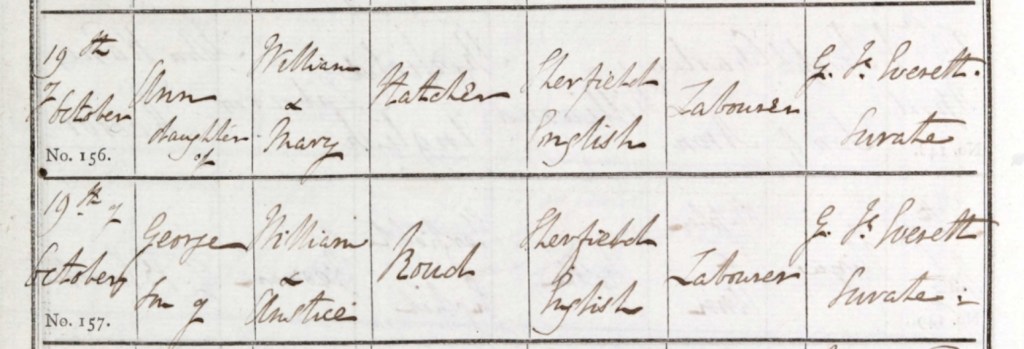
In the summer of 1827, Sherfield English was alive with the vibrant rhythms of rural life. The fields were full of crops ripening in the warm summer sun, and chickens laid in abundance while cows grazed peacefully. Shepherds tended their flocks, horses wandered lazily across the land, and the cooling breeze found its way through the open windows of cottages, bringing comfort to the hardworking villagers. It was in this setting, surrounded by the quiet beauty of the land, that Mary and William welcomed their seventh child into the world, a bonnie baby boy whom they named George Hatcher.
George’s birth, like that of his siblings before him, took place in the family home in Sherfield English. His siblings, Sarah, James, Charles, Hannah, and Ann, eagerly awaited the arrival of their new baby brother. The house, filled with the hum of family and the gentle anticipation of a new life, was alive with excitement. Sarah, now likely growing into a young woman, stood by her mother’s side, assisting with the birth. She would have been learning the ways of motherhood, wetting her mother’s brow and observing the sacred and painful process of labor. The lessons learned during this time would prepare Sarah for the future, when she, too, would marry and one day bear children of her own.
Meanwhile, William, ever patient but no doubt nervous, waited eagerly for the arrival of his son. He kept the younger children busy, trying to distract them with tasks and games, all while Mary labored to bring their new child into the world. The house was filled with the sounds of life, the cries of the children, the hum of family interaction, and the gentle comfort of Mary’s steadying presence as she brought George into their loving arms.
Though George's exact birthdate is not recorded, the census records give us a rough estimate of his birth year and location. These records, though varying, suggest a birth year between 1828 and 1836 in Hampshire, with some discrepancies in the precise year. The 1841 census places his birth around 1828 in Hampshire, while the 1851 census records him as being born in 1836, listing Lockerley, Hampshire as his place of birth. Other censuses from 1861, 1871, 1881, 1891, and even 1901 consistently list George’s birthplace as Lockerley, though they maintain the 1836 estimate for his birth year.
Despite the differences in the census records, it’s clear that George Hatcher’s birth was an important moment for the Hatcher family. His arrival, nestled within the warmth and joy of a family already grounded in love, hope, and shared history, marked a new chapter in the life of Mary and William. His siblings, eager to welcome him, would have been filled with excitement at the new addition to the family. His mother, Mary, despite the exhaustion of childbirth, likely gazed down at her new son with a heart full of both wonder and love.
As George grew, his life would be shaped by the same quiet rhythms of Sherfield English that had defined his parents’ lives and the lives of his older siblings. And though the details of his early life may have been lost to time, the love of his family, the bond between siblings, and the shared memories of a life rooted in the land would remain with him as he grew into the man he would become.
For Mary, the morning of Sunday, the 26th day of August 1827, held a sacred weight. As she stepped into Saint Leonard’s Church, holding her infant son George in her arms, the cool air and timeworn stone of the sanctuary must have felt achingly familiar. This was not her first time at the baptismal font, she had stood here before, joyfully and sorrowfully, having once buried a daughter and since watched other children grow. Now, with her husband William, a humble labourer, standing quietly beside her, Mary came to offer George to God and to the generations that had walked before and would come after.
That day, the rector John Wane would record Entry No. 231 in the register for BAPTISMS solemnized in the Parish of Sherfield English in the County of Hants in the Year One Thousand Eight Hundred and Twenty Seven.
Entry No. 231
When Baptized: 26th August 1827
Child’s Christian Name: George
Parents’ Names: William and Mary Hatcher
Abode: Sherfield English
Quality, Trade, or Profession: Labourer
By whom the Ceremony was performed: John Wane, Rector.
But George was not alone in receiving this blessing. The church echoed with the presence of other families, each carrying their own stories. Just above George’s entry, No. 229, was Harriet Clarke, daughter of John and Harriett Clarke, baptised the same day. John, a wheelwright by trade, worked with timber and tools, his skilled hands crafting the very wheels that connected farms and villages across Hampshire. Their daughter, baptised that morning, came from a household of precision and purpose. In Entry No. 230, also baptised that day, was Ruth Blake, daughter of Titus and Mary Blake of West Wellow, another child of a labouring family, baptised like George under the humble yet steadfast hands of Rector Wane.
For Mary, these were not just names, they were neighbors, friends, perhaps kin. In this small village, lives were interwoven with shared harvests, shared grief, and shared joy. She may have exchanged a knowing glance with Mary Blake, or offered a soft smile to Harriett Clarke, as their children were blessed one after the other. Yet, within her, the moment held its own private significance, George was not only her son but a continuation of everything she had endured and everything she still believed in. With each word of the baptismal rite, Mary recommitted herself to her role, not just as a mother, but as a keeper of memory, a vessel of strength, and the heart of the Hatcher household. In the simple pouring of water over her son’s brow, she saw not only new beginnings but a quiet, enduring redemption.
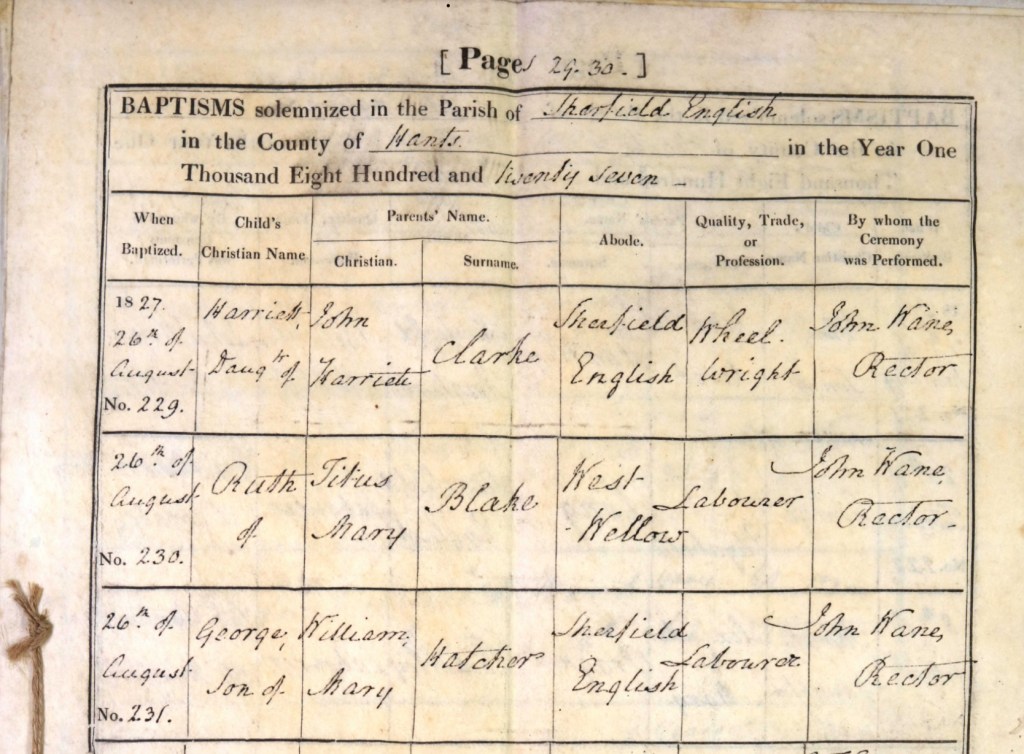
On a warm summer’s day, Saturday the 31st day of July 1830, beneath the weathered stone arches of Saint Leonard’s Church in Sherfield English, Mary and William’s daughter Sarah Hatcher stood at the altar, ready to begin a new chapter in her life. A spinster of the parish, unwed until now, she came from a long line of villagers whose lives were shaped by the rhythm of Hampshire’s fields, seasons, and the enduring heartbeat of their faith.
Her groom, Silas Moody, a bachelor of the same parish, stood beside her with steady resolve. He too was of the land, his roots stretching through the hedgerows and meadows of this close-knit Hampshire countryside. The marriage was performed by banns with consent, affirming that both were of full age and free to marry. John Wane, the devoted curate of Saint Leonard’s, officiated with the familiar voice of one who had shepherded many such moments in the village. Entry No. 50 in the marriage register now bore their names, Sarah and Silas, joined not only by law, but by shared place, shared people, and shared promise.
MARRIAGES solemnized in the Parish of Sherfield English in the County of Hants in the Year One Thousand Eight Hundred and Thirty.
Silas Moodyof this parish, a Bachelor and Sarah Hatcher of this parish, a Spinster
Married in this Church by Banns with Content (Parties of age) of this thirty first Day of July in the Year 1830 By me: John Wane, Curate.
This Marriage was solemnized between us:
Silas Moody
Sarah Hatcher (X her mark)
In the Presence of:
Moses Rogers
Eliza Moody of Wellow (X her mark)
No.: 50
Witnessing the ceremony were Moses Rogers, whose presence may have represented a close friend or trusted neighbour, and Eliza Moody of Wellow, who made her own mark with an X, likely a sister or cousin to the groom. Their signatures, or marks, spoke volumes, not just of participation, but of the community that surrounded and upheld this union. Sarah’s hands, likely worn by years of honest work, trembled slightly as she made her mark, an X, in the marriage register, a quiet yet powerful affirmation of her commitment. Sarah could not sign her name in ink, but she signed it in strength, with all the dignity and devotion of a woman raised in humility, love, and the quiet pride of her heritage. Though her mark in the register was simple, the moment was anything but. It was a profound turning point, a merging of two families, a statement of enduring love, and a quiet, powerful act of faith.
In that sacred stillness, Sarah Hatcher, a woman of grace, resolve, and rural strength, took her place in the continuing story of Sherfield English, her life now forever bound with Silas’s, her name woven into the parish’s unbroken lineage of love.
For Mary, the marriage of her daughter Sarah on that summer day in 1830 was more than a family milestone, it was a deeply emotional and unforgettable moment etched into a mother’s heart. As she sat in the pews of Saint Leonard’s Church, watching her husband William gently walk their daughter down the aisle, a quiet tide of pride, love, and reflection must have swept over her. Sarah was their firstborn, the first of their children to marry, and as the church bells rang out across the Hampshire countryside, Mary likely felt the full weight of years that had led to this day, years of holding her daughter through sleepless nights, teaching her to sew, to endure, to hope.
Mary had laboured not only in the home, but in the fields of life’s daily struggle, alongside her husband, raising their children with little more than faith, strength, and the quiet comfort of family. And now, dressed in her best, heart full and eyes surely moist, she watched Sarah, the little girl who once clutched her apron, step forward to become a wife. Seeing William walk their daughter to the altar must have stirred memories of their own wedding, in this very church, with the same stone walls and the same sunlight pouring through the glass.
To witness Sarah take her vows beside Silas Moody, to hear the familiar voice of Reverend John Wane bless their union, and to know that this was only the first of many such days for her growing family, must have filled Mary with a complex, beautiful ache. It was the letting go that every mother must face, balanced by the joy of seeing her child loved and chosen.
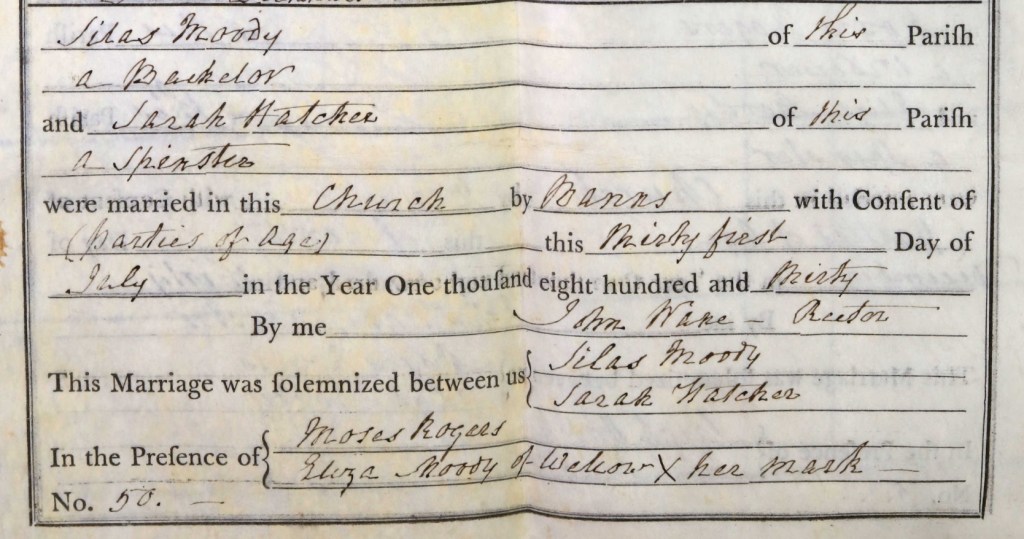
As the year 1835 drew to a quiet close in the Hampshire village of Sherfield English, the parish church of Saint Leonard’s echoed with familiar words of hope and tradition. The cold winter air whispered through the trees outside, but within the stone walls of the church, the warmth of community and faith held steadfast. On three successive Sundays, December 6th, 13th, and 20th, the banns of marriage for Mary and William’s son, James, were read aloud for all to hear. James Hatcher, a bachelor of this parish, and Jane Noble, a spinster of the same, intended to be joined in holy matrimony.
These readings, conducted by Curate Allen Morgan, followed the long-standing ritual of the Church of England, a public declaration that allowed the village to witness, support, or raise any lawful objection. In a small, close-knit community like Sherfield English, the reading of the banns was a significant moment, an opportunity for everyone to share in the joy of a union about to take place, as well as to voice any concerns before the couple took their vows.
For James and Jane, this was the beginning of something sacred, a moment that would soon bind them together in both love and faith. James, likely known among the parish as a hardworking and steady soul, had deep roots in the soil that surrounded Saint Leonard’s Church. His family had lived in Sherfield English for generations, and his connection to the village was strong. Jane Noble, whose name would soon be spoken in a new light, was equally tied to the community, bringing with her the quiet strength of a village woman, dignified, patient, and ready to begin a life with the man she had chosen. Together, they stood on the precipice of a new chapter, one filled with hope and the promise of a future built on faith, love, and mutual respect.
As each Sunday passed, the community of Sherfield English listened intently to the readings, many perhaps recalling the couple walking together after service or exchanging knowing smiles across market stalls and chapel pews. The village had always been a place where everyone knew one another, and the connection between James and Jane was one of those natural bonds forged by shared experiences, shared places, and shared history.
For Mary and William (James’s parents) these banns must have stirred a familiar mix of emotions. It had been five years since they had watched their eldest daughter, Sarah, marry, and now here was James, their son, stepping forward to form a home of his own. It was a moment of shared joy, a celebration of continuity, and a reminder of the cycles of life that bound the family and the village together. As the year faded and the promise of a new life together grew near, Mary and William would have watched their son with both pride and nostalgia, their hearts filled with love for the life they had built and for the new one James and Jane were about to start.
The banns were recorded with care in the parish register, marking a moment of transition not only for James and Jane but for the Hatcher family and the community of Sherfield English. In that winter light, as the year waned, the name Jane Noble began its quiet journey toward becoming Jane Hatcher, a name carried forward by love, faith, and the enduring traditions of a village bound by heart and history.
The banns read as follows:
(Page 19)
The Year 1835
No. 36
Banns of Marriage between James Hatcher, Bachelor, of this parish of Sherfield English
and Jane Noble, of the same parish, Spinster.

1st Time, Sunday, Dec 6th, by Allen Morgan, Curate

2nd Time, Sunday, Dec 13th, by Allen Morgan, Curate

3rd Time, Sunday, Dec 20th, by Allen Morgan, Curate
With the reading of the final banns on December 20th, the couple’s marriage was now set to become a matter of faith and community, the next chapter in the Hatcher and Noble families' intertwined histories. And as the bells of Saint Leonard’s Church rang that December evening, they heralded not just the end of a year, but the beginning of a shared life, one that would be celebrated by the parish and carried forward for generations to come.
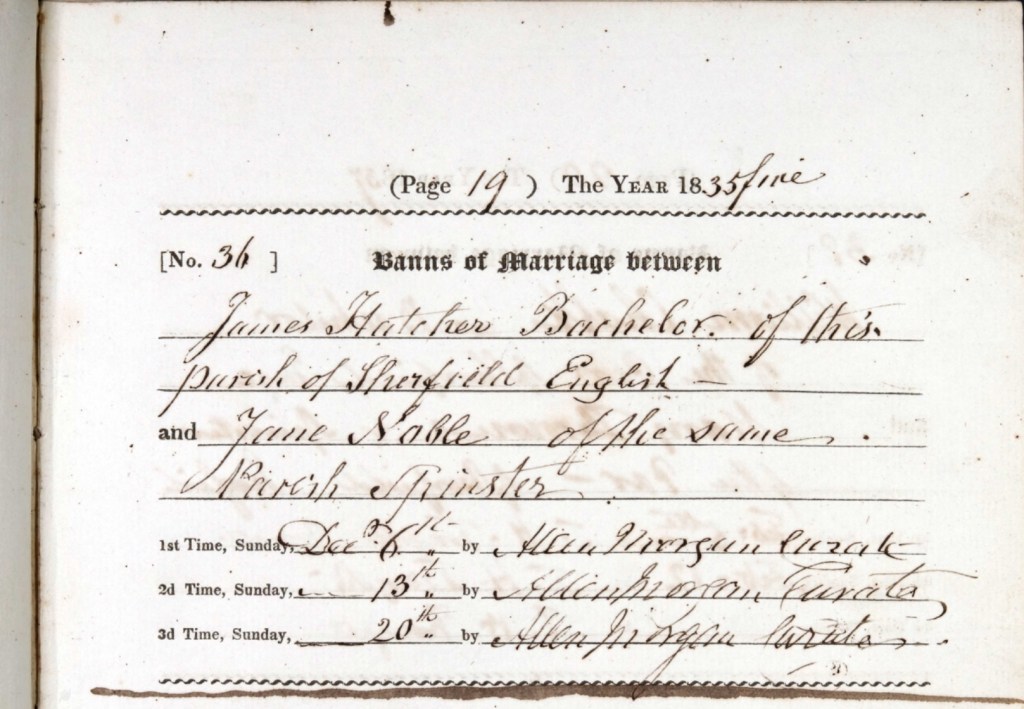
For Mary, Christmas Day of 1835 was more than a holiday, it was a deeply emotional milestone, one that marked both a moment of pride and a poignant reflection. As she sat quietly in the familiar wooden pews of Saint Leonard’s Church in Sherfield English, her thoughts were with her son James, standing just a few steps away at the front of the church. The parish was hushed, the winter light filtering softly through the windows, casting flickering shadows over the faces of the small congregation. The peace of the day seemed to match the solemnity of the occasion, her son, James, was about to be married.
Mary watched him as he stood at the altar, her heart swelling with pride. This was the boy she had watched take his first steps, the boy who had carried his first bundle of firewood, and now, here he was, about to take his first steps into married life with Jane Noble, a young woman from the same parish. Mary had known Jane to be quiet, sensible, and kind, the very qualities she had always hoped her son would find in a partner. As the banns had been read aloud on three Sundays in December, Mary’s heart had swelled, torn between pride and reflection. She had heard their names spoken clearly: James Hatcher, bachelor of this parish, and Jane Noble, spinster of the same. It had sounded so formal, so distant, but for Mary, it was deeply personal.
The wedding itself was held on Friday, the 25th day of December, a day already sacred and now made unforgettable by the vows her son and his bride exchanged. Mary stood, as every mother would, watching her son step into this new chapter of his life. The words of Curate Allen Morgan rang gently through the church, as steady as the years of faith that had filled this sacred space.
James and Jane, two children of the parish, had grown up together in the same community, bound by shared faith, hard work, and love for one another. Now, on this crisp Christmas day, they exchanged vows, committing their futures to each other in front of God and their community. Their marriage was recorded in the parish register as follows:
1835 – Page 24

MARRIAGES solemnized in the Parish of Sherfield English in the County of Hants in the Year One Thousand Eight Hundred and Thirty-Five

James Hatcher, Bachelor, of this Parish and Jane Noble, Spinster, of this Parish
 were married in this Church by Banns with consent of the parties
this twenty-fifth day of December in the Year One Thousand Eight Hundred and Thirty-Five
 By me Allen Morgan, Curate
.
This Marriage was solemnized between us:

James Hatcher

Jane Noble

In the Presence of:

Edward Betteridge

Emma ? (surname unclear)

No. 70
For Mary, this day was not just the wedding of her son. It was the second child she had watched take that significant step, Sarah had been the first, but each time felt entirely new. The culmination of all the years of care, of sacrifices made in silence, of moments when a mother’s hands had soothed and guided, was now realized. Her son, once a child held in her arms, was now starting his own family. Mary could only hope it would be as full of faith, love, and laughter as the one she and William had built together.
As she looked on, tears welled quietly in her eyes, not of sadness, but of deep joy and gratitude. The pride of a mother, so rooted in the soil of Hampshire, nurtured by the love of her family and carried forward by her children, filled her heart. Her son was beginning his next chapter, and she had the gift of watching him take that step, standing in the same church where her own name had once been written into the parish book. It was a gift, a moment of peace and joy, filled with the quiet pride of knowing her children were continuing the legacy of love, faith, and community that had always defined their family.
In that church, on Christmas Day 1835, James and Jane began their journey together, and Mary stood with quiet pride, knowing that in her son’s vows, the family’s love and faith would continue to flourish, carried through the generations.
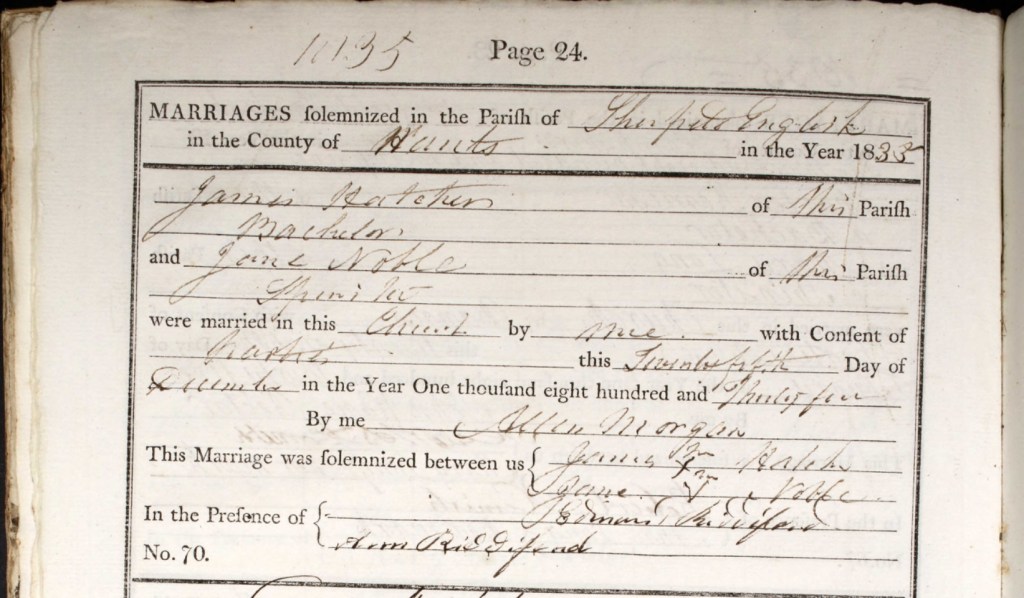
On a gentle spring day, Thursday, the 18th day of April 1839, in the quiet village church of Saint Leonard’s in Sherfield English, Mary and William’s daughter, 21-year-old Hannah Hatcher, stood at the altar, ready to begin a new life. The daughter of William Hatcher, a humble labourer who had long toiled on the Hampshire land, Hannah brought with her the quiet strength of a working-class family rooted in honesty and endurance. She was about to marry Charles Southwell, a 25-year-old faggot maker from nearby East Wellow, a man of craft, calloused hands, and earnest intent. Charles was the son of Joseph Southwell and Hannah Long, the sister of Anstice Roude (née Long), who was married to Mary’s brother, William Roud.
The ceremony, modest but sincere, was witnessed by James Finch and Charles Rose, two men who stood in support of a union founded not in wealth, but in devotion and a deep sense of duty to one another. As Curate J.H. Jragitt pronounced them husband and wife, the echoes of that sacred vow carried beyond the church walls, into the fields and hedgerows where generations of Hatchers had lived, worked, and now watched one of their own step into the hope of a shared future.
During the service, Curate J.H. Jragitt took the newlyweds aside with their witnesses to sign the marriage register. Although neither bride nor groom could write their names, each made their mark in the register with trembling hands, signing their vows not with inked letters, but with the weight of heartfelt promise. The marriage registry records their union as follows:
Marriage solemnized in the Church in the Parish of Sherfield English in the County of Southampton

No.: 7

When Married: 18th April 1839

Name and Surname: Charles Southwell and Hannah Hatcher

Age: Charles – 25; Hannah – 21

Condition: Charles – Bachelor; Hannah – Spinster

Rank or Profession: Charles – Faggot maker; Hannah – [no profession listed]
Residence at the Time of Marriage: Charles – East Wellow, Hannah – Sherfield English
Father’s Name and Surname: Charles – Joseph Southwell, Hannah – William Hatcher

Rank or Profession of Father: Charles – Faggot maker, Hannah – Labourer
Married in the Church according to the Rites and Ceremonies of the Church of England by me, J.H. Jragitt, Curate.

This Marriage was solemnized between us:

Charles Southwell (his mark)

Hannah Hatcher (her mark)

In the presence of:

James Finch (his mark)

Charles Rose.
For Mary, the marriage of her daughter Hannah was a moment steeped in both pride and reflection. Watching her 21-year-old daughter stand at the altar of Saint Leonard’s Church, where Hannah had been baptised, must have stirred a lifetime of memories. Mary had held her as a baby, guided her through childhood, and now, standing there, she watched Hannah take the next step in her journey, as a wife. Mary had watched her daughter grow into the young woman who would now share in the responsibilities and joys of married life.
This moment also held significance for Mary as she trusted the values she had instilled in her daughter to carry her through this new chapter. Mary may have found comfort in knowing that her daughter would be with someone who understood the rhythm of rural life, the demands, the routines, and the quiet rewards, especially as Charles, like her own family, was rooted in the same land and ways of life. Even more so, Mary could take solace in knowing that Charles was the son of Anstice Roude’s sister, giving Hannah a connection to a shared family legacy.
For Mary, this day was not just about a wedding, it was about letting go. It was about trusting that her daughter, now a wife, would continue to carry forward the strength, love, and traditions of their family. In the silent moments between prayers and vows, Mary must have felt both the ache of parting and the deep joy of seeing her daughter begin her own path, grounded in love, faith, and the enduring strength of the family they had built together. As the ceremony came to a close, and Hannah and Charles were pronounced husband and wife, Mary, proud and emotional, could only look on, knowing her daughter was embarking on her own journey, with all the love and lessons she had given her to guide her along the way.
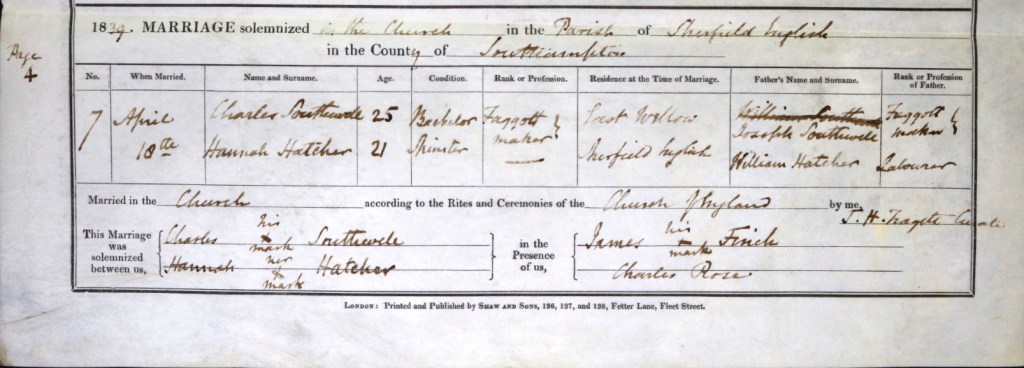
As the sun began to set on Sunday, the 6th day of June 1841, a warm summer light settled gently over the hedgerows and fields of Sherfield English. In the heart of the village, 40-year-old Mary Hatcher stood in the doorway of her modest home, her gaze drifting across the familiar shapes of the countryside she had known all her life. The golden light touched the earth softly, casting a tranquil glow over the land she had worked alongside her husband for so many years. That evening, a government enumerator passed through the parish, recording the names and occupations of every soul under each roof, a quiet but historic undertaking known as the 1841 census. It was the first census to list not just numbers, but individuals by name, age, and profession, a moment that, though ordinary to those living it, would leave a lasting trace for generations to come.
Inside her home, Mary was surrounded by the life she and her husband, William, had built together over decades of shared labor and resilience. William, now 50 years old, and their eldest son, Charles, aged 25, both worked as agricultural labourers, their days long and their hands weathered by the demanding work of the fields. Though their toil was hard, there was a quiet pride in their labor, a knowledge that their sweat had nourished the land and provided for their family. Mary, as always, managed the home with quiet strength, caring for their younger children, Ann, aged 15, on the cusp of womanhood, and George, just 13, still with the dust of boyhood on his boots. The bustle of daily life continued as usual, the rhythm of a rural family living amidst the cycles of the seasons.
That evening, as the census taker stood at her door, pen in hand, Mary likely answered with the modesty that had shaped her life. She would have listed the names of her family, William, Charles, Ann, and George, with no sense of the weight those names would carry in future generations. She wouldn’t have known that those few lines of ink, those simple entries, would echo through time, offering a snapshot of her life and the lives of her loved ones.
Just next door, her heart was drawn to another part of her story, her mother, Hannah Roud. Now 90 years old, Hannah was listed as a pauper, living alone but still fiercely rooted to the land she had known all her life. The thought of her mother, aged and frail, surviving on so little, likely stirred both tenderness and sorrow in Mary’s heart. Yet, there was comfort too, for Hannah was not truly alone. On the other side of her cottage lived Mary’s brother, Richard Roud, a broom maker, with his wife Sarah (nee Newell) and their daughters, Elizabeth and Emma. The three homes, Mary’s, Hannah’s, and Richard’s, formed a living braid of kinship, a mother, her daughter, and her son, still close in proximity and bound by the silent, enduring thread of family. The legacy of their shared roots was etched deeply in the landscape around them, just as much as it was written into their lives.
For Mary, that evening was not remarkable. It was simply another day spent among fields, firewood, and the steady rhythm of family life. But as she sat by the hearth, perhaps mending clothes or sharing a simple supper with her loved ones, she may have paused for a moment to take it all in, the aging face of her husband, the voices of her children, the nearness of her brother, and the enduring presence of her mother next door. In the quiet of those moments, she might not have known that she was living a moment that would outlast her. She was part of a larger story, a single entry on a census page that captured the fullness of her world in just a few lines, and the quiet dignity of a life well-lived. It was a life grounded in the soil of Hampshire, shaped by the seasons and by family, and Mary, though she may not have recognised it at the time, was living the enduring legacy of a woman who had given everything for the love and well-being of those she held dear.
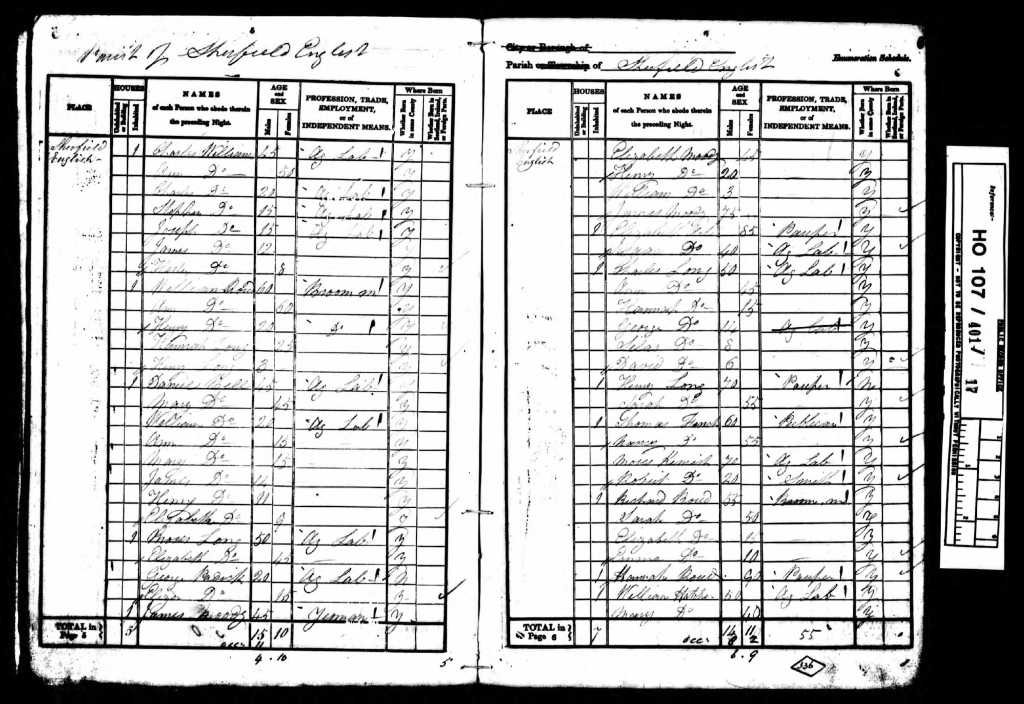
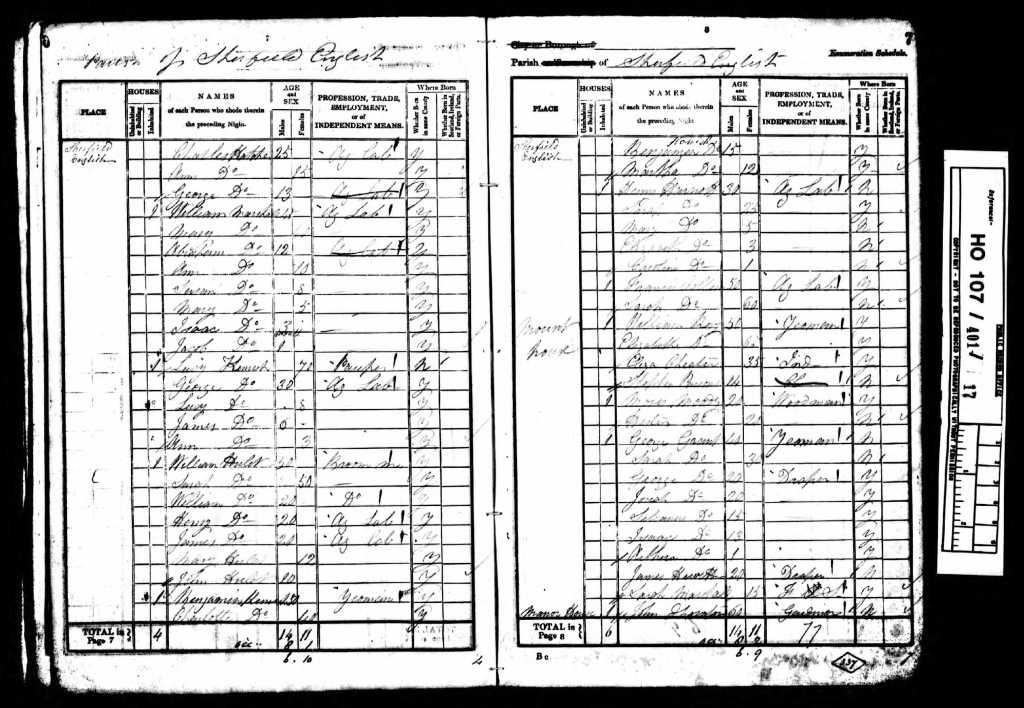
On Thursday, the 1st day of September 1842, beneath the familiar arches of the Parish Church in Sherfield English, Mary and William’s young daughter, Ann Hatcher, stood at the altar, preparing to take her solemn vows. The late summer sun filtered through the stained glass windows, casting soft, colorful shadows across the stone floor, as the quiet of the village church filled with the sounds of whispered prayers and quiet anticipation. Although still just a minor in age, Ann had already been shaped by the rhythms of rural labour and the quiet strength of her family. The daughter of William Hatcher, a steadfast and hardworking labourer, Ann had learned the value of perseverance and love from the very soil that had nurtured her family for generations.
Beside her stood William Moody, a 25-year-old faggot maker from nearby East Wellow. He was of full age, a man who shared the same working-class roots, his calloused hands testament to the craft and labour that had shaped his life. He was the son of John Moody, also a labourer, and like Ann, he had known the quiet dignity of hard work. Together, they represented a union not of wealth or grandeur, but of shared endurance, common roots, and the hope of building a future together, grounded in love and the simplicity of rural life.
The ceremony was conducted by Reverend Edmund May, whose kind and steady voice filled the church as he guided Ann and William through the sacred exchange of vows. When the time came for the couple to sign the marriage register, they were taken aside without their witnesses, their hands trembling with the significance of the moment. Neither bride nor groom could write their names, their education having been limited by circumstance, yet each made their mark with an "X," a simple gesture that spoke volumes, of heartfelt promise, of lives entwined by love, and of the quiet dignity they carried with them.
The marriage registry reads as follows:
Year: 1842

Marriage solemnized by Banns in the Parish of Sherfield English in the County of Hants

No.: 15

When Married: September 1st

Name and Surname: William Moody, Ann Hatcher

Age: William: Full Age, Ann: Minor

Condition: William: Bachelor, Ann: Spinster

Rank or Profession: William: Labourer, Ann: -

Residence at the Time of Marriage: William: Sherfield English,
Ann: Sherfield English.
Father’s Name and Surname: William: John Moody, Ann: William Hatcher
Rank or Profession of Father: John Moody: Labourer, William Hatcher: Labourer

Married in the Parish Church according to the Rites and Ceremonies of the Church of England by me, Edmund May
This Marriage was solemnized between us:

William Moody (his mark)

Ann Hatcher (her mark)

In the Presence of us:

Silas Moody (his mark)

Hannah Moody (her mark)
Though their marks were humble, they were made with reverence and sincerity. Ann and William were not alone. Witnessing their union were two of William’s siblings, Silas and Hannah Moody, who stood by with their own marks, offering more than mere formality. Their presence was a gesture of solidarity, of kin standing with kin, as one generation stepped into a new season of life. The Moody family, like the Hatcher family, was a quiet testament to the strength and resilience of rural life, hardworking, honest, and bound together by love.
For Ann, this moment was rich with emotion, a mixture of nervous excitement and humble resolve. She entered the church as a daughter, with the comforting familiarity of her father, William, by her side, and she left it a wife. The weight of this transformation, though unspoken, must have felt profound as she stood before God and the community, making vows not just to William, but to a new life, a new chapter, and a future she would build with him. Surrounded by familiar faces, blessed by Reverend Edmund May’s steady guidance, Ann’s marriage was not simply a ceremonial act, it was a moment filled with deep personal meaning, woven into the fabric of village life and her family’s enduring legacy.
For Mary, who was among the gathered congregation, the day must have been a bittersweet symphony of emotions too deep to articulate. As she watched her daughter, her youngest, still so young in her eyes, stand before the altar, the girl she had once cradled in her arms, Mary’s heart swelled with pride, but also with the quiet sorrow of motherhood. She had raised Ann with the same steadfastness that had defined her own life, shaped by the rhythms of Sherfield English and the endless cycles of work, family, and devotion. Now, to watch Ann take her place beside William Moody was both a moment of joy and a tender letting go. The ache of parting, though softened by pride, was real, for Ann was not just her daughter anymore, she was now stepping into a new role, one that Mary had once held herself.
Mary had walked this path before with her older children, but each farewell was its own kind of ache. The love Mary had poured into her daughter, the hours spent guiding her, comforting her, teaching her the ways of womanhood, were now part of Ann’s foundation as she stepped into her own married life. And though Mary may have felt the quiet sting of releasing her daughter into the world, she could also take comfort in knowing that Ann would be with someone who understood the rhythms of their shared life, someone who had the same values and strength of character that Mary had worked so hard to instill.
As Ann walked down the aisle, arm in arm with her father, and took the hand of William Moody, Mary’s heart must have been full, a mixture of sorrow and joy, pride and hope. She had done her part, raised her daughter with love, care, and sacrifice, and now it was Ann’s turn to create her own home, to build her own future. As Mary looked on, she must have felt the weight of the years behind her, of all the seasons that had shaped her family. But she also knew that this moment, this quiet exchange of vows, was part of something much larger, the enduring legacy of love, faith, and hard work that would continue to carry forward, from one generation to the next.
And so, as the ceremony came to an end and Ann and William were pronounced husband and wife, Mary stood, perhaps with tears in her eyes, but also with a deep sense of fulfillment and love. The story of her family, woven through seasons of hardship, faith, and resilience, had come to this moment, and in it, she saw not just the end of one chapter, but the beginning of another, a new family, a new home, and a new life built on the same quiet strength that had always defined the Hatcher family.
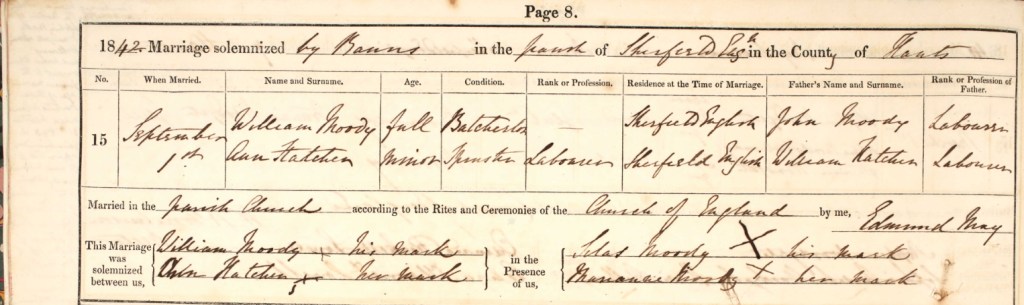
 On Sunday, the 23rd day of October 1842, in the quiet parish of Sherfield English, the long life of Mary’s beloved mother, Hannah Roud (née Finch), came to a peaceful end. At the remarkable age of 93, she passed away in the home she had known for so many years, her days woven into the rhythms of village life, family devotion, and the steady pulse of rural Hampshire. Hannah’s passing, due to "old age," was a testament to a life fully lived, one marked by perseverance, love, and a deep connection to the land and family.
Hannah was the widow of William Roud, who had passed away many years before, in 1792. He had been a humble broom maker, his trade helping to support their family through the changing seasons of life. Together, they had weathered the trials of life with resilience, raising their children, enduring the hardships of rural life, and building a legacy grounded in hard work and simple faith. Hannah had seen her family grow from the early days of struggle to a point where her children, grandchildren, and even great-grandchildren would carry forward the legacy she and William had built.
Hannah’s death was witnessed and tenderly reported by Elizabeth Roud, likely a granddaughter, who had been by her side in her final hours. The registrar, William Green, officially recorded the end of Hannah’s earthly journey on the same day in the Register for Registration District Romsey 1842 Deaths in the Sub-district of Mitchelmersh in the County of Southampton. The entry reads as follows:
No.: 343

When and Where Died: Twenty-third of October 1842 at Sherfield English.
Name and Surname: Hannah Roud

Sex: Female

Age: 93 Years

Occupation: Widow of William Roud (Broom Maker)

Cause of Death: Old Age

Signature, Description, and Residence of Informant: The mark of Elizabeth Roud, in attendance, Sherfield English

When Registered: Twenty-third October 1842

Signature of Registrar: William Green, Deputy Registrar.
Hannah’s death was more than just the end of her earthly life; it was the end of an era for the Roud family. As a mother, grandmother, and great-grandmother, Hannah had witnessed the lives of multiple generations. She had lived long enough to see her children raise families of their own and her grandchildren take their first steps in the world she had helped shape. Her influence was felt in every corner of her home, in the hands of the generations that followed, and in the quiet stories passed down about her steadfastness, her care, and her love. Though her name was recorded in the parish register, her true legacy lived on in the hearts and memories of those she had left behind.
For Mary, the death of her mother was a deeply personal and sorrowful turning point. Though Hannah had lived an extraordinarily long life, no span of years could truly prepare a daughter for the loss of her mother. Mary, now a mother and grandmother herself, had always known Hannah as a steadfast presence in her life, a woman shaped by the lean hardships of rural Hampshire, the calloused work of a broom maker’s wife, and by the enduring love that only a mother could give.
Living next door to her beloved mother, Mary had likely been close at hand during her mother’s final days. She would have checked on her daily, sat by her bedside in the quiet evenings, held her hand in the stillness, and whispered familiar prayers as the days grew shorter and her mother’s breath grew faint. It’s impossible to know what passed between them in those final moments, but Mary’s presence must have been a comfort, a steadying hand in the fading light of Hannah’s long life.
The death of her mother was not just the closing of a chapter in Mary’s life, it was the loss of the first home she had ever known, her moral compass, and her memory keeper. Hannah had been the thread that tied Mary to her childhood, to the years she spent growing up under her father William’s roof, and to the customs and comforts of a world that was swiftly slipping into the past. Mary had seen change in her lifetime, but nothing could have prepared her for the quiet finality of saying goodbye to her mother.
Though the church bell tolled its usual sun day service tones and the registrar quietly recorded the details, for Mary, the moment was immense. It was more than just a moment of loss, it was a recognition that she had said goodbye not only to her mother but also to the very roots of her own identity. She had said goodbye to the very foundation of her family, the woman who had raised her, guided her, and shaped the values and traditions that Mary had carried forward into her own motherhood. In that moment, the threads of time seemed to slip further away as Mary stood alone with her grief, yet bound to her mother by the legacy that would forever endure.
Mary had watched her mother’s strength for decades, and now, in the quiet grief that followed, she would find that same quiet endurance in herself. Hannah Roud’s passing left an empty space in Mary’s heart, but it also filled her with the awareness that her mother’s strength, her love, and the lessons she had passed on would live on in the family that Mary had raised. It was the passing of time, yes, but it was also a reminder that the love of a mother, woven so deeply into the fabric of life, does not disappear when one life ends. It continues, generation after generation, through the hearts of those who carry it forward.

On the solemn Wednesday, the 26th day of October, 1842, the village of Sherfield English gathered quietly beneath the cool autumn sky to bid farewell to one of its eldest and most cherished souls, Hannah Roud. At 93 years of age, Hannah had lived an extraordinary life, shaped by the soil, seasons, and struggles of rural Hampshire. She had borne witness to the passing of time and the ebb and flow of life in this small, tight-knit village. For her daughter Mary, the funeral marked not just the passing of a beloved mother but the end of an era.
Mary had spent her entire life under Hannah's gentle guidance, always turning to her for comfort, wisdom, or simply the strength of her presence. Now, as the mourners made their way to Saint Leonard’s Church, Mary walked with a quiet grief, her heart heavy with the loss of the woman who had been her anchor through the many seasons of her own life. As the procession moved along the familiar lanes, where the earth beneath their feet had been shaped by generations of their family, Mary must have been filled with both sorrow and deep reverence for the woman who had given her life, who had taught her the lessons of love, patience, and resilience.
Hannah had grown frail in her final years, and Mary had watched her mother’s strength slowly diminish with time, but nothing could prepare her for the stillness that followed her mother’s final breath. The gap left behind seemed immeasurable, and the weight of that absence was profound. Standing at the graveside, surrounded by family and familiar faces, Mary knew that she was laying to rest not only her mother but a part of herself. Yet, even in the depth of her grief, there was a profound sense of gratitude, a gratitude for the long life Hannah had lived, for the boundless love she had given, and for the legacy of family and strength she had left in the children and grandchildren who would carry her memory forward.
The service was performed by the Curate of Whiteparish, Edmund May, whose voice would have been steady and solemn, offering prayers and words of comfort as the village mourned the loss of one of its own. After the mourners had left the churchyard, now empty of their presence but rich with memories, the curate took great care in recording Hannah’s death in the register for BURIALS in the Parish of Sherfield English in the County of Southampton, in the Year 1841/1842. The entry reads with the simplicity of fact, yet behind each word lies the weight of the woman it memorializes:
No.: 140

Name: Anna Roude.

Abode: Sherfield.

When Buried: October 26th.

Age: 93 years.

By whom the ceremony was performed: Edmund May, Curate of Whiteparish.

Note in margin: Returned to Registrar.
Though the church no longer remains and if there had been a headstone marking Hannah’s resting place, it is no longer there, it is still soulfully calming to know that my 5th great-grandmother, Hannah, was laid to rest not far from where I now call home. The lanes and fields that she and her husband, William, once walked hand in hand still surround me, their memory woven into the very earth beneath my feet. There is a quiet peace in knowing that the land, which once nurtured their lives, continues to carry the mark of their presence.
Hannah’s legacy, though her body now lies beneath the soil, continues to endure in the lives of her descendants. In the very same fields where she once labored, where she watched her children grow, and where she shared her wisdom with the generations that followed, her spirit is still felt. And as I walk the same lanes that she and William once walked, I feel the weight of her love and resilience, woven into the land, into my own life, and into the lives of all who came after her.

On a crisp winter day, Monday the 18th day of January 1847, frost glistened on the headstones and church gate in the quiet Hampshire village of Lockerley. The ground was hard beneath the weight of the season, and the bare trees stood like silent sentinels against the pale, wintry sky. Inside the warm, quiet walls of the parish church of St. John’s, a simple but meaningful ceremony was unfolding. Mary and William’s son Charles Hatcher, a bachelor and labourer, stood before the altar, ready to marry Susan Luke, a spinster of full age. The two were not wealthy or of high station, but their union, like so many before them, was one of shared toil, humble love, and the quiet dignity of rural life.
Charles was the son of William Hatcher, a fellow labourer, while Susan was the daughter of Moses Luke, also a labourer. Both families had toiled through the seasons, living in the rhythms of hard work, family bonds, and community. As the frost dusted the rooftops of Lockerley, this union was a celebration not of grandeur but of enduring love and the joining of two lives built on the same simple but unyielding values.
The ceremony was performed in the traditional rites of the Church of England by Minister John Jenvey. The air inside the church was thick with the weight of centuries of tradition, the walls echoing with the soft murmurs of the parishioners who filled the pews to witness the vows that Charles and Susan were about to make. As the service unfolded, Minister Jenvey carefully recorded the union in the marriage registry, filling in page 36 with the details of that momentous day.
The entry in the register reads:
Marriage solemnized at the Church in the Parish of: Lockerley in the County of: Southampton
.
When Married: January 18th, 1847

Name and Surname of Groom: Charles Hatcher

Age: Full

Condition: Bachelor

Rank or Profession: Labourer

Residence at the Time of Marriage: Lockerley

Father's Name and Surname: William Hatcher

Rank or Profession of Father: Labourer

Name and Surname of Bride: Susan Luke

Age: Full

Condition: Spinster

Rank or Profession: (Blank)

Residence at the Time of Marriage: Lockerley

Father's Name and Surname: Moses Luke

Rank or Profession of Father: Labourer

Married in the Church according to the Rites and Ceremonies of the Established Church of England by me, Minister: John Jenvey.
This Marriage was solemnized between us:

The X Mark of Charles Hatcher

The X Mark of Susan Luke
In the Presence of us:

David Kemish

The X Mark of Catherine Kemish.
Charles and Susan, unable to write their names, marked the register with an ‘X.’ These marks were simple, yet they carried the weight of their vows, the beginning of a life together, full of promise and the hope that their love would endure through the trials of life. They were not alone in that moment. Standing beside them as witnesses were David Kemish and Catherine Kemish, whom also left their mark on the register, adding their presence and support to the marriage. In the solemnity of the church, surrounded by familiar faces and the echoes of prayer, their love and union became a part of the very fabric of the village.
Charles and Susan’s love story was not one of grand gestures or riches, but rather of resilience, simplicity, and shared endurance. Their story, like so many of our ancestors’, was shaped by the quiet power of family, the strength found in the everyday moments, in the bond of two people united not just by love but by a shared commitment to one another and the life they would build together.
Charles and Susan Hatcher are my your paternal 3rd great-grandparents, two lives whose choices, sacrifices, and enduring love helped shape my very existence. Though their names may be written in ink on a page, the legacy they left behind ripples forward through the generations. Their lives remind us that even the most ordinary of moments, the smallest of marks, can carry profound meaning across time, weaving a story of love, family, and continuity that endures long after the events themselves are over.
Their union, sealed with simple marks on a piece of paper, echoes through the generations, just as my own story is woven from the same threads of resilience, hope, and enduring family ties.
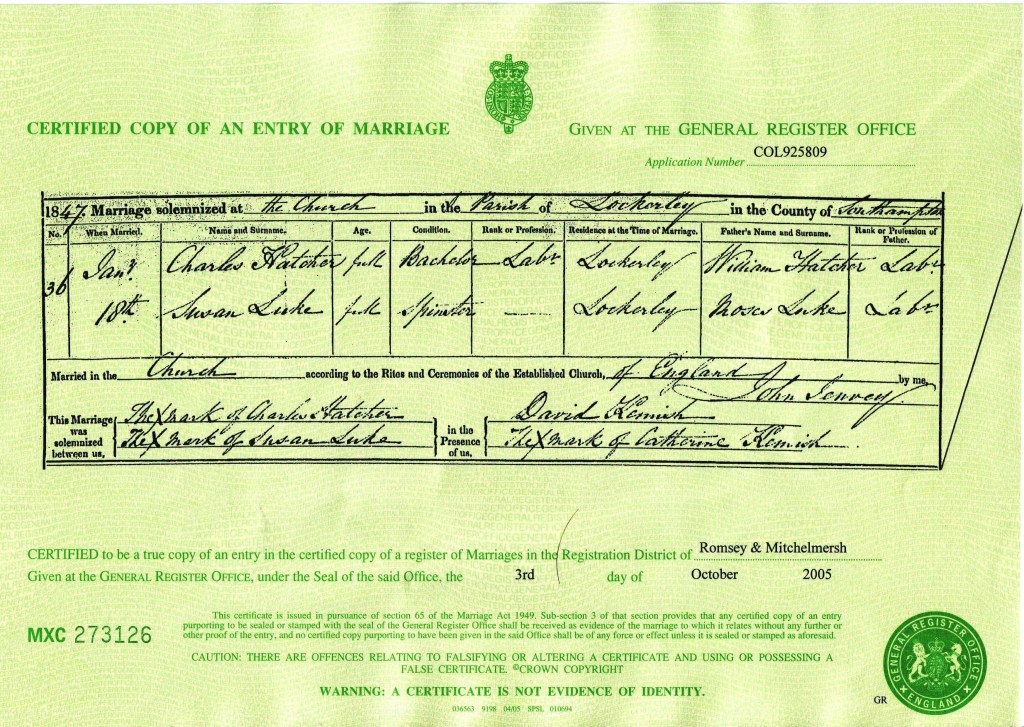
On the eve of the 1851 census, Sunday the 30th day of March, Mary sat quietly in her home in Sherfield English, Hampshire, the place she had lived most of her life. At 60 years old, she had seen decades of life unfold, and now, as the evening chill settled over the village, her home was filled with the presence of her family. Her husband, William, aged 63, sat beside her, still working the land as an agricultural labourer, as he had for so many years. Their daughter, 36-year-old widow Hannah, was there as well, working alongside her 9-year-old son, young William Southwell, as a match faggot maker. It was a modest household, but one that hummed with the familiar rhythms of family life.
Mary’s heart, weathered by time but still full of love, would have felt a quiet peace in those moments. William, though now in his later years, still bore the calluses and strength of a lifetime of hard work. His hands, weathered by years of toil in the fields, told the story of the family’s survival, of seasons spent working the soil, of early mornings and long days. Mary had watched her husband bear the weight of the land for decades, his strength a constant in their lives. As evening descended and the soft light of dusk filled the room, she would have gathered her family close, perhaps sitting by the hearth to share a simple meal. The warmth of the fire would have been a comfort as they sat together, a quiet moment of togetherness in a world that had seen its share of hardship.
Their daughter Hannah, now widowed, had taken on the task of supporting her family. As a match faggot maker, she worked diligently, alongside her young son, William. The work was no less taxing than the labor her father had done in the fields, but it was necessary for survival. Hannah, like her parents, had learned the value of hard work and resilience. Mary must have watched her daughter with a mixture of pride and sorrow, pride in the woman she had become, and sorrow for the loss of her husband Charles Southwell, who hard died on Thursday the 15th day of December 1842, from Typhus Fever, aged 32. And there, in that simple home, Mary’s grandson, just 9 years old, was already learning the trade. His tiny hands, no doubt stained with soot from the faggots, would one day bear the same calluses as his mother and grandfather.
As the evening shadows grew longer, Mary’s mind may have wandered back through the years, through seasons of joy and sorrow, of growth and loss. She had raised children, buried loved ones, and carried on through it all with quiet strength. The rhythms of life in Sherfield English had shaped her world, the seasons of planting and harvest, the sound of the village church bell ringing, the hum of everyday life. Though much had changed over the years, the values of family, hard work, and endurance remained constant.
When the census taker arrived, he would have written down the details of Mary’s household: William, still working as an agricultural labourer, Hannah, now a widow, toiling as a match faggot maker, and little William Southwell, who, at just 9 years old, was already learning the trade. Their names, written down in the official record, would serve as a simple but powerful reminder of the family’s quiet resilience. This was a family rooted in the land, in the cycles of nature, in love and duty to one another. It was a snapshot of a life that Mary had built, filled with hard work, simple joys, and the kind of love that endures through the seasons of time.
For Mary, this night was a reminder of how far her family had come, and how the legacy of endurance and love would continue through the generations. The world had changed, but in her heart, she knew the same values that had shaped her life would carry forward in the lives of her children and grandchildren. And though time had left its mark, Mary still carried with her the quiet strength of the village, the quiet rhythms of Sherfield English, which had shaped her, her family, and all the lives that came after.
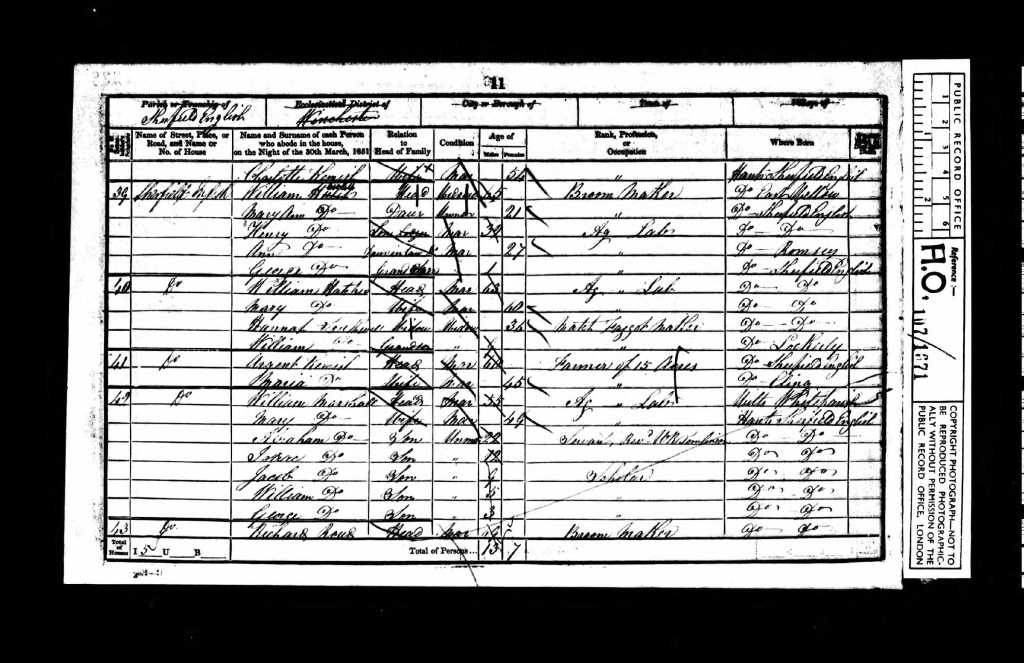
On a cold winter’s day, Thursday the 24th day of February, 1853, Mary’s heart was heavy with sorrow as she received the news of her beloved sister, Hannah Winsor’s passing. Hannah, now 71, had lived a life that spanned decades of rural toil, love, and quiet endurance, and on that day, her life in Romsey, Hampshire, came to a gentle close. The cause of death, simply recorded as "decay of nature," reflected a life spent in service to family and community, an unspoken but deeply felt journey that had finally come to its natural end.
Hannah had been Mary’s sister, her close companion, for all of her life, and though they had been shaped by different circumstances, Mary having her own family to raise, there was an undeniable bond of love and shared history between them. Hannah had been the steadfast wife of Francis Winsor, a humble labourer, and together they had weathered the ups and downs of rural life. Mary would have remembered the years of working alongside her sister, of shared joys and struggles, of raising children and tending to the needs of their families. And now, as the winter’s chill hung in the air, Mary found herself reflecting on those decades with both a sense of gratitude and a deep ache at the loss of her sister.
In Hannah’s final days, it was Mary Wheeler from Middlebridge, Romsey, who had been there by her side. Mary Wheeler, a compassionate soul, had tended to her with gentleness and care, comforting her in those last moments. It was Mary Wheeler who bore witness to Hannah’s death, and it was she who would help fulfill the task of registering the passing of Hannah. The deep sorrow of this moment was captured on the following day, Friday the 25th day of February, 1853, by the local registrar, James Scorey. With precision, he recorded the passing of Mary’s sister, though for Mary, this was far more than just an official act, it was the closing of a chapter in her life, a painful moment of finality that could not be measured in mere paperwork.
The death certificate read as follows:
Date of Death: Twenty-fourth of February 1853.

Place of Death: Mainstone, Romsey Extra.

Name: Hannah Winsor.

Sex: Female.

Age: 71 years.
Occupation: Wife of Francis Winsor, Labourer.

Cause of Death: Decay of Nature.
Informant: Mary Wheeler, in attendance, Middlebridge, Romsey Extra.

Date Registered: Twenty-fifth February 1853.

Registrar: James Scorey, Registrar.
For Mary, these words on the certificate were not just formalities; they were the acknowledgment of a life lived, a sister lost, and a family bound by shared memories now facing the painful reality of loss. Hannah had been a mother, a wife, and a woman whose hands had known both the softness of cradling children and the roughness of rural work. She had, like Mary, carried the weight of family and community on her shoulders, never seeking praise but always quietly fulfilling her duties, day after day.
Mary must have felt the loss of her sister deeply. Their bond was one forged through years of shared experiences, of childhood days spent together, of motherhood, and the trials of life in rural Hampshire. Their shared memories, their family ties, and the rhythm of their lives were now forever altered.
As Mary stood in the quiet sorrow of her sister’s passing, she would have known that Hannah’s life was more than just the end of a chapter, it was the close of an era. Hannah was part of the legacy of women who had built their families and their lives with quiet strength and grace, women whose names would never be in the history books but whose lives were woven into the fabric of the community.
The finality of her sister’s death was a reminder to Mary of the fragility of life, of the passage of time, and of the enduring love that binds families together. Though the years had been long, and the work had been hard, the love that Mary and Hannah had shared, and the memory of Hannah’s quiet strength, would endure in the hearts of their children, grandchildren, and all who had known her.

On Tuesday, the 1st day of March in 1853, the Roud/e, Hatcher, and Winsor families gathered together in sorrow, united by the shared loss of 71-year-old Hannah Winsor. With heavy hearts, they laid her to rest at Romsey Cemetery on Botley Road, in the quiet parish of Romsey, Hampshire. For Mary, this was not merely the burial of a sister, it was the closing of a chapter in her life that had been shaped by years of love, shared memories, and the unspoken bond that only siblings can know.
Hannah, who had spent her final years in the heart of the bustling market town of Romsey, had long been a part of that community. She lived on Middlebridge Street, where the steady hum of daily life blended with the tolling of church bells and the quiet murmur of the River Test as it flowed through the town. It was a town that had seen both the joys and hardships of life, a place that had witnessed Hannah’s resilience, her strength, and the grace with which she had navigated the years of her life. In the rhythm of Romsey, where time moved steadily, Hannah had built her life, surrounded by family and the familiar pulse of community.
Mary, standing there with the weight of grief in her heart, would have felt the loss deeply. Her sister, who had been a constant in her life, through seasons of joy and sorrow, was now gone. The years they had shared, the quiet moments of sisterly understanding, and the comfort of knowing that Hannah had always been there to lean on, were now memories that Mary would carry with her. The pain of the moment was raw, but there was also a sense of quiet gratitude for the life Hannah had lived, for the love she had given, and for the legacy she had left behind.
The funeral service was conducted with solemn dignity by Curate H. C. Pigon, who gently led the ceremony at the graveside. It was a service steeped in reverence and respect, as the community gathered to say their final goodbyes. The churchyard, a familiar place of rest, now held one more soul, and as Mary stood there, she may have found comfort in the thought that her sister would forever rest in the same earth that had cradled the lives of so many others from their community.
The details of Hannah’s burial were carefully recorded in the parish register for BURIALS in the Parish of Romsey, in the County of Southampton, in the Year 1853.
Curate H. C. Pigon entered the information with care and precision:
Name: Hannah Winsor.

Abode: Middlebridge Street.

When Buried: March 1st.

Age: 71.

By whom the Ceremony was performed: H. C. Pigon, Curate.

Burial No.: 2017.
As Mary stood there, listening to the soft murmur of prayers and the rustling of mourners, she must have been reflecting on the long life her sister had led, a life that had been shaped by family, faith, and the quiet strength of an English working woman. Hannah’s passing marked not just the end of a life but the loss of a part of Mary’s own history, one of shared childhoods, of family, and of love that had been built over many years.
Though Hannah was now gone, her name would live on in the burial records of Romsey, a quiet testament to a life once lived in the cobbled streets and the close-knit community she had called home. For Mary, these records were more than just formalities, they were the acknowledgment of the life of a woman who had been deeply loved, who had lived with grace, and who had left a legacy in the hearts of all those who knew her. In the graveyard, where the cold earth would now keep Hannah’s body, her memory would remain alive in the hearts of her family, in the stories passed down through the generations, and in the quiet endurance that had defined her life.
And so, as Mary left the cemetery that day, her grief heavy but tempered with gratitude, she carried with her the memory of a sister whose life had been woven into the fabric of her own, and whose strength would continue to echo through the years, even after her passing.
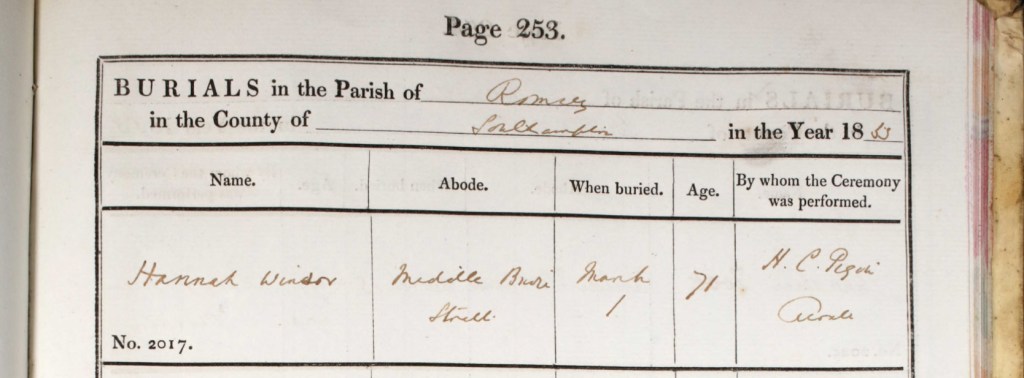
Romsey Old Cemetery, located on Botley Road in Romsey, Hampshire, is a historically significant site that holds an important place in the town’s past. Established in the 19th century, it reflects the community’s evolving history, serving as the final resting place for many residents over the years. The cemetery, which sits on the outskirts of the town, offers a glimpse into the lives of Romsey’s past inhabitants, many of whom were part of the town’s agricultural and industrial development. While it remains a peaceful and serene place today, the cemetery has also been the subject of local legends and ghost stories, adding a layer of mystery to its historical importance.
The cemetery was created in the early 1800s to accommodate the growing population of Romsey. As the town expanded, the older burial grounds at the local churches became insufficient, prompting the establishment of the Old Cemetery on Botley Road. This burial ground became a key part of Romsey’s religious and social life, as it provided a place for the deceased to be laid to rest while also serving as a symbol of the community’s traditions and beliefs about death and remembrance. The cemetery was designed to be spacious and accommodate a large number of graves, and many of Romsey’s prominent families from the 19th and early 20th centuries are buried there. Over the years, it became a serene and reflective space, offering solace to families mourning their loved ones.
The architecture of the cemetery, with its rows of gravestones and memorials, reflects the styles and trends of the time, with many gravestones bearing intricate carvings and epitaphs that tell the stories of the people interred there. As with many cemeteries of the period, the space became more than just a burial ground, it was a place for the community to gather, reflect, and remember. The cemetery was used not only for burials but also as a space for memorials and commemorative plaques, contributing to its historical significance.
Though peaceful today, the cemetery has been associated with various rumors of hauntings and ghostly occurrences. Over the years, locals have told stories of strange sightings and unexplained sounds, particularly during the evening hours. Visitors and residents have occasionally reported seeing shadowy figures moving between the graves or hearing faint footsteps when no one is around. These eerie stories have helped build the cemetery’s reputation as a site with a haunted past, adding to its intrigue.
The most common ghostly tales connected to Romsey Old Cemetery describe figures that seem to materialize among the gravestones before vanishing as quickly as they appeared. Other reports suggest the sounds of whispering voices or soft footsteps echoing through the cemetery, even when it is quiet and still. Some claim that the air around the cemetery feels unnaturally cold, particularly in certain areas. While there is no documented evidence to support these claims, the cemetery’s age and historical significance, coupled with the emotional weight of the graves, make it a natural setting for such stories to emerge. Many of the legends surrounding the cemetery are based on local folklore, passed down through generations.
The cemetery has also been the subject of speculation due to some of the stories attached to specific graves. Certain gravestones, particularly those marking untimely or tragic deaths, are said to be the focus of these supposed hauntings. Whether these tales are the result of the imagination or rooted in the real-life sorrow and loss experienced by the community remains unclear. What is certain, however, is that the cemetery’s long history and its connection to the people of Romsey have contributed to the sense of mystery that surrounds it.
Today, Romsey Old Cemetery remains a quiet and respected site for reflection. While the supernatural stories continue to intrigue some visitors, the cemetery is primarily a place for remembrance and contemplation. It continues to serve as a final resting place for the people of Romsey, offering a tranquil space where families can visit and reflect on the lives of those who came before them. The cemetery’s significance is not only in the stories it holds but in the role it plays in connecting the past with the present, allowing those who visit to pay their respects and honor the town’s history.
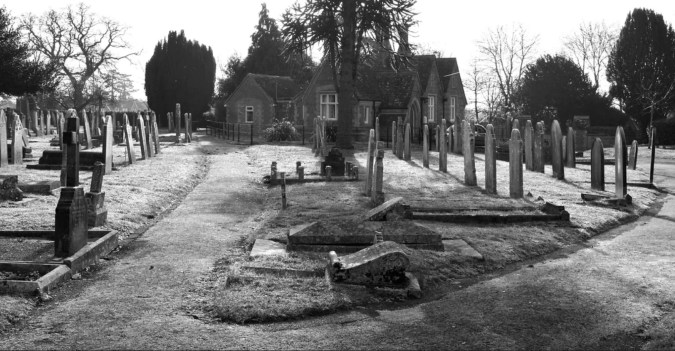
On Tuesday, the 3rd day of March, 1857, the village of Sherfield English, where Mary had spent her entire life, lost one of its quiet pillars. Her beloved brother, William Roud, a devoted broom maker, passed away peacefully at the age of 79. His life, though simple, had been full of purpose. William had spent decades crafting brooms by hand, shaping each one with care and pride. His work, though often unnoticed, was essential to the homes and farms of his community, a quiet contribution to the rhythm of daily life that marked his legacy.
Mary had known William for as long as she could remember, their lives intertwined in the quiet, enduring rhythm of rural existence. As siblings, they had weathered many of life’s storms together, and now, with the passing of her brother, Mary would feel the weight of a loss that was both personal and profound. William’s death, which came after a slow decline in health, was not marked by pain but by natural decay, a gentle passing that reflected the kind of life he had led. His was a life of hard work, simplicity, and quiet resilience.
In his final moments, William was not alone. His daughter-in-law, Amelia Roud, née Bailey, had been at his side. Amelia, who had long been a part of the Roud family, stood by her father-in-law, offering what comfort she could as the end of his life neared. Perhaps the sorrow of those moments was compounded by the exhaustion of the long days spent caring for William in his frailty. Yet, her presence must have been a steadying force for him as he made his peaceful exit from this world. In that moment, Mary would have taken comfort in knowing that her brother was surrounded by family, his loved ones with him in his final moments, as he had been for so many of them in their own times of need.
The following Saturday, on the 7th day of March, 1857, it was Amelia who, burdened with grief yet dutiful as always, made her way to Romsey to inform the registrar of William’s death. George Withers, the Registrar for the Michelmersh district, took down the necessary details with careful precision, immortalising the final chapter of William’s life in the official records. As Amelia made her way home, the weight of the loss must have settled heavily upon her, the task of registering William’s death one more step in a journey of sorrow she had not yet fully processed.
The official record, now forever preserved in the parish archives, read as follows:
No.: 269

When Died: 3rd March 1857, Sherfield English

Name and Surname: William Roud

Sex: Male

Age: 79 years

Rank or Profession: Broom Maker

Cause of Death: Natural Decay, Certified

Signature, Description, and Residence of Informant: The mark of Amelia Roud, Present at the Death, Sherfield English

When Registered: 7th March 1857

Signature of Registrar: George Withers, Registrar
For Mary, this was not just the passing of her brother, it was the closing of an era. William was not just a brother but a shared part of her history, someone who had walked beside her through the seasons of their lives. His death signified the end of a chapter not just for their family but for the larger community of Roud, Hatcher, Long, and Newell families, whose roots intertwined over the decades in the quiet soil of Hampshire.
Though William’s life had been modest, filled with the steady rhythms of rural work, his legacy was profound. He had given his hands, his time, and his skill to the needs of his family and his community. The brooms he crafted would continue to be used by those who had come after him, their simple utility a testament to the value of his life’s work. And though he was gone, his presence would live on in the generations that followed, the lessons of dedication, hard work, and quiet pride passed down through the family he had built.
For Mary, the loss of William was a personal grief that could not be fully expressed in words, but rather, felt deeply in the heart. As she reflected on the years of their shared lives, she knew that the values of simplicity, resilience, and love that he had embodied would continue to shape their family long after his passing. The loss of William marked the end of one chapter, but the beginning of a quiet legacy that would carry on through his children, his grandchildren, and beyond. And though he was no longer there in body, his spirit, woven through the stories, the memories, and the work he had done, would endure.
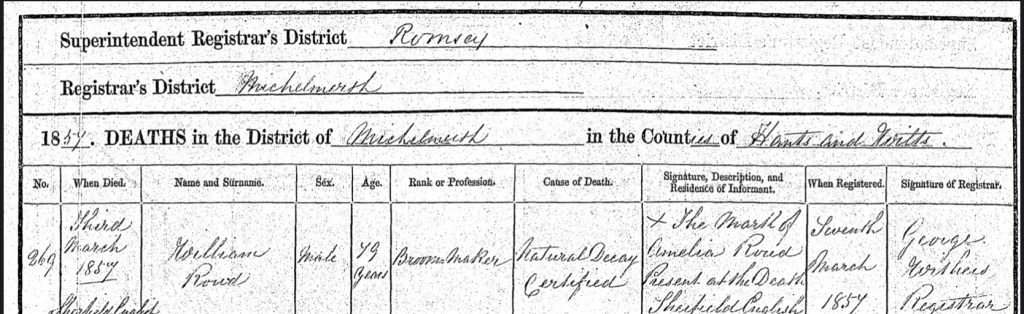
On Sunday , the 8th day of March, 1857, as the first whispers of spring filled the air, Mary stood at the graveside of her beloved brother, William Roud, in the peaceful churchyard of Saint Leonard’s Church in Sherfield English, Hampshire. The gentle breeze carried with it the scent of blooming flowers, while the cuckoo's song echoed sweetly through the village, a stark contrast to the heavy sorrow that hung in Mary’s heart.
William, a man who had lived for nearly eight decades, was now laid to rest beneath the familiar stones of a church that had cradled his entire life. His passing marked the close of a long chapter, one filled with quiet resilience, humble labour, and a deep, unwavering commitment to family and community. William had been a steady presence in Mary’s life, a constant companion through the years, and the weight of his loss felt immeasurable. The pain of parting with him was softened only by the recognition of the extraordinary life he had lived, a life woven into the very fabric of the village he had called home.
As the funeral service began, the curate, J. S. Echalaz, gently led the proceedings with reverence and care, his words offering solace to those gathered in sorrow. Mary, standing amidst the familiar faces of family and friends, must have felt the weight of years pressing down on her. It was in this very church that William had been baptised, and it was here, too, that he had exchanged vows with the love of his life, Anstice Roude (née Long). The sacredness of this place, which had witnessed both his beginning and the union of his heart with Anstice, now bore witness to the end of his earthly journey.
The churchyard, the village, and the fields that had framed William's life seemed to embrace him one last time as he was lowered into the ground. His burial was not just the closing of his own life story but also the quiet end of an era for the family and community that had loved him so dearly. As Mary watched her brother’s casket descend into the earth, she felt the sorrow of a lifetime, the deep ache of loss that only a sister can know. Yet in that moment, there was also the deep, unwavering knowledge that William’s life had left an indelible mark on the people who had known him. His spirit, though now gone, would live on in the stories, in the work he had done, and in the memories of those who loved him.
Curate J. S. Echalaz carefully recorded William’s death in the church register for BURIALS in the Parish of Sherfield English in the County of Southampton in the Year 1854. His name, written with respect and solemnity, would endure as a quiet testament to a life lived simply, honestly, and rooted deeply in the soil of Sherfield English. The record reads:
Name: William Roud

No.: 210

Abode: Sherfield English

Date of Burial: March 8th, 1857

Age: 79

By whom the ceremony was performed: J. S. Echalaz, Curate
His name in the register would serve as a lasting reminder of his quiet strength, his devotion to family, and the deep love he had carried throughout his life. But for Mary, it was more than just the end of his life, it was the end of a chapter that had shaped her own journey. The pain of loss was heavy, but it was tempered with gratitude for the years they had shared, and for the love William had given so freely.
As she walked away from the graveside, the weight of her grief mingling with the peace of knowing he was now at rest, Mary would have felt the quiet pulse of the village around her, the very place where William had lived, worked, and loved. His legacy, though now carried in the memories of those who had known him, would continue to shape the future of their family. Through the generations that followed, William's life would echo in the stories, in the work, and in the enduring love that had defined his quiet but remarkable journey.
In the peaceful churchyard of Saint Leonard’s, beneath the same sky that had watched over his life, William Roud was finally laid to rest. And in that sacred place, the enduring presence of his spirit would live on, woven into the fabric of Sherfield English, where his name would remain, forever cherished, forever remembered.

At the age of 66, Mary Hatcher was quietly but profoundly honoured in the Salisbury and Winchester Journal, on Saturday the 21st day of November 1857. This recognition, though not given for wealth or status, was a tribute to the quiet dignity with which she had lived her life. The mention, which appeared alongside her husband William, aged 70, highlighted their remarkable achievement: raising a large family in the village of Lockerley without ever relying on parish relief.
This brief but poignant recognition speaks volumes about Mary’s character—her resilience, strength, and unwavering devotion to her family. In an age when many were dependent on external support, Mary and William stood firm in their values. Through years of hard work and sacrifice, they guided their children into adulthood with honour, never compromising their principles, and always ensuring that their children were safe, self-reliant, and well-rooted in the values of love, respect, and hard work.
Though Mary would have never sought praise or attention for her efforts, this public acknowledgment, however modest, was a rare moment of recognition for a lifetime of steadfast motherhood and moral strength. For Mary, the true reward was not in public applause, but in the satisfaction of knowing that her children had become the kind of people who could stand on their own and continue the legacy of resilience she and William had worked so tirelessly to build.
The article read as follows:
SPECIAL CLASS.
William Hatcher, aged 70, and Mary Hatcher, his wife, aged 66, of Lockerley, for having got out a large family respectably, without parish relief.
This simple mention in the newspaper serves as a lasting tribute to Mary’s life, a life not measured by wealth or accolades, but by the quiet, enduring strength of a mother who, together with her husband, had given everything to ensure her children’s well-being, instilling values of integrity, self-reliance, and love that would carry on for generations to come.

On a cold November day, Wednesday the 23rd day of November 1858, sorrow descended upon the Hatcher family as they faced the untimely death of their son, Charles Hatcher. At just 46 years old, Charles, a hardworking woodman from Lockerley, passed away after a week-long battle with pneumonia and bronchitis. His death, though not unexpected given the severity of his illness, left a profound emptiness in the home and hearts of those who had loved him. For Mary and William, it was a sorrow unlike any they had known, a loss of their son, a part of themselves, who had helped shape their world in ways both big and small.
Charles had lived his life among the woods and fields of Hampshire, shaping a humble, but strong existence. His hands, calloused from years of labor, had carved out a life of steady work and quiet pride. He had been a man rooted deeply in the rhythms of nature, working the land, tending the woods, and providing for his family in the way he knew best. The woods had been his domain, a place where he had lived and breathed the air of Hampshire for all of his life, but now, as the chill of November settled over the land, his life came to an untimely end. His death marked not just the loss of a son but the passing of an era in Mary and William’s lives.
In his final moments, Charles was not alone. By his side, through his suffering, was Hannah Bell, a woman whose quiet presence provided comfort in his last hours. With tenderness, she marked her grief on the death register with a simple "X" a silent, but deeply emotional testament to her care and the sorrow of watching someone she cared for slip away. Hannah had been there through the illness, standing witness to his final breath with quiet strength, and it was her responsibility to fulfill the formal task of registering Charles’s death.
The next day, on Thursday the 24th day of November, 1858, the death certificate was signed by Registrar John Bayley, formally documenting the end of Charles’s life. Though this was a bureaucratic necessity, it was much more than that for Mary and William. It was the end of a chapter in the lives of those who loved Charles, a painful but inescapable acknowledgment of the loss they would carry forever in their hearts.
The details of Charles’s passing were carefully recorded in the death register for the Registration District of Romsey, in the Sub-district of Michelmersh, within the Counties of Hants & Wilts, in the Year 1858. The record read:
No.: 363.

When and Where Died: Twenty-third November 1858, Lockerley.

Name and Surname: Charles Hatcher.

Sex: Male.

Age: 46 years

Occupation: Woodman.

Cause of Death: Pneumonia and Bronchitis, 1 week, Certified.

Signature, Description, and Residence of Informant: X The mark of Hannah Bell, present at the death, Lockerley.

When Registered: Twenty-fourth November 1858.

Signature of Registrar: John Bayley, Registrar.
The stark simplicity of these words only partially captures the depth of the loss that Mary and William, and all who knew Charles, felt. His life had been simple, filled with steady labor and quiet contribution, but his death left an irreplaceable void. The fields and woods of Hampshire would continue to stand, unchanged by his absence, but the lives of those who had loved him, his family, his friends, and his community, would never be the same.
Charles’s death marked the end of one era and the beginning of a sorrowful journey forward for Mary and William, who now faced a world without their son, the quiet man who had shaped their world in his own gentle way. In the stillness of that November day, as the chill set in and the world around them began to quiet, Mary’s heart would carry the sorrow of that loss, silent, enduring, and filled with the love she had always had for her son, Charles.
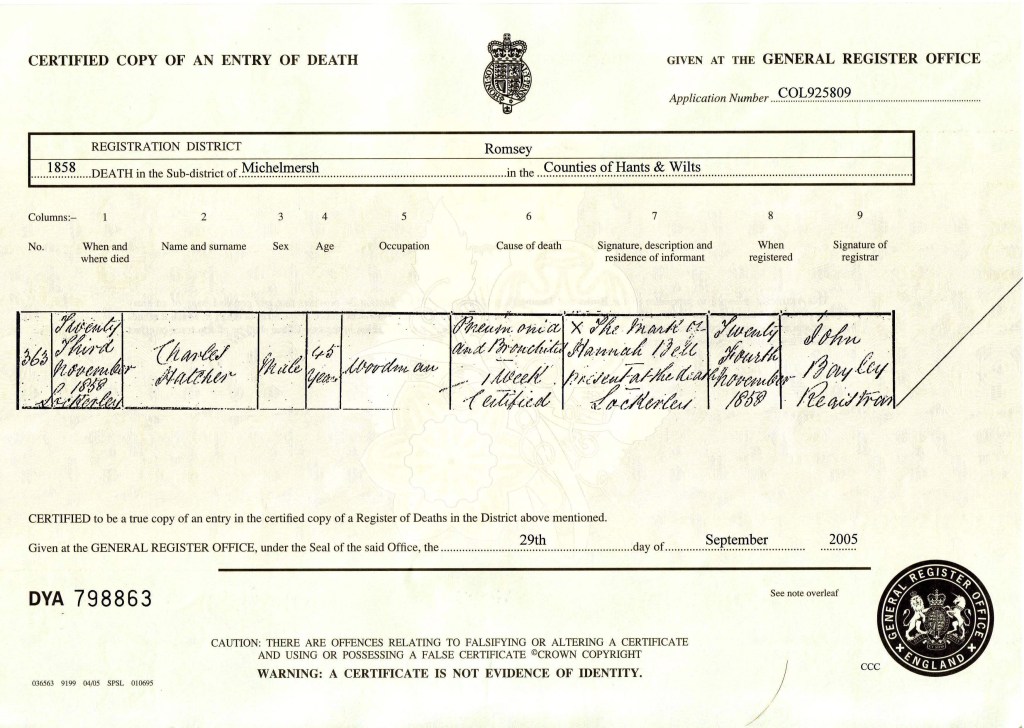
On a grey autumn day, Thursday, the 25th day of November 1858, the village of Lockerley stood in quiet reverence as the church bell tolled for Charles Hatcher. The crisp, cool air carried with it a sense of sorrow that seemed to settle upon the land, as though the very earth shared in the grief of those gathered. Mary and William, his devoted parents, his wife Susan, and the family and neighbours who had known him all his life, stood in the solemn quiet of Saint John’s Churchyard. Together, they prepared to lay Charles, just 45 years old, to rest.
Charles had been a working man, a son, a husband, a father of seven, and a loyal member of the rural Hampshire community. His life had been one of humble labor, a steady, reliable presence in the village. His work as a woodman and laborer, shaping the very rhythms of village life, was his legacy. To those who knew him, he was a quiet pillar, dependable and hardworking, someone who had always been there, until pneumonia and bronchitis, after a brief illness, took him far too soon. His passing left a hollow ache in the hearts of those who loved him. The sudden stilling of his heartbeat, a presence that had been so constant, now felt like an overwhelming void.
As Reverend H. A. Wake led the burial rites, his voice reverberated in the cold air, offering comfort and solemnity to the mourners. The soil of Lockerley, so familiar to Charles, now closed gently over him. It was a simple, dignified farewell to a man who had lived humbly, worked earnestly, and now rested in peace. For Mary, watching her son laid to rest, it was not just the end of a life but the loss of a presence that had shaped her own world, the loss of a son she had watched grow from child to man, and the grief of a mother who had lost her child too soon. For William, it was the loss of a son who had been a companion in his own labors and joys, a partner in the passage of time. For Susan, Charles’s wife, it was the death of a beloved husband, and for the children, the loss of a father whose steady hands had shaped their lives.
After the burial, Reverend Wake, with the weight of the ceremony still hanging in the air, opened the heavy leather book of registry for BURIALS in the Parish of Lockerley in the County of Southampton for the year 1858. With care and reverence, he recorded the details of Charles’s passing:
Name: Charles Hatcher

Abode: Lockerley

When Buried: November 25th, 1858

Age: 45

By whom the Ceremony was performed: H. A. Wake

Burial No.: 343
These simple words, recorded with precision and care, now serve as a permanent marker of Charles’s life, a quiet testament to a man who had lived with dignity, whose presence had left an indelible mark on the lives of those who knew him. Though his life had been brief, the impact of his work, his love, and his presence in the lives of his family would echo for years to come, carried forward in the hearts of his loved ones. As Mary and William stood by the graveside, the weight of their grief was immeasurable, but so too was their gratitude for the years they had shared with their son. In the silence that followed, it was clear that Charles Hatcher would never be forgotten, his memory, woven into the very fabric of Lockerley, would live on.

In the gentle turning of the seasons, with the soft whisper of autumn beginning to make its presence felt, the banns of marriage were read aloud at St. Peter’s Church in East Tytherley, Hampshire, announcing the union of George Hatcher, the youngest son of Mary and William Hatcher, and his bride-to-be, Jane Fry. This declaration, though simple, carried with it a deep sense of love, commitment, and the hope for a shared future.
George, a bachelor from the neighboring parish of Lockerley, had long been a part of the fabric of the local community. He had grown up among the rolling hills of Hampshire, with the steady rhythms of rural life shaping his values and his character. Jane, the daughter of Henry Fry and Mary Fry (née Baker), was a spinster of East Tytherley, and much like George, had known the comfort and continuity of village life. Their intentions were lovingly announced before the congregation, a declaration of their decision to unite their lives in marriage. The familiar faces in the pews, some family, some friends, had long seen marriages come and go, but each new union was, in its own way, a new chapter in the ongoing story of their community.
The first reading of their marriage banns took place on Sunday, the 16th of September, 1860, led by the officiating minister, C. H. Tomlinson. The words spoken from the pulpit carried not just tradition, but the hope for a future built on faith and mutual love. A week later, on Sunday, the 23rd of September, the banns were read again by J. Mason, the curate, reaffirming their intention to marry. On the third and final Sunday, the 30th of September, the final reading was made by officiating minister S. Lee, who stood before the congregation, declaring George and Jane's names one last time in this public act of commitment.
Each reading, spoken in the calm and steady voice of the clergy, was not just an announcement but a small ritual, shared by generations before them, whose words had echoed through the centuries in the very same church, in the very same rhythm. For George and Jane, each Sunday brought them closer to the moment when their vows would be exchanged, and their lives would be forever joined in the eyes of God and their community.
Their marriage banns, carefully recorded, read as follows:
Banns of Marriage between
No. 108
George Hatcher, Bachelor, of the Parish of Lockerley and Jane Fry, Spinster, of this Parish were published in this Church
1st Time, Sunday, September 16 by C. H. Tomlinson, officiating minister.
2nd Time, Sunday, September 23 by J. Mason, Curate.
3rd Time, Sunday, September 30 by S. Lee, officiating minister.
The readings, simple as they were, spoke to the steady rhythm of life in Hampshire, where generations before George and Jane had made similar declarations of love and commitment. For them, it was the beginning of a lifelong journey together, one that would be woven with the same threads of faith, family, and the quiet beauty of the English countryside. As the words of the banns were spoken in the church on those three Sundays, the seeds of a new chapter in the Hatcher family’s history were being planted, a union bound in both love and the timeless traditions of the past.
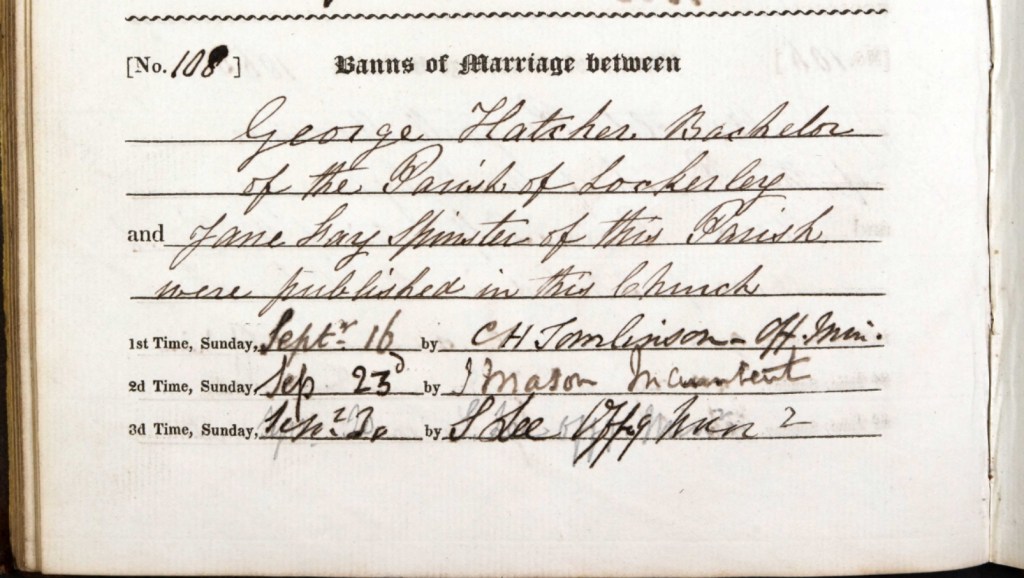
On Saturday, the 6th day of October 1860, a momentous day unfolded in the quiet parish of East Tytherley, Hampshire, as Mary and William’s beloved son, George Hatcher, married his sweetheart, 22-year-old Jane Fay, at St. Peter’s Church. It was a day filled with promise, hope, and the quiet joy of two young hearts beginning a shared life together. For Mary, this was not just the marriage of her son, but a deeply emotional milestone in the story of her family, a moment that marked both a new beginning for George and the passage of time that had shaped her own life.
At just 22 years old, George was stepping into his own future, guided by the values instilled in him by Mary and William, his parents. Mary would have watched with both pride and a bittersweet ache as George, her youngest son, stood at the altar. She had seen him grow from a child into a man, had watched him take on the responsibilities of life in the village, and now, she was witnessing him take the next step in his journey as he pledged his life to Jane. The thought of George starting his own family, creating his own home, and building a future with Jane must have stirred a complex mix of emotions in Mary’s heart.
George’s bride, Jane Fry, was not just a young woman whom Mary had come to welcome into their family; she was someone who would walk beside George through the years, sharing in his joys and sorrows. The ceremony, though undoubtedly simple, was profoundly meaningful. It was a union of two young souls, bound together by love, with the quiet hope that their future would be filled with happiness, just as Mary had hoped for all her children. The church, with its stone walls and the steady rhythm of village life, would have seemed to stand as a witness to this new chapter.
Though the day was filled with the hope of a new beginning, for Mary, it was also a moment of reflection. Watching George, the boy she had held in her arms, marry, would have stirred memories of years gone by, of the days when her children were younger, when the world seemed full of possibility and the future was still ahead of them. Now, with George’s marriage, a new chapter was unfolding, and Mary would have felt the weight of time passing. But despite the pang of grief at seeing her children grow up, there was also the joy of knowing they were stepping into the world with strength, love, and the foundation she and William had worked so hard to provide.
As the ceremony concluded, and George and Jane were joined in marriage, Mary would have felt a sense of peace, knowing that George, her son, was now part of a new family, creating the life he had always dreamed of. Yet, for Mary, the day would have been filled with mixed emotions: the pride of a mother watching her child take on new responsibilities, the joy of seeing love flourish between George and Jane, but also a deep, quiet ache as she watched her son take this step into his own future.
Unfortunately, due to the rising cost of family research, including the price of marriage certificates, I have had to make the difficult decision not to purchase any additional certificates beyond what I already have. I sincerely apologise for not being able to provide all the details of the marriage, such as the names of the witnesses or the officiant. However, if you wish to know more, you can purchase a copy of their marriage certificate using the following GRO reference:
Marriages, December 1860, Hatcher, George, FAY, Jane, Stockbridge, Volume 2c, Page 143.
This union, though not fully documented here, remains a deeply moving part of the Hatcher family’s history. It marks a moment of joy and hope, the beginning of a new life for George and Jane, and for Mary, a milestone in the ongoing journey of family and love.

St. Peter’s Church in East Tytherley, Hampshire, is a historic and significant place of worship that has played an important role in the spiritual life of the village for centuries. Situated in the rural landscape of southern England, the church is deeply tied to the history and heritage of the surrounding area.
The church was originally built in the 12th century, during the Norman period, and it has undergone several changes and restorations over the years. The initial construction of St. Peter’s Church reflects the architectural style of the time, with elements of Norman and early Gothic architecture. It was originally built as a small parish church to serve the local community of East Tytherley, a village that was, like many others in Hampshire, primarily focused on agriculture during the medieval period.
St. Peter’s Church was dedicated to Saint Peter, one of the twelve apostles of Jesus and a key figure in Christianity, often associated with the keys to heaven and the role of the church in guiding the faithful. The church’s dedication to Saint Peter signifies its importance as a place of spiritual guidance and community worship.
Over the centuries, St. Peter’s Church has been altered and expanded to meet the needs of the growing population in East Tytherley. The most notable changes occurred during the Victorian period, when the church was restored in the mid-19th century. These restorations were part of the broader Gothic Revival movement, which sought to bring back medieval architectural styles in church buildings. The restoration work included the addition of stained-glass windows, a new chancel, and other decorative elements that enhanced the church's beauty and functionality.
The churchyard surrounding St. Peter’s Church holds great historical significance, as it is the final resting place for many of East Tytherley’s past residents. The gravestones, many of which date back several centuries, offer a glimpse into the lives of those who lived and worked in the village. The churchyard has remained an important space for the local community, with families coming to the church not only for worship but also to honor their deceased loved ones.
Like many churches of its age, St. Peter’s Church is a focal point of local life, hosting regular services, weddings, baptisms, and funerals. It remains an active place of worship today, offering a sense of continuity and spiritual support to the village of East Tytherley. The church is also known for its strong sense of community, with members coming together for both religious observance and social activities, such as fundraising events, educational programs, and other community-oriented initiatives.
Over the years, St. Peter’s Church has also been a source of local folklore and mystery. As is often the case with older church buildings, there are rumors of hauntings and ghostly occurrences. Some visitors and locals have claimed to feel an eerie presence within the church or its churchyard, particularly in the quieter moments of the day or night. There are stories of unexplained sounds, such as footsteps or whispers, echoing through the building when no one is present. Others have mentioned a strange, inexplicable coldness in certain parts of the church, which has led some to believe that the church may be home to lingering spirits from its long history. These tales, while unverified, contribute to the church’s mystique and add to its place in local folklore.
The location of St. Peter’s Church, set against the backdrop of the rolling Hampshire countryside, adds to its atmospheric quality. The peaceful surroundings, combined with the church’s age and history, create a sense of timelessness that has inspired both reverence and curiosity over the years.
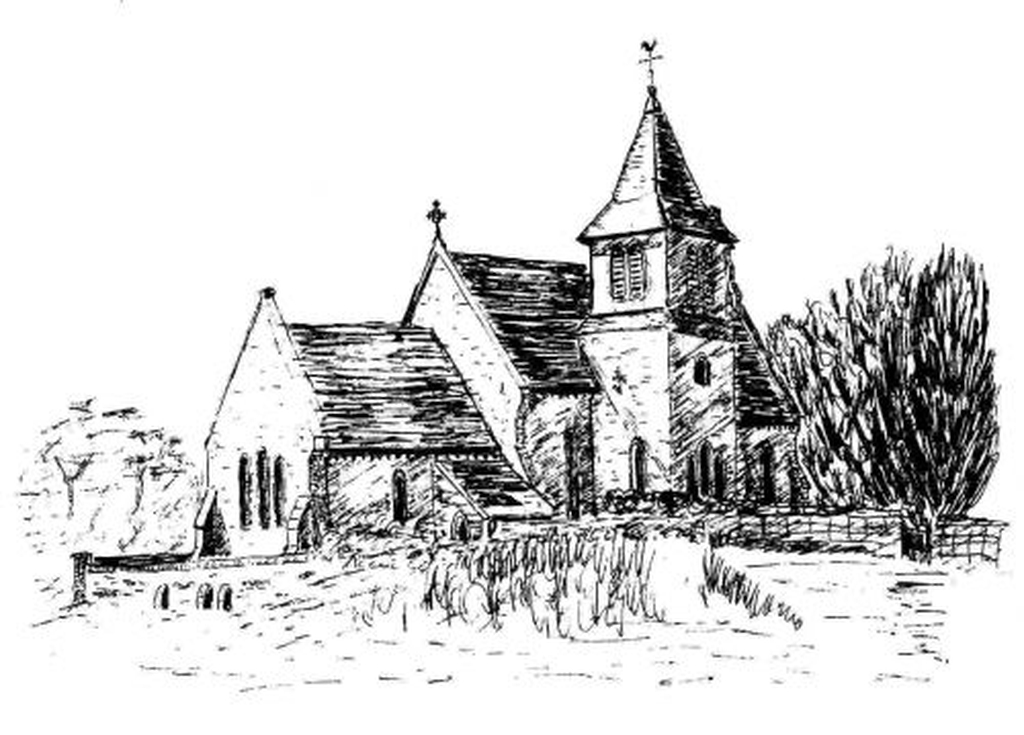
As winter settled over the quiet village of Sherfield English, a heavy frost adorned the windows, and the stillness of the season seeped into every corner of the home Mary had shared with her beloved William for so many years. Smoke curled up from chimneys, offering the warmth of life within, while outside, the village moved with its own rhythm, the quiet shuffle of mice seeking warmth in haybales and the gentle wind sweeping across the land. But inside Mary’s heart, everything was about to change. On Saturday, the 1st day of December, 1860, the man she had loved with all her heart, her best friend, her soulmate, the father of her children, passed away at the age of 73.
William Hatcher, a farm labourer by trade, had spent his life working the land with calloused hands and unyielding determination. His was a life of quiet resilience, shaped by the steady rhythms of rural England, the smell of earth, the feel of soil underfoot, the sound of the wind in the fields. Together, Mary and William had raised their family, struggled through hardships, and built a life filled with simple joys and the steady weight of daily tasks. He had been the rock upon which Mary leaned, the partner who had stood beside her through it all.
As William’s health faded, Mary must have known, deep within, that their time together was drawing to a close. In those final moments, their daughter Hannah Southwell was by his side, offering what comfort she could, as the quiet strength of their family continued to endure. The cause of his death was listed simply as "gradual decay," a gentle and almost poetic phrase that seemed to mirror the slow, inevitable fading of a life well lived. His passing was not violent or sudden, but rather, the natural conclusion to a life spent working the land, building a family, and loving his wife through decades of shared toil.
When the time came, and William drew his final breath, it was not just the end of a man’s life, it was the closing of a chapter that Mary and William had written together. They had weathered everything together, poverty, loss, the challenges of raising children, the passing of time, and even the heartache of losing a son. Their partnership had been one of unwavering support, of silent understanding, and of deep, unconditional love. To lose him was to lose not only her husband but her confidant, her partner in every sense of the word.
Mary must have felt the weight of this loss settle over her in the silence of their home, the very walls now echoing with memories of a life they had built together. The laughter of children, the bustle of family, the warmth of shared meals, all of these sounds that had filled their house for so long now gone, replaced by an emptiness that must have felt unbearable. When Hannah, their daughter, registered the death on Tuesday the 4th day of December, Mary’s heart must have shattered a little more. Watching Hannah mark the official record of her beloved husband’s passing must have been an indescribable moment of sorrow, a turning point in Mary’s life where her role as wife was now replaced by the profound reality of widowhood.
The details of William’s passing were carefully recorded in the official death register by Registrar John Bayley, but these formalities could never capture the depth of loss Mary felt. Behind every word, every line, was a lifetime of love and sacrifice, a shared history of joy and pain, and now the silence of a home that would never be the same again.
No.: 12

When and Where Died: 1st December 1860, Sherfield English.

Name and Surname: William Hatcher.

Sex: Male.

Age: 73 years.

Occupation: Farm Labourer.

Cause of Death: Gradual decay – Certified.

Signature, Description, and Residence of Informant: The mark of Hannah Southwell, present at the death, Sherfield English.

When Registered: 4th December 1860.

Signature of Registrar: John Bayley.
William’s passing left more than just an empty chair at the hearth, it left a deep, unfillable space in Mary’s heart. The man who had been by her side through everything, who had shared in the raising of their children, who had worked beside her, loved her, and built their life together, was now gone. The grief she felt was not just for the loss of a husband, but for the loss of a life they had spent together, each furrowed field they had worked, each shared glance, every simple moment now gone forever.
But William’s legacy was not one bound by just the physical presence of his work or his name in a ledger. His legacy lived on in Mary, in the children he had helped raise, in the family he had given everything for. Though he was gone, the quiet strength he had instilled in Mary, in his children, and in the community would carry on. His death, though devastating, was also a reminder of the enduring power of love, of the quiet resilience that had shaped his life, and of the strength that Mary would find in herself, as she learned to live in the silence left behind by the man who had been her everything.
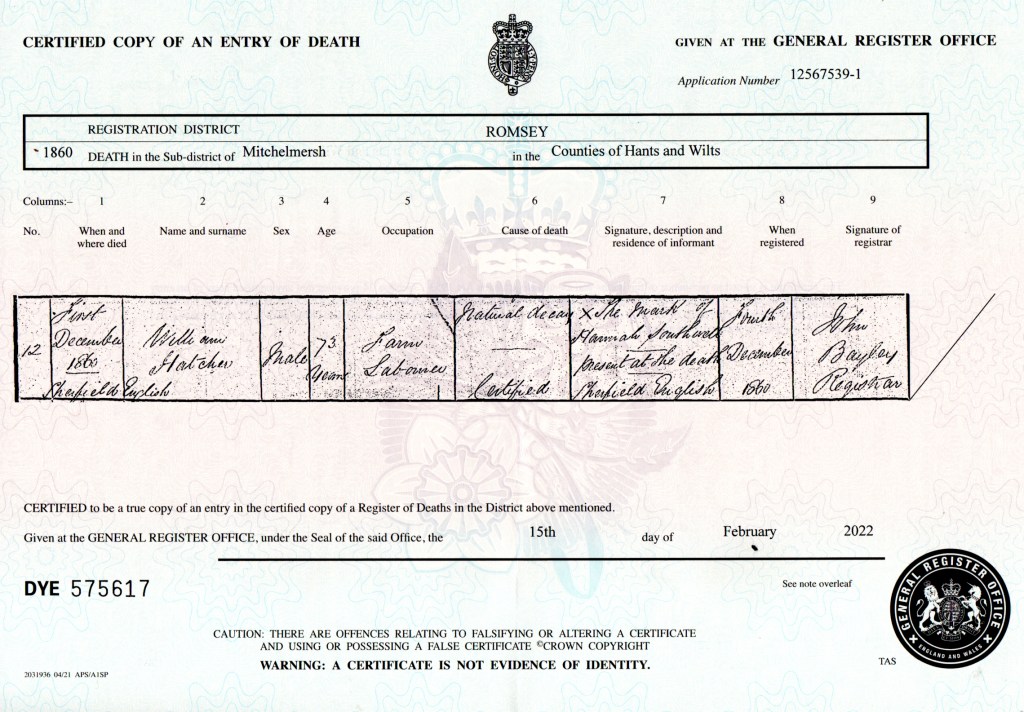
On a cold, sorrowful December morning in 1860, the village of Sherfield English stood still, wrapped in a heavy silence. The sky, a grey shroud overhead, mirrored the ache in Mary’s heart as she faced the unbearable loss of her beloved husband, William. He had passed away on the 1st of December at 73, after a life spent working the land, giving every ounce of his strength not for recognition, but for the love of his family. To Mary, William had been everything, her anchor through all of life’s storms, her constant companion, the father of their children, and the love that had held her steady through the seasons of their life together. Their bond was one forged by years of shared hardships, joys, and quiet devotion, a love that had blossomed quietly but steadily in the small rural rhythms of their world.
The night before his funeral, Mary would have found herself in their home, standing in the empty space where his presence had been a constant comfort. The house, which had once been filled with his steady, reassuring presence, now echoed with an agonising silence. Her hands, still trembling, would reach for the places he had touched, the chair he sat in, the tools he had left scattered by the fire, the warmth of his smile that would never come again. The absence of his voice, his laughter, his touch, it was as if the very air was thick with sorrow, as though the world itself had dimmed.
On the morning of the 7th of December, as the village gathered in quiet reverence, Mary would have walked, heart heavy, to Saint Leonard’s Church, where William had spent much of his life, first as a young man, then as a husband and father, and now, as a soul being returned to the earth. As she walked toward the churchyard, the cold biting her skin, it must have felt as if the very ground she stood on was beginning to swallow her up with the weight of grief. Her heart, in its deepest sorrow, knew she was not just burying her husband, but the very soul with whom she had built her entire world.
The funeral procession, a humble yet poignant gathering of family and neighbors, moved slowly toward the church. The quiet, soft steps of the villagers on the frosty ground seemed to reflect the somber tone of the day. Each person there, though silent in their own grief, must have known how deeply Mary had loved William and how truly they had been the heart of the village, a couple whose bond everyone had admired, a love that had withstood the trials of life and remained unwavering.
Now, as they walked behind the casket that carried William to his final resting place, there must have been a shared sense of loss among them, for he had been a man who had given so much to his community, and now, a piece of that was gone.
Inside the churchyard of Saint Leonard’s Church, the site of so many milestones in Mary and William’s life together, their wedding, the baptisms of their children, the quiet passing of years, the earth seemed to accept William with the same quiet reverence. As Curate J. Barton led the ceremony, his words were gentle but filled with the heavy weight of finality. He spoke of a life well lived, of a man who had worked tirelessly, and of a love that had shaped not just a family, but a community. With each word, Mary’s heart broke a little more, the finality of it all sinking in like the cold of the winter air.
As the last of the prayers were spoken and the earth was gently lowered over William, Mary stood beside the grave, her body trembling, not just from the chill of the day, but from the profound loss that left her feeling as if she had been buried, too. Her world had shifted irreparably, the foundation of her life now lost beneath the earth. And yet, even in her grief, there was a quiet strength to Mary, a strength forged by a lifetime of love and devotion to William. Her heart, though broken, would continue to beat for the family they had created together, for the love they had shared, and for the legacy of hard work, integrity, and quiet resilience that William had left behind.
The funeral, though deeply sorrowful, was a final tribute to a life well lived, a life that had touched so many. As Curate J. Barton recorded the details in the ledger for BURIALS in the Parish of Sherfield English in the County of Southampton in the Year 1860, the weight of the loss was etched into the very fabric of the community.
Name: William Hatcher

Abode: Sherfield English

When Buried: December 7th, 1860

Age: 73 years

By whom the Ceremony was performed: J. Barton, Curate
Entry
No.: 221
Mary’s heart, though broken, was filled with the quiet knowledge that William’s legacy would live on in the children they had raised together, in the fields he had worked, and in the love that had always anchored their lives. For Mary, standing in that churchyard, it was not just the end of William’s life, but the end of a love story that had shaped her own existence, the end of the partnership that had been the center of her world for so many years. As the church bell tolled one final time for William Hatcher, Mary stood alone, but her heart carried the weight of a love that would never be forgotten, a love that would continue to echo in every memory, every moment, every heartbeat of a life lived fully and with unwavering devotion.

On the eve of the 1861 census, Sunday, the 7th day of April, Mary, now 70 years old and a widow, found herself living in a home that had once been filled with the warmth of her husband William and the bustle of family life. But now, it was quieter. Her world, once full of steady rhythm and the steady presence of her beloved William, had become one marked by change, loss, and the inevitability of time. She, along with her daughter, 43-year-old widower Hannah Southwell, and Hannah's 19-year-old son, William Southwell, were residing in a modest home at Birchwood, Sherfield English, Hampshire.
Mary, though aging, had never been one to shy away from hard work. Now, in her later years, she was listed as a “pauper”. The term ‘pauper’ must have weighed heavily on Mary’s heart, as she had spent her life helping to build a strong foundation for her family. And yet, the years of toil, the weight of grief from losing her husband and son, had left her in circumstances that seemed so far removed from the strength and steadiness she had once known. Her life had shifted from that of a loving wife and mother to that of a woman who now carried the heavy load of loss and responsibility.
Hannah, her daughter, was also a widow, a woman who had borne the sorrow of losing her husband and now faced the struggles of providing for herself and her child. She worked to make ends meet as a launderette. Her 19-year-old son, William Southwell, was working as an agricultural labourer, following in the footsteps of the men in his family. Together, this small family of three now occupied the entire premises, trying to make do in a world that had grown harder with each passing year. The pain of loss and the weight of financial hardship must have been constant companions in those days, yet Mary’s strength and resilience remained at the core of their survival.
As they settled in for another night on the eve of the 1861 census, there must have been a quiet sorrow in the house. For Mary, who had once shared her life with William, and for Hannah, who had once shared it with her late husband, the house was no longer filled with the sounds of joy and laughter. Instead, there was a heavy silence that only time and grief could create. Yet even in the silence, there was still love, a love that endured, a love that was stitched together by shared hardship, by memories of a life once full, and by the strength they all carried within themselves to face another day.
When the census taker arrived, he recorded their household: Mary, the 70-year-old widow, living as a pauper, Hannah, the 43-year-old widow, working as a launderette, and William, her 19-year-old grandson, working as an agricultural labourer. Despite their hardships, this small family continued, as they had always done, to endure.
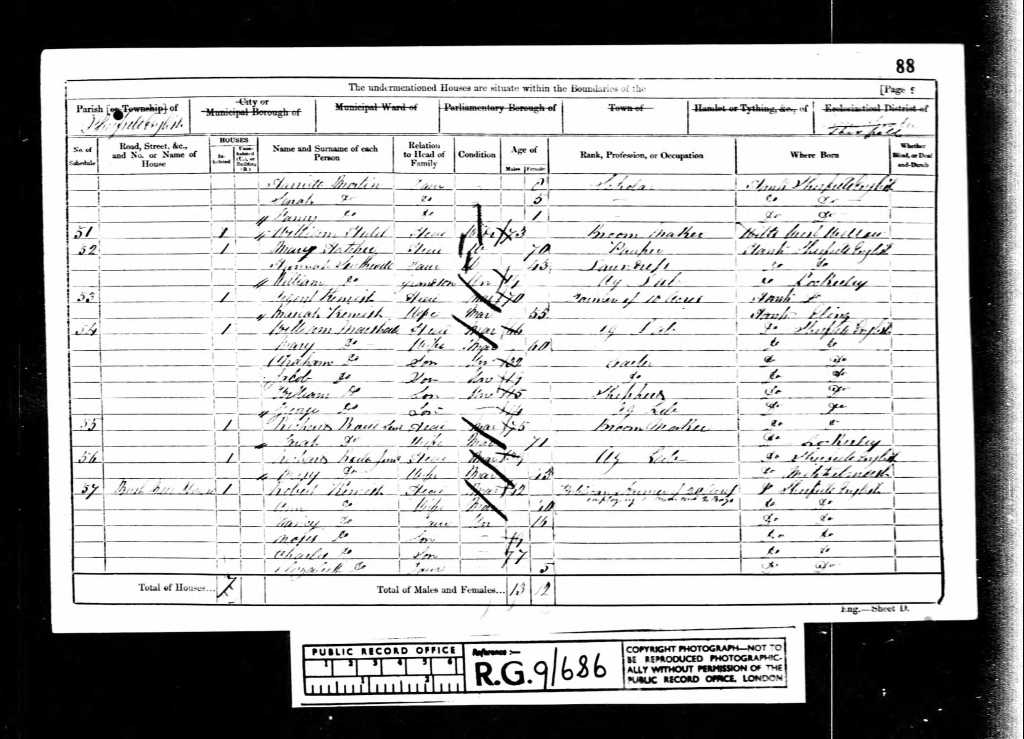
Birchwood, located in Sherfield English, Hampshire, is a tranquil and historically significant area in the heart of the Test Valley. The village of Sherfield English is set in the scenic Hampshire countryside, surrounded by rolling hills, woodlands, and farmland. Birchwood, as part of Sherfield English, shares a rich history that stretches back centuries, deeply intertwined with the rural landscape and agricultural traditions that shaped the region.
The history of Sherfield English, including Birchwood, can be traced back to Anglo-Saxon and medieval times. The village name itself is believed to come from Old English, where "scear" means a slope or hill, and "feld" refers to open land or field. This suggests that Birchwood may have originally been settled in an area with a distinct geographical feature, such as a hill or open field. Like many villages in Hampshire, Sherfield English developed as a farming community, with its residents primarily engaged in agriculture. Birchwood would have been integral to this agricultural way of life, serving as either farmland or a wooded area that provided timber, charcoal, and firewood to the local people.
Sherfield English, including Birchwood, remained a largely agricultural area throughout the medieval period. The land was worked by farmers, with crops and livestock forming the backbone of the village's economy. Over time, as transportation networks such as railways expanded in nearby towns like Romsey and Southampton, the surrounding area began to experience some growth and development. However, the peaceful and rural character of Birchwood and Sherfield English has remained largely intact, offering a quiet refuge amidst the larger, more industrialized towns.
The land around Birchwood is particularly valued for its natural beauty. With woodlands, fields, and nearby rivers, the area offers a peaceful retreat for those who enjoy the countryside. This natural environment has shaped the character of Birchwood, providing both a sense of serenity and an abundance of wildlife. The woodlands near Birchwood would have been valuable historically for timber, while today, they offer a rich habitat for birds and other species, making it a haven for nature enthusiasts. The landscape surrounding Birchwood is typical of Hampshire, with its gentle slopes, sprawling meadows, and mature trees.
While Birchwood's history is tied to the land and agricultural life, it has also been a part of the broader social life in Sherfield English. Families living in Birchwood and the surrounding areas would have been involved in village life, with the community coming together for various events, including church services at St. Leonard’s Church, the central place of worship for Sherfield English. The church has been a part of the village for centuries, and its role as a spiritual and social hub extends to the residents of Birchwood as well. Though Birchwood itself is small, its connection to the larger community of Sherfield English has helped maintain its charm and significance.
Like many rural areas with deep histories, Birchwood has also become the subject of local folklore and ghost stories. The ancient woodlands, combined with the isolation and natural beauty of the area, provide fertile ground for tales of the supernatural. Though there are no widely documented hauntings specifically tied to Birchwood, the general atmosphere of rural Hampshire often evokes stories of spirits or strange occurrences, particularly around old buildings or graveyards. The nearby woods, with their long history of timber harvesting and association with the land, have often been linked to stories of ghostly figures, strange sounds, or unexplained phenomena. The feeling of eeriness sometimes reported in these woods contributes to the local legends passed down through generations.
Today, Birchwood remains a peaceful and picturesque area in Sherfield English, offering a rural lifestyle in close proximity to larger towns like Romsey. The natural beauty of the land and the historical charm of the village continue to make it an attractive place for people seeking a quiet environment while still having access to the amenities of nearby towns. Though the pace of life in Birchwood is slow, the sense of community, the connection to the landscape, and the rich history of the area ensure that it continues to be a place that embodies the spirit of rural England.
On a cold winter’s day, Tuesday, the 2nd day of January 1866, the village of Sherfield English witnessed the quiet passing of one of its most steadfast residents. Mary Hatcher, at the age of 75, drew her final breath in the home she had shared with her late husband, William. For so many years, Mary had been the heart of her family, a woman whose life was defined by resilience, sacrifice, and a profound love for those she held dear. She had weathered many storms, most notably the loss of her beloved William six years earlier, and had continued to live with strength, even as the challenges of life had taken their toll. But in her final days, it was her own body that betrayed her, as she endured a long and difficult struggle with paralysis. For two weeks, she battled against the slow, cruel progression of her illness, but as the end came, she was not alone. Her daughter, Ann Moody, remained lovingly by her side, offering what comfort she could as her mother slipped away.
Mary’s life had been one of quiet dedication. A widow for six years, she had raised her children in modest surroundings, instilling in them the values of hard work, humility, and love. Through her struggles and her losses, she had never wavered in her devotion to her family. The years had not been easy, but Mary had carried them with grace and perseverance, finding solace in the love of her children and the memories of a life shared with William. But now, with her passing, there was an irreplaceable emptiness left behind. Her absence was felt not just in the quiet of her home, but in the very heart of Sherfield English. She had been a constant presence, a mother, a grandmother, a friend, and her absence would leave a space that no one else could fill.
Ann, brave in her grief, traveled to the register office that very day to officially record her mother's death. The task of registering her mother’s passing, though an important duty, must have felt incredibly heavy. She would have arrived at the office, her heart raw with the sorrow of loss, and was met by Registrar John Bayley. With sympathy and professionalism, he filled out the official register for Deaths in the District of Michelmersh in the Counties of Hants and Wilts, marking the solemn conclusion to Mary’s life.
The official record reads:
No.: 351

When Died: 2nd January 1866

Name and Surname: Mary Hatcher

Sex: Female

Age: 75 years

Rank or Profession: Widow of William Hatcher, Farm Labourer

Cause of Death: Paralysis, 14 days, Certified

Signature, Description, and Residence of Informant: X The mark of Ann Moody, present at the death, Sherfield English

When Registered: 2nd January 1866
Signature of Registrar: John Bayley, Registrar.
Though the formalities were completed with precision, they could not capture the depth of the loss that Mary’s passing had left in the hearts of her family. Mary’s life was not one of grand gestures, but of small, quiet acts of love and devotion that rippled out to touch everyone who knew her. She had lived a life that could be easily overlooked in the grand tapestry of history, but for her family, for those who had been touched by her unwavering strength and boundless love, her memory would never fade.
As Mary was laid to rest, those who knew her would carry her spirit with them, the legacy of a mother who had nurtured her children with love and strength, the memory of a woman whose quiet resilience had shaped the lives of those she loved. Even as her physical presence was gone, her influence would endure in the hearts of her children and grandchildren, in the very land she had worked, and in the village that had known her for so many years. Mary's passing was a sorrowful ending to a long journey, but in the hearts of those who loved her, her story would continue, a quiet testament to a life well lived, a love well given, and a legacy that would never be forgotten.
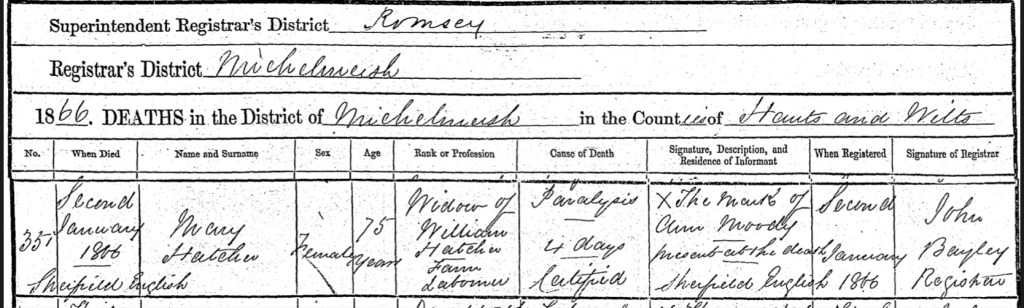
Paralysis is the loss of the ability to move one or more muscles in the body, typically caused by damage to the nervous system. The condition can range from temporary to permanent and can affect either a part of the body or the entire body, depending on the cause. Paralysis occurs when the communication between the brain and the muscles is disrupted, often as a result of trauma, disease, or nerve damage. The severity and prognosis of paralysis vary significantly depending on the cause, the extent of nerve damage, and the timing of medical intervention.
The history of paralysis dates back to ancient times, and references to conditions causing paralysis appear in various historical texts. Ancient civilizations, including the Greeks and Romans, recognized paralysis as a serious medical condition, although their understanding of its underlying causes was limited. Hippocrates, often regarded as the father of medicine, made early attempts to describe the effects of paralysis, though medical knowledge was rudimentary compared to modern standards. At the time, paralysis was often seen as the result of a stroke, injury, or some form of divine punishment.
It was only in the 19th century that advances in neurology began to provide a clearer understanding of the causes of paralysis. The development of the scientific method, coupled with increasing knowledge of the nervous system, allowed doctors to identify specific causes of paralysis, including spinal cord injuries, diseases such as polio, and strokes. The invention of medical imaging in the 20th century, such as X-rays and MRIs, further advanced our understanding of how paralysis occurs and how it can be treated.
There are many different types of paralysis, with the most common forms being hemiplegia, paraplegia, and quadriplegia. Hemiplegia refers to paralysis on one side of the body, often caused by a stroke or brain injury. Paraplegia affects the lower half of the body, usually due to spinal cord injuries. Quadriplegia, or tetraplegia, is the paralysis of all four limbs and is typically the result of severe spinal cord injury at the cervical level.
The survival rate and chances of recovery from paralysis depend on the cause and the severity of the condition. In cases where paralysis is caused by trauma, such as a spinal cord injury, the survival rate can be high if immediate medical attention is received. However, the level of recovery depends on the extent of nerve damage. For individuals with paraplegia or quadriplegia, the impact on quality of life can be significant, as they may require lifelong care, rehabilitation, and physical therapy.
In contrast, conditions like polio and strokes, which can also cause paralysis, have different survival rates and recovery prospects. Polio was a major cause of paralysis in the 20th century, but the widespread use of vaccines has largely eradicated the disease, and the survival rate for those who contract polio today is low due to the protection offered by immunization. Strokes, which are a leading cause of paralysis, have a varied prognosis depending on the severity and the timeliness of medical intervention. Some people who experience a stroke can recover function with therapy, while others may experience permanent disability.
When paralysis results from a serious injury or illness, death can occur due to complications. Individuals with severe paralysis, especially quadriplegia, may face life-threatening risks due to a lack of mobility, leading to complications such as respiratory infections, blood clots, or pressure ulcers. People with paralysis may also be more susceptible to pneumonia, as they are often unable to properly clear their airways. In these cases, death can result from organ failure or complications related to long-term immobility.
In the case of polio, before the development of vaccines, the survival rate was much lower, and many individuals who contracted the disease died due to complications from respiratory failure or muscle paralysis that affected the ability to breathe. With medical advancements and better supportive care, the survival rates for paralytic conditions have greatly improved, though the condition remains a major cause of disability worldwide.
Living with paralysis can present significant physical and emotional challenges. For those who survive, the experience of paralysis often requires major adjustments to daily life. Many individuals with paralysis require mobility aids such as wheelchairs, and they often need help with basic tasks like dressing, eating, and bathing. Long-term care can be required, including therapy to prevent muscle atrophy, maintain cardiovascular health, and manage bowel and bladder function. The psychological toll can also be significant, as individuals with paralysis may experience depression, anxiety, and a sense of loss due to the dramatic changes in their lives.
For those who die from paralysis, the process can vary depending on the underlying cause. In some cases, paralysis itself may not directly cause death, but rather, complications associated with immobility, such as respiratory infections or cardiovascular issues, can lead to fatal outcomes. Death from paralysis-related complications can be prolonged and may involve the gradual decline of bodily functions due to systemic issues such as infections, organ failure, or sepsis. For individuals with quadriplegia, respiratory failure is one of the most common causes of death, especially if the paralysis has affected the muscles necessary for breathing.
On the quiet, wintry day of Sunday, the 7th of January 1866, the village of Sherfield English was heavy with sorrow as the community gathered to say goodbye to one of its most cherished members, Mary Hatcher. At 75, Mary’s passing marked the end of a life filled with quiet strength, selfless love, and a deep devotion to her family. For those who knew her, it was the loss of more than just a mother, a grandmother, or a neighbours, it was the loss of a cornerstone of their community, a woman whose resilience in the face of hardship had been both an inspiration and a comfort.
Mary had spent her life in this small Hampshire village, the very heart of her world. Her days were spent raising children, tending to her home, and supporting her husband William, until his death just six years before. Through every trial, every joy, Mary had stood steadfast, a quiet figure whose love had woven its way into the fabric of her family’s life. Her presence had been a constant, a pillar of warmth and comfort that had carried her family through both the light and dark moments. Now, as her body lay still, the absence of that presence was felt deeply by all who had loved her.
Her funeral was a deeply personal and sorrowful occasion. Her children, Sarah, James, Hannah, Ann, and George, stood together, surrounded by family and friends, each of them carrying the weight of their grief in their hearts. The snow might have fallen gently over the earth, but it was the ache of loss that seemed to blanket the village. As Mary’s casket was carried to Saint Leonard’s Church, the familiar steps of the churchyard felt all the heavier for those who had walked it alongside her, for it was here that she had raised her children, had been married to William, and had buried so many loved ones. Now, it was here that her own story would come to a quiet close.
Curate A. Fragstone, with quiet reverence, led the funeral service. His words, though tender, were steeped in the weight of grief. He spoke not only of Mary’s death but of her life, a life that had been rooted in the deepest love for her family, a life that had endured despite the many trials she had faced. As the words of the burial rites echoed in the church, those gathered could not help but reflect on the life they had known in Mary, and the loss that now loomed so large.
Mary was laid to rest in the same earth she had walked all her life, her body gently returned to the soil of Sherfield English. The ground, cold and quiet, accepted her as it had accepted so many before her, gently and without fanfare, but with the respect that comes with a life well lived. As the final prayers were spoken, there was a moment of stillness, the weight of Mary’s loss settling over her family and friends like a soft, persistent blanket of sorrow. It was as though, in those moments, the very earth around them mourned with them, and the village, too, seemed to stand still in respect for a woman whose life had touched so many.
After the service, Curate Fragstone carefully recorded Mary’s burial in the parish register, as was the custom. But these words, while formal, carried within them the echo of all that Mary had been, quiet, steadfast, and filled with love. Her passing might have closed the chapter of her life, but the legacy she had left in the hearts of her children, grandchildren, and the village would live on.
The official record reads:
Name: Mary Hatcher
No.: 242

Abode: Sherfield English

When Buried: 7th January 1866

Age: 75 years

By whom the Ceremony was Performed: A. Fragstone, Curate.

For Mary’s family, the loss of their mother, grandmother, and matriarch was more than just a moment of grief, it was the quiet passing of a light that had guided them through the darkest of times. Her legacy would not fade, for it lived in the love she had poured into her children, in the memories of shared moments, and in the steadfast strength she had instilled in all who had known her. Mary’s death, though it closed one chapter, also marked the beginning of a new one, one where her memory would continue to guide and inspire, a reminder that the greatest legacies are often the quietest, built on a foundation of love, resilience, and devotion.
And now, as Mary was laid to rest in the churchyard of Saint Leonard’s, she was not alone. Her spirit was eternally reunited with those who had gone before her, her beloved husband, William, with whom she had shared a lifetime of love and devotion, her daughter Mary, whose passing had left an emptiness in her heart, and her son Charles, who had been taken far too soon. In that sacred earth, beneath the same sky that had watched over their lives, Mary found peace in the embrace of her family, her love now eternal and unbroken, a quiet testament to a life well lived and a love that would never die.
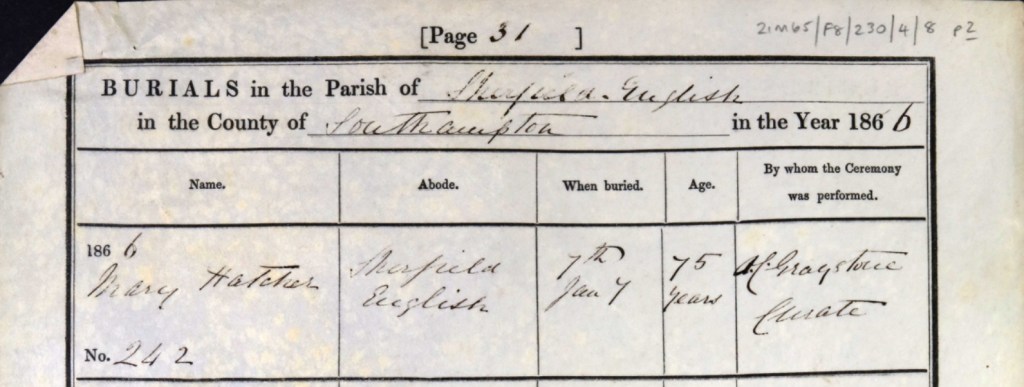
In the heart of Hampshire, where the lanes wind slow,
Lived Mary Hatcher, with a quiet glow.
A life of strength, though often unseen,
In fields and hearths where love had been.

She raised her children with tender hands,
Guiding them gently through life's shifting sands.
Through joy and sorrow, through loss and gain,
Her love remained constant, through heartache and pain.

Her husband William, a steadfast man,
Together they walked through life’s long span.
Their love was a quiet, enduring song,
A rhythm of life, steady and strong.

But time, it took its toll, as time will do,
And soon, her love, William, bid adieu.
Six years apart, but her heart stayed true,
For love like theirs never fades, it grew.

Through loss, through grief, through hardship's call,
Mary stood tall, she gave her all.
A widow now, but not alone,
Her children’s hearts, her steadfast throne.

Years passed, and age began to creep,
But Mary’s love was wide and deep.
She battled illness with quiet grace,
Her heart remained firm in its place.

On a cold, gray day in winter’s chill,
Mary’s heart, with love, stood still.
But in that silence, the earth did weep,
For a woman who had sown love so deep.

In Saint Leonard’s, where her journey ends,
Mary is laid beside family and friends.
Reunited with William, her daughter and son,
Her love, her legacy, is never undone.

So let us remember the life she gave,
A quiet strength, so bold, so brave.
Mary’s love, though now at rest,
Lives on in hearts, forever blessed.
Rest in peace, Mary Hatcher, née Roude.
1791–1866.
Your life was one of quiet strength, boundless love, and unwavering devotion to your family.
Through decades of hardship and joy, you gave all of yourself, nurturing your children, supporting your husband, and leaving an indelible mark on all who were lucky enough to know you.
The warmth of your hands, the kindness of your heart, and the resilience you carried through life's trials have shaped generations, and though you are no longer with us, your love will live on forever in the hearts of your children, grandchildren, and all who were touched by your presence.
Now, reunited with those you loved, William, your dear husband, and your precious children, may you rest in eternal peace, knowing that your legacy of love and strength will never fade.
And so, the life of Mary Hatcher, née Roude, comes to its quiet close. A life defined by love, resilience, and unwavering devotion to her family and community. Through years of joy and hardship, she remained a steadfast presence, shaping the hearts of those around her with the warmth of her care and the strength of her spirit. She weathered the loss of loved ones, raised children with grace, and worked tirelessly to build a legacy of love that would continue to echo long after she was gone. Now, reunited with her beloved husband William and her children who passed too soon, Mary rests in the peace of knowing that her life, humble, steady, and filled with quiet strength, will forever be remembered in the hearts of those she left behind. Though her physical presence is no longer with us, the lessons of love, devotion, and resilience she taught will live on in the generations she helped shape.
Rest in peace, Mary Hatcher, your journey may have ended, but your legacy will endure forever.
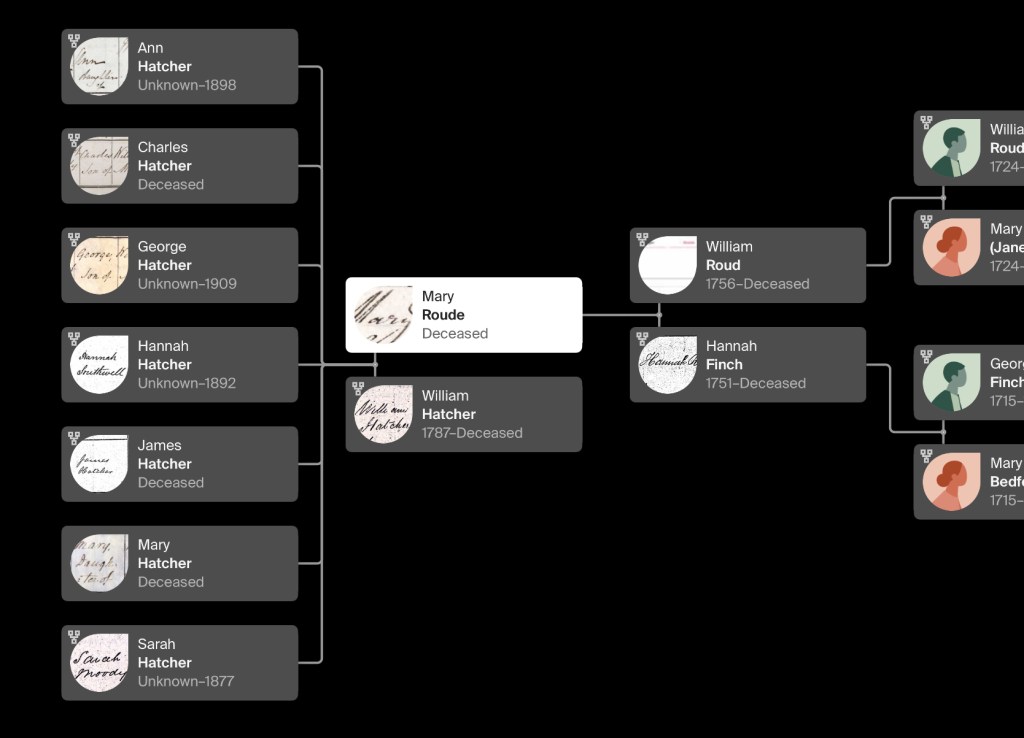
I have brought all certificates,

Please do not download
or use them without my permission.

All you have to do is ask.

Thank you.
🦋🦋🦋
 Intwined