As the sun of Louisa's early years began to dip below the horizon, casting long shadows over the fields of Sherfield English, a new chapter of her life began to unfold, one marked by both the quiet joys and profound challenges of love, commitment, and motherhood. In the tender light of her marriage to Joseph Newell, Louisa stepped from the familiar into the unknown, bound by vows spoken beneath the vaulted arches of Saint Leonard’s Church. The life she had known, rooted in the rhythms of her childhood home, was now joined with the future she would build beside her husband. And though she carried with her the memories of her past, she now faced the uncharted path of a wife, a mother, and a partner, walking forward into a life shaped by her devotion to family and her strength in the face of all that life would bring.
This was the beginning of the second act of Louisa's journey, a journey that would see her face the tender joys of motherhood, the quiet grief of loss, and the endless work of tending to her family and her home. From the day she first took Joseph’s hand, her heart expanded, not only with love for him, but with the weight of the future they would share together, one moment, one day, one season at a time. Her life, no longer just her own, was now interwoven with his, and the legacy of the Roude name would become one with the Newell name, carrying forward the spirit of those who had come before her, but also shaping the lives of those who would follow.
As Louisa navigated the years of her marriage, her story was no longer just about the quiet joys of childhood; it became a story of perseverance, of sacrifice, and of the quiet strength that held families together through every storm. Her heart, though worn by sorrow and joy alike, remained steadfast. The love she had for Joseph, her children, and the world she had created with them, would define her to the end of her days.
And so, as the pages turn to the next chapter in Louisa’s life, we find ourselves at the beginning of her story as a wife, as a mother, and as a woman whose love, resilience, and faith would carry her through a lifetime of both triumph and tragedy. This is the story of Louisa Newell, formerly Roude, 1805–1878, a story of love that would endure until death did them part.
Welcome back to the year 1828, Awbridge, Hampshire, England. The village, nestled in the rural heart of southern England, saw the steady passage of time as the world around it gradually shifted with the unfolding century. The air was still crisp with the lingering effects of winter, yet the promise of spring lay just beyond the horizon. Life in Awbridge, much like the rest of the country, was defined by stark contrasts, the old and the new, tradition and change, wealth and hardship.
In 1828, King George IV sat upon the throne. His reign had been marked by indulgence and excess, but by 1828, his health was in decline, and his eccentricities were becoming more pronounced. His continued rule, despite his struggles, was a testament to the power of monarchy during this period, even as the influence of Parliament continued to grow. The government was led by the Duke of Wellington, who had once been a celebrated military hero but now served as Prime Minister. Wellington’s conservative policies were often met with resistance from those seeking reforms in a changing social and political landscape. The Parliament, composed of the House of Commons and the House of Lords, was still largely dominated by the landed gentry, with the working classes having little representation. The stark divide between the rich and poor was undeniable, with the former enjoying privileges that the latter could only dream of. The aristocracy lived in grand country estates or fashionable townhouses, their lives often defined by luxury and leisure, while the working class, farmers, laborers, craftsmen, and factory workers,struggled to make ends meet.
The working class lived in simple, often squalid conditions, with many dwelling in small cottages or poorly constructed homes that lacked the comforts of the wealthier classes. The poor were relegated to the outskirts of towns, living in crowded, dark alleys or makeshift dwellings. In contrast, the rich and aristocratic resided in large, stately homes, where the grandeur of their surroundings was matched only by the vast estates that stretched beyond their gates. Fashion for the rich was about displaying wealth and social status, with men wearing tailcoats, waistcoats, and breeches, while women donned elaborate gowns with bonnets and lace, their attire often adorned with ribbons, fur, and intricate patterns. For the working classes, fashion was a practical matter, simple, durable clothing that could withstand the rigors of daily labor. Women in the lower classes typically wore plain dresses with aprons, while men wore trousers and waistcoats, often in faded, worn fabrics.
Transportation in 1828 was still largely defined by horse-drawn vehicles. The wealthy could afford private carriages, often drawn by pairs of horses, while the working class relied on carts, wagons, and the occasional public coach for travel. Roads were rough and poorly maintained, making long journeys uncomfortable, though improvements in transportation were underway. The first railways were beginning to take root in some parts of the country, but they had not yet reached the rural villages like Awbridge, where roads and waterways were still the primary means of transportation.
Housing was a reflection of one’s social standing. The affluent enjoyed large, beautifully designed homes with multiple rooms, high ceilings, and spacious gardens. They could afford the luxury of fireplaces and elaborate furnishings. In contrast, the homes of the working class were cramped, poorly ventilated, and often lacked basic amenities. Heating was mostly provided by coal fires in open grates, though many poorer homes had little more than a hearth to gather around for warmth. Lighting came from candles or oil lamps, which were often dim and unreliable, with the poorer classes making do with what little light they could afford.
Hygiene and sanitation were far from ideal. The concept of indoor plumbing had not yet become widespread, and most homes had no access to running water. People relied on public wells or fetched water from nearby streams or rivers. Waste was often discarded in the streets or in cesspits outside homes, creating unsanitary conditions that led to the spread of disease. The wealthier classes could afford chamber pots and more sanitary methods, but even they were not immune to the filth that lingered in the streets and public spaces.
Food in 1828 varied greatly depending on one’s social standing. The rich dined on multiple-course meals, often consisting of roasts, pies, and puddings, with an abundance of meats, vegetables, and fruits. They could afford imported goods, such as spices and sugar, and indulged in fine wines and liqueurs. The working class, however, had far simpler fare, bread, potatoes, cheese, and occasional meat were staples. The poor often suffered from malnutrition, unable to afford a balanced diet, with many surviving on meager rations.
Entertainment for the wealthy was centered around social events,balls, dinner parties, and theater performances, where the social elite could show off their fine clothes and engage in intellectual discussions. Music, theater, and literature were enjoyed by the upper classes, who had the leisure time and means to indulge in cultural pursuits. For the working class, entertainment was far simpler, community events, local fairs, and informal gatherings were the main sources of amusement. Some working-class families might have gathered around a fire to tell stories, sing songs, or play simple games.
Diseases were rampant in 1828, particularly in urban areas where overcrowding and poor sanitation created ideal breeding grounds for illness. Cholera, typhus, and smallpox were all too common, and without the benefit of modern medicine, many fell victim to these diseases. Vaccination was in its infancy, and most treatments were rudimentary at best. The wealthy had better access to physicians, while the poor relied on herbal remedies, often without much success. The environment was also impacted by the rapid industrialization in parts of the country. The smog and pollution from factories were beginning to take their toll, especially in the growing towns and cities.
Gossip in 1828, particularly in small communities like Awbridge, was a powerful force. News traveled quickly, whether it was about a marriage, a birth, or a scandal. Small villages were tight-knit, and everyone knew each other’s business. Religion, particularly the Church of England, was a central part of daily life. Services were held regularly, and Sunday was a day of rest and worship. Many people in Awbridge would have attended church regularly, with their faith offering them both guidance and a sense of community. Schooling, however, was limited. Children from wealthier families could afford formal education, often at private schools or through private tutors, while children from working-class families were typically taught only basic reading and writing at local schools, if they attended school at all.
In 1828, life in Awbridge and across England was a mix of tradition and change, marked by deep class divides, shifting cultural norms, and the gradual rise of industry. For the wealthy, life was one of comfort and leisure, but for the working class, survival was a daily struggle, shaped by hard work, limited opportunities, and the ever-present challenge of poverty. As the country slowly moved toward modernization, these disparities would continue to shape the lives of its people, with the promise of change, but also the weight of old traditions that lingered long after the world began to turn.
In the autumn of 1828, the village of Awbridge, Hampshire, was bathed in the soft, golden hues of the season. The trees, their leaves turning shades of amber, russet, and gold, stood as silent sentinels, watching the land gently prepare for the stillness of winter. The air was crisp, filled with the scent of earth and wood smoke, carrying whispers of change through the countryside. It was a time when nature herself seemed to hum with quiet anticipation, as though holding her breath for the promise of something new.
Amidst this breathtaking beauty, in the quiet warmth of their home, Louisa embarked on the most awe-inspiring journey of her life. It was here, in the heart of Hampshire, that she gave birth to her firstborn son, a child whose arrival would forever change the course of her life and the life of her husband, Joseph. The world outside, with its soft rustling of falling leaves, seemed to pause in reverence, and in the stillness of that moment, Louisa’s heart swelled with a love so profound, so pure, that it seemed to echo through the very air she breathed.
Exhausted, yet overcome with joy, Louisa cradled her newborn son in her arms. His tiny body, delicate and warm, rested against her chest as though he had always been a part of her, his breath a quiet rhythm that matched her own. He was a promise, a continuation of all that had come before him, and all that was yet to unfold. His presence was both an end and a beginning, a thread woven into the tapestry of her life and her family’s story. In her weary arms, Louisa held the very future, a future filled with dreams, hopes, and a love that could never be measured by time.
Joseph, her husband, stood beside her, his heart swelling with pride as he gazed upon his son. The tiny life in Louisa’s arms was a reflection of everything he held dear. His chest tightened as he looked at his son, this fragile being who would carry not only his name but the legacy of generations past. The name Joseph, passed down through the ages, now found a new bearer in the infant cradled so tenderly in Louisa’s arms. And though the weight of that lineage was invisible, it hung like a mantle upon the boy’s fragile shoulders. The blood that ran through his veins carried the unspoken dreams, the resilience, and the strength of those who had come before him.
The precise date of baby Joseph’s birth remains elusive, a mystery wrapped in the shifting sands of time. The census records, like scattered fragments of a forgotten story, offer glimpses of his life, tracing his journey through the years. The 1841 census, with its vague and often imprecise details, points to the year 1828 as the moment Joseph entered the world. Yet, as time passed, the records seem to dance like light through leaves, giving us various glimpses: 1829 in Sherfield English according to the 1851 census, 1830 in Hampshire by the 1861 record, and then, with a tenderness that speaks to the familiarity of his roots, 1829 in Awbridge in the 1871, 1881, 1891, and 1901 censuses. These entries, seemingly contradictory, tell us one truth, Joseph’s life was inextricably bound to this corner of England, to the land that had nurtured him and the people who shaped him.
The quiet growth of a boy into a man, and the stories of his life, were rooted in Awbridge. His journey was one of love, of family, and of the legacy that Louisa and Joseph had begun, a legacy that would endure through the years, passed down through generations, like the steady rhythm of the seasons in which his life unfolded. Every glance at the records, every mention of his name, brings Louisa’s heart back to that quiet autumn day in 1828 when she first held her son, the future shining bright in his tiny, trembling form.
In 1828, Louisa’s life in the rural village of Awbridge, Hampshire, would have been shaped by the daily struggles and demands of a working-class existence. Living in a modest cottage, possibly with her husband Joseph Newell and young child, Louisa's days would have been filled with the physical labor that defined the lives of most rural families during that time. The work was relentless, often exhausting, and dictated by the rhythm of the seasons.
The cottages in which families like Louisa's lived were simple and small, often built with local materials such as brick, wood, and thatch. They were typically cold and drafty, with few luxuries. The hearth, the center of the home, was the primary source of warmth for cooking, heating, and lighting, but it also left the air heavy with smoke. Running water, plumbing, and other modern conveniences were nonexistent. Louisa would have relied on communal wells or perhaps a hand pump for water, carrying it in heavy buckets back to her home.
Everyday life for Louisa would have been a constant cycle of work. As a mother and wife, her primary duties would have revolved around the care of the household, which meant cooking, cleaning, washing, and mending. She would have tended the fire, prepared meals, and cleaned clothes, all by hand, often using basic tools. If she had a small plot of land, she would have helped with the growing of vegetables and herbs, providing food for the table. In rural England, women were also expected to help with agricultural work, whether that meant milking cows, collecting eggs, or assisting with the harvest, depending on the season. The labor was physically demanding, and there was little respite.
Childbirth, in particular, would have been a challenging and perilous experience for Louisa in 1828. Like many working-class women in rural villages, Louisa would have had little access to medical care. The nearest doctor would likely have been miles away, and the cost of a physician was beyond the means of most families. Midwives, often older women with experience but no formal training, were the primary caregivers for women in labor. Childbirth was not just a physical ordeal, it was often a matter of life and death.
When Louisa went into labor, she would have been surrounded by the women in her life, possibly her mother, her sisters, or a trusted neighbour, all of whom would have offered their support in whatever way they could. The process of giving birth would have been long and painful, with no epidurals or anesthesia to dull the agony. The midwife would have helped Louisa through the stages of labor, but the conditions were less than ideal: dim lighting, no sterile environment, and little means of monitoring the health of either Louisa or the baby. Louisa would have been encouraged to give birth in the privacy of her own home, often in a bedroom or the main living area, with minimal intervention.
Complications during childbirth were common, and the lack of modern medical knowledge made many women’s lives vulnerable. Women like Louisa might have experienced labor for days, with very little relief. Without the ability to call upon a trained doctor, Louisa’s only option would have been to rely on the assistance of the midwife and perhaps herbal remedies to ease the pain or help deliver the baby. Some women, if complications arose, might not have survived childbirth.
For Louisa, after the birth of her child, the work did not stop. She would have been responsible for breastfeeding, tending to the baby, and caring for her other children, if any. Life in the rural working class demanded physical endurance, and Louisa would have been no stranger to the exhaustion that accompanied motherhood. The health of a newborn was always fragile, and diseases like pneumonia, infections, and fevers claimed many young lives during this time. Louisa’s anxiety would have been compounded by the limited medical options for her child, with remedies relying heavily on folk knowledge or prayers.
Even in the aftermath of childbirth, Louisa would have faced a long recovery period, limited by the hard physical work she still had to perform in her daily life. Though she may have had the support of her family, there would have been no respite from the labor that consumed each day. The sense of community in rural villages meant that women often shared tasks, offering one another help when needed, yet Louisa’s burden was likely heavier due to the scarcity of resources.
In 1828, the birth of a child in a poor, working-class household in Awbridge was not just a moment of joy, but an arduous and sometimes perilous event. It was a reminder of the harsh realities of rural life, where survival was a constant struggle, and every new life came with a blend of hope, fear, and uncertainty. For Louisa, the love she felt for her child would have been bound up with the stark realities of her world, the laborious work, the vulnerability of childbirth, and the fragility of life in a rural, working-class home. And yet, through it all, the strength of motherhood and the unbreakable bond she shared with her family would have sustained her.
Awbridge is a small, rural village located in the heart of Hampshire, England, nestled in the picturesque Test Valley. The village is surrounded by the natural beauty of rolling hills, woodlands, and farmland, characteristic of this region. Despite its peaceful setting, Awbridge has a history that spans centuries, marked by its connection to the local agricultural economy, its rural charm, and the development of the surrounding area.
The origins of Awbridge are thought to date back to the Anglo-Saxon period, with early settlement likely concentrated around a small rural community. The name "Awbridge" is derived from Old English, with "aw" meaning a stream or waterway and "bridge," likely referring to a crossing over a stream or river. This suggests that the village may have been established near a natural crossing point, with its development tied to the availability of water and the strategic location of the land. The presence of water likely played a vital role in the settlement's early development, providing both sustenance and a transport route for the surrounding agricultural lands.
During the medieval period, Awbridge would have been a small but essential part of the local agricultural landscape. As part of the Test Valley region, it would have been surrounded by fertile land used for farming, with many villagers likely working as farmers, laborers, or tradespeople. The influence of local landowners and the agricultural system of manorialism would have shaped the economy and social structure of the village. Like many rural English settlements of the time, Awbridge would have been governed by a local lord or landowner, and the majority of its inhabitants would have been tied to the land they worked.
In the 12th and 13th centuries, the area saw gradual changes with the establishment of churches, which became central to village life. St. Mary’s Church in nearby Michelmersh would have been an important place of worship and community gathering for residents of Awbridge. Throughout the medieval period, churches were the focal points not only for religious ceremonies but also for social and cultural events. The church would have played a key role in the daily life of the villagers, providing spiritual guidance, marking important life events such as marriages and baptisms, and offering support to those in need.
Awbridge remained a quiet agricultural village for much of its history, with small-scale farming being the primary occupation. However, during the 19th century, as the Industrial Revolution began to affect various parts of England, the agricultural landscape in and around the village started to shift. While Awbridge remained largely rural, neighboring towns and villages began to experience industrialization and urbanization. The construction of the nearby railway network, for example, facilitated the movement of goods and people, bringing changes to rural areas like Awbridge, which were once isolated from larger markets. This shift in transportation routes meant that goods could be sold further afield, opening up new economic possibilities for the local population.
Despite these broader societal changes, Awbridge retained much of its rural character throughout the 19th and 20th centuries. The development of the surrounding countryside and the expansion of nearby towns like Romsey influenced the village, but it remained a small, tight-knit community where agriculture and farming continued to be central to life. The growth of residential properties in the area in the mid-20th century brought more people to the village, as families sought the quiet countryside and rural charm while still being within commuting distance of larger towns and cities.
Today, Awbridge is a charming and peaceful village, characterized by its rural setting and close proximity to nature. While it has seen some modern developments, it retains a sense of historical continuity, with many of its older buildings still standing. The village is a mixture of traditional cottages and more modern homes, with its population having grown in recent decades. Many of the older homes in the area reflect the agricultural heritage of the village, with buildings made of local stone, brick, and timber. The surrounding farmland and countryside continue to play a significant role in the village’s identity, and Awbridge remains an attractive area for those seeking a quiet, rural lifestyle.
Awbridge’s location in the Test Valley means it is surrounded by some of Hampshire’s most beautiful countryside, with numerous walking and cycling routes that allow residents and visitors to enjoy the natural beauty of the region. The village has maintained its community-oriented atmosphere, and its rural charm makes it an appealing place for those who enjoy the tranquility of country life while still being close to larger towns and cities for work or recreation.
On a quiet, autumn Sunday, the 26th day of October, 1828, the air in the nearby village of Sherfield English, Hampshire, seemed to be woven with the soft, golden hues of falling leaves, each one drifting slowly to the earth as the land prepared itself for the coming winter. The wind whispered through the trees, their branches swaying gently as if in conversation with the sky. The village, tucked away in the embrace of the countryside, was enveloped in the kind of peaceful stillness that only rural life can offer, an idyllic calm that spoke of the passing of seasons and the timeless rhythm of nature.
It was on this very Sunday, when nature itself seemed to breathe a sigh of quiet reflection, that a humble yet profoundly significant event unfolded within the sacred walls of St. Leonard’s Church. Beneath its weathered stone arches and ancient timbers, Louisa and Joseph’s firstborn son, Joseph, was about to be welcomed into a life of faith, family, and heritage. In this sacred moment, the child who had filled their hearts with such overwhelming love was about to take his first step into the wider world, a step marked not by time but by the eternal bond of belonging.
As the service began, the air was thick with the weight of meaning, each word spoken by the reverend, Thomas Pentin, carrying the depth of generations. He, the curate of the parish, carefully performed the sacred rite, his voice steady, reverent, as he held the tiny child in his arms. With each prayer uttered and each gentle movement of the holy water, Joseph, so fragile and new, was embraced by the ancient traditions that had been passed down through countless generations. The water that danced in the baptismal font mirrored the quiet ripples Joseph would create in the lives of those around him, small at first, but growing in strength and purpose as he moved through life.
The church was filled with the scent of polished wood and the faint hum of a community’s love and support, each heart present bound not just to the child but to the timeless ritual of hope and belonging. As Joseph’s cries filled the air for the first time in the sacred space, they seemed to echo off the stone walls as though he, too, was becoming a part of this ancient place, this history that had witnessed the passage of so many before him. Each moment in that sacred space was a step forward, but also a step back, a reminder of how life is always unfolding within the embrace of what came before.
After the ceremony, with the weight of the moment still lingering in the air, Reverend Pentin took up his pen with a gentle, deliberate hand. His script, elegant and looping, captured the essence of the day, marking it as one not just of religious ceremony, but of legacy. Each carefully written word sealed the memory of the day and bound it to the history of the church and the family it had witnessed grow.
The words in the register read with simple grace:
“1828, October 26th, No. 245, Joseph Newell, son of Joseph and Louisa, surname Newell, abode Michelmersh.”
With a final flourish, the reverend signed his name, and with that, the story of this tiny life was sealed in ink, the legacy of the day forever imprinted in the annals of time. A quiet legacy, one built on love and faith, had been born, and as Joseph’s name was recorded for posterity, so too was the love of his parents, the promise of his future, and the unspoken bond that tied their hearts to the land, the village, and the generations that had come before.
In that moment, Louisa and Joseph knew that their son, though small in size, was already part of something vast and eternal, woven into the fabric of a community, a family, and a faith that would carry him through his life. And in the soft, golden light of autumn, as the last leaves of the season fluttered to the ground, the story of Joseph Newell had only just begun.
In 1828, the baptism of Louisa and Joseph’s firstborn son, Joseph Newell, would have been a deeply significant event, both for the child and for the family. Sherfield English, a small rural village in Hampshire, would have had a modest country church, St. Leonard's Church, its ancient walls holding the echoes of countless baptisms before. The Sunday service was a sacred occasion, and baptisms were integral to the rhythm of village life. For a family like Louisa and Joseph’s, this would have been a day of immense joy, devotion, and deep reflection, as they prepared to commit their child to a life of faith and belonging in the Christian community.
The preparation for the baptism would have been a mix of personal and religious duties. Louisa, as the mother, would likely have prepared herself spiritually and emotionally, understanding the solemnity of the sacrament. Baptism was not merely a social event but a spiritual one, marking the child’s formal initiation into the Christian faith. Joseph, too, would have taken part in the preparations, ensuring that the family was ready for the event.
The family would likely have had some private moments in the days leading up to the baptism to reflect on the significance of what was about to take place. For Louisa, there would have been the practical preparations, perhaps arranging for clean clothes for the baby and the family, preparing a small offering for the church, and attending to other ceremonial details. Baptism during this time was often held during the Sunday service, meaning that the family would have arrived at the church a bit earlier than usual to make the necessary preparations.
On the Sunday morning of the baptism, the service would begin in the usual manner with prayers, hymns, and scripture readings. St. Leonard’s, though not a grand building, would have been a place of beauty and reverence. The small congregation, made up of families from the village, would gather for the service, with everyone acknowledging the importance of the sacrament about to take place. The church, lit by candles and the warm light filtering through the windows, would have held an atmosphere of quiet anticipation.
The officiating minister, in this case, Reverend Thomas Pentin, the curate of Sherfield English, would have led the congregation through the usual prayers and scripture readings. The readings would have been from the Book of Common Prayer, a beloved Anglican text that guided services and sacraments across the country. The prayers said by the priest would have been a mix of thanksgiving for the child, prayers for protection and guidance, and a plea for God to bless the child and watch over them through their life.
As part of the service, traditional hymns would have been sung, with the congregation joining in the familiar, sacred melodies. Hymns like “All Things Bright and Beautiful” or “Praise God from Whom All Blessings Flow” might have been sung, as these were common during the period. The church would have been filled with the sound of voices raised in unity and reverence, a beautiful symbol of the Christian community that was about to welcome this child into their fold.
The prayers of the service would have followed the ancient format laid out by the Church of England. The priest would have read the opening prayers, invoking the name of the Father, the Son, and the Holy Spirit. He would have reminded the congregation of the importance of the sacrament, emphasizing that baptism was an act of faith, a moment where the child was cleansed of sin and made a member of the Christian community.
When it was time for the baptism, Louisa and Joseph would have brought their son forward, likely to the font at the front of the church. In a small village church like St. Leonard’s, the baptism would have been a communal act, witnessed by the villagers who were both friends and family. The water, blessed by the priest, would have been poured over Joseph’s head, or he may have been fully immersed depending on the tradition of the parish. This was the moment that marked the beginning of his spiritual journey. The reverence in the air would have been palpable, as the priest recited the sacramental words: "I baptize thee in the name of the Father, and of the Son, and of the Holy Ghost."
During the baptism, there would likely have been the lighting of a baptismal candle, a common practice that symbolised the light of Christ now shining in the child's life. The parents, and perhaps the godparents, would have stood in solemn reflection as their child was baptized.
In 1828, it was traditional for the child to have godparents. The godparents would have been close family members or friends chosen by Louisa and Joseph to stand as spiritual guides for their son. The role of godparents was vital in this period, as they were seen as spiritual mentors to the child, responsible for ensuring that the child was raised in the Christian faith, especially if anything were to happen to the parents. Typically, godparents would be individuals with a good reputation in the community, often people who could afford to help with the child’s spiritual upbringing.
For a boy like Joseph, the godparents would likely have been men and women from within the close-knit community of Sherfield English, perhaps even cousins or longtime family friends. The names of the godparents would be recorded in the church register, alongside the birth details, signifying their role in the child’s life.
After the baptism ceremony, the minister would have recorded the event in the church’s baptismal register. Reverend Pentin would have taken his quill, dipped it in ink, and carefully written down the details of the ceremony, the child's name, the date, the parents' names, the place of birth, and the names of the godparents. The entry would have been written in neat, looping script, and the document would have been a permanent record of the child’s entry into the Christian community. Louisa and Joseph would have left the church feeling that their son’s future was bound to the ancient traditions of their faith, his name now written in the book that recorded the generations before him.
In terms of cost, there may not have been a direct fee for the baptism itself, but there would have been a small offering given to the church as a token of gratitude for the priest's time and the blessings bestowed upon the child. It was also customary for the family to offer a small gift, perhaps a donation to the church or a token of appreciation for the godparents and those who attended the service. For working-class families like Louisa and Joseph, the financial burden would have been small, but they would have seen it as a necessary and deeply meaningful part of raising their child in faith.
Once the service concluded, Louisa and Joseph would have walked out of the church, perhaps feeling a new sense of peace and joy. Their son, Joseph, was now a part of the spiritual family of Sherfield English, connected not only to his parents but to the generations of believers who had come before him. As the village gathered to congratulate them, there would have been a quiet sense of pride and hope for the future.
Baptism in 1828 was not just a ritual but a moment that connected the past with the future, one where the child was welcomed into a community, a family, and a faith that would nurture and guide him through the years. For Louisa and Joseph, this simple but profound ceremony marked the beginning of their son’s journey, and a moment of joy and faith that would echo through their family for generations to come.
Saint Leonard’s Church in Sherfield English, Hampshire, has a rich history that stretches back over many centuries. The church has been a central part of the village’s religious and community life, and its history reflects the broader development of the area from medieval times to the present. The original Saint Leonard’s Church is believed to have been built in the early medieval period, likely during the Norman era, around the 12th century. The church would have been a simple structure, typical of rural churches of the time. As was common with churches in small villages, it was likely constructed with local materials such as stone and timber, with a simple design reflecting the needs of the local community. The church was dedicated to Saint Leonard, a popular saint during the medieval period who was often invoked for protection and for his association with prisoners and captives. Saint Leonard’s cult was widespread across England, and many churches were named in his honor. The original church at Sherfield English served as a focal point for the small agricultural community, providing a place for worship, social gatherings, and important life events such as baptisms, marriages, and funerals. The church would have also been a place where the villagers came together for communal activities, and it played an essential role in maintaining the spiritual and social fabric of the community. Over time, the church likely underwent several modifications and additions, particularly in the 14th and 15th centuries, as the village expanded and the needs of the local population grew. These changes were likely driven by the growing wealth of the parish as the agricultural economy strengthened. In the 19th century, however, the old church began to show signs of wear and was no longer able to adequately serve the growing population of Sherfield English. By the early 1800s, the church building had become dilapidated and was deemed inadequate for the needs of the parish. At this point, the decision was made to construct a new church to better serve the community. The new Saint Leonard’s Church was built in 1840, a year that saw the completion of many church restoration projects across rural England, driven in part by the Victorian era’s focus on reviving medieval architectural styles. The new church was built on a site adjacent to the old church, though some sources suggest that it may have been on the same footprint or nearby. The architect responsible for the design of the new church was likely influenced by the popular Gothic Revival style of the time, which was characterized by pointed arches, stained-glass windows, and spires. The new church was intended to accommodate the needs of the growing population of Sherfield English, and it was designed to be larger and more architecturally impressive than its predecessor. The construction of the new church was part of a broader trend of church building and restoration during the Victorian period, a time when many rural churches were being rebuilt or restored to reflect the prosperity of the period. The old Saint Leonard’s Church, after the new one was completed, was demolished, as was often the case with churches that were deemed structurally unsound or inadequate for modern use. It is common for older church buildings to be torn down when a new structure is built, particularly if the old building no longer meets the needs of the local population or has fallen into disrepair. It is likely that the materials from the old church were repurposed for the new construction, as was the custom at the time, though no records have definitively confirmed this. Today, Saint Leonard’s Church stands as a beautiful example of Victorian church architecture, with its stained-glass windows, pointed arches, and graceful tower. The church continues to serve the community, offering regular worship services, community events, and providing a space for reflection and connection. The church is also known for its picturesque setting within the village, surrounded by well-kept churchyards and the rolling countryside of Hampshire. The new church, while a product of the 19th century, retains the essence of the old church’s purpose to serve as a spiritual hub for the village of Sherfield English.
In the gentle embrace of autumn, as the leaves fluttered from the trees and the last of the year’s flowers held their fragile blooms, the village of Mitchelmersh, Hampshire, was alive with the sounds of the harvest season. The fields were full of activity as the cycle of the land moved toward its quieter, colder months. Louisa, aged about 26, and her husband Joseph, aged about 25, worked alongside each other, their hearts and hands intertwined in the shared rhythm of rural life. Their son, Joseph, had already brought a light into their home, and now, in the heart of that cozy cottage, they would welcome their second child, a daughter who would become a cherished part of their story.
Though the exact date of Emma’s birth remains unknown, the census records give us a glimpse of her place in the world. She was born around 1831, her name woven into the family’s journey as it moved through the villages of Hampshire. The 1841 census places her in Hampshire, still a babe in her mother’s arms, while the 1851 census suggests that she had already made her way to Sherfield English, the family continuing to grow and build their life in that corner of the world. By 1871, Emma was living in Awbridge, and in 1881, her life had taken her to Romsey, marking the paths of change that led her away from the village of her birth.
In their home, however, Emma was the light that filled the spaces between Louisa and Joseph’s love and dreams. Though we may not know the exact day she entered the world, the warmth of her presence would have been felt in the small moments, her laughter, her first steps, and her place within a family bound by love and history. Through these records, we see not just dates, but the quiet unfolding of a life shaped by family, love, and the enduring bond of a shared home. Emma’s birth, though unnamed in time, was a turning point for the Newell family, a moment that deepened their connection to one another and to the land they called home.
Michelmersh, a small village located in Hampshire, England, lies in the picturesque Test Valley, an area known for its rural charm and natural beauty. The village is steeped in history, and its development has been closely tied to the agricultural heritage of the region. Though it is now a quiet village, Michelmersh’s roots go back to medieval times, and its story is one of gradual transformation from a rural settlement to a part of the modern Hampshire landscape.
The origins of Michelmersh can be traced to the Saxon period, when it was likely a small agricultural settlement. The name "Michelmersh" is believed to derive from Old English, with "Michel" meaning "great" and "mersc" referring to a marsh or wetland area. This suggests that the village may have been originally located near marshy ground or a significant water source, an aspect that likely influenced its early settlement and development.
During the medieval period, Michelmersh was part of a larger manor system that was prevalent in England. The village was connected to the wider network of agricultural estates that characterized much of England at the time, with its economy largely based on farming, particularly the cultivation of crops and the raising of livestock. The presence of a local church, St. Mary’s Church, would have been central to village life during this period, serving as both a spiritual center and a communal gathering place.
In the Domesday Book of 1086, which recorded a detailed survey of England commissioned by William the Conqueror, Michelmersh is mentioned as part of the land held by the Norman lords. The records from this time show that the village, like many others, was a small yet thriving agricultural community, though it would have been under the control of a local lord. Over the centuries, the land would pass through the hands of various noble families, contributing to the shaping of the village's future.
During the 16th and 17th centuries, Michelmersh, like much of rural England, experienced significant changes as the English economy shifted. The rise of enclosed farming and the increasing importance of trade and commerce during the early modern period altered the social and economic fabric of many rural communities. Michelmersh saw the construction of larger homes and farmsteads, and as agriculture remained a cornerstone of village life, there was a growing emphasis on improving farming methods and land management.
The 18th and 19th centuries brought further transformations to Michelmersh, particularly with the onset of the Industrial Revolution. While the village itself remained largely agricultural, nearby towns like Romsey began to experience industrial growth. The arrival of the railway in Romsey, for example, contributed to changes in trade and transportation, which in turn affected rural areas like Michelmersh. During this period, the village remained a peaceful and rural community, though it likely saw an increase in population as people sought work in nearby towns or on larger farms.
The 20th century brought more changes to Michelmersh, especially as rural communities like it began to adapt to the demands of modern life. Agriculture continued to be an important part of the local economy, but the development of modern roads, schools, and social services allowed for better integration into the growing town networks. The construction of new homes and the expansion of residential areas saw Michelmersh become a part of the broader Romsey area, although it retained its character as a small village.
Today, Michelmersh is a quiet residential area that still holds much of its historical charm. Many of the original buildings, including the church, have been preserved, and the village is surrounded by farmland and open countryside, contributing to its appeal as a rural retreat. The local population is small, but the community remains active and engaged, with many residents valuing the village's historical connections and its peaceful surroundings.
Michelmersh’s location in the Test Valley ensures that it continues to benefit from the natural beauty of the area, with the River Test flowing through the region and providing opportunities for outdoor activities such as walking, cycling, and fishing. The village’s historical roots in agriculture continue to be a significant part of its identity, even as it has become more residential in character.
On Sunday, the 19th day of December 1830, beneath the timeless arches of Saint Leonard’s Church in Sherfield English, Hampshire, Louisa and Joseph Newell gathered with their infant daughter, Emma, to welcome her into the fold of faith. The air of the church, thick with centuries of history, seemed to hold its breath in reverence as the ceremony unfolded. The church, the original structure now long gone, would forever be remembered in the hearts of the Newell family, as the place where their precious daughter was baptised into a life of faith and family.
The baptismal register, carefully maintained by the parish, holds a simple yet profound record of that sacred moment. Reverend Thomas Pentin, the curate of the parish, presided over the ceremony, his voice steady and filled with grace as he performed the rite. In the register, his hand moved with precision and care, documenting the important details of the day that would forever bind Emma to the history of the church and her family.
The entry in the baptismal register reads:

"Dec 19th, No. 275, Emma, Joseph and Louisa, Newel, Michelmersh, Labourer."
Though Reverend Pentin misspelled the Newell surname as "Newel," his handwriting, clear and deliberate, captured the significance of the occasion. In those few words, Emma’s name was written into the annals of the church’s history, marking her as a child of faith, as part of the lineage that Louisa and Joseph had built together. The simplicity of the moment, the ritual, and the steady hand of the reverend etched Emma’s place in both the immediate community and the ongoing story of her family, a family that had, in their quiet way, woven their lives into the fabric of Sherfield English, of Hampshire, and of the country itself.
After the ceremony, as the family left the church with Emma in their arms, the weight of the occasion must have settled in. For Louisa and Joseph, the baptism was not just a rite of passage for their daughter, but a promise, a promise to guide Emma through life with love, faith, and the knowledge that she was part of something far greater than herself. It was a moment, tender and eternal, where Emma was bound to the past, the present, and the future of the Newell family. And though time would pass, and the generations would grow, that day in December 1830 would remain etched in the memory of Louisa, Joseph, and their daughter, a memory of love, devotion, and the quiet strength of family.
In the spring of 1833, the village of Mitchelmersh, Hampshire, was alive with the songs of cuckoos that called from the treetops, heralding the renewal of the land. The lambs, full of youthful energy, bounded playfully in the fields, their bleats a joyful chorus that filled the air as the countryside awoke from its winter slumber. The days were growing longer, and the warmth of the sun began to embrace the earth, coaxing the seeds into the soil as the harvest season loomed ahead. It was a time of fresh starts, new beginnings, and the quiet promise of growth.
For Louisa and Joseph, the season of renewal was deeply personal. Their household, already filled with the sweet sound of their firstborn son Joseph's cries and the patter of their toddler's feet, was now blessed with the arrival of a second daughter, Phoebe Newell. Her birth brought another layer of joy and purpose to their lives, the cottage walls now echoing with the sounds of both new life and growing children. The air, filled with the scent of spring and the rhythm of the seasons, now held the soft, sweet cries of a newborn, as Phoebe’s presence deepened the bond between Louisa and Joseph, and their ever-growing family.
Though Phoebe’s exact birthdate remains a mystery, the census records, like fragments of a story yet to be fully told, offer us a glimpse into the year and location of her arrival. The 1841 census places her birth in Hampshire, around 1832, while the 1851 census also suggests she was born in 1832, but by the 1861 record, her birth year appears to be 1833, marking her as a child of that year’s springtime. As the years passed, the 1871 census confirmed her birth in Michelmersh, followed by the 1881 and 1891 censuses, which listed her as living in Awbridge (spelled "Awebridge" in these entries), and later the 1901 and 1911 censuses also show her residing in Michelmersh and Awbridge, near Romsey. Each record offers a slightly different piece of her story, yet all point to one truth: Phoebe’s life was tightly bound to the villages and lands of Hampshire, to the community, and the family that had watched her grow.
For Louisa and Joseph, Phoebe’s birth was not just another child in their home, but a promise of continued love and hope for the future. As the land around them blossomed in the golden hues of spring, their hearts too were full of promise for the life they were building together. Phoebe, like the lambs jumping in the fields, was a new life that would grow and bloom, weaving her story into the fabric of the Newell family history.
On Sunday, the 19th day of May, 1833, the air was filled with the soft hum of a new season as Louisa, Joseph, and their young children, Joseph, Emma, and baby Phoebe, made their way from their home in Michelmersh to the quaint and humble Saint Leonard’s Church in Sherfield English. It was no ordinary Sunday for the Newell family. This day would be forever etched in their hearts, for it was the day they gathered in the sacred presence of their community to welcome their youngest daughter, Phoebe, into the Christian faith.
The journey, though simple, was one of profound importance. As they walked through the quiet lanes, the soft murmur of their footsteps was accompanied by the rustling of leaves and the distant calls of birds greeting the spring air. Their hearts were filled with love and anticipation, knowing that this day would mark a significant moment in Phoebe’s life, and in their own.
Within the ancient walls of St. Leonard’s Church, which had stood for generations, the Newell family gathered with the congregation, their presence an act of devotion and tradition. The church, filled with the soft light streaming through its windows, seemed to envelop them in its timeless embrace. Reverend Thomas Pentin, the curate of the parish, performed the baptism with reverence and care, his steady hands and gentle voice guiding the ceremony. As the holy water was poured over Phoebe’s small head, the Newell family, standing together, would have felt the weight of the moment, a moment that bound them not only to each other but to the community of faith they were part of.
After the service, the reverend took up his pen with quiet precision, writing Phoebe’s name into the baptismal register. His hand moved across the page with careful grace, recording the important details that would forever mark Phoebe’s place in the parish. His words, etched in ink, would remain a lasting record of the day:
"19th May 1833, Phoebe Newell, daughter of Joseph Newell, a labourer, and Louisa Newell, of Michelmarsh, was baptised in the parish of Sherfield English, in the county of Southampton."
The simple elegance of the entry, though brief, captured the sacredness of the occasion. Phoebe’s name was now woven into the fabric of the church’s history, a child of faith, a member of the Newell family, and a part of the community that would watch her grow and guide her along her journey.
As Louisa, Joseph, and their children left the church that day, their hearts swelled with a quiet joy, knowing that Phoebe was now not only their daughter but a child embraced by the love and tradition of their faith. The ceremony was more than a ritual, it was a promise, a promise to raise Phoebe with love, faith, and the strength of family, carrying forward the legacy of generations before her.
On a warm summer’s day, Saturday the 28th day of June, 1834, in the quiet, idyllic village of Michelmersh, Louisa's life was graced with the arrival of her second son, Enos Newell. The day was full of promise, the sun casting its golden warmth over the fields, and the air sweet with the scent of fresh hay and blooming flowers. For Louisa, this was not just another day, it was the birth of another chapter in her story as a mother, the continuation of the family she and Joseph had lovingly built together.
Though the precise location of Enos’s birth is a bit unclear, the census records and his baptismal details offer glimpses into the world he entered. His baptism was held in Michelmersh, where Louisa and Joseph were residing at the time, adding to the sense of home and belonging that filled their lives. Despite this certainty, the census records offer a more fragmented view, showing that by 1841, the family was living in the village of Awbridge, Hampshire. The later censuses, from 1851 onward, place them in various locations such as Sherfield English, Michelmersh, and again Awbridge, creating a sense of movement and transition for the family as they settled into different corners of the countryside.
For Louisa, the arrival of Enos meant more than just the continuation of their growing family, it was a moment to reflect on how far she had come, how much her life had changed since she first married Joseph. With each new child, her home became richer, not just in the number of loved ones, but in the deepening of her own heart, the ties to her family, and to the land that had sustained them all.
Though Enos’s exact birthplace remains uncertain in the records, what is clear is that he was, in every sense, a part of the fabric of Louisa and Joseph’s life. His name would be woven into the tapestry of their family’s story, and as Louisa cradled her newborn son in her arms, she must have felt a deep sense of gratitude and love for this new life. He was their hope for the future, another beloved child to care for, to nurture, and to guide along the path of life.
The early days of Enos's life would be filled with the love and care of his parents, Louisa’s nurturing touch, and Joseph’s steady presence. Together, they would watch him grow, alongside his siblings, and witness the unfolding of his own unique journey. And though the details of his early life remain scattered across census records and baptismal pages, the love and pride Louisa felt for her son, Enos, is undoubted. The summer of 1834, when he was born, would always hold a special place in her heart as the day she welcomed another precious soul into her arms.
On Sunday, the 20th day of July, 1834, the sun cast its warm, golden light over the rolling fields of Sherfield English, as Louisa and Joseph’s son, Enos Newell, was brought into the sacred fold of the Christian faith. Enos, born just a few weeks earlier on the 28th of June, was about to take his first step in a journey that would bind him not only to his parents, but to the heart of the community in which he was raised.
For Louisa, this day held a special kind of tenderness. As a mother, she would have felt a deep swell of emotion as she held her newborn son, preparing to present him before God and the village in the humble, ancient church that had witnessed so many similar moments before. It was a day of quiet joy and solemn devotion, marking a new beginning in Enos’s life and a reaffirmation of Louisa and Joseph’s commitment to their faith and family.
The service took place at Saint Leonard’s Church, its stone walls, worn and weathered by time, now holding the weight of another generation's prayers. The vicar, C. H. Hodgson, Vicar of the Cathedral, Sarum, presided over the ceremony, guiding the congregation and the Newell family through the sacred rite of baptism. Louisa would have watched with a heart full of love as the water was gently poured over Enos’s tiny head, binding him to the faith and to the love of his parents. The ritual, though simple, would have carried the weight of centuries of tradition, the familiar prayers filling the church with a sense of peace, and perhaps even a quiet sense of wonder.
As the service came to a close, Vicar Hodgson took up his pen with careful reverence and recorded the day’s event in the baptismal register, ensuring that this moment would be remembered forever. His hand moved with precision, writing down the essential details in his neat script:
“1834 20th July No 318, Enos, Born June 26th, Joseph and Louisa, Newell, Michelmersh, Labourer.”
In those few words, a life was recorded, a child named, a family embraced, a faith solidified. And with a final flourish, the vicar signed his name, sealing the memory of the day:
C. H. Hodgson, Vicar of the Cathedral, Sarum
For Louisa, this was more than just a ceremonial moment, it was a reflection of the love she felt for Enos, a quiet promise made to him and to herself. It was the day her son, her precious child, was welcomed into a life of faith, surrounded by love and community. In the years to come, Louisa would look back on this day with gratitude and pride, knowing that her family’s roots were not just grounded in the soil of Michelmersh, but also in the faith that had shaped and sustained them through both the hard times and the moments of joy. As Enos grew, the memory of this baptism, the start of his spiritual journey, would remain in Louisa's heart, a quiet, enduring moment that marked the beginning of his life as part of something greater than themselves.
In the soft turning of the year 1835, as the first whispers of autumn began to stir the hedgerows of Sherfield English, Louisa's brother, William Roud, stood within the familiar walls of Saint Leonard's Church, preparing to take a step that would change the course of his life. The stone walls, worn with the weight of generations, had borne witness to many moments of his life, his baptism, his prayers, his moments of quiet reflection. Now, they would stand as silent witnesses once again, as he declared his intention to marry Martha Collins, a spinster of the same parish, in a ceremony that would mark the beginning of a new chapter.
William, a bachelor of the parish, had his name read aloud from the pulpit for three consecutive Sundays, on the 6th, 13th, and 20th days of September, 1835. The ritual of the banns, a public declaration of a couple’s intention to wed, was a sacred tradition, reminding the congregation of the unity of love and faith that would soon take root between William and Martha. The banns were first and last read by the officiating minister, James Morgan, with the second reading performed by Curate Alexander Morgan. As the words echoed through the church, they reverberated not only through the stone walls but through the very fabric of William’s life. For him, these readings were more than just a formality; they were an affirmation of his path forward, one that would not take him away from his roots but draw him deeper into them. His father’s steady hands and his mother’s tender heart were carried within him, ready to be passed on in the life he was about to build with Martha.
The ceremony, though still a few weeks away, felt as though it had already begun, for with each Sunday reading, William’s resolve grew stronger. The solemn words declared before God and community bound him not just to Martha, but to the past, his own family’s love and legacy. In the years to come, he would carry forward their strength, their wisdom, and the quiet dignity of their lives into his own. This was a moment that not only marked the beginning of his life with Martha but also signified a passing of the torch, a continuation of the love that had shaped him, and now, would shape the next chapter of his family’s story.
The official record of the marriage banns, written with careful clarity and precision, reads:
[No. 33] Year: 1835

Banns of Marriage between William Roud, a Bachelor and Martha Collins, a Spinster, both of this parish were published:

1st Time, Sunday, Septᵣ 6ᵗʰ by Jas Morgan, Off. Min.

2nd Time, Sunday, Septᵣ 13ᵗʰ by Alex. Morgan, Curate

3rd Time, Sunday, Septᵣ 20ᵗʰ by Jas Morgan, Off. Min.
For Louisa, her brother’s marriage was a moment of quiet pride. She had watched him grow into the man he was now, someone who embodied the values of their family, who was ready to build a new life with a woman who would share his heart and his home. It must have been a bittersweet moment, knowing that William was about to start his own family, yet feeling the unspoken bond that would forever tie them together in love and history.
And so, with the echoes of the banns still ringing in the air, William and Martha’s future began to unfold, woven into the fabric of the village, the church, and the enduring legacy of the Roud family. As the autumn leaves began to fall, their love and commitment would take root in the same soil that had nurtured William’s childhood, growing and blossoming with the promise of a new chapter yet to be written.
On Thursday, the 29th day of October, 1835, the air was crisp with the scent of autumn, and the sky stretched wide above, its clouds painted with soft hues of the fading season. Beneath this watchful sky, and within the timeless embrace of Saint Leonard’s Church in Sherfield English, Louisa’s brother, William Roud, stood at the altar, ready to take the most significant step of his life. At 24 years old, William was a man shaped by the quiet rhythm of his upbringing, a man whose heart carried the weight of generations before him.
Raised in the village where his family had lived, worked, and worshipped for countless years, William embodied the humble strength of his father and the enduring kindness of his mother. The same hands that had once been calloused by the earth of Hampshire, now trembled slightly as he stood beside Martha Collins, a woman whose presence would become as integral to his life as the very soil beneath their feet. The boy who had run barefoot through the meadows of this land, laughing beneath the vast skies, now stood solemn and steady, ready to pledge his life to another, to share his dreams and struggles, his hopes and fears.
William could not sign his name, just as his parents had not been able to before him, but the mark he made that day, simple, honest, and strong, was a testament to who he was. It was a mark not only of his union with Martha, but of the life they were about to build together, one rooted in the traditions and responsibilities of family and faith. It was a promise, made not in flourish or formality, but in the quiet strength of a man who had known hard work, sacrifice, and love.
The ceremony itself was led by Curate Allen Morgan, whose steady voice would have echoed through the church, guiding them through the vows that would forever bind them together. The presence of Thomas Long and Charles Rose, two familiar neighbours and witnesses, sealed the union in the eyes of both the church and the community. With each word spoken, William’s future with Martha unfolded, not just in the eyes of the Lord, but in the hearts of the people who had known him his entire life.
The marriage registry, with its elegant script, records the moment in time with a quiet reverence:
William Roud, a Bachelor, of this Parish and Martha Collins, a Spinster, of this Parish were married in this Church by Banns with Consent of Parties of Age this Twenty-Ninth Day of October in the Year One thousand eight hundred and Thirty-Five By me Allen Morgan, Curate
.
This Marriage was solemnized between us:

William Roud X his mark

Martha Collins X her mark

In the Presence of:

Thomas Long X his mark

Charles Rose

No. 68
For William and Martha, the road ahead was filled with hope and promise, though the challenges of life were ever-present. Yet, as they stood together, with the weight of their vows upon them, they knew they were not only joining their lives together, but continuing the legacy of their families, which had been built on the steadfast love and faith that had sustained them through generations.
As William stepped away from the altar, hand in hand with Martha, he was no longer just the boy who had run barefoot through the meadows, he was a man whose life now belonged to another, and whose future was intertwined with hers, bound by the promise of love, commitment, and the enduring strength of family.
In the winter of 1836, as the cold winds swept across the village fields of Awbridge, Hampshire, and mist rolled in like a thick blanket over the land, Louisa experienced a moment of warmth and joy in her humble home. The sky, grey and heavy with the weight of winter, contrasted sharply with the love that filled the rooms of her cottage. There, in the flickering glow of a fire in the hearth, Louisa had just given birth for the fifth time, to her third daughter, Mary Ann Newell. The sound of a newborn’s cry, soft yet full of life, echoed through their cosy space, filling the room with a new kind of joy.
Though the days outside were cold and the winds howled across the countryside, inside, spirits were high. The warmth of the fire spread throughout the house, and the comforting scent of stew simmering on the stove and freshly baked bread drifting from the oven created a home that was rich with love, laughter, and the simple pleasures that made life so sweet. The struggles of the world outside, with all its harshness, were momentarily forgotten, for in that little home, in that moment, all was perfect.
For Louisa, this was a time of reflection and quiet joy. Her family was growing, and with each new life, her heart swelled with love and hope for the future. Though the exact birthdate and location of Mary Ann remain a mystery, the census records offer us a glimpse into her life. In 1841, she was recorded as being born in Hampshire, and the 1851 census listed her as being born in Sherfield English, while the 1881 census placed her in Awbridge, and the 1891 census pointed to Michelmersh as her place of birth. Despite the slight variations, the love Louisa and Joseph had for their daughter, Mary Ann, was unwavering, and her presence filled their home with a new sense of purpose.
The birth of Mary Ann, though simple in the grand scheme of the world, marked a profound moment in Louisa’s life. She had already experienced the joy and challenges of motherhood, but with each child, her heart grew deeper, more resilient. The Newell family, though not wealthy in material things, was rich in love, and that love was the thread that tied them all together. Mary Ann’s arrival into the world was not just a new chapter for Louisa, but a continuation of the love story that had been unfolding in their home for years. It was a testament to Louisa’s unwavering strength, the quiet grace with which she navigated the ups and downs of life, and the deep well of love she had for her children.
Though the winds of winter howled outside, inside Louisa’s home, there was warmth, love, and the promise of a brighter future for Mary Ann and all who were lucky enough to share in the simple joys of their life together.
On Sunday, the 14th day of February, 1836, the Newell family experienced a Valentine’s Day like no other. While the world celebrated love in various forms, for Louisa and Joseph, it was a day when their hearts swelled with pride and joy, for it was the day their beloved daughter, Mary Ann, was welcomed into the Christian faith. This day, tinged with the romance of the season, held deeper meaning, as the young girl was baptised at Saint Leonard’s Church in Sherfield English, marking her spiritual entry into a life of faith and love.
The day itself was like something from a dream, filled with the quiet reverence of a Sunday morning service, the air crisp and fresh with the promise of spring that lingered just around the corner. The church, with its familiar stone walls and gentle echoes of prayers past, held an atmosphere of peace. For Louisa and Joseph, this was a moment of great significance. As parents, it was the fulfillment of a promise they had made to one another and to their children: to raise them in the love of God and to guide them through a world filled with both hardship and beauty.
Reverend W. H. Tomlinson, the Officiating Minister, led the ceremony with great care and reverence, his voice steady and sure as he performed the sacred rite of baptism. Louisa and Joseph, standing side by side, must have felt a mixture of quiet joy and profound responsibility as they held Mary Ann, watching her transition from their arms into the arms of faith. The ceremony itself would have been a simple yet sacred act, a promise made not just by the parents, but also by the congregation, to support the child in her spiritual journey.
After the service, Reverend Tomlinson took his pen in hand and recorded the day’s significant event with precise care in the parish register, ensuring that this moment would live on in history. His steady handwriting captured the essence of the day, the family’s devotion, and the place Mary Ann now held in the world:
"14th February 1836, Mary Ann Newell, daughter of Joseph and Louisa Newell, labourer, Awbridge, was baptised at the parish church of Sherfield English in the county of Southampton."
Those few words, written carefully in ink, forever bound Mary Ann to the church, to her parents, and to the faith that would continue to guide her through the years. Louisa and Joseph, though they may not have known all that the future would bring, must have felt the weight of this moment, the love they had for their daughter and the responsibility of nurturing her in a world that would sometimes be harsh, but always filled with the beauty of love, faith, and family.
That Valentine’s Day, as love was celebrated throughout the world, for the Newell family, it held a deeper meaning. It was not just a day to honor affection, but a day when their daughter was embraced by the love of their faith, a love that would forever be a guiding light in her life.
In the quiet, frost-kissed days of December 1836, as winter gently settled over the village of Sherfield English, Louisa’s heart was full of bittersweet emotions. The air was crisp, and the fields surrounding the village were softened by the first frosts of the season. The familiar sound of the church bells ringing across the village seemed to carry with them the weight of change, for it was on these Sundays that Louisa’s sister, Hannah Roude, stood at the threshold of a new chapter in her life. The banns of marriage were read aloud at Saint Leonard’s Church, declaring Hannah’s intent to marry Thomas Long, a bachelor of the same parish.
As Louisa sat in the pew, her thoughts must have drifted back to their shared childhood, to the long days spent running barefoot through the meadows of Hampshire, to the many Sundays spent together in that very church where Hannah had been baptized and Louisa had witnessed both the joys and sorrows of family life. Now, Louisa was a witness to her sister’s journey, as Hannah, who had been by her side through thick and thin, prepared to step into the life of a wife, with all the love and promises that came with it. Hannah, a spinster until now, was about to leave behind the comfort of the family home and embrace a new future with Thomas Long.
The banns were read three times over three consecutive Sundays, on December 11th, 18th, and Christmas Day itself, each reading marking another step toward this new life. The words, spoken by Reverend T. H. Tragett, must have resonated in Louisa’s heart as she listened, her emotions a mixture of joy and nostalgia. For Louisa, the readings were not just about Hannah’s union with Thomas, but about the turning of time, the passing of roles. Hannah would no longer be the daughter of William and Anstice Roude, but a wife, with a new family to nurture. Louisa, too, would feel the shift, as the sister she had known all her life would be embarking on a new journey, leaving the familiar bond they shared to build her own life with someone else.
As Hannah’s name was read aloud from the pulpit, Louisa must have reflected on the strength of their shared past, on their parents, William and Anstice, whose love had shaped them both. William’s quiet strength and Anstice’s warmth had been the foundation of their childhood, and now, as Hannah prepared to marry, Louisa carried that same legacy within her. It was a moment of pride, but also of gentle sorrow, as Louisa realized that Hannah’s role in the family was changing.
In that sacred space, under the ancient beams of Saint Leonard’s Church, Louisa would have known that her sister was not alone. Though she was stepping forward into a new chapter, she carried with her the love and strength of their family. Hannah, like Louisa, was rooted in the soil of Sherfield English, bound by the legacy of their parents, and now ready to weave a new story with Thomas Long.
The marriage banns, carefully recorded, were read as follows:
[No. 37]

Banns of Marriage between Thomas Long, Bachelor, of Sherfield English,
and Hannah Roude, Spinster, of Sherfield English, In the Year 1836

1st Time, Sunday, Decᵣ 11 by T. H. Tragett, Curate

2nd Time, Sunday, Decᵣ 18 by T. H. Tragett

3rd Time, Sunday, Decᵣ 25 by T. H. Tragett
For Louisa, this was not just the beginning of a new chapter for her sister, it was the closing of a door that had always been open. Though Hannah was leaving behind the family home, Louisa’s heart would always be tethered to her sister’s. The bond they shared was not broken by time or distance, but strengthened by the love and memories they carried with them. And so, as the church bells rang, marking the final reading of the banns, Louisa stood in quiet support, filled with love, pride, and a gentle sense of anticipation for the new life that awaited Hannah and Thomas.
On the crisp winter morning of Tuesday, the 7th day of February, 1837, the familiar, welcoming stone walls of Saint Leonard’s Church in Sherfield English stood as a testament to the many lives and love stories it had witnessed over the centuries. Inside, Louisa’s sister, 22-year-old Hannah Roude, stood before the altar, her heart steady but filled with quiet anticipation. Today was the day she would pledge her vows, committing herself to a future with Thomas Long, a bachelor from the same parish.
Hannah, daughter of the hardworking agricultural laborer William Roude, had grown up in the rural beauty of Hampshire, her life shaped by the land and by the values instilled in her by a family that understood the quiet strength of resilience. She had watched her parents, William and Anstice, raise their children with love and devotion, rooted deeply in the rhythm of the earth and the passage of the seasons. Now, with her family seated nearby, her own life was about to take a new turn.
Though the road to this day had not always been easy, Hannah stood tall, her future stretching out before her like the fields of Hampshire she had always known. As she joined hands with Thomas Long, her heart swelled with hope, knowing she was stepping into a life built on love, faith, and family. The ceremony was simple but filled with meaning, and as the vows were spoken and the marriage registered, it marked the beginning of a new chapter for Hannah, one that tied her not only to Thomas, but to the generations of her family who had worshipped in this very church, had lived their lives in this village, and had passed down their legacy of love.
Hannah signed the marriage register with a simple mark, just as her parents had done before her, for she, like many women of her time, had not been taught to write. Yet this mark carried with it the weight of her commitment, the strength of her resolve, and the love she had for Thomas. It was a symbol of a new life, and as the ceremony was solemnized by the curate T. H. Faggett, and witnessed by Charles Rose, who had also been a witness at Louisa and Joseph’s wedding, and Eliza Long, it felt as though the very fabric of their village had come together to celebrate this union.
The marriage registry reads, capturing the significance of the day with simple, elegant words:
MARRIAGES solemnized in the Parish of Sherfield English in the County of Hants in the Year 1837.

Thomas Long, of this Parish, Bachelor and Hannah Roude, of this Parish, Spinster were married in this Church by Banns this Seventh Day of February in the Year One thousand eight hundred and Thirty Seven By me, T. H. Faggett, Curate

This Marriage was solemnized between us:

Thomas Long (his mark)

Hannah Roude (her mark)

In the Presence of:
 Charles Rose

Eliza Long.
For Louisa, witnessing her sister’s wedding must have been both a moment of quiet joy and profound reflection. Watching Hannah step into her new life, Louisa would have felt the weight of the years they had shared, the love they had grown up with, and the knowledge that though Hannah was now forging a new path with Thomas, the bond they shared as sisters would remain unbroken. Hannah’s marriage was not just the beginning of a new chapter for her, but for the family as a whole, one that intertwined with the love, faith, and history of Sherfield English.
As the ceremony came to a close, Louisa’s heart must have swelled with pride for her sister, this quiet, steady woman who had faced life’s challenges with grace and strength. Though Hannah was now a wife, she carried the legacy of her family with her, rooted in the same soil that had nurtured Louisa, and would continue to grow, just as their family had grown for generations in this same village.
On a calm and quiet Saturday, the 12th day of May, 1838, Louisa and Joseph Newell’s lives were blessed with the arrival of their son, David, in their home in Michelmersh, Hampshire. The air was fresh with the promise of spring, and though the land outside still carried the soft weight of the season’s chill, inside Louisa’s cottage, the warmth of a new life filled the space. David’s birth was a quiet joy, another thread woven into the fabric of the Newell family’s story. As Louisa held her newborn son, her heart must have swelled with love, as each of her children had, each representing a new chapter, a continuation of the family’s legacy.
Though the joy of David’s birth was personal, the next step, registering his birth, would take Louisa to the nearby town of Romsey. On Monday, the 4th day of June 1838, Louisa traveled there, undoubtedly with David in her arms or at her side, to officially register her son’s birth. Registrar Thomas Green was in attendance, and he meticulously recorded the details of David’s arrival into the world in the official birth register.
The record reads:
When and where born: Twelfth of May 1838, Michelmersh

Name, if any: David Newell

Sex: Boy

Name and surname of Father: Joseph Newell

Name, surname, and maiden surname of Mother: Louisa Newell, formerly Roude

Occupation of Father: Broom Maker

Signature, description, and residence of informant: The mark of Louisa Newell, the Mother, Michelmersh

When Registered: Fourth of June 1838

Signature of registrar: Thomas Goddard

Name entered after registration: (Blank)
Though Louisa’s signature is simply marked with an "X," this mark held deep significance. It was a symbol of her presence, her identity, and her role in the life of her son, even if literacy was not a privilege afforded to all in her position. Her mark was a witness to the life she had brought into the world, a life bound to the legacy of her family, the Roude name now carried forward into the Newell line.
David’s birth registration, recorded on that summer day in 1838, was more than just a legal formality. It was a step in the unfolding story of the Newell family, a story shaped by love, hard work, and the quiet, enduring presence of a mother’s devotion. Louisa’s journey, from holding her son in her arms to ensuring his place in the records of the world, was a testament to the deep love and commitment she had for her children, a love that would nurture David, just as it had nurtured her other children, through the years to come.
On Sunday, the 10th day of June, 1838, a moment of quiet grace unfolded in the village of Awbridge, Hampshire, as David Newell, the infant son of Louisa and Joseph, was brought to Saint Leonard’s Church in Sherfield English for his baptism. It was a gentle summer’s day, the warmth of the sun balancing with the cool, crisp air of the countryside. David’s parents, Louisa and Joseph, residents of Awbridge in the parish of Michelmersh, stood together in the solemn yet joyous setting of the church. Though life for them was simple, with Joseph working as a labourer and their home humble, this moment was a profound one, a milestone in the life of their son and their faith.
The church, with its ancient stone walls and weathered beams, had stood for generations, bearing witness to the cycles of life and faith that had shaped the community. Inside, the soft murmurs of the congregation filled the air, their presence a testament to the shared love and devotion that bound them together. Reverend J. Davies, with steady hands and a reverent heart, presided over the ceremony. He performed the sacred rite with quiet dignity, baptizing David into the Christian faith, welcoming him into a world of faith, love, and tradition.
As the water was poured over David’s tiny head, Louisa and Joseph must have felt a swell of emotion, a promise made, not just to their son, but to their family and their faith. David, though only a newborn, had now become part of something much larger than himself, a legacy that stretched across generations, rooted in the land of Hampshire and the faith of his parents. It was a quiet yet deeply significant moment, filled with hope for the future and gratitude for the present.
After the service, Reverend J. Davies took up his pen with careful grace and recorded the sacred event in the baptismal register, ensuring that David’s name would be forever etched in the church’s history. His handwriting, simple yet steady, captured the details of the day:
BAPTISMS solemnized in the Parish of Sherfield English in the County of Southampton in the Year 1838.

When Baptised: June 10

Child’s Christian Name: David

Parents' Names: Joseph and Louisa Newell

Abode: Awbridge, Parish of Michelmersh

Quality, Trade or Profession: Labourer

By whom the ceremony was performed: J. Davies
With these words, David’s place in the world was solidified. He was not just a child of Louisa and Joseph, but a child embraced by the church, the community, and the faith that would guide him through life. For Louisa and Joseph, this baptism was a moment of quiet reflection, a time to pause and celebrate the gift of their son, knowing that his life was now intertwined with the love, hope, and tradition that had always surrounded them. The ceremony was a promise of a future full of faith and love, a promise that would continue to unfold as David grew, grounded in the same soil that had nurtured his family for generations.
On Wednesday, the 4th day of March, 1840, Louisa gave birth to a beautiful baby girl in their modest home in Mitchelmersh, Hampshire. Louisa, now 36 years old, and her husband Joseph, aged 34, welcomed their third daughter into the world. The child was named Sarah Newell, a name that would carry her through life, rooted in the same family love and tradition that had marked the birth of her siblings.
The days that followed were a flurry of joy, as Louisa and Joseph, though weary from the trials of childbirth, would have felt their hearts full of pride and love. Joseph, in keeping with the customs of the time, made the journey to Romsey, the nearby market town, to register Sarah’s birth. Whether by foot or cart, he made his way through the countryside, no doubt reflecting on the precious new life he and Louisa had brought into the world.
On Thursday, the 26th day of March, 1840, Joseph arrived at the registration office, where Registrar Thomas Green was in attendance to formally document Sarah’s birth. The process was straightforward, though the weight of the moment was deeply felt by Joseph, as he signed the document, not with a flourish of his pen but with a simple mark, a “X.” Though Joseph was unable to write his name, the mark held deep meaning, symbolizing his commitment to his daughter and his family.
In the official birth register, Registrar Green carefully recorded the details of Sarah's birth:
When and where born: Fourth of March 1840, Michelmersh

Name, if any: Sarah Newell

Sex: Girl

Name and surname of Father: Joseph Newell

Name, surname, and maiden surname of Mother: Louisa Newell, formerly Roud

Occupation of Father: Broom Maker

Signature, description, and residence of informant: The mark of Joseph Newell, Father, Michelmersh

When Registered: Twenty-sixth of March 1840

Signature of registrar: Thos. Green

Name entered after registration: (Blank)
Joseph's mark in the register was not just a signature; it was a reflection of his deep, unwavering devotion to his family and his role as a father. Though the entry was simple in its details, it captured the essence of Sarah's arrival into the world, a life filled with hope, love, and the promise of a future shaped by the hands of her parents.
As Sarah’s name was recorded in the annals of the parish, her life, though just beginning, was already woven into the tapestry of her family’s history. For Louisa and Joseph, the birth of Sarah was another chapter in their ongoing story, one that was filled with the quiet strength of love, the bonds of family, and the unspoken promises that each new child brought into their lives.
It was a warm and peaceful Sunday, the 29th day of March, 1840, when Louisa, Joseph, and their children made their way from their home in Awbridge to St. Leonard’s Church in Sherfield English, Hampshire. The early spring air was filled with the fresh scent of blooming flowers, the countryside awakening in vibrant colors as the earth began to stretch toward the warmth of the season. The sun was gentle, and the sky above was a soft blue, carrying with it a sense of renewal and hope. This day, so full of promise, marked an important milestone for the Newell family, a day that would forever remain etched in their hearts.
As they entered the church, Louisa could feel the weight of the moment, this was not just another Sunday service, but a day of great significance. St. Leonard’s Church, with its ancient stone walls and the echo of centuries of prayers, was filled with the soft murmur of the congregation, the flickering candlelight casting warm shadows over the wooden pews. It was a place that had borne witness to generations of faith and tradition, and now it would bear witness to her daughter’s first step into that long history.
The vicar, J. H. Pragitt, stood at the altar with a steady and calm presence, his voice both familiar and comforting as he led the service. For Louisa and Joseph, he was more than just a spiritual guide; he was a symbol of the faith that had held their community together through joy and sorrow, through hardship and triumph. When the time came for Sarah’s baptism, Louisa’s heart swelled with a mixture of love and gratitude. With Joseph by her side, they both stood proud, ready to present their youngest child before the Lord.
The water, cool and sacred, was poured gently over Sarah’s tiny forehead, and with that simple act, she was embraced by the Christian faith. The moment was profound, yet quietly so. The steady flow of the water echoed softly in Louisa’s heart as she realized that, in this humble ceremony, Sarah’s spiritual journey had begun. Louisa’s eyes met Joseph’s, and in that shared glance, they both felt the depth of the promise they had made to their children, to raise them in faith, to guide them with love, and to protect them through the seasons of life.
After the ceremony, Reverend Pragitt took his pen and carefully filled in the baptismal register, recording the details of the day with precision. His handwriting, clear and deliberate, marked this moment in time, ensuring that Sarah’s name would be recorded forever in the history of the parish:
BAPTISMS solemnized in the Parish of Sherfield English in the County of Southampton in the Year 1840.

When Baptised: March 29th

Child’s Christian Name: Sarah

Parents' Names: Joseph and Louisa Newell

Abode: Awbridge

Quality, Trade or Profession: Broom Maker

By whom the ceremony was performed: J. H. Pragitt.
With a steady hand, the vicar signed his name, finalizing the record that would carry Sarah’s story for generations.
As Louisa and Joseph walked back home to Awbridge, the sun shining down on them, Louisa’s heart swelled with pride. Though their means were simple, their lives were rich with love, faith, and the bonds that held them all together. The world around them seemed to glow with the possibilities of the future, and as they made their way back to the warmth of their home, Louisa knew that the love and tradition they had passed down would continue to shape their children, guiding them through all the seasons of life yet to come. It was a quiet but profound moment of joy, a moment of reflection on the past, and hope for the future, as Sarah’s journey had just begun.
On the eve of the 1841 census, Sunday, the 6th day of June, Louisa and her family were nestled in their home in Awbridge Hamlet, a small village that had become the backdrop of their lives. Louisa, now 36, sat in the comfort of the home she and Joseph had created together, surrounded by the warmth of her children. Her husband, Joseph, also 36, worked tirelessly as a labourer, a steady presence in their lives, his hands calloused and worn from years of hard work. Their home, though modest, was filled with the sounds of laughter, the patter of young feet, and the occasional soft murmur of their youngest child, Sarah, who had just turned one. It was in this humble setting that their family found joy, love, and comfort.
The children were growing quickly, Joseph, now 13, Emma at 11, Phoebe at 9, Enos at 7, Mary at 5, and David, the little one at 3. Every day was marked by the tender rhythm of family life, schoolwork, chores, the occasional excitement of a new season, and the quiet stability that Louisa had worked hard to create. There was a beauty in the simplicity of their lives, but also a sense of heavy responsibility, one that Louisa felt deeply. As a mother, she had devoted her days to raising her children, guiding them with love, faith, and the lessons that only time could teach. Her life was built on the strength of her family, and this evening, as she looked around at her children, she felt the weight of all the years that had passed, and the many more that would come.
The 1841 census was a significant event for the Newell family, not just because it was an official record of their lives but because it captured a moment in time, one that would echo down through generations. The census was taken across England and Wales every ten years, and its purpose was to provide a clear snapshot of the population at a specific moment in time. It was conducted by enumerators who traveled door to door, recording the details of every household they encountered. The census was not just a record of names but a reflection of the ever-changing tapestry of society. It helped the government understand the demographics, occupations, and housing situations of the population, and it was an essential tool for managing resources, health, and social services.
For Louisa and her family, the census taker came to their home in Awbridge, likely walking the familiar village lanes to ensure that every household was accounted for. In the census register, the columns marked whether a house was inhabited or uninhabited, and beside their name, a "1" was written in the "inhabited" column, showing that their home was a place where family and life were thriving. In the adjacent column, there was a "U," indicating that the neighboring building, where Joseph's brother David and his wife Ann lived, was marked as uninhabited or under construction. In the quaint rhythm of the census, the official marks on the paper mirrored the lives of Louisa and Joseph, their family, and the land they called home.
As the census was taken, Louisa might have reflected on the years that had passed since she first met Joseph, the many children they had brought into the world, and the simple beauty of their days together. The small details in the census, their names recorded, their family unit intact, became a way of affirming their place in the world, a reminder that their lives, though marked by simple pleasures, were significant. Louisa knew that this record would one day be a part of the family’s legacy, something that future generations could look back on to understand where they had come from.
For Louisa, it was more than just an official record; it was a moment of quiet reflection on the family she had built, the love that had sustained her through the years, and the joy she found in her children. Each name written down, each age noted, was a symbol of her journey, a journey marked by devotion, sacrifice, and the quiet, unshakable love of a mother. As the evening passed, the Newell family continued their lives, simple, yet profound, and Louisa, in the soft warmth of her home, knew that this day, captured in the pages of history, would live on in the hearts of those who came after them.
In the year 1841, life for Louisa, as the wife of a labourer in the small Hampshire village of Awbridge, was both simple and demanding, marked by the steady rhythm of rural life. At 36 years old, she had already borne and raised a growing family, with her husband, Joseph, working as a labourer. They were not wealthy by any means, but they lived in a home filled with the love and hard work that came from years of shared responsibility. The landscape of their daily life was shaped by the seasons, the land, and the endless duties that fell upon Louisa’s shoulders as she tended to her children and the household.
Each morning, Louisa’s day began early, often before the sun had fully risen, as the first light of dawn crept through the windows of their modest cottage in Awbridge. The cool, crisp morning air would seep in, and she would quickly rise from her bed, perhaps hearing the stirrings of her children already beginning to wake. Joseph would prepare for his day, donning his work clothes, worn from years of labor, his boots heavy with the dust of the fields. He would gather his tools for the day’s work, often a broom maker, a job that required both strength and dexterity, as well as an unrelenting work ethic. Joseph's labor was physically demanding, and while he was the one who left the house each day, Louisa's work at home was no less taxing.
Her day was filled with the endless tasks of maintaining their home and caring for their children. With several young children in tow, Joseph, Emma, Phoebe, Enos, Mary, David, and baby Sarah, Louisa's time was split between feeding, clothing, and caring for their needs. She would start by preparing the morning meal, likely a simple fare, porridge, bread, and perhaps some milk from their cows if they had one. As her children ate, Louisa would prepare for the day ahead, washing clothes in a basin, or scrubbing the floors, often with a simple mop and cloth, the most basic tools available to her. Every chore was done by hand, with no conveniences of running water or electricity to make the work easier. The home, though small and modest, needed constant care, and Louisa took pride in keeping it clean and organized.
After breakfast, Louisa would often send the older children out to complete small tasks, like tending to the chickens or collecting firewood, while she focused on the younger ones. There were meals to prepare, clothes to mend, and the constant vigilance required to keep her family fed, clothed, and cared for. Louisa would have spent time knitting or sewing clothing for the family, as well as preparing for the next meal, whether that meant drying herbs, baking bread, or storing vegetables from their garden. Her skills as a homemaker were invaluable, and much of the family’s daily survival depended on her resourcefulness.
The day would pass in a steady hum of chores, always with an ear attuned to the sounds of the children, and often interrupted by small moments of respite, gathering at the fire to warm themselves, or sitting down for a brief moment of quiet in the middle of the day. Joseph’s labor outside was grueling, but Louisa’s work at home, though different, was no less demanding. There was no clock to mark her hours, her work was dictated by the needs of her family, the rising and setting of the sun, and the changing of the seasons.
In the evenings, as the day’s work came to an end, Louisa would prepare the evening meal, often with the help of the children. The scent of freshly baked bread or a warm stew would fill their cottage as they gathered around the table. Joseph would return from his long day in the fields, tired and worn but with a sense of pride in the work he had done. Louisa would meet him with a warm meal and a gentle smile, and together, they would share the quiet comfort of their family time. The children would chatter, and Louisa would listen with love and care, her heart full despite the exhaustion that often weighed on her.
The night would fall quickly, and with it came the quieter moments of reflection, as Louisa and Joseph would prepare for rest, grateful for another day together, surrounded by their children. For Louisa, though the physical labor of her days was constant, it was the emotional labor that often carried the most weight. She carried the responsibility of keeping the family’s spirits high, ensuring their well-being, and fostering the love and warmth that filled their home.
Though her life was marked by the daily struggles and the quiet burdens of poverty, Louisa found meaning and joy in the love of her family, the strength of her relationship with Joseph, and the small moments that made their humble life in Awbridge something far richer than wealth could ever provide. She worked with the dedication of a woman who had no other choice but to give her all to those she loved, and in return, she received the simple, yet profound, satisfaction of watching her family grow, thrive, and endure together.
On Sunday, the 8th day of June, 1842, in their humble home in Mitchelmersh, Hampshire, Louisa and Joseph Newell’s lives were touched by the sweet joy of another child, a daughter they named Eliza. The day was soft with the warmth of early summer, and though Louisa's life was filled with constant work and responsibility, her heart was full of pride and love as she gazed upon her newborn daughter. Eliza, with her tiny hands and soft cries, was another blessing in a life already rich with love, though simple in its means.
As the days passed and the rhythm of family life continued, Louisa knew there was one more important task to be done, registering her daughter’s birth. On Saturday, the 2nd day of July, 1842, Louisa set out for the nearby market town of Romsey, a journey that would take her either on foot or by horse and cart, with little Eliza tucked beside her, perhaps wrapped warmly in her arms or in a small blanket. It was a journey Louisa would have made with pride, knowing that this small, official act would forever record her daughter’s entry into the world, marking her place in the annals of time. As she passed through the village, the familiar faces of the villagers would have greeted her, perhaps stopping to admire the new baby, offering kind words or a smile as they acknowledged the newest addition to the Newell family.
Once in Romsey, Louisa would have made her way to the register office, where William Green, the deputy registrar, awaited to record the birth. With his steady hand, William Green carefully filled in Eliza’s details in the birth register, ensuring that this moment was officially documented. The process, though simple, was an important one, confirming Eliza’s place not just within her family, but within the wider world as well.
In the birth register, he wrote:
When and where born: Eighth of June 1842, Michelmersh

Name, if any: Eliza

Sex: Girl

Name and surname of Father: Joseph Newell

Name, surname, and maiden surname of Mother: Louisa Newell, formerly Roud

Occupation of Father: Broom Maker

Signature, description, and residence of informant: The mark of Louisa Newell, Mother, Michelmersh

When Registered: 2nd of July 1842

Signature of registrar: William Green
  Deputy Register
Name entered after registration: (Blank)
Louisa’s mark, a simple “X,” may have signified her inability to write her name, but it was also a symbol of her presence and her authority as the mother of her child. In those days, many women, particularly from humble backgrounds, were unable to sign their names, but their mark carried the same weight and significance as a written signature. It was a testament to Louisa’s role in her family, the quiet strength with which she carried her responsibilities, and the love she felt for her children.
As she left the registry office, Eliza safely in her arms, Louisa would have walked back to Mitchelmersh with a quiet sense of accomplishment, knowing that her daughter’s birth had been officially recorded, her place in the world now firmly set. The warmth of the summer day and the familiar sights of the village would have made her journey back feel peaceful, and as she neared home, her thoughts would have been filled with dreams for her daughter’s future. Eliza, like her siblings, was part of a legacy of love and faith, a quiet yet enduring story that Louisa and Joseph were building together, one child at a time.
On the warm summer day of Sunday, the 23rd day of July, 1843, the parish of Sherfield English witnessed a moment of quiet reverence. The gentle sunlight filtered through the trees surrounding Saint Leonard’s Church, casting soft shadows upon the ancient stone walls. Inside, the air was filled with a sense of sacred anticipation as Louisa and Joseph Newell brought their daughter, Eliza, to be baptised in the waters of the church. Louisa, aged 36, and Joseph, aged 34, stood together, their hearts full of love and devotion, as their young daughter was formally received into the Christian faith.
Eliza, with her soft eyes and small hands, was their newest joy, and in this sacred moment, she was bound not only to her parents but to a tradition that stretched back generations. Joseph, a humble labourer, had worked tirelessly to provide for his family, while Louisa, ever devoted, had raised their children with love, nurturing them with her quiet strength. Now, together, they presented their daughter to God, just as they had done with their other children, as the ritual of baptism marked her entry into the community of faith.
But this day held another special significance, for Eliza was not the only child to be presented before the font. Alongside her, Charles Newell, the son of David and Anne, Louisa’s brother-in-law and his wife, was baptised. Like Eliza, Charles was born in Awbridge, where his father, David, worked the land with steady, unwavering hands. It must have been a rare and touching occasion for the extended family to gather in shared celebration. The two children, Eliza and Charles, were not only cousins but shared a common bond of faith, and on this day, their names were recorded side by side in the parish register, a testament to their place in both the Newell family and the Christian community.
As the water flowed over Eliza’s brow, the ceremony was performed with solemnity and grace by Reverend William Tomlinson, the rector of the parish. The reverend’s steady hand filled the baptismal register with the details of this sacred moment, ensuring that Eliza’s name would forever be etched into the history of the church, alongside that of her cousin Charles:
When Baptised: July 23rd

Child’s Christian Name: Eliza

Parents' Names: Joseph and Louisa Newell

Abode: Awbridge, Michelmarsh

Quality, Trade or Profession: Labourer

By whom the ceremony was performed: William Tomlinson, Rector
And, for Charles, a similar entry was made:
When Baptised: July 23rd

Child’s Christian Name: Charles

Parents' Names: David and Anne Newell

Abode: Awbridge, Michelmarsh

Quality, Trade or Profession: Labourer

By whom the ceremony was performed: William Tomlinson, Rector.
As the reverend signed the register, the names of both children stood side by side, bound together not only by blood but by the grace of this shared faith. The Newell family, though simple in their means, were rich in love, and this moment, the baptism of Eliza and Charles, marked a chapter in their shared legacy, a moment of grace that would be passed down through the generations.
For Louisa and Joseph, this day was one of quiet pride. Their family, despite its humble beginnings, was growing in love and faith. As they left the church that day, the warmth of the summer sun on their backs, Louisa must have felt a deep sense of gratitude for the life they had built, for the children they had brought into the world, and for the community of faith that would support them as they grew. And as she looked at Eliza, her heart swelling with love, she knew that the bonds of family, faith, and tradition would continue to guide them all through the seasons of life.
In the summer of 1845, Louisa’s brother, 25-year-old Henry Roud, embarked on a new chapter in his life, one filled with hope and promise. He married 23-year-old Amelia Bailey, the daughter of Francis and Sarah Bailey (formerly Cosier), in the district of Romsey, Hampshire, England. Their wedding, which took place between the July and September quarter of that year, was a significant moment in the Roud family story, a celebration of love, unity, and the joining of two lives destined to intertwine in the bonds of marriage.
Henry, who had grown up alongside Louisa in the small, tight-knit community of Sherfield English, was now stepping into a new role. As the son of William and Anstice Roud, his life had been shaped by the rhythms of rural life, the sweat of his father’s labor, and the warmth of a mother’s love. His marriage to Amelia marked the beginning of his own family, a continuation of the legacy of the Rouds, even as he and Amelia forged their own path.
Amelia, the daughter of laborers Francis and Sarah Bailey, had also known the quiet but steadfast rhythms of rural life. Though she had been raised in a household of modest means, Amelia carried with her the quiet strength and resilience that came from a working-class upbringing. Her marriage to Henry was not just the joining of two individuals but the coming together of two families, both rooted in the soil of Hampshire, both shaped by the hard work and determination that defined their lives.
Unfortunately, the rising costs of family research and the price of marriage certificates have made it difficult for me to acquire a full record of their marriage at this time. It is with regret that I must leave this piece of their story incomplete, as I had hoped to provide every detail possible. However, if you wish to explore their marriage further, you can access a copy of their marriage certificate through the General Register Office (GRO) using the following reference:
Marriages Sep 1845, Roud, Henry, Bailey, Amelia, Romsey, Volume VII, Page 273.
It’s important to note that these gaps in the story are not due to a lack of desire to uncover every piece of the puzzle, but rather the constraints imposed by research costs. Nonetheless, the story of Henry and Amelia's union, though the finer details may be elusive, is still one marked by love and the hopes of a bright future shared between them. As Louisa’s brother, Henry’s marriage to Amelia would have been a moment of great significance, not only for him and his new wife but for Louisa and the entire Roud family, as they celebrated the growth of their family and the continuation of the legacy that had been passed down through the generations.
As autumn descended upon the village of Mitchelmersh, Hampshire, the landscape was painted in warm hues of amber, red, and orange. The crisp air carried the scents of the season, of fallen leaves, damp earth, and the smoke from cottage chimneys. The harvest, hard-earned by the labourers working the fields, filled the air with the hum of activity, as the villagers busied themselves ensuring that the bounty of the land would sustain them through the long, cold winter months. It was a time of change, a time to gather, and a time to reflect on the cycles of life.
In the home of Louisa and Joseph Newell, however, the changing season brought with it something even more precious, a new life. On Saturday, the 16th of September, 1848, Louisa and Joseph welcomed their ninth child into the world, a daughter they named Jane. As the days passed, both Louisa and little Jane grew stronger, and though Louisa’s body bore the lingering weariness of childbirth, her heart swelled with love for the newest member of their family. The joy of holding their daughter, of watching her breathe and grow, was a gift that carried more weight than any harvest could offer.
Though still recovering, Louisa knew there was an important task to be done. She made the journey to the nearby market town of Romsey to register Jane’s birth. It was a short trip, but one that carried great significance, for it was the act that would ensure her daughter’s place in the world, recorded for future generations to know and remember. On Saturday, the 30th of September, Louisa arrived at the office of William Green, the registrar, and stood quietly as he carefully filled in the details of Jane’s birth in the official register. His pen moved steadily as he wrote down the essential facts, ensuring that Jane’s arrival into this world would be documented.
The registrar’s careful handwriting recorded:
When and where born: Sixteenth of September 1848, Michelmersh

Name, if any: Jane

Sex: Girl

Name and surname of Father: Joseph Newell

Name, surname, and maiden surname of Mother: Louisa Newell, formerly Roud

Occupation of Father: Broom Maker

Signature, description, and residence of informant: The mark of Louisa Newell, Mother, Michelmersh

When Registered: Thirtieth of September 1848

Signature of registrar: William Green

Name entered after registration: (Blank)
With her mark, an "X", Louisa sealed her daughter’s place in the world. The mark was not just a signature, it was a quiet testament to Louisa’s resilience, her role as a mother who, though unable to read or write in the traditional sense, had lived a life rich with the love and devotion that her children would one day remember. Louisa’s mark carried the weight of generations, a symbol of strength passed down through the ages, though it was written with simplicity and humility.
As Louisa made her way back to Mitchelmersh, carrying the still-small Jane in her arms, her heart was light, despite the physical toll of childbirth. The journey back was peaceful, the village roads quiet beneath the softening afternoon light. She knew, in that moment, that her family had grown once more, that another child had been welcomed not only into their home but into the history of their family. With each new life, Louisa’s love and strength grew, binding them all together, a silent but unbreakable thread that would hold them through every season of life. In the glow of autumn’s embrace, Louisa walked back to her family, knowing that Jane, like her other children, was a continuation of the love that had shaped her life. The seasons would change, and with them, the challenges and joys of life, but the love that held them all together, unspoken yet unbreakable, would remain constant, ever-present, as it had since the beginning.
On Wednesday, the 18th day of October, 1848, a quiet but profound moment unfolded in the Hampshire market town of Romsey, as Jane Newell, the youngest child of Louisa and Joseph, was welcomed into the Christian faith. The setting was unusual for the Newell family, who had always embraced the traditions of Saint Leonard’s Church in Sherfield English. This time, however, Jane’s baptism took place at the Wesleyan Methodist Chapel in Romsey, a choice that raised questions in the small community. It was a significant departure from their usual practice, and some may have wondered why the Newells had chosen this particular chapel over their familiar church. Yet, for Louisa and Joseph, this was more than just a change of venue, it was a meaningful and personal decision, one that reflected their evolving connection to the Methodist community and their own journey of faith.
In the quiet space of the Wesleyan Methodist Chapel, the air was thick with devotion, the warm glow of the chapel’s windows filling the room with soft light. The wooden pews, simple yet full of history, creaked under the weight of those gathered to witness the baptism. Reverend Edward Crofts, a kind and steady figure within the local Methodist community, stood at the front of the chapel, his presence both calming and full of grace. He had been a guiding light for many in the area, and his steady hand now led the ceremony, gently guiding Jane into the fold of the Christian faith.
Though the chapel may have been humbler than the Church of Saint Leonard’s, it was no less sacred. For Louisa and Joseph, the significance of this day was not diminished by the change in setting. Their faith had always been the foundation of their family, and the love they had for their children was rooted in the belief that family and faith were inseparable. In this chapel, surrounded by the warmth of the Methodist community, they could feel the weight of that bond as Jane was presented before the font, her small head touched with the holy water, and she was received into the embrace of God’s love.
As Jane’s name was spoken by Reverend Crofts, Louisa and Joseph’s hearts were full of hope for their daughter’s future. Jane, though small, was now part of something much larger than herself, a community bound by faith, a family that spanned beyond their rural home and into the very essence of what it meant to be part of something enduring.
After the service, Reverend Crofts carefully recorded the baptism in the chapel’s register, noting the details of the occasion. His steady hand wrote:
When Baptised: October 18th

Child’s Name, son or daughter: Jane, daughter of

No. 76

Parents' Names: Joseph and Louisa Newell

Abode: Awbridge, in the County of Hants

Child’s age when baptised: Born September 16th, 1848

The Minister by whom the ceremony was performed: Edward Crofts.
With his signature, Reverend Crofts marked this moment in the chapel’s history, ensuring that Jane’s place within the faith community would be remembered, forever recorded in the sacred pages of the register.
The choice of the Wesleyan Methodist Chapel over Saint Leonard’s Church might have seemed puzzling to some, but for Louisa and Joseph, it was a symbol of their unshakeable faith. It was a reminder that the essence of worship and devotion could not be confined to any single building, it was carried in the heart, in the actions of daily life, and in the love shared within a family. This baptism, though held in a different space, was an act of continuity, a sign that no matter where they chose to worship, the Newell family’s commitment to love, faith, and raising their children with care and devotion remained unwavering.
As they left the chapel, Louisa and Joseph walked hand in hand, their hearts full of gratitude for their daughter, Jane, and the life they had built together. With each new child, they had been reminded of the quiet, powerful strength of love, and on that autumn day, they had once again been reminded of the enduring power of family and faith. It was a moment of quiet joy, of hope for the future, and of a renewed commitment to raising their children in a world shaped by love and devotion, no matter where their worship may take them.
The Wesleyan Methodist Chapel in Romsey, Hampshire, is an important historical and architectural landmark in the town. Romsey, with its rich history, was a thriving market town in the 18th and 19th centuries, and the Wesleyan Methodist Chapel played a central role in the religious life of the town, particularly during the 19th century when Methodism was spreading rapidly across England.
The roots of Methodism can be traced back to the 18th century, with John and Charles Wesley, two Anglican clergymen, being key figures in the movement. They sought to reform the Church of England but eventually separated to form the Methodist movement due to theological differences. Methodism, with its emphasis on personal piety, social justice, and vibrant worship, spread quickly throughout England, particularly in the industrial towns and villages where the working class was seeking spiritual guidance and community support.
In Romsey, the Methodist movement gained significant traction during the early 19th century, with the first Wesleyan Methodist Chapel being built around 1814. The chapel was constructed at a time when religious revival was sweeping across the country, and it became an important center for worship, community activities, and social gatherings in Romsey. The chapel was located in a central part of the town, making it accessible to local residents, and it provided a space for people who were drawn to the Methodist faith but were not able to find a suitable place of worship within the Church of England.
The architecture of the Wesleyan Methodist Chapel in Romsey was typical of the Methodist chapels built during this period. The building was designed to reflect the simplicity and practicality that Methodism espoused. The interior of the chapel would have been designed to foster a sense of community and inclusivity, with long pews arranged to face the pulpit, where the preacher would deliver a sermon focused on personal salvation and social responsibility. The chapel likely had a plain and functional appearance, with minimal decoration, in keeping with the Wesleyan emphasis on piety and simplicity.
In the 19th century, the Methodist movement was growing rapidly, and Romsey was no exception. The chapel became an essential part of the religious landscape of the town. It offered regular services, as well as Bible studies, prayer meetings, and social gatherings. The Methodist chapel was also a place of outreach and charity, as the Wesleyan tradition emphasized social action, particularly in the areas of education, health, and welfare. The chapel served not only as a place for spiritual enrichment but also as a space where people from different walks of life could come together to support one another.
By the mid-19th century, the need for a larger chapel in Romsey became apparent, as the congregation continued to grow. The original building was no longer able to accommodate the increasing numbers of worshippers. As a result, a new and larger chapel was built in 1869, continuing the legacy of Methodism in the town. This new chapel, located on The Abbey, Romsey, was designed to reflect both the practical needs of the growing congregation and the aesthetic values of the time, incorporating elements of Victorian Gothic architecture.
The Wesleyan Methodist Chapel continued to be a vibrant part of Romsey’s religious life into the 20th century. The chapel became a focal point for the local Methodist community, offering regular services, youth groups, and social activities. The chapel also played an important role in the town’s social life, providing a meeting place for people to gather, share news, and support one another.
However, as with many churches and chapels in the 20th century, the changing religious landscape and demographic shifts in the town led to a decline in the number of attendees. As the population of Romsey grew and changed, particularly after the Second World War, the chapel saw fewer regular worshippers, and the need for such a large place of worship diminished. In the late 20th century, the Wesleyan Methodist Chapel was eventually closed, and its role in the religious life of Romsey came to an end. The building was then sold and converted into a private house.
In the tranquil rural landscape of nineteenth-century Hampshire, where villages like Awbridge were steeped in the rhythms of agricultural life, the shift from the Church of England to the Methodist chapel was a significant and, for many, a deeply personal transformation. The Church of England, as the historic national church, held a place of respect, but its formalities and the perceived distance of its clergy from the common folk often created a spiritual gap. For families like Louisa and Joseph Newell, whose lives were shaped by hard, physical labor and the simplicity of rural existence, the Methodist Church began to feel like a more immediate and inclusive faith community.
The Church of England, with its formal liturgy, set prayers, and structured hierarchy, was often seen as a distant and sometimes inaccessible institution for ordinary working families. Services were often centered around the clergy, with a distinct divide between the priests and the congregation. The physical beauty of Church of England buildings, with their ancient stone walls, grand stained glass windows, and robed choirs, created an atmosphere that, while beautiful, could also feel unapproachable for those whose daily lives were steeped in physical work and the struggles of rural poverty. The rituals were often too formal, too structured, and too centered on the clergy for many working-class families, who longed for a spiritual connection that was more personal and direct.
Methodism, by contrast, emerged as a spiritual home for those seeking warmth, inclusivity, and a closer connection to their faith. Founded as a revival movement by John and Charles Wesley in the 18th century, Methodism emphasized personal holiness, a deep connection to Scripture, and social action. Unlike the formal Church of England, Methodism’s worship style was informal and participatory. It was based in small chapels, often built closer to where people lived, which allowed working families to attend without the long walk to a distant parish church. The services were characterized by passionate preaching, personal reflection, and the active participation of lay members, who took leadership roles and were deeply involved in church activities.
For Louisa and Joseph, and many others in their community, the shift toward Methodism was not merely a change in the place of worship but a deeper reflection of their spiritual needs and hopes. The Methodist chapel was a place of fellowship and communal care, where the bonds between individuals were strengthened through shared belief and action. The chapel was not just a building for prayer; it was a space where members found support through mutual aid, charity, and practical assistance. For families experiencing the hardships of rural labor, where the grind of the land could feel relentless, the chapel offered a place of solace, comfort, and, perhaps most importantly, belonging.
The strong emphasis that Methodism placed on social justice and education also resonated deeply with families like the Newells. In a society where education was often out of reach for the children of agricultural laborers, the Methodist Church prioritized literacy and taught that every individual, regardless of social standing, had the right to read and understand Scripture. This sense of dignity and equality in worship was in stark contrast to the sometimes hierarchical nature of the Church of England, which could leave people feeling disconnected from the sacred rituals they participated in.
For Louisa and her family, the decision to baptize Jane at the Wesleyan Methodist Chapel in Romsey was significant. While they had traditionally worshipped at the Church of Saint Leonard’s in Sherfield English, the Methodist chapel provided them with a more immediate and intimate connection to their faith. On that day, they were not just attending a service, but they were embracing a community and a tradition that spoke directly to the hopes, struggles, and aspirations of their daily lives.
In the quiet rural hills of Hampshire, where seasons changed and harvests came and went, the Methodist message of hope, charity, and community provided not just spiritual nourishment, but a practical foundation for survival and emotional resilience. It was a lifeline for those who had long felt disconnected from the formal structures of church life, giving them the opportunity to not just be part of a congregation, but to become active participants in the shaping of their own faith and futures.
The shift toward Methodism, though not without its challenges, was a transformative change for many families in Hampshire. It became a tradition that passed from one generation to the next, with each family member growing up with the warmth and fellowship that defined their Methodist experience. And for Louisa, Joseph, and their children, the chapel was no longer just a place for baptisms, marriages, or funerals; it was the very heart of their spiritual and social lives, where love, faith, and community were woven together in every prayer, hymn, and act of service.
On the eve of the 1851 census, Sunday the 30th day of March, Louisa and Joseph, both 46 years old, found themselves gathered in their home in Upper Rattley, Awbridge, Hampshire, with their growing family. The Newell household was filled with the quiet hum of everyday life, shaped by the steady rhythms of hard work and familial love. As the children had grown, so too had their roles in the family, each child contributing to the household in their own way, whether through work or through learning.
Joseph, the head of the household, continued his work as a broom maker, a trade he had practiced for years, his hands rough from the wear of his labor. His son, Joseph Junior, now 22 years old, worked alongside him, continuing the craft passed down from his father. Their work was physically demanding, but it was also steady and provided for the family, just as it had for generations of laborers before them.
Emma, now 20, and Mary Ann, at 14, were both shirt makers, their nimble fingers stitching and crafting garments for the community. In a time when many women’s roles were centered around the home, Emma and Mary Ann’s work in the village was essential, contributing not just to their household but to the larger economy of the village. It was a labor of skill and patience, one that required attention to detail and the ability to work long hours, often in dim light, but Emma and Mary Ann embraced it with grace.
Enos, now 16, had become a plough boy, his strong hands guiding the horses through the fields as he worked the land. He had long since left the childhood games behind and was now contributing to the physical labor that kept their farm running, as many young men his age did in rural communities. The work was hard, but it was essential, and Enos did it with the quiet strength of someone raised to understand the value of hard work and perseverance.
Sarah and Eliza, at 11 and 8 years old respectively, were still at school, their lives marked by the early days of education. Though education for many children in rural England was often sporadic and incomplete, Sarah and Eliza were fortunate to be receiving instruction, something that Louisa and Joseph undoubtedly valued. Their schoolwork was perhaps the one part of their lives that wasn’t shaped by immediate necessity, but instead by hope, the hope that education would offer their daughters a way to move beyond the hard labor that defined so much of their lives. Louisa, in particular, would have taken pride in seeing them grow in this way, knowing that while their work in the fields or factories was essential, learning could offer them opportunities beyond what had been afforded to her and Joseph.
As the 1851 census was taken that year, it would have captured not just the names of the Newell family, but a snapshot of their lives, a reflection of their hard work, their dedication to one another, and the quiet love that bound them together through the seasons of life. Louisa, Joseph, and their children were a family of laborers, of makers and builders, each one contributing in their own way to the continuity of their family and community. While the Newell family’s life was marked by simplicity, it was also filled with purpose, love, and the kind of quiet resilience that defined rural England in the mid-19th century.
Though they lived in a small home in Upper Rattley, Awbridge, the Newell family was rooted deeply in their land, their faith, and the love they shared. They were a family who worked with their hands and hearts, who labored not just for survival but for the future they hoped to build together.
Upper Ratley, located in the rural village of Awbridge, Hampshire, is a charming and quiet area situated in the heart of the Test Valley. Awbridge itself is a small, peaceful village with deep historical roots, and Upper Ratley is part of this beautiful and pastoral landscape. Hampshire, known for its rich natural beauty, is home to rolling hills, woodlands, and fertile agricultural land, and Upper Ratley is a prime example of the idyllic countryside that characterizes much of the region.
The name "Ratley" itself is thought to derive from Old English, with "raet" meaning "a cleared area" and "leah" referring to a "meadow" or "woodland." This suggests that Ratley may have originally been an area of cleared land within a larger forested region. Historically, Ratley was likely a rural settlement or farmstead, and like many places in Hampshire, it developed alongside the agricultural traditions of the region. Its proximity to the nearby market town of Romsey made it an important area for local trade, and its agricultural output likely contributed to the town's economy.
In terms of historical development, Upper Ratley and the surrounding area of Awbridge would have been part of the rural fabric of the Test Valley, which has long been associated with farming, livestock raising, and later, more modern agricultural practices. In the medieval period, this area would have been primarily agricultural, with farming communities scattered across the land, cultivating crops and raising animals for subsistence and trade. Over time, as the region evolved, the landscape of Upper Ratley would have seen changes with the rise of more modern farming techniques, as well as the construction of roads and buildings.
Like many rural areas in Hampshire, Upper Ratley was influenced by the broader agricultural landscape of the region. The area would have been home to both tenant farmers and landowners, and over the years, it developed into a quiet, peaceful residential area. The rural lifestyle was characterized by close-knit communities, where the village center served as a place for both social and economic activity. The natural beauty of the area, with its meadows, fields, and woodlands, made it an attractive place for settlement, and the land was primarily used for farming until the modern era.
In the 19th and 20th centuries, as the rural population grew and as transport networks improved, Upper Ratley and Awbridge saw gradual development. The construction of new homes and the growth of nearby towns and cities, like Romsey, meant that places like Upper Ratley began to see more residents seeking the tranquility of the countryside while still being close enough to urban centers for work and leisure. This period saw many traditional farmhouses being replaced with larger, more modern residences, although Upper Ratley has managed to retain much of its rural charm.
Upper Ratley today remains a quiet, residential area, known for its peaceful environment and natural beauty. The surrounding countryside is still largely agricultural, with fields and pastures characterizing much of the landscape. The area is popular for those who enjoy outdoor activities such as walking, cycling, and enjoying the nearby woodlands and river valleys. It remains a small part of Hampshire, offering a rural lifestyle that has remained remarkably unchanged despite the broader development of surrounding areas.
The area’s history is intertwined with that of Awbridge, a nearby village that was historically centered around agriculture. The village has retained much of its character, with a number of historic buildings and homes dating back to the 17th and 18th centuries. Upper Ratley, as part of Awbridge, shares in this history, contributing to the larger narrative of rural life in Hampshire.
In 1851, life for Louisa as the wife of a broom maker in the rural village of Awbridge, Hampshire, would have been shaped by the rhythm of daily labor, responsibility, and care for her growing family. At 46 years old, Louisa had lived a life marked by the cycles of the seasons, the ever-present tasks that came with running a household, and the love that she poured into raising her children. Her life, though simple in material means, was rich in the daily duties of motherhood and homemaking, and every day was defined by both routine and the tender moments she shared with her family.
Her husband Joseph, a broom maker, would have spent much of his day working in the small workshop, his hands busy with the craft of weaving the broom heads and making the handles. As a family business, this work was essential not only for Joseph but for their livelihood. Louisa, while not directly involved in the broom-making process, would have been there to support him in every way she could, providing him with food, comfort, and the kind of quiet partnership that allowed the work to continue smoothly. The home was where Louisa’s influence was most felt, where she managed the practicalities of their life together, while Joseph focused on his craft.
Her own day would have begun early, often with the first light of dawn. She would rise from the small bed she shared with Joseph, making sure the house was in order for the day ahead. The fire in the hearth would need tending, and the stove would need to be prepared for cooking the day’s meals. Louisa would have started the day by making breakfast for the family, likely porridge or bread, simple foods that could be prepared with the ingredients they had on hand. This would have been the first of many tasks she completed by hand, from the sweeping of the floor to the washing of clothes, all done with the same quiet dedication.
Once the children awoke, Louisa’s attention would shift to them. Her older children, like Joseph Junior and Emma, were already old enough to help with the daily chores around the home. Joseph Junior would assist his father in the workshop or with carrying out broom-making orders, while Emma and Mary Ann, at 14 and 11, would help Louisa with more domestic tasks. Louisa would oversee the younger children, ensuring they were fed, clothed, and ready for school. Sarah and Eliza, being school-aged, would head off to the village school, while Louisa might spend time with her youngest children, teaching them basic lessons of reading or helping them with any small tasks they could manage.
As the day went on, Louisa would keep busy with the ongoing work of maintaining the home. She would tend to the garden or assist Joseph with other tasks around the house. She might spend time sewing or mending clothes, patching up worn garments, as clothing was something to be cared for and reused as much as possible. The act of stitching and sewing would have been a source of both necessity and solace for Louisa, a moment of quiet focus in a day that was often filled with the noise and movement of her children and the demands of the house.
In the afternoon, as the children returned home from school, Louisa would prepare the evening meal. The day would wind down with dinner, a simple affair, perhaps involving stew, bread, and any vegetables from the garden. The family would gather together around the table, and in the warmth of the hearth and the soft flickering of candlelight, Louisa would feel the strength of the family unit she had helped nurture. Even in the midst of physical exhaustion, Louisa would take comfort in the quiet moments of connection that marked the end of each day, whether it was listening to her children talk about their school day, enjoying the peace of a shared meal, or having a conversation with Joseph about the work of the day.
In the evening, once the children were in bed, Louisa would likely take some time to tidy up and prepare for the following day. With Joseph working in the shop, Louisa might enjoy a quiet moment of reflection. These rare moments of stillness were her time to recharge, though her thoughts would often be with her family, planning for the needs of the next day, the next week, and the future. Her life, while filled with hard work, was always rooted in the quiet, enduring love she felt for her family.
In the wider community of Awbridge, Louisa’s role as a wife and mother was a cornerstone of the village. While she may not have held a formal position in the community, her influence was felt in her contributions to village life. She would have attended church on Sundays, along with Joseph and the children, where they would gather with other families. Her life was marked by these subtle but important contributions, the steady hands that mended the clothes of her family, the meals she prepared, the children she nurtured, and the love she quietly gave. Life for Louisa was filled with the simple joys of family, the hard work of maintaining a household, and the deep love she shared with Joseph and their children, all of which were built on the solid foundation of faith and commitment to her family and their community.
In the early summer of 1852, Louisa’s world was shattered by the passing of her beloved mother, Anstice Roud, known as Ann. On Wednesday, the 16th day of June, Anstice drew her final breath at her home in Sherfield English, Hampshire. For Louisa, the loss of her mother was more than just a parting; it was the loss of the woman who had given her life, who had nurtured and shaped her from the very beginning. The grief was so deep it felt as though her very soul was fractured.
Anstice’s passing was not just a loss to Louisa, but also to her father, William. By her side when she died, William’s heart broke beyond measure. His sorrow was palpable, his grief a heavy weight he could scarcely bear. As he opened the window, allowing the breeze to carry Anstice's spirit into the world, he felt as though a part of him had been taken. He had lived so long alongside his wife, sharing the small and large moments of life, that in her absence, he was consumed by an overwhelming emptiness. For William, life without Anstice seemed impossible, as though the world itself had lost its warmth and color.
The following day, on Thursday the 17th day of June, William, broken-hearted yet determined, made his way to the nearby market town of Romsey. He knew the official steps that had to be taken, though each one felt like an additional weight on his already burdened shoulders. At the registrar's office, he met with Charles Goddard, the registrar, and informed him of his wife's passing. With a steady hand, Charles Goddard carefully filled out the death register for 1852, recording the details of Anstice's death with quiet reverence. As the words were written down, they captured the end of Anstice’s earthly journey, but in some small way, they also preserved her life, her love, and her memory.
The death register read:
No: 471.

When Died: Sixteenth June 1852, Sherfield English

Name and Surname: Ann Roud

Sex: Female

Age: 72

Rank or Profession: Wife of William Roud, Broom Maker

Cause of Death: Anasarca, 12 months Certified

Signature, Description, and Residence of Informant: The mark of William Roud, present at the death, Sherfield English

When Registered: Seventeenth June 1852

Signature of Registrar: Charles Goddard, Registrar
The mark of William Roud was the only signature on the document, his trembling hand leaving behind the "X" that represented not just his inability to write, but the overwhelming sorrow that had taken hold of him. He had loved Anstice with a devotion that no words could fully convey, and now he was forced to live with the silence of her absence.
As Louisa and her family mourned the loss of Anstice, they were not just grieving the death of a mother, a wife, and a beloved matriarch; they were mourning the end of an era. Anstice had been a steady presence in their lives, her love and care forming the foundation upon which they had built their family. Now, with her passing, the world seemed uncertain, the future unclear. Louisa would carry the weight of her mother’s memory with her, but the hole left in her heart would never fully be filled.
Though the day of Anstice’s passing was steeped in sadness, it was also a reminder of the deep bonds of love that had shaped Louisa’s life. The act of registering her mother’s death was a necessary one, but it was also a painful finality. It marked the end of a chapter, but in Louisa’s heart, Anstice would never truly be gone. Her legacy would live on in Louisa’s children, in the love and devotion that had been passed down, and in the quiet strength that Louisa had inherited from the mother who had shaped her world.
Anasarca is a severe, generalised form of oedema, a swelling of the body caused by an abnormal accumulation of fluid beneath the skin and within the tissues. In the mid-19th century, when Anstice died, it was not understood in the way we recognise it today. Doctors and laypeople alike would have used the term to describe the outward symptom, profound swelling of the whole body, without knowing the full complexity of its underlying causes. It was not a disease in itself, but a visible sign of deeper illness, often linked to chronic heart failure, kidney disease, severe liver problems, or long-standing malnutrition.
In Anstice’s time, medical science was still in its early stages of understanding how the heart, kidneys, and circulatory system worked together. Physicians could observe and describe the swelling, and sometimes link it to conditions like “dropsy of the heart” or “Bright’s disease” of the kidneys, but they had little to offer by way of treatment beyond purging, bleeding, or herbal diuretics. These interventions were often ineffective or even harmful. Anasarca was widely feared, for it often signalled that a person’s body was failing in its most essential functions, and once the swelling was severe enough to be called “anasarca,” the chances of recovery were slim. Mortality rates were high, especially in the elderly, and a case lasting as long as Anstice’s, twelve months, would have been a long, drawn-out decline, watched helplessly by her family.
For Anstice, living with anasarca would have been exhausting and at times painful. The swelling would have affected her face, hands, legs, and even her abdomen, making movement slow and uncomfortable. Lying down might have become difficult if the swelling reached her chest, pressing on her lungs and making breathing laboured. Clothes and shoes would no longer have fitted properly, and the simple acts of daily life, walking across the room, tending to a fire, or preparing food, would have required help. Over the course of the year, she may have grown weaker, confined more often to a chair or bed, her world shrinking to the view from her cottage window.
For William, the impact would have been equally profound, though of a different kind. A labourer and broom maker by trade, he would have been used to the rhythms of physical work, but now his time and energy were increasingly drawn into caring for his wife. He may have risen before dawn to see to his work, then returned quickly to ensure she was comfortable, checking her swelling, trying to ease her breathing, and preparing meals that she might manage to eat. Each day would have been filled with the quiet anxiety of watching her body change and her strength fade, knowing that no village healer, no doctor from Romsey, could truly cure her. In a rural place like Sherfield English, news of such illness would have passed quietly through the community, and neighbours might have stepped in to help, but the burden of love and loss rested most heavily on William’s shoulders.
In the final months, the swelling would likely have become extreme, leaving Anstice unable to walk unaided, perhaps even unable to leave her bed. The strain on her heart or kidneys, whichever had first failed, would have grown worse, until her body could no longer sustain her. For William, this drawn-out decline meant living in a constant state of anticipatory grief, the knowledge that the woman he had shared decades of his life with was slipping away, inch by inch, day by day.
Anasarca was, in those years, a slow and visible death sentence, and for Anstice and William, it would have transformed the last year of their shared life into one long farewell, marked by endurance, devotion, and the deep ache of helplessness.
Mother, oh mother, my heart aches today,
Since you were taken, and whisked away.
The house feels empty, the walls so bare,
Without your laughter, your gentle care.

I remember your hands, worn yet kind,
The warmth of your touch, the lessons you lined.
Each day I wake, and though you are gone,
I feel you beside me, your spirit lives on.

In every meal I prepare with care,
In every stitch, in the soft morning air,
I speak to you softly, I call out your name,
And in that whisper, I feel you the same.

The world goes on, but my heart remains
Bound to your memory, your joys, your pains.
I walk through the shadows, I carry your light,
Mother, I miss you through every night.

Though death has taken you from my sight,
Your love guides me still, through sorrow, through night.
And when I feel lost, or weary, or small,
I close my eyes, hear your voice, and stand tall.
On Friday, the 18th day of June, 1852, Louisa's beloved mother, Anstice Roud, was laid to rest in the peaceful grounds of Saint Leonard’s Church in Sherfield English, Hampshire. The day was heavy with sorrow, as the loss of Anstice, who had been a pillar of strength and love for her family, left an irreplaceable void in their hearts. Anstice had lived a full life, marked by devotion to her family, and now, she was being returned to the earth, in the quiet, hallowed ground of the old church that had witnessed so many moments of joy and grief for the Roud family over the years.
Louisa, in her grief, would have felt a deep sense of loss as she stood by the graveside, watching as her mother was lowered into the earth. The churchyard, with its familiar stone walls and ancient graves, had been a place of comfort for generations of Sherfield English residents, but now it would carry the weight of Anstice’s absence. Her family, her friends, and her husband William gathered around her, paying their final respects, and in those quiet moments, Louisa would have found herself reflecting on the life her mother had lived, the lessons she had taught, and the love she had given.
Curate George Henry Stoddart, a steady and respectful presence, performed the burial ceremony. As he led the service, his voice would have been gentle, yet firm in its devotion, marking the solemnity of the moment. The rituals of the Church of England, steeped in tradition and faith, provided a sense of structure and comfort for the family during such a painful time. Though the words of the service were familiar, they would have felt weighty in their significance as Louisa and her family said their final goodbyes to Anstice.
After the ceremony, Curate Stoddart carefully filled in the burial register for Saint Leonard’s Church. His steady hand recorded the details of the day with the reverence and care that such an important moment demanded. In the parish records for burials, he noted:
Name: Ann Roud

Abode: Sherfield English

Date of Burial: 18th June
Age: 72 years

By whom the ceremony was performed: George Henry Stoddart
 Curate
Number: 186
The entry in the register served as a permanent record of Anstice's life and her final resting place. It was a quiet testament to the woman who had been mother, wife, and a beloved member of her community. Though the pain of her loss would echo through Louisa’s life, this simple act of recording her passing in the church register would ensure that Anstice’s legacy would remain in the hearts of her family and in the fabric of Sherfield English.
As Louisa walked away from the graveside, her heart heavy with the weight of her mother’s passing, she would have taken solace in the knowledge that Anstice, like so many before her, had left an indelible mark on her family’s history. Though her mother was now gone, Louisa would carry her memory in every part of her life, the love, the strength, and the quiet wisdom that Anstice had imparted to her would remain, continuing to shape Louisa's world in the years to come.
On Friday the 19th day of November, 1852, in the quiet village of Michelmersh, Hampshire, Louisa’s mother-in-law Mary Newell, formerly Kemish, drew her final breath. At 66 years of age, she passed peacefully, surrounded by the familiar comforts of home, though the sorrow of loss weighed heavily on all who knew her. Caroline Newell was present at the moment, witnessing the end of a life shaped by decades of family devotion, and was entrusted with the difficult task of formally registering Mary’s passing.
Three days later, on Monday the 22nd day of November, Caroline went to the registrar’s office in Romsey, carrying the burden of grief along with the responsibility to ensure Mary’s death was officially recorded. Charles Goddard, the registrar, received the details with careful attention, recording the particulars in the death register for the Registration District of Romsey, under the sub-district of Michelmersh. His handwriting chronicled a life that had been intertwined with the rural rhythms of Hampshire and the toil and devotion of the Newell family.
He documented:
No.: 14

When and where died: Friday 19th November 1852, Michelmersh

Name and Surname: Mary Newell

Sex: Female

Age: 66 years

Occupation: Wife of Joseph Newell, Broom Maker

Cause of Death: Disease of Heart, Oedema of lungs, Certified

Signature, description, and residence of informant: X The mark of Caroline Newell, present at the death, Michelmersh

When registered: Twenty-second November 1852

Signature of registrar: Charles Goddard, Registrar
For Louisa and her family, the passing of Mary, her mother-in-law, marked yet another moment of sorrow in a year already shadowed by grief. Mary had been a steadfast presence in their lives, a guiding hand and a source of familial stability. Her work alongside her husband, her care for her children and grandchildren, and her steady presence in the rhythms of rural life in Michelmersh had left a lasting imprint.
In the days following her death, Louisa would have navigated the delicate balance of mourning while tending to her own household, caring for her children, and supporting Joseph in his grief. The memory of Mary, recorded with precision by the registrar, would remain in both the official records and in the hearts of the Newell family, a reminder of the generations that had shaped their lives and the quiet strength that had carried them through the years.
Louisa, her grieving husband Joseph, and their children gathered in quiet sorrow on Tuesday, the 23rd day of November 1852, to lay Mary Newell to rest in the serene churchyard of St Mary’s Church, Michelmersh, Hampshire. The chill of late autumn pressed gently on the mourners as Rector John Pierce Maurice conducted the service, his calm voice carrying over the soft rustle of fallen leaves, offering words of solace for a family bound together by loss.
As they lowered Mary into the earth, each member of the family felt the weight of her absence, a hollow space in the warmth of their home, in the steady rhythms of daily life, in the very air of Michelmersh itself. When the mourners slowly departed, leaving the freshly turned soil to rest beneath the gray sky, the village carried on its ordinary pace, yet for Louisa, Joseph, and their children, the world had changed forever.
Later, Rector Maurice recorded the solemn event in the parish register for Mitchelmersh, a formal acknowledgment of a life that had meant so much to those who knew her:
Burial Entry No. 585

Name: Mary Newell

Abode: Michelmersh

When Buried: November 23rd

Age: 66 years

By Whom the Ceremony Was Performed: John Pierce Maurice, Rector
Though the register could only capture the barest details, the memory of Mary’s steady love, her devotion to family, and the quiet strength she carried through a life of labor and care lived on in the hearts of those she left behind.
St. Mary’s Church in Michelmersh, Hampshire, is a beautiful and historic parish church that has played a central role in the spiritual and community life of the village for many centuries. Located in the peaceful countryside of Hampshire, St. Mary’s Church serves as an important landmark and is deeply connected to the village’s history and its people.
The history of St. Mary’s Church dates back to medieval times, with the first references to the church appearing in documents from the 12th century. The church was likely built during the Norman period, though there have been many modifications and restorations over the centuries, reflecting the changing architectural styles and the needs of the community. Like many churches in rural England, St. Mary’s would have served not only as a place of worship but also as a central gathering point for the village, hosting baptisms, marriages, and funerals.
The architecture of St. Mary’s Church is an example of the typical styles seen in rural churches of this era. The building is constructed from local stone, and its design has been influenced by both Romanesque and Gothic architectural styles. The church features a simple yet elegant structure, with a nave, chancel, and tower. The tower, which would have served as a symbol of the church’s prominence in the village, is an important feature of the church’s exterior. Over the centuries, the church has undergone various renovations and extensions to meet the needs of the growing population, but its fundamental design has remained faithful to its original structure.
One of the key periods in the history of St. Mary’s Church came in the 19th century when many churches were restored or rebuilt under the guidance of architects and scholars of the time. During this period, St. Mary’s underwent significant restoration work, likely driven by the Victorian-era passion for restoring medieval churches. This restoration would have focused on preserving the architectural integrity of the church while adding new elements to accommodate the expanding congregation. The addition of stained-glass windows, the improvement of the interior furnishings, and the enhancement of the church’s acoustics were likely part of this restoration process, reflecting the era's fascination with Gothic Revival architecture.
The churchyard surrounding St. Mary’s Church is also an integral part of its history. Like many rural churches in England, the churchyard is the final resting place for many generations of the village’s residents. The graves and memorials found in the churchyard are a testament to the people who lived in Michelmersh throughout the centuries, offering a glimpse into the village’s past. Some of the gravestones are centuries old, and their inscriptions and symbolism provide valuable insights into the local history and the families who lived in the area. The churchyard also serves as a peaceful place for reflection and a reminder of the deep connection between the village and its church.
St. Mary’s Church has continued to play a central role in the life of Michelmersh. The church still holds regular services, including Sunday worship, weddings, baptisms, and funerals, serving as a focal point for the spiritual life of the community. The church is not only a place of worship but also an important cultural and social center for the village. It is a place where the community gathers for events, celebrations, and activities that bind the people together. The church has also hosted special events, such as concerts and festivals, which have helped bring the community together and allow people to celebrate their shared heritage.
In terms of local folklore and rumors of hauntings, St. Mary’s Church, like many historic churches, has been the subject of occasional ghost stories. While there are no widely documented or well-known accounts of hauntings, it is common for older buildings, particularly churches, to inspire tales of supernatural occurrences. The church’s long history and its connection to the lives of the people of Michelmersh provide a natural backdrop for such stories. The churchyard, with its centuries-old graves, might contribute to an eerie atmosphere, especially in the stillness of the early morning or evening. However, these tales are generally passed down through generations and are part of the local folklore rather than established facts.
On a biting winter’s morning, Saturday, the 29th of January, 1853, the quiet village of Michelmersh bore witness to a moment both humble and profound: the marriage of Joseph Newell, son of Louisa and Joseph, and Jane Wilton. Within the venerable stone walls of St. Mary’s Church, a place that had sheltered generations of the community through baptisms, funerals, and weddings, the couple prepared to pledge their hearts and lives to one another. The church, austere yet full of character, glowed softly from the flicker of candlelight, offering warmth against the sharp chill of the January air. From the nearby cottages, the faint tang of woodsmoke may have mingled with the crisp scent of winter, carrying a sense of home and hearth into the sacred space.
Joseph, twenty-six years old, stood with quiet determination. His hands, calloused and weathered from long days of labour, rested at his side as he faced the altar, his mind full of hope and responsibility. Though his attire was modest, it was carefully chosen, a mark of the respect he held for this day and the life he was about to build with Jane. Beside him, his father, Joseph senior, watched with a mixture of pride and tenderness. He understood the weight of the moment, knowing that his son’s vows were more than words, they were the continuation of a legacy of diligence, resilience, and devotion.
Jane, twenty-four, radiated a quiet strength that belied her modest means. Her simple gown, one of her most cherished possessions, hung gracefully, and her eyes shone with a soft, steady light. Though her hands bore the signs of long hours spent in service, they now rested gently in her lap, poised to take on the responsibilities and joys of a shared life. She looked upon Joseph with a gentle smile, a mix of love, trust, and the unspoken anticipation of a future they would shape together.
The church itself seemed to breathe with the weight of history. The old pews, worn smooth by countless worshippers, creaked softly under the shifting of the congregation. The stone walls, etched by years and memories, seemed to lean in, silently bearing witness to this union. Rector J. Pierce Maurice, calm and steady, guided the ceremony with measured reverence. His voice, clear and comforting, carried the traditional words of the Church of England, binding Joseph and Jane not only to one another but to their faith and community.
As the couple exchanged vows, a hush fell over those present. In that moment, the small church was filled with more than ritual, it held hope, promise, and the quiet intensity of a love made tangible through commitment and mutual respect. The signing of the register, done with simple marks, spoke of the same profound truth, Joseph and Jane’s union was now official, a bond recognised by God, their family, and their neighbours.
Marriage solemnized at the Parish Church in the Parish of Michelmersh in the County of Hants

No: 292

When Married: 29th January 1853
Groom: Joseph Newell Bride: Jane Wilton

Age: 21, Age: 24

Condition: Bachelor, Spinster

Rank or Profession: Labourer, —

Residence at the time of Marriage: Michelmersh, Michelmersh

Father’s Name and Surname: Joseph Newell, Moses Wilton

Rank or Profession of Father: Labourer, Labourer.
Married in the Parish Church according to the Rites and Ceremonies of the Established Church, by banns, by me: J. Pierce Maurice, Rector
This marriage was solemnized between us:

Joseph Newell (his mark X)

Jane Wilton (her mark X)
In the presence of:
Robert Newell (his mark X)

Phoebe Newell (her mark X)
Their union was witnessed by Robert Newell and Phoebe Newell, whose marks, simple yet sincere, spoke volumes of their support and love for the couple.
On that cold winter’s morning, as Joseph and Jane exchanged their vows, Louisa would have stood quietly among the gathered family, her heart a tide of emotion. Watching her firstborn son take this monumental step into adulthood, a man prepared to build a life of his own, must have stirred a mixture of pride, relief, and a tender ache. Years of nurturing him through childhood, guiding him with care and discipline, and witnessing his growth into a hardworking, responsible young man culminated in this single, profound moment.
Her eyes, perhaps misted with tears that she fought to conceal, would have followed him closely, noting the way he stood with quiet determination, the way Jane’s gaze met his with love and trust. Louisa’s heart swelled with pride at the man he had become, yet at the same time, a motherly wistfulness softened her joy, an awareness that her little boy, once clinging to her skirts or rushing in from the fields with scraped knees, was now taking a partner by the hand and stepping into his own future.
In the hush of the church, amidst the solemn cadence of the service, Louisa’s thoughts danced between past and future: the long days of tending her household, the trials and triumphs of raising her children, and now the promise of her family continuing through her son’s union. She felt a deep, resonant love, not only for Joseph but for Jane as well, hoping that together they would find happiness and strength, just as she and her own husband had weathered life’s hardships side by side.
As the ceremony concluded and Joseph and Jane stepped into the crisp winter air, Louisa lingered for a moment, breathing in the sight of them beginning their shared journey. Her heart, a blend of pride, nostalgia, and hope, carried the quiet, unspoken blessing of a mother who had given everything to see her children thrive. Watching her firstborn forge his own path, she knew that the love and labor of a lifetime had borne its most beautiful fruit.
In the early spring of 1853, the gentle rhythms of life in Awbridge, Hampshire, were pierced by the sorrowful news of Louisa’s dear brother, William Roud, passing from this world. At just forty years of age, William’s life had been defined by honest labour, his hands hardened and scarred from decades of broom-making, his back bowed from the unceasing toil of a life spent in service to his craft. Yet the physical toll of years of work, exposure to damp, cold, and the relentless grind of rural and artisanal life, was compounded by disease, slowly consuming his liver and lungs. His final days must have been heavy with laboured breathing, fatigue, and pain, each movement a reminder of the fragile hold of life.
Death claimed him on Thursday, the 7th day of April, and the gravity of his passing summoned the attention of the local coroner, John H. Todd of Winchester. Though the world moved on, the official recording of William’s life and death waited, only formally entered into the parish records months later, on Wednesday, the 28th day of September 1853, by Registrar Charles Goddard. The record bore his essential details:
Entry No.: 61

When and where died: Eleventh April 1853, Awbridge, Michelmersh

Name: William Roud

Sex: Male

Age: 40 years

Rank or profession: Broom-maker

Cause of death: Disease of the Liver and Lungs

Signature, description, and residence of informant: John H. Todd, Coroner, Winchester

When registered: Twenty-eighth September 1853

Signature of registrar: Charles Goddard, Registrar.
Though William’s life was not adorned with wealth or renown, it was rich with integrity and devotion. His hands, which had shaped so many humble brooms to sweep countless homes, left a legacy far more enduring than fame. He left behind his widowed wife, Martha, and six children, each carrying forward a piece of his spirit.
For Louisa, the loss cut deeply. She was still navigating the raw grief of losing her beloved mother, Anstice, earlier in 1852, and her mother-in-law Mary later that same year. Now, the sorrow of her brother’s passing pressed upon her, layering heartbreak upon heartbreak. In her heart, the weight of absence, the quiet ache of memory, and the sharp sting of loss must have mingled, leaving her world dimmer and her days heavier.
On the 11th day of April 1853, beneath the solemn tolling of St Mary’s Church bells in Michelmersh, the earthly remains of Louisa’s brother, William Roude, were gently laid to rest. The beloved son of William and the late Anstice, William had lived a life of quiet devotion, to his wife, Martha, to their six children, and to the honest labour that sustained them. His hands, once strong and tireless from years of work, now rested forever beneath the spring sun, as if yielding to the gentle rhythm of the season he would never see again.
The air was sharp with the freshness of spring, carrying the scent of new blossoms, yet the renewal of the season stood in stark contrast to the heavy grief pressing upon those gathered. Martha clung to her children, their young faces etched with confusion and sorrow, while Louisa, her heart torn between anguish and resolve, moved quietly among them. She took her father’s arm, steadying him as he struggled with the loss of his son, whispering words of comfort he could barely hear. She knelt beside her nieces and nephews, brushing away tears from small, bewildered cheeks, offering the gentle strength of a sister, an aunt, and a daughter. Every step, every glance, was a silent promise to hold them close, to help carry the unbearable weight of grief.
Louisa herself would have felt a profound ache, a mixture of sorrow for the brother she had loved, admiration for the man he had become, and a quiet sorrow for the family left to navigate a world without him. Memories of childhood laughter, of shared secrets and simple joys, must have flitted through her mind as the Rector’s words commended William’s soul to God. Each shovelful of earth, softly falling upon the coffin, was a painful reminder that a cherished life had ended, yet the bonds of love remained unbroken.
In the heavy, leather-bound register for burials in the Parish of Michelmersh in the County of Southampton for the year 1853, Rector J. Piers Maurice recorded the bare facts:
Name: William Roude

Abode: Michelmersh

When buried: April 11th

Age: 40 years

By whom the Ceremony was performed: J. Piers Maurice, Rector

No.: 593
Though his body now rests in the quiet churchyard, the memory of William’s steadfast love, his tireless labour, and his gentle spirit remained deeply rooted in the lives he had shaped. Louisa, holding her family close, became a pillar of support for her father and for the children, ensuring that even in the shadow of grief, the strength and care of family endured.
Father, oh father, the world feels dim,
Since you’ve left us, the light grows thin.
I see your hands in every field,
Your gentle strength, the love you healed.

I remember your voice, steady and warm,
A shelter in every passing storm.
The lessons you gave, so quietly sown,
Now feel like treasures I walk alone.

My heart aches with a daughter’s pain,
Yet in that loss, your love remains.
Through every tear, your memory gleams,
In whispered winds and childhood dreams.

I stood beside your resting place,
Felt the empty air, your absence’ embrace.
And yet, in grief, a comfort too,
For all you were, I carry through.

Though I never can hold your hand again,
Your life shapes mine, through joy and strain.
Father, oh father, forever near,
In my heart, your voice I hear.
In the spring of 1854, the quiet stone walls of St. Mary’s Church in Michelmersh, Hampshire, England, stood witness to a tender and hopeful chapter in the life of Louisa and Joseph’s daughter, Phoebe Newell. Listed in the parish records as a spinster, Phoebe now approached the threshold of a new beginning, preparing to marry Edward Wilton, a widower whose roots were entwined in the same familiar parish. Edward was the brother of Jane Newell, formerly Wilton, who had married Louisa’s son Joseph, and so this union brought family ties and shared histories even closer.
The banns of their marriage were read aloud with gentle solemnity by Rector J. Pierce Maurice on three successive Sundays, first on the 26th day of March, again on the 2nd day of April, and finally on the 9th day of April, 1854. With each public reading, the congregation was invited to offer their support or voice any rightful objections, though none were raised. For Phoebe, whose life had been shaped by the quiet rhythms and small joys of parish life, each reading would have been a moment of reflection, anticipation, and cautious excitement, a chance to embrace love, stability, and the promise of partnership.
The names of Edward and Phoebe, lovingly inscribed in the parish records, echo softly through time, a testament to a woman ready to step forward, not merely into marriage, but into the responsibilities, joys, and shared life that lay ahead. This moment, both ordinary in its communal observance and extraordinary in its personal significance, marked a new chapter, where hope intertwined with family bonds, and love, seasoned by experience, offered the promise of the future.
Marriage Banns Record:
Year: 1854
 Page: 43
 No.: 210

Banns of Marriage between Edward Wilton, widower, and Phoebe Newell, spinster, both of this parish, were published on the three Sundays underwritten:
Sunday the 26th of March – J. Pierce Maurice, Rector.
Sunday the 2nd of April – J. Pierce Maurice, Rector.
Sunday the 9th of April – J. Pierce Maurice, Rector.
On Saturday, the 29th day of April 1854, beneath the ancient arches of St. Mary’s Church in Michelmersh, Hampshire, Louisa and Joseph’s daughter, Phoebe Newell, entered into matrimony. A woman of quiet strength and steady character, Phoebe had spent her life rooted in the rhythms of village life, working diligently as a labourer under the guidance of her parents. On that bright spring day, she pledged herself to Edward Wilton, a widower and shoemaker by trade, also of Michelmersh. Edward, like Phoebe, came from humble, hardworking stock, his father, Moses Wilton, had laboured for his living and instilled in him the same values of diligence, resilience, and integrity that Phoebe’s own parents had nurtured in her.
The ceremony, observed with the solemnity and tradition of the Church of England, was conducted by the rector, J. Pierce Maurice. Neither Phoebe nor Edward’s witnesses, Jesse Finch and Mary Ann Newell, could sign their names, instead marking the register with a simple “X.” Yet these humble marks spoke volumes about the bonds of family and community, bearing witness to a union supported by those who loved them most.
Their Marriage Registry reads:

Marriage solemnized at the Parish Church in the Parish of Michelmersh in the County of Southampton.

Married in the Parish Church according to the Rites and Ceremonies of the Established Church, by me, J. Pierce Maurice, Rector.
This marriage was solemnized between:

Edward Wilton

Rhoda Newell – X Her mark
In the presence of:

Jesse Finch – X His mark

Mary Ann Newell – X Her mark.
For Louisa, watching her beloved daughter step forward into marriage was a moment of both joy and bittersweet emotion. To see her husband Joseph take Phoebe’s arm, and to give her away, was a gift, yet it was tempered by the tender ache of releasing another child into a new household. Even so, her heart brimmed with hope for Phoebe’s future, a life filled with partnership, love, and the possibility of motherhood. Louisa knew that under her careful guidance, Phoebe had learned the skills needed for domestic life, how to cook, clean, tend the garden, preserve fruits and vegetables, and even craft a broom or two. She had grown into a strong, capable, and beautiful young woman, now ready to take on the responsibilities and joys of a wife. Pride and affection mingled in Louisa’s heart as she watched her daughter step confidently into the next chapter of her life, the fruit of years of love, care, and teaching.
On a cold, quiet winter’s day, Sunday, the 28th day of January 1854, under a grey sky, Louisa and Joseph gathered at St. Mary’s Church in Michelmersh, Hampshire, to witness a sacred moment in the life of their daughter Jane. The church, with its ancient stone walls and the echoes of generations past, stood as a steadfast reminder of the traditions that had shaped their family. This day would be a special one, for six-year-old Jane, already baptised in the Wesleyan Methodist Chapel in Romsey on Wednesday, the 18th of October 1848, was to be baptised again, this time in the Church of England at St. Mary’s.
The decision to baptise Jane a second time was deeply personal for Joseph and Louisa. Though she had already been welcomed into the Christian faith, there was something profoundly significant about her formal reception into the Church of England. This second baptism was more than ceremony; it was a reaffirmation of the love, faith, and devotion they had always held for their daughter. It marked Jane’s full entrance into the faith, and the parents’ hopes for her future, both earthly and heavenly.
As the service unfolded, the familiar scent of incense mingled with the quiet murmur of prayers, filling the sacred space with reverence. Rector A. Penrhyn Stanley presided over the baptism, his voice steady and solemn. The congregation, gathered in the warmth of St. Mary’s, stood in unity as Jane was presented at the font. Joseph, his heart full of pride and love, watched as his daughter’s name was inscribed into the Church’s ancient register, her spiritual journey formally recognised.
In the parish register, Rector Stanley recorded:
Entry No. 573
When Baptized: Jan 28th
Child Christian Name: Jane
Parents Names: Joseph & Louisa
Abode: Michelmersh
Quality, Trade, or Profession: Labourer
By whom the Ceremony was performed: A. Penrhyn Stanley, Rector
The day’s significance did not end with Jane. Moments later, Louisa and Joseph’s grandson, Frederick Newell, son of Joseph and Jane, was brought to the font. His baptism, conducted with equal reverence, welcomed him fully into the Church of England and into the spiritual life of the family. In Entry No. 574, Rector Stanley carefully recorded:
When Baptized: Jan 28th
Child’s Christian Name: Frederick
Parents: Joseph & Jane
Abode: Michelmersh
Quality, Trade, or Profession: Coach Labourer
By whom the Ceremony was performed: A. Penrhyn Stanley, Rector
Though the baptisms were simple affairs, they spoke volumes about the strength and unity of the family. Jane and Frederick’s names, now formally entered into the Church’s register, symbolised the enduring bonds of faith, love, and tradition. For Louisa and Joseph, watching their daughter and grandson stand at the font was a profound moment of pride and reflection. Their family’s connection to faith, and the continuity of their values across generations, had been publicly reaffirmed.
Even though Jane had been baptised in a Methodist chapel years earlier, this second baptism carried a unique weight. It marked a spiritual full circle, recognising her growth and embracing her into the Church of England with the full support of her family and community. Rector Stanley’s careful entries in the register were more than a formal record; they preserved a sacred memory, ensuring that the faith, hope, and love of this day would endure through the generations.
Louisa and Joseph’s decision to have their daughter Jane re-baptised in the Church of England, despite her earlier baptism in the Wesleyan Methodist Chapel, reflects a mixture of personal faith, social expectation, and family tradition. In the 19th century, religious affiliation was closely tied not only to spiritual life but also to social identity and community belonging. The Church of England held a privileged position in English society, serving as the established church and the center of parish life. Being baptised within its walls was seen as a formal recognition of a child’s entry into both the faith and the wider social and civic fabric of the parish. For Louisa and Joseph, ensuring that Jane was fully received into the Church of England would have reinforced her connection to the parish community and marked her adherence to the official rites and ceremonies that governed life milestones in Michelmersh.
At the same time, their decision likely reflected their personal religious beliefs and desires for their daughter’s spiritual foundation. While the Methodist baptism had welcomed Jane into a faith community, the Church of England baptism may have carried a different sense of permanence and authority. It was a public affirmation of her faith that aligned with the church in which her parents themselves were likely more consistently involved, offering a continuity of spiritual guidance and moral instruction rooted in Anglican tradition. The re-baptism would have symbolized not only a formal initiation into the Church of England but also a reaffirmation of parental care and responsibility for her spiritual upbringing.
Family considerations may also have played a part. In a village such as Michelmersh, where local ties and communal life were tightly knit, participating fully in the parish church was a way to reinforce social bonds, demonstrate respect for tradition, and ensure that Jane’s religious life aligned with that of her extended family. Louisa and Joseph would have been deeply aware of the symbolic weight of this act: it was a way to publicly claim and bless their daughter’s future within a faith and community that shaped daily life, and to participate in a ritual that had marked the lives of generations before her.
Finally, there may have been an emotional and spiritual dimension as well. For Louisa and Joseph, re-baptising Jane could have been a deeply personal act of devotion, a moment in which their hopes, fears, and love for their daughter were symbolically poured into the waters of the church font. It was an opportunity to mark her passage through childhood toward a life guided by faith, a tangible expression of their care and protection, and a means of ensuring that she was spiritually anchored in the traditions they themselves valued. In this light, the decision to re-baptise was not a rejection of her earlier baptism but rather a deliberate, intentional act to secure her place within both the Church of England and the moral, spiritual, and social life of her parish.
Louisa and Joseph’s choice, then, was both practical and deeply emotional, rooted in the intersection of faith, community, family, and love, a gesture of commitment to Jane’s spiritual future and a reflection of the importance they placed on ensuring that their daughter’s life was framed by the values and traditions they held dear.
On Sunday the 12th of August, 1855, in the quiet village of Lockerley, Louisa and Joseph’s daughter Mary Anne Newell stood at the altar of Saint John's Church, ready to begin a new chapter of her life. At just nineteen, she came from the neighbouring parishes of Awbridge and Michelmersh, carrying with her the hopes, lessons, and love of a working-class family. She was to marry Jesse Finch, a man of full age and humble means, the son of William Finch, a labourer. Both Mary Anne and Jesse were raised in families that understood the value of hard work, loyalty, and love, and both approached their union with sincerity, even as neither could write their names. Each made a simple cross in the register, a mark that held more meaning than any signature ever could.
The ceremony, led by Reverend W. Hooker, was witnessed by Mary Anne’s siblings, Enos and Emma Newell, who likewise marked their names with crosses.
Reverend W. Hooker filled in the register for 1855, Marriage solemnized in the Parish Church in the Parish of Lockerley in the County of Southampton. In the relevant spaces provided he filled in their information.
No.: 72
When Married: August 12th, 1855
Name and Surname: Jesse Finch, Mary Anne Newell
Age: Full Age, 19 years.
Condition: Bachelor, Spinster.
Rank or Profession: Labourer, —
Residence at the Time of Marriage: Lockerley, Michelmersh.
Father’s Name and Surname: William Finch, Joseph Newell
Rank or Profession of Father: Labourer, Labourer.
Married in the Parish Church according to the Rites and Ceremonies of the Church of England by me, The Revd. W. Hooker, Curate
This Marriage was solemnized between us:
Jesse Finch, his X mark
Mary Anne Newell, her X mark
In the Presence of us:
Enos Newell, her X mark
Emma Newell, her X mark
The modest church, filled with the soft August light, witnessed not only the joining of two young people but the continuation of family love, care, and tradition. Reverend Hooker carefully recorded their union in the parish register, noting the date, their ages, status as spinster and bachelor, their fathers’ names and occupations, and the solemnization according to the rites of the Church of England.
For Louisa, watching her husband give away another daughter was a moment of mixed emotions. Pride and sorrow intertwined as she beheld Mary Anne stepping forward into marriage. Louisa had nurtured, guided, and loved her daughter fully, teaching her the skills and virtues she would need as a wife, and perhaps one day as a mother. Seeing Mary Anne face the world with courage, trust, and grace was profoundly moving. In that moment, Louisa’s work as a mother felt both complete and yet ongoing, for no matter how old her children became, her love for them endured, unwavering and absolute. The sight of her daughter glowing with love for Jesse brought a deep, humbling joy, a testament to the family bonds, lessons, and care that had shaped Mary Anne into the young woman standing before her future.
St. John’s Church in Lockerley, Hampshire, is a charming and historic church that has served the local community for centuries. Located in the heart of the picturesque village of Lockerley, which lies in the Test Valley, the church is an important part of the area’s history, culture, and spiritual life.
The history of St. John’s Church dates back to the medieval period, though the current structure reflects several stages of development over the centuries. The original church was likely built around the 12th century, though records from that time are sparse. The church’s dedication to St. John the Evangelist indicates its religious association with the Christian tradition, particularly with the apostle John, one of the most prominent figures in the New Testament. The church’s early history is tied to the broader religious and agricultural practices of the village, which has been a rural community for much of its existence.
Over the centuries, St. John’s Church was subject to several expansions and renovations. The original Norman structure would have been relatively simple, reflecting the needs of a small rural community. However, as Lockerley grew and developed, particularly during the medieval and post-medieval periods, the church was modified to accommodate a larger congregation and to reflect the changing architectural styles of the time. One of the most notable periods of change came in the 19th century, when the church was rebuilt in the Victorian era.
The current building of St. John’s Church was constructed in 1889–90 under the direction of the architect J. Colson, in a style that blends both Gothic and Perpendicular Gothic elements. This period saw significant growth in the Test Valley, and Lockerley, with its proximity to the town of Romsey, benefitted from an expanding population and increased prosperity. The design of the church reflects the period's architectural tastes, with soaring arches, intricate stained-glass windows, and the use of local materials that give the church a distinctive character.
St. John’s Church is a relatively large and impressive building for a rural village church. The structure features a chancel with an outshot, a nave with transepts, and a southwest tower that adds a sense of grandeur to the village’s skyline. The church’s stained-glass windows, depicting various scenes from the Bible, are particularly beautiful, and they provide a striking contrast to the stonework of the building. The wooden roof of the nave, designed with king-post trusses on arch-braces, is another notable feature of the interior, displaying the craftsmanship of the period.
Over the years, St. John’s Church has been at the center of life in Lockerley, hosting regular religious services, weddings, baptisms, and funerals. The churchyard is the final resting place for many of the village’s residents, with gravestones marking the passage of time and offering a sense of continuity to the village’s history. The church continues to play an important role in the spiritual life of the community, offering a space for worship, reflection, and prayer.
In addition to its role as a place of worship, St. John’s Church has also served as a venue for significant community events. The church is a place where people come together to mark important milestones, both religious and personal. Many of the village’s residents, both past and present, have been married, baptized, or buried in the church, giving it a special place in the collective memory of Lockerley.
The churchyard itself is a peaceful and tranquil space, with the graves of local families dotting the landscape. These graves serve as a reminder of the long history of Lockerley, and they provide a connection to the past. The churchyard is not only a site of historical importance but also a beautiful setting for reflection, surrounded by the natural beauty of the Hampshire countryside.
As for rumors of hauntings, like many historic churches, St. John’s has been the subject of local legends and ghost stories. However, there are no widely documented or substantiated paranormal occurrences associated with the church. Given the long history of the building and the village, it is not unusual for local folklore to suggest the presence of spirits or supernatural events. In many cases, such stories are passed down through generations, often becoming part of the cultural fabric of a place. While there may be occasional whispers or tales shared by the community about unexplained occurrences, there is no firm evidence to suggest that the church is haunted.
In the year 1857, Louisa and Joseph’s son Enos Newell prepared to enter into marriage with Mary Marshall, and the formalities of the Church of England required that their intentions be publicly announced through the reading of marriage banns. Reflecting the couple’s connections to more than one parish, two separate sets of banns were called. The first was read at St. Leonard’s Church in Sherfield English, where Enos, a bachelor from Michelmersh, and Mary, a spinster of Sherfield English, were publicly named before the congregation. These readings, held on three consecutive Sundays, the 1st, 8th, and 15th days of March 1857, were conducted by J. S. Echalay, Curate, following the Church’s long-standing tradition of ensuring no legal or religious objections existed prior to the marriage.
A second set of banns was published at St. Mary’s Church in Michelmersh, under slightly different names, listing Enos as a bachelor of Michelmersh and Mary Ann Marshall as a spinster of Sherfield. These readings took place on the 8th, 15th, and 22nd days of March 1857, under the authority of Pierce Maurice, Rector. In each case, the banns served as both a public declaration and a safeguard, inviting members of the community to voice any impediments, though none arose. Through these readings, the communities of both parishes were made aware of the forthcoming union, linking families and neighbors in shared knowledge and support of the marriage. The careful recording of these banns, with precise dates and officiating clergy, preserved the legal and spiritual acknowledgment of Enos and Mary’s forthcoming life together.
The banns read as follows  -
(First Banns (Year 1857))
Banns of Marriage 1857 between Enos Newell, Bachelor of the Parish of Michelmarsh and Mary Marshall of this Parish, Spinster
1st Time, Sunday, 1st March  by J. S. Echalay, Curate.
2nd Time, Sunday,  8th March  by J. S. Echalay, Curate.
3rd Time, Sunday, 15th March  by J. S. Echalay, Curate.
And Second Banns (The Year 1857), Page 47, No. 238
Banns of Marriage between Enos Newell, Bachelor of this Parish and Mary Ann Marshall  of the Parish of Sherfield, Spinster were published on the three Sundays underwritten:
That is to fay, On Sunday the 8th March by Pierce Maurice, Rector.
On Sunday the 15th March by Pierce Maurice, Rector.
On Sunday the 22nd March  by Pierce Maurice, Rector.
On Tuesday, the 3rd day of March, 1857, in the hushed quiet of Sherfield English, Louisa’s cherished father, William Roud, aged seventy-nine, drew his final breath. A man whose life had been measured by the rhythm of work and the pulse of the seasons, William had spent decades shaping brooms with patient, calloused hands, the simple craft of his trade a testament to diligence, care, and pride. Each broom he made had kept homes and farmyards swept, yet his true legacy was not counted in the tools he fashioned, but in the love and steadiness he poured into his family. His life was modest in wealth but rich in constancy, in devotion, and in roots deeply entwined with the Hampshire soil he never left behind.
In the weeks leading to his passing, time had tempered his once vigorous frame. His hands, once capable of tireless work, had grown thin, his step slowed, the spark that had driven decades of labour now softened into the gentle ebb of life. He was not alone in those quiet hours. By his side, offering comfort and care, was his daughter-in-law, Amelia Roud, née Bailey. She watched over him with unwavering tenderness, attending to his needs, carrying out small acts of service—fetching water, preparing meals, and perhaps quietly sitting beside him through the long, still nights. When the moment finally came, and William slipped away, it was Amelia who bore the weight of both witness and messenger, carrying the news of his passing with the solemn grace such a task demanded.
On Saturday, the 7th day of March, Amelia walked the familiar roads to Romsey to meet George Withers, Registrar for the Michelmersh district. With meticulous care, Withers recorded the details that would forever mark the official close of William’s life in the civil register:
No.: 269

When Died: 3rd March 1857, Sherfield English

Name and Surname: William Roud

Sex: Male

Age: 79 years

Rank or Profession: Broom Maker

Cause of Death: Natural Decay, Certified

Signature, Description, and Residence of Informant: The mark of Amelia Roud, Present at the Death, Sherfield English

When Registered: 7th March 1857

Signature of Registrar: George Withers, Registrar.
For William’s surviving children and grandchildren, his death was far more than the passing of an elder. It was the closing of a living connection to old ways, to the quiet rhythm of life in the thatched cottages of Sherfield English, to the lessons, love, and steadfast example he had shared with Louisa in her youth. For Louisa, this loss must have cut deeply, not only mourning her father but reflecting on the long line of family she carried within her, the resilience and love passed down through generations that had shaped her own life. William’s passing was a gentle but profound reminder of time’s unyielding march, of lives intertwined with land, work, and devotion, and of the enduring imprint left upon those who remain.
William Roud’s life continues in the stories whispered from parent to child, in the bloodlines of his descendants, and in the quiet ways his hands had shaped both home and heart. Each broom swept, each path walked, each lesson silently given lives on in Louisa, in her family, and in the enduring mark of a man who kept not only his corner of Hampshire in order, but also the hearts of those he loved.
On Sunday, the 8th day of March, 1857, a hush fell over Sherfield English as Louisa, Joseph, her siblings, their families, and the people of the village gathered to lay William Roud to rest. Winter’s lingering chill still clung to the air, yet the pale sunlight filtering through bare branches hinted at the gentle promise of spring. For those who had come to say goodbye, his surviving children, the remnants of his siblings, grandchildren, neighbours, and friends, this was far more than a burial. It was the closing of a life, nearly eight decades in the making, rooted in the very soil of the village that had shaped him.
The service began within the familiar, hallowed walls of Saint Leonard’s Church, where William’s life had been marked at every turn. Here he had been baptised, his name first etched into the parish register beneath the ancient arches. Here he had stood, trembling slightly, to take Anstice Long as his wife, making his mark in ink with the quiet gravity of a man ready to bind his life to another. Here he had brought his children to the font, walked his daughters down the aisle, and prayed from the wooden pews on countless Sundays, his faith and family woven into the very stones.
Now, in that same sacred space, his coffin rested before the chancel, a simple wooden casket, unadorned, yet crafted with care, its surface brushed by the hands of those who had carried it from his home. The air smelled faintly of damp wool and beeswax polish. Curate J. S. Echalaz’s voice, soft but unwavering, filled the space as he intoned the familiar words of the burial service: “I am the resurrection and the life…” His tone carried both the solemnity of Scripture and the tenderness of farewell, echoing off the stone walls like a benediction.
From the church, the mourners followed the small procession into the churchyard, where the ground, softened by recent rains, seemed to sigh beneath their feet. Nearby lay the graves of his beloved wife Anstice and several children who had gone before. Here, beside them, William would find his final rest, reunited in eternity with the family he had nurtured, guided, and mourned in turn.
As the coffin was lowered into the earth, the curate’s voice mingled with the whisper of early March wind through the yew trees. Soil fell slowly onto the lid, each handful a quiet gesture of love and release. Around the grave, grief was unspoken but profound, the bowed heads of sons, daughters clutching handkerchiefs, and the small, puzzled faces of grandchildren who could not yet comprehend the permanence of the moment.
When the final rites were complete, J. S. Echalaz returned to the vestry to record the details in the parish register for burials in 1857:
Name: William Roud

No.: 210

Abode: Sherfield English

Date of Burial: March 8th, 1857

Age: 79

By whom the ceremony was performed: J. S. Echalaz, Curate.
William’s life was now folded into the sacred earth of Sherfield English, his story resting alongside those he had loved most. Though the seasons would turn and the memory of his face fade from all but his family’s hearts, the soil that had sustained him now cradled him in quiet peace. And while no headstone remains and the church no longer stands, it is a profound honor to imagine the footsteps of William and Anstice once walking this very ground, the same soil now holding them together, a silent testament to lives lived with steadfast love, devotion, and roots that ran deep.
Louisa, standing among her family that day, must have felt a tide of emotions, loss, sorrow, reverence, and gratitude. The father who had shaped her early life, who had guided and protected her, whose presence had been a constant through seasons of joy and hardship, was gone. And yet, within that sorrow, there must have been pride, a deep recognition of the life he had lived and the legacy he had left within her and their family. She would carry the memory of his hands, his steadfast heart, and the lessons of a life devoted to family, bound forever to the soil and spirit of Sherfield English.
On Saturday, the 28th day of March, 1857, within the modest yet reverent walls of Saint Leonard’s Church in Sherfield English, Louisa and Joseph’s son, Enos Newell, stood at the altar to join his life with Mary Marshall. At twenty-two years old, Enos, a labourer from Michelmersh and son of Joseph Newell, also a labourer, pledged himself not with pen and ink, but with a simple “X,” a mark humble in form yet profound in meaning, symbolizing the depth of his commitment and the sincerity of his heart. Mary, twenty-one, daughter of William Marshall, a fellow labourer, stood beside him, equally dedicated to the promise they made together.
The ceremony was presided over by Curate J. S. Echalay, following the traditional rites of the Church of England. Among those witnessing the union were Enos’s brother-in-law Edward Wilton and his sister Sarah Wilton, who also made her mark beside her name in affirmation and support. For Enos, a man whose life had been shaped by hard work and steadfast diligence, this was a moment of profound transformation. He moved beyond the life of a labourer in Michelmersh to embrace the duties, responsibilities, and joys of marriage, carrying his devotion with quiet dignity.
Curate Echalay recorded the marriage in the 1857 parish register under Marriage solemnized by Banns in the Parish of Sherfield English in the County of Southampton. The entry reads:
22 year old bachelor Enos Newell, a labourer of Michelmarsh, son of Joseph Newell, a Labourer and 21 year old Spinster, Mary Marshall, of Sherfield English, daughter of William Marshall, a Labourer Married in the Parish Church according to the Rites and Ceremonies of the Church of England by me, J. S. Echalay, Curate
This Marriage was solemnized between us,
Enos Newell his mark X
Mary Marshall
In the Presence of us,
Edward Wilton
Sarah Wilton her mark X
For Louisa, watching her son Enos take this solemn step must have been a mixture of profound pride and tender melancholy. She saw in him the culmination of years of care, teaching, and guidance, a boy she had nurtured into a man ready to shoulder the responsibilities of husband and, perhaps one day, father. The simple ceremony, the marks in the register, and the supportive presence of family around him would have brought her immense joy, knowing that he was stepping into a life of love and partnership. Yet beneath that pride lingered the quiet ache of a mother witnessing her child grow independent, leaving her household to begin a new chapter, a reminder of the passage of time and the enduring bonds of family that would forever connect them.
On Sunday, the 14th day of October, 1860, within the hallowed walls of Romsey Abbey, Louisa and Joseph’s daughter, Emma Newell, stood with quiet strength and purpose to enter the sacred covenant of marriage. Born into humble circumstances, the daughter of Joseph Newell, a labourer, Emma had grown up surrounded by the rhythms of rural life: the toil of the fields, the modest joys of family, and the enduring values of honesty, faith, and resilience. On that day, she was united in matrimony with William Turton, a fellow resident of Romsey and the son of Theodore Turton, also a labourer. Their shared upbringing spoke of lives shaped not by wealth, but by hard work, devotion, and the bonds of community.
The marriage was solemnized by Banns, in accordance with the rites and ceremonies of the Church of England, officiated by Curate Freeman R. Stratton, who meticulously recorded the details in the official parish register for 1860:
Marriage solemnized at the Parish Church in the Parish of Romsey, County of Southampton
.
No.: 218

When Married: October 14th

Name and Surname: William Turton, Emma Newell

Age: Full, Full

Condition: Bachelor, Spinster

Rank or Profession: Labourer, —

Residence at time of marriage: Romsey, Romsey

Father’s name and surname: Theodore Turton, Joseph Newell

Rank or Profession of father: Labourer, Labourer

Married in the Parish Church according to the Rites and Ceremonies of the Established Church, by Banns, by me, Freeman R. Stratton, Curate.
This Marriage was solemnized between us,
William Turton X his mark
Emma Newell X her mark
In the Presence of us,
John Turton X his mark
Jane Turton X her mark.
This solemn moment was marked with simple yet profound gestures: Emma, lacking the ability or opportunity to write her name, made her mark with an “X”, a quiet but powerful testament to her sincerity, her commitment, and the depth of feeling she brought to this new chapter of life. William too left his mark, and together, they stood before God and witness, bound in promise.
Their union was witnessed by John Turton and Jane Turton, who also made their marks, lending not just their presence but their support, their recognition of a union that carried both hope and continuity for family and community. With his signature at the foot of the register, Curate Freeman R. Stratton confirmed the sacredness of the occasion, ensuring that this commitment would endure in the written record for generations to come.
For Emma, this day was a defining passage, the transition from daughter to wife, wrapped in the dignity of love, faith, and tradition.
And for Louisa, observing her daughter step into this new life, the emotions were quietly complex, pride mingled with a gentle ache, the bittersweet pang of watching another child leave the familiar hearth of home to make her own path. In that church, beneath the ancient arches, Louisa’s heart must have swelled with love and tenderness, a mother both letting go and holding close the memory of the little girl she had once raised, now poised at the threshold of her own story.
Romsey Abbey, located in the heart of Romsey, Hampshire, is one of the finest surviving examples of Norman architecture in southern England. Its foundations go deep into early English history, long before the Norman Conquest. The origins of religious life on the site begin around the 10th century, when a community of Benedictine nuns was established under the patronage of royal and noble women, one of whom was Saint Ethelflaeda, a relative of King Alfred the Great. The nunnery flourished and became an influential religious centre.
The present abbey church was constructed between the 12th and 13th centuries. Built in the Romanesque style by the Normans, it replaced an earlier Saxon building and was designed with both grandeur and permanence in mind. The architecture is distinguished by its massive columns, rounded arches, and a majestic sense of balance and proportion. Despite the Dissolution of the Monasteries under Henry VIII in the 1530s, the abbey was spared complete destruction. While the monastic community was dissolved, the church continued to serve as the parish church for the town of Romsey, preserving the building and its religious use.
Throughout the centuries, Romsey Abbey remained central to town life. As a place of worship, it has hosted countless baptisms, weddings, and funerals. As a physical structure, it has watched over Romsey through war, plague, and modernity. The abbey houses beautiful stained-glass windows, intricate stonework, and a rich collection of monuments and memorials. Among them is a statue of Lord Palmerston, the 19th-century Prime Minister, who was closely associated with nearby Broadlands estate.
The building has undergone various restorations, particularly in the 19th and early 20th centuries, preserving its historic character while ensuring it remains structurally sound. During these restorations, care was taken to respect the original design, preserving the Romanesque details and Gothic additions.
Romsey Abbey today is not just a heritage site but an active and vibrant centre of community and spiritual life. It hosts regular services, concerts, exhibitions, and educational events. Its serene interior offers a sense of continuity and peace, while its bells and music continue traditions that stretch back a thousand years. Visitors from around the world come to admire its beauty and to experience the stillness of its ancient nave, while locals see it as a vital thread in the fabric of Romsey’s identity.
In all, Romsey Abbey is a symbol of enduring faith, community, and architectural brilliance, standing quietly but confidently as one of Hampshire’s most treasured historical landmarks.
Christmas had passed, and the chill of winter clung stubbornly to the village of Awbridge. Wednesday, the 26th day of December 1860, Boxing Day, should have been a day of warmth, laughter, and the comfort of family, yet within the quiet home of Louisa’s father-in-law, Joseph Newell, the air was heavy with sorrow. After a three-week illness, Joseph’s life was drawing to its gentle close, the steady hand that had worked for decades as a broom maker now still, his breath slowing with the inevitability of time. Beside him stood Louisa’s sister in-law Mary Ann Moody, offering solace and prayer, her presence a final comfort. As his last sigh left him, the window was opened, letting his spirit free to reunite with his beloved Mary and all the family he had lost before, a soul set free, leaving the earthly toil behind.
For Louisa, the day carried a double weight. Though her heart ached for the father-in-law she had known as a quiet pillar of the family, her thoughts were foremost for her husband, Joseph. She summoned a strength that only deep love and years of partnership could provide, holding him, speaking gentle words of comfort, and sharing in his grief while shielding him from the full force of her own sorrow. The loss of a parent is always raw, yet Louisa’s heart stretched to encompass her husband’s pain, offering solace in the same tender, steadfast way she had lived her life, balancing love, duty, and quiet courage.
Three days later, on Saturday, the 29th day of December 1860, Mary Ann, wrapped in grief yet driven by duty, made the slow journey into the historic town of Romsey. There, she met Registrar John Boyley to record her father Joseph’s passing. With words of sympathy and measured care, he entered the details into the official register for the Registration District of Romsey, Sub-district of Michelmersh, in the year 1860:
Registration District of Romsey, Sub-district of Michelmersh, Counties of Hants and Wilts

No.: 9

When and where died: Wednesday, 26th December 1860, Awbridge, Michelmersh

Name and surname: Joseph Newell

Sex: Male

Age: 79 years

Occupation: Broom Maker

Cause of death: Paralysis, 3 weeks, Certified

Signature, description and residence of informant: The mark of Mary Ann Moody, Present at the death, Michelmersh

When registered: 31st December 1860

Signature of Registrar: John Bayley, Registrar.
As Mary Ann returned to Awbridge, the weight of her father Joseph’s absence settled deep within her heart. The village itself, which had seen his life unfold through work, laughter, and devotion, now seemed hushed, a solemn witness to his passing. Yet Joseph’s life was not lost to memory. Though his body had returned to the earth, his spirit lingered in the lessons he had imparted, the love he had given, and the countless quiet ways he had shaped the lives of those around him. In the hearts of family and friends, his memory endured, a steady flame against the cold, a reminder of a life lived with devotion, skill, and unwavering care.
And for Louisa, the grief was personal and profound. She had lost her father-in-law, a man whose steady presence had anchored so many family moments, yet she remained the quiet strength for her own husband. In the small, tender gestures holding his hand, preparing a comforting meal, speaking softly beside his grief, Louisa became the living bridge between loss and endurance, embodying the resilience of a woman whose heart carried both sorrow and compassion. In the hearts of family and friends, Joseph’s memory endured, a steady flame against the cold, and Louisa’s love ensured it would continue to burn brightly.
The new year hovered just beyond the horizon, but on that cold, sorrowful Monday, the 31st day of December, 1860, the Newell family could find no joy in its promise of beginnings. Instead, they gathered in the pale winter light, hearts heavy with grief, around a freshly turned grave in the churchyard of St. Mary’s Church, Michelmersh. The day was marked not by celebration, but by the quiet, profound sorrow of saying farewell to Joseph Newell, Louisa’s father-in-law the steady, enduring heart of their family.
Joseph had been more than a father-in-law; he had been a guiding presence, the pillar of their lives, the quiet hand that shaped not only the rhythms of daily work but the character and strength of those around him. He knew the land, the soil, the turning of the seasons, as intimately as he knew his own heart, and through his example the family had learned to endure, to toil with dignity, and to love without hesitation. He had been a devoted husband to Mary, the woman he had shared a life with through joys, hardships, and years of steadfast devotion. Now, they stood together at the edge of his grave, watching as the man who had given so much of himself was laid to rest beside the woman he had loved, reunited at last in the earth he had long tilled and revered.
Louisa felt the weight of the day keenly. She had lost not only a father-in-law but a man whose life had touched hers in countless quiet ways. And yet, she drew strength from the same well of love that had always guided her, offering comfort to her grieving husband Joseph as he mourned the loss of his father. She held his hand, whispered gentle words, and steadied him through the first moments of a grief so raw that it seemed to pierce the chill of winter itself. Her sorrow was doubled, her heart stretched between mourning a man she respected and comforting the one who now stood bereft beside her.
As the wind tugged at her cloak and the winter sun glinted weakly on frost-covered grass, Louisa’s thoughts turned inward. She reflected on her own journey, the small joys and trials she had endured, the children she had raised, the household she had tended with care. She realised that grief, as heavy as it was, could not break her. In the quiet steadiness with which she had met life’s challenges, she found the strength to be a rock for her family now, even as her own heart ached. In her mind, she whispered a vow to carry forward the lessons Joseph had imparted: patience, endurance, and the deep, unspoken power of steadfast love.
Rector John Pierce Maurice, who had also stood at Mary’s graveside years earlier, led the burial with solemnity and care. His murmured prayers, though soft against the whisper of the winter wind, were carried in the hearts of those gathered. Joseph’s body, once full of life and strength, was lowered into the cold, yet sacred soil of Michelmersh, the earth embracing him as it had embraced generations of the Newell family before. As the final handfuls of soil fell over the coffin, he was reunited with Mary, their years of shared life folded quietly into eternity.
The coldness of the day seemed to seep into every corner of the churchyard, but there was a warmth in the hearts of those who remained, a quiet recognition that though Joseph’s presence had departed, his life, love, and lessons would endure. The family felt emptier, yet they carried with them the indelible imprint of his guidance, the strength to continue, the wisdom to persevere, and the memory of a love that had shaped every corner of their lives.
After the burial, Rector Maurice meticulously recorded the details in the parish register, his pen steady despite the weight of sorrow:
Name: Joseph Newell

Abode: Michelmersh

When Buried: December 31st

Age: 79

By whom the Ceremony was performed: John Pierce Maurice, Rector

Burial Number: 695
The formal act of recording the burial could not capture the depth of grief, but it stood as a lasting testament to Joseph’s life, devotion, and love for his family.
Louisa, standing with her husband and their children, felt the finality of the moment settle around them. The winter wind seemed to mourn alongside them, yet within the silence lay a gentle understanding: Joseph, the man who had given so much to his family, was now at peace with Mary, free from toil, struggle, and pain. And in that same quiet resolve, Louisa felt a stirring of her own inner strength, an acknowledgment that though sorrow weighed heavily upon them, the life she had built, the love she had nurtured, and the family she would continue to guide were her inheritance from Joseph, and she would carry it forward with courage and grace.
Though Joseph had passed from this world, his legacy, the strength he instilled, the love he gave, and the lessons he embodied, would endure in the hearts of his children and grandchildren, guiding them as surely as he had in life. And in Louisa’s quiet reflections, she found both sorrow and solace: the power to mourn deeply, to love fiercely, and to continue, steadfast and unwavering, as the guardian of family and memory.
On the eve of the 1861 census, Sunday the 7th day of April, Louisa, now 56 years old, stood alongside her husband Joseph, also 56, in the familiar surroundings of their home in Newtown, Hampshire. The house, modest yet full of life, was theirs entirely, a space that had witnessed decades of labour, laughter, sorrow, and love. Within these walls, the rhythms of daily life played out quietly, the morning chores, the preparation of meals, the small domestic rituals that bound a family together.
Their children, too, formed a living tapestry of the years gone by. Sarah, at 21, was stepping into adulthood with its mix of responsibilities and possibilities. Eliza, 18, balanced the lingering childhood of memory with the anticipation of the life that lay ahead, and young Jane, at just 12, was still discovering the wide world through the lens of family, community, and imagination. Each of them carried within them the lessons and resilience of their parents, the imprint of generations who had toiled in Hampshire’s fields and cottages.
Joseph, as always, remained the steady craftsman, working as a broom maker. His hands, calloused and skilled from years of shaping wood and bristles, still performed the work that had defined much of his life. The familiar scent of straw and wood shavings would have filled the home, a tangible reminder of the life they had built together, a life sustained by quiet labour, shared effort, and enduring love.
Louisa, while rooted in the tasks of daily life, carried within her the strength born of decades of both joy and hardship. She had known loss, the passing of her father-in-law Joseph and her own father William, yet she bore these griefs with dignity, offering comfort to her husband, her children, and all those around her. On this census night, as their family paused for the record of their existence, Louisa’s life stood as a testament to steadfast devotion, to home, to kin, and to the enduring rhythm of life in rural Hampshire.
On Monday, the 15th day of September 1862, in the quiet village of Sherfield English, Louisa’s brother Henry Roude drew his final breath at the age of forty-one. A general labourer by trade, Henry’s life had been defined by honest toil, long hours under the open sky, and the steady rhythm of village life. His hands, roughened by years of labour, bore testament to the life he had lived, one of practical strength, quiet determination, and loyalty to family. Yet even such strength could not withstand the sudden onslaught of pneumonia, which claimed him after only five harrowing days.
In his last moments, Henry was not alone. By his side stood his devoted wife, Amelia Roude, whose presence offered what small comfort she could in the face of relentless suffering. She had tended him through each fevered day and sleepless night, her hands and heart committed to easing his passage, even as she felt her own sorrow mounting with every laboured breath. Her grief was immediate and profound, a shadow that would linger long after his passing.
For Louisa, news of Henry’s death cut deeply, striking at the heart of her family and leaving a hollow ache where his laughter and counsel once resided. Though she was far from the bedside, her sorrow was no less sharp. Louisa’s own heart ached at the thought of Amelia’s grief, at the sudden emptiness left in their shared world, yet she held herself firm. Her words, her presence, and her embrace became a small island of solace amid the storm of mourning, a reminder that, even in the face of loss, life must continue and love must endure.
The formal acknowledgment of Henry’s passing came a week later, on the 22nd day of September 1862, when Registrar John Bayley recorded the details with the careful precision of the law:
When and where died: Fifteenth September 1862 Sherfield English
Name and surname: Henry Roude

Sex: Male

Age: 41 years

Occupation: General Labourer

Cause of Death: Pneumonia, 5 days (Certified)

Signature, description and residence of informant: X The mark of Amelia Roude, present at his death, Sherfield English

When registered: Twenty-second September 1862

Signature of Registrar: John Bayley, Registrar
Though Henry’s life was cut short, the memory of him remained etched in the hearts of those who loved him. Louisa’s grief, mingled with determination, became a quiet force, an inner strength that allowed her to guide her family through mourning, and to honor her brother’s memory. She remembered Henry not only for the labourer he had been, but for the brother, the son, the husband whose life, though brief, had been full of love, care, and quiet heroism.
In the days that followed, Louisa carried both sorrow and remembrance with her, a delicate balance of mourning and resilience. She understood that grief, though heavy, was also a testimony to the bonds of family, a living thread connecting past and present, binding her to Henry even after his passing. And in that understanding, she found a measure of peace, a knowledge that love, though challenged by loss, endures through memory, through care, and through the steadfast heart of those left behind.
On Thursday, the 18th day of September 1862, the quiet village of Sherfield English bore witness to a profound sorrow as Louisa’s beloved brother, Henry Roud, was carried to his final resting place. The familiar paths that he had walked countless times, the churchyard that had framed so many of life’s milestones, now became the setting for a farewell heavy with grief. Saint Leonard’s Churchyard, beside the venerable Saint Leonard’s Church, embraced him in its solemn quiet, the autumn air crisp and tinged with the scent of fallen leaves, each turning in the wind a mirror of the mourners’ sorrow.
Louisa stood among family, friends, and neighbours, her heart tight with loss, yet her presence a quiet pillar of strength. Beside her was Amelia, Henry’s devoted wife, whose grief was raw and immediate. Together with the rest of the gathered family, they formed a protective circle around the memory of the man they had loved, the brother, the husband, the son whose life had been so suddenly curtailed. The tolling of the church bell echoed over the village with a somber cadence, each peal a reminder that this was a final farewell.
R. Lee, who conducted the service with gentle solemnity, guided the mourners through the sacred rites, the words of the ceremony carrying both the comfort of faith and the weight of loss. As Henry’s coffin was lowered into the familiar soil, the earth received him with tender inevitability, the soft thud of each handful of soil a final act of love and farewell. Louisa, standing close by, felt the hollow ache of his absence, the echo of shared childhoods, whispered confidences, and the unspoken support of a brother who had been a quiet but steadfast presence in her life.
The burial register of Sherfield English in the County of Southampton for the year 1862 records the official details, stark in their formality yet only hinting at the depth of grief that shrouded the day:
Name: Henry Roud

Abode: Sherfield English

When buried: September 18th

Age: 41 years

By whom the ceremony was performed: R. Lee
Yet behind these careful entries lies the story that the ink cannot convey, the silent tears, the bowed heads, the clutching of gloved hands, and the lingering gaze of those who knew and loved him. In the quiet of the churchyard, as the bells tolled softly over the village he had called home, Henry’s life was honored and remembered. Though the earth now held him, the memory of his strength, his laughter, and the love he shared with those around him remained etched indelibly in the hearts of Louisa, Amelia, and all who had known him.
On Saturday, the 26th day of September, 1863, within the serene and familiar walls of Saint Leonard’s Parish Church in Sherfield English, Hampshire, Louisa and Joseph’s son, David Newell, stood at the threshold of a new chapter in his life. A man of full age and humble means, David, a labourer from Michelmersh, was the son of Joseph Newell, himself a man of steady work and quiet devotion. Today, amidst the quiet dignity of the parish, he was joined in marriage to Sarah Dunn, a spinster of full age from Romsey, the daughter of James Dunn, a fellow working man whose life, like David’s, had been shaped by perseverance, honesty, and faith.
The marriage was solemnized by Banns, following the rites and ceremonies of the Church of England, conducted by E. Forbes Smith, who meticulously recorded each detail in the parish register. As the ceremony unfolded, the simplicity of the moment carried a profound gravity. Two families of humble means, bound by work, faith, and community, witnessed the merging of their lives into one.
The parish register for 1863 records the union in precise formality:
No.: 56

When Married: September 26

Name and Surname: David Newell, Sarah Dunn

Age: Full Age, Full Age

Condition: Bachelor, Spinster

Rank or Profession: Labourer, —

Residence at time of marriage: Michelmersh, Romsey

Father’s Name and Surname: Joseph Newell, James Dunn

Father’s Rank or Profession: Labourer, Labourer.

Married in the Parish Church according to the Rites and Ceremonies of the Church of England by: E. Forbes Smith, Officiating Minister
This Marriage was solemnized between us,
David Newell his mark X
Sarah Dunn her mark X
In the Presence of us,
Edward Wilton
Phoebe Wilton her mark.
David and Sarah marked their commitment with the simple but profound act of making their marks, “X,” beside their names, a testament to the sincerity of their vows. They were witnessed by Edward Wilton and Phoebe Wilton, David’s brother-in-law and sister, whose presence lent the sacred ceremony the assurance of family support, love, and shared hope.
For David, this was more than the fulfillment of a tradition, it was a step forward into a new life, a life built on faith, love, and the enduring strength inherited from the generations before him. In that quiet church, amidst the soft echo of ancient stone and whispered prayers, the promise of companionship, labor shared, and a home built together was consecrated. For Louisa and Joseph, watching their son take this step, it was a moment tinged with pride, tenderness, and the quiet joy of seeing the legacy of their family continue through yet another generation.
On Wednesday, the 10th day of February, 1864, beneath the timeworn beams and quiet arches of the parish church in Sherfield English, Hampshire, Louisa and Joseph’s cherished daughter, Eliza Newell, took her place at the threshold of a new life. At twenty-one years, her heart carried the quiet courage of youth and the steadfast strength of generations who had laboured the land with patient hands. Before her stood John Emm, a young shepherd of twenty-three summers, his life shaped by the same rural rhythms, by the whisper of wind over pastures, the gentle murmur of his flock, and the long, honest toil of shepherding. Born the son of another John Emm, he carried within him the steadfastness and simplicity of a life lived close to the earth.
Louisa, standing near the nave, felt a swell of emotion that was both tender and bittersweet. She watched as her husband, Joseph, a steadfast man weathered by years of labour and love, gently took Eliza’s hand to walk her down the aisle. Every measured step, every careful gesture, spoke of a lifetime of guidance and protection. Louisa’s eyes brimmed with tears she would not let fall freely, her heart a mixture of pride and wistfulness. She had seen her daughter grow from a spirited child to a young woman, and now, as she gave Eliza away to another man’s care, she felt the quiet ache of love, joyful and sorrowful all at once, at the thought of her daughter stepping fully into the world.
The ceremony, solemn and tender, was conducted by Banns, in accordance with the rites and ceremonies of the Church of England and Ireland, and officiated by Curate H. Graystone, who carefully recorded the sacred union in the parish register for 1864:
No.: 58

When Married: February 10th

Name and Surname: John Emm, Eliza Newell

Age: 23, 21

Condition: Bachelor, Spinster

Rank or Profession: Shepherd, —

Residence at time of marriage: Sherfield, Lockerley

Father’s Name and Surname: John Emm, Joseph Newell

Father’s Rank or Profession: Shepherd, Labourer

Married in the Parish Church according to the Rites and Ceremonies of the Church of England and Ireland, by:H. Graystone, Curate
This Marriage was solemnized between us,
John Emm
Eliza Newell her mark X
In the Presence of us,
David Newell his mark X
Sarah (surname not clear)
In the quiet hush of the sacred space, Eliza’s hand trembled only slightly as she made her mark with a simple “X,” a testament not to uncertainty but to the profound solemnity of the moment. Beside her, John pledged his life with steady devotion, a shepherd’s promise carried with the same care and constancy he gave to his flock. Witnessing their union were her brother, David Newell, who made his mark with solemn pride, and Sarah, her surname lost to time, who stood as a quiet presence, a companion to the family’s witness.
Louisa’s gaze lingered on her daughter’s face as the vows were spoken, seeing the quiet determination, the love, and the gentle trust that radiated from Eliza’s eyes. Every word seemed to echo in her heart, pride, hope, and a tender sorrow intertwining. She felt the shift of time, that delicate, unspoken passage from daughter to wife, and though a mother’s heart can never stop longing to protect, she knew that her child would carry forward the strength, love, and integrity that had been nurtured within her family for generations.
The church seemed to breathe with them, the soft glow of winter light falling upon the worn wooden pews, catching on the delicate lace of Eliza’s modest gown. Each word of the service, each whispered vow, wove a tapestry of hope, love, and enduring faith. In that small, hallowed sanctuary, surrounded by the people who had nurtured and guided her, Eliza stepped into marriage with the quiet courage of a heart ready to meet life’s joys and trials.
This was not merely a ceremony, but a moment where two lives, shaped by the gentle rhythms of the Hampshire countryside and the steadfast labour of their families, were bound together in a union of love, simplicity, and enduring devotion. Here, in this humble yet sacred place, the story of John and Eliza began, rooted in the earth, blessed by faith, witnessed by those who had loved them first, and tenderly held in the hearts of a mother and father who had given their daughter into the world with all the love they could muster.
Louisa and Joseph’s son, David Newell, had known sorrow all too well, yet nothing could have prepared him for the losses he would face in 1866. His wife, Sarah Newell, nee Dunn, had been his companion through the years. Together, they had faced life’s challenges, bound by love and a shared commitment to each other. But on Monday the 1st day of January 1866, after a long and painful ten-day illness, Sarah passed away. She had suffered from puerperal fever, and despite her quiet strength, she was taken from him far too soon. David, who had spent his life working alongside Sarah, now found himself grappling with the unbearable weight of loss. Their life together, though short, had been full of the small, meaningful moments that made their love so deep.
On Thursday the 4th day of January, 1866, Sarah was laid to rest in the churchyard of St. Mary’s Church in Michelmersh, the same place where generations of their family had been buried. The winter air was biting, but the grief in David’s heart was colder still. He stood by her grave, the weight of his sorrow pressing down on him, feeling as though the earth had taken not just his wife, but a part of himself as well. How could he go on without her? The love they had shared, the home they had built, all seemed so distant now. But as the earth covered her, David knew that the love they had shared would never truly be buried. It was something that would remain in his heart, a part of him forever, even though she was gone.
But as if the universe was not finished with him, David’s sorrow was compounded just a few months later. On Friday the 16th day of March, 1866, his daughter, Kate Elizabeth, a mere three months old, passed away. The death of a child is a pain that no parent should ever have to bear, and for David, it seemed as though the grief of losing Sarah had only made the loss of Kate that much more unbearable. She had been a bright spot in his life, a tiny bundle of joy who had filled his home with hope after the pain of Sarah’s illness. And now she was gone too. It was too much for any father to endure. The quiet moments of joy that he had dreamed of sharing with her were now gone, leaving him with only the haunting emptiness of her absence.
Kate was laid to rest beside her mother in the same churchyard on Tuesday the 20th day of March, 1866. The weight of it all felt insurmountable. David stood at her grave, his heart breaking all over again. How could he continue on when he had lost so much in such a short time? Michelmersh, the village that had once felt like home, now seemed colder and emptier, a place where the echoes of his grief seemed to follow him everywhere. The pain of losing his wife and child was a burden that pressed so heavily on him that it seemed impossible to carry. The grief felt like an endless wave, drowning him in its depth.
But even in the face of this overwhelming sorrow, life moved forward. Time did not stop, no matter how much David wished it would. And, as the months passed, David began to find a small sliver of hope. It was through the quiet presence of Frances Elkins, a woman who came into his life at the lowest point, that David began to find the strength to heal. Frances entered his world at a time when his heart felt broken beyond repair, when he thought he could never love again. But Frances brought with her a lightness, a warmth that slowly began to ease the darkness that had filled his life for so long. She offered him a chance to rebuild, to heal, and to feel love again.
In the summer of 1866, after months of mourning, David found the courage to remarry. In the quiet district of Romsey, Frances and David were married in a modest ceremony. It was not a celebration of grand gestures, but of simple promises made in the midst of deep pain. David’s grief was still fresh, and he carried it with him into his marriage to Frances, but she was there to help him carry that burden. Their union was not a replacement for the family he had lost, but it was a step forward, a way to begin again, to rebuild what had been torn apart by sorrow.
David’s marriage to Frances was not just a joining of two lives, it was a testament to the resilience of the human spirit. It was proof that even after the deepest of wounds, there is the possibility of healing, of starting anew. Their love was not a way to forget the losses of the past, but a way to honor them, to carry their memories while also building a new future together. The pain of losing Sarah and Kate would never leave David, but with Frances by his side, he found the strength to move forward, to love again, and to rebuild his life in a way that honored both the past and the future.
David’s story is one of profound resilience. Though grief had shaken him to his core, he found the courage to continue, to love, and to rebuild. His marriage to Frances was a symbol of the strength of the human spirit, the strength to heal, to move forward, and to carry the memory of those lost while still finding joy and love in the life that remained.
You can purchase a copy of their marriage certificate with the following GRO reference:
GRO Reference - Marriages Sep 1866, NEWELL, David, ELKINS, Frances, Romsey, Volume 2c, Page 143.
On Friday, the 24th day of July, 1868, beneath the familiar stone arches of Saint Leonard’s Parish Church in Sherfield English, Louisa and Joseph’s youngest daughter, Jane Newell, stood poised at the threshold of a new life. At just twenty years of age, her heart beat with a mixture of anticipation, reverence, and quiet courage. Before her was George Marshall, a young man of twenty-one summers, a labourer and the son of William Marshall, whose life had been shaped by the same honest toil and simple dignity that ran through the generations of their rural Hampshire community.
The ceremony, solemn and tender, had been preceded by the calling of Banns, and was now conducted according to the rites and traditions of the Church of England, under the gentle hand of Curate Robert Lewes Dashwood. Every measured word, every silent pause, seemed to carry the weight of hope, commitment, and the blessing of generations past.
Louisa, standing near the nave, felt a swell of emotion that was impossible to contain. She watched her husband, Joseph, steady and patient as ever, gently guiding his youngest daughter through the sacred steps of the service, the faintest tremor in Jane’s hand reminding him, and her mother, of the preciousness of this moment. Her eyes brimmed with unshed tears as she observed Jane’s face, radiant with trust and quiet resolve, ready to place her life in the hands of another. Louisa’s heart ached with a mother’s duality: pride in the young woman her daughter had become, and sorrow in the knowledge that her child would now walk a path apart from the safety of her family’s arms.
In the parish marriage register, Curate Dashwood carefully recorded the solemn details of the union:
Names: George Marshall, Jane Newell

Age: 21, 20

Condition: Bachelor, Spinster

Rank or Profession: Labourer, —

Residence at the time of marriage: Sherfield English, Sherfield English
Father’s Name and Surname: William Marshall, Joseph Newell

Father’s Rank or Profession: Labourer, Labourer

Married in the Parish Church according to the Rites and Ceremonies of the Church of England by: Robert Lewes Dashwood, Curate
This Marriage was solemnized between us,
George Marshall
Jane Newell her mark X
In the Presence of us,
Enos Newell his mark X
Mary Newell
When the moment came to formalise their vows, Jane, likely unaccustomed to penmanship, made her mark with a humble “X,” a quiet yet profound testament to her sincerity and trust. George, steadfast and certain, signed his name, sealing their pledge to one another. Standing beside them, her siblings Enos and Mary Newell bore witness: Enos made his mark, Mary offered her presence in silent support, and together they framed the scene with familial love and loyalty.
In that sunlit, hallowed space, Jane’s heart intertwined with George’s, and the church seemed to hold its breath with them, honoring a love that, though simple in its outward expression, was profound in its promise. Louisa’s eyes lingered on her daughter’s face, seeing the mixture of joy and gentle apprehension that every parent recognizes in their child when stepping into life’s vast unknown. She felt both the sting of farewell and the warmth of hope, a mother’s heart embracing the future while cherishing the past.
Through the humble marks and careful signatures in the register, Jane Newell’s marriage became more than a legal record; it became a testament to love, courage, and the quiet strength of a young woman stepping into her own story, guided by the lessons, faith, and enduring love of her family. And in the hearts of those who watched, especially Louisa, this union was celebrated not just with ink and parchment, but with tears, prayers, and the unspoken blessing of a mother’s unwavering love.
On a quiet Sunday, the 2nd day of April, 1871, in the modest village of Newtown, Hampshire, Louisa, now 66, and her steadfast husband Joseph, also 66, sat together in the home that years of shared labor and devotion had shaped into a sanctuary. The walls of their cottage seemed to hum with the echoes of laughter, whispered prayers, and the soft footfalls of children long grown, each memory a thread in the tapestry of their lives.
Their daughter Sarah, aged 32, remained with them, a gentle and enduring presence. Though she had never married, her constancy was a comfort, a quiet reflection of the love and care she had inherited from her parents. In the everyday routines of the household, Sarah carried herself with a steady grace, tending to the home and her aging parents with an unspoken devotion, ensuring that the warmth of family life continued to thrive.
Joseph’s hands, worn and calloused from decades of broom-making, rested on his knees, a testament to a lifetime of honest work. Each stroke of his craft had carried the weight of sustenance, responsibility, and pride, and the simple rhythm of his labor had woven stability into the lives of those he loved most. Louisa, whose life had been equally defined by steadfast care, had spent years nurturing their home, tending to each child, and weaving threads of love through the daily acts that formed the foundation of their family.
On that quiet day, as the census enumerator came to record the household, there was a profound stillness, not of emptiness, but of fulfillment. Louisa and Joseph sat together, their hands sometimes brushing, their eyes meeting with the familiar warmth of shared experience, of a partnership weathered and strengthened by time. Theirs was a bond born of enduring companionship, of triumph and hardship alike, and in that gentle intimacy, the years of toil felt lightened, their hearts held together by the countless small moments that defined a life shared.
Amid the quiet of their cottage, surrounded by the lingering presence of their children, some married and gone, some near at hand, Louisa and Joseph could reflect upon a life well-lived. Though the passage of time had left its mark, and the work of their earlier years had etched itself deeply into their bodies and souls, the love and devotion that had always defined their family remained as strong as ever, filling the home with a warmth that even the chill of spring could not diminish.
In the quiet of Newtown’s gentle lanes,
Louisa moves through her simple domains,
Hands worn from labor, soft eyes that see
The pulse of a household, steady and free.

By firelight she tends, by dawn she wakes,
With bread to knead and beds to make,
The hum of the broom, the clatter of pan,
Each task a testament to the life she began.

Her husband Joseph, beside her still,
Shares in her labors, together they will
Raise children with care, their laughter and cries,
Under the watch of her patient eyes.

The seasons flow, the years march on,
Yet in her home, love’s light is never gone.
Sarah, her daughter, her comfort, her aid,
Together they face the sun and the shade.

No riches, no crown, no grand acclaim,
Yet Louisa’s life is an enduring flame.
In the hum of her house, in the work of her hands,
Lives the quiet power of her steadfast plans.

Though history whispers her name in soft tone,
Her life, her love, in her children is known.
A housewife, a mother, a heart ever true,
In Newtown, in 1871, her spirit flew.
On Monday, the 25th day of November, 1878, Louisa Newell, née Roude, breathed her last in the home she had shared for decades with her devoted husband, Joseph, in the quiet village of Newtown, Lockerley, Hampshire. At 74 years of age, her life had been a testament to quiet courage, enduring love, and steadfast devotion. Louisa’s days had been filled with the rhythms of family, the care of home, and the gentle guidance of children who grew up under her watchful, loving eye. She had been the heart of her household, the calm center around which Joseph’s labor, the children’s lives, and the simple joys of daily existence revolved.
Her passing, brought on by paralysis, was attended by Dr. Cornelius Peach, who certified the cause of death. Yet it was not the formality of medicine or registration that marked the moment, but the intimate sorrow and love that filled the room. Joseph, her husband of many decades, stood silently by her side, his hands, worn from years of broom-making, trembling as he watched the life leave the woman who had been his companion, his anchor, and his greatest joy. The ache in his chest was sharp and immediate, a grief that carried the weight of shared years, shared struggles, and shared triumphs.
And yet, within that sorrow was also a quiet sense of relief that she had not suffered longer, that she had passed surrounded by love and familiarity. With a trembling hand, Joseph gave his mark to register her death on Wednesday the 27th day of November, 1878. In that act, the simple, deliberate motion of pen to paper was both heartbreaking and healing, a final gesture of devotion, a way to honor the woman who had been his life’s partner and the mother of his children.
Registrar John Bayley carefully recorded her passing in the Sub-district of Micheldever, Counties of Hants and Wilts, the ink capturing the formal details, though the heart of the story could never be confined to any register:
No.: 174

When and Where Died: 25th November 1878, Newtown, Lockerley, Hants
Name and Surname: Louisa Newell

Sex: Female

Age: 74 years

Occupation: Wife of Joseph Newell, Broom Maker

Cause of Death: Paralysis, certified by Cornelius Peach, M.R.C.S.

Signature, Description, and Residence of Informant: Joseph Newell (husband), present at the death, Newtown, Lockerley

When Registered: 27th November 1878

Signature of Registrar: John Bayley.
Louisa’s heart, so long devoted to family, home, and the quiet labors of life, had finally rested. Joseph, though shattered by the loss, found a strange comfort in the certainty of recording her passing, formalising the fact that she was gone, even as he carried her memory, her love, and her spirit with him always. Her laughter, her kindness, and the warmth of her presence would linger in the home they had built together, in the children and grandchildren who had known her love, and in the enduring legacy of devotion she had left behind. Joseph’s grief was immense, yet in his heart there was gratitude, for a life shared, for a love that had lasted decades, and for the chance to be by her side until her final breath.
On Friday, the 29th day of November, 1878, the quiet village of Awbridge bore witness to a grief that seemed to settle into the very air. Louisa Newell, née Roude, the beloved wife of Joseph and the cherished mother of their children, was laid to rest in the All Saints Churchyard, All Saints Church, Awbridge, Hampshire. At 74, she had lived a life of quiet strength, a life devoted to love, to family, and to the rhythms of home, but now her absence left a hollow ache that could not be soothed.
Joseph, her devoted husband of so many decades, walked at the head of her coffin, his hands, worn from years of labor, trembling with the weight of sorrow. Each step through the frost-laden churchyard felt impossibly heavy. His heart, long entwined with Louisa’s, felt torn, every memory of her smile, her gentle touch, her steadfast presence, pressed painfully against the emptiness she had left behind. He had registered her passing just days before, a formality that could not capture the depth of his loss, and now he bore the heavier, immeasurable grief of saying his final goodbye.
Their children followed, their faces etched with a sorrow that mirrored their father’s. Sarah, steadfast and familiar with responsibility, struggled to hold herself upright, her arms tight around the love and memory of her mother. Joseph, Emma, Phoebe, Enos, Mary Ann, David, Sarah, Eliza and Jane, each carrying their own private ache, tried to steady one another in the face of a pain too vast for words. The sound of the wind whispering through the trees seemed a solemn lament, and the chill of the November air felt a reflection of the emptiness settling over the family.
Clement Smith, leading the service with quiet dignity, recorded the finality of Louisa’s life with careful precision in the parish burial register:
No.: 4

Name: Louisa Newell

Abode: Newtown, Lockerley

When Buried: November 29th, 1878

Age: 74 years

By whom the ceremony was performed: Clement Smith.
But the ink in the register, orderly and neat, could not hold the tears, the aching hearts, or the trembling hands of those who loved her. Joseph’s grief was a living thing, raw and relentless, a sorrow that pressed upon his chest with every heartbeat. In the small acts, his hand lingering on the coffin, his lips whispering a quiet prayer, his eyes tracing the path Louisa had walked in life, was the depth of a love now shattered, yet unbroken in memory.
The children, too, felt the weight of a world that had shifted. Their mother, the anchor of their childhood, the voice that had guided them, the embrace that had comforted every hurt, was gone. And yet, in the silent clasping of hands, the shared glances of understanding, and the collective sigh of grief, they found a fragile unity, a family bound not only by love, but by the shared endurance of sorrow.
Though Louisa’s headstone no longer stands, and the churchyard has grown quiet once more, the memory of her life, and the grief of those she left behind, remain vivid. Joseph would carry the echo of her presence in every corner of their home, in every quiet morning, in every ache of longing. The children would remember the warmth of her hands, the steadiness of her voice, and the depth of the love she had poured into their lives. In their grief, they also carried a testament, that Louisa Newell had been deeply, irrevocably, and beautifully loved.
All Saints Church in Awbridge, Hampshire, is a historic and beautiful village church with a deep connection to the local community and the surrounding countryside. Located in the peaceful village of Awbridge, which is situated in the Test Valley, a region known for its natural beauty and rural charm, the church has served as a central place of worship and social gathering for centuries.
The history of All Saints Church dates back to the 12th century, when it was originally founded as a small rural parish church. The church’s dedication to All Saints reflects a tradition in England where many churches were named after Christian saints, a common practice in medieval times. The name "All Saints" signifies the church's role as a place of worship dedicated to all saints, rather than a single patron saint, which was characteristic of many English churches built in the medieval period. The church would have been built during the Norman period, when the village of Awbridge and its surroundings were undergoing significant changes under Norman rule, following the Norman Conquest of 1066.
The architecture of All Saints Church reflects its long history, with the building having undergone various phases of construction and alteration over the centuries. The original church, likely built using local materials such as stone and timber, would have had a simple and functional design, typical of Norman churches. Over time, the church was extended and modified, with significant additions made during the 14th and 15th centuries. These alterations included the addition of a tower, and other architectural features that reflect the Gothic and Perpendicular styles that were popular during those periods.
All Saints Church played an important role in the religious life of Awbridge throughout the medieval and early modern periods. During this time, the church was not only a place of worship but also a focal point for the community, serving as a venue for baptisms, weddings, and funerals. The churchyard, which is an integral part of All Saints Church, would have served as the final resting place for many of the villagers. The gravestones in the churchyard, some of which date back to the medieval period, reflect the village’s long history and the lives of the people who lived in Awbridge over the centuries. The churchyard is a peaceful and serene space, offering a quiet spot for reflection and remembrance.
In the 19th century, All Saints Church underwent a significant restoration, as was common with many English churches during the Victorian era. The restoration was part of a broader movement in the 19th century to preserve and enhance England’s historical and religious heritage, and it involved the addition of new features, including stained-glass windows, updated furnishings, and improvements to the interior. The restoration efforts helped to ensure that the church remained a vibrant and functional place of worship for the growing population of Awbridge. The church continued to serve as the heart of the community, offering regular services, social gatherings, and charitable events.
The churchyard of All Saints Church also saw changes over time. As the village grew, the churchyard was expanded to accommodate the increasing number of burials. Today, the churchyard is home to numerous gravestones and memorials, many of which commemorate the people who lived in Awbridge over the centuries. The gravestones are often inscribed with intricate symbols and details that offer a glimpse into the lives of the villagers. The churchyard remains a tranquil space, offering both historical and spiritual significance for those who visit.
All Saints Church continues to be an active place of worship in Awbridge. It holds regular services, as well as weddings, baptisms, and funerals, continuing its long tradition of serving the spiritual needs of the community. The church remains a place for people to come together in faith, as well as for social and community events, maintaining its role as a central gathering point for the village.
Today, the church and its churchyard are cherished parts of Awbridge’s heritage, and the church remains an important landmark in the village. Its beautiful architecture, tranquil churchyard, and continued role in the community make All Saints Church a symbol of the enduring history and spirit of Awbridge. The church’s connection to the past, along with its ongoing function as a place of worship, ensures that it will continue to serve the people of Awbridge for generations to come.
In Newtown’s gentle fields she trod,
A life of labor, love, and God.
Through dawn-lit chores and hearth-warmed nights,
She bore her burdens, held her lights.

Her hands, though worn from work and care,
Wove love through home and all who were there.
A wife, a mother, steadfast and true,
Her heart beat steady, her courage grew.

Through grief and joy, through loss and gain,
She faced life’s sunshine, she faced its rain.
Her children’s laughter, her husband’s hand,
Were anchors firm in a shifting land.

She saw her fathers last breath,
Walked with her siblings through quiet death.
Yet still she stood, unwavering, mild,
The soul of strength in every child.

Years unfurled, the seasons turned,
The lessons of her love still burned.
And when at last her spirit soared,
The world felt emptier, hearts were moored.

Yet Joseph, trembling, held her name,
And inked her life into the frame
Of history, memory, tender and true
A love remembered in all she knew.

Though gravestones fade and years depart,
Her quiet life leaves a blazing heart.
Louisa, gentle, steadfast, kind,
Lives on forever in love enshrined.
Rest in Peace
Louisa Newell
Formerly Roude
1805 – 1878
A life of quiet strength and steadfast love,
A devoted wife, a cherished mother,
Her heart beat for family and home,
Her legacy lives on in the hearts she touched.
Louisa Newell, formerly Roude, my paternal fourth great-grandmother, lived a life that, though I never met her, has touched my soul across the years. Her days were filled with quiet devotion, love, and labor, raising her children, standing faithfully beside her husband Joseph, and shaping a family with steady hands and a gentle heart. In her simple life, there was a profound strength, a resilience that carried her through joys and sorrows alike, and a love that endured until her final breath.
Through years of labor, love, and endurance, she built a home filled with warmth, guiding her family with gentle hands and an unwavering heart.
Though I never saw her face or heard her voice, the story of her life reaches me still. Her laughter, her tears, her courage, her tender care for her family, all echo through the generations to touch my heart. Losing her must have broken Joseph, and the grief of her children weighed heavy on their hearts, yet her legacy lived on in the lives she nurtured, the love she shared, and the values she instilled.
Her passing and her quiet resting place at All Saints Churchyard, Awbridge, mark the closing of her earthly journey, yet for me, her life remains vividly alive. Louisa’s simplicity was not ordinary, it was extraordinary in its depth of heart, its steadfast devotion, and its enduring love. Though separated by time, I feel a profound connection to her spirit, a sense that through her life, she whispers to me still, teaching the beauty of resilience, the power of love, and the lasting impact of a life lived with quiet grace.
Though the headstone marking her grave no longer stands, Louisa’s spirit lingers in every act of love she gave, in the strength she instilled in her family, and in the memories carried forward by all who knew her. She was more than a name, more than dates in a register, she was a life of steadfast devotion, quiet courage, and enduring love. Her story, etched into the hearts of those she nurtured, will echo through generations, a reminder that the truest legacies are measured not in wealth or grandeur, but in the love and life we leave behind.
I have brought all certificates throughout Intwined,

Please do not download
or use them without my permission.

All you have to do is ask.

Thank you.
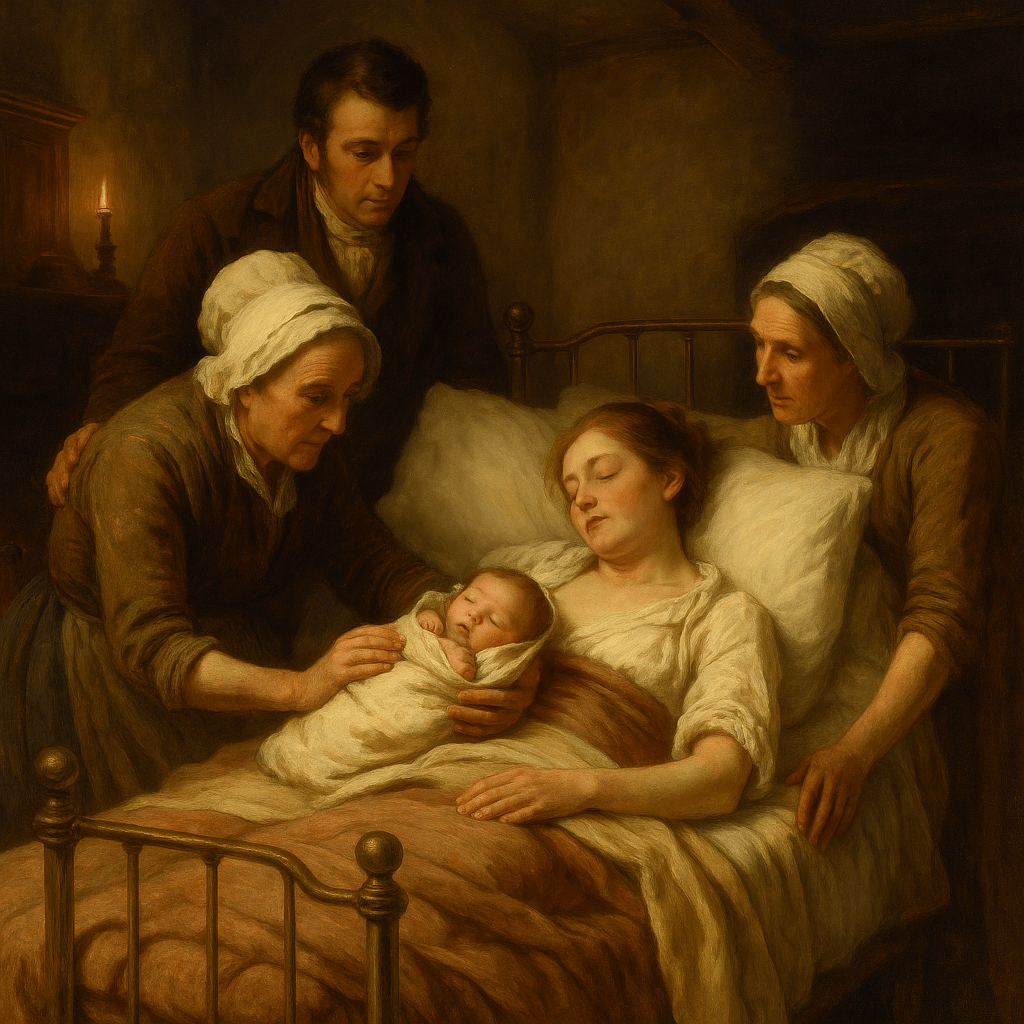
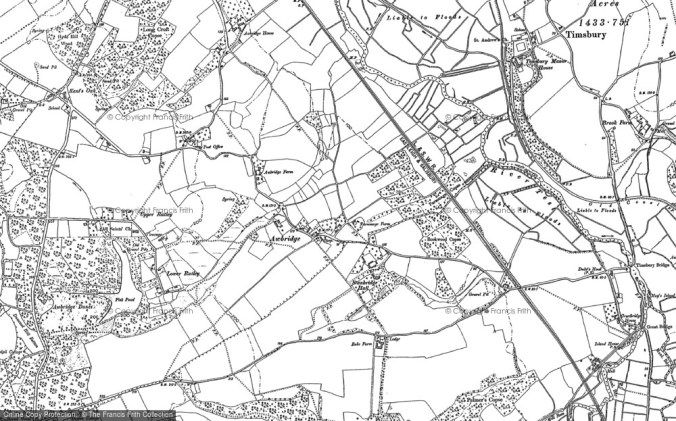
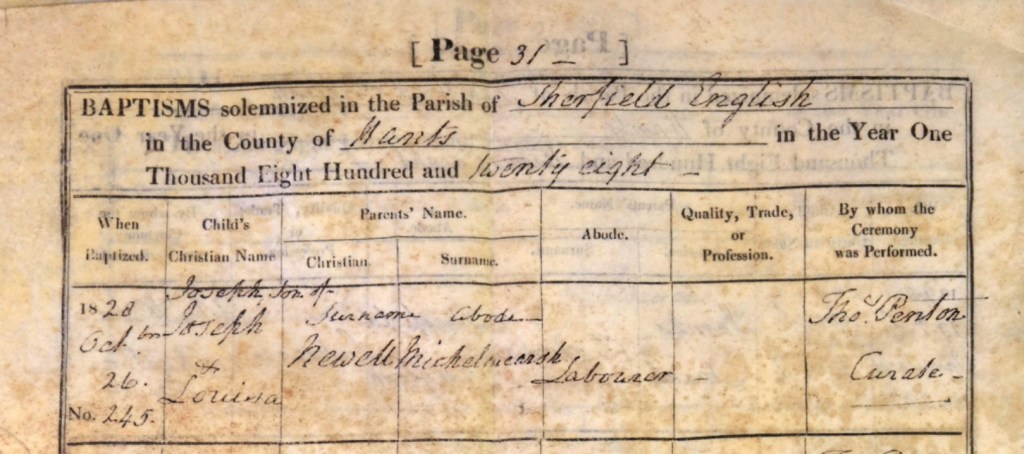
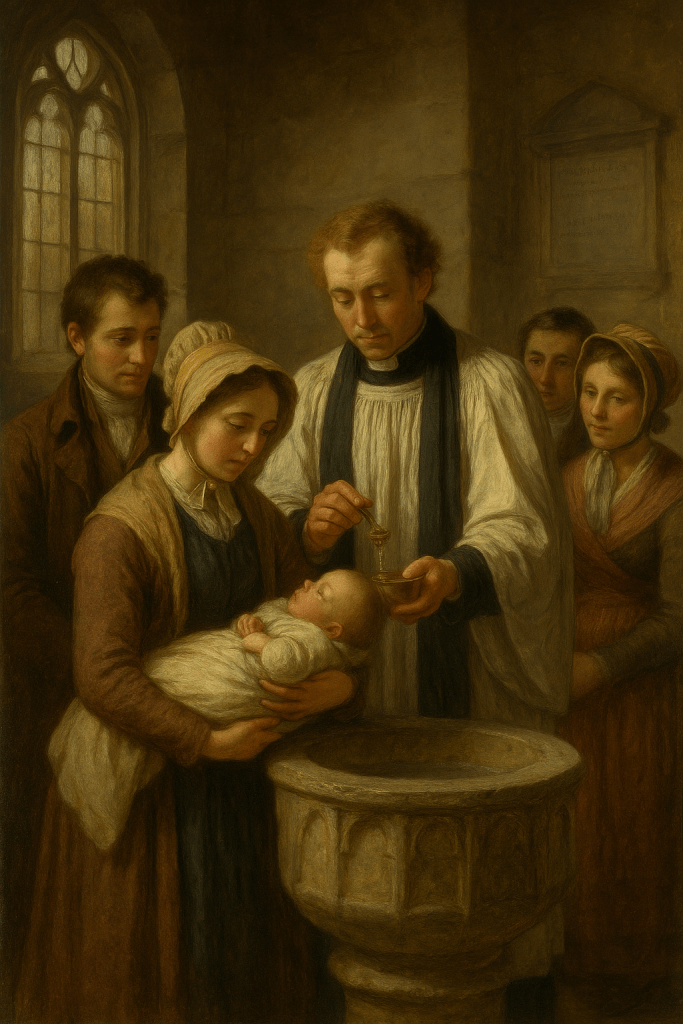
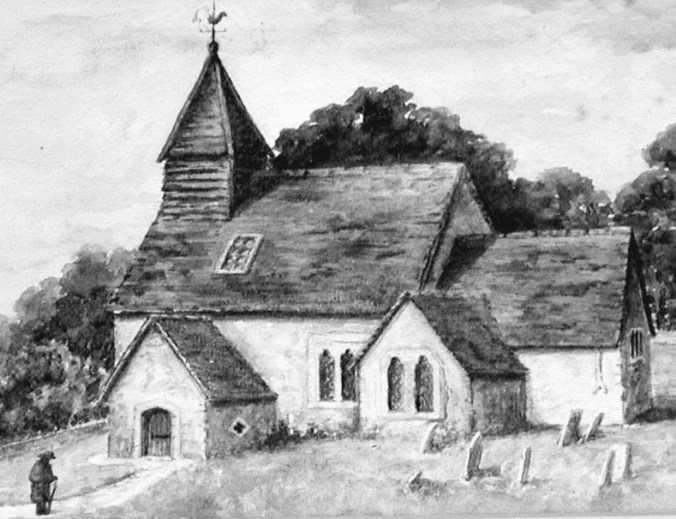
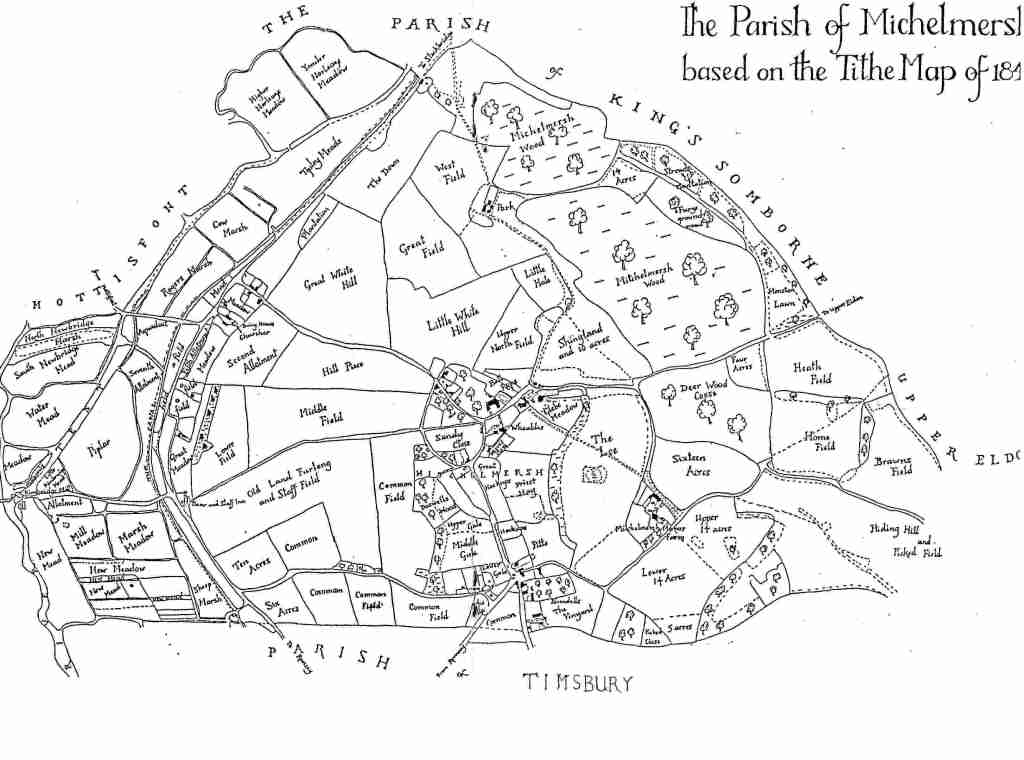


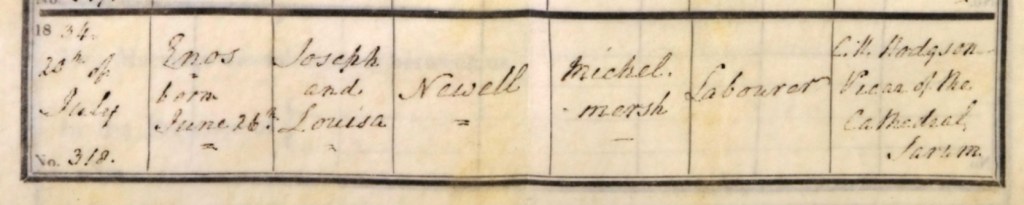
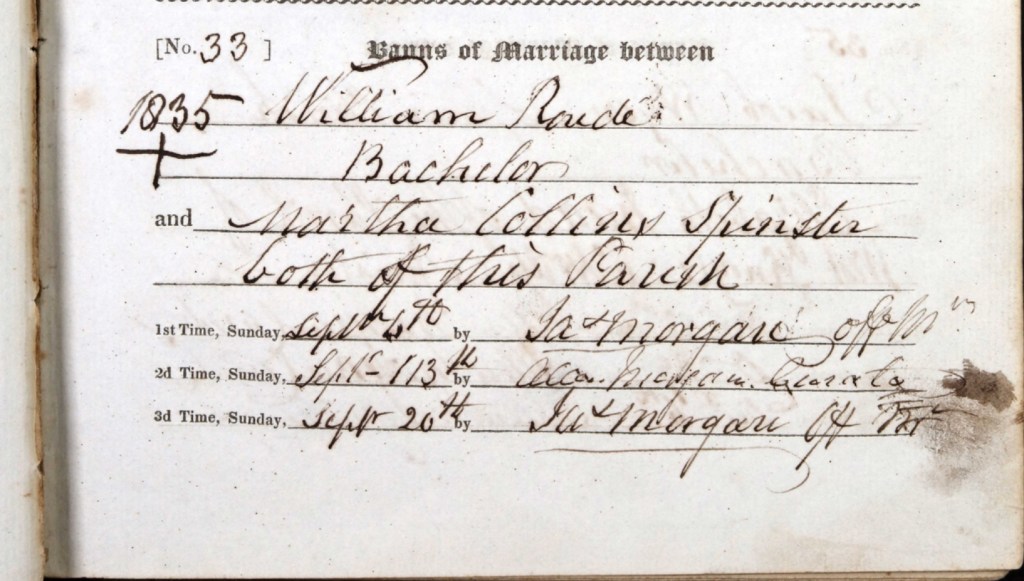
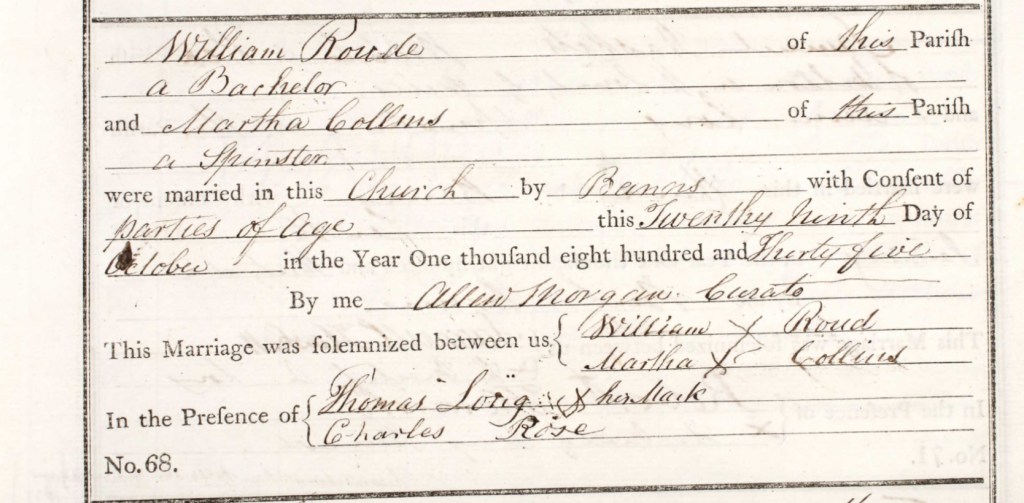

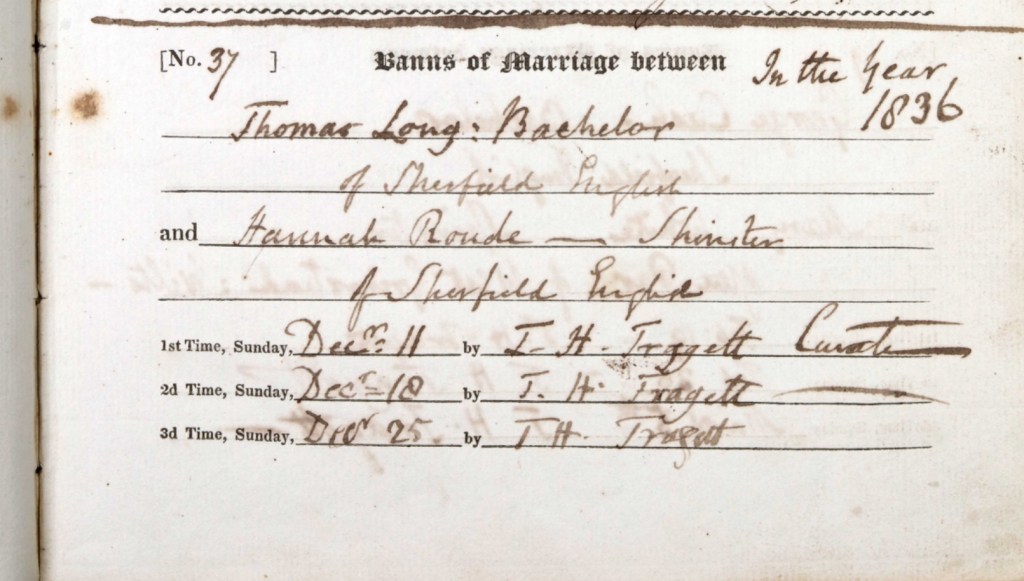
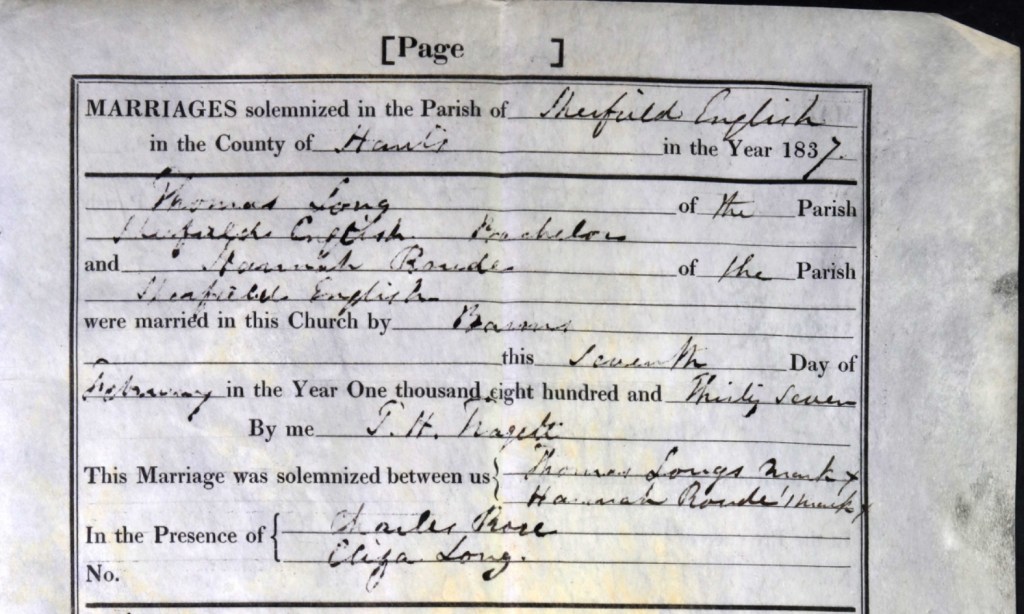





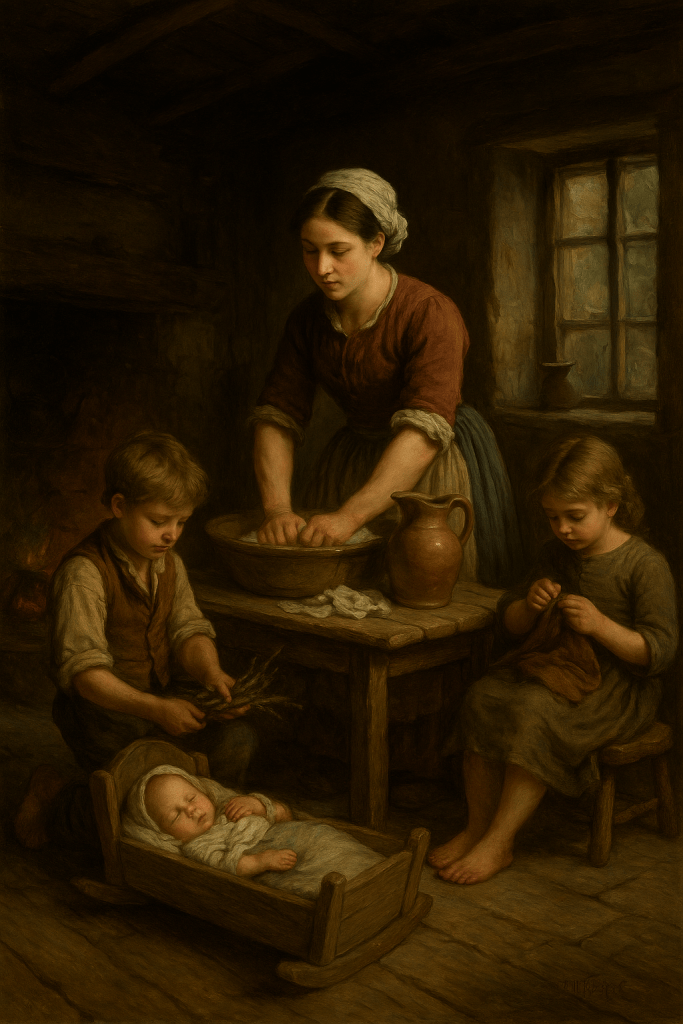

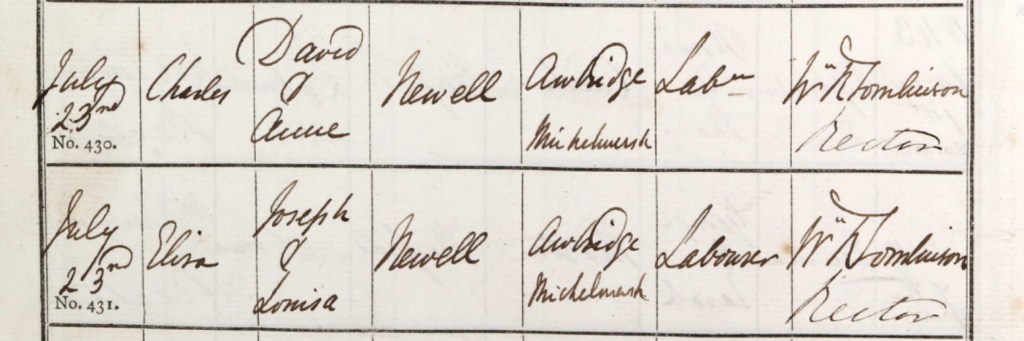
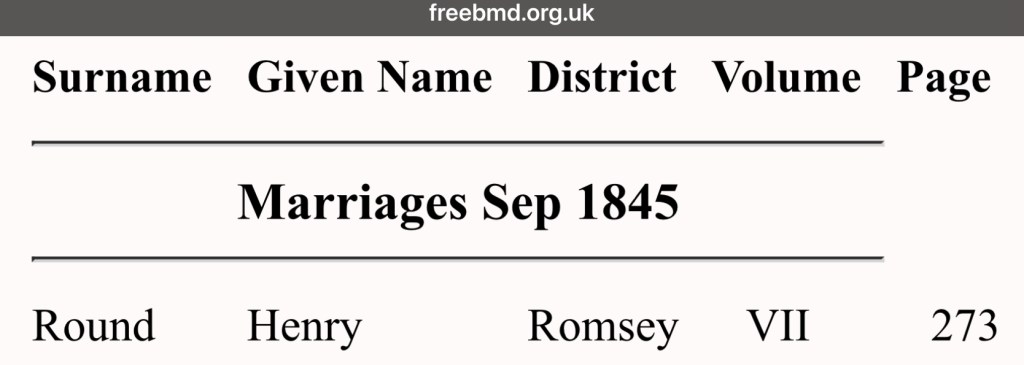


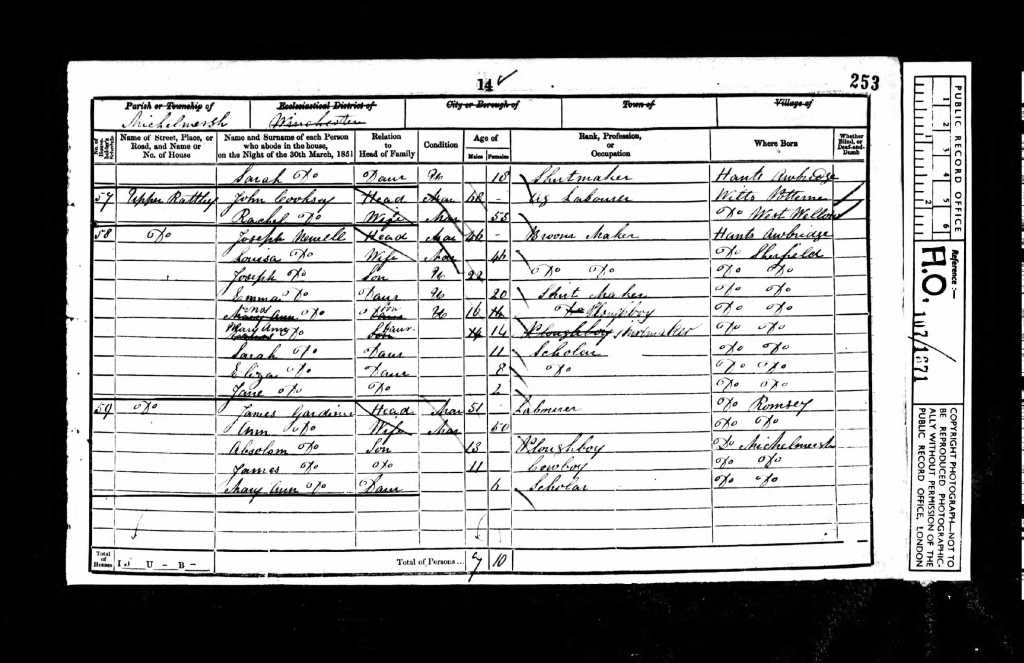
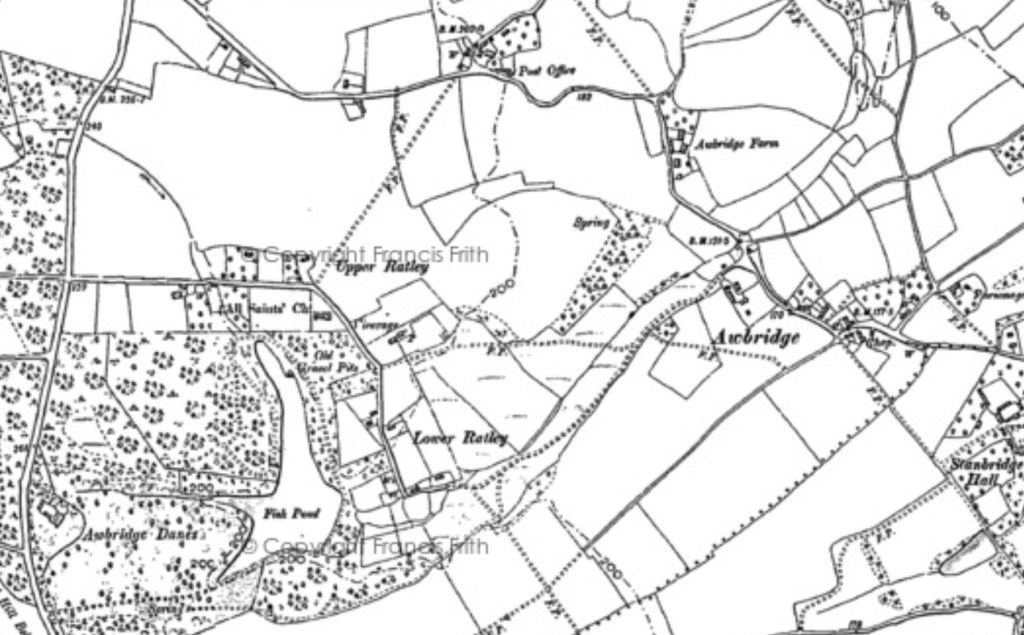
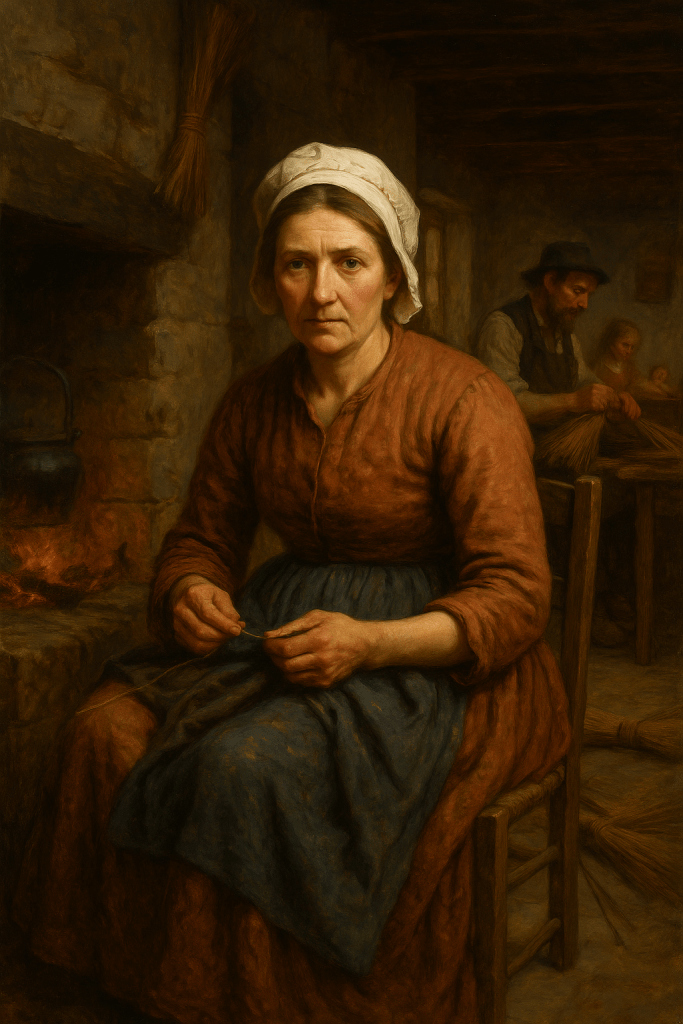
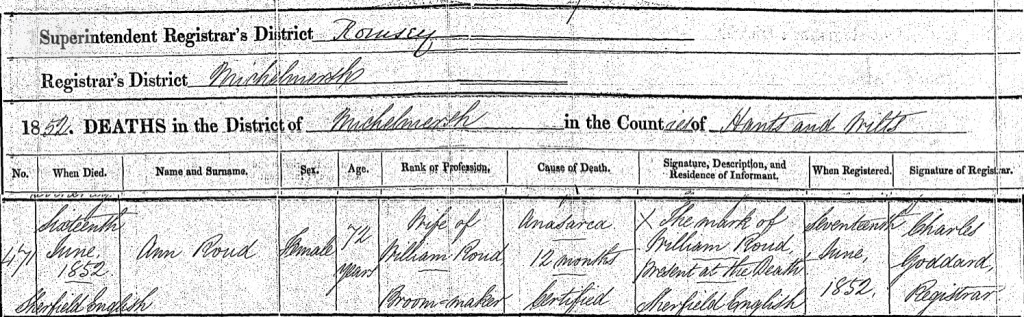

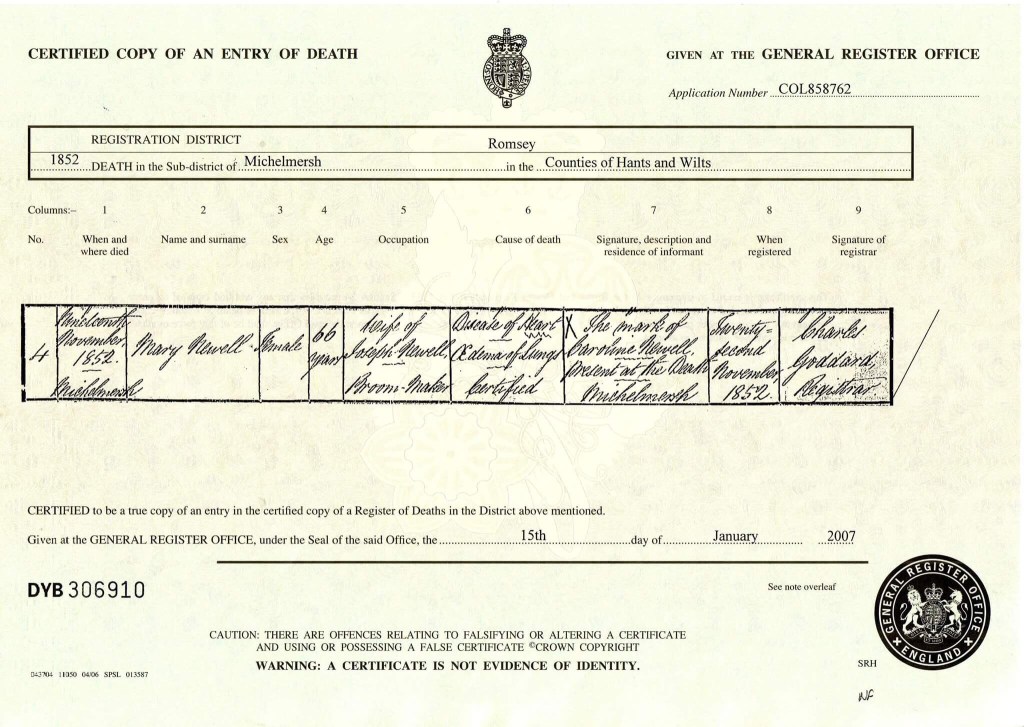
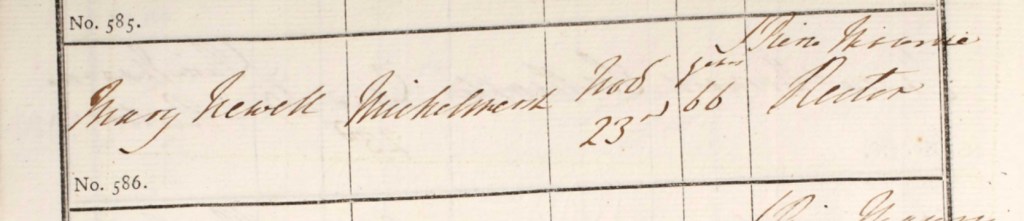
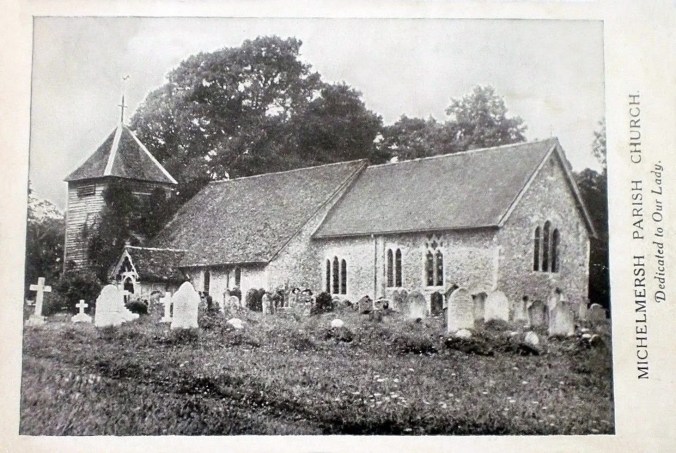
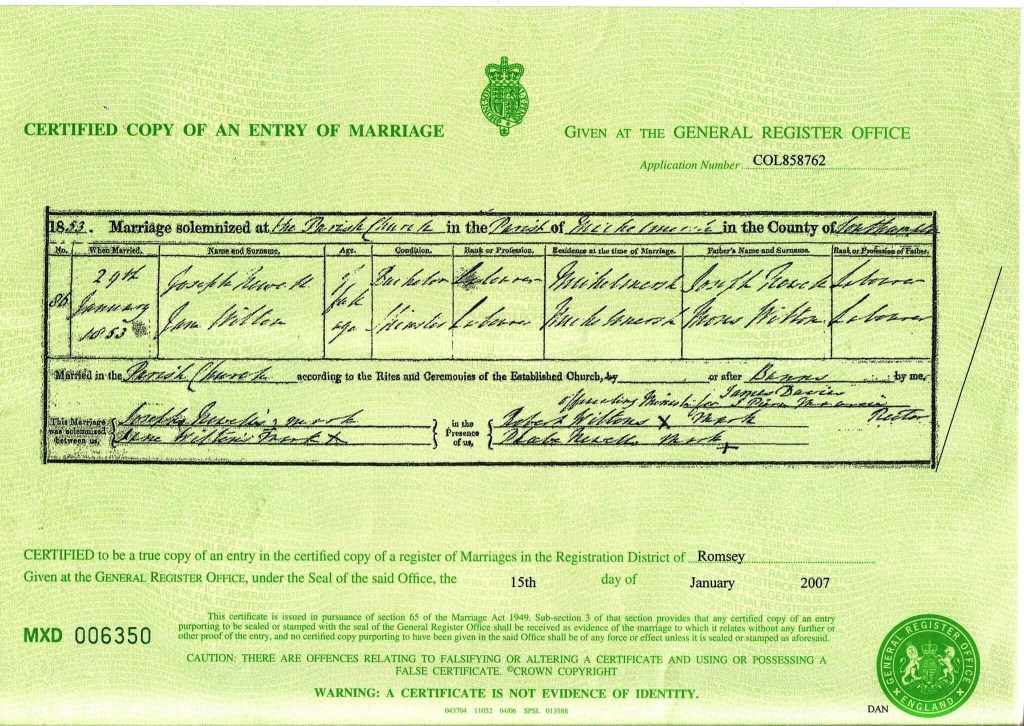


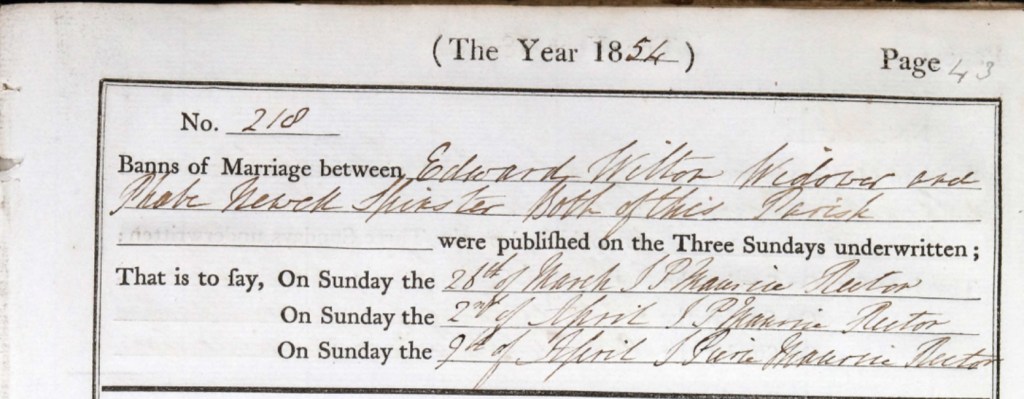
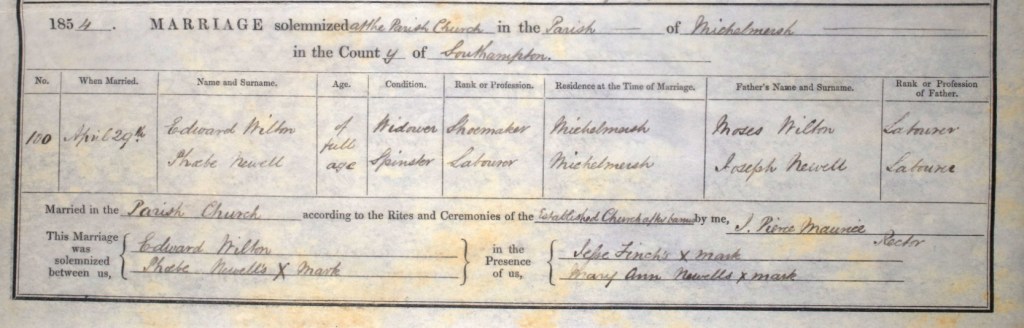
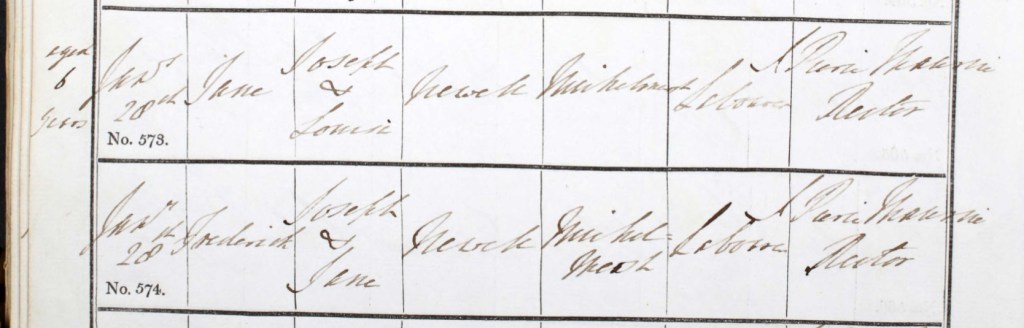
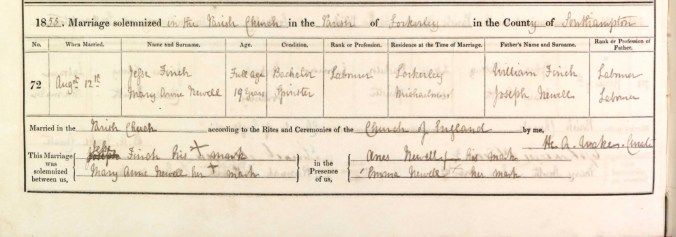
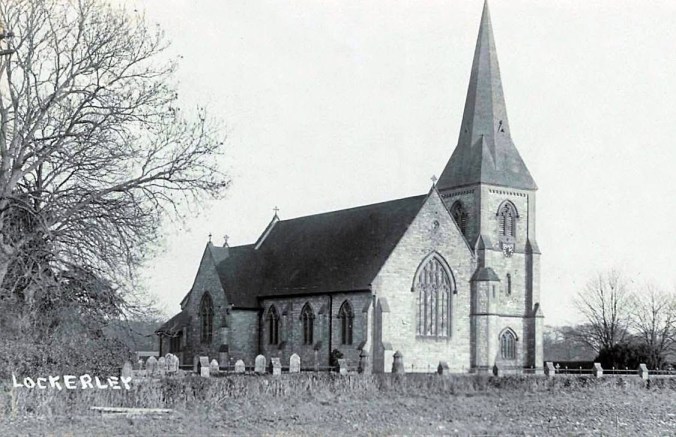
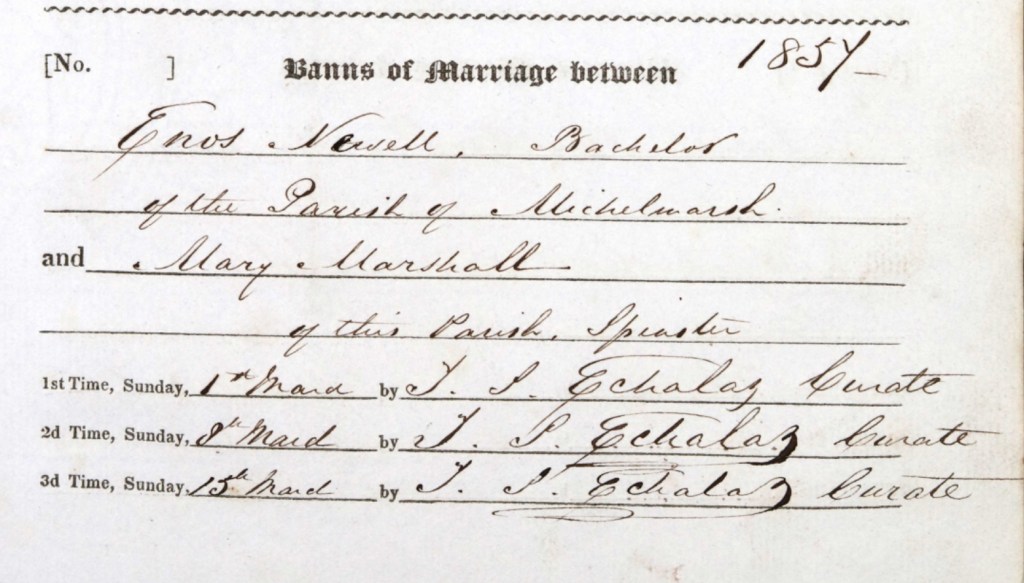

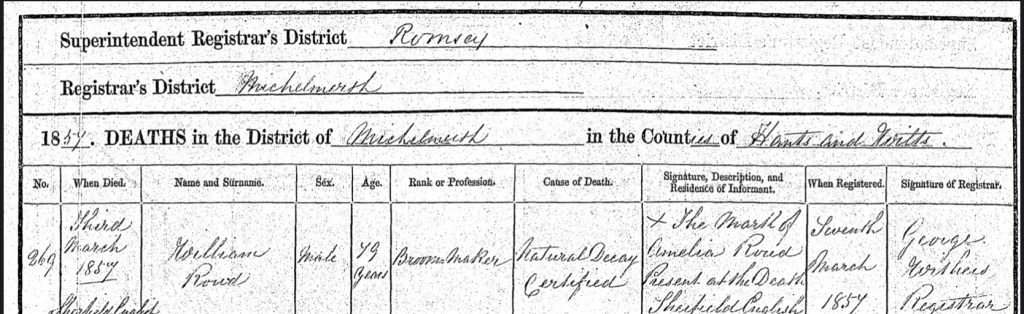

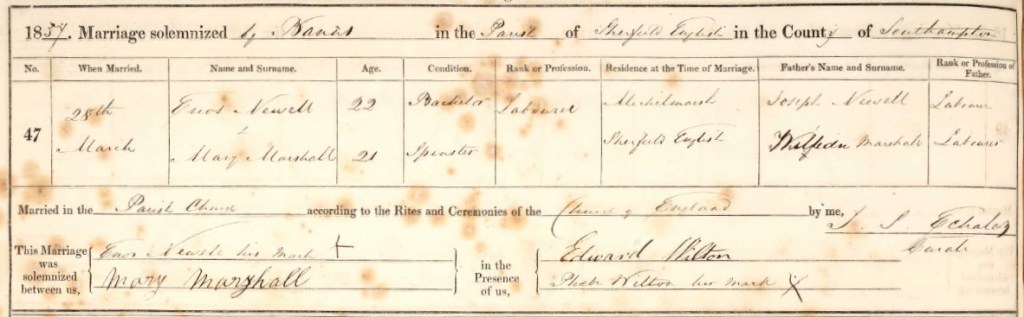
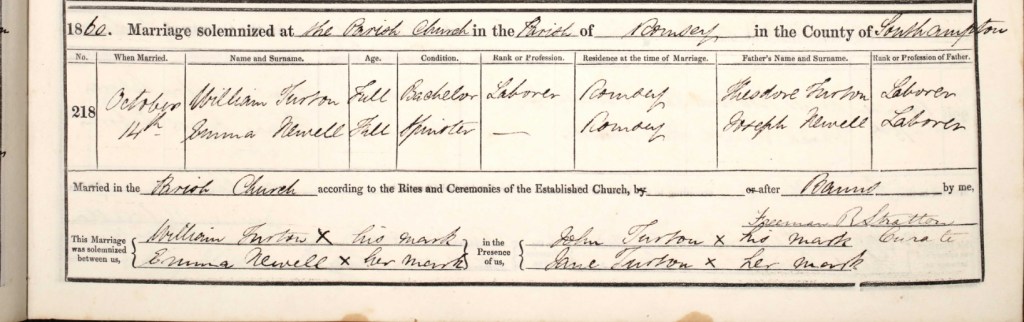
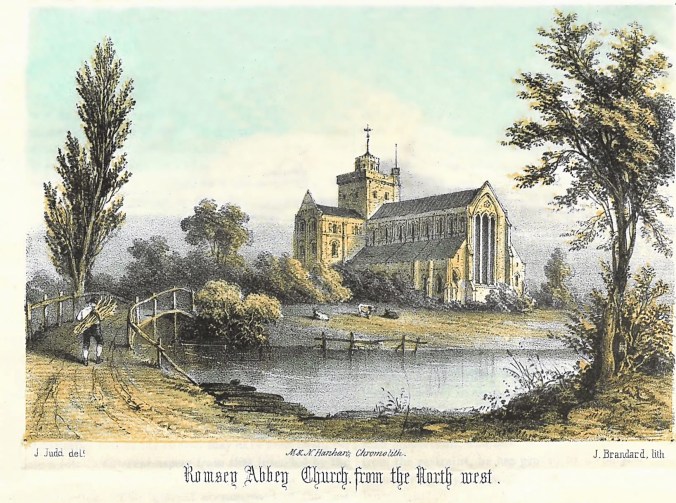
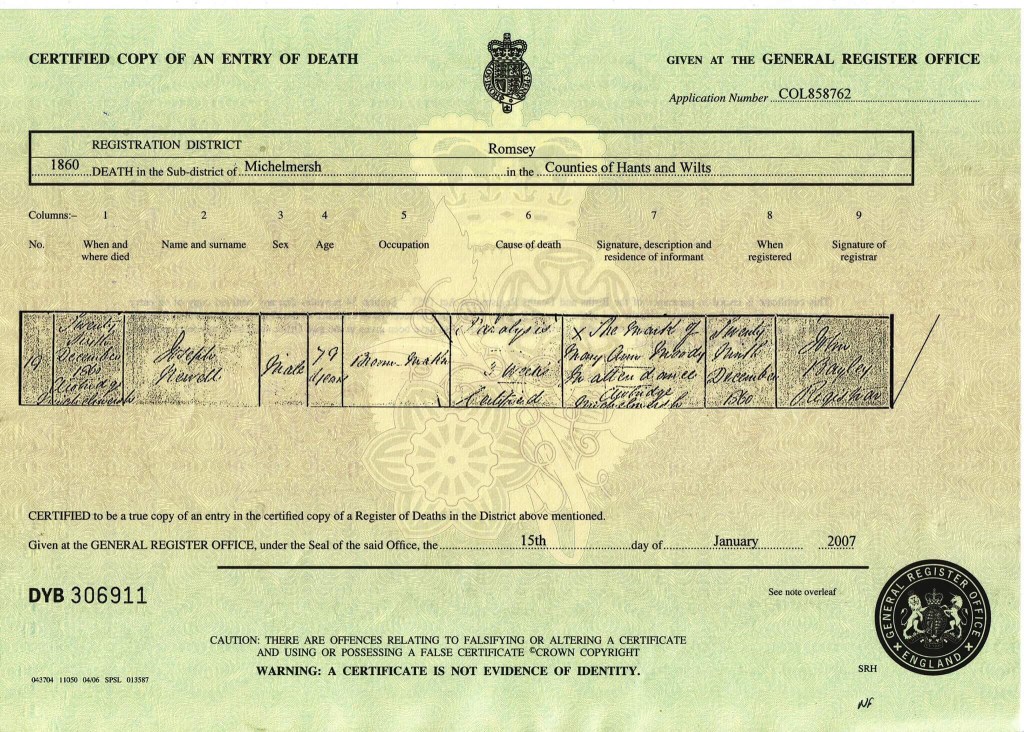




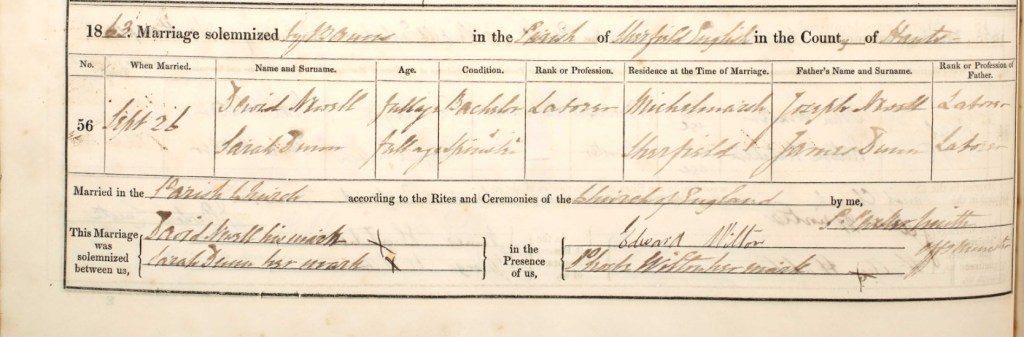
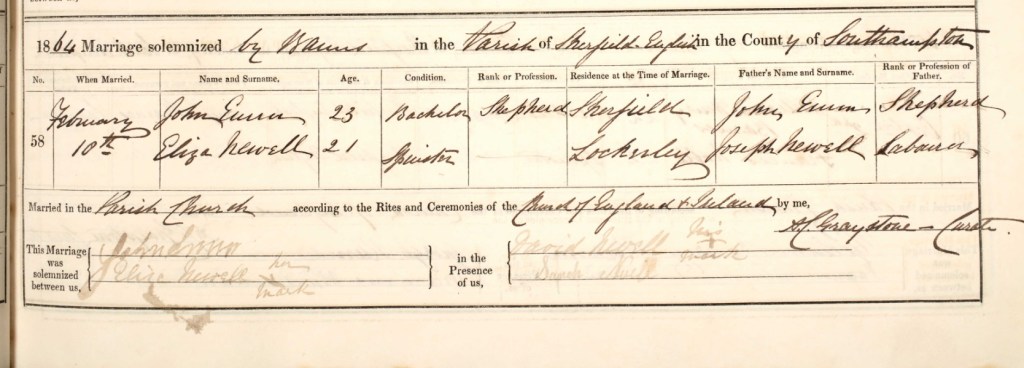
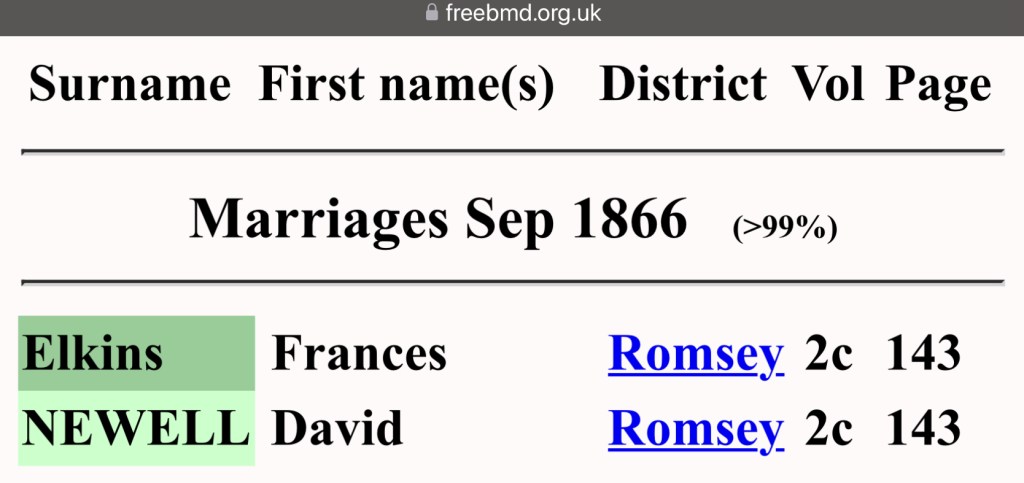

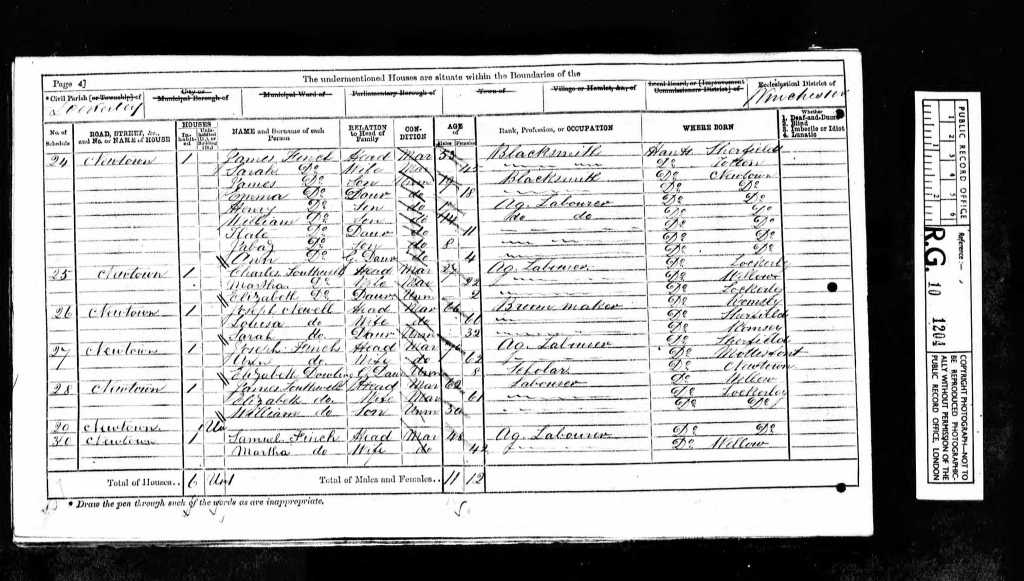
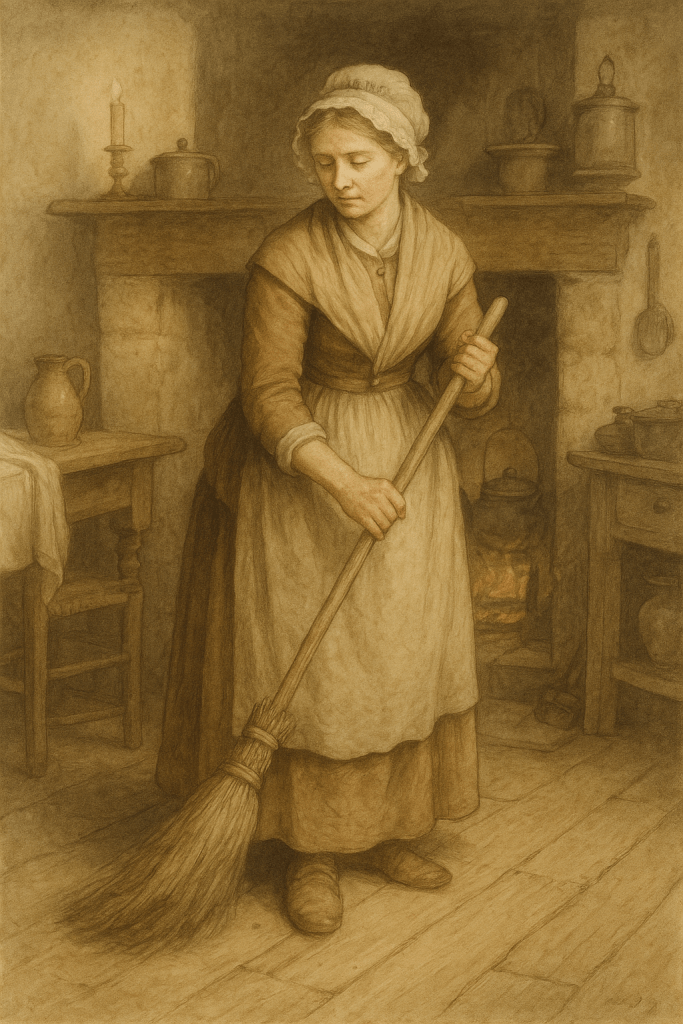
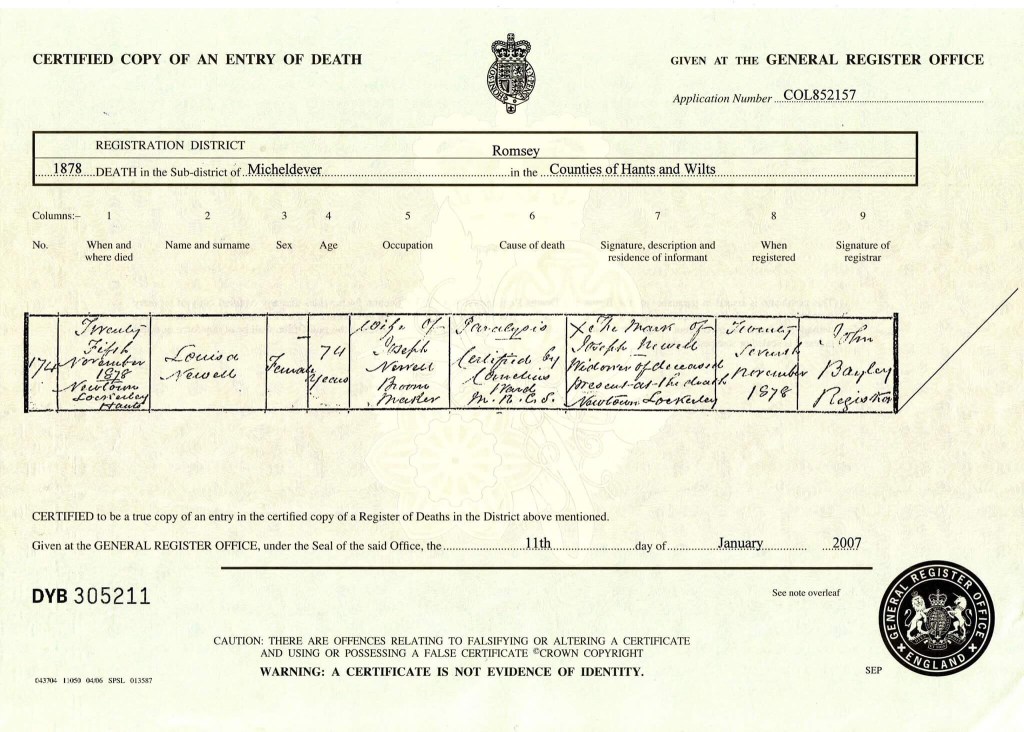
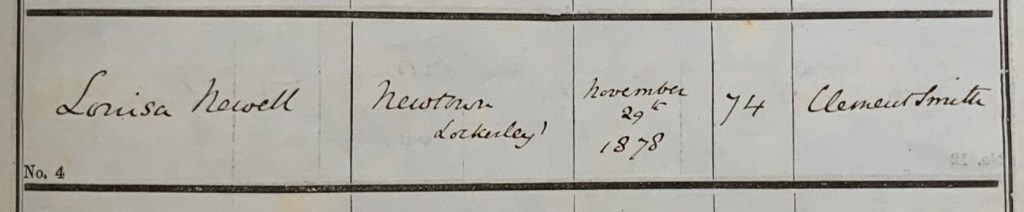
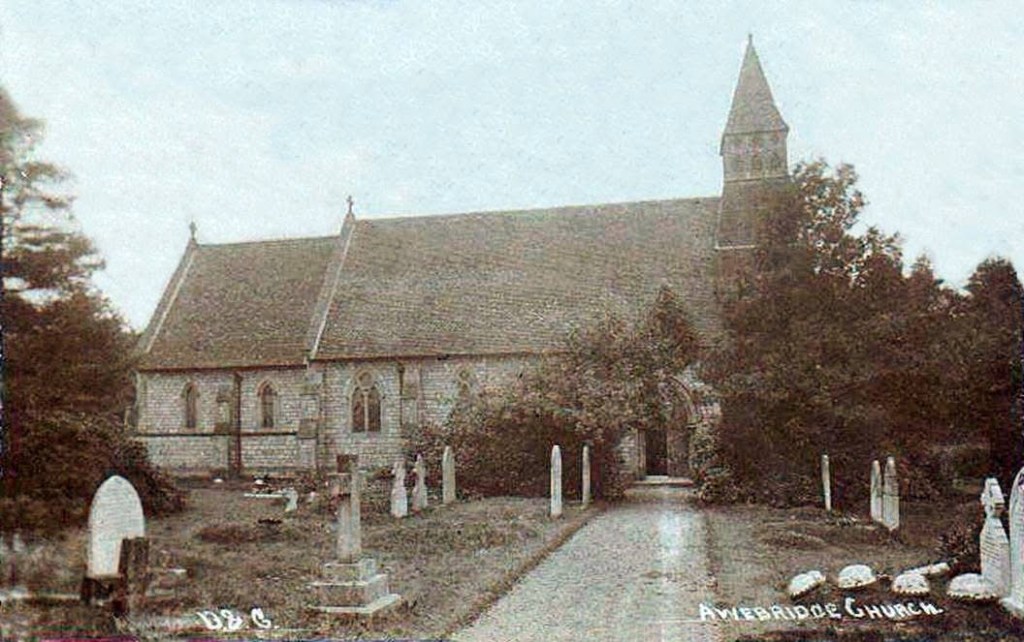
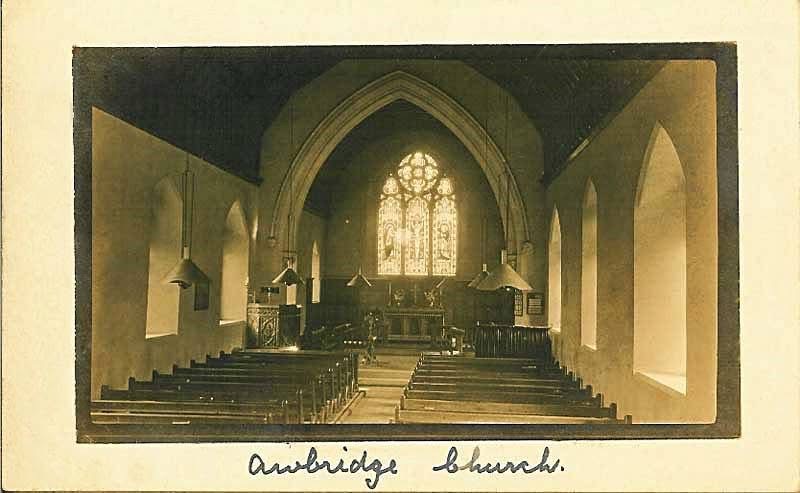
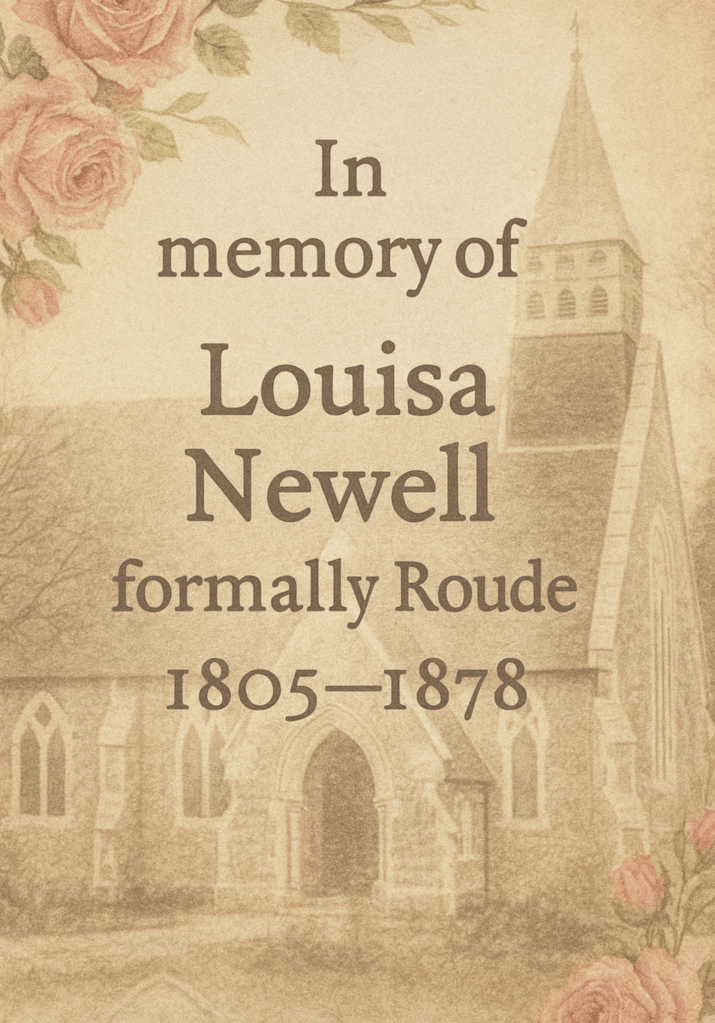
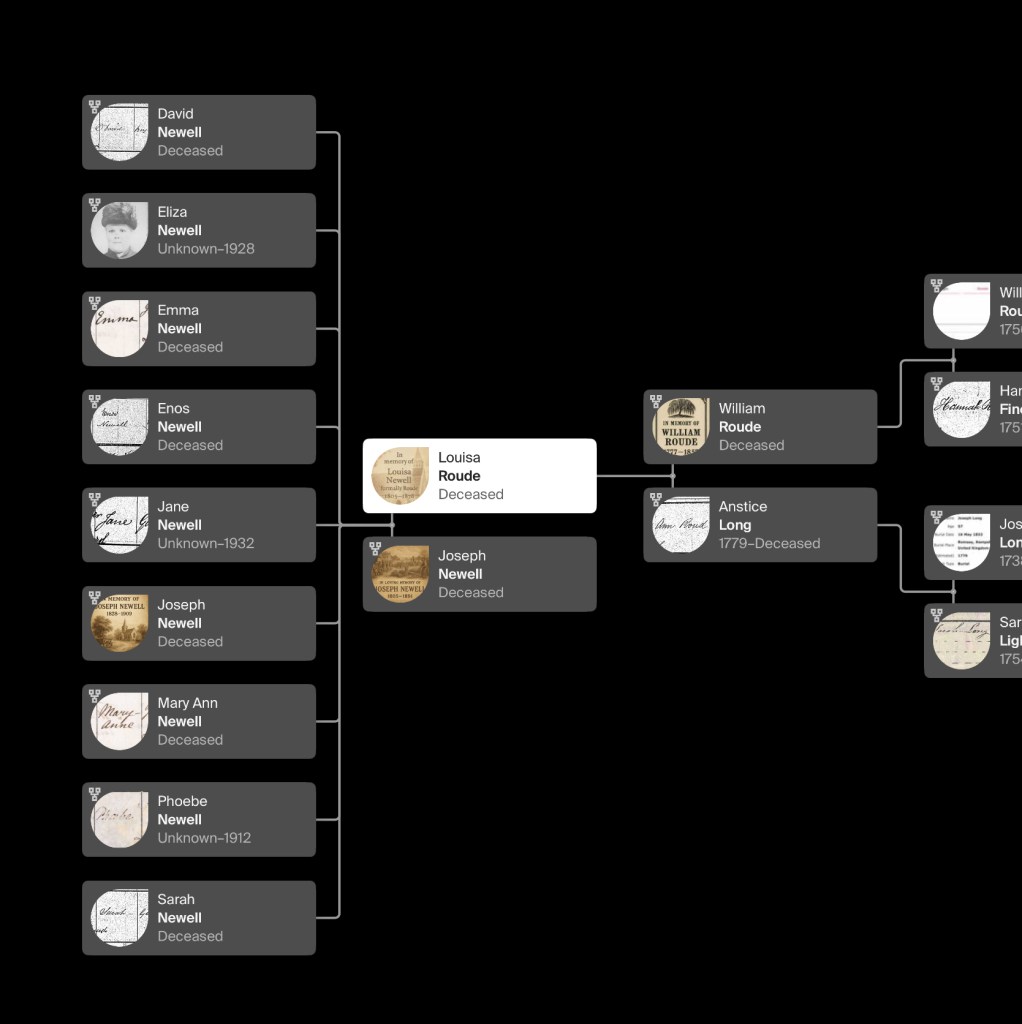
 Intwined