Long before satellites circled the sky and weather maps glowed on screens, people stood in their doorways, fields and village lanes with their faces tilted toward the heavens, trying to read what the world was quietly telling them. Spring, with all its mischief and mystery, was especially difficult to predict. It arrived shyly in some years, boldly in others, and sometimes seemed to toy with the people who waited for it. Yet generations learned to sense its coming through instinct, observation and a tapestry of folklore woven from centuries of watching the sky, the soil, the birds and the beasts.
To our ancestors, the sky was not merely a backdrop. It was a storyteller. Medieval families watched clouds with the same focused attention we give to clocks. Wisps of mare’s tails sweeping across the blue hinted at changing weather, while heavy, low-bellied clouds drifting eastward suggested rain within a day. They read color too. A golden dawn whispered of a gentle day. A bruised red sunrise warned of winds determined to chase away warmth. The sky spoke in a language of light and shape, and spring, that fickle and dramatic season, often spoke most poetically of all.
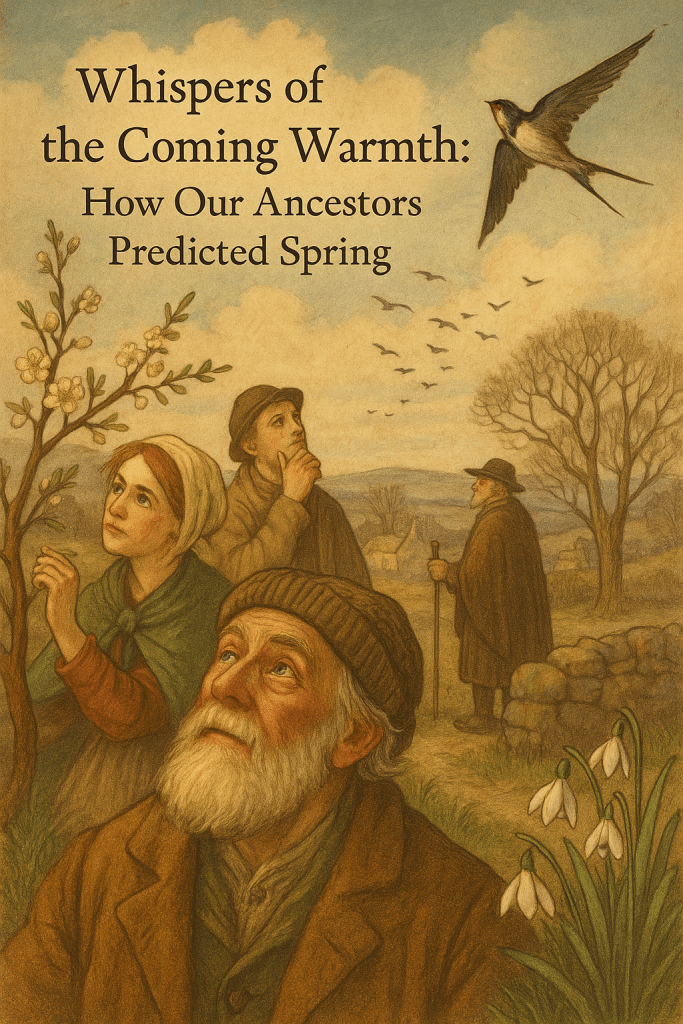
In England and across the British Isles, predicting spring was both an art and a cherished communal tradition. The people of these islands, living in a land where weather shifted with mercurial moodiness, became masters of noticing. Shepherds on the Yorkshire moors watched for early dew patterns and the way their flocks bleated toward dawn. Fishermen along the Cornish coast studied the tides and the softness of the sea’s breath, sensing when gentler winds were approaching. In rural villages, women watched the hedgerows with near-reverence, noting the moment blackthorn blossoms opened like tiny white lanterns. This sign was so well respected that people said the blackthorn winter soon followed, a final cold snap before true spring took hold.
Birds became heralds of warmth long before calendars existed. The first swallow darting above an English meadow stirred a hope deeper than any mathematical forecast. A nightingale’s song heard at dusk was a declaration that winter’s grip had loosened for good. In Scotland, the return of the curlew signaled the turning of the year. In Wales, skylarks singing early were said to promise fair weather. Across the Isles, crows gathering in great black clusters suggested restlessness in the air, while robins, long associated with household luck, were watched as if they were tiny oracles perched on branches.
Even livestock played their part in prophecy. Cattle in Devon that kicked up their heels across the pasture were believed to sense warm days approaching. Sheep on the Scottish Highlands moving unexpectedly low suggested a storm rolling in from the sea. Horses growing restless and alert were thought to feel a pressure change long before the sky revealed anything. The world was alive with subtle clues, and people listened with devotion, for their survival and their schedules depended on understanding what nature murmured.
Folklore bloomed from these observations, growing as richly as the spring meadows themselves. English villages repeated sayings passed down like heirlooms. If March came in like a lion, it would go out like a lamb. This whimsical line captured a truth: early storms often gave way to gentler days. Farmers in the Midlands watched ash and oak trees with particular devotion. If the ash leafed before the oak, they expected a dry summer, but if the oak appeared first they braced for a wet season. Frog song carried meaning too. Loud croaking in late February signaled an early stretch of warmth. A quiet pond suggested winter’s patience had not yet run thin.
Many of these beliefs carried a gentle charm, shaped by both imagination and long experience. People even inspected onion skins in autumn. Thick skins meant a harsh winter ahead, which in turn influenced expectations for spring’s arrival. They watched how smoke rose from chimneys. Smoke that drifted low and sluggish meant rain. Smoke that climbed straight and light meant clear skies were coming. They tasted the air, believing its sweetness or bitterness hinted at the next week’s weather. They touched the soil to feel whether it held winter’s chill or had begun to loosen and wake.
In villages and market towns, spring prediction became a social affair. Neighbors gathered at market stalls discussing how early the crocuses had arrived, or whether the hedgerows looked fuller than usual. Gardeners debated planting times based on the fullness of the moon or the rustling of trees just before dawn. Plowmen smelled the morning air to decide whether it was time to hitch horses to the fields. These conversations created a rich, living web of shared understanding and companionship.
Throughout medieval Europe, monasteries added their own contributions. Monks kept meticulous records of seasonal patterns, noting weather changes alongside plantings, harvests, illnesses and feasts. Over generations, these observations grew into detailed, surprisingly accurate guides for predicting seasonal shifts. Yet even these scholarly keepers of the land still relied on the simple act of stepping outdoors, lifting their hoods, and breathing in the changing season.
Everywhere, spring prediction held a blend of practicality and poetry. People had to know when to sow barley, when to open the pastures, when to repair roofs and when to begin planting gardens. But there was also something deeply romantic about watching the world soften and brighten, about looking for the delicate signs that winter was truly loosening its grip. A tree budding earlier than usual could fill a weary farmer with quiet joy. A breeze carrying a scent of rain and moss could lift the heart of someone who had endured a long, dark winter. Spring, in its fragile beginnings, reminded everyone that hope returns in its own time.
Even today, when science has taken much of the guesswork out of weather, remnants of these old customs linger. We still look at a red sky and feel an instinctive tug of meaning. We still feel a hopeful stirring when birds return, or when a warm wind brushes our cheek after weeks of cold. Modern forecasts may be precise, but the ancient art of noticing still lives softly within us.
In the end, predicting spring was never simply about the weather. It was about connection. It was about living in close conversation with the land and sky, trusting them to share their secrets with those who listened closely. It was about celebrating the delicate miracle of seasonal return and the quiet hope that comes wrapped in the scent of thawing soil and the flutter of early wings. Through cloud-watching, folklore and the soft language of nature, people throughout history learned to greet spring not with certainty but with wonder. And perhaps even now, that is still the truest way to welcome it.
Until next time,
Ta ta for now.
Yours Lainey.
 Intwined