When spring arrived in England and the wider United Kingdom, it did not simply soften the air or brighten the hedgerows. It awakened wardrobes in the same tender way it coaxed blossoms from bare branches. For centuries, clothing shifted with the seasons in ways that were both practical and poetical, shaped not only by weather and necessity but by a deep human yearning to step into the lightness of the season. Every spring, from medieval farmsteads to Victorian promenades, people dressed as though answering a quiet summons from the turning earth.
In medieval England, winter garments were built for endurance rather than grace. People wrapped themselves in thick wool dyed in earthy browns, russets, and grays that hid soot and soil, the honest colors of survival. Cloaks hung heavily around the shoulders, hoods were drawn low against sleet, and underlayers multiplied like the rings of a tree. Yet when spring began to murmur through the air, when lambs bleated in the meadows and primroses blinked open beneath hedgerows, clothing grew lighter as though breathing out at last.
Wool remained the steadfast companion of medieval life, but its weave loosened and its weight softened with the season. Linen, that bright, cool fabric stored away like a promise, returned to the body. Shirts and shifts made of linen felt airy against skin still accustomed to winter’s heaviness. Even the poorest welcomed spring through clothing, for nearly every rural household grew flax. The tending of this humble plant, the retting and spinning and weaving, connected people to the season long before they felt its warmth.
The wealthy greeted spring in richer tones. Their wardrobes shimmered with fabrics that caught the new sunlight, gowns the color of tender leaves, doublets lined with damask instead of fur, sleeves embroidered with vines or early blossoms. A wealthy man might step out in a lighter cloak of fine wool or silk, while a lady might choose a gown that swayed gently in the breeze, as though mimicking the soft movements of orchard branches. Clothing for them was not merely practical; it was expressive, a kind of seasonal poetry worn upon the body.
By the Tudor period, the wardrobe divide between rich and poor widened into something unmistakable. Sumptuary laws declared which colors each rank could wear, and spring made these differences even more vivid. The wealthy stepped into hues born of costly dyes: soft yellows recalling primroses, delicate pinks, sky-bright blues. Sleeves were elaborately slashed to reveal contrasting colors, and linen ruffs unfurled like blossoms shaken open by sunlight. Meanwhile, those of humbler means relied on woad, weld, and madder to create gentler shades that echoed the countryside. Their clothing bore the marks of care and creativity, patches and mending stitched with familiarity and pride.
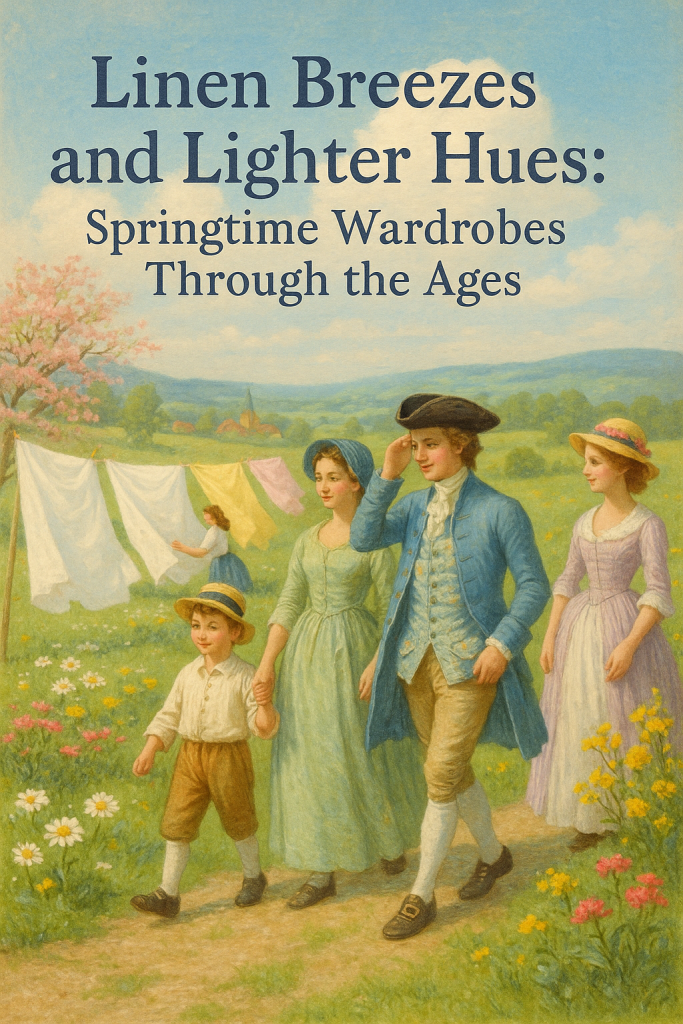
Yet despite class differences, spring brought a shared sense of renewal. In March and April, people aired their garments the way they aired their homes. Cloaks were beaten outdoors, tunics scrubbed in cold running streams, and linen was laid out upon grass to bleach in the sun. Across villages, fields might briefly bloom not only with flowers but with squares of linen shining white against green. It must have been a beautiful sight, as though the land itself was participating in the season’s great laundering.
The Georgian era introduced clothing that embraced elegance with airy ease. Ladies stepped into lighter muslins and cottons that danced softly with each step. The breeze toyed with the fabric, turning dresses into moving petals. Men wore waistcoats embroidered with delicate springs of flowers or curling vines, bringing the season directly into their wardrobe. Even those living modestly might manage to purchase or mend one lighter garment for Easter, for the holiday had become a cherished moment to dress one’s best, a tradition that grew stronger with each generation.
By Victorian times, spring wardrobes had blossomed into ceremonies of their own. Families prepared for Easter outfits weeks in advance. Towns filled with the sight of children in starched dresses or smart sailor suits, newly freed from winter’s woolen layers. Ladies appeared in bonnets adorned with artificial flowers, silk ribbons, and feathers, transforming the streets into gardens in motion. Even working-class families found ways to honor the season, perhaps through a newly laundered apron or a carefully brushed coat brightened with a modest sprig of blossoms. Clothing became a quiet act of hope, a way to greet the season with whatever beauty one could afford.
Cost, of course, shaped every layer. Fabric was precious, often representing weeks or months of labor. A sturdy wool cloak could be a family investment. Linen required patience at every stage, from sowing flax seeds to spinning fine thread. Clothing told stories about class and circumstance, but spring softened these contrasts. Even the smallest change, a fresher shirt, a lighter shawl, a newly mended smock, felt like a personal dawn.
Across centuries, across counties and coasts, spring wardrobes carried the same theme: the human desire to reflect the world awakening outside. When the air warmed, colors brightened. When days lengthened, fabrics softened. When birds began to sing again, people stepped out in attire that felt like part of the season’s song.
It is a tender ritual, this turning of wardrobes with the turning of the earth. When spring returns, garments breathe, colors blush, and fabrics whisper against the skin with a loveliness that winter cannot imitate. That first walk without a heavy cloak is more than a nod to the weather. It is a gentle proclamation that winter has passed, and life, in all its lightness, is unfolding once more.
Until next time,

Ta ta for now.

Yours Lainey.
Lyric were written by me
but the music and vocals are AI generated.
🌼🌼🌼
 Intwined