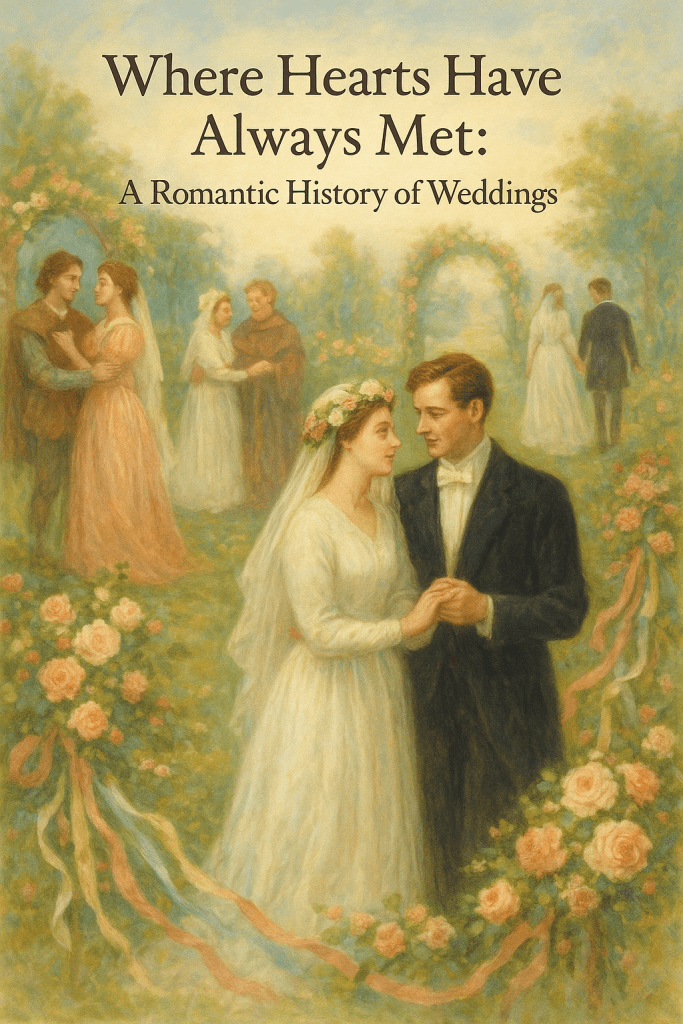
Weddings have always been more than ceremonies. They are thresholds, glowing and fragile, where two stories decide to travel onward as one. They are moments stitched from memory, community and hope, where families gather like gentle witnesses and where centuries of tradition whisper softly through veils, rings and vows. In England, and in every corner of the world where people have stood hand in hand to promise their lives to each other, weddings have changed in their customs but never in their purpose. Across time, they have remained a celebration of love, of partnership and of the belief that two souls can build a life more beautiful together than they ever could alone.
In medieval England, weddings were woven tightly into the everyday rhythm of village life. Marriage was not yet the grand spectacle it would later become. It began at the church door, the couple standing beneath the open sky to speak the vows that bound their futures. Only after pledging themselves publicly would they step inside the church for blessing. This doorway ritual was not simply symbolic, it showed that marriage was a bond that touched everyone around them. Land, kinship, alliances, the peace of the village itself, all were shaped by the promises that couple made. Brides wore their best gown, not a white one, but a cherished garment dyed in warm, earthy shades. Musicians played simple pipes or drums, and feasts were filled with bread, ale and laughter that rippled long after sunset. Marriage then carried equal measures of practicality and tenderness, a union built as much on duty as on the quiet hope that affection might grow.
As centuries turned and the Tudor and Elizabethan eras unfolded, weddings blossomed into more elaborate affairs. Bells rang proudly across towns, calling neighbors to witness the joy. Processions wound their way through streets, and gowns glowed in dyes that whispered of fidelity, fruitfulness and prosperity. Blue, green, gold and red shimmered in candlelight and courtyard sun. Literature and song breathed newfound romance into the air, with Shakespeare’s lovers waltzing through delight and confusion alike. Real life, however, still kept marriage anchored to family arrangements and social stability. Yet affection often arrived gently after the vows, deepening with each season of shared labor, shared laughter and shared life.
In the seventeenth and eighteenth centuries, the meaning of the wedding ceremony deepened further. Services moved from church porches to altars, and rings became cherished, intimate symbols of eternity. Wedding rites grew more poetic, with scripture, song and candlelight entwining hearts in ways that felt both earthly and sacred. Courtship, too, took on new life. Sweethearts exchanged letters inked with longing, and parents began to weigh their children’s happiness more carefully when arranging marriages. Love and duty began their long, slow dance toward balance.
Across the world beyond England, other traditions flourished in radiant color. In India, brides wrapped themselves in saris that shimmered like dawn, and families circled the couple with song and firelight. In Japan, Shinto ceremonies brought quiet harmony, binding two lineages with rituals that honored gods and ancestors. In West Africa, weddings unfolded in vibrant cloth and joyous rhythm, echoing across generations. In the Middle East, brides adorned with intricate henna designs stepped into marriage surrounded by ululations that soared like birds into the sky. Though each culture celebrated differently, the heartbeat of marriage remained the same: community, connection, continuity.
The Victorian era transformed English weddings into something instantly recognizable today. Queen Victoria’s white gown of 1840 changed bridal fashion forever. White became the color of celebration, chosen for its purity of fabric and its soft, luminous beauty. Her orange blossom crown inspired countless brides, and wedding dresses became treasures kept for generations. Photography arrived, capturing vows and veils in silver light. Wedding cakes grew into towering masterpieces, and flowers took on new significance as Victorian lovers spoke entire sentences through petals and bouquets. The wedding became not only a union of families but a romantic dream brought to life in lace and perfume.
Yet the grandeur of the wealthy was only one part of the story. In modest English villages, miners, farmers, mill workers and sailors married in their Sunday best. Their ceremonies were simple: a churchyard kiss, a handful of wildflowers, a humble feast held in a warm kitchen or local inn. These weddings carried just as much joy, just as much promise. Love glowed just as brightly in the humblest homes.
The twentieth century reshaped marriage once again. Two world wars interrupted courtships and hurried vows, with lovers marrying in uniform beneath the shadow of uncertainty. After peace returned, weddings bloomed with renewed gratitude. The latter decades brought greater freedom in choosing partners, greater celebration of individuality and greater acceptance of diverse traditions. Weddings moved into gardens, town halls, beaches and barns. Dresses ranged from satin to lace to simple cotton. Couples began creating ceremonies that reflected who they were, weaving together old customs and new meanings with tender creativity.
Today, weddings across England and the world are splendid mosaics. Some couples stand in ancient churches whose stones have heard vows for centuries. Others exchange promises beneath oak branches or lantern-lit rafters. Many blend traditions beautifully, a Celtic handfasting beside a Christian blessing, a Chinese tea ceremony before a British reception, a henna night followed by vows in a country chapel. The world has widened, and weddings have widened with it, becoming celebrations of love that honor both heritage and individuality.
Through all these centuries of change, one truth has remained constant. Weddings are moments when time pauses. When hearts speak their bravest truth. When the world feels tender, luminous and full of promise. They are celebrations of hope and belonging, of the timeless belief that two people can walk side by side through life and find comfort, joy and purpose in one another’s company.
From medieval church doors to Victorian aisles, from global traditions to the modern mix of past and present, the story of weddings is one long, shimmering tale of humanity seeking connection. A history of music and fabric, vows and laughter, flowers and faith. A reminder that love has always been one of the most steadfast and poetic forces in the world.
And every time two people join hands to say yes, they step into that ancient, beautiful story, adding their own chapter, their own promise, their own quiet magic to the centuries that came before.
Until next time,

Ta ta for now.

Yours, Lainey.
 Intwined