Stratford-upon-Avon glimmered in the morning sun like a quaint painting that whispered, “Culture lives here, and humans expect polite behavior.” Athena padded along the cobbled streets with the dignity of a queen visiting her loyal subjects. Each step was measured, each glance precise. She had one goal for the day: to witness a Shakespeare performance in all its dramatic grandeur, to savor the cadence of iambic pentameter, and perhaps even shed a tear during a tragic soliloquy.
Obito, on the other paw, interpreted the word “Shakespeare” entirely differently. To him, it meant “a stage full of props to chew, humans to chase, and costumes to climb.” He bounced along like a fur-covered cannonball, nose twitching at every discarded feather, ribbon, and suspiciously round pebble. Athena sighed deeply and considered tying him to a lamppost, but she knew better, Obito did not obey simple logic.
The theater itself was a jewel of Elizabethan charm, with its wooden beams, red velvet curtains, and the faint smell of centuries-old rosin and candle wax mixed with what Athena suspected might be sausage rolls. She glided inside with graceful paws, whiskers twitching, ears pricked. The audience murmured politely, the actors warmed up, and somewhere backstage a lone stagehand whispered fervent prayers that no dogs would appear tonight.
Naturally, Obito had other plans. He had already discovered a dropped prop sword, a basket of feathered hats, and an unguarded stack of scripts. Athena tried a gentle nudge. Obito responded by tossing a script into the air and leaping to catch it, rolling across the stage in a way that resembled a tornado colliding with a ballerina. Athena groaned audibly, while the front row of humans instinctively ducked, spilling tea, biscuits, and one very suspicious cat.
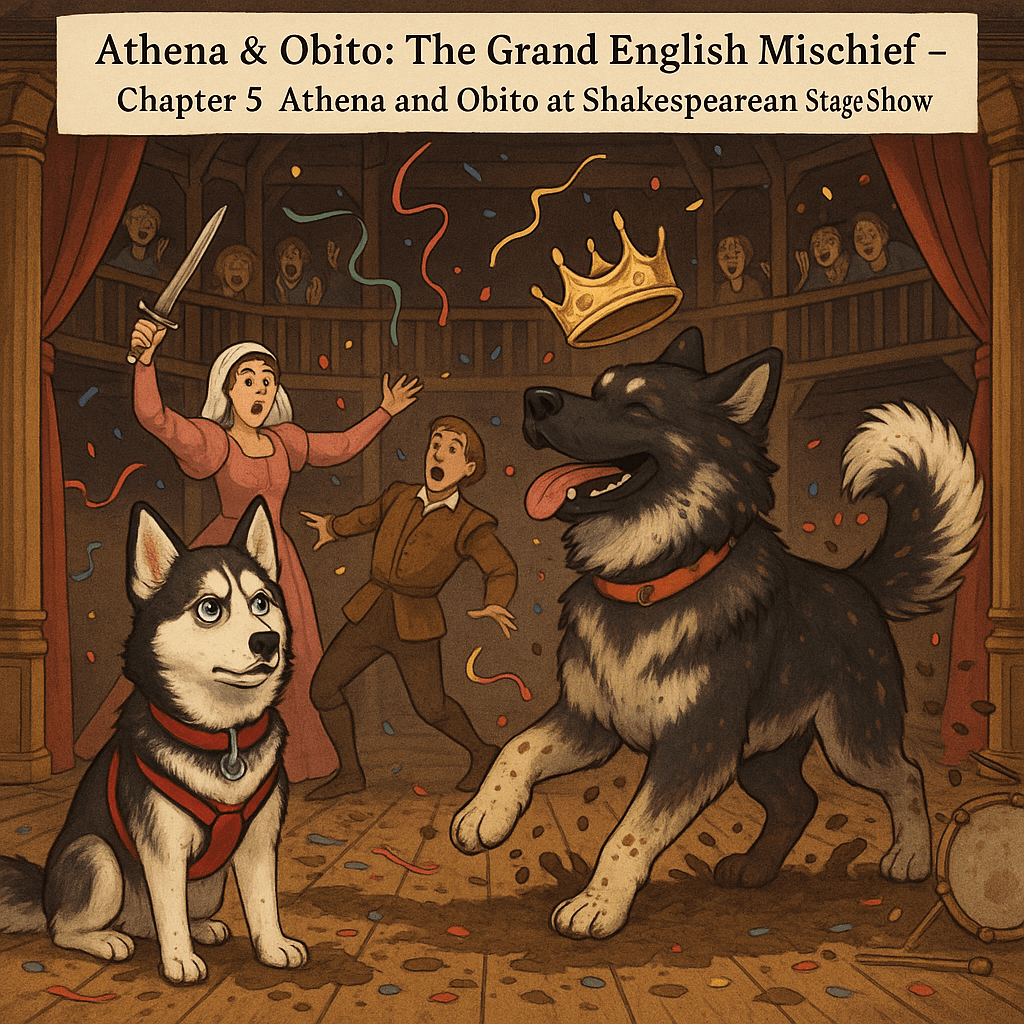
The curtain rose, and Athena settled elegantly into her seat, ears forward, trying to project the image of refined poise. Obito, however, had other ideas. He launched himself onto the stage in full dramatic mode, tail wagging like a rudderless ship in a storm. “Romeo and Mudliet,” as Athena would later call it, had officially begun. He grabbed the crown prop, tossed it into the air, and caught it again in a display of chaotic brilliance. Athena darted across the stage, attempting a delicate rescue while simultaneously dodging flying confetti, ribbons, and one very indignant chicken that had wandered in from the courtyard.
Obito, not to be outdone, began improvising soliloquies. He barked at inanimate objects, howled at imaginary rival lords, and performed death scenes that involved rolling, tumbling, and shedding more confetti than a royal wedding could ever hope to manage. The actors, initially horrified, soon realized that adapting to Obito’s theatrics was their only hope. Juliet raised a dagger high, only to find Obito sniffing it curiously and then leaping dramatically onto the balcony railing, teetering like a furry acrobat. Athena, ever the epitome of canine diplomacy, executed what could only be described as a combination of ballet, mid-air rescue, and stern lecture, all while maintaining as much dignity as was humanly, or canine-ly possible.
The audience’s reactions varied from tears of laughter to gasps of disbelief. One elderly man whispered, “I think Shakespeare would have approved,” while a teenager filmed the chaos for TikTok, instantly creating a viral sensation that would later be called #MudlietMadness. Athena rolled her eyes, but even she had to admit the sight of Obito tangled in ropes, prop swords, and one very confused rooster was spectacular in its absurdity.
Obito’s crowning achievement came during the climactic balcony scene. Attempting to enact Romeo’s heartfelt confession, he leapt from Juliet’s balcony into the arms of the lead actor, who collapsed dramatically under the combined weight of actor and hound. Athena, recognizing impending disaster, performed the “Husky Ballet of Disaster Recovery,” sliding across the stage to intercept Obito mid-air and somehow landing both of them atop the drum set. The resulting sound could only be described as a percussive symphony of chaos, applause, and one horrified director screaming, “Cut! CUT!”
By the time the show ended, Athena and Obito had created a masterpiece of delightful pandemonium. Props were flying through the air, the lead actor’s soliloquy had been transformed into a barking duet, ribbons, mud, and confetti coated every available surface, and the audience rose in a standing ovation, half-hysterical, half-stunned, and entirely entertained. Athena shook her fur, leaving a trail of mud that would haunt the theater janitors for weeks, while Obito rolled in the remains of the curtain as though it were a personal trophy. Athena pressed a dignified paw to his shoulder. “You are impossible,” she said, dripping mud and glitter, “but somehow…remarkably brilliant.”
Obito barked proudly, then chased a rogue feather into the wings, leaving Athena alone to soak in the glory of their very own Shakespearean triumph. Somewhere, Shakespeare’s ghost probably sighed, muttered something about “hounds with better timing than actors,” and retired to a foggy corner to nurse his bewilderment. Athena, paws muddied and dignity slightly compromised, realized that true culture was not measured by quiet contemplation or perfect diction, but by laughter, chaos, mud, and the undeniable fact that no stage could survive Obito’s energy intact.
 Intwined