Ancestral gardens were never created merely to please the eye. They were living companions, stitched into the fabric of daily life, shaped by hands that learned the language of soil long before catalogues, seed packets, or garden centres offered instruction. Across centuries, from medieval herb plots tucked close to cottage walls to the measured elegance of Georgian estates and the determined rows of wartime allotments, gardens fed bodies, steadied spirits, and carried the quiet devotion of generations who trusted the earth to sustain them.
In medieval England, the garden was an intimate and essential space, often enclosed, always practical, and deeply loved. Families planted close to their homes, sometimes just beyond the threshold, because food and medicine were needed daily and in all weathers. Herbs thrived beneath windows and beside doors, where rosemary, sage, thyme, and parsley warmed in the sun and released their fragrance when brushed by passing skirts or work-worn sleeves. These plants were chosen not for fashion but for familiarity. They eased coughs, flavored broths, soothed troubled sleep, and marked the passage of seasons. Flowers were never absent. Marigolds, violets, roses, and daisies mingled freely among vegetables and herbs, believed to offer protection, healing, and blessing. Beauty was not an indulgence but part of survival, softening labor and lifting hearts.
Seeds were treasured as carefully as coins. They were saved, dried, wrapped, and stored with reverence, passed down alongside recipes and remedies. A bean harvested one year became the promise of the next. Gardening knowledge was not written but lived. It was learned through watching elders, kneeling in soil, feeling frost linger in low places, noticing how sunlight slid across a yard as days lengthened. Memory and observation replaced manuals, and yet these gardens flourished because they were tended with patience, attention, and trust.
As centuries unfolded into the Tudor and Stuart periods, gardens grew in ambition as well as variety. Kitchen gardens expanded, often enclosed by stone or brick walls that captured warmth and sheltered tender plants. Fruit trees were carefully trained against sun-warmed surfaces, their spring blossoms greeted with awe each year.
Vegetables were planted in thoughtful succession to ensure steady nourishment through changing seasons. For wealthier households, gardens became both sustenance and statement, reflecting order, abundance, and control. Yet even the grandest plots still bowed to the same rhythms of weather and time that governed humbler gardens.
The Georgian era brought with it a flowering of garden design that still lingers in the imagination. Sweeping lawns and carefully composed vistas framed elegant houses, but behind this beauty lay highly productive kitchen gardens worked by skilled hands. These spaces fed entire households with vegetables, herbs, fruits, and flowers. Asparagus beds were prized, figs and peaches were coaxed along sheltered walls, and even pineapples were grown with astonishing ingenuity in heated pits. These gardens were marvels of planning and patience, rooted not in display alone but in feeding many mouths within households that functioned like small villages.
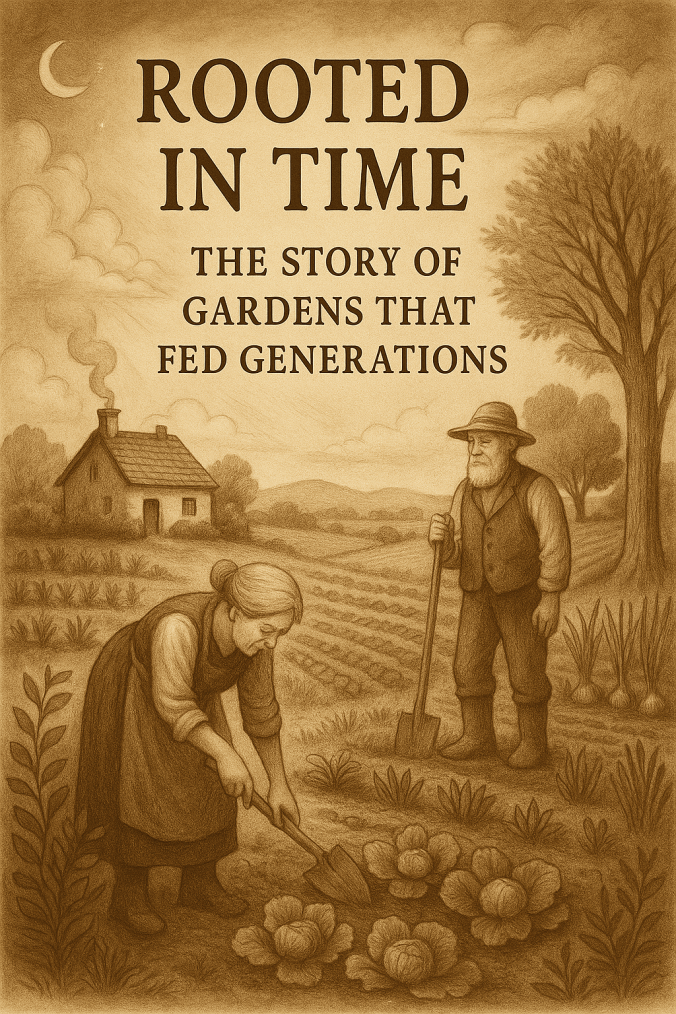
Beyond estate walls, ordinary families continued to garden with quiet resolve. Cottage gardens made no distinction between ornament and sustenance. Hollyhocks rose beside cabbages, lavender brushed against onions, and bees drifted easily between blossoms and beans. Every inch of ground was valued. These gardens were shaped by thrift, by climate, by tradition, and by the simple question of what would grow. They were places of resilience and charm, carrying the unmistakable imprint of the families who tended them.
The twentieth century brought upheaval, and with it a renewed urgency for ancestral gardening wisdom. During both World Wars, and especially the second, gardens in Britain became symbols of national resilience. Lawns, parks, and private land were turned into allotments almost overnight. The Dig for Victory campaign called on families to grow their own food, and people answered with spades, determination, and hope. Grandparents who had never planted before learned quickly. Children were taught to weed, water, and harvest. Potatoes, carrots, onions, and cabbages marched across once-ornamental ground. Flowers were not abandoned but tucked along borders, reminders that beauty still mattered even when times were hard.
These wartime gardens carried a spirit unlike any before. They were communal and deeply emotional spaces. An allotment was an act of contribution, independence, and care for others. Neighbors shared seeds, advice, and surplus produce. Meals were shaped by what had been grown with one’s own hands. Gardening became both nourishment and quiet defiance, a shared language spoken through soil-stained fingers.
After the wars, modern conveniences slowly reshaped gardening. Packaged seeds, garden centres, and mechanized tools made growing easier and more accessible. Yet the ancestral impulse never faded. Many families continued to garden not out of necessity alone, but because it felt grounding and true, a way to stay connected to something older and steadier than modern life.
When we look back, ancestral gardens reveal more than methods of cultivation. They tell stories of patience, continuity, and care. They show how families understood land not as something to conquer, but as a partner in survival. Gardens were classrooms where children learned responsibility, sanctuaries where elders shared quiet wisdom, and places where grief softened and joy took root. They were inheritances not of wealth, but of knowledge, habit, and love.
Even now, when we press a seed into soil or pause to admire a flower blooming beside vegetables, we echo those who came before us. We repeat gestures shaped across centuries, honoring the same cycles of planting and harvest. Ancestral gardens remind us that before shelves were full and choices endless, people relied on the earth and on one another. They found nourishment not only in what they grew, but in the act of growing itself.
These gardens, whether humble or grand, were love letters written in green. And though time has changed their shape, their spirit still whispers through every patch of turned soil, inviting us to remember where we come from, and how deeply we belong to the land.
Until next time
,
Toodle pip,

Yours, Lainey.
 Intwined