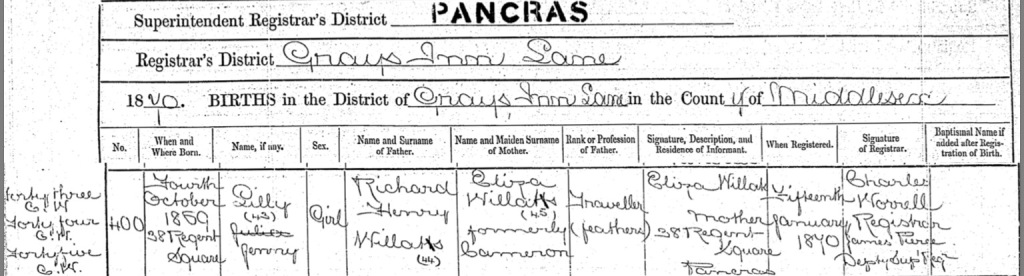
In the elegant embrace of Number 38, Regent Square, Greys Inn Lane, Pancras, Middlesex, a new prominent family’s legacy began to unfurl on a tranquil Monday, the 4th of October, 1869. Within the walls of their abode, amidst the refined airs of Middlesex, a luminary graced our lineage—a luminary named Lilly Jenny Willats, whose life radiated with the quiet splendour of an era steeped in grace and privilege.
Born into the embrace of her family, Lilly’s arrival heralded a new dawn in the branches of our heritage. Her story unfolded against the backdrop of a society at the cusp of transformation, an era where gentility intertwined with the winds of change whispering through the lanes of Pancras. Within the fabric of Middlesex, young Lilly embarked upon a journey colored by the sophistication of her family’s status, yet embroidered with threads of resilience and unspoken determination. Her footsteps echoed through a world where horse-drawn carriages wove through cobblestone streets, amidst the symphony of progress and tradition harmonizing in the air. Join me on this passage through time that transcends the mere recounting of history. Together, let us unveil the layers of Lilly Jenny Willats’ life, a life illuminated by the grace of her presence, the depth of her character, and the steadfastness that defined an era marked by elegance and change. As we peel back the veils of time, we discover not just a familial narrative, but a portrait of a woman whose legacy continues to resonate, an embodiment of an epoch distinguished by poise, fortitude, and the enduring grace that echoes through the corridors of our heritage..

Lilly Jenny Willats was born on Monday the 4th of October, 1869, at, Number 38, Regent Square, Greys Inn Lane, Pancras, Middlesex, England. Lily’s mother Eliza Willats bed Cameron, registered her birth on the 15th January 1869. She gave Lily’s Father Richard Henry Willats, whose occupation was listed as a Traveller ( Feathers) and their abode as Number 38, Regent Square, Pancras.
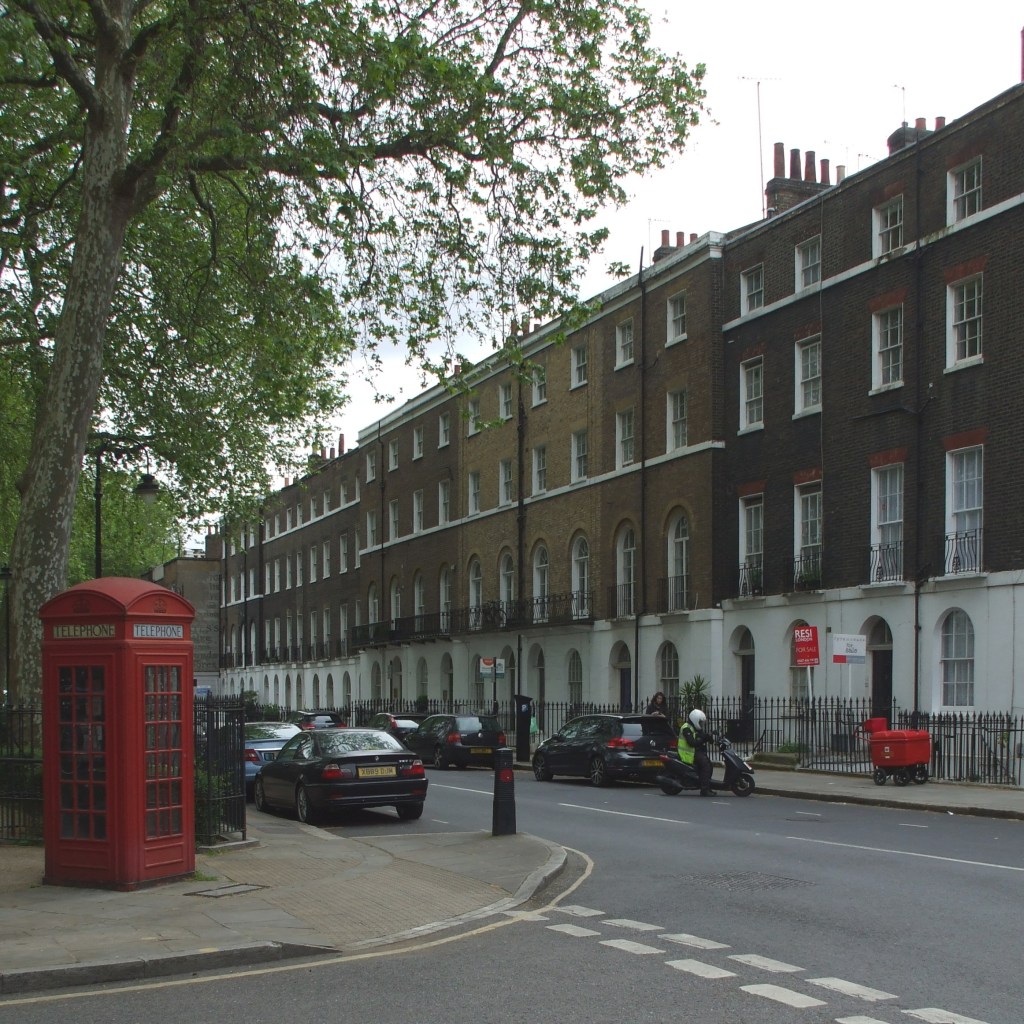
Regent Square is a public square and street in the London Borough of Camden in London, England. It is located near Kings Cross and Bloomsbury. Regent Square was laid out around a large garden in the historic Harrison Estate and first occupied in 1829, forming a garden square similar to more famous ones to the west in Bloomsbury. The southern side of the square is composed of its original buildings, and is Grade II listed in its entirety. Also listed is the phone box within the square gardens themselves. Regent Square was home to the National Scotch Church (the 'Caledonian Church') – the first purpose-built Scottish Gaelic Presbyterian church in London – which was built between 1824 and 1827. In 1843, it became an English Presbyterian church. The square was also home to St Peter's Church, a Church of England church. Both churches were struck by bombs in World War II and subsequently demolished.
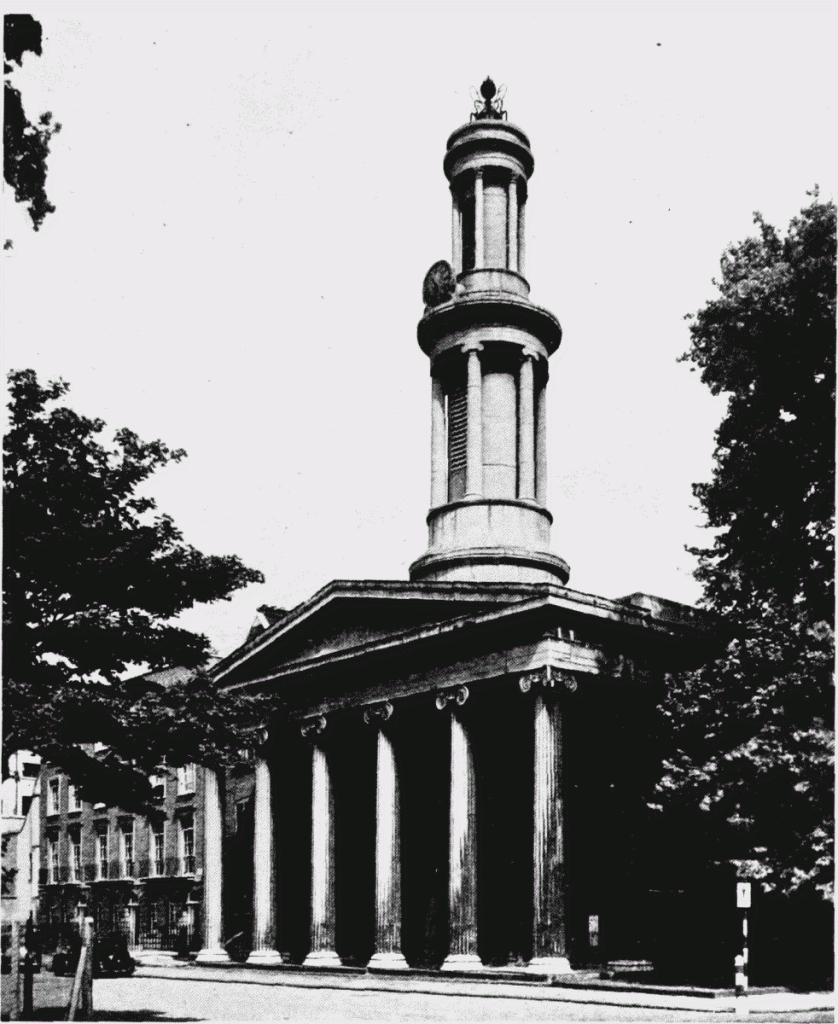
Richard and Eliza baptised Lillian Jenny Willats, on Sunday the 31st of October 1869, at Saint Peter Church, Saint Pancras, London, England. It was a private baptism. Her father Richard’s occupation was given as Warehouse Man and their abode as 38 Regent Square.

St Peter's Church was an Anglican church in Regent Square in the London Borough of Camden. It was built in 1826, and was demolished after being badly damaged in World War II.
Regent Square was laid out after 1809, when development of the Harrison Estate, owned by the brickmaker Thomas Harrison, was passed by an Act of Parliament. The Presbyterian Church (completed in 1827) and St Peter's Church were the first buildings in the square.
St Peter's Church stood on the east side of the square. The architects were William Inwood and his son Henry William Inwood, and was built from 1822 to 1826. Like their best known work, St Pancras New Church, it was designed in Greek Revival style. The west front had an Ionic hexastyle portico the width of the church; above this was an entablature, which continued round the building, and a pediment. There was a circular tower of two stages, with six columns around each stage.
It was consecrated by the Bishop of London, William Howley, on 8 May 1826. The first incumbent was William Harness, who remained until 1844, and the first organist was James Calkin, who held the post for thirty years.
It was a district chapelry until 1868, when a separate parish was created. The building was badly damaged during World War II, and was later demolished. The parish was united in 1954 with Holy Cross Church, St Pancras.
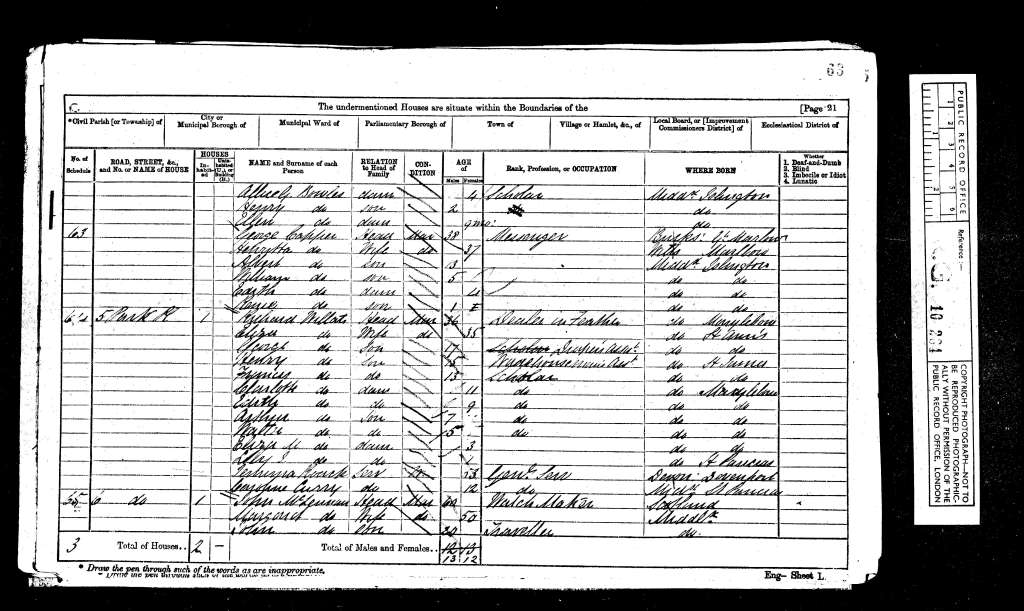
Lilly, her parents Richard, and Eliza, and his siblings, Walter, Henry, Eliza, Francis, Edith, George and Charlotte, were residing at, Number 5, Park Road, Islington, Middlesex, England, on Sunday 2nd April 1871. Richard was working as a Dealer in feathers. The family had two General Servants, residing with them, Jemima Roac and Caroline Curry.
5 Park Place, London is a 3 bedroom freehold terraced house – it is ranked as the 3rd most expensive property in N1 3JU, with a valuation of £1,432,000. Since it last sold in July 2016 for £1,450,000, its value has decreased by £18,000. It is now a sleek contemporary townhouse within a private gated mews, arranged over three floors with an allocated parking space.
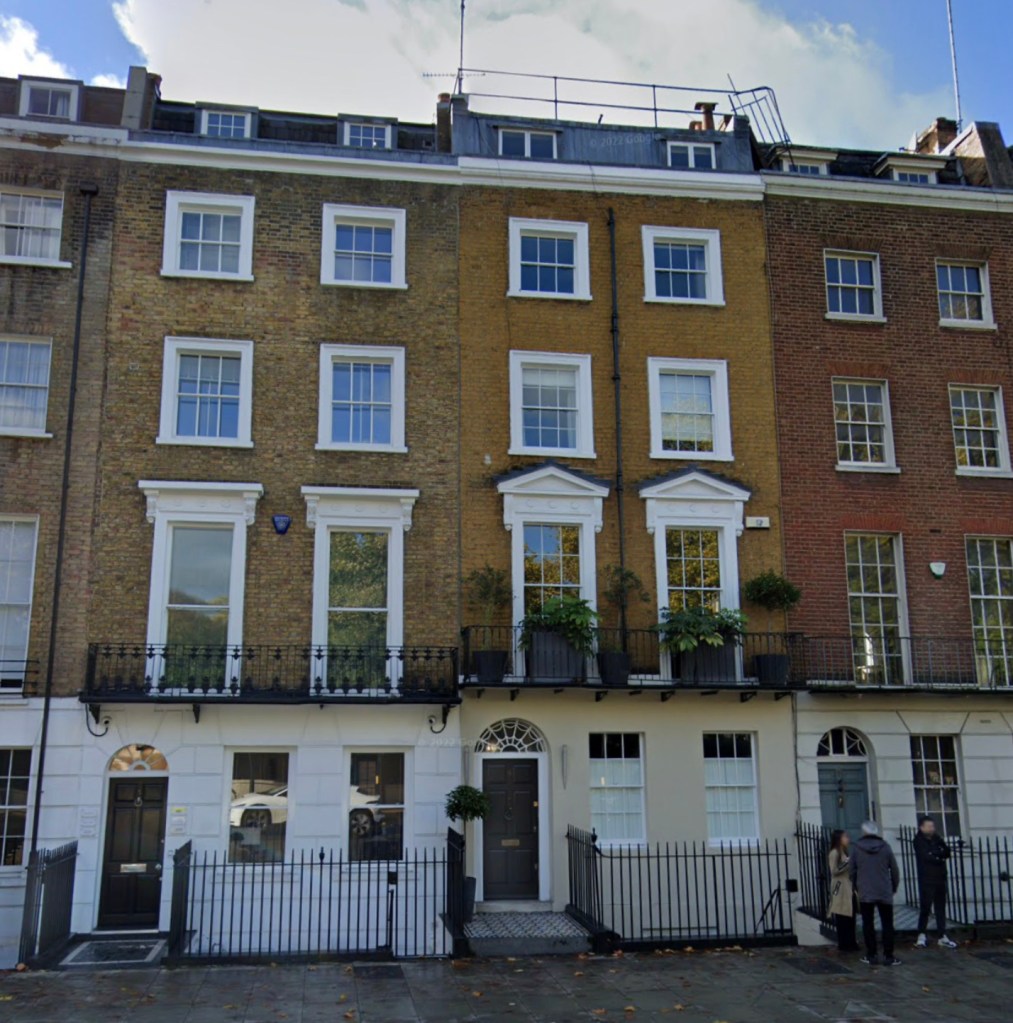
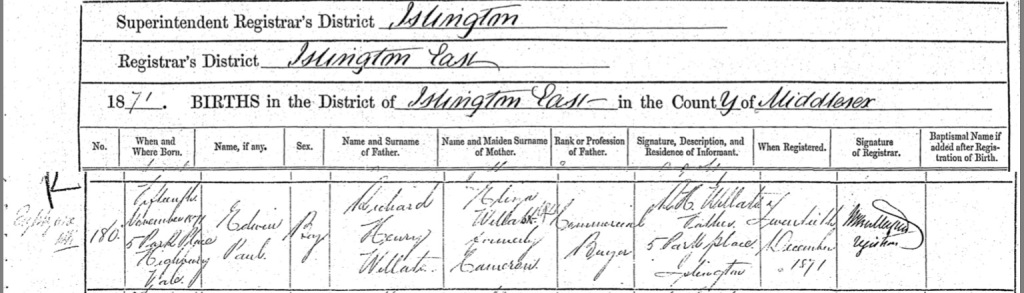
Lilly’s brother, Edwin Paul Willats, was born on Wednesday the 8th of November, 1871, at Number 5, Park Place, Highbury, Islington, Middlesex, England. Their father Richard Henry Willats, registered Edwins birth on Wednesday December 20th 1871. He gave his occupation as a Commercial Buyer and their abode as, Number 5, Park Place, Islington.
Richard and Eliza, baptised their son, Edwin Paul Willats, on Friday the 8th of December 1871, at St. Mary’s Church, Islington, Middlesex, England. Richards occupation was given as a Warehouse Man and their abode as 5 Park Place.

The Church of St Mary the Virgin is the historic parish church of Islington, in the Church of England Diocese of London. The present parish is a compact area centered on Upper Street between Angel and Highbury Corner, bounded to the west by Liverpool Road, and to the east by Essex Road/Canonbury Road. The church is a Grade II listed building.
The churchyard was enlarged in 1793. With the rapid growth of Islington, it became full and closed for burials in 1853. It was laid out as a public garden of one and a half acres in 1885.

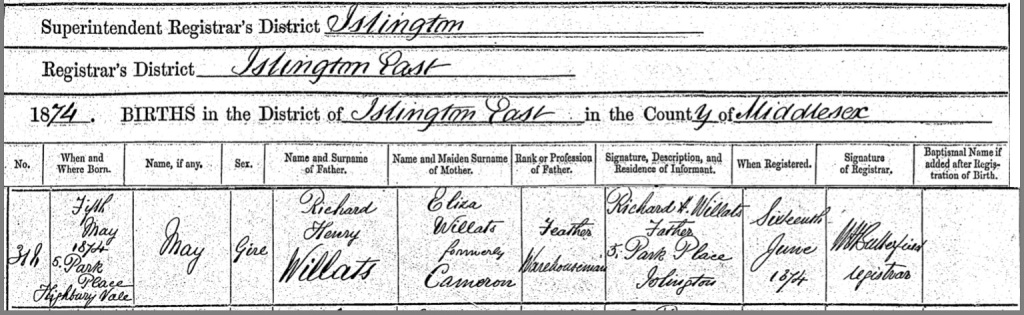
Lilly’s sister, May Claretta Willats, was born on Tuesday the 5th of May, 1874, at 5 Park Place, Highbury, East Islington, England.
Their father Richard Henry Willats registered May’s birth on Tuesday the 16th of June 1874. He gave his occupation as a Feather Warehouseman and their abode as 5 Park Place, Islington.
Richard and Eliza, baptised May, on, Sunday the 9th of August, 1874, at Christ Church, Highbury, an Anglican church in Islington, north-west London, situated next to Highbury Fields. Richard gave his occupation as a Manufacturer and their abode as, Highbury.

Christ Church, Highbury is an Anglican church in Islington, north London, next to Highbury Fields.
The site was given by John Dawes, a local benefactor and landlord, and the church was built by Thomas Allom in a cruciform shape with a short chancel, transepts, and nave from 1847 to 1848. Bridget Cherry and Nikolaus Pevsner write that Christ Church Highbury 'is a successful and original use of Gothic for a building on a cruciform plan with broad octagonal crossing. The cross-plan with broad nave and crossing were popular for churches in the low church tradition where an effective auditorium for the spoken word was preferred to a plan designed for an elaborate liturgy.'
Since then, several changes have been made to the church, including the addition of a balcony in 1872, and new rooms for children's work and fellowship in 1980.
The church was opened in 1848 by Reverend Matthew Anderson Collisson, son of Irishman Daniel Marcus Collisson and his wife Catherine.
A special service booklet was published to celebrate the occasion: "On the Consecration of the New Church at Highbury, Dedicated to the Saviour as 'Christ's Church'", Reverend M A Collisson.

Lilly’s brother, Percy Sidney Willats, was born on Wednesday the 1st of September 1875, at Number 9, Park Place, Highbury, Islington, Middlesex, England.
His father Richard Henry Willats, registered Percy’s birth on Saturday the 9th October, 1875, in Islington.
He gave his occupation as a, Fancy Warehouseman and their abode as, 9, Park Place, Islington.

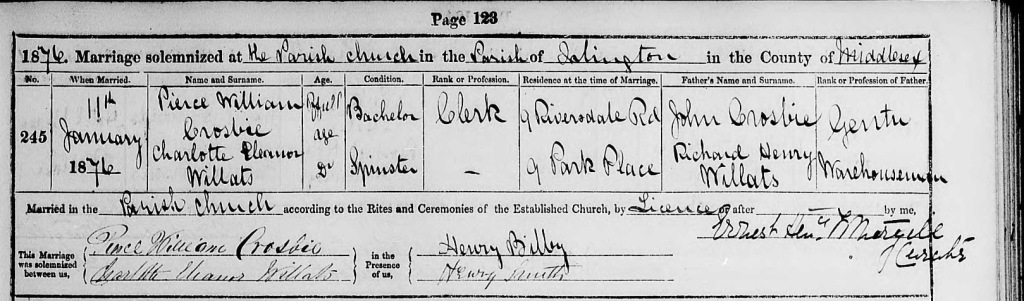
Lilly’s Sister, Charlotte secretly married my licence a young Bachelor named Peirce William Crosbie, on the 11th of January 1876, at St Mary Church, Islington, Middlesex, England. They both stated they were of full age, even though Charlotte was only 16.
Their witnesses were, Henry Billey and Henry Smith.
Charlotte gave her abode as, 9 Park Place and Pierce gave his As 9 Riverdale Road. Pierces occupation was given as a Clark.
They gave their fathers names and occupations as, Richard Henry Willats, a Warehouseman and John Crosbie a Gentu.
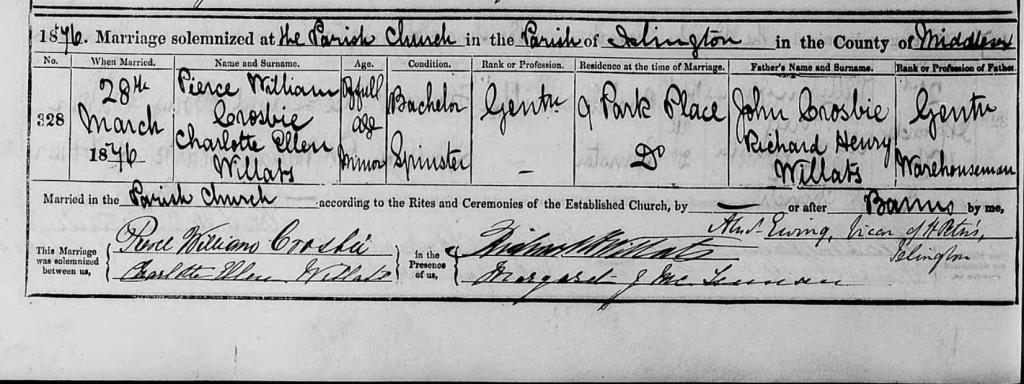
Lilly’s sister, Charlotte Ellen Willats married bachelor, Pierce William Crosbie, for a second time, this time not in private.
They married on Tuesday the 28th of March, 1876, in St Mary’s Church, Islington, Middlesex, England.
Charlotte was a minor and Pierce was of full age. Pierces occupation was given as a Gentu.
They gave their residence as 9 Park Place and gave their fathers names and occupations as, Richard Henry Willats, a Warehouseman and John Crosbie a Gentu.
Their witnesses were Richard Willats and Charlottes future sister in-law Margaret Jane McLennon.
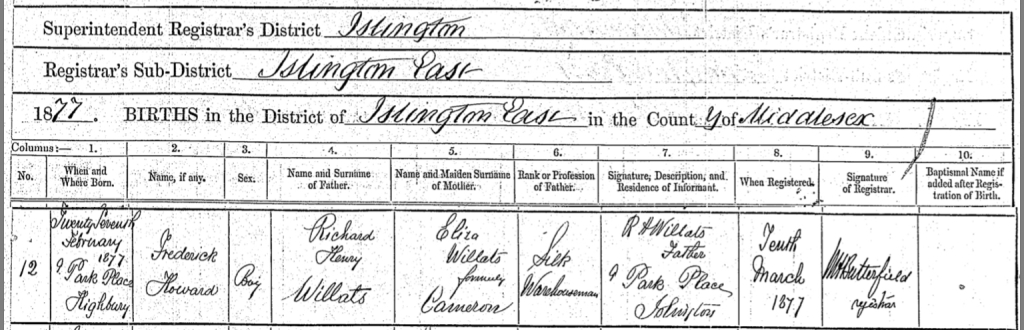
Lilly’s brother, Frederick Howard Willats was born on on Tuesday the 27th of February 1877 at, Number 9, Park Place, Highbury, Islington, Middlesex, England. His father Richard Henry Willats registered Frederick’s birth on Saturday the 10th March 1877. Richard gave his occupation as a Silk Warehouseman, and their abode as, 9 Park Place, Islington.
Her brother 24-year-old, bachelor, and publican, Henry Richard Willats married 23 year old, spinster, Amelia Etheredge, daughter of John Etheredge, on Tuesday the 30th of March, 1880 at All Saints Church, West Ham, Essex, England. Henry gave his residence as West Ham and Amelia as, Saint Paul's, Shadwell. They gave their fathers names and occupations as, Richard Henry Willats, a Licensed Victualler and John Etheredge, an Engineer. Their witnesses were Charles Henry Etheredge and Alice Catherine Etheredge.

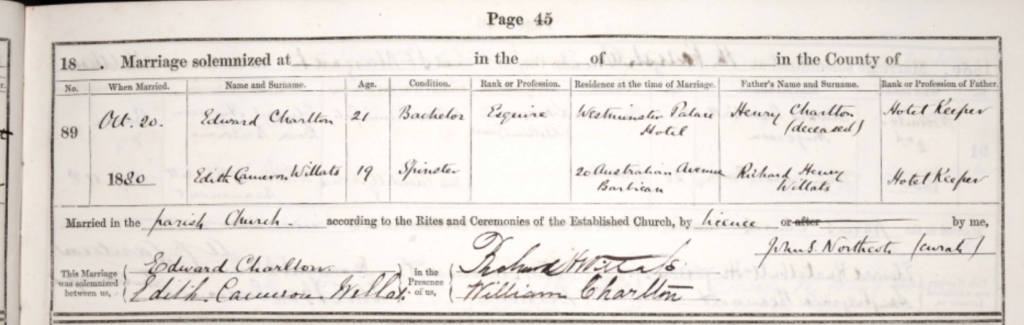
And her sister, Edith Cameron Willats married 21-year-old Bachelor, Edward Charlton, an Esquire, on Wednesday the 20th of October, 1880, at St Margaret Church, George Hanover Square, Westminster, London, England. They gave their fathers names and occupations as, Richard Henry Willats, a Hotel Keeper and Henry Charlton, a Hotel Keeper. Edith gave her residents as, 20 Australian Avenue, Barbican, Silk Street, St Giles, Westminster, London, EnglandAnd Edward gave his as Westminster Palace Hotel. Their witnesses were, Richard Willats and William Charlton.
On Sunday the 3rd April 1881, Lilly, her parents Richard and Eliza, and her siblings, Frank, Arthur, Eliza Mary, Walter, Edwin, May, and Percy Sidney, were residing at Number 61, Ambler Road, Islington, Middlesex, England. They had a guest named Henry Anstey staying with them. Richard was a Publican, out of business. Frank was a General agent, Arthur a Clerk solicitors, Walter a Clerk stock exchange and Eliza, Lillian, Edwin, May and Sidney were scholars. Henry Anstey was a Enumerator (no occ).

Lilly’s brother, 23-year-old, bachelor, Francis Montague Allen Willats, married 25-year-old, spinster, Margaret Jane McLennon, at St John’s Church, Hornsey, Middlesex, England, on Wednesday the 6th of July, 1881. Francis was working as an agent at the time of his marriage. They gave their fathers names and occupations as Richard Henry Willats, an Agent and John McLennon, a Chronometer Maker. Francis gave his abode as, 145 Blackstock Road and Margaret gave hers as, 84, Finsbury Park Road. Their witnesses were John McLennon and Jessie McLennon.

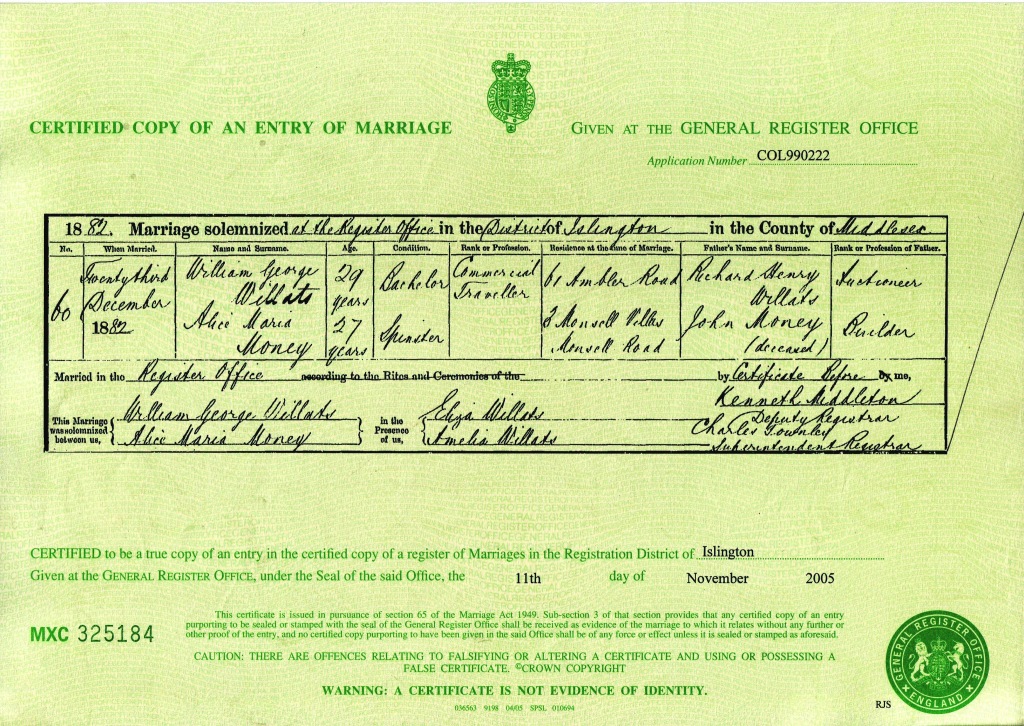
Lilly’s Half-brother, 29-year-old, bachelor William George Willats, a Commercial Traveller, married 27-year-old spinster, Alice Maria Money, at The Register Office, Islington, Middlesex, England, on Saturday the 23rd of December, 1882. William gave his occupation as a Commercial Traveller. They gave their fathers names and occupations as, Richard Henry Willats, an Auctioneer, and John Money (deceased) a Builder. Their witnesses were, Eliza Willats and Amelia Willats.
William George Willats was the son of Eliza Willats nee Cameron and Lilly’s parental uncle, George John Willats. (Her fathers brother). You can read all about his life here and here.
Across the pond in Buffalo, Erie, New York, United States of America, Lilly’s brother, Arthur Charles Willats married Josephine Mary Conley in 1886 when he was 23 years old. Unfortunately at present I haven't come across any documentation for their marriage only census records and births of their children. Being in the United Kingdom, research in America isn't the easiest especially ordering certificates etc.
Lilly Jenny, her parents, Richard Henry, Eliza and her siblings, May, Walter James, Percy Sidney, Eliza Mary, Frederick Howard, and Edwin Paul Willats, were residing at Number 27, Kings Road, Hornsley, Islington, Middlesex, England, on the eve of Sunday the 5th of April, 1891, when the census was taken. Richard was working as a Self Employed Survivor, Walter was a Stockbroker Clarke and Edwin was a Survivors Clarke.

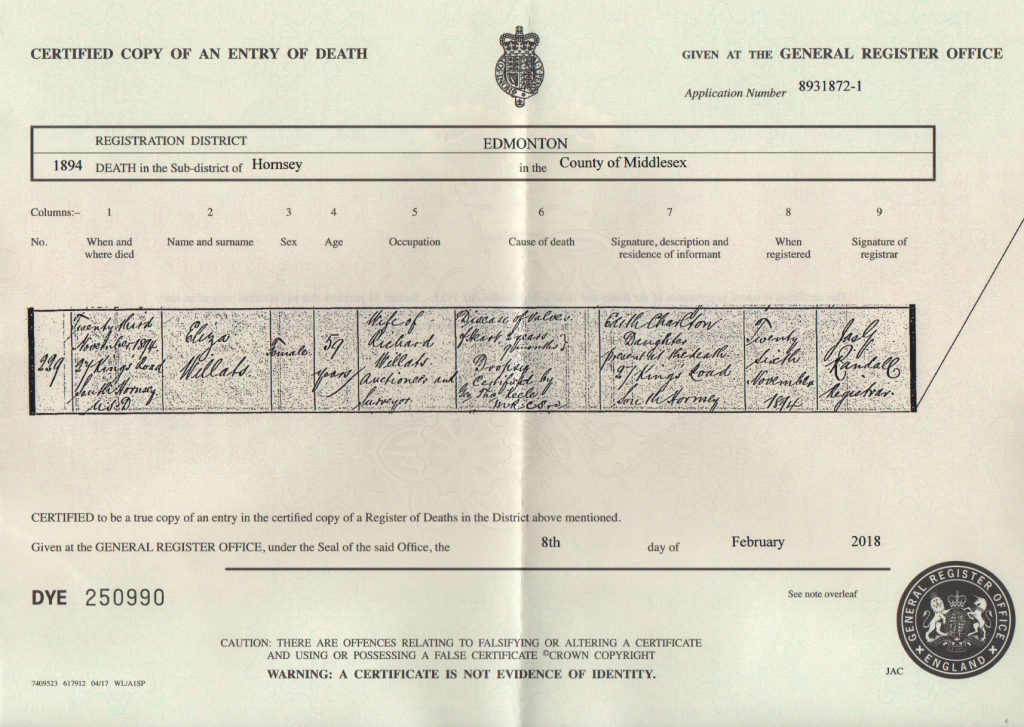
Lilly’s mum, Eliza, passed away on Friday the 23rd of November 1894, at Number 27, Kings Road, South Hornsey, Edmonton, Middlesex, England, when she was 59 years old. Eliza died from, disease of valves of the heart two years nine months and dropsy. Her daughter Edith Charlton of Number 27, Kings Road, South Hornsey, was present and registered Eliza’s death on the 26th of November 1894.
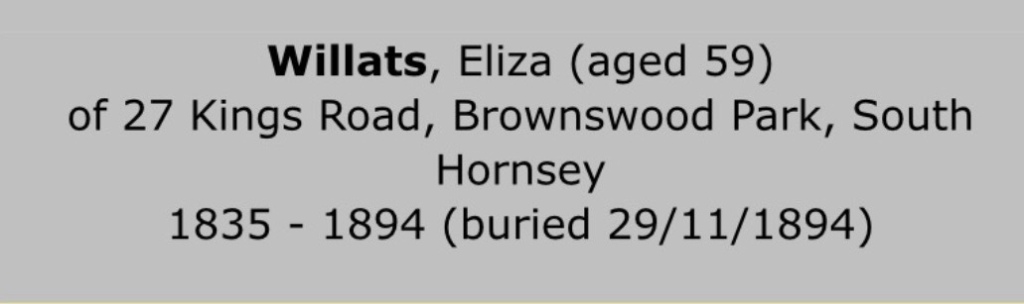
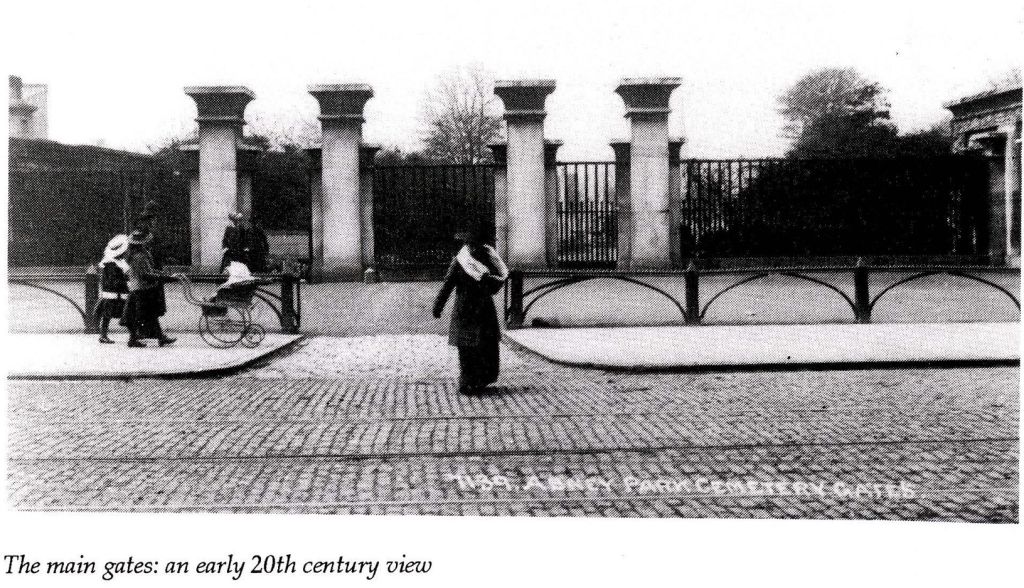
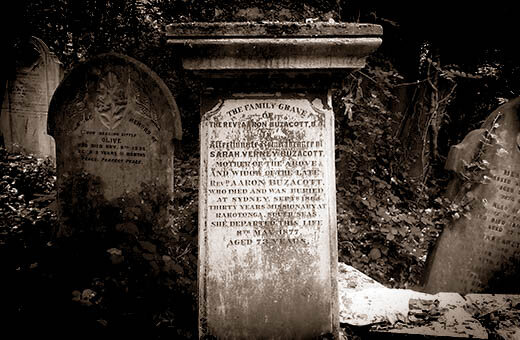
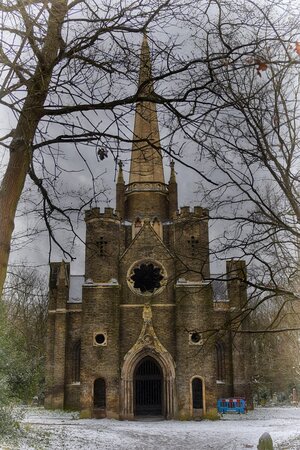
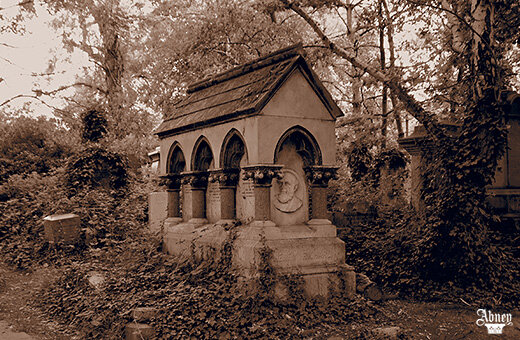
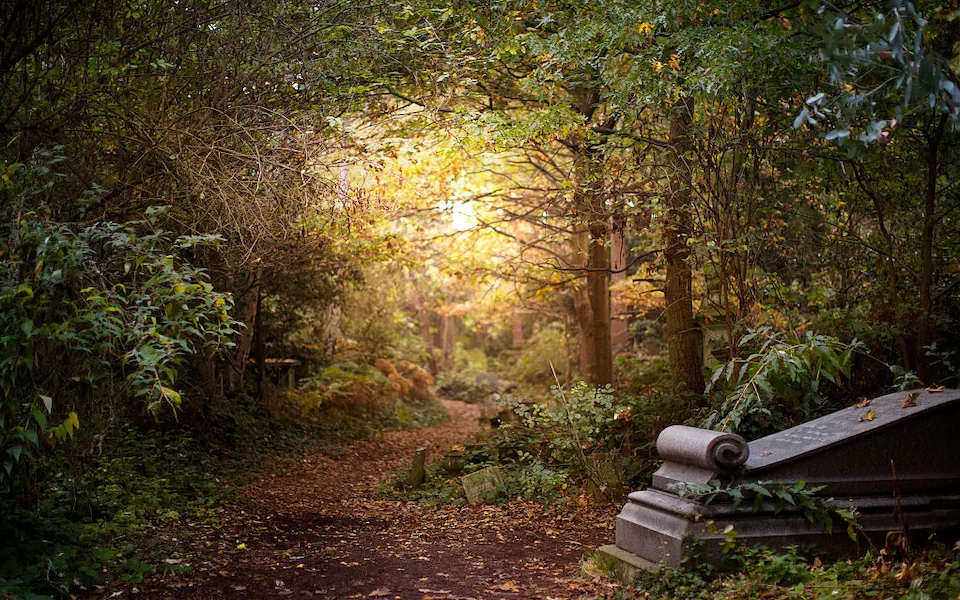
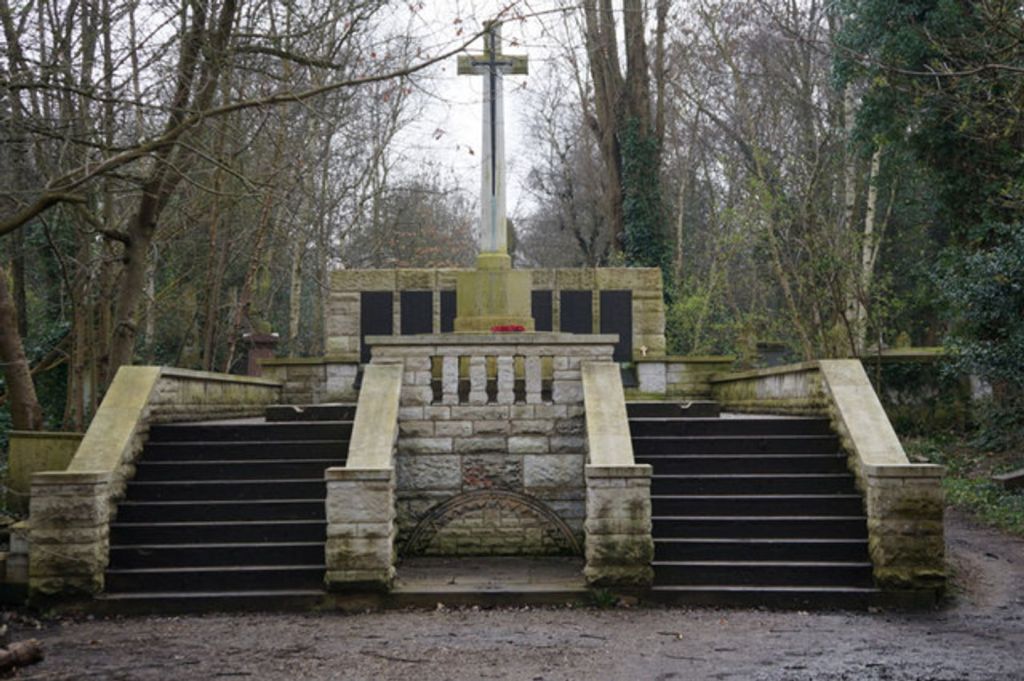
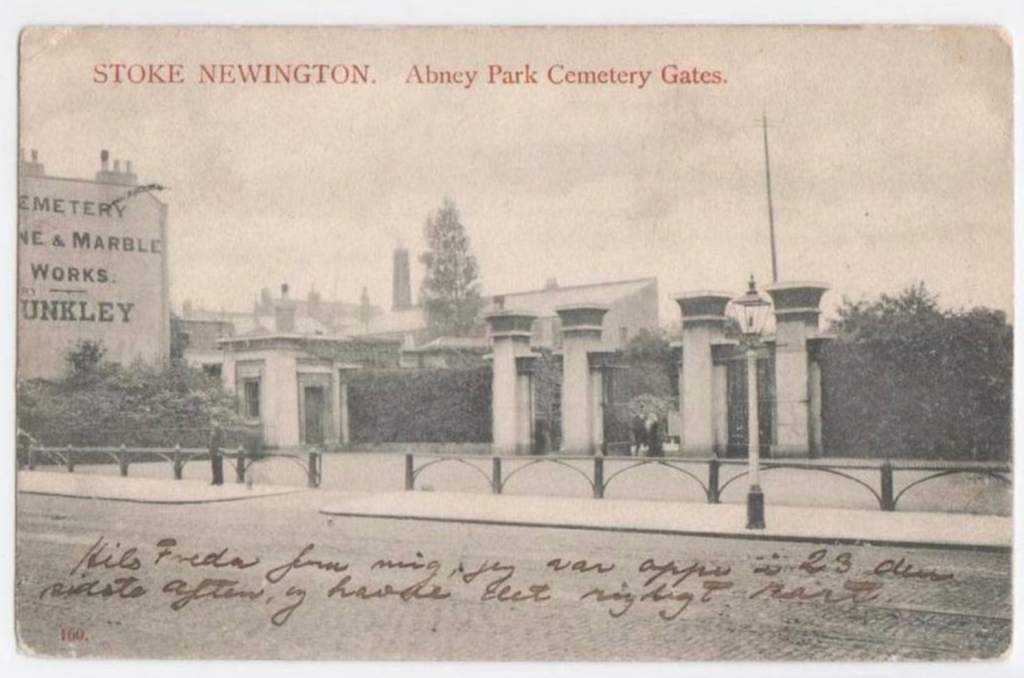
The Willats family, family, laid Eliza to rest, in, Abney Park Cemetery, Stoke Newington, Middlesex, England, on Thursday the 29th of November, 1894, in D06, Grave 092431. Her abode was given as, Number 27, Kings Road, Brownswood Park.

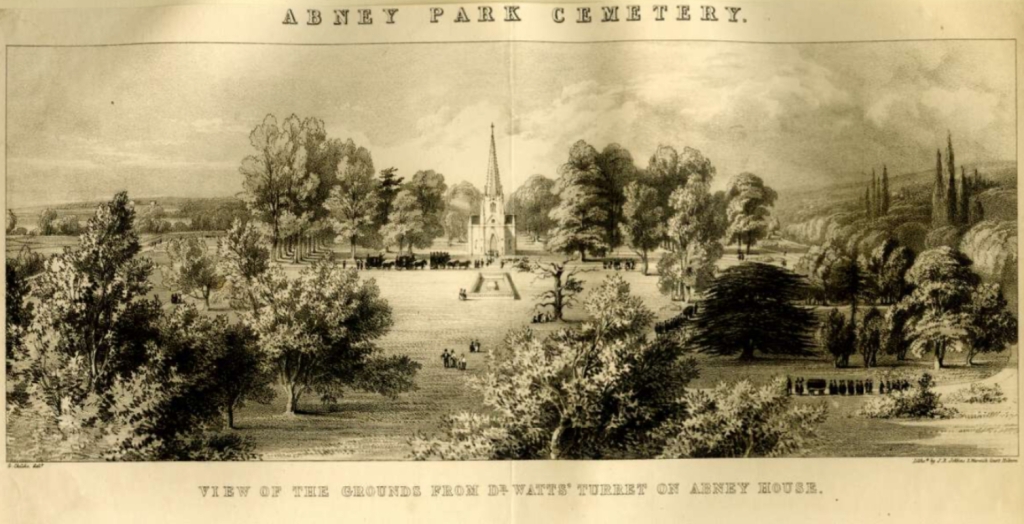
When Eliza died Lilly’s father, Richard Henry, purchased 2 graves in Abney Park Cemetery, which was then the beautiful garden of a big house turned into a private cemetery. Each grave cost, 3 guineas and took six interments.
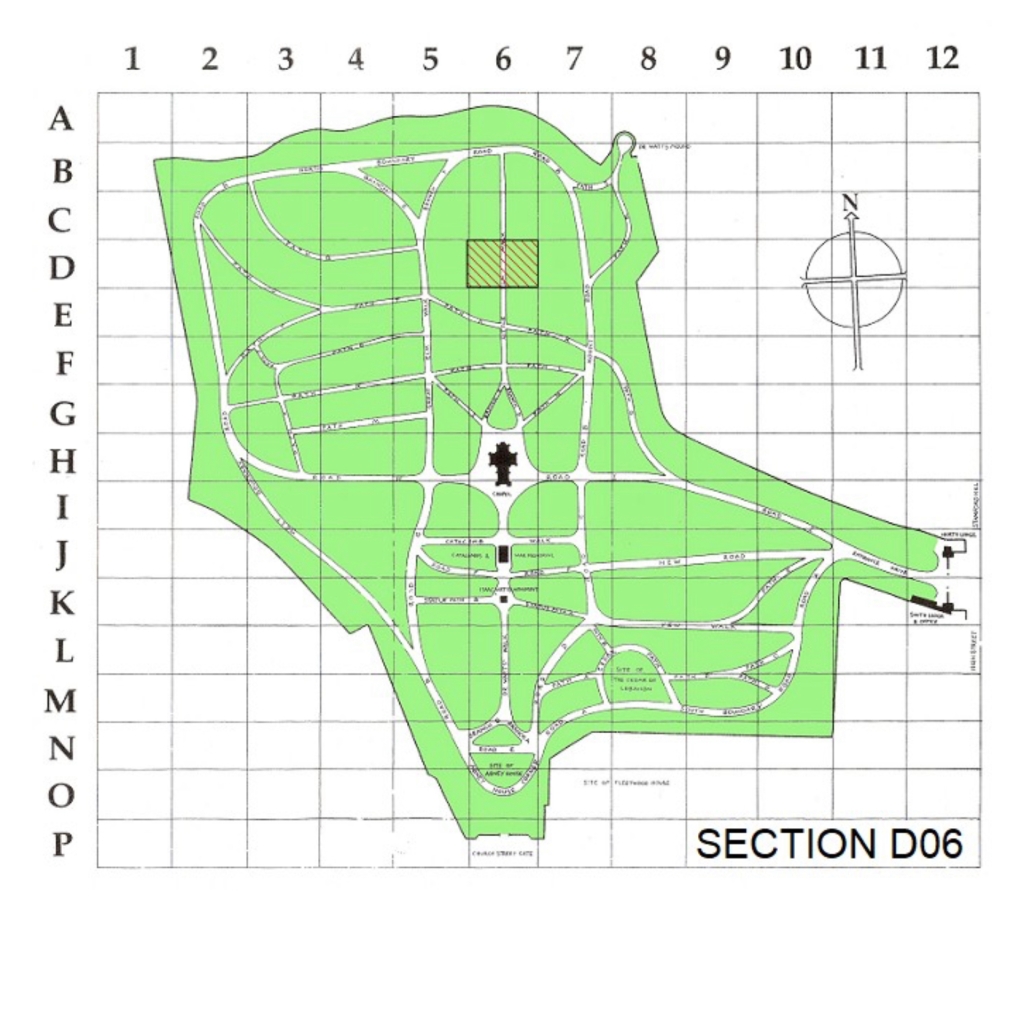
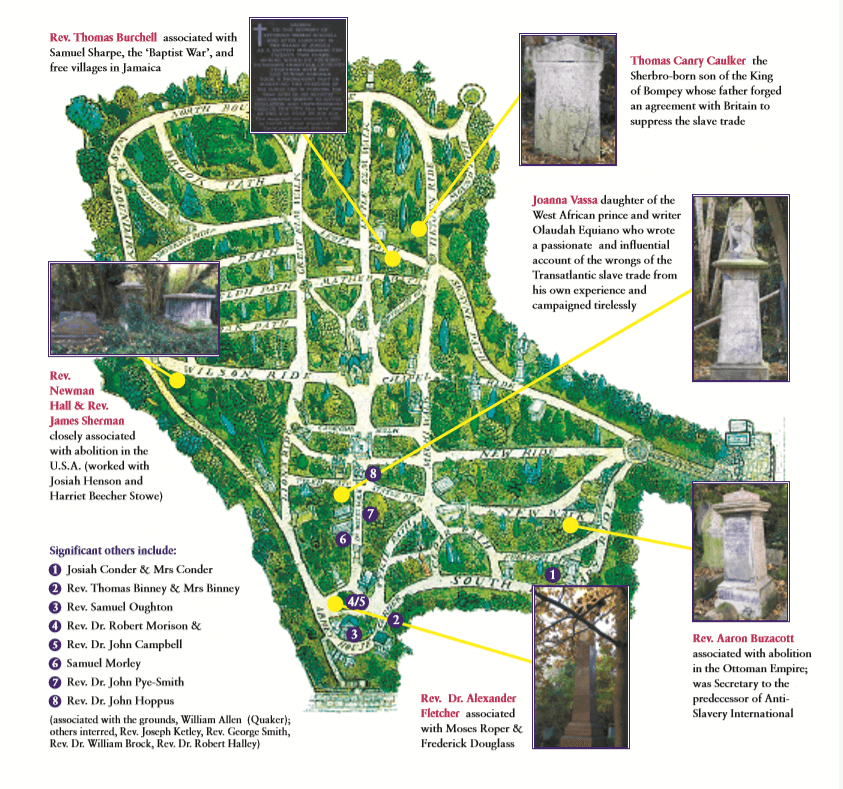
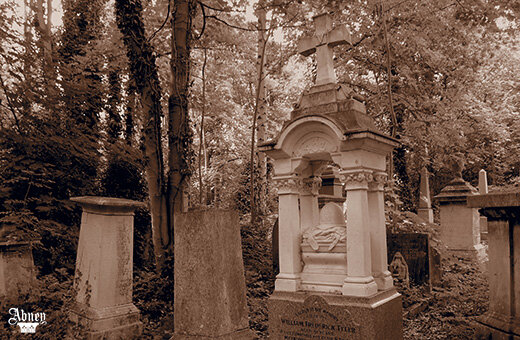
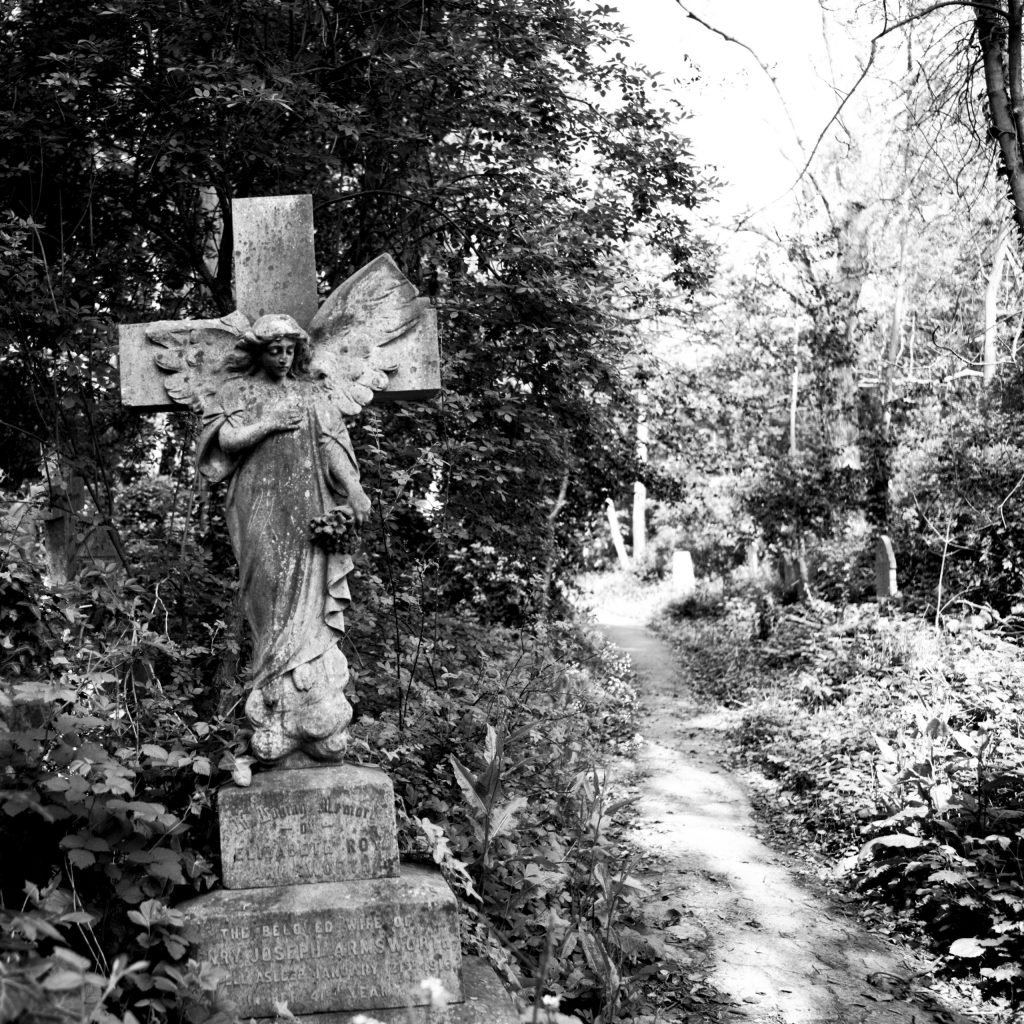
Abney Park Cemetery, located in Stoke Newington, North London, is one of the "Magnificent Seven" garden cemeteries established in the Victorian era. Opened in 1840, this historic cemetery has a unique charm, blending natural beauty with rich history, and serves as a testament to Victorian funerary customs and urban planning.
The cemetery was originally conceived as a non-denominational burial ground, a revolutionary idea at the time. This progressive approach was largely influenced by its founders, George Collison and the Nonconformist philanthropist, Sir Thomas Abney. Unlike many other cemeteries of the era, Abney Park was designed to accommodate people of all faiths and social standings, reflecting the inclusive ethos of its creators. This vision is evident in the diversity of the monuments and graves scattered throughout its grounds.
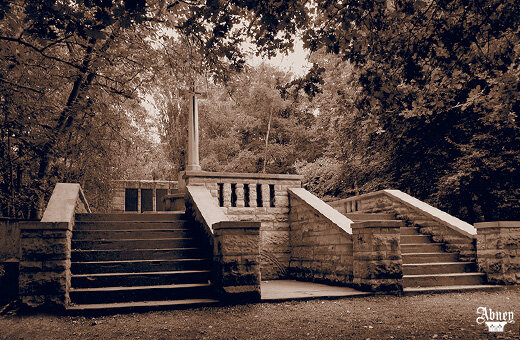
One of the most striking features of Abney Park Cemetery is its layout. Designed as an arboretum and a landscaped garden cemetery, it offers a peaceful retreat from the hustle and bustle of city life. The cemetery is home to a wide variety of trees and plants, carefully selected to create a serene and contemplative environment. Visitors can stroll along winding paths lined with towering oaks, weeping willows, and ancient yews, all contributing to the cemetery's tranquil atmosphere. The Victorian fondness for botany is evident in the carefully curated flora, making it not just a place of remembrance, but also a sanctuary for nature enthusiasts.
At the heart of Abney Park Cemetery stands the Gothic chapel, an architectural gem designed by William Hosking. Although now a ruin, the chapel remains a poignant symbol of the cemetery's historical and cultural significance. Its crumbling walls and ivy-covered façade evoke a sense of melancholy beauty, reminiscent of Romantic literature and art. The chapel originally served as a place for funeral services and was a focal point for the community, embodying the cemetery's role as a public space for reflection and mourning.
The graves and monuments at Abney Park Cemetery tell countless stories of Victorian life and death. The cemetery is the final resting place of many notable figures, including the famous hymn-writer Isaac Watts, who significantly influenced English hymnody. His tomb, along with those of other prominent individuals like the anti-slavery campaigner and poet James Stephen, and the pioneering feminist and social reformer Annie Besant, make the cemetery a historical treasure trove.
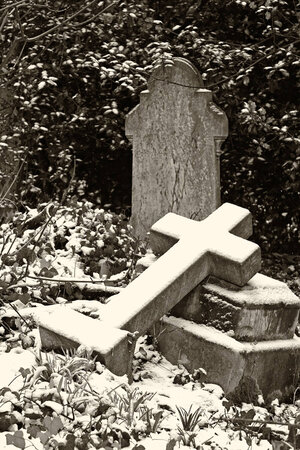
Despite its serene beauty, Abney Park Cemetery has faced challenges over the years. By the mid-20th century, the cemetery had fallen into neglect, with many graves and monuments succumbing to the ravages of time and nature. However, the Abney Park Trust, established in the 1990s, has worked tirelessly to restore and maintain the cemetery, ensuring its preservation for future generations. Their efforts have transformed the cemetery into a cherished green space, a haven for wildlife, and a site of historical education and community events.
Today, Abney Park Cemetery is a place where history, nature, and community intersect. It offers a unique glimpse into Victorian attitudes towards death and remembrance, while also serving as a green oasis in the heart of London. Visitors can explore its winding paths, discover its rich history, and enjoy its natural beauty, making it a poignant and peaceful retreat.
In addition to its role as a burial ground, Abney Park Cemetery also hosts a variety of events and activities throughout the year. From guided historical tours to wildlife walks and educational workshops, there are numerous opportunities for visitors to engage with the cemetery's rich heritage and diverse ecology. These events help to keep the spirit of the cemetery alive, fostering a sense of community and continuity amidst the tranquil surroundings.
Abney Park Cemetery stands as a testament to the enduring legacy of the Victorian era's approach to death, nature, and urban space. Its blend of historical significance, architectural beauty, and natural tranquility make it a unique and valuable part of London's cultural landscape. As a place of remembrance and reflection, it continues to offer solace and inspiration to all who visit.


In 1894 England, the grieving process was deeply influenced by societal norms, religious practices, and family expectations, and it could be especially profound for a young daughter. The Victorian era placed a significant emphasis on mourning customs, which were both elaborate and stringent. The death of a loved one, particularly a parent, would thrust a young girl into a world of structured bereavement, with its own set of rituals and expectations.
For a teenage daughter in 1894, the death of a parent would be a life-altering event. Grieving began with the immediate aftermath of the death, where the family would gather to mourn. This period was marked by an intense display of sorrow, often manifesting in physical expressions such as weeping and wailing. The Victorian belief in the cathartic nature of tears meant that public displays of grief were not only accepted but expected.
Funerals were solemn and dignified occasions, reflecting the high importance placed on proper send-offs. They were typically held in churches, with family members and friends paying their respects. A teenage daughter would likely be expected to play a significant role in these ceremonies, perhaps helping to prepare the body for burial or participating in the service. Victorian funerals were characterized by their formality, with elaborate black mourning attire and specific roles for each family member.
The mourning period was strictly defined by societal standards. For a teenage daughter, this meant wearing mourning clothes, usually made of heavy black crepe, for an extended period. Immediate family members, especially daughters, were expected to don these somber garments for at least a year. The stark black of mourning attire was not merely a symbol of grief but a public declaration of one’s loss, serving as a visual cue to society of the mourner’s status and the depth of their sorrow.
During this time, a teenage girl’s social life would be significantly restricted. The mourning period imposed limitations on participation in social events, reflecting the seriousness with which Victorians approached the process of grieving. Balls, parties, and other gatherings were considered inappropriate for those in mourning, and the young girl would be expected to lead a subdued life, focused inward on her loss.
Religion played a central role in the grieving process. Many Victorians were devoutly Christian, and their faith provided a framework for understanding and coping with death. For a teenage daughter, this often meant finding solace in prayer, attending church services, and perhaps seeking guidance from a clergy member. The belief in an afterlife offered comfort, with the hope of reuniting with lost loved ones in heaven serving as a source of strength and consolation.
Family dynamics during this period were also crucial. A teenage daughter might find herself assuming new responsibilities, especially if the deceased was a primary caregiver. This shift could involve taking on household duties or caring for younger siblings, adding to the emotional burden of her grief. The family unit would often come together in support, providing a network of comfort and shared sorrow.
Literature and poetry were another outlet for expressing and processing grief. The Victorian era was rich with mourning literature, which a teenage girl might turn to in her time of loss. These works often articulated the pain of bereavement and the hope of eventual reunion, resonating deeply with the personal experiences of those in mourning.
After loosing my father at a young age I fully understand the grief Lilly must have felt after loosing her mother and role model. I picture her sitting at her dressing table, her quill in hand, writing a letter to her beloved oldest sister Charlotte. I imagine it would read something along the lines of this.
My Dearest Charlotte,

As I sit down to write this letter, my heart feels heavy with the weight of our recent loss. The house feels so empty without Mother’s gentle presence, and every corner seems to whisper her name. I know you feel the same sorrow, and I hope that in sharing my thoughts, we can find some comfort together.
Mother was our guiding star, the light that brightened our days and warmed our hearts. Her love was a constant, unfailing and true, wrapping us in a cocoon of safety and affection. Now that she is gone, it feels as though a part of us has been taken away, leaving behind a void that words cannot fill.
I think back to the times we spent by her side, listening to her stories, her laughter ringing like a melody in our ears. Do you remember how she would tuck us in at night, her voice soothing us into dreams? Or the way she would hold us close when we were frightened or sad, her embrace a sanctuary from all the troubles of the world? Those memories are treasures, Charlotte, precious and irreplaceable, and they will stay with us forever.
In these dark days, I find myself drawn to the strength she showed in every aspect of her life. Even in her final moments, she faced her fate with such grace and courage. I believe she would want us to carry on with that same strength, to support one another as she always supported us. Though it is incredibly difficult, I try to find solace in the thought that she is now at peace, free from pain and suffering, watching over us from above.
Charlotte, I want you to know that I am here for you, just as you have always been for me. We must lean on each other now more than ever, finding comfort in our shared memories and the bond that Mother nurtured in us. She taught us the value of family, the importance of love and compassion, and it is in these lessons that we can find the resilience to face the days ahead.
Let us honor her memory by living the lives she dreamed for us, filled with kindness, strength, and love. I know that she is smiling down on us, proud of the women we are becoming, guided by her teachings and her endless love.
Please write back when you can, and share your thoughts and feelings with me. Together, we can navigate this sorrow and find a way to move forward, holding Mother's spirit close to our hearts.
With all my love,
Lilly
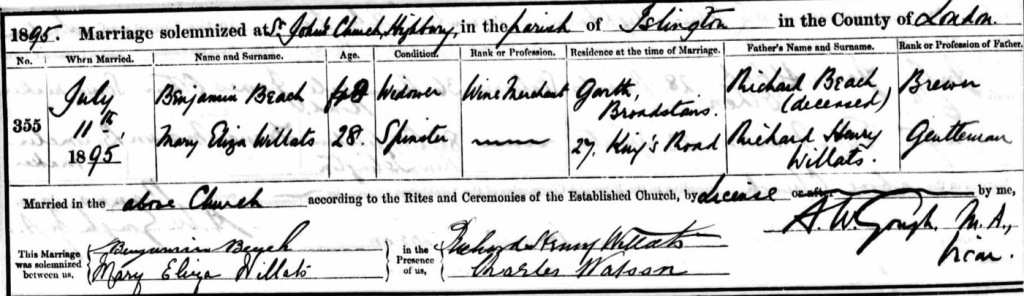
Thankfully Lilly and his family had a reason to celebrate when Lilly’s sister, 28-year-old, spinster, Eliza Mary Willats, married 48-year-old Widower, and wine merchant, Benjamin Beach, the following year, on Thursday the 11th of July 1895, at St John’s Church, Highbury, Islington, Middlesex, England.
Eliza Mary gave her residence as, 27 Kings Road and Benjamins as . (If you can work it out, please let me know.) They gave their father’s names and occupations as, Richard Beach (deceased) a Brewer and Richard Henry Willats, a Gentleman.
Their witnesses were, her father Richard Henry Willats and Charles Watson. Eliza was using the name Mary Eliza Willats (her middle name.).
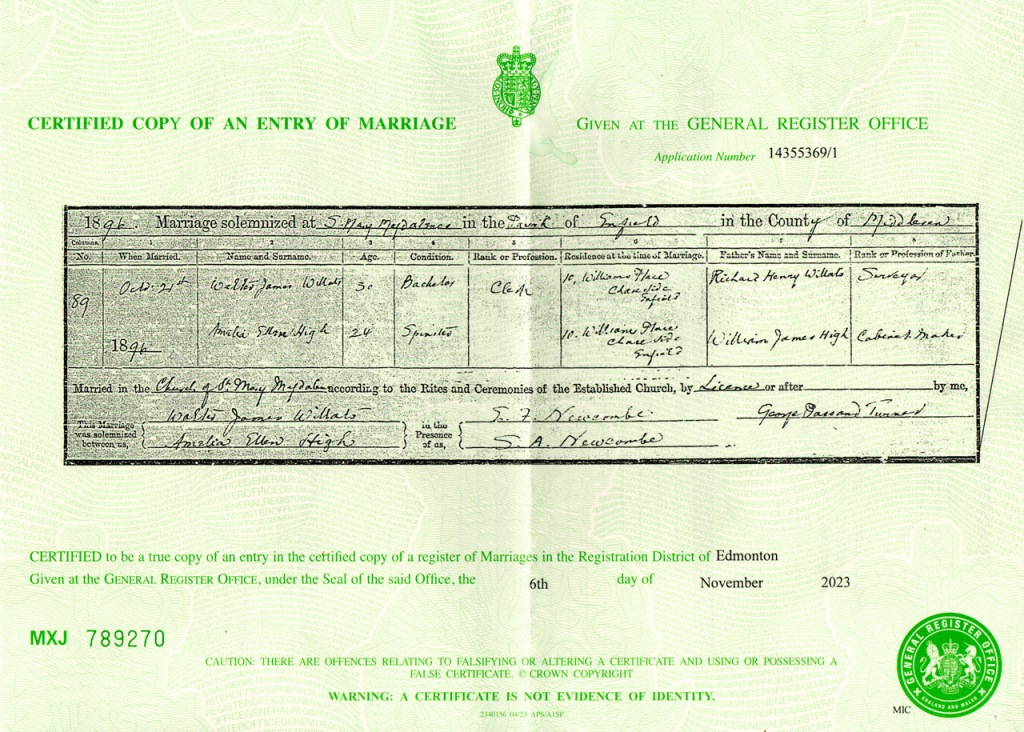
Lilly's brother, 21 years old, bachelor Walter James Willats and 21 years old, spinster, Amelia High, Marriage Bonds was licenced on Tuesday 20th October 1896, at St Mary Magdalene, Enfield, Middlesex, England.
Their marriage licence reads as follows.

DIOESE OF LONDON.
20th October 1896
APPEARED PERSONALLY, Walter James Willats of the parish of St Mary Magdalene Enfield in the County of Middlesex a Bachelor aged Twenty one years and upwards and prayed a Licence for the Solemnization of Matrimony in the parish church of St Mary Magdalene Enfield aforesaid between him and Amelia Ellen High of the same parish a sphincter of the age of Twenty-one years and upwards and made Oath that he believeth that there is no Impediment of Kindred or Alliance, or of any other lawful cause, nor any Suit commenced in any Ecclesiastical Court to bar or hinder the Proceeding of the said Matrimony, according to the tenor of such Licence. And he further made Oath, that he the said Appearer hath had his usual Place of abode within the said of St Mary Magdalene Enfield for the space of Fifteen days last past. Walter James Willats Sworn before me F S May Swn:

Lilly's brother, 30-year-old, Bachelor, Walter James Willats, a Clark married 24-year-old spinster, Amelia Ellen High on Wednesday 21st October 1896, at the church of St Mary Magdalene, Enfield, Middlesex, England. They gave their residence at the time of their marriage as, Number 10, William Place, Chase Side, Enfield. they gave their fathers names and occupations as, Richard Henry Willats, a Suvayor and William James High, a cabinet Maker. Their witnesses were, E. F. Newcombe and S. A. Newcombe.
St Mary Magdalene, Enfield, is a Church of England church in Enfield, London, dedicated to Jesus' companion, Mary Magdalene. The building is grade II* listed with Historic England. The church was built as a memorial to Philip Twells, MP and city banker, by his wife Georgiana Twells, who employed the architect William Butterfield. The foundation was stone was laid in 1881 and the church opened in 1883. The artist Charles Edgar Buckeridge painted the ceiling and east wall of the sanctuary and after his early death the side walls were painted by Nathaniel Westlake. The walls and ceiling were conserved in 2012 by Hirst Conservation with the help of local donations and the Heritage Lottery Fund. The stained-glass windows are by Heaton, Butler and Bayne.
The tower originally contained 8 change ringing bells cast by John Warner & Sons for the new church in 1883, however these were replaced in 1999, as they were too heavy for the tower and were causing damage. The church installed a new, lighter ring of 8 bells cast by the Whitechapel Bell Foundry, and the older, larger bells were bought by Grace Church Cathedral in Charleston, United States, where they were installed and augmented to 10 with two new treble bells cast in the same year, also by Whitechapel.

Heartbreakingly the Willats family lives were thrown into the depths of grief when Lilly's half-brother, William George Willats, my 3rd great-grandfather, died on Sunday the 14th of February, 1897, at 44 Gillespie Road, Islington, Middlesex, England.

He died from Cardial Haemorrhage Corona Syncope. Their sister, Charlotte was present and registered William George Willats, death on the 16th of February 1897. Charlotte gave her abode as, Number 132, Wilberforce Road, Finsbury Park.

The Willats family laid, William George Willats, to rest at, Abney Park Cemetery, 215 Stoke Newington High Street, Stoke Newington, London, England, N16 0LH, on Thursday the 18th of February 1897, in grave D06 092431, with his mother Eliza Willats nee Cameron. His father Richard, brother Percy Sidney and nephew Francis Paul Willats were later on buried with them.

Jumping forward to the year 1899, London was a vibrant city at the heart of the British Empire, reflecting the grandeur and complexities of the late Victorian era. The monarchy, under the long reign of Queen Victoria, continued to symbolize stability and continuity. Although the Queen herself had largely withdrawn from public life due to her age, residing in her homes at Windsor, Balmoral, or Osborne House, her influence remained strong. Her son, the future Edward VII, took on more public duties, preparing for his eventual succession.
The political landscape was dominated by the Conservative Party, led by Prime Minister Lord Salisbury. Parliament grappled with various issues, both domestic and international. The Second Boer War, which began in October 1899, became a major focus, sparking intense debates about military strategy and the ethics of British imperialism. This conflict underscored the reach and complexity of the British Empire, as well as the tensions inherent in its colonial policies.
London society in 1899 was marked by stark contrasts between the affluent and the impoverished. The West End showcased the wealth and opulence of the upper classes, with grand townhouses, lavish balls, and a keen interest in high fashion. Women's fashion was characterized by elaborate dresses, corsets, and bustles, while men wore tailored suits, waistcoats, and top hats. The social elite indulged in cultural pursuits and were often the subjects of gossip columns in newspapers and magazines.
In stark contrast, the East End and other poorer areas of the city were plagued by overcrowded slums, inadequate housing, and poor sanitation. Poverty was a pervasive issue, with many families living in squalid conditions. The workhouses offered some relief but were known for their harsh and dehumanizing conditions. The stark divide between rich and poor was a subject of growing concern, documented by social reformers like Charles Booth, whose detailed studies brought the realities of urban poverty to public attention.
Sanitation in London had improved since the mid-19th century, thanks to efforts like Joseph Bazalgette's construction of a modern sewer system. However, the city's rapid growth continued to strain its infrastructure. Public health initiatives were slowly gaining traction, but diseases such as cholera and typhoid remained significant threats, particularly in the densely populated and impoverished districts.
Travel and transportation in London were undergoing significant changes. The expansion of the London Underground, with lines like the District and Circle Lines, facilitated more efficient travel across the city. Horse-drawn carriages and omnibuses were common, though the advent of motor vehicles was beginning to be felt. Railway stations such as King's Cross and Paddington were bustling hubs, connecting London to the rest of the country and facilitating the movement of people and goods.
The cultural atmosphere of London was lively and diverse. Theatres in the West End staged popular plays and musicals, attracting audiences from all walks of life. Renowned actors like Sir Henry Irving and actresses like Ellen Terry captivated theatre-goers with their performances. Music halls provided a mix of comedy, music, and variety acts, offering entertainment to the masses.
Literature and the arts flourished during this period. Authors such as H.G. Wells, Rudyard Kipling, and Arthur Conan Doyle enjoyed widespread popularity, with their works often serialized in newspapers and magazines, making literature accessible to a broader audience. Art exhibitions at institutions like the Royal Academy of Arts showcased the talents of contemporary artists, reflecting both traditional and emerging styles.
One of the most significant events of 1899 was the outbreak of the Second Boer War in South Africa. This conflict between the British Empire and the Boer Republics highlighted the complexities and controversies of imperialism. Initially popular among the British public, the war later faced criticism due to its protracted nature and the use of concentration camps for Boer civilians.
Technological and scientific advancements were also notable during this period. The discovery of the electron by J.J. Thomson in 1897 was beginning to influence scientific thought, laying the groundwork for modern physics. Innovations in various fields were gradually transforming daily life, contributing to a sense of progress and possibility.
Fashion in 1899 was characterized by elegance and formality. Women's attire included high-necked blouses, long skirts, and the Gibson Girl look, emphasizing an hourglass silhouette. Men wore tailored suits, often with bowler hats for everyday wear and top hats for formal occasions. Society pages and fashion magazines were filled with gossip about the latest trends and the activities of the social elite.
The daily atmosphere in London was a mix of excitement and tension. The city's bustling streets, the constant movement of people and goods, and the interactions between different social classes created a dynamic and ever-changing environment. Innovations in technology and industry were reshaping life, yet the social and economic disparities created an underlying sense of unrest.
Food in London reflected the city's diverse population and its role as a global trading hub. Traditional British fare such as roast meats, pies, and puddings was common, but there was also a growing interest in exotic foods and flavors brought in from the colonies. Markets like Covent Garden and Billingsgate were bustling centers of commerce, offering a wide array of fresh produce, fish, and other goods.
Our Lilly had fallen head over heels in love and was stepping out in society with her love.
Dating, or "walking out," as it was often referred to in 1899 London, was governed by strict social codes and etiquette, reflecting the rigid structures of Victorian society. For a young lady, this period of courtship was both exciting and fraught with expectations, rules, and potential repercussions for missteps.
At the core of Victorian courtship was the expectation of propriety and modesty. Young ladies were expected to uphold their family’s honor and social standing through their behavior. The process usually began with social introductions at events such as balls, dinner parties, or other gatherings of the upper and middle classes. These events provided a controlled environment where young men and women could interact under the watchful eyes of chaperones, usually an older female relative or family friend.
Once a young lady caught the interest of a potential suitor, the courting process could begin. It was crucial that a chaperone accompanied her during early meetings to ensure propriety. Private encounters were rare and often scandalous if discovered. The couple might take walks in the park, attend church services, or go to public events together, always within the bounds of acceptable behavior and under supervision.
The etiquette of courtship dictated that young ladies should be demure and reserved. They were expected to dress modestly yet fashionably, adhering to the latest styles while maintaining an air of respectability. High-necked blouses, long skirts, and the ever-present corset shaped their figures into the desirable hourglass silhouette. Hats and gloves were essential accessories, emphasizing both elegance and decorum.
A young lady’s social standing played a significant role in the courtship process. Marriages were often seen as strategic alliances, enhancing or maintaining social status and family connections. Consequently, parents and guardians had a significant say in approving or disapproving potential matches. Courtship among the upper classes could be a drawn-out affair, involving subtle negotiations and considerations of wealth, land, and social prestige.
During this period, a young lady was expected to display certain virtues: modesty, piety, and domestic skills. These qualities were highly valued and considered essential for a good wife. Displays of excessive emotion or inappropriate behavior could damage a young lady's reputation, affecting her prospects for marriage. Maintaining a calm and composed demeanor was crucial, even if she harbored strong feelings for her suitor.
Letters played a crucial role in the courtship process, allowing couples to communicate more privately and express their feelings within socially accepted boundaries. However, even these letters were often subject to the scrutiny of chaperones or family members. The language used was typically formal and restrained, avoiding any overt displays of affection or impropriety.
The culmination of the courtship process was the formal proposal. This significant event often involved not just the couple but also their families. Once a proposal was accepted, the engagement was announced publicly, marking the transition from courtship to the preparations for marriage. The engagement period allowed the couple to become better acquainted, although they were still expected to adhere to the social norms of propriety and decorum.
For young ladies of the lower classes, the courtship process was somewhat less formal but still governed by societal expectations. Public spaces such as parks, markets, and dance halls were common venues for meeting potential suitors. While the constraints of chaperonage were less rigid, maintaining a good reputation was still important, as it could affect employment prospects and social standing within the community.
Fashion played a significant role in the courtship process, as it was a reflection of a young lady’s social status and adherence to societal norms. Elaborate dresses with intricate detailing, high collars, and cinched waists were in vogue. The choice of fabric, color, and accessories could convey wealth and taste, making a positive impression on potential suitors and their families.
29-year-old spinster, Lilly Jenny Willats, of Number 27, Kings Road, Brownhill Park, married 31-year-old bachelor, and commercial. (I assume that means commercial traveller?), William Alexander Neilson, of Madeira Avenue, Worthing, Sussex, on Saturday the 15th of July, 1899, at St. John’s Church, Highbury, Islington, Middlesex, England. They gave their father’s names and occupations as, Richard Henry Willats, an auctioneer and William Neilson, a commercial. Their witnesses were, brother in-law, Benjamin Beach and their niece, Amina Charlton. Lilly’s name was recorded as Lillian Jenny Willats.

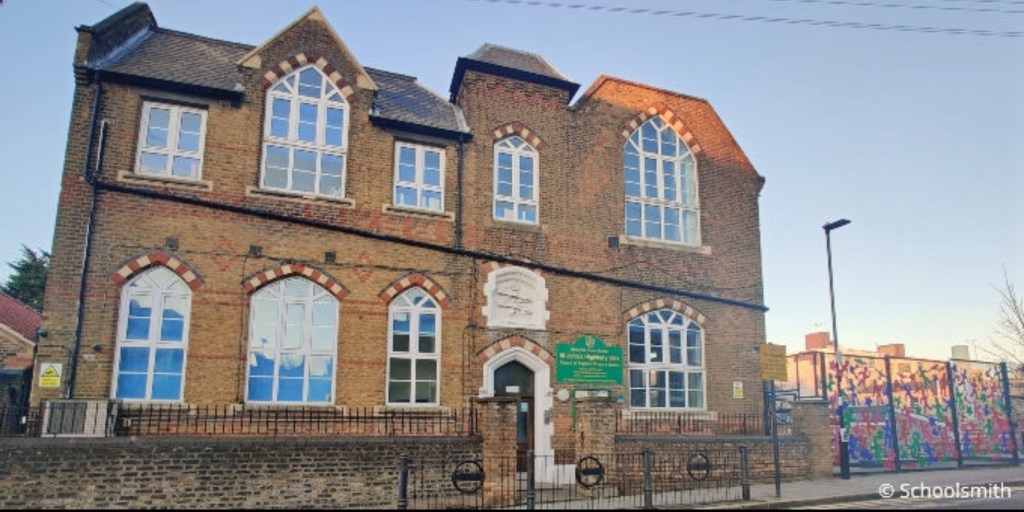
St. John's Church, Highbury, Islington, is a notable parish church with a rich history and a significant presence in the local community. Situated in the vibrant district of Highbury within the London Borough of Islington, this Anglican church has long served as a spiritual and community hub for its parishioners.
The church was constructed in the mid-19th century, during a period of significant urban development in London. Highbury, originally a rural area, began to urbanize rapidly in the Victorian era, leading to the establishment of new religious institutions to cater to the growing population. St. John's Church was part of this wave of ecclesiastical building, designed to provide a place of worship and community gathering for the residents of the burgeoning suburb.
Architecturally, St. John's Church is a fine example of Gothic Revival style, which was prevalent in church constructions of the time. The design typically features pointed arches, ribbed vaults, and flying buttresses, aiming to evoke the grandeur and spirituality of medieval Gothic cathedrals. The church's exterior likely showcases these elements, with tall, narrow windows adorned with intricate tracery, steeply pitched roofs, and perhaps a prominent spire or tower.
Inside, the church would have been designed to create an atmosphere of reverence and awe. High ceilings, stained glass windows depicting biblical scenes, and wooden pews are characteristic features. The chancel, housing the altar, would be a focal point, often elevated and richly decorated. The nave, where the congregation sits, would provide ample space for worshippers, reflecting the church's role as a central gathering place.
St. John's Church has historically played an important role in the spiritual life of Highbury's residents. Regular services, including Sunday worship, weddings, baptisms, and funerals, are central to its function. Beyond these traditional services, the church has likely been involved in various community activities, reflecting the Anglican commitment to social outreach and community support.
Over the years, the church would have witnessed significant events and changes in the community. The social and economic transformations of the 19th and 20th centuries, including the impact of the World Wars and the post-war redevelopment, would have influenced the life of the parish. St. John's Church would have served as a place of solace and continuity amidst these changes, adapting its role to meet the evolving needs of its congregation.
The church’s leadership, including its vicars and lay leaders, would have been instrumental in guiding the parish through these times. They would have provided spiritual guidance, organized community events, and perhaps engaged in broader social issues, reflecting the church's mission to serve both God and the community.
In contemporary times, St. John's Church likely continues to be an active parish, adapting to modern challenges and opportunities. It may host a range of activities beyond traditional worship, such as community outreach programs, youth groups, and social events, aiming to remain relevant and supportive in the lives of its parishioners. The church's role as a heritage site also means it may be involved in efforts to preserve its historical and architectural significance for future generations.
I once again picture Lilly sitting at her dressing table in her new material home, writing to her brother Arthur in Buffalo, Erie, New York, United States of America after her wedding. I imagine it would read something like this.
My Dearest Arthur,
As I sit down to write this letter, my heart is brimming with emotions. Yesterday was the most wonderful day of my life, as I married William Alexander, and yet amidst all the joy and celebration, I found myself deeply missing you. It felt strange to embark on this new journey without your reassuring presence by my side, and I wanted to share my thoughts and feelings with you.
The ceremony was beautiful, Arthur, more than I could have ever imagined. The church was adorned with flowers, their fragrance mingling with the sacred air, creating an atmosphere of pure bliss. Walking down the aisle, my heart was racing with a mix of excitement and nervousness, but the moment I saw William's smile, everything felt right. His love and devotion were palpable, and I felt an overwhelming sense of peace and happiness.
But amidst the happiness, I couldn't help but think of you and the times we spent together as children, dreaming about the future. Do you remember how we used to talk about our dreams and aspirations, and how you would always promise to be there for me? Those memories are etched in my heart, and I carried them with me as I took each step towards my new life.
I missed your laughter, your teasing, and the way you always knew how to calm my fears. I missed the strength and comfort that your presence always brought me. Though you were not physically there, I felt your spirit with me, guiding me, and giving me the courage to embrace this new chapter with an open heart.
William is a wonderful man, Arthur. He is kind, loving, and understanding, and I know you would like him. He has a gentle strength that reminds me of you, and I feel truly blessed to have him by my side. I am excited about our future together, and I am determined to make our life as beautiful and fulfilling as Mother and Father did for us. How I miss our Mother.
I want you to know that no matter where life takes us, you will always be an integral part of my heart. Our bond is unbreakable, forged in the fires of shared experiences, and love. I cherish our relationship, and I look forward to the times when we can reunite and create new memories together.
Please write back to me soon and tell me about your life, your dreams, and your adventures. Your happiness means the world to me, and I want to share in your joys and sorrows, just as we always have.
With all my love,
Your devoted sister Lilly.
As we bring this first chapter of my 3rd Great Grand-Auntie Lilly Jenny Willats' story to a close, we find ourselves standing at the doorstep of Number 38, Regent Square. It was here, in the heart of Pancras, Middlesex, that Lilly took her first breaths in 1869, her arrival heralding a new era for the Willats family.
In these early years, Lilly's life was woven into the vibrant tapestry of Victorian England. The cobblestone streets and bustling markets of Greys Inn Lane were her playground, the backdrop to her childhood adventures and the silent witness to her dreams. Through the laughter and the struggles, the joys and the sorrows, Lilly's story reminds us of the timeless human spirit that perseveres and thrives.
As we reflect on her beginnings, we are reminded of the delicate threads that connect us to our past. Lilly’s early life is not just a tale of a time long gone, but a testament to the enduring legacy of family and the unbreakable bonds that tie us together through generations. Her journey is our journey, her story a part of our own.
Stay with me as we continue to unravel the rich and inspiring life of Lilly Jenny Willats in the next part of our series. Her path is one of courage, resilience, and love that transcends time.
Until next time,
Toodle pip,
Yours Lainey
I have brought and paid for all certificates,

Please do not download or use them without my permission.

All you have to do is ask.

Thank you.
🦋🦋🦋
Until next time,
Toddle Pip,
Yours Lainey.
I have brought and paid for all certificates,

Please do not download or use them without my permission.

All you have to do is ask.

Thank you.
🦋🦋🦋
 Intwined