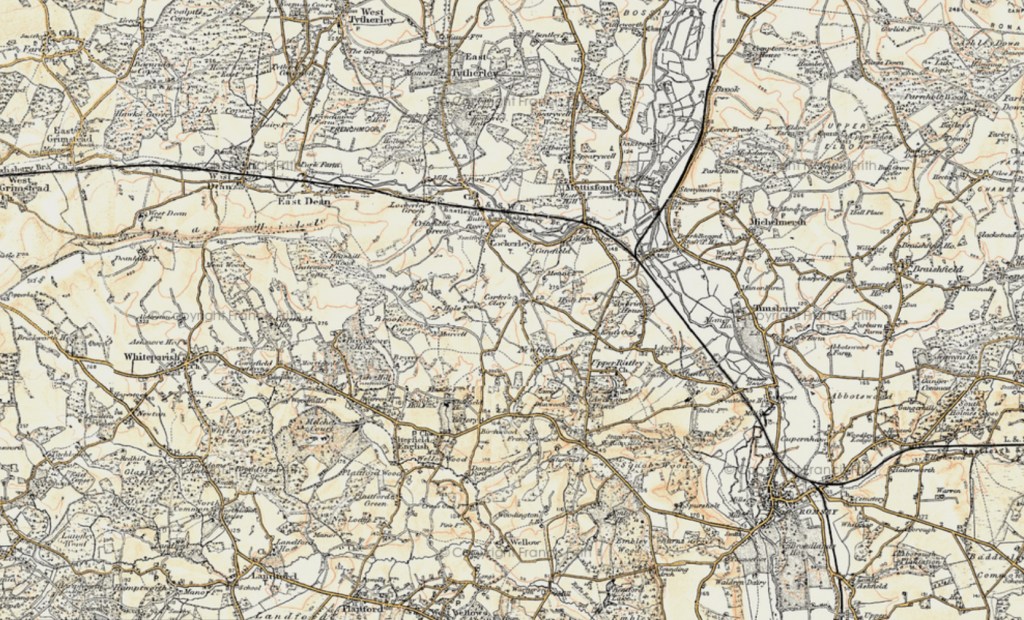
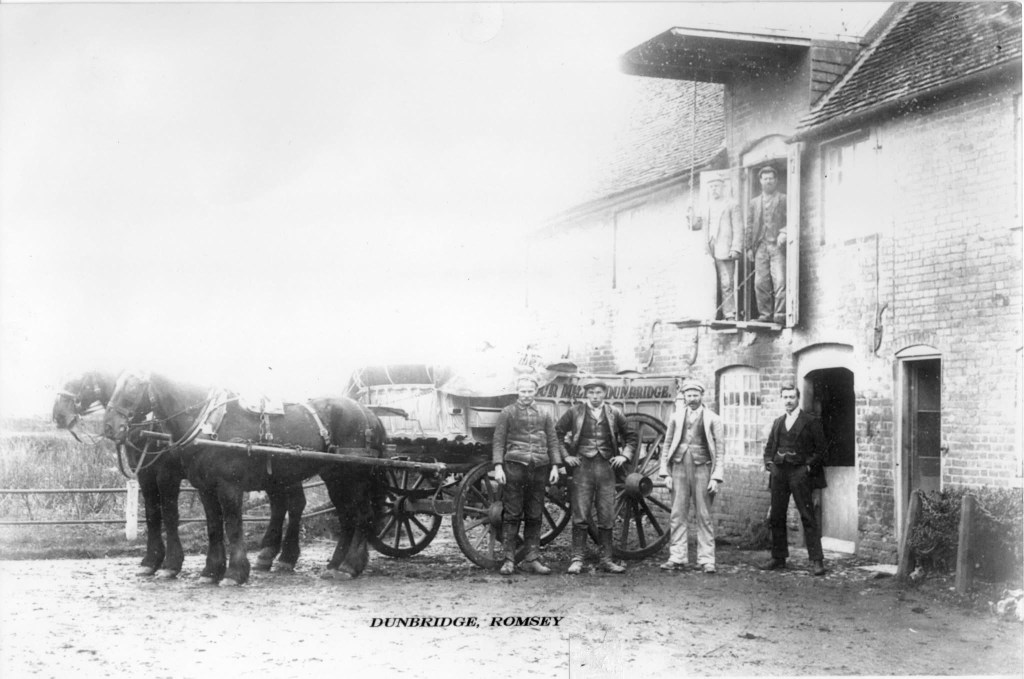
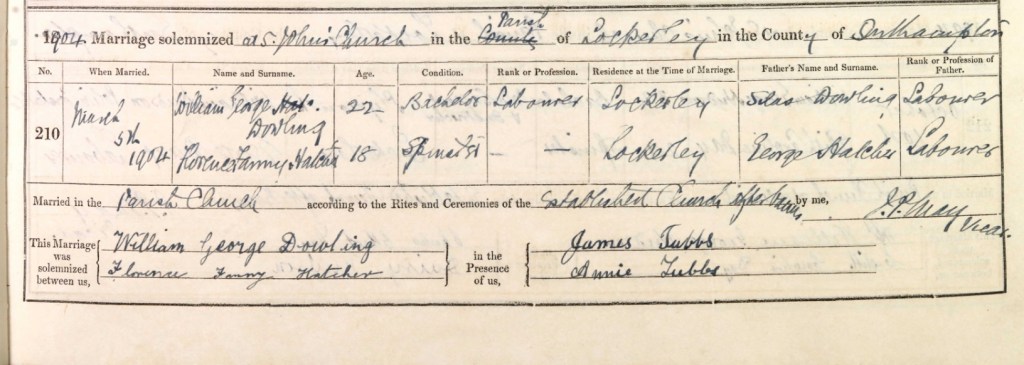
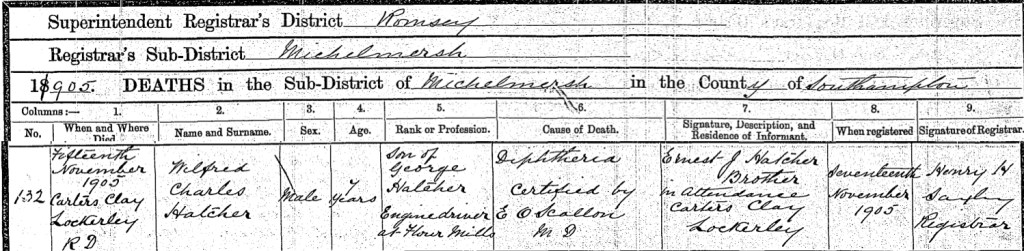
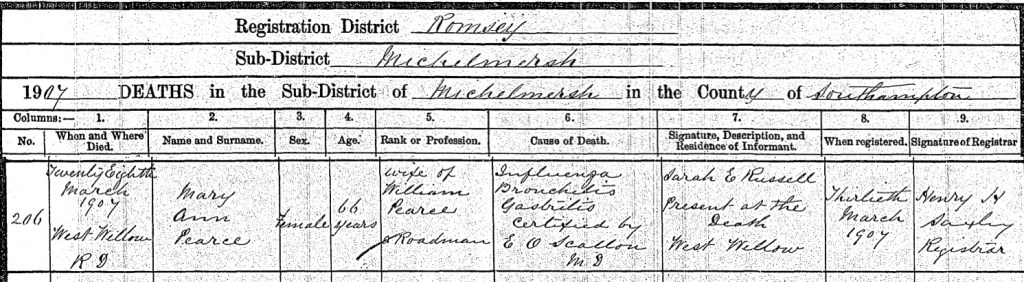
The spring of 1886 had breathed new life into Hampshire, the meadows thick with daisies, the orchards fragrant with bloom, when George Hatcher, a man of twenty-eight, began the second and most sacred chapter of his journey. The quiet lanes of Newtown, Lockerley, which had once carried him to the fields of boyhood, now carried him toward his future, his heart steady and full beside that of his bride, Fanny Pearce.
Where Part One ended with promise, Part Two begins with purpose. For this was the season in which George’s life, once shaped by the toil of the individual, would now be shaped by the shared rhythm of two hearts bound by love, faith, and the simple wish to endure together. No longer the son beneath his mother’s roof, George now stood as husband and provider, a man whose days would be measured not only in labour and light, but in devotion, sacrifice, and the slow unfolding of time within the walls of his own home.
Theirs was not a life of luxury, but of quiet dignity, the kind of life that blossoms unseen, away from grandeur, in the tender soil of the ordinary. Each dawn found George stepping out into the mists of the fields, his breath rising in the cool air, while Fanny kindled the morning fire, her hands skilled in the tender crafts of care and keeping. Together they built a life from simplicity, from laughter shared over humble meals, from prayers whispered at day’s end, from the steadfast companionship that grows only between two souls who truly understand one another.
Yet, as the years unfurled, joy and sorrow would walk side by side, as they do in every human story. Love would be tested by hardship, dreams would bow beneath the weight of reality, and timem that most patient sculptor, would etch its lines upon their faces. Through every season, from the greening of spring to the stillness of winter, George and Fanny’s story would be written not in grandeur, but in the enduring grace of daily life.
And though history records little of the quiet labourers who lived and loved beneath England’s skies, their truth is eternal. Within the creased pages of old registers and fading census books, within the inked signatures and trembling marks of “X,” lie whole worlds of devotion, the unseen poetry of people who gave their all to one another, and to the land that sustained them.
This is the story of George and Fanny Hatcher, of a marriage founded on steadfast love, of the years that shaped them, of the losses they endured and the joys they cherished. It is the story of faith kept through hardship, of laughter found amid labour, and of the quiet, holy beauty of two lives lived together until death itself drew the final line.
And so, as the bells of Lockerley and Wellow toll softly through the passing years, their echoes carry us forward, into the life they built, the love they nurtured, and the legacy they left behind.
For if Part One was about becoming, then Part Two is about belonging, to another heart, to the earth, and to the story that love itself was always meant to tell.
Welcome back to the year 1886, Newtown, Lockerley, Hampshire, England.
The world into which George and Fanny Hatcher began their married life was one poised between the old and the new, a time of quiet transformation beneath the steady rhythm of village life. It was the twilight of the Victorian age, with Queen Victoria still upon the throne, her reign already stretching nearly fifty years, a figure both revered and distant, whose image hung in schools, churches, and parlours across the land. Her empire was vast, and her rule unquestioned, yet far from London’s grandeur and the polished halls of Parliament, life in rural Hampshire moved to an older music, slower and gentler, though not without its trials.
In Westminster, the air was thick with politics and the scent of change. William Ewart Gladstone had returned as Prime Minister for the third time, his cabinet shaped by fierce debate over Ireland’s right to self-rule. Parliament wrestled with questions of reform and justice, but for the people of Newtown, Lockerley, these matters were distant echoes. Their concerns were closer to home, the harvest, the weather, the cost of bread, the health of their families, and the slow grind of making ends meet in a world that favoured the few and tested the many.
Society was sharply divided by class. The wealthy, whose estates dotted the Hampshire countryside, lived in large houses warmed by coal fires and staffed by servants. Their days were measured by leisure, their evenings by candlelit dinners and conversation. The middle classes, clerks, teachers, shopkeepers, and ministers, lived modestly but with comfort, cherishing education and propriety as marks of respectability. For the working class, like the Hatchers, life was a daily act of endurance. Labourers, farmers, maids, and craftsmen worked long hours for small wages, their hands and backs bearing the burden of a nation’s progress. Poverty lingered in the shadows of every village; hunger and illness were never far away.
In fashion, the rich dressed with splendour. Women’s gowns swept the floor, heavy with bustle and lace, while men wore fine coats and stiff collars. But in Lockerley, the clothes were simpler, practical garments of wool and linen, patched and mended by hand. George would have worn a rough-spun shirt, a waistcoat, and trousers held by braces, while Fanny’s dress, plain and serviceable, might have been brightened by a shawl or a ribbon tied in her hair. Their boots, though worn, were polished on Sundays, for appearance, even in poverty, carried its own quiet pride.
Transport was still largely by foot or by horse. In towns, steam trains carried goods and travellers between cities, but for rural folk, the railway station was often miles away. A farmer might ride a cart to market, a postman might trudge through rain with the mail, and the sound of iron-rimmed wheels upon the road was as familiar as the toll of the church bell. The bicycle, still a novelty, was just beginning to whisper of new freedoms for the younger generation, while in London and the great cities, talk of electric trams and motor carriages began to stir.
Homes in villages like Newtown were small and simple, often built of brick or cob with thatched roofs. They were draughty and dimly lit, the floors of packed earth or rough wood. The hearth was the heart of every cottage, the source of heat, light, and nourishment. Coal and wood fires burned through the cold months, their smoke curling from chimney tops into the crisp Hampshire air. Candles and oil lamps cast their soft glow upon the walls at night, shadows flickering across worn furniture and the faces of families gathered close.
Hygiene was primitive by modern standards. Water came from wells or pumps, and washing was done in basins or copper pots, heated painstakingly over the fire. Soap was coarse and precious, and baths were rare, often a weekly event shared by the whole family in turn. Sanitation was simple; earth closets or outdoor privies stood behind most cottages, and though the great towns were beginning to build sewers and drains, rural England still relied on the old ways. Disease was ever a threat, diphtheria, scarlet fever, cholera, and consumption carried off many who could not afford a doctor. For the poor, home remedies and superstition often stood in place of medicine.
Food was plain but sustaining. Bread, cheese, potatoes, bacon, and seasonal vegetables formed the daily fare, with meat reserved for Sundays or special occasions. Tea was a treasured comfort, sweetened when sugar could be spared, and a loaf baked fresh was a small triumph in a world of scarcity. The smell of baking, of onions frying, of wood smoke and damp earth, filled the lanes and kitchens, mingling with the songs of mothers and the cries of children.
Entertainment was simple, drawn from the rhythms of the community. Fairs, harvest feasts, and chapel gatherings brought light to the darker days. The Primitive Methodists sang hymns with deep feeling, songs like “Blessed Assurance” or “Love Divine, All Loves Excelling” ringing out across the night air. Storytelling lingered by the fireside, and the local inn offered laughter and gossip, its wooden tables worn smooth by generations of hands. The talk was of neighbours, of crops, of marriages and births, of rumours from London and the railways. A stranger’s arrival in the village could set tongues wagging for weeks.
The atmosphere of 1886 England was a blend of nostalgia and new beginnings. Industry was changing the cities, invention was reshaping the world, yet in the countryside, time seemed slower, kinder, rooted still in the turning of the seasons. The church remained the moral heart of the village, its bells marking the rhythm of life, birth, baptism, marriage, and death, while faith, especially among the working class, was not just belief but survival. In every prayer whispered by candlelight, in every hymn sung with weary voice, there was a quiet defiance, a trust that, though life was hard, it was never without grace.
For George and Fanny, this was the world they stepped into as husband and wife, a world of contrasts and constancy, of hardship and holiness. Their story would unfold against this backdrop of change and endurance, where each day was a test of strength, and each moment of tenderness a triumph. And as the year 1886 settled over Newtown, Lockerley, with its frost and its bloom, its hope and its weariness, one could almost hear the whisper of history itself moving through the fields, a reminder that even the humblest lives are threads in the great tapestry of time.
On a cold, clear Sunday, the 28th day of November, 1886, the hamlet of Newtown in Lockerley lay hushed beneath a veil of pale autumn light. The air was sharp with the scent of woodsmoke and damp leaves, the last whispers of the season fading into winter. In a small cottage tucked among the hedgerows, the rhythm of the day broke as a young woman laboured quietly through the long hours, her cries softened by the walls that had heard so many lives begin and end before.
Inside, 19-year-old Fanny Hatcher, formerly Pearce, bore the pain and promise of her first child. The fire in the hearth crackled low, and the midwife, an older village woman with gentle hands and the calm of experience, moved softly between bed and basin, her breath clouding faintly in the cold air. There was no anaesthetic, no sterile instruments, no comforting hum of modern medicine, only faith, fortitude, and the steady presence of women who had brought life into the world in the same way their mothers had before them.
Fanny’s world had narrowed to the steady throb of pain, the creak of the floorboards, and the murmur of prayers whispered beneath her breath. Labour was a sacred trial in 1886, a test of strength both physical and spiritual, and for many women, it was the moment upon which life itself trembled. George, 28 years old, a general labourer with hands calloused from years of toil, waited in anxious silence outside the door, pacing the small yard, listening to the muffled voices within. He could do nothing but pray, as men did then, helpless before the mystery of creation, his heart pounding with fear and love in equal measure.
Hours passed. The candle burned low. And then, in the stillness that follows such labour, came the thin, perfect cry of a newborn child, a cry that split the night like birdsong after a storm. A daughter had been born.
They named her Florence Fanny, a name chosen with care, Florence, for beauty and grace, and Fanny, for the mother who had given her life with courage and tenderness. The moment her tiny form was placed in her mother’s arms, the pain of hours melted away. Fanny wept softly, her tears falling upon her daughter’s downy head, whispering words of thanks and wonder. Her body trembled with exhaustion, yet in her heart bloomed something fierce and eternal, a love that would bind her forever to this small, fragile being.
The midwife wrapped the child in a soft shawl, its edges frayed from use, and laid her in the cradle by the fire. The faint glow of the embers danced over her face, casting a halo of warmth in the dim room. Outside, the wind stirred the trees of Butler’s Wood, and somewhere in the distance, a church bell marked the hour.
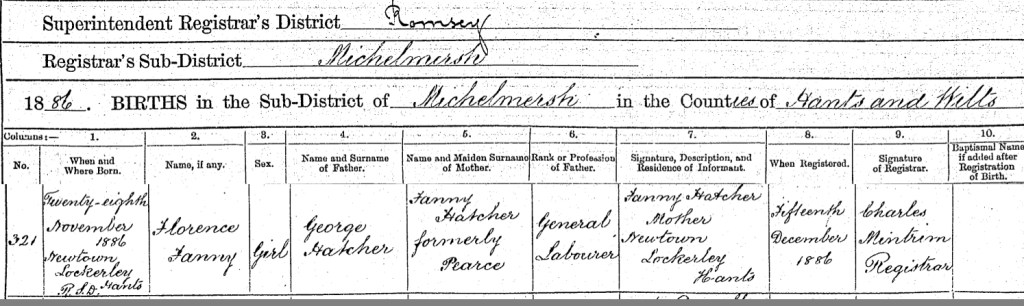
Later, on Wednesday the 15th day of December, 1886, the birth was formally recorded, the facts neatly penned by the registrar Charles Mintram with all the solemn precision of his post:

No.: 321
When and Where Born: Twenty-eighth November 1886, Newtown, Lockerley, R.S.D., Hants

Name, if any: Florence Fanny
Sex: Girl
Name and Surname of Father: George Hatcher
Name and Maiden Surname of Mother: Fanny Hatcher formerly Pearce
Rank or Profession of Father: General Labourer
Signature, Description, and Residence of Informant: Fanny Hatcher, Mother, Newtown, Lockerley, Hants
When Registered: Fifteenth December 1886
Signature of Registrar: Charles Mintram.
Baptismal Name if added after Registration of Birth: [blank]
But the paper did not tell the whole story. It did not capture the scent of woodsmoke and lavender water in the air, the trembling hands that first held Florence close, nor the quiet joy that filled the little cottage when George stepped inside to see his wife and daughter for the first time. His rough palms, still stained from the fields, touched the baby’s fingers as though she were made of light itself. He looked upon Fanny, pale, weary, but radiant, and in her eyes he saw both the miracle and the cost of life.
The world outside was still the same: the soil frozen, the fields bare, the village asleep beneath the frost. Yet within that small home, everything had changed. A new chapter had begun, not just for George and Fanny, but for the generations that would follow.
Perhaps, as dawn crept slow across the thatched roofs of Lockerley, the wind carried word of the birth down the lanes and across the hedgerows, where neighbours would smile and nod, speaking softly of new life in the Hatcher cottage. The coming of a child, especially a firstborn, was a shared joy in those quiet rural communities, a reminder that even in hard times, the world continued to turn toward renewal.
For George, that day marked the truest harvest of his life, not the crops sown and gathered in the fields, but the seed of his own future, now swaddled and sleeping beside the fire. The sound of his daughter’s breath, soft and even in the hush of morning, was a song that would linger in his heart forever.
And so, on that frost-kissed November day, Florence Fanny Hatcher entered the world, her first cry mingling with the sigh of the Hampshire wind. She was born of love and labour, of endurance and grace, the living proof that even in the humblest of cottages, beneath the simplest of roofs, life could unfold with all the beauty and wonder of creation itself.
On a cold winter’s Sunday, the 6th day of February, 1887, a stillness lay upon the fields of Newtown, the hedgerows rimmed with frost, and the smoke from cottage chimneys rising pale against the pewter sky. Within the small Methodist Circuit Church, light from oil lamps flickered softly against whitewashed walls, casting gentle halos upon the faces of the gathered congregation. The air was filled with the low murmur of prayer and the familiar strains of a hymn, perhaps “Rock of Ages” or “Abide with Me” the voices of neighbours and kin rising and falling like the tide, steady, faithful, and full of quiet devotion.
It was here, in this modest chapel that smelled faintly of lamp oil, pine, and winter damp, that George and Fanny Hatcher came to offer their firstborn child to God. Their daughter, Florence Fanny, a tiny babe not yet three months old, was wrapped snugly in a soft shawl, her cheeks rosy from the chill. George held the door open for Fanny as she stepped inside, the cold wind swirling at their heels before the door shut gently behind them, leaving the world outside in silence.
George, 28, his hands still rough from the week’s work in the fields, stood proudly yet humbly beside his wife. His heart must have been a storm of feeling, gratitude, awe, and perhaps a touch of disbelief, that life had granted him this moment. Fanny, just nineteen, her dark hair pinned neatly beneath her bonnet, looked down at her daughter with a tenderness born of both exhaustion and love. Their lives, though modest, had found a richness that no coin could buy.
The service moved with quiet dignity. Reverend John French, the minister who knew most of the villagers by name, stepped forward from the pulpit. His voice, gentle and resonant, carried through the small congregation as he spoke of faith, of new life, and of divine protection. The font stood simple and unadorned, its water gleaming in the lamplight. When he reached out to take little Florence from her mother’s arms, a hush fell over the room.
Perhaps Florence whimpered softly as the chill of the water touched her brow, perhaps she simply blinked, her tiny hands curling against the folds of her blanket. The reverend spoke her name, Florence Fanny Hatcher, and with those words, she was bound into the ancient rhythm of faith and family, her name echoing softly beneath the chapel’s rafters.
In the Nonconformist parish register, Reverend French recorded the moment with care, his handwriting neat and deliberate:
BAPTISMS solemnized in the Parish of (Blank) in the County of Southampton Wilts in the Year 1886.
When Baptised: February 6th, 1887.
Child’s Christian Name: Florence Fanny.

Parents’ Names: George and Fanny Hatcher.

Abode: Newtown, Lockerley Parish.

Quality, Trade, or Profession: Labourer.

By whom the Ceremony was performed: John French.

Born: November 28th, 1886.
The ink dried upon the page, but the true record of that day lived far beyond the paper. It was written in the light of the lamps that flickered above the family pew, in the warmth of the congregation’s whispered blessings, and in the tears that pricked Fanny’s eyes as she held her child close once more. For her, this baptism was more than custom, it was a promise. A promise that her daughter’s life would be watched over by something greater than hardship or fate, a hope that faith might steady her when the world could not.
Outside, the cold wind moved softly through the yews, carrying the faint echo of hymn and prayer across the Hampshire fields. Inside, George took one last look at the font, his arm around Fanny’s shoulders, their little Florence sleeping peacefully between them. The oil lamps burned low, their light steady and golden as the service drew to a close, and for a fleeting moment, the whole world seemed hushed, wrapped in grace.
And so, on that wintry Sunday, in the small chapel of Newtown, Lockerley, under the care of Reverend French, Florence Fanny Hatcher was received into the family of faith. Her baptism marked not just the beginning of her own journey, but the continuation of her parents’, a thread of love, endurance, and devotion woven deeper into the fabric of their lives.
Outside, the frost still clung to the hedgerows, and the air still bit with winter’s breath, yet for George and Fanny, the day glowed warm in their hearts. They walked home together beneath a pale afternoon sun, their footsteps soft on the frozen lane, carrying with them the light of a promise, that whatever came, they would face it together, guided by love, faith, and the small miracle that now slept safely in their arms.
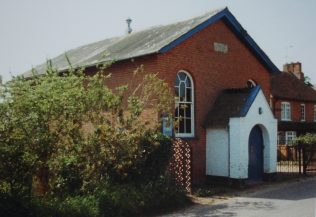
The Primitive Methodist Chapel in Newtown, near Lockerley, Hampshire, holds a significant place in the local religious history. Established in 1867, it was part of the broader movement of Primitive Methodism that sought to provide accessible worship spaces for communities in rural areas. This chapel was particularly notable for its adaptability, it was constructed as a movable building, allowing it to be relocated as needed to serve the spiritual needs of the community. The decision to build a movable chapel was influenced by previous challenges faced by the movement, including opposition from local landowners and religious authorities, which had led to the closure of earlier preaching houses.
The chapel served as a vital center for worship and community gatherings in Newtown until its closure in 1991. During its operational years, it was a hub for religious activities, including services, Sunday schools, and community events. The building's design and construction reflected the values of the Primitive Methodist movement, emphasizing simplicity and functionality to accommodate the needs of its congregation.
After its closure, the chapel underwent various changes. The building was eventually repurposed for commercial use, reflecting the evolving needs and development of the area.
The Methodist Circuit is made up of around 1,000 Methodist Christians who worship in fifteen churches in this part of Hampshire and Wiltshire. They have worshipping communities in farming areas, in towns and cities and on the edge of the port city of Southampton.
They include the ancient cathedral city of Winchester, the expanding community of Eastleigh, the market town of Romsey, famous as the home of Lord Louis Mountbatten, and a section of the New Forest National Park, once including Newtown.
On a soft spring Monday, the 9th day of April, 1888, when the hedgerows of Newtown in Lockerley were alive with the pale green blush of new leaves and the scent of primrose drifted upon the air, a new cry joined the chorus of life. In the small cottage that George and Fanny Hatcher called home, a child was born, a son, their second, his arrival filling the humble room with warmth and wonder. They named him Caleb George, a name strong and steady, one that carried both reverence and hope, and that would forever bind him to the soil, the seasons, and the love that had shaped his parents’ lives.
For George, now thirty years old, this moment was one of both joy and reverence. He had felt the weight of labour since boyhood, his hands roughened by years in the fields, his back bowed beneath harvest and hardship, yet nothing in his life had demanded such tenderness as holding his newborn son for the first time. Beneath the low beam of their cottage roof, where light filtered softly through the small-paned window, he looked upon Caleb’s tiny face and felt the quiet hum of something eternal. His world, once measured by the rhythm of the plough and the turning of seasons, now pulsed to the fragile heartbeat of his child.
Fanny, only twenty, weary yet radiant, cradled her son in her arms. She had known the ache and struggle of birth, the long, breathless hours that blurred pain into prayer, yet as she watched her husband bend close, his eyes glistening with pride, she felt no trace of it now. The walls of their modest home seemed to glow with life. Outside, the world stirred gently, a skylark lifted its song above the fields, the brook whispered through the meadows, and the first swallows of the year swept low across the Hampshire sky.
In that small home, time seemed to hold its breath. They had so little by way of riches, a few sticks of furniture, the comfort of a fire, a cradle made from George’s own hands, but in that moment, they possessed everything that mattered. Love, pure and unadorned, filled the room like sunlight after rain.
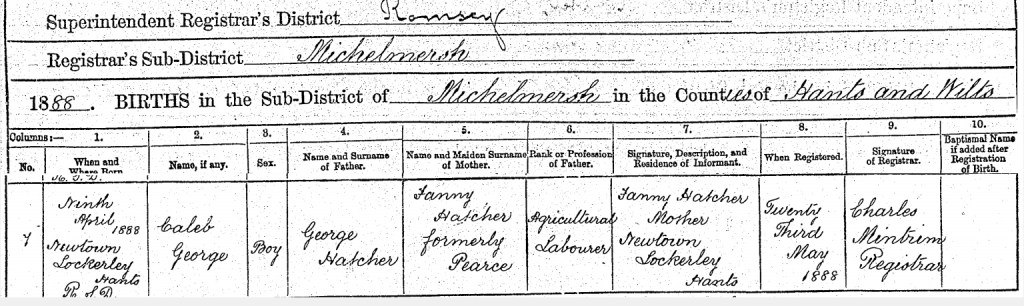
Weeks later, on Wednesday the 23rd day of May, when the world had settled around their new rhythm, Fanny made her way to the registrar’s office. Her heart must have fluttered with quiet pride as she carried her son’s name into permanence. The official record was written with careful precision by Registrar Charles Mintrim, who filled the page with neat inked lines, giving form to what life had already declared sacred:
No.: 7

When and Where Born: Ninth April 1888, Newtown, Lockerley, Hants, R.S.D.
Name, if any: Caleb George

Sex: Boy

Name and Surname of Father: George Hatcher

Name and Maiden Surname of Mother: Fanny Hatcher formerly Pearce

Rank or Profession of Father: Agricultural Labourer

Signature, Description, and Residence of Informant: Fanny Hatcher, Mother, Newtown, Lockerley, Hants

When Registered: Twenty-third May 1888

Signature of Registrar: Charles Mintrim, Registrar

Baptismal Name if added after Registration of Birth: [blank].
When Fanny pressed her name upon the page, her careful signature trembling with pride, it was not just a bureaucratic act, but a declaration of love, of belonging, of family. In those neat black letters, the world would forever know that Caleb George had come into being, born of two humble souls who had weathered life’s storms together and still found beauty in its quietest corners.
Perhaps that evening, as George returned from the fields, the setting sun spilling gold across the furrows, he paused at the doorway, brushing the dirt from his boots before stepping inside. There, by the hearth, he would have found Fanny humming softly to the baby in her arms, the firelight flickering over their faces. He might have knelt beside them, his rough hand resting lightly upon his son’s back, feeling the rise and fall of that small, miraculous breath.
For George, whose life had always been measured in sweat and soil, Caleb’s birth was a harvest unlike any other, a promise that his labour was not in vain, that his roots ran deep not just in the Hampshire earth, but in the living, breathing love of his family.
And so, in that quiet spring of 1888, beneath the same sky that had watched his own birth three decades before, George Hatcher became not just a man of the land, but a father twice over. The sound of his son’s soft cries mingled with the whisper of wind through the hedgerows, and the world, in its patient turning, seemed for that moment to pause and listen.
It was a beginning written not in grandeur, but in grace, the steady heartbeat of family life, echoing beneath the thatch and among the trees of Newtown, Lockerley, where love, though simple, was vast enough to fill the world.
On a golden summer Sunday, the 17th day of June, 1888, the village of Newtown in Lockerley stirred gently awake beneath a warm Hampshire sun. The hedgerows hummed with bees, and the soft scent of meadowsweet drifted through open windows as the bells of the Circuit Methodist Church called the faithful to worship. Inside, beneath a modest roof and beams that smelled faintly of pine and oil, the air was hushed with reverence. Candles flickered in the morning light, and the murmur of voices wove through the stillness, neighbours greeting neighbours, mothers soothing their infants, fathers straightening collars and smoothing nervous hands.
Among them stood George and Fanny, side by side, holding close the small miracle that had turned their world to light, their son, Caleb George, born on a soft April morning just two months before. For George, now thirty, the church felt almost sacred in a way it never had before. The same walls that had so often echoed with prayer now seemed to hold something of his own heart within them. His rough hands, still marked with the dust of the fields, trembled slightly as he brushed a fingertip across his son’s tiny cheek. To look upon this child, flesh of his flesh, the continuation of everything he had worked for, was to glimpse eternity.
Fanny, only twenty, stood proudly at his side, her eyes bright with quiet devotion. The bonnet that framed her face was simple, her dress neatly pressed, her hands still soft despite the daily toil of homemaking. She held her child as though he were made of starlight, wrapped in a white christening shawl she had spent long evenings stitching by firelight. For her, this day was not merely a ceremony it was a thanksgiving, a tender offering of love and gratitude to the God who had seen her safely through the pains of childbirth and into the sweet, trembling joy of motherhood.
The Reverend John French, steady and kind, stepped forward to begin the sacred rite. His voice rose softly above the shuffling of feet and the creak of pews. A hymn filled the chapel “Jesus, Lover of My Soul”, perhaps, or “There Is a Green Hill Far Away” and its melody drifted like sunlight across the worn faces of those who sang. The minister spoke gently of the eternal promise of baptism, of how water and word together marked the beginning of a soul’s journey in faith. Then, with a smile that reached his eyes, he beckoned the Hatchers forward.
Fanny stepped carefully down the aisle, George close beside her, and together they stood before the font, a simple stone basin gleaming faintly in the filtered light. When the Reverend took Caleb in his arms, the child stirred softly, his small mouth forming an “O” of surprise as the cool water touched his brow. “Caleb George,” the minister intoned, “I baptise thee in the name of the Father, and of the Son, and of the Holy Ghost.” A murmur of prayer swept through the room, and George bowed his head, his heart swelling with emotion too deep for words.
He thought, perhaps, of his own baptism years before, and of his father, Charles Hatcher, long gone but not forgotten, the man whose strength had shaped him, whose lessons had sown the seeds of honesty and endurance in his heart. Now, as he stood beside his wife and son, he felt the presence of those who had come before, watching quietly, proud beyond measure.
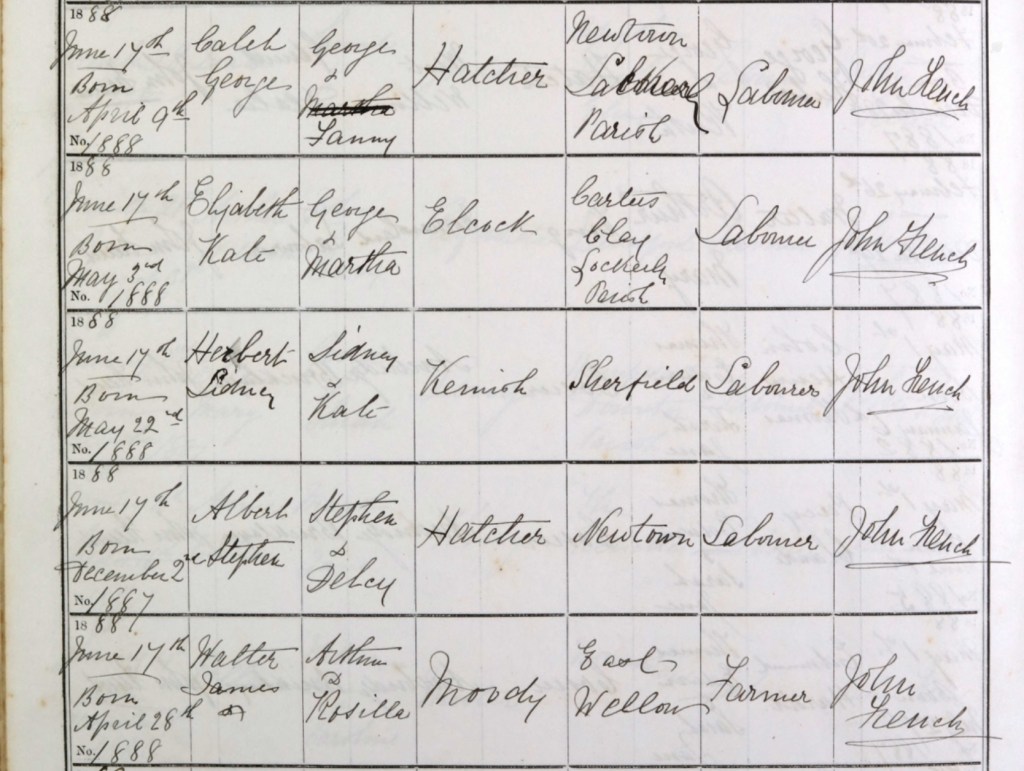
Caleb was not the only child blessed that day. Four other infants were brought forth, each held tenderly in their mother’s arms, Elizabeth Kate Elcock, daughter of George and Martha of Carters Clay; Herbert Robin Kemish, son of Sidney and Kate from Sherfield English; Albert Stephen Hatcher, born to Stephen and Dulcie, George’s own nephew, his brother’s boy, and Walter James Moody, son of Arthur and Rosalie of East Wellow. The congregation watched as each small life was lifted into the light, each name spoken into being in the same rhythm of faith that had echoed across centuries.
The details were carefully written into the parish register by Reverend French:
BAPTISMS solemnized in the Parish of [blank] in the County of Southampton in the Year 1888.

Date of Baptism: June 17th, 1888.

Child’s Christian Name: Caleb George.

Parents’ Names: George and Fanny Hatcher.

Abode: Newtown.
Quality, Trade, or Profession: Labourer.

By whom the Ceremony was performed: John French.

Date of Birth: April 9th, 1888.
The ink dried upon the page, yet the true record of that day was not written in ledgers or sealed by signatures, it lived instead in the hearts of those who stood within those four whitewashed walls.
When the final hymn was sung “O for a Thousand Tongues to Sing”, perhaps, the congregation lingered, exchanging smiles and soft words as the families gathered their children close. Outside, the air was golden with sunlight, the June breeze carrying the scent of cut hay and wild roses. George and Fanny stepped out into that light together, their son sleeping peacefully in his mother’s arms. They walked slowly down the dusty lane toward home, their shadows stretching long behind them.
For George, every step was heavy with gratitude. He had come from the fields of his youth, through hardship and hunger, loss and labour, to this, to a wife who loved him, a child who bore his name, and a faith that steadied his heart. Life, he knew, was never easy for men like him, but in that moment he felt it to be beautiful.
That evening, as the sun dipped low beyond the trees of Butler’s Wood, the Hatchers’ cottage glowed softly with firelight. George sat quietly by the hearth, Fanny nearby with Caleb nestled at her breast. The day’s hymns still seemed to echo faintly in his ears, the promise of the morning alive in his chest. And as he watched his son drift into sleep, he whispered a prayer of his own, that this small boy might grow strong, kind, and steadfast, rooted like his father in the good earth of Hampshire, and carried always by love.
In that quiet home, beneath the watchful stars, faith and family twined together like ivy upon stone, humble, enduring, and full of grace.
On a bleak February morning, Tuesday the 12th day of February, 1889, a terrible stillness settled over the hamlet of Newtown, nestled in the quiet parish of Lockerley, Hampshire. Frost still clung to the thatched eaves and the fields beyond lay cold and bare, as if the earth itself had paused in mourning. Inside the modest Hatcher cottage, where warmth and laughter had so recently filled the air, a silence deeper than any winter chill took hold, the kind of silence that comes only with loss.
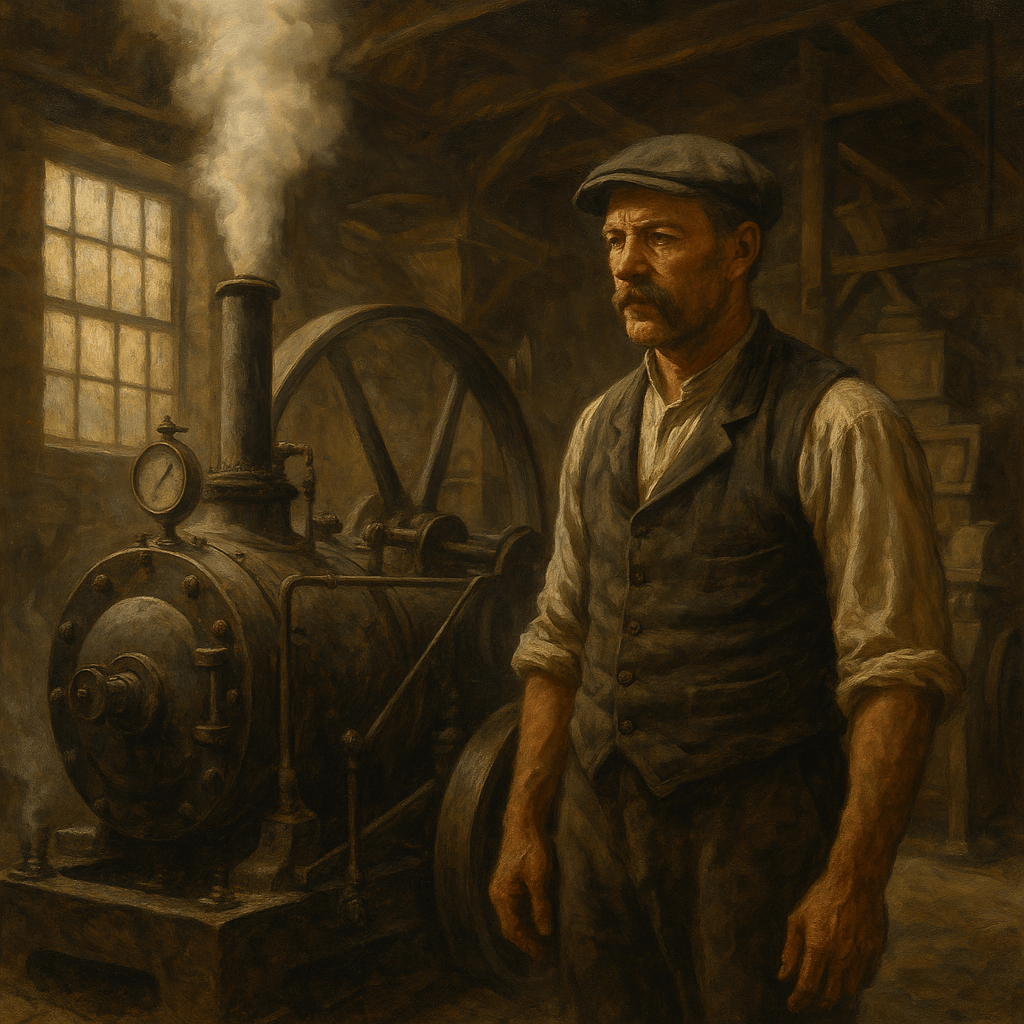
For George Hatcher, an agricultural engine driver whose days were spent among the clatter and rhythm of machines, that silence was unbearable. Just ten months earlier, he had held his son, Caleb George, for the first time, a small, perfect child whose laughter had become the light of their home. Each morning before work, George would pause at the cradle to touch the soft curls upon his boy’s head, feeling a pride that words could not contain. And now, that cradle stood empty, its quietness like a wound.
Fanny, only twenty-three and still more girl than woman in some ways, sat beside the tiny still form of her son. Her hands, which had so often soothed away his cries, lay useless in her lap. There had been no warning, no time to prepare her heart for the cruelty of it, just a sudden fit, convulsions brought on by teething, and then stillness. In the space of moments, their joy had turned to desolation. George had done everything a father could, fetching the midwife, sending for the doctor but by the time help arrived, the light had gone from his son’s eyes.
When the coroner, Bernard Bawfield, came to their door, his manner was gentle but his purpose grim. The law required an inquest for so young a death, even one as seemingly natural as this. He stood within that humble home, his notebook open, asking quiet questions, the scratch of his pen the only sound. George answered with halting words, his voice raw with grief. He spoke of the fits, of how Caleb had struggled for breath, of how his wife had cradled him until the end. Each word seemed to cost him more than he had to give.
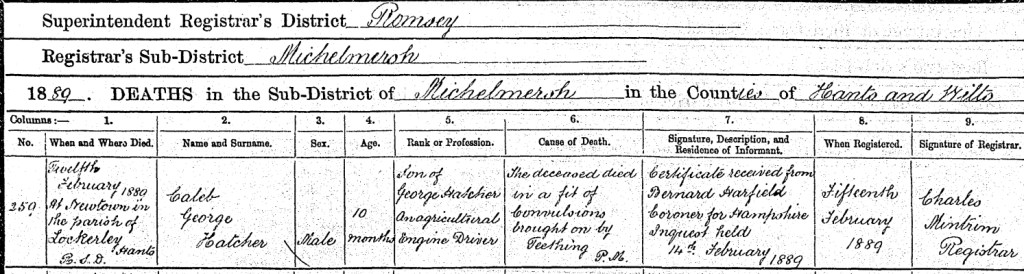
Two days later, on Thursday the 14th day of February, a day when lovers elsewhere exchanged tokens of affection, George stood instead before the coroner’s table, listening as the verdict was read. “The deceased died in a fit of convulsions brought on by teething.” Cold words. Final words. Words that could never describe the weight of what they had lost. The following day, Registrar Charles Mintrim added the details to the official record, preserving in ink what grief had already carved into George and Fanny’s hearts:
No.: 250

When and Where Died: Twelfth February 1889, at Newtown in the parish of Lockerley, R.S.D., Hants

Name and Surname: Caleb George Hatcher

Sex: Male

Age: 10 months

Rank or Profession: Son of George Hatcher, Agricultural Engine Driver

Cause of Death: The deceased died in a fit of convulsions brought on by teething. P.M.

Signature, Description, and Residence of Informant: Certificate received from Bernard Bawfield, Coroner for Hampshire. Inquest held 14th February 1889.

When Registered: Fifteenth February 1889

Signature of Registrar: Charles Mintrim, Registrar.
Such a small entry for so vast a sorrow.
That evening, as dusk fell upon the village, George sat beside the fire, staring into the embers. The sound of the wind outside pressed faintly against the windows, carrying with it the smell of damp earth and woodsmoke. Fanny sat nearby, her eyes red from weeping, her hand resting upon a small bundle of white linen folded neatly upon her lap. They did not speak, there were no words for this kind of loss, but in the quiet they found a fragile comfort in one another’s presence.
The next morning, the neighbours came, Mrs. Elcock from the next cottage, bringing bread and a shawl; old Mrs. Moody, who said softly that God’s will was not always meant to be understood. Reverend French visited too, his Bible in hand, his voice low and kind as he prayed for the small soul gone too soon. And though his words spoke of heaven and peace, George could not yet bring himself to look upward. His eyes were fixed on the small wooden box that would carry his son to rest, and on the patch of frozen earth that would soon cover him.
And so, little Caleb George, whose life had begun in the tender light of spring and ended in the bleakness of winter. His story was short, but its imprint upon George’s soul was eternal. For every furrow George ploughed thereafter, every dawn he rose to meet, carried the echo of his son’s brief laughter, and the quiet ache of love that endures even after breath is gone.
In the fields of Lockerley, the seasons turned, as they always do. But for George and Fanny, life had changed forever. Grief had made their love both heavier and stronger, a shared burden, a sacred bond. And though they would one day smile again, and laughter would return to their home, there would always remain a shadow, the memory of a tiny heartbeat, once so full of promise, that had stopped too soon beneath the Hampshire sky.
On a bitter February morning, Saturday the 16th day of February, 1889, the frost still lingered in the hedgerows of Lockerley, silvering the branches and stiffening the quiet fields where George so often worked in solitude. The village stirred slowly awake, its people going about their simple routines, the postman on his rounds, smoke curling from cottage chimneys, the faint toll of distant church bells echoing through the cold air. Yet for George Hatcher, the world felt hollow, muted, as though even the birds had fallen silent in respect for his grief.
That morning, the Romsey newspaper arrived, folded neatly as always, its pages filled with the familiar rhythms of village life, market prices, weather reports, parish gatherings, and gossip from neighbouring hamlets. But among those ordinary columns, buried beneath the unremarkable business of the world, was a small paragraph that told the story of a heartbreak too vast to measure.
There, in stark black print, lay his pain for all to see:
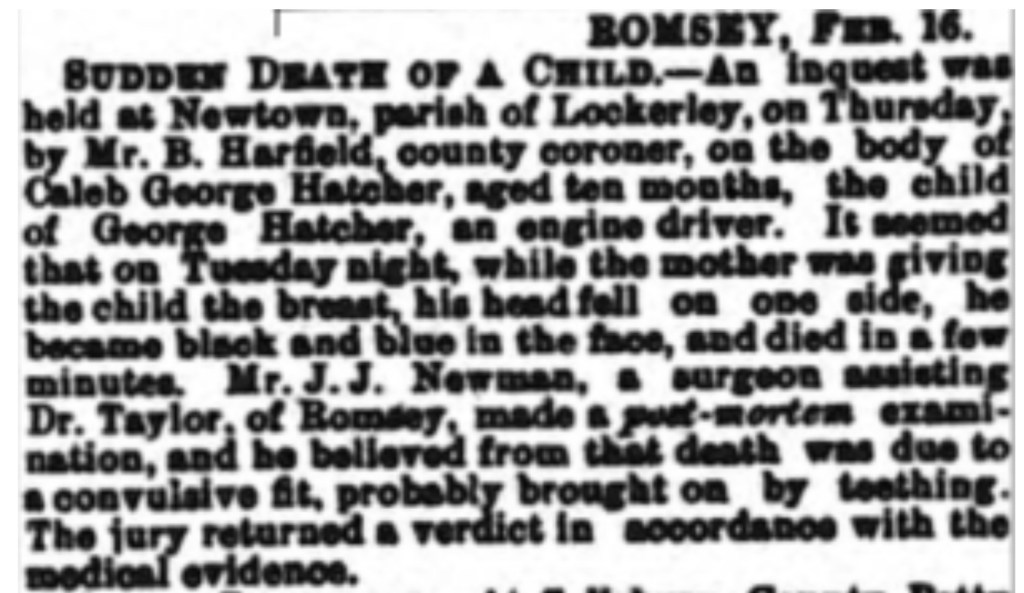
“Sudden death of a child – An inquest was held at Newtown, parish of Lockerley, on Thursday by Mr. B. Hatfield, county coroner, on the body of Caleb George Hatcher, aged ten months, the child of George Hatcher, an engine driver. It seemed that on Tuesday night, while the mother was giving the child the breast, his head fell on one side, he became black and blue in the face, and died in a few minutes. Mr. J. J. Newman, a surgeon assisting Dr. Taylor, of Romsey, made a post-mortem examination, and he believed from that death was due to a convulsive fit, probably brought on by teething. The jury returned a verdict in accordance with the medical evidence.”
George read the words in silence, his roughened hands trembling slightly as he held the paper. Each line was a wound, not for its cruelty, but for its indifference. What to the world was a brief column of fact, a passing notice printed between harvest forecasts and railway timetables, to George was the story of his very heart being torn open. His son’s name, Caleb George Hatcher, stared up at him from the page, fixed forever in type. It seemed impossible that a life so precious could be reduced to so few words, so coldly summarised, so utterly misunderstood.
He thought of that night, of Fanny, sitting by the fire, their baby in her arms, the hush of the cottage broken only by the soft crackle of the hearth. He had been nearby, mending a tool perhaps, or winding down after a long day’s labour, when Fanny’s small cry had split the stillness. He had turned, too late, to see his boy’s head fall limply against her breast, his tiny face paling before darkening to that terrible hue he would never forget. The helplessness of that moment, the frantic calls, the desperate prayers, would haunt him for the rest of his days.
Now the paper told it as mere record “became black and blue in the face… died in a few minutes” as though it had been nothing but a fact of nature, an unfortunate occurrence. But George knew better. It had been a moment of unspeakable love and anguish, a mother’s last embrace, a father’s silent witness to the breaking of his own heart.
When he looked at the small block of text again, his eyes blurred with tears. There was no mention of the warmth that had filled their home before that night, no hint of the laughter that had echoed between the walls, nor the way the light had seemed to soften whenever Fanny sang to their boy. No one reading it would know how Caleb’s tiny fingers had once curled around his own, how his first smile had felt like a promise that life might yet be kind.
Fanny sat quietly across from him, her eyes hollow but dry, the tears had long since run out. She, too, had read it, her gaze lingering not on the words, but on the name. She whispered it under her breath, “Caleb George…” as though saying it aloud could somehow hold him close for one moment more. George reached for her hand, and for a long time, they sat together in silence, the paper folded between them, the ink still smudged where their fingers had pressed too tightly.
Outside, the world carried on, a cart rattled down the lane, the smell of baking bread drifted from a neighbour’s chimney but for George and Fanny, time had stopped. The newspaper would be set aside, folded neatly and placed in the small wooden box where they kept their few treasured things, their marriage certificate, Florence’s baptism record, and now this, the cold report of their son’s death. A record of heartbreak. A relic of love.
And though the world would soon forget the words, George never would. For every time he passed the fields that winter, every dawn that followed, every cry of a newborn carried on the wind from another cottage, he would remember, not the printed words of the paper, but the sound of his son’s soft breath, the weight of him in his arms, and the unbearable quiet that came after.
That newspaper, those few lines lost among the chatter of daily life, were the world’s version of the truth. But George carried another, far deeper one within him: that love, though it cannot stop death, can outlast it. And as long as he drew breath, the memory of Caleb George would live, not as a headline, but as a heartbeat, steady, silent, and eternal beneath the Hampshire sky.
On a bleak winter Sunday, the 17th day of February, 1889, the village of Lockerley lay wrapped in silence beneath a sky the colour of sorrow. The fields were stiff with frost, the churchyard still and grey, save for the low murmur of footsteps upon the frozen ground. Within the quiet bounds of St John’s Church, where generations had come to pray, to wed, and to weep, a small crowd gathered, their breath rising in pale clouds as the bells tolled softly across the cold air. It was the day that George and Fanny would lay their beloved son, Caleb George, to rest, their ten-month-old boy whose laughter had once filled their humble home in Newtown, and whose silence now filled the world.
George stood close to Fanny, his gloved hands clasped tightly before him, his face hollowed by grief and sleepless nights. He had known hardship before, the grind of labour, the ache of loss, but nothing could have prepared him for this, for the unbearable weight of watching the earth receive his child. The little coffin, white and heartbreakingly small, seemed too light for the depth of love it carried, too quiet for the pain it held. As it was lowered into the frozen ground, the dull thud of earth upon the lid struck through him like the echo of his own heart breaking.
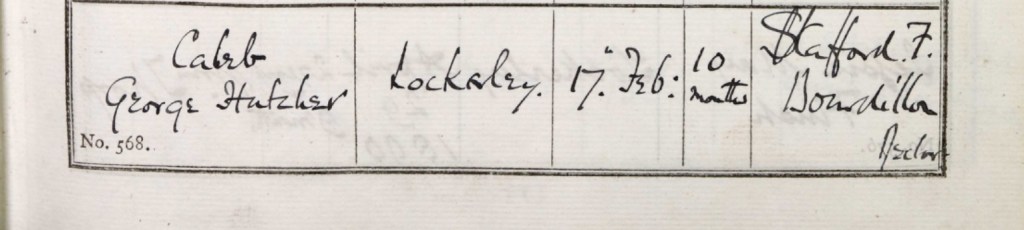
The Rector, Stafford F. Bourdillon, spoke softly, his breath trembling in the cold. “Earth to earth, ashes to ashes, dust to dust.” His voice wove through the air, fragile yet steadfast, the words of centuries mingling with the grief of one small family. He then turned to the parish register, his pen moving with careful solemnity, preserving in ink what love had already carved into the hearts of George and Fanny:
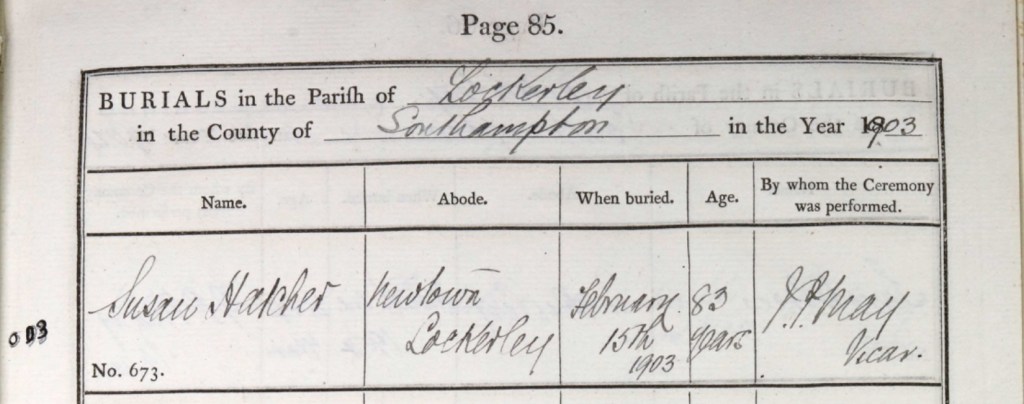
BURIALS in the Parish of Lockerley in the County of Southampton in the Year 1889

Name: Caleb George Hatcher

Abode: Lockerley

When Buried: 17th February 1889

Age: 10 months

By whom the Ceremony was Performed: Stafford F. Bourdillon, Rector

Entry Number: 568.
A few lines of black ink, so small, so cold, to mark a life that had been nothing less than miraculous to his parents. To the world, Caleb’s passing might have seemed an unfortunate tragedy soon forgotten, but to George, it felt as though time itself had stopped. Every ploughed field, every morning frost, every breath of wind through the hedgerows now seemed to carry the faint echo of his son’s memory, a sound too quiet for others to hear, but loud enough to fill his heart with both sorrow and devotion.
The villagers stood quietly as the service ended, their hats held against the wind, their faces drawn with sympathy. A few stepped forward to murmur kind words, a neighbour’s hand upon George’s shoulder, a whispered “God comfort you” gestures that could not heal, but might soften the edges of despair. Fanny, her shawl drawn tightly around her, knelt for a moment beside the grave. Her fingers brushed the new earth as if by touch alone she could hold her child one last time. She whispered his name, her lips trembling with love that had nowhere left to go.
George remained still beside her, his gaze fixed upon the grave. He thought of the nights when Caleb’s soft breathing had filled the cottage, of the small hands that had once clung to his finger, of the fragile warmth of the body he had carried in his arms. He had known what it was to labour, to break the earth open so that life might grow, but this, this was labour of another kind: to bury his own blood beneath the soil he had spent a lifetime working.
As they turned to leave, the wind stirred again, threading softly through the dark yew trees that stood watch over the graves. It seemed, for a fleeting moment, to carry with it a whisper, the gentlest sound, almost like a sigh. Perhaps it was the wind, or perhaps something more a reminder that love, once given, does not die but changes form, lingering in the spaces where memory and longing meet.
That night, back in their small home at Butler’s Wood, George sat beside the hearth in silence. The fire burned low, casting long shadows on the walls. Fanny rested in the next room, her quiet sobs fading into sleep, and all around them, the house seemed unbearably empty. Yet in the stillness, George thought of the way Caleb had smiled, weeks before his passing and he felt something shift within him. The pain did not lessen, but beneath it, something enduring took root: a promise.
He would remember. He would work, live, and love in his son’s honour. Every furrow he turned, every dawn he rose to meet, would be for him. Caleb’s life, though brief as a candle’s flame, had left its light within him a light that even death could not extinguish.
And so, as winter began its slow surrender to spring, George Hatcher carried on his heart scarred yet steadfast, his grief softened by the knowledge that in some quiet, eternal way, his little boy remained. For love, like the seasons of the earth, endures unseen, unbroken, and everlasting beneath the gentle Hampshire sky.
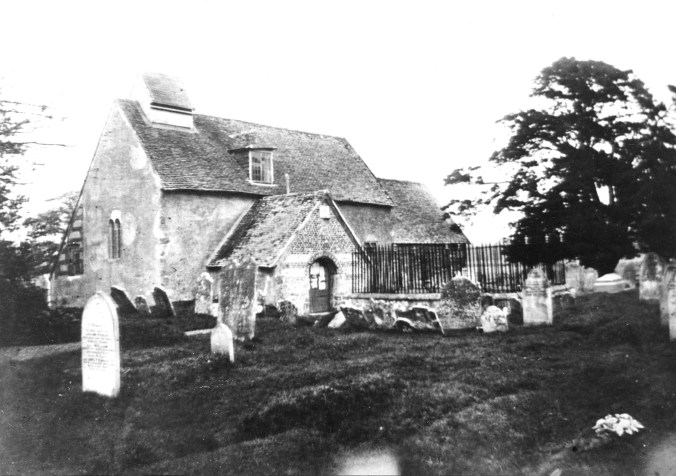
St. John’s Church in Lockerley, Hampshire, is a charming and historic church that has served the local community for centuries. Located in the heart of the picturesque village of Lockerley, which lies in the Test Valley, the church is an important part of the area’s history, culture, and spiritual life.
The history of St. John’s Church dates back to the medieval period, though the current structure reflects several stages of development over the centuries. The original church was likely built around the 12th century, though records from that time are sparse. The church’s dedication to St. John the Evangelist indicates its religious association with the Christian tradition, particularly with the apostle John, one of the most prominent figures in the New Testament. The church’s early history is tied to the broader religious and agricultural practices of the village, which has been a rural community for much of its existence.
Over the centuries, St. John’s Church was subject to several expansions and renovations. The original Norman structure would have been relatively simple, reflecting the needs of a small rural community. However, as Lockerley grew and developed, particularly during the medieval and post-medieval periods, the church was modified to accommodate a larger congregation and to reflect the changing architectural styles of the time. One of the most notable periods of change came in the 19th century, when the church was rebuilt in the Victorian era.
The current building of St. John’s Church was constructed in 1889–90 under the direction of the architect J. Colson, in a style that blends both Gothic and Perpendicular Gothic elements. This period saw significant growth in the Test Valley, and Lockerley, with its proximity to the town of Romsey, benefitted from an expanding population and increased prosperity. The design of the church reflects the period's architectural tastes, with soaring arches, intricate stained-glass windows, and the use of local materials that give the church a distinctive character.
St. John’s Church is a relatively large and impressive building for a rural village church. The structure features a chancel with an outshot, a nave with transepts, and a southwest tower that adds a sense of grandeur to the village’s skyline. The church’s stained-glass windows, depicting various scenes from the Bible, are particularly beautiful, and they provide a striking contrast to the stonework of the building. The wooden roof of the nave, designed with king-post trusses on arch-braces, is another notable feature of the interior, displaying the craftsmanship of the period.
Over the years, St. John’s Church has been at the center of life in Lockerley, hosting regular religious services, weddings, baptisms, and funerals. The churchyard is the final resting place for many of the village’s residents, with gravestones marking the passage of time and offering a sense of continuity to the village’s history. The church continues to play an important role in the spiritual life of the community, offering a space for worship, reflection, and prayer.
In addition to its role as a place of worship, St. John’s Church has also served as a venue for significant community events. The church is a place where people come together to mark important milestones, both religious and personal. Many of the village’s residents, both past and present, have been married, baptized, or buried in the church, giving it a special place in the collective memory of Lockerley.
The churchyard itself is a peaceful and tranquil space, with the graves of local families dotting the landscape. These graves serve as a reminder of the long history of Lockerley, and they provide a connection to the past. The churchyard is not only a site of historical importance but also a beautiful setting for reflection, surrounded by the natural beauty of the Hampshire countryside.
As for rumors of hauntings, like many historic churches, St. John’s has been the subject of local legends and ghost stories. However, there are no widely documented or substantiated paranormal occurrences associated with the church. Given the long history of the building and the village, it is not unusual for local folklore to suggest the presence of spirits or supernatural events. In many cases, such stories are passed down through generations, often becoming part of the cultural fabric of a place. While there may be occasional whispers or tales shared by the community about unexplained occurrences, there is no firm evidence to suggest that the church is haunted.
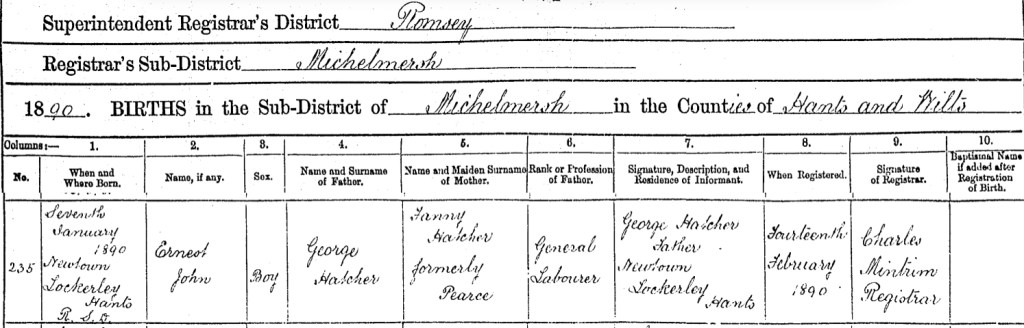
On a cold and breathless morning, Tuesday the 7th day of January, 1890, frost lay thick upon the hedgerows of Newtown, the air sharp and still, the fields of Lockerley glimmering like glass beneath a pale winter sun. Within a small labourer’s cottage, smoke rose thinly from the chimney, curling into the quiet Hampshire sky, while inside, the world was being remade in the soft cry of a newborn child. It was there, in that humble home warmed by faith and endurance, that George and Fanny welcomed their son, Ernest John, into the fragile, beautiful rhythm of life.
For George, now about thirty-two, the moment carried both joy and trembling reverence. He had stood in this place before, had heard the tiny cry of a child and had known the deep, aching silence that sometimes followed. As he looked down at his new son, the weight of the past and the promise of the future met in his heart. Ernest John, warm and small in his mother’s arms, seemed to him a living mercy, a quiet whisper from heaven that life, even after grief, still found a way to begin again.
Fanny, only twenty-two yet aged by loss and love alike, lay pale but radiant, her hair damp with the labour of birth, her arms trembling as they held the precious bundle she had fought so hard to bring into the world. Her heart, still scarred by the memory of their lost son, Caleb, now opened once more, not in forgetting, but in faith. Each soft breath Ernest drew seemed to heal a little of what had been broken, as though the child’s very being carried the balm of renewal.
The midwife, a kindly village woman with rough hands and a gentle manner, tended to them quietly, her movements practised and sure. Outside, the frost still glittered across the fields, and a robin perched upon the sill, its bright eye watching the tender scene within. The cottage was simple, low-beamed, its walls brushed with lime, its fire crackling in the small hearth, yet on that morning, it felt like the centre of the universe.
Later, when the babe was fed and Fanny finally slept, George pulled on his worn coat and made his way to Registrar Charles Mintrim to record the birth. The road was hard underfoot, the winter air biting at his cheeks, but his step was lighter than it had been in many months. As he stood before the registrar’s desk, he gave his name clearly, with quiet pride:
“No. 235
When and Where Born: Seventh January 1890, Newtown, Lockerley, Hants, R.S.D.

Name, if any: Ernest John.

Sex: Boy.

Name and Surname of Father: George Hatcher.

Name and Maiden Surname of Mother: Fanny Hatcher, formerly Pearce.
Rank or Profession of Father: General Labourer.

Signature, Description, and Residence of Informant: George Hatcher, Father, Newtown, Lockerley, Hants.

When Registered: Fourteenth February 1890.

Signature of Registrar: Charles Mintrim.”
The words were written with the registrar’s steady hand, but the meaning was etched upon George’s heart. Ernest John Hatcher, his name now part of the great record of England, a small line of ink that carried the weight of love, loss, and the fragile beauty of beginning again.
When George returned home, dusk had begun to fall, the fields shadowed and still. Inside, the cottage glowed faintly from the hearth’s firelight. Fanny stirred as he entered, and he went to her side, kneeling beside the bed. Ernest slept in her arms, his tiny fingers curled, his breath soft and even. George reached out and gently touched his son’s hand, so small, so impossibly perfect, and something inside him shifted, the hardness that grief had left behind softening in that simple act.
The world beyond their door remained unchanged, fields to till, debts to pay, days that would stretch long and weary, but within those four walls, hope lived anew. The laughter that had once gone silent would one day return. The silence that had hung over the house since Caleb’s passing was now replaced by the quiet hum of life, the soft coo of an infant, the rustle of blankets, the heartbeat of love persevering.
And though the wind still sighed through the bare trees and the nights remained long, George felt, for the first time in many months, that spring would come again. Ernest John, his winter-born child, was proof of it, that even after the darkest nights, the dawn will always find its way through.
Thus, on that frost-kissed morning in 1890, the story of Ernest John Hatcher began, written not only in the parish records of Hampshire but in the tender, enduring hearts of his parents. His life, still new and unwritten, was a promise whispered into the cold January air: that love, though tested by loss, endures; that hope, though fragile, blooms again; and that the Hatchers, through faith and family, would keep finding their way, one new heartbeat at a time.
On a still and gentle Sunday, the 9th day of February, 1890, the Circuit Methodist Church in Newtown, Hampshire, stood bathed in the quiet glow of faith. Outside, the winter fields of Lockerley lay hushed beneath a pale sky, the trees bare but steadfast, their branches whispering softly in the cold air. Within the chapel, however, warmth bloomed, not from the modest fire that crackled in the hearth, but from the gathered hearts of family and friends, their breath mingling with the faint scent of candle wax and polished wood.
It was on that day that George and Fanny Hatcher, of Butter’s Wood, brought forth their newborn son, Ernest John, to be welcomed into the embrace of faith. Barely a month old, his small form was swaddled tightly in a white blanket, his mother’s shawl wrapped close around him. Fanny, still pale from her confinement, held him with a trembling tenderness, while George stood near, his roughened hands folded before him, his posture humble yet proud. He had weathered much in his thirty-two years, long days in the fields, nights of sorrow too heavy for words, yet here, in the heart of his community, he found something sacred in the simple act of hope renewed.
The Reverend Joseph Thomas Evans, a kind-faced man with a gentle voice, stepped forward to the font. He took Ernest lightly into his arms, the congregation watching as the flicker of lamplight caught the sheen of the baptismal water. When he spoke the familiar words “I baptise thee in the name of the Father, and of the Son, and of the Holy Ghost” the sound carried softly through the chapel, mingling with the rustle of skirts and the quiet shifting of boots upon wooden floors. The water touched Ernest’s brow, and Fanny’s breath caught, perhaps in awe, perhaps in memory of another small head once cradled in her arms, now gone to God.
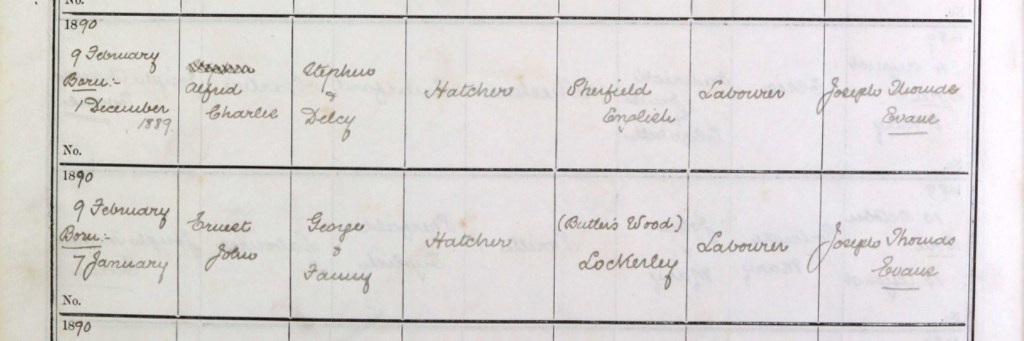
The entry that marked the moment was written, as always, with care and precision:
BAPTISMS solemnized in the Parish of [blank] in the County of Southampton in the Year 1890

Date of Baptism: 9 February 1890

Child’s Christian Name: Ernest John

Date of Birth: 7 January 1890

Parents’ Names: George and Fanny Hatcher

Abode: (Butter’s Wood) Lockerley

Quality, Trade, or Profession: Labourer

By whom the Ceremony was performed: Joseph Thomas Evans.
And yet, this day was not for the Hatchers alone. Standing beside them were Stephen and Delcy Hatcher of Sherfield English, George’s younger brother and his wife, holding their own infant son, Alfred Charles, born the first of December, 1889. Two brothers, two fathers, standing shoulder to shoulder, their children cradled in the arms of faith, their wives sharing quiet smiles of kinship and understanding.
The register recorded the second baptism with the same steady hand:
BAPTISMS solemnized in the Parish of [blank] in the County of Southampton in the Year 1890

Date of Baptism: 9 February 1890

Child’s Christian Name: Alfred Charles

Date of Birth: 1 December 1889

Parents’ Names: Stephen and Delcy Hatcher

Abode: Sherfield English

Quality, Trade, or Profession: Labourer

By whom the Ceremony was performed: Joseph Thomas Evans.
How proud their father, Charles Hatcher, might have been had he lived to see this moment, his sons grown to men, their own children now held to the baptismal light. The family name, once rooted deep in the soil of Hampshire’s fields, was now passed onward, carried gently into the next generation with water, prayer, and love.
The minister’s words of blessing hung in the still air as both infants were returned to their mothers’ arms. Around them, the congregation bowed their heads in silent prayer, a handful of neighbours, cousins, and friends whose lives were stitched together by the shared fabric of work, worship, and endurance. Perhaps a hymn followed, something tender and familiar, its melody rising softly to the chapel rafters “O For a Thousand Tongues to Sing” or “Love Divine, All Loves Excelling” voices joining in harmony, each one carrying the quiet gratitude of hearts made lighter by faith.
When the service ended, George and Stephen lingered outside the chapel door, their wives beside them, their sons bundled tight against the chill. The two men exchanged few words, for none were needed; their understanding ran deeper than speech. The path that wound away from the chapel glistened with frost, and as George looked down at his son, he felt something gentle stir within him, not just pride, but peace.
For in that moment, surrounded by family and the eternal whisper of prayer, he knew that life, though fragile, was endlessly renewed. Through sorrow and through joy, through the ache of labour and the hush of faith, love continued, in the hearts of men, in the songs of women, and in the small, steady breaths of the children they carried home beneath the winter sky.
And so, on that sacred February morning in 1890, beneath the humble roof of the Methodist chapel at Newtown, two tiny boys were bound not only by blood but by blessing, Ernest John and Alfred Charles, cousins by kin, brothers by faith, their names forever linked in the parish register, and in the enduring story of the Hatcher family.
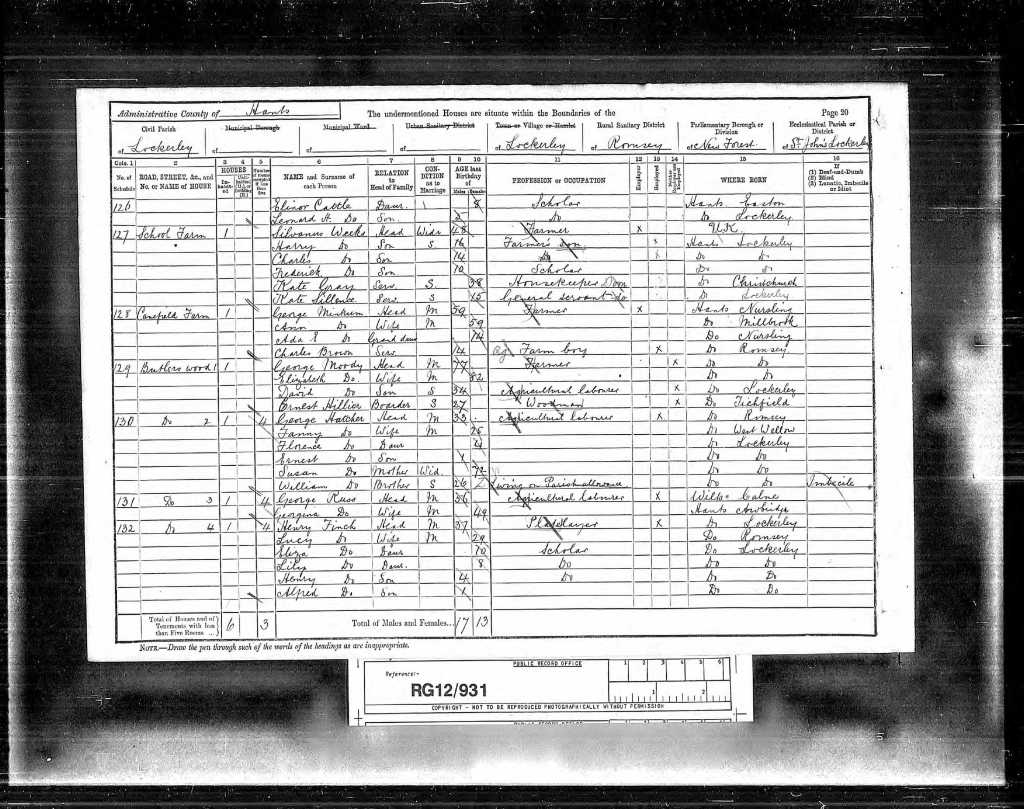
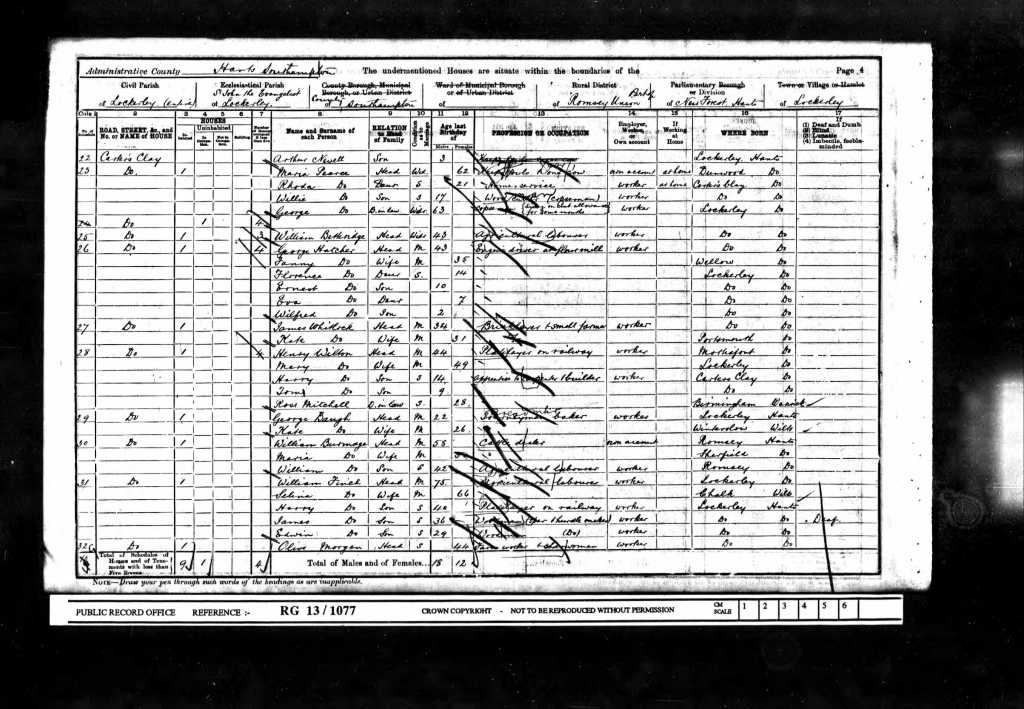
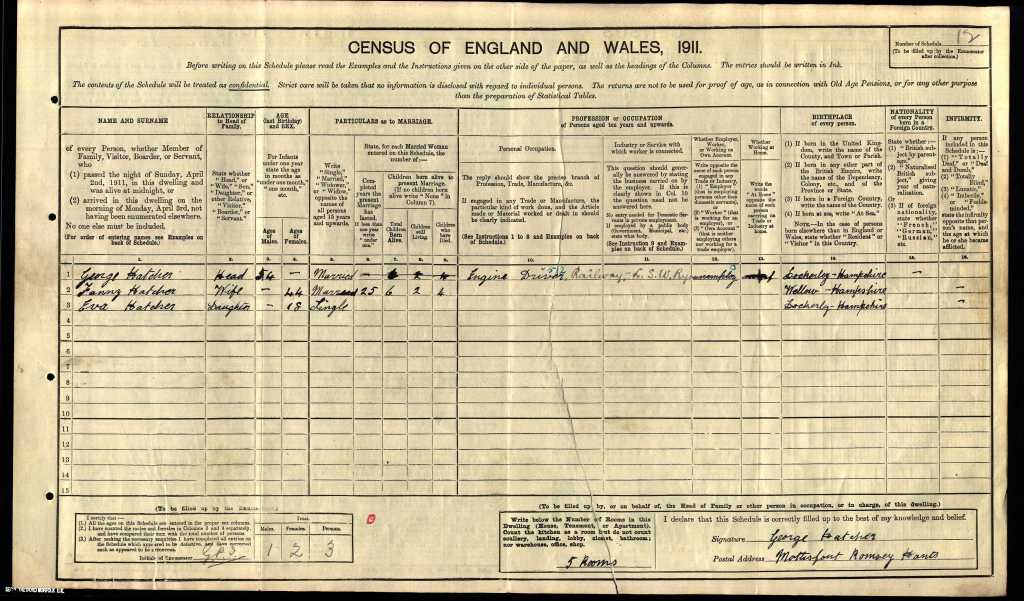
On the quiet spring evening of Sunday, the 5th day of April, 1891, the soft twilight of Hampshire settled gently over the woods and fields of Newtown, Lockerley. A pale crescent moon hung low above the hedgerows, and the last smoke of the day curled lazily from cottage chimneys. Within the modest walls of Number 2, Butler’s Wood, the Hatcher family prepared to rest, unaware that, on this very night, their names, their ages, their very existence, would be carefully inscribed into history by the hand of a government enumerator making his weary way down the muddy village lanes.
The census of 1891 was a great undertaking across the land, every home, every soul, to be counted and recorded beneath the Queen’s reign. In Hampshire, where life still followed the slow rhythm of the plough and the seasons, it was a moment that reached even the quietest corners. The enumerator, likely a man of some education, trudged from door to door with his leather satchel and ink-stained fingers, his lantern cutting through the mist. Each knock brought forth a family, a story, a glimpse of England as it was, raw, humble, and enduring.
And so it was that, within their four-room dwelling at Number 2, Butler’s Wood, George, aged thirty-three, stood before the visitor, his cap in hand, his manner polite but reserved. The man with the census forms would have asked his questions in the steady, patient tone of duty, names, ages, occupations, relationships, small details that together formed the great human tapestry of the nation. George, honest and plain-spoken, gave each answer carefully, his voice carrying the warmth of a man who worked hard, loved deeply, and asked little from life but the chance to provide.
He was recorded as an agricultural labourer, a man of the fields whose days began long before sunrise and ended only when the last light had left the sky. His hands bore the story of his living, calloused, earth-stained, steady, and yet within them rested a tenderness that only those who have both laboured and loved could understand.
At his side stood Fanny, his devoted wife of twenty-five years, her hair swept neatly beneath a simple cap, her eyes still holding the soft glow of youth though touched by the wisdom of motherhood. She had spent her day tending hearth and children, her hands busy from dawn, washing, mending, cooking, comforting, her world small but filled with meaning.
Their two children, Florence, aged four, and little Ernest, just one year old, sat nearby, the flicker of lamplight catching on their fair heads as they dozed against their mother’s skirts. Florence was growing quickly now, her laughter a music that often lightened the weight of her father’s tired steps when he came home from the fields. Ernest, born in winter’s chill, was her opposite, solemn-eyed, curious, already finding his feet in the world.
In the corner, by the fire, sat Susan Hatcher, George’s mother, aged seventy-two. The years had bent her spine but not her spirit. She was the matriarch of the family, the living thread that bound their story to the generations before. Her hands, gnarled and thin, rested in her lap as she watched her son with quiet pride, the boy she had raised through hunger and hardship, now a man with a home of his own and children to carry their name.
Beside her, at the far end of the hearth, was William, George’s younger brother, aged twenty-six. His face was gentle, his gaze distant, his mind forever trapped in a childlike stillness. The census called him “imbecile,” the cruel language of its time, but to George and Susan, he was simply William, their own, a soul who felt more than he could say. He lived on a parish allowance, the small mercy given to those unable to work, yet within this home, his worth was not measured by coin. George cared for him as he did his fields, patiently, faithfully, without complaint.
When the enumerator had finished his task, his boots had faded down the lane, the Hatchers returned to their evening, the fire glowing low, the scent of woodsmoke and bread in the air, the soft breathing of sleeping children filling the silence. Outside, the night gathered over the woods, wrapping the cottage in darkness and frost, while inside, life, humble, imperfect, and steadfast, went quietly on.
To George, this was all that mattered, the warmth of the hearth, the soft sigh of his wife, his mother’s gentle hum by the fire, and the small, steady breaths of his children upstairs. Beyond the fields and the fences, the world might change, queens may age, governments may rise and fall, but here, in Butler’s Wood, the rhythm of life remained the same.
Each dawn brought the same sacred truth that George held close to his heart, that love, though unspoken, was their truest wealth, and that in this small cottage nestled among the Hampshire trees, the Hatchers’ story, his story, was being quietly written into eternity, one census, one generation, one breath at a time.
In 1891, life for a man like George Hatcher, an agricultural labourer in Newtown, Lockerley, was one of quiet endurance, of rising with the sun and bowing to the will of the seasons. His world was bounded by hedgerows and the rhythm of the earth a life as old as England itself, yet as demanding as the very soil from which he drew his bread.
Each dawn, often before the first light touched the fields, George would stir from his straw mattress, pull on his coarse woollen clothes, and step into the chill air. His boots, thick and cracked from use, carried him down the rutted lane toward the land of his employer, most likely one of the larger farms in Lockerley or East Tytherley. In this part of Hampshire, farms sprawled across clay and chalk soil, dotted with oak and ash, their boundaries traced by old flint walls and living hedges that men like George had tended for generations.
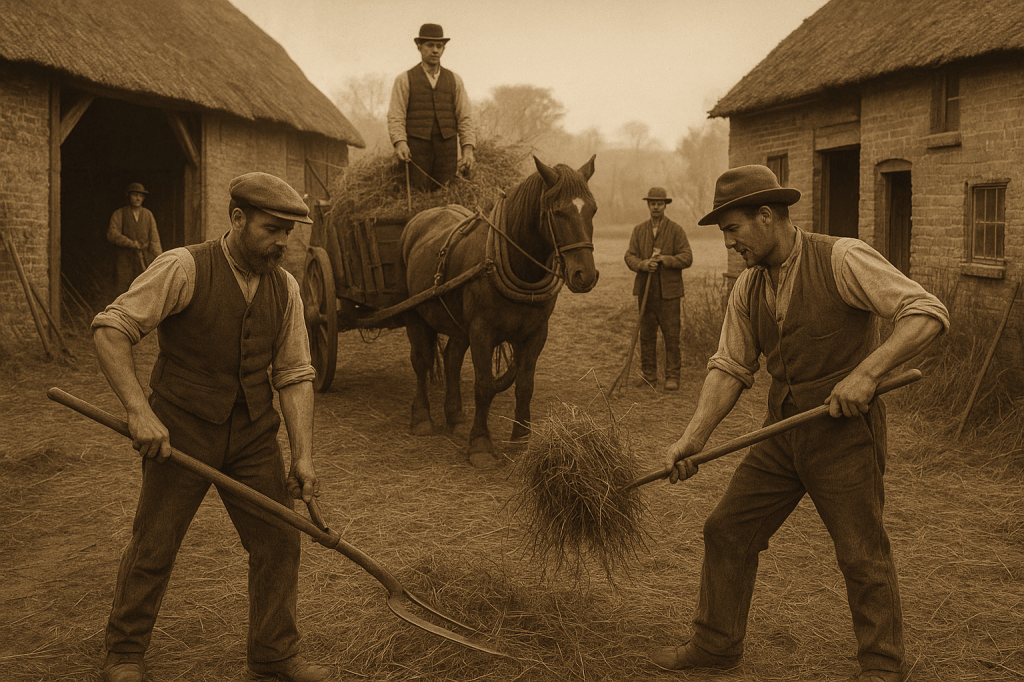
His working hours were long, from dawn until dusk, six days a week, with only Sundays for rest and worship. In summer, that could mean fourteen hours of toil beneath the sun; in winter, the workday might shorten, but never by choice, the cold and darkness simply made labour slower. His hands, weathered and rough, were his livelihood. They gripped the handles of the plough, the hoe, and the scythe; they stacked hay, mended fences, and guided horses through furrowed fields.
For all this effort, George’s wages were meagre, around 12 to 15 shillings a week, though this could rise slightly in harvest season when every able body was needed. Out of this, rent had to be paid, food bought, clothes mended, and a few pennies perhaps saved for hard times. Some farms still paid partly “in kind,” with grain, vegetables, or milk in addition to coin, but it was never enough to make a man wealthy. His wife Fanny might have taken in laundry or field work herself when possible, and together they stretched every penny as far as it could go.
The seasons ruled his life with absolute authority. In spring, George ploughed and sowed, long days of turning earth with horse and plough, sowing barley, oats, or wheat into the cold, damp fields. The air would smell of earth and rain, and his back would ache from the endless pace. Come summer, he turned to haymaking and weeding, stooping for hours beneath the bright sun. Harvest was the heart of his year, a time of sweat, dust, and urgency. Every scythe stroke mattered, every sheaf had to be gathered before the rain could ruin it. At dusk, the fields would hum with the sound of work, men calling to one another across the furrows, women and children joining in to glean what the reapers had left behind.
Autumn brought the turning of the soil again, the smell of burning straw and fallen leaves, the chill creeping into his bones. Winter was the hardest of all. There was hedging and ditching to be done, manure to spread, and beasts to tend, but little money coming in. The short, grey days were filled with cold winds and empty bellies, yet George endured as he always had, sustained by habit, love, and the knowledge that spring would one day return.
His employer, likely a local farmer or estate owner, would have been a man of moderate means, not cruel perhaps, but distant. Labourers like George were respected for their skill and reliability, yet always kept at arm’s length, bound by class and custom. They lived in tied cottages, dependent on the goodwill of their employer for both work and home. To lose one was often to lose the other. Still, George’s reputation as a steady, hardworking man would have earned him a measure of trust, perhaps a few extra shillings at harvest, or the right to gather firewood from the hedgerows.
The dangers of his work were many and merciless. A slipped scythe could sever a finger, a startled horse could crush a man. The new mechanical threshing machines, slowly replacing hand labour, were feared as much as they were admired; their gears could maim in an instant, and many a family lost a father or son to their iron jaws. The weather, too, was an unrelenting adversary, frostbite in winter, sunstroke in summer, fever from stagnant water, rheumatism from years of damp and toil.
There was no compensation for injury, no doctor except the parish man, and no safety net save the Poor Law, which most men like George would rather starve than turn to. Yet there was dignity in his endurance, a quiet pride in knowing he kept his family from want. His children would one day remember him not for what he owned, for he owned nothing but for the way he lived: steadfast, decent, and uncomplaining.
The tools of his trade were simple and time-worn, a wooden-handled spade, a sickle, a scythe, a hand-plough, perhaps a rake or pitchfork crafted by a local smith. He would have carried a small knife in his pocket, used for everything from cutting twine to trimming hedges. His clothes were coarse and patched: fustian trousers, a flannel shirt, a waistcoat, and a cap against the sun. In winter, a heavy coat and muffler, and boots stiff with mud.
Yet for all the hardship, there were moments of peace. The stillness of dawn before the fields came alive; the sound of a skylark rising over the meadows; the sight of his children waiting at the gate as he returned home, weary but whole. In the evenings, the fire would crackle in their small cottage, and George would sit with Fanny and his mother Susan while little Florence and Ernest played at their feet. The air would smell of woodsmoke and bread, and for a time, the world felt gentle again.
Such was George’s life in 1891, a life of labour, humility, and quiet grace. He belonged to the land as surely as the trees and the rivers did. Though his name might appear as one small line on a census sheet, his days were vast, rich with meaning, marked by struggle, and softened by love.
In the tender hush of early spring, on Tuesday, the 22nd day of March, 1892, the woods of Newtown, Lockerley stirred softly beneath a pale Hampshire dawn. The air was cool and scented with moss and earth, the hedgerows glistening with dew, and from the chimneys of Butler’s Wood rose thin tendrils of smoke, curling into the mist like whispered prayers. Inside one of those small, time-worn cottages, humble yet alive with love, George and Fanny welcomed their newest child into the world, a son whom they would name James.
For George, now in his thirty-fourth year, the birth of another son was both blessing and weight, another life to shelter, another mouth to feed, another promise made to the future. His hands, roughened by the plough and the cold, trembled slightly as they brushed the downy cheek of the newborn. He had seen the world take much, yet it still gave back in quiet, miraculous ways. Fanny, weary but radiant, lay wrapped in quilts beside the small fire, the flicker of its flame reflected in her tired eyes. She had done this before, had known both the fierce joy and the unspoken fear that came with bringing life into a fragile world. Her face was pale, her hair damp with the labour’s strain, yet when she looked upon her son, there was only peace, that sacred, wordless bond between mother and child.
Outside, the trees swayed gently in the morning breeze, and the first notes of birdsong drifted through the open window, as though the world itself was welcoming this small boy. It was an ordinary morning in rural Hampshire, yet within that cottage, time seemed to pause, a single heartbeat holding the weight of generations, of love enduring through hardship and change.
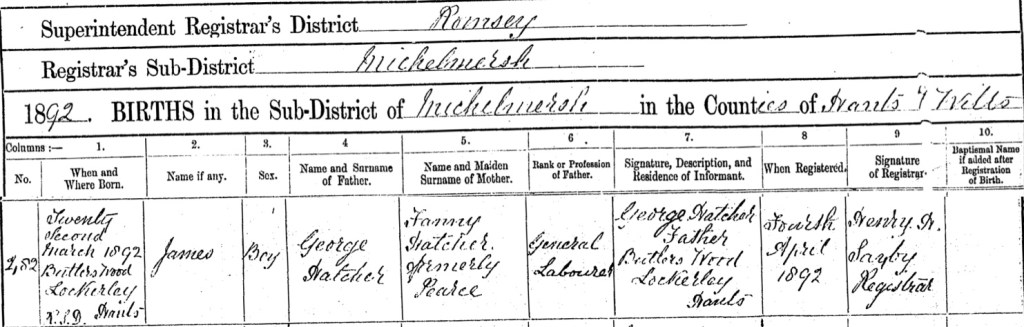
A few weeks later, on Monday the 4th day of April, the event was entered in the Michelmersh Register, the act as practical as it was profound. Registrar Henry H. Saxby, with neat and practiced hand, recorded the details that turned one family’s private joy into history:
BIRTHS in the Sub-District of Michelmersh in the Counties of Hants & Wilts
No.: 482

When and Where Born: Twenty-second March 1892, Butlers Wood, Lockerley, R.S.D., Hants

Name, if any: James

Sex: Boy
Name and Surname of Father: George Hatcher

Name and Maiden Surname of Mother: Fanny Hatcher formerly Pearce

Rank or Profession of Father: General Labourer
Signature, Description, and Residence of Informant: George Hatcher, Father, Butlers Wood, Lockerley, Hants

When Registered: Fourth April 1892

Signature of Registrar: Henry H. Saxby, Registrar
Baptismal Name if added after Registration of Birth: [blank].
Ink upon paper, names and dates, but behind each word lay a world of feeling, the faint scent of woodsmoke and milk, the sound of a baby’s cry mingling with the distant caw of rooks, the warmth of George’s rough hands holding something impossibly small and soft.
Though no baptismal record for little James can yet be found in the parish books, it is hard to imagine that his birth passed without blessing. Perhaps, instead of the echo of church bells and the murmur of prayers beneath stone arches, his welcome came in simpler form, Fanny whispering a psalm by the cradle, George bowing his head in quiet gratitude by the fire. Faith for them was not grand nor public; it was stitched into their days, spoken in the rhythm of honest work and the tenderness with which they tended one another.
In that small home nestled among the trees, James’s life began, a spark in the long, enduring story of the Hatchers. Outside, the woods stood patient and eternal, the same trees that had shaded George as a boy, the same paths that his children would one day wander. And so, beneath the turning wheel of the seasons, another chapter opened, a tiny cry beneath the Hampshire sky, a promise that life, no matter how hard or humble, would go on.
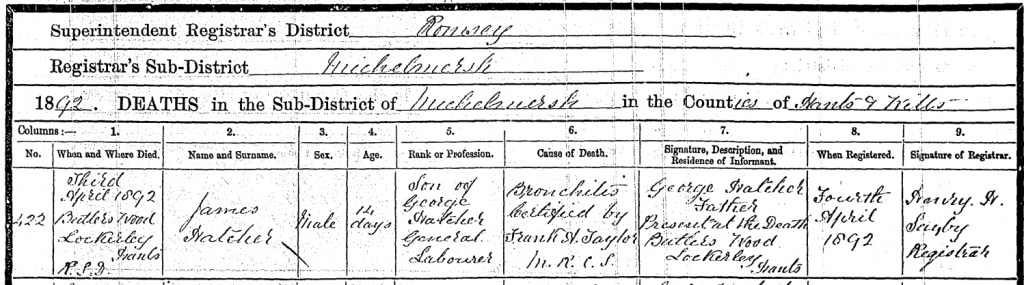
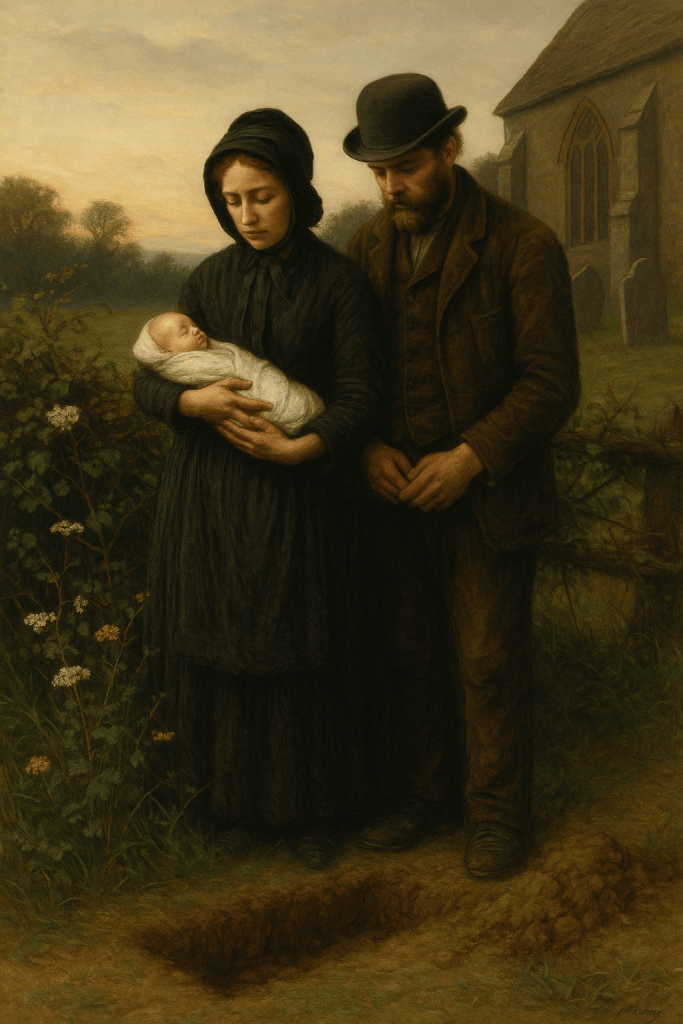
In the tender hush of early spring, when the buds at Butler’s Wood were only just beginning to unfurl and the first green shoots pressed bravely through the damp earth, sorrow fell softly upon the Hatcher household. The woods that had so recently echoed with the promise of new life now stood silent, as though even nature itself mourned. On Sunday, the 3rd day of April, 1892, little James Hatcher, not yet a fortnight old, slipped gently from the world that had only just begun to know him.
Born into love, the cherished son of George and Fanny Hatcher of Newtown, Lockerley, his cries had filled their small cottage with the fragile music of hope. For twelve brief days, his tiny breaths had been a reminder of life’s renewal, his mother’s lullabies a hymn of joy after hardship. But illness came swiftly and without mercy, bronchitis, the doctor had said, the cruel thief of breath that so often came for the youngest and most delicate in those damp spring months. Dr. Frank W. Taylor, M.R.C.S., could do little more than confirm what George and Fanny already knew in their hearts: that their precious boy was fading.
George, his hands still rough from the week’s labour, stood helpless by the small cradle, his world reduced to the shallow rise and fall of his son’s chest. Fanny, pale and exhausted, held James close, whispering prayers through tears as the fire burned low. And when the final stillness came, when the tiny heartbeat faltered and was no more, it seemed as though the very air within the cottage held its breath, the ticking of the clock, the crackle of the hearth, all falling silent in reverence for the passing of one so small.
The next morning, Monday, the 4th day of April, George walked the muddy lane to Michelmersh, the same weary road he had travelled many times. This time, his steps were heavier, his shoulders stooped with the weight of unspeakable loss. With trembling hand, he gave his name to the registrar, Henry H. Saxby, bearing witness to both the beginning and the end of his son’s life in the space of a single day. His name appeared twice upon the page, once in joy, once in sorrow, an unbearable symmetry that only the bereaved could understand.
In the Michelmersh Register, the words were written in tidy script, so cold in their precision that they could not hope to capture the depth of the heartbreak they described:
No. 422

When and Where Died: 3rd April 1892, Butler’s Wood, Lockerley, Hants, R.S.D.

Name and Surname: James Hatcher

Sex: Male

Age: 12 days

Rank or Profession: Son of George Hatcher, General Labourer

Cause of Death: Bronchitis, Certified by Frank W. Taylor, M.R.C.S.

Informant: George Hatcher, Father, Present at the Death, Butler’s Wood, Lockerley, Hants

When Registered: 4th April 1892

Signature of Registrar: Henry H. Saxby, Registrar.
So it was recorded, and so it would remain, ink on parchment, a single, heart-rending line that told nothing of the love that had filled that cottage, nor the emptiness that followed.
Outside, the rain began to fall softly upon the mossy thatch, washing clean the chill air of spring. Inside, Fanny sat by the hearth with empty arms, her tears falling soundlessly as she traced the shape of the tiny blanket that still held his warmth. George, silent beside her, stared into the flames, seeing in their flicker the faint ghost of a future now lost.
Though James Hatcher had known only twelve short days beneath the Hampshire sky, his presence had changed everything. In that brief time, he had brought tenderness to toil, stillness to sorrow, and a fragile reminder of how love and loss are forever entwined. His name, written in both the birth and death registers on the same April day, stands as a quiet testament to the fleeting beauty of life, a candle that burned for but a moment, yet whose light would linger in the hearts of his parents for all their days.
And so, beneath the whispering boughs of Butler’s Wood, where the trees swayed gently in the wind, a young couple mourned the smallest of lives, a life too brief to leave footprints in the soil, yet deep enough to leave them forever upon their souls.
Though the records of his baptism and burial remain unfound, little James Hatcher was never lost to time, not truly. His name, though absent from any church ledger, was written instead upon the hearts of those who had loved him in his brief and tender days upon this earth. Some names are carved in stone, others live forever in the quiet ache of memory, and James’s belonged to the latter.
When I spoke with Reverend James Pitkin of St John’s Church, Lockerley, he shared a fragment of sacred local remembrance, a whisper passed down through the generations. In those days, he said, when grief was too heavy for ceremony and infants too small and fragile for a full Christian burial, their tiny bodies were often laid to rest quietly, humbly, in the hedgerows of the churchyard. There, between the boundary of consecrated ground and the open fields, they would be entrusted to the keeping of the earth itself, to God’s gentlest corner of creation.
And so it is believed that James, too, may rest there, beneath the sheltering yews and thorned hawthorn, where the robins still sing at dawn and the first wild violets bloom each spring. A soft, green hush hangs over that place, a peace that feels almost alive, as if the very soil remembers the small souls it holds, and cradles them still.
One can imagine that day, in the cool light of April, when George and Fanny made the quiet walk to the churchyard. Fanny, her body still frail from the travail of birth and loss, would have carried their son in trembling arms, perhaps wrapped in the same white blanket that had once swaddled him in warmth and love. George, his hat in his hands and his eyes hollow with sorrow, walked beside her, every step a prayer unspoken.
At the edge of the churchyard, where the consecrated ground gave way to hedgerow and meadow, they would have stopped. There, among the tangled roots and moss, a small space was found, not grand, but sacred in its simplicity. George may have knelt to the earth, his rough hands shaking as he helped lower the tiny bundle, his tears falling soundlessly upon the soil. The clods of dark earth would have looked stark against the pale of spring grass, and for a moment, the world itself must have seemed to hold its breath.
When the last handful of soil was smoothed and the air stilled once more, Fanny may have lingered. She might have knelt upon the soft ground, her fingers tracing the fresh earth as though trying to hold onto him one last time. The wind would have lifted her hair, carrying her whispered blessing to the heavens, a mother’s final promise that love does not end. And before she rose to leave, she may have opened her trembling hands to the sky and let her tears fall like rain, each drop a vow that her son would not be forgotten.
No stone bears his name. No record tells his story. Yet beneath the hedgerows of Lockerley, in that tender meeting place between life and eternity, James is not lost. His resting place may be unmarked, but it is holy all the same, sanctified not by marble or inscription, but by love, faith, and remembrance. The robins sing there still, and the wildflowers return each spring, as though to remind the living that the smallest lives, too, are cherished in God’s keeping.
And perhaps, when evening falls and the light turns golden over Butler’s Wood, George and Fanny’s love for their child still stirs in the rustle of leaves, a quiet assurance that though time has passed and generations have come and gone, James Hatcher sleeps in peace, cradled forever in the gentle arms of the Hampshire earth.
On a soft summer’s day, when the air was golden with the hum of harvest and the scent of cut hay lingered upon the breeze, a new life came quietly into the world, Eva Kate Hatcher, my great-grandmother. It was Thursday, the 24th day of August, 1893, and the village of Newtown, Lockerley, lay bathed in the tender warmth of late August sunlight. Somewhere among the winding hedgerows and the whispering fields of Butler’s Wood, the cry of a newborn child rose for the first time, small, fragile, and full of promise.
She was the daughter of George, thirty-five years old, a man of the soil whose hands were shaped by a lifetime of labour, and Fanny, just twenty-four, a woman whose quiet strength and enduring love formed the heart of her family. Their cottage would have been modest, its walls whitewashed, its hearth burning low, yet on that summer’s afternoon it became a sanctuary of joy. The fields outside were alive with the rhythm of the harvest, the distant call of men at work, the soft swish of scythes through grain, and within those walls, life renewed itself in the form of a tiny girl.
One can imagine George standing by the bedside, his rough palms trembling as he reached to touch the downy head of his newborn daughter. Fanny, pale and weary from her labour, would have looked up at him with the faintest of smiles, her eyes alight with love and exhaustion. For them both, little Eva Kate was not just another child, she was hope restored. Two sons, Caleb George and James, had already been lost to the cruel hand of infant death. Their small graves, known to the wind and the wildflowers, lingered in George’s heart with a sorrow he never spoke aloud. But now, with this new life in his arms, there was a sense that perhaps the world had turned once more toward mercy.
It was George himself who travelled to the registrar’s office some weeks later, his boots caked in the dust of country lanes, his cap held solemnly in his hands as he stepped through the doorway. There, on Thursday, the 21st day of September, 1893, he gave the details that would forever anchor his daughter’s birth in time and memory. Registrar Henry H. Saxby, neat and precise in his duties, recorded them in the Sub-District of Michelmersh, in the Counties of Hants and Wilts:
No. 441

When and Where Born: 24th August 1893, Newtown, Lockerley, R.S.D. Hants
Name, if any: Eva Kate

Sex: Girl

Father: George Hatcher

Mother: Fanny Hatcher, formerly Pearce

Rank or Profession of Father: Agricultural Labourer

Informant: George Hatcher, Father, Newtown, Lockerley, Hants

When Registered: 21st September 1893

Signature of Registrar: Henry H. Saxby.
And so, with the careful sweep of a pen, her name joined the great ledger of life, Eva Kate Hatcher, the fifth child of George and Fanny, a new thread in the tapestry of a humble Hampshire family whose story, like so many others, was woven through faith, endurance, and love.
That record, still faintly legible after more than a century, is more than a bureaucratic entry, it is the echo of that summer afternoon, the warmth of the fire that burned in the hearth, the sound of a mother’s lullaby, and the quiet pride of a father who had walked from field to office to honour his child’s place in the world.
And though the paper has yellowed and the ink has softened with age, the love that welcomed Eva Kate into the world on that bright day in 1893 endures still. It hums softly through the generations like the wind through the Lockerley trees, a whisper of roots that run deep in Hampshire soil, of hearts that have endured hardship and found grace, and of one small cry that began a story which, more than a century later, would lead all the way to me.
On a gentle autumn Sunday, the 29th day of October, 1893, the air in Newtown, Hampshire was crisp and clear, touched with the faint sweetness of fallen leaves and woodsmoke. As morning sunlight filtered softly through the hedgerows, the bell of the Methodist Circuit Chapel began to toll, its mellow voice carrying across the quiet fields and cottages, calling the faithful to worship. Inside that modest chapel, its wooden pews polished by years of devotion, its air fragrant with lamp oil and hymnbook leather, a sacred moment was about to unfold, one that would forever be written in the story of a humble Hampshire family.
There, before the minister and their gathered neighbours, George and Fanny Hatcher stood with quiet grace, their hearts full to overflowing as they presented their infant daughter, Eva Kate, my great-grandmother, to be baptised. The baby, just two months old, lay nestled in her mother’s arms, her breath soft as a sigh, her future unwritten yet already held in the tender hopes of those who loved her. George, his hands roughened by the plough and the harvest, stood close beside his wife, his cap in hand, his head bowed in reverence.
The ceremony was simple, yet deeply movingm the kind of faith that needs no grandeur, only sincerity. The minister, William Sheasby, recorded it carefully, his pen gliding across the parish register with practiced solemnity:
BAPTISMS solemnized in the Parish of [blank] in the County of [blank] in the Year 1893

Date of Baptism: 29th October 1893

Child’s Christian Name: Eva Kate

Parents’ Names: George and Fanny Hatcher

Abode: Lockerley

Quality, Trade, or Profession: Labourer

By whom the Ceremony was performed: William Sheasby.
Outside, autumn leaves drifted past the windows in quiet spirals, as though nature itself joined in blessing this small child. The scent of damp earth mingled with candle smoke, and the soft murmur of hymn verses filled the air, perhaps “Jesus, Lover of My Soul,” or “There is a Fountain Filled with Blood,” hymns so often sung in those Methodist chapels, each line rising like prayer and promise. When the minister’s hand dipped into the font and the cool water touched Eva’s brow, a hush fell over the room, that sacred silence that lives between faith and love.
For George and Fanny, this baptism carried more than ritual meaning; it was a prayer whispered through tears, a quiet thanksgiving for life renewed. They had known loss too soon, two sons buried before their time, and now, as the water glistened upon their daughter’s skin, they must have felt both gratitude and fear entwined. Yet in that small act of faith, they placed her into God’s keeping, entrusting her to the same divine mercy that had sustained them through hardship.
When the final hymn faded and the congregation stepped out into the pale October light, George may have lifted his daughter high for a moment, her eyes catching the shimmer of the morning sun. Fanny, her shawl drawn close against the autumn chill, would have smiled through quiet tears, her heart full of love and hope.
And though more than a century has passed since that sacred day, the record, written neatly in the hand of Reverend Sheasby, still endures. It holds not only names and dates but the living echo of that morning: the warmth of devotion, the faith of two humble parents, and the promise that from their small world in Lockerley, something enduring and beautiful had begun.
In that chapel of simple wood and faith, Eva Kate Hatcher was welcomed into both the church and the story of generations to come,  a story that would ripple outward through time.
On Tuesday, the 19th day of April, 1898, beneath the tender blush of spring skies over Carters Clay in Lockerley, Hampshire, a new light entered the Hatcher home, a child whose first cry rose like a song amid the awakening fields. He was named Wilfred Charles, a name both sturdy and sweet, born to George and Fanny Hatcher, whose lives, though humble, were rich in love and quiet endurance.
Outside, the world stirred gently to life, blackbirds calling from the hedgerows, lambs bleating in the distance, the scent of turned soil drifting through the open door. Inside their small cottage, Fanny, just thirty years old, lay weary but radiant, her newborn son resting upon her chest. George, now forty, stood near the hearth, his weathered hands trembling slightly as he gazed upon his newest child, the fifth to survive, and each one a reminder of both joy and fragility.
He had known loss, as had she, two tiny sons, Caleb George and James, laid to rest before their first birthdays. Yet life, ever resilient, had found its way back to their hearth. The air itself seemed to soften around this new arrival, as if the whole of Lockerley’s countryside paused to bless the moment.
A few weeks later, on Thursday, the 26th day of May, George took the familiar road to the registrar’s office, his boots leaving prints in the damp spring earth. There, beneath the steady eye of Registrar Henry H. Saxby, he gave the details of his son’s birth, each word an act of pride, each line a father’s declaration of love. His name, signed in a careful hand, joined the ledger of life:
No. 102

When and Where Born: 19th April 1898, Carters Clay, Lockerley, R.S.D.
Name, if any: Wilfred Charles

Sex: Boy
Father: George Hatcher

Mother: Fanny Hatcher, formerly Pearce

Rank or Profession of Father: General Labourer

Signature of Informant: George Hatcher, Father, Carters Clay, Lockerley
 When Registered: 26th May 1898

Signature of Registrar: Henry H. Saxby, Registrar.
When George stepped out into the sunlight once more, his heart must have lifted, knowing he had marked his son’s place in history. For men like him, men of the soil and the seasons, a name on a page was more than ink; it was permanence, a small victory against time’s forgetting.
Though no record of Wilfred’s baptism has yet come to light in the parish books, his birth would not have gone unblessed. In those rural corners of Hampshire, where roads turned to mud and wages barely met the week, baptisms sometimes waited for better weather or for the circuit minister’s next passing. Some were recorded in stray ledgers, others lost entirely to the margins of time.
And yet, no absence of paper could erase what was surely given. In the quiet glow of lamplight, Fanny would have cradled her son near the hearth, her voice barely above a whisper as she spoke his name, Wilfred Charles, and offered him the oldest prayer of all, a mother’s plea for strength, health, and mercy. The scent of bread and smoke filled the small room, the steady tick of the clock keeping rhythm with the baby’s soft breaths.
George, still faintly smelling of earth and hay, may have stood close, his cap in his hands, his head bowed not out of custom but reverence. The world outside their door was vast and uncertain, ruled by weather, labour, and luck, but here, within these four walls, love had made its dwelling. For that brief, luminous moment, their cottage became a chapel of its own, woodsmoke for incense, the fire’s flicker for altar light, and the steady rise and fall of their child’s breath as their hymn.
Perhaps they planned to bring him to the chapel when spring turned to summer, when the lanes dried and the minister’s book next opened. Perhaps they did, and the record faded, its ink thinned with time. Or perhaps they never did, trusting instead that God had already heard their prayers at the bedside.
What matters is not the missing line in a ledger, but the truth that endures, that on that April morning in 1898, love was enough. It was written not only in Saxby’s careful hand, but in the tender hush of Fanny’s voice, in George’s steady pride, in the sigh of the fields outside.
And though the years have folded gently over that day, soft as the Hampshire mist, the name of Wilfred Charles Hatcher still glows in the story of his family, a quiet promise, born beneath spring skies, in a world made holy by love.
Carters Clay is a quaint hamlet nestled within the civil parish of Lockerley, Hampshire, situated in the scenic Test Valley. This rural area is characterized by its peaceful countryside setting, with properties like detached bungalows and thatched cottages dotting the landscape. The hamlet is accessed via Carters Clay Road, a quiet country lane that meanders through fields and farmland, offering residents and visitors alike a tranquil environment.
Historically, Carters Clay was part of the larger Lockerley estate. The manor of Lockerley was granted by Henry VIII to Francis Dawtrey in 1538, and later sold to Richard Dawtrey in 1588. Over the centuries, the area has evolved from agricultural land to a more residential community, with properties in Carters Clay Road varying in size and style, reflecting the area's development over time.
The hamlet's proximity to Lockerley provides access to local amenities, including a village shop, a garage, and Lockerley Church of England Primary School. The parish church of St John the Evangelist, built in 1890, serves as a focal point for the community. Additionally, the area is near Lockerley Camp, an Iron Age hillfort located to the east of the village, offering historical insights and a connection to the region's ancient past.
On the calm evening of Sunday, the 31st day of March, 1901, as dusk settled over the gentle Hampshire hills, the quiet rhythm of Carters Clay, Lockerley, slowed to a peaceful stillness. Across the land, census men moved from door to door, their ledgers in hand, the faint smell of lamp oil and spring earth mingling in the air. It was the night of the 1901 Census, a night when the humble and the grand alike were recorded in ink, their names, their homes, their lives captured in a moment that would one day become history.
In one such home, a modest four-room cottage, the Hatcher family prepared for another ordinary night, unaware that their story was being quietly preserved for generations to come. Inside, the soft glow of a fire cast long shadows upon the walls, and the comforting hum of domestic life filled the air. George, aged forty-three, sat near the hearth, his hands, roughened by years of work, resting upon his knees. Once an agricultural labourer, he now worked as an engine driver in a flour mill, likely the Dunbridge Mill near Romsey, where the great iron heart of the steam engine throbbed with life and power. Day after day, George tended that roaring beast, coaxing from it the steady rhythm that fed the grain into flour, his work a bridge between the old world of hand labour and the new age of machinery.
Beside him sat Fanny, his beloved wife of thirty-five years, her face softened by the firelight. Though the years and the weight of motherhood had etched quiet lines of care upon her features, there remained a gentle strength in her eyes, the kind that had carried her through both sorrow and joy. Around her gathered their children, Florence, fourteen, already showing the quiet grace of womanhood, Ernest, ten, lively and eager to follow in his father’s steps, Eva, seven, wide-eyed and curious, her laughter often echoing through the fields, and little Wilfred, just two years old, whose chubby hands reached for his mother’s apron strings.
That night, as the census enumerator, a man of careful manner and steady pen, knocked upon their door, George likely greeted him with quiet courtesy. The questions were familiar by now, name, age, occupation, place of birth. George spoke plainly, his Hampshire accent marked but proud, answering for each member of his household while Fanny soothed Wilfred’s drowsy cries. When all was said and done, the man thanked them and moved on into the darkness, his lantern swinging like a small sun in the mist.
Outside, their neighbours too were settling for the night. Across the narrow lane lived William Betteridge, a widower of forty-three, an agricultural labourer whose days were long and often solitary, and not far beyond, James Whitlock, thirty-four, a bricklayer and small farmer, with his wife Kate, aged thirty-one, whose laughter sometimes carried across the hedgerows when the evenings were fair. Together, they formed the quiet fabric of rural Hampshire life, a tapestry woven from work, weather, and faith.
As the village drifted into slumber, the faint whistle of the Dunbridge Mill engine might have carried across the fields, a reminder of the world’s slow but steady change. Within the Hatcher home, the fire dimmed, and George perhaps gazed for a moment at his sleeping children, the flicker of the embers catching in their hair. He had seen so much already, birth and loss, hardship and renewal. Yet here, in the warmth of that cottage, surrounded by those he loved, life felt full, even in its simplicity.
And so, on that March night of 1901, the names George, Fanny, Florence, Ernest, Eva, and Wilfred Hatcher were written carefully into the great ledger of England. To the census taker, they were merely numbers, ages, and occupations. But to history, and to those who remember them, they were something far greater, a family bound by love, by endurance, and by the enduring hum of a mill wheel turning beneath the Hampshire sky.
In the year 1901, George Hatcher, now forty-three years of age, had traded the open fields of his youth for the steady thrum of machinery. He worked as an engine driver in a flour mill, almost certainly Dunbridge Mill, the only steam-powered mill near Lockerley. The great red-brick building stood beside the River Dun, its tall chimney curling smoke into the Hampshire sky. It was there that George spent his days tending the heart of the mill, the great steam engine whose deep rhythm drove the wheels, belts, and millstones that turned grain into flour.
His working day began before dawn. While the rest of the village still slumbered under blankets of mist, George rose quietly, buttoned his worn jacket, and walked the familiar road toward the mill. The early air was sharp and damp, smelling faintly of woodsmoke and dew. By the time the first light brushed the fields, he was at his post, rousing the engine from its nightly slumber. He stoked the great firebox, feeding it coal until the flames roared to life and the pressure gauge began to climb. The hiss of escaping steam, the metallic clang of levers, and the rhythmic hum of gears filled the air. It was a sound both fearsome and comforting, a heartbeat that would carry through the long hours ahead.
George’s work required patience, strength, and an unwavering calm. He watched the dials and listened to the subtle language of the machinery, the sighs, rattles, and knocks that spoke of strain or imbalance. Too much pressure, and the boiler could burst; too little, and the stones would slow, halting the day’s work. Each hour demanded his vigilance, for the mill depended upon the smooth running of his engine, and the livelihoods of many hung upon his care. It was said that a good engine driver could hear a fault before it could be seen, and George, with years of steady labour behind him, had developed such an ear.
His hours were long, from first light until evening, six days a week. Only Sunday offered rest. His pay, somewhere between eighteen and twenty-two shillings a week, was fair enough to keep his family in modest comfort. Each Saturday, he would collect his wages from the mill foreman, a small paper packet, folded neatly, his name written across the front. It was not wealth, but it was honourable, earned by skill and sweat. To be an engine driver was to hold a place of trust; he was no mere labourer now, but the keeper of fire and motion, the man who made the mill live.
The work, though noble, carried grave dangers. Steam was a power both wondrous and treacherous. Boilers could explode without warning, tearing iron apart like paper. Flour dust, suspended in the air, was as fine as smoke and as deadly as fire, one spark could turn the mill into a blazing inferno. The belts and cogs that spun from the great flywheel were swift and merciless, ready to catch the unwary hand or sleeve. Many a man bore the scars of inattention, and some never came home at all. George knew this well, and so his movements were deliberate, his focus constant. There was no room for haste in the company of such forces.
Life at the mill followed the rhythm of the seasons. In summer and autumn, when the harvest wagons rolled in heavy with wheat, the days were relentless. The mill ran from dawn to dark, the air thick with dust, the heat stifling from the boiler’s constant breath. Winter brought quieter days, the air cold enough to bite and the machines slow to start. At times, frost crept into the very gears, and George’s breath mingled with the steam as he coaxed life back into the slumbering engine. Still, the work never truly ceased; bread was a necessity, and flour must always be ground.
The mill itself was a world apart, a place alive with sound and scent. The deep thud of the stones, the hiss of steam, the steady whir of belts filled every corner. The air carried the smell of warm grain, coal, and oil. Dust clung to everything, softening the sharp edges of wood and iron alike. George worked amidst this symphony of motion, his clothes dusted white each evening, his face streaked with sweat and soot. And yet, there was beauty in the order of it, the gleam of brass fittings polished each week, the hum of the machinery running true beneath his care.
At the end of each day, when the mill’s fires dimmed and the great wheel slowed to stillness, George would step out into the evening air, his body weary but his heart steady. The sky above Dunbridge would glow with the last of the sun, the river running quiet and silver beside the road. He would walk home through the fields, the world hushed now except for the soft call of an owl or the distant bark of a farm dog. In the small cottage at Carters Clay, the fire would still be warm, Fanny waiting with supper, their children asleep or drowsy by the hearth.
George was, in his quiet way, a man who stood between two worlds. He had known the rhythm of the plough and the hum of the machine, the simplicity of the fields and the marvel of steam. His work was not recorded in history books, yet it powered the lives of others, the loaves baked in every Hampshire kitchen, the steady sustenance of his village. His world was one of constancy, of faithfulness to labour and to family. Each morning he rose to light the fire that fed the engine, and each night he returned to the gentle light of home. In that daily cycle, he found meaning enough, and in his steadiness, the great machine of life turned on.
Dunbridge Flour Mill, once standing by the River Dun in the quiet hamlet of Dunbridge near Mottisfont, Hampshire, was a notable part of the local industrial and agricultural landscape in the late nineteenth and early twentieth centuries. By 1901, the mill was a thriving enterprise and one of the key employers in the surrounding area, serving both the village and nearby farming communities. Its history is closely tied to the development of rural industry in Hampshire, the growth of the railway, and the changing technology of milling that transformed local economies at the turn of the century.
The site of Dunbridge Mill had likely been associated with milling for many generations before the Victorian period. The River Dun, a tributary of the River Test, provided an ideal source of water power, and it is thought that an earlier watermill may have stood there since at least the eighteenth century. However, by the 1890s, the old ways of water-powered milling were being replaced by steam. Dunbridge Flour Mill, built or extensively modernised around 1890, represented this shift. It was powered by steam rather than the river itself, marking it as a modern industrial facility for its time.
The mill was owned and operated by the firm of T. Aylward & Sons, a family business that also ran Lockerley Mill a few miles away. Thomas Aylward, the head of the family, lived in Dunbridge House, a handsome residence overlooking the village, and the Aylwards were well-known as prominent local figures and employers. The family also owned several cottages along Barley Hill, which were rented to mill workers, creating a small industrial community clustered around the mill. Life revolved around the rhythms of production, with many local men employed in shifts that kept the mill working almost continuously through the week.
Dunbridge Flour Mill received its supplies of grain by train, as the Mottisfont and Dunbridge Railway Station stood only a short distance away on the Wessex Main Line. The proximity of the railway was crucial to the mill’s success, allowing easy transport of both corn and coal. Coal was the lifeblood of the mill’s steam engine, while the railway enabled flour and animal feed to be distributed to wider markets, including Romsey, Salisbury, and Southampton. The site was alive with movement: wagons of corn arriving, steam machinery rumbling, the air filled with the hum of belts and grinding stones.
The building itself was substantial, constructed in brick with a tall chimney that could be seen across the valley. Inside were the milling floors, hoppers, and storage bins, together with the great steam engine that powered the machinery. The steam mill was a sign of progress, a bridge between the age-old trade of the miller and the modern industrial world. It worked day and night during the week, resting only for Sundays when the machinery fell silent and the workers gathered with their families in the nearby cottages or attended services at Mottisfont Church.
Tragically, the life of the Dunbridge Mill was cut short by disaster. On the evening of October 27, 1939, the mill was destroyed by fire. The blaze was fierce and fast, fuelled by the dry wooden timbers of the structure and the dust from years of milling flour. Eyewitnesses later recalled that the heat was so intense that it was impossible to stand near the building, and flames lit the night sky for miles around. The cause of the fire was never definitively established, though speculation ranged from a mechanical fault to spontaneous combustion of stored grain or even arson. Whatever the cause, the destruction was total, and the mill was never rebuilt.
After the fire, the ruins of the mill stood for several years, a blackened shell beside the river and railway. Eventually, the site was cleared, and in 1978 the area was redeveloped for housing. Three private residences were built where the mill once stood, but traces of its past linger in local memory and in the landscape itself. The flow of the River Dun, the old railway line, and the layout of nearby cottages all speak of the time when this corner of Hampshire bustled with industrial life.
The story of Dunbridge Flour Mill is not only a local one but also part of a wider chapter in English rural history. The late nineteenth century saw the decline of traditional watermills and the rise of mechanised steam-powered milling, reshaping communities that had depended on rivers and manual labour for centuries. At Dunbridge, this transition was lived out vividly: a place where innovation, family enterprise, and community met the realities of changing technology and, eventually, tragedy.
Today, little remains of the mill beyond its memory in local history and family stories. Yet its legacy endures through the records of the Aylward family, the railway that once served it, and the quiet village lanes that still bear witness to a time when the hum of industry echoed along the banks of the River Dun.
The winter of 1903 lay hushed over the quiet fields of Newtown, Lockerley. The hedgerows stood dark and bare against the pewter-grey sky, and a chill silence hung in the air, broken only by the faint crackle of hearthfires within the cottages that dotted the Hampshire lanes. Inside one such cottage, its walls steeped in years of laughter, labour, and prayer, George’s mother, Susan Hatcher, née Luke, drew near the close of her long and humble journey.
It was Thursday, the 5th day of February, when her breathing grew soft and shallow, her spirit turning toward a gentler world unseen. She was eighty-three years old, a mother, a widow, and the steadfast heart of her family. Her life had been written not in grand gestures but in the quiet rhythm of daily grace, the washing of linen, the mending of clothes by candlelight, the care of children through sickness and storm. Her faith was simple and constant, woven into the very fabric of her days. Once, long ago, she had walked beside her husband Charles, a man of the fields, strong and sure. His early passing had left her with a home to keep and children to raise, and she had done so with quiet courage and enduring love.
Now, in her final hours, George, her faithful son, the same boy who had once clung to her apron strings in Butler’s Wood, sat beside her. His hands, calloused by work, held hers with reverence, tracing the lines that told the story of her years. When her final breath came, it came softly, like the settling of snow, a sigh rather than a struggle, the peaceful yielding of a life well-lived.
The moment was recorded with official precision, though it could not capture the depth of love and loss it represented:
1903 DEATH in the Sub-district of Michelmersh in the County of Southampton
Registration District: Romsey
No.: 13
When and Where Died: Fifth February 1903, Newtown, Lockerley, R.D.
Name and Surname: Susanna Hatcher
Sex: Female
Age: 83 years
Occupation: Widow of Charles Hatcher, formerly General Labourer
Cause of Death: Decay of Nature, Certified by Frank A. Taylor, M.R.C.S.
Signature, Description, and Residence of Informant: George Hatcher, Son, Carters Clay, Lockerley
When Registered: Tenth February 1903
Signature of Registrar: Henry H. Saxby, Registrar.
To the world, she was a line in a register. To George, she was the pulse of every kindness he had ever known, the warmth by the hearth, the gentle voice that soothed his childhood fears, the quiet wisdom that had guided him into manhood. When he walked to the registrar’s office that cold February morning to give her name, his grief was heavy but dignified, carried with the same steadfastness that she had taught him. Each stroke of the pen was an act of devotion, a son’s final service to the woman who had shaped his very being.
For William, George’s younger brother, the boy who had once been described in records as “Imbecile,” but who, to their mother, had simply been her child, Susan’s death brought an end not only to a mother’s love, but to the gentle care that had sheltered him all his life. He had known no world without her. With Susan’s passing, the fragile order of his days unraveled. Only weeks later, William was taken to the Poor Law Institution in Romsey, the great workhouse on Winchester Road, a place of stone walls and quiet sorrow, where the destitute and the forgotten found refuge of the most meagre kind. There, amid long corridors and unfamiliar faces, he lived out his remaining days, separated from the warmth and comfort of the home his mother had made.
George would have felt the weight of this double loss keenly, not only his mother’s death but the knowledge that his brother’s life had changed forever. Still, he carried on, as those born to labour and faith must. His heart, though heavy, was anchored by the example Susan had set, a life of endurance, of quiet duty, of love that persisted even in hardship.
And so ended the earthly story of Susan Hatcher, daughter of Hampshire soil, whose hands had tended both hearth and heart for over eight decades. Her name may fade in ink, but not in memory. She lived on in her son George’s steadfastness, in the compassion that coloured his every act, and in the unbroken thread of love that runs still, from her hearth at Butler’s Wood, through the generations that followed, to those who remember her now.
On a still and silvery morning, Sunday the 15th day of February, 1903, the village of Lockerley awoke beneath a pale winter sky, the kind of sky that seemed to hold its breath between frost and thaw. Beneath its quiet canopy, the people gathered in solemn grace at St. John’s Church, their breath rising like mist in the cool air, their steps soft upon the damp grass of the churchyard. It was there, among the yews and lichened stones, that Susan Hatcher, beloved mother, widow, and matriarch of the Hatcher family, was laid to rest.
The parish register, in its calm, methodical script, preserves the moment with reverent simplicity:

Name: Susan Hatcher.

Abode: Newtown, Lockerley.

When Buried: February 15th, 1903.

Age: 83 years.

By whom the Ceremony was performed: J. P. May, Vicar.

Entry Number: 673.
Her grave, now marked as OD3, lies quietly beneath the shadow of the church tower, where the soft toll of the bell rolled outward across the fields she had once walked in youth and in age alike. The bell’s mournful peal carried over the hedgerows and meadows, drifting toward Butler’s Wood and Carters Clay, where George, her devoted son, had worked the land and raised his own children. For those who stood beside her grave that day, George among them, it must have felt as though time itself had paused, the world hushed in respect for a woman whose life had spanned nearly a century of change, hardship, and steadfast love.
Perhaps the air still carried the faint scent of woodsmoke from distant hearths, mingling with the damp earth freshly turned. George may have stood close by, his hat held low, his heart heavy with both grief and gratitude. In her long years, Susan had seen joy and sorrow in equal measure, the laughter of children, the ache of loss, the endless rhythm of work and prayer. And now, as the vicar’s voice rose softly in the crisp air “Earth to earth, ashes to ashes, dust to dust” her spirit was commended back to the soil that had always been her truest home.
Around her lay generations of Hampshire souls, neighbours and kin alike, the very people whose lives had intertwined with hers through births, marriages, and harvest seasons gone by. The churchyard, framed by yews that had stood sentinel for centuries, became her final resting place. There, the robins flit through the branches, and the grass grows soft and green come spring, as if nature itself keeps vigil.
Her name, carved into stone and written in the parish book, remains part of the quiet history of Lockerley. Yet beyond those records, Susan lives still, in the hands of her son George, roughened yet gentle, in the care and constancy he had learned from her, in the lives of her grandchildren, who would carry forward the same enduring spirit of faith, work, and family.
And so, beneath the whispering trees of St. John’s Churchyard, Susan Hatcher found her peace, her journey complete, her story folded tenderly into the land she had loved. The winter wind moved softly through the grass that day, and though the world carried on, one could almost believe that heaven itself had stooped low over Lockerley, gathering her home with quiet grace.
On a mild spring morning, Saturday, the 5th day of March, 1904, the village of Lockerley awoke beneath a gentle haze of sunlight, the air carrying the faint perfume of primroses and the hum of distant fields readying for spring. From the tower of St John’s Church, the bells began to ring, soft, golden notes tumbling across the hedgerows, over the lanes of Hampshire, and into the hearts of all who heard them. It was a day of joy, quiet but radiant, for within those familiar stone walls a daughter of George and Fanny, Florence Fanny Hatcher, stood ready to begin a new chapter of her life.
Inside the little parish church, the air was cool and scented faintly of beeswax and old wood. Sunlight streamed through coloured glass, casting pools of colour upon the flagstones. The vicar, Reverend J. G. May, stood waiting at the altar, prayer book in hand, as neighbours and kin filled the pews, their whispers subdued, their faces softened by affection. Then, as the organ began to play the first tender notes of “The Voice That Breathed O’er Eden,” all turned toward the door.
There she was, Florence, eighteen years of age, her cheeks touched with nervous colour, her dark eyes bright with both excitement and love. Her gown was modest but lovely, sewn by her mother’s careful hands from pale cream cotton trimmed with lace at the cuffs. A small posy of violets and snowdrops, the flowers of faithfulness and hope, rested in her gloved hands. And beside her, walking steadily down the aisle, was her father, George Hatcher.
George, now forty-three and grey at the temples, had laboured his whole life beneath the Hampshire sun, a man of the fields, strong, honest, and quiet. But this morning, his heart was full. His arm trembled slightly beneath his daughter’s hand as they took each measured step together toward the altar. Perhaps he thought of the day he first held her, tiny, pink, and wailing in his arms in their little cottage at Butler’s Wood or of how she had run laughing through the hedgerows as a child. Now here she was, a woman grown, her future shining before her.
When they reached the front, George paused, the soft murmur of the congregation fading into stillness. The vicar looked up and asked the age-old question that had echoed through centuries,
“Who giveth this woman to be married to this man?”
George’s voice, though low, was steady.
“I do.”
He placed Florence’s hand gently into that of William George Dowling, a young labourer of twenty-two, whose earnest eyes met his with gratitude and respect. In that small gesture, simple yet profound, George gave away his firstborn child, not out of loss, but in love, entrusting her to the keeping of another heart. Then, stepping back, he took his seat beside Fanny, his wife, who dabbed at her eyes with a handkerchief, her face glowing with pride and tenderness.
The register would later record the moment in the precise hand of the parish clerk:
1904. Marriage solemnized at St John’s Church in the Parish of Lockerley in the County of Southampton.

No.: 210

When Married: March 5th, 1904

Name and Surname: William George Dowling, Florence Fanny Hatcher

Age: 22, 18

Condition: Bachelor, Spinster

Rank or Profession: Labourer, —

Residence at the Time of Marriage: Lockerley, Lockerley

Father’s Name and Surname: Silas Dowling, George Hatcher

Rank or Profession of Father: Labourer, Labourer

Married in the Parish Church according to the Rites and Ceremonies of the Established Church, after Banns, by me, J. G. May, Vicar

This Marriage was solemnized between us:

William George Dowling

Florence Fanny Hatcher

In the Presence of us:
James Tubbs,
Annie Tubbs.
But paper and ink could never capture the full beauty of that day. The sunlight glinting through the stained glass, the soft tremor in Florence’s voice as she said her vows, the way George’s roughened hands clasped his hat as he listened, proud, solemn, and quietly overcome. When the final hymn rose, perhaps “O Perfect Love” it filled the church like a blessing, the sound mingling with the distant murmur of wind in the yew trees outside.
When the vows were spoken and the bells rang once more, Florence and William stepped out into the spring light, husband and wife, laughter breaking through their shyness as petals were thrown and well-wishers gathered at the gate. George lingered a moment behind them, watching as his daughter’s veil caught the sunlight, her hand entwined with her husband’s.
For him, it was a moment of both pride and wistful ache, the letting go that all fathers must one day face. Yet as he walked slowly down the church path, Fanny’s arm in his, he must have felt peace too, knowing that Florence had found her place in the world, her heart anchored in the same soil that had nurtured generations of Hatchers before her.
And so, on that gentle March morning in 1904, beneath the ancient roof of St John’s Church, Lockerley, a daughter was given away in love, and a new branch began to grow on the old family tree, rooted in faith, tended by time, and blessed by the soft toll of Hampshire bells.
In the soft, sorrowful light of Wednesday, the 15th day of November, 1905, a quiet stillness fell upon Carters Clay, Lockerley. The mill wheel turned as it always did, creaking rhythmically beside the slow, brown waters of the stream, but within the Hatcher home, the world had stopped. There, in that modest cottage warmed by the faint glow of the hearth, George and Fanny watched helplessly as the fragile flame of their youngest son’s life flickered and went out.
Wilfred Charles Hatcher, their bright and gentle boy of just seven years, had been taken from them by that most merciless of illnesses, diphtheria. It had come quietly, a sore throat and a fever at first, then swiftly tightened its cruel grasp, stealing the very breath from his small body. Outside, the autumn air was sharp with the scent of wet earth and smoke from the fields, but inside the cottage, there was only the heavy stillness of grief.
George, weary from his long hours as an engine driver at the flour mills, had come home to find his wife kneeling beside their son, her arms around him, rocking gently as if she could will him back to life. Fanny’s face was pale, her tears falling silently onto Wilfred’s hair as she whispered his name, over and over, the name she had once sung softly to him as a babe, when the world was kind and full of promise.
Dr. E. O. Scallan, the local physician, came and went with quiet compassion, his presence a sombre ritual of formality and futility. “Diphtheria,” he wrote, and the word itself seemed to hang like a shadow in the room, cold, impersonal, unfeeling. No ink or paper could capture the raw ache of that night, the sound of a mother’s sobs or a father’s hollow silence.
Two days later, on Friday, the 17th day of November, it was Ernest John Hatcher, Wilfred’s elder brother of fifteen, who made the walk into Romsey, through the misted lanes and leaf-strewn roads, to the registrar’s office. It was a journey that no child should have had to make, a quiet act of courage and devotion. He gave his name, his trembling voice breaking as he spoke of his little brother, and then he signed the register, his handwriting small and uncertain, but steady.
The record remains, preserved in official dignity, the words stark against the page:
DEATHS in the Sub-District of Michelmersh in the County of Southampton
No.: 132

When and Where Died: Fifteenth November 1905, Carters Clay, Lockerley, R.D.

Name and Surname: Wilfred Charles Hatcher

Sex: Male

Age: 7 years

Rank or Profession: Son of George Hatcher, Engine Driver at Flour Mills
Cause of Death: Diphtheria, Certified by E. O. Scallan, M.D.

Signature, Description, and Residence of Informant: Ernest J. Hatcher, Brother, in attendance, Carters Clay, Lockerley

When Registered: Seventeenth November 1905

Signature of Registrar: Henry H. Saxby, Registrar
And though those few lines endure, inked in a clerk’s careful hand, they tell nothing of the love that filled that home, nor of the aching quiet that followed. They do not speak of George, sitting by the window long after the lamps had burned low, his roughened hands folded in his lap, listening to the creak of the mill wheel and thinking of the son who would never again run to meet him at the gate. Nor do they tell of Fanny, still smoothing the small indent in the pillow where Wilfred’s head had lain, her lullabies turned to whispers of prayer.
Theirs was a sorrow shared in silence, the kind that settled deep, not loud or raging, but woven into every breath. The fields outside went on as before; the seasons turned, the crops grew, the church bell tolled, yet for George and Fanny, time itself seemed to move differently now, marked not by the rising of the sun, but by memory.
And still, even amid the heartache, there was love, unbroken, steadfast, eternal. For though Wilfred’s name would fade from the school rolls and from the chatter of the lanes, it lived on in the hearts of those who had known him. In the rhythm of the mill that still turned each day. In the soft rustle of the woods where he had once played. In the quiet prayers of his family each night, whispered into the same Hampshire sky that now held his soul.
So ended the brief, bright chapter of little Wilfred Charles Hatcher, a boy of seven years, a son, a brother, a light too soon extinguished, but never forgotten.
The chill of Saturday, the 18th day of November, 1905, hung thick over St John’s Churchyard in Lockerley, a grey, sorrowful mist settling low between the yew trees as the villagers gathered in quiet reverence. Beneath that cold Hampshire sky, the Hatcher family stood united in heartbreak, preparing to lay to rest their youngest child, Wilfred Charles Hatcher, the bright-eyed boy whose laughter had once echoed through the cottage at Carters Clay.
The parish register recorded it in steady, emotionless ink, a handful of words that belied the depth of sorrow they carried:
BURIALS in the Parish of Lockerley in the County of Southampton in the Year 1905

Name: Wilfred Charles Hatcher

Abode: Lockerley

When Buried: November 18th, 1905

Age: 7 years

By whom the Ceremony was performed: W. May, Vicar
Entry
Number: 687.
Yet no clerk’s pen could capture the aching truth of that morning.
At the edge of the open grave stood Fanny, her face pale and drawn, her small handkerchief crumpled in trembling fingers. Just days earlier she had knelt beside her son’s bed, praying through the long, fevered hours as diphtheria stole his breath, her whispered pleas mingling with the rhythmic pulse of the mill wheel turning in the distance. Now, there was only stillness, the quiet of loss too great for words. Her husband, George, the steadfast engine driver whose hands bore the callouses of long labour and the smell of oil and flour, stood beside her. He said nothing; his grief was too deep for speech. His hands were clasped tightly before him, his knuckles white, his eyes fixed on the small wooden coffin that contained all the joy of seven fleeting years.
Around them, their surviving children, Florence, Ernest, and Eva, clung close, their young faces marked with confusion and sorrow. They had never known the world without Wilfred’s laughter, his quick feet on the floorboards, his bright voice in the fields, and now that laughter was silenced forever.
The Vicar, Reverend W. May, stood solemnly by, his voice low and steady as he read the words of committal, “Earth to earth, ashes to ashes, dust to dust…” The phrases, ancient and unchanging, rose into the cold air, joining the soft rustle of the last autumn leaves as they were lifted and carried by the wind. It was as if nature herself had paused to grieve. A robin sang from a low branch nearby, a fragile, haunting song that wove through the stillness like a final blessing.
When the final amen was spoken, George stepped forward, his breath misting in the chill air. With hands that had built, carried, and mended all his life, he took a small handful of the dark earth and let it fall, soft and sure, upon his son’s coffin. The sound, a muted patter, broke the silence like a heartbeat fading into stillness. Fanny, weeping quietly, followed his motion, her tears mingling with the damp soil as she whispered her son’s name.
Around them, neighbours bowed their heads, not from formality, but from the simple, human ache of witnessing a family’s sorrow. The tolling of the church bell began then, deep and mournful, rolling across the valley and fading into the wooded hills of Lockerley. Each note seemed to carry a piece of Wilfred’s memory, his laughter, his light, his brief, beloved life.
Though the parish book holds his name as Entry No. 687, a fact among facts, for George and Fanny, that number would forever mark the day their world grew smaller. Wilfred was not merely a line in a register; he was the sunlight that had danced across their hearth, the small hand that had once slipped trustingly into theirs, the little voice that had filled their days with joy. His absence was a silence too deep to measure, one that lingered in every corner of their home.
He was laid to rest in Grave OE1, a quiet patch beneath the watchful yews, where the wind hums softly through the grass and the seasons pass with tender grace. And though his parents would go on, carrying their sorrow as gently as they could, they would never pass that churchyard without pausing, without feeling, deep in their hearts, the echo of a boy’s laughter carried still on the Hampshire breeze.
In that sacred corner of St John’s, surrounded by the same fields and hedgerows that had shaped his short life, Wilfred Charles Hatcher found his eternal rest, a child of the countryside, a son of love and labour, a life brief but bright, now part of the quiet song of the Lockerley hills.
On Thursday, the 28th day of March, 1907, in the gentle hush of West Wellow, the first true breaths of spring stirred through the hedgerows, carrying with them the faint perfume of damp earth and rain. Inside a small, timeworn cottage, where the embers in the hearth glowed faintly against the chill, Mary Ann Pearce, George’s mother-in-law, took her final breath. The air was still, save for the rhythmic ticking of the old mantel clock and the soft whisper of her breathing, slower now, softer, until it faded altogether into silence.
Outside, the morning birds sang on, their lilting notes a fragile echo of life continuing, as if the world itself had not yet realised that one of its gentlest souls had gone. Within those four walls, however, the weight of loss was palpable, for Mary Ann, the steadfast wife of William Pearce, the village roadman, had been the heart of her home, her quiet strength the anchor of her family’s days.
The official record, written with the detached hand of bureaucracy, preserves only the barest outline of her story:
1907 DEATHS in the Sub-District of Michelmersh in the County of Southampton.

No.: 206

When and Where Died: Twenty-eighth March 1907, West Wellow, R.D.

Name and Surname: Mary Ann Pearce

Sex: Female

Age: 66 years

Rank or Profession: Wife of William Pearce, Roadman

Cause of Death: Influenza, Bronchitis, Gastritis. Certified by E. O. Scallon, M.D.

Signature, Description, and Residence of Informant: Sarah E. Russell, Present at the Death, West Wellow

When Registered: Thirtieth March 1907

Signature of Registrar: Henry H. Saxby, Registrar.
Such a record cannot capture what was felt within that home, the slow dimming of a life that had been a light for so many. Sarah Russell, who was present at her passing, is said to have drawn the bedsheet gently to Mary Ann’s chin, her trembling fingers brushing the cool skin of the woman who had been her friend and neighbour. Outside, a soft rain began to fall, the steady patter against the thatched roof like nature’s quiet benediction.
For William Pearce, her husband, the world must have seemed immeasurably empty that morning. For decades, she had walked beside him through every turning of the seasons, in summer’s dust and winter’s frost, through laughter and hardship alike. He would rise now to find her chair empty, her voice absent from the rhythm of his days. The woman who had waited for him at the gate after long hours on the road, whose hands had mended, baked, and comforted without complaint, was gone.
The news of her passing must have travelled quickly down the narrow lanes of Wellow and Lockerley, carried by word of mouth, by sigh and murmur. When George and Fanny received it, perhaps in their cottage at Carters Clay, there would have been a long silence. For George, who had known her not merely as his wife’s mother but as a second mother to himself, a woman who had welcomed him warmly into her family, her death would have struck deep. He had watched her age gently, her face weathered but kind, her voice still soft and sure when she spoke of faith and family.
For Fanny, the loss was beyond words. The woman who had guided her into womanhood, who had held her hand through births and heartbreaks alike, was gone. There would be no more visits to her mother’s hearth, no more gentle advice offered in that lilting Hampshire tongue. Only memory remained now, of Mary Ann’s laughter on summer afternoons, of her apron dusted with flour, of her quiet prayers said each night for the safety of her children and grandchildren.
Though the registry of deaths tells her story in cold ink, Mary Ann Pearce’s life was written in something far more enduring, the love she gave, the family she raised, the unspoken strength that carried her through a lifetime of labour and devotion. Her spirit lingered in the homes she had touched, in the children and grandchildren who bore her kindness in their hearts.
And for George, standing beneath the greening branches of early spring, the thought must have come to him, that lives like Mary Ann’s do not truly end. They settle instead into the quiet corners of memory, into the scent of woodsmoke at dusk, into the warmth of a hand held in comfort, into the gentle faith that carries a family onward through the years.
On the soft spring morning of Monday, the 1st day of April, 1907, the bell of Saint Margaret’s Church in Wellow tolled with a slow and sorrowful grace, its mournful voice carrying over the tender green of the hedgerows and the quiet lanes that Mary Ann Pearce, George’s beloved mother-in-law, had walked for so many years. The air was touched with the sweetness of new blossom and the faint chill of dawn, as though the world itself hesitated between grief and renewal.
The parish register, written in the neat and careful hand of G. G. Elton, records the moment with calm precision:
BURIALS in the Parish of Wellow in the County of Southampton in the Year One thousand Nine Hundred and Seven.

Page 49.

Name: Mary Ann Pearce

Abode: West Wellow

When Buried: April 1st

Age: 66 years

By whom the Ceremony was performed: G. G. Elton.
Yet behind those few lines of black ink lay a lifetime of quiet devotion and unspoken strength.
Mary Ann Pearce had been the heart of her family, the steady presence whose hands had mended, soothed, and comforted through years both gentle and hard. As the wife of William Pearce, the village roadman, her life had followed the rhythm of the seasons, summers spent under the open sky, winters by the hearth, her laughter mingling with the wind that swept across the Hampshire fields. Her passing, after weeks of struggle with influenza and bronchitis, left behind a silence that felt almost sacred, a pause in the familiar hum of village life.
That morning, the Pearce children gathered by her grave, grown now, each bearing the mark of their mother’s love upon them. Among them stood Fanny Hatcher, her eyes brimming with the ache of loss, her hand clasped tightly in that of her husband George, who had long known and cherished the kindness of the woman now gone. Together, they listened as Reverend Elton read the words of committal, phrases worn smooth by centuries, yet still sharp with meaning: “In the midst of life we are in death.” The sound of soil falling gently upon the coffin broke the stillness, a soft and final benediction.
Perhaps, as the last of the prayers faded, a breeze stirred through the yew branches above, scattering the first pale petals of spring across the newly turned earth. The faint perfume of wild violets drifted on the air, mingling with the scent of rain and woodsmoke, nature’s quiet acknowledgment of a life well lived.
For George, standing there beside his wife, the moment must have felt achingly familiar. In the turn of a few short years, he had already stood by the graves of his own mother and his child, now, he stood beside Fanny as she said goodbye to hers. Yet in that shared sorrow, there was also a thread of grace, the unspoken understanding that love, though it must bow to time, does not vanish with it.
Mary Ann’s story did not end in that churchyard. It lingered in the laughter of her grandchildren, in the recipes she had passed to Fanny, in the steadfast way her family met each new day. Her spirit lived on in the quiet endurance that ran like a golden seam through the generations, the same endurance that George and Fanny carried home with them that day, walking hand in hand through the lanes of Wellow, where every turning, every whisper of wind, seemed to echo her name.
And so, beneath the watchful yews of Saint Margaret’s, Mary Ann Pearce was not merely laid to rest, she was returned to the land she had loved, her memory woven into the fabric of Hampshire itself, where the bells tolled softly not just for her passing, but for the love she left behind.
Saint Margaret's Church in East Wellow, Hampshire, is a beautiful and historic parish church that has stood as a central spiritual and community landmark for many centuries. Located in the picturesque surroundings of the Test Valley, the church is an integral part of East Wellow, a village with a rich history tied to the local agricultural community and its connections to the broader historical developments of Hampshire.
The history of Saint Margaret’s Church can be traced back to the 12th century, with the earliest known reference to the church appearing in the Domesday Book of 1086. The church was built during a time when many villages in England were establishing places of worship and community gathering, and it has since played a significant role in the religious and social life of the village. The church’s name, "Saint Margaret," likely refers to Saint Margaret of Antioch, a Christian martyr whose feast day is celebrated in June. Saint Margaret was revered in medieval Christian communities, particularly in England, where many churches were dedicated to saints who had strong associations with faith and protection.
Saint Margaret’s Church has seen several architectural modifications over the centuries, but much of the original Norman structure remains, particularly in the form of the church’s solid stone walls and simple, unpretentious design. The church was built in the Romanesque style, typical of early medieval churches, and it would have been a simple, functional building intended to serve the needs of the local population. Over time, as the church became a focal point for the growing community, various changes were made to accommodate the increasing number of parishioners and to reflect the evolving architectural tastes of the time.
During the 13th century, the church underwent its first major expansion, as many churches did during the medieval period. This expansion likely included the addition of a chancel and the extension of the nave, as well as the inclusion of larger windows to allow more light into the building. As was common in many rural churches, St. Margaret’s was at the heart of village life, providing not only a place for worship but also a space for social and community activities. During this time, the churchyard would have also served as the burial ground for local residents, with gravestones marking the lives of those who had contributed to the local community.
Over the centuries, the church continued to evolve, particularly during the Victorian era when many older churches were restored or rebuilt. In the 19th century, Saint Margaret’s Church underwent significant restoration work under the direction of Victorian architects who were dedicated to preserving medieval structures. During this time, the church was modernized with the addition of stained-glass windows, new pews, and other decorative features that reflected the Gothic Revival style that was popular during the period. The restoration also helped to maintain the integrity of the church’s structure, ensuring that it remained a functioning place of worship for generations to come.
One of the most notable features of Saint Margaret’s Church is its beautiful churchyard, which is the final resting place for many generations of Wellow residents. The churchyard is home to a variety of graves and memorials, some of which date back to the medieval period. The gravestones, many of which are carved with intricate symbols and inscriptions, provide insight into the lives of the people who lived in Wellow and the surrounding area over the centuries. The churchyard is not only a place of remembrance but also serves as a peaceful and tranquil area, surrounded by trees and greenery, where locals and visitors alike can reflect and appreciate the history of the village.
In addition to its religious functions, Saint Margaret’s Church also played an important role in the social life of East Wellow. Like many churches in rural England, Saint Margaret’s was the center for various community events, including festivals, fairs, and charitable activities. The church was a space where people came together to celebrate important events in the church calendar, such as Christmas, Easter, and harvest festivals. These occasions were important not only for their religious significance but also as social events where the community could gather and bond.
Saint Margaret’s Church has been a part of the local community for over 900 years, and it continues to be an active place of worship and community gathering. The church holds regular services, including Sunday worship, as well as special events like weddings, christenings, and funerals. It remains a beloved part of East Wellow, serving as a reminder of the village’s deep historical and spiritual roots. The church also hosts occasional concerts, events, and educational programs, continuing its role as a cultural and social center for the village.
As for rumors of hauntings or supernatural occurrences, like many historic churches, Saint Margaret’s Church has been the subject of local folklore and ghost stories. While there are no widely known or documented cases of hauntings, the church's long history, the age of its structure, and the quiet, serene atmosphere of the churchyard may naturally lead to tales of mysterious happenings or eerie experiences. Churches with such a long history often become part of local ghost lore, and their dark corners and ancient gravestones sometimes inspire imagination and stories passed down through generations.
On Tuesday, the 24th day of September, 1907, in the gentle hush of early autumn, the life of George’s sister, Mary Ann Petter (née Luke Hatcher) came softly to its close. The house at Number 29, Somerset Road, in the seaside town of Southsea, stood quiet beneath a pale morning sky, the salt air drifting faintly through open windows. Within its walls, where the scent of the sea mingled with that of lavender water and coal smoke, a woman of sixty years slipped peacefully from this world, her heart, once so steady and strong, finally yielding after a lifetime of love, labour, and quiet endurance.
The official record preserves her departure with formal restraint, a handful of lines penned in the careful hand of the registrar:
No. 47

When and where died: Twenty-fourth September 1907, 29 Somerset Road, Southsea U.D.

Name and surname: Mary Ann Petter

Sex: Female

Age: 60 years

Rank or profession: Widow of John Petter, Coachman (Domestic)

Cause of death: Cardiac Degeneration (Fatty), Dropsy, Syncope

Signature, description, and residence of informant: Ernest Winsborough, Son-in-law, in attendance, 29 Somerset Road, Southsea

When registered: Twenty-sixth September 1907

Signature of registrar: E. H. Andrews, Registrar.
But behind those solemn words lived the story of a woman who had known the full measure of life’s sweetness and sorrow. Once a daughter of Lockerley’s fields, born beneath the same Hampshire sky that had watched over her brother George, Mary Ann had grown from a girl chasing sunbeams through the hedgerows into a woman of quiet grace. She had married John Petter, a coachman of fine bearing, who spent his days in livery, tending the carriages and horses of the gentry. Their life together was one of dignity and service, simple, honest, and grounded in the virtues of hard work and love.
When John was taken from her, Mary Ann bore her widowhood with a quiet courage that those who knew her never forgot. She moved through her days with the same gentle resolve that had marked her youth, her heart heavy yet steady, her faith unshaken. And though the years brought their share of solitude and failing health, she was never truly alone. Her daughter and son-in-law, Ernest Winsborough, cared for her tenderly in her final days, their home filled with the soft sounds of domestic life, the clink of teacups, the low murmur of voices, the distant roll of the tide along the Solent.
One can imagine her in those last hours, lying quietly in her room as the afternoon light fell golden through lace curtains, catching the glint of her wedding band, now thin from years of wear. Perhaps she thought of George, her brother far away in Lockerley, still labouring in the Hampshire fields, perhaps she thought of their mother Susan, gone some years now, and of the green churchyard where so many Hatchers slept. And as the steady rhythm of the world continued around her, the rattle of a carriage wheel outside, the whisper of the wind through the trees, her breathing slowed, her spirit loosening like the final petal of a flower giving itself to the breeze.
Two days later, on Thursday, the 26th day of September, Registrar E. H. Andrews recorded her passing with care, her name and story sealed into history. But for George, when word of her death reached Lockerley, it must have felt as though a piece of his own childhood had gone with her. She had been the sister who shared his earliest laughter, the same rough bread, the same nights by the fire in Butler’s Wood. Her loss was not merely the passing of kin, but the quiet closing of a chapter, the fading echo of voices once bound by the same thatched roof, the same simple hopes.
Though the place of her burial remains unknown, her resting place is not lost. For those who remember her, Mary Ann Petter lies wherever her memory is cherished, in the pages of a family Bible, in the faint scent of lavender from folded linen, in the tenderness of a story told by firelight. Her life, like so many lived in quiet virtue, was not grand in the eyes of the world, but it was holy in its constancy.
And for George, standing beneath the Hampshire sky she once called home, her memory would live on not in marble or inscription, but in the heart, steady, humble, and enduring, as all true love is.
On a cold and silent Saturday, the 10th day of January, 1909, winter lay heavy upon Dunbridge, its fields rimed with frost, its hedgerows glistening pale beneath a muted sun. Inside the small home known as New Cottages, the light of life burned low for Ernest John Hatcher, beloved son of George and Fanny. Only nineteen years old, he had been a boy of promise, his laughter still echoing faintly through the cottage walls, when illness, sudden, merciless, laid its claim.
The official record of his death tells the story in measured, emotionless script:
1909 DEATHS in the Sub-District of Michelmersh in the County of Southampton

No.: 279

When and Where Died: Tenth January 1909, New Cottages, Dunbridge, Mottisfont, R.D.

Name and Surname: Ernest John Hatcher

Sex: Male

Age: 19 years

Rank or Profession: Packer at flour mills

Cause of Death: Acute Meningitis, Certified by E. O. Scallon, M.D.

Signature, Description, and Residence of Informant: G. Hatcher, Father, present at the death, New Cottages, Dunbridge

When Registered: Eleventh January 1909

Signature of Registrar: Josiah Munday, Registrar.
Yet behind those simple, unfeeling lines lies a depth of sorrow that no ink could ever convey.
It was George who sat beside the bed as his son’s breathing faltered, the steady rhythm of the mill engines outside faintly thrumming through the walls, indifferent to the stillness gathering within. Fanny, her hands clasped around Ernest’s own, whispered his name in prayer even as she felt him slipping beyond her reach. The doctor could do little, the fever had taken hold too fiercely, the young man’s body trembling beneath its cruel grip of acute meningitis. And when at last his eyes closed and his chest grew still, the house fell utterly quiet, only the ticking of the mantel clock marked the passage of time, cruel in its indifference.
He was just nineteen. A mill worker, like his father, a packer at the flour mills, strong and full of life. His boots had so recently tracked dust and grain across the floors of Dunbridge, his laughter had filled the narrow lanes of Lockerley where he had grown up chasing the summer wind. Now those boots stood idle by the door, their laces loosened but never to be tied again, and the air in the cottage felt emptier for it.
For George and Fanny, the loss reopened every wound that time had only half-healed. Ernest was their fourth child to die, another name now added to the quiet litany of grief they carried in their hearts, Caleb George, James, Wilfred Charles, and now Ernest John. Each had gone too soon, each had left a silence of their own. George, whose shoulders had borne a lifetime of toil, bent under a weight no labour could equal. Fanny’s tears fell without sound; she had learned long ago that grief sometimes spoke only in the stillness.
The following morning, Monday, the 11th day of January, the frost still sharp upon the hedges, George made his slow walk to the Romsey Registry Office. The path was familiar, one he had taken before for reasons both joyous and tragic, but this time his steps were leaden. The smell of smoke hung in the cold air as he entered the building, removed his hat, and gave his son’s name to the clerk. His hand trembled only slightly as he signed his own. To the registrar, Josiah Munday, it was another entry among hundreds. To George, it was a father’s final act of love.
And so it was written, a life begun in hope, ended too soon, and folded into the quiet history of a Hampshire family who had known too much loss and loved too deeply to ever forget. That night, when the lamps were dimmed and the mill wheels turned somewhere in the distance, Fanny sat by the fire, her eyes fixed on the hearth. She imagined her lost boys together, Caleb, James, Wilfred, and Ernest, running through sunlit fields far beyond sorrow’s reach, their laughter carried on the wind that drifted softly through the open chimney.
Outside, winter pressed close to the windows, the world still and silvered beneath the moon. Inside, George reached for Fanny’s hand. And though words failed them, love spoke quietly between them, enduring, steadfast, and eternal, the same love that had shaped their years, borne their griefs, and would carry them onward through the long Hampshire nights.
On a bleak winter’s morning, Thursday, the 14th day of January, 1909, the parish of Lockerley lay wrapped in a veil of frost and sorrow. The bare trees stood sentinel in the still air, their branches heavy with cold, as George and Fanny Hatcher followed the small, solemn procession that wound its way through the iron gates of St John’s Churchyard. Beneath the pale, unfeeling sky, they came to lay to rest their beloved son, Ernest John Hatcher, only nineteen years of age, his life cut short like a candle snuffed before its time.
The parish register tells the moment with restrained dignity, the ink still clear upon the page more than a century later:
BURIALS in the Parish of Lockerley in the County of Southampton in the Year 1909.

Name: Ernest John Hatcher

Abode: Mottisfont

When Buried: Jan 14th, 1909

Age: 19 years

By whom the Ceremony was performed: J. P. May, Vicar

Entry Number: 714.
The vicar, Reverend J. P. May, wrote the entry with his customary care, never knowing how deeply the name he inscribed would echo through the hearts of those gathered that day. For George and Fanny, this was not their first farewell at St John’s, but familiarity never dulled the pain. As they stood by the open grave, Grave Number OE2, the cold bit at their fingers and faces, but the greater chill was the one that settled deep within their souls.
The bell of St John’s tolled slow and heavy, each note falling like a blow upon the heart. The same bell had once rung joyfully for baptisms and marriages; now it mourned another young life returned to the earth too soon. Around them, neighbours bowed their heads in shared sorrow. Ernest had been well-liked, a steady, good-natured lad who worked hard at the flour mills in Dunbridge, his laughter known in the lanes of Mottisfont, Carters Clay and Butler’s Wood, Newtown.
Fanny clutched a small posy of winter flowers, most likely ivy, holly, and the last of the snowdrops she had gathered from the garden that morning, her breath misting in the air as she whispered a mother’s final blessing. Beside her, George stood in stoic silence, his weathered hands clenched at his sides. The engine driver who faced each day’s labour with quiet strength could do nothing now but watch as the earth closed over yet another of his children. Four times the Hatchers had stood here before, four times they had heard that same earth fall soft and final. Yet this time felt different, perhaps because Ernest had lived long enough for dreams to form, for a man’s future to glimmer on the horizon, only to be taken before he could grasp it.
The Reverend May’s voice carried through the crisp January air, his words steady and timeless: “Earth to earth, ashes to ashes, dust to dust.” Around them, the wind sighed through the yew branches, lifting a loose curl of Fanny’s hair and stirring the hem of George’s worn coat. It was as though the world itself grieved with them, the winter air heavy with unspoken prayers.
When the last spadeful of soil was laid and the small mound stood smoothed and still, the mourners drifted away, leaving George and Fanny alone before the fresh-turned earth. They lingered, hands entwined, as the light began to fade across the fields. To George, the sound of the nearby mill wheel turning faintly in the distance must have seemed like an echo of Ernest’s life, a steady rhythm that had ceased too soon. To Fanny, it was the lullaby of her lost son’s spirit, carried on the wind, whispering that he was safe, that he was home.
As dusk settled over the churchyard, the frost returned, silvering the grass around the grave. The Hatchers turned at last to go, their footsteps slow and heavy, but their hearts still bound to the boy who now slept beneath the Hampshire soil. And though the parish register holds his name in formal script, Ernest’s truest memorial lived not in stone or record, but in the unbroken love of a mother and father who would carry him with them, quietly, forever, each passing season a reminder, each soft winter wind a whisper of the son they had loved and lost.
On the final day of January, Sunday, the 31st day of January, 1909, winter lay softly upon the Isle of Wight, its pale sun glinting across the sea and the rooftops of St Helens, where the wind carried the faint tang of salt through narrow lanes. At Holly Cottage, a modest home nestled among windswept hedges and ivy-clad walls, Fanny Bound (née Hatcher), sister to George Hatcher, took her last gentle breath. The day was quiet, the air still, as though the world itself held its breath to mark her passing.
She was sixty-four, a widow of Henry Bound, a builder whose strong hands had once shaped the cottages and walls of their village, and whose absence she had borne with quiet dignity. Her life had been one of endurance and devotion, a woman forged by work and softened by love, who had known both the ache of loss and the tender joys of family. For more than a year, illness had shadowed her, a cruel and unrelenting foe, but Fanny met it with the same steady grace that had carried her through all her days.
The official record, written with the careful hand of the registrar, tells her story in the language of formality:
No.: 18

When and where died: Thirty-first January 1909, Holly Cottage, St Helens U.D.

Name and surname: Fanny Bound

Sex: Female

Age: 64 years

Rank or profession: Widow of Henry Bound, a builder

Cause of death: Carcinoma of rectum, 1 year 5 months, exhaustion. Certified by F. J. Carter, M.R.C.S.

Signature, description, and residence of informant: W. Bound, son, present at the death, Holly Cottage, St Helens

When registered: First February 1909

Signature of registrar: William Abraham, Registrar.
Yet within those simple lines lies the portrait of a life lived fully and quietly, one that had touched many and left its mark far beyond ink and parchment.
Her final hours passed not in loneliness, but in love. Her son, William Bound, remained faithfully by her side through the long months of her suffering, watching over her with the devotion only a child can give. The fire in the grate had burned low, its embers glowing faintly, casting soft light across the small room where she lay. The curtains, drawn slightly apart, allowed a sliver of pale daylight to fall upon her face. Beyond the window, the winter sea whispered against the shore, the rhythm of its waves like the slow beating of time itself.
Perhaps she had thought then of her brothers, of George, far away in Lockerley, whose hands were still calloused from the labour of the land, whose heart had already weathered too much loss. They had shared the same Hampshire childhood, the same laughter among the fields of Butler’s Wood, the same long walks home beneath the twilight skies. Now, across the Solent, George might have paused in his day’s work, feeling some small stirring in his chest, a moment’s quiet, not knowing why, only that something had changed in the invisible weave of the world.
When at last her breathing stilled, it was said to have been peaceful. The weary fight was over. William, ever the dutiful son, took her hand one final time before going to the registrar the following morning, Monday, the 1st day of February, 1909, to do what must be done. His name, written beside hers, bears silent witness to that moment, a final act of love, ensuring that her story would not be lost to time.
Though her body grew frail and her strength waned, Fanny’s spirit endured. The hearth she once tended would still remember her, the walls she’d polished by lamplight still held echoes of her songs, and the very air of Holly Cottage seemed gentler for her having lived within it.
Outside, the sea rolled on beneath the pale winter sky, eternal and untroubled. But for those who loved her, the world would never feel quite the same again. For Fanny Bound, widow, mother, sister, and quiet keeper of love’s simplest graces, had left behind more than a record of death, she had left a memory that breathed, soft and enduring, like the whisper of the tide beyond the fields she called home.
On a still winter morning, Thursday, the 4th day of February, 1909, the sea winds moved softly through the churchyard of St Helen’s Church, in the quiet coastal village of St Helens, Isle of Wight. The day was calm, pale sunlight drifting through bare branches, the world caught between frost and thaw. It was here, in Section CY, Row 45, Grave AI, that Fanny Bound (née Luke Hatcher), sister to George Hatcher, was laid to her final rest.
Her grave, lovingly marked in stone, bears the words that those who knew her best chose to remember her by:
IN LOVING MEMORY OF

FANNY BOUND

WIFE OF HENRY BOUND

DIED JANUARY 31ST 1909

AGED 64 YEARS
GOD CARRIED HER HOME.
IT WAS HIS WILL

BUT IN OUR HEARTS SHE LIVETH STILL.

HER MEMORY IS AS DEAR TO-DAY,

AS IN THE HOUR SHE PASSED AWAY.

PEACE PERFECT PEACE.
The words, simple and tender, speak not of grandeur, but of love, the kind that endures beyond the confines of time, etched forever into the heart of family and earth alike.
Fanny had lived her last years in the small, ivy-clad Holly Cottage, her window looking out toward the restless silver of the Solent. It was there she had taken her final breath just days before, her son William Bound by her side, the rhythm of her breathing growing faint as the sea murmured beyond the hedgerows. Her passing had been gentle, the end of a long and patient struggle, and now she lay in the island soil she had called home, her rest as serene as the winter tide.
Whether George, her brother across the water in Lockerley, made the journey to the island to stand beside her grave that February morning, no record remains to tell. The Solent, vast and cold that time of year, might have kept him away, his duties at Dunbridge Mill, the cost of passage, or the steady demands of life in Hampshire may have bound him to the mainland. Yet one cannot help but imagine that his thoughts crossed that narrow stretch of sea, drawn by the quiet pull of memory.
Perhaps, as he stood at his cottage door that morning, his cap held against the winter wind, George lifted his eyes to the horizon and thought of Fanny, of their shared childhood among the fields of Newtown, Lockerley, of the laughter that once filled their mother Susan’s home, of those simpler days when they had been young together and the world had not yet known the weight of parting. Though distance and duty may have kept him from the graveside, the bond between brother and sister needed no ferry nor farewell; it was written deep within the soul, eternal as the earth itself.
In the churchyard, the vicar’s voice rose softly through the cold air, reading the familiar words of committal as the mourners bowed their heads. The sea’s murmur seemed to echo his blessing, “Earth to earth, ashes to ashes, dust to dust” mingling with the soft sigh of the wind through the yews. William stood in solemn silence as the first clods of earth fell upon the coffin, his breath misting in the cold, the sound both final and tender.
Fanny was gone, yet not gone. The stone that marked her name would weather slowly with the passing years, its inscription softened by time and salt air, but her memory, her kindness, her strength, her quiet endurance, would live on. In George’s heart, across the waters in Hampshire, she remained as she had always been: a sister steadfast and true, her voice still heard in the hush between one breath and the next.
And there, beneath the sighing trees of St Helens churchyard, Fanny rests in peace, the peace she had earned, the peace she had given so freely in life. Each spring, the wild violets bloom around her stone, and each whisper of wind through the grasses seems to carry her brother’s love across the Solent, from the fields of Lockerley to the island shore, where the sea keeps her memory alive.
St Helen’s Church at St Helens on the Isle of Wight is one of the island’s most atmospheric and historically layered places, standing as both a ruin and a working symbol of continuity between medieval faith and the life of the modern village. Its history reaches back nearly a thousand years, its churchyard has been a burial place since the Middle Ages, and the surviving remains of its ancient tower look out over the Solent like a weathered sentinel, bearing witness to centuries of change, shipwreck, and local legend.
The earliest record of St Helen’s Church dates to the Norman period. It is believed to have been founded around the end of the eleventh or early twelfth century, likely built on the site of an earlier Saxon chapel. The original church was dedicated to St Helena, mother of the Emperor Constantine, who was revered in medieval England for her reputed discovery of the True Cross. The location was chosen on high ground near the sea, commanding wide views across the Solent and the Hampshire coast beyond. Its position was both sacred and practical, serving as a landmark for sailors navigating the eastern approaches to the Isle of Wight.
For much of the Middle Ages, the church was one of the most important on the island. It served the parish of St Helens and surrounding farms and hamlets, and burials began there in the twelfth century, continuing through the centuries that followed. The churchyard became the resting place of generations of villagers, mariners, and local gentry, and the graves that survive today span many periods, from weathered medieval stones to Victorian memorials.
However, the church’s position close to the shore eventually proved its undoing. The soft coastal ground and the encroaching sea gradually undermined the structure. By the seventeenth century it was suffering from erosion and neglect, and in 1703 the great storm that struck southern England damaged it severely. Later, in the eighteenth century, the tower was restored not for worship but to serve as a navigation mark for shipping, painted white to make it visible to sailors in the Solent. The rest of the building, however, continued to decay until the nave and chancel were abandoned entirely.
By the early nineteenth century, the parish needed a new church, and a replacement was built further inland in 1719 and then substantially rebuilt again in the 1830s to serve the growing village. The ruined tower of the medieval church was left standing as a monument, and today it is cared for by English Heritage. It is one of the most distinctive coastal ruins on the island, a great square structure of weathered stone, ivy-clad and hollow, with the ghosts of its arches and windows still visible against the sky.
The old churchyard surrounding the ruin continued to be used for burials long after the rest of the building was abandoned. Records show interments well into the eighteenth and early nineteenth centuries. The graves near the tower bear names of island families and seafarers lost to the treacherous waters of the Solent. Some stones are so worn by sea winds and salt air that their inscriptions are barely legible, their carvings softened by time.
Stories of haunting surround St Helen’s Church and its lonely tower. Local tales tell of ghostly figures seen wandering the churchyard at dusk, thought to be the restless spirits of drowned sailors or those buried without proper rites. The proximity of the sea, the tragic history of shipwrecks along the coast, and the haunting sight of the ruined tower have all contributed to its reputation. One oft-repeated story speaks of a spectral light sometimes seen moving among the gravestones on stormy nights, said to be the lantern of a long-dead watchman who once kept vigil for ships in distress. Others claim that faint singing has been heard from within the ruins when the wind blows in from the water, as if the voices of long-vanished parishioners were still rising in prayer.
The church’s connection with the sea runs deep. For centuries it served as a navigation aid, its tower painted white and fitted with a light to guide ships safely into the Solent. Sailors used it as a landmark, and its image appeared on nautical charts. Even today, the tower remains visible from the water, a reminder of how faith and seamanship were intertwined in England’s coastal communities.
In more recent times, the church ruins have become a place of quiet reflection and local pride. The surviving tower, now in the care of English Heritage, is one of the oldest standing structures on the Isle of Wight. The surrounding churchyard, enclosed by low stone walls and shaded by trees, retains an atmosphere of melancholy beauty. Many visitors describe a strange stillness that seems to hang over the place, especially at twilight when the sea mist rolls inland and the cries of seabirds echo from the shore.
The newer St Helen’s Church, built inland in the early nineteenth century, continues the parish’s long tradition of worship. Inside, it preserves memorials and relics from the old building, including carved stone fragments and tablets commemorating local families. Together, the two churches, the ruin by the sea and the living church in the village, represent the enduring spiritual heart of St Helens.
Today, the tower of St Helen’s Old Church stands as both a landmark and a symbol. It marks the passage of time, the faith of generations, and the resilience of a community shaped by the sea. The burials that began there in the twelfth century still rest beneath its shadow, the waves whispering their eternal requiem just beyond the churchyard wall.
On the quiet spring evening of Sunday, the 2nd day of April, 1911, the parish of Mottisfont lay cloaked in a stillness that only early April could bring, that tender pause between the hush of winter and the promise of bloom. In a modest five-room dwelling near the soft turning of the Dunbridge Mill wheel, the Hatcher family sat together as twilight folded gently over the Hampshire countryside.
There, by the flickering light of an oil lamp, George Hatcher, now fifty-four years of age, took up his pen. The air was thick with the scent of the fire and the faint hum of the nearby railway line that had come to define his working life. It was Census Night, and across the nation, homes great and small filled in their schedules, a ritual of ink and memory, of names laid down for history’s keeping. The forms, distributed by local enumerators days before, were gathered house by house, farm by farm, street by street, and it was said that in every parish the life of the nation was being quietly written into being.
For the Hatcher family, that duty fell to George himself, who, with his careful, work-roughened hand, set down the facts of their lives, facts that told so little, yet meant so much. The same hands that gripped the controls of a London and South Western Railway engine, steady and sure as the iron tracks beneath, now moved slowly across paper.
He wrote:
Name: George Hatcher. Age: 54. Occupation: Engine Driver (Railway) L.S.W.R.

Wife: Fanny Hatcher, aged 44. Married 25 years.

Daughter: Eva Hatcher, aged 18
Children born alive: 6. Children still living: 2.
Children who have died: 4.

Each line, though simple in form, was a verse of a life’s poem, one written not in grandeur, but in endurance. As George’s pen pressed softly into the paper, it carried the weight of memory, of four small graves in Lockerley churchyard, of the laughter that once filled their home, and of the quiet resilience that had carried them through sorrow after sorrow. The record did not tell of the tears shed or the prayers whispered in the dark, yet between the neat strokes of his handwriting, grief and love intertwined like the roots of the Hampshire oaks outside.
Fanny, seated nearby, might have been mending by lamplight, her needle glinting as she worked, the rhythm of her stitching steady as her heart. Eva, their last child still at home, her dark hair catching the fire’s glow, would have looked up from her work as her father paused to read what he had written aloud. There would have been silence for a moment, not of unease, but of reflection. Twenty-five years of marriage, six children, two living. The truth laid bare in ink.
Outside, the night deepened. The railway hummed faintly in the distance, the same line that George had served faithfully, driving engines through dawn mists and evening rain, his life bound to the rails that cut across the Hampshire fields. The mill too, not far away, stood dark and still, its wheel at rest until morning. Only the sound of the Test River, winding softly through the meadows, broke the silence.
Their neighbours were familiar names, Alfred and Beatrice Lilly Moody, with their children Alfred, Edith, and Edwin, whose laughter often drifted across the lane, and Henry Carpenter, foreman of the flour mill, living with his wife Mary and their brood, Lionel, Ewart, Dorothy, Wilfred, and Gwendolyn. Together, these families formed the quiet backbone of rural life, millers, drivers, labourers, wives, and children bound by the same unspoken rhythm of work, weather, and worship.
When George had finished, he set the pen aside and looked over the page, his signature, firm yet humble, the last mark of duty. The form, soon to be gathered by the census enumerator, would join millions of others, folded into the great ledger of England’s history. Yet, for George, it was more than record-keeping, it was remembrance. Each word was a testament to the years he and Fanny had shared, the hardships, the perseverance, and the quiet, enduring love that had shaped their lives.
And so, in that lamplit room in Dunbridge, Mottisfont, while the rest of England slept, George Hatcher, husband, father, railwayman, unknowingly wrote the final surviving record of his family as it was, whole in its way, scarred yet steadfast. His handwriting, still visible more than a century later, remains as steady and honest as the man himself, a trace of life preserved in the simplest act of all: a man telling the truth of who he was, and who he loved, on one quiet April evening in the heart of Hampshire.
In the spring of 1911, when George Hatcher set down his occupation as “engine driver, railway, L.S.W. Ry.,” those few words represented not just his trade, but the proud, exhausting rhythm of a life bound to the railways of Edwardian England. The London and South Western Railway, whose lines cut across the chalk downs and quiet valleys of Hampshire, was one of the great arteries of the age, its engines roaring through dawn mist and evening smoke, carrying both the pulse of progress and the sweat of men like George.
By that time, George would have been in his mid-fifties, a seasoned man whose body bore the marks of years spent at the heart of a living, breathing machine. His days began before the light had broken over the fields of Dunbridge, when the mist still clung to the hedgerows and the Test River whispered unseen in the dark. He would rise early, pulling on clothes still faintly scented with coal dust, and make his way to the engine shed, the chill of morning biting through his coat. There, the great iron beast awaited him, cold, silent, and waiting to be woken.
Before the first whistle sounded, George’s work had already begun. He would inspect the locomotive, walking slowly around it with a practiced eye, checking the wheels, the motion, the coupling rods, the oil levels, the boiler pressure. His fireman, often a younger man still learning the trade, would shovel coal into the firebox, coaxing the first flames of the day to life. The hiss of steam, the crackle of coal, and the rhythmic clank of metal filled the shed as the engine began to breathe. By the time the station clock struck six, the air would already be thick with smoke and anticipation.
The life of a railway engine driver was one of long hours and relentless vigilance. Shifts could stretch from ten to twelve hours, sometimes longer in the event of delays or poor weather. Pay was modest, an experienced driver on the L.S.W. Railway could earn around thirty to thirty-five shillings a week, a fair sum by rural standards, but dearly earned. The work demanded skill, strength, and above all, concentration. A moment’s inattention could spell disaster.
Every journey carried risk. The steam locomotive was a living, temperamental creature, and George’s safety depended on his ability to listen to it, to sense the faintest change in tone or rhythm. Boilers could burst without warning, sending scalding steam through the cab. Couplings might fail, brakes could seize, and lines could flood or frost over. The railway was a place of both wonder and danger, an iron-bound world where men measured their worth by nerve and knowledge. There were no protections as modern workers know them today. Should an accident occur, the blame often fell upon the driver, no matter how blameless he might have been.
The cab of a steam engine was a furnace of sound and motion, the thunder of pistons, the roar of the firebox, the sting of hot cinders whipping through open windows. The air smelled of coal, oil, and iron; it clung to the skin, to the hair, to the clothes. George’s hands would have been permanently darkened by soot, his nails lined with grime that no scrubbing could remove. Yet to a man like him, there was pride in that, pride in command, in mastery of the machine that could carry hundreds safely through wind, rain, and night.
Meals were taken when possible, snatched between stops, often no more than bread, cheese, and tea poured from a battered tin flask. Breaks were rare. His eyes were trained on the track, scanning for signals, ensuring the locomotive responded faithfully to every movement of the regulator and brake. The fireman beside him shovelled coal ceaselessly, his body slick with sweat, his face glowing orange in the light of the fire.
The company, the London and South Western Railway, was one of the more reputable employers of the time, but even there, conditions were governed by necessity rather than comfort. Discipline was strict, expectations high. Punctuality was sacred, a late train brought reprimand, sometimes even dismissal. There were inspections, medical checks, and reports for every journey. Yet among the men themselves, drivers, guards, firemen, and signalmen, there was a deep camaraderie born of shared hardship and mutual trust. They depended upon one another with their lives, and that bond ran deep.
When George returned home at the end of his shift, it would often be after dark. Fanny would have supper waiting, perhaps a stew or bread and dripping, and he would sit quietly by the fire, his body weary but his mind still alive with the rhythm of the rails. Outside, the sound of a distant train might drift through the night, and he would feel a strange comfort in it, the echo of his day’s work continuing on, a reminder that he was part of something vast and enduring.
In 1911, England was on the brink of change, but the railway still ruled the land. To be an engine driver was to command both respect and peril; it was a life of discipline, endurance, and unspoken pride. For George Hatcher, who had spent his years driving the wheels of progress through Hampshire’s green heart, it was more than a job, it was the pulse of his existence, the steel and steam that carried his life’s story forward along the endless, gleaming rails.
On a soft March morning, Monday, the 17th day of March, 1913, the hamlet of Upper Ratley, Awbridge lay veiled in that tender hush which only early spring can bring. The hedgerows were dusted with the first green of awakening buds, and the larks rose above the still fields, their song delicate against the pale sky. Inside a small, time-worn cottage, the air was thick with love and sorrow. There, upon a narrow bed near the faint glow of the hearth, George Hatcher, husband, father, and steadfast son of Hampshire’s soil, drew the final breaths of his earthly life.
He was fifty-seven years old. His body, weathered by decades of honest toil, bore the marks of labour and endurance, the mill’s heat, the railway’s grime, the unyielding strength demanded by both. Yet, even as illness took hold, acute nephritis, the doctor had said, George’s spirit remained calm, his heart steady as it had always been.
At his bedside sat Fanny, his devoted wife of twenty-seven years, her eyes red from nights spent in vigil, her hand wrapped around his as though by holding it she might keep him tethered to the world a little longer. Beside her knelt their daughter Eva, eighteen years old, her face pale and stricken, her tears silent but unceasing. Between them they prayed, for peace, for mercy, for the man who had been their rock and guide. They whispered his name through trembling lips, each syllable a benediction, each breath a plea to Heaven.
As the morning light slipped softly through the window, George’s breathing grew shallow, then still. His hands, calloused and strong, hands that had turned engines, steadied ploughs, built a home, and carried children, fell quietly upon the quilt. Fanny felt the moment his spirit left him. A sound escaped her, half sob and half sigh, the breaking of a heart that had been bound to his for a lifetime. Then, as she had done for every child she and George had lost before him, she rose in her grief and opened the small window above the bed. The cool March air drifted in, carrying with it the scent of rain and earth. She whispered a prayer through trembling lips, that his soul might fly free, gentle and unburdened, into the light of Heaven.
Eva wept softly beside her, her head bowed into her mother’s shoulder. To her, George had been more than a father, he had been her first love, her teacher, her protector, her guiding hand in all things. He had taught her how to listen to the birdsong, how to tend the garden, how to meet the world with quiet strength. Now she would never again hear his voice call her name, never feel the reassuring weight of his hand upon hers. She would never have the honour of him walking her down the aisle, or of placing her firstborn child into his arms. The loss hollowed something deep within her that no passage of years could ever quite fill.
For Fanny, the world dimmed beyond repair. George had been the love of her life, her soulmate, her anchor in the tempests of sorrow, the laughter in her quiet kitchen, the steady hand that had always reached for hers no matter how heavy the burden. Without him, the silence of the cottage was unbearable. Every corner of the room, every creak of the floor, every shadow cast by the dying fire seemed to ache with his absence.
Outside, the hamlet lay still. The fields that had known George’s footsteps for decades were touched with mist. The birds sang as they always had, yet somehow softer, as if aware that one of their own, a man whose life had been lived in rhythm with theirs, had gone to rest.
When the death was recorded the next day by Elizabeth Wiltshire, George’s devoted cousin who had stood beside the family through his illness and his death, the registrar’s careful ink captured the facts but none of the feeling. It read simply:
Registration District: Romsey
1913 Death in the Sub-District of Michelmersh in the County of Southampton.
No.: 461
When and Where Died: Seventeenth March 1913, Upper Ratley, Awbridge, R.D.
Name and Surname: George Hatcher
Sex: Male
Age: 57 years
Occupation: General Labourer
Cause of Death: (1) Acute Nephritis, Certified by Alex G. T. Van Sommeren M.B.
Signature, Description, and Residence of Informant: Elizabeth Wiltshire, Cousin, Present at the Death, Ratley, Awbridge
When Registered: Eighteenth March 1913
Signature of Registrar: Josiah Munday, Registrar.
A few brief lines to mark the end of a lifetime. But those who loved him knew that George’s story could never be contained within such tidy borders. His was a life measured not in years, but in love, in the strength of his hands, the gentleness of his heart, and the devotion he left behind.
As dusk fell over Awbridge that evening, the air was still. Somewhere beyond the cottage, a train whistle sounded faintly in the distance, a long, low note echoing over the fields he had once known so well. Fanny and Eva sat together by the fire, hands entwined, hearts broken but full of love, knowing that though his body had gone, George’s soul was free at last, carried home on the wind that whispered softly through the Hampshire hills.
Ratley is a small, rural area situated within the parish of Awbridge in Hampshire, England, located in the picturesque Test Valley. The village of Awbridge, with its historic charm and tranquil environment, is known for its agricultural heritage and scenic beauty, and Ratley is one of its small communities. While Ratley itself may not have a large population or notable landmarks today, its connection to Awbridge and its history reflect the rural, agricultural life that defined much of Hampshire, particularly during the 19th and early 20th centuries.
Historically, Ratley would have been part of the farming landscape of the Test Valley. During the 19th century, most of the people in rural Hampshire worked in agriculture. Small villages like Ratley were primarily home to farmworkers, tradespeople, and laborers who contributed to the cultivation of the land and the production of goods. Many of the houses in Ratley would have been modest, simple cottages built to house the families who worked on nearby farms or in local industries. These homes would have been built from local materials, with thatched roofs or slate tiles and small gardens for growing vegetables or keeping animals.
In the 19th century, life in Ratley would have been hard for most families, with the majority of people relying on farming as their main livelihood. The work would have been physically demanding, with long hours spent tending to crops or livestock, often dictated by the seasons. Farmers in Ratley would have raised sheep and cattle, grown cereals like wheat or barley, and produced other crops to sustain their families and the local community. Most people lived a subsistence lifestyle, and while the village would have been small, it likely had a strong sense of community where everyone contributed to the daily workings of the area.
The social structure in Ratley, like much of rural Hampshire, was deeply shaped by class and the agricultural economy. The landowners and wealthier families would have lived in larger houses or estate properties, possibly with significant landholdings, while the majority of the population would have been tenants or workers who lived in more modest cottages. The differences between the wealthier landowners and the working class were evident in daily life, with the wealthy having access to more resources, better living conditions, and more opportunities for education and leisure.
In terms of infrastructure, Ratley in the 19th century would have had very basic amenities. Roads would have been unpaved, and transportation was primarily by foot or horse-drawn carriage. There was no running water or sewage systems, and much of life in Ratley was shaped by the rhythms of nature and the seasons. Heating and lighting would have come from coal or wood fires, and candles would have been used for light after dark.
Ratley, being a small rural area, would have been part of the larger parish of Awbridge, which included the local church, St. John the Baptist Church, in Lockerley, as a central institution and after 1876 All Saints Church in Church Lane, Awbridge. The church would have played an important role in the social and spiritual life of the community, with regular services, festivals, and baptisms. Religious observances would have been an essential part of life, and the churchyard would have served as the final resting place for many of the community’s residents.
As industrialisation began to transform much of England during the 19th century, rural areas like Ratley remained largely unaffected by the rapid growth seen in towns and cities. However, improvements in transportation, particularly the expansion of the railway network, brought some changes to rural areas. The nearby town of Romsey, a larger market town, benefited from the railways, which facilitated trade and travel. Ratley, while still a small rural community, was connected to these broader changes, even if its daily life continued to center on farming and agriculture.
In the early 20th century, Ratley, like many rural villages, would have felt the effects of broader social and economic changes. World War I and World War II had a profound impact on rural communities, with many men leaving to fight in the wars, and women taking on new roles in the workforce. Life in Ratley would have been shaped by these global events, but the community’s agricultural roots remained strong.
Today, Ratley, as part of the parish of Awbridge, remains a quiet and peaceful area. The picturesque countryside and its proximity to Romsey, with its market town charm, make it an attractive location for people seeking a rural lifestyle while still being close to larger towns. The legacy of its agricultural past is still visible in the surrounding landscape, and the village continues to be a peaceful part of the Test Valley.
On a soft March morning in the year 1913, the first tender signs of spring stirred across the Hampshire countryside, mist curling low over the hedgerows, the blackbirds calling in the still air, and a hush of reverence settling upon St John’s Churchyard, Lockerley. It was here, beneath the watchful yews and the pale, awakening sky, that the earth opened to receive George Hatcher, husband, father, and man of steady heart, who had passed from this world at Ratley, Awbridge, on Monday, the 17th day of March, aged fifty-seven.
The church bell tolled softly that Saturday, the 22nd day of March, each note falling heavy and true, echoing through the same fields that had known his footsteps all his life. The Reverend J. P. May, stood at the head of the grave, his breath forming small clouds in the cool morning air as he read the words of committal.
George was laid to rest in grave number OC1, beneath the same Hampshire sky that had watched over his birth and labour. The soil that covered him was the very earth he had worked, the fields and lanes of Lockerley, the hum of Dunbridge Mill, the rails that wound their way past Mottisfont, all bore the imprint of his life’s quiet industry.
At the graveside stood Fanny, his beloved wife of twenty-seven years, her black shawl drawn close against the chill wind. In her eyes was a sorrow that words could not name, the grief of a woman who had shared everything with the man now lying before her, who had walked beside him through harvest and hardship alike. Around her stood their two surviving daughters, Florence and Eva, their faces pale with loss, yet holding the same quiet fortitude that had defined their father. They were the last living threads of the family he and Fanny had built, the living proof that love could endure even after death.
And somewhere beyond the fields of Lockerley, in the Romsey Poor Law Institution, George’s younger brother Williamstill lived. Frail of mind and body, he had spent his later years within those austere walls, dependent on the mercy of others. It is not known whether he ever learned of his brother’s passing, or whether the news, if it reached him at all, found any place to rest in his troubled mind. Perhaps, in some quiet corner of his soul, he stirred that March morning without knowing why, some part of him sensing that the brother who had once cared for him, laughed with him, and shared his boyhood among the fields of Butlers Wood, was gone.
Those who gathered that morning, neighbours from Carters Clay, millworkers from Dunbridge, men who had known George’s steady presence at the railway sheds, stood with bowed heads, their caps in hand. To them, George had been more than a worker, he had been the very embodiment of integrity, a man who did not speak often, but whose word, once given, was as good as iron.
As the vicar’s voice fell silent, Fanny stepped forward. Her hand, fragile yet resolute, released a small handful of earth into the grave. The sound it made, soft, hollow, final, seemed to echo across time itself. She closed her eyes, whispering a prayer only she could hear, her lips trembling as she spoke the words she had spoken before, for the children she and George had already sent heavenward: “Fly free, my love. The window is open.”
For when her loved ones departed this life, Fanny had always opened the nearest window, believing that it gave the soul passage to the eternal, a gentle farewell to the spirit she could not bear to hold. That day, as the spring air brushed her cheek, she felt the presence of George one last time, warm and fleeting, as though he had leaned close to promise that he would wait for her, as always.
The spring wind whispered through the churchyard grass, stirring the daffodils that had just begun to bloom. In that moment, the sorrow of parting mingled with the peace of release, a promise that, though his body now rested beneath the soil, George Hatcher’s spirit would live on in the land he had loved, in the rhythm of the turning seasons, and in the quiet strength of those who bore his name.
When the final prayer was said, and the mourners slowly dispersed, the churchyard fell still once more. The Reverend J. P. May returned to his desk that afternoon and recorded the burial in his neat, unwavering hand:
BURIALS in the Parish of Lockerley in the County of Southampton in the Year 1913.

Name: George Hatcher.

Abode: Awbridge.

When Buried: March 22nd, 1913.

Age: 57 years.

By whom the Ceremony was performed: J. P. May, Vicar.

Entry Number: 742.
And so, in St John’s Churchyard, among the moss-covered stones and the timeless murmur of the Hampshire fields, George Hatcher found his rest. His story, one of toil and tenderness, of perseverance and love, was folded gently into the heart of the earth, where the roots of the yews entwined with memory. And as the day drew to a close, the last light of the sun fell softly across his grave, gilding the grass in gold, as though heaven itself had bent low to bless the life of a man who had given so much, and asked for so little in return.
“The Hands of George Hatcher”

In fields where the Hampshire hedgerows grow,

Where larks rise singing, soft and low,

A man once walked with steady grace,

The earth and toil his fond embrace.

Born beneath a sky so wide,

In humble lanes where hearts abide,

George Hatcher grew with honest hands,

A son of soil, of English lands.

Through dawn’s first chill and noonday’s flame,

He laboured long, yet asked no name,
The sweat upon his brow was prayer,

His faith the furrow, ploughed with care.

He loved, he wed, he built a home,

Where woodsmoke curled and children roamed,
And though grief came with heavy tread,

He bowed his head, but never fled.

At Lockerley and Dunbridge Mill,

He turned the wheels with steadfast will,
The iron beast, the hiss of steam,

Became his life’s unending theme.

Six children’s laughter blessed his years,

Their cries and songs, their joy and tears,
But four he lost to heaven’s call,

And bore their loss with courage tall.

His eyes grew lined, his hair turned grey,

Yet still he rose to greet each day,

For love and labour were his creed,

And faith his quiet, constant need.

When time at last laid down its claim,

And silence wrapped his well-worn name,

The fields he’d known, the roads he’d trod,

Received him gently, home to God.

Now in Lockerley’s peaceful ground,

Where yews and soft spring rain abound,

His story sleeps, but not his song,

It hums through hearts and earth along.

So rest, dear George, your work is done,

Your race is run, your battles won,
Though time may fade the stones we keep,

Your soul still stirs where wildflowers sleep.
Rest in peace,
George Hatcher
1855–1913
A man of quiet strength and steadfast heart, whose life was shaped by love, labour, and the enduring beauty of simple things. From the fields of Newtown, Lockerley, to the steam and song of the Hampshire railways, George’s hands built, mended, and toiled with purpose. He weathered both joy and sorrow with grace, standing firm through seasons of hardship and loss, yet always guided by devotion to his family and faith in the honest work of his days. Though his voice has long faded into the soft winds that sweep across the meadows he once walked, his spirit lingers still, in the whisper of the trees, the turning of the wheels, and the quiet strength of those who carry his name. His story, humble yet profound, endures like the rhythm of the land he loved, a life well-lived, and a soul now at peace.
And so ends the life story of George Hatcher a man of quiet dignity whose days were shaped by the rhythm of honest work, the strength of love, and the quiet endurance of the human spirit. His life, though humble, was rich in meaning, a tapestry woven from the rough threads of hardship and the soft fibres of devotion. From the whispering fields of Newtown, Lockerley, to the rumble of the Dunbridge mills, George’s presence left its mark not in monuments or titles, but in the hearts of those who walked beside him, loved him, and came after him.
He lived through joy and loss, through the laughter of children and the silence that follows their parting, through the changing face of England as steam and progress swept across the land. And yet, in all these transformations, George remained what he had always been, steadfast, grounded, and true to the soil that bore him.
Though more than a century has passed since he took his final rest beneath the quiet earth of Lockerley, his spirit endures. It lingers in the Hampshire breeze, in the scent of tilled fields and the hum of distant trains. His was a life that asked for little but gave much, a legacy of resilience, humility, and love that echoes softly through time.
Rest now, George Hatcher, husband, father, son, man of the land and my 2nd Great-Grandfather. The story of your life may be bound in ink and memory, but its heart beats still, carried in the blood of generations and in the gentle murmur of the countryside you once called home.
Until next time,
Toodle pip,
Yours Lainey.
I have brought all certificates throughout Intwined,

Please do not download
or use them without my permission.

All you have to do is ask.

Thank you.