I have always found the ocean utterly fascinating.
There is something mesmerising about watching the waves roll towards the shore, knowing that beneath that seemingly endless expanse of blue lies an entire world carrying on with its life, completely unaware of ours.
A world of extraordinary creatures, hidden shipwrecks, breathtaking underwater landscapes and mysteries that we have barely begun to uncover.
It is quite extraordinary when you think about it. While we go about our everyday lives on land, an entirely different world exists beneath the waves, filled with creatures whose lives are so wonderfully different from our own.
And of all the remarkable animals that inhabit our oceans, there is one that has always held a particularly special place in my heart.
Sea turtles.
There is something wonderfully gentle and almost prehistoric about them. Perhaps it is the way they glide so effortlessly through the water, as though they haven't a care in the world. Or perhaps it is the knowledge that these magnificent creatures have been swimming through our oceans for millions of years, long before humans ever walked the Earth.
They seem so peaceful, so graceful and so perfectly at home beneath the waves.
Yet behind that seemingly carefree existence lies an extraordinary story of survival, one that begins long before they ever take their first swim.
And here in Cape Verde, these remarkable creatures became part of a holiday experience that neither my hubby nor I will ever forget.
Although, rather wonderfully, we got to experience them in two completely different ways.
One of us found himself swimming alongside two wild turtles in the Atlantic Ocean, fulfilling a dream and overcoming a fear that had held him back for years.
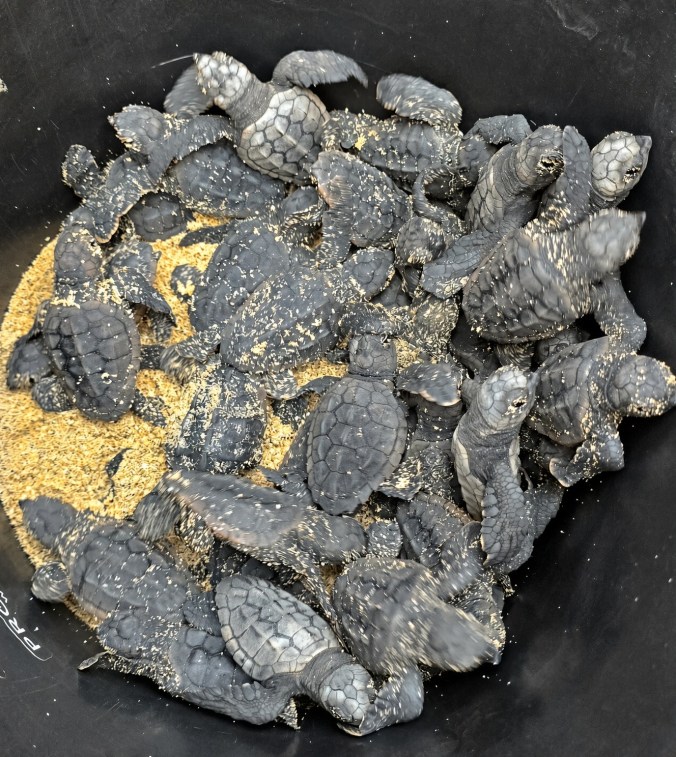
The other found herself standing on a beach, looking down at a bucket of the tiniest baby turtles imaginable, feeling rather emotional about just how much these little creatures have to overcome simply to stay alive.
Two very different encounters with the same extraordinary species, each unforgettable in its own way.
And somewhere between those two experiences, I discovered just how important Cape Verde is to the survival of these magnificent animals, and how much work goes into giving the next generation of sea turtles a fighting chance.
But I am getting ahead of myself.
Let me start with my rather brave hubby and his morning adventure beneath the waves.

A Little Courage Beneath the Ocean.
While we were here in Cape Verde, I decided to treat my hubby for his 50th birthday to a morning of snorkelling.
Now, under normal circumstances, I would have absolutely loved to have joined him. There is something rather magical about the thought of floating above an underwater world, watching marine life going about its business, completely oblivious to us humans peering down at it.
Unfortunately, my health had other ideas.
Because of my difficulties regulating my body temperature, I have to be particularly careful about getting cold. And although the sea here looks beautifully inviting, it is just a little too cold for me to risk spending that amount of time in the water.
And that, rather frustratingly, is what stopped me from joining him.
You see, unlike my hubby, I have never really been frightened of the sea or the deep ocean. I have always had a healthy respect for it, of course, because I think you would be rather foolish not to. But the thought of swimming in deep water has never particularly bothered me.
My husband, however, is a completely different story.
He has had a genuine fear of the deep ocean for years, and I must admit that, after spending so much time with somebody who is apprehensive about something, a little of that fear has inevitably rubbed off on me.
It is funny how that happens, isn't it?
You can spend years being perfectly comfortable with something, only to find yourself becoming a little more cautious because somebody you love sees it rather differently.
But while I might now be slightly more wary of what lurks beneath the waves than I once was, it certainly wouldn't stop me from getting into the sea.
My health, unfortunately, is quite another matter.
And I must admit, there are times when I find that incredibly frustrating. There are so many things I would love to experience, but my body has a rather annoying habit of reminding me that enthusiasm and physical ability are not always the same thing.
Still, this particular adventure was never really about me.
It was about my hubby.
And I cannot begin to tell you how proud I am of him.
You see, despite his fear of the deep ocean, he has been working incredibly hard to overcome it.
And for somebody who has spent years feeling genuinely uncomfortable about being in deep water, voluntarily heading out into the Atlantic Ocean to go snorkelling is no small achievement.
Fear is a peculiar thing, isn't it?
To somebody else, getting into the sea and going snorkelling might seem like the most ordinary holiday activity in the world.
But when something genuinely frightens you, doing it becomes an entirely different achievement.
It takes courage to willingly put yourself into a situation that your mind has spent years telling you to avoid.
And courage, I think, is not about being fearless.
It is about being frightened and deciding that you are not going to let that fear take every wonderful experience away from you.
So off he went.
My hubby, two guides and a small group of fellow holidaymakers headed out into the Atlantic Ocean for their underwater adventure.
During the excursion, they swam over two shipwrecks resting beneath the waves.
Just imagine that for a moment.
Two vessels that once travelled across the ocean, now lying beneath it, slowly becoming part of an entirely different world.
I find shipwrecks fascinating.
There is something rather haunting about the idea of something built by human hands being reclaimed by nature. Where people once walked, worked and travelled, fish now swim.
But as extraordinary as those shipwrecks must have been, they were not the highlight of his morning.
Because something happened that my husband had dreamed about for a very long time.
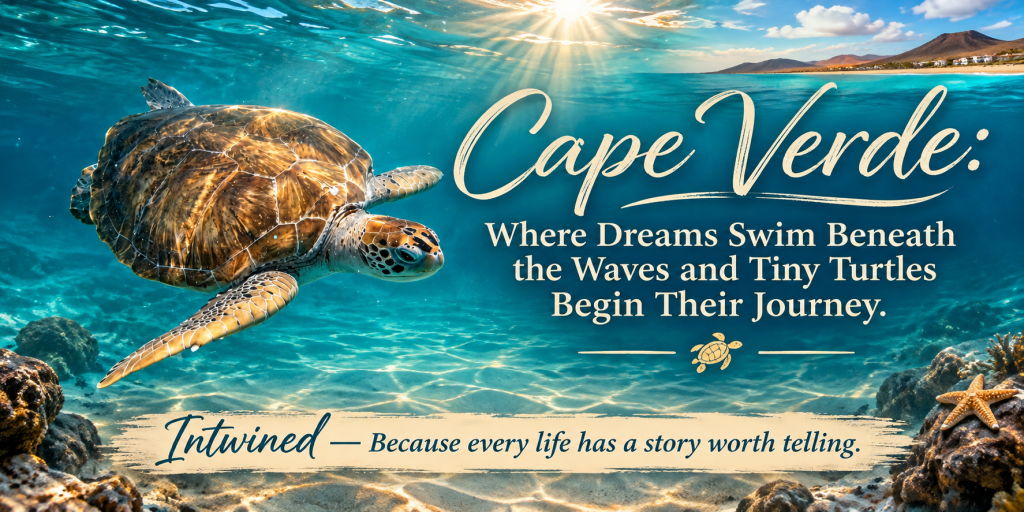
He got to swim alongside a wild sea turtle.
And then another one!
Not one, but two beautiful wild turtles, swimming freely in their natural home.
No aquarium. No enclosure. No glass separating them.
Just my husband, the Atlantic Ocean and two magnificent creatures going about their lives beneath the surface.
I wish I could have seen his face at that moment.
There is something so special about watching somebody you love experience something they have always wanted to do.
And knowing how hard he has worked to overcome his fear made it even more meaningful.
He had not simply gone snorkelling.
He had faced something that genuinely frightened him and, in doing so, had been rewarded with an experience he will hopefully remember for the rest of his life.
And perhaps that is what made his birthday treat so special.
It wasn't simply about the shipwrecks, the beautiful ocean or even those magnificent turtles.
It was about watching somebody I love refuse to let fear stand between him and something he had always dreamed of experiencing.
I could not have been prouder of him.
And I must admit, I was rather jealous.
Not because I was too frightened to join him, but because my blasted health had kept me on dry land while he was out there having the adventure of a lifetime!
Although, thinking about it, I was also rather jealous of those two turtles getting to spend time with my hubby while I was stuck on shore!
But our turtle encounters were not quite finished.
Not by a long way.
A Different Kind of Turtle Encounter.
Later that day, we wandered along the beach to the next hotel, where a turtle conservation project was taking place.
And this was where our lovely day took a rather different, and much more emotional, turn.
Here, turtle nests are protected, with eggs from vulnerable nests carefully relocated to a safer area where they can be monitored until they hatch.
When the babies are ready, the conservation team helps them make their way towards the ocean, away from the bright artificial lights of the hotels and other buildings that can confuse their natural instincts.
We were given a talk explaining the work being done and, perhaps more importantly, the extraordinary number of dangers these tiny creatures face.
I knew that sea turtles were endangered.
I knew about plastic pollution and fishing nets.
But I do not think I had ever properly appreciated just how many things can go wrong for a turtle before it has even reached the water.
And when you see just how tiny and vulnerable these little creatures are, the reality becomes rather heartbreaking.
We watched as the conservation team carefully dug into the sand to retrieve the newly hatched baby turtles.
One by one, these tiny little lives were gently placed into a bucket so they could be checked and shown to us.
And there they were.
Little flippers.
Tiny shells.
Small, determined creatures who had barely begun their lives and were already facing one of the most dangerous journeys they would ever make.
It was impossible not to feel something.
Because when you look at a baby turtle, you are not simply looking at something rather cute.
You are looking at a survivor.
A little life that has made it through the first stage of an extraordinary journey, with so many more challenges still ahead.
And suddenly, all the things we had been told during the talk became very real.

When Paradise Isn't Quite Paradise for Everyone.
Cape Verde is beautiful.
The golden beaches, turquoise water, endless sunshine and the sound of the Atlantic rolling onto the shore make it very easy to understand why so many of us choose to spend our holidays here.
But there is another side to this beautiful island paradise.
One that most holidaymakers probably never stop to consider.
Those same beaches where we lay our towels, build sandcastles, walk barefoot and watch the sunset are also important nesting grounds for sea turtles.
And the very things that make these beaches attractive to tourists can sometimes make them dangerous for the wildlife that depends on them.
The hotels.
The lights.
The beach furniture.
The noise.
The rubbish.
The increasing human activity along the shoreline.
We come here to escape our everyday lives.
But for the turtles, this is not a holiday destination.
It is their home.
And, for many of them, the place where their lives begin.

Cape Verde: A Little Island Paradise with a Very Important Responsibility.
Something I found particularly fascinating is just how important Cape Verde is to the world's sea turtles.
The islands are home to one of the largest nesting populations of loggerhead turtles anywhere on Earth.
These beautiful creatures, known scientifically as Caretta caretta, travel enormous distances across the oceans, yet the females return to nesting beaches to lay their eggs.
Some may even return to the same general area where they hatched many years earlier.
Just think about that.
A tiny turtle, barely bigger than the palm of your hand, disappears into the enormous Atlantic Ocean.
It spends years travelling through a world we humans have barely explored.
And if it survives long enough to become an adult, it may one day return to the very coastline where its own life began.
Isn't nature extraordinary?
Here in Cape Verde, the main loggerhead nesting season generally runs from June until October, with baby turtles emerging from late August and sometimes into December.
A female can lay around 80 to 120 eggs in a nest, although numbers vary, and she may nest several times during one breeding season.
The eggs spend roughly two months buried beneath the warm sand before the hatchlings begin their journey towards the surface.
And here is something I found absolutely fascinating.
The temperature of the sand helps determine whether a baby turtle will be male or female.
Warmer sand generally produces more females, while cooler sand produces more males.
Which means that rising global temperatures are not simply making the beaches hotter. They are potentially changing the balance between male and female turtles being born.
And that could have serious consequences for future generations.
Research published in 2025 found that approximately 48% of the Cape Verde beach segments studied were exposed to at least one significant environmental threat.
That is a rather sobering thought when you are sitting on one of those beautiful beaches enjoying the sunshine.

The Dangers Begin Before They Even Hatch.
During our visit, we learned about the dangers facing baby turtles, and I must admit, some of them had never even crossed my mind.
Take the stray and free-roaming dogs, for example.
Now, anybody who knows me knows how much I love animals, especially dogs.
But sadly, dogs can be a serious danger to nesting turtles and their eggs.
They may dig up nests, eat eggs or attack hatchlings making their way towards the water.
Then there are the ghost crabs, which can dig into nests and prey on eggs or newly emerged babies.
Birds, fish and other marine predators are also waiting for an opportunity.
And these are just some of the natural dangers.
Then we humans come along and add even more.
Fishing nets and discarded fishing lines can trap turtles, leaving them unable to reach the surface to breathe.
Turtles can also become accidentally caught in active fishing gear.
And although sea turtles spend their lives in the water, they are reptiles that breathe air.
If they become trapped underwater for too long, they can drown.
Plastic pollution is another enormous problem.
Floating plastic bags can resemble jellyfish, which some turtles eat. When swallowed, plastic can cause serious internal injuries or blockages.
Other pieces of rubbish can entangle turtles, while waste washed onto nesting beaches can interfere with the eggs and hatchlings.
And then there is something as ordinary as a hotel light.

When a Little Light Becomes a Deadly Distraction.
This was one of the things that really stayed with me.
Baby turtles have an extraordinary natural instinct that helps guide them towards the ocean.
Under natural conditions, the brighter, open horizon over the sea helps them find their way.
But artificial lighting can interfere with that instinct.
Imagine being a tiny turtle, having just fought your way up through the sand, only to find yourself surrounded by bright hotel lights, illuminated swimming pools, beach bars and buildings.
Instead of heading towards the sea, some hatchlings become confused and crawl in the wrong direction.
They may wander towards roads, buildings or other dangerous areas.
Others simply become exhausted or dehydrated before ever reaching the water.
And suddenly, those beautiful lights that make a beachfront hotel look so inviting at night take on a rather different meaning.
Something we barely notice can become a matter of life and death for a creature that has only been alive for a few hours.
This is one of the reasons the conservation teams work so hard to protect nests and manage hatchlings in areas affected by artificial lighting.
Organisations such as Project Biodiversity work with local communities, volunteers and tourism businesses to reduce these dangers, including encouraging turtle-friendly lighting and protecting vulnerable nesting sites.
And I think that is wonderful.
Because tourism and conservation should be able to exist alongside one another.
We should be able to enjoy these beautiful places without destroying the very wildlife that makes them so special.

Giving Those Tiny Lives a Fighting Chance.
Watching the conservation team carefully excavating the nest was something I will not forget.
Every movement was deliberate.
Every little turtle mattered.
The eggs from nests considered particularly vulnerable may be moved into protected hatcheries, where conservation workers can monitor them and reduce dangers such as flooding, predators and artificial lighting.
Not every nest needs moving, of course. Sometimes the safest thing is to leave it exactly where the mother laid it.
But where nests are at serious risk, careful intervention can make an enormous difference.
One scientific study carried out on Boa Vista found that moving threatened nests into protected hatcheries increased hatching success considerably, with relocated nests achieving average success rates of around 70–85%, compared with very high egg losses in the vulnerable nests left in place.
And that is what makes the work of these conservation teams so important.
They are not trying to remove nature from the equation.
They are trying to reduce the damage that humans and changing environmental conditions have added to an already difficult journey.
As we stood there looking at those tiny turtles in the bucket, I could not help wondering what would become of them.
Would they survive their first night?
Would they manage to avoid the predators waiting beneath the waves?
Would they grow into magnificent adults, travelling thousands of miles across the ocean?
Would one of those little females return to a Cape Verde beach many years from now to lay her own eggs?
We will never know.
And that is what made the moment so emotional.
There were no guarantees.
Just a handful of tiny lives and a group of dedicated people doing everything they could to give them the best possible beginning.
The Journey from Sand to Sea.
As the sun began to set, the conservation team prepared to take the hatchlings to a safer, darker stretch of beach, away from the artificial lighting of the hotels.
The aim was to give them the best possible opportunity to orientate themselves towards the ocean.
Where conditions allow, trained conservation teams let hatchlings make their own way across the sand rather than simply placing them straight into the water.
That little journey is important.
It allows them to use their natural instincts and begin their first journey into the sea.
The team can help by keeping the route clear, controlling disturbances and making sure the babies head in the right direction.
But once they enter the Atlantic, nature takes over.
And that, I think, is the hardest part to accept.
Because after all that effort, after protecting the eggs, monitoring the nests and helping those tiny creatures reach the shoreline, there is only so much anyone can do.
The ocean is enormous.
The dangers are real.
And sadly, only a small proportion of hatchlings will survive to adulthood.
But every single one that reaches the sea has been given a chance.
And surely that chance is worth fighting for.

Two Turtles in the Ocean, and a Bucket Full of Hope.
I have found myself thinking about the two completely different turtle encounters we experienced that day.
In the morning, my husband was swimming alongside two beautiful wild turtles.
Fully grown creatures, moving effortlessly through the ocean, having survived all the dangers that life had thrown at them.
Then, later that afternoon, we were looking down at tiny hatchlings that had barely begun their lives.
The beginning and the continuation of an extraordinary story.
And there was something rather lovely about that.
Those two turtles my husband encountered had once been just as small and vulnerable as the babies we were watching.
They, too, had emerged from beneath the sand.
They, too, had made that dangerous journey towards the sea.
And somehow, against extraordinary odds, they had survived.
Long enough for my husband to meet them.
Long enough to become part of one of his happiest memories.
I wonder whether the people who helped protect their nesting beaches all those years ago could ever have imagined that.
That somewhere in the future, a man who had spent years battling his fear of the deep ocean would finally find the courage to swim beneath the waves.
And that two wild turtles would turn his morning into something he would never forget.
That is the beautiful thing about conservation.
You rarely get to see the full story.
You protect a nest today without knowing what difference it might make twenty or thirty years from now.
You help a tiny turtle reach the ocean without knowing whether it will survive.
You do your little bit, and you hope.
And sometimes, many years later, somebody gets to experience the result of that hope.

What We Can All Do to Help.
One of the things I have taken away from this experience is that protecting turtles is not simply the responsibility of conservation organisations.
It is something all of us can contribute towards.
Even as holidaymakers.
We can take our rubbish away, avoid single-use plastics where possible and never leave fishing line or other waste behind.
We can keep our distance from nesting turtles and hatchlings, avoid using flash photography or bright torches on nesting beaches, and choose responsible wildlife excursions led by trained guides.
We can also support the conservation projects doing this important work, whether through donations, volunteering or simply helping spread awareness.
And perhaps hotels have an especially important part to play.
After all, they benefit enormously from the beauty of these islands.
Surely protecting the wildlife that calls these beaches home should be part of that responsibility.
Reducing unnecessary beachfront lighting, protecting nesting areas and educating visitors can all make a difference.
Because if we want future generations to experience the magic of swimming alongside wild turtles, we need to make sure there are still wild turtles left to swim alongside.

A Little Life, a Big Ocean and a Memory I Will Treasure.
As I sit here thinking back over our day, I realise that we both experienced something rather special.
My husband faced one of his fears and had a dream come true.
And I was reminded of just how fragile, determined and extraordinary life can be.
There is something rather humbling about standing beside the Atlantic Ocean and realising how small we really are.
We spend so much of our lives worrying about things that, in the grand scheme of the world, probably do not matter nearly as much as we think they do.
Yet here are these tiny creatures, no bigger than a little handful, beginning a journey across an ocean that stretches further than the eye can see.
No maps.
No instructions.
No understanding of what lies ahead.
Just instinct.
Determination.
And the will to survive.
I cannot help feeling that there is something we humans could learn from that.
Perhaps about courage, about resilience, about how even the smallest life deserves a chance. And about how our actions, however insignificant they may seem to us, can have consequences far beyond what we ever imagined.
I am so incredibly proud of my husband for facing his fear and taking that plunge into the deep blue ocean.
And I am equally grateful to the people here in Cape Verde who dedicate their time to protecting these remarkable creatures.
Because of their work, more tiny turtles are being given the opportunity to begin their extraordinary journeys.
And maybe, one day, one of those very turtles will be swimming alongside another nervous snorkeller, helping somebody else make a dream come true.
Wouldn't that be rather wonderful?
So, Cape Verde, thank you.
For the sunshine.
For the beautiful beaches.
For the two wild turtles that made my hubby's dream come true.
And for those tiny little lives in a bucket that reminded me how much beauty, courage and hope can exist in something so small.
I arrived here expecting a holiday.
I never imagined that a handful of baby turtles would leave such an impression on my heart.
But they did.
And I sincerely hope that somewhere out there in that enormous Atlantic Ocean, those little flippers are still paddling.
One tiny stroke at a time.
Until next time,
Toodle Pip,
Lainey.
Intwined —
Because every life has a story worth telling.