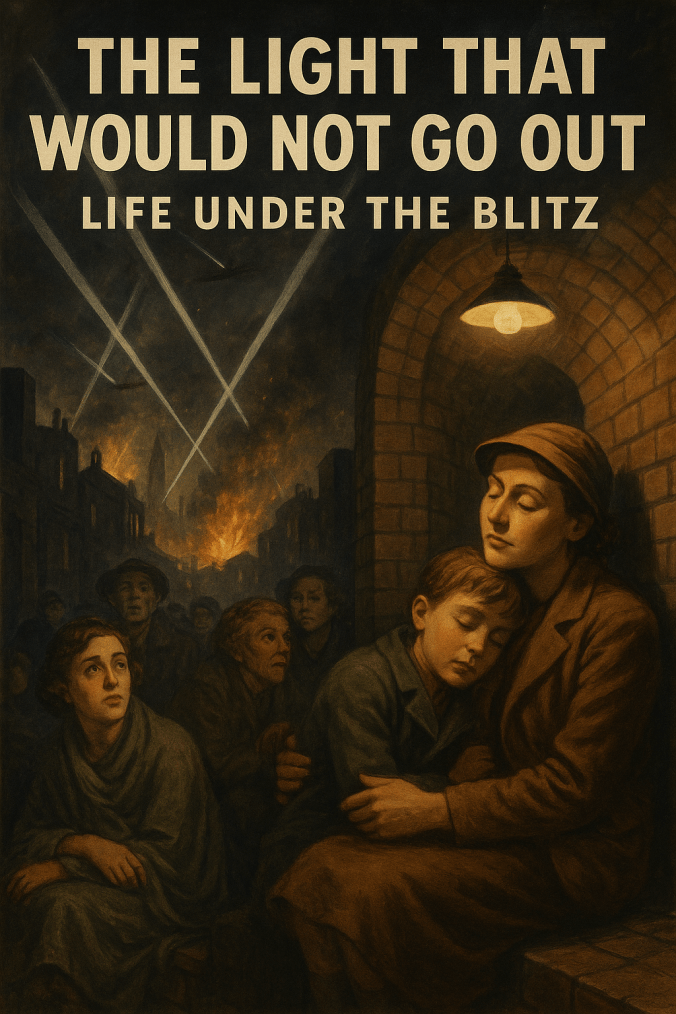
The Blitz did not crash into Britain all at once. It crept into the nights, teaching people to listen differently, to measure time by sirens and silences, to recognize courage not in grand gestures but in the smallest, steadiest acts. From the autumn of 1940 through the spring of 1941, bombing raids fell upon London and many other cities with relentless regularity. By day, streets were swept of glass and queues formed patiently for bread. By night, families gathered their courage and waited, hearts tuned instinctively to the sky.
When the sirens rose, a whole city seemed to inhale. Lights were extinguished in an instant, doors opened, footsteps hurried along stairwells and pavements. Children were wrapped in coats and blankets, lifted into arms already tired from long days. Neighbors called softly to one another in the dark, checking who was coming, who might need help. Shelters filled with movement and murmured reassurance. Underground stations became vast, echoing dormitories, their platforms softened by the presence of the living lying shoulder to shoulder beneath posters and timetables. In gardens, Anderson shelters crouched like metal animals, damp and cold, yet fiercely loved for the protection they offered. Inside them, people told stories, sang quietly, shared flasks of tea and learned the comforting geography of one another’s breathing.
Above ground, the night took on a terrible and strange beauty. Searchlights stitched pale ladders across the clouds, crossing and uncrossing as if performing a slow, solemn dance. Anti-aircraft guns answered with thunder that shook windows and chests alike. Incendiary bombs fell like stars, bright and treacherous, setting rooftops alight. Fires glowed red and gold, illuminating streets with an awful splendor. Smoke rose thickly, carrying the sharp scent of burning timber, brick and gas. Familiar streets became otherworldly, transformed by flame and shadow into places barely recognizable.
Fire-watching became its own quiet vigil. Volunteers climbed ladders to rooftops and stood watch through endless hours, eyes scanning for the first dangerous spark. Armed with buckets of sand and water, they moved quickly when flames appeared, stamping out small fires before they could take hold. Many came straight from factories or offices, their bodies already weary. Yet there was pride in this work, a steady sense of guarding one’s street, one’s neighbors, one’s fragile corner of the city.
Inside shelters, time behaved strangely. Minutes stretched thin and then snapped back into sudden noise. People learned to tell bombs apart by sound alone, the distant, rolling crash that meant safety for now, the sharp, terrifying crack that meant closeness. Silence could be as frightening as noise, a pause so heavy it made everyone lean inward, bracing for what might come next. And then, unexpectedly, laughter would rise. A joke told too loudly, a child’s earnest question answered with tenderness. These moments did not erase fear. They softened it, reminding everyone that they were still human and still together.
Morning brought its own rituals. The all-clear sounded, long and steady, and people emerged blinking into pale daylight. Streets were strewn with rubble, windows gaped open to the sky, buildings leaned or lay exposed and broken. Fires smoldered as weary crews tended them. There was shock and grief and the quiet counting of losses. And yet, life resumed. Shops opened if they could. Kettles were set to boil. Children were coaxed back into routines. Even with the knowledge that night would come again, people swept, mended and rebuilt, choosing movement over despair.
One of the Blitz’s most enduring legacies was the way it reshaped community. Neighbors became guardians of one another’s safety. Strangers shared benches and blankets, passed cups of tea, watched over sleeping children while parents rested. Social divisions blurred in the close quarters of shelters and stations. Cities learned themselves anew, not as collections of addresses, but as webs of care. Courage did not shout. It persisted quietly.
The Blitz was not confined to London alone. Coventry, Liverpool, Birmingham, Plymouth, Hull and many other towns and cities endured nights of fire and fear. Each place learned its own rhythms of endurance, carried its own scars forward in rebuilt streets and in memories passed carefully down through generations. The habit of looking up at the sky, of preparing for the worst while hoping fiercely for the best, lingered long after the bombs stopped falling.
Amid devastation, tenderness endured. Birthdays were marked in shelters with shared sweets. Hymns were sung softly in the dark. Letters were written by torchlight. People fell in love, married, made plans. The human heart did not stop because the world had become dangerous. It learned to beat more deliberately, more bravely.
To remember the Blitz is not only to recall destruction. It is to honor endurance. It is to remember the sirens and the fires, yes, but also the warmth of shared blankets, the steady presence of neighbors who refused to leave one another alone in the dark. These were nights when the sky burned and the ground shook, and yet beneath it all, a quiet light persisted. It lived in vigilance and kindness, in the choice to stay, to help, to hope.
The Blitz is remembered not because it broke Britain, but because it revealed something enduring within it. In nights of fire and shadow, people found one another. And that finding, that shared resolve, became a shelter too.
Until next time,

Ta ta for now.

Yours, Lainey.