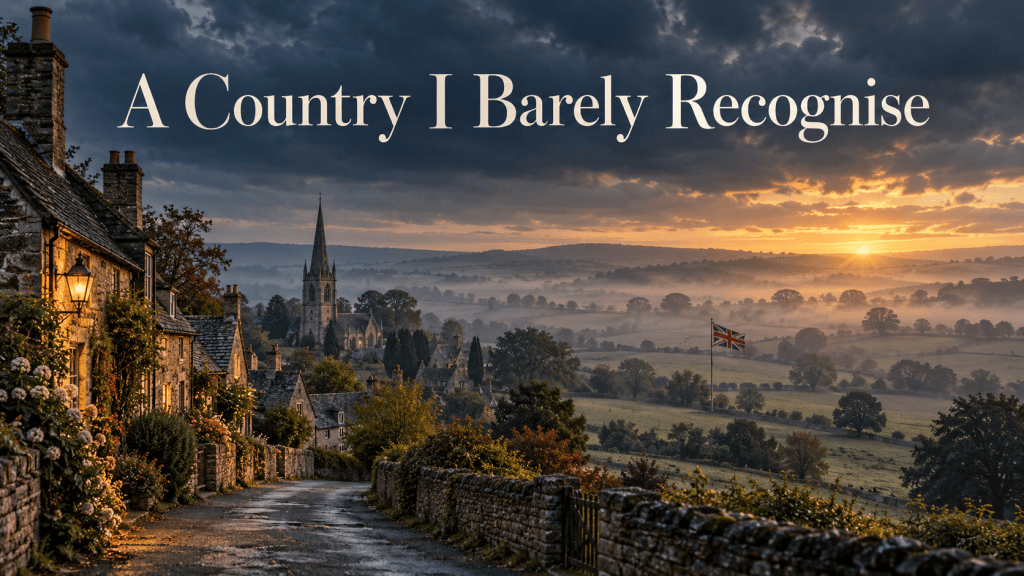
I love Britain. I love its winding lanes and weathered churches, its seaside towns and green fields, and the quiet stories held within its old stone walls. My family’s history is woven through this country. It is home in a way no other place could ever be.
Perhaps that is why it hurts so much to write these words: Britain is broken.
It is there in the families who work hard but cannot afford a home. In the people who count every pound before they put something in their shopping basket. In the veterans who have served this country and still need help finding somewhere safe to sleep. And in the growing number of people who tell me they no longer feel at ease walking through their own streets.
Yet when the government speaks, we find it harder and harder to believe a word.
Trust does not disappear in a day. It wears away with promises that seem to vanish, answers that avoid the question, and decisions that leave us wondering what has been kept from us. After so many apparent lies and cover-ups, how can ministers expect ordinary people to accept another reassurance that everything is under control?

For many of us, the country feels increasingly like a dictatorship.

I know we still have elections. But when people are frightened of what might happen if they speak against those in power, something is deeply wrong. Freedom of speech should include the freedom to question the government, to criticise the police and to say that we love our country without fearing the label that may be put on us.
Patriotism is not racism.
It is the ache of caring about your home and fearing for its future.
I am also troubled by what many call two-tier policing. Whether that is the term everyone would choose or not, the loss of trust behind it is real. People see incidents that appear to be treated differently and ask why. They feel that their worries are dismissed while other voices receive a more careful hearing.
Some British-born people now feel as though officers on their own streets look down on them, as if they are muck beneath their shoes.
That is a devastating place for us to have reached. The police should be people we can turn to when we are frightened. Instead, I hear more people saying they neither trust nor respect the officers they see. Some believe policing has become shaped by far-left politics rather than a simple duty to uphold the law fairly. Those concerns deserve answers, not another lecture about why people should stop asking questions.

The news about five men arrested near RAF Fairford has only deepened that feeling. They were arrested on suspicion of serious offences and then released on bail while the investigation continued. They have not been convicted, and I cannot call them terrorists as though a court has established that they are. Still, I totally understand why their release alarms people including me. When the words suspected terror plot appear in a headline, families want to know how the public is being kept safe.
At the same time, we see people who speak fiercely about Christianity, patriotism and Britain being arrested and being refused bail. Each case has its own facts, but the public needs to understand why decisions that look so different are made. Without clear explanations, the belief that there are two sets of rules will only grow stronger.
That is what feels so deeply unfair: people are expected to trust decisions that no one takes the time to explain to them.

Immigration is another subject on which too many feel they are told to keep quiet. I believe people who have no legal right to remain in Britain should be returned through a fair and lawful process. The cost of accommodation and support comes from public money, our hard earned money. It is reasonable to ask how much could be saved if the system worked better, and how that money could be used to help families here.
Could it help build homes? Could it support people trying to find work? Could it give more veterans the secure housing and care they deserve?
I know that returning people would not, by itself, solve the housing shortage or create a job for everyone who needs one, but it would help enormously. It would be wrong to pretend that public spending has no choices attached to it. Those choices should be explained honestly to the people paying for them.

I have spent many summers in a Saudi Arabia. I carry memories of people and places from those visits, alongside questions about beliefs and practices I could not share. My experiences do not tell me what every Muslim person believes. They have made me feel strongly, though, that we must be able to speak openly about extremism and the freedoms Britain should protect. No one should be condemned for their faith, and no religious belief should place anyone above the law.
The government also owes us clear answers about who is entering the country and how identities and risks are checked. There are meant to be screening procedures, but people need to know whether those procedures are working, especially when someone arrives outside the usual legal routes. Telling the public to have faith in the system is difficult when faith in the government has worn so thin.
And then there is the thought of war.
The idea of our sons and daughters being sent to fight in a war we do not believe in is unbearable. They are not names on a list or pieces on a board for politicians to move.
They are our children.
I know many British parents who strongly feel that they would not willingly send them to fight while the same government dismisses their fears about security at home.
King Charles has been on my mind too. I understand that he cannot simply dissolve Parliament because people are unhappy with the government. Even so, I wish he would acknowledge how deeply frightened a lot of his people feel. When I see him visiting places of worship, including mosques, I find myself longing for words that reach the families who fear their own country is slipping away. I wish we could feel certain that he hears us as well.
Perhaps that is the deepest wound beneath all this anger: We do not feel heard.
I do not claim to speak for everyone in Britain, and I know some will disagree with every word I have written. But I cannot pretend the sadness is not there. It sits in the silence after another troubling headline. It follows me when I think about the country my children will inherit. It leaves me wondering how much more trust can be lost before those in power realise what is happening.

I still see the Britain I love in neighbours helping neighbours, in families looking after one another, and in people who care enough to keep asking questions.
That love has not gone anywhere.
That is why watching our country fall apart feels so devastating.
Britain is broken. And the people who love it deserve to be heard.
Until next time,
Toodle pip,
Lainey.
🇬🇧🇬🇧🇬🇧

