To live Roman in Britain was to live gently suspended between worlds. Each morning began beneath a wide, changeable sky of mist and rain, yet daily life carried the habits and expectations of a sunlit Mediterranean empire. Rome did not arrive all at once in thunder and marble. It arrived quietly, through routine. Through warmed rooms and paved streets, through shared meals and measured time, through the slow and intimate reshaping of what it meant to belong somewhere. History did not feel like conquest from the inside. It felt like life continuing, only slightly altered, day by day.
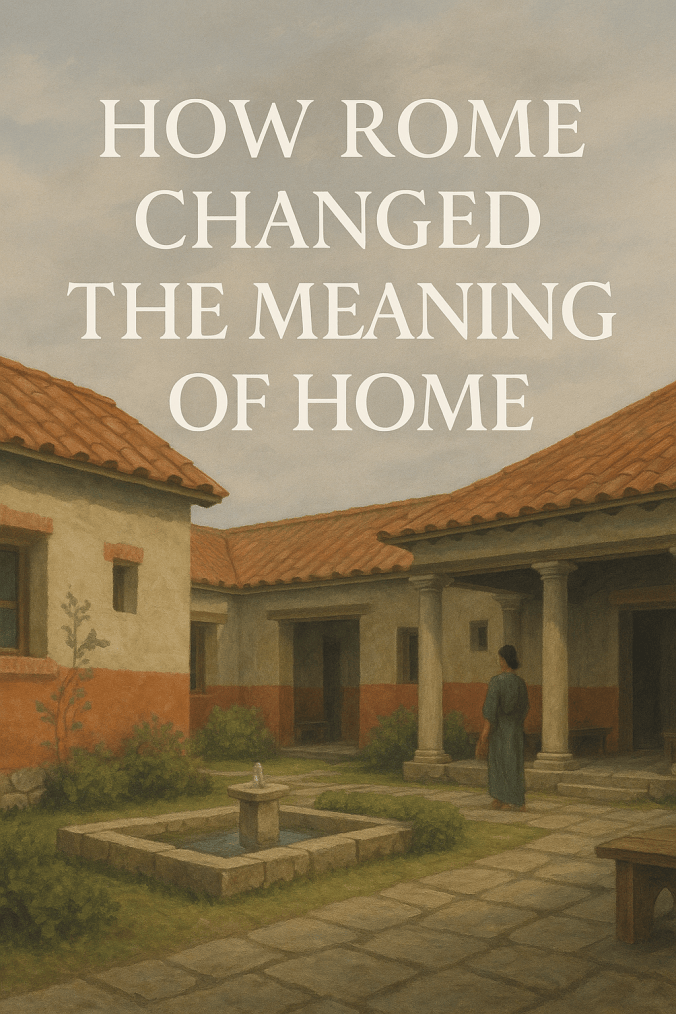
Homes spoke first, because home is where change settles most deeply. In towns and cities, houses followed orderly street grids, their walls of stone or timber rising with deliberate intention. Roofs were tiled and angled to shed British rain, a small but meaningful adaptation to northern skies. Inside, rooms gathered around a central space, sometimes an open courtyard where light, air, and weather were welcomed indoors. In wealthier homes, mosaic floors shimmered with color and story, dolphins leaping, vines curling, gods gazing up through centuries. Painted walls added warmth and illusion, transforming modest rooms into imagined gardens or distant landscapes.
Beyond the towns, villas spread across the countryside, their long corridors and symmetrical wings overlooking fields worked by generations of local hands. These were not idle retreats but working estates, where agriculture and administration lived side by side. Granaries stored grain, workshops rang with craft, bath suites steamed quietly at the heart of daily routine. Roman design blended with British materials and traditions, creating homes that were both foreign and familiar. Of course, not everyone lived amid mosaics and painted plaster. Many families still occupied simpler dwellings, but even there Roman influence lingered in the shape of rooms, the tools used, the rhythm of daily order.
Food changed the texture of everyday life in deeply personal ways. Bread became central, its smell drifting through streets and farmyards alike. Wheat increasingly replaced older grains, ground in rotary querns and baked into loaves that felt both nourishing and refined. Meals were built from what the land could offer, vegetables like leeks, onions, beans, cabbage, and herbs grown close to home, combined with flavors carried across seas. Meat appeared when it could be afforded, pork, beef, chicken, and wild game, often preserved by salting or smoking, simmered slowly into stews that stretched nourishment through colder months. For those with means, olive oil, wine, dried fruits, and fish sauce arrived in fragile amphorae, their long journeys ending on damp northern tables. Eating was a social act, whether reclining at a formal meal or sitting close around a hearth, and food became one of the gentlest ways Rome made itself known.
Clothing told stories of identity, adaptation, and aspiration. Tunics were practical and comfortable, belted at the waist, layered with cloaks against wind and rain. Wool ruled daily life, spun and woven locally, sometimes dyed in rich hues when resources allowed. Footwear evolved to suit stone roads and muddy streets alike, leather shoes and adapted sandals built for endurance. Jewelry added quiet beauty, brooches fastening cloaks, rings marking status or affection, small treasures worn close to the skin. To dress Roman in Britain was never about abandoning the climate or the land. It was about negotiating with them.
Bathing became one of the most cherished gifts Rome offered. Bathhouses rose in towns and near forts, their walls sheltering warmth in a cold land. Inside, the hypocaust system breathed heat beneath floors and through walls, turning water and air into comfort. The sequence of rooms invited both ritual and relaxation, moving from warm to hot to cool, cleansing body and mind alike. Bathing was social, conversational, deeply human. News passed easily there, friendships were maintained, business discussed, and the sharp edges of daily life softened by steam and shared warmth. For many in Britain, the bathhouse became a symbol of civilization that could be felt rather than proclaimed.
Markets filled towns with sound and motion. Produce piled high beside pottery, cloth, metalwork, tools, and imported luxuries. Coins changed hands, stamped with emperors whose faces were known more as symbols than men. Languages mingled, accents overlapped, locals and newcomers brushing shoulders in the ordinary choreography of trade. Livestock lowed, spices scented the air, arguments flared and laughter followed. In these markets, the empire felt tangible and human, shaped not by decree but by exchange.
Family life unfolded within this evolving world, steady and intimate. Children learned by watching and doing, helping with chores, absorbing language and custom through daily repetition. Formal education existed for some, but most learning happened at home, through stories, skill, and example. Women managed households, finances, workshops, and farms, their influence constant and essential. Men labored, traded, governed, or served in the military, depending on fortune and status. Enslaved people worked alongside free ones, their lives constrained yet vital, a living reminder of the inequalities that underpinned comfort and order.
Religion wove itself quietly through each day. Household shrines honored protective spirits and ancestors. Offerings were made to Roman gods and to local deities who had not been forgotten, only renamed or reimagined. Belief was layered and adaptable, welcoming rather than exclusive. People prayed for health, fertility, safe travel, good harvests, love, and luck. Faith lived close at hand, in kitchens and courtyards, in whispered hopes and habitual gestures.
To live Roman in Britain was never about erasing what came before. It was about living alongside it, weaving new habits into old rhythms. It was a life shaped by routine and ritual, by warmth sought against the cold, by community built through shared spaces and shared needs. Rome lived most fully not in legions or laws, but in bread broken at tables, water steaming in baths, footsteps echoing along stone roads. In these small, human moments, empire softened into everyday life, unfolding quietly, tenderly, one ordinary and extraordinary day at a time.
Until next time,

Ta ta for now.

Yours, Lainey.