Wartime summers arrived with a curious gentleness, as though the season itself refused to bow to fear. In England and across the United Kingdom, the long days stretched on, pale and generous, even as the world felt unsteady beneath people’s feet. Sirens might have been etched into memory and ration books tucked faithfully into coat pockets, but summer still brought warmth to the skin and light to the evenings. And in that light, people discovered again and again that hope, like a hardy plant, could bloom even in the poorest soil.
During the years of the world wars, summer was both a gift and a test. Longer daylight hours meant more time for work, for travel, for tending what needed tending, yet the sun also revealed the scars left behind. Bomb-damaged streets, patched roofs and empty shop windows could not be hidden when the sky stayed bright late into the evening. Still, people met the season with quiet determination. If the world felt uncertain, they would anchor themselves in the tangible, in soil, in shared effort, in the small rituals that made life feel worth holding onto.
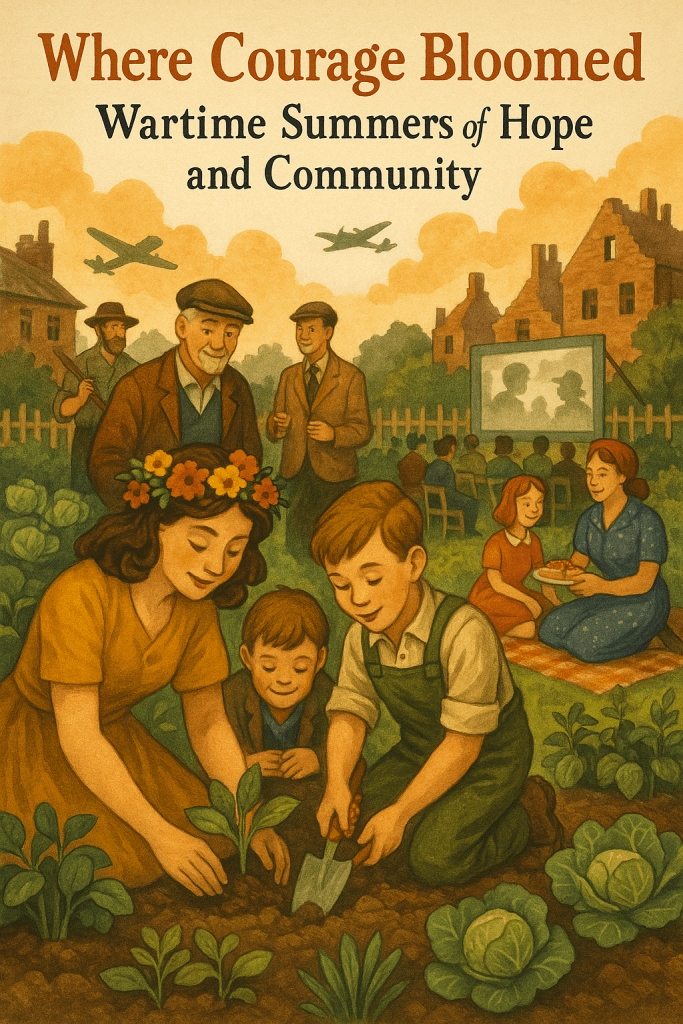
Across Britain, gardens became symbols of defiance and care. The Dig for Victory campaign transformed the landscape almost overnight. Lawns surrendered to rows of potatoes. Parks sprouted cabbages and carrots. Railway embankments, churchyards and spare plots were coaxed into productivity. Families who had never grown more than flowers learned to tend vegetables with almost reverent attention. Children knelt in the dirt beside parents and grandparents, hands clumsy at first but eager. Elders passed on knowledge learned in earlier hardships, how to earth up potatoes, how to save seeds, how to stretch a harvest across the months. Each green shoot that pushed through the soil felt like a small triumph, a reminder that growth was still possible.
These allotments quickly became places of community as much as cultivation. Neighbors shared tools, swapped advice and quietly looked out for one another. A surplus of beans might be left on a shed step, a note tucked beside it offering thanks or encouragement. Conversations unfolded between rows of vegetables, unhurried and comforting. People rested on spade handles at the end of a long day, talking about the weather, the children, the rumors and hopes that drifted through the air. In these simple exchanges, friendships deepened, and loneliness found less room to settle.
Summer gatherings carried this same spirit. Picnics appeared in village greens and city parks, modest but full of heart. Rationing shaped every meal, yet ingenuity filled the gaps. Sandwiches were padded with homegrown lettuce and beetroot. Jam tarts were made carefully, sugar measured and cherished. Flasks of tea were poured again and again, offered freely. Blankets were spread beneath trees, and for a little while the weight of worry lifted. These picnics were not about abundance, but about presence, about sitting together in the open air and remembering what normal joy felt like.
As evenings lengthened, entertainment followed people outdoors. In Britain, open-air cinema screenings became moments of shared wonder. Projectors hummed in parks and fields, their light flickering across faces upturned in anticipation. Newsreels played first, sobering reminders of the wider world, followed by films that carried audiences somewhere gentler, funnier or braver. Children huddled in coats against the cooling air, couples shared blankets, laughter rippled through the crowd. Under the open sky, with stars beginning to prick the darkness, the magic of cinema felt amplified, a communal escape stitched together by light.
Night brought its own rituals. Fire-watching became part of daily life, especially in cities. Volunteers climbed onto rooftops or took up posts on high ground, scanning the darkness for incendiary bombs. It was serious, necessary work, yet even here summer offered moments of strange beauty. Warm air brushed tired faces. The scent of night flowers drifted up from gardens below. Conversations whispered between watches built bonds of trust and companionship. Above them all, the stars shone on, indifferent yet comforting, reminding watchers that the world was larger than the fear pressing in.
Beyond Britain, wartime summers unfolded in similar ways. In the United States, victory gardens mirrored British allotments, turning neighborhoods green with shared purpose. Across continental Europe, families gathered cautiously in courtyards and village squares when circumstances allowed, sharing bread, song and quiet resilience. In occupied countries, summer festivals were subdued but not extinguished. Music was played softly, dances carefully measured, celebrations trimmed of excess but rich in meaning. Everywhere, people clung to the season as a reminder of who they were beyond the conflict.
Children, as ever, found joy with remarkable ease. Summer meant scraped knees and bare feet, sticky fingers and games invented from scraps. They raced through meadows and bomb-damaged streets alike, their laughter ringing out defiantly. Parents watched with a mix of relief and resolve, determined that even in wartime, childhood would not be entirely stolen. These summers became memories carried forward, proof that happiness had survived alongside hardship.
When peace finally returned, the memory of those wartime summers lingered with surprising warmth. People remembered the taste of vegetables grown by their own hands, the comfort of a picnic shared with neighbors who had become family, the thrill of watching a film beneath the stars. They remembered not only what was lost, but what was found, courage, kindness, community.
Wartime summers taught a lesson that continues to resonate. Joy does not depend on ease or abundance. It depends on intention. In gardens and parks, on rooftops and open fields, people chose to notice the beauty of long days and gentle evenings. They chose to gather, to share, to laugh. And in doing so, they carried light forward, like a flame cupped carefully against the wind.
Even now, when summer arrives and people linger outdoors as the daylight fades, those echoes remain. The season still invites us to slow down, to sit together, to make something nourishing from what we have. It reminds us that hope grows best when shared, and that even in the hardest times, courage can bloom quietly, warmly, and in the open air.
Until next time,

Ta ta for now.

Yours, Lainey.