Tracing the life of my fourth great-grandfather, William Hatcher, has been both a labor of love and an exercise in patience. Reaching back more than two centuries, I’ve had to rely on the fragile threads of history,  parish records, fragments of old handwriting, and the rare mention that survived time’s quiet erosion. Every small discovery feels like a conversation across generations, a whisper from a man who helped shape the line that led to me.
Family history, at its heart, is about connection, a desire to understand where we come from and to give names and stories to those whose lives made our own possible. Yet, for those who lived before the introduction of civil registration in 1837 and the detailed census records that followed, this work is not easy. The parish books that remain are precious, but they offer only glimpses,  baptisms, marriages, and burials written in fading ink. And when the same names are repeated through families, as they so often were, identifying one William Hatcher from another can become a true puzzle of patience and intuition.
Still, despite the challenges, there is something deeply moving about piecing together a life from such limited evidence. Each record represents a real moment, a baptism that marked a beginning, a marriage that united families, a burial that closed a chapter. In bringing these fragments together, we do more than reconstruct a life, we honor the endurance of memory, keeping alive the story of someone who, though long gone, still has a place in the fabric of our family’s history.
Welcome back to the year 1787, Sherfield English, Hampshire, England. The air smells of woodsmoke and damp earth, the lanes are narrow and uneven, and life moves at the pace of the seasons. The monarch on the throne is King George III, who has already reigned for twenty-seven years. His government is led by the Prime Minister William Pitt the Younger, a man only in his late twenties but already renowned for his sharp mind and strict sense of economy. Parliament meets in London, filled with landowners, aristocrats, and merchants, men who debate the nation’s finances, the growing empire, and the unrest stirring in Europe and America. It is a time of political caution and reform, with England still recovering from the loss of the American colonies a few years earlier and wary of revolutionary ideas spreading across the Channel.
Society in 1787 is rigidly divided. The rich, the landed gentry and aristocracy, live in great houses surrounded by parks and fields, employing dozens of servants to maintain their comfort. They dress in silks, velvets, and fine linens. The gentlemen wear long coats with tails, waistcoats, breeches, powdered wigs, and stockings, while the ladies wear gowns with fitted bodices and wide skirts, often decorated with ribbons, lace, and embroidery. They dine lavishly, attend assemblies, balls, and the theatre, and spend their summers in country estates like those scattered around Hampshire.
The working class consists mostly of farmers, artisans, and servants. They live in modest cottages, often owned by their employers or landlords, built of brick, timber, or cob with thatched roofs. Their clothing is practical, wool, linen, and leather, durable fabrics meant to withstand labor. Their lives revolve around toil in the fields, tending animals, spinning, or domestic service. The poor, meanwhile, live in the harshest conditions: overcrowded, damp, and dark cottages, often one room for a family, with earthen floors and smoke-stained rafters. They depend on parish relief or the kindness of neighbors and struggle to afford bread and basic necessities.
Transportation is limited to horse-drawn carriages, carts, wagons, and travel by foot. Wealthier families keep carriages for travel to nearby towns such as Romsey or Salisbury, while farmers rely on sturdy carts to carry produce to market. Roads are rough and muddy, and journeys that seem short by modern standards take hours. In towns, coaches and post chaises run between major cities, though the cost is high. For long-distance travel, the river and coastal routes are still vital, with sailing barges and ships connecting ports along the southern coast.
Housing in Sherfield English and its surrounding hamlets is simple but built to last. Many cottages have whitewashed walls and thatched roofs, low ceilings, and central hearths. Wealthier houses have several rooms with proper brick chimneys, while poorer ones often have a single main room for cooking, eating, and sleeping. Windows are small and draughty, and few homes have glass panes beyond the well-off.
The atmosphere of 1787 England is one of cautious prosperity mixed with the hardships of rural life. The agricultural revolution is reshaping the countryside, new farming methods, enclosures, and machines are increasing yields, but at the cost of displacing many small farmers and laborers. The great estates prosper, while the rural poor face uncertain futures.
Heating and lighting are primitive by modern standards. Open hearths and fireplaces burn wood or coal, depending on availability and wealth. In cottages, the hearth is the center of life, providing warmth, light, and a place for cooking. Lighting after dark comes from tallow candles or rushlights, cheap, smoky, and dim. In the homes of the gentry, beeswax candles and oil lamps offer softer light, but they are expensive luxuries.
Hygiene and sanitation are poor. Most people wash infrequently, using basins and pitchers of cold water. Bathing is rare outside of towns with public baths. Soap, made from animal fat and lye, is used sparingly. Human waste is collected in cesspits or thrown into ditches; animals roam freely near homes, adding to the smells and mess. Drinking water often comes from wells or streams, and contamination is common.
Food is plain but filling for those who can afford it. Bread is the staple of every meal, often coarse and dark for the poor and fine white for the wealthy. Porridge, potatoes, cabbage, and peas are common. Meat, mutton, pork, or beef, is eaten more often by those with means, while the poor rely on scraps, salted meat, or broth. Butter, cheese, and ale are everyday items. Fruit and vegetables come from gardens or hedgerows, depending on the season. Preserving food through salting, smoking, and pickling is essential for winter.
Entertainment in a rural village like Sherfield English is simple but valued. People gather in inns to share ale, sing ballads, and exchange news. Fairs and market days provide excitement and trade. Church feasts, harvest celebrations, and occasional visiting entertainers break the monotony. Among the gentry, card games, dancing, reading, and music are favorite pastimes. Gossip is a powerful social force; news of local marriages, scandals, and misfortunes spreads swiftly by word of mouth and through letters.
Disease is a constant threat. Smallpox, typhus, tuberculosis, and fevers are common, and medical care is rudimentary. Apothecaries sell herbs, tonics, and cures of dubious value, and doctors are few in rural areas. Childbirth remains dangerous, and infant mortality is high. People rely heavily on traditional remedies and faith for healing.
The environment around Sherfield English is pastoral and beautiful, with rolling fields, meadows, and woodland. Birds, livestock, and the steady rhythm of farm work shape daily life. But the enclosures, new hedges and fences marking private property, are transforming the old communal fields into something more controlled and divided, a sign of changing times.
Schooling exists but is limited. Some children attend small parish or dame schools, learning to read, write, and recite prayers. Others work from a young age, helping in fields or homes. Education is a privilege, not a right, and literacy among the poor is low. The Church remains central to daily life. The parish church is not only a place of worship but also of community, moral guidance, and charity. The vicar holds great respect, and attendance at Sunday service is expected. Faith governs much of life’s rhythm, baptisms, marriages, and burials mark the passage of time.
In 1787, life in Sherfield English moves at the pace of nature and duty. It is a world of clear hierarchies, quiet endurance, and a strong sense of community. While great political and social changes are stirring beyond its fields, the villagers live as generations before them have done, bound by the land, the seasons, and the steady rhythm of rural English life.
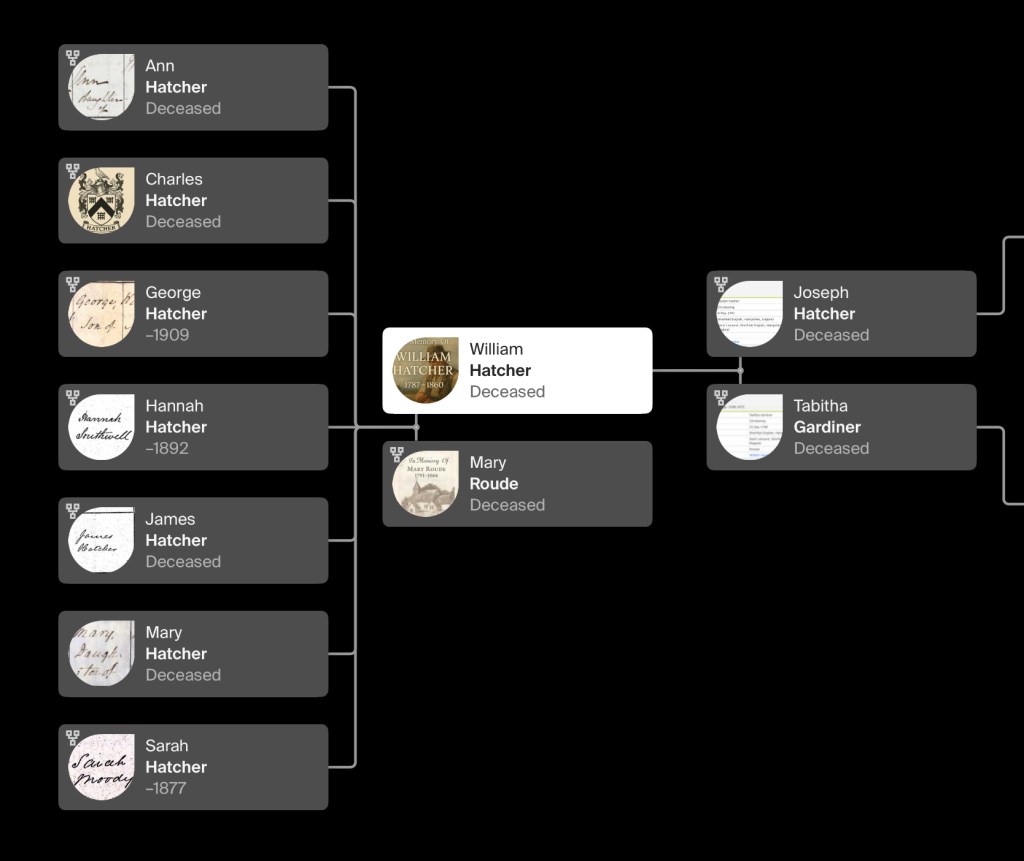
In the year of 1787, when the air still carried the scent of woodsmoke and freshly turned earth, a child named William Hatcher came into the world, the sixth blessing of Joseph Hatcher, then aged 46, and his wife Tabitha (née Gardiner), aged 39. Their home was nestled amidst the rolling fields and hedgerows of Sherfield English, Hampshire, a place where the rhythm of life was measured by the toll of the church bell and the turning of the seasons.
For Tabitha, bringing a child into the world in the late eighteenth century was no small feat. There were no physicians standing by, no antiseptic comfort, no modern hands to ease her pain. Instead, the room would have been lit by the soft flicker of candlelight, the scent of tallow thick in the air. Perhaps a trusted midwife, weathered by years and wisdom, whispered words of courage as the pangs of labour gripped her. Outside, Joseph might have paced the worn floorboards, listening helplessly as life and death wove their ancient dance just beyond the door. When William’s first cry broke through the stillness, it would have been a sound both miraculous and humbling, a cry that tethered another generation to the long thread of the Hatcher name.
William entered a world already shadowed by loss. Of Joseph and Tabitha’s six children, two, Joseph and Tabitha, had passed away before William could ever know them. Their absence lingered quietly, like unspoken names in family prayers. His surviving siblings, Richard, Ann, and Thomas, would have been his first companions in the sunlit fields and candlelit corners of their modest Hampshire home.
Though William’s exact birth date has been lost to time’s gentle decay, the records that remain offer fleeting glimpses. The 1842 census suggests he was born around 1791 in Hampshire, while the 1851 census places his birth in 1788, within the peaceful parish of Sherfield English. Such contradictions are common in the fragile realm of early documentation, where ink fades, memories falter, and truth becomes a patchwork of what might have been. Yet within those faint lines, the essence of William’s beginning remains, a child born to a mother of strength, a father of endurance, and a family who, despite their sorrows, carried forward with steadfast hearts.
In that simple Hampshire parish, beneath the steady toll of the church bell and the watchful eyes of ancient oaks, the story of William Hatcher quietly began, a story that, centuries later, still stirs the heart of those who seek to know him.
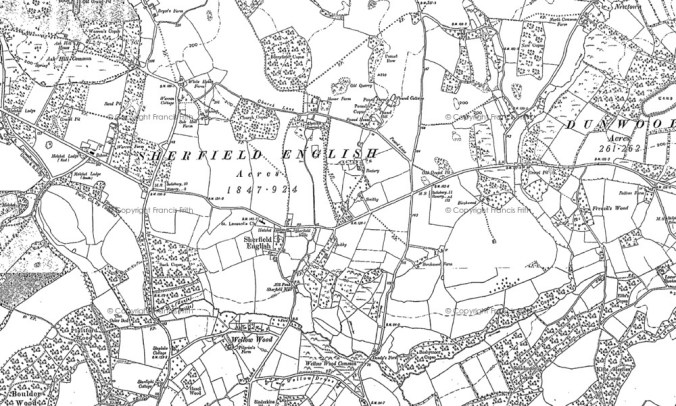
Sherfield English is a small village located in the Test Valley district of Hampshire, England. It lies just a few miles northwest of Romsey and is set within the picturesque Hampshire countryside, surrounded by farmland and natural beauty. The village has a rich history that spans several centuries and is deeply connected to the rural landscape of southern England.
The name "Sherfield" likely comes from Old English, where "scear" refers to a slope or hill and "feld" means open land or field, suggesting the village was established in an area with a prominent geographical feature. The addition of "English" to the name occurred later, distinguishing it from other similarly named places following the Norman Conquest of 1066.
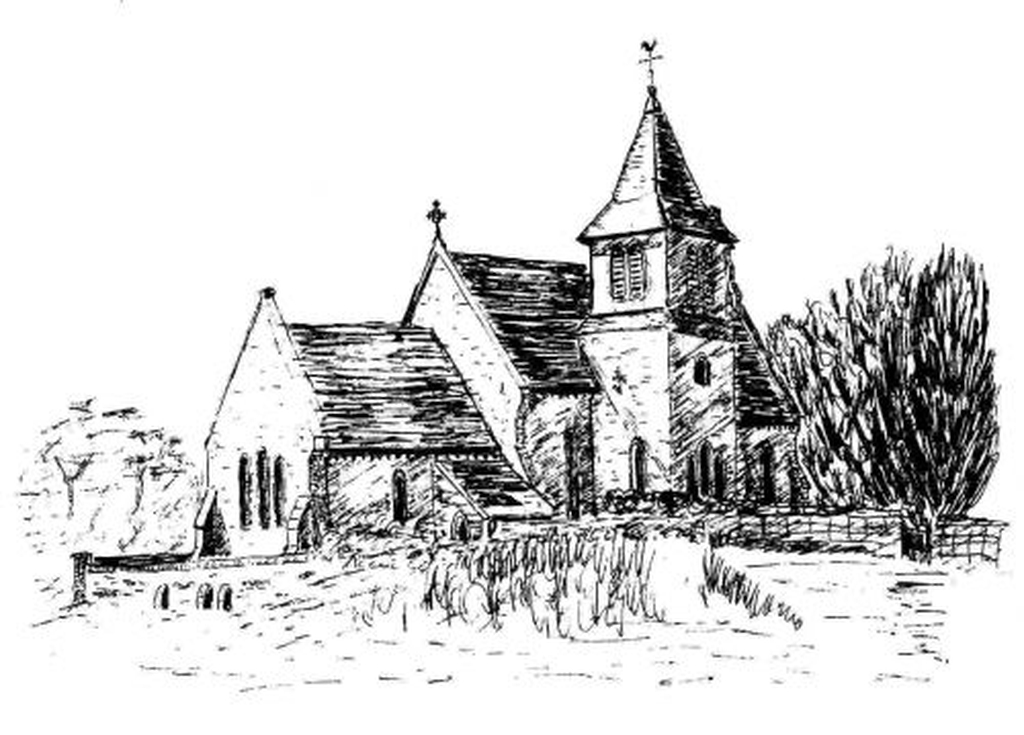
Sherfield English's development can be traced back to the medieval period, when it was primarily a farming community. The village's history reflects the broader agricultural heritage of Hampshire. It grew slowly but steadily, with most residents engaged in farming and agricultural work, a typical occupation for rural England at the time. The village’s centerpiece was the parish church, St. Leonard’s Church, which has served as a spiritual and social center for the community for many centuries. The church, with its origins dating back to the 12th century, is a key focal point of the village and reflects its long religious history.
In the 19th century, Sherfield English, like many rural areas, began to see changes brought on by population growth and the rise of industrialization. While the village remained largely agricultural, the expansion of transportation networks, particularly railways, brought new opportunities for trade and communication. This period also saw the construction of several cottages and houses in the village, leading to an increase in population.
The architecture of Sherfield English retains much of its historic character, with a mix of old cottages and larger homes. Despite the growth of nearby towns, the village has managed to maintain its rural charm and peaceful atmosphere, remaining a quiet, residential area. Its location, just a short distance from Romsey, offers a blend of tranquility and accessibility.
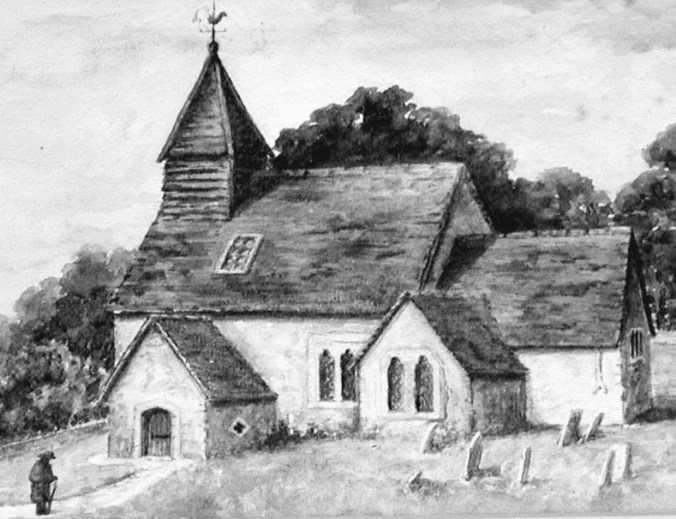
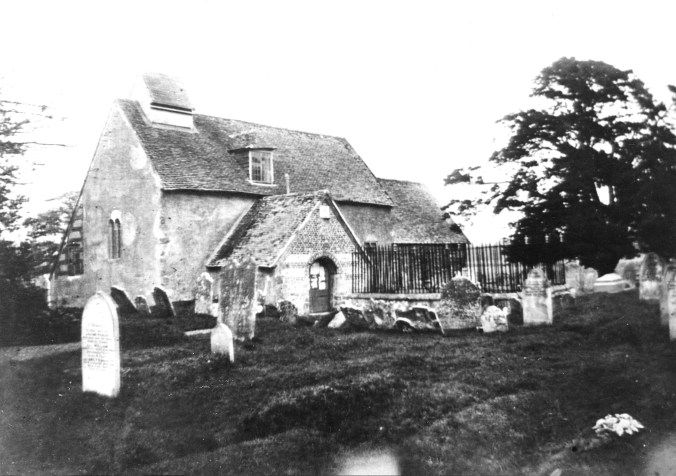
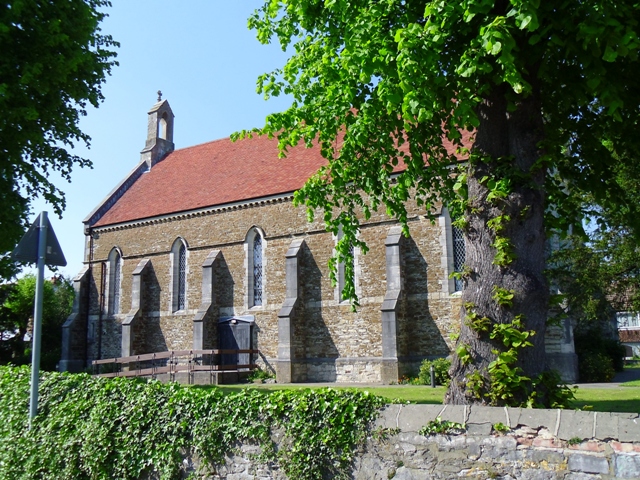
St. Leonard’s Church, at the heart of Sherfield English, has been integral to the community since its establishment. It was built in the 12th century, with subsequent renovations and expansions reflecting changing architectural styles and the evolving needs of the congregation. The church is dedicated to St. Leonard, the patron saint of prisoners and the mentally ill, and its role in the community has been central to the village's spiritual life. The churchyard around St. Leonard’s Church contains numerous gravestones, many of which date back several centuries, and the church remains an active site for worship, weddings, and other community events.
Sherfield English is also steeped in local folklore, and like many historic English villages, it has its share of ghost stories and rumored hauntings. St. Leonard’s Church, with its long history, is often the focal point of these tales. Some locals have reported strange occurrences in and around the churchyard, such as the sensation of being watched or hearing unexplained sounds like distant footsteps or murmurs. There are also stories about church bells ringing at night without anyone in the building to ring them, adding to the eerie reputation of the church. While these accounts remain largely anecdotal, they contribute to the village’s sense of mystery and intrigue.
In addition to the church, other old buildings in the village, such as historic houses and inns, are also said to be associated with ghostly activity. Some residents have claimed to see shadowy figures in certain rooms or have experienced cold drafts in areas of these older properties. These stories, while not officially documented, persist as part of the village's folklore and add to the character of Sherfield English.
Today, Sherfield English remains a picturesque and peaceful village, with a small but active community. The surrounding countryside offers opportunities for outdoor activities such as hiking, cycling, and birdwatching, making it an attractive location for those seeking a rural lifestyle while still being close to Romsey and other nearby towns. The village's historical charm, combined with its natural beauty and connection to local traditions, continues to make it a unique place to live and visit.
On Friday, the 29th day of May, 1787, when the ancient bells of Saint Leonard’s Church in Sherfield English, Hampshire, stirred to life, their mellow chime drifting across the green meadows and low stone cottages of the village. The air was soft with spring, that gentle English kind of morning where the mist lingers just long enough to make the sunlight seem like a blessing.
Within the humble stone walls of Saint Leonard’s, the air was cool and still, scented faintly of beeswax and old stone. Shafts of sunlight filtered through the leaded windows, scattering flecks of gold upon the flagstone floor and the curved basin of the baptismal font, worn smooth by generations of hands and holy water. On that quiet morning, the faithful gathered not for sorrow or sermon, but for renewal, for three small lives newly brought into the world.
Among them was William, the infant son of Joseph and Tabitha Hatcher, nestled tenderly in his mother’s arms. Tabitha, then thirty-nine years of age, had endured much to bring this child forth, a woman of quiet courage, who knew too well the peril that accompanied childbirth in those times. Her body bore the weary grace of motherhood, yet her eyes must have glistened with gratitude as she stood before the font. The labour that had brought William into the world only days or weeks before would have been long and harrowing,  without medicine or comfort beyond the hands of a midwife and whispered prayers. In a small, lamplit chamber scented with straw and sweat, she had met both agony and awe, and now, here in the house of God, she stood with her son, whole and living in her arms.
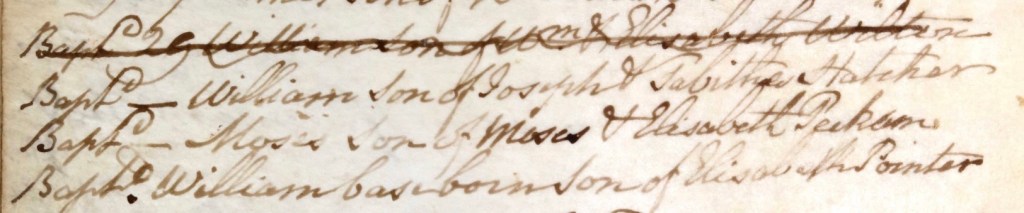
The priest spoke softly, his voice carrying through the nave, mingling with the sigh of spring wind that slipped through the open door. Three children were christened that day, each one a new thread woven into the fabric of the parish. Alongside William were Moses, son of James and Elizabeth Peckham, and another William, the baseborn son of Elias and Elizabeth Pointer. Their names, humble yet eternal, were recorded carefully in the parish register, the ink fresh and dark against the coarse paper:
Bapt. William son of Joseph & Tabitha Hatcher
Bapt.
Moses son of James & Elizabeth Peckham
Bapt.
William basborn son of Elias & Eliz. Pointer
Outside, the churchyard basked in the soft warmth of late May. The old yews swayed gently, and somewhere beyond the hedgerows, a lark took to the sky. Inside, three mothers held their children close as water met skin, a moment brief yet sacred, the beginning of three stories intertwined in the shared breath of that small Hampshire parish.
And so it was that William Hatcher, sixth child of Joseph and Tabitha, began his earthly journey, his name spoken aloud for the first time beneath the timbered roof of Saint Leonard’s. Unknowing of the paths that lay ahead, he was blessed into a world both tender and uncertain, his life already inscribed, not only in the parish book, but in the hearts of those who had gathered to witness it.
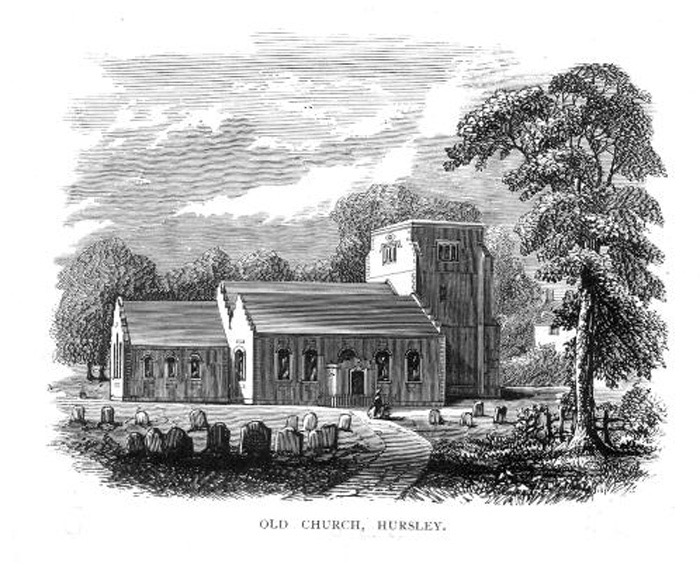
Saint Leonard’s Church in Sherfield English, Hampshire, has a rich history that stretches back over many centuries. The church has been a central part of the village’s religious and community life, and its history reflects the broader development of the area from medieval times to the present. The original Saint Leonard’s Church is believed to have been built in the early medieval period, likely during the Norman era, around the 12th century. The church would have been a simple structure, typical of rural churches of the time. As was common with churches in small villages, it was likely constructed with local materials such as stone and timber, with a simple design reflecting the needs of the local community. The church was dedicated to Saint Leonard, a popular saint during the medieval period who was often invoked for protection and for his association with prisoners and captives. Saint Leonard’s cult was widespread across England, and many churches were named in his honor. The original church at Sherfield English served as a focal point for the small agricultural community, providing a place for worship, social gatherings, and important life events such as baptisms, marriages, and funerals. The church would have also been a place where the villagers came together for communal activities, and it played an essential role in maintaining the spiritual and social fabric of the community. Over time, the church likely underwent several modifications and additions, particularly in the 14th and 15th centuries, as the village expanded and the needs of the local population grew. These changes were likely driven by the growing wealth of the parish as the agricultural economy strengthened. In the 19th century, however, the old church began to show signs of wear and was no longer able to adequately serve the growing population of Sherfield English. By the early 1800s, the church building had become dilapidated and was deemed inadequate for the needs of the parish. At this point, the decision was made to construct a new church to better serve the community. The new Saint Leonard’s Church was built in 1840, a year that saw the completion of many church restoration projects across rural England, driven in part by the Victorian era’s focus on reviving medieval architectural styles. The new church was built on a site adjacent to the old church, though some sources suggest that it may have been on the same footprint or nearby. The architect responsible for the design of the new church was likely influenced by the popular Gothic Revival style of the time, which was characterized by pointed arches, stained-glass windows, and spires. The new church was intended to accommodate the needs of the growing population of Sherfield English, and it was designed to be larger and more architecturally impressive than its predecessor. The construction of the new church was part of a broader trend of church building and restoration during the Victorian period, a time when many rural churches were being rebuilt or restored to reflect the prosperity of the period. The old Saint Leonard’s Church, after the new one was completed, was demolished, as was often the case with churches that were deemed structurally unsound or inadequate for modern use. It is common for older church buildings to be torn down when a new structure is built, particularly if the old building no longer meets the needs of the local population or has fallen into disrepair. It is likely that the materials from the old church were repurposed for the new construction, as was the custom at the time, though no records have definitively confirmed this. Today, Saint Leonard’s Church stands as a beautiful example of Victorian church architecture, with its stained-glass windows, pointed arches, and graceful tower. The church continues to serve the community, offering regular worship services, community events, and providing a space for reflection and connection. The church is also known for its picturesque setting within the village, surrounded by well-kept churchyards and the rolling countryside of Hampshire. The new church, while a product of the 19th century, retains the essence of the old church’s purpose to serve as a spiritual hub for the village of Sherfield English.
The forename William is one of the oldest and most enduring names in the English-speaking world, rich in history and meaning. It originates from the Old High German name Wilhelm, composed of two elements: “wil,” meaning will or desire, and “helm,” meaning helmet or protection. Together they form the meaning “resolute protector” or “strong-willed warrior.” This powerful combination of strength and determination helped the name endure for over a thousand years across Europe and beyond.
The name was introduced to England by the Normans in the eleventh century and became widely popular after the Norman Conquest of 1066, largely because of William the Conqueror, Duke of Normandy, who became William I of England. His victory at the Battle of Hastings and subsequent rule established the name firmly in English culture. From that time onward, William became one of the most favored male names among royalty, nobility, and commoners alike.
Several kings of England have borne the name, including William II (known as William Rufus), William III, who ruled jointly with Queen Mary II, and more recently, Prince William, heir to the British throne. Each generation of the royal family has helped to keep the name in constant use, ensuring that William never faded from fashion. It has also been popular in other European countries, appearing as Guillaume in French, Wilhelm in German and Scandinavian forms, and Guglielmo in Italian.
During the Middle Ages, William spread rapidly throughout England. It became a name associated with honor, steadfastness, and leadership, often chosen for sons of knights, merchants, and farmers alike. By the seventeenth century, William was among the most common names recorded in parish registers, and it continued to be a staple of English-speaking households for centuries afterward. Its many shortened forms and nicknames, Will, Willie, Bill, Billy, and Liam, reflect its warmth and familiarity.
In literature and history, many famous bearers of the name have added to its stature. William Shakespeare gave it artistic immortality as one of the most revered playwrights and poets in the English language. William Wordsworth, the Romantic poet, added to its literary prestige with his reflective and lyrical verse. In exploration and science, figures like William Herschel, the astronomer who discovered Uranus, and William Harvey, who uncovered the circulation of the blood, carried the name into the realm of discovery and intellect.
William is a name that transcends class and era. It has belonged to kings and peasants, poets and soldiers, artists and scientists. Its appeal lies in its timeless dignity, its solid, reassuring sound, and its association with loyalty and courage. In religious and cultural contexts, it also carries moral weight. Many saints and martyrs have borne the name, such as Saint William of York and Saint William of Gellone, reinforcing its link to faith and virtue.
Over the centuries, the name has adapted to every social setting without losing its strength or charm. In rural England of the eighteenth and nineteenth centuries, William was a name you would hear called across the fields, written in parish records, and passed down through generations. It was the name of laborers, farmers, blacksmiths, and clergy, as well as the landed gentry and nobility. Its steady, dependable nature made it ideal for fathers naming sons they hoped would grow into strong, honorable men.
In modern times, William remains one of the most enduringly popular names in the English-speaking world. It carries with it the weight of tradition and the warmth of familiarity. It is both regal and homely, elegant yet approachable, a name that feels as at home in the pages of history as it does in the present day. The enduring popularity of William is a testament to its deep roots in language, culture, and the human sense of heritage and identity.
The surname Hatcher is of English origin and carries with it a long and fascinating history that dates back to the Middle Ages. It is primarily an occupational or locational name, deriving from the Old English word “hæcc” or “hacca,” meaning a gate, hatch, or wicket, combined with the suffix “-er,” which denotes a person associated with a place or occupation. In this case, a Hatcher would likely have been a keeper of a gate or someone who lived near a hatch gate, often a type of gate across a river or drainage channel used to control water flow. This origin ties the name to the rural and agricultural life of medieval England, when land, water, and farming shaped both livelihoods and identities.
The earliest recorded forms of the surname appear in southern England, particularly in counties such as Wiltshire, Hampshire, and Somerset. One of the earliest known references to the name is found in the 13th century, when individuals bearing the name “le Hatcher” were recorded in various tax and manorial rolls. The name appears in several forms through history, including Haccher, Hatchar, and Hachere, before settling into the modern spelling of Hatcher. It is possible that some bearers of the name also came from villages with “Hatch” in their names, such as West Hatch in Somerset or Hatch in Wiltshire, making it partly locational as well.
As families began to establish themselves, the Hatchers became more prominent in Hampshire and neighboring counties. During the 16th and 17th centuries, records show Hatcher families involved in farming, trade, and later in parish and civic roles. By the time of the 19th century, the name had spread more widely across England and beyond, particularly to the United States, where several early settlers named Hatcher arrived in Virginia and New England during the colonial period. Many of these emigrants were from southern English counties, carrying their family name and traditions across the Atlantic.
The English Hatcher family crest and coat of arms reflect the symbolism common in heraldry of the gentry and freeholders of the late medieval and early modern periods. The most widely recognized Hatcher coat of arms depicts a shield featuring three hatches or bars arranged across its surface, often rendered in silver and black or red, representing strength, protection, and steadfastness. Some versions of the arms include a chevron, symbolizing protection and faithful service, or a lion, representing courage and loyalty. Above the shield, the crest commonly features a bird, often a falcon or dove, denoting peace and resolve. The family motto associated with certain branches of the Hatcher family is sometimes given as “Ad Finem Fidelis,” which translates as “Faithful to the end,” a phrase that encapsulates the steadfast nature of the family’s heritage.
Heraldic designs varied slightly depending on branch and region, as coats of arms were often granted to specific individuals rather than to entire surnames. However, all versions of the Hatcher arms share a sense of dignity and craftsmanship typical of English heraldry of the period.
In summary, the surname Hatcher is an old English name rooted in agricultural and rural traditions, likely born from the role of gatekeepers or those living near hatch gates. It has been present in southern England for over seven centuries, particularly in Hampshire, Wiltshire, and Somerset. The Hatcher coat of arms, with its heraldic imagery of strength and loyalty, stands as a visual symbol of an enduring English lineage tied closely to the land and its communities.
Around the turning of another spring, in the quiet year of 1791, the Hatcher home in Sherfield English, Hampshire, once again filled with the fragile wonder of new life. Mary Hatcher was born, the seventh child of Joseph Hatcher, then forty-nine, and Tabitha (née Gardiner), aged forty-three, whose strength and spirit had carried her through the trials of motherhood time and again.
Though the precise day and hour of Mary’s birth have been lost to time, her presence endures through faint traces in the records, a whisper captured in the 1851 census, naming her birthplace as Sherfield English, and her birth year as 1791. Beyond that, the parish books remain silent, their ink long faded, their pages heavy with the breath of centuries. And yet, from that silence, one can still imagine the scene, the small cottage warmed by a crackling hearth, the scent of woodsmoke and candle tallow mingling with the first cries of the newborn child.
For Tabitha, bringing another child into the world in her forty-third year would have been an act of both courage and grace. In an age when childbirth walked hand in hand with danger, she would have faced the ordeal with the steady fortitude of experience, her body weary, her heart perhaps trembling between fear and faith. Around her, the rhythms of the household must have continued, young William, not yet four years old, might have pressed close to his father’s side, wide-eyed at the sound of his baby sister’s first cry.
Outside, the Hampshire countryside would have been in bloom, the meadows alive with wildflowers and the murmuring of bees. Life, for all its hardship, unfolded in a steady, familiar cadence, the toll of the church bell marking baptisms, weddings, and farewells, as generations of Hatchers lived and loved beneath its echo.
Though Mary’s beginnings are veiled in history’s haze, her arrival marked another turning of the Hatcher story, another thread woven into the family’s tapestry of endurance. Her birth was not merely the continuation of a lineage, but a quiet triumph of life over fragility, a testament to the enduring heart of her mother, and the unbroken faith of her father.
In that small Hampshire village, where hedgerows whispered and the air smelled of rain and earth, William gained a sister, and the world, for one small moment, grew brighter for her being.
On Saturday, the 30th day of April, 1791, when the bells of Saint Leonard’s Church in Sherfield English, Hampshire, began to toll softly across the fields, a gentle, lilting call that drifted over meadows and hedgerows, summoning families from their cottages to the old stone chapel at the village’s heart. The morning was tender with spring, the air carried the scent of new blossom, damp earth, and the faint sweetness of hawthorn carried on the breeze.
Inside the church, sunlight streamed through diamond-paned windows, scattering delicate patterns upon the ancient walls and the smooth curve of the baptismal font, its rim worn by countless baptisms before. Beneath the high wooden beams, in that sacred hush of old wood and candle flame, William’s parents Joseph and Tabitha stepped forward with their newborn daughter, Mary.
Tabitha, now forty-three years of age, moved with the quiet dignity of a woman who had known both joy and loss, her heart tempered by the years and softened by love. Her husband, Joseph, stood beside her, a man nearing fifty, whose hands, calloused by labour, trembled slightly as he reached to touch his infant daughter’s small, perfect hand. Around them, neighbours and kin filled the pews, their faces warm with familiarity, the same faces who had gathered four years earlier for the baptism of William, the son who now watched with wide, wondering eyes as his baby sister was carried toward the font.
The priest’s voice, calm and resonant, filled the little church, mingling with the rustle of the congregation and the distant chorus of birds beyond the open door. The cool water touched Mary’s brow, and in that moment her name, Mary, daughter of Joseph and Tabitha, was spoken aloud, joining her to the long, unbroken line of Hatchers who had lived, loved, and worshipped beneath that same timbered roof for generations.
The priest, his quill steady and sure, turned to the parish ledger and inscribed her baptism into memory:
April 30, Mary, Daughter of Joseph & Tabitha Hatcher
That entry, simple yet eternal, became a thread in the woven fabric of their lives, a promise that this fleeting moment of spring would not be lost to time.
As the family stepped once more into the bright April air, the bells rang again, soft and hopeful, echoing through the fields where wildflowers trembled in the breeze. For William, still a child himself, that morning would have passed like a dream, yet unknowingly, he had gained a lifelong companion, a sister whose birth and blessing deepened the song of their family’s story.
It was a day of quiet grace and promise, when love, faith, and the eternal rhythm of life came together in a single act, a baptism beneath ancient beams, where the light of spring fell like a benediction on those gathered hearts.
On Wednesday, the 28th day of November, 1798, within the venerable walls of St. Mary’s Church in Southampton, a quiet light flickered over the stone pillars and ancient pews as Richard Hatcher, brother to William, stood before the altar. The great church, steeped in centuries of prayer, seemed to breathe with the soft murmur of the gathered faithful. Candle flames trembled in the still air, casting a golden glow upon the carved wood and cool stone, while the faint scent of beeswax, evergreen, and damp wool mingled, the perfume of an English winter’s eve.
There, beneath the vaulted roof and the solemn gaze of God and congregation, Richard Hatcher took the hand of Betty Light. For them, it was a day both humble and holy, a moment where two lives, shaped by the same soil and season, were joined in sacred promise. The vows they spoke, though simple in their phrasing, carried the quiet weight of eternity; each word spoken was both duty and devotion, binding their hearts beneath the tender chime of heaven’s listening silence.
Outside, late autumn lingered. The streets of Southampton, cobbled and glistening from the morning rain, were brushed by the breath of the coming winter. A cold wind swept through the harbor, where the cries of gulls mingled with the tolling bells of St. Mary’s, bells that sang of new beginnings, even as the year waned toward its end. But within the church, warmth bloomed, not from the hearth, but from the hearts of those gathered: family, friends, and villagers who had come to bear witness to the union of two souls stepping faithfully into the shared unknown of marriage.
When the final amen was spoken, and the quill was lifted from parchment, Richard’s name, and Betty’s beside it, were forever fixed in the parish register, a testament to love made visible in ink and faith. The entry, small and unadorned, reads:
28 November, Richard Hatcher to Betty Light
That single line, plain to the eye, hides the heartbeat of a moment, a man and woman bound beneath God’s blessing, stepping from the sanctuary into the wide, uncertain world.
And as the bells of St. Mary’s rang out over Southampton’s rooftops, their sound carried more than mere celebration; it carried the hopes of a family, the memory of home, and the unspoken joy of new beginnings. Somewhere, perhaps in distant Sherfield English, William Hatcher might have lifted his head at the thought of his elder brother, imagining him there, standing before the altar, beginning a life that would ripple quietly through time.
That November day, in the hush between candlelight and winter wind, Richard Hatcher’s story was folded into the great fabric of love and lineage, a story that would linger long after the last chime faded into the frosty air.
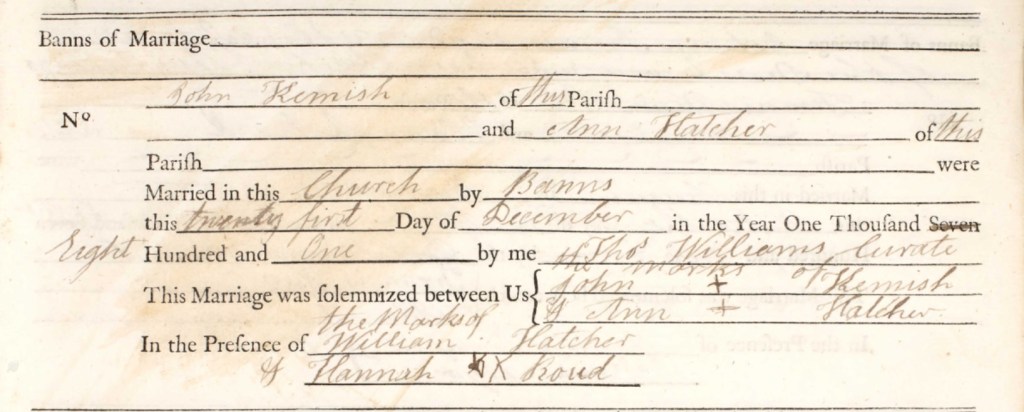
On Monday, the 21st day of December, 1801, a cold but gentle winter’s day in the village of Sherfield English, when the bells of Saint Leonard’s Church began to ring out across the fields. Their tones, soft and deliberate, floated through the white breath of morning mist, winding between the frosted hedgerows and sleeping oaks, calling the parish to witness the joining of two hearts.
Inside the ancient stone chapel, the warmth of candlelight danced along the weathered walls, turning the air golden and still. The faint scent of beeswax, damp wool, and evergreen garlands filled the nave, mingling with the quiet rustle of skirts and the low murmur of villagers gathered to celebrate a wedding, the marriage of William’s sister Ann Hatcher, daughter of Joseph and Tabitha, to John Kemish, a man of the same parish.
At the front of the church, Ann stood before the altar, her breath pale in the cold air, her hands perhaps trembling ever so slightly as she placed them in John’s. The curate, Thomas Williams, read aloud the sacred words of promise, each phrase heavy with reverence, each vow a thread binding two souls beneath the patient eyes of God and community. For Ann, the moment must have felt both vast and tender, the weight of tradition pressing gently against the fragile flutter of new beginnings.
In the quiet pews behind her, William Hatcher stood as witness, a brother now grown, his heart full of pride and affection. Perhaps he remembered the days of childhood they had shared, chasing the winds across Hampshire fields, now watching his sister step bravely into the next chapter of her life. Beside him stood Hannah Stroud, whose mark, simple and unadorned, carried the dignity of presence and the closeness of a village bound by faith and kinship.
Outside, the short December light was already fading, laying a soft, golden veil upon the church’s ancient stones. The chill of evening crept through the open doorway, and beyond the churchyard wall, the winter fields stretched in silence, a world hushed in the stillness of the season. Yet inside, warmth endured, in the glow of the candles, in the clasp of hands, and in the hearts of those gathered to witness love’s quiet triumph over cold and time.
When the vows were spoken and the promises sealed, the curate turned to the great parish ledger and inscribed their union into eternity:
John Kemish of this Parish

and Ann Hatcher of this Parish

were Married in this Church by Banns
 this twenty first Day of December in the Year One Thousand Seven Hundred and One
by me Thos. Williams, Curate
This Marriage was solemnized between us

John Kemish (his mark)

Ann Hatcher (her mark)
In the Presence of

William Hatcher (his mark)

Hannah Stroud (her mark)
That ink, dark and deliberate upon the page, marked more than a legal bond, it was a living testament, a promise woven into the Hatcher family’s long tapestry, joining past to future through love, endurance, and the sacred rhythm of ordinary lives.
And as the final bell of Saint Leonard’s rang out into the deepening dusk, its sound lingered like a benediction over the frosted fields, a hymn to faith, to family, and to the quiet courage of a winter bride stepping tenderly into the uncharted dawn of her new life.
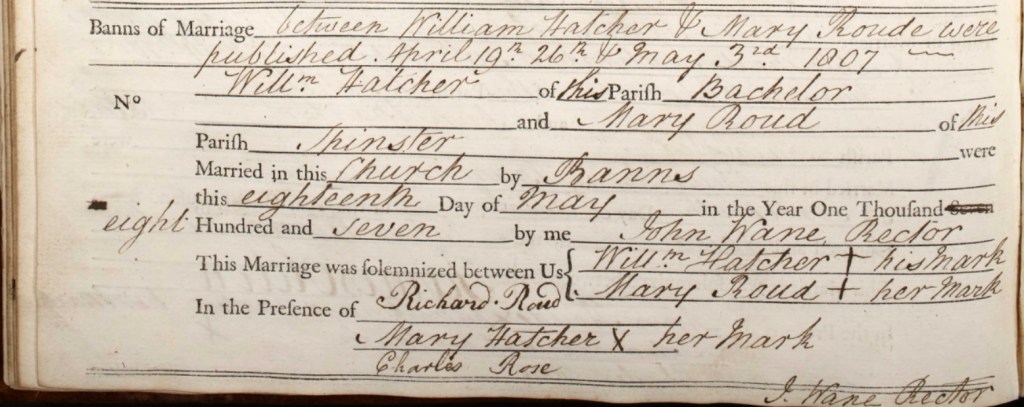
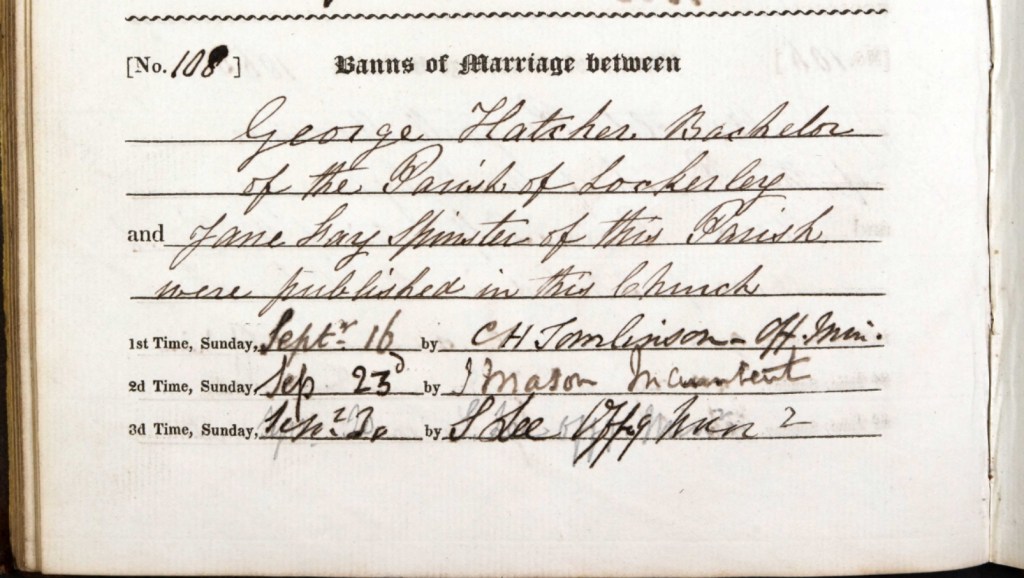
On Monday, the 18th day of May, 1807, when the bells of Saint Leonard’s Church in Sherfield English, Hampshire, stirred once more, their soft toll drifting across the tender green of spring. The hedgerows were bright with new leaves, and the air, sweet with the scent of hawthorn and lilac, carried the faint murmur of life awakening after the long, cold months. Beneath that gentle sky, William, a bachelor of the parish, stood within the same humble church that had witnessed his baptism twenty years before, the place that had cradled his family’s joys and sorrows for generations. Beside him stood Mary Roud, a spinster of the parish, her hands folded with quiet grace, her heart surely trembling with the wonder of the moment.
Within the timeworn stone walls of Saint Leonard’s, the scene was simple, yet sacred. Candles flickered softly, their flames bending toward the vaulted ceiling, and the scent of beeswax mingled with the cool breath of May that slipped through the half-open door. The familiar pews held neighbours and kin, faces weathered by work and sunlight, faces that had known the Hatchers and Rouds all their lives. These were not grand folk, but villagers bound by faith, by earth, and by the gentle rhythm of community.
For weeks, their names had been spoken aloud in the parish, first on Sunday the 19th day of April, then on Sunday the 26th day of April, and finally on Sunday the 3rd day of May, as the banns of marriage were read from the pulpit. Each Sunday, the congregation had listened as the rector’s voice rose through the church, declaring William and Mary’s intention to wed. It was more than a custom, it was a proclamation of trust, a weaving of their love into the fabric of the parish, giving every soul the chance to know, to bless, or, if need be, to challenge the union. But no voice was raised in objection. Instead, the banns rang as a chorus of gentle approval, carrying the promise of a future shared.
Now, beneath the tender glow of morning light, Rector John Wane stood before them, his tone both solemn and kind. As he read the vows, William and Mary exchanged glances that spoke more than words ever could, a quiet courage, a promise born not of grandeur but of steadfast hearts. When the moment came to sign the register, neither could write their names, yet they left something far more enduring: their marks, each a humble “X” pressed into the page with deliberate care.
Mary’s mark was not a sign of limitation, but of authenticity, a small cross carrying the weight of her spirit. In that gesture lay her truth, that love, devotion, and faith did not need fine letters to be eternal. Her “X” was the language of simplicity, the quiet voice of a woman who, though bound by her era’s expectations, stepped forward with strength, dignity, and the full measure of her heart.
Standing nearby were those who shaped and steadied this sacred hour. Richard Roud, Mary’s brother, lent his silent blessing as witness, the protective hand of family ever near. Mary Hatcher, William’s sister, added her own mark beside theirs, her presence a living thread between past and future. Charles Rose, too, recorded his name, a friend perhaps, or a neighbour who had shared in the laughter and labour of village life.
When the quill was finally set down, and the ink still glistened upon the parchment, the parish ledger read:
Banns of Marriage between William Hatcher & Mary Roud were published April 19th, 26th & May 3rd, 1807.

William Hatcher of this Parish Bachelor and Mary Roud of this Parish Spinster were Married in this Church by Banns this eighteenth Day of May in the Year One Thousand Eight Hundred and Seven by me John Wane, Rector.

This Marriage was solemnized between Us:
William Hatcher X his mark,

Mary Roud X her mark.

In the Presence of: Richard Roud,

Mary Hatcher X her mark,

Charles Rose.
So it was that William, the son of Hampshire soil, took Mary Roud as his wife beneath the aged timbers of Saint Leonard’s, the same roof that had echoed his first cries as an infant and would one day bear witness to his final rest.
Outside, the bells began to ring again, their music carried on the mild May breeze over fields freshly ploughed and hedgerows alive with birdsong. For William and Mary, it was the beginning of a shared life, one built not on wealth or grandeur, but on faith, labour, and love that endures quietly through the years.
And as they stepped hand in hand from the shadow of the church into the brightness of that spring morning, the world seemed hushed, as though the fields, the trees, and the very sky leaned in to bless them.
The year was 1808, and the fields of Sherfield English lay golden beneath the mellow sun of late summer, the air sweet with the scent of ripening grain and the hum of bees in the hedgerows. In a modest cottage not far from Saint Leonard’s Church, William’s beloved wife, Mary, barely sixteen years old, laboured through the long and tender hours of childbirth, her young body caught between the wonder and peril of bringing forth new life.
William, just twenty-one, waited near, restless and helpless as so many fathers were in those days. There was little he could do but pace the worn floorboards, his rough hands twisting at his sides, his heart tightening with every muffled cry from the chamber beyond the door. The midwife, an older woman from the village, worked steadily in the dim light, her voice calm and low, soothing both mother and the nervous hush of the room. The scent of linseed oil, candle wax, and warm water filled the air; the sound of the crackling hearth fire mixed with the faint prayers that slipped through Mary’s lips between gasps.
Childbirth in those days was a quiet act of bravery, no doctors, no medicines, only endurance, instinct, and faith. Perhaps Mary’s mother or sister stood nearby, sponging her brow with cool water, whispering words of comfort, reminding her to breathe, to push, to trust the rhythm of life itself. Outside, the light shifted slowly, the summer’s day waning into evening, and William, torn between fear and hope, stepped into the garden. The fields stretched wide and silent, a soft wind moving through the wheat, the church bell marking the passing hours. He might have looked toward the familiar spire of Saint Leonard’s, that steadfast sentinel of his family’s joys and griefs, and whispered a prayer for his young wife and the unseen child about to draw breath.
Then, at last, the moment came, the thin, sharp cry that cut through the stillness, fragile yet fierce, the cry of new life. Sarah Hatcher had arrived. Born to William and Mary in Sherfield English, her first breath mingled with the late summer air that drifted through the open window. The midwife would have wrapped her in linen, her tiny hands curling instinctively, her hair damp and dark, her cry softening to a sigh as she was laid in Mary’s trembling arms.
And Mary, exhausted, radiant, scarcely more than a child herself, would have looked down at her daughter with the dazed wonder of all new mothers, feeling the ache and grace of creation in her bones. Perhaps William was called in then, his boots still dusted with soil, his eyes wide and glistening. Awkwardly, reverently, he might have knelt beside the bed, gazing upon his child, their child, as if he were seeing a miracle unfold before him.
There, in that humble Hampshire cottage, surrounded by the soft chorus of summer night, the chirr of crickets, the sigh of the wind through the eaves, the Hatcher family grew by one small heartbeat. No record marks the exact day or hour of Sarah’s birth, only the traces she would leave behind in the censuses of later years, faint, imperfect echoes of the truth:
The 1841 census suggests she was born in 1811, in Hampshire.
The 1851 census records 1811, in Sherfield English, Hampshire.
The 1861 census gives 1808, again in Sherfield English.
The 1871 census lists 1807, in the same village of her birth.
Though the documents may waver, the truth of her beginning lies not in ink or parchment but in that one luminous moment, when a young mother’s courage met a father’s trembling awe, and Sarah Hatcher first opened her eyes to the gentle light of an English summer.
In that small house by the fields, with the scent of hay and hearth in the air, life renewed itself once more. William’s world, once the quiet rhythm of labour and prayer, now pulsed with new purpose, with a love that would outlast the years and the weathering of time.
On an autumn Sunday, the 16th day of October, 1808, when the bells of Saint Leonard’s Church in Sherfield English, Hampshire, began their slow, gentle toll, a sound that mingled with the sigh of the wind and the rustle of falling leaves. The trees stood half-bare, their golden and crimson leaves drifting softly to earth, carpeting the paths that led to the churchyard gate. The air was crisp, laced with the scent of damp soil and woodsmoke, the quiet music of the season wrapping the village in its melancholy beauty.
Within the familiar stone walls of Saint Leonard’s, William and Mary Hatcher came forward with their infant daughter, Sarah, to present her for baptism. Barely months old, she was swaddled in white linen, her cheeks pink from the cold air, her tiny breaths soft against her mother’s chest. For Mary, still only sixteen, it must have been a moment of awe, to stand once more before the same altar where she and William had pledged their vows barely a year before, now holding the living fruit of that union in her arms. William, just twenty-one, stood proudly beside her, the weight of fatherhood resting gently yet profoundly upon his shoulders.
Rector John Wane, who had officiated their marriage, led the Sunday service beneath the watchful gaze of the carved oak beams. The familiar rhythm of prayer and hymn echoed through the small church, mingling with the golden light that streamed through the leaded windows. It was a day of blessing, not only for the Hatchers, but also for Robert and Ann Jugg, who had brought their own child, Elizabeth Jugg, to be christened that very morning. Two families stood together before God, their lives intertwined by faith, by place, and by the tender hope that comes with new beginnings.
As the Rector’s voice filled the air, the congregation listened in stillness. The water shimmered as it touched Sarah’s brow, a cool kiss of eternity upon the warm skin of innocence. “Sarah, daughter of William and Mary Hatcher,” he intoned, sealing her name among those of the parish, her life now joined to the long, unbroken story of the Hampshire soil from which she came.
When the final hymn faded and the service came to its end, Rector Wane sat at his wooden desk near the chancel, dipping his quill into ink as the sunlight caught upon the edge of the page. Carefully, he filled the lines of the parish register, the record for Sherfield English from January 1st, 1808, to January 1st, 1809, and in a few simple words, immortalized the morning’s sacred act:
Oct 16th, Sarah, daughter of William and Mary Hatcher.
Those few words, written in a steady hand, carried the quiet poetry of a family’s faith and the tenderness of young love transformed by parenthood.
Outside, as William and Mary stepped from the church into the fading afternoon, the autumn light fell softly upon their faces. The world smelled of fallen leaves and hearth fires; the sky, pale and infinite, seemed to bless them as they walked home with their daughter in their arms. Each step echoed with the promise of ordinary days, of laughter and tears, of growing seasons and gentle endings, the life of a small Hampshire family unfolding beneath the same eternal sky.
In that fleeting October moment, Sarah Hatcher’s name was carried into history, not as grand proclamation, but as a whisper of love, inked into the parish book and cradled in the hearts of those who loved her most.
On the soft and golden morning of Monday, the 4th day of June, 1810, Saint Leonard’s Church in Sherfield Englishbasked in the tender light of early summer. The air shimmered with warmth and promise, carrying the scent of wildflowers and freshly cut hay through the open church doors. Within those ancient stone walls, where time itself seemed to move more slowly, Mary Hatcher, William’s youngest sister, stood before the altar, a young woman of quiet grace, her heart trembling with both joy and solemnity as she prepared to speak her vows.
The morning light streamed through the diamond panes of the old windows, scattering gentle patterns of gold upon the flagstone floor. The hum of bees drifted from the churchyard beyond, mingling with the soft, distant song of larks. It was a day of beginnings, the kind of day when even the air feels touched by blessing.
At the altar stood James Joy, a bachelor of the parish, his face earnest and calm, his gaze steady upon Mary. He was not a stranger to the village nor to its ways, his hands, likely worn from honest labour, told of a man who knew the rhythm of the Hampshire land, the same soil that had cradled the Hatchers for generations. And now, in that small church that had witnessed their baptisms, their marriages, and their farewells, Mary and James came to bind their lives together in love and faith.
The ceremony was led by Rector John Wane, whose familiar voice carried softly through the pews, each word rising like a prayer to the vaulted beams above. Family and friends gathered close, faces that had shared the joys and hardships of village life, watching with smiles both tender and tearful. Among them, perhaps, stood William, now a husband and father himself, his thoughts touched by the bittersweet rhythm of time as he watched his youngest sister step into her new life.
As the vows were spoken and the promises sealed, the moment seemed to shimmer, sunlight falling across the altar, the scent of blooming hawthorn drifting in through the door, and the echo of the rector’s words folding into the timeless hush of the church.
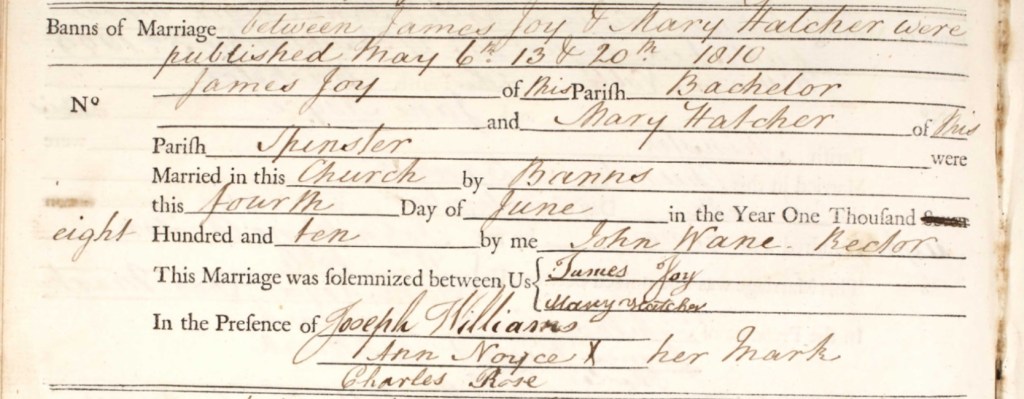
Then came the signing of the register, that quiet, enduring act that turns a moment of emotion into history. With a steady hand, James Joy wrote his name, and beside it, Mary Hatcher, her script neat and careful, the ink glistening wet upon the page. Around them stood their witnesses: Joseph Williams, Ann Noyce, who made her mark with humble grace, and Charles Rose, a name that had already appeared in the parish books alongside William’s own.
The record of their union was entered with care:
Banns of Marriage between James Joy and Mary Hatcher were published May 6th, 13th, and 20th, 1810.
 James Joy of this parish, bachelor,
 and Mary Hatcher of this parish, spinster,
were married in this church by banns on the fourth day of  June in the year one thousand eight hundred and ten, by me, John Wane, Rector.

This marriage was solemnized between us,

James Joy,

Mary Hatcher,

in the presence of

Joseph Williams,

Ann Noyce (her mark),

Charles Rose.
Outside, as the final words were spoken and the last note of prayer faded, the bells of Saint Leonard’s began to ring, their joyful chime rising into the summer sky, echoing across the hedgerows and meadows of Sherfield English. The sunlight glimmered on the church’s old stones, and the breeze carried the sweet sound of celebration across the Hampshire fields.
For Mary Hatcher, it was more than a wedding, it was a homecoming of the heart, a continuation of all that had come before her. And for William, watching from the pews, it was another thread woven into the long tapestry of their family, one that bound them, through love and faith, to the land and to one another.
That June morning, as the couple stepped out into the brightness of day, the bells still ringing above them, their names became part of the living song of Saint Leonard’s, a song of hope, devotion, and the quiet beauty of ordinary lives made sacred by love.
The summer of 1811 unfurled gently over the village of Sherfield English, painting the Hampshire countryside in strokes of gold and green. The air was soft and fragrant, alive with the perfume of wildflowers and the steady hum of bees drifting lazily from bloom to bloom. In the fields, wheat and barley swayed in rhythm with the warm southern breeze, their ripening heads shimmering beneath the benevolent gaze of the July sun.
It was in this season of abundance, on Sunday, the 7th day of July, 1811, that Mary Hatcher, barely nineteen years old, felt the first pangs of labour in the small cottage she shared with William, her husband of four years. The day was one of light and birdsong, yet within those walls, time seemed to stand still.
Mary’s body, still young yet already wise in the mysterious work of motherhood, laboured once more to bring forth life. She had done this before, at sixteen, when she first held her daughter Sarah. But no matter how familiar the rhythm, childbirth was always a walk between pain and miracle. The midwife, a familiar figure in the village, moved quietly through the small room, her voice calm, her hands practiced. The scent of hot water, linen, and burning tallow filled the air. A window stood open to let in the summer breeze, which carried with it the rustle of cornfields and the faint tolling of distant church bells.
In the small front room, William waited, pacing the floor, listening to each sound with his heart in his throat. He was twenty-four now, no longer the uncertain boy who had once stood at the altar but a man of the soil, steady, humble, and strong. His hands, roughened by labour, trembled slightly as he clasped them together. There was nothing to do but wait and pray, as men had done for centuries, while life and death wove their eternal dance just beyond the door.
And then, at last, came the cry, sharp, fragile, and wondrous. A son. A small, bonnie boy, his first breath breaking the stillness like a bird taking flight. James Hatcher had entered the world.
The midwife wrapped him carefully in a clean linen cloth and placed him in Mary’s arms, her face glowing with exhaustion and awe. Her skin was pale, her curls damp with sweat, yet in her eyes burned a quiet fire, the fierce, unspoken courage of all mothers. She looked down at her son, tracing his tiny fingers, and in that sacred moment between one heartbeat and the next, a bond was sealed that time itself could never undo.
For William, stepping into the room and seeing them there, Mary with the newborn pressed against her heart, was to witness something divine in its simplicity. He bent low beside her, his shadow falling across them both, his breath catching as he whispered the name they had chosen: James.
This humble cottage, with its low timber beams and flickering fire, now held a miracle. It was here that James Hatcher would take his first breaths, his first cries, the same walls that had heard Sarah’s before him. The room would come to hold the laughter of children, the rhythm of work and rest, the scent of bread baking and earth drying on boots by the hearth. Their home, modest, unassuming, yet full of warmth, became a sanctuary of love and endurance.
Outside, the fields shimmered with promise. The corn ripened in the sun, the meadows sang with life, and the world seemed to hum with quiet gratitude. In this harmony between the human and the divine, between earth and sky, toil and tenderness, William and Mary’s family grew once more, strengthened by the small heartbeat of the child they had brought into the world.
Mary could not have known what life would hold for her son, whether it would bring sorrow or joy, hardship or peace, but she knew he was loved, deeply and unconditionally. And in that love lay the strength that would carry him, and all those who came after, through the years.
As the day waned and the sky turned amber over the Hampshire hills, the Hatchers’ cottage glowed softly in the evening light. Within its humble walls, laughter mingled with the sounds of the countryside, the lowing of cattle, the hum of crickets, and the faint murmur of the wind in the trees.
And so, in the heart of summer, James Hatcher was born, a child of the land, of light, and of love. His arrival was more than a birth; it was a renewal of hope, a continuation of the story that began long before him and would echo long after, as the fields turned golden, the harvest ripened, and life, in all its quiet wonder, went on.
On a summer’s day in 1811, when the village of Sherfield English slumbered in golden light and the air shimmered with the hum of bees weaving between the wildflowers that lined the lanes. On Sunday, the 4th day of August, William and Mary Hatcher set out from their modest cottage, carrying their newborn son in their arms, a child only weeks old. The morning was soft, the sky high and pale blue, and the world seemed to pause in quiet reverence as they made their way toward Saint Leonard’s Church.
The familiar church stood waiting at the heart of the village, its ancient stones silvered by centuries of weather and prayer, its small tower rising proudly above the meadows and hedgerows. Within those sacred walls, William and Mary had once stood side by side as bride and groom, their hands joined and their hearts full of promise. Now, only a few short years later, they entered again, this time as parents, bringing with them the tender fruit of that union, their son, James.
Inside, the air was cool and still. Shafts of sunlight spilled through the leaded windows, casting dappled patterns of gold upon the flagstones and illuminating the baptismal font, ancient, worn smooth by generations of blessings. The scent of wax and wild herbs, placed by loving hands upon the altar, mingled with the faint echo of birdsong that drifted through the open doorway.
As the small congregation gathered, William stood quietly, his broad shoulders bowed slightly, his expression both proud and humble. Beside him, Mary cradled James, her arms protective yet tender, her eyes soft with the kind of love that is both fierce and infinite. To them, this moment was not simply a ceremony, it was an act of devotion, a prayer carried on the breath of faith. They were offering their son to God’s keeping, asking for His light to guide the path of this new life they had brought into the world.
The clergyman, whose name time has not preserved in the baptism register, stepped forward with solemn grace. His voice, calm and steady, filled the quiet church as he read the sacred words of baptism. The cool water touched James’s brow, glistening like morning dew upon his skin.
And then it was done. The priest dipped his quill, the ink gliding across the page as he recorded the event with careful hand, a few simple words to carry a lifetime’s weight of meaning:
James, Son of William & Mary Hatcher,
born July 7th, baptized August 4th.
So it was that James Hatcher was welcomed not only into his family, but into the enduring fold of faith and community that had shaped generations before him. His name, now written in the parish book of Saint Leonard’s, joined those of his ancestors, his grandparents Joseph and Tabitha, his aunts and uncles, his sister Sarah, each a chapter in the quiet chronicle of the Hampshire soil.
When the service ended, the family stepped once more into the bright August sunlight. The fields shimmered with life, the air alive with the rustle of grain and the lowing of cattle. Mary drew her shawl closer around her son, shielding him from the warmth, while William walked beside her, his hand resting lightly against her back, a simple gesture that spoke of pride, of tenderness, and of the unspoken gratitude that filled his heart.
That day, beneath the watchful tower of Saint Leonard’s and the wide, eternal sky, a new name had been added to the living history of the Hatchers, one more heartbeat in a line of faith, endurance, and love stretching deep into the Hampshire earth.
The year was 1814, and Sherfield English lay dressed in the soft bloom of late spring turning toward summer. The hedgerows shimmered with white hawthorn and wild rose, and the fields whispered with the promise of another harvest. Within a small cottage tucked along the winding lanes of Hampshire, William’s wife Mary, now twenty-two years old, felt once again the familiar, formidable rhythm of labour begin to move through her body.
This was not her first time walking the fragile line between life and death, she had done so twice before, with Sarah and James, but childbirth never truly became easier. It was not something one mastered, only something endured with grace and courage. Around her, perhaps her mother, sisters, or the women of the village moved gently, tending the fire, warming the linens, whispering words of comfort learned from generations of women who had faced the same trial. The air within the cottage was thick with the mingled scents of tallow, smoke, and lavender, and from outside drifted the distant murmur of the fields, a soft reminder that life, ever steady, continued beyond those walls.
William, now twenty-seven, waited anxiously nearby, keeping Sarah and James close, trying to distract them with stories or the rhythm of small tasks. Perhaps he took them outside to the garden, showing them the young shoots pushing through the soil, his heart restless and his hands unsteady as he listened for any sound from within the house. He had watched Mary suffer through this before, the pain, the exhaustion, the bravery that seemed too great for her small frame, and he could do nothing now but hope, pray, and wait.
Then, as the afternoon sun poured through the small cottage window, the silence was broken by the first cry of a new life. It was a boy, their third child, his voice tiny but sure, carrying through the warm air like a lark’s song. The midwife, her hands gentle and certain, wrapped the infant in a length of white cloth and placed him in Mary’s arms. Her face, pale with effort, softened into a weary smile as she gazed down at him. Charles Hatcher had come into the world.
William entered the room, his steps slow and reverent, his heart swelling at the sight of Mary and the child she had fought to bring forth. He bent down beside her, the scent of hay and summer air still clinging to him, and touched the baby’s tiny hand. In that instant, every hardship, every hour of labour, every sleepless night to come, was eclipsed by wonder.
The Hatcher home, humble and well-worn, now held yet another heartbeat. The rough-hewn beams of the ceiling, the small window looking out over the fields, the hearth where the fire crackled, all bore witness to this quiet miracle. For Mary, this room had become both her place of trial and her sanctuary, a sacred space where life began anew.
Though Charles’s exact date of birth is lost to time, the traces he left behind in the records offer glimpses of his beginning:
1841 Census - birth year recorded as 1816, Hampshire.
1851 Census - birth year recorded as 1815, Sherfield English, Hampshire.
Such discrepancies matter little beside the truth that endures, Charles Hatcher was born into love, in a village bound by faith and earth, to parents whose lives were rooted in devotion and quiet resilience.
As evening descended, the first stars appeared above the Hampshire hills. The air outside hummed with crickets, and the fields glowed faintly in the lingering light. Inside, Mary drifted into a soft, exhausted sleep with Charles nestled against her, while William sat close, listening to the comforting sound of his children breathing in the stillness.
That night, the Hatcher family grew once more, another thread woven into the tapestry of generations. And though neither William nor Mary could have known it, this child, their son Charles, would carry their name and their legacy forward, becoming the bridge between their humble past and the generations yet to come.
Life in Sherfield English moved with the slow, deliberate rhythm of the turning seasons, a rhythm as old as the fields themselves. That summer, the air was thick with the scent of cut hay and warm earth, the hum of bees rising from the meadows, and the distant song of Saint Leonard’s bells, their tones softened by the passing years and the tender hands that had rung them for generations.
On Sunday, the 3rd day of July, 1814, beneath the mellow glow of an English summer, William and Mary Hatcher carried their infant son Charles through the familiar lychgate of Saint Leonard’s Church. The cool hush of the church greeted them, stone walls worn smooth by time and faith, a place where light and shadow danced together across centuries of prayer.
It was no grand affair, just a simple Sunday service, unadorned but sacred, where villagers gathered to give thanks, to pray, and to witness life’s quiet milestones. Yet within that simplicity lay the eternal heartbeat of community and faith. For the Hatchers, this was more than a ritual, it was a moment that bound their son not only to them, but to the land, the village, and to the long memory of those who had come before.
Mary, only twenty-two, stood at the font with her child nestled against her. Her hands, though young, were already shaped by work and motherhood, yet in her touch there was gentleness, the enduring grace of a woman who had brought three lives into the world. She looked down at Charles, the fine wisps of his hair catching the candlelight, and whispered his name as the holy water touched his brow. This was her offering, her son, her faith, her love, given to God in hope and trust.
Beside her stood William, listed simply in the parish record as a “Labourer of Sherfield English.” Just one word, yet within it lived the dignity of a man who worked the land with his hands, whose back had bent to the plough, whose strength fed his family and his faith. His palms were rough, his nails darkened by soil, but his gaze was steady and proud as he watched the water fall upon his son’s skin. In that small, sacred act, William Hatcher, like his father before him, inscribed his own unspoken legacy upon the world.
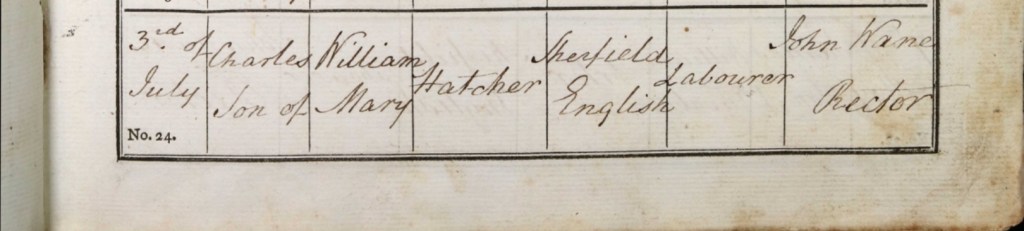
The familiar voice of Rector John Wane filled the nave, calm and measured. His presence was a thread woven through the Hatcher and Roud(e) family’s story, the same hand that had blessed their marriages, baptised their children, and perhaps later would bid them farewell. His quill, when the service was done, moved with quiet precision across the parish register, preserving the moment in ink for those yet to come:
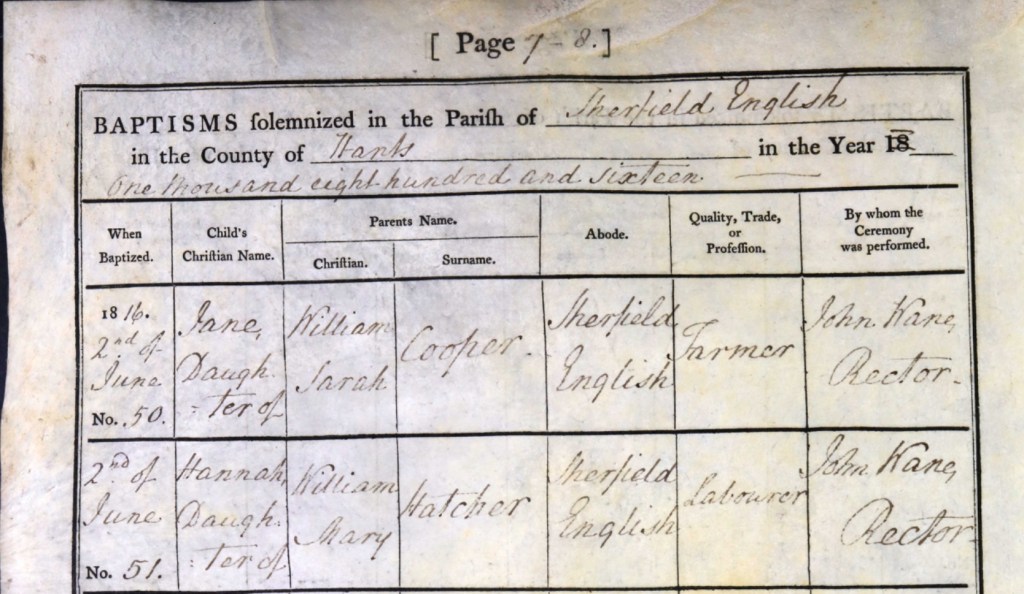
“BAPTISMS solemnized in the Parish of Sherfield-English in the County of Hants in the Year One Thousand Eight Hundred and Fourteen.”
When Baptised: 3rd July
No. 24

Child’s Christian Name: Charles, Son of

Parents’ Names: William and Mary Hatcher

Abode: Sherfield English

Quality, Trade, or Profession: Labourer

By Whom the Ceremony was Performed: John Wane, Rector.
Entry No. 24, a few lines penned upon parchment, might seem small amid the vastness of history, yet it carried within it the soul of a family, the weight of their love, and the enduring pulse of the Hampshire soil.
When the ceremony ended, the family stepped once more into the bright summer air. The bells of Saint Leonard’s pealed softly overhead, their chime rippling across the meadows where corn swayed and larks soared high. Mary shielded little Charles from the light, cradling him close as William walked beside her, his hand resting gently against her back. Around them, the world moved on, yet for this young couple, everything had changed.
That day was not only a baptism, but a blessing of generations. The name Charles Hatcher became another thread in the long, unbroken tapestry of faith, endurance, and love that stretched through the centuries, a tapestry that, through the quiet strength of time, would one day lead to you.
Though born into modest means, Charles was rich beyond measure, not in wealth or title, but in heritage, in belonging, and in the steadfast hearts of those who had come before him. On that bright July morning, beneath the song of the Hampshire bells, his story began, a story of earth and grace, of family and faith everlasting.
As the new year of 1816 unfolded, the Hampshire countryside lay still beneath a glistening coat of frost. Each morning, the fields of Mitchelmersh sparkled like glass beneath the pale light of a low winter sun, and the hedgerows stood bare and silent, their breath caught in the frozen air. In that cold, quiet season, a gentle life came to its close. Tabitha Hatcher (née Gardiner), beloved wife of Joseph Hatcher, and devoted mother of seven, passed away in early January 1816, at the age of sixty-five.
For William, her fourth son, the loss must have felt like the dimming of a familiar flame, one that had warmed and guided him since the day he was born. His mother had been the heart of his earliest world, her hands the first to lift him, her voice the first to comfort him. Now, as winter wrapped itself around the Hampshire hills, that voice was gone, leaving behind an ache that words could not ease.
Tabitha’s life had been one of quiet strength and steadfast love. Born into a world where survival was work, and love was shown in labour and care, she gave herself wholly to the rhythm of family and faith. Beside Joseph, she raised seven children, Joseph, Richard, Tabitha, Ann, Thomas, William, and Mary, teaching them patience, humility, and the grace of endurance.
She had known sorrow, two of her children, Joseph and little Tabitha, were taken from her too soon. Yet even in grief, she never faltered. She continued to nurture the living, to tend her home, to meet each dawn with quiet perseverance. Her love was not loud or written in grand gestures, but carried in the daily acts that wove her life together, the soft hum of her voice as she worked, the kneading of dough by the glow of the hearth, the careful mending of a child’s torn sleeve, the whispered prayers she offered as daylight faded.
By the time 1816 arrived, Tabitha’s body had weathered years of labour and love. Her hair, once dark, would have silvered softly, her face lined by both toil and tenderness. Yet there must have remained in her eyes the same gentleness that had marked her youth, the quiet wisdom of a woman who had lived fully, who had given more of herself than she ever received in return.
The details of her final days are lost to time, her passing noted only by the fading ink of history and the memory that lives on in her descendants. But even without a record of her last words or the faces that surrounded her at the end, her legacy is unmistakable. It endures in the children she raised and in the lives that followed, in every act of kindness, in every steadfast heart that carries her name forward.
Though the winter of 1816 took her body from the world, it could not silence the echo of her love. In William’s eyes, perhaps, there lingered her gentleness, in Mary’s patience, her quiet strength. Through them, through all who came after, Tabitha continues to live, her spirit intertwined with the land she once walked, the home she once kept, and the generations who still remember her name with gratitude and grace.
Her story is not lost, it has simply changed form, becoming part of the very air that hangs above the Hampshire fields, part of the whispered prayers carried by time itself.
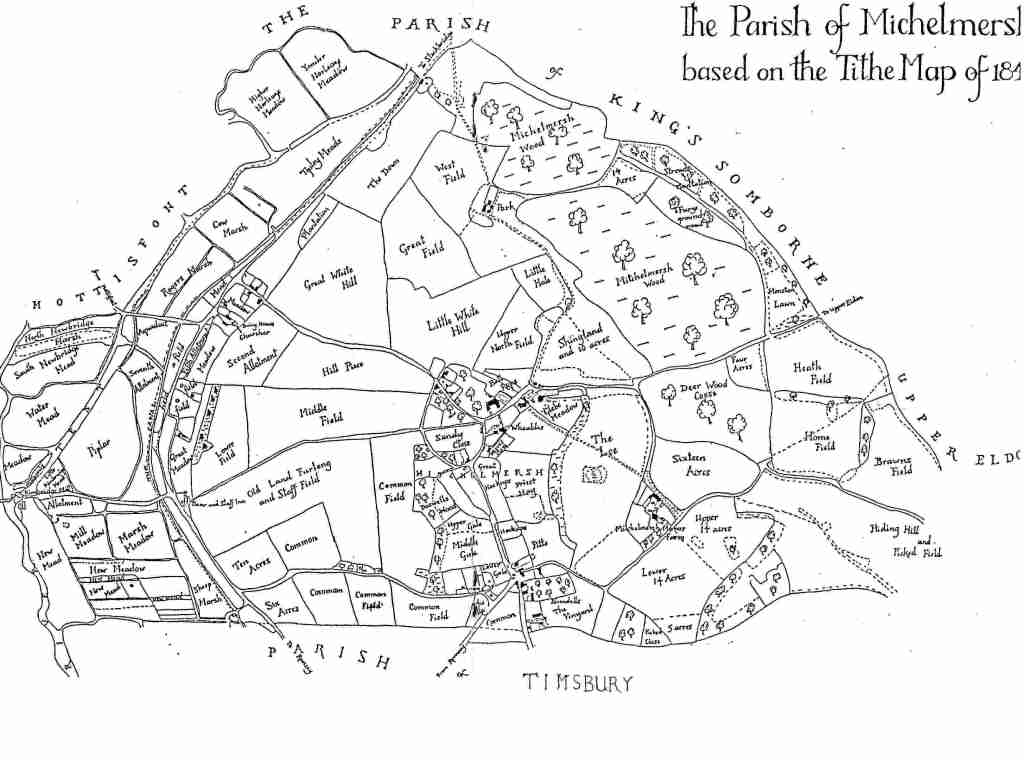
Michelmersh, a small village located in Hampshire, England, lies in the picturesque Test Valley, an area known for its rural charm and natural beauty. The village is steeped in history, and its development has been closely tied to the agricultural heritage of the region. Though it is now a quiet village, Michelmersh’s roots go back to medieval times, and its story is one of gradual transformation from a rural settlement to a part of the modern Hampshire landscape.
The origins of Michelmersh can be traced to the Saxon period, when it was likely a small agricultural settlement. The name "Michelmersh" is believed to derive from Old English, with "Michel" meaning "great" and "mersc" referring to a marsh or wetland area. This suggests that the village may have been originally located near marshy ground or a significant water source, an aspect that likely influenced its early settlement and development.
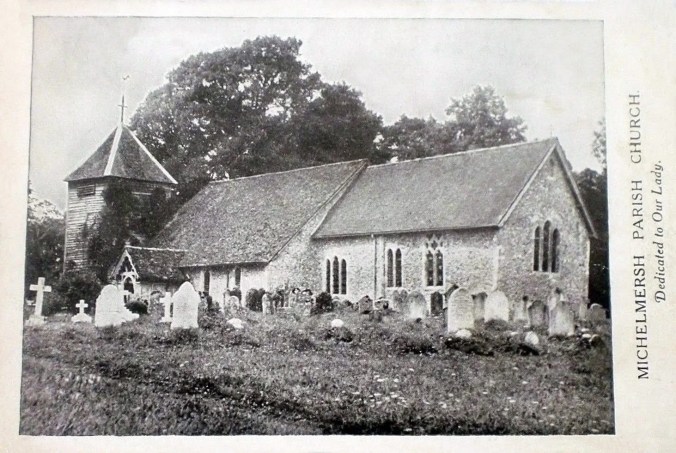
During the medieval period, Michelmersh was part of a larger manor system that was prevalent in England. The village was connected to the wider network of agricultural estates that characterized much of England at the time, with its economy largely based on farming, particularly the cultivation of crops and the raising of livestock. The presence of a local church, St. Mary’s Church, would have been central to village life during this period, serving as both a spiritual center and a communal gathering place.
In the Domesday Book of 1086, which recorded a detailed survey of England commissioned by William the Conqueror, Michelmersh is mentioned as part of the land held by the Norman lords. The records from this time show that the village, like many others, was a small yet thriving agricultural community, though it would have been under the control of a local lord. Over the centuries, the land would pass through the hands of various noble families, contributing to the shaping of the village's future.
During the 16th and 17th centuries, Michelmersh, like much of rural England, experienced significant changes as the English economy shifted. The rise of enclosed farming and the increasing importance of trade and commerce during the early modern period altered the social and economic fabric of many rural communities. Michelmersh saw the construction of larger homes and farmsteads, and as agriculture remained a cornerstone of village life, there was a growing emphasis on improving farming methods and land management.
The 18th and 19th centuries brought further transformations to Michelmersh, particularly with the onset of the Industrial Revolution. While the village itself remained largely agricultural, nearby towns like Romsey began to experience industrial growth. The arrival of the railway in Romsey, for example, contributed to changes in trade and transportation, which in turn affected rural areas like Michelmersh. During this period, the village remained a peaceful and rural community, though it likely saw an increase in population as people sought work in nearby towns or on larger farms.
The 20th century brought more changes to Michelmersh, especially as rural communities like it began to adapt to the demands of modern life. Agriculture continued to be an important part of the local economy, but the development of modern roads, schools, and social services allowed for better integration into the growing town networks. The construction of new homes and the expansion of residential areas saw Michelmersh become a part of the broader Romsey area, although it retained its character as a small village.
Today, Michelmersh is a quiet residential area that still holds much of its historical charm. Many of the original buildings, including the church, have been preserved, and the village is surrounded by farmland and open countryside, contributing to its appeal as a rural retreat. The local population is small, but the community remains active and engaged, with many residents valuing the village's historical connections and its peaceful surroundings.
Michelmersh’s location in the Test Valley ensures that it continues to benefit from the natural beauty of the area, with the River Test flowing through the region and providing opportunities for outdoor activities such as walking, cycling, and fishing. The village’s historical roots in agriculture continue to be a significant part of its identity, even as it has become more residential in character.
The chill of early January lingered over the winding lanes of Sherfield English, wrapping the hedgerows and thatched roofs in a fragile mist. Frost clung to the earth, and the hush of winter lay heavy across the Hampshire fields. On Sunday, the 7th day of January, 1816, beneath a gray and tender sky, the bells of Saint Leonard’s Church tolled softly, calling family and neighbours to gather within the quiet churchyard.
There, among the moss-covered stones and bare branches, another soul was commended to the keeping of the earth, Tabitha Hatcher (née Gardiner), aged sixty-five, beloved wife of Joseph Hatcher, and mother to seven children, including William, who now stood among the mourners. Her abode was recorded as Michelmersh, a nearby Hampshire village where she had spent her final days, but her journey ended where her story had begun, in Sherfield English, the parish that had witnessed her life’s unfolding.
Though history leaves us only her name, age, and dwelling, these few lines speak quietly of a life well-lived. To have reached sixty-five in an age when so many lives were cut short was no small triumph. It tells of resilience, of faith, of a woman who endured the long years of work and want, of joy and loss, who had buried two of her children yet continued to give her heart to the living. She had witnessed the slow changing of England, the wars that raged beyond her village, the ebb and flow of harvests, the steady pulse of rural life measured by the seasons and the church bell’s toll.
The Reverend John Wane, Rector of Saint Leonard’s and familiar chronicler of the Hatcher family’s joys and sorrows, led the ceremony with gentle reverence. His voice rose softly into the cold air, carrying the words of farewell over the bowed heads of those gathered. For William, standing among them, this was not just a mother’s burial, it was the closing of a chapter, the quiet turning of a page written in love and sacrifice.
When all words had been spoken and the final prayers whispered, Rector Wane dipped his quill and inscribed the moment into the parish record, the last written mark of a life that had been shaped by devotion and endurance:
BURIALS in the Parish of Sherfield English in the County of Hants in the Year One Thousand Eight Hundred and Sixteen

Entry No. 11

Name: Tabitha Hatcher

Abode: Michelmarsh, Hants

When Buried: January 7th, 1816

Age: 65

By whom the Ceremony was performed: John Wane, Rector.
That single entry, inked with care, was more than a clerical note, it was a final act of remembrance, a gentle acknowledgment of a woman whose strength had been quiet but unyielding.
Now, beneath the watchful old stone tower of Saint Leonard’s, Tabitha rests in the same soil that once felt her footsteps, among the people and the land she had loved. The churchyard, wrapped in winter’s stillness, holds her story, not in grandeur or inscription, but in the living memory of the generations that followed.
Her name endures in the parish register, but more profoundly, it lives on in the blood and spirit of her descendants, a quiet testament to the strength of a mother, the faith of a woman, and the enduring legacy of the Hatcher name, rooted deep in the heart of Hampshire.
St. Mary’s Church in Michelmersh, Hampshire, is a beautiful and historic parish church that has played a central role in the spiritual and community life of the village for many centuries. Located in the peaceful countryside of Hampshire, St. Mary’s Church serves as an important landmark and is deeply connected to the village’s history and its people.
The history of St. Mary’s Church dates back to medieval times, with the first references to the church appearing in documents from the 12th century. The church was likely built during the Norman period, though there have been many modifications and restorations over the centuries, reflecting the changing architectural styles and the needs of the community. Like many churches in rural England, St. Mary’s would have served not only as a place of worship but also as a central gathering point for the village, hosting baptisms, marriages, and funerals.
The architecture of St. Mary’s Church is an example of the typical styles seen in rural churches of this era. The building is constructed from local stone, and its design has been influenced by both Romanesque and Gothic architectural styles. The church features a simple yet elegant structure, with a nave, chancel, and tower. The tower, which would have served as a symbol of the church’s prominence in the village, is an important feature of the church’s exterior. Over the centuries, the church has undergone various renovations and extensions to meet the needs of the growing population, but its fundamental design has remained faithful to its original structure.
One of the key periods in the history of St. Mary’s Church came in the 19th century when many churches were restored or rebuilt under the guidance of architects and scholars of the time. During this period, St. Mary’s underwent significant restoration work, likely driven by the Victorian-era passion for restoring medieval churches. This restoration would have focused on preserving the architectural integrity of the church while adding new elements to accommodate the expanding congregation. The addition of stained-glass windows, the improvement of the interior furnishings, and the enhancement of the church’s acoustics were likely part of this restoration process, reflecting the era's fascination with Gothic Revival architecture.
The churchyard surrounding St. Mary’s Church is also an integral part of its history. Like many rural churches in England, the churchyard is the final resting place for many generations of the village’s residents. The graves and memorials found in the churchyard are a testament to the people who lived in Michelmersh throughout the centuries, offering a glimpse into the village’s past. Some of the gravestones are centuries old, and their inscriptions and symbolism provide valuable insights into the local history and the families who lived in the area. The churchyard also serves as a peaceful place for reflection and a reminder of the deep connection between the village and its church.
St. Mary’s Church has continued to play a central role in the life of Michelmersh. The church still holds regular services, including Sunday worship, weddings, baptisms, and funerals, serving as a focal point for the spiritual life of the community. The church is not only a place of worship but also an important cultural and social center for the village. It is a place where the community gathers for events, celebrations, and activities that bind the people together. The church has also hosted special events, such as concerts and festivals, which have helped bring the community together and allow people to celebrate their shared heritage.
In terms of local folklore and rumors of hauntings, St. Mary’s Church, like many historic churches, has been the subject of occasional ghost stories. While there are no widely documented or well-known accounts of hauntings, it is common for older buildings, particularly churches, to inspire tales of supernatural occurrences. The church’s long history and its connection to the lives of the people of Michelmersh provide a natural backdrop for such stories. The churchyard, with its centuries-old graves, might contribute to an eerie atmosphere, especially in the stillness of the early morning or evening. However, these tales are generally passed down through generations and are part of the local folklore rather than established facts.
The year was 1816, and life in the village of Sherfield English moved with the familiar cadence of the countryside, the steady creak of wagon wheels, the murmur of wind through the wheat, and the tolling of the church bell marking the passing of each peaceful hour. The fields shimmered in the pale light of early summer, the air sweet with the scent of grass newly cut, as William and Mary Hatcher welcomed their fourth child, a daughter they named Hannah.
Within the walls of their modest cottage, the same one that had already cradled the laughter and cries of Sarah, James, and Charles, Mary, now twenty-seven, held her newborn close. Her heart swelled with the familiar, aching wonder that accompanies new life, a mix of joy, exhaustion, and awe. Though she had brought three children into the world before, the miracle of it never lessened. Each child carried with them a spark of eternity, a promise renewed.
William, then thirty-one, stood nearby, his face softened with quiet pride. His hands, calloused from the labours of the fields, were gentle as he reached to touch the tiny fingers of his newborn daughter. For all the hardship and toil of his days, moments like these, fleeting, sacred, were what gave meaning to his life. Together, they gazed upon Hannah, and in her eyes, still half-closed to the world, they saw the reflection of their love and their endurance.
Their home, though humble, was full of warmth. The faint scent of hearth smoke and lavender hung in the air, a cradle stood near the fire, lovingly made from simple wood; and from outside came the faint bleating of sheep and the chatter of village life. It was here, in this tender space of simplicity and belonging, that Hannah’s story began, not as the child of wealth or title, but as the daughter of honest people, whose faith and labour sustained them as surely as the turning seasons.
The precise date of Hannah’s birth has slipped beyond the reach of time, her arrival remembered only through the scattered traces of old records. The censuses, imperfect, yet precious, whisper different years, their ink fading but their meaning enduring. The 1841 census places her birth around 1821, somewhere in Hampshire; the 1851 censussuggests 1815, in Sherfield English; while the 1861, 1881, and 1891 records agree that she was born in Sherfield English, around 1817. Such variations were common in those days, when memory and record-keeping danced uneasily together, but all point toward the same truth: Hannah Hatcher was born in Sherfield English, her life rooted in the same soil as the generations before her. Her baptism, however, tells us she was presented before the church in 1816, the year the bells of Saint Leonard’s tolled her name for the first time.
For William and Mary, Hannah’s birth was a blessing wrapped in the quiet ordinariness of their days. Each child deepened their sense of purpose, weaving another strand of love into the tapestry of their family. Hannah’s presence filled their home with new laughter and light, a small miracle growing beneath the wide Hampshire sky.
In the years to come, she would grow beside her siblings, learning the rhythms of field and faith, of labour and song. The Hatcher home, though simple, was rich in the values that shaped every generation to follow, love, hard work, faith, and an unshakable devotion to one another.
And though the exact moment of her birth has been blurred by time’s gentle hand, Hannah’s place in the story of the Hatchers remains eternal. She lived and loved beneath the same church tower where her parents had wed, where her siblings were christened, and where her grandmother Tabitha had been laid to rest, her life another verse in the long, unbroken hymn of family, faith, and the enduring beauty of ordinary grace.
The village of Sherfield English stirred softly into the embrace of summer. The hedgerows shimmered green and full, the air carried the scent of meadowsweet and honeysuckle, and the faint hum of bees drifted lazily over the fields. On Sunday, the 2nd day of June, 1816, beneath a soft sky washed with early light, William and Mary Hatcher made their way along the well-worn path that led to Saint Leonard’s Church, the same path they had walked before, hand in hand, through joy and sorrow, through vows and blessings.
In Mary’s arms lay their newborn daughter, Hannah, wrapped in a simple linen cloth, her breaths soft as feathers against her mother’s heart. She was just weeks, perhaps only days old, a small, perfect soul carried into the same sacred space where her parents had once promised their lives to one another, and where their growing family was being shaped, child by child, blessing by blessing, beneath the watchful eyes of God and the Hampshire hills.
Inside the church, the familiar hush awaited them. The cool stone walls, mottled with age and memory, seemed to breathe with centuries of whispered prayers. Shafts of sunlight fell through the narrow windows, dancing gently across the font, that ancient basin of stone that had cradled generations of baptisms before. It was there that Hannah, a child of humble origins, was brought forward, not with grandeur or ceremony, but with the quiet dignity of faith and love.
Her father, William, stood close beside Mary, his name, once more, to be written as a “Labourer of Sherfield English.” The word was plain, yet in it lay a world of meaning, the weight of earth on his hands, the rhythm of his labour bound to the land, and the pride of a man who worked not for wealth, but for family, for faith, and for the steady continuity of life. Mary, her young face serene and steadfast, held their daughter with reverence, her heart echoing the unspoken prayer that every mother knows, for protection, for peace, and for the grace to watch her child grow beneath the mercy of heaven.
At the altar stood Rector John Wane, the familiar shepherd of their parish flock. His voice, calm and measured, filled the small nave with words that had passed his lips a hundred times before, yet always carried the same sacred weight. He had seen the Hatchers at every milestone, marriage, birth, loss, and now, once again, his steady hand would commit their joy to the pages of history.
That morning, another family had come before them, William and Sarah Cooper, who presented their daughter Jane for baptism. A farmer’s child and a labourer’s child, blessed beneath the same roof, their names now inscribed side by side, a gentle reminder that in this place, before God, all souls were equal.
When the service ended and the sunlight filtered soft upon the page, Rector Wane opened the great parish book and dipped his quill into ink. The letters flowed with care, preserving this moment for all who would come after:
BAPTISMS solemnized in the Parish of Sherfield English in the County of Hants in the Year One Thousand Eight Hundred and Sixteen.
Entry No. 50

When Baptized: 2nd of June, 1816

Child’s Christian Name: Jane

Parents’ Names: William & Sarah Cooper

Abode: Sherfield English

Quality, Trade, or Profession: Farmer

By whom the Ceremony was performed: John Wane, Rector
Entry No. 51

When Baptized: 2nd of June, 1816

Child’s Christian Name: Hannah

Parents’ Names: William & Mary Hatcher

Abode: Sherfield English

Quality, Trade, or Profession: Labourer

By whom the Ceremony was performed: John Wane, Rector.
Two children, two families, their names written side by side, bound together by faith and the quiet order of parish life.
As the Hatchers stepped back into the sunlight, the church bells tolled gently above them, their sound carrying out across the meadows, mingling with the breeze and the song of skylarks. Mary drew her shawl around Hannah, feeling the warmth of her small body against her heart. Beside her, William’s eyes lifted toward the tower, perhaps offering a silent word of gratitude.
And so it was that Hannah Hatcher, daughter of William and Mary, was welcomed into the world and the faith that had shaped her family for generations. Her name, now inked in careful script upon the parish register, was more than a record, it was a promise. A beginning.
For within those few delicate words lay the heart of her story, a child born of love, baptised in hope, and carried forward by the enduring rhythm of the Hampshire land, the steadfast faith of her people, and the quiet, everlasting strength of the Hatcher name.
In the early days of July, 1819, as the air hung warm and still over the fields of Sherfield English, a shadow of sorrow settled upon the Hatcher family. The golden days of midsummer, usually filled with the hum of bees and the scent of cut hay, now seemed touched by silence. Joseph Hatcher, William’s father, had passed away at the age of seventy-eight, his long life gently folding into memory.
His death marked the end of an era, the closing of a story that had been bound to the soil and the seasons of Hampshire for nearly eight decades. Joseph’s life had moved in step with the turning of the land, with harvest and frost, with the steady rhythm of the plough and the toll of the church bell. He had witnessed a changing England: the echo of wars fought far from the quiet fields he tended, the shifting tides of agriculture and labour that began to reshape the countryside, and yet through it all, he had remained steadfast, rooted like the oak trees that watched over the parish.
Though the details of his final days have been lost to time, one can imagine the quiet of the family cottage, the hush that falls when an elder’s familiar voice no longer fills the room. His chair by the fire would have stood empty, his tools perhaps resting in the corner where his hands had last laid them. The scent of smoke and summer air mingled with grief as those who loved him carried on, their hearts heavy but their duties unchanged.
For William, now a man in his early thirties, the loss was profound. His father had been his first teacher, in work, in patience, in the unspoken faith that life’s worth was measured not in wealth, but in constancy. From Joseph he had learned to read the sky for weather, the soil for promise, and the human heart for kindness. The lessons of a father linger long after the man is gone, and William would carry them forward in his own quiet way, through his labour, through his devotion to Mary and their children, and through the steady, enduring rhythm of daily life.
In those days, when families were bound not only by blood but by work, faith, and proximity, the death of an elder was never just the loss of a parent. It was the soft extinguishing of a light that had guided them all. Joseph’s passing was not only an ending, but a turning point, a moment when the Hatcher family, now under William’s care, stepped fully into a new generation’s keeping.
Though the record tells us little, no final words, his life still speaks through the fragments he left behind, his children, his work, his quiet faith. His story, like so many of his time, is written not in stone, but in the enduring heartbeat of the land he loved and the family who bore his name forward.
And so, as the long summer days of 1819 unfolded and the fields ripened toward harvest, the Hatchers continued on, their grief carried gently, their memories held close. The sound of the Saint Leonard’s bells may have drifted faintly through the air that season, their tones mingling with birdsong and wind, as if the village itself whispered its farewell to a man who had lived simply, worked faithfully, and left behind a legacy of love, endurance, and belonging.
On Tuesday, the 13th day of July, 1819, the village of Sherfield English gathered in quiet reverence beneath the soft haze of a midsummer sky. The air was warm and still, carrying the faint scent of hay from the meadows and the hum of bees weaving between the wildflowers that lined the lanes. That morning, under the watchful gaze of neighbours and kin, Joseph Hatcher, aged seventy-eight, was laid to rest.
He had lived a long life, one measured not in wealth or renown, but in the honest rhythm of the land, the steady pulse of labour, and the enduring grace of faith. Nearly eight decades had carried him through harvests and hard winters, through the laughter of children and the ache of loss, through the familiar patterns of village life where every face was known and every life touched another. He had seen England shift and stir around him, wars and reform, new machines turning in distant towns, yet here, in Hampshire’s quiet heart, life still beat in harmony with the turning of the seasons and the tolling of the church bell.
His final journey led him once more to Saint Leonard’s Church, the heart of the parish, where so many of his life’s milestones had unfolded. He had once stood there as a young man, perhaps nervous and hopeful at the baptismal font; later, as a husband and father, watching his children brought forward for blessing; and, in time, as a mourner himself, bidding farewell to those he had loved and outlived. Now, it was the villagers’ turn to stand for him, to offer the same quiet grace he had shown to others.
The ceremony was led by Rector John Wane, the familiar figure whose voice had long woven through the lives of the Hatchers. With steady hands and solemn care, the rector inscribed Joseph’s passing into the parish register, a few lines of ink that would preserve his name long after his footprints had faded from the earth.
BURIALS in the Parish of Sherfield English in the County of Hants in the Year One Thousand Eight Hundred and Nineteen.

Entry No. 26

Name: Joseph Hatcher

Abode: Sherfield English

When Buried: July 13th, 1819

Age: 78 years

By whom the Ceremony was performed: John Wane, Rector.
The record was simple, a name, a date, a place, yet within those lines rested a whole life: a man who had laboured humbly, loved deeply, and endured the quiet trials of his time with faith and perseverance. His story was the story of countless others who shaped the soul of rural England, people whose lives left no monuments, but whose spirit endures in the fields they tended, the homes they built, and the families who still speak their names.
Though Saint Leonard’s original church no longer stands, and the churchyard that once held so many lives has yielded most of its stones back to time, Joseph remains, not in marble or inscription, but in memory. He lives on in the earth of Sherfield English, in the wind that passes through the trees where he once walked, and most of all, in the hearts of his descendants, who remember him still.
For every Hatcher who traces their lineage to that quiet Hampshire village carries a part of him, the steadfastness of his labour, the strength of his faith, and the enduring gentleness of his life.
And though the records grow faint and the buildings crumble, Joseph Hatcher’s story remains eternal, whispered in the rhythm of the seasons, written in the soil, and held lovingly in the living memory of those who came after him.
The year was 1820, and the fields of Sherfield English lay golden beneath the lingering warmth of late summer. The harvest was nearly gathered, the air filled with the scent of ripe grain and the hum of scythes sweeping through the tall stalks. The sun hung low and generous, casting long shadows across the hedgerows, blessing once more the people who had toiled faithfully upon the Hampshire soil.
It was during this season of bounty and gratitude that Mary, wife of William, prepared to welcome another child into the world. Their humble cottage, nestled at the heart of the village, stood as it always had, modest, weathered by time and labour, yet filled with a warmth that no grand house could equal. Inside, the air was thick with both anticipation and tenderness. The scent of baking bread and stew simmering on the hearth mingled with the faint aroma of hay that drifted in from the open door, where sunlight spilled across the worn floorboards.
Around Mary, who was now about twenty-eight years old, familiar faces gathered, women from nearby cottages, perhaps sisters, neighbours, or friends, women who had walked this same path of courage and pain. Their hands, steady and gentle, moved with the wisdom born of experience. They spoke in low voices, offering comfort and prayer, as the long hours of labour stretched deep into the day.
Outside, the village pulsed with life, the distant sound of carts creaking under sheaves of grain, the laughter of children, the call of men working in the fields. Yet within the cottage, all was still, save for the rhythm of breath and whispered encouragement. In that moment, the world narrowed to the beating of a mother’s heart, the endurance of a woman bringing forth life once more.
As evening approached, the silence was broken by the first, fragile cry of new life. Mary had given birth to a daughter, her second girl, the fifth child born to her and William, now thirty-three. Exhausted yet radiant, she held her baby close, the warmth of the child’s skin against her own a balm for all the pain that had passed. William stood beside her, awe softening the lines of his face, his calloused hands trembling slightly as he reached to touch his daughter’s cheek.
They named her Mary, a name carried through generations, a name that spoke of faith, devotion, and continuity. In choosing it, they honoured not only the mother who bore her, but the long thread of family that stretched behind them like the furrows of the land they lived upon.
Though the exact date of her birth is lost to time, the parish baptism record tells us that she was born before September of 1820, in this same Hampshire village that had seen her parents wed and her siblings christened. The records may be spare, a name, a year, a place, yet the truth of her beginning lies not in the ink, but in the tenderness of that summer day: the pride in her father’s eyes, the strength in her mother’s hands, the quiet joy that filled their home.
In that harvest season, as fields lay heavy with grain and the air was sweet with promise, the Hatcher family welcomed one more life into their circle. The rhythm of work and worship, of laughter and loss, went on, but now with a new heartbeat among them.
Mary’s birth was not a grand event, nor marked by ceremony or proclamation. Yet it was a moment of profound significance, a quiet affirmation of love’s endurance, of family’s strength, and of the eternal truth that even in the smallest of cottages, under the humblest of roofs, life continues to renew itself in grace.
And as dusk fell over Sherfield English, and the first stars blinked faintly above the fields, the Hatcher home glowed softly from within, a cradle of warmth, faith, and hope, its newest light sleeping peacefully in her mother’s arms.
As autumn descended upon Sherfield English, the fields blazed with their final splendour, reds, ambers, and burnished golds rippling beneath the harvest sun. The air carried that familiar scent of woodsmoke and ripened grain, a time when the land, having given so much, began to rest. Yet amidst nature’s beauty and calm, grief came quietly to the Hatcher home, settling like a shadow upon the threshold.
It was early September of 1822, just over two short years since William and Mary had welcomed their beloved daughter, Mary, into the world. Within the same walls that had first echoed with her laughter and small, bright cries, their home fell silent. Their little girl, the joy of their hearts, their second daughter, was gone. Barely two years old, her brief life had come to its end in the only home she had ever known, nestled within the familiar lanes and fields of Sherfield English.
The records tell us almost nothing, no cause, no final words, no tender details of her passing. Only the date remains, fragile and faint, like a pressed flower in an old book. But the truth of that loss does not need ink to be understood. It is written instead in the silence that would have followed, the still cradle, the folded cloth, the emptiness of arms once full.
For Mary, her mother, the pain must have been unspeakable. She had cradled her daughter through long nights and bright mornings, had whispered her name in love and lullaby, and now, she held her for the last time, her arms unable to keep her from the cold certainty of death. The ache of that farewell, the hollow in her heart, would have remained long after the world continued to turn.
And for William, a father of quiet strength and steady faith, the loss would have struck as deeply. The man who worked the soil, who understood the cycles of growth and decay, of harvest and loss, must have found little solace in such knowledge when it came to his own child. No season of the earth could prepare a parent for the sight of a small life stilled too soon. His grief, though likely silent, would have been a heavy thing, carried in his eyes, in his posture, in the soft weariness of his labouring hands.
In those days, the death of a child was heartbreakingly common, a sorrow known to many families in rural England. Yet such familiarity never dulled the pain. Each loss was singular, unbearable, a small world collapsing upon itself. To lose a child was to lose the promise of tomorrow, the laughter that would never be heard again, the milestones that would never come to pass.
For William and Mary, the days that followed must have unfolded in quiet mourning. The rhythms of daily life, tending to the animals, mending, baking, working the fields, would have continued out of necessity, but beneath every task lay absence. The echo of their daughter’s laughter would have haunted the cottage, and her small belongings, a blanket, a wooden toy, perhaps the little white cloth from her baptism, would have become sacred relics of love and loss.
As the season turned, and the leaves drifted from the trees, time did what it always does, it moved on. But grief, though it softens, never truly leaves. It settles deep, entwined with memory. And so it was for William and Mary, their hearts forever changed, their family forever marked by the loss of their little girl, Mary.
Though her life was brief, she remains a luminous thread in the tapestry of their story, a symbol of love so deep that even death could not erase it. The true record of her existence lies in the hearts of those who came after, in the descendants who remember her still, and in the faith that the Hatchers carried, that life, no matter how fleeting, is sacred, and love, once given, endures beyond all endings.
On Wednesday, the 18th day of September, 1822, grief hung heavy over the quiet lanes of Sherfield English. The sky was a muted grey, the air touched with the first breath of autumn, and the once-verdant fields now whispered softly beneath a waning sun. It was on this solemn day that William and Mary walked once more to Saint Leonard’s Church, not for joy or blessing, but for farewell.
Just two years old, their beloved daughter Mary had been taken from them, a tender life that had only just begun, filled with promise and the innocent wonder known only to the very young. The same church that had witnessed her christening two Septembers before now stood as a house of mourning. Beneath its ancient roof, where laughter and prayer had once mingled, the sound of sorrow now fell like the hush before rain.
There are no words in the records to tell of their grief. The parish book offers only the quiet facts, Entry No. 43, carefully inscribed by Rector John Wane, who had so often chronicled the joys and sorrows of the Hatcher family:
BURIALS in the Parish of Sherfield English in the County of Hants in the Year One Thousand Eight Hundred and Twenty-Two.
Entry
No. 43

Name: Mary Hatcher

Abode: Sherfield English

When Buried: September 18th

Age: 2 years

By whom the Ceremony was performed: John Wane, Rector.
A handful of words, inked by a steady hand, yet within them lies a story of unbearable loss.
For William, a man of quiet endurance whose hands bore the marks of a lifetime’s labour, there was no solace in the simple truth that life must go on. Each sunrise, each step across the fields he knew so well, would carry with it the ache of absence, the thought of the little girl who once reached for him, whose laughter had filled their home like birdsong.
For Mary, her mother, the pain was deeper still, a wound beneath the heart that no prayer or passage of time could truly mend. She had likely held her daughter through long, fevered nights, whispering words of comfort that could not halt what fate had already decided. The cradle now stood empty, its gentle rhythm stilled. The warmth of small hands, the sound of small feet, all were gone, leaving behind a silence too deep to speak of.
And so, under the watchful tower of Saint Leonard’s, they laid their daughter to rest. Her small body was entrusted to the earth of the old churchyard, where generations of Hatchers already slept, her grandparents, her kin, all part of the same quiet lineage that time would one day return them to. Yet for William and Mary, that ground must have felt unbearably cold. To stand above the grave of one so young is to confront the cruelest truth of all, that love does not always protect, and faith does not always spare.
Still, even in their sorrow, there remained a fragile kind of grace. The rustle of the autumn leaves above the churchyard, the sound of the rector’s voice lifted in prayer, the faint toll of the bell as soil met coffin, all were part of the ancient rhythm that holds both joy and loss within its embrace.
Though her life was short, little Mary’s light did not fade. It lingered in the quiet corners of her parents’ home, in the lullabies her mother could no longer sing, in the steadfast work of her father’s hands. It lived on in the hearts of those who remembered her, and in the generations yet to come who would carry her name, unaware, perhaps, of the small, shining life from which it had once been born.
She was more than a line in an old parish register. She was a mother’s lullaby, a father’s pride, a fleeting beam of lightthat burned brightly, if briefly, in the tender heart of the Hatcher family. And though the years have long since carried her away, her name endures, a whisper among the trees, a note in the eternal hymn of love and loss that binds all souls together beneath the Hampshire sky.
Just over a year after the quiet sorrow of laying their little daughter Mary to rest beneath the Hampshire soil, a new light softly entered the lives of William and Mary Hatcher. In the early autumn of 1823, when the hedgerows glowed with the first golds and russets of the season and the scent of ripened fruit filled the air, Mary gave birth to another daughter, whom they named Ann.
It was within the familiar walls of their family cottage in Sherfield English that this new life began, a place marked by both grief and grace, where tears had fallen but love had never waned. For William, now about thirty-six, and Mary, about thirty-two, the arrival of this child must have carried a mixture of tender joy and quiet fear, joy for the miracle of new life, fear for the fragility they knew too well. The memory of the daughter they had lost only a year before would have made this new beginning all the more sacred.
Mary, surrounded by the gentle hum of village life, likely felt the same soft stirrings of hope that come with every new child, the first cry breaking the silence, the tiny fingers curling instinctively around her own. William, steady and strong as ever, would have looked upon his newborn with eyes that had seen both life’s cruelty and its mercy, giving silent thanks for another chance to nurture and protect.
Though Ann’s exact date of birth is lost to time, the records offer us faint but precious glimpses of when and where she first drew breath. The 1841 census places her birth around 1826 in Hampshire, while the 1851 census narrows it to 1824 in Sherfield English. Later records, from 1861, 1871, 1881, and 1891, echo the same truth: that she was born in Sherfield English, her birthplace fixed like a quiet refrain, though her year varies between 1824 and 1830, reflecting the gentle inconsistencies of memory and record-keeping in that age.
Yet, while the ink may waver, the essence does not. Ann Hatcher was a child of Sherfield English, born into the rhythm of the land and the enduring love of her family. Her birth was more than a date or an entry, it was a renewal of faith, a tender reminder that even after the deepest sorrow, life finds a way to bloom again.
In the Hatcher cottage, the echo of laughter slowly returned, soft at first, like the sound of wind through the autumn leaves. For Mary and William, Ann’s arrival must have felt like a gentle mercy, a blessing sent to fill the silence left behind, and a living testament to the resilience of love.
On a golden autumn Sunday, the 19th of October, 1823, the village of Sherfield English awoke beneath a soft sky brushed with mist and mellow sunlight. The trees that lined the lanes were shedding their leaves in slow, graceful silence, each one drifting like a whispered prayer toward the waiting earth. Within the stone walls of Saint Leonard’s Church, cool and still beneath its ancient beams, the people of the parish gathered for Sunday service, their footsteps echoing softly across the flagstones worn smooth by generations.
That morning, the air held the solemn sweetness of both ritual and renewal. Two children were to be baptised, small lives just beginning their journey of faith beneath the gaze of their neighbours, their kin, and their God. Among them was Ann Hatcher, daughter of William and Mary, a child of modest means but deep and enduring heritage.
William Hatcher, a labourer of Sherfield English, came forward with his wife not in finery but in devotion. His hands, roughened by the plough and the season’s toil, spoke of an honest man whose work tethered him to the land that had shaped his life. At his side, Mary, a woman whose eyes had seen both joy and grief, cradled their daughter tenderly. The faint scent of lavender and soap clung to the small bundle of linen in her arms, a cherished swaddling cloth, likely worn smooth by years of care, now wrapped around a new hope.
As she stood beneath the cool hush of the church, Mary’s thoughts may have turned to another autumn morning two years past, when she had carried another child, little Mary, to this same font to be blessed. The memory would have pressed softly upon her heart: a mingling of pain and grace. Yet this day was not only remembrance, it was healing. A testament that, even after loss, life endures and love finds its way forward.
At the font stood Curate G. F. Everett, a familiar and kindly figure, his voice steady as he spoke the timeless words of baptism. The gentle splash of holy water, the murmur of prayer, the faint cry of a newborn, all became part of the sacred rhythm that had filled Saint Leonard’s for centuries.
But this was no ordinary Sunday, for Ann was not alone in receiving her blessing. Beside her stood her cousin, George Roud, the infant son of William and Anstice Roud (née Long), kin by both blood and memory. The two children were baptised side by side, their names inked one after the other in the parish register, their futures intertwined not only by family but by the shared sanctity of that day.
When the service ended and the candles flickered low, Curate Everett turned to the great parish book and carefully recorded the moment:
BAPTISMS solemnized in the Parish of Sherfield English in the County of Hants in the Year One Thousand Eight Hundred and Twenty-Three.

Entry No. 156

When Baptized: 19th October 1823

Child’s Christian Name: Ann

Parents’ Names: William & Mary Hatcher

Abode: Sherfield English
Quality, Trade, or Profession: Labourer

By whom the Ceremony was performed: G. F. Everett, Curate.
Entry No. 157

When Baptized: 19th October 1823

Child’s Christian Name: George

Parents’ Names: William & Anstice Roud

Abode: Sherfield English

Quality, Trade, or Profession: Labourer

By whom the Ceremony was performed: G. F. Everett, Curate.
Two small names, side by side, joined in ink and eternity.
For the Hatchers, this baptism was more than a ritual, it was a quiet act of faith and renewal, a reclaiming of hope after sorrow. The sound of the church bell as they stepped once more into the autumn air must have seemed softer that day, more merciful. Mary would have drawn her shawl close, holding Ann against her heart, the child’s warmth reminding her that love, though often tested, forever finds its way home.
And so, on that October morning, Ann Hatcher was carried into both faith and family, her name written not only upon the parish page but upon the hearts of those who loved her. Her baptism marked the continuing song of the Hatchers, a melody of resilience, kinship, and quiet grace that would echo through the generations, rooted, always, in the Hampshire soil where it first began.
The summer of 1827 came to Sherfield English dressed in light and life. The fields shimmered with gold beneath the warm Hampshire sun, wheat and barley ripening in the soft wind that whispered through the hedgerows. Chickens clucked busily near open cottage doors, cows grazed in the meadows, and shepherds guided their flocks across the rolling downs. The rhythm of the village pulsed with quiet industry,  the turn of the scythe, the creak of the cart, the gentle laughter that drifted from garden to field.
It was amid this living tapestry of rural peace that William and Mary Hatcher welcomed their seventh child, a bonnie baby boy, whom they named George.
Within the humble warmth of their family home, the same cottage that had cradled both joy and sorrow, Mary prepared once more to bring life into the world. The air within those walls would have been thick with the mingled scents of woodsmoke, linen, and lavender, the sound of children’s voices echoing faintly as the family moved in anticipation. Sarah, their eldest, was now approaching womanhood. She stood beside her mother, learning the quiet, courageous rituals of childbirth, fetching water, cooling her mother’s brow, and watching, wide-eyed, as strength and love intertwined in the sacred struggle of birth.
Outside, William, now around forty years of age, did what fathers through the centuries have done when faced with the helpless waiting of labour. He busied himself, tending to the animals, keeping the younger children, James, Charles, Hannah, and Ann, occupied with small tasks and whispered reassurances. Yet beneath his calm exterior beat a father’s anxious heart, attuned to every sound from within. The house, alive with the hum of family, carried both tension and tenderness, the quiet hope that the new child would arrive safely, and that Mary, his steadfast wife, would once again come through the trial unbroken.
And then, at last, the first cry, fragile, yet fierce with life, broke through the summer air. In that moment, time itself seemed to pause. George Hatcher had entered the world, born into the embrace of a family bound by love, labour, and faith. Mary, weary but radiant, must have held her newborn close, feeling the small, steady pulse of his heart against her own. The ache of loss from years past, the absence of their little Mary, may have flickered within her, yet it was now softened by the warmth of new life.
Though George’s exact birthdate is not recorded, the traces left in census records give us a window into his beginning. The 1841 census places his birth around 1828 in Hampshire, while the 1851 census lists 1836, with his birthplace as Lockerley, Hampshire. Later censuses, 1861, 1871, 1881, 1891, and even 1901, echo this, confirming Lockerleyas his birthplace, though the years vary, as so often happens in the shifting sands of memory and record. Whether born closer to 1827 or 1836, what remains certain is that George’s earliest years unfolded in Sherfield English, among the familiar fields and the steadfast love of his family.
For William and Mary, George’s birth was a gift of renewal, another thread woven into their ever-growing tapestry of kinship. Their home, humble yet brimming with life, now rang with new laughter and the gentle rhythm of lullabies once more. The older children, gathered close around the cradle, would have marvelled at his tiny fingers, his soft breath, the way his eyes blinked open to the light.
In time, George would grow beneath the same Hampshire skies that had watched over his parents and grandparents before him, learning, as all Hatcher children did, the honest virtues of hard work, humility, and faith. The lessons of his father’s hands, the tenderness of his mother’s care, the closeness of his siblings, these would shape him more deeply than any book or sermon.
And though the precise details of his early life have faded with the passing centuries, the truth of his beginning remains clear, George Hatcher was born into love. Into a family whose strength lay not in riches or rank, but in the enduring grace of ordinary devotion, a grace that would carry his name, and theirs, through generations yet to come.
On Sunday, the 26th day of August, 1827, the bells of Saint Leonard’s Church in Sherfield English rang softly over the ripening fields, their familiar song carried by the warm breath of late summer. The air was sweet with the mingled scent of cut hay and fading blossoms, and beyond the churchyard walls, the hum of the village drifted through the open countryside, the sound of harvest carts creaking home, of bees moving lazily among the hedgerows, of life in its fullest, most abundant season.
Inside the small stone church, light filtered through the old leaded windows, gilding the worn pews and the silver rim of the baptismal font. It was a day of joy and blessing, of new beginnings, as the congregation gathered to witness the christening of three children, each from a different hearth, yet all bound together by faith and community.
Among them was George Hatcher, the infant son of William and Mary Hatcher, a labouring couple whose lives were woven deep into the soil of Hampshire. William, his name entered simply in the parish book as “labourer,” brought with him no tokens of wealth, but something far rarer, the quiet dignity of honest work, the strength of hands worn by years of toil, and the unshakable devotion of a husband and father. Beside him stood Mary, her heart both tender and tested, having known the pain of loss and the mercy of renewal. She had stood before this same font many times before, each child a blessing and a prayer in its own right. Now she held her newborn son close, feeling the soft warmth of his breath and the weight of his future resting lightly in her arms.
As Rector John Wane, who had long shepherded the parish through its joys and sorrows, lifted his voice to read the familiar words of baptism, a reverent hush settled over the gathered villagers. The water shimmered as it touched the child’s brow, the sign of the cross traced in faith and love. And then, with steady hand and careful ink, the rector recorded the moment:
BAPTISMS solemnized in the Parish of Sherfield English in the County of Hants in the Year One Thousand Eight Hundred and Twenty-Seven.
Entry No. 231

When Baptized: 26th August 1827

Child’s Christian Name: George

Parents’ Names: William and Mary Hatcher

Abode: Sherfield English

Quality, Trade, or Profession: Labourer

By whom the Ceremony was performed: John Wane, Rector.
But George’s baptism was part of something larger that morning, a shared moment of faith and belonging. Just above his name in the register lies Entry No. 229, for Harriet Clarke, daughter of John and Harriett Clarke of Sherfield English, where her father worked as a wheelwright, shaping timber into tools and wheels that kept the pulse of rural life turning. And between them, Entry No. 230, records Ruth Blake, daughter of Titus and Mary Blake of West Wellow, her father too a labourer, her family journeying from a neighbouring parish to seek their child’s blessing beneath the same ancient roof.
Three children, Harriet, Ruth, and George, born into different homes but joined in one sacred act. The holy water glistened upon their brows alike, uniting them not by class or circumstance, but by the shared grace of faith and the enduring spirit of community. The villagers who knelt together that morning knew that every name entered in the parish book was part of the same living tapestry, each life another thread in the long story of Sherfield English, bound together by love, labour, and the turning of the seasons.
For William and Mary, this baptism carried a quiet, profound meaning. It was the renewal of hope, a father’s pride and a mother’s healing, the reaffirmation that even after the hardest winters of life, spring and summer always return. As the service drew to a close and the Hatchers stepped once more into the golden light of afternoon, the air was warm and fragrant, the fields beyond the church ready for harvest.
In that moment, the world must have seemed full of promise. Their son, George, cradled in Mary’s arms, was the embodiment of it, a new beginning, a living blessing. Though the years ahead were unknown, his name now rested safely in both the records of the Church and the memory of his family, a mark of faith and love that time could never erase.
And so, beneath the gentle tolling of the bells and the drifting scent of summer fields, George Hatcher’s story began, not in grandeur, but in grace.
As summer gave its final sigh and the first amber leaves began to fall upon the quiet lanes of Hampshire, sorrow once again touched the Hatcher family. In the early days of September, 1829, Ann Kemish (née Hatcher), William’s beloved sister, a woman of gentle heart and steadfast devotion, passed away in Lockerley at the age of forty-nine.
The season, caught between warmth and decay, seemed to mirror the poignancy of her departure. The air was still soft with the scent of ripening fruit and woodsmoke, yet beneath it lingered the hush of endings, of one life drawing peacefully to its close. Ann, who had once stood as a radiant young bride before the altar of Saint Leonard’s Church all those years ago, now left behind a life lived with quiet faithfulness.
She had been the devoted wife of John Kemish, a man who had shared her labours and her laughter, her prayers and her burdens. Together, they had raised four children, guiding them through the familiar joys and trials of village life. To her family, Ann was more than wife and mother, she was the steady heart of their home, the hands that mended, the voice that soothed, the spirit that bound them all together.
For William, her passing would have carried a particular ache. The bond between siblings, forged in childhood and tempered by time, is a thread that distance and age cannot easily unweave. He would have remembered her as the sister who shared the same hearth, the same laughter echoing across the meadows of Sherfield English, long before life had scattered their family to different corners of Hampshire.
Though the details of her final days are lost to time, the truth of her life remains clear, she lived with love, she gave of herself, and she was cherished. Her name, simple yet enduring, now rests quietly in the records and in the earth of Lockerley, the village that became her home.
As the year turned and the fields once again bowed to harvest, her absence must have been felt like a shadow at dusk, soft, but lingering. Yet those who loved her would have known that her spirit endured, carried forward in her children, in the memory of her kindness, and in the rhythm of the Hampshire countryside she had always called home.
On the 18th day of September, 1829, beneath the gentle hush of early autumn, the bells of Saint Leonard’s Church, Sherfield English, tolled softly through the still air. Their solemn rhythm drifted over the fields and cottages, calling the village to gather once more within the quiet peace of the churchyard. It was a day touched with both sorrow and grace, a day to bid farewell to Ann Kemish (née Hatcher), of the Parish of Lockerley, beloved sister of William Hatcher, wife to John Kemish, and mother of four.
The air that morning carried the faint chill of the changing season. Overhead, the first amber leaves stirred in the branches, their gentle fall whispering through the silence like nature’s own lament. The stone path that led to the church was familiar to all who walked it, worn smooth by generations of Hatchers and their kin, and now it bore another quiet procession of neighbours, family, and friends, come to honour a life well-lived and tenderly remembered.
Ann, aged fifty-two, had lived her days in harmony with the rhythm of Hampshire’s land and seasons. Her hands had known the work of the home and the harvest, her heart the joys and trials of marriage and motherhood. She had loved, laboured, and endured, as so many women of her time did, with quiet strength, with faith unshaken, and with love that left its imprint long after her passing.
Beneath the ancient yew trees that had watched centuries unfold, her name was spoken with solemn reverence by Rector John Wane, whose voice, steady and compassionate, rose through the still air like a prayer carried heavenward. The sun, softened by drifting clouds, cast a gentle light across the gravestones, warming the grey of the old church walls. It was as though the very earth opened its arms to receive her, enfolding her into its eternal rest.
When the final prayers were said and the mourners slowly dispersed, the bells tolled once more, not in mourning alone, but in remembrance. Each note lingered upon the wind, echoing across the meadows and into the hearts of those who stood with bowed heads. For William, it was a quiet grief, the ache of losing a sister who had shared his earliest days, his laughter, his lineage. Yet in that sacred place, amid the murmuring leaves and the steadfast stones, there was also peace, the sense that Ann’s spirit remained, woven into the fabric of Sherfield English itself.
In the parish register, the record of her passing was written with care, as it had been for generations of her family before her:
BURIALS in the Parish of Sherfield English in the County of Hants in the Year One Thousand Eight Hundred and Twenty-Nine.

No. 83

Name: Ann Kemish

Abode: Parish of Lockerley

When Buried: Sept. 18th

Age: 52 years

By Whom the Ceremony was Performed: John Wane, Rector.
Simple words, yet beneath them rests a life, full, humble, and precious. Ann’s story did not end in that quiet corner of the churchyard; it lived on in the hearts of those who loved her, in the memory of her kindness, and in the generations that followed. Each toll of Saint Leonard’s bell, each sigh of wind through the Hampshire fields, carries still a whisper of her name.
The sun rose golden and tender over Sherfield English on Saturday, the 31st day of July, 1830, casting its warmth across ripening fields and quiet lanes edged with wildflowers. The village stirred gently in the stillness of a Hampshire morning, the faint toll of the church bell calling the faithful to Saint Leonard’s, its weathered stones glowing softly beneath the midsummer sky. Inside those ancient walls, dust motes danced like blessings in the sunlight, and the air was filled with the quiet expectancy of love about to be spoken aloud.
It was a day that would live long in the memory of William Hatcher, for this was the day his firstborn daughter, Sarah, stood ready to begin her own chapter in life. He had known this moment would come, every father does, yet nothing could still the ache that comes with the letting go.
Sarah, a spinster of the parish, now stood before him, no longer the little girl who once clung to his hand as they walked the meadows, but a young woman radiant with grace, her heart steady with faith and devotion. Her gown was simple, her hair tied neatly beneath a modest bonnet, yet there was something luminous in her, a beauty not of adornment, but of soul. She was, in that moment, the living reflection of her mother’s gentleness and her father’s quiet strength.
Her groom, Silas Moody, stood waiting at the altar, a bachelor of the same parish, his face solemn but kind. Like Sarah, he belonged to this land, his roots deep in the same Hampshire soil, his life shaped by the honest rhythm of field and season. Between them stood no grand riches, no lofty names, only love, born of shared labour, shared faith, and the steady promise of companionship.
As the organ’s soft notes began to echo through the church, William took his daughter’s hand, feeling the tremor of nerves and the warmth of her trust. Together, they walked the narrow aisle beneath the vaulted beams of Saint Leonard’s, the light falling in golden patterns upon the flagstones. Around them, familiar faces turned, neighbours, kin, and friends, gathered in quiet reverence. To them, this was more than a marriage; it was the continuing thread of community, of generations passing the torch of love and labour.
At the altar rail, William paused. The air seemed to still as he placed Sarah’s hand gently into Silas’s, his own fingers rough and calloused from a lifetime of work upon the land. For a heartbeat, he held it there, a father’s final act of giving. The same hands that had carried her as an infant, taught her to walk, mended her toys, and held her through storms now released her to another’s keeping. His throat tightened, his heart ached, yet beneath it all was pride, a deep, unspoken joy in knowing that his daughter’s life was unfolding as it should, blessed by love and witnessed by God.
Reverend John Wane, ever faithful to the parish, led the ceremony with gentle gravity, the same voice that had christened Sarah in this very church twenty-two years before now joined her in matrimony. The words, familiar and eternal, echoed softly through the nave as vows were spoken, promises made not in grandeur, but in truth.
The parish register bears the simple beauty of the moment:
MARRIAGES solemnized in the Parish of Sherfield English in the County of Hants in the Year One Thousand Eight Hundred and Thirty.

Silas Moody of this parish, a Bachelor, and Sarah Hatcher of this parish, a Spinster,
 Married in this Church by Banns with Consent (Parties of age) this thirty-first Day of July in the Year 1830 by me, John Wane, Curate.

This Marriage was solemnized between us:

Silas Moody

Sarah Hatcher (X her mark)

In the Presence of:

Moses Rogers

Eliza Moody of Wellow (X her mark)

No.: 50
Sarah’s mark, a small, trembling “X,” held more meaning than any signature could convey. It was the mark of a woman who, though she could not write her name in ink, wrote it upon the hearts of all who loved her, a cross made not by ignorance, but by faith and strength, by the same enduring humility that had carried her family through generations.
Moses Rogers and Eliza Moody of Wellow stood as witnesses, friends and kin whose quiet presence completed the circle of belonging. And among the pews, William and Mary Hatcher stood close together, their hands intertwined as they watched their daughter’s life unfold before them. Perhaps Mary’s eyes glistened with both joy and nostalgia, perhaps William bowed his head in silent prayer, thanking Providence for the years that had led to this day.
When the final amen was spoken, the bells rang once more, spilling their jubilant song into the summer air. The newlyweds stepped through the arched doorway into the sunlight, their faces lit with the glow of beginnings. William lingered a moment at the threshold, watching his daughter walk away, no longer the little girl who had once run barefoot through the fields, but a woman, now Sarah Moody, stepping bravely into the world.
And though his heart ached with the bittersweet weight of parting, William knew he had given her everything he could, his name, his love, his blessing. The rest would be hers to write.
The sound of the bells lingered long after they had gone, drifting over the fields of Hampshire like a father’s whispered prayer:
 May her days be kind, her heart steadfast, her home full of laughter, and may the light of this summer morning never fade.
As the year 1835 drew to its gentle close, the village of Sherfield English settled beneath a pale winter sky. Frost silvered the hedgerows, chimney smoke curled softly into the air, and the fields, resting after harvest, lay hushed beneath the low light of December. Within the familiar stone walls of Saint Leonard’s Church, a rhythm older than memory continued, the sound of faith, community, and continuity weaving quietly through the passing of the seasons.
On three successive Sundays, the 6th, the 13th, and the 20th days of December, the church echoed with words both sacred and familiar, words that had bound hearts together for centuries. From the pulpit, Curate Allen Morgan read aloud the banns of marriage between James Hatcher, a bachelor of this parish, and Jane Noble, a spinster of the same. Each reading fell upon the gathered congregation like a gentle blessing, carried on the still air of the Advent season.
(Page 19)
The Year 1835

[No. 36]

Banns of Marriage between James Hatcher, Bachelor, of this parish of Sherfield English,
 and Jane Noble, of the same parish, Spinster.

1st Time, Sunday, Dec 6th, by Allen Morgan, Curate

2nd Time, Sunday, Dec 13th, by Allen Morgan, Curate

3rd Time, Sunday, Dec 20th, by Allen Morgan, Curate
It was a tradition as old as the church itself, a public declaration of intent, calling the village to witness, to celebrate, or, if need be, to object. But no such objection came. For those who sat in the wooden pews of Saint Leonard’s, the names James Hatcher and Jane Noble were met with fond smiles and soft nods. Theirs was a union the village had watched quietly unfold, perhaps in glances exchanged after service, in shy smiles at the market, or in the gentle passing of a hand when the two met along the narrow lanes that wound through the fields of Sherfield English.
James, the son of William and Mary Hatcher, was known in the parish as a man of quiet steadiness, one whose hands bore the marks of honest labour and whose heart was bound by faith and family. The Hatchers had long been part of the village’s story, their name carried in the baptismal, marriage, and burial books of Saint Leonard’s across generations. Jane Noble, soon to bear that same name, brought with her a quiet dignity, the gentle strength of a Hampshire woman whose life, though humble, was rich in grace.
Each Sunday as the banns were read, William and Mary sat side by side in their pew, their faces touched by the soft light that filtered through the leaded windows. The sound of their son’s name spoken aloud before the congregation must have stirred something deep within them, pride, yes, but also the tender ache of time’s passing. It had been five years since they had watched their eldest daughter, Sarah, walk down this same aisle on her own wedding day. Now, it was James’s turn, their son, once a boy running through the fields with grass-stained knees and laughter on his lips, now a man preparing to build a life of his own.
For William, the moment held quiet weight. He had worked the fields that surrounded this church all his life, had heard these same bells ring for births and for burials, for joy and for sorrow. And now, those same bells would soon ring for his son’s beginning, for the next link in the long, unbroken chain of their family’s story.
The reading of the banns was not merely a legal formality; it was a ritual of belonging, of being woven deeper into the fabric of the parish. As the congregation rose for the final hymn on that last Sunday of Advent, a sense of warmth and expectation filled the air. Outside, the churchyard lay quiet beneath bare branches, but within, hearts were full. The name Jane Noble was no longer just another name spoken from the pulpit, it had begun its transformation, soon to become Jane Hatcher, carried forward by love, by faith, and by the steadfast rhythm of life in this Hampshire village.
And for William and Mary, sitting together in the pew as the final candle flickered upon the altar, it must have felt as though the circle of their life had come gently round again. Another child stepping into the light, another love blessed beneath the roof that had sheltered their own vows so many years before. In that sacred stillness, surrounded by the whisper of hymns and the warmth of their community, they must have felt what all parents feel when love passes to the next generation, that strange, beautiful mix of pride and wistful letting go, wrapped in gratitude and faith.
The year faded softly into winter, but for the Hatchers, a new season was just beginning, a season of love renewed, of family enduring, and of the quiet, eternal blessing that flows through every church, every heart, and every generation that dares to love beneath the Hampshire sky.
It was Christmas Day, Friday, the 25th day of December, 1835, and the village of Sherfield English lay hushed beneath a veil of frost and candle smoke. The winter sun, low and pale, cast long golden fingers across the fields, catching on the bare hedgerows and the slow curls of chimney smoke rising into the crisp air. Inside the ancient church of Saint Leonard’s, warmth and wonder gathered together, the scent of pine and candle wax mingling with the faint perfume of holly that adorned the pews.
Within those sacred, timeworn walls, William and Mary Hatcher’s son, James, stood before the altar, his heart steady but full. The light from the coloured glass poured softly over him, glinting upon the polished wood and the pages of the open register. How many times had he walked this same stone aisle, a boy baptised here, a youth attending service at his parents’ side, and yet today felt entirely different. This time, it was his name to be spoken, his vows to be made, his life about to be forever joined with another.
James Hatcher, a bachelor of the parish, carried within him the quiet dignity of his lineage, the strength and humility of generations who had laboured in these same fields, prayed beneath this same roof, and lived by the steady pulse of faith and toil. His hands, roughened by work, trembled slightly as he stood waiting. For once, his task was not of plough or harvest, but of heart, a labour of love, as sacred as the land that had shaped him.
Beside him stood Jane Noble, a spinster of the same parish, her countenance serene beneath the soft glow of the church candles. She was a woman of grace and substance, born of the same Hampshire soil, her life shaped by its simple rhythms, washing days, market mornings, church bells marking each Sunday. She and James had grown among the same meadows and the same neighbours; perhaps their glances had first met beneath these very arches. Now, before family, friends, and God, they would bind their lives together as one.
The ceremony was officiated by Curate Allen Morgan, whose calm voice echoed through the nave, familiar to all who had worshipped there. The ancient words of promise, “for better, for worse, for richer, for poorer”, rolled through the still air like a prayer renewed. In that moment, William and Mary may have exchanged a glance, their hearts swelling with a tender ache. They had once stood here themselves, before this same altar, speaking their own vows. And now, their son stood where they once had, another branch budding from the same enduring tree of family and faith.
The entry in the parish register captured the moment in ink, though no words could truly contain its spirit:
1835 – Page 24

MARRIAGES solemnized in the Parish of Sherfield English in the County of Hants in the Year 1835.

James Hatcher, Bachelor, of this Parish, and Jane Noble, Spinster, of this Parish,
were married in this Church by Banns with consent of the parties this twenty-fifth day of December in the Year One Thousand Eight Hundred and Thirty-Five By me, Allen Morgan, Curate.

This Marriage was solemnized between us:

James Hatcher

Jane Noble

In the Presence of:

Edward Beteridge

Emma ? (Name Unclear)

No. 70
The witnesses, Edward Beteridge and Emma (her surname now blurred by time’s hand), stood nearby, their signatures quiet guardians of this sacred bond. The ink, though faint with age, speaks still of presence, of friendship, of a small village gathered in witness to love.
For James, this day was more than ceremony. It was a culmination, the moment where boyhood gave way to manhood, and duty transformed into devotion. As he took Jane’s hand, the cold of winter seemed to melt away. In that simple touch was everything, faith, hope, and the promise of shared years to come.
Outside, the bells of Saint Leonard’s pealed bright and clear through the chill air, mingling with the laughter of children and the distant crackle of hearth fires. The world was wrapped in both celebration and silence, as though creation itself had paused to bless the joining of two hearts.
For William and Mary, watching from their pew, it must have been a moment of both joy and gentle sorrow, the quiet ache of parents seeing their son step forward into the world, carrying with him their love, their lessons, and their name. The same name that had been whispered in baptism and etched in parish ledgers now found new life upon the lips of a bride, Jane Hatcher, as she would be from that day on.
And so, on that Christmas morning, as carols rose and candles flickered, another story began. A story not written in grandeur, but in grace, of a village couple whose love was forged in faith and simplicity, and whose union, blessed beneath the ancient arches of Saint Leonard’s, became another shining thread in the great tapestry of the Hatcher family’s enduring legacy.
On Saturday, the 20th day of May, 1837, the village of Hursley lay bathed in spring’s gentle light. Morning mist still clung to the meadows, and the air carried the mingled scent of lilac and new hay, drifting through hedgerows alive with birdsong. The bells of All Saints Church rang softly over the rolling fields, their tones echoing across the tender green hills of Hampshire, summoning the faithful to witness not only a ceremony, but a quiet miracle, the renewal of love.
Within the centuries-old church, sunlight streamed through the leaded glass, scattering flecks of gold across the worn stone floor. Beneath its vaulted arches stood Mary Joy, once Mary Hatcher, William’s sister, now a woman whose life had been shaped by both joy and sorrow. She had once been a bride before, had known the warmth of companionship and the chill of loss. The years had softened her, but not broken her. Now, with steady heart and humble grace, she stood again before the altar, ready to begin anew.
At her side was Charles Churcher, a widower like herself, a man whose own heart had known the long ache of absence. Between them there was no youthful naïveté, no illusion of fairytale promisem only a quiet understanding, a faith born of endurance, and a shared hope that life, even in its later seasons, still held beauty.
The service was led by The Reverend John Keble, the gentle and beloved vicar of Hursley, whose kindness and poetry had long nourished the souls of his parishioners. His voice, calm and rhythmic as prayer, filled the church like a hymn itself. He spoke the words that had bound so many hearts before, and now bound two more: words of promise, patience, and divine grace.
Charles Churcher, Widower, of this Parish
 and Mary Joy, Widow, of this Parish
 were married in this Church by Banns with consent of ______
this twentieth Day of May in the Year One Thousand Eight Hundred and Thirty-Seven
 By me, John Keble, Vicar

This Marriage was solemnized between us

Charles Churcher X his mark

Mary Joy X her mark

In the Presence of

William Russell

Elizabeth Russell X her mark

No. 240
When the time came to sign the register, Charles and Mary stepped forward together. Neither could write their names, the mark of their class and their times, yet when they each pressed an “X” upon the page, that small gesture carried the weight of truth and humility. Their marks were not mere symbols of illiteracy, but of courage, of two lives joined through perseverance, faith, and the will to love again despite all that had passed.
Outside, the bells rang again, gentle and golden, their echoes mingling with the rustle of spring leaves and the far-off murmur of the village beyond. The Hampshire breeze wandered through the churchyard, scattering wildflower petals upon the grass, as if blessing the couple’s second beginning.
For William, who might have heard news of his sister’s remarriage carried on the tongues of neighbours or through letters penned by a kind hand, the thought of Mary finding peace once more must have brought quiet comfort. She had endured much, as had they all, and now, beneath the steady guidance of Reverend Keble and within the ancient heart of All Saints Church, she had found companionship again.
As Mary and Charles stepped out into the sunlight, the day seemed to pause in reverent stillness. The Hampshire sky, vast and blue, stretched above them, a symbol of all that lay ahead. Though neither could read nor write the words that would record their union for posterity, their love was written elsewhere, in the lines upon their faces, in the strength of their hands, in the steadfastness of their hearts.
That May morning, marked by simplicity and grace, became another verse in the long and unbroken hymn of the Hatcher family, a song of endurance, of love reborn, and of faith that carries on, even when the pages of life are worn and the ink begins to fade.
All Saints Church in Hursley, near Southampton in Hampshire, is a place of deep historical and spiritual significance, its story woven through centuries of English village life. The church stands at the heart of Hursley, beside Main Street and opposite the village inn, surrounded by a peaceful churchyard shaded by ancient trees. The site has been sacred ground for hundreds of years, and it is believed that at least three churches have stood there since the thirteenth century or possibly earlier.
The oldest surviving part of the present building is the tower, which dates from the fourteenth century and carries traces of medieval stonework and flintwork typical of Hampshire churches. The rest of the church as it stands today was largely rebuilt in 1847 and 1848 under the direction of the Reverend John Keble, one of the leading figures of the Oxford Movement. Keble, who was vicar of Hursley from 1835 until his death in 1866, played a major role in the renewal of Anglican religious life during the Victorian age, and his influence is seen throughout the church. He commissioned the architect J. P. Harrison to rebuild All Saints in the Gothic Revival style, using local Burbage stone and clunch blocks, and he paid much of the cost himself from the proceeds of his literary works. The rebuilding cost around six thousand pounds, a considerable sum at the time.
Inside, the church reflects Keble’s theological ideals and aesthetic taste. The furnishings were designed to encourage reverence and devotion, with pews shaped to resemble prayer desks and a chancel richly adorned with carvings of Christian symbols such as the lamb, the ship, and the four evangelists. The stained glass windows, created during the height of the Victorian ecclesiastical art revival, are particularly striking. They feature brilliant colours and symbolic scenes, intended not merely as decoration but as teaching tools for parishioners. Keble believed deeply in the power of beauty to elevate worship, and every detail of the interior speaks to that conviction.
The churchyard holds many memorials that connect the parish to its long past. Most notably, it contains the grave of John Keble himself and that of his wife, laid to rest beside the mausoleum of the Heathcote family, who were the lords of Hursley Park. The Heathcotes were important benefactors of the parish and owned the great house that dominates the village landscape.
The church’s architecture is officially protected as a Grade II* listed building, recognised for both its medieval origins and its fine nineteenth-century craftsmanship. The plan consists of a nave with north and south aisles, a chancel with chapels to either side, and the old medieval tower at the west end. The building’s roofs are tiled, and the tower’s chequerwork pattern of stone and flint gives it a distinct character. A small spire once crowned the tower but was removed around 1960 due to structural weakness.
All Saints has strong associations with many figures in English history. John Keble’s presence alone makes it a place of national interest, as he was one of the most influential theologians of his time and the inspiration for the Oxford Movement, which sought to restore the spiritual depth and beauty of Anglican worship. Within the church is also a memorial to Dennis George Wyldbore Hewitt, who received the Victoria Cross during the First World War.
As with many ancient English churches, there are stories and whispers of hauntings that have circulated among locals. Some say that the ghost of a member of the Cromwell family, which once had ties to Hursley, has been seen near the church, wandering through the churchyard at dusk. There have been occasional reports of strange sounds, footsteps, and a sense of presence within the old stone walls when the building is empty. These accounts remain unverified and are part of the quiet folklore that surrounds such historic places.
The church also holds physical traces of the many centuries of worshippers who passed through its doors. Medieval graffiti has been found carved into the stonework, small crosses, initials, and marks left by parishioners long ago, perhaps as prayers for protection or thanksgiving. These faint inscriptions are now carefully recorded by historians and give a human connection to the long line of villagers who have gathered there over the ages.
In the twentieth century the churchyard was extended along Collins Lane, and this addition was later placed under the care of the parish council. Today, All Saints continues to serve as the spiritual centre of Hursley, hosting regular services, weddings, and village events. Though the village has changed over the centuries, the church remains the same calm and enduring presence it has been for generations. Its mix of medieval and Victorian craftsmanship, its connection to John Keble, and the quiet stories that linger around it make All Saints Church not only a place of worship but a living chronicle of English religious and village history.
It was Thursday, the 18th day of April, 1839, a gentle spring day in Sherfield English, when the soft air carried the scent of rain-washed earth and the first blossoms trembled upon the hedgerows. The morning light, pale and pure, spilled over the fields that William Hatcher had long worked, the same fields that had seen his youth, his labour, his love for Mary, and the raising of their children. And now, it would witness yet another chapter in the quiet unfolding of their family’s story.
Within the stone sanctuary of Saint Leonard’s Church, the heart of the village, time seemed to hold its breath. The pews were polished by generations of hands, the air was thick with the mingled scents of beeswax and wildflowers gathered from the meadows. The same ancient walls that had once echoed with William and Mary’s own wedding vows now waited to receive their daughter’s.
Hannah Hatcher, at twenty-one, stood at the altar, a young woman of simple grace, the daughter of a labourer, her heart steady but full. She wore not the silks of wealth, but the quiet dignity of her station: a modest gown, perhaps sewn by her own mother’s hands, and the glow of sincerity that no finery could replace. Beneath her composure lived the tender pulse of hope, the hope of every bride who steps from her father’s home into the unknown warmth of love and partnership.
At her side stood Charles Southwell, twenty-five, a faggot maker from East Wellow, his palms calloused and strong from honest work, his eyes gentle with the earnestness of a man who knows the weight of responsibility. He was the son of Joseph Southwell and Hannah Long, the latter sister to Anstice Roud (née Long), binding their families with threads of kinship long woven through the Hampshire soil.
Their lives, like so many of their generation, were measured not by wealth but by endurance, love, and faith, by the daily grace of survival and the shared tenderness that blooms quietly amid hardship.
The ceremony was modest yet profound, the kind of union that spoke more loudly in silence than in grandeur. Curate J. H. Jragitt, with calm authority and gentle reverence, led the service. His voice rose and fell like prayer against the old stone, the words of the marriage rite both familiar and eternal. “To have and to hold, from this day forward…”
In the pews, William and Mary sat close together. William’s rough hands, worn by decades of work, rested on his knees, yet his heart swelled with a tenderness words could never capture. He had walked each of his daughters to this threshold, one by one, first Sarah, then Hannah, and each time, the moment felt both old and new, both joyful and unbearably bittersweet. As he watched his Hannah stand at the altar, he saw not only the young woman before him, but also the child she had once been, laughing barefoot in the summer fields, chasing butterflies through the long grass, her tiny hand once nestled safely in his.
When the vows were spoken, the air in the church seemed to shimmer. And afterward, as Curate Jragitt led the couple to the vestry table, Hannah and Charles took their places side by side, their hands trembling slightly as they leaned over the marriage register. Neither could write their names, education was a luxury their kind seldom knew, but what they gave was far more enduring. With humble solemnity, each made their mark: a simple X, pressed in ink but weighted with love, courage, and promise.
It was not a signature, but a symbol, a pledge written in the language of the heart, known to all who labour, love, and live by faith alone.
The record remains, plain yet profound:
Marriage solemnized in the Church in the Parish of Sherfield English in the County of Southampton.

No.: 7

When Married: 18th April 1839

Name and Surname: Charles Southwell, Hannah Hatcher

Age: 25, 21

Condition: Bachelor, Spinster

Rank or Profession: Faggot maker, – [no profession listed]

Residence at the Time of Marriage: East Wellow, Sherfield English

Father’s Name and Surname: Joseph Southwell, William Hatcher

Rank or Profession of Father: Faggot maker, Labourer

Married in the Church according to the Rites and Ceremonies of the Church of England by me, J. H. Jragitt, Curate.

This Marriage was solemnized between us:

Charles Southwell (his mark)

Hannah Hatcher (her mark)

In the presence of:
James Finch (his mark)

Charles Rose
Two witnesses, James Finch and Charles Rose, stood nearby, their presence quite yet eternal, frozen in ink beside the couple’s trembling marks. Their names, like so many others in the parish book, tell of a community bound together by faith and fellowship, neighbours who stood as witnesses to life’s greatest moments.
Outside, as the newlyweds stepped through the church doors, the spring air rushed in, carrying with it the scent of hawthorn and new beginnings. Perhaps the bells of Saint Leonard’s rang, their familiar tones rolling across the green fields of Hampshire, the same bells that had once rung for William’s own wedding, and one day would toll for him too.
For William, watching his daughter leave the threshold, there was both pride and ache in his heart. He knew, as all fathers do, that love is both holding on and letting go. And as Hannah walked arm in arm with her husband down the worn path from the church, sunlight spilling across her face, William might have whispered a silent prayer, for her joy, for her safety, for her life to be kind.
In that gentle spring moment, beneath the eternal Hampshire sky, another thread was added to the fabric of the Hatcher story, a story of humble beginnings, honest hands, and hearts that beat in rhythm with the turning of the seasons.
It was the evening of Sunday, the 6th day of June, 1841, and across England, a hush of purpose settled upon the land. From the cobbled streets of cities to the smallest country lanes, officials moved quietly from door to door, recording the lives that filled each humble dwelling. This was the first National Census to record not just numbers, but names, an unprecedented effort by the Crown to understand the very fabric of its people. Conducted under the direction of the General Register Office and its newly appointed Registrar General, it was designed to count every man, woman, and child within the realm, to know, at least for one night, who they were, where they lived, and how they laboured. The task fell to local enumerators, often village schoolmasters or parish clerks, who walked familiar paths with ink-stained fingers and official papers in hand, gathering the small truths of ordinary lives.
In the quiet Hampshire village of Sherfield English, the census taker would have crossed the narrow lane lined with hawthorn hedges, the sound of his boots softened by the dust of early summer. As evening fell and lamps were lit, he came at last to a modest cottage where William Hatcher, aged 50, and his wife Mary, aged 40, lived with three of their children.
The home, small but warm with family life, was a place of modest comfort, its walls likely built from the same chalky stone that formed the village church. The faint scent of woodsmoke lingered in the air, mingling with the last light of day that spilled through the small-paned windows. Inside, the Hatcher family gathered together as the enumerator knocked upon their door, their lives about to be captured in history’s quiet script.
William, a man shaped by the earth itself, was recorded as an Agricultural Labourer, his body worn but steady, his spirit anchored in years of honest toil. Beside him was his son Charles, aged 25, already following in his father’s footsteps, his hands calloused from the same fields that had fed their family for generations. Mary, his wife of nearly thirty years, was the steadfast heart of their home, a woman whose days were spent in care and quiet perseverance. Their daughters Ann, aged 15, and George, aged 13, were also present, children on the threshold of adulthood, their futures as yet unwritten, their lives still sheltered beneath their parents’ roof.
The enumerator’s hand moved across the page, the ink glistening faintly by candlelight as he wrote:
William Hatcher, 50, Agricultural Labourer

Mary Hatcher, 40

Charles Hatcher, 25, Agricultural Labourer

Ann Hatcher, 15

George Hatcher, 13.
A simple list of names, perhaps, yet beneath each line lay a world, years of labour and love, of sowing and reaping, of births and burials and Sabbath mornings at Saint Leonard’s Church, where the family pew still bore the imprint of their devotion.
Their household, noted as “inhabiting the whole premises,” was small, but it was theirs, a space filled with the soft hum of familiarity, of shared meals, whispered prayers, and the laughter of children grown too quickly.
Next door, life continued in its gentle circle. Mary’s mother, Hannah Roud, now ninety years old, lived alone as a pauper, her days a quiet echo of the past. Once strong and capable, she had lived to see her children and grandchildren grown, the fruits of her labour now standing all around her in the neighbouring cottages. Though recorded simply as a pauper, she was a woman rich in legacy, a living root from which many branches had sprung.
And beside her lived Mary’s brother, Richard Roud, known in the village by his trade as a broom end maker, a humble but necessary craft in the rural life of Hampshire. With him was his wife, Sarah, and their daughters Elizabethand Emma, the cousins of the Hatcher children. Together, their three households formed a small constellation of kin, a cluster of love and endurance bound by proximity and blood, their daily lives intertwined through shared work, shared worship, and shared memory.
That summer evening, as the enumerator closed his ledger and moved on through the village, he could not have known the weight of what he had just written, how those few strokes of ink would one day speak across centuries.
To the government of the day, it was simply a record of population.
To the family, it was nothing more than a moment at the end of another day.
But to William’s descendants, it would become something far greater, a window into the past, a fleeting glimpse of their ancestors gathered under one small roof, their names preserved by chance and by duty.
And so, as the lamps dimmed and the village fell into silence, the Hatcher family, William, Mary, and their children, were counted not only among the living, but among the enduring. Their names, now ink on parchment, would outlast them all, whispering softly through the long corridors of time:
We were here. We worked. We loved. We endured.
It was the summer of 1841, and across the green fields of Sherfield English, the land lay alive under the slow warmth of the Hampshire sun. Each morning before the first pale light of dawn had broken over the hedgerows, William Hatcher rose from his bed, the familiar ache of years of labour in his bones. At fifty years old, he had spent a lifetime in these same fields, walking the narrow lanes that wound through the parish, the earth beneath his boots as known to him as his own heartbeat.
He was an agricultural labourer, one of England’s quiet, unseen millions whose strength fed a nation. His hands, rough and scarred, had long since lost the softness of youth. They had held the handle of the plough, guided the scythe through heavy grass, bound sheaves of wheat, repaired hedges, dug ditches, and driven horses through the furrows of the chalky Hampshire soil. The rhythm of his life was the rhythm of the land itself, changing with the seasons, sowing, reaping, cutting, mending.
His days began early, often before the sun had lifted the mists from the meadows. He would take a simple breakfast of coarse bread and ale or milk before setting out to the farm that employed him, one of the great estates that bordered the village. By sunrise he was already at work, his breath visible in the morning chill as he followed the plough or swung his scythe through the tall, heavy grass.
In spring he would have been sowing barley or oats, his steps slow and steady behind the horses. In summer he worked long hours in the fields, cutting hay beneath the hot sky, his shirt damp with sweat. Autumn brought the harvest, days that stretched from dawn until the last fading light, reaping and binding until his hands burned and his muscles trembled. Winter offered little rest; there were ditches to dig, hedges to lay, and fences to mend in the cold, damp air. The work never ended, only changed its face.
The hours were long, often twelve or fourteen each day, six days a week. Only Sunday was set apart for rest and church, though even then a man like William might tend his small garden, mend tools, or chop wood to keep the cottage fire burning. For all his effort, his pay was meagre, no more than nine or ten shillings a week, and sometimes less when work was scarce. Every coin had its purpose: rent, bread, flour, coal, candles, the smallest comforts for his wife and children.
His employer, like many of the landowners of the parish, was distant and seldom seen. Orders came through stewards or overseers, men who carried the weight of authority and sometimes the edge of cruelty. Yet William was valued for his steadiness, his quiet reliability, and the years he had given to the same soil. He worked not for praise, but for pride, and for the dignity of providing for those he loved.
There were dangers in the fields, though they went mostly unspoken. A man could be cut by his own blade, crushed under a cart, or struck down by the heat in summer or the cold in winter. Illness could take a worker from his family as surely as any accident. The Poor Law had changed everything now; parish help was hard to come by, and the workhouse stood as a grim shadow at the edge of every labourer’s mind. William would have done everything in his power to keep his family from that fate, even when the crops failed or his health faltered.
Yet for all its hardships, there was a certain poetry in his life. In the stillness of early morning, when the larks rose from the fields and the mist lay low upon the grass, he might pause for a moment and look out across the land. It was the same land his father had worked, the same fields where his children played. The smell of hay, the cry of the rook, the steady creak of the plough, all these were as familiar to him as breath.
At day’s end, when the light began to fade and the bells of Saint Leonard’s Church called across the valley, William would make his way home. His clothes were heavy with the dust of the day, his back bent with fatigue. But within his cottage there was warmth: Mary tending the fire, the children gathered close, the smell of stew and bread. He would sit by the hearth, his hands resting on his knees, and for a moment the world felt at peace.
It was a hard life, but it was an honest one. William worked with the earth, and in return the earth gave him purpose. His name, written in the parish records as “labourer,” was simple, yet behind it was the whole story of his strength, his endurance, and his love for his family.
When the census taker came to Sherfield English that June evening and knocked upon his door, he found not a man of wealth or distinction, but something far rarer: a man of steadfast heart, rooted deeply in the land that had both sustained and tested him. His name was recorded alongside millions of others, but the page could never truly capture who he was. William Hatcher, labourer, husband, father, son of Hampshire, his life, though ordinary, was shaped with quiet greatness.
The land had claimed his body, but his soul belonged to the village, to the laughter of his children, to the sound of the church bells echoing through the valley at dusk. And long after his hands could no longer lift the plough or bind the sheaf, the fields of Sherfield English would remember him, as surely as the wind remembers the touch of every leaf it has ever stirred.
The morning of Thursday, the 1st day of September, 1842, dawned soft and golden over the fields of Sherfield English. The early light crept gently across the meadows, glinting off dew-dropped hedgerows and settling upon the old stone tower of Saint Leonard’s Church, where the bells began to stir the village from its slumber. Their sound, rich and familiar, echoed across the fields where labourers were already at work, and down the narrow lanes that wound toward the heart of the parish. It was a day of quiet beauty, touched with promise and love, for within those ancient walls, William and Mary’s daughter, Ann, was to be wed.
Ann was still young, barely beyond girlhood, but already shaped by the patience and endurance of her family’s way of life. Her hands, though delicate, had known work: the weaving, the washing, the tending of home. She was the daughter of William Hatcher, a man whose strength had been carved by the soil itself, and of Mary, whose faith and tenderness had held their household together through all the seasons of joy and sorrow. And on that September morning, as the church bells tolled, William took his daughter’s arm and prepared to walk her down the aisle, the same worn aisle where he himself had once stood as a groom so many years before.
Inside the church, the air was cool and still, carrying the faint scent of beeswax and old stone. Dust motes floated like blessings in the slanting sunlight that poured through the diamond-paned windows. The pews were filled with neighbours and kin, faces well-known and dearly familiar, gathered to witness the union of two souls whose lives had been moulded by the same land, the same hardships, and the same humble hopes.
Ann’s heart fluttered as she stepped forward, her hand resting in her father’s rough, work-worn palm. To her, he was more than a labourer; he was strength made human, a man who had risen before dawn every day of her life to earn the bread that fed her, who had held her when she cried, and who had now come to give her away. For William, this was a moment of bittersweet pride, his little girl, now a woman, stepping into the life that awaited her. His eyes, steady and kind, betrayed a glimmer of memory: the cradle she once slept in, the laughter that had filled their small home, the days when she ran barefoot through the fields, her hair catching the sunlight like threads of gold. And now, here she was, radiant in her modest gown, walking beside him toward her future.
At the altar waited William Moody, a man of honest character and calloused hands, much like her father. He was of full age, the son of John Moody, a fellow labourer, his life, too, forged in the steady rhythm of rural work and quiet endurance. When he took Ann’s hand, it was not with grandeur or riches, but with sincerity, a shared understanding that love was not measured in coin or title, but in steadfastness and trust.
Reverend Edmund May, the parish curate, stood before them, his voice warm and deliberate as he read the sacred words of the marriage service. He spoke the vows that had bound generations before them, each word a promise, each pause a heartbeat. “To have and to hold… in sickness and in health… till death us do part.” And when the time came to sign the register, the bride and groom, unable to write their names, each made a simple “X” beside the printed letters, their marks trembling but sure. It was not the flourish of education, but the language of sincerity, of lives that spoke through action rather than ink.
The parish record preserves it still:
Year: 1842
Marriage solemnized by Banns in the Parish of Sherfield English in the County of Hants
No.: 15
When Married: September 1st
Name and Surname: William Moody, Ann Hatcher
Age: Full Age, Minor
Condition: Bachelor, Spinster
Rank or Profession: —, Labourer
Residence at the Time of Marriage: Sherfield English, Sherfield English
Father’s Name and Surname: John Moody, William Hatcher
Rank or Profession of Father: Labourer, Labourer
Married in the Parish Church according to the Rites and Ceremonies of the Church of England by me, Edmund May
This Marriage was solemnized between us:
William Moody (his mark)
Ann Hatcher (her mark)
In the Presence of us:
Silas Moody (his mark)
Hannah Moody (her mark).
The witnesses, Silas and Hannah Moody, kin to the groom, added their own marks, humble crosses beside their names, symbols of solidarity and community. Within those brief lines, written in steady ink, lies an entire story of kinship, endurance, and belonging.
When the final words of the blessing were spoken, and the echo of the Amen faded beneath the vaulted roof, William placed his roughened hand upon his daughter’s shoulder. Perhaps he whispered something soft, a blessing, a memory, a hope unspoken, and then stepped back, allowing her to take her husband’s arm. The bells began to ring once more, bright and clear, spilling joy into the autumn air.
Outside, the sunlight poured upon the churchyard, glinting against the old gravestones where the names of ancestors were carved deep into stone. There, among those resting souls, new life and love had taken root again. Ann Hatcher, now Ann Moody, walked out beneath the open sky, her husband beside her, her father and mother watching with hearts full to the brim.
It was not a grand wedding, nor one marked by wealth or finery. But it was real. It was honest. It was love as it was meant to be, two souls joined beneath the watchful eyes of family, God, and the Hampshire hills. And for William Hatcher, who had toiled all his life for moments such as this, it was enough. The sight of his daughter, radiant in the light of her own beginning, was the richest reward the earth could give.
On a still autumn Sunday, the 23rd day of October, 1842, the village of Sherfield English lay hushed beneath a pale sky, its fields burnished gold with the fading warmth of the year. Within a small, timeworn cottage at the edge of the parish, Hannah Roud, William’s mother-in-law, took her final breath. At the remarkable age of ninety-three, her long life, woven through with the quiet grace of endurance, came gently to its close. The soft flicker of the hearth might have been the only light that morning, its glow reflecting on the faces of those gathered near her bedside. Her breathing slowed, her spirit stilled, and with a peace that seemed to belong to another age, Hannah slipped away, returning to the God she had served faithfully all her years.
She had been the widow of William Roud, a humble broom maker whose craft had supported their family through countless seasons. Together, they had shared a life of modest means but great devotion. Theirs was a world of honest labour, where each day was measured not by wealth but by work, faith, and family. Hannah had endured the long years of widowhood with quiet dignity, her hands never idle, her spirit sustained by the steady rhythm of village life. She had raised her children, watched them marry, grieved their losses, and lived long enough to see her grandchildren and even great-grandchildren take their first steps on Hampshire soil.
Her death, though marked as simply “old age,” spoke of far more than frailty. It was the natural, gentle ending of a life well-lived, a tapestry of nearly a century’s worth of love, labour, and resilience. The world she was born into in the mid-18th century had been one of candlelight and horse-drawn carts, of parish tithes and village fairs. Now, as the 19th century pressed onward, she left behind a world already changing, the hum of the Industrial Age beginning to touch even the quiet corners of rural Hampshire.
At her side in those final hours was Elizabeth Roud, likely her granddaughter, whose tender hands had attended her through the stillness of her last moments. It was Elizabeth who gave her name to the registrar, her grief quiet but resolute as she fulfilled the solemn duty of witness. Deputy Registrar William Green recorded the details in his careful hand that very same day, ensuring that Hannah’s passing, though humble, would not be forgotten.
REGISTRATION DISTRICT: Romsey,
1842
 DEATH in the Sub-district of Mitchelmersh in the County of Southampton.

No.: 343

When and Where Died: Twenty-third of October, 1842, at Sherfield English
Name and Surname: Hannah Roud

Sex: Female

Age: 93 years

Occupation: Widow of William Roud (Broom Maker)

Cause of Death: Old Age

Signature, Description, and Residence of Informant: The mark of Elizabeth Roud, in attendance, Sherfield English

When Registered: Twenty-third October 1842

Signature of Registrar: William Green, Deputy Registrar.
For William and Mary Hatcher, her passing must have been felt deeply. Hannah had lived close by for many years, a constant, steadfast figure in their lives. Her small cottage had stood beside theirs on the census of 1841, where she was recorded as a ninety-year-old pauper, yet even then, she had been rich in all that truly mattered. She had been the family matriarch, the keeper of memories, the quiet anchor that linked the past to the present.
Her death marked more than the loss of a mother and grandmother, it was the end of an era. With her passing, the Roud family said farewell not only to a beloved matron but to a living bridge between generations, a woman whose life spanned nearly a century of Hampshire’s history.
When the church bells of Saint Leonard’s tolled that week, their sound drifted across the autumn fields like a soft benediction. The villagers who heard them would have bowed their heads in respect, for they knew what kind of woman she had been, steady, kind, and strong. And though the years would pass and the record of her life would fade into ink and parchment, her presence endured: in the hands of her descendants, in the soil she had walked, and in the quiet strength of the family she left behind.
For in every generation that followed, the memory of Hannah Roud lived on, woven into the heart of Sherfield English, as lasting and unyielding as the Hampshire earth itself.
On a crisp autumn morning, Wednesday the 26th day of October, 1842, the village of Sherfield English stirred beneath a pale, silvery mist. The trees, heavy with their final leaves of gold and amber, whispered softly in the chill breeze, as if in mourning for one of their own. Beneath that quiet sky, Hannah Roud, William’s mother-in-law, was laid to rest. At ninety-three years of age, her long journey, one marked by endurance, love, and the steady pulse of village life, had come peacefully to its close.
Hannah had lived through nearly a century of change, her life stretching from the days when horses ruled the lanes and candles lit the hearth, to a time when the first trains rumbled distantly across England’s awakening countryside. She had known joy and heartbreak, labour and loss, yet through it all she remained steadfast, a woman of quiet strength whose hands had shaped the rhythm of her family’s days. The widow of William Roud, a humble broom maker, she had raised her children through lean years and long winters, her faith and resolve carrying her family forward when little else could.
Now, she was brought once more to Saint Leonard’s Church, the same sacred ground where she had worshipped, wept, and celebrated life’s milestones. There, amid the familiar yews and moss-clad stones, her family and neighbours gathered to bid her farewell. The air hung still but for the faint toll of the bell, its sound rising softly over the Hampshire fields she had once walked with her husband.
The burial service was conducted by Edmund May, Curate of Whiteparish, who read the words of committal with gentle solemnity, his voice echoing against the weathered walls of the church that had stood for centuries as a keeper of memory. In the parish register, he recorded her passing with careful precision:
BURIALS in the Parish of Sherfield English in the County of Southampton in the Year 1841/1842

No.: 140

Name: Anna Roude

Abode: Sherfield

When Buried: October 26th

Age: 93 years

By whom the ceremony was performed: Edmund May, Curate of Whiteparish

Note in margin: Returned to Registrar.
The record may call her Anna Roude, but to those who knew her, she was Hannah, a mother, a grandmother, a pillar of quiet resilience whose hands had soothed the fevered brows of children and whose voice had once filled her cottage with lullabies and hymns. Her presence had been the heartbeat of her family, steady and unyielding, and though her body now rested beneath the Hampshire earth, her spirit lingered, woven into the land she had loved so deeply.
Time has not been kind to the place where she was laid. The old church of Saint Leonard’s, which once rang with prayers and song, has long since vanished, its stones reclaimed by the passage of years. If there ever was a headstone marking Hannah’s resting place, it no longer remains. Yet there is solace in knowing that her grave lies not far from where I now call home. The same lanes she once walked, the same hedgerows she brushed her hands against, still thread their way through the landscape. The fields where she toiled, where she watched her children play, still stretch beneath the same endless sky.
It is a humbling comfort to know that the soil beneath my feet once bore the weight of her life, that the wind which brushes my cheek may have carried her voice long ago.
Hannah’s legacy endures, not in stone, nor in monument, but in the living thread of family. In every descendant who works, loves, and endures with the same quiet strength, her spirit continues. She is there in the rhythm of the land, in the whisper of the breeze through the fields, and in the deep-rooted constancy of home.
Though her name is now but ink upon a page, her presence remains eternal, woven into Hampshire’s heart, and into mine.
On a crisp winter morning, Monday, the 18th day of January, 1847, the village of Lockerley lay wrapped in frost and silence. The hedgerows glittered beneath a pale sun, and a faint mist lingered over the meadows as if the world itself were holding its breath. Along the narrow lane that led to St. John’s Church, footprints marked the frozen earth, each one tracing the quiet anticipation of a moment that would bind two humble souls together in faith and love.
Inside the church, the air was cool and still, the scent of damp stone mingling with the faint sweetness of candle wax. The faint light filtering through the ancient windows painted soft colors across the pews and the flagstone floor. The bells of St. John’s rang softly that morning, not in grandeur, but in tender celebration, for within those hallowed walls, Charles Hatcher, son of William Hatcher, stood ready to take his vows.
Charles was a bachelor and labourer, his hands roughened by years of honest work in the fields of Hampshire. His life, like his father’s before him, was one of early mornings and long hours, of calloused palms and quiet dignity. The rhythm of the land had shaped him, his back bowed to the plough, his spirit strengthened by toil. Yet, for all the hardship that came with such a life, there was beauty in its simplicity. It was this same steady heart that had drawn Susan Luke, a spinster of full age and the daughter of Moses Luke, a fellow labourer, to him.
That morning, Charles and Susan stood before the altar, not as people of wealth or position, but as two souls bound by affection, perseverance, and faith. Their eyes may have met briefly, a quiet exchange of understanding that spoke more than any grand declaration of love. Around them, family and friends filled the small church, their breath visible in the chill air, their hearts warmed by the sight of two young lives joined together in promise.
Reverend John Jenvey, Minister of Lockerley, led the ceremony in the traditional rites of the Church of England, his voice measured and serene. He read aloud the vows that countless others had spoken before them, the words that echoed through time:
"For better, for worse, for richer, for poorer, in sickness and in health, to love and to cherish, till death us do part."
The church seemed to hold its breath as Charles and Susan repeated those words, sealing their future with a trembling certainty. When the moment came to sign the register, neither could write their names. Instead, they each made a simple “X” beside their names, a mark so plain, and yet so profound. In that tiny stroke of ink was the full measure of their hearts, their sincerity, their courage, their faith.
The marriage was recorded carefully by Reverend Jenvey on page 36 of the parish register:
Marriage solemnized at the Church in the Parish of Lockerley in the County of Southampton.

When Married: January 18th, 1847

Name and Surname: Charles Hatcher, Susan Luke

Age: Full, Full

Condition: Bachelor, Spinster

Rank or Profession: Labourer, —

Residence at the Time of Marriage: Lockerley, Lockerley

Father’s Name and Surname: William Hatcher, Moses Luke

Rank or Profession of Father: Labourer, Labourer

Married in the Church according to the Rites and Ceremonies of the Established Church of England by me, Minister: John Jenvey

This Marriage was solemnized between us:

The X Mark of Charles Hatcher

The X Mark of Susan Luke

In the Presence of us:

David Kemish

The X Mark of Catherine Kemish.
The witnesses, David and Catherine Kemish, stood close, their presence a quiet testament to friendship and kinship. They too marked the page with simple crosses, unadorned but sincere. These small, unassuming gestures, those faint strokes of ink, bound not only two people but entire families, weaving their lives into the greater tapestry of Lockerley’s history.
Outside, the frost had begun to thaw, and the sunlight fell softly upon the churchyard, illuminating the graves of those who had come before. The same ground that cradled generations now bore witness to a new beginning. Charles and Susan Hatcher stepped out into the pale winter light, hand in hand, their breath mingling in the cold air as they began their life together.
Their story, though simple, is one of profound beauty, a love rooted not in wealth or ease, but in endurance. They lived as so many of our ancestors did: close to the land, bound by family, sustained by faith. Theirs was a love measured not by words, but by shared labour, laughter, and perseverance through the changing seasons.
To me, they are the pulse of my history, my paternal third great-grandparents. Their choices, their hardships, their quiet devotion all ripple forward through time, shaping the life I know today. That humble “X” beside their names carries the weight of generations, it is the mark of resilience, of continuity, of love that endures.
And though nearly two centuries have passed, I can still imagine them standing there within the old church, Charles in his work-worn coat, Susan with her shawl drawn close, the faint mist of their breath rising like a prayer. Outside, the bells of St. John’s rang softly across the Hampshire fields, and the village, wrapped in frost and peace, bore silent witness to a promise that would echo through the ages.
St. John’s Church in Lockerley, Hampshire, is a charming and historic church that has served the local community for centuries. Located in the heart of the picturesque village of Lockerley, which lies in the Test Valley, the church is an important part of the area’s history, culture, and spiritual life.
The history of St. John’s Church dates back to the medieval period, though the current structure reflects several stages of development over the centuries. The original church was likely built around the 12th century, though records from that time are sparse. The church’s dedication to St. John the Evangelist indicates its religious association with the Christian tradition, particularly with the apostle John, one of the most prominent figures in the New Testament. The church’s early history is tied to the broader religious and agricultural practices of the village, which has been a rural community for much of its existence.
Over the centuries, St. John’s Church was subject to several expansions and renovations. The original Norman structure would have been relatively simple, reflecting the needs of a small rural community. However, as Lockerley grew and developed, particularly during the medieval and post-medieval periods, the church was modified to accommodate a larger congregation and to reflect the changing architectural styles of the time. One of the most notable periods of change came in the 19th century, when the church was rebuilt in the Victorian era.
The current building of St. John’s Church was constructed in 1889–90 under the direction of the architect J. Colson, in a style that blends both Gothic and Perpendicular Gothic elements. This period saw significant growth in the Test Valley, and Lockerley, with its proximity to the town of Romsey, benefitted from an expanding population and increased prosperity. The design of the church reflects the period's architectural tastes, with soaring arches, intricate stained-glass windows, and the use of local materials that give the church a distinctive character.
St. John’s Church is a relatively large and impressive building for a rural village church. The structure features a chancel with an outshot, a nave with transepts, and a southwest tower that adds a sense of grandeur to the village’s skyline. The church’s stained-glass windows, depicting various scenes from the Bible, are particularly beautiful, and they provide a striking contrast to the stonework of the building. The wooden roof of the nave, designed with king-post trusses on arch-braces, is another notable feature of the interior, displaying the craftsmanship of the period.
Over the years, St. John’s Church has been at the center of life in Lockerley, hosting regular religious services, weddings, baptisms, and funerals. The churchyard is the final resting place for many of the village’s residents, with gravestones marking the passage of time and offering a sense of continuity to the village’s history. The church continues to play an important role in the spiritual life of the community, offering a space for worship, reflection, and prayer.
In addition to its role as a place of worship, St. John’s Church has also served as a venue for significant community events. The church is a place where people come together to mark important milestones, both religious and personal. Many of the village’s residents, both past and present, have been married, baptized, or buried in the church, giving it a special place in the collective memory of Lockerley.
The churchyard itself is a peaceful and tranquil space, with the graves of local families dotting the landscape. These graves serve as a reminder of the long history of Lockerley, and they provide a connection to the past. The churchyard is not only a site of historical importance but also a beautiful setting for reflection, surrounded by the natural beauty of the Hampshire countryside.
As for rumors of hauntings, like many historic churches, St. John’s has been the subject of local legends and ghost stories. However, there are no widely documented or substantiated paranormal occurrences associated with the church. Given the long history of the building and the village, it is not unusual for local folklore to suggest the presence of spirits or supernatural events. In many cases, such stories are passed down through generations, often becoming part of the cultural fabric of a place. While there may be occasional whispers or tales shared by the community about unexplained occurrences, there is no firm evidence to suggest that the church is haunted.
As the soft twilight of Sunday, the 30th day of March, 1851, descended upon the quiet Hampshire village of Sherfield English, a familiar hush settled over the land. The evening sky, streaked in fading shades of rose and violet, hung low over the fields that William Hatcher had worked all his life. Smoke curled gently from cottage chimneys, carrying with it the scent of woodsmoke and the day’s labours. It was the night of the Census, the grand count of Britain’s beating heart, a moment when, across the land, clerks and enumerators walked from door to door, recording the names, ages, and occupations of every soul.
The 1851 Census was not just a matter of numbers, it was a portrait of a nation in transition. Commissioned by the government and carried out by local enumerators, it sought to capture a snapshot of every life, every trade, every household on that single night. It told of a changing England, one poised between the quiet rhythm of rural life and the rising hum of industry. For men like William Hatcher, it was a record of endurance, of constancy amid change.
That evening, within a small cottage tucked along the winding lanes of Sherfield English, the Hatcher household was gathered by the fire. William, now in his early sixties, sat in his worn wooden chair, the light from the hearth dancing across the lines of his weathered face. Decades of labour in the Hampshire soil had shaped him, his hands strong and scarred, his back bowed yet steady. He was an agricultural labourer, as he had always been, his life bound to the seasons, his spirit rooted in the land that had both fed and tested him.
Beside him sat Mary, his lifelong companion, her hair touched with silver, her eyes soft but still bright with the wisdom of years. Together they had endured the hardships of village life, poor harvests, cold winters, the loss of children, and yet their love, like the fields beyond their window, had endured every season.
Sharing their home was their daughter, Hannah Southwell, aged thirty-six, a widow whose gentle face bore the quiet strength of loss. Once a wife, she now carried the memory of her late husband, Charles Southwell, in her heart, and the living echo of him in their son, young William Southwell, just nine years old. The boy, fair-haired and curious, was the light of their home, a reminder that life, however fragile, continues its tender turning.
Both Hannah and her son worked as match faggot makers, a humble but necessary trade that fed the hearths of countless homes. Together, they would gather and bind bundles of twigs and kindling, their hands raw from the cold, their labour earning only pennies a day. Yet within that work was a quiet poetry, mother and son, side by side, shaping from the simplest things the spark that would bring others warmth.
Outside, the evening air was sharp and still. Across the hedge-lined lanes, their neighbours’ cottages glowed faintly in the dusk. Next door lived William Hense, another agricultural labourer, and his wife Mary Ann, their home full of life and laughter with their children, Henry, Ann, and George. A few doors beyond, Argent Kemish, a farmer of fifteen acres, and his wife Maria tended their smallholding, their livelihood dependent on the same soil that William himself had worked for decades.
As the clock struck eight, there came a gentle knock upon the door. Standing in the threshold was the enumerator, the parish-appointed man tasked with collecting the stories of every home. He carried with him a small ledger and a pencil worn to a stub, his duty to write down the names and occupations of all within. The flicker of the fire illuminated his careful hand as he recorded:
William Hatcher – Head – Married – Age 63 – Agricultural Labourer.

Mary Hatcher – Wife – Married – Age 59.

Hannah Southwell – Daughter – Widow – Age 36 – Match Faggot Maker.
 William Southwell – Grandson – Age 9 – Match Faggot Maker.
With that, the enumerator thanked them and stepped back into the cold, leaving behind the faint sound of boots crunching on frost-hardened ground. Within the Hatcher cottage, the fire still glowed, and life continued in its quiet, steadfast rhythm.
For William, the census was more than ink upon a page, it was a mirror of all he had built and all he would one day leave behind. His life was simple, but its beauty lay in that simplicity: the steady pulse of work, the love of family, the warmth of home. Though the world beyond was changing, machines rising, cities growing, his heart remained tethered to the soil, to the turning of the earth, to the parish where he had been born, raised, and would one day rest.
And so, on that March evening in 1851, as the firelight flickered across his face and the fields outside slept beneath the stars, William Hatcher’s name was written once more into the story of England, a humble labourer whose life, though uncelebrated by history, was as vital and enduring as the land itself.
In the spring of 1851, when the world was still turning slow and steady under the wide Hampshire sky, William Hatcher rose each morning before the first touch of dawn. The air in Sherfield English was sharp and damp, the mist lying low over the meadows, and the call of roosters echoing through the quiet lanes. At sixty-three years of age, William had already given a lifetime to the soil. His body bore the marks of it, the calloused palms, the stoop of his back, the deep lines around his eyes carved by wind and worry and years beneath an open sky. Yet, still, he rose. The land had shaped him, and in return, he had given it everything.
William worked as an agricultural labourer, one of the countless men whose hands kept the countryside alive. He belonged to the rhythm of the earth, the plough and the harvest, the seed and the scythe. Each day began with the pale light creeping across the fields, and he would set out with his tools slung across his shoulder, walking through the lanes where the hedgerows brushed against his coat. The smell of damp earth and hay was as familiar to him as the beating of his own heart.
His work changed with the seasons. In spring, there were furrows to turn and seeds to sow, the soil dark and soft beneath his boots. By summer, his days were long and unrelenting, spent under the beating sun, scything tall grass for hay, binding sheaves of wheat, or helping bring in the harvest. Autumn was for cutting and stacking, the air sweet with grain and smoke, while winter brought the back-breaking task of clearing ditches, mending hedges, and tending to livestock in the biting cold. His labour never ceased; it only shifted in shape, as constant as the turning year.
The work was hard, and the hours endless. From the first light of dawn until dusk settled once more, William toiled. In summer, that might mean fourteen hours in the fields, his hands blistered and raw, his back aching as the shadows lengthened. In winter, the days were shorter but no less demanding; the cold could cut through his clothes, numbing his fingers as he worked the frozen ground. There were no holidays, no respite save for Sunday, when the tolling of the church bell offered a brief reprieve and the comfort of faith and family.
For all his toil, William’s pay was meagre, perhaps seven or eight shillings a week, sometimes less if the harvest was poor or work scarce. There was no promise of stability. When weather or illness intervened, wages stopped. Some weeks, his earnings barely stretched to cover bread, bacon, and coal. Yet, Mary, his steadfast wife, made do with what they had. She mended clothes, tended a small garden behind their cottage, and perhaps kept a few hens for eggs. Together, they lived as so many of their kind did, not with plenty, but with endurance, their love for each other stronger than the hunger that sometimes shadowed their days.
There were dangers, too, quiet, creeping hazards that came with a life bound to the land. The constant bending and lifting wore away at William’s joints, and the cold of winter often brought on a cough that lingered deep in his chest. Accidents were common; a misstep near a plough blade or a horse startled at the wrong moment could bring ruin. But perhaps the greatest danger of all was exhaustion, that silent companion to every labouring man. The body could only bend for so many years before it began to fail, and yet, William never complained. The work was his duty, his inheritance, his offering to the world that had shaped him.
He was treated with a kind of distant familiarity by his employer, a local farmer whose name was likely known to every villager. William was valued for his reliability, for the fact that he turned up each morning without fail, rain or shine. But there was no friendship there, only the quiet exchange of labour for pay. A nod, a coin, a shared understanding that this was the way of things. Men like William were the bones of rural England, necessary, invisible, enduring. The farmer owned the land, but it was men like William who gave it life.
Still, there were moments of beauty, even in the hardship. At midday, he might pause beneath an oak, eating a simple meal of bread and cheese while watching the clouds drift across the Hampshire sky. In the evenings, as he walked home with the scent of earth clinging to his clothes, he would hear the blackbirds calling from the hedges, their songs soft and melancholy. The smoke from the cottage chimneys rose into the twilight, and somewhere ahead, he knew Mary would be waiting, her lamp glowing faintly in the window, the hearth warm, supper on the table.
At home, the weariness would slip from his shoulders for a while. His daughter Hannah and grandson young William brought life to the small house, their laughter mingling with the crackle of the fire. And though his body ached, there was contentment in those evenings, the quiet pride of a man who had worked an honest day and kept his family fed, no matter the cost.
The world beyond Sherfield English was changing. Steam engines were thundering across England, factories were rising in distant towns, and talk of progress drifted even into the quiet valleys. But for William, life remained steady, rooted in the soil of Hampshire. He knew nothing of the machinery that threatened to replace men like him; his world was the plough and the field, the church and the cottage, the slow, eternal rhythm of work and rest.
As the candle burned low each night, William would sit in the silence, his hands folded, his thoughts wandering. He might remember the days of his youth, the laughter of his children when they were small, the summers that seemed to last forever, the sound of the bells of Saint Leonard’s on a Sunday morning. He had seen joy and sorrow, harvest and famine, but through it all, he had remained steadfast.
To be an agricultural labourer in 1851 was to live a life of quiet heroism. There was no glory, no recognition, only the deep, unspoken bond between man and earth. For William Hatcher, that bond was his life’s story, a story written not in books or registers, but in the furrows of the fields, the cracks of his hands, and the love that bound his family together against the endless turn of the seasons.
On Wednesday the 1st day of December, in the year 1852, a soft hush fell over the quiet settlement of Elson, near Gosport, as William’s sister, Mary Churcher (née Hatcher), took her final breath. The air outside her modest cottage was cool and still, the winter light pale against the sea mist that drifted in from the Solent. Within those humble walls, time seemed to slow as a long life, one woven with threads of love, labour, and endurance, came gently to its close.
At sixty-five years old, Mary had walked through many seasons of joy and sorrow. She had once been the widow bride of Charles John Churcher, a hardworking labourer whose life, like hers, had been shaped by the rhythm of the land and the will of God. Together they had shared the simple blessings and quiet struggles of rural life, the long hours of toil, the ache of loss, and the solace of faith. Yet, for six long years, Mary had carried the cruel weight of illness, cancer, a silent and relentless enemy that tested the very limits of her strength. Through pain and exhaustion, she endured with grace, her courage becoming a quiet light in the dimness of her final days.
At her bedside, as her breaths grew shallower and the fire burned low, sat Sarah Blundell, a kind and faithful friend. Sarah’s hand trembled as she tended to Mary, smoothing her blankets, whispering gentle words of comfort. And when the moment came, when Mary’s spirit, soft as candlelight, slipped from this world, Sarah bore witness. Her name would be recorded in the official register, her mark a simple “X,” a cross drawn by hand, humble yet profound: “The mark of Sarah Blundell, present at the death, Elson near Gosport.” In that single mark, one could feel the tenderness of friendship, the deep truth that even in death, Mary was not alone.
Three days later, on Saturday the 4th day of December, 1852, the event was formally entered into the death register by George Legg, Registrar, whose pen moved steadily across the page, immortalising her passing in careful ink:
No. 43

When and where died: First December 1852, Elson

Name and surname: Mary Churcher

Sex: Female

Age: 65 years

Rank or profession: Wife of John Churcher, a labourer

Cause of death: Cancer, six years, certified

Signature, description, and residence of informant: X The mark of Sarah Blundell, present at the death, Elson, near Gosport

When registered: Fourth December 1852

Signature of registrar: Geo. Legg, Registrar.
That simple entry, forty-three lines down in an ordinary parish book, stood as more than mere record. It was a final tribute to a woman who had lived fully within her time, whose story stretched from the rolling fields of Sherfield English, where she was born a Hatcher, to the quiet seaside air of Elson, where she met her rest.
For William Hatcher, her brother back in Hampshire, the news must have arrived with a deep ache of remembrance. He would have thought of the girl she once was, the sister who had run through the meadows of their childhood, whose laughter had once echoed between the hedgerows of home. Her life had carried her far from those fields, yet the same earth that had cradled them both now claimed her again.
Mary’s name, written in faded ink, remains in that register as a whisper of history, but her true legacy lives beyond words. It lingers in the quiet courage she showed through years of pain, in the love she gave to those around her, and in the memory held by her kin. She was one of countless women of her age, strong, unyielding, seldom celebrated, yet her life was a thread in the vast tapestry of family, faith, and endurance that shaped generations.
Though her voice was silenced, Mary’s spirit endures, not in grand monuments or wealth, but in the tender grace of remembrance, in every prayer whispered by those who came after her, in every trace of the Hampshire wind that still moves softly through the fields where she and her brother William once walked side by side.
In the gentle hush of early winter, on Sunday, the 5th day of December, 1852, the churchyard of St. Thomas the Apostle in Elson lay wrapped in a still and solemn peace beneath a pale Southampton sky. The air was cool and damp, carrying the faint scent of salt from the nearby sea, and a soft veil of mist lingered among the gravestones like a tender benediction. On that quiet morning, within the sacred bounds of the parish, the earthly remains of Mary Churcher (née Hatcher), William’s beloved sister, were laid to rest.
The Parish Register of Alverstoke, Elson District, in the County of Southampton, recorded the moment with simple, steady care:

Name: Mary Churcher

Abode: Elson

When Buried: December 5th

Age: 65 years

By whom the ceremony was performed: Samuel Thos. Brandram
Yet what those few plain lines could never capture was the tenderness that surrounded her passing, nor the quiet dignity of her final farewell. Reverend Samuel Thomas Brandram, a man known for his gentle eloquence and compassionate heart, spoke the timeless words of committal that morning. His voice, steady yet softened by sorrow, rose through the still air, carrying prayers heavenward as the winter wind brushed across the churchyard. Around him, a few mourners stood in silence, neighbours, perhaps, and those who had known Mary in her final years. Their breath hung in the air like faint clouds, mingling with the smoke from the distant chimneys of Elson.
As the service drew to its close, the coffin was lowered into the cool, waiting earth. The soil, dark and damp from the season’s chill, fell softly in muted thuds, earth to earth, ashes to ashes, dust to dust. The ritual words, familiar yet always profound, marked not an ending but a return: Mary, whose hands had worked and served through decades of humble labour, was given back to the land that had long sustained her. It was as though the earth itself received her gently, in gratitude for a life lived quietly, faithfully, and without complaint.
She had been a woman of simple means, yet great endurance; a wife, a sister, a friend. Her life had unfolded among the modest cottages and open fields of Hampshire, shaped by the unspoken strength of women who bore their burdens with grace. Though her days had been marked by toil, they had also been illuminated by love, the love of family, the comfort of faith, and the beauty of perseverance through hardship.
For William, back in Sherfield English, the news of his sister’s burial must have stirred a quiet ache in his heart. He had outlived many of his kin, and though the years had wearied his body, the bonds of family remained steadfast. In his mind’s eye, he might have pictured the churchyard where Mary now rested, the low stone walls, the yews standing guard, and the faint cry of gulls drifting in from the coast. She was gone, yes, but she had returned to the same English soil that had cradled them both from birth, and in that thought there was comfort.
Her name, written neatly by a careful parish hand, may seem just another entry among many. Yet to those who knew her, that line represents far more than a record, it is the closing stanza of a humble, beautiful life. It is a reminder that even the quietest souls leave behind ripples of memory and love, faint yet eternal.
And so, beneath the soft gray sky of that December morning in 1852, Mary Churcher found her rest. The bell of St. Thomas tolled gently above her, and the Hampshire wind carried her spirit home, back through the fields, the hearths, and the hearts of those who had loved her. In the hush of the churchyard, surrounded by the whisper of winter leaves, her story was folded tenderly into the great, unending song of life and remembrance.
St Thomas the Apostle Church in Elson, Hampshire, England, stands as a parish church of the Church of England in the Diocese of Portsmouth. The building is located on Elson Road in the ward of Elson in Gosport and is listed as a Grade II building for its architectural and historic interest.
The church was constructed around 1845 to serve the then-village communities of Elson and Hardway, which at that time were somewhat remote from other Anglican places of worship. A government grant contributed to its foundation to meet the spiritual needs of a growing local population.
Architecturally the church presents a simple rectangle of five bays with an aisleless nave, built in an Early Gothic style. The roof is steep and tiled, and a western bell turret crowns the structure. The walls are of brownstone rubble with ashlar dressings, and the windows are tall lancets beneath hood-moulds. Some elements of the exterior, such as a quatrefoil above triple lancets in the eastern gable and a large traceried light at the west end, add decorative interest.
As a parish church it has served its local community for generations, providing regular worship through the Sunday Parish Mass and other services rooted in the Anglo-Catholic tradition of the Church of England. The church describes itself as welcoming, inclusive, and active in outreach to people of all backgrounds.
While there are no widely published ghost-stories or hauntings associated specifically with St Thomas’s in Elson that have achieved broader recognition, the long history of the building, its older graveyard and the quiet village atmosphere lend it a sense of age and continuity that often invites local remembrance and whispered tales.
Inside, the modest Victorian church retains the simplicity appropriate to its original purpose, with the nave lit by the lancet windows and the bell turret providing the traditional call to service. Its listing as a historic building ensures that its architectural character, materials and important features are preserved for future generations.
Today St Thomas the Apostle remains not only a landmark in Elson’s village life but a living parish: a place of gathering, worship, ceremony and community. Its presence speaks of the mid-19th-century expansion of parish churches, the enduring role of the Church of England in local identity, and the quiet continuity of village sacred space in Hampshire.
On Saturday, the 21st day of November, 1857, the Salisbury and Winchester Journal and General Advertiser carried on its eighth page a brief but remarkable notice, a few short lines that spoke volumes about the life and character of William and Mary Hatcher.
“William Hatcher, aged 70, and Mary Hatcher, his wife, aged 66, of Lockerley, for having got out a large family respectably, without parish relief, 2s.”
Such words might seem simple to the casual reader, lost among the clutter of public announcements and petty crimes, but to those who understand the world William and Mary inhabited, it was a badge of quiet honour. In that single sentence, the paper captured a lifetime of toil, endurance, and dignity.
By 1857, William had been a labouring man for more than half a century. His hands, once strong enough to turn the heavy Hampshire earth, were now gnarled and stiff with age. Mary, ever by his side, had borne the hardships of a labourer’s wife with steadfast grace, childbirth and loss, hunger and harvest, endless work from dawn until the hearth grew cold. Together, they had raised a large family, their children grown and scattered across the Hampshire countryside, each carrying a piece of their parents’ strength within them.
To “get out a large family respectably” was no small thing in the mid-nineteenth century. It meant that, despite low wages, harsh winters, and the ever-present shadow of poverty, William and Mary had never once turned to the parish for relief. They had lived honestly, worked tirelessly, and faced the trials of life with quiet dignity. In an age when many labouring families depended on the meagre help of the Poor Law, the Hatchers had stood on their own feet. The award of two shillings, a mere coin or two, could never measure the worth of such resilience, but it was, in its way, a token of respect from their community.
Imagine them that day, perhaps unaware at first that their names had appeared in print, two elderly souls in their modest Lockerley cottage, warmed by the hearth and the simple pride that comes from a life of honourable work. The newspaper’s words would have spread quietly among neighbours, murmured in admiration: “Old William and Mary Hatcher, they’ve been recognised, they have. Not a penny taken from the parish in all their years.”
For William, that small notice was not just an acknowledgment, it was a summation of everything he had stood for. He had laboured through sun and storm, never asking more than his due, trusting that honest work and faith would see him through. For Mary, it was a tribute to a lifetime of care, the mended clothes, the tended hearth, the countless meals stretched from little.
Their names, printed in black ink on the page of a Hampshire newspaper, would fade in time. But behind those few plain words lived a story of courage, love, and endurance, the triumph of two ordinary people whose integrity outshone the hardships they endured.
And though only two shillings were given, the true reward was this, that their lives, humble yet steadfast, had not gone unnoticed. That, after seventy years of quiet toil beneath the English sky, William and Mary were seen, and remembered, as people who had lived decently, honourably, and with grace.
On a cold and somber Wednesday, the 23rd day of November, 1858, winter’s breath hung heavy over the village of Lockerley, and the woods that had so long echoed with the rhythm of William’s and Mary’s son, Charles Hatcher’s axe now stood still and silent. The leaves had already fallen, carpeting the forest floor in muted golds and browns, and the smoke from cottage chimneys curled weakly into a leaden Hampshire sky. Within one such modest home, sorrow took root, for that day marked the end of a life built on strength, devotion, and quiet perseverance.
At just forty-six years of age, Charles, the beloved son of William and Mary Hatcher, passed from this world after a week-long struggle with pneumonia and bronchitis. The illness had come swiftly, like a cruel wind through the trees he once worked among, taking the breath from a man whose life had been one long testament to endurance. Charles had been a woodman, his days spent beneath the great canopies of oak and ash, his hands calloused from years of labour, shaping the timber that would warm homes and build lives. The woods had been both his livelihood and his solace, a world of quiet purpose, where each swing of the axe was a rhythm as steady as his heart.
When that rhythm began to falter, when the cough deepened and the strength in his chest began to fade, it was Hannah Bell who remained by his side. She tended to him with gentle care, wiping his brow, whispering words of comfort as his breathing grew shallow. In those final hours, as the November light faded from the small cottage window, Charles’s life, one of toil, love, and simplicity, came to its gentle close. When the time came to record his passing, Hannah’s hand trembled as she made her mark upon the register, a simple “X,” yet filled with the weight of loss and tenderness.
The event was recorded the very next day, Thursday, the 24th of November, by John Bayley, Registrar, under the Romsey Registration District, Michelmersh Sub-district, Counties of Hants and Wilts. His neat script, unwavering and formal, entered another life into the silent archives of history:
Year: 1858

No.: 363

When and where died: Twenty-third November 1858, Lockerley

Name and surname: Charles Hatcher

Sex: Male

Age: 46 years

Occupation: Woodman

Cause of death: Pneumonia and Bronchitis, one week, Certified

Signature, description, and residence of informant: X The mark of Hannah Bell, present at the death, Lockerley

When registered: Twenty-fourth November 1858

Signature of registrar: John Bayley, Registrar.
Registrar John Bayley, careful penmanship committing to record what the heart already knew: that a good man had gone, and an honest life had ended. To the world, it was an official act, a bureaucratic entry among many. But to those who had known Charles, to William and Mary, his ageing parents who had already endured the loss of other children, it was something deeper, the closing of a beloved chapter.
For William, nearing seventy-one, the news must have struck like a cold wind through his soul. He had once held Charles as a newborn in his calloused hands, watched him grow into manhood, seen him follow the same path of labour and humility. Now that son, whose laughter had once filled their modest home, was gone, laid low not by blade or accident, but by the quiet cruelty of sickness.
Yet, even in death, Charles’s life remained bound to the earth he had known so well. His story was written in the very grain of the wood he had hewn, in the trees that still stood where his axe had once struck, in the whispers of the forest wind that seemed to mourn him. He had been a man of the land, and in his passing, the land itself seemed to grieve.
The register may record only facts, his name, his age, his cause of death, but between those stark lines lies the essence of a life lived with quiet purpose. Charles Hatcher’s legacy was not carved in monuments, but in the enduring love of family, the strength of honest work, and the deep, unspoken faith that even lives of humble means carry immense beauty.
And so, beneath the cold November sky of 1858, a son of Hampshire returned to the stillness of the soil from which he had drawn his strength. The woods, his lifelong companions, stood in solemn tribute. The village moved forward, as it must, but in the hearts of those who had known him, especially in the weary heart of his father, William, the echo of Charles’s life remained: steady, enduring, and true, like the sound of an axe striking oak in the heart of an English wood.
On a grey and wistful Thursday, the 25th day of November 1858, the small Hampshire village of Lockerley lay beneath a shroud of mist. The hedgerows dripped with dew, the fields stood silent, and the faint tolling of St. John’s Church bell drifted through the damp air, a sound that carried both reverence and heartbreak. Each measured chime called the villagers to gather, not for celebration, but for farewell. That morning, William, old and frail now at seventy-seven, walked the slow, uneven path toward the churchyard to bury his son, Charles.
The fog clung to William’s coat as he leaned on his stick, every step heavier than the last. His wife, Mary, walked beside him, her face pale with grief, her hand trembling slightly in his. Between them, decades of life and love had built a strength that only sorrow could test, and this sorrow was deep indeed. Charles had been their third surviving son, the one who had inherited William’s steady nature and his quiet pride in honest work. He had been the boy who followed him into the fields, who watched and learned the rhythm of labour, the dignity of endurance, the beauty of providing for one’s family through the sweat of the brow.
And now, the man who had once looked to his father for guidance lay still beneath a grey November sky.
At forty-five years old, Charles’s life had ended far too soon. Pneumonia and bronchitis, the doctors said, just a week of sickness, and his strong frame had withered beneath the weight of fever. It was a cruel thing, to lose one who had lived so fully in the service of others, a husband, a father of seven, a woodman whose hands bore the marks of a lifetime shaping Hampshire’s trees. The forests of Lockerley, where he had once swung his axe and whistled through the dawn mist, seemed quieter now, as though mourning their keeper.
When William reached St. John’s Churchyard, his breath catching in the cold air, he paused to look upon the coffin, plain and unadorned, just as Charles would have wanted it. He reached out, his weathered hand resting briefly upon the wood, whispering a farewell that only a father’s heart could truly speak. It was not the first child he had buried, but the pain was no less sharp. He had taught Charles to walk, to work, to live honourably, but no parent should ever have to teach their child to die.
Reverend H. A. Wake stood before the small gathering, his voice calm and low as he began the familiar words of committal. “Earth to earth, ashes to ashes, dust to dust.” The phrases, so often heard, struck differently that morning. William felt the tremor in his wife’s hand as the first clods of Lockerley soil fell gently onto the coffin lid, a dull, soft thud that marked the final parting between a father and his son. The air was cold, the silence immense, yet somewhere in that moment, between prayer and pain, there was a kind of peace.
When the mourners departed and the churchyard returned to stillness, Reverend Wake retreated to the vestry. There, in the dim light that filtered through the old windows, he opened the great leather-bound Burial Register of St. John’s Church, Lockerley, its pages worn smooth by the passing of time. Dipping his pen in ink, he recorded Charles’s final details, another life faithfully committed to memory.
BURIALS in the Parish of Lockerley in the County of Southampton in the Year 1858

Burial No.: 343

Name: Charles Hatcher

Abode: Lockerley

When Buried: November 25th

Age: 45

By whom the Ceremony was performed: H. A. Wake.
William never saw that page, yet he didn’t need to. The true record of his son’s life was written not in ink, but in the calluses of his own hands, in the strength he had passed down, in the quiet values that endured through generations. The ledger could list only facts; William carried the truth, that his son had been a good man, a devoted husband, a steady worker, and a kind soul whose worth could never be measured by lines on paper.
That evening, as the sun sank beyond the bare oaks and frost began to settle upon the fields, William and Mary returned home to an emptier house. The hearth glowed softly, but the air felt hollow. William sat in silence by the fire, his gaze distant, seeing not the flames but the boy who had once sat there beside him, small hands whittling wood shavings that curled like ribbons in the firelight.
And yet, though grief weighed upon him, there was solace, too. His son rested now in the very earth he had served, the Hampshire soil that had shaped their family for generations. The fields, the woods, the village lanes, all bore traces of Charles’s life, and in them William found comfort. He knew that when his own time came, he would join his son in that same churchyard, beneath the same eternal sky.
For now, he carried on, quietly, humbly, as he always had, the old labourer walking through the frostbitten dawns, the sound of his boots on the hard ground echoing faintly, like a heartbeat shared between father and son, between life and memory, between earth and heaven.
In the soft hush of early autumn, when the hedgerows of East Tytherley were brushed with gold and the scent of ripened apples lingered in the air, the bells of St. Peter’s Church called the faithful to worship. Their echoes drifted across meadows and along winding lanes, over the quiet cottages that nestled between Lockerley and East Tytherley, carrying with them words soon to bind two souls in love and promise.
It was Sunday, the 16th day of September, 1860, when the first reading of the banns of marriage was made, a moment both sacred and familiar, echoing through the stone walls of the church like a prayer passed down through generations. The officiating minister, Reverend C. H. Tomlinson, stood beneath the vaulted timbers and spoke clearly to the gathered congregation:
No. 108

Banns of Marriage between George Hatcher,
Bachelor, of the Parish of Lockerley,

and Jane Fry, Spinster, of this Parish,
were published in this Church.

1st Time, Sunday, September 16 by C. H. Tomlinson, Off. Min.

2nd Time, Sunday, September 23 by J. Mason, Curate

3rd Time, Sunday, September 30 by S. Lee, Offg. Minister.
As those words fell into the cool air, they became part of the living rhythm of the village, an announcement not only of marriage, but of continuity, of love blooming once more among Hampshire’s quiet fields. George Hatcher, a bachelor of Lockerley, and Jane Fry, a spinster of East Tytherley, were to be wed. The congregation listened with gentle smiles; their families were known to all, honest folk of the soil, bound by faith, labour, and long memory.
For George, the son of William and Mary Hatcher, this moment was the turning of a page in a story that had begun long before his birth. Raised among the furrows of Sherfield English, he had grown with the land itself, steady, humble, and sure of hand. His father, William, had walked these paths decades before, an agricultural labourer whose life was written in the sweat of honest work and the love of his family. Perhaps, in those waning years, William’s thoughts often turned to his youngest son. To hear George’s banns read aloud in a neighbouring parish must have stirred something deep, a quiet pride and a wistful echo of his own youth, when he too had stood before God beside the woman he loved.
A week later, on Sunday the 23rd day of September, the banns were read again, this time by Curate J. Mason. The morning light streamed softly through the windows, catching dust motes that danced like blessings in the still air. The same words were spoken once more: that no lawful cause should hinder this union. Outside, the first leaves fell upon the churchyard stones, graves of generations who had loved, lived, and died beneath this same Hampshire sky. Those listening must have felt the beauty of tradition, how love, faith, and family wove together through time, unbroken.
And on the third Sunday, the 30th day of September, Reverend S. Lee read the banns for the final time. The church was hushed, yet alive with expectancy. By then, every villager knew, George Hatcher and Jane Fry would soon stand before the altar as husband and wife. The readings were complete, the way prepared, their promise sealed in the eyes of God and the hearts of their kin.
Each Sunday had drawn them closer, their names carried on the air like a hymn, their love sanctified by the turning of the season. To the Hatchers, these were more than church readings; they were echoes of legacy, a continuation of faith and family stretching back through the quiet centuries of Hampshire life.
And somewhere, perhaps by the hearth, his hands folded in thought, old William Hatcher might have smiled. His labour was nearly done, but his heart still beat in the lives of his children. In George’s banns, he heard not just the promise of marriage, but the whisper of his own enduring story, a testament that even the humblest lives, rooted deep in love and earth, can ripple gently through time.
So, beneath the mellow glow of autumn’s light and the tolling of St. Peter’s bell, George Hatcher and Jane Fry began the tender prelude to their life together, a union sown in faith, tended with devotion, and destined to grow as deeply and steadfastly as the land that had always sustained them.
On Saturday, the 6th day of October, 1860, when the old bells of St Peter’s Church in East Tytherley, Hampshire, rang out across the autumn fields, their mellow chime weaving through the crisp air like a hymn of joy and remembrance. The leaves, burnished in gold and russet, drifted softly over the churchyard walls, and the familiar scent of earth and woodsmoke lingered in the air, the scent of home, of harvest, of lives rooted deep in the Hampshire soil.
That morning, William and Mary’s youngest son, George Hatcher, just twenty-two years old, stood at the altar, his heart steady but full, as he took the hand of Jane Fay, a young woman of the same age, from the parish of East Tytherley. They were not of great fortune, nor of noble birth, but their union, like so many before them, was founded on something far more enduring, love, faith, and the quiet strength of ordinary lives lived with grace.
The church, with its ancient stones and timber beams, had seen generations of the faithful come and go. Sunlight spilled through the stained glass, casting soft, jewel-toned patterns upon the flagstones as vows were spoken, words both familiar and sacred, whispered countless times before, yet never the same when spoken by two hearts newly bound. The vicar’s voice, calm and measured, rose beneath the vaulted ceiling, blessing a union that joined not only two souls, but two enduring lineages of Hampshire folk.
For William, now growing old in years and weathered by a lifetime of labour, this day would have stirred something deep within him. The son who had once run barefoot through the meadows of Sherfield English, helping with the sheep and the harvest, now stood as a man, a husband, ready to forge his own path. William’s heart, though softened by age, must have swelled with pride. His children, one by one, had carried forward the values he and Mary had instilled, honesty, hard work, and the humble dignity of those who earn their living by the strength of their hands and the steadiness of their hearts.
And though we do not hold the marriage certificate itself, that small square of parchment bearing the careful ink of an official hand, we know the truth of it. The record remains, its details preserved in the General Register Office:
Marriages, December 1860, Hatcher, George, Fay, Jane, Stockbridge, Volume 2c, Page 143.

The simple reference marks their love forever in the great ledger of history, not as nobility or landowners, but as people who lived with meaning, who toiled and loved and passed through this world with quiet honour.
There is a bittersweet ache in not holding the document itself, in not seeing the exact words that sealed their union or the trembling marks they made where they could not write. Family history is not a cheap pursuit, it costs more than pounds, it costs time, heart, and devotion. But even without the certificate in hand, we can still feel the truth of that moment, the joy in the church, the rustle of Jane’s gown, the warmth of George’s hand as he took his vows, and the faint, proud smile of his aging father watching from the pews.
And so, even without every detail, their story endures. George and Jane Hatcher, two young souls of Hampshire, were wed beneath the same autumn sky that had blessed their forebears. Their names, written into the pages of the parish register and into the living memory of their family, remind us that love, once kindled, does not fade with time, it carries forward, generation after generation, whispering softly through the leaves of the same trees that once stood watch on that sacred October morning.
St. Peter’s Church in East Tytherley, Hampshire, is a historic and significant place of worship that has played an important role in the spiritual life of the village for centuries. Situated in the rural landscape of southern England, the church is deeply tied to the history and heritage of the surrounding area.
The church was originally built in the 12th century, during the Norman period, and it has undergone several changes and restorations over the years. The initial construction of St. Peter’s Church reflects the architectural style of the time, with elements of Norman and early Gothic architecture. It was originally built as a small parish church to serve the local community of East Tytherley, a village that was, like many others in Hampshire, primarily focused on agriculture during the medieval period.
St. Peter’s Church was dedicated to Saint Peter, one of the twelve apostles of Jesus and a key figure in Christianity, often associated with the keys to heaven and the role of the church in guiding the faithful. The church’s dedication to Saint Peter signifies its importance as a place of spiritual guidance and community worship.
Over the centuries, St. Peter’s Church has been altered and expanded to meet the needs of the growing population in East Tytherley. The most notable changes occurred during the Victorian period, when the church was restored in the mid-19th century. These restorations were part of the broader Gothic Revival movement, which sought to bring back medieval architectural styles in church buildings. The restoration work included the addition of stained-glass windows, a new chancel, and other decorative elements that enhanced the church's beauty and functionality.
The churchyard surrounding St. Peter’s Church holds great historical significance, as it is the final resting place for many of East Tytherley’s past residents. The gravestones, many of which date back several centuries, offer a glimpse into the lives of those who lived and worked in the village. The churchyard has remained an important space for the local community, with families coming to the church not only for worship but also to honor their deceased loved ones.
Like many churches of its age, St. Peter’s Church is a focal point of local life, hosting regular services, weddings, baptisms, and funerals. It remains an active place of worship today, offering a sense of continuity and spiritual support to the village of East Tytherley. The church is also known for its strong sense of community, with members coming together for both religious observance and social activities, such as fundraising events, educational programs, and other community-oriented initiatives.
Over the years, St. Peter’s Church has also been a source of local folklore and mystery. As is often the case with older church buildings, there are rumors of hauntings and ghostly occurrences. Some visitors and locals have claimed to feel an eerie presence within the church or its churchyard, particularly in the quieter moments of the day or night. There are stories of unexplained sounds, such as footsteps or whispers, echoing through the building when no one is present. Others have mentioned a strange, inexplicable coldness in certain parts of the church, which has led some to believe that the church may be home to lingering spirits from its long history. These tales, while unverified, contribute to the church’s mystique and add to its place in local folklore.
The location of St. Peter’s Church, set against the backdrop of the rolling Hampshire countryside, adds to its atmospheric quality. The peaceful surroundings, combined with the church’s age and history, create a sense of timelessness that has inspired both reverence and curiosity over the years.
Winter had settled heavily over Sherfield English, cloaking the village in a hush of frost and smoke. The hedgerows glittered like spun glass, the air hung still and sharp, and wisps of chimney smoke curled lazily into the pale December sky. Beneath that quiet blanket of cold, within the modest walls of a labourer’s cottage, life as Mary Hatcher knew it was about to change forever.
It was Saturday, the 1st day of December, 1860, when Mary’s world fell still. In their humble home, her husband, her truest love, her lifelong companion, William Hatcher, breathed his last. He was seventy-three years old. The steady rhythm of his heart, a sound that had carried her through births and burials, joy and hardship, faded softly, like the final sigh of a long, well-lived life. For decades, William had been the anchor of their family, the quiet strength that held them steady through the shifting tides of rural England.
A farm labourer by trade, William’s life had been written in the fields, in the furrows he turned, the seeds he sowed, and the sweat that had darkened his brow beneath countless suns. From the crack of dawn to the dimming of twilight, he worked with calloused hands and unyielding devotion, providing for his family with the only wealth he ever knew, his labour, his love, and his word. Each season left its mark upon him, his back bent with years of toil, his face lined with the gentle story of endurance, yet through it all, there was a quiet pride. He had lived honourably, honestly, and well.
At his bedside, in those final hours, sat his devoted daughter, Hannah Southwell. Her presence was both a comfort and a reflection of the bond that held the Hatchers together, a family built not on riches, but on loyalty, care, and an unspoken love that endured all things. It was Hannah who bore witness as her father’s breath grew shallow, her trembling hand resting upon his, her heart heavy with the knowledge that she was watching the passing of a generation, the fading of a man whose life had shaped her own.
The cause of death was written, with the kind restraint of Victorian phrasing, as “gradual decay” a tender acknowledgement of the body’s slow surrender after a lifetime of giving. His daughter signed as the informant, unable to write her name but marking the register with a simple “X”, a symbol of sorrow and love intermingled.
On Tuesday, the 4th day of December, the death was formally recorded by Registrar John Bayley, who filled out the great leather-bound volume of the Romsey Registration District, Sub-district of Michelmersh, Counties of Hants & Wilts. His pen moved with practiced precision, capturing in ink what could never capture the man himself.
No. 12

When and where died: 1st December 1860, Sherfield English

Name and surname: William Hatcher

Sex: Male

Age: 73 years

Occupation: Farm Labourer

Cause of death: Gradual decay, Certified

Signature, description, and residence of informant: The mark of Hannah Southwell, present at the death, Sherfield English

When registered: 5th December 1860

Signature of registrar: John Bayley.
So ended the earthly record of William Hatcher, yet his true legacy could never be contained within the pages of a register. It lived on, in the call of the fields he once worked, in the faith of his wife, in the steadfast hearts of his children and grandchildren who bore his name. His story was written not in ink, but in earth and memory.
For Mary, his passing was not merely a moment of loss, it was the breaking of a lifelong bond. He had been her love, her laughter, her labour, her home. Together they had built a life from the soil, raised their children beneath the tolling bells of Saint Leonard’s, and shared the unspoken intimacy of a partnership that had endured poverty, illness, and the unrelenting march of time. To lose him now, after more than half a century side by side, was to lose half of herself.
As Hannah stepped forward to register her father’s death, Mary stood quietly by, her grief contained but immeasurable. The home they had built together seemed impossibly still. The crackle of the fire felt too loud, the ticking of the old clock too sharp. In the familiar corners of their home, she could still see him, bent over his boots by the door, resting by the hearth, his voice low and tender as he spoke her name. Now, only silence answered her.
And yet, amid that sorrow, there was peace, the peace of knowing that William’s toil had not been in vain. He had worked the land faithfully, raised a family with honour, and left behind a love that time itself could not erode. The fields of Sherfield English, touched by his hands, would go on turning with the seasons. And though the frost would melt, and the days grow long again, a part of William would always linger there, in the hum of the wind over the meadows, in the whisper of leaves upon his grave, in the quiet dignity of a life that had mattered deeply, if only to those who truly knew him.
William Hatcher, husband, father, labourer, and man of the soil, was gone, but never forgotten. His story, like the earth he loved, would endure.
The winter of 1860 lay heavy upon Sherfield English, the fields cloaked in frost, the hedgerows bare, and the church bell tolling slow and solemn beneath a sky the colour of pewter. The air was still, save for the muffled tread of boots upon frozen earth, as neighbours and kin gathered at Saint Leonard’s Church to bid farewell to William Hatcher, husband, father, and the quiet heart of a family whose roots ran deep in Hampshire soil.
It was Friday, the 7th day of December, when Curate J. Barton stood before the open grave, his breath visible in the chill air, his voice low and measured as he read the words that had echoed through centuries of English loss: “Earth to earth, ashes to ashes, dust to dust.” The sound of spade against soil followed, soft and steady, like the closing notes of a hymn. Beneath that sound lingered the sigh of the wind through the yews, and the distant cry of a rook across the fields William had once walked daily, bent but unbroken by labour.
Seventy-three winters he had seen, years marked not by luxury, but by effort, endurance, and quiet faith. He had been a farm labourer, a man who rose before dawn to meet the frost, who bent to the plough and sowed the earth that sustained his village. His hands, roughened and strong, had built a life from nothing but sweat and steadfastness. Though he owned no land, he belonged to it, the rhythm of his life bound to the soil in ways deeper than any deed or title could ever claim.
To Mary, his wife of more than five decades, this loss was not just the parting of two souls, but the unraveling of a shared life. He had been her steady companion through births and burials, their love weathering hardship and hunger, the laughter of children and the ache of farewells. Together they had watched their family grow and scatter, their home once filled with voices now quieter, save for the whispers of memory. Now, as she stood at the grave, the cold biting through her shawl, she felt the stillness of a world without his presence, a silence that spoke louder than any weeping.
When the mourners had gone, and the churchyard fell to its old, solemn quiet, Curate Barton returned to his desk within the vestry. There, by candlelight, he opened the heavy, leather-bound ledger and, with steady hand, recorded the details of the day. His pen scratched softly across the page, committing to history what the heart already knew too well:
BURIALS in the Parish of Sherfield English in the County of Southampton in the Year 1860

Name: William Hatcher

Abode: Sherfield English

When Buried: December 7th

Age: 73 years

By whom the ceremony was performed: J. Barton, Curate
Entry
No.: 221.
The ink dried, but the moment lingered, as if the record itself carried the faint warmth of the man whose name it bore. For in that modest line, William’s life was bound forever to the parish that had shaped him  the same church where he had once knelt beside Mary as a groom, where his children were christened, where the echoes of his laughter and labour still seemed to dwell.
As the final light faded beyond the churchyard wall, Mary lingered a while longer beside the newly turned earth. The frost sparkled faintly upon the mound, and the air hung still as though the whole countryside bowed in reverence. Though her heart was heavy, she knew his rest was gentle, the peace he had earned after a lifetime of toil.
The love they had shared did not end there among the stones, it lived on in every furrow he had tilled, every child they had raised, every quiet prayer whispered into the Hampshire wind. And so, even as the December night descended over Sherfield English, the memory of William Hatcher, steadfast husband, labourer of the land, and soul of quiet strength, endured, as timeless and constant as the soil beneath her feet.
Beneath the Hampshire sky so wide,
Where wheat and wind together sighed,
There walked a man of humble grace,
The soil’s own son, a life embraced.
His hands were rough, his step was slow,
His back was bent from years below,
Yet in each furrowed field he trod,
He met the earth as if it were God.
At dawn’s first blush, when mist still clung,
And thrush and blackbird softly sung,
He rose to work, his breath a prayer,
For toil and love were mingled there.
Through harvest sun and winter rain,
He ploughed his joy, he sowed his pain,
Each season turning, as hearts must do,
In faith that life begins anew.
He was not crowned in coin or name,
No mansion bore his humble claim,
Yet wealth was his in truest kind,
A steadfast heart, a patient mind.
Beside him stood his Mary dear,
Through every storm, through every year,
Her hand in his, her eyes alight,
Their love the lantern in the night.
They built their world with tender care,
A hearth, a home, a bond so rare,
Where laughter bloomed, and sorrow came,
Yet still they whispered each other’s name.
He buried children, watched them grow,
Felt joy and grief in equal flow,
And when his time to rest drew near,
He faced it not with doubt, but clear.
“Gradual decay,” the record said,
But truth was softer, he was led,
By fields he’d sown, by stars above,
Back to the earth, and back to love.
And Mary wept, her heart laid bare,
For half her soul now rested there,
Yet in the wind, she heard him still,
In rustling leaves, on yonder hill.
So sleep now, William, kind and true,
The soil remembers all you knew,
Each blade of grass, each dawn’s rebirth,
Still whispers thanks, you shaped the earth.
Rest in Peace
William Hatcher

1787–1860
William Hatcher, a man of quiet strength and steadfast heart, whose life was woven into the very soil of Sherfield English. Born of humble means, he spent his days in honest labour, his hands shaping the earth that sustained his family and his spirit. Through hardship and harvest, through joy and sorrow, he walked faithfully beside his beloved wife Mary, raising their children with love, courage, and grace. His life was simple, yet profound, a testament to endurance, kindness, and the dignity of work well done. Though his voice has long fallen silent, his legacy lives on in the whisper of the fields, in the roots of the land he once tended, and in the hearts of those who still speak his name with love.
And so, the story of William Hatcher draws to its gentle close, a tale not of grandeur or fame, but of quiet nobility and the enduring strength of an honest heart. Born in a world lit by candlelight, he lived his seventy-three years in rhythm with the turning seasons, his life bound to the Hampshire soil that both sustained and received him. Each sunrise found him at his work, each sunset saw him home, weary, perhaps, yet content in the simple blessings of family, love, and faith.
Through hardship and harvest, through births and burials, William remained steadfast, a husband, a father, a labourer, and above all, a man of grace. He left no monuments of stone, but his legacy is written instead in the fields he tended, the generations he raised, and the quiet dignity of a life humbly lived.
When his time came, he returned to the earth as gently as he had lived upon it, his name forever resting in the parish books of Sherfield English, and in the hearts of those who still trace their roots to him.
Though centuries may pass and the world may change, the spirit of William Hatcher endures, in the whisper of wind across the fields he once walked, in the soft toll of distant church bells, and in every act of love and labour that binds a family together. His story, though ended, continues, carried forward in memory, in lineage, and in the timeless beauty of a life well lived.
Until next time,
Toodle pip,
Yours Lainey.
I have brought all certificates throughout Intwined,

Please do not download
or use them without my permission.

All you have to do is ask.

Thank you.