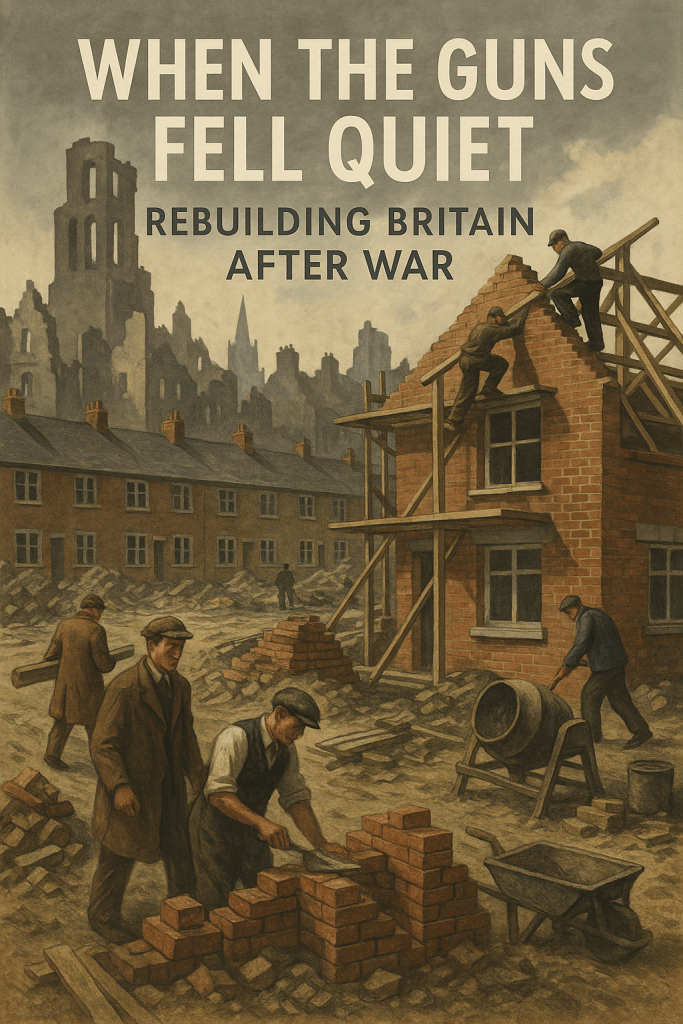
When the wars ended, Britain did not burst into uncomplicated joy. Instead, a hush settled over the country, a delicate, unfamiliar quiet after years of sirens, engines and marching feet. The silence felt almost unreal. It carried relief, certainly, but also exhaustion, disbelief and a dawning awareness that peace would demand its own kind of courage. War had asked everything of the nation, and now, quietly, so did rebuilding.
In the first days after victory, people stepped into streets that felt both known and strange. Familiar routes were broken by gaps where houses had once leaned shoulder to shoulder. Buildings stood open to the sky, their insides exposed like memories no longer private. Rubble lingered along pavements, and temporary repairs became long-term companions. Britain had been battered but not broken, and there was pride in that endurance, even as weariness seeped deep into bones and hearts. The war had taken years. Peace would take time.
Daily life did not instantly soften. Rationing continued, and in some ways grew stricter. Food, clothing and fuel remained tightly controlled, well into the late nineteen forties and beyond. Bread, which had not been rationed during the war, was rationed afterward. Clothes were patched and repurposed, shoes mended again and again. People queued patiently, as they had learned to do, finding satisfaction in small victories. A fresh loaf, a first banana, a new coat made from saved coupons felt like luxuries beyond measure. Hope existed, but it was modest and practical, rooted in the belief that tomorrow might be a little better than today.
Homes needed rebuilding in every sense. Physically, Britain faced an enormous housing shortage. Bomb damage and years of neglect had left hundreds of thousands without proper shelter. Prefabricated houses appeared across the country, modest and temporary by design, yet welcomed with gratitude. They represented privacy, warmth and a future. Emotionally, homes had to adjust as families reunited. Husbands returned changed by war, wives shaped by years of independence and responsibility, children who had grown used to absence or evacuation. These reunions were joyful but delicate. Peace required renegotiation, patience and a gentleness learned slowly.
Work resumed with urgency and pride. Britain needed repairing from the ground up. Railways were restored, factories retooled, streets cleared and services rebuilt. Men and women returned to jobs or found new ones in a nation determined to stand again. The labour was hard, often underpaid and exhausting, but it carried meaning. People believed this work mattered, that their effort was laying foundations for a different future. Even so, fatigue lingered. The war had taken much, and peace asked for more.
Children experienced the postwar years with sharp clarity. Some returned from evacuation to homes that felt unfamiliar. Others met parents they barely remembered. Schools reopened unevenly, sometimes sharing space with ruins and repairs. Yet childhood asserted itself with remarkable determination. Games returned to streets. Laughter echoed where bombs had fallen. Bombsites became kingdoms of imagination, places where seriousness and joy met. For many children, these years were a blend of loss and wonder, shaping resilience that would last a lifetime.
Celebration had its place. Victory parades filled streets with flags and music. People danced, sang and allowed themselves to release years of restraint. These moments mattered deeply. They reminded the nation how joy felt. Yet when the music faded, grief remained close. Empty chairs were still empty. Names still ached when spoken. Victory did not erase sorrow. It learned to live beside it.
As Britain looked ahead, a powerful idea took hold. Shared sacrifice had forged a shared responsibility. Out of this understanding came profound change. The postwar Labour government set about building a welfare state shaped by the lessons of hardship. The National Health Service was founded in 1948, offering healthcare free at the point of use, a radical promise born from collective endurance. Social housing expanded. Education widened. There was a deep desire to create a fairer society, one that honoured what people had given.
Emotionally, the nation carried a complicated inheritance. Many spoke little of what they had endured. Silence became a form of protection, a way of moving forward without reopening wounds. Yet memory lived on in habits and values. Thrift, preparedness and appreciation for stability became woven into daily life. The war taught a generation how fragile normality could be, and how precious.
Britain after the guns fell quiet was not immediately peaceful in spirit. It was tired and hopeful, grieving and determined all at once. It moved forward without grand gestures, relying instead on steady persistence. Brick by brick, meal by meal, conversation by conversation, the country rebuilt itself.
Looking back, those early postwar years glow with a particular tenderness. They remind us that peace is not simply the absence of conflict. It is the presence of care. It lives in patience, shared effort and the quiet decision to keep going, even when weariness weighs heavy.
Britain after the wars was not whole, but it was healing. And in that slow, human work of rebuilding, it found a quiet strength that would shape generations to come.
Until next time,

Ta ta for now.

Yours, Lainey.