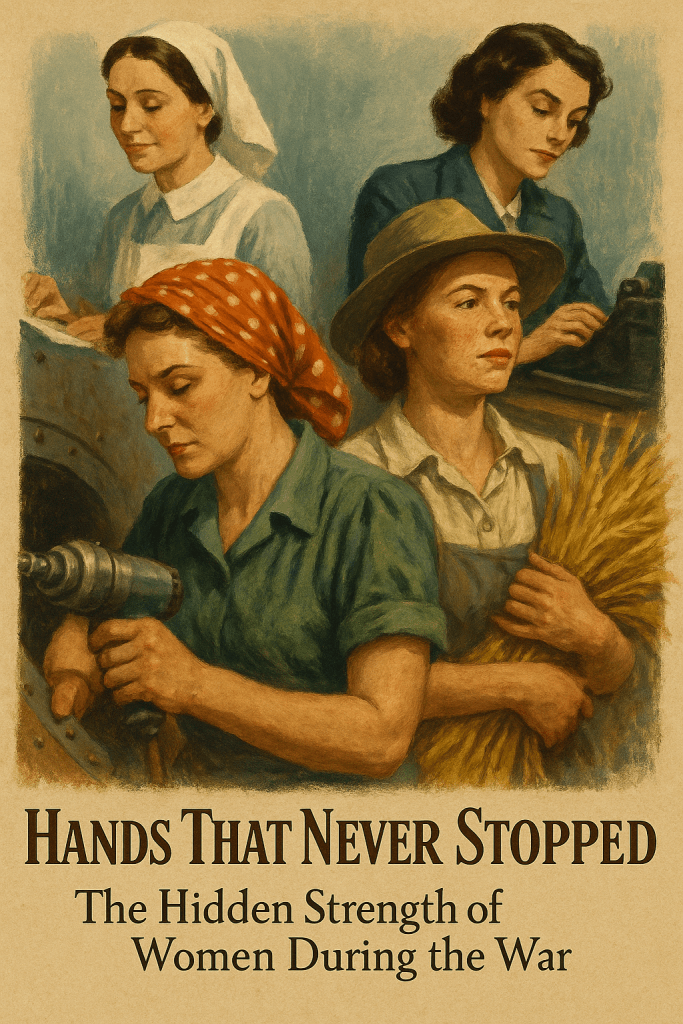
The story of the Second World War in Britain is so often told with the thunder of aircraft engines, the march of boots and the echo of distant gunfire. Yet beneath that noise flowed a quieter, steadier current, one that never faltered and never truly rested. It was carried by women. Their labour did not parade or salute. It hummed and stitched, calculated and soothed. It rose before dawn and lingered long after night fell. And without it, the war could not have been fought, endured or survived.
When war arrived, British women stepped forward not with ceremony but with a deep, practical resolve. Many had been raised to imagine lives shaped narrowly around home and family, yet necessity widened their world overnight. Factories that once rang with male voices filled instead with women learning unfamiliar skills at remarkable speed. They welded steel, riveted wings, assembled shells and tanks, their hair wrapped tight in scarves, their hands becoming strong, scarred and sure. The work was relentless and often dangerous. Long shifts blurred into one another, machines demanded constant vigilance and accidents were never far away. Yet they returned each day, knowing that every part fitted and every hour worked might shorten the war or spare a life they would never meet.
Beyond the factory gates, the land called just as urgently. The Women’s Land Army transformed Britain’s fields into places of fierce determination and quiet pride. Young women, many from cities, learned to milk cows, drive tractors, harvest crops and tend livestock that had sustained generations before them. Farming was punishing work even in peacetime, and wartime shortages made it harder still. Machinery was scarce, weather unforgiving, hours long. Yet they learned the language of soil and season quickly. Their labour fed the nation, and in every loaf of bread, every rationed meal, their effort was present.
At home, women became the unseen engineers of daily survival. Households ran under extraordinary strain. Food was rationed, fuel limited, clothing scarce. Women stretched meals with ingenuity, turned leftovers into comfort and mended garments until fabric could give no more. They kept children calm during air raids, sang songs in shelters and made homes feel steady when the world outside trembled. Emotional labour became constant and exhausting. Fear was swallowed, worry softened, courage worn lightly so that others might rest. Letters were written carefully, filled with reassurance for loved ones far away, even when the truth was heavy with exhaustion and longing.
Hospitals and makeshift wards bore witness to another kind of endurance. Nurses worked at the edges of human capacity, tending soldiers fresh from battle, civilians pulled from rubble and children frightened by separation and loss. Many were scarcely older than those they cared for. They learned to remain calm amid blood, pain and grief, offering tenderness even when their own hearts were breaking. Their compassion was a vital medicine, stitching together bodies and spirits with equal care.
Hidden from public sight, other women fought a quieter but equally decisive war. At places such as Bletchley Park, thousands of women worked in intense secrecy, decoding enemy messages that altered the course of the conflict. Chosen for their sharp minds and discretion, they laboured long hours in cramped huts, piecing together patterns that saved countless lives. Their triumphs were measured not in applause or medals, but in silence kept for decades, even from family.
Across all these roles ran a shared invisibility. Women’s work was often described as temporary, as duty rather than skill, as help rather than leadership. When peace returned, many were expected to step aside and resume lives that no longer fit the people they had become. Yet the war had changed them irrevocably. They had carried responsibility not as an experiment, but as necessity. They had proven resilience, intelligence and strength far beyond what society had once allowed them.
And still, amid the strain, they lived fully. They laughed when laughter was possible, danced at canteens, shared jokes over weak tea and sang while they worked. Friendships bloomed in exhaustion, romances sparked in brief stolen moments. Even in hardship, women instinctively made space for joy, understanding that small happiness was not frivolous but essential. It was a quiet form of resistance.
The strength of women during wartime Britain was not hidden because it lacked importance. It was hidden because it asked for no recognition. It lived in persistence, in care, in the steady continuation of life under pressure. It shaped the outcome of the war and the society that followed, even when history was slow to acknowledge it.
Today, if we listen carefully to the echoes of those years, we can still hear it beneath the roar of conflict. The steady rhythm of women working, loving, enduring. It is the sound of a nation held together not only by strategy and force, but by quiet courage and countless acts of devotion that never stopped.
Until next time,

Ta ta for now.

Yours Lainey.