Summer kitchens were born of necessity, but they grew into something quietly poetic. Long before the gentle hum of refrigeration or the blessing of climate-controlled rooms, families learned to let their homes move with the seasons. When summer arrived, heavy with heat and long, shimmering days, the heart of the household often drifted outward. The hearth loosened its hold on the main house and wandered into spaces shaped by breeze, shade and thoughtful ingenuity.
In medieval England and across much of Europe, summer cooking was as much about endurance as comfort. The great indoor hearths that warmed bodies and spirits through winter became stifling once the air turned thick and still. Smoke lingered beneath low beams, fires devoured oxygen and food spoiled quickly in the heat. To keep both tempers and provisions from turning sour, families carried their work outdoors. Lean-tos tucked against stone walls, detached bakehouses and open yards transformed into seasonal kitchens where flames could leap freely and smoke could rise without choking the home.
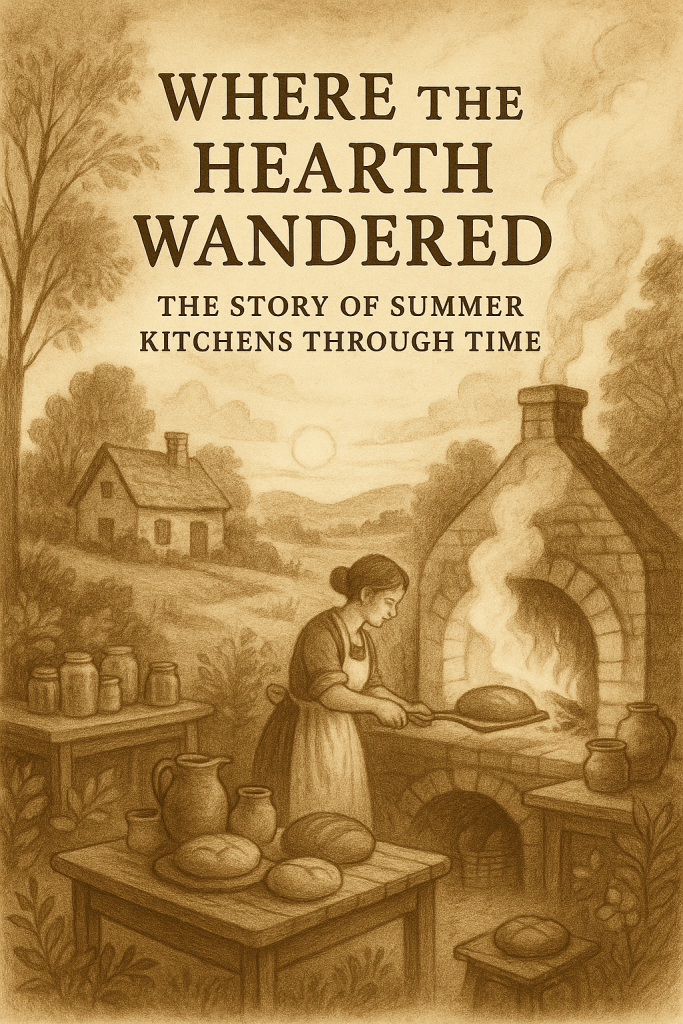
Outdoor ovens were among the most treasured features of these spaces. Built of clay, brick or stone, they were fired at dawn, when the air still carried a trace of night’s coolness. Bread, pies and roasts were baked in careful sequence, the oven’s heat used wisely before the sun climbed too high. By midmorning, the day’s cooking was often complete, leaving the hottest hours free for rest or lighter tasks. The scent of fresh bread drifting through a village at sunrise was more than comfort. It was reassurance, nourishment shared on the breeze.
Keeping food cool in summer required foresight and a kind of seasonal cleverness that now feels almost miraculous. Icehouses, used from Roman times well into the nineteenth century, were feats of quiet engineering. In winter, great blocks of ice were cut from rivers and ponds, packed in straw and lowered into deep pits lined with brick or stone. These chambers were shaded by trees or sunk into hillsides, their thick walls guarding cold like a secret. Months later, in the height of July, families stepped inside and felt winter brush their skin once more. Milk, butter, meat and fruit rested there, their lives gently extended by stored frost.
Preserving fruit became one of summer’s sweetest labors. Cherries, plums, apples and berries arrived in joyful abundance and had to be transformed quickly before heat claimed them. Summer kitchens filled with the sound of bubbling pans and the perfume of sugar and fruit. Jams simmered slowly, fruits dried on racks beneath the sun, slices turned by hand with patient care. Some fruit was preserved in honey or steeped in brandy, sealed away like liquid sunshine. These tasks often gathered women and children together, fingers stained crimson and violet, laughter rising between moments of concentration. The jars that lined the shelves afterward were not luxuries but promises, bright fragments of summer saved for darker days.
Dairy work belonged firmly to the summer kitchen as well. Milk soured swiftly in warm weather, demanding immediate attention. Butter was churned in shaded corners where stone floors stayed cool, cream thickening beneath steady hands. Cheese was pressed, salted and turned daily, its slow transformation watched with practiced eyes. In England’s countryside, dairymaids worked early and late, shaping their hours around the sun. Butter was molded into neat pats and stamped with wooden seals, while cheese wheels rested on shelves, breathing quietly as they aged. This work tied families closely to their animals and fields, a daily exchange between care and sustenance.
Across the wider world, summer kitchens took on forms shaped by climate and culture. In Mediterranean regions, thick stone walls held the cool while cooking spilled into courtyards and shaded terraces. In colonial America, detached summer kitchens became common, protecting wooden homes from heat and fire alike. In many parts of Asia, open-air kitchens allowed smoke to rise freely and meals to become communal gatherings. Wherever summer arrived with insistence, people answered with architecture and ritual that respected the season’s power.
Staying cool was not only about buildings. It was a rhythm of life. Families rose early, rested during the fiercest heat and returned to work as evening softened the air. Floors were sprinkled with water, linen curtains hung damp in windows and beds shifted closer to open doors. Drinks like barley water, small beer, whey and fruit cordials refreshed bodies accustomed to labor. Meals lightened, leaning toward fresh vegetables, dairy and preserved meats instead of heavy stews.
By the Georgian and Victorian eras, summer kitchens became more deliberately designed. Wealthy households built sculleries, dairies and larders facing north or partially underground, places where coolness lingered even on the warmest days. Middle and working-class families adapted what they had, opening windows wide, cooking early and leaning on long-established routines. Even in crowded cities, the pattern remained. Heat shaped the day, and cooking followed its lead.
With the arrival of refrigeration in the twentieth century, much of this seasonal migration drifted back indoors. Yet the spirit of the summer kitchen never truly vanished. Wartime Britain revived outdoor and improvised cooking out of necessity, and allotment harvests once again filled homes with preserving done beside open doors. Even now, the instinct remains close at hand. We grill outdoors, throw windows open, eat lighter foods and gather in spaces that blur the boundary between house and garden.
Summer kitchens tell a story of adaptation and intimacy with the seasons. They remind us that our ancestors lived in conversation with heat and cold, abundance and restraint. Their kitchens were not fixed rooms but living ideas, shifting with the year, shaped by sun, wind and patience. In these spaces, families worked side by side, preserving not only food but memory, turning necessity into ritual.
Perhaps that is why the idea of the summer kitchen still carries such romance. It speaks of doors left open, bread baked at dawn, jars glowing like jewels on wooden shelves, cool stone beneath bare feet. It remembers a time when keeping cool meant slowing down, stepping outside and letting the season guide the heart of the home.
Until next time,

Ta ta for now.

Yours, Lainey.
🥕🥔
One thought on ““Where the Hearth Wandered: The Story of Summer Kitchens Through Time.””
Lovely piece. 🏡 Summer kitchens feel like architecture admitting defeat gracefully — not conquering the season, just negotiating with it. Also mildly humbling that our ancestors invented seasonal living, and we reinvented it as “opening the patio doors.”


Lovely piece. 🏡 Summer kitchens feel like architecture admitting defeat gracefully — not conquering the season, just negotiating with it. Also mildly humbling that our ancestors invented seasonal living, and we reinvented it as “opening the patio doors.”
LikeLike