In the heart of Buffalo, New York, amidst the echoes of a bustling cityscape, unfolds the captivating saga of Arthur Charles Willats, a tale not only of resilience but of a soul reborn amidst the ebb and flow of life’s complexities. Part three of Arthur’s life story invites us into the transformative phase that followed his journey through the shadows of widowhood.
Navigating the vibrant streets of Buffalo, Arthur’s days were colored by the ink of his journalistic endeavors as a respected writer for the esteemed Buffalo Times. But beyond the confines of his typewriter, another chapter was being penned, one of unexpected encounters and a rekindled flame. It was here, against the backdrop of this spirited city, that Arthur’s path intertwined with that of a new love, leading to a union that transcended time and trials.
As Arthur’s professional endeavors blossomed, so did the tender petals of companionship with his newfound partner, culminating in a beautiful marriage that weathered the seasons of life together. Amidst his career as a wordsmith for the city’s prominent newspaper and as a lecturer, Arthur found solace and joy in the embrace of his loving wife, creating a narrative woven with love, ambition, and the unwavering spirit of Buffalo.
Join us as we delve into this chapter of Arthur’s life, a narrative brimming with resilience, the power of love’s revival, and the harmonious blend of professional prowess and personal fulfillment against the vibrant backdrop of Buffalo, Erie, New York.
So without further ado, I give you,
The Life Of Arthur Charles Willats
1863-1933,
Part 3,
Until Death Do Us Part.
Welcome back to 1905, Buffalo, Erie, New York, United States of America, where our Arthur Charles was residing at the time.
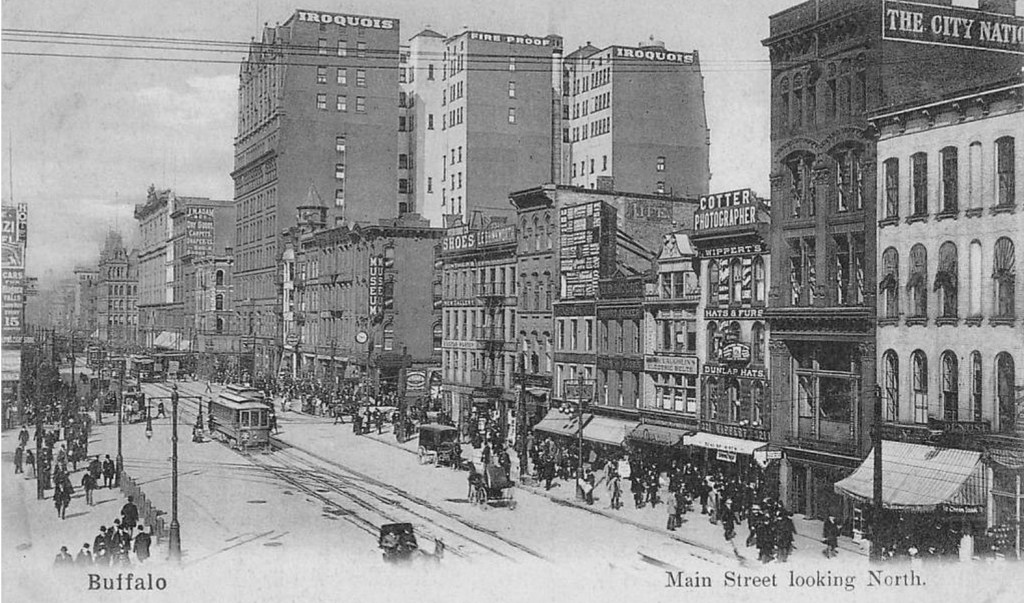
In 1905, life in Buffalo, Erie, New York, encapsulated a dynamic period in American history. The city bustled with energy and industry, portraying a vibrant atmosphere characterized by rapid urbanization and industrial growth. Buffalo stood as a hub of commerce and innovation, its streets alive with the sounds of horse-drawn carriages, bustling markets, and the clatter of factories.
For the affluent, life was a display of prosperity and sophistication. The elite inhabited stately mansions in neighborhoods like Delaware Avenue, embracing a lifestyle of grandeur. Lavish soirées and exclusive gatherings defined their social scene, adorned with opulent fashion, fine dining, and indulgent pursuits.
Conversely, for the working class and the impoverished, life was starkly different. Many resided in cramped tenements, situated in the vicinity of factories. These neighborhoods were crowded, with families enduring modest living conditions and struggling to make ends meet. The labor force toiled in factories and mills, enduring long hours, meager wages, and often hazardous working environments. Access to education and healthcare was limited, perpetuating the cycle of poverty and creating a palpable divide between social classes.
The city itself carried an amalgamation of scents. Industrial zones emitted a blend of smoke and fumes from manufacturing processes, while residential areas exuded the aromas of cooking, horse-drawn transport, and the general essence of urban life.
Fashion in Buffalo, Erie, New York, was emblematic of the prevailing trends of the Edwardian era. For the affluent upper class, particularly women, fashion was opulent and elaborate. Women’s attire featured floor-length dresses with intricate details like lace, ruffles, and embellishments. Corsets were commonly worn to achieve the fashionable hourglass figure, while elaborate hats adorned with feathers, ribbons, and flowers completed the ensemble. Men of the upper class favored tailored suits, often in dark colors, paired with top hats, waistcoats, and polished shoes.
However, for the working class and the poor, fashion was more functional and practical. Women typically wore simpler, more affordable dresses made from durable fabrics like cotton or wool. These dresses were shorter in length for easier movement and often lacked the embellishments and frills of high-society fashion. Men in the working class commonly wore trousers paired with shirts and vests, reflecting utilitarianism rather than extravagance. Hats were also a common accessory for men, though less ornate than those worn by the upper class.
Regardless of social standing, maintaining a respectable appearance was important in society. While the wealthy showcased their affluence through luxurious clothing, the working class and the poor focused on attire that was durable, functional, and affordable. The differences in fashion between the classes highlighted the socio-economic disparities prevalent in that era.
Historically, the early 20th century marked a transformative period in the United States. Buffalo was no exception, having hosted the Pan-American Exposition in 1901, a celebration of progress and innovation that drew global attention. Yet, it was also a time of social tension and disparities. Labor strikes and social movements advocated for better working conditions and fair wages, reflecting the struggle against inequality prevalent in society.
Etiquette played a significant role in this era. Social norms dictated propriety, with strict codes of conduct governing interactions among different societal strata. Manners, attire, and social engagements adhered to established conventions, emphasizing the importance of maintaining decorum and social hierarchy. In essence, living in Buffalo in 1905 was a dichotomy—a city thriving with progress and promise, yet marred by stark contrasts between the privileged and the underprivileged, embodying both the allure and challenges of the Gilded Age.
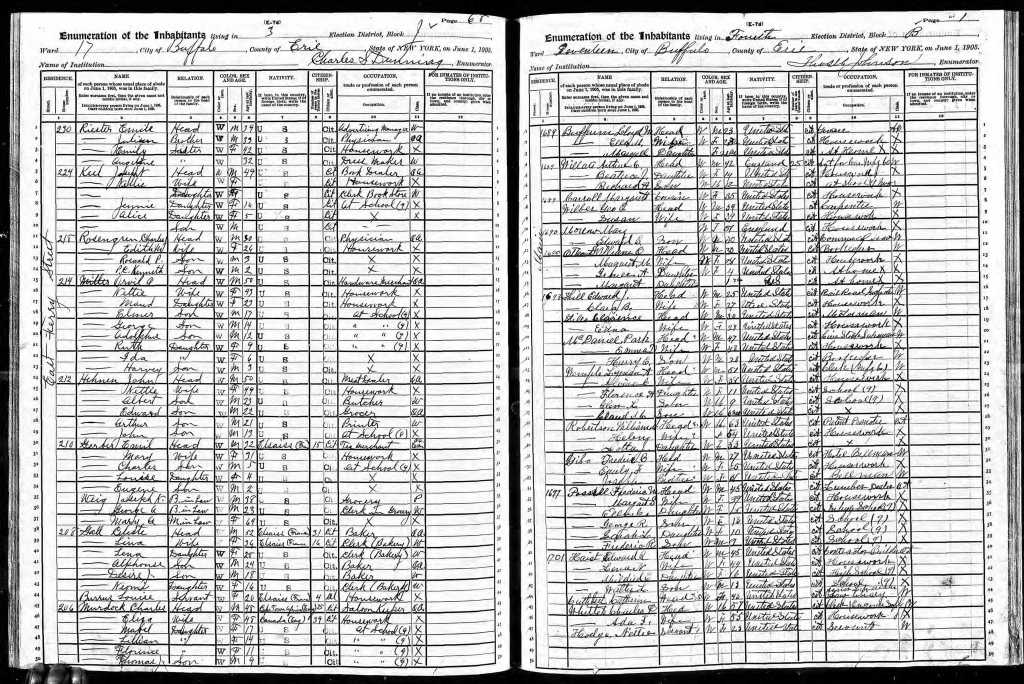
On the 1st of June 1905, 47 year old, Arthur and his children Richard aged 12 and Beatrice aged 14, were residing at, 1689 Main Street, Buffalo Ward 17, Erie, New York, USA, when the 1905 New York State Census was taken. It states that Arthur was a widow, that he was from England, that he has been an American citizen for 25 years and was working class. Arthur’s occupation was given as a Lecturer. ?
| Name | Arthur C Willats |
|---|---|
| Birth Year | abt 1863 |
| Birth Place | England |
| Age | 42 |
| Gender | Male |
| Race | White |
| Residence Year | 1905 |
| Residence | Buffalo Ward 17, Erie, New York, USA |
| Relationship to Head | Head |
| Election District | 04 |
If Arthur and his children Beatrice and Richard, haven't seen enough sadness to last them a lifetime, after the sudden death of Josephine, an advertisement was printed in The Buffalo Evening News on Monday, 11th December 1905, about Arthur’s son Richard aka Dick, dog going missing.
It reads,

LOST - Brown and white pointer, male dog; answers to name of Royal. Reward, address Dick Willats, 1689 Main st.

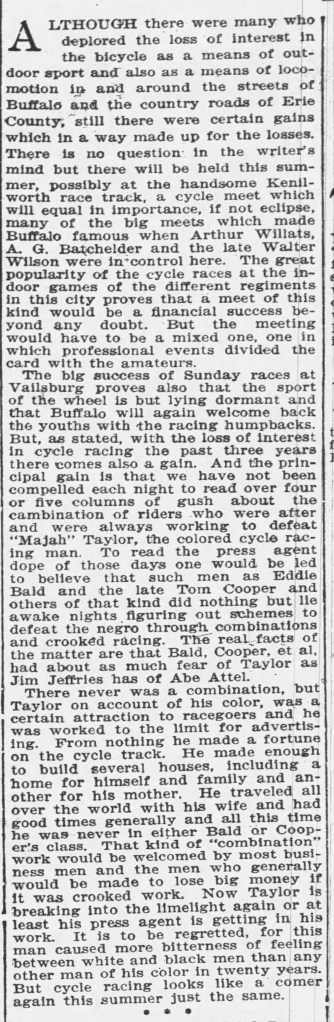
Arthur was mentioned in an article printed in The Buffalo Enquirer on Friday, 5th April 1907, called “The Sporting Man About Town.” Even though Arthur is only mentioned once, I found the article to be very interesting as I believe in today's society journalists would not get away with writing articles like this one.
The article reads as follows,

ALTHOUGH there were many who deplored the loss of interest in the bicycle as a means of outdoor sport and also as a means of locomotion in and around the streets of Buffalo and the country roads of Erie County, still there were certain gains which in a way made up for the losses.
There is no question in the writer's mind but there will be held this summer, possibly at the handsome Kenilworth race track, a cycle meet which will equal in importance, if not eclipse, many of the big meets which made Buffalo famous when Arthur Willats,
A. G. Batchelder and the late Walter Wilson were in control here.
The great popularity of the cycle races at the indoor games of the different regiments in this city proves that a meet of this kind would be a financial success beyond any doubt. But the meeting would have to be a mixed one, one in which professional events divided the card with the amateurs.
The big success of Sunday races at Vailsburg proves also that the sport of the wheel is but lying dormant and that Buffalo will again welcome back the youth with the racing humpbacks. But, as stated, with the loss of interest in cycle racing the past three years
there comes also gain. And the principal gain is that we have not been compelled each night to read over four or five columns of gush about the combination of riders who were after and were always working to defeat "Majah" Taylor, the coloured cycle racing man.
To read the press agent dope of those days one would be led to believe that such men as Eddie Bald and the late Tom Cooper and others of that kind did nothing but lie awake nights figuring out schemes to defeat the negro through combinations and crooked racing.
The real facts of the matter are that Bald, Cooper, et al, had about as much fear of Taylor as Jim Jeffries has of Abe Attel.
There never was a combination, but Taylor on account of his color, was a certain attraction to racegoers and he was worked to the limit for advertising.
From nothing he made a fortune on the cycle track. He made enough to build several houses, including a home for himself and family and another for his mother.
He traveled all over the world with his wife and had good times generally and all this time he was never Bald or Cooper’s class.
That kind of “combination” work would be welcomed by most business men and the men who generally would be made to lose big money if it was crooked work.
Now Taylor is breaking into the limelight again or at least his press agent is getting in his work. It is to be regretted, for this man caused more bitterness of feeling between white and black men than any other man of his color in twenty years.
But cycle racing looks like a comer again this summer just the same.
Arthur was featured in an article called “ARTHUR C. WILLATS. Well Known Bufalonian Who Will Manage Crystal Beach This Season.”  which was printed on page 11 of The Buffalo News on Tuesday, 28th May 1907.
It reads,

ARTHUR C. WILLATS.
Well Known Bufalonian Who Will Manage Crystal Beach This Season
CRYSTAL BEACH OPENS DECORATION DAY.
Staunch Steamer. State, of New York Will Carry Crowds to Improved Resort.

Crystal Beach opens on Decoration Day.
Te Saunch steamer State of New York will leave from the foot of Main street at 7 A.M., 10 А.М., 5 Р.М., 7,30 Р.M. and 10 P.M. The old pler at Crystal Beach has been done away with and in its place is a great concrete pier 150 feet longer than the old one. Passengers will appreciate the doing away of the old pen.
Arthur C. Willats of Buffalo Athletic Field fame has been given the management of the beach and no one in this city knows better how to handle the crowds that will no doubt visit this popular resort. General Manager Rebstock will give his attention to the boats.
A fine figure eight has, been erected at a cost of $15,000 with all the very latest improvements. The Roller Skating Rink has a new maple floor and will be under the management of E. M. Vandyke & Sons, who are going to Install their 85000 Band Orchestra. This instrument can be heard all over the grove.
The theater has been overhauled and Mr. Willats promises some pretty little vaudeville performances besides the latest up-to-date moving picture machine. The Athletic Field will be one of the features this year. It will open with a same of basketball to be played between the champion Germans and the Ariels on Decoration Day. An eight-foot fence is to be put around the feild There will be many new attractions this year. A thousand new bathing suits have been purchased and much attention will be giern to bathers.
Arthur was mentioned in an article called “COTTAGES BURNED” which was printed on page 8 of The Buffalo Commercial, on Wednesday, 14th August 1907.
It reads,

COTTAGES BURNED.
Seyen at Prospect Point, Crystal Beach, Were Destroyed Yesterday.
WORK OF VOLUNTEERS
Bucket Brigade Made Final Stand at Sautter Cottage, Preventing Progress of Flames.

Fire wiped out seven cottages at Pine Grove or Prospect Point at Crystal Beach yesterday afternoon. Each cottage, including its contents, was worth from $800 to $1,500. Some were insured. For a time it appeared as if the high wind would cause the flames to sweep the beach.
A bucket brigade quickly formed, water being passed along the line from the lake to the burning cottages in all sorts of receptacles.
The cottage of Reinhold Sautter was finally decided on as the one with which to make a determined stand to prevent the flames from spreading farther toward the boat landing, about a quarter of a mile away, to the right as one faced the lake.
Water was thrown upon that cottage until it was drenched and could not catch fire.
In that way the progress of the fire was ended. Nobody was badly hurt.
Al. Speck, while on the roof of a cottage throwing water supplied by the line of men and boys extending from the lake to the fire, was overcome by the heat and fumes.
He soon recovered when carried to the beach. Eddie Kelly, the newsboy prize-fighter, was among the fire-fighters. He was instrumental in getting a couple of little girls out of one of the cottages.
The cottages destroyed were the following:
That owned and occupied by Clark H. Timerman, where the fire started from a stove overheated about 5.45 during preparations for supper. Mr. Timerman is a Buffalo attorney, chairman of the republican general committee. His home is at 37 Vernon place.
That owned and occupied by Alvin W. Day, head of Alvin W. Day & Co., dealers in mantels on Main Street. Mr. Day lives at 762 Elmwood Avenue.
That owned and occupied by Charles R. Youngmun, a building contractor, living at 650 West Avenue.
That occupied by E. J. Richard, who rented it furnished from the estate of the late Eugene Klein, head of E. Klein & Со.
That occupied by Irvine J. Kittinger and S. Kurtz, who rented it furnished from the Eugene Klein estate.
That occupied by James Rowley, who rented it furnished from the owner, W. T. Palmer.
That occupied by Frank Williams, who rented it furnished from W. T. Fraser, a Cold Spring printer.
The dying down of the wind and the sousing of the Sautter cottage combined to limit the flames to the seven cottages.
A wagonload of hand fire-extinguishers, collected from the hotels and restaurants at the beach, were used with good effect. The boat from Buffalo, reaching the beach shortly after 6 o'clock, gave its passengere, including Mr. Timerman and others whose cottages were afire or endangered, a long and full view of the fire when it was at its worst. The beach was strewn with household goods taken from the cottages along the row. Vandals were soon at work on the unprotected property, plundering and damaging.
The crowd finally turned its attention to them and chased them off. Two were caught and pummeled by irate owners.
Three young women from one of the burned cottages were in swimming when the fire broke out.
Their clothing was lost in the fire, leaving them without nothing at the beach but the bathing suite they had on.
Three gallants rushed to their rescue with borrowed bathrobes in which the young women made their way to the cottages of friends or sympathetic neighbours, who provided clothing for them, fitting more or less well.
Two women left penniless by the fire borrowed a quarter to telephone to Buffalo for aid from their relatives. Some of those who were burned out returned to Buffalo, others found accommodations at the beach.
"When the fire started," said Mrs. Reinhold Sautter, at whose cottage the fire was stopped, “I thought it was all up with our place, for today is the 13th of the month and this is our 13th season here."
Among the volunteer firefightere were William Graham, son of the Main street clothier; A. C. Willats, superintendent of the beach; Christopher Barts, manager of the merry-go round; A. T. Stokeley, Fred Van Dyke, Charley Mittendoff and employes of Mr. Cousins, proprietor of restaurants at the beach.
For about a week, fire has been raging in a huckleberry marsh about 4 1-2 miles northwest of the beach.
The clouds of smoke from it were visible yesterday afternoon from Buffalo and gave rise to all sorts of rumors, some coupled with the reports of the fire at Crystal Beach.

43-year-old, widower and salesman, Arthur Charles married 30-year-old, spinster and actress, Ruth Gadsby, on the 17th of June 1908, at Niagara Falls, Welland, Ontario, Canada. I have tried to order their marriage certificate but unfortunately, they wanted £87 for a copy which I can not justify paying, sorry.
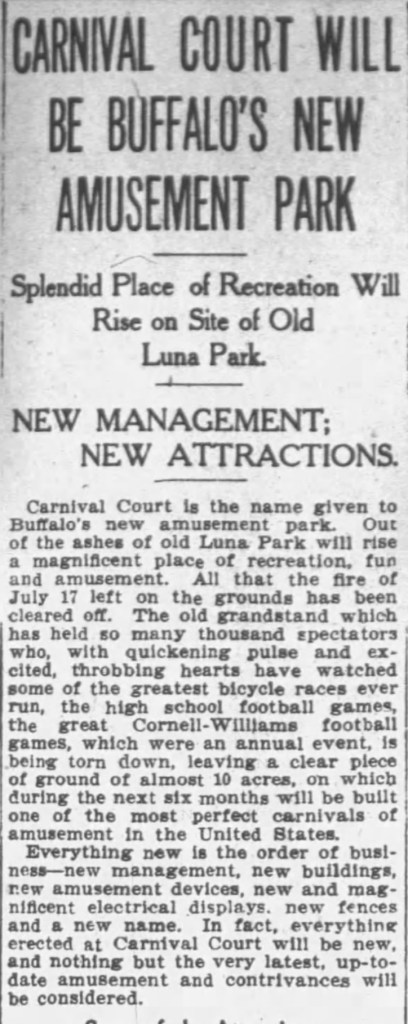
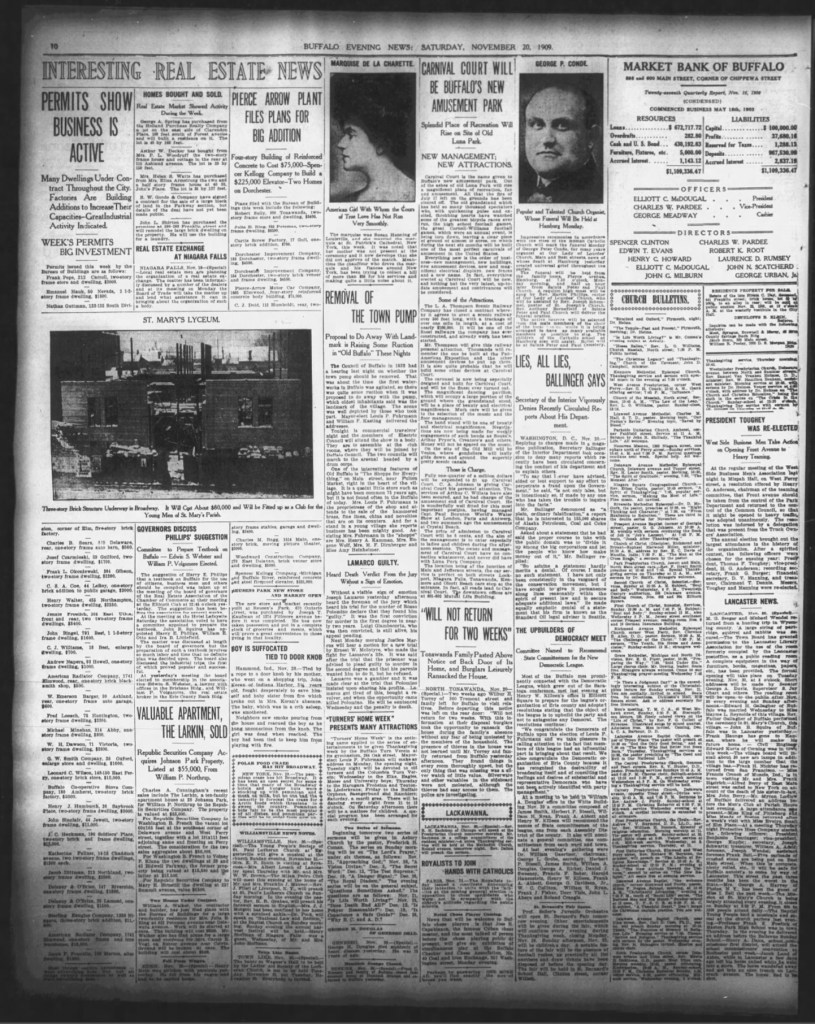
Arthur was mentioned in an article called, “CARNIVAL COURT WILL BE BUFFALO'S NEW AMUSEMENT PARK.” which was printed in The Buffalo News on Saturday, 20th November 1909.
It reads,

CARNIVAL COURT WILL BE BUFFALO'S NEW AMUSEMENT PARK
Splendid Place of Recreation Will Rise on Site of Old Luna Park.
NEW MANAGEMENT; NEW ATTRACTIONS.

Carnival Court is the name given to Buffalo's new amusement park.
Out of the ashes of old Luna Park will rise a magnificent place of recreation, fun and amusement. All that the fire of July 17 left on the grounds has been cleared off. The old grandstand which has held so many thousand spectators who, with quickening pulse and excited, throbbing hearts have watched some of the greatest bicycle races ever run, the high school football games, the great Cornell-Williams football games, which were an annual event, 18 being torn down, leaving a clear piece of ground of almost 10 acres, on which during the next six months will be built one of the most perfect carnivals of amusement in the United States.
Everything new is the order of business —new management, new buildings, new amusement devices, new and magnificent electrical displays. new fences and a new name. In fact, everything erected at Carnival Court will be new, and nothing but the very latest, up-to-date amusement and contrivances will be considered.

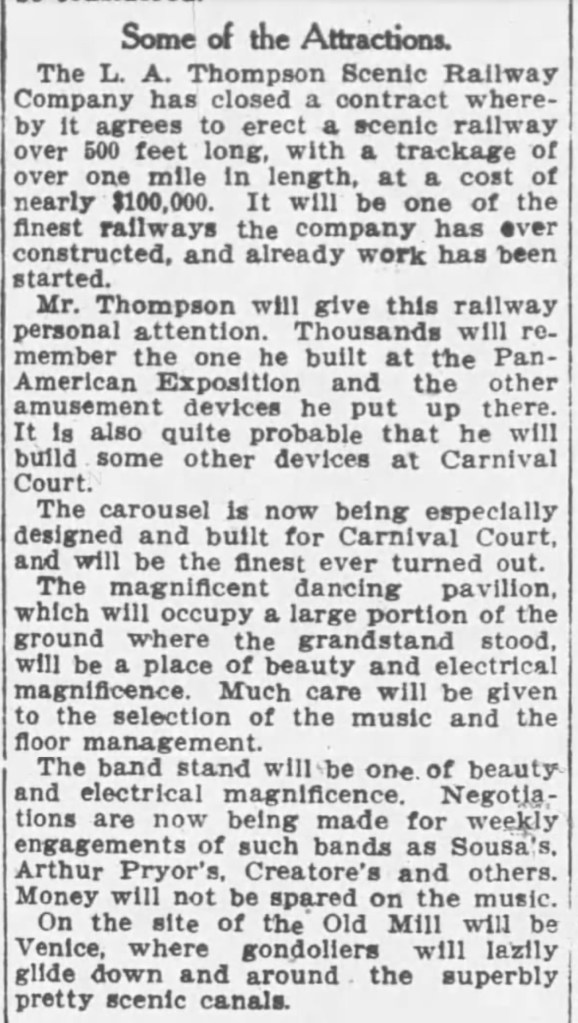
Some of the Attractions.

The L. A. Thompson Scenic Railway Company has closed a contract whereby it agrees to erect a scenic railway over 500 feet long, with a trackage of over one mile in length, at a cost of nearly $100,000. It will be one of the finest railways the company has ever constructed, and already work has been started.
Mr. Thompson will give this railway personal attention. Thousands will remember the one he built at the Pan-American Exposition and the other amusement devices he put up there. It is also quite probable that he will build some other devices at Carnival Court.
The carousel is now being especially designed and built for Carnival Court and will be the finest ever turned out.
The magnificent dancing pavilion, which will occupy a large portion of the ground where the grandstand stood, will be a place of beauty and electrical magnificence. Much care will be given to the selection of the music and the floor management.
The bandstand will be one of beauty and electrical magnificence.
Negotiations are now being made for weekly engagements of such bands as Sousa's.
Arthur Pryor's, Creatore's and others. Money will not be spared on the music.
On the site of the Old Mill will be Venice, where gondoliers will lazily glide down and around the superbly pretty scenic canals.

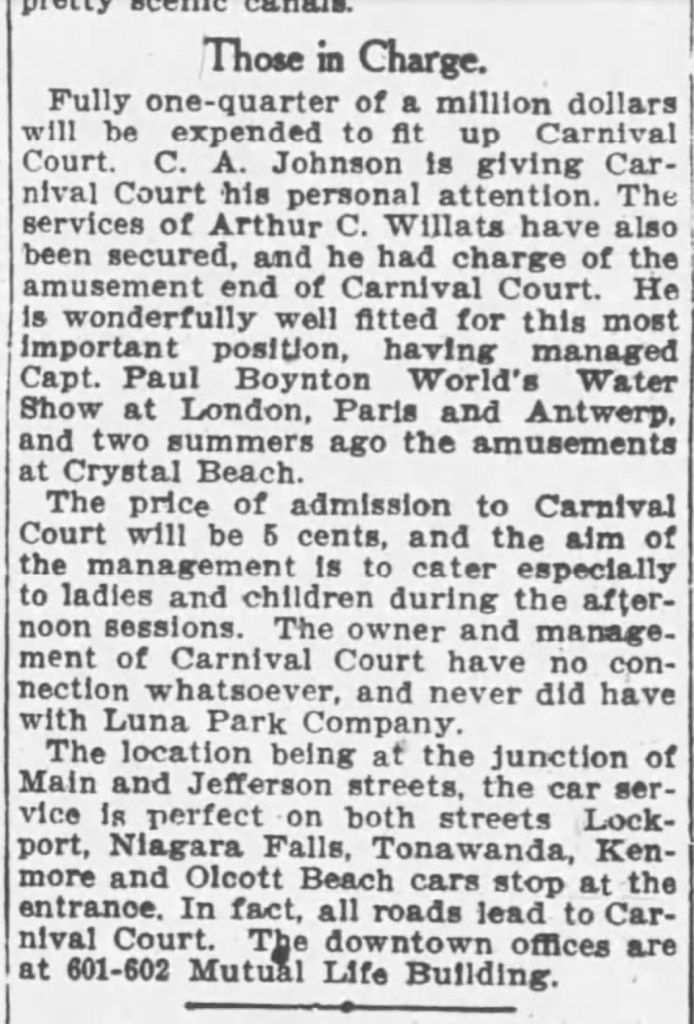
Those in Charge.

Fully one-quarter of a million dollars will be expended to fit up Carnival Court. C. A. Johnson is giving Carnival Court his personal attention. The services of Arthur C. Willats have also been secured, and he had charge of the amusement end of Carnival Court. He is wonderfully well fitted for this most important position, having managed Capt, Paul Boynton World’s Water Show at London, Paris and Antwerp, and two summers ago the amusements at Crystal Beach.
The price of admission to Carnival Court will be 5 cents, and the aim of the management is to cater especially to ladies and children during the afternoon sessions. The owner and management of Carnival Court have no connection whatsoever and never did have with Luna Park Company.
The location being at the junction of Main and Jefferson streets, the car service is perfect on both streets Lock-port, Niagara Falls, Tonawanda, Kenmore and Olcott Beach cars stop at the entrance. In fact, all roads lead to Carnival Court. The downtown offices are at 601-602 Mutual Life Bullding.
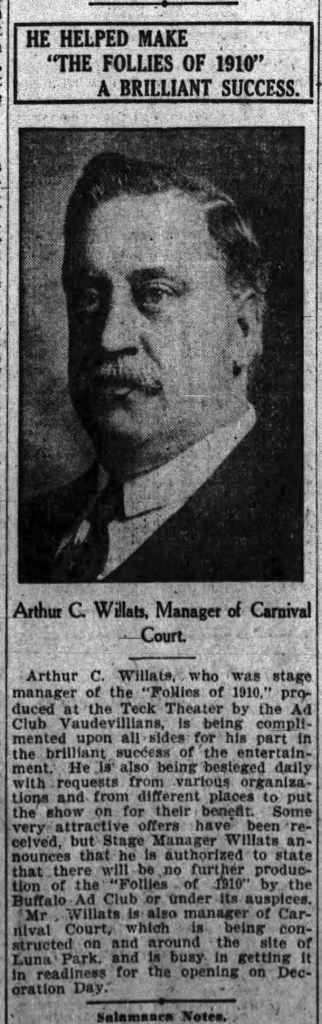
Arthur was featured in an article calked “HE HELPED MAKE "THE FOLLIES OF 1910” A BRILLIANT SUCCESS.” on page 33, of The Buffalo Evening News, on Friday, 1st April 1910.
It reads,

HE HELPED MAKE "THE FOLLIES OF 1910” A BRILLIANT SUCCESS.
Arthur C. Willats, Manager of Carnival Court.

Arthur C. Willats, who was stage manager of the "Follies of 1910," produced at the Teck Theater by the Ad Club Vaudevillians, is being complimented upon all sides for his part in success of the entertainment.He is also being besieged daily with requests from various organizations and from different places to put the show on for their benefit. Some very attractive offers have been received, but Stage Manager Willats announces that he is authorized to state that there will be no further production of the “Follies of 1910”  by the Buffalo Ad Club or under its auspices.
Mr. Willats is also manager of Carnival Court, which is being constructed on and around the site of Luna Park, and is busy in getting it in readiness for the opening on Decoration Day.
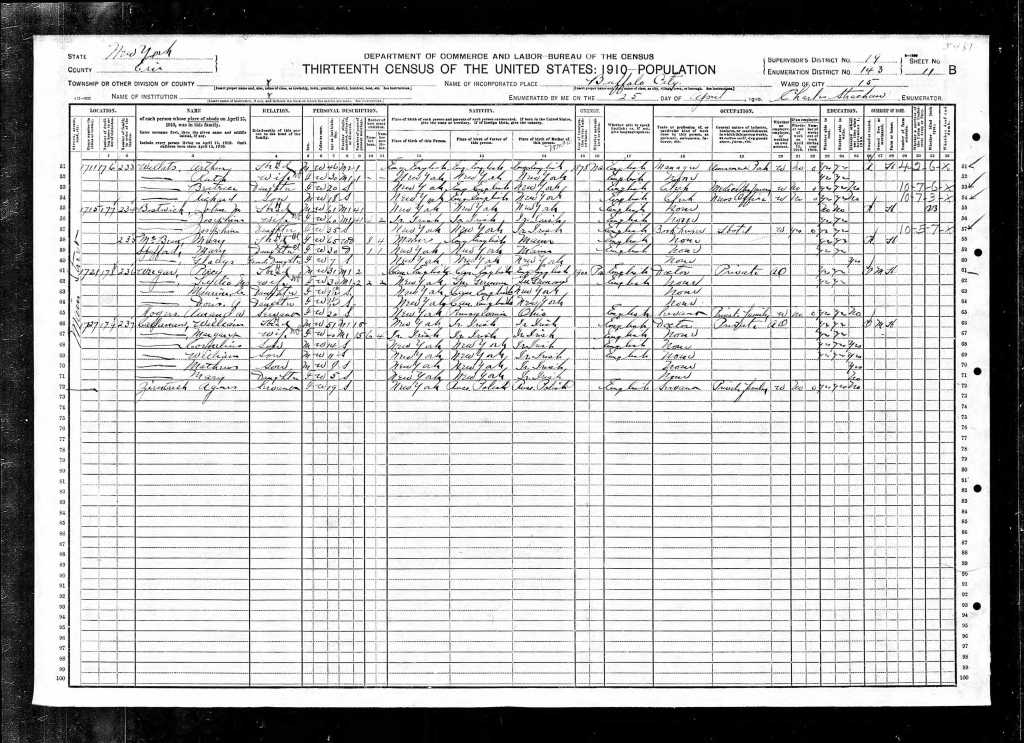
Arthur, his wife Ruth and children, Beatrice and Richard, were residing at, Number 1711 Main Street, Buffalo Ward 15, Buffalo, Erie, New York, United States of America, on Friday the 15th of April 1910 when the 1910 US Census was taken. The cencus gives the following information.
Name- Arthur Willats. Age in 1910 – 46. Birth Date – 1864. Birthplace- England. Home in 1910 – Buffalo Ward 15, Erie, New York, USA. Sheet Number – 11b. Street – Main Street. House Number – 1711. Race – White. Gender – Male. Immigration Year – 1878. Relation to Head of House- Head. Marital Status – Married. Spouse’s Name – Ruth Willats. Father’s Birthplace – England. Mother’s Birthplace- England. Native Tongue – English. Occupation – Manager. Industry – Assistant Pack. Employer, Employee or Other – Wage Earner. Home Owned or Rented- Rent. Farm or House – House. Naturalization Status – Naturalized. Able to read – Yes. Able to Write – Yes. Enumeration District Number – 0143. Years Married – 1. Out of Work – No. Number of Weeks Out of Work – 0. Enumerated Year – 1910.
| Name | Arthur Willats |
|---|---|
| Age in 1910 | 46 |
| Birth Date | 1864[1864] |
| Birthplace | England |
| Home in 1910 | Buffalo Ward 15, Erie, New York, USA |
| Sheet Number | 11b |
| Street | Main Street |
| House Number | 1711 |
| Race | White |
| Gender | Male |
| Immigration Year | 1878 |
| Relation to Head of House | Head |
| Marital Status | Married |
| Spouse’s Name | Ruth Willats |
| Father’s Birthplace | England |
| Mother’s Birthplace | England |
| Native Tongue | English |
| Occupation | Manager |
| Industry | Assistant Pack |
| Employer, Employee or Other | Wage Earner |
| Home Owned or Rented | Rent |
| Farm or House | House |
| Naturalization Status | Naturalized |
| Able to read | Yes |
| Able to Write | Yes |
| Enumeration District Number | 0143 |
| Years Married | 1 |
| Out of Work | N |
| Number of Weeks Out of Work | 0 |
| Enumerated Year | 1910 |
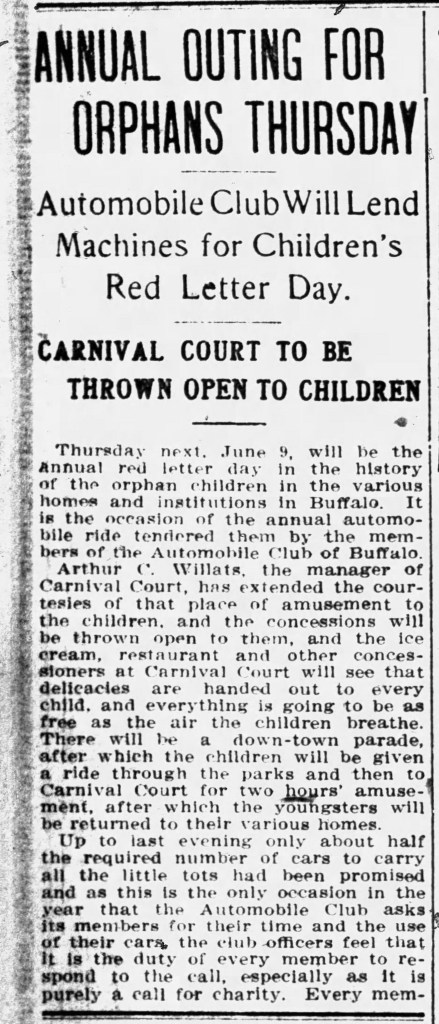
Arthur was mentioned in an article called, “ANNUAL OUTING FOR ORPHANS THURSDAY.” which was printed on page 24, of The Buffalo Courier on Sunday, 5th June 1910.
It reads,
ANNUAL OUTING FOR ORPHANS THURSDAY
Automobile Club Will Lend Machines for Children’s Red Letter Day.
CARNIVAL COURT TO BE THROWN OPEN TO CHILDREN
Thursday next June 9, will be the annual red letter day in the history of the orphan children in the various homes and institutions in Buffalo. It is the occasion of the annual automobile ride tendered them by the members of the Automobile Club of Buffalo.
Arthur C. Willats, the manager of Carnival Court, has extended the courtesies of that place of amusement to the children, and the concessions will be thrown open to them, and the ice cream, restaurant and other concessions at Carnival Court will see that delicacies are handed out to every child, and everything is going to be as free as the air the children breathe.
There will be a down-town parade, after which the children will be given a ride through the parks and then to Carnival Court for two hours’ amusement, after which the youngsters will be returned to their various homes.
Up to last evening, only about half the required number of cars to carry all the little tots had been promised and as this is the only occasion in the year that the Automobile Club asks its members for their time and the use of their cars, the club officers feel that it is the duty of every member to respond to the call, especially as it is purely a call for charity. Every member received an appeal through the mail, together with a postal card, with the request that the card be filled in and returned to the office of the Automobile Club.
Those who own auto-mobiles and have not replied, if they have any regard or pity for the little fatherless and motherless tots, will fill in that postal card right away.
If the card has been mislaid, call up the Automobile Club and tell them that your car is at their disposal. The club has both phones in the office. At least 150 more cars must be forthcoming so as not to disappoint a single child that has for days been looking forward to the event.
Pretty much the same article was printed in The Buffalo Sunday Morning News on Sunday, 5th June 1910 and in The Buffalo Enquirer on Monday, 6th June 1910.
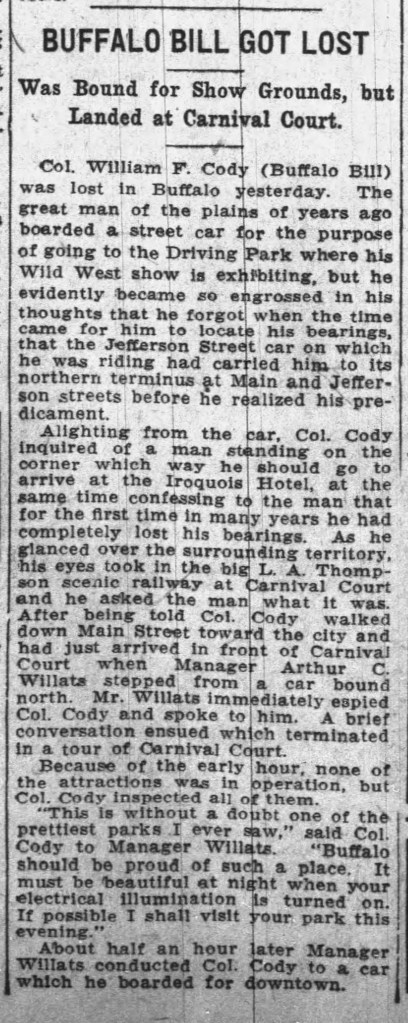
Arthur was mentioned in an article called, “BUFFALO BILL GOT LOST” which was printed on page 4, of The Buffalo Times on Saturday, 11th June 1910.
It reads,
BUFFALO BILL GOT LOST
Was Bound for Show Grounds, but Landed at Carnival Court.
Col. William F. Cody (Buffalo BIll) was lost in Buffalo yesterday. The great man of the plains of years ago boarded a street car for the purpose of going to the Driving Park where his Wild West show is exhibiting, but he evidently became so engrossed in his thoughts that he forgot when the time came for him to locate his bearings, that the Jefferson Street car on which he was riding had carried him to its northern terminus at Main and Jefferson streets before he realized his predicament.
Alighting from the car, Col. Cody inquired of a man standing on the corner which way he should go to arrive at the Iroquois Hotel, at the same time confessing to the man that for the first time in many years he had completely lost his bearings. As he glanced over the surrounding territory his eyes took in the big L. A. Thompson scenic railway at Carnival Court and he asked the man what it was.
After being told Col. Cody walked down Main Street toward the city and had just arrived in front of Carnival Court when Manager Arthur C. Willats stepped from a car bound north. Mr. Willats immediately espied Col. Cody and spoke to him. A brief conversation ensued which terminated in a tour of Carnival Court.
Because of the early hour, none of the attractions was in operation, but Col. Cody inspected all of them.
“This is without a doubt one of the prettiest parks I ever saw,” said Col.
Cody to Manager Willats.
“Buffalo should be proud of such a place. It must be beautiful at night when your electrical illumination is turned on.
If possible I shall visit your park this evening.”
About half an hour later Manager Willats conducted Col. Cody to a car which he boarded for downtown.
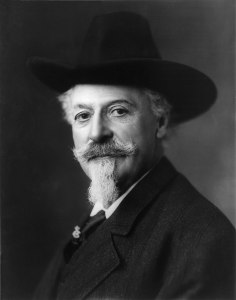
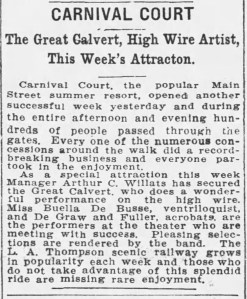
Arthur was mentioned in a article called, “CARNIVAL COURT The Great Calvert, High Wire Artist, This Week's Attracton.” which was printed on page 5 of The Buffalo Times on Tuesday, 19th July 1910.
It reads,

CARNIVAL COURT
The Great Calvert, High Wire Artist, This Week's Attracton.

Carnival Court, the popular Main Street summer resort, opened another successful week yesterday and during the entire afternoon and evening hundreds of people passed through the gates. Every one of the numerous concessions around the walk did a record-breaking business and everyone partook in the enjoyment.
As a special attraction this week Manager Arthur C. Willats has secured the Great Calvert, who does a wonderful performance on the high wire.
Miss Buella De Busse, ventriloquist, and De Graw and Fuller, acrobats, are the performers at the theatre who are meeting with success. Pleasing selections are rendered by the band. The L. A. Thompson scenic railway grows in popularity each week and those who do not take advantage of this splendid ride are missing rare enjoyment.
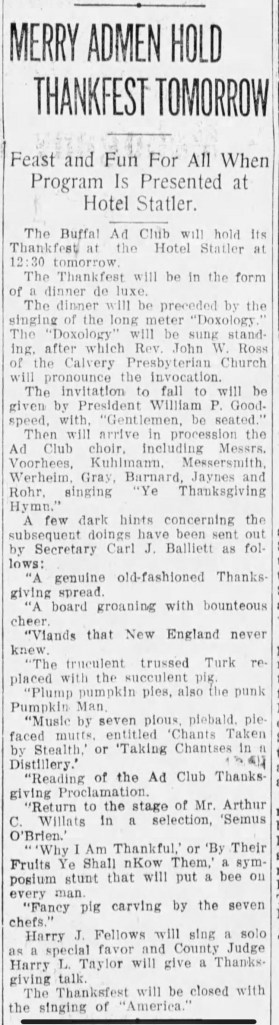
Arthur was mentioned in an article called, “MERRY ADMEN HOLD THANKFEST TOMORROW” which was printed on page 15, of The Buffalo News on Friday, 25th November 1910. It reads,

MERRY ADMEN HOLD THANKFEST TOMORROW
Feast and Fun For All When Program Is Presented at Hotel Statler.

The Buffal Ad Club will hold its Thankfest at the Hotel Statler at 12:30 tomorrow.
The Thankfest will be in the form of a dinner de luxe.
The dinner will be preceded by the singing of the long meter "Doxology."
The "Doxology" will be sung standing, after which Rev. John W. Ross of the Calvery Presbyterian Church will pronounce the invocation.
The invitatlon to fall to will be given by President William P. Goodspeed, with, "Gentlemen, be seated." Then will arrive in procession the Ad Club choir, including Messrs. Voorhees, Kuhlmann, Messersmith, Werheim, Gray, Barnard, Jaynes and Rohr, singing "Ye Thanksgiving Hymn."
A few dark hints concerning the subsequent doings have been sent out by Secretary Carl J. Balliett as follows:
"A genuine old-fashioned Thanksgiving spread.
"A board groaning with bounteous cheer.
"Vlands that New England never knew.
"The truculent trussed Turk replaced with the succulent pig.
"Plump pumpkin pies, also the punk Pumpkin Man.
"Music by seven pious, piebald, piefaced mutts, entitled 'Chants Taken by Stealth,' or 'Taking Chantses In a Distillery.’
"Reading of the Ad Club Thanksgiving Proclamation.
"Return to the stage of Mr. Arthur C. Willats in a selection, 'Semus O'Brien.'
"Why I Am Thankful,' or 'By Their Fruits Ye Shall nKow Them,' a symposium stunt that will put a bee on every man.
"Fancy pig carving by the seven chefs."
Harry J. Fellows will sing a solo as a special favor and County Judge Harry L. Taylor will give a Thanksgiving talk.
The Thanksfest will be closed with the singing of "America."
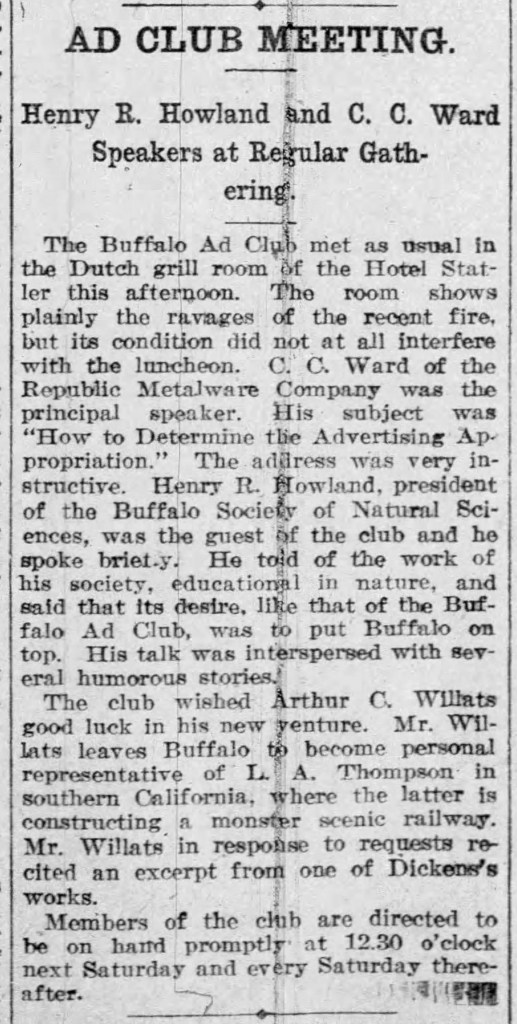
Arthur was mentioned in an article called “AD CLUB MEETING.” which was printed on pace 9, of The Buffalo Commercial on Saturday, 21st January 1911. It reads,

AD CLUB MEETING.
Henry R. Howland and C. C. Ward Speakers at Regular Gathering.

The Buffalo Ad Club met as usual in the Dutch grill room of the Hotel Statler this afternoon. The room shows plainly the ravages of the recent fire, but its condition did not at all interfere with the luncheon. C. C. Ward of the Republic Metalware Company was the principal speaker. His subject was "How to Determine the Advertising Appropriation." The address was very instructive. Henry R. Howland, president of the Buffalo Society of Natural Sciences, was the guest of the club and he spoke briefly. He told of the work of his society, educational in nature, and said that its desire, like that of the Buffalo Ad Club, was to put Buffalo on top. His talk was interspersed with several humorous stories.
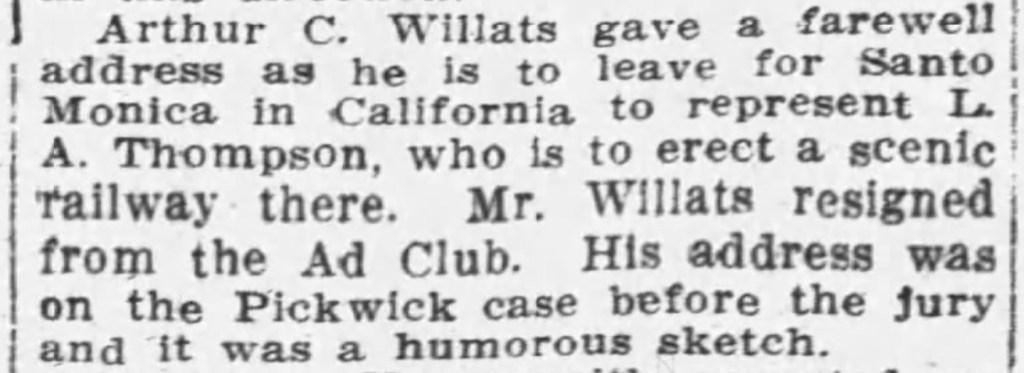
The club wished Arthur C. Willats good luck in his new venture. Mr. Willats leaves Buffalo to become personal representative of L. A. Thompson in southern California, where the latter is constructing a monster scenic railway.
Mr. Willats in response to request recited an excerpt from one of Dickens's works.
Members of the club are directed to be on hard promptly at 12.30 o'clock next Saturday and every Saturday thereafter.
A very similar but much longer event write-up was printed in “The Buffalo Times” on Sunday, 22nd January 1911. The part about Arthur reads,

Arthur C. Willats gave a farewell address as he is to leave for Santo Monica in California to represent L. A. Thompson, who is to erect a scenic railway there. Mr. Willats resigned from the Ad Club. His address was on the Pickwick case before the jury and it was a humorous sketch.
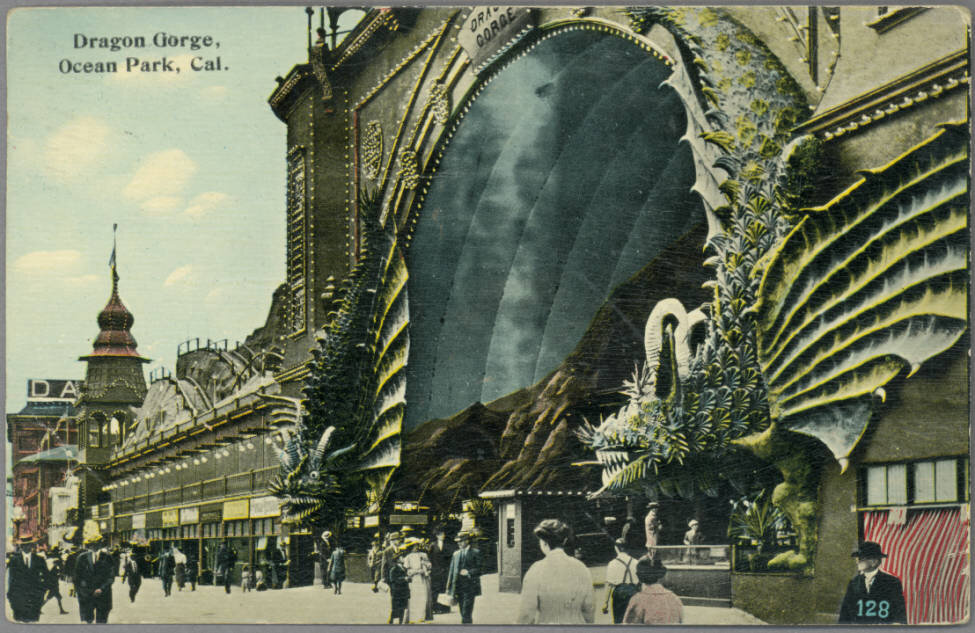
With Scenic Railways popping up at expositions, parks, and boardwalks east of the Mississippi, La Marcus A. Thompson began looking to the west coast for expansion opportunities. In 1906, it was reported that Thompson was eyeing sites in San Diego, Venice, Long Beach and later, Santa Cruz. And then in 1909, the Thompson Scenic Railway Company built a massive mountain-themed roller coaster for the Alaska-Yukon-Pacific Exposition in Seattle.
Building on this concept, in 1910 Thompson began work on a new Scenic Railway in Venice, California. Simply named, “Scenic Railway”, or the “L. A. Thompson Scenic Railway”, the ride would reach 80 feet into the sky and stretch hundreds of feet over the ocean on 225 pier pilings. Instead of looking like a typical wooden roller coaster or a housed-structure, like The Dragon's Gorge at Luna, the entire ride was crafted to look like a large mountain range. This construction required 280,000 feet of lumber, 30 tons of plaster and cement, and 1.5 tons of hardware. With high mountain peaks, canyons, grottos, tunnels, streams, and waterfalls, the attraction was a scenic wonder. When it opened in the spring, thousands of riders descended upon the ride, gladly tossing over their dimes for a chance to zip around the mountain peaks. With the success of the Scenic Railway, Thompson knew that there was a strong market for amusement around Venice and began planning his next thrill.
For his next construction, Thompson would reach back to the Pleasure Railway patent based on his "Dragon's Gorge" design. But whereas the Coney Island attraction was shoehorned into an existing footprint, in California, Thompson had room to expand. He purchased 500-feet of ocean front property at Kinney and Raymond avenues, in Ocean Park. Located between Venice and Santa Monica, just north of the Scenic Railway, a new building would stretch north-to-south along the shore. Thompson secured his approvals and on January 16, 1911, his company began construction on the new building.
This new attraction would feature the iconic arch cutout and offer spectators a view of the familiar rocky scenery and thrills they were about to enjoy. On each side of the arch, the building stretched along the midway with an array of storefronts, allowing the Thompson Scenic Railway Company to sublet space out to other businesses. The whole structure was dotted with 4,000 electric light bulbs (with 3,000 more inside the building), shining as a “good second to the sun in the matter of brilliancy." Rather than capping the structure with a traditional roof, the new scenic railway would extend above the ceiling of the building, curving and soaring around themed mountain peaks sprung from the top and ocean-facing sides of the structure. And just like in Coney Island, the building’s central arch would be flanked by two guardian dragons. The ride, as well as the entire building, would be called "Dragon Gorge".
The "Dragon Gorge" ride would soft open on the evening of May 6, 1911, with a formal opening the following day. Hundreds of people gathered in front of the building and watched as fully loaded cars zipped around the rocky peaks and through the cavernous center of the building. Reports make it clear that the attraction was a scenic wonder and featured immense rock work and tunnels. The Los Angeles Times raved: "many amazing and startling places will the passengers pass through, over, and under before they reach the unloading station". Unfortunately, I couldn’t find specific details on which show-scenes were included on the ride (in the way Luna's "The Dragon's Gorge" featured news-of-the-day settings and cycloramas).
The ride layout allegedly featured "several wonderful drops and dips...which have never before been attempted" and it was even reported that "two dips pass right under the main entrance, below the ocean level." The ride also featured the latest safety innovations. To assure the cautious public, one reporter highlighted the signal block system, on-board brakemen, and that "clutches, called 'safety-dogs', come into play instantly if the train should by any means come to a standstill on one of the heavy grades". Safety dogs are the famous roller coaster component known for giving coasters their well-known clanking sounds while on lift hills and steep inclines.
In addition to providing a larger, safer, improved ride experience, the Dragon Gorge structure housed a variety of other shops and amusements. Approximately 40 different businesses set up shop in the Dragon Gorge building, including popcorn stands, cigar shops, clothes retailers, cleaners, boardwalk games, and places to grab a drink, or a bite to eat. On the south end of the building, a "foolish house" amusement was opened and in July, on the north end of the building, the elaborate "Revolving Grotto Cafe" opened. The Cafe's dining room, themed to look like a rocky cavern with scenic effects, featured a 40-foot revolving floor that made a complete turn every 10 minutes. This novelty was combined with an open kitchen, fine dining service, orchestra (with popular music acts), private ladies dining room, and a commanding view of Santa Monica, the beach, and the mountains beyond. It was the height of fine dining and theming.
The Dragon Gorge enjoyed its inaugural 1911 season largely without incident and it quickly became a famous Ocean Park icon. Bands played around the building and businesses and apartments advertised their location in proximity to the impressive amusement structure. But a setback occurred in November, when strong southern California winds tore through Venice and caused damage to the amusements. One report stated that a mountain peak from the Scenic Railway blew off to an unknown area while at the Dragon Gorge, there would be "big work for scenery builders before the canvas and slatwork landscapes are back in place". And then the following year, in a dramatic mystery, the body of a man was found hanging beneath the Dragon Gorge’s structure in an apparent suicide attempt. The resulting investigation and aftermath was quite a scandal. But still, the attraction enjoyed success well into the 1912 season.
But then the dragons breathed fire (yet again.)
On September 3, 1912, a grease fire broke out in the kitchen of a midway casino, near the Dragon Gorge. The fire quickly spread and soon, the wooden casino structure was entirely engulfed. High winds whipped flames around the amusement district, lashing south to the massive “Fraser’s Million Dollar Pier” and north to the Dragon Gorge building. Once ablaze, Thompson’s structure went quickly. Charles Hile (sometimes spelled Hyle), a west coast operational manager for the Thompson Scenic Railway Company, watched the amusement burn. As reported in The Los Angeles Times:
“The sight was far from spectacular to Hyle’s eyes, as he had no insurance and watched $100,000 worth of his own property go up in flames. The gorge burned in the space of a few minutes. The painted canvas minarets and towers blazed up and sent millions of sparks flying out to sea. Floating out over the water they had the appearance of immense swarms of glow worms.”
Feasting on wooden structures and fueled by high winds, the Ocean Park fire would ultimately consume 5 city blocks and cause an estimated $2,000,000 in damage. One person died when, becoming cornered by the flames, he and others jumped off of a pier and into the ocean; he could not swim.
The race to rebuild the Ocean Park amusement district kicked off immediately. The day after the fire, banks and concessioners took to the press to announce that new, better, “fireproof” buildings and amusements would be built. The Pacific Electric Railway Company, which ran the famed Red Car trolley system (and benefited from boardwalk amusements driving weekend fares and selling beach-front real estate), donated the efforts of 150 employees to help clear the debris. Within a week, a new pile driver was on site to help rebuild Fraser’s Pier, adjacent to the Dragon Gorge. There was to be a new pier, a new casino, and new hotels, each built of concrete, stone, or other non-flammable materials.
Plans were also announced for the Dragon Gorge to be rebuilt. Charles Hile declared that he took out a new building permit the day after the fire, and that construction was to begin immediately. Hile claimed that the new structure would be larger, more elegant, and cost even more than the original building did. Within a week of the blaze, Hile and other concessioners were meeting to discuss a new, modern amusement district and La Marcus Thompson telegraphed from the east coast, stating that he was in route to Venice—and “as soon as he arrives the order to begin work will be given”.
But plans quickly fell apart. The concept for another Dragon Gorge gradually morphed into a 7-story hotel. Thompson, it seems, never arrived in California and negotiations on rebuilding stalled over disagreement on construction requirements and an ordinance to extend city fire limits. Perhaps ironically, the new fire codes made construction more costly while the increasing price of insurance (from fires and accidents) squeezed the Thompson Scenic Railway Company from the other side. In a mere two months, it was clear the development was dead in the water. Thompson’s company would hold onto the property for the rest of the decade, eventually selling the plot.
California’s Dragon Gorge would remain dormant.
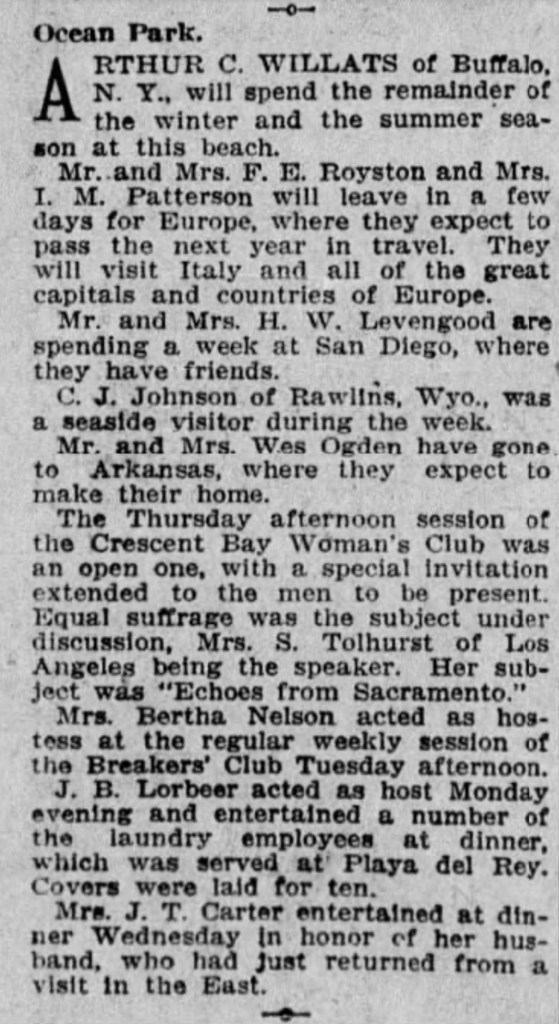
The Los Angeles Times mentioned Arthur is the Society section on Sunday,
26th February 1911. It reads,

Ocean Park.
Arthur C. WILLATS of Buffalo N. Y., will spend the remainder of the winter and summer season at this beach.
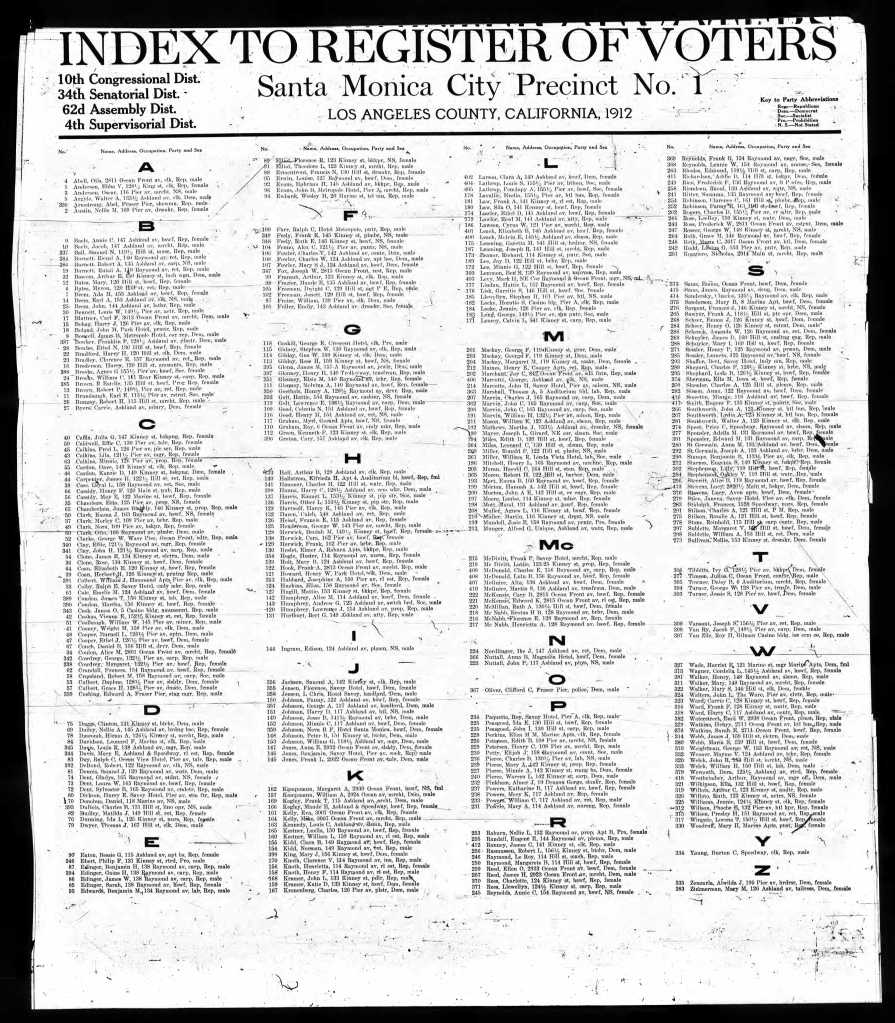
From the California, U.S., Voter Registrations we know that Arthur and Ruth were residing at Number 123 Kinney Street, Los Angeles, California, USA and was working as an Audtr. It also shows us Arthur was a republican.

On Tuesday, the 9th of July, 1912, Arthur announced the engagement of his daughter Beatrice Josephine Willats to Louis G. Collard in the marriage section of The Buffalo Times Newspaper.
It reads,
COLLARD-WILLATS.
MR. Arthur C. Willats announces the engagement of his daughter, Beatrice Josephine to Mr. Louis G. Collard. The wedding to place August 7th.
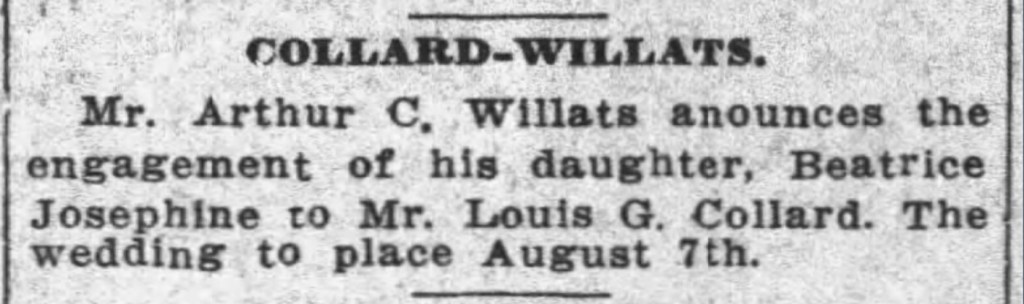
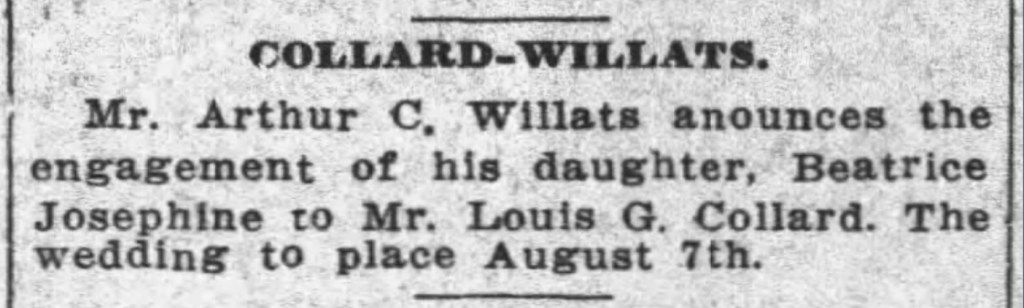
On Tuesday the 9th of July 1912, Arthur announced the engagement of his daughter Beatrice Josephine Willats to Louis G. Collard in the marriage section of The Buffalo Times Newspaper.
It reads,

COLLARD-WILLATS.
Mr. Arthur C. Willats announces the engagement of his daughter, Beatrice Josephine to Mr. Louis G. Collard. The wedding to place August 7th.
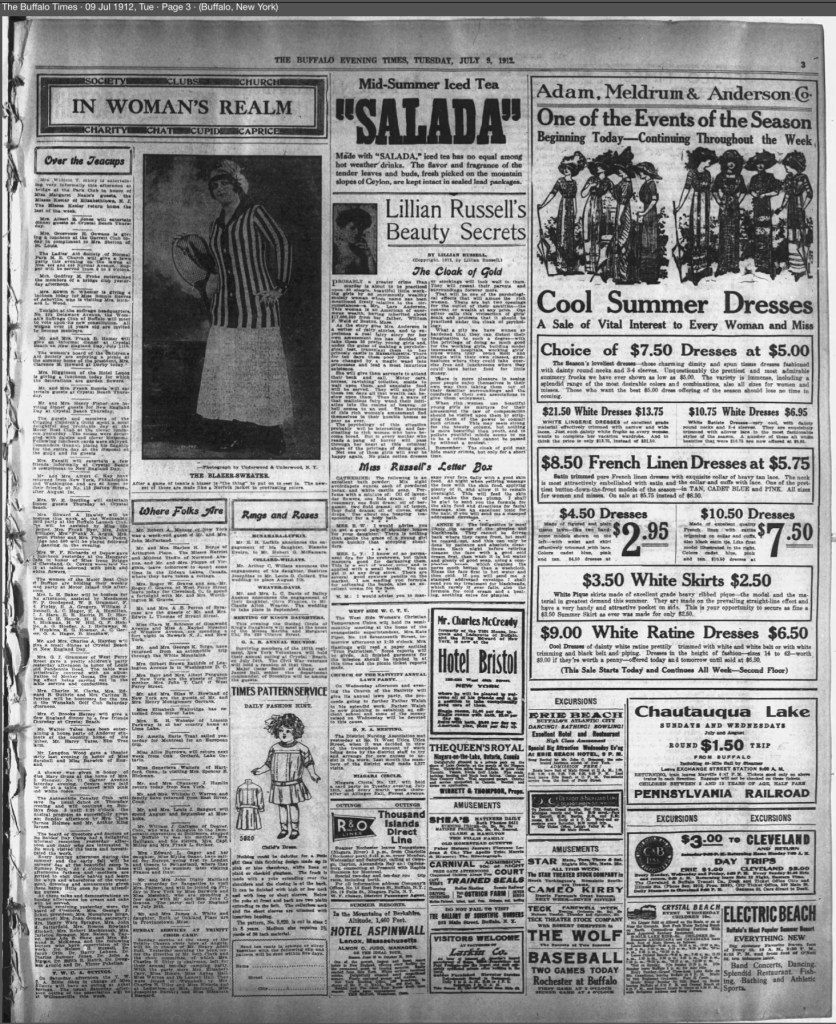
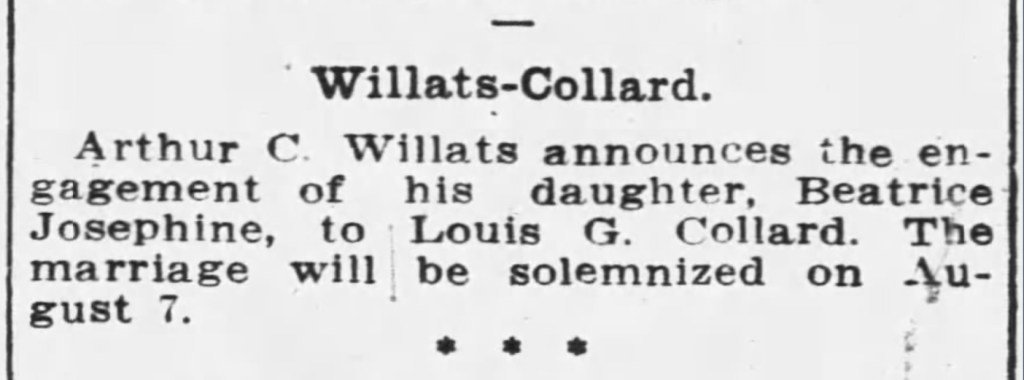
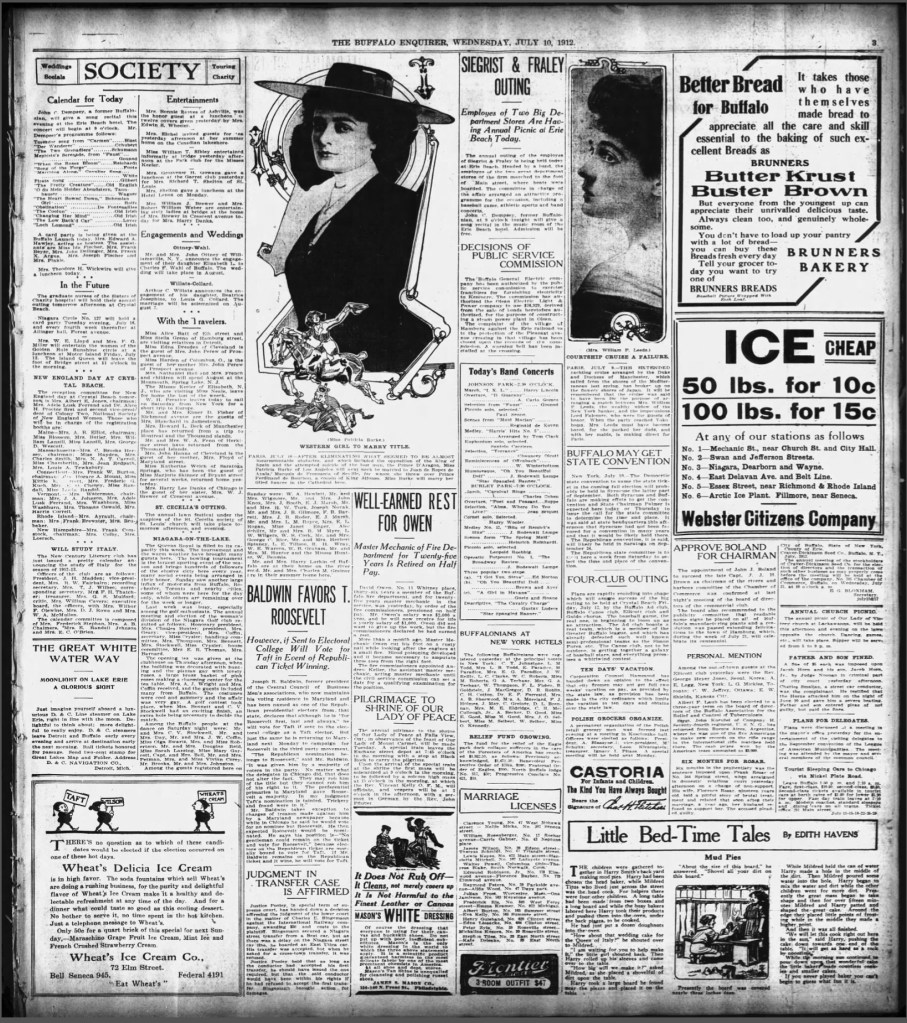
He also put an announcement in The Buffalo Enquirer, on Wednesday the 10th of July 1912. It reads,
Willats-Collard.
Arthur C. Willats announces the engagement of his daughter, Beatrice Josephine to Louis G. Collard. The marriage will be solemnized on August 7.
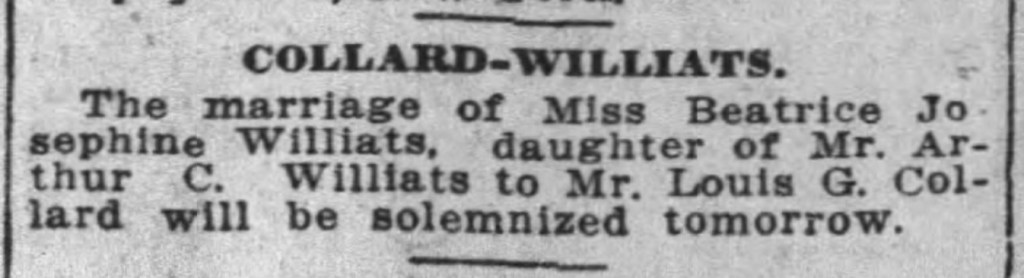
Arthur’s daughter Beatrice marriage announcement/reminder was put in the marriage section of The Buffalo Times, on Tuesday the 06th of August 1912. It reads,
COLLARD-Willats.
The marriage of Miss Beatrice Josephine Willats, daughter of Mr. Arthur C. Willats, daughter of Mr. Louis G. Collard will be solemnized tomorrow.
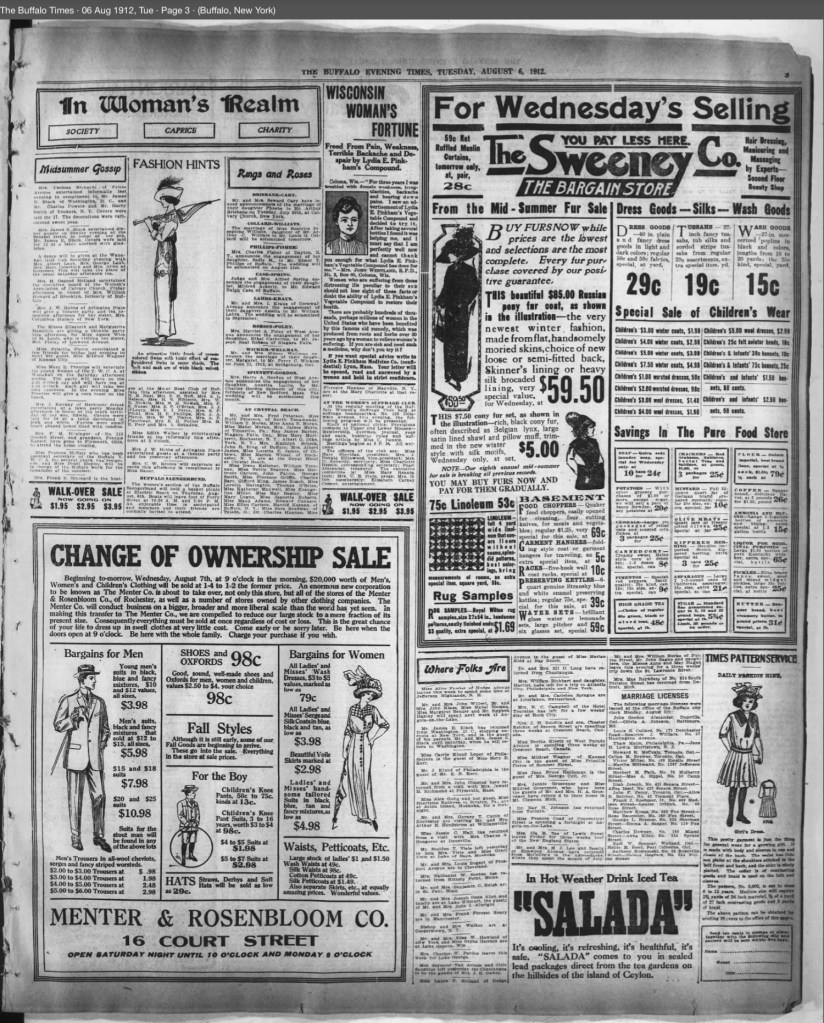
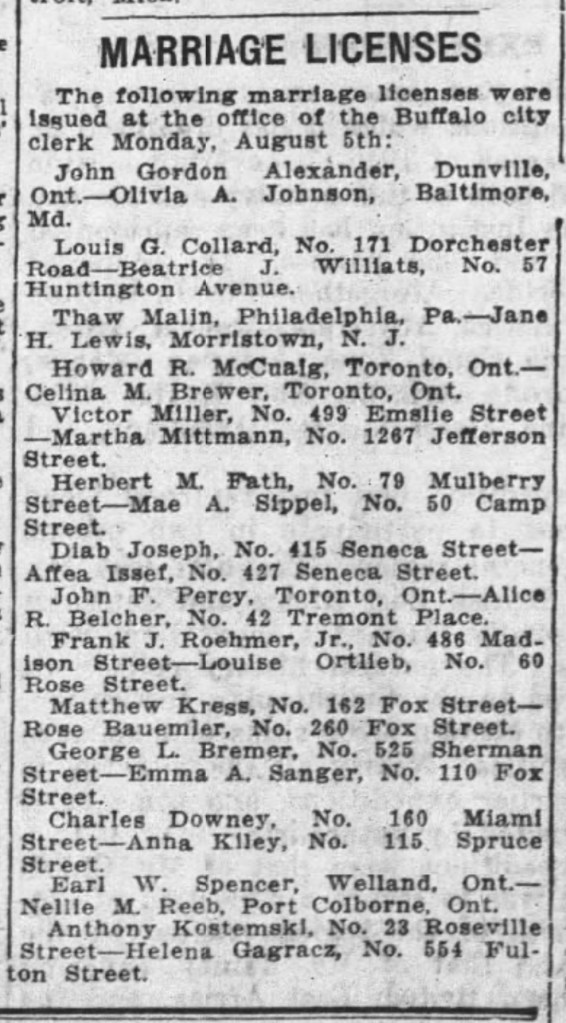
Their marriage was also mention on the same page in the Marriage license section. It reads,
MARRIAGE LICENSES
The following marriage licenses were issued at the office of the Buffalo city clerk Monday, August 5th:
Louis G. Collard, No 171 Dorchester Road-Beatrice J. Willats, No. 57 Huntington Avenue.

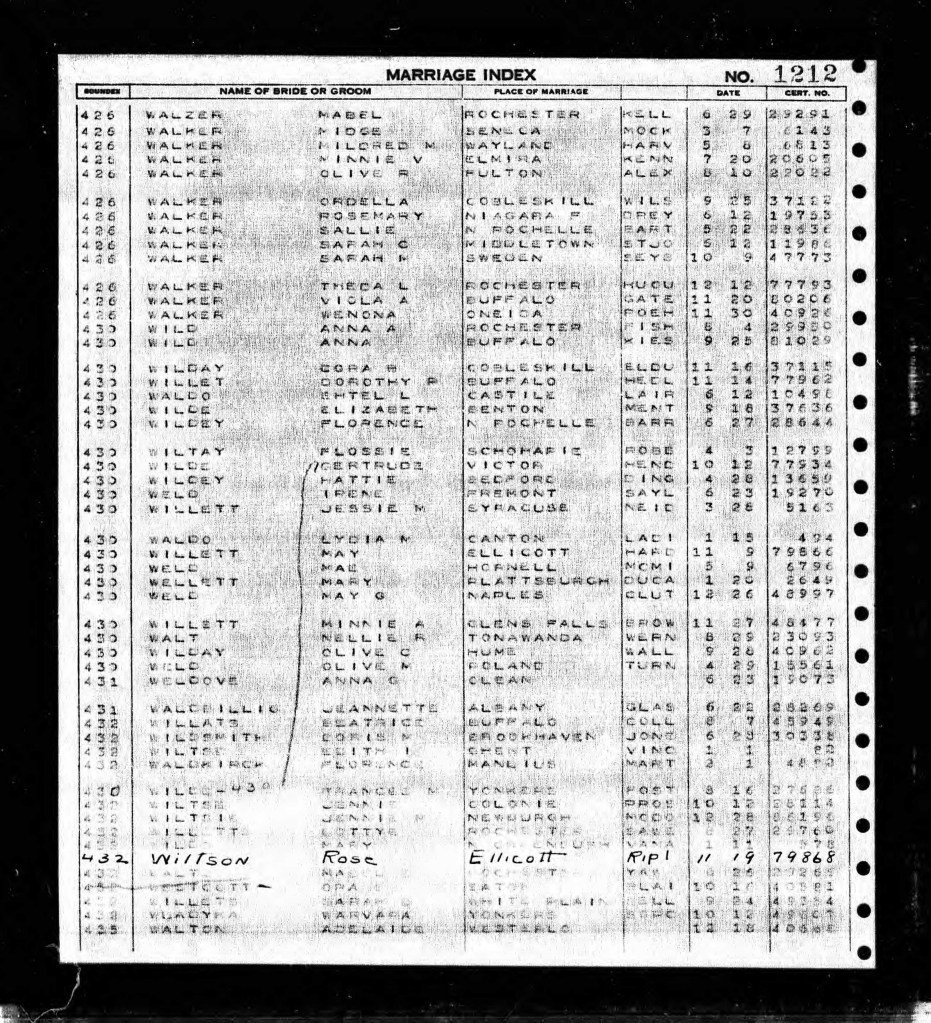
Arthur and Josephine’s daughter, Beatrice Josephine Willats, married Mr Louis G. Collar, at 8 o’clock in the morning on Wednesday the 7th of August 1912, at St Mark’s Church, Buffalo, Erie, New York, United States of America.
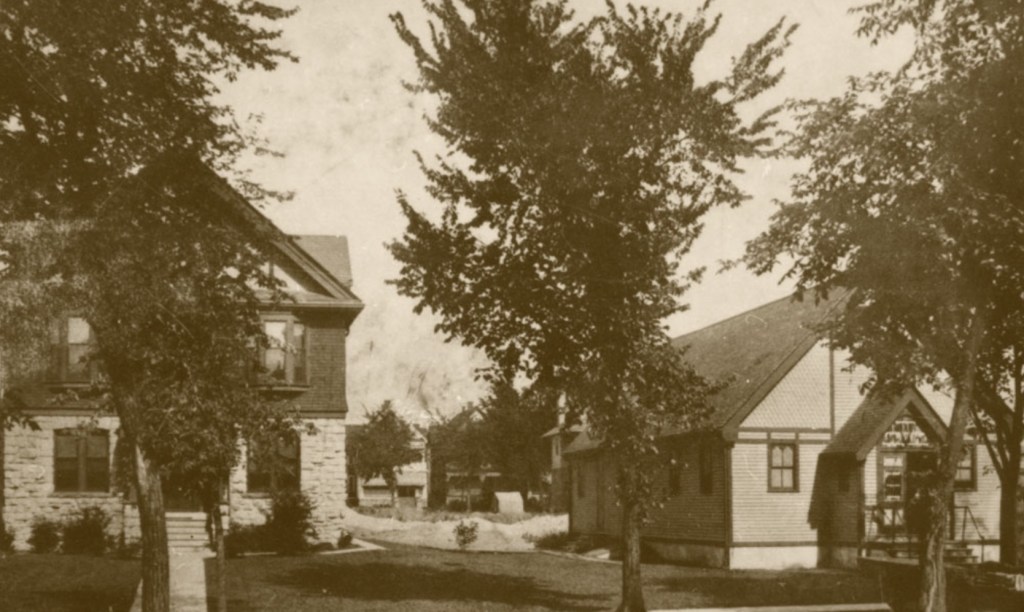
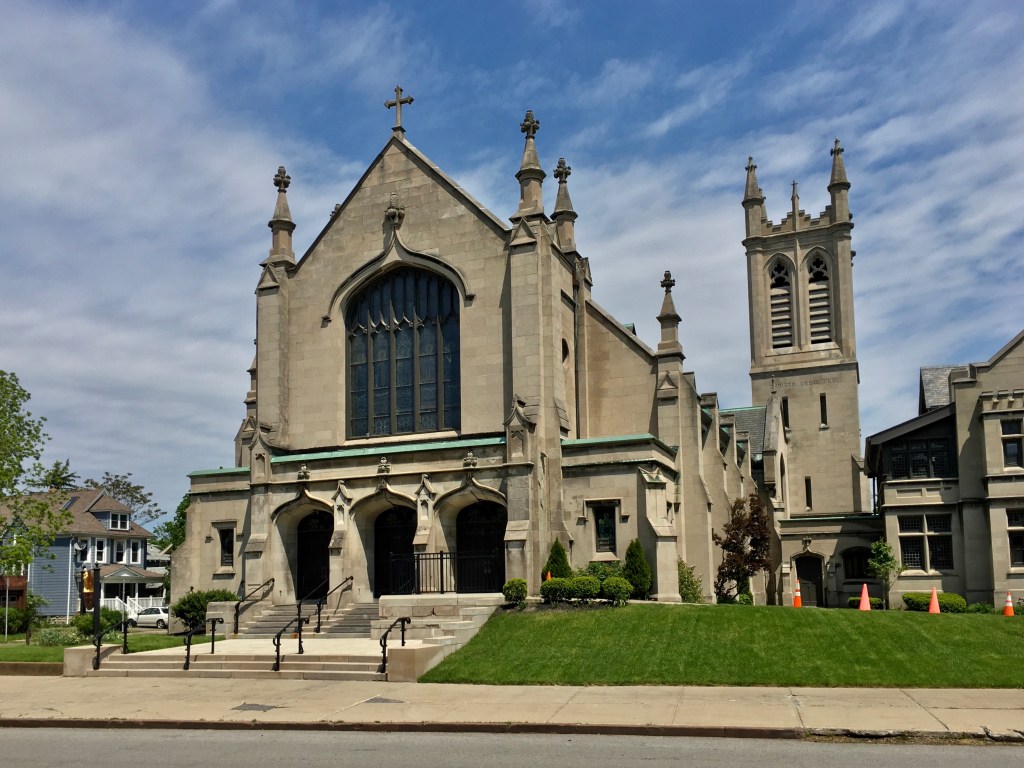
Bishop Colton formally founded the Parish of St. Mark on June 25, 1908. It’s first Pastor was Rev. John J McMahon, and initially there were 32 families. The current church structure was built in 1914.
St. Mark’s first church, a small wooden structure, was constructed in the summer of 1908, where St Mark’s School now stands. More specifically, the church was where a hedge now stands in front the school on Woodward, parallel to the northernmost wall of the school building. The building to the left predated the church, but is currently serves as the rectory, enclosed in the same stone as the church.
In 1908, Buffalo’s Catholic Bishop, Charles Colton, wrote of his desire to start a new parish in “the Central Park area of Buffalo,” either to be called Epiphany, or St. Mark’s. Bennett had reserved triangular islands of land throughout Central Park, upon which churches were meant to be built. Parkside Lutheran, for example, is one those “churches on an island,” where Depew Avenue, Wallace Avenue, and Linden Avenue all meet.
The people of St. Mark and the Buffalo Catholic Diocese inquired about one such island, at Beard, Starin, and Morris. Developer Bennett, whose own strong Unitarian views were greatly at odds with Catholicism, refused to allow a Catholic church on his property, or anywhere in his Central Park development.
Fearing similar responses to overtures across Amherst Street in the Parkside Neighborhood, the founders of St. Mark’s went cloak and dagger, and perhaps by stretching the truth in a few places, were able to buy several lots only two blocks away from that initially desired triangular lot, this one at Woodward Avenue and Amherst Street.
A very young priest, Fr. John McMahon, was offered the chance to become pastor of the parish. His background as pastor at Mt. Carmel Church would serve him well. Mt. Carmel was down near the Commercial Slip in Buffalo’s rough and tumble waterfront /canal district, right next to where the Crystal Beach boat would dock. The area, known as “The Hooks” in those times, was filled with interesting characters from many different walks of life, while Parkside and Central Park were still greatly undeveloped. It was many of these rough and tumble sorts who made up the 30 or 40 families who started St. Mark’s. The families were mostly those of men who were dockworkers at the commercial slip at the canal terminal. There were also 70 or 80 servants, virtually all Irish, among the congregation. They were the maids and butlers in the larger Parkside and later Central Park homes.
St. Mark was a mostly Irish parish, which differentiated it from the other close by parishes like the former St Vincent De Paul (the building is now The Montante Center on the Canisius College Campus) and Blessed Trinity Church (on Leroy Street) which were mostly German parishes. The new parish began June 25, 1908.
Almost immediately, parishioners started raising money for a permanent church. In 1914, ground was broken; work was completed the next year. The statuary near the altar of the current church– likenesses of Jesus, Mary, Joseph and Anthony– were the only artifacts that made their way from the original church to the current building. It was at this time that the rectory, a wooden frame Parkside Home that predates St Mark’s, had a stone facade built up, to give it the same look as the church.
St. Mark was different from other new parishes of the time, in that the parishioners built a stand alone church first without a school. Many new parishes of the time, like North Buffalo neighbors St Margaret’s and Holy Spirit, built combination church/schools, with the church on one floor, the school on another. Parishioners settled on waiting a few years for a school, which was built in 1920-21, and still stands today. That first pastor, Father McMahon, would spend 20 years at St Marks, until he was named the Bishop of Trenton, NJ in 1928.
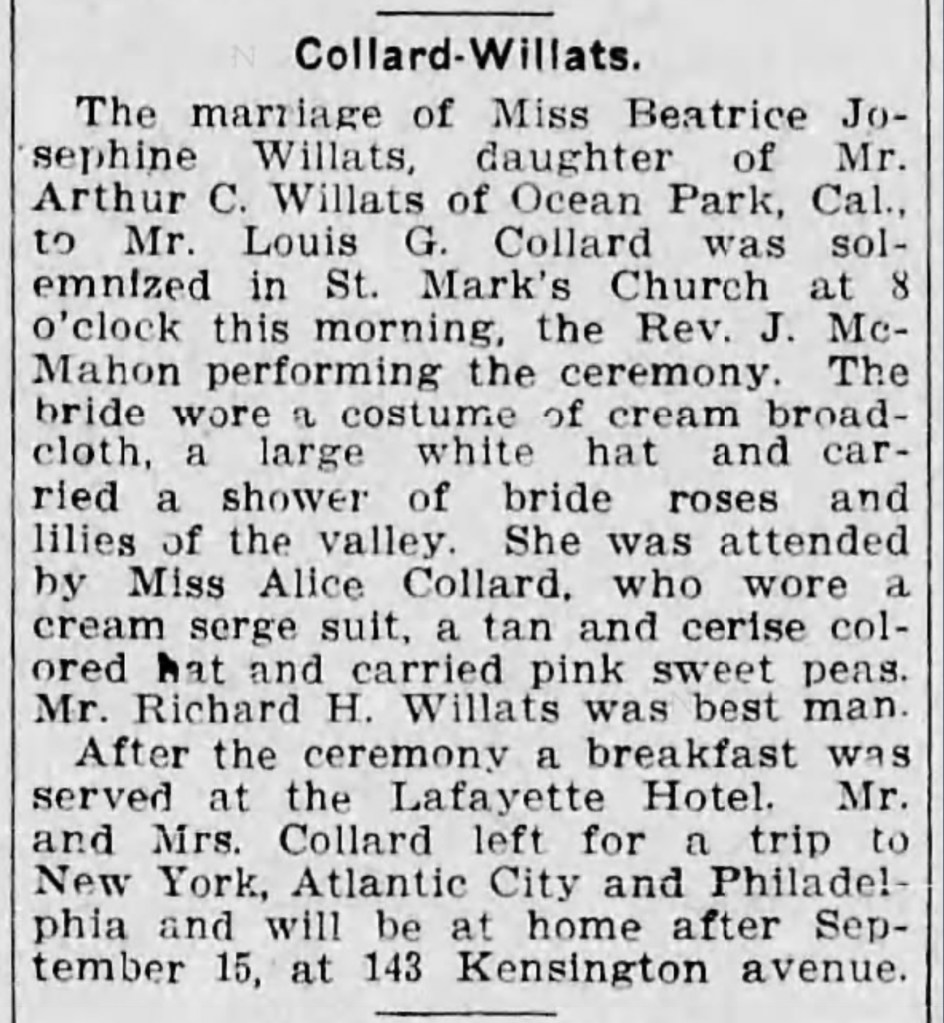
From Arthur’s daughter’s marriage announcement, we know Arthur was residing at Ocean Park, Los Angeles, California, USA, on the 7th of August 1912.
The marriage Announcement reads as follows,
Collard-Willats
The marriage of Miss Beatrice Josephine Willats, daughter of Mr. Arthur Willats of Ocean Park Cal, to Mr Louis G. Collard was solemnised in St Mark’s Church at 8 o’clock this morning the Rev Mc-Mahon performing the ceremony. The bride wore a costume of cream broadcloth, a large white hat and carried a shower of bride roses and lilies of the valley. She was attended by Miss Alice Collard who wore a cream serge suit, a tan and cerise colored hat and carried pink sweet peas. Mr Richard H. Willats was best man.
After the ceremony a breakfast was served at the Lafayette Hotel. Mr and Mrs. Collard left for a trip to New York Atlantic City and Philadelphia and will be at home after September 15, at 141 Kensington avenue.
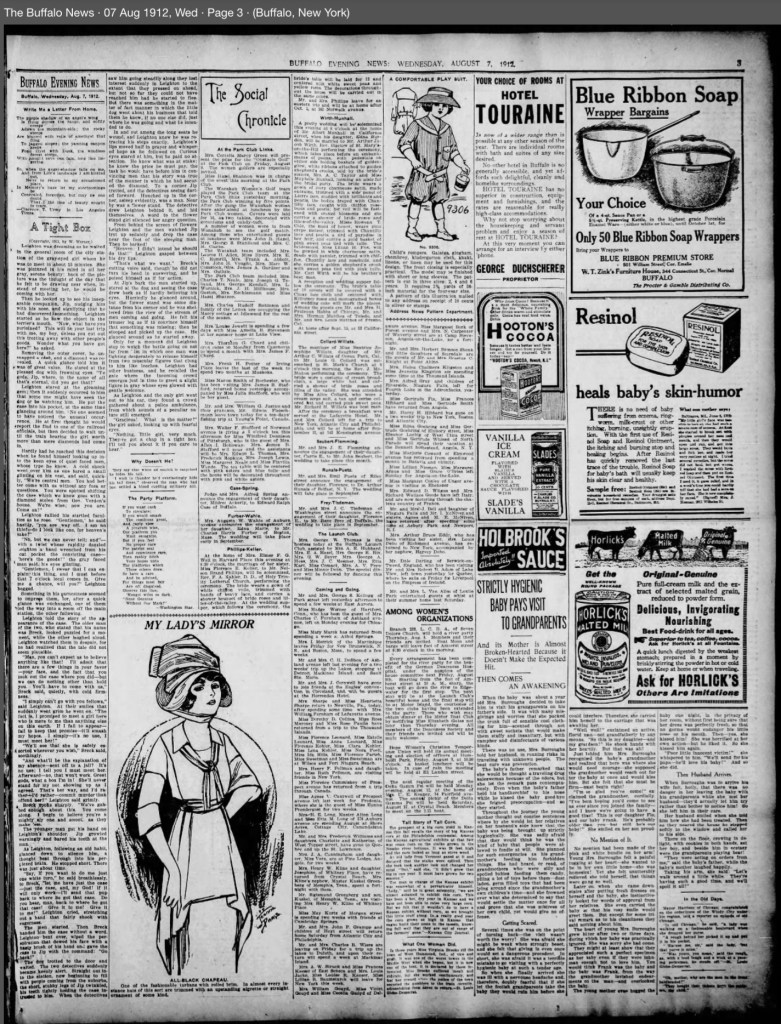
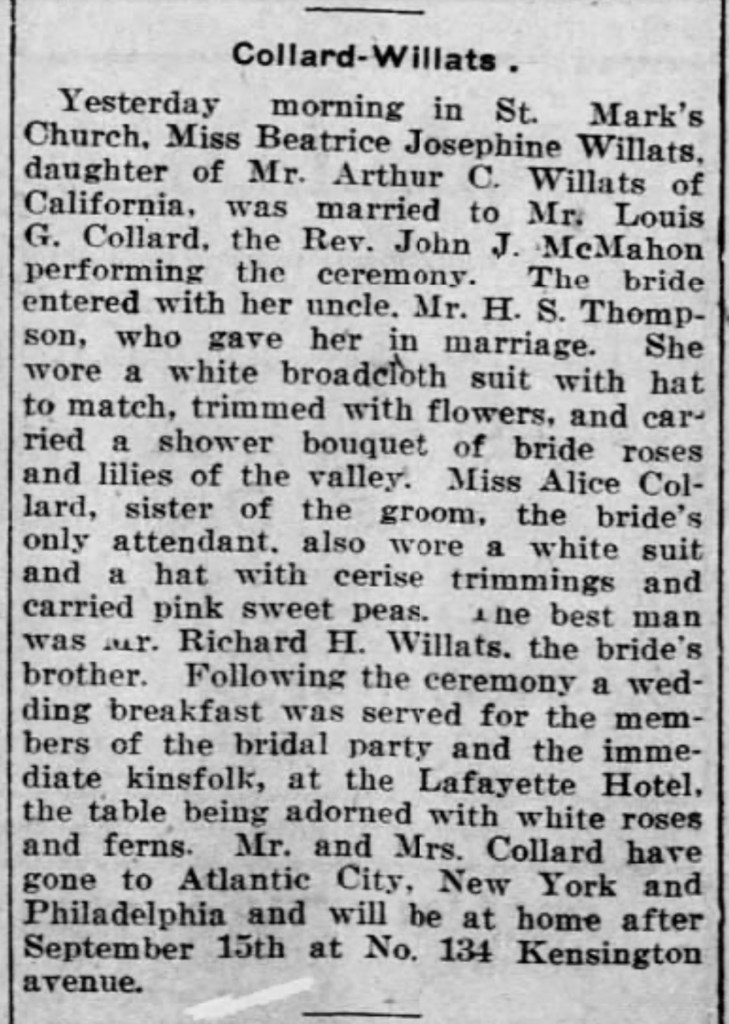
Arthur Charles Willats was named in his daughter Beatrice Josephine Willats, marriage announcement which was put in the The Buffalo Commercial, on Thursday, 8th August 1912. It reads as follows
Collard-Willats
Yesterday morning in St Mark’s Church, Miss Beatrice Josephine Willats, daughter of Mr. Arthur C. Willats of California, was married to Mr. Louis G. Collard, the Rev. John J. McMahon performing the ceremony. The bride entered with her uncle. Mr. H. S. Thompson, who gave her in marriage. She wore a white broadcloth suit with hat to match, trimmed with flowers and carried a shower bouquet of bride roses and lilies or the valley. Miss Alice Collard, sister of the groom, the bride’s only attendant, also wore a white suit and a hat with cerise trimmings and carried pink sweet peas. The best man was Mr. Richard H. Willats, the bride’s brother. Following the ceremony a wedding breakfast was served for the members of the bridal party and the immediate kinsfolk, at the Lafayette Hotel, the table being adorned with white roses and ferns. Mr. and Mrs. Collard have gone to Atlantic City, New York and Philadelphia and will be at home after September 13th at No.134 Kensington Avenue.
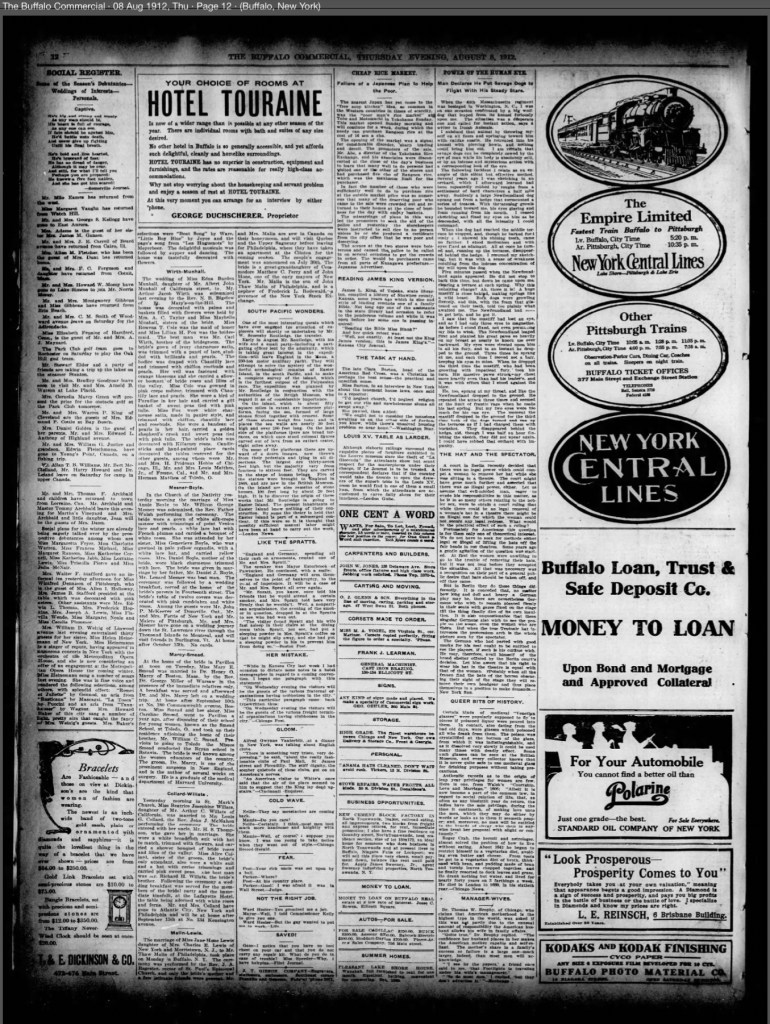
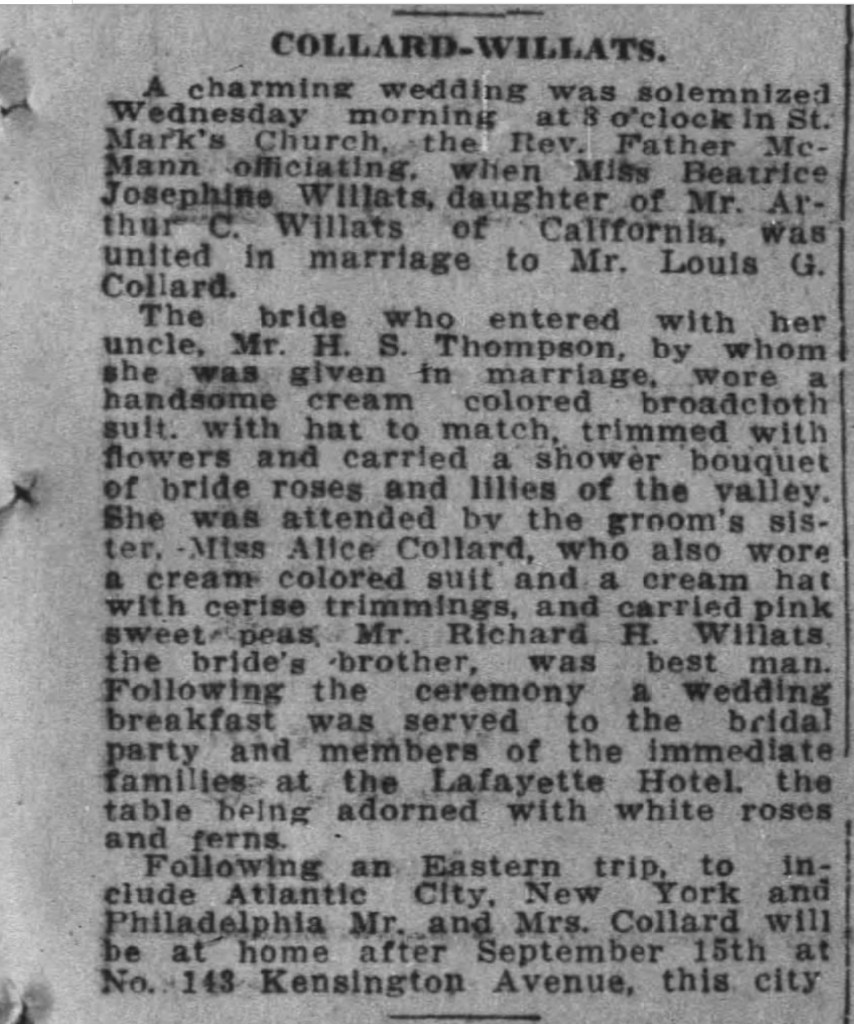
Another write up about Arthur’s daughter’s marriage was put in The Buffalo Times on Sunday, the 11th of August 1912. It reads,

COLLARD-WILLATS

A charming wedding was solemnized Wednesday morning at 8 o’clock in St. Mark's Church, the Rev. Father McMann officiating, when Miss Beatrice Josenhine Willats daughter of . Arthur C. Willats of California was united in marriage to Mr. Louis G. Collard.
The bride who entered with her uncle, Mr. H. S. Thompson, by whom she was given in marriage, wore a handsome cream-coloured broadcloth suit with hat to match, trimmed with Flowers and carried a shower bouquet of bride roses and lilies of the valley.
She was attended by the groom's sister, Miss Alice Collard, who also wore a cream-coloured suit and a cream hat with cerise trimmings, and carried pink sweet peas. Mr.Richard H. Willats the brides brother, was best man.
Following the ceremony a wedding breakfast was served to the bridal party and members of the immediate familles at the Lafayette Hotel, the table being adorned with white roses and ferns. Following an Eastern trip, to include Atlantic City, New York and Philadelphia Mr. and Mrs. Collard will be at home after September 15th at No.113 Kensington Avenue, this city
Arthur was mentioned in an article called, “LOCAL HERO DENIED RECOGNITION BY CARNEGIE COMMISSION” which was printed on page 1 of The Evening Vanguard Newspaper,  Venice, California, United States of America, on Wednesday, 20th November 1912. It reads,

LOCAL HERO DENIED RECOGNITION BY CARNEGIE COMMISSION

It will be remembered by a number of Ocean Park people when Henry W. Howard rushed into the raging sea at the foot of Surf Street on the 12th of last January and rescued from a watery grave a couple of waiters who had gone beyond their depth and became mixed up with the outgoing tide. Howard's action on this occasion was a particularly hazardous and brave one, and it was only through almost superhuman efforts that he was enabled to save the endangered young men, even the loss of his own life was quite imminent for a time while he was in the water. The struggle Howard made to save these men was a long one and was witnessed by a number of people who happened to be in the vicinity but through the extreme roughness of the water at the time they were unable to render any assistance to the struggling trio. Soon after this rescue on the part of Howard, who is by nature a most modest young man when it comes to exploiting his own deeds, Arthur C. Willats, an eye-witness of the occasion, addressed a letter to the management of the Carnegie Hero Fund Commission, setting forth the incident above recited, and not until yesterday did Howard learn his fate; at the hands of the commission, which is given in the following letter.
When Willats learned of the commission's decision regarding Howard, he gave expression to the belief that if those rescued waiters had been instead a couple of millionaires Howard would perhaps have been awarded a medal and a comfortable pension for life. QU Howard has to. say in this connection is that he was not born lucky and has never had the element of luck take hold of him since the date of his birth. Here is the letter:
" Pittsburg, Pa., Nov. 1, 1912.
Mr. Henry W. Howard,
Ocean Park, Cal.
Dear Sir: Through the courtesy of Mr. Arthur C. Willats, of Ocean Park, Cal., the attention of the Carnegie Hero Fund Commission has been called to an act performed by you on January 27th, 1912. Your case, after a thorough investigation, was considered at a meeting of the Commission held this afternoon, and I regret to inform you that the Commission decided that it is not within the scope of the fund.
Yours very truly,
F. M. WILMOT,
Manager.

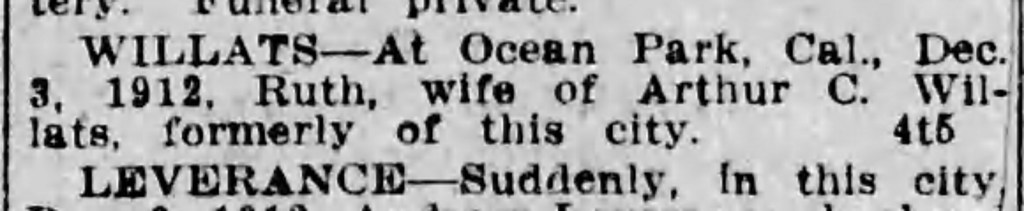
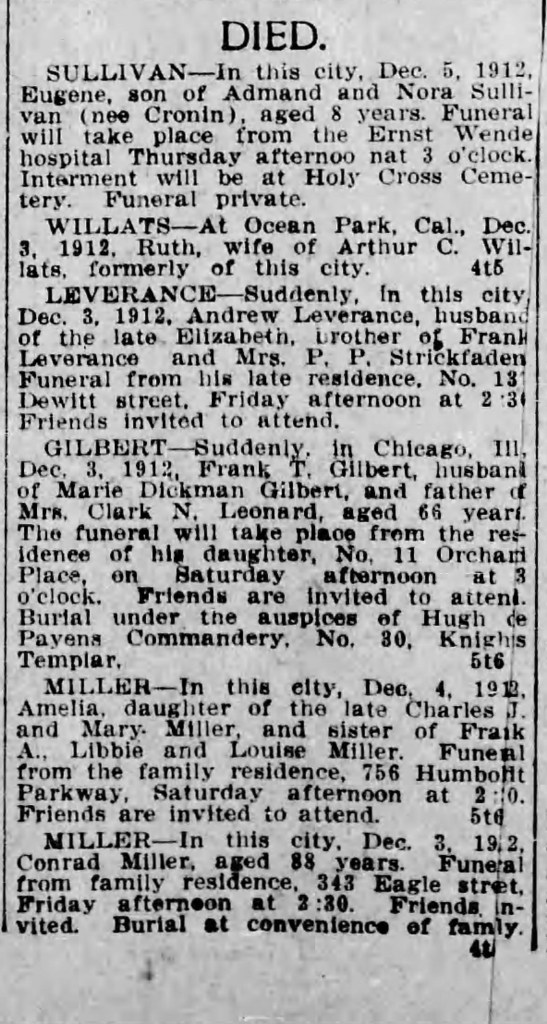
Arthur was mentioned in the “Died” section, on page 1, of The Buffalo Evening News on Thursday, 5th December 1912, which reported the death of his second wife Ruth. It reads,

WILLATS - At Ocean Park, Cal., Dec. 3, 1912, Ruth, wife of Arthur C. Willats, formerly of this city.
As we conclude part three of our exploration into the captivating life of Arthur Charles Willats, we find ourselves immersed in the rich tapestry of his experiences. From the bustling streets of Buffalo, Erie New York, to the intricate web of his personal triumphs and challenges, Arthur's story continues to unfold with each passing revelation. Yet, even as we begin to grasp the magnitude of his journey, there remains an abundance of untold tales waiting to be discovered. Join us in part four as we continue our journey through the remarkable life of this extraordinary man, unraveling the threads of his legacy and unveiling the depths of his fascinating story. There's still so much more to learn about Arthur Charles Willats, and we're excited to embark on this journey of discovery together. Stay tuned for the next chapter in his incredible saga.
Until next time,
Toodle pip.
🦋🦋🦋

