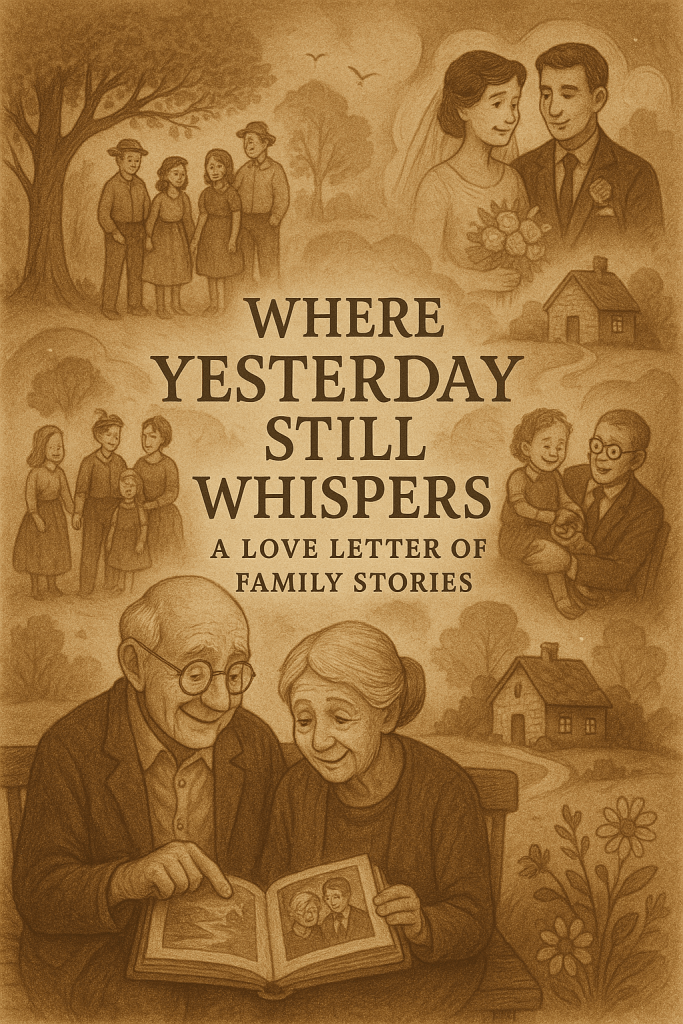
There is a quiet kind of enchantment in the stories our ancestors leave behind. They drift through our families like warm breezes from another season, carrying laughter, sorrow, triumph and the soft rhythm of ordinary days that once mattered so much to the people who lived them. These memories do not march across the pages of textbooks or shine in museums; they live instead in the gentle folds of remembrance, in the sigh that escapes a grandparent before they begin a tale, in the spark that lights someone’s eyes when they speak of a moment long vanished but never truly gone. To gather these memories is to cradle the fragile threads of time before they dissolve into silence.
In every land, in every age, families have kept their histories alive by sharing stories. Around English hearths long ago, evenings glowed with tales told beside the crackling fire. Children listened with wide eyes as elders recalled wartime courage, harsh winters in stone cottages, harvest seasons that tested every muscle, or seaside holidays full of salt air and laughter. Whether told in tiny cottages perched on windswept moors or in bustling townhouses along cobbled streets, these stories became heirlooms of the heart. They were rarely grand histories. More often they were tender, intimate recollections: the way a great-grandmother kneaded her bread before dawn, the tune a grandfather whistled on his walk home, the quiet rituals of a Sunday morning when the world still felt untouched by the noise of modern life.
Oral storytelling is one of humanity’s oldest treasures. Long before ink ever kissed parchment, people discovered who they were by listening. Elders became living archives, keepers of births and marriages, migrations and hardships, celebrations and customs. Across oceans and cultures, stories formed a kind of connective tissue, holding communities together, reminding each generation of what came before. Even in our age of glowing screens and constant chatter, nothing rivals the beauty of sitting close to someone who begins to speak with the gentle preamble, “When I was young…” or “Your great-grandfather always said…”
Recording these memories is an act of love as much as preservation. To ask an elder for a story is to offer them a doorway back into their own remembered world, giving them space to revisit joys, sorrows and moments that shaped them. In England, families often found these moments around holiday tables. Tea steamed in delicate porcelain cups while old photographs emerged from tins or drawers, their edges curled with age. A faded seaside snapshot taken in Blackpool revived memories of striped deckchairs, penny arcades and cold waves licking at bare toes. A portrait in sepia tones might lead to recollections of ration books clutched in chilly hands, of air-raid sirens cutting through the night, of letters carried across oceans like threads of hope. Each photograph became a seed, and each story a blossoming.
Across the world, storytelling lives in a thousand beautiful forms. In West Africa, griots carry the histories of families and clans in their voices, singing stories like living rivers. In Indigenous American communities, stories serve as sacred ties between land, ancestors and the living. In Japan, family memories often rest on household altars, where names, photos and tokens keep stories vibrant long after a life has passed. In Europe’s oldest villages, winter evenings once gathered people in circles to share tales of saints, storms, lovers, mischief-makers and miracles. Though the rituals differ, the heart of the practice remains shared, the deep human need to remember and to be remembered.
Today, there are countless ways to preserve these stories before they slip through the cracks of time. Some families create memory journals filled with handwritten tales and sketches of family homes. Others record conversations on small audio devices, capturing voices that future generations will treasure like lullabies. Some compile scrapbooks where photographs, letters, recipes and snippets of handwriting rest side by side. Others create digital archives or family websites that hold scanned documents, recordings and timelines. Quilts stitched from clothing, shadow boxes filled with keepsakes, recipe books handwritten with notes in the margins, all become intimate vessels of memory. Even a simple notebook left open on a kitchen table can grow into a family’s unofficial chronicle as its pages slowly fill with recollections shared over cups of tea or rainy afternoons.
The rituals that shape family life also deserve a home in these collected stories. Every family, no matter how small or scattered, dances through a quiet choreography passed down through time: the way holiday meals unfold, the lullabies hummed to newborns, the wedding customs carried forward even after centuries of change, the peculiar sayings that only make sense within the family walls, the recipe no one measures yet everyone knows. By capturing these small details, we preserve the fragrance, texture and color of family identity.
Collecting stories is not merely about safeguarding the past. It roots us in the present. When children learn the stories of those who came before, their sense of belonging grows deeper and steadier. When elders see their memories honored, written, recorded, cherished, they gain the quiet reassurance that their lives will ripple forward through time. A family that tends its history becomes a living book, with each generation adding its own chapter.
And one day, perhaps many decades from now, someone will open a book you wrote, listen to a recording you captured, unfold a recipe you preserved, or read the letters you saved. They will feel loved by your efforts. They will feel accompanied by voices they never met. They will feel the long, tender thread that connects them to you.
That is the miracle of family stories: they outlast us, they soften sorrow, they become a place of return. They whisper that love reaches across centuries and still arrives whole.
To gather family memories is to gather the spirit of a family. It is to honor those who walked before us and to leave lanterns glowing for those who will follow. And when we give our time to listening, remembering and documenting, we discover that our ancestors do not drift away.
They walk alongside us, gently, lovingly, in every story we choose to keep alive.
Until next time,

Ta ta for now.

Yours, Lainey.
https://youtu.be/tsUUNboQPrE?si=OuanTdwPcvPVrlba
The lyrics were written by me
but the music and vocals were AL generated
💌💌💌

